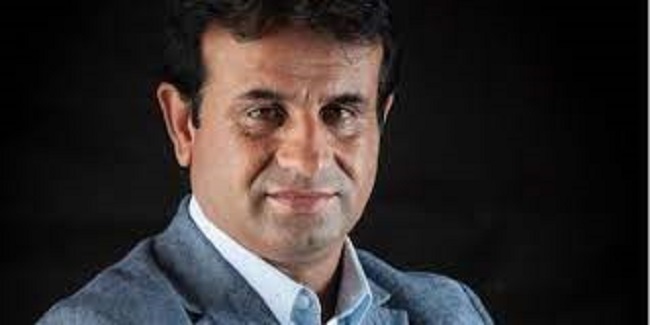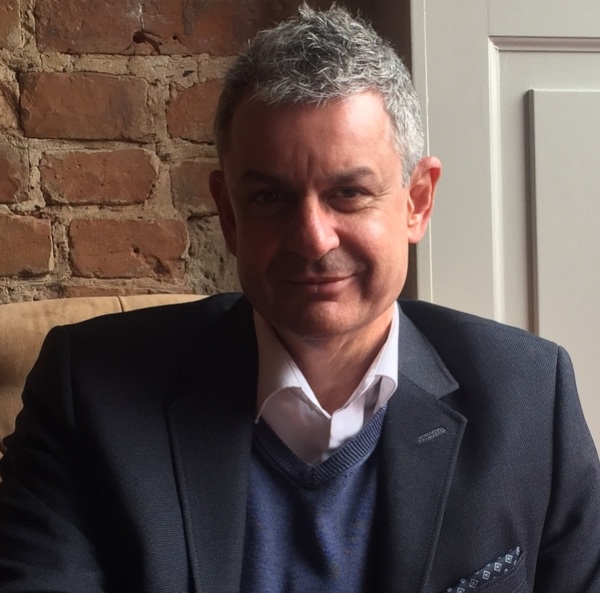
Prof. Shmuel “Sam” Vaknin (YouTube, Twitter, Instagram, Facebook, Amazon, LinkedIn, Google Scholar) is the author of Malignant Self-love: Narcissism Revisited (Amazon) and After the Rain: How the West Lost the East (Amazon) as well as many other books and ebooks about topics in psychology, relationships, philosophy, economics, international affairs, and award-winning short fiction. He was Senior Business Correspondent for United Press International (February, 2001 – April, 2003), CEO of Narcissus Publications (April, 1997 – April 2013), Editor-in-Chief of Global Politician (January, 2011 -), a columnist for PopMatters, eBookWeb, Bellaonline, and Central Europe Review, an editor for The Open Directory and Suite101 (Categories: Mental Health and Central East Europe), and a contributor to Middle East Times, a contributing writer to The American Chronicle Media Group, Columnist and Analyst for Nova Makedonija, Fokus, and Kapital, Founding Analyst of The Analyst Network, former president of the Israeli chapter of the Unification Church‘s Professors for World Peace Academy, and served in the Israeli Defense Forces (1979-1982). He has been awarded Israel’s Council of Culture and Art Prize for Maiden Prose (1997), The Rotary Club Award for Social Studies (1976), and the Bilateral Relations Studies Award of the American Embassy in Israel (1978), among other awards. He is Visiting Professor of Psychology, Southern Federal University, Rostov-on-Don, Russia (September, 2017 to present), Professor of Finance and Psychology in SIAS-CIAPS (Centre for International Advanced and Professional Studies) (April, 2012 to present), a Senior Correspondent for New York Daily Sun (January, 2015 – Present), and Columnist for Allied Newspapers Group (January, 2015 – Present). He lives in Skopje, North Macedonia with his wife, Lidija Rangelovska. Here we talk about structure, function, society, and survival.
Prof. Shmuel “Sam” Vaknin (YouTube, Twitter, Instagram, Facebook, Amazon, LinkedIn, Google Scholar) is the author of Malignant Self-love: Narcissism Revisited (Amazon) and After the Rain: How the West Lost the East (Amazon) as well as many other books and ebooks about topics in psychology, relationships, philosophy, economics, international affairs, and award-winning short fiction. He was Senior Business Correspondent for United Press International (February, 2001 – April, 2003), CEO of Narcissus Publications (April, 1997 – April 2013), Editor-in-Chief of Global Politician (January, 2011 -), a columnist for PopMatters, eBookWeb, Bellaonline, and Central Europe Review, an editor for The Open Directory and Suite101 (Categories: Mental Health and Central East Europe), and a contributor to Middle East Times, a contributing writer to The American Chronicle Media Group, Columnist and Analyst for Nova Makedonija, Fokus, and Kapital, Founding Analyst of The Analyst Network, former president of the Israeli chapter of the Unification Church‘s Professors for World Peace Academy, and served in the Israeli Defense Forces (1979-1982). He has been awarded Israel’s Council of Culture and Art Prize for Maiden Prose (1997), The Rotary Club Award for Social Studies (1976), and the Bilateral Relations Studies Award of the American Embassy in Israel (1978), among other awards. He is Visiting Professor of Psychology, Southern Federal University, Rostov-on-Don, Russia (September, 2017 to present), Professor of Finance and Psychology in SIAS-CIAPS (Centre for International Advanced and Professional Studies) (April, 2012 to present), a Senior Correspondent for New York Daily Sun (January, 2015 – Present), and Columnist for Allied Newspapers Group (January, 2015 – Present). He lives in Skopje, North Macedonia with his wife, Lidija Rangelovska. Here we talk about structure, function, society, and survival.
*Previous interviews listed chronologically after interview.*
Scott Douglas Jacobsen: Embedment seems like a fundamental of reality described in a prior session, by you. Embedment of the intersubjective agreement and in the agreement upon the collective experiences ascertained as external, objective. Structures interact, functions follow. Internal objects and relations, external processes and dynamics, the mind and the universe structured in particular ways and the physics of the mind bound by the physics of the universe, in which it’s embedded. What defines subjective experience, consciousness, the mind, and awareness?
Prof. Shmuel “Sam” Vaknin: The source of the confusion that permeates the discourse regarding consciousness is the recursive conflation of introspection (an element of self-awareness) and its subject: the mind. The mind observing the mind. This leads, of course, to a vertiginous infinite regression.
To escape this sempiternal, dizzying tunnel, humans posit an arbitrary “self”: the terminal station, where all phenomena converge and come to a halt. There is nothing beyond the self.
Introspection also objectifies the mind. It is as if the mind were an inert, immutable substrate (which, of course, it is not). This is why most people avoid true introspection: the experience is very much like death, like being pinned and mounted.
The physical world is founded on feedback loops very much like introspection. But presumably only humans are capable of meta-transcendence: being aware of their self-awareness. This leads to a feeling of a solipsistic, self-contained estrangement from the world, a kind of observer only mentality.
In a panicky attempt to reconnect, we institute the arbitrary and possibly counterfactual (non-falsifiable) intersubjective agreement. It is undergirded by two assumptions: (1) All human beings are the same; and (2) The physical world is only a part of human reality. The network of minds is the true Universe in which we operate and minds are somehow not fully physical (Cartesian dualism).
Such delusional defenses lead to the emergence of religion, culture, philosophy, and art. But they are counterfactual and brittle.
The truth is that humans and their minds are physical phenomena, subject to the laws of nature. Our complexity gives rise to emergent phenomena such as consciousness, mind, proprioception, and introspection. But we are still mere organisms. Monism is the only rigorous approach to reality.
Jacobsen: What is the relation of structure to function in the most general definition?
Vaknin: Structure is merely the visible reification of function. It is dictated by it. Functions drive the evolution of structures inexorably. More broadly: environments dictate which functions will survive (will prove adaptive) and which will perish. So, structures are reactive to environmental pressures and data mediated via functions and meanings.
We cannot conceive of any process of production without the dubious aid of the Watchmaker’s Metaphor: an artisan; a plan, or program, or procedure; raw materials, or inputs; and the finished product – all four elements distinct from one another. Yet, in nature, this division of labor is rarely true: in the vast majority of cases the raw materials and the program are one and the same and the artisan is missing altogether.
This discrepancy between our intuition and reality is so bothersome that even talented scientists, such as Rupert Sheldrake, were forced to resort to pseudoscience to reconcile it. His concept of “morphic fields” that dictate both the structure and functions of “morphic units” via a kind of “morphic resonance” and are formed by repetition of acts or thoughts is nothing short of mystic: it is unfalsifiable and, therefore, unscientific.
But dismissing Sheldrake’s fields and Jung’s “collective consciousness” leaves important questions unanswered: Why (not how) do stem cells and embryonic cells differentiate and grow into separate, highly-specific organs during the phases of embryogenesis or, later and in some animals, metamorphosis? How do animal colonies, flocks, and shoals form and function? Why and how do crystals “choose” to develop into specific forms rather than others, equally possible and “permissible” under the laws of physics? What is the organizing principle that guides the formation of neural networks and axon pathfinding (guidance)?
In other words: are Forms (and, by extension: functions) somehow predetermined, “out there”, hylomorphically (as Plato, Aristotle, and, to some extent Leibniz suggested)? Are there potentials or “fields” that attract matter and energy and mold them into objects and processes (including mental processes)? And, if so, what decides in favour of certain forms (or “ideals” or “ideas”) and not others? Discarding the religious response (“divine intervention”) and the mystic solutions (such as the “Akashic records”), we find to our consternation that we are left with no answer at all.
To say, as science does, that the Laws of Nature yield “self-organization”, or “self-assembly” is an embarrassing tautology (not to say teleology). To attribute pattern formation to regulatory or inhibitory molecular or chemical cues in the environment, to signalling, cell fates, or, in scientists’ favourite phrase, to a “developmental induction cascade” is to confuse the “how” with the “why” and the “how come”. Stating the obvious as did Adrian Bejan with his Constructal “Law” (which postulates that finite-size systems evolve to provide easier access to imposed currents that flow through them) does nothing to further our fundamental insight of the world.
Spontaneous order via stigmergy and sematectony, emergence (emergentism), connectionism, epiphenomenalism and, more generally, synergetics are even more circular and “magical” propositions: descriptive and phenomenological, they may well amount to mere language constructs. These approaches definitely add nothing to our understanding of the presumably causative chains underlying the sudden appearance of novel, coherent (or correlated), macro, dynamical, supervenient (the system supervenes its components), and ostensive patterns, behaviors, and properties.
We are supposed to believe that, somehow, the system – an abstract notion, wholly in the mind of its human promulgators – interacts with its environment and that context thus dictates the behavior at the micro level. Such models require a leap of faith and a suspension of scientific judgement. In defending them, Peter Corning was reduced to introducing a deus-ex-machina (the consciousness of chess players) through the back door to fully explicate emergence, for instance.
Clearly, to merely re-label and name the mystery does not make it go away. Nor can such fancy verbalizing disguise our fundamental ignorance regarding emergent order in phenomena as varied as bacteria cultures; swarm intelligence; the distribution of vegetation; foams, crystals, and flakes; and chemical and Turing patterns (e.g., the Belousov-Zhabotinsky reaction).
Instances of this propensity of modern thinkers to obscure rather than elucidate abound: Evolutionary Development’s resurrected concept of morphogenetic fields (or units), or the incorporation of lattices in partial differential equations that describe dynamical evolving systems (e.g. in the Swift-Hohenberg equation) are only marginally more rigorous than Sheldrake’s concept of morphic fields in that they fail to convincingly account for, respectively, why cells develop into specific organs even when they are mishandled and transplanted and why hysteresis arises in convection experiments.
What is it that tells cells to develop into a specific part of the organism and, equally important, to not develop into another? What is the source of their deterministic lack of “hesitation” and their directional “decisiveness”? And where does the path dependence spring from in certain physical systems?
Back to our initial question:
Is there anything external or extraneous involved in these mind-boggling processes of morphogenesis and differentiation (except the signalling biochemicals which constitute an integral part of the system?) Genes (DNA), morphogens, adhesion molecules, transcription proteins, the extracellular matrix, and hormones cannot by any stretch of the word be perceived as outside the largely autopoietic systems they control. Environmental chemicals and mechanical stresses are external, but it is difficult to understand why they trigger specific morphogenetic configurations and not others and, even so, they account for a minority of mutations and occurrences.
But isn’t this whole self-contained unfolding reminiscent of a computer? After all: computers do run programs which are resident (internal). But here the parallels break: programs are written by programmers; chips are designed, manufactured, and assembled by armies of humans and machines; and input is provided yet again either by users or by other computing platforms. All these are external and independent agents.
To further complicate matters, “morphic units” (for want of a better term) such as cells or crystals comport themselves variably in identical circumstances. Consider axons for instance: their growth cones (which sense and react to gradients of biochemicals in the extracellular environment) respond differently in different times to the same cues, depending on previous exposure and habituation, timing, and physiological context. So, if there is a guiding principle, a matrix, field, template, lattice or structure “out there”, it must be changing constantly to allow for these idiosyncratic reactions.
Why do we discern forms, patterns, and order everywhere? Because this ability to reorganize our perceptions of reality into predictable moulds and sequences bestows on us untold evolutionary advantages and has an immense survival value. Consequently, we compulsively read configurations and patterns even onto completely random sets of data. The way we perceive holes and other immaterial disruptions as structured entities attests to our “addiction to order and regularity” even where there is only nothing and nothingness.
Why do we all seem to spot essentially the same forms, patterns, and evolving order? Simply because we are possessed of largely identical hardware and software: wetware, our brains. We function well on the basis of these shared perceptions. Even so, the limitations of intersubjectivity mean that we can never prove that we experience the world in the same way: observers may perceive the colour red or the sensation of pain identically or differently. We simply don’t know.
Moreover: beings equipped with other types of processing units, or even different eyes (with a much faster or slower blink rate, or an extended exposure to light), or creatures which use other segments of the electromagnetic spectrum for information gathering are bound to descry the world entirely differently with none of the forms, patterns, and order that we impose on it.
Yet, surely we can construct dictionaries to translate the observations of such alien beings and creatures and to reduce their perceptions, mathematics and physics, geometry, and biology into our own? Maybe so. There is no way to prove that all experiences are reducible and translatable to one another and that all perceptions and concepts can be mapped regardless of the qualities and parameters of the sensory organs that give rise to them in the first place.
Even if they were, the way we experience the Universe would still be vastly different to the subjective, inner landscape of beings or creatures with an unfathomably disparate sensorium, brain, and conceptual space: different to the point of being incommunicable. Even within our species, certain people – the mystics – resort to hermetic and hermeneutically-inaccessible private languages to describe their experiences. With such barriers afoot, we will never be able to ascertain that any translation, reduction, or mapping that we engage in is valid: the subjective dimensions or components of any complete knowledge of the world are as important as the objective ones. Absent operational intersubjectivity, we can never be sure that our knowledge of reality is the same as someone else’s, let alone an extraterrestrial.
Churchfield commented astutely in 1994:
“Defining structure and detecting the emergence of complexity in nature are inherently subjective, though essential, scientific activities. Despite the difficulties, these problems can be analysed in terms of how model-building observers infer from measurements the computational capabilities embedded in non-linear processes. An observer’s notion of what is ordered, what is random, and what is complex in its environment depends directly on its computational resources: the amount of raw measurement data, of memory, and of time available for estimation and inference. The discovery of structure in an environment depends more critically and subtly, though, on how those resources are organized. The descriptive power of the observer’s chosen (or implicit) computational model class, for example, can be an overwhelming determinant in finding regularity in data.”
Still, regardless of what or how we perceive – is there some thing out there? Are we hallucinating when we refer to external entities, bodies, objects, events, and processes?
It is parsimonious to assume that there is an objective reality, independent of any and all observers. But, to account for all its manifestations and for our perceptions of it, such reality must be multifarious. We seem to select the forms and patterns that we see by collapsing a kind of superpositioned uber-wave function of all potential forms and patterns. Indeed, we choose the Universe, we do not observe it.
We do not create it, though (as the Copenhagen interpretation of Quantum Mechanics and some solipsistic epistemologies would have us believe): all the potential forms and patterns (one is almost tempted to say entelechies or monads had it not been for their teleological connotations) do really, independently, objectively and deterministically co-exist both spatially and temporally. The solutions to the wave function with the highest probabilities are the ones we encounter (select) most often. The less probable outcomes we call “mutations” (in biology) or “freak occurrences” (in statistics) or “exceptions” (to rules.)
It stands to reason that bifurcation (catastrophe), singularity, and chaos theories should be able to provide a precise account of the way that we dynamically affect our choices. Indeed, the entire Universe may be conceived as being in states of quenched, or (truer to reality) annealed order with the observers as its random variables. Alternatively, the Universe and the Observer can be viewed as states with differing topological orders and the collapse of the wave function as a phase transition from one to the other. It can be shown that this kind of description naturally gives rise to a Multiverse characterized by topological entropy.
Thus, we are back to where we started: there is no need for “morphic fields” or “morphic resonance” out there because forms and patterns are all “in our head”, mere conventions, akin to Time. All forms and patterns co-exist as potentials and the observer determines which ones are best suited to his needs and predilections, biases and sensory equipment, processor and language (or meta-language).
The observer imposes his choices and selections by ignoring certain potentials (options) and by using the selected forms and patterns as organizing and exegetic principles. The history of science is full of paradigm shifts: collective transitions from one set of forms and patterns to another, adopted as the new preferred frame of reference. Not idealism, therefore (“reality is heavily dependent on our mental activity, perhaps to the point of not having an independent, absolute existence”), but some kind of a theory of filtering: the world is out there and we slice and dice and order it to fit our limitations.
We often see faces where there are none (pareidolia), discern spurious patterns and rules, hear hidden messages in vinyl records played backwards (backmasking), and, since time immemorial encounter shadow persons, spirits, fairies, demons, and ghosts.
Why do we discern forms, patterns, and order everywhere? Because this ability to reorganize our perceptions of reality into predictable moulds and sequences bestows on us untold evolutionary advantages and has an immense survival value. Consequently, we compulsively read configurations and patterns even onto completely random sets of data. The way we perceive holes and other immaterial disruptions as structured entities attests to our “addiction to order and regularity” even where there is only nothing and nothingness.
Why do we all seem to spot essentially the same forms, patterns, and evolving order? Simply because we are possessed of largely identical hardware and software: wetware, our brains. We function well on the basis of these shared perceptions. Even so, the limitations of intersubjectivity mean that we can never prove that we experience the world in the same way: observers may perceive the colour red or the sensation of pain identically or differently. We simply don’t know.
Moreover: beings equipped with other types of processing units, or even different eyes (with a much faster or slower blink rate, or an extended exposure to light), or creatures which use other segments of the electromagnetic spectrum for information gathering are bound to descry the world entirely differently with none of the forms, patterns, and order that we impose on it.
Complexity arises spontaneously in nature through processes such as critical self-organization. Emergent phenomena are common as are emergent traits, not reducible to basic components, interactions, or properties.
Complexity does not, therefore, imply the existence of a designer or a design. Complexity does not imply the existence of intelligence and sentient beings. On the contrary, complexity usually points towards a natural source and a random origin. Complexity and artificiality are often incompatible.
Artificial designs and objects are found only in unexpected (“unnatural”) contexts and environments. Natural objects are totally predictable and expected. Artificial creations are efficient and, therefore, simple and parsimonious. Natural objects and processes are not.
As Seth Shostak notes in his excellent essay, titled “SETI and Intelligent Design”, evolution experiments with numerous dead ends before it yields a single adapted biological entity. DNA is far from optimized: it contains inordinate amounts of junk. Our bodies come replete with dysfunctional appendages and redundant organs. Lightning bolts emit energy all over the electromagnetic spectrum. Pulsars and interstellar gas clouds spew radiation over the entire radio spectrum. The energy of the Sun is ubiquitous over the entire optical and thermal range. No intelligent engineer – human or not – would be so wasteful.
Confusing artificiality with complexity is not the only terminological conundrum.
Complexity and simplicity are often, and intuitively, regarded as two extremes of the same continuum, or spectrum. Yet, this may be a simplistic view, indeed.
Simple procedures (codes, programs), in nature as well as in computing, often yield the most complex results. Where does the complexity reside, if not in the simple program that created it? A minimal number of primitive interactions occur in a primordial soup and, presto, life. Was life somehow embedded in the primordial soup all along? Or in the interactions? Or in the combination of substrate and interactions?
Complex processes yield simple products (think about products of thinking such as a newspaper article, or a poem, or manufactured goods such as a sewing thread). What happened to the complexity? Was it somehow reduced, “absorbed, digested, or assimilated”? Is it a general rule that, given sufficient time and resources, the simple can become complex and the complex reduced to the simple? Is it only a matter of computation?
We can resolve these apparent contradictions by closely examining the categories we use.
Perhaps simplicity and complexity are categorical illusions, the outcomes of limitations inherent in our system of symbols (in our language).
We label something “complex” when we use a great number of symbols to describe it. But, surely, the choices we make (regarding the number of symbols we use) teach us nothing about complexity, a real phenomenon!
A straight line can be described with three symbols (A, B, and the distance between them) – or with three billion symbols (a subset of the discrete points which make up the line and their inter-relatedness, their function). But whatever the number of symbols we choose to employ, however complex our level of description, it has nothing to do with the straight line or with its “real world” traits. The straight line is not rendered more (or less) complex or orderly by our choice of level of (meta) description and language elements.
The simple (and ordered) can be regarded as the tip of the complexity iceberg, or as part of a complex, interconnected whole, or hologramically, as encompassing the complex (the same way all particles are contained in all other particles). Still, these models merely reflect choices of descriptive language, with no bearing on reality.
Perhaps complexity and simplicity are not related at all, either quantitatively, or qualitatively. Perhaps complexity is not simply more simplicity. Perhaps there is no organizational principle tying them to one another. Complexity is often an emergent phenomenon, not reducible to simplicity.
The third possibility is that somehow, perhaps through human intervention, complexity yields simplicity and simplicity yields complexity (via pattern identification, the application of rules, classification, and other human pursuits). This dependence on human input would explain the convergence of the behaviors of all complex systems on to a tiny sliver of the state (or phase) space (sort of a mega attractor basin). According to this view, Man is the creator of simplicity and complexity alike but they do have a real and independent existence thereafter (the Copenhagen interpretation of a Quantum Mechanics).
Still, these twin notions of simplicity and complexity give rise to numerous theoretical and philosophical complications.
Consider life.
In human (artificial and intelligent) technology, every thing and every action has a function within a “scheme of things”. Goals are set, plans made, designs help to implement the plans.
Not so with life. Living things seem to be prone to disorientated thoughts, or the absorption and processing of absolutely irrelevant and inconsequential data. Moreover, these laboriously accumulated databases vanish instantaneously with death. The organism is akin to a computer which processes data using elaborate software and then turns itself off after 15-80 years, erasing all its work.
Most of us believe that what appears to be meaningless and functionless supports the meaningful and functional and leads to them. The complex and the meaningless (or at least the incomprehensible) always seem to resolve to the simple and the meaningful. Thus, if the complex is meaningless and disordered then order must somehow be connected to meaning and to simplicity (through the principles of organization and interaction).
Moreover, complex systems are inseparable from their environment whose feedback induces their self-organization. Our discrete, observer-observed, approach to the Universe is, thus, deeply inadequate when applied to complex systems. These systems cannot be defined, described, or understood in isolation from their environment. They are one with their surroundings.
Many complex systems display emergent properties. These cannot be predicted even with perfect knowledge about said systems. We can say that the complex systems are creative and intuitive, even when not sentient, or intelligent. Must intuition and creativity be predicated on intelligence, consciousness, or sentience?
Thus, ultimately, complexity touches upon very essential questions of who we are, what are we for, how we create, and how we evolve. It is not a simple matter, that…
Jacobsen: How do internal objects and relations of the mind integrate with subjective experience, consciousness, and awareness?
Vaknin: Our subjective experience consists of the interplay between internal objects. Some of the information regarding these interactions makes it into our consciousness or awareness. The rest remains occult.
The experience is not entirely smooth. We are all capable to discerning different “voices” inside our mind (introjects). These dynamics often engender dissonance, even dysfunction.
“Objective” reality intrudes on this inner theatre and modifies its content. But even so, it is distinct from it. We appropriate the world “out there” and immediately convert it into representations and models in our mind in order to be able to manipulate it self-efficaciously.
This ability, to generate an ever-shifting simulation of the world in our minds, has enormous adaptive value. It is far easier to manipulate a symbol space than bulky, unwieldy objects. And the results always conform to reality almost entirely.
Jacobsen: How do the processes and dynamics of the universe operate?
Vaknin: We know a lot about the language we use to describe the workings of the Universe: mathematics (and its implementations in physics and other disciplines). But we are barred from knowing the world itself fully and directly.
Everything is mediated – and therefore interpreted and transformed – via our senses and brain. Additionally, as both Godel and Heisdenberg have famously observed, there are limitations in principle to what we can “know” about reality.
But why is mathematics so successful?
In earlier epochs, people used myths and religious narratives to encode all knowledge, even of a scientific and technological character. Words and sentences are still widely deployed in many branches of the Humanities, the encroachment of mathematical modeling and statistics notwithstanding. Yet, mathematics reigns supreme and unchallenged in the natural sciences. Why is that? What has catapulted mathematics (as distinct from traditional logic) to this august position within three centuries?
Mathematics is a language like no other. Still, it suffers from the drawbacks that afflict other languages. The structure of our language, its inter-relatedness with the world, and its inherent limitations dictate our worldview and determine how we understand, describe and explain Nature and our place in it. Granted, languages are living things and develop constantly (consider slang, or the emergence of infinite numbers theories in mathematics). But, they evolve within a formal grammar and syntax, a logic, a straitjacket that inhibits thinking “outside the box” and renders impossible the faithful perception of “objective” reality.
So, what made mathematics so different and so triumphant?
1. It is a universal, portable, immediately accessible language that requires no translation. Idealists would say that it is intersubjectively shared. This may be because, as Kant and others have suggested, mathematics somehow relates to or is derived from a-priori structures embedded in the human mind.
2. It provides high information density, akin to stenography. Just a few symbols arranged in formulas and equations account for a wealth of experiences and encapsulate numerous observations. Mathematical concepts and symbols do not correspond to material objects or cause them, nor do they alter reality or affect it in any way, shape, or form. One cannot map a mathematical structure or construct or number or concept into the observed universe. This is because mathematics is not confined to describing what is, or what is necessarily so – it also limns what is possible, or provable.
3. Mathematics deals with patterns and laws. It can, therefore, yield predictions. Mathematics deals with forms and structures: some of these are in the material world, others merely in the mind of the mathematician.
4. Mathematics is a flexible, “open-source”, responsive, and expandable language. Consider, for instance, how the introduction of the concept of the infinite and of infinite numbers was accommodated with relative ease despite the controversy and the threat this posed to the very foundations of traditional mathematics – or how mathematics ably progressed to deal with fuzziness and uncertainty.
5. Despite its aforementioned transigence, mathematics is invariant. A mathematical advance, regardless of how arcane or revolutionary, is instantly recognizable as such and can be flawlessly incorporated in the extant body of knowledge. Thus, the fluidity of mathematics does not come at the expense of its coherence and nature.
6. There is a widespread intuition or perception that mathematics is certain because it deals with a-priori knowledge and necessary truths (either objective and “out there”, or mental, in the mind) and because it is aesthetic (like the mind of the Creator, the religious would add).
7. Finally, mathematics is useful: it works. It underlies modern science and technology unerringly and unfailingly. In time, all branches of mathematics, however obscure, prove to possess practical applications.
The octagonal Tower of the Winds in ancient Athens boasted eight sundials on its eight faces. From any given angle, only three of them were visible. Thus, the amount of information gleaned and its subsequent interpretation were determined by the physical limitations of the observer.
Imagine a being with the ability to “see” an infinite number of frames per second. Such a creature would lack the very concepts of motion and sequence. It would perceive both snapshots and video identically. The technology of motion pictures is adapted to our ocular restrictions.
But, would all observers, regardless of corporeal constraints, essentially come up with the same physics once subjected to mathematical transformations?
Imagine a being with an infinite mind (god-like.) Such an entity would never come up with the basic tenets of our perception of reality: time, space, motion, change, force, and identity. Lower down the hierarchy, a being able to perceive the entirety of creation bar one object would be forced to come up with the idea of time to account for his world: it is bound to relate to that one excluded object as new, set apart from the already-known rest of the universe. A being able to perceive only 90% of reality would likely introduce also space as an organizing principle. Finally, much more limited intelligences, such as ours, are bound to come up with a multiplicity of forces to describe their environment.
In my work in physics, I suggest that time and space as well as what we call “forces” (electromagnetic, weak, strong, and gravity) are really all emergent facets of the same underlying essence. While they can be formally described as mediated via particles (quantized) and interacting with each other, they do not exist in any objective sense of the word. They are completely interchangeable and convertible because, deep down, they are one and the same.
These conventions (spacetime and the forces) are mere witnesses to the structural and functional handicaps of our language, our sensory input, and our processing unit, the brain. After all, the Tower of Winds has facets because we can’t perceive it all at once: its facets are mere conveniences, an accommodation of our finiteness, a way of organizing our sense. They are not objective, observer-independent entities.
Jacobsen: How are the physics of the mind – the physical interactions and information exchange through time of the Central Nervous System (C.N.S.) – limited by the processes and dynamics of the universe?
Vaknin: The mind is a part and a manifestation of the Universe. It is subject to all its laws.
The tendency to posit Man as distinct from the world, a mere observer has its roots in religion.
The concept of “nature” is a romantic invention. It was spun by the likes of Jean-Jacques Rousseau in the 18th century as a confabulated utopian contrast to the dystopia of urbanization and Darwinian, ruthless materialism. The traces of this dewy-eyed conception of the “savage”, his alleged harmony and resonance with nature, and his unmolested, unadulterated surroundings can be found in the more malignant forms of fundamentalist environmentalism and in pop-culture (the most recent example of which is the propaganda-laden cinematic extravaganza, “Avatar”).
At the other extreme are religious literalists who regard Man as the crown of creation with complete dominion over nature and the right to exploit its resources unreservedly. Similar, veiled, sentiments can be found among scientists. The Anthropic Principle, for instance, promoted by many outstanding physicists, claims that the nature of the Universe is preordained to accommodate sentient beings – namely, us humans.
Industrialists, politicians and economists have only recently begun paying lip service to sustainable development and to the environmental costs of their policies. Thus, in a way, they bridge the abyss – at least verbally – between these two diametrically opposed forms of fundamentalism. Similarly, the denizens of the West continue to indulge in rampant consumption, but now it is suffused with environmental guilt rather than driven by unadulterated hedonism.
Still, essential dissimilarities between the schools notwithstanding, the dualism of Man vs. Nature is universally acknowledged.
Modern physics – notably the Copenhagen interpretation of quantum mechanics – has abandoned the classic split between (typically human) observer and (usually inanimate) observed. Environmentalists, in contrast, have embraced this discarded worldview wholeheartedly. To them, Man is the active agent operating upon a distinct reactive or passive substrate – i.e., Nature. But, though intuitively compelling, it is a false dichotomy.
Man is, by definition, a part of Nature. His tools are natural and so are his constructions, the built environment. Man interacts with the other elements of Nature and modifies it – but so do all other species. Arguably, bacteria and insects exert on Nature far more influence with farther reaching consequences than Man has ever done. Even an environmentalist like Bill McKibben of “End of Nature” fame, recognize this synergetic confluence. “To Think Like a Mountain” (Aldo Leopold) gradually came to be challenged by “To Think Like a Mall” (Steven Vogel). We should consider the entirety of our surroundings argues Vogel and seek to optimize our environment regardless of its origin: manmade or “natural”.
The mind is a physical phenomenon. Period. There are only physical phenomena in existence.
Jacobsen: Human collectives – e.g., tribes, city centres, nation-states, and such – are composed of these same minds, in interaction, limited by the processes and dynamics of the universe. (Some newer modulations based on developments in digital information processing, e.g., the Internet.) The aforementioned intersubjective agreement becomes an emergent property from human collective arrangements. The human mind reflects a psychological structure with associated functions. The intersubjective agreement, in turn, reflects structures inter-related with emergent functions in collective psychology, and the prior associated functions in individual psychology. This may imply an embedment, where these minds in human collectives represent phenomena statistically interpretable as a singular entity. Not a literal entity, an abstraction for ease of comprehension. If so, these singular entities (phenomena statistically interpretable as such) may be contextualized in a manner similar to the physics of the mind. Even in the reverse direction, the neuronal networks, and associated support cells and structures, neurons, and so on, of the nervous system – and their outputs – become interpreted, contextualized, as a person with a mind. Back to the point, given the variation of human minds and the variants of human collectives, is it reasonable to make the connection of the limitations of human collectives as reflective of the limits in human psychology bound by the universe? A means by which to demarcate boundaries and draw a thread from individual narrative to mass psychology in scientific terms and referents, as seems, among educated people, accepted from parts of the nervous system in interaction to individual narrative. Even though, as you have noted elsewhere, notions of individuality, personality, and the like, are “misleading and counterfactual.”
Vaknin: The newly discovered phenomenon of entraining has taught us that minds literally meld, fuse, merge, and become one in response to regular or rhythmic stimuli (music). Speech may carry the same function in human collectives: to synchronize minds and foster a “hive” consciousness.
Human collectives display all the hallmarks and attributes of individual psychology, but some of these features are taken to the extreme, amplified as it were. For example: in a mob, individuals are far less inhibited and considerably more aggressive and paranoid.
Still, the limitations that apply in individual psychology are equally applicable to mass psychology. Crowds are nothing but individuals writ large.
In collectives, the executive functions of the individual’s mind as well as the regulatory functions and ego boundary functions are relegated to the group. But this transfer does not alter them substantially.
Finally, individual pathologies clearly appear in masses of people. Collectives can be narcissistic or psychopathic, schizoid, paranoid, bipolar, or even borderline.
Jacobsen: How can a scientific approach to the arrangement of human collectives improve human flourishing, individually and collectively, with a fine understanding of human flaws?
Vaknin: Human collectives are, first and foremost human. All our attempts at social engineering failed miserably and many of them resulted in incalculable catastrophes. I am adamantly set against such endeavours. I even consider psychology to be a grandiose pseudo-science.
Jacobsen: What are valid and reliable indices of healthy human collectives akin to individual self-love (not narcissism)?
Vaknin: The secret of healthy, durable collectives is self-love. Not narcissism which is a compensation for self-loathing and an inferiority complex – but profound, all-pervasive self-love.
Self-love is a healthy self-regard and the pursuit of one’s happiness and favorable outcomes. It rests on four pillars:
1. Self-awareness: an intimate, detailed and compassionate knowledge of oneself, a SWOT analysis: strengths, weaknesses, others’ roles, and threats.
2. Self-acceptance: the unconditional embrace of one’s core identity, personality, character, temperament, relationships, experiences, and life circumstances.
3. Self-trust: the conviction that one has one’s best interests in mind, is watching one’s back, and has agency and autonomy: one is not controlled by or dependent upon others in a compromising fashion
4. Self-efficacy: the belief, gleaned from and honed by experience, that one is capable of setting rational, realistic, and beneficial goals and possesses the wherewithal to realize outcomes commensurate with one’s aims.
Self love is the only reliable compass in life. Experience usually comes too late, when its lessons can no longer be implemented because of old age, lost opportunities, and changed circumstances. It is also pretty useless: no two people or situations are the same. But self-love is a rock: a stable, reliable, immovable, and immutable guide and the truest of loyal friends whose only concern in your welfare and contentment.
Jacobsen: Even if ignoring old ideas of flourishing, eudaimonia, and keeping to persistence, what needs to be considered for the survival of the species, human collectives, and of the individual? What are the main threats to human collectives’ survival now?
Vaknin: Volitional Dissonance is when we act in ways which we perceive to be akratic, immoral, or antisocial, rather than phronetic. When we perceive our actions to have been the outcomes of akrasia (weak willed misbehavior contrary to our best judgment) and not of phronesis (good judgment, excellence of character, habits conducive to eudaimonia – a good life – and practical virtue).
So, we need to develop perseverance, determination, critical thinking, cooperation, and quest for excellence (but not superiority via relative positioning).
Regrettably, we are going in the opposite direction with blind alacrity. We are risk-averse to the point of effete timidity; we have microscopic attention spans; we are more gullible than ever (hence the pandemics of conspiracy theories and misinformation); we are atomized and self-sufficient; and we settle for alcohol-imbued entertainment-suffused mediocrity. This doesn’t bode well to the survival of the species.
Jacobsen: Thank you for the opportunity and your time, Prof. Vaknin.
Vaknin: Thank you for showcasing some of my work.
Previous Electronic ‘Print’ Interviews (Hyperlinks Active for Titles)
“An Interview with Professor Sam Vaknin on Narcissistic Personality Disorder”
(In-Sight: Independent Interview-Based Journal: June 22, 2020)
“Interview with Sam Vaknin and Christian Sorensen on Narcissism”
(News Intervention: June 23, 2020)
“Prof. Sam Vaknin on the Philosophy of Nothingness”
(News Intervention: January 26, 2022)
“Prof. Sam Vaknin on Narcissism in General”
(News Intervention: January 28, 2022)
“Prof. Sam Vaknin on Cold Therapy (New Treatment Modality)”
(News Intervention: January 30, 2022)
“Prof. Sam Vaknin on Giftedness and IQ”
(News Intervention: February 2, 2022)
“Prof. Sam Vaknin on Religion”
(News Intervention: February 11, 2022)
“Prof. Sam Vaknin on Science and Reality”
(News Intervention: April 30, 2022)
“Prof. Sam Vaknin on the Gender Wars”
(News Intervention: May 21, 2022)
“Prof. Sam Vaknin on Psychological Growth”
(News Intervention: May 24, 2022)
Previous Interviews Read by Prof. Vaknin (Hyperlinks Active for Titles)
“How to Become the REAL YOU (Interview, News Intervention)”
(Prof. Sam Vaknin: January 26, 2022)
“Insider View on Narcissism: What Makes Narcissist Tick (News Intervention)”
(Prof. Sam Vaknin: January 29, 2022)
“Curing Your Narcissist (News Intervention Interview)”
(Prof. Sam Vaknin: January 31, 2022)
“Genius or Gifted? IQ and Beyond (News Intervention Interview)”
(Prof. Sam Vaknin: February 3, 2022)
“Thrive: Your Future Path to Growth and Change (News Intervention Interview)”
(Prof. Sam Vaknin: May 25, 2022)
Image Credit: Sam Vaknin.