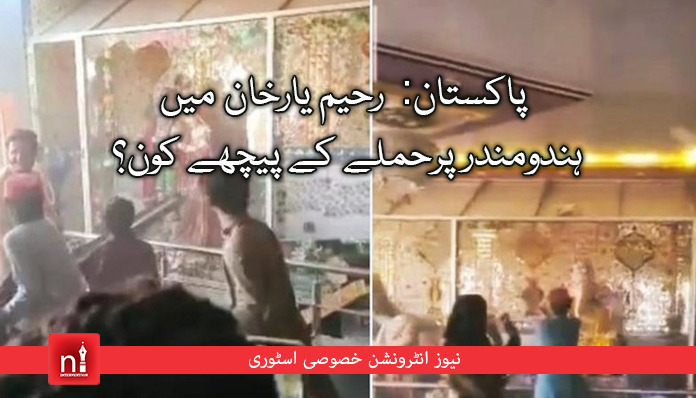
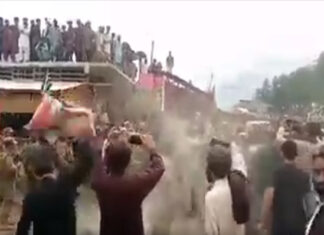
Videos of the sacrilegious incident went viral on social media wherein dozens of people were seen gleefully smashing the temple murtis (idols), windows and doors with sticks, stones and bricks without impunity. Around eighty Hindu homes are located around the temple that is surrounded by Muslim majority population.
“The local police were present when a mob of Islamic extremists attacked the temple, vandalized it and desecrated the sacred murtis, but instead of stopping the attackers they left, and the temple was vandalized. The mayhem continued till Pakistani Rangers reached the area and took control of the situation but no one has been arrested,” said a local eyewitness present at the time of the incident.
Fearing an attack by these Islamic extremists the Hindus around the temple locked themselves inside their homes. However, it did not stop these Islamic extremists from attacking the Hindu homes and shops, but they could not do much damage. Rangers had reached the area at that time and the crowd had dispersed.
Pakistan’s Prime Minister Imran Khan Niazi, Chief Justice of the Supreme Court and the Chief Minister of Punjab have taken notice of the unfortunate incident and ‘asked’ for the case to be investigated and conviction of culprits. A large section of Pakistani media is running news loaded with words such as ‘minority rights’ and ‘freedom’, but so far no arrests have been made and neither is it expected that any of the culprit would ever be arrested or convicted. All statements and news reports are merely an eyewash that are being floated around to create an impression in the world that Pakistan assures the rights of minorities. In the background, all the culprits will be covered up and ably defended.
Reasons for the attack
The attack on Rahim Yar Khan temple was blamed on an alleged
desecration of a madrassa and blasphemy by a local eight-year-old Hindu boy.
According to Dr. Ramesh Vankwani, chief patron of the Pakistan Hindu Council, and Dr. J. Paul Chhabria, Head of Pakistan Hindu Forum and Member of the National Commission for Minority Affairs; on July 23 Bhavish Kumar Meghwar, an eight-year-old local Hindu boy had accidentally entered a mosque where the deputy Imam Hafiz Ibrahim scolded him and the child urinated out of fear.
The case was dismissed at that time, but on July 24, an FIR
was registered naming “unknown persons”. The big question is when it was known
that an eight year old had entered the madrasa why was the ‘name’ of ‘unknown
persons’ included in the FIR?
Other locals from Rahim Yar Khan say that the mentally handicapped eight-year-old Hindu boy went to the toilet of the madrassa and not to the library of madrassa as was being alleged in certain quarters. The boy was caught by madrassa clerics, scolded and then handed over to the police. However, the madrassa clerics and other people said that this child had come to the library and urinated on the carpet and so action should be taken against the Hindu boy in accordance with blasphemy laws.
The local police registered a case against this eight-year-old
Hindu boy on July 24 under Section 295A and arrested him. When the child was
produced in courts on August 4, the court released him on bail because he was a
minor and mentally handicapped.
The police explained that since the child was a minor, he could not be given a severe sentence under Section 295A, due to which the magistrate ordered his release on bail on July 28.
Local sources further explained that through the mediation of influential people in the area, the parents of this child had already apologized to the madrassa people saying that the child was mentally handicapped. But soon thereafter inflammatory announcements and speeches started from the mosques provoking locals about how a Hindu child has insulted Islam.
After the announcement from mosques, dozens of people came
out in a crowd and first blocked the CPEC (China-Pakistan Economic Corridor)
road in Rahim Yar Khan for hours to protest and then attacked the temple. The
release of child on bail had further enraged the locals.
“People blocked CPEC Road 25 at around 4 PM. Thereafter
the temple was attacked at 6:30 PM. I told the additional IG and then the Rangers
were called,” said Dr Ramesh Vankwani.
The face of most of the temple attackers are clearly visible
in the videos but still no arrests have been made so far.
It’s been the history of Pakistan that no arrests are made when there are attacks on minorities or the liberals. And then the incident is quickly suppressed despite everybody knowing who is behind such violent and extremist attacks. On the contrary, if there is a small incident against the military establishment, the arrests are made at a lightening pace and the case gets massive coverage across Pakistani media.
Dr J Paul Chhabria, head of the Pakistan Hindu Forum and a member of the National Commission for Minority Affairs, said that around 150 to 200 Hindu families live in Rahim Yar Khan who felt terrorized during the attack. The temple was barely five minutes away from the local police station, but the police did not arrive on time to save the Hindus.
Most of Hindu families from Bhong, Rahim Yar Khan have already
started leaving their homes after the temple was attacked and vandalized.
Lal Malhi, Member of the National Assembly and Parliamentary Secretary for Human Rights said in his message on Twitter that most of the Hindu families in Bhong have left their homes in fear after the attack on Hanuman ji’s temple. He demanded that the security of the properties of those who are leaving their homes must be ensured.
“When the protests started on Wednesday, all Hindus locked themselves
in their homes out of fear. We were worried for our children. The attackers
also tried to raid our shops. The local police stood like spectators. When the
Rangers came, we breathed a sigh of relief,” said a local Hindu from Bhong,
Rahim Yar Khan.
The Hindu community across Pakistan is raising its voice
against this attack and calling on the government to take concrete steps. This
attack has been condemned by non-Muslim Pakistanis as well as by several progressive
and liberal Muslims. The attack has been described as extremely tragic.
Ramesh Lal, head of the Hindu Panchayat in Hala, Sindh, said that the entire Hindu community was saddened by this incident. He explained that Hindus in Rahim Yar Khan have been living for a long time. “First a temple was attacked in Karak and now this attack happened in Rahim Yar Khan. All Hindus are worried about these frequent attacks.”
Radha Bheel, leader of Dalit Sajjag Tehreek from Thar said
that there was a lot of fear in the entire Hindu community due to the incident
of Rahim Yar Khan. “I am sitting so far away from Rahim Yar Khan and yet I am
afraid that such an incident may happen in my area. The incident in Rahim Yar
Khan is not the first incident. Even before this a Hindu boy in our area was
forced to curse his own God.”
Other attacks on Hindus in Pakistan
Rahim Yar Khan is not the first case against Hindus in
Pakistan.
In November 2020 Muslim extremists attacked Hindus in
Karachi and women and children were tortured. Similarly, in April 2017, a group
of Islamic militants broke into a temple at Thatta district of Sindh province
and smashed the entire structure and threw it into the gutter. Last July, video
of a 14-year-old Hindu boy in the Thar region of Sindh province went viral, in
which Islamic extremists can be seen holding the boy by his throat and ordering
him to say, “Say Allahu Akbar”. After the child says “Allahu
Akbar” the man hurls a volley of abuses on the child. Then the video shows
the figure of a man with white Vigo car in the background.
The white Vigo vehicles are used only by intelligence
agencies in Pakistan. The same white Vigo vehicle has been seen behind all the
reported cases of enforced disappearances in Pakistan including Balochistan,
Khyber Pakhtunkhwa and Sindh.
Discrimination against minorities is on the rise in Pakistan. And it is the military establishment and their intelligence agencies that are behind the spread of Islamic extremism and provocation because it uses the same Islamic extremist ideology to raise funds not only for security from around the world, but also to perpetuate its power.
There is no difference between the Taliban, ISIS or other Islamic extremist groups and the Pakistan Army. Their main purpose is to spread Islamic extremism around the world and to eradicate other religions.
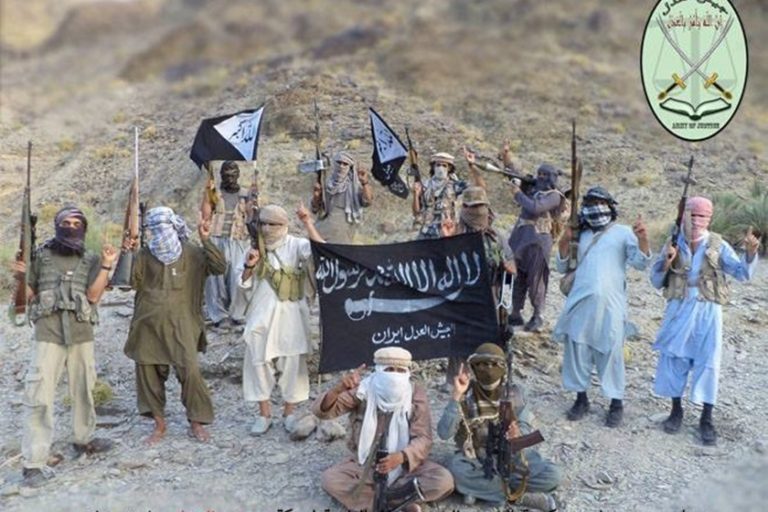
Balochistan Liberation Front (BLF) dismissed the allegations made by Jaish-ul-Adl and said that armed group backed by Pakistan Army is making baseless claims by distorting the facts.
“Jaish-ul-Adl, which is active against the government in Iran, released a video statement on social media on July 26, 2021 in which baseless allegations have been made against BLF by distorting the facts. The lack of knowledge of the speaker in the video released by Jaish-ul-Adl can be gauged from the fact that he calls BLF’s secular freedom struggle as an infidelity against Islam. We were waiting for Jaish to disassociate from this mischievous video statement, but there was no explanation from them. On June 30, 2021 also, Jaish-ul-Adl had falsely claimed in a statement that BLF and BRA sarmachaars had attacked Jaish operatives and in that alleged attack the help of Iran’s Revolutionary Guards were obtained. Jaish also claimed that its so-called devoted armed men had foiled the alleged attack and seized a vehicle belonging to the Baloch attackers. However, the fact is that at a place in the mountains of Panjgur, a parked BLF vehicle loaded with rations was stolen and seized by Jaish. Then they fabricated a false story of the attack to cover up their crime. Therefore, we consider it necessary to expose Jaish-ul-Adl, the masked force behind it and their mala fideintentions behind this false propaganda campaign against the Baloch freedom fighters, especially the BLF,” said BLF spokesperson Major Gwahram Baloch in a media statement.
Jaish-ul-Adl has long been active in various areas of occupied Balochistan that include Parom, Zamuran, Panjgur, Mashkel and Washuk, and also in areas adjacent to the Goldsmid Boundary Line under the patronage of the Pakistan Army and ISI. The camps, training centers and hideouts of Jaish-ul-Adl are in the above areas that operate under the patronage of Pakistan Army. At all of these areas the Jaish-ul-Adl have set up checkpoints on the road wherein they stop vehicles of Baloch people engaged in border trade and extort thousands of rupees per vehicle as forced tax. They stop passenger vehicles, search them and harass the local Baloch people. Jaish group also provides security for vehicles that are loaded with drugs.
Jaish-ul-Adl also acts as informers for the Pakistan Army and intimates them about the movements of Baloch sarmachaars (freedom fighters). Jaish also assists the Pak Army in conducting military operations against Baloch sarmachaars. Their vehicles are similar to those of the Pakistan Army and Death Squads, which sometimes makes it difficult for the Baloch sarmachaars to distinguish between Jaish members, Pakistan Army and Death Squads.
Due to the association of Jaish-ul-Adl members with Pak Army and Death Squads and similarity of their vehicles and other methodology, there have been incidents of armed clashes with the Baloch sarmachaars. In 2014, Jaish-ul-Adl clashed with BLF sarmachaars for the first time, in which a Jaish armed man was injured. When he was identified, the sarmachaars allowed the Jaish-ul-Adl to take their wounded member.
In another incident in 2015, Jaish-ul-Adl operatives suddenly launched an attack on BLF cadres in the Zamuran area, in which a BLF sarmachaar Farooq Baloch was martyred and Sarmachaar Sultan was injured. In this ambush an attacker was also killed. After this incident, local BLF commanders contacted Jaish-ul-Adl commanders and advised them that if they are fighting for the rights of their religious sect against Iran, they should set up their camps, training centers inside Iran. However, since Jaish-ul-Adl does not have the support of people, so they are reluctant to fight inside Iran.
“From the beginning, the BLF feared that Jaish-ul-Adl could become a tool of Pakistan against the Baloch national independence movement in the future. Today our fear is proving true. We see that Pakistan is using Jaish-ul-Adl as a proxy against the Baloch independence movement,” said Major Gwahram Baloch, spokesperson BLF.
In fact, Jaish-ul-Adl had joined hands with the Pakistan Army in 2019 to attack BRAS sarmachaars in the Buleda/Zamuran area in which five Baloch sarmachaars were martyred. The sarmachaars found a cellphone from the Jaish attackers at the scene, which contained pictures of so-called Jaish-ul-Adl jihadists and their camps and hideouts, which was proof that Jaish-ul-Adl operatives were involved in the attack along with the Pakistan Army.
It may be recalled that the majority of Jaish-ul-Adl armed men are from Mashkel, Washuk, Panjgur, Parom, Zamuran and Buleda areas of occupied Balochistan. In addition, there is a large number of Punjabi and other Pakistani terrorists in the Jaish-ul-Adl centers and hideouts.
Pakistan, through Jaish-ul-Adl is inciting sectarian extremism and hatred in Makuran and is undermining Baloch national values such as religious and sectarian freedom, harmony and tolerance. Pakistan is inciting this group against Baloch freedom fighters and is trying to use the presence of Jaish-ul-Adl in occupied Balochistan as a bargaining card against those Baloch families who migrated to western Balochistan to escape the atrocities of Pakistani military.
“The leadership of Jaish-ul-Adl should learn a lesson from the fate of Mullah Omar, whom Pakistan used as a tool in the areas of Kech, Tump, Gomazi, Dasht and some parts of western Balochistan through its terrorist group for killing many Baloch freedom fighters and their relatives. After fulfilling their aim, Mullah Omar, along with his sons, was killed in an encounter by the police in a high-security area of Kech,” said BLF sokesperson Major Gwahram Baloch.
“We want to make it clear to them that the BLF is not fighting a sectarian war but a national war for the independence of Balochistan against Pakistan. Pakistan has the same religion and sectarian belief which is the religion of Baloch majority, but this religious and sectarian relationship has not stopped Pakistan from forcible occupation of Balochistan, expansionism and colonial looting. The biggest enemy of Islam and Muslims in the region is Pakistan, whose expansionism in 1947 deprived the Kashmiri people of their right to self determination to decide their future. It is Pakistan that forcibly occupied Balochistan in 1948 and trampled on our independence, national identity and dignity of the Baloch nation. Pakistan’s so-called Muslim army massacred the Bengali nation in 1971. This is Pakistan, whose expansionist policy, such as “Strategic Depth,” has been shedding the blood of innocent Afghans in Afghanistan for the past 43 years. Thousands of Baloch children have gone missing at the hands of Jaish-ul-Adl’s so-called Sunni ally Pakistan’s savage army, intelligence agencies and Death Squads, said Major Gwahram Baloch in his media statement.
He further added that thousands of mutilated bodies have been found across Balochistan. Millions of Baloch have been displaced and are living a miserable life. The so-called Sunni Pakistan Army raids Baloch settlements on a daily basis, torturing, abusing and harassing Baloch youth, elders, children and women. “The lives, property and honor of Baloch people are insecure at the hands of the Pakistan. Why doesn’t Jaish-ul-Adl see these atrocities of the so-called Sunni Pakistan on the Baloch nation. Sunni Islamist Pakistan and its hypocritical religious parties are not only carrying the genocide of Baloch nation for the sake of Pakistani state interests but also stand with China on the genocide of Uyghur Muslims at the hands of China.”
A sectarian organization like Jaish-ul-Adl should realize that the Baloch are a nation in which believers of all sects of Islam freely practice their religious beliefs. Due to the same generosity and kindness of the Baloch, even the non-Muslims of occupied Balochistan proudly call themselves Baloch. Not a single sectarian group of the Baloch nation is subjugated but as a nation the Baloch are subjugated and as a nation they are fighting for independence from Pakistan. The forces that divide the Baloch nation on sectarian, tribal or linguistic grounds are making the mistake of undermining the Baloch national power which is being used intentionally and unintentionally to further Pakistan’s colonial interests, said BLF spokesperson in his media statement.
If rhetoric alone was the deciding factor on the issue of Kashmir, then Pakistan would undoubtedly have won its case hands down. Fortunately, things don’t happen that way in real life, something which the powers that be on the western side of the Radcliffe Line also know very well. Otherwise, why else would it have tried to annex Kashmir in 1965 [‘Operation Gibraltar’] by carrying out large scale infiltration of Pakistan Army personnel disguised as ‘razakars’ (civilian volunteers) to foment an insurrection in Kashmir Valley to facilitate its capture?
Having failed miserably to resolve the Kashmir issue militarily, Islamabad cunningly reverted to making UNSC resolutions as mainstay of its Kashmir case and by selectively interpreting its text, cobbled together a narrative that was so unconvincing that it never gained global acceptance. On the other hand, New Delhi put across its case on Kashmir lucidly, which is compelling and hence it has been recognised by an overwhelming majority of the international community. Unfortunately, India failed to counter Pakistan’s fallacious narrative on Kashmir with the resoluteness that it deserved, giving Islamabad a godsent opportunity to cite New Delhi’s silence as the manifestation of its guilt.
Islamabad’s Kashmir narrative may not have found traction within the international community but its use of bombast to compensate the inherent weakness in its Kashmir narrative did strike a chord with the masses on both sides of the LoC. Consequently, by portraying India as an ‘illegal occupier’ of J&K, Pakistan was able to prop-up the ‘azadi’ [freedom] movement here and with lavish use of funds, sustain it through proxies led by All Parties Hurriyat Conference [APHC].
That senior APHC leader Syed Ali Shah Geelani resigned in disgust due to rampant financial irregularities within this separatist conglomerate and AHPC becoming practically inactive after the center’s massive clampdown on its illegal sources of funding, is ample proof that the so called ‘self-determination struggle’ is not driven by ideology but by money!
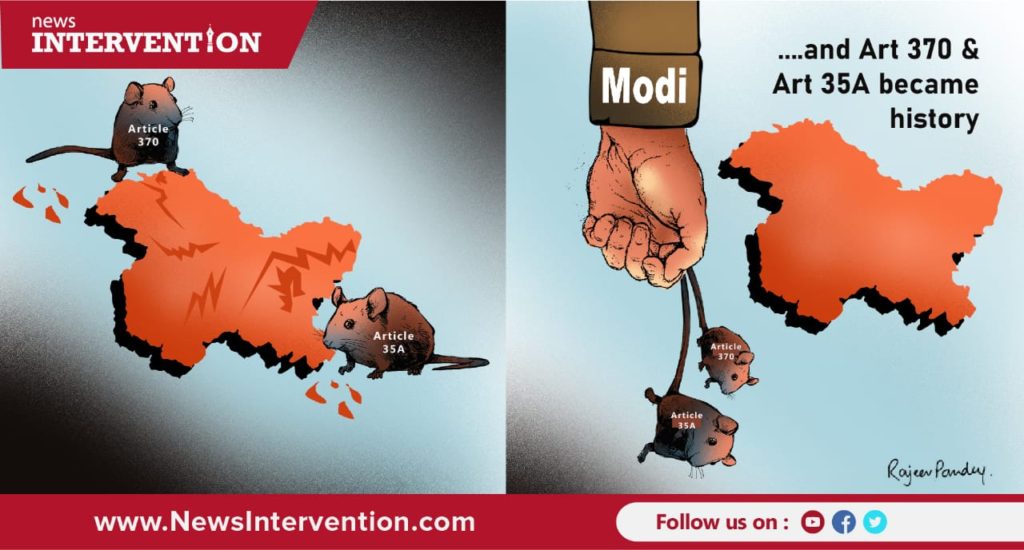
Art 370 & Art 35A were nibbling away Jammu & Kashmir like rats.
That this move also caught Prime Minister Imran Khan completely unaware is evident from his weird response, which besides being hilarious, also bordered on the ridiculous- like terming Article 370 abrogation as “illegal” and alleging that it “violates” UNSC resolutions. Even a person with the most rudimentary knowledge will tell you that every democratically elected government has the sovereign right to amend the country’s constitution– so Khan’s contention is laughable. Next, as making changes in the constitution is unquestionably an internal matter of the concerned country, by no stretch of imagination can this be considered as violation of any completely disassociated and external decree-like the UNSC resolutions!
The list of howlers from the cricketer turned Prime Minister of Pakistan doesn’t end here. According to him, by abrogating Article 370, New Delhi has “Gone against [Indian] Constitution… against a verdict of their Supreme Court as well as against that of J&K High Court.” Even if we, purely for the sake of discussion, accept Khan sahib’s argument, then the question that arises is-why is he so perturbed? If Article 370 really violates the Indian Constitution, then wouldn’t India’s opposition political parties and judiciary be more concerned and initiate appropriate action to rectify this irregularity? Lastly, as far as the abrogation going against court verdicts is concerned, doesn’t Khan know that in a democracy, the executive has constitutional authority to overrule the judiciary?
Similarly, he contends that Article 370 abrogation violates UNSC and UNGA resolutions on Kashmir. Once again, it appears that just like the institutionalised persecution of Uighur Muslims of China’s Xinjiang Autonomous Region by Beijing, Khan is also unaware of what’s mentioned in UNSC/UNGA resolutions on Kashmir. Granting special status to J&K under Article 370 was a decision taken by government of India without any reference to UN resolutions or directions from UNSC and so, how does its revocation violate UN regulations defies comprehension!
However, Khan’s argument that Article 370 abrogation goes
against Shimla Agreement is what takes the cake, because while replying to
Pakistan’s request for UN to play its “due role” on this issue,
UN Secretary General’s spokesperson Stephane Dujarric referred to this very
agreement as the ‘mantra’ for diffusing the Article 370 abrogation faceoff. He
said that the Secretary-General “recalls the 1972 Agreement on
bilateral relations between India and Pakistan, also known as the Shimla
Agreement, which states that the final status of Jammu and Kashmir is to be
settled by peaceful means, in accordance with the Charter of the United Nations.”
With Islamabad getting no meaningful support from both UN and the international community for its crusade against Article 370 abrogation, it’s abundantly clear that through this move, New Delhi has checkmated Islamabad’s pompous narrative on Kashmir. It has also sent out an unambiguous message to the world that J&K is very much part and parcel of India, and absence of any worthwhile objections clearly indicates that it has global acceptance!
So, while this move has come as a big setback for Islamabad as it has pulverised Pakistan’s Kashmir narrative, for Prime Minister Imran Khan, it’s become a source of personal embarrassment. Let’s not forget that it has given the likes of Pakistan Peoples Party (PPP) chairman Bilawal Bhutto a chance to take a swipe at him by saying “Earlier, Pakistan’s policy on Kashmir was on how we will take Srinagar. Now, under Imran Khan’s government, we have been forced to think on how we will save Muzaffarabad”!
An associated negative fallout for Khan is that none of the
startling predictions that he had so confidently made, have come to pass. He repeatedly
prognosed a “false-flag operation” by India that would graduate
into conventional war as Pakistan exercised its right to self-defence and thereafter
culminate in a nuclear exchange.
But this didn’t happen!
Khan used the UNGA podium to caution the world that Kashmir
was on the brink of Armageddon and his warning was indeed very scary. Saying, “You
think Kashmiris will accept a new status quo under revocation of Article 370,” he
posed a petrifying question- “What will happen when the curfew is lifted?”
Then again asking the audience “But what will happen when 8 million
Kashmiris come out of a lockdown and face 900,000 troops,” he, à la Nostradamus
prophesised, “I fear there will be a bloodbath”!
This too didn’t happen!
It’s but natural that the severe embarrassment caused to Khan has made abrogation of Article 370, a personal issue for him. Similarly, Pakistan Army chief Gen Qamar Javed Bajwa too is smarting under the ignominy of having been compelled to enter into a ceasefire agreement with Indian Army due to unacceptably high fatalities being suffered by Pakistani troops on LoC. So, with those at the helm of affairs in Islamabad and Rawalpindi not being in a reconciliatory mood, the likelihood of any Indo-Pak dialogue or normalcy in relations in the foreseeable future is practically zero!
Consequent to Article 370 revocation, it appears that Islamabad is perhaps changing the thrust of its Kashmir strategy. From its traditional demand that the ‘K’ issue be resolved once for all as per the aspirations of Kashmiris, Khan is now talking about a two-stage process- first, wanting Kashmiris to accede to Pakistan through a plebiscite and thereafter, holding yet another referendum in which “Kashmiri people will be asked to decide whether they want to live with Pakistan or as an independent nation.”Though it may sound bizarre and impractical, but this new move nevertheless needs to be neutralised before it takes root in gullible minds.
New Delhi’s diplomatic offensive to proactively unmask
Islamabad’s duplicity on J&K is in dire need of invigoration and here is a
good opportunity to do so. Para 7(3) of the so-called ‘Azad J&K Interim
Constitution, 1974’ stipulates that “No person or political party in Azad
Jammu and Kashmir shall be permitted to propagate against, or take part in
activities prejudicial or detrimental to, the ideology of the State’s accession
to Pakistan.”
So, in this case, all that’s needed is highlighting the fact that when Kashmiris living under Pakistani occupation cannot even “propagate against, or take part in activities prejudicial or detrimental to, the ideology of the State’s accession to Pakistan,” then on what basis should Kashmiris trust Khan’s promise that Islamabad will give them the choice to decide “whether they want to live with Pakistan or as an independent nation”?
Two years have gone by and gloomy cynics still lament the undoing of a clause in the constitution of India that had deprived the entire population of the erstwhile Jammu and Kashmir state of numerous progressive and emancipating prospects. Not a single public demonstration was staged in any one of the then three regions of the state by way of resentment against scrapping of Article 370. Only the diehard political conservatives lamented its loss just because it meant the loss of their hegemony and monopolisation of power.
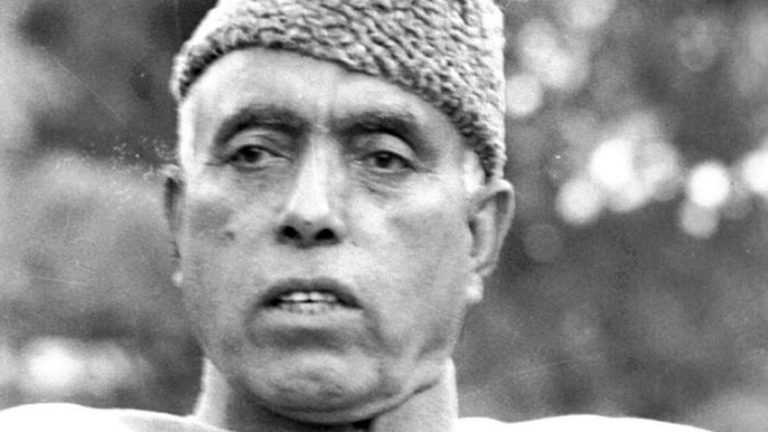
In the first place, the debate on the proposition whether the provision of a special status for J&K was desirable or not in the Constitutional Assembly was simply one-sided with a unanimous NO. Sheikh Abdullah along with Mirza Afzal Baig was encamping at 5 Prithvi Raj Road and threatening Jawaharlal Nehru that he would withdraw accession if special status was not conceded for J&K. That shows the fallacy of much touted convergence of ideologies between the Congress and National Conference.
On Nehru’s persuasion Sheikh Abdullah met Ambedkar —the father of the Indian Constitution — who bluntly told him that he was not going to create another Pakistan.
Secondly, inclusion of the Article 370 was a temporary provision, so said the constitution. Simple logic is that it should have been abrogated immediately after the Sheikh was deposed in August 1953, arrested and charged with treason. He had misused the Article. He had lost legal as well as moral basis for special status. The lone person who defied the entire constituent assembly and stood by him was “stabbed in the back” as Nehru once put it. A constitutional provision that had the potential of fomenting treason needed to be scraped particularly when it was a temporary measure. The notable flaw was that the conditionality of it being “temporary” had remained undefined.
What lay at the core of Sheikh Abdullah’s demand for special status? Our national political leadership always felt shy of calling a spade a spade. Sheikh Abdullah argued that India was predominantly Hindu while J&K was predominantly Muslim that needed safeguards against what political scientists call ‘tyranny of majoritarianism’. The logic behind the theory is understandable but then it’s application has to be universal and comprehensive and not selective. Not to speak of similar safeguards to the non-Muslims of the state, Sheikh Abdullah did not even concede minority status to any religious minority community in J&K. The Constitution of the state did not recognise any religious community a minority community whereas the state does not bar its majority community from enjoying the full benefits accruing to them in their status as number one national minority according to the Indian Constitution.
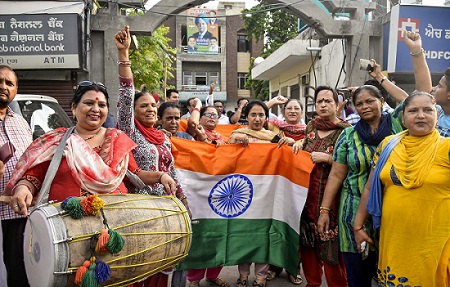
August 5th, 2019 will be remembered as a historic day in India. On this day the Narendra Modi-led government announced the abrogation of Article 370 and Article 35A.
The question is what lay at the root of this anomaly? The fact is that Nehru was very euphoric about the Leftist ideology and Leninism in particular. He was enamoured of Soviet Union’s model for Turkestan or Central Asia. The Soviet system had allowed special status to certain regions like Gorno Badakhshan or Nogorno Karabakh. When the Leftists in National Conference were asked to provide a model for free J &K, they contacted Adhikari who suggested the constitution of Uzbekistan as a model.
The Naya Kashmir Manifesto was only the rehash of the constitution of Uzbekistan. This may be a plausible theory but the fact is that Nehru paid no attention to the riders imposed for grant of autonomous status to the aforementioned regions. For example, despite regional autonomy only one political party viz. CPSU was allowed to function and it functioned in accordance with the decisions of the Central Party. Secondly, the federating units including regional autonomies could ask for secession on certain conditions like (a) enjoy financial and economic viability and non-dependence and (b) the seceding unit does not pose a security threat to the Federation.
The foundation for abrogation of Article 370 was laid by Sheikh Abdullah in 1953. His hobnobbing with the Americans (Adlai Stevenson), the Chinese (Zhou en Lai), Pakistani ISI (Awaan) and Saudis (in post – 1975 period) successively convinced the nationalist forces in the country that all this recalcitrance emanated from the constitutional insularity of J&K ruling apparatus.
Nearer home, the National Conference which like Congress had monopolised political domination allowed its administrative machinery full freedom of running state administration in a partisan manner. Discrimination on regional basis, willful stonewalling of beneficial legislation, pro-majority orientation of bureaucracy, soft-paddling with anti-national elements, entrenched nepotism and corruption and above all demonstration of non-seriousness towards vital national development schemes etc. was the phenomenon that kept the state retarded.
Why were the displaced persons from POK or even West Punjab denied statehood for seven decades in contravention of international law and the clauses of Human Rights Charter and Indian Constitution? Why should a Kashmiri bride lose her statehood rights if she marries a man from outside the jurisdiction of the state? What justification is there for an Indian national not having the right to buy land and property in the state while any Kashmiri can buy property anywhere in India.
The last nail driven by a “popular” government of the state was allowing thousands of Rohingya Muslims of Myanmar to settle down secretly in Jammu close to the international border with Pakistan. Without making anything public these intruders were provided with many civic facilities in shortest possible time. Ration cards, identity cards, Aadhaar cards, driving licences and work permits etc. all facilities were provided. Did the special status evaporate in the thin air? Why were the Rohingyas settled in Jammu region and not in the valley? Was it a step towards changing the demographic complexion of Jammu under the garb of Article 370? And finally the ambivalent role played by sections of Kashmir political leadership and the elitist class in the wake of eruption of Pakistan-sponsored terrorism has drawn the last nail in the coffin of Article 370. The truth is that the real political, economic and social freedom of J & K was won by the people of the state (now a Union Territory) on Aug 5, 2019 when the Indian Parliament abrogated it through a majority vote.
When the constitutional amendments were made, some elements from within and outside the state predicted widespread unrest and violence. Their predictions fell flat due to acceptance of the changes by the people quite happily. As it became apparent that the acceptance of the people was complete the restrictions imposed as a safety precaution were removed. The state has witnessed a normal situation ever since.
The security situation in Jammu and Kashmir was well in control in 2019 when the constitutional amendments were promulgated, terrorism was contained due to the successful conduct of Operation All Out, internal security in terms of disruptions through stone pelting and lock out calls was also well controlled. This stable security condition was one big reason for the government to go ahead with the bold decision. Today the security situation is even better than the 2019 threshold; the era of stone pelting and disruption seems to be a thing of the past. A big blow to the cult of terrorism has been struck on July 31 with the killing of dreaded terrorist Abu Saifullah aka Lamboo in an encounter. Saifullah was a resident of Pakistan’s Punjab province and belonged to the Jaish-e-Mohammed terror group; he was the key conspirator of the 2019 Pulwama terror attack that killed 40 CRPF Jawans.
On social side the many segments of society like the West Pakistan refugees and the people of the Valmiki community who were being denied state citizenship under the restrictive Article 35A have since started receiving their domicile certificates. The biggest beneficiaries are the women of the state who now have a right on their property even if they marry a person from outside the state.
Over 100 central laws and nine constitutional amendments that the region was deprived of are now applicable in the UT. Around 55 social security schemes of the central government that were not valid in the state are now incorporated and running well.
On the political front a big achievement has been the successful conduct of the District Development Council (DDC) elections which were both fair and non-violent. The Panchayati Raj institution in the UT is now three-tiered and very active on ground. To give it a boost the government has doubled the district’s budget which is now Rs.12,000 crores. Districts are now working on integrated plans drawn out by elected representatives. Panchayati Raj institutions are ensuring development in remote villages. MGNREGA and PMAY have gone online with geo-tagging that has helped ensure timely disbursement of funds. At the state level new political setups like JK Apni Party (JKAP) are coming up to challenge the old guard. Such changes will be a breath of fresh air for the UT.
In a recent meeting with all parties of the UT, New Delhi has assured that elections will be held after the process of delimitation is completed. The Delimitation Commission recently visited the state which indicates that the task is being undertaken with urgency.
Jammu Kashmir has recorded a little more than 3 Lakh COVID cases with about 3,300 deaths, a considerably low number when compared to the national state average. Apparently, the pandemic was dealt well by the administration. The people too responded very positively and undertook prescribed precautions without complaint. This contributed tremendously in keeping the number of cases within manageable levels.
Those who got infected were given timely and professional treatment. To meet all contingencies, oxygen plants were flown in by the Indian Air Force from Germany and other places. Now every Panchayat has Oxygen supported beds and generation capacity of Oxygen stands at 60,000 MPI, 99% people of above 45 year age and 40% in the 18-40 age category have been vaccinated. This has been achieved despite the difficulty of vaccination in the remote areas, camps in such areas were organised with active support from the Indian Army.
The biggest achievement by far is provision of transparent and corruption free governance. Technology is ensuring timely service to the people; digital applications have been created to speed up the issue of domicile certificates, caste certificate, pension, scholarship etc.
The Lieutenant Governor of the UT Jammu Kashmir Manoj Sinha is known to travel across the region by road, stopping at many villages to meet the people to get to know their problems. Quite obviously the officers also have to make a commensurate effort. The Lt. Governor also takes weekly reviews and holds meetings with 20 people per district (chosen randomly) to address their problems on the spot.
With peace being ushered in the region, development work has also gained momentum. Ever since the change in status, almost all Union Ministers have visited the UT and sanctioned projects. Languishing projects have been fast tracked; railway networks, roads and flyovers are being built. Jammu Kashmir is slated to have two AIIMS level hospitals, two more government medical colleges and hospitals at Kathua and Handwara respectively, two IT parks, two Central Universities, IITs and IIMCs. Some are already functional and consolidating their excellence. New Delhi has earmarked Rs. 20,400 crore to give a boost to the new Industrial Policy. Land is being earmarked in almost all districts for setting up of industrial units.
Of note is the Super 75 scholarship scheme to support education of meritorious girls from poor families, Tejasvani scheme for young women entrepreneurs between 18-35 years of age who will get up to 5 Lakh financial assistance under Mission Youth, PMJAY Sehat under which all citizens of JK will get health insurance cover of 5 Lakh under the Prime Minister Jan Arogya Yojana. There are so many more such people centric projects being introduced.
There is a long distance to be covered before the wounds of the people of Jammu Kashmir inflicted by unfettered foreign sponsored violence and political opportunism are filled. The silver lining is that a beginning has been made. It can be said with all responsibility that the constitutional change was for the better even as challenges persist.
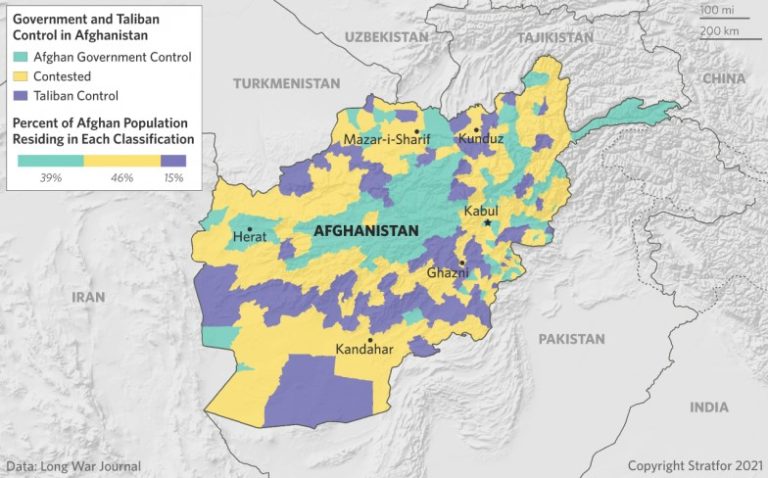
Reports emanating from the Indian Ministry of External Affairs (MEA) suggest that the Taliban is, as yet, contained in the southern areas and has control of about half the country including Kandhar, Helmand, Ghazni and Paktia. On the other hand there are media reports suggesting that many districts in the North and the North-West of Afghanistan are also in the control of the Taliban. The gravity of the situation can be gauged by the fact that the visit to India of the Afghan Army Chief, General Wali Mohammad Ahmadzai, scheduled for July 27, was cancelled due to the intensified offensive of the Taliban. In the absence of verifiable news and the fluidity of the evolving situation, it is difficult to predict the actual level of Taliban presence and the overall political situation in Afghanistan.
It is against this backdrop that the visit of US Secretary of State Antony Blinken to India on 27-28 July gains significance. It is notable that before meeting the Indian Foreign Minister S. Jaishankar on 28 July, Blinken held a meeting with the Indian National Security Advisor (NSA) Ajit Doval. Quite obviously they would have spoken about China, Pakistan and most importantly Afghanistan. Ajit Doval would have definitely raised the issue of “the need for sustained pressure on Pakistan to crack down on terror financing and terror modules.”
In his post meeting statements. Anthony Blinken summed up the US policy of Afghanistan as one of “continued engagement” which implies that the US will not allow the Taliban a free run there. “We are very much engaged in the diplomacy of working to bring parties together at the table for the resolution of the conflict in Afghanistan,” he said.
Blinken also made it amply clear that India and the US will work together in resolving the Afghanistan imbroglio. “As a credible partner in the region, India has and will continue to make a vital contribution to Afghanistan’s stability and development,” he said in the press conference.
This automatically implies that the US will not allow its actions to pose a threat to India and in this regard an understanding has been reached. Indian interests in the region will be kept in mind while dealing with the situation.
In an open cautionary note to Afghanistan Blinken said, “The Taliban is making advances in district centres, there are reports of them committing atrocities in Afghanistan. It’s deeply troubling. It certainly doesn’t speak well about their intention for the country.”
It is quite apparent that the US is unlikely to leave the country at the mercy of Pakistan’s Inter Services Intelligence (ISI) and Taliban. It is also quite clear that India will formally remain a part of the peace process.
India needs to be very alert and concerned about the presence of Islamic State — Khorasan Province (ISKP) also called Daesh within the fold of the Taliban. The organisation has old links with Tehreek-e-Taliban Pakistan (TTP), the Haqqani group and the ISI. ISI is responsible for giving ISKP a foothold in Afghanistan.
ISKP recruits fundamentalist resources from across the world for carrying out terrorism linked operations. It comprises a strong element of Pakistanis and has very close links with anti-India warlords like Hafiz Saeed. ISKP is a big threat to India since it manifests the probability of the Taliban coming back in Kashmir. The threat of Taliban extends to Punjab too where it could play a role in nurturing the ambitions and aspirations of the Khalistani elements. The Chief Minister of Punjab, Captain Amarinder Singh, and many other security experts have been voicing concern about this threat.
India has set out a policy of engaging all stakeholders in Afghanistan, including some segments of the Taliban. The Taliban, however, is a conglomeration of many pressure groups; even if India establishes a working relationship with some segments, the supreme leader can easily wash his hands off ISKP by saying that the organisation is not in his control. ISKP, thus, can be used effectively by the ISI to create trouble in Kashmir.
India needs to remain vigilant about the security threat that the situation in Afghanistan is posing. Her concerns have to be mentioned in all formal and informal discussions. It is very important to make Pakistan realise that by unleashing the Taliban on the region it will damage its own internal security apparatus and simultaneously face the wrath of the US, India and the international community. Pakistan must also realise that the Taliban poses a bigger threat to it and to its all time ally — China.
Taliban, on its part should realise that all countries neighbouring Afghanistan like Iran, Russia, China and Pakistan are looking at the country from the prism of self interest while India has always held the interest of the Afghan people paramount. India has been the largest donor to Kabul having given nearly $2 billion in reconstruction aid. The aid has been provided despite all sorts of roadblocks from Pakistan including denial of overland transit facilities which could have made things a lot easier. Taliban has further reasons to stay engaged with India in view of the assistance that the country can provide to it in gaining international legitimacy, something that Pakistan and China cannot do.
The end point is that India will need to keep her security concerns above all else while also staying engaged, along with the international community, in working towards the welfare of the Afghan people. The silver lining is that the inimical forces gathering around will not be able to dent the security apparatus now in place in Kashmir; most importantly the people of Kashmir will not let the Taliban enter their land and cause turmoil all over again. Taliban, on its part, should understand the importance of India for Afghanistan.
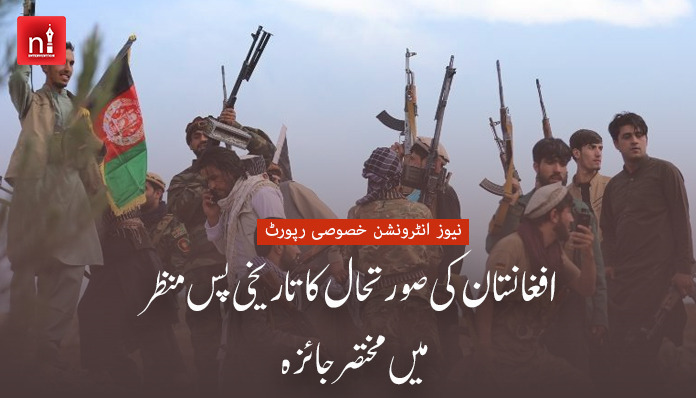
Afghanistan’s history spans centuries from the Ghaznavid era
to the Hotak empires. As inheritors of ancient history, Afghanistan certainly had
an inkling of the turn of events in the modern era, which is why the Afghan
government refused to recognize Pakistan’s membership in the United Nations on
September 30, 1947. Further, on July 17, 1973 the then President of
Afghanistan, Sardar Mohammad Daud Khan, in his first radio address said, “Pashtunistan
is the lost heritage of our forefathers …and it is an undeniable fact that the
solution can only be according to the aspirations of Pashtuns. Let the world
know that Afghanistan has no dispute with any country in the world except
Pakistan… and Afghanistan will continue to make every effort to resolve this
dispute.”
After Dawood Khan’s speech, the then President of Pakistan,
Zulfiqar Ali Bhutto, ordered the deployment of Pakistani troops on the Afghan
border and in the same month he set up an ‘Afghan Cell’ in Pakistan’s foreign ministry
and appointed General Naseerullah Babar as chief of this cell to oversee Afghan
affairs.
Afghanistan’s area which was taken away by the British
colonialists against the will of Afghans and is known as the Durand Line, was
later on handed over to the newly formed state of Pakistan. Here also the
British took a step against the will of Afghans. It was an unnatural and
illegal division, so the Afghan people have been resisting this division ever since
it became public. As many as half a million Afghans have shed their blood till date
due to the short sighted steps taken by British to destabilize the then Afghan
government.
Pakistan was created by the British to further their interests. The main purpose of creating Pakistan was to stall the rapid spread of communism. In 1955, when the erstwhile Soviet Union tried to pave its way into Afghanistan, every effort was made to stop it.
British adopted their policy of divide and rule in
Afghanistan as well. During their colonial rule the British had initiated a policy
to destroy the Afghanistan’s secular society. So as a matter of this policy the
British started promoting Afghan mullahs, and reaped short term rewards against
the erstwhile Soviet Union.
However, in 1979 the Soviet Union assisted the Afghan government in rooting out the radical Islamic extremists called the Mujahideen. The Mujahideen were formed with the active involvement of Pakistan, the United States and its allies such as the Saudi government.
https://www.youtube.com/watch?v=2ibmljjPI7I
Click on the YouTube link to watch our video report
Pakistan created a network of madrassas and the Saudi
government provided funds to run them, while the United States provided
military equipment. During those days there was an unwritten agreement between
Pakistan and the United States under which both the powers agreed to informally
turn Afghanistan as the fifth province of Pakistan.
The prospect of Pakistan getting ‘ownership’ of an
Afghanistan rich in minerals, along with the parts snatched through the farce
called Durand Line, was nothing short of outright treachery. It is rather strange
that United States and Saudi Arabia knowing that this unnatural state
(Pakistan) was falling apart still went ahead to provide all kinds of material
and logistical support. The biggest example about Pakistan falling apart came
in merely twenty four years after its existence, when East Pakistan (now
Bangladesh) won its independence from Islamabad in 1971. But this independence
for Bangladesh’s Bengalis came after immense bloodshed. More than three million
Bangladeshi Bengalis were martyred and thousands of Bengali women were brutally
raped, but the Bengalis did not lose heart.
On December 16, 1971 when over 92,000 Pakistani soldiers surrendered
before the Indian Army it was the dawn of a new nation, Bangladesh. The
Bangladesh liberation war must have served as an eye opener for the world and
Pakistan’s duplicitous face must have been visible to US, UK and Saudis.
Unfortunately this did not happen. And Mujahideen continued to receive arms,
ammunition and training in Pakistan through active help from the US and Saudis.
The Mujahideen continued to flourish only to serve the parochial objective to halt
Soviet Union’s involvement in Afghanistan. The military trained Mujahideen
along with the large number of students graduating from Pakistan’s madrasas
were sent to Afghanistan to fight the Soviet forces. Saudi Arabia instilled
Wahabism while the United States armed these radical Mujahids. Afghan nationalists
tried to fight back all these forces but with active involvement of imperialist
powers they continued to suffer. Pakistan planted radical Islamists and madrasa
educated extremists across Afghanistan.
Earlier, this nefarious game of sponsoring bloodbath in
Afghanistan was in the name of Mujahideen movement, but after Soviet Union
retreated this game was re-started in the name of Taliban. The Taliban, buoyed
with the backing of Pakistan’s military establishment massacred thousands of
Afghans on the streets of Kabul. Soon the Taliban brutally murdered Afghanistan’s
nationalist leader and the then Afghan President Dr. Najib (Mohammad
Njibullah).
After the martyrdom of Dr. Najib, the Pakistan-backed Taliban
government was established in Afghanistan, but even then Afghanistan continued
to struggle against these Pakistani proxies (Taliban) under the leadership of Ahmad
Shah Massoud. With the establishment of Taliban government in 1992, the Taliban
succeeded in capturing most parts of Afghanistan. By the year 2001, except for
a few areas such as Panjshir that still held forth against the Taliban,
Pakistan-backed Taliban had taken full control of Afghanistan.
However, the 9/11 attack on Twin Towers at New York changed
the world. The United States blamed Al-Qaeda for the attacks, which is another
radical Islamic terrorist organisation. At this time the Soviet Union had
disintegrated and access to Central Asian Republics (CAR) was urgently needed
to prevent a resurgence of the Soviet Union. The central Asian states are rich
in minerals, and by becoming the custodian of the region, the United States
would be able to fulfill its dream of controlling almost the entire world,
including Russia and China.
Soon US invaded Afghanistan, but even after the US invasion,
Pakistan continued to nurture military training camps and also increase its network
of madrassas for newer recruitment of Taliban.
At present when the United States and its allies are
withdrawing from Afghanistan after 20 years of bloody war, we see the Taliban’s
military operations intensifying day by day such that they have already taken control
of a large area of Afghanistan. Afghanistan
President Ashraf Ghani recently said that more than 10,000 Taliban terrorists
had entered Afghanistan from Pakistan. And this number continues to swell.
Recently when the Taliban captured Spin Boldak it was
through direct assistance from the Pakistani forces. Amrullah Saleh, Afghanistan’s
vice president said in his tweet that Pakistan had threatened air strikes against
Afghanistan. Despite all odds, the Afghan governments’ forces regained control of
Spin Boldak.
Apart from the military support the Pakistani state is also
providing other logistical and medical facilities to the Taliban. So the Taliban
terrorists who are wounded in the ongoing battle with Afghan security forces are
treated in Pakistani hospitals. Pakistan also makes arrangements for the Taliban
to bury their dead in parts of Balochistan that belong to the Pashtun tribes.
Recently, the Afghan government handed over 39 bodies to the
Red Cross from different parts of Pakistan.
Whether it is the madrassas used against Afghanistan, the attacks
on Afghans living across the Durand Line and other nations who are being made
scapegoats in the name of religion, the Pakistani state is directly involved in
all these operations. All this evidence must open the eyes of the world, yet
the world has closed its eyes and refuses to offer any help to war torn
country, Afghanistan.
The world should have taken strict action against the rogue Pakistan
Army so that peace could be established in the world, yet all civilized nations
look the other way and behave as if Pakistan is their close relative and the
lives of millions of Afghans do not matter. If the world had not recognized the
existence of Pakistan in 1947, there would have been no terrorist organisations
such as Lashkar-e-Taiba and Jaish-e-Mohammed, Kashmir would not have been
burnt, the blood of three million Bengalis would not have been shed, there
would not have been daily mourning in every house of Balochistan, nor would innocent
Afghans have been killed by the Taliban.
Imran Khan’s political outfit Pakistan Tehreek-e-Insaf (PTI) is backing a former head of Afghanistan Taliban for a reserved seat– Ulema-e-Mashaikh– in the legislative assembly of Pakistan-occupied Kashmir (POK) to further Rawalpindi’s strategy of spreading Islamic extremism across Jammu Kashmir and Ladakh. Mazhar Shah Saeed alias Abdullah Shah Mazhar was the Taliban chief in Afghanistan’s province, who along with PTI’s POK secretary general Abdul Majeed Khan filed the nomination papers on PTI’s ticket for the seat of Ulema-e-Mashaikh.
Mazhar Shah Saeed alias Abdullah Shah Mazhar hails from the Lawat area of Neelam Valley. He lived in Karachi for a long time where he served as the Khatib in a local mosque. In the past, Mazhar Saeed Shah was actively involved in the ‘Afghan Jihad’ and has also held important positions in a province of Afghanistan in the Taliban hierarchy since the fall of Dr. Najib’s (Mohammad Najibullah) government in Kabul. Mazhar Saeed started his ‘jihadi’ journey from the banned terrorist organisation Harkat-ul-Mujahideen and later on held important positions in another banned terror outfit Jaish-e-Muhammad under the tutelage of Maulana Masood Azhar.
Mazhar Shah Saeed was banned in several regions for his
provocative speeches. After his provocative speech in Neelam Valley went viral
on social media he was included in the category of hate speech personalities by
several social media platforms.
In 2008, a terrorist named Riaz Hussain was killed during operations
by the Indian security forces on the Indian side of Jammu and Kashmir. This
terrorist Riaz Hussain was operating under the instructions of Mazhar Saeed
Shah, who in turn was connected with the Islamic extremists of Jaish-e-Muhammad
from Pakistan’s Sindh province.
In 2001, Al-Furqan was created after the United States added
Jaish-e-Muhammad and other organizations to its list of terrorist
organizations. Mazhar Saeed Shah was also a part of this Al-Fuqran. Later,
Mazhar Saeed Shah had differences with Maulana Masood Azhar, after which he
formed an organization called Tehreek-e-Ghalba-e-Islam. In 2011 he joined the Jamiat
Ulema-e-Islam and contested the elections in Pakistan-occupied Kashmir from
Neelam Valley, but lost.
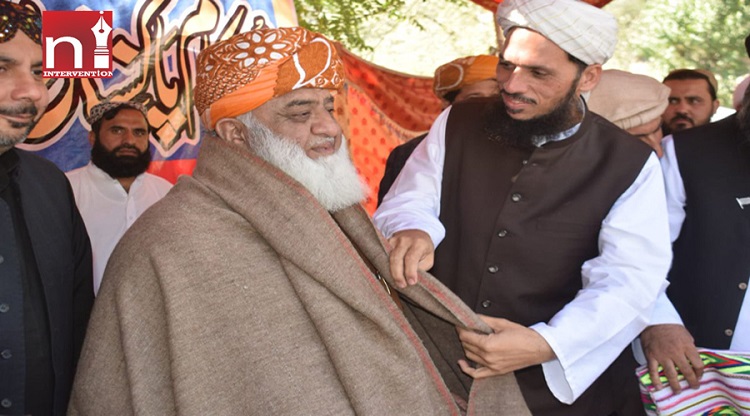
Recently, radical Islamic extremist Maulana Fazlur Rehman’s
visit to Neelam Valley was hosted by Mazhar Shah Saeed.
When Pakistan Army announced the July 26 elections in POK,
Mazhar Saeed announced that he was joining the Muslim Conference. However, when
Mazhar Saeed was denied a ticket, he went ahead to join the All Jammu and
Kashmir Jamiat Ulema-e-Islam Mahmood Al-Hassan group. This organization was
formed by rebelling against Maulana Fazlur Rehman.
Immediately after this Mazhar Saeed Shah was made chairman
of the party’s parliamentary board, but no candidate could make it to the
finals. Then Mazhar Saeed Shah once again cozied up to Fazlur Rehman and
installed the flags of Jamiat Ulema-e-Islam (Fazlur Rehman group) and Pakistan
Tehreek-e-Insaf (PTI) on his car. Mazhar Saeed is now very close to Fazlur
Rehman.
Interestingly, Mazhar Saeed has been missing for some time.
He was rumoured to be in the custody of authorities, but after a long period of
detention he was released after becoming physically very weak.
Mazhar Saeed Shah’s elder brother Mufti Abul Baba Shah
Manzoor (real name Tahir Shah) is a teacher in Jamia Al-Rasheed, Karachi.
Jihadis who started writing about extremism from Pakistan after the
establishment of the Taliban government in Afghanistan are among the regular
writers of the weekly magazine Zarb-e-Momin. Mufti Abul Baba Shah Mansoor has
also written several books including ‘Dajjal’.
The nomination of radical Islamic extremist such as Mazhar
Saeed Shah for the reserved seat of Ulema-e-Mashaykh in Pakistan-occupied Kashmir
(POK) reflects the thinking of Rawalpindi and Islamabad. Readers must remember that
Imran Khan has been accused of being an open supporter of Taliban in the past,
which earned him the title ‘Taliban Khan’.
Statements made by Federal Foreign Minister Shah Mehmood
Qureshi and other government officials following Taliban’s advance after the US
withdrawal from Afghanistan, as well as news released by the state news agency
has further softened Islamabad’s attitude towards Taliban.
It’s clear that Rawalpindi and Islamabad have made it a
state policy to unleash Islamic extremists in Pakistan-occupied Kashmir and in
Gilgit-Baltistan in order to disturb the peace and harmony on Indian side of
Jammu Kahmmir and Ladakh. If this spread of Islamic extremism is not nipped in
the bud then the oppressed, downtrodden and working class people of Jammu
Kashmir and Ladakh will bear the brunt and be the victims of mindless violence.
The ruling classes have benefited from every crisis, including Islamic terrorism,
barbarism, destruction, devastation and natural disasters. The sufferers, if
any, are only the working and middle class.
The intelligentsia and civil society members of Pakistan-occupied
Kashmir (POK) say that the main tactic of Pakistan Army is to destroy the culture
and identity of Kashmiris by cultivating the Taliban. If this happens then not only
the Pakistan-occupied Kashmir (POK) will be affected but also the Indian side
of Jammu Kashmir and Ladakh will be affected by terrorism.
The core reason for establishment of Balochistan Liberation Front (BLF) has always been to reinstate the separate Baloch identity and regain motherland’s sovereignty from the occupier Pakistan. With its establishment, BLF, along with armed struggle, began to create political and ideological awareness about the Baloch nation and has endeavored to bring Baloch people from all walks of life together to join the armed struggle, so that the masses consciously, politically and ideologically get involved in the resistance. Because, the struggle for independence is impossible without the participation of masses.
On the fundamental principle of freedom for occupied Balochistan, BLF is educating the Baloch nation to be ideologically and politically aware. Ideologically motivated BLF fighters, along with armed resistance are expanding the independence struggle with political awareness across Balochistan.
Baloch nation is now destroying the occupying Pakistan state’s army and responding in a befitting manner to their parliamentarian tools, death squads, religious extremists including countering the occupying state’s propaganda machinery and its fake narrative.
Organization’s fundamental principle is to ensure vetting and educating BLF fighters enough so that the weapon in their hands must remain a weapon in the hands of a revolutionary and their steps may never sway defending motherland.
BLF releases its Jan-June 2021 report card against the atrocities of Pakistan Army and its rogue intelligence agency ISI. BLF’s activities are published by Ashoob– the Baloch media conglomerate.
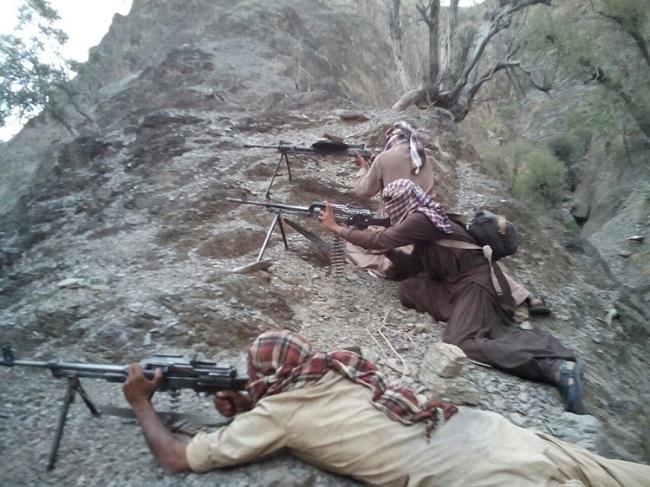
During the first six months of 2021, the Balochistan Liberation Front (BLF) carried out eighty five lethal attacks on the occupying Pakistani forces and their facilitators. In these attacks more than ninety four Pakistani soldiers were killed and several dozens were injured injured. In one such attack the BLF sarmachaars (freedom fighters) targeted Pakistani State Oil tanker and inflicted heavy causalities to the tanker and it’s crew.
Also over the last six months BLF targeted and killed ten members of Pakistan-backed Death Squad. There were also attacks on the military construction company Frontier Works Organization (FWO) near Turbat Airport Chowk while they were building a road. The attack damaged the machineries and the operators were injured. BLF sarmachaars also attacked a military backed drug dealer and three from the Chinese telecommunication company (Zong). BLF also targeted a Chinese national in Lyari, Karachi who was on government parole and was on a field tour for Sindh Solid Waste Management Board (SSWMB).
BLF sarmachaars (freedom fighters) attack Pakistani forces and Chinese nationals as Pakistan and China are blatantly looting the natural resources of Balochistan and simultaneously exploit Baloch people. Rapes, target killings, abductions and other human rights violation is commonplace across Balochistan. The Baloch people have been fighting for independence from Pakistan’s illegal occupation since 1948.
JANUARY
03 January 2021 BLF fighter Ganj Bakhsh alias Bahar Baloch was martyred in a clash with Pakistani forces in Keel-Kaur area of district Panjgur, Balochistan. On 3rd January, the Pakistan Army surrounded the BLF fighters but Shaheed Bahar bravely fought the enemy army and was martyred. Four Pakistan Army soldiers were killed and several others were injured in the clash.
17 January 2021 BLF sniper targeted and killed one Pakistani military personnel at a Pakistani military check-post in Buzdad Killi area of District Awaran, Balochistan.
18 January 2021 The BLF fighters targeted Pakistan State Oil (PSO) tanker supplying fuel to the airport in satellite town near Turbat Airport at district Kech, occupied Balochistan and inflicted heavy causalities to the tanker and it’s crew.
24 January 2021 The BLF fighters hurled a grenade at a Pakistani military post, killing two and wounding one in Singano-sar area of Turbat city of district Kech, occupied Balochistan.
26 January 2021 BLF fighters shot and killed Mirza Walid Bakhtiar, a member of Pakistan Army-backed Death Squad at Cheyr-Gandgi area of Balgatar, district Kech, occupied Balochistan. The state agent was the leader of a Death Squad gang. He was active in Apsar, Balgatar, Gadgi, Keel-Kaur and Bulaida. He was involved in the persecution of Baloch fighters, in kidnapping of their children and in various other crimes.
27 January 2021 The BLF fighters attacked Death Squad member in Singano-sar area of Turbat, district Kech, occupied Balochistan. Dawood Qadeer, who was sitting in front of a shop in Board-e-Bun, was shot and seriously injured.
Dawood Qadeer is a Pakistani Military Intelligence (MI) operative. He has been supporting the Pakistan military in enforced disappearances and extrajudicial killings. “Death Squads assisting the Pakistani military are our prime target. We appeal the people to stay away from these elements and Pakistani military. Fighters can target them at any time and place,” said BLF spokesperson Major Gwahram Baloch in media statement.
On this day at around 2100 hrs the BLF snipers first attacked and killed one Pakistani military personnel on a check-post in Mashkay Tank area of district Awaran, Balochistan. The outpost was then hit with other automatic weapons and rocket launchers. Several personnel at the check post were killed and injured.
FEBRUARY
04 February 2021 BLF fighters attacked military construction company Frontier Works Organization (FWO) near Turbat Airport Chowk while they were building a road. The attack damaged the machineries and the operators were injured. The occupying Pakistan Army, the military construction companies, its collaborators and the local construction companies that are involved in the loot of Balochistan are targeted by BLF revolutionaries.
05 February 2021 BLF freedom fighters shot and killed Abdul Karim, a Pakistani military intelligence operative in Turbat, the main city of district Kech, occupied Balochistan.
Abdul Karim was on his way home from the house of Yasir, a leader of the state backed Death Squad. Upon receiving the information, BLF fighters took action and killed him. Abdul Karim had come to Yasir’s house to join a military intelligence meeting during which they were distributing money among those who participated on the occasion of Kashmir Day. He has been supporting the Pakistan Army in its operations, abductions and killings. At the same time, he was involved in many social evil activities.
Abdul was released on May 2, 2019 with the help of military intelligence, despite being caught red-handed in a burglary during a military operation in Dasht Bazar, district Kech occupied Balochistan. He was also involved in robberies, military operations and targeted killings in Pidrak. He has been directly involved in several operations in the hills of his native village Dasht where many people have been abducted.
07 February 2021 BLF sniper killed the main guard at a Pakistani military check-post with sniper rifle at the Jakk Hill in Teertej, district Awaran in occupied Balochistan. BLF fighters also attacked the check post with heavy weapons, killing another soldier and wounding several others.
The Pakistan Army then tried to pursue the BLF fighters, but were ambushed by the BLF revolutionaries who killed four Pakistani soldiers and injured several others.
On the same day, at around 1930 hrs BLF fighters attacked a Pakistan Army check post in Labach Chowko, district Awaran with rockets and sophisticated weapons, killing two more Pakistan Army personnel and injuring two others.
08 February 2021 BLF snipers shot and killed a Pakistani military personnel at a Pakistani military check-post in Jaho area of district Awaran, occupied Balochistan.
The bewildered and defeated Pakistan Army, as usual, tortured the civilian population after the attack. The occupying forces tortured the people of Jalonti village after the attack and looted the houses.
10 February 2021 BLF sniper shot and killed a Pakistani military personnel at a check-post in the Singistan-Kandag area of Mand, district Kech, occupied Balochistan. At the same time the check-post was attacked with heavy weapons, in which, two other Pakistani military personnel were killed and one wounded.
13 February 2021 BLF sniper shot and killed a Pakistani military personnel at a check-post in the Malaar-Kahn area of district Awaran. At the same time, the check-post was attacked with heavy weapons. Several Pakistani military personnel were killed and wounded.
The BLF fighters attacked a Death Squad hideout in Saami area of district Kech, occupied Balochistan. The hideout belonged to a local Death Squad leader named Deedag. The attack killed three Death Squad members and seriously injured four others. Pak Army-backed Death Squad operatives are involved in the abduction of Baloch civilians, theft, robbery and drug trafficking.
A military vehicle with a landmine at Malik-e-Sing in Tank area of Mashkay Valley, district Awaran was targeted when it was returning to the camp from a routine patrol. The attack killed two Pakistani soldiers and wounded two others.
14 February 2021 At around 1700 hrs the BLF fighters attacked Pakistan military check-post at Lashkaran Kaur in Chaken Goran area of Balgatar with heavy weapons, killing two Pakistani military personnel and injuring one. The check-post is located on the China-Pakistan Economic Corridor (CPEC) route, which has been set up to protect the route.
15 February 2021 The BLF revolutionaries targeted and killed ISI informant Liaqat at Chakar-e-Azum Chowk in district Panjgur, occupied Balochistan. The state agent was a resident of Gichk who fled Gichk to Panjgur in late 2015. State informant Liaqat played a key role against Baloch freedom movement in Gichk, Panjgur.
Liaqat was on the payroll of the Inter-Services Intelligence (ISI), whose task was to inform the activities of the people of Gichk on a daily basis. He also belonged to a Death Squad gang involved in drug trafficking and other social evils. He was involved in the abduction of the Baloch youth Ali Dost, who was later killed by Pakistani forces.
17 February 2021 At around 2200 hrs BLF revolutionaries targeted and damaged the mobile phone tower of Zong telecommunications, the Chinese company based on the CPEC route in Dasht area of district Kech, occupied Balochistan. The Pakistani military is planning to set up a network on the CPEC route to trace the movement of Baloch freedom fighters and to protect their forces. Any project that harms Balochistan’s independence struggle is on the target of BLF.
20 February 2021 BLF revolutionaries targeted Saleh Karim Dad’s drug den in Hoshaab, district Kech, occupied Balochistan. All kinds of drugs, including opium and alcohol are traded at Hoshaab.
22 February 2021 The BLF freedom fighters attacked a Pakistan military check post in Singani-Sar area of Turbat, district Kech, occupied Balochistan at around 2000 hrs. A hand grenade fell inside the check post, killing and injuring several military personnel at the post.
MARCH
03 March 2021 The BLF freedom fighters targeted a convoy of three vehicles of the occupying state’s cement factory at around 2130 hrs in Sakran area of district Hub, occupied Balochistan. Two vehicles came under heavy attack, causing loss of life and damage to property.
07 March 2021 A person named Qadir used to guide the Pakistan Army in various operations in various areas of Awaran, especially in Kolwah, in pursuit of Baloch freedom fighters. He was arrested in February 2021 by BLF fighters. During interrogation, Qadir confessed to all his crimes. He was indeed informing the occupying Pakistani forces about movement of Baloch revolutionaries in and around Kolwah, GeshKaur. He also confessed that he had been with the occupying forces in several military operations.
After his confession Qadir Perak was sentenced to death on 7th March 2021 for supporting Pakistan against Baloch national liberation fighters.
09 March 2021 In the Baghdadi area of Lyari, Karachi, BLF fighters targeted a Chinese national who was on government parole and was on a field tour for Sindh Solid Waste Management Board (SSWMB).
“China’s direct intervention in Balochistan and Pakistan’s involvement in repressive policies is by no means acceptable. We have warned China and Chinese employees about this long ago. Pakistan is committing genocide of Baloch. If China or any other country supports Pakistan in this crime then we have the right to defend ourselves. The locals should stay away from the imperialist Chinese workers. We once again warn foreign investors to refrain from investing here,” said BLF spokesperson Major Gwahram Baloch.
10 March 2021 BLF revolutionaries shot and killed Haider Siah-Pad, a key member of the state death squad near Levies police station in Kharan area of Balochistan. Haider Siah-Pad was a key figure in the Inter-Services Intelligence (ISI’s) armed death squad against the Baloch independence movement and a notorious informant who, along with the occupying Pakistan Army in Kharan, Panjgur and Dalbandin, forcibly disappeared activists, freedom fighters and civilians. He was at the forefront of target killings.
“Other members of Haider Siah Pad’s Death Squad are also on our target. We warn these local ISI brokers to abandon the abominable act of betrayal of nation and sale of conscience, otherwise their fate will not be different from that of Haider Siah-Pad,” said BLF spokesperson Major Gwahram Baloch.
11 March 2021 The BLF sniper shot and killed a Pakistan Army personnel at the military camp in Dashtuk Kothaan area of Zamuran. The entire population of Kothan has been evacuated by the Pakistan Army. Locals have become IDPs (internally displaced persons) who are forced to live like refugees in different areas.
12 March 2021 The BLF fighters targeted Pakistani military vehicles between Bullu and Mubarak-chat in Mand area of district Kech, occupied Balochistan with heavy weapons. Four soldiers were killed including an officer and several others were injured. They were on their way to the camp after checking vehicles in the area.
14 March 2021 A Death Squad operative was targeted by a landmine in Pilar area of Jaho, district Awaran, Balochistan. Hassan the Death Squad worker was seriously injured in this attack, when his motorcycle hit the landmine. After this attack the Pakistan Army launched military operation in different areas and up of a new military check post in Jaho area.
17 March 2021 BLF freedom fighters hurled a grenade at the main check post of the house of a Pakistan Army Major near Shaheed Shafi Chowk, Mastung, RCD Road. The grenade fell inside the check post, after which Pakistan Army cordoned and sealed off the area to prevent anyone, including the media, from accessing the site to cover up the security forces’ losses in the attack.
Pakistani military personnel at the checkpoint have been involved in harassing and extorting civilians, including transporters.
The BLF fighters fired a rocket at the main army camp in Kohro area of Jaho, district Awaran, Balochistan which landed inside the camp, causing casualties to the forces. After this attack, the Pakistani military personnel raided the settlements as usual, looted homes and detained several people and transferred them to army camps.
22 March 2021 BLF fired several rockets and attacked Gajjar Army camp in Mashkay with heavy weapons. The army camp at Gujjar College was destroyed in this rocket attack and heavy losses were inflicted on the occupying forces.
The BLF freedom fighters attacked another military camp at a hospital in Balgatar, Sari Gadgi, with rockets and heavy weapons as the Pakistanis were busy in the preparations of March 23 Pakistan Day celebrations. The Pakistani forces had captured this hospital and driven away ailing patients.
24 March 2021 BLF fighters attacked and killed two Pakistani military personnel with sophisticated weapons in Saiki Bazaar area of Parom, district Panjgur, Balochistan.
25 March 2021 At around 12 PM, the BLF fighters detonated a remote-controlled bomb near an army camp at Yaqoob Bazaar in Parom area of district Panjgur, Balochistan, destroying the vehicle and killing all four soldiers on board. The BLF fighters torched the machinery of Zong Company’s mobile phone tower in Ball Nagor area of Dasht district Kech, Balochistan.
28 March 2021 At around 1000 hrs, the BLF fighters attacked a Pakistan Army post at Shaheed Yahya Chowk in Salala Bazaar area of Turbat city with a grenade, killing one Pakistani military personnel.
29 March 2021 At around 0600 hrs in the morning, the BLF fighters attacked a military camp in Sami area of Kech district with mortars. This was a new camp set up on the China-Pakistan Economic Corridor (CPEC) route. The BLF fighters fired eight mortars at the military camp, which fell inside the camp. Pakistan Army suffered heavy loss of life and property in this attack.
30 March 2021 BLF fighters targeted a Pakistan Army vehicle with heavy weapons at Saiki Bazaar area of Parom, district Panjgur, Balochistan killing two military personnel on the spot and seriously injuring two others. There were two vehicles of the occupying army, one of which was parked in Saiki Bazaar, which was attacked by the BLF fighters at the same time. Two soldiers were standing outside the vehicle when they were killed on the spot while two others in the vehicle were critically injured.
APRIL
02 April 2021
BLF freedom fighters fired two BM12 rockets at the new International Airport under construction in the Gurandani area of district Gwadar, Balochistan, which landed at the exact construction site. The timing of the attack at six o’clock was chosen because all the workers and security personnel were ready to go back to the quarters together at that time. The occupying imperialist forces suffered heavy casualties in this attack. These projects are part of the China Pakistan Economic Corridor (CPEC) project.
In another attack the BLF fighters planted a landmine at the post of occupying army in Toba area of Gichk. This post is used during military patrols. Three Pakistani soldiers were killed after stepping on it.
03 April 2021
The BLF freedom fighters targeted the Kharan Levies police station with a grenade. For a long time, the Kharan Levies operatives have been directly involved in operations against Baloch civilians along with the Pakistani military.
A tower of Zong, a Chinese mobile phone company located in Hochat, Dasht area of district Kech, Balochistan, was targeted and set on fire by the BLF fighters. Zong and other companies are installing mobile towers to protect the Pakistani forces on the CPEC route so that they can succeed in their imperialist plans.
11 April 2021 BLF revolutionaries carried out a grenade attack on the hideout of state agent Sameer Sabzal in Turbat area of district Kech, Balochistan. Sameer Sabzal and his gang members committed crimes such as theft and robbery under state’s patronage. In many cases, despite solid evidence against Sameer and his accomplices and the seizure of weapons from them, he was acquitted by the courts and released from prison.
Sameer Sabzal was the main accused in the sensational murder of Malik Naz Baloch in Turbat last year, and seriously injuring her four year child Bramsh. But due to state patronage he was acquitted in the case.
“Sameer Sabzal and all his associates and supporters are on our target. We can target them at any time. Therefore, the Baloch nation is appealed to stay away from these elements,” said BLF spokesperson.
14 April 2021 BLF sniper attacked and killed one Pakistani military personnel at Atta Muhammad Godh Bazaar in Jhal area of Jahoo, district Awaran, Balochistan.
15April 2021 After the attack in Jhal Jaho, the occupying Pakistan Army turned towards the mountains in a daze and tried to chase and target the BLF fighters. However, previously positioned BLF fighters ambushed the Pakistani soldiers. Two motorcycles in the convoy came under heavy attack, killing two motorcyclists and injuring two others.
In another attack, the BLF snipers killed two Pakistani military personnel on a newly constructed outpost in Bansar area of Mand, district Kech, occupied Balochistan.
16 April 2021 BLF fighters hurled a hand grenade at a Pakistani military check post at Nazar Chowrangi in Hub city. The grenade fell inside the military check post, killing one Pakistani military personnel.
17 April 2021 The BLF fighters targeted two fortifications of a military post in Tuba area of district Washuk, Balochistan with rockets and heavy weapons. The attack completely destroyed both these fortifications on the hill and killed and injured all the military personnel present.
19April 2021 BLF samachaars shot and killed Muzammil at the cricket ground of Kauda Yusuf Bazaar in Absar area of district Kech, Balochistan. Being a state informant, the man was playing a key role in the state-formed local armed death squad against the Baloch independence movement. Along with Pakistani security forces all those who are supporters of the occupying state against the national liberation struggle are on our target. We have continuously been appealing to the people to stay away from the forces and local state agents and we still appeal not to collaborate with Pakistan forces.
21 April 2021 The BLF snipers attacked and killed one Pakistani military personnel with a at Shaheed Salim-Koh in Mand area of district Kech, Balochistan.
22April 2021 In Balgatar, the BLF fighters fired rockets and attacked a Pakistani military post with heavy weapons from two sides. The military post was badly damaged and several Pakistani military personnel were killed and injured. This was a new check post constructed a month ago where passer by and locals were harassed and humiliated under the guise of search.
25 April 2021 The BLF fighters attacked six Pakistani soldiers at Kahir Kaur in Dasht-e-Sindaan area of district Kech, Balochistan, as they were leaving their check post and heading towards the river to fetch water. Three of the six soldiers were killed on the spot and the other three fled to the outpost.
26 April 2021 Attack on a Pakistani military post at Gatti Kaur area of Hochat, Dasth, district Kech, Balochistan with snipers and other automatic and heavy weapons. Two Pakistani military personnel were killed and several others were injured in this attack.
27 April 2021 BLF sarmachaars hurled a grenade at a military post at Cinema Chowk in Turbat, causing heavy casualties to the Pakistan Army.
28April 2021 BLF snipers attacked and killed one Pakistani military personnel at a Pakistan military check-post in Patuk area of district Kech, Balochistan.
29 April 2021 Attack on a military post at Braat Kaur area of Tump, district Kech, Balochistan. Two Pakistani military personnel were killed and several others were injured in this attack. In another attack the BLF fighters hurled a grenade at a Pakistani military post at a hospital in Sangani Sar area of district Kech, Balochistan. The hand grenade fell inside the military checkpost, killing and wounding personnel inside the checkpoint. This checkpost was formed by forcibly occupying hospital premises.
30April 2021 BLF freedom fighters attacked a convoy of occupying Pakistani forces consisting of three motorcycles with rockets, snipers fire and heavy weapons at Jawan Taak area of Gichk, district Panjgoor, Balochistan. The military vehicle was badly damaged in this attack and all the Pakistani military personnel were killed while the injured motorcyclists fled.
Baloch Sarmachaars (freedom fighters) in action. (Representative photo/News Intervention)
MAY
02 May 2021 BLF fighters attacked with heavy weapons and fired two 82 shells on the newly-built residential headquarters of Pakistani military in Mashkay Gajjar area of district Awaran, occupied Balochistan.
Similarly, an army post in Alangi area of the Mashkay Valley was targeted by BLF fighters with rockets and heavy weapons. The Pakistani forces suffered heavy casualties in these attacks.
After this attack on their military camp in Mashkay, the Pakistan Army moved towards the mountains of Koh-Ispeth in pursuit of BLF fighters in Mashkay. The military convoy included two motorcycles and vehicles on the front line. Their move backfired when the two motorcycles struck a pre-laid landmine in the Koh-Ispeth River, killing two military personnel and injuring two others. Shortly afterwards, a gunship helicopter arrived to pick up the corpses of Pakistani soldiers.
Two hours after the attack, the BLF fighters targeted a military convoy in the Bunduki area of Mashkay Valley, in which army men were killed and injured. BLF sniper also shot and killed one Pakistan military personnel at a military post in Mussa Kaur area of Asiabad, Tump district Kech, occupied Balochistan.
09 May 2021 The BLF freedom fighters targeted two Pakistani military vehicles with rockets and heavy weapons at Ahmed Chankar, Nok Kaur River in Dasht area of district Kech, occupied Balochistan. One vehicle came under attack in which all five personnel on board were killed on the spot while the military personnel in the other vehicle were also killed or injured.
11 May 2021 BLF sarmachaars clashed with the Pakistan Army in Patandar area of Mashkay Valley, district Awaran, occupied Balochistan when they were heading towards the mountains in pursuit of the BLF fighters. This led to a clash. The BLF fighters repulsed the occupying forces with rockets and heavy weapons. Three Pakistani military personnel were killed and several others were injured in the clash.
20 May 2021 The BLF sarmachaars attacked a military post near Kaor River in Dandar area of district Kech, occupied Balochistan with rockets and heavy weapons. Pakistani forces suffered casualties in this attack on their check post.
21 May 2021 The BLF freedom fighters hit two Frontier Corps (FC) patrolling motorcycles with remote-controlled bomb near Bashir Chowk on Qambrani Road in Quetta the capital city of occupied Balochistan. As a result, two personnel on the motorcycle were killed and two FC personnel on another motorcycle were injured.
26 May 2021 BLF freedom fighters attacked Pakistani forces as they looted the area after a military operation in Solair area of Gichk, district Panjgoor, Balochistan. Two Pakistani military personnel were killed while two others were injured in this attack.
31May 2021 The BLF snipers attacked and killed one Pakistani military personnel at their military check-post in Peedark area of district Kech, Balochistan.
JUNE
02 June 2021 BLF sarmachaars carried out a grenade attack on the Bahria Icon Tower near Clifton Bin Qasim Park in Karachi. It was a symbolic attack aimed at warning the notorious Bahria Housing Society of the Pakistan Army. The Bahria Town administration must abandon the colonial process of forcibly occupying the ancestral lands of Baloch and Sindhi people in Karachi and demolishing their houses and settlements, otherwise they must be prepared to suffer serious consequences, said BLF spokesperson.
05 June 2021 BLF snipers attacked and killed one Pakistani military personnel at a Pakistan military checkpost in Dukoop area of Mand, district Kech, Balochistan. Another military personnel was wounded during this attack.
07 June 2021 BLF fighters attacked a military outpost with snipers, rockets and heavy weapons in Bandi Malik area of Dandaar area of District Kech, Balochistan. The BLF fighters attacked from two sides. Two rockets landed inside the military post, causing severe damage and two Pakistani soldiers were killed and several others were injured in this attack.
08 June 2021 BLF revolutionaries hurled a hand grenade at a Pakistan Army vehicle in the Sengani Sar area of Turbat, district Kech occupied Balochistan causing heavy casualties.
11 June 2021 BLF freedom fighters fired several rockets and attacked Pakistani military checkpost with heavy weapons in Rodsar area of Mand, district Kech, Balochistan and inflicted heavy casualties on the occupying forces. BLF fighters also ambushed a Pakistan Army’s infantry patrol in Baragen Gazzi area of Jhao, district Awaran Balochistan, ambushes were carried out by rocket-propelled grenades, heavy weapons and fired several rockets killing two and injuring four Pakistani forces.
17 June 2021 The BLF fighters attacked a convoy of Pakistani military motorcycles near a petrol pump in Dannuk area of Turbat, district Kech occupied Balochistan with heavy weapons as they were leaving the camp for D-Baloch road. One Pakistani soldier was killed and one was injured in this attack.
22 June 2021 BLF snipers attacked and killed one Pakistani military personnel in a Pakistan military checkpost in Ban-Peer Kandag area between Apsi-Kahn and Gomazi in district Kech occupied Balochistan.
23 June 2021 BLF snipers attacked and killed one Pakistani military personnel in their checkpost at Mazan Band area of Dasht, district Kech occupied Balochistan.
24 June 2021 BLF freedom fighters hurled a grenade at a military post near the Park Hotel in Turbat district Kech occupied Balochistan, killing one Pakistani military personnel and wounding two others.
26 June 2021 BLF freedom fighters attacked Pakistani military personnel guarding the border with automatic weapons at Salah Koh in Shiraz area of Mand, district Kech, occupied Balochistan. The BLF fighters ambushed and opened fire on Pakistani security personnel, as a result three of them were killed on the spot. Soon after a convoy came to their aid that was also attacked by the BLF fighters and another military personnel was killed. Attempts were made to target the BLF fighters from a nearby checkpost, but they failed to stop the attack. Pakistani machinery was also damaged in this attack.
27 June 2021 BLF sarmachaars hit a water tanker and a motorbike with a remote-controlled bomb near a Pakistani outpost at Shapuk Dam in district Kech, occupied Balochistan. The tanker and motorcycle were destroyed, killing two soldiers and seriously injuring two others. The checkpost was set up to protect the route of the China-Pakistan Economic Corridor (CPEC) project.
The BLF fighters also fired several rockets on a Pakistani military post in Methago area of Jahl area of Jhaoo, district Awaran, occupied Balochistan. Two rockets landed inside the checkpost, damaging the checkpost and killing and injuring several Pakistani military personnel.
29 June 2021 BLF revolutionaries attacked a convoy of Pakistan Army that had two military vehicles and four motorcycles with modern and heavy weapons at Marahistan area of Kolwah, district Kech occupied Balochistan. As a result of this attack three Pakistani military personnel were killed and several others were injured. The convoy was on its way to its camp after a military operation in Marahistan.
BLF freedom fighters also attacked the security of fence makers at Salat Koh in Shiraz, near the border area in Mand, district Kech, occupied Balochistan. An hour later in the same area, the BLF sarmachaars targeted a new outpost under construction in a second attack. The Pakistani military has suffered heavy casualties in these attacks.
July 26 is the date when Rawalpindi conducted yet another fraud with the Kashmiris of POK (Pakistan-occupied Kashmir). This was the date when the sham elections were conducted in POK to “select” all those people who were handpicked by the top echelon of Pakistan Army to rule over the local Kashmiris. Everything was pre-decided and elections were conducted only to ratify what the Rawalpindi generals had already decided about the portion of Jammu and Kashmir still in their illegal occupation.
The number of registered voters in POK is 3.2 million. Only about 15 to 20% POK Kashmiris stepped out to cast their vote under intense pressure from Pakistan military. However, Islamabad is pegging the total vote cast at around 50%. This inflated voting percentage was achieved only because the Pakistan Army personnel facilitated bogus votes across all the centres.
Here’s some of the facts and figures about POK election results: * The vote percentage of Imran Khan’s political outfit Pakistan Tehreek-e-Insaf (PTI) was 32.5% and it was given 25 seats. In absolute numbers PTI received 619,590 votes, despite all the systematic rigging. * PML-N (Pakistan Muslim League-Nawaz) got 491,091 votes. PML-N’s vote percentage was 25.65% and it was given 6 seats by the Pakistan Army. * Similarly, PPP (Pakistan Peoples Party) got 349,895 votes and their vote percentage was 18.28%. The Pakistan Army has given this political outfit a total of 11 seats.
Even if we look at the official voting figures then out of 3.2 million Kashmiri voters only about 0.6 million voted for Imran Khan’s PTI (Pakistan Tehreek-e-Insaf). And if the actual voting is taken into account then it becomes clear that only a tiny fraction of Kashmiri voters voted for the PTI. A large number of Kashmiri voters defied Pakistan Army and did not come out to vote, rather they flatly refused to vote.
POK’s head of election commission came to the polling station in the car of a PTI candidate with ballot boxes. This PTI candidate was Sardar Tanveer, a big businessman who at present is the advisor to Chief Minister of Punjab. Sardar Tanveer had struck Rs 100 crore deal with ISI’s Kashmir and Gilgit-Baltistan Sector Commander Brigadier Naeem Malik to be appointed as the Prime Minister of Kashmir (POK). Sardar Tanveer then paid Rs 10 crore as advance money to Brigadier Naeem Malik. But somehow this deal came out in public and then the Pakistan Army Chief Qamar Javed Bajwa removed Brigadier Naeem Malik and replaced him with Brigadier Nadeem to win the trust of Kashmiris that he was in favor of transparent elections.
After the polling was over the Frontier Corps personnel started misbehaving with local Kashmiris women, which was strongly resisted by the locals. At Sharda, Neelam Valley these FC personnel forcibly removed women and children from local vehicles and confiscated their vehicles. When the local administration and the Kashmiris asked FC personnel to stop, the FC personnel opened fire due to which one local Kashmiri was killed and thirteen others were injured.
This incident coupled with numerous reports of molestation by the Pakistan military personnel led to massive protests. Angry Kashmiris closed the Sharda, Neelam Road by burning tyres and started shouting slogans against the Pakistan Army. Slogans against Pakistan Army and Imran Khan were also raised in other areas of POK. Kashmiris also chanted slogans for the independence of Kashmir. The administration, however, sided with the Pakistan Army and the Kashmiris were beaten up, arrested and tortured.
Kashmiri civil society has strongly condemned the killing of innocent Kashmiris by Pakistani FC and demanded immediate arrest of Pakistan FC personnel. It is for the first time in seventy years that POK has erupted in open protests against the misrule of Pakistan Army. For the first time, slogans of Pakistan Murdabad were raised in several areas of POK and in Neelam Valley.
Several Kashmiri student leaders were imprisoned before these elections (many are still in prison on different charges) so that the voice of the people could be silenced. Hatred against Pakistan Army in POK is at a historic high. Never before had POK Kashmiris been so much against Pakistan and Pakistan Army, in particular.
We use cookies on our website to give you the most relevant experience by remembering your preferences and repeat visits. By clicking “Accept All”, you consent to the use of ALL the cookies. However, you may visit "Cookie Settings" to provide a controlled consent.
This website uses cookies to improve your experience while you navigate through the website. Out of these, the cookies that are categorized as necessary are stored on your browser as they are essential for the working of basic functionalities of the website. We also use third-party cookies that help us analyze and understand how you use this website. These cookies will be stored in your browser only with your consent. You also have the option to opt-out of these cookies. But opting out of some of these cookies may affect your browsing experience.
Functional cookies help to perform certain functionalities like sharing the content of the website on social media platforms, collect feedbacks, and other third-party features.
Performance cookies are used to understand and analyze the key performance indexes of the website which helps in delivering a better user experience for the visitors.
Analytical cookies are used to understand how visitors interact with the website. These cookies help provide information on metrics the number of visitors, bounce rate, traffic source, etc.
Advertisement cookies are used to provide visitors with relevant ads and marketing campaigns. These cookies track visitors across websites and collect information to provide customized ads.
Necessary cookies are absolutely essential for the website to function properly. These cookies ensure basic functionalities and security features of the website, anonymously.
Cookie
Duration
Description
cookielawinfo-checkbox-analytics
11 months
This cookie is set by GDPR Cookie Consent plugin. The cookie is used to store the user consent for the cookies in the category "Analytics".
cookielawinfo-checkbox-functional
11 months
The cookie is set by GDPR cookie consent to record the user consent for the cookies in the category "Functional".
cookielawinfo-checkbox-necessary
11 months
This cookie is set by GDPR Cookie Consent plugin. The cookies is used to store the user consent for the cookies in the category "Necessary".
cookielawinfo-checkbox-others
11 months
This cookie is set by GDPR Cookie Consent plugin. The cookie is used to store the user consent for the cookies in the category "Other.
cookielawinfo-checkbox-performance
11 months
This cookie is set by GDPR Cookie Consent plugin. The cookie is used to store the user consent for the cookies in the category "Performance".
viewed_cookie_policy
11 months
The cookie is set by the GDPR Cookie Consent plugin and is used to store whether or not user has consented to the use of cookies. It does not store any personal data.