
How Free is Azad Kashmir? Do Kashmiris enjoy any kind of freedom in this part of Kashmir which has been under Pakistan’s illegal occupation since 1947? Watch this video report to know about the condition of Kashmiris in Pakistan-occupied Kashmir.
Click on the YouTube link below to watch our video report.
Is the Pakistan-occupied “Azad Kashmir” really free?
Pak Army officer rapes a Kashmiri boy in POK
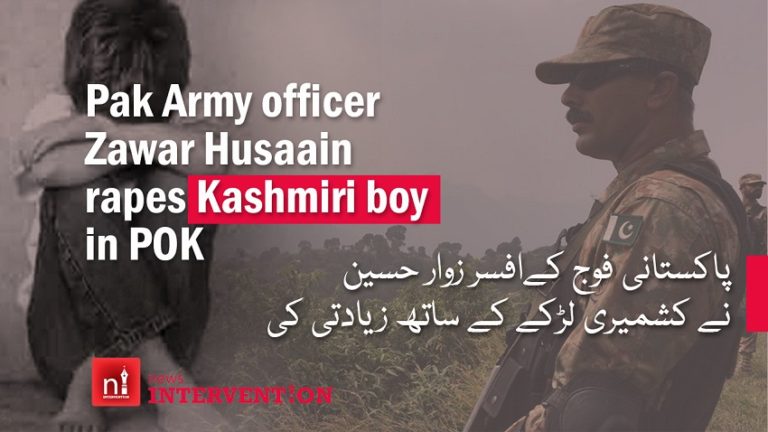
Pakistan Army officer Zawar Hussain rapes a Kashmiri boy in POK (Pakistan-occupied Kashmir). This incident happened at DhirKot in so-called “Azad Kashmir” where a 11 year old Kashmiri boy was raped by Zawar Hussain, an officer of the Pakistan Army. Zawar Hussain is originally from Chakwal, Pakistan’s Punjab province and was stationed at Charala village in Dhirkot where he committed this crime.
Click on the YouTube link below to watch our news video report.
Afghanistan: What does the future portend?
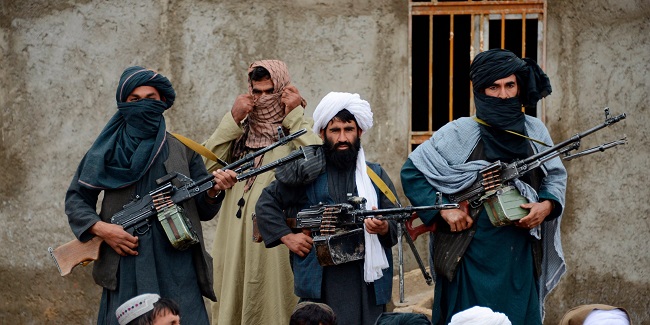
Oblivious Precepts
Before we analyse the future portends for Afghanistan, let me spell out some oblivious precepts, which have a bearing on the likely prognosis.
* War/confrontation is seen as an exception, an extreme and an aberration in international affairs; the paradox is that it is the invention of peace which is the artificial edifice.
* Scenario building/forecasting difficult in geo-politics. The most vibrant characteristic of geo-politics is ‘uncertainty’.
* Why does the World ‘NOT’ leave Afghanistan alone, to decide their own future?
* India is gaining significant influence in Afghan peace process, but does not carry definitive political heft and capabilities to be a decisive/pivotal constituent in the peace process.
Background to Current Imbroglio
Four US Presidents have overseen the longest war being fought by USA starting 9/11/2001 which will soon enter its third decade. All without exception wanted a ‘quick in and out’ after achieving geo-political and strategic victory, but had no choice but to stay, with actual troop involvement forming a sinusoidal curve. Let us not forget that their initial aim was to eliminate Al-Qaida from Afghanistan, which they largely accomplished in a very short period. The war has already cost more than $1 trillion directly[i], and its broader costs are at least double that figure. Ironically, in case of Afghanistan, history seems to be repeating itself.
President Trump’s Legacy
Following up on one of the main planks of his election policy of ‘America First’ and ‘not fighting others wars’, Trump favoured fixing ‘time lines’ for withdrawal and quickly announced the same. He subsequently backtracked on the above policy under domestic political compulsions and stoutly asserted that US Forces’ withdrawal from Afghanistan would be solely dependent on the security and stability situation prevailing in Afghanistan. As is his wont, he upended everything and everybody including his closest aides by reaching a “US-Taliban Deal (Doha Accord)” with the Afghan Taliban in February 2020, to withdraw all US and NATO troops by 1 May 2021[ii]. In exchange, the United States received security assurances and a commitment from the Taliban to begin peace talks with the Afghan government.
Real Politik has no Morals
Perhaps nothing reflects the challenges facing the Afghan negotiations more starkly than the title “Agreement for Bringing Peace to Afghanistan Between the Islamic Emirate of Afghanistan and the USA which Is Not Recognized by the US as a State, and which is known as the Taliban” [iii] ! The leader of the Haqqani Network, Sirajuddin Haqqani, the second-in-command of the Taliban is on the US wanted list with a reward of $10 million for information leading to his capture or death. To top it all, the US considers the Taliban a partner in counter-terrorism (CT) operations against Al-Qaeda and IS and other terrorist groups.
Geo-Political and Strategic Rationale leading to Joe Biden’s Afghanistan Peace Plan
President Biden was left holding the hot potato. He had three stark choices; follow the timelines agreed by Trump (1 May); stay the Afghan course; or “accelerate the peace process” and carry out a ‘responsible withdrawal’, leaving behind a small counter terrorism (CT) force. Biden and Blinken (US Secretary of State) felt the last option is the best way to advance the shared interests of the US, her allies, and the people of Afghanistan (US-Taliban deal remains the pivot of the plan). The US assessment shared by most experts is that if American troops are pulled out of Afghanistan, the Taliban would make quick gains, clashes between Taliban and ANA (Afghan National Army) would escalate which would draw in US and allied troops, violence will spiral, talks between Taliban and Afghan National Government (ANG) will fail, leading to a very high probability of a civil war.
Biden’s Peace Plan
On 14 April 2021, US President Joe Biden, announced the withdrawal of all US troops including the civil contractors servicing them in a phased manner by 11 September 2021. Interestingly, US completes two decades of intervention on that date since 9/11 (9 September 2001). It is a unilateral announcement and the Taliban is yet to respond. The Biden administration has proposed a modified peace plan to the Afghan government and the Taliban, seeking to bring violence to a halt and form an interim government. The proposal included many elements; first, a UN-led conference of representatives of Russia, China, Pakistan, Iran, India and the US “to discuss a unified approach to support peace in Afghanistan”; share written proposals with the Afghan leadership and the Taliban to accelerate talks. It urges both sides to reach a consensus on Afghanistan’s future constitutional and governing arrangements (the Taliban and the Afghan government still disagree on fundamental issues, including whether the country should remain a republic or even retain any features of electoral democracy); third, find a road map to a new “inclusive interim government”[iv]; and lastly, agree on the terms of a “permanent and comprehensive ceasefire”. The proposal recommends a senior level meeting of the Afghan government and the Taliban in Turkey to discuss power sharing, reduction of violence and other specific goals. Essentially, the Biden administration is attempting to embed the peace process in a wider regional framework. The Biden administration has chosen a more decisive course in Afghanistan and has to make substantial movement on above aspects before final withdrawal.
Apathy of US Public assists Biden
Interestingly and surprisingly the Afghan issue is not in the US public eye, due to public apathy unlike other US military involvements, with majority of Americans thinking that the issue has been resolved, as also thanks to COVID, low casualties, volunteer army and hi-tech warfare being conducted (drones and missile warfare, aerial support both for logistics and warfighting). This will ease the domestic compulsions for Biden giving him time to activate the plan.
Afghan Govt stance: Geo-Strategic-Political Implications
The Ghani administration has consistently been critical of the US direct outreach to the Taliban. On the proposed plan, Ghani recently commented “My power rests on my legitimacy,” and “the moment that legitimacy is gone, the whole thing implodes. [v]” Vice President Saleh emphasised that the US “can decide on their troops, not on the people of Afghanistan”. Mr Ghani will find it very difficult to resist the pressure by the US, EU and the five nations requested to negotiate a way forward. Interestingly stake holders except possibly for India want US troops out. If Pakistan foresees continuation of US troops it will increase its support to Taliban with the backing of China. One thing is very clear, if Ghani rejects the plan and refuses to talk to the Taliban, we are looking at a very bleak future where great power and regional games will continue forever, and in all probability so will the fighting. Ghani’s failure to take the initiative has created a void that other actors are filling with proposals for peace, that address only their own concerns and do not grapple with the fundamental issues that hobble Afghanistan. The Afghanistan government’s inertia in this area has made it a mere spectator, while other stakeholders are getting poised to decide the fate of the country.
Some fundamental Non-Negotiables for Success of Peace Plan.
- 90 days immediate ceasefire between Taliban and ANA (Afghan National Army), followed by comprehensive ceasefire. No targeting of US and Allied troops.
- Non-interference by regional players in internal situation.
- Interim reconciliation government to be formed.
- Future of Taliban soldiers; absorption into ANA (Afghan National Army)? Disarmament and demobilization methodologies and packages to be worked out.
- National bipartisan body to discuss constitution and type of political structure to govern Afghanistan.
- Conduct of elections within a time bound period.
Stakeholder’s Stakes
Cutting all rhetoric to the bone, ALL Nations want mainly two things, which need not necessarily be aligned to Afghan interests specially its people.
* An Afghanistan aligned to their interests.
* Their strategic space, influence and economic payoffs are bettered, whatever the political dispensation, while ensuring ‘no spread of jihadi culture leading to terrorism[vi]’.
Taliban
The new agreement and the looming US exit places the Taliban in the strongest position they have ever been. The Taliban have demonstrated to the Afghan people, the world, and especially militant groups around the world, that they possess the (military) capability to resist a US invasion and outlast a superpower. They have made themselves an intrinsic part of any attempt to find a long-term solution for peace. As of March 2021, Taliban controls substantial real estate[vii] which gives them significant leverage in negotiating with the government: they are aware that Kabul will be forced to concede to most demands, if only to avoid the group from taking over more areas especially urban. Adding to the Taliban’s leverage is the political legitimacy it has managed to gain as an international actor; one that the US has negotiated with, and now asking them to be part of an interim Afghan government [viii] (and coercing Ghani!). The Taliban over the years has evolved its relationships with all regional stakeholders barring India. Here too Taliban has shown diplomatic finesse stating that it will not act nor allow any party to act against another country, specifically naming India[ix]. The Taliban has also been an active participant in the talks hosted by Moscow in November 2018 and March 2021, as also increasingly with Iran.
A word of caution: Taliban has always rejected the democratic ideals of universal suffrage, free and fair elections, and respect for minorities, all of which are prerequisites, as outlined in the draft agreement. It has also always considered the Afghan National Govt. (ANG) an ‘American puppet’. The Taliban are not pressed for time and can wait until they get what they want: A complete US withdrawal, a slow surrender of democracy, and a return to the Islamic Emirate of Afghanistan that the group installed and commandeered in Afghanistan from 1996 until losing it to the US invasion in 2001.
China and Pakistan Commons
China and Pakistan want to keep India confined internally and externally, and constrict its strategic space. Once Taliban comes to power, the China-Pak duo would use jihad and terrorism to create trouble, and exploit the facade of ambiguity. The longer the conflict more clout China and Pakistan will have with Taliban and thus in Afghanistan. They will enhance their geo-strategic and political clout in the region and leverage it with Iran, CAR (Central Asian Republics) and Russia.
China
In addition, integrate CPEC with Afghanistan (Pakistan may not be too pleased), enhance land route of BRI (Belt Road Initiative) towards CAR (Central Asian Republics), Russia and Europe. Already an ambitious five nations railway connecting China and Iran via Kyrgyzstan, Tajikistan and Afghanistan is in the offing.
Pakistan
In addition, cement its notion of strategic depth against India, keep Durand Line issue quiet and formalise it, opportunities for trade, entry into CAR (Central Asian Republics), access to Middle East, influence Iran and play power broker in Middle East specially KSA and Turkey.
Russia
Russia’s own security and geopolitical interests make it an interested party in a stable Afghanistan and in putting an end to armed conflict in the region. Its concern is that in the event of heightening instability, violence could spill over into Central Asia and cause destabilisation close to Russia’s borders. The threat of extremist and radical ideology spreading to Central Asia and onwards to South Caucasus and broader Russia is another worry, especially when it comes to the Islamic State (ISIS). The continued flow of illegally trafficked drugs into Russia is a major concern.
Iran
Seat of Shia Islam, Iran has historically been at ideological odds with a powerful Sunni Taliban. From almost going to war with the Taliban in 1998, to supporting the US invasion in 2001, today Tehran nurtures high-level contacts with the Taliban aimed at stopping the growth of the Islamic State-Khorasan in the region and get US out of its underbelly. Currently adopted two-pronged approach; one regional in nature, and second in the context of Iran’s fractured relations with the US.
Flipside
There is also a flipside to Taliban usurping power or having a major say in geo-politics in Afghanistan. It can bite back like the proverbial snake.
- Spread of jihadi culture.
- Taliban like others has never accepted the Durand Line (renewed demand for Pashtunistan). It can cause instability as also interfere in China’s handling of Uighurs in Xinjiang, by supporting them (a threat which China takes very seriously).
- Talibanisation of Pakistan
Indian Interests, Stakes and Capabilities: Limited Choices
Indian stakes in Afghanistan are not existential. A lot has been spoken and written, and India too desires Afghanistan aligned to its national interests. The necessity is more due to geography as also the China-Pakistan adversarial collusivity, with scope to exploit the violent jihadist elements in Afghanistan using ambiguity as a cover, causing both external and internal instability in India. On a positive note, India can also use its strategic partnership (India-Afghanistan Strategic Partnership Agreement in October 201) with a stable aligned Afghanistan to leverage geo-political and economic gains and entry into CAR (Central Asian Republics), Iran and onto Middle East and Europe.
Coupled with an active ‘Look East’ policy the ‘Look West’ will gain realistic traction. India has not yet opened official talks with the Taliban. However, India ‘cannot let sleeping dogs lie’ but be bold and less dogmatic, and navigate unchartered territory to exploit the geo-political situation emerging, as the consequences are strategic. Within this complex loop, India’s USP, is that it is the only country that can engage with the US, Europe (EU) on the one hand, and China (commons: Islamic fundamentalism in Xinjiang and Kashmir), Russia and Iran on the other, and shares a relationship of trust with Afghanistan, which MUST be played to safeguard our strategic interests. We are well placed to play a pivotal role (despite being a low-key player so far) to form a consensus on how to shape the future of Afghanistan, which naturally depends on how we handle Taliban. Iran is wary of elements who are anti-Shia which suits India, as it places Pakistan in the opposite camp. India views Russia as a balancer in the regional security matrix, despite its proximity with China, due to its interests in CAR (Central Asian Republics) and Europe. India, Iran and Russia besides convergence on regional security, can develop cooperative mechanisms for commercial and economic ties with Afghanistan.
- Broaden Diplomatic Engagement/Appoint Special Envoy. Appoint a special envoy dedicated to Afghan reconciliation. The envoy to safeguard Indian interests at every international, regional and internal forum, and reaches out to Taliban representatives. While this will come at the risk of annoying the current Afghan dispensation, they are pragmatic enough to realise how the international and internal winds are blowing.
- Further Enhance Multi-Dimensional Assistance. Capacity and capability enhancement in defence, intelligence sharing specially of anti-India terrorist groups must be a priority. Given the unstable situation and impact of COVID on the economy, India must spearhead developmental assistance.
- Regional Cooperation. Exploit own soft and hard power capabilities and become a lead player in coordinating and consolidating Biden’s Peace Plan.
Multi-Dimensional Assistance to Afghanistan
The people of Afghanistan and government deeply appreciate India’s assistance without baggage. India has made substantial contributions in terms of infrastructure development, financial support ($2.2 billion), human capital (over 15,000 students in Indian Universities), security architecture (defence systems like 4 MI-26 helicopter, 285 vehicles, hospitals; basic and advanced military training) and numerous other fields towards nation building and prosperity of Afghanistan. To name a few major projects; constructed Parliament building in Kabul; restoration of the Stor palace; reconstruction of Salma dam now known as the Afghan-India Friendship Dam; building strategically important Zaranj-Delaram road which connects the border town of Zaranj (leading to Iranian port of Chabahar) with the city of Delaram, thereby establishing better communication.
In Geneva (November 2020) India’s Foreign Minister Dr S Jaishankar announced that India had concluded with Afghanistan, an agreement for the construction of the Shatoot dam, which would provide safe drinking water to 2 million residents of Kabul city. He also announced the launch of Phase-IV of the High Impact Community Development Projects in Afghanistan, which envisages more than 100 projects worth $80 million that India would undertake in Afghanistan. India’s development portfolio in Afghanistan has till date amounted to US $3 billion. Developmental assistance are centered around five pillars: large infrastructure projects; human resource development and capacity building; humanitarian assistance; high impact community development projects; and enhancing trade and investment through air and land connectivity.
Points to Ponder
- Impossible to separate counter-terrorism from counter-insurgency. US will not be able to hold bases in Afghanistan purely for counter-terrorism, while withholding operational support from its host and counter-terrorism partner, Afghan National Army. The US would need to continue providing the Afghan military some essential backup in its existential fight with the Taliban. Absent that support, the war would intensify and Kabul would lose ground. In other words, it is impossible to disentangle CT (counter-terrorism) from CI (counter-insurgency) in Afghanistan[x]. In time, it will become akin to ‘staying the course’.
- Is USA making a historic strategic mistake by withdrawing troops from Afghanistan? Undoubtedly withdrawal would imply letting go of its strategic advantage and leaving a strategic void in an extremely sensitive, volatile but important region, to be exploited by all the stakeholders. Pakistan, China, Russia and Iran would move in, and are geo-political and ideological rivals, possibly leading to their power consolidation and also more instability. Re-intervention could cost USA dearly and even jeopardise its position as the prime global power. Along with a peaceful deployment in Japan and South Korea, a kinetic deployment in Afghanistan of say 2500 to 5000 troops (low stakes and low key) may well be worth the strategic upper hand.
India is in a good place and can now influence Afghanistan’s future more than ever before. The other stake holders have more to lose. The world waits and watches with bated breath.
[ii] Sarah Kreps and Douglas Kriner, ‘In or Out of Afghanistan Is Not a Political Choice: Americans Won’t Pull the Trigger on the Country’s Longest War’, 22 Mar 21
[iv] Colm Quinn, “Blinken Threatens May 1 Afghan Troop Withdrawal”, Foreign Policy, March 8, 2021, accessed 08 Apr 21.
[v] Stanley Johny, ‘Explained | Joe Biden’s Afghanistan peace plan’, 10 Mar 21, The Hindu
[vi] Philip Holtmann, ‘Terrorism and Jihad: Differences and Similarities’, Perspectives on Terrorism
[viii] Kriti M Shah, ‘The Taliban Play the Waiting Game’, a chapter in essay titled ‘From War to Peace: The Reginal Stakes in Afghanistan’s Future’ compiled by Kabir Taneja, ORF – Issue Briefs and Special Reports, 26 Mar 21
[x] Laurel Miller, ‘The Myth of a Responsible Withdrawal From Afghanistan: Counterterrorism Without Counterinsurgency Is Impossible’, 22 Jan 21
‘Entitlement Culture’ amongst Pakistan Army officers
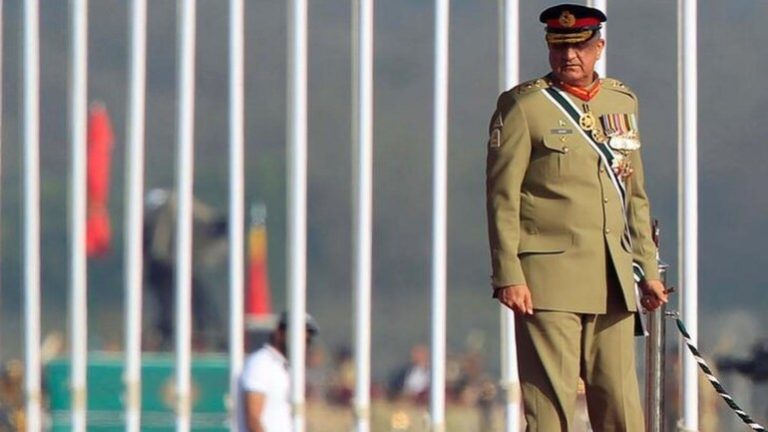
If an outsider were to say that there’s rampant corruption in Pakistan Army, especially within the top echelons, Pakistan Army’s media wing Inter Services Public Relations (ISPR) would label that person a “RAW agent” trying to malign the military and terming such assertions as “motivated” thereby outrightly dismissing the same. However, what explanation can ISPR offer when patriotic and well-meaning people in Pakistan level similar charges against Rawalpindi?
In her extensively researched book “Military Inc: Inside Pakistan’s Military Economy” published in 2007, noted Pakistani activist Ayesha Siddiqa reveals the highly opaque manner in which Pakistan Army conducts its commercial activities. In fact, after realising that it’s “a completely independent genre of capital,” she felt it necessary to coin an appropriate term– “Milbus” (military business), and defines it as “military capital that is used for the personal benefit of the military fraternity, especially the officer cadre, but is neither recorded nor part of the defense budget.”
Elaborating further on “Milbus,” Ms. Siddiqa notes that its “most significant component is entrepreneurial activities that do not fall under the scope of the normal accountability procedures of the state, and are mainly for the gratification of military personnel and their cronies… in most cases the rewards are limited to the officer cadre… The top echelon of the armed forces who are the main beneficiaries of Milbus justify the economic dividends as welfare provided to the military for their services rendered to the state.” The scale and extent of Pakistan armed forces’ involvement in commercial activities is indeed mind boggling as they seem to have interests in almost every business under the sun!
During July 2016, in his written reply to a question asked by a Senator, Defence Minister Khwaja Asif informed Parliament that the armed forces of Pakistan were running nearly 50 commercial entities. These included banks, bakeries, petrol pumps, schools and universities, shoe, woollen, apparel, food processing production units, milk dairies, stud farms, cement plants, an insurance company and even restaurants and wedding halls! They also have an exposure in insurance, agriculture, fertilizer and aviation sectors. So much so that in 2008, Pakistan Army’s Fauji Foundation even floated a company called ‘Pakistan Maroc Phosphore SA’ in faraway Morocco.
Three years later, Pakistan’s Supreme Court Judge Justice Gulzar Ahmed passed strictures on the army to cease commercial activities on military-owned land. In a scathing attack, he observed that “Defence Housing Authority (DHA) of Karachi have encroached so far into the sea. If they had their way, they would build a city on the sea. The owners of DHA would encroach on the entire sea all the way to America and then plant their flags there. The owners of DHA are wondering how they can make inroads into India!” In fact, Pakistan Army’s phenomenal lust for land, (at both individual and organisational levels) is understandable as it gives maximum returns. Ms. Siddiqa reveals that Pakistan Army owns 12% of the country’s land, and of this, two-thirds are being owned by senior ranking military officials.
In an investigative piece (‘Bajwa family business empire grew in four countries in sync with Asim Bajwa’s rise in military’, Fact Focus, August 27, 2020), noted Pakistani investigative journalist Ahmad Noorani published very specific and verifiable details that retired Lt Gen Asim Bajwa and his family members “own a business empire which set up 99 companies in four countries, including a pizza franchise with 133 restaurants worth an estimated $39.9 million.” Whereas, there’s nothing wrong in a former General creating wealth, but two things make this case suspicious: One, he didn’t declare his offshore wealth or assets, and two, though he termed these assertions a “malicious propaganda story,” Lt Gen Bajwa surprisingly didn’t consider it necessary to approach the courts to redeem his honour by slapping a defamation suit against Noorani.
In his 2008 book ‘Crossed Swords: Pakistan, Its Army, and the Wars Within,’ Shuja Nawaz mentions about how a self-created “culture of entitlement” is rampant in the military, especially amongst its top brass. Last year, while ruling on a case regarding the Federal Government’s housing project, Justice Qazi Faez Isa of Pakistan’s Supreme Court invoked this book saying that even though gifting land didn’t have constitutional or legal sanction, “nevertheless, senior members of the armed forces get plots and agricultural lands and continue to be given additional plots and agricultural lands as they rise up the ranks.”
There was a time when Pakistan Army’s first chief Gen Douglas David Gracey turned down Gen Ayub Khan’s request for a plot of land. However, this happened long-long ago and if Gen Ayub was alive today, he would have had just no problems as his successors have successfully ‘institutionalised’ land allotment to themselves. Justice Isa rightly opined that “If lands are given to only one category like the members of the armed forces and the civilians in the service of Pakistan are disregarded, it constitutes discrimination and offends the fundamental right of equality.”
However, when there are some rumblings against allotment of 90 acres of land to former army chief Gen Raheel Sharif, Dawn newspaper quoted a security establishment official as saying that there was “nothing unusual” as it was “in accordance with the existing rules and purely on merit.” The “existing rules” on grant of land to Pakistan Army chiefs are indeed very interesting for two reasons. One, they lack any approval from government of Pakistan, and two, the entire process right from putting forth the proposal to identifying land to be gifted and its final approval rests with General Headquarters [GHQ].
Records of all land along the borders is maintained by Border Area Committee [BAC]. Its chairman is an army officer of Brigadier or Colonel rank with an assistant commissioner as the civil member assisted by a revenue officer (tehsildar) and his staff. The BAC projects the requirement of land to the concerned Provincial Board of Revenue (PBR), which in turn passes on the details to the district collector (DC) and the DC passes on the same to establishment officer who issues the land allotment order.
So, while it’s surprising that all this is done without any written rules on the subject, what’s even more perplexing is that civil officials still consider that an establishment officer is ‘legally bound’ to implement the orders of the BAC chairman! So, by involving the civil administration but making sure that it has no other option but to honour the GHQ’s ‘request’, Rawalpindi has cunningly given this patently illegal practice a veneer of legitimacy.
More than three decades ago, the then Jamaat Islami Amir Qazi Husain Ahmed had quipped that corps commanders of Pakistan Army were actually “crore” (millionaire) commanders, a rather embarrassing sobriquet that Rawalpindi has been unable to playdown. How badly has Pakistan Army’s land grab riled the public became evident during the 2007 protests that broke out when Gen Musharraf removed Chief Justice of Pakistan, when lawyers carried banners proclaiming “Ae watan ke sajeele Genrailon; saaray ruqbey tumhare liye hain [O’ handsome Generals of the country, all the plots are there just for you],” even though this issue wasn’t in anyway connected to the protests!
In fact, with National Assembly’s Standing Committee on Interior approving the bill for amending Pakistan Penal Code and Code of Criminal Procedure 1898 to criminalise any attempt to ridicule Pakistan’s armed forces, it’s clear that public resentment against Pakistan Army’s “culture of entitlement” has reached tipping point! But whether the “crore” commanders of Pakistan Army will reform themselves or throw the book at those who object to their financial impropriety remains a million dollar question!
J&K: Governance must be result oriented and promises need to be delivered
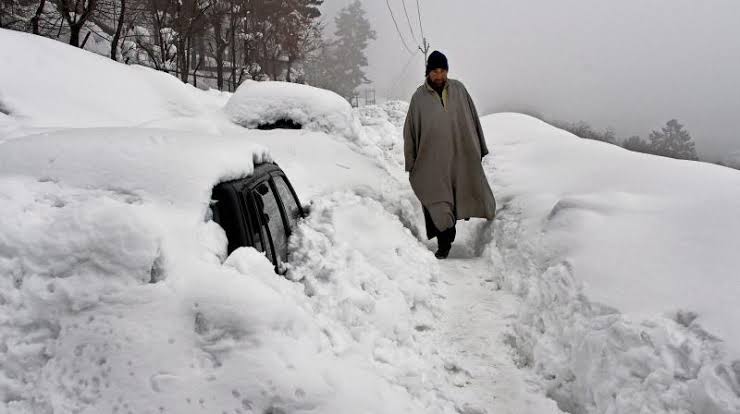
In Jammu and Kashmir, security and politics are interlinked. Due to foreign sponsored terrorism and unrest, the security and law & order situation attains primacy. On many occasions political activity in Jammu and Kashmir became unfeasible due to sensitive internal security environment. On all such occasions the security forces were given the responsibility to usher an acceptable degree of peace and law and order to facilitate restoration of the political process.
It is to the credit of the security forces, and especially the Indian Army, that on all such occasions it brought in a conducive environment to kick start the political process. Sadly, the feudal, blinkered, parochial and self serving leadership of the erstwhile state failed to take advantage and allowed the situation to deteriorate time and again. This has happened too many times in the past and has caused great loss to the security forces as also to the people of the region.
The Mehbooba Mufti-led coalition government was the last such instance when a peaceful environment was allowed to fritter away. Problems escalated to an extent that BJP was compelled to withdraw from the coalition leading to imposition of Governor’s rule amid enhanced security threats. Once again the security forces led by the Indian Army set out to restore the security situation. This time the forces got full support of the Central Government and were able to contain the terrorist threat.
The resultant stability gave leverage to the government such that in August 2019 New Delhi changed the status of the region from a state to two Union Territories and also abrogate the draconian Article 370 and Article 35A.
Inimical foreign forces and their stooges within Kashmir were quick to predict a huge upswing in violence and dissension as a consequence to the changes made. These doomsday astrologers were shocked when their predictions came to a naught. The people exhibited relief and looked forward to peace and normality as a consequence of the changes. The security forces ensured that the remnants of terrorism and divisive forces were not allowed to raise their ugly heads. The region, thus, experienced a degree of normality not witnessed for decades earlier.
Once again the environment is such where political activity can take centre stage. Taking advantage of this situation is now absolutely in the hands of the people and their leaders. They have to work in concert with the central government to create a new, more vibrant political and social dispensation in the region.
There are three factors that would be involved in meeting this challenge – security, development and democratic governance. The security situation is well in control and will remain so since vigilance levels are very high and the forces are unlikely to allow it to deteriorate. A lot depends upon the cooperation provided by the people which will definitely remain forthcoming unless bad policies cause frustration and dissension yet again.
The UT government has a dynamic development agenda in place with support coming from the centre. Lieutenant Governor Manoj Sinha has set out a vision of holistic and balanced development. What is of concern, however, is that J&K continued to be ranked a lowly 20 in the Sustainable Development Goals (SDG) index for the second time in January 2020, the first time being in 2018. This implies that the UT is lagging in all streams to include zero hunger, good health and well-being, quality education, clean water and sanitation, affordable and clean energy, decent work and economic growth. It was also low in categories of industry innovation and infrastructure, reduced inequalities, sustainable cities and communities, sustainable consumption and production, climate action, etc. The present government cannot be completely held responsible since it had started functioning a few months before the index was prepared but from the data the reason behind frustration of the people with their leaders becomes quite apparent.
J&K government constituted a high power committee of 23 bureaucrats including the chief secretary to finalise the action plan including mapping of departments and schemes for each SDG target. The action plan and its impact , however, is not in the public domain. When the change of status from State to UT was announced in 2019 it was said that 10 Union Ministries would join hands to speed up development work. The parameters and impact of this initiative is also not known.
In January 2021, the Lieutenant Governor had announced approval of a Rs. 28,400 crore industrial developmental scheme for the UT to boost the region’s economy and provide employment opportunities. Recently, he spoke of the agriculture sector in the UT getting more share of the budget component. It is hoped that the progress in these two schemes will be shared by the government at regular intervals to boost the morale of the people and give to them an indication that the promised development process is on fast track. The acid test for improvement will come when the SDG index for the year 2020-21 is declared. It is hoped that the same will show a perceptible improvement.
So far as the ushering of democratic practices is concerned the central government has given a commitment for conduct of early elections to the UT Legislative Assembly and also reinstatement of the UT as a State in due course. The successful conduct of the District Development Council (DDC) elections was a step in the right direction. It has to be built upon to carry out timely and equitable delimitation of the state constituencies and then holding of the elections to the legislative Assembly of the UT as a precursor to the change in status from UT to State.
It is not enough for the government to be committed, it has to be seen to be committed and result oriented. If promises are not kept then the faith of the people and the sacrifices of the security forces will come to naught. The ball is firmly in the court of the government.
Nuances and structure of ‘dispute resolution’ in Indo-Pak relations
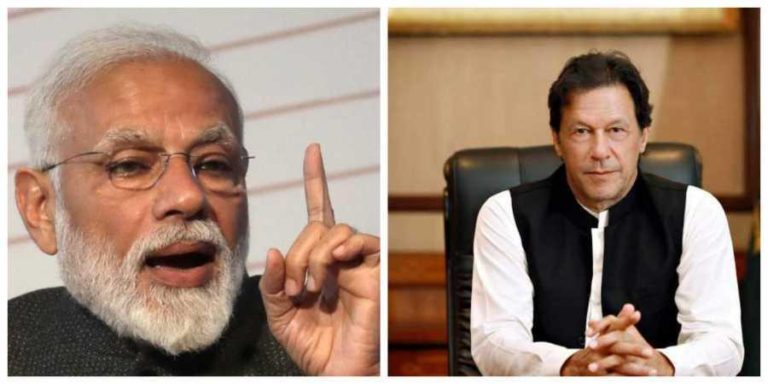
Pakistan has made a strong pitch for “resolution of issues” with India. The diplomatic rhetoric commenced in early March, a little after recommitment by the Director Generals of Military Operations (DGMO) of the two countries to uphold the ceasefire agreement and protocols of 2003.
This initiative was followed by a number of other actions that indicated movement towards a thaw. Prime Minister Imran Khan was given permission to fly over India for his visit to Sri Lanka; permission was also given to a Pakistani equestrian team to participate in the “World Cup qualifiers of Equestrian Tent Pegging Championship” being held in India. This is the first time that a Pakistani sporting team has been allowed to play in India since 2018.
In recent days, there is a lot of buzz within media and strategic circles that the United Arab Emirates (UAE) is playing a big role in brokering peace between the two Nations. In end- December, 2020, a visit by Indian Army Chief, General MM Naravane, to Saudi Arabia and UAE came as a surprise to all. Now the strings can be tied to a larger picture that is emerging. In later months, UAE Foreign Minister Sheikh Abdullah bin Zayed is known to have held parleys with foreign ministers of the two countries and even visited India recently to discuss, “all regional and international issues of common interest and exchanged views on them.”
Now that the ceasefire seems to be holding, it will be reasonable to assume that the two countries will attempt to reinstate diplomatic relations that broke down in 2019 when Indian changed the status of the state of Jammu and Kashmir and abrogated Article 370 and Article 35A. Pakistan had no reason to take the extreme step of breaking diplomatic ties since the Indian actions were valid as per the Constitution of the country and did not merit any foreign interference. If Pakistan now agrees to get out of its sulk and re-establish diplomatic relations it would be a step in the right direction.
Affirmative steps including establishment of diplomatic ties are expected to pave the way for the more complex negotiations. Before discussing the structure and nuances of dialogue it is important to understand its need.
Pakistan has very low credibility in international circles. Earlier, the country was isolated for being the “nursery of terrorism and fundamentalism”, now, financial crisis has added to its woes. The country is, however, aware that it can go on being tolerated by the US due to the Afghanistan factor and by China due to CPEC. The need is to make a good impression on the US and other powers. This is possible only if it can project a somewhat moderate face for which a working relationship with India becomes most important.
So far as India is concerned, the incumbent government of India has in place an ambitious plan for poverty eradication and development which can be best applied only if peace in the neighbourhood is ensured. It also has to face up to Chinese belligerence which is best met by an undisturbed western border. India therefore has a lot to gain by normalised ties with Pakistan.
Pakistan has already laid down “Kashmir” as the focal point for any discussion aimed at normalisation of ties between the two countries. The same has been said in no uncertain terms by Prime Minister Imran Khan and General Qamar Bajwa. India is very clear about the status of Jammu and Kashmir as an integral part of the country in which Pakistan has no role to play. Hence, there is nothing to talk so far as Kashmir is concerned except handing over to India the territories of the erstwhile princely state that are in forcible occupation of Pakistan. With such divergent perceptions Kashmir cannot remain the focal point of the resolution process.
A better idea would be to speak about reopening of trade between the two countries. This would go a long way in addressing Pakistan’s financial woes. India can help in shoring up the food security sector of the country that is presently in tatters. A line of credit can be set up for the import of wheat, sugar, spices, tea, pulses that Pakistan is presently getting at exorbitant rates, spending more than $8 billion annually that it can ill afford. Then there are items like cell phones and other electronics that India can provide. Also, the life threatening water scarcity issue in Pakistan is something that India can help surmount.
One way of looking at the entire game plan is that peace will ensure less expenditure by Pakistan on defence acquisition and the money thus saved will assist in building a robust trade with India, leading to a classic win-win situation.
By insisting on the “K” word Pakistan will only reinforce its lack of seriousness so far as peace is concerned. One hopes that this rigid position taken by the political and military leadership of the country is an attempt to sit on the negotiating table on a moral high ground and also to placate the opposition that thrives on anti-India rhetoric and it will find moderation with time. General Qamar Bajwa has spoken of “burying the past” and the most debilitating past is Pakistan’s obsession with Kashmir. Any leader of the country who is able to rise above this obsession (or bury it) will create history as a true statesman.
India would do well to approach the resolution process with positivity and firmness. Any sign of duplicity and double speak on the part of Pakistan would require an immediate response and pressure to bring in course correction. By so doing India can ensure that the process stays on course.
QUAD: India rises in stature yet the Chinese threat looms large
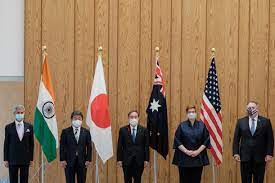
On 26 December 2004, a Tsunami in the Indian Ocean region caused unprecedented devastation and a humanitarian crisis. Hundreds of thousands were killed and millions displaced. Major democracies to include India, Japan, Australia and the United States got together to put up a concerted response to the crisis. The cooperation was given the name “QUAD” and was basically meant to tide over the crisis. It, however, survived beyond and has slowly emerged as a significant alliance.
China did not want any such grouping emerging in its backyard and used every trick available to derail the same. In 2008, Australia walked out due to pressure from China. The US too was not very interested since it did not consider China to be a strategic threat to its superpower status and had vital trade relations with the country. India too preferred to remain cautious since none of the other members have contiguous borders with China, although Japan does have a territorial dispute over a few islands.
The QUAD got a big boost when Quad 3.0 was organised on 12 March 2021, as a virtual summit. It was attended by Prime Minister Narendra Modi; US President Joe Biden; Prime Minister Scott Morrison of Australia and Prime Minister Yoshihide Suga of Japan. The meeting is seen as a major step in politically consolidating this group.
There are a few parameters that make this summit significant. First, President Joe Biden accepted to be a part of these talks within a few months of taking over thus giving a clear message of his commitment to the Indo-Pacific region. Second, issuing of a joint statement; in the earlier two meetings the countries gave out separate statements.
The joint statement speaks extensively about core issues that QUAD is seized with like the climate change, health, challenges posed by emerging technologies etc. The crunch comes at the point where it speaks of a “shared vision for an Indo-Pacific region that is free, open, resilient and inclusive, accessible and dynamic, governed by international law and bedrock principles such as freedom of navigation and peaceful resolution of disputes… to advance security and prosperity and counter threats to both in the Indo-Pacific and beyond.” It is the end word “beyond” that drastically increases the scope of the QUAD. There is also an indication that select partners in ASEAN (Association of South East Asian Nations) and Europe will be invited to work together with the QUAD in the future.
Also of importance is the message given with respect to the joint effort to administer COVID vaccine in the region. India has already given more than about 23 million doses of the vaccine to poor countries and emerged in the forefront of this initiative. QUAD has committed to work in partnership to ensure that vaccines are administered throughout the Indo-Pacific region by 2022. A decision to manufacture US vaccine in India to provide one billion doses to the Indo-Pacific region has also been put on the table.
Interestingly, the situation in the Eastern Ladakh along the LAC between India and Pakistan was also discussed. President Joe stressed on “the commitment to ensure that the region is governed by international law and is free from coercion.”
That China is disconcerted by the turn of events can be gauged by the statements emanating from the country’s propaganda machinery. “India will become cannon fodder for the US”, said their primary propaganda vehicle, Global Times, adding, “It seems India has failed to understand China’s goodwill. It is in fact, carrying out a kind of strategic blackmail against China”.
The statement is a classic case of “pot calling the kettle black”. The fact is that India has consistently attempted to build a healthy relationship with China while China has always responded with belligerence. Apart from its misadventures along the Line of Actual Control (LAC) it is known to look for alliances with countries like Pakistan, Afghanistan, Iran, etc., that are directed against India. Now that India is paying back in the same coin, China is not liking it one bit.
QUAD has taken long to come but it has come with a bang. Earlier it was consumed only by issues of well being but post the meeting of QUAD 2.0 in 2017 there was a significant upsurge in joint military and naval exercises and working on what was termed as a “peaceful world order based on international laws including economic and humanitarian cooperation.” Now, with QUAD 3.0 it has taken a new, more dynamic dimension.
QUAD provides to India an opportunity to emerge as a significant force in the multilateral order of the world but it does not really address the existing security concerns of the country so far as China is concerned. However, India has been dealing with a recalcitrant and abrasive China since much before QUAD came into existence. Despite the QUAD 2.0 protocols being in place China went for the eastern Ladakh misadventure and India was able to not only contain its belligerence but also compelled it to agree to a withdrawal to status quo ante. India will need to remain ready for similar confrontations in coming times. The US and QUAD may be depended upon to intervene to curb expansionist designs of China but issues like the long standing border dispute between India and China will need to be resolved bilaterally.
It can be said in conclusion that earlier India was reticent in reaching out to such forums due to the need to not ruffle China’s feathers. It did not pay much dividend since China did not relent from its malevolent activities. Now India has chosen to move on her international affiliations independent of Chinese pressure. QUAD has added to the power that India wields in the international forum. The wording of the Joint Statement is such that will put some restraint on the expansionist designs of the communist country. However, India needs to remain very alive to the fact that when push comes to a shove so far as China is concerned, she will be on her own. Hence the need to stay alert and militarily ready.
Pak Army kidnaps three women from Gichk, occupied Balochistan
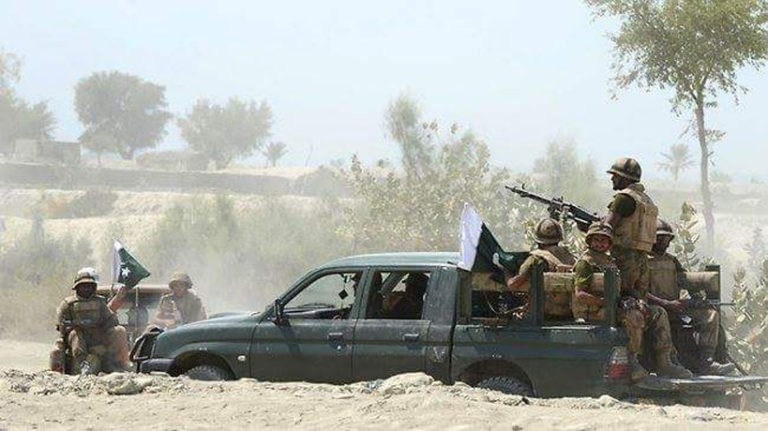
The Pakistan Army on Thursday arrested and disappeared three women in Gichk, district Panjgur as it unleased a fresh wave of terror across Pakistan-occupied Balochistan (POB).
On Thursday morning the Pakistan Army soldiers in battle fatigues raided a house in Toba area of Gichk at Panjgur. The soldiers looted houses and then took three women into custody. The Baloch women who have been abducted and forcibly disappeared by Pakistan Army have been identified as Raj Bibi (daughter of Pindok Baloch), Nazal (daughter of Musafir Baloch) and Kapot (daughter of Awaz Baloch).
Over the last several days Pakistan Army has been conducting raids in Gichk and its surrounding areas Toba, Soler, Wadi Mashkai and Jhaoo.
Balochistan attained its independence from British rule on 11 August 1947, four days before Pakistan and India attained their independence on 15 August 1947. Thereafter Pakistan under Mohammed Ali Jinnah deceitfully and illegally captured Balochistan on 27 March 1948. Baloch nationals have been fighting for their independence since that time. Pakistani regime and Pakistan Army use brute force on unarmed Baloch nationals including women and children to suppress the Balochistan’s freedom struggle.
Pak’s Peace Proposal: Myths and Realities
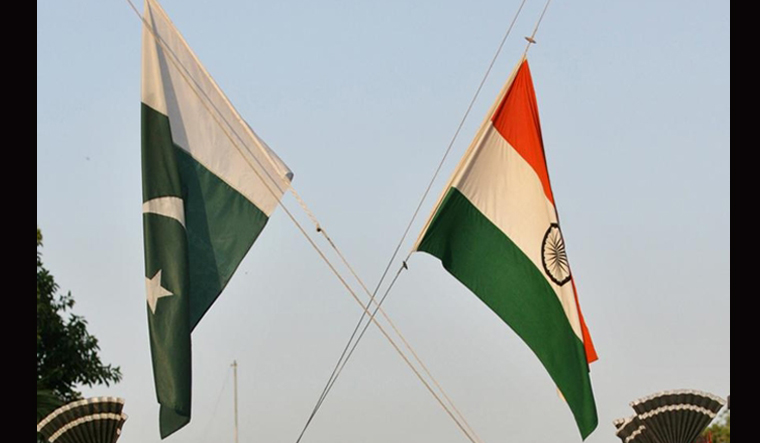
Pakistan is smoking the peace pipe, yet again, and the doves in India are going into raptures as usual, insisting that India should immediately respond in a positive manner and move forward to “resolve all issues.”
Let us first see the manner in which peace initiative is being played out by Pakistan. “With India, it is very unfortunate that we have tried to resolve our issues through dialogue like civilised neighbours, but it has not worked out. Our only issue is basically over Kashmir,” stated Prime Minister Imran Khan on the subject. Any person even remotely knowledgeable about the art of diplomacy would be appalled by the obtuseness of this statement. He is insinuating that India is uncivilised while Pakistan is the very embodiment of moderation. Is this how a peace overture is made? He has further given a single point agenda of Kashmir. Pray what is there to resolve in Kashmir? It is an integral part of India and an internal affair of the country so how can it form a part of dialogue with Pakistan or any other country in the world?
Pakistan Army Chief, General Qamar Bajwa, has attempted to give a strategic sheen to the idea. While describing stable Indo-Pakistan relations as “the key to unlock the potential of South and Central Asia,” he said that “unsettled disputes” were dragging South Asia back to poverty and underdevelopment. “The Kashmir dispute, obviously, is at the heart of this problem,” he adds rather grandly.
One would like to explain to the General that the obsession of his Army with Kashmir has, for the last seven decades plus, been responsible for hurtling HIS country into an abyss of “poverty and underdevelopment.” The rest of South Asia may have its own problems and challenges but Kashmir does not figure among them. India in particular had progressed despite Pakistan’s perfidious attitude towards Kashmir and evolved as a powerful, financially vibrant, democratic nation. In fact, Kashmir is a million times more developed and secure than Balochistan, Sindh and Khyber Pakhtunkhwa that continue to be exploited by Pakistan’s Punjab province and not to speak of Pakistan Occupied Jammu and Kashmir (POJK) that is in a dire state with no formalised political identity to speak of.
General Bajwa may be able to impress the very poor, semi-literate, uninformed people of his country with his high sounding “strategic expositions” but they fall flat when analysed logically. Surely he needs to get his ideas more in tune with reality.
What exactly does Pakistan mean by “resolution of the Kashmir issue?” It can be surmised from the many statements made over time that Pakistan would look for this “resolution” in three stages. First, reinstatement of statehood and Article 370/Article 35A in Jammu and Kashmir giving full power to the Pakistani stooges to resume their loot of the region as earlier. Second, derail the Shimla agreement and take the matter to the international forums especially the United Nations. Lastly, project India as an aggressor in Kashmir.
For Pakistan, an honest way to open dialogue would be to offer discussion on the status of POJK. The dialogue should then move forward with the objective of ushering lasting peace based on mutual economic and cultural benefit. If Imran Khan had hinted towards something like this the two countries would have been on the negotiating table by now. But this would make him easy prey to his political opposition and also the militant warlords who are responsible for his elevation to the top post in Pakistan, hence, there is no chance of his going along that route. Where then lies any scope of talks?
Pakistan knows well that it cannot wrest Kashmir away from India. The latest “peace initiative” has been engineered only to take the attention of the public away from the socio-economic crisis that the country is facing and also to counter the pressure emanating from the US and many other important European Nations. The idea is to portray India as rigid and uncooperative and Pakistan as moderate and accommodating.
The entire world and Pakistan’s own countrymen are well aware that disastrous policies adopted by General Bajwa and Imran Khan have created a mess within their country and outside of it. Instead of playing around with words and so blatantly exposing their lack of political and diplomatic acumen, they should work out some concrete steps to change the situation.
The Indian Foreign office has given a very mature response to this pseudo-diplomatic move by Pakistan. “India desires good neighbourly relations with Pakistan and is committed to addressing issues, if any, bilaterally and peacefully. However, any meaningful dialogue can only be held in a conducive atmosphere and the onus is on Pakistan to create such an atmosphere,” said Indian Foreign Secretary Harsh Shringla on the subject. The statement leaves no doubt about India’s position.
Indian Foreign Minister is soon to attend the Heart of Asia Regional Conference on Afghanistan to be held in Dushanbe, Tajikistan on March 30. There is a possibility of his interaction on the sidelines of the conference with his Pakistani counterpart, Shah Mahmood Qureshi. It is unlikely to make much difference since Qureshi is a bigger hawk with a larger ego than both Imran and Bajwa joined together. There is, however, no harm in hoping for the best.
India is sensitive to the fact that peace within the neighbourhood is both important and desirable. Talking even with an adversary does pay dividends. It is for this reason that India has responded with cautious optimism leaving all doors open. However, the road to peace cannot run roughshod over national interest. If Pakistan stops supporting myths and attempts to approach the negotiating table with a realistic agenda then talks can progress very fast. If it opens dialogue without putting the “K” word centre stage there is some hope, otherwise the initiative will be relegated as another example of the fatuous and abrasive diplomacy being pursued by the country.
Why India must deport Rohingyas to their homeland
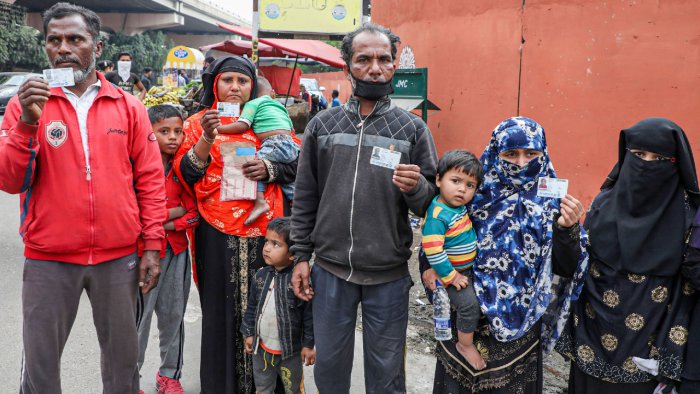
A three member Supreme Court bench comprising of Chief Justice Sharad Arvind Bobde and Justices A.S. Bopanna and V. Ramasubramanian is seized with a Public Interest Litigation (PIL) plea seeking directions for the “release of so-called Rohingya refugees” who have been detained in the Jammu region of the Union Territory (UT) of Jammu Kashmir under the Foreigners Act since early March this year. On completion of formalities, these refugees would be deported to Myanmar, their country of origin.
It can be noted here that on 7 March 2021, close to about 160 Rohingya refugees living in Jammu were detained and sent to a “holding centre” under the Foreigners Act as they did not hold valid travel documents. The detention has been done in the Hiranagar sub-jail of district Kathua of the UT. The move was a part of a larger verification process designed to further the deportation process.
The application to stall the legitimate process of deportation has been filed in the Honourable Supreme Court by a non government organisation (NGO) association for democratic reforms represented by Mr Prashant Bhushan; quite clearly its intention is to stall the government’s efforts towards sending illegal immigrants back to their parent countries!
Rohingyas are a Muslim community of Myanmar; thousands of them arrived in Jammu from 2007 to 2015 and spread out to 22 locations across the city, including Narwal, Bhatindi, Channi Himmat, Bhagwati Nagar. Their settlement was actively supported by the PDP-Congress and National Conference-Congress led governments of those times, despite the fact that even Indian citizens were not allowed to settle in the erstwhile state of Jammu and Kashmir due to provisions of Article 370 and Article 35A.
The settlement soon became a tinder box as far as Jammu was concerned creating critical law and order and security problems for the local people. However, the governmental support continued and ensured that the community of illegal refugees continued to mushroom in and around Jammu only. What was particularly galling was the fact that these refugees were not being sent to Kashmir where they had closer religious affinity to the people, but were being settled down in the Hindu majority areas of Jammu.
They were, in fact, supported financially by many Kashmiri philanthropic organisations that ensured that the settling down and rehabilitation process was smooth for them. With time they were also facilitated with necessary documentation like ration card, voter card, Aadhar card and even state subject so as to make them permanent residents of the state.
By turning a blind eye to the rules and regulations the state governments of those times created a problem of critical dimensions. It was seen by the people of Jammu as a well planned conspiracy to negatively impact the security of the region and also an attempt to start a process of changing its demography.
The action or “relative inaction” of the governments of those times created significant law and order issues in the places where the Rohingya settlements came up since the members of the community were not averse to committing crime and causing harm to the public as well as private property. The security forces expressed serious reservations at the prospect of having foreigners of dubious antecedents so near to their many sensitive installations in the areas where the refugee camps came up. The fact that the Rohingya have, for long, been on the payroll of Pakistan’s notorious Inter-Services Intelligence (ISI) for operations in Bangladesh and Myanmar added a very critical dimension to the security threat posed by these settlements.
The move naturally led to massive protests and demonstrations in the Jammu region but the same fell to deaf ears. PILs were also filed in the local courts that gave orders for deportation proceeding to be initiated at the earliest. These orders had no effect on the governments.
The government of India, in 2018, set about a process to identify the Rohingya refugees in India (said to be more than 40,000 in number!) with the intention of initiating their deportation to their parent country. All states were asked to identify the Rohingyas and collect their biometric details for further sharing with the government of Myanmar. The process was initiated in the Union Territory of Jammu and Kashmir too and as a continuation to the same, the detention process was instituted in March, 2021.
The government has, very rightly, stated its position that such citizens of Myanmar who are staying in India as illegal migrants will be deported once their nationality is confirmed by their parent country. Despite the established legality of the process of deportation and the irrefutability of the fact that the Rohingyas cannot stay in Jammu or in any other place in India in perpetuity, there are many bleeding hearts out to represent against the legal recourse being taken by the government.
The voices raised on their behalf from among the leadership in the UT of Jammu Kashmir are more for political reasons. There are many regional parties that have all intention of converting these people into a vote bank resource. Such illegal activity has grave security repercussions anywhere in the country; in frontier regions like Jammu it gains critical proportions. It is for this reason that the malevolent intentions of those who support the continued presence of the Rohingyas in the region need to be exposed and nipped in the bud. It is sad to note that some people are ready to compromise on security in a sensitive border area like Jammu for the sake of vested political considerations.
There are many international norms and caveats that are used to ensure that people are not repressed by their own governments and countrymen. Once the government of Myanmar accepts its people back it will be honour bound to look after them, it is also better for them to get back to their homeland. The action being taken by the J&K government with active support from New Delhi is not only legal, it is also justified and necessary.