Home Blog Page 94

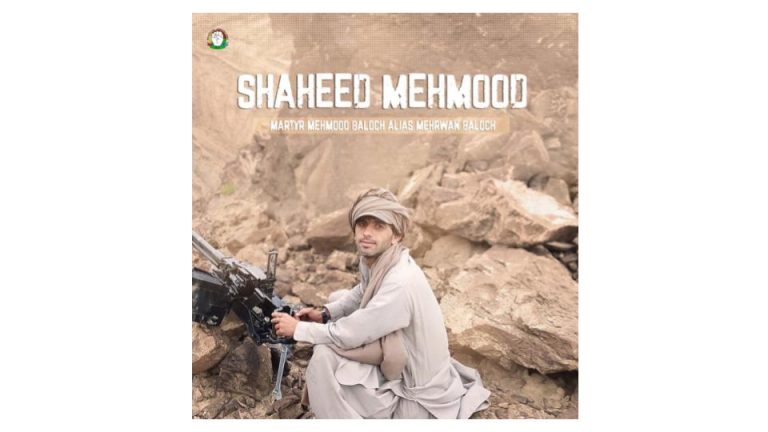
BLF pays tribute to martyr Mehmood Baloch

In a statement released to the media, the spokesperson for the Balochistan Liberation Front (BLF), Major Gwahram Baloch, provided details of a recent clash with Pak Army and paid homage to a fallen freedom fighter.

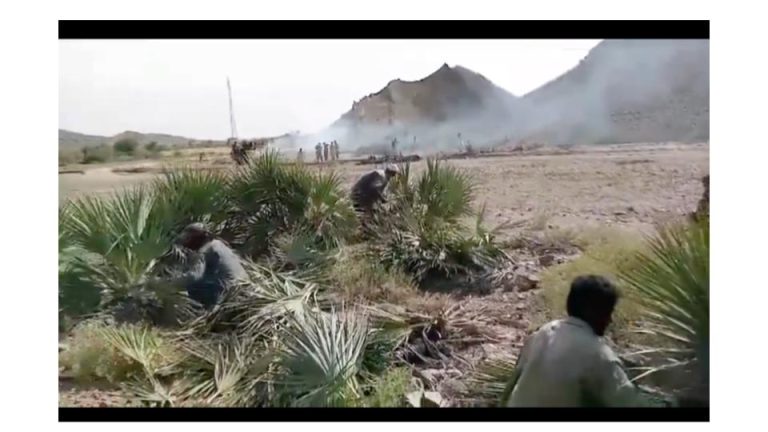
According to the BLF spokesperson, on the evening of June 7, 2024, around 6 p.m., Baloch freedom fighters were carrying out organizational work at the Marble Cross site in the Turbat Kalatuk area of Kech district when they clashed with operatives of a “death squad” formed by the Pak Army.

The death squad operatives tried to surround the freedom fighters. During the encounter, the freedom fighter Mehmood, also known as Mehrwan, was martyred while bravely fighting to break the Army’s siege. However, his companion managed to escape the siege, displaying “courage, bravery, and excellent guerrilla tactics”. The companion also reportedly took Mehrwan’s weapons and belongings with him.

The BLF spokesperson paid tribute to the martyred Mehmood, describing him as a “brave companion” and a “determined and dedicated freedom fighter.” Mehrwan, the son of Major Mola Bakhsh and a resident of Hasadig Dasht, had been associated with the BLF’s struggle for Pak-occupied-Balochistan’s independence since 2012.

Martyred Mehmood

He set a high example of bravery, courage, and guerrilla warfare skills by fighting shoulder to shoulder with his companions in several important battles against the Army.

The spokesperson said that martyred Mehmood was a close relative of the martyred freedom fighters Nako Issa alias Nako Shera, Samir alias Sogat, Sana alias Sogat, and Jafar alias Sana.

He said that the martyred Mehmood was a kind and compassionate companion and a determined and dedicated freedom fighter. Before the armed struggle, he was associated with the political struggle for Balochistan’s freedom. In 2012, he joined the BLF’s civilian network. From that day until his martyrdom, he remained an active and dedicated freedom fighter on the platform of the Balochistan Liberation Front and joined the caravan of martyrs.

In a stern warning, the BLF spokesperson claimed that all the operatives of the “death squad” have been identified and that they “will soon be brought to their logical conclusion.” The statement further vowed that “national enemies active against the Baloch national freedom movement will not be spared at any cost.”

The BLF spokesperson reiterated the group’s commitment to accomplishing Mehmood’s mission “at all costs” and fulfilling his dream of an independent Balochistan and to “bring the enemy to its logical conclusion.”

Can personlized cancer vaccines usher in a new era of hope for patients

In a groundbreaking development, the National Health Service (NHS) has treated its first patient in England with a personalized mRNA vaccine against bowel cancer. This marks a significant step forward in the fight against cancer, as this cutting-edge technology aims to harness the body’s immune system to prevent the recurrence of the disease.

To gain insights into this pioneering treatment, our special correspondent Sabita Mishra spoke with Dr. Nilanshu Das, a biologist and a researcher from Kolkata who shed light on the potential of these personalized cancer vaccines and how they differ from traditional therapies.

Sabita Mishra: How do personalized mRNA cancer vaccines differ from traditional cancer treatments like chemotherapy or radiation?

Dr. Nilanshu Das : Terminal cancer patients subjected to new clinical trials has been in practice for more than three decades. In the case of Elliot Pfebve (England) for the first time mRNA vaccine targeted against particular cancer-causing mutations has been used. mRNA vaccine is a new technology of vaccine which has been proved to be effective during covid. It is markedly different from the traditional cancer treatment like chemotherapy and radiotherapy as those treatments were generalized and not individual or more precisely, mutation specific. Pharmacogenomics or treatment according to the genetic makeup (mutation profiling) of an individual will be the future treatment modality not only for cancer but also for almost all diseases.

Sabita Mishra: In the Elliot Pfebve case, they used the patient’s tumor to identify specific mutations. How accurately can these mutations be identified, and how does this precision improve treatment?

Dr Nilanshu Das: With present day high fidelity sequencing technique mutations can be detected with 100% accuracy. There is no debate about that. However this does not ensure that precisely knowing few mutations of a particular cancer patient treatment would be absolutely accurate. Onset and progression of cancers are multi factorial and for most of the cancers all the criteria are not well understood. It is rightly said that each cancer is an institution by itself. Of course, efficacy of cancer treatment has improved a lot over last 10 years, but more research is needed to attend precision in cancer treatment.

 Sabita Mishra : How does a patient’s overall immune health affect the potential success of a cancer vaccine?

Dr. Nilanshu Das : Cancer vaccine, like all other vaccines rely on the host (the individual who is suffering from cancer) immune system. It actually acts through the host immunocytes to prevent the disease onset and progression. Thus, a better overall immune health would be helpful for success of any vaccine.

Sabita Mishra : Are there any challenges in scaling up this technology to treat thousands or millions of patients?

Dr. Nilanshu Das: Scaling up of personalized cancer vaccine to reach en mass may face several challenges like any other vaccine. It is true that before any vaccine is launched it goes through several rounds of rigorous clinical trials. Still, there are examples of vaccines proving to be ineffective or having severe side effects in long run. Thus, success of any vaccine is difficult to predict and has to go through the test of time. Scaling up of cancer vaccine is even more challenging because similar cancers may have diverse genetic background, unlike viral and bacterial disease.

Sabita Mishra: Could these vaccines be used preventatively in people with a high genetic risk of certain cancers?

Dr. Nilanshu Das: Preventive cancer vaccines are already in place for cervical cancer and against several viruses that causes cancer. But these are generalized. Identifying individuals with a high genetic risk of a particular cancer requires whole genome DNA sequencing, which is still not in practice in India. Thus, cancer vaccines precisely targeted against patients with particular mutations (rendering them as at high risk for certain cancers) seems quite far-fetched… but not impossible.

With this groundbreaking approach, the future of cancer treatment looks increasingly personalized and targeted, offering hope to countless patients and their families.

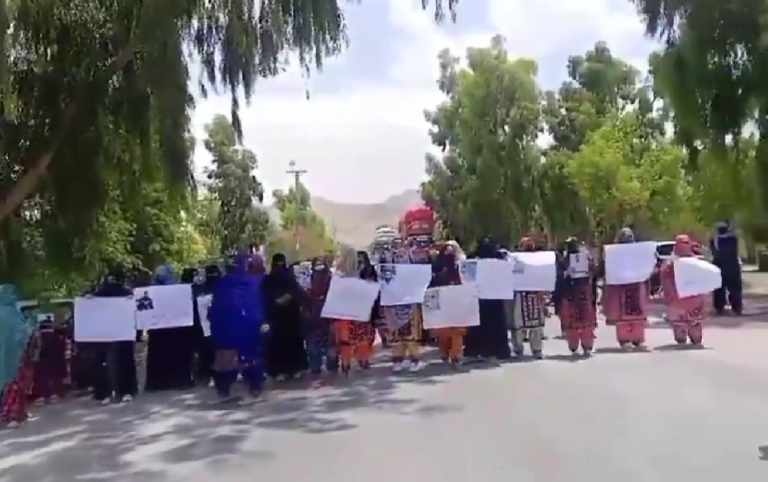
PTM protests across south Pakhtunkhwa against Pak Army brutality in Chaman

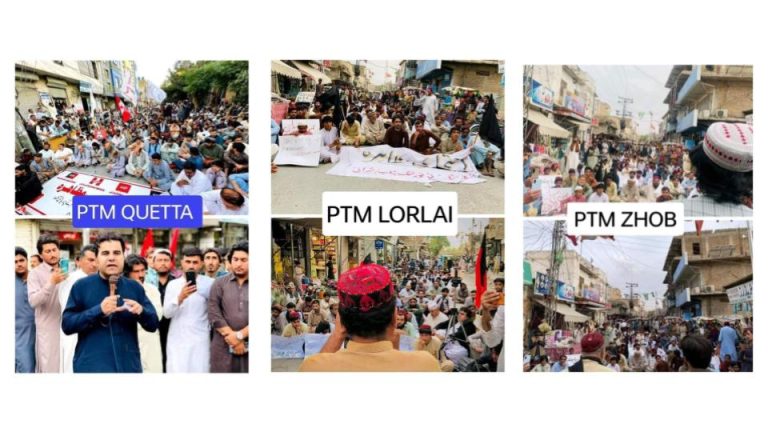
The Pashtun Tahafuz Movement (PTM) has led successful demonstrations across the south Pakhtunkhwa districts in solidarity with the brutality committed by Pak Army in the ongoing protests in Chaman.

These protests erupted against Pakistan’s sudden enforcement of passport requirements at the Durand Line, causing hardship for Pashtun Afghans and locals with cross-border connections.

Local Pashtuns, supported by PTM, have been staging sit-ins for seven months, demanding a reversal of the passport policy. PTM’s efforts have resonated across southern Pashtunkhwa, including in Quetta, Lorlai, Zhob, and Pasheen, drawing attention to Chaman’s plight and advocating for justice and accountability.

The Chaman protest, highlighting the struggle against mandatory passports, turned into a violent chaos on June 6 when the Pak Army’s Frontier Corps (FC) opened fired on peaceful protesters.

Even though the protestors maintained nonviolent methods, they were met with excessive force, shedding light on the Pak establishment’s oppressive tactics.

PTM’s commitment to nonviolent resistance and marginalized communities has gained admiration amidst the ongoing struggle for rights and equality in the region.

Pak Army abducts Pashtun rights activist Khan Zeb Mahsud

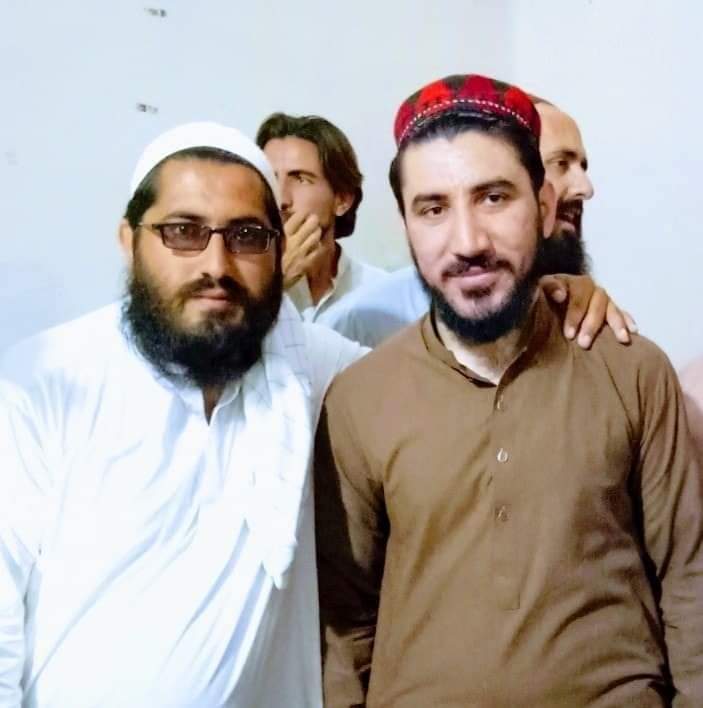
On June 6, Khan Zeb Mahsud, a PTM activist in Karachi, was abducted by plainclothes personnel and paramilitary Rangers in the Sohrab Goth area of the city. His current whereabouts remain unknown.

Detention and enforced disappearance of members of the Pashtun Tahafuz Movement (PTM) civil rights group by Pak security forces have increased in recent days. Just a week prior, on May 30, PTM’s district coordinator for Killa Saifullah, Fateh Mohammad Kakar, was arrested during a police raid on his home.

The PTM’s activism has triggerred the Pak Army who is committing abduction and extra judicial killing of the dissent voices.

Human rights organizations are calling for investigations into the reported detentions and enforced disappearances, citing concerns over potential human rights violations against the Pashtun minority in the country.

China imprisons Uyghur activists for alleged links to US journalist

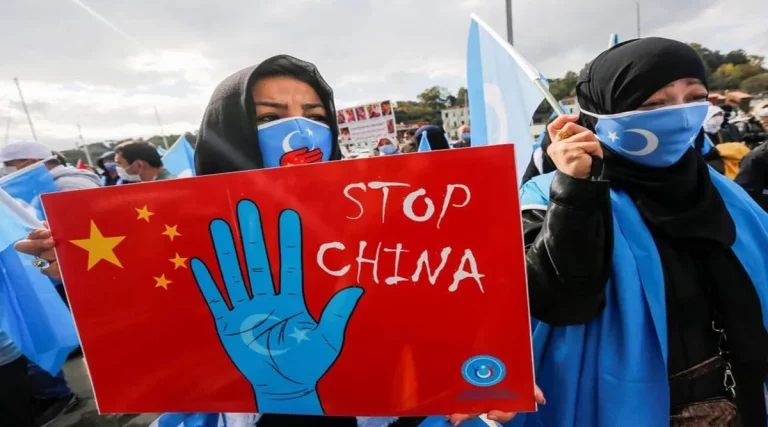
Several Uyghur activists and former colleagues of an exiled journalist have been convicted and sentenced to lengthy prison terms by Chinese authorities in the Xinjiang region. The convictions appear to be linked to their association with Kasim Kashgar, a Washington-based reporter for Voice of America (VOA).

According to Kashgar, he learned in May that his former colleagues Mirkamil Ahmed, Semet Ababekri, Abdukadir Rozi, Mehmut Abdukeyum, and Akber Osman were convicted and handed sentences ranging from at least seven years to an unspecified term. The exact charges and details of the convictions remain unclear, as Chinese authorities have not publicly disclosed the information.

“Their ‘mistake’ was their past proximity to someone now affiliated with a US news agency covering Uyghur-related news”, Kashgar said, expressing concern over the apparent targeting of individuals with connections to him.

Kashgar, who covers Uyghur human rights issues for VOA, had previously worked with the convicted individuals at a language school in Urumqi, the capital of Xinjiang. He fled China in 2017 and joined VOA in 2019, fearing persecution for his reporting on the Uyghur minority’s plight.

Reportedly, the convicts were accused of being members of the World Uyghur Congress, a prominent Uyghur rights organization. However, Kashgar has denied any involvement with the group beyond conducting interviews for VOA’s coverage.

The convictions have sparked outrage among human rights organizations and press freedom advocates, who condemn the Chinese government’s crackdown on Uyghur journalists and activists. The sentences are part of a broader campaign to silence dissent and suppress reporting on the human rights abuses against the Uyghur population in Xinjiang.

Awaran under brutal occupation of Pakistan Army

Human rights groups have sounded the alarm over reports of ongoing violations and brutality against the local population in Awaran Tehsil Mashkay Shurdoi at the hands of Pak security forces. The occupying Pak Army has been carrying out a campaign of enforced disappearances, forced labor, and environmental destruction in the region.

This report addresses the ongoing human rights violations where the local population is subjected to systematic abuse by the Army. There is a lack of transparency and accountability for these atrocities is a severe violation of human rights.

The Pak Army is committing atrocities by compelling locals into forced labor, a serious breach of human rights and international conventions. They beat and threaten locals until they comply with their demands for forced labor, the residents constantly live in terror of their reprisals.

This coercion strips individuals of their autonomy and dignity, violating fundamental labor rights and personal freedoms. It creates physical and psychological harm to the individuals forced into labor.

The daily cutting and burning of roadside trees and jungles by Army forces has become as a prevalent issue. This destruction not only affects the environment but also the livelihood and well-being of the local populace who depend on these natural resources.

The rapid deforestation is not only damaging the local ecosystem and biodiversity, but is maliciously stripping away the natural resources that sustain the livelihoods of Awarani people. Adverse effects on climate and soil quality is leading to long-term environmental damage.

This is not only in violation of environmental protection laws and but also international environmental agreements. Innocent Awaranis are caught in the middle of this brutal military occupation, suffering immensely from the heavy military presence and harsh crackdown on their homeland.

Under these circumstances, it is extremely important that international human rights organizations investigate and document these violations to hold perpetrators accountable. Furthermore, environmental restoration should become the focus of sustainable development programs.

The situation in Awaran Tehsil Mashkai Shurdoi is a grave human rights crisis that requires immediate attention from both national and international communities. Enforced disappearances, forced labor, and environmental destruction perpetrated by the Pak Army are unacceptable and demand swift action to protect the lives and rights of the affected citizens.

Bangladesh: Local Hindus demand justice for murdered Hindu businessman

The outraged local Hindus in Comilla metropolis of Bangladesh have staged protest after a Hindu businessman and fish trader Bikash Das were murdered by Muhammad Aziz yesterday.

Bikash Das was known for his shop in the Dollai Nababpur market, who fell victim to this tragic incident. The local Hindus are demanding justice and urging authorities to ensure that Aziz faces severe punishment for his crime.

https://twitter.com/VoiceofHindu71/status/1798964327694942647?t=iMk_THYE7iIbPY5inUkNnQ&s=08

Earlier on March 15, extremists assaulted Rajiv Kumar Dey for keeping his shop open during daytime hours throughout the month of Ramzan in Sylhet.

Last year, a protest march organised by the Hindu community was attacked in ​​the Comilla. These incidents show a pattern of persecution faced by Hindu minorities in Bangladesh.

Family of disappeared Baloch youth blocks Khuzdar Highway

Tensions escalated in Khuzdar after the family and relatives of the missing Baloch youth, Anees Baloch, took to the streets, blocking the main highway in protest against his enforced disappearance.

With banners waving and voices raised, the Baloch family has brought traffic to a standstill calling on authorities to take immediate action to release Anees and ensure his well-being. The Baloch Yakjehti Committee (BYC) has shown its support for the protest and urged people from all walks of life to stand in solidarity with the affected families.

Anees Ur Rehman Baloch, a resident of Khuzdar and a recent computer science graduate from Bahauddin Zakaria University (BZU) in Multan, was reportedly taken by armed personnel on the evening of June 4 from Pubg Hotel in Khuzdar., He was forcibly enforced by the Pak Army in the evening of June 4. He served as the chairman of the Baloch Students Council in Multan and is now among the thousands of enforced disappearance victims.

Enforced disappearances have sadly become a recurring reality in Pak-occupied Balochistan, where individuals like Anees Baloch are arbitrarily taken away without any legal recourse. These incidents shed light on the plight of the Baloch community which faces atrocities at the hands of the Pak Army.

BNM condemns demolition of Syed Zahoor Shah Hashmi library in Sindh as attack Baloch heritage

Nationalist leaders have voiced outrage over the Sindh authorities’s decision to demolish the Syed Zahoor Shah Hashmi Reference Library in Karachi, calling it an attack on the cultural heritage of the Baloch people.

The library, named after the renowned Baloch scholar and researcher Syed Zahoor Shah Hashmi, houses thousands of books, manuscripts, and historical documents relating to Baloch history, language, and culture.

In a statement, the central spokesperson for the Baloch National Movement (BNM) said the planned demolition represents “a direct assault on the Baloch national heritage” that should be condemned by all intellectuals.

“This library is not only preserving our scholarly and cultural wealth but is an important center for promoting Baloch civilization,” the spokesperson said. “The hard work of great researchers like Syed Zahoor Shah is enshrined here.”

https://twitter.com/balochyakjehtic/status/1798692920070947165?s=46

The BNM said that the destruction of the library would result in an irreplaceable loss of the Baloch nation’s historical archives and cultural identity. It has appealed to the Sindh government to immediately reverse its decision.

Noting the library also holds significance for the Sindhi people, the group said the foundations contained “the blood of martyr Saba Dashtiari” – likely referencing a Baloch activist killed during the fight.

“The existence of this library is a matter of pride, and protecting it is our collective responsibility as Baloch,” the statement read. “We warn the Sindh authorities against demolishing this heritage.”

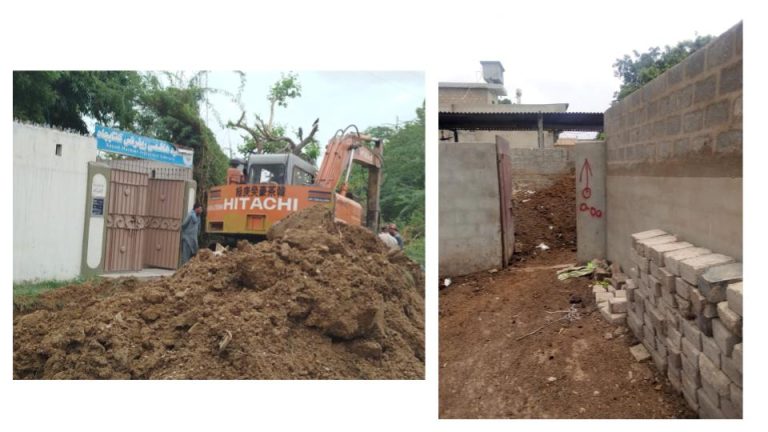
Baloch Yakjehti Committee has also expressed its dismay stating the atrocities that Pak Army is committing by demolishing houses and the Sayed Hashumi Reference Library at Gulam Muhammad Goth Malir on the indigenous people of Malir, the Balochi language, and cultural heritage.

The Army is taking steps for constructing Malir Expressway, a road construction project by the Defence Housing Authority, a multi-billion housing scheme to demolish Goth Gulaam Muhammad.

However, the DHA has always been involved in disrupting the ecology of Malir by forcibly vacating many villages in the area. Recently, they have marked several houses and the Sayed Hashumi Reference Library for demolition and deployed heavy machinery to carry out the destruction.

The decades-old library is seen as a symbol of Baloch ethnic pride, memory and more importantly, the ecology that is under distress for a long time. Therefore, the Baloch community should raise their voices against this move and unite for the protection of this heritage.

Kidnapping, rape and forceful conversion of another Hindu girl in Pakistan

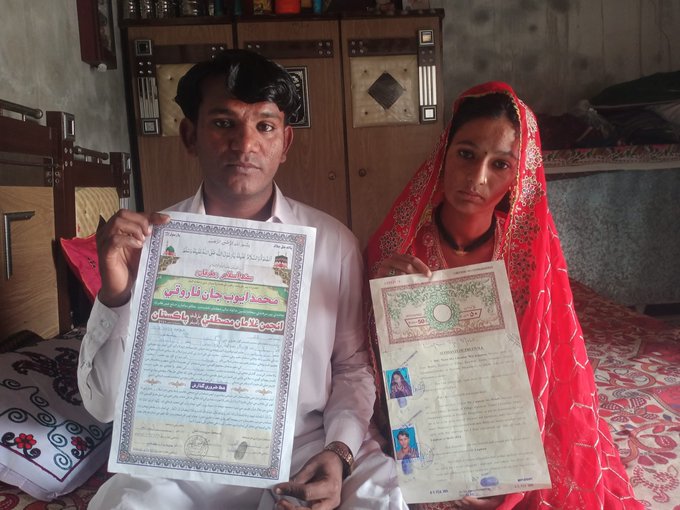
Noori, a minor Hindu girl was not only kidnapped, raped, forcibly converted to Islam but also married off to Muslim men Muhammad Ayub “Peer Ayubjan Sarhandi” and Luqman Mohib Junejo in separate incidents. This practice of “conversion rape” is being used to entrap and exploit Hindu girls.

In Noori’s case, influential Muslim religious leader Sarhandi has abducted, raped and “converted” her through an illegal marriage in the name of Islam. They are committing rape and prostitution in the name of marriage, which shows that religious minorities are not safe in today’s Pakistan.

Just weeks earlier, 17-year-old Shanti Meghwar escaped her captor Muhammad Nazir Ghulam, courageously testifying in court about her kidnapping, forced conversion, and marriage against her will. Her harrowing account laid bare the “weaponization of conversions” targeting Hindu girls from impoverished backgrounds.

Pakistan’s draconian blasphemy laws, which can bring the death penalty for insulting Islam, have been used to persecute minorities or settle personal vendettas. Meanwhile, authorities are turning a blind eye or facilitating such crimes against Hindus.

Pakistan’s treatment of its Hindu minority is described as a “slow-motion ethnic cleansing.” There is a lack of legal safeguards, and laws against forced conversion are routinely blocked by religious hardliners.