Home Blog Page 93

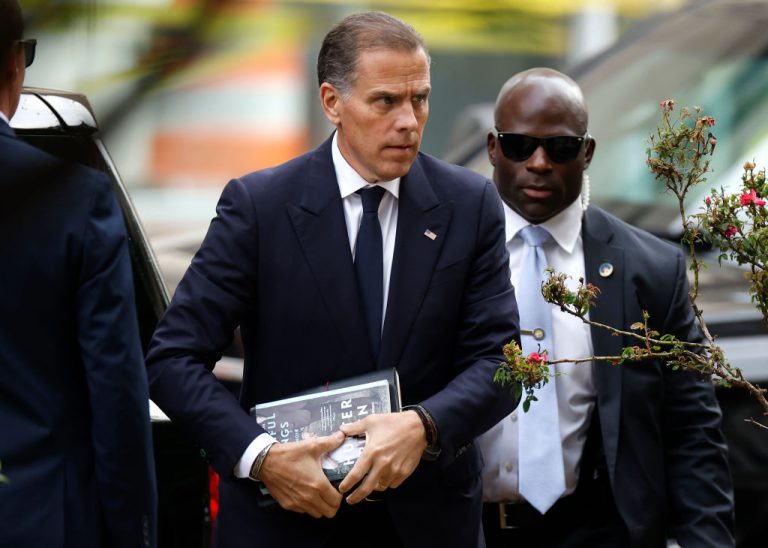
Jury convicts Hunter Biden on all three gun charges amid addiction struggles

In a highly publicized trial, Hunter Biden, the eldest son of President Joe Biden, was found guilty on Tuesday of all three felony counts related to purchasing a handgun while being a user of crack cocaine. The verdict came after a weeklong trial that delved into the younger Biden’s well-documented struggles with addiction.

The 12-member jury deliberated for approximately three hours over two days before reaching their unanimous decision.

President Biden acknowledging the outcome, said, “I will accept the outcome of this case and will continue to respect the judicial process as Hunter considers an appeal.” He reaffirmed his commitment to stand by his son, adding, “Jill and I will always be there for Hunter and the rest of our family with our love and support. Nothing will ever change that.”

The charges stemmed from a 2018 incident in which Hunter Biden falsely stated on a Firearms Transaction Record that he was not an unlawful user of, or addicted to, any controlled substance when purchasing a Colt revolver. Prosecutors presented compelling evidence, including text messages and witness testimony, detailing his ongoing drug use during that period.

While no sentencing date has been set, Hunter Biden faces a maximum of 25 years in prison, although a lesser sentence is expected for a first-time offender. His attorney, Abbe Lowell, expressed disappointment with the verdict but vowed to “vigorously pursue all the legal challenges available.”

In a statement, Hunter Biden expressed gratitude for the support of his family and friends, stating, “Recovery is possible by the grace of God, and I am blessed to experience that gift one day at a time.”

The trial provided a candid glimpse into the personal struggles of the Biden family, with various relatives, including Hunter’s ex-wife Kathleen Buhle and former sister-in-law Hallie Biden, testifying about his addiction and its impact on their relationships.

Terrorist attack in Jammu and Kashmir’s Doda district

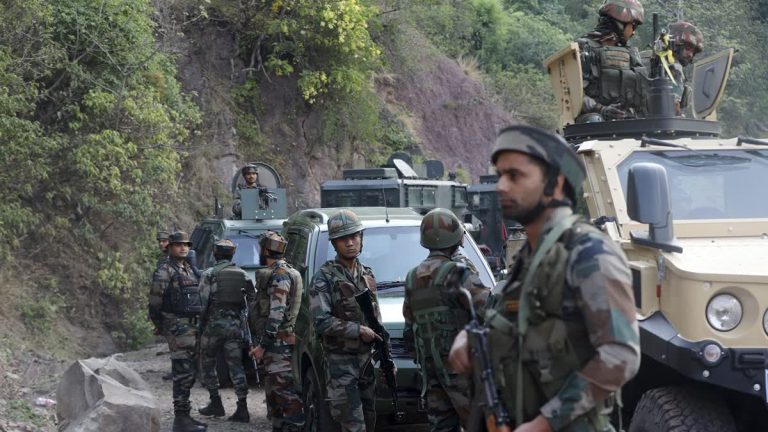
Tensions escalated in the Union Territory on Tuesday night as security forces clashed with militants in Doda district, marking the third terror incident in the region within just three days.

The encounter unfolded when militants opened fire on a joint check post manned by the 4 Rashtriya Rifles and local police in the Chatergala area. Security personnel swiftly retaliated, prompting an intense gunfight that is still ongoing, according to Additional Director General of Police Anand Jain.

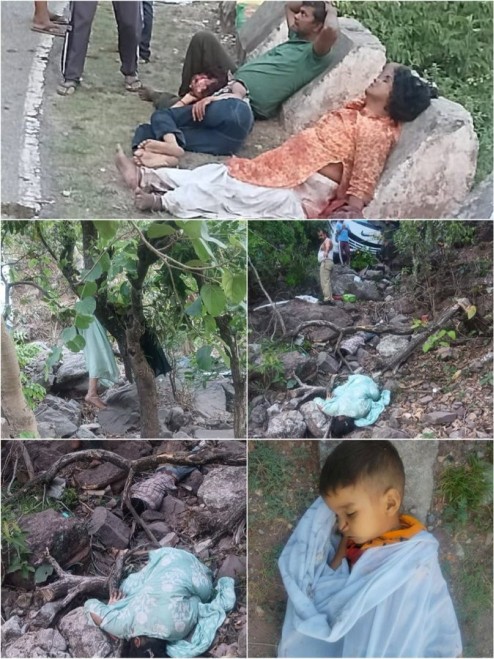
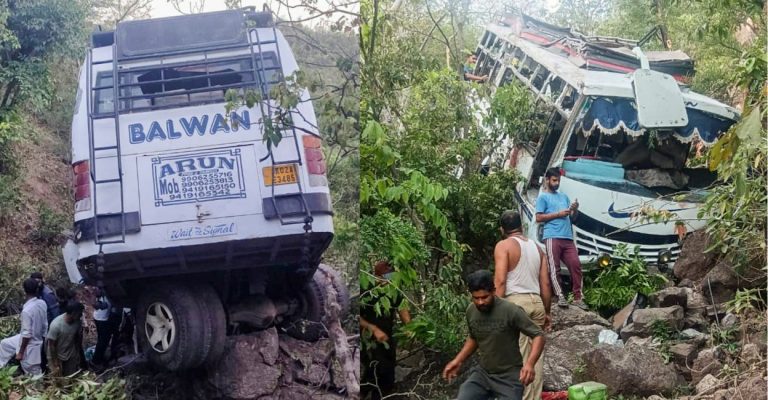
This latest confrontation follows a devastating militant attack on Sunday in Reasi district, where assailants ambushed a bus carrying pilgrims from the Shiv Khori temple to Katra. The assault left nine civilians dead and 41 others injured after the bus plummeted into a deep gorge. Authorities have released a sketch of one of the suspected militants.

Massive efforts are underway to neutralize the threat, with 11 teams of security forces scouring the Ranso-Poni-Treyath belt under a multi-directional cordon.

“Two terrorists, who appeared to have freshly infiltrated, surfaced in village Saida Sukhal near Koota Morh of the Police Station Hira Nagar in the late evening of June 11. They asked for water from a few houses to which villagers grew suspicious and slammed the doors on them and a few raised hue and cry. The terrorists panicked and fired randomly in the air,” ADGP Anand Jain said.

This is the first major attack that Doda district of the Chenab Valley has witnessed this year. 

On the Reasi terrorist attack in Jammu & Kashmir

Over the Years

The joint efforts of the then Indian Prime Minister Atal Bihari Vajpayee and his Pakistani counterpart Nawaz Sharif to end animosity between the two long-estranged neighbours finally bore fruit in February 1999 with commencement of a weekly bus service between Delhi and Lahore. However, this spectacular achievement with great promise was short lived as Pakistan Army chief Gen Pervez Musharraf played the spoiler by embarking on his ill-fated Kargil misadventure.

One and a half decades later, on the intervening night of May 22/23, 2014, four heavily armed Pak backed terrorists armed wearing suicide vests made an attempt to storm the Indian consulate in Herat city of Afghanistan. In the fierce gun battle that ensued, Indo-Tibetan Border Police personnel guarding the consulate eliminated two of the attackers, while the remaining two were despatched by the Afghan security forces and all Indian nationals were safe and unharmed.

Even though attacks on Indian facilities in Afghanistan by Pakistan Army sponsored terrorist groups weren’t something unusual before the Taliban seized Kabul in 2021, the timing of the Herat consulate attack certainly was! It came just two days before newly elected Indian Prime Minister Narendra Modi’s oath taking ceremony for which Pakistani Prime Minister Nawaz Sharif had been invited, and this was no coincidence.

Two days after this attack, the then Afghan President Hamid Karzai disclosed that Afghanistan’s National Directorate of Security had confirmed that Pakistan Army’s proxy terrorist group Lashkar-e-Taiba [LeT] had carried out this attack. While sceptics dismissed this claim as part of Karzai’s regular anti-Pakistan rant, but a month later, the US State Department also confirmed that this attack was handiwork of LeT and re-designated LeT as a terrorist organisation.

The time-line of events add undeniable credibility to the inference of Pakistan Army’s complicity in the Herat consulate attack.  

It was on May 21, 2014 that Islamabad confirmed receiving an invitation requesting Sharif’s attendance for Modi’s oath-taking ceremony, but gave no confirmation regarding his attendance, which was indeed intriguing. The very next night, India’s consulate in Herat was attacked by a suicide terrorist squad with the obvious intent of causing extensive casualties to the diplomatic staff. Had it succeeded, this attack would have created such strong anti-Pakistan sentiments in India that Sharif would no longer be welcome. This is what the then Pakistan Army chief Gen Raheel Sharif must have thought and that’s why he didn’t bother to approve his namesake’s visit to Delhi.

However, on realising that the Herat attack had failed to cause any casualties to Indian nationals and after the prime minister’s brother and Punjab province Chief Minister Shehbaz Sharif’s personal request, Gen Sharif on May 24, reluctantly permitted the prime minister to attend Modi’s oath-taking ceremony. Needless to say, the Army chief didn’t have any other option!

Writing in The Diplomat, senior correspondent Sanjay Kumar expresses the same sentiment by mentioning that “Pakistan’s delay in accepting the invitation not only exposes the fault lines in Islamabad between the civilian and military establishments; it also gives a hint as to the causes of the attack on the consulate int. [Emphasis added].

Why is Rawalpindi Sabotaging Efforts to Normalise Indo-Pak Relations?

By drumming-in a concocted existential threat from a ‘Hindu India’ into the minds of its people, the Pakistan Army has cunningly legitimised the enormous extra-constitutional powers it wields. So, Rawalpindi knows very well that the moment Indo-Pak relations normalise and peace prevails, its hallowed image of being the ultimate bulwark against Indian hegemony would take a serious hit. As a result, people would start questioning the Army’s supremacy over all other organs of state, and this would be the beginning of the end of Rawalpindi’s reign in Pakistan.

In addition, portraying India as a country determined to annex Pakistan, Rawalpindi has been able to apportion the lion’s share of the country’s budget for extravagant defence expenditure purportedly to dissuade India from satiating its alleged desire to destroy Pakistan.

While Rawalpindi has made several high-end military hardware acquisitions, the fact that no less than a dozen former officers of the Pakistan armed forces have been able to acquire extremely costly properties in Dubai and even the opulent lifestyle of senior armed forces officers living in Pakistan clearly suggests that a substantial amount of money meant for defence expenditure is systematically being pocketed by them.

So, in order to preserve its turf and continue enjoying a host of unauthorised perks and privileges, Rawalpindi has no other choice but to continue tilting at windmills to keep fear psychosis among its people alive!

The Present Day

All said and done, Rawalpindi deserves due appreciation for its devious machinations and pre-emptive actions which have ensured that relations between Delhi and Islamabad don’t normalise. So, when former Pakistani Prime Minister and PML-N president Nawaz Sharif recently mentioned that “On May 28, 1998, Pakistan carried out five nuclear tests. After that Vajpayee Saheb came here and agreed with us [to usher peace]. But we violated that agreement [by the Kargil misadventure]…it was our fault,” this admission must have certainly rattled Rawalpindi.

Pakistan’s Foreign Office [FO] in its statement after Modi’s re-election as India’s prime minister stated that “We hope that India will take steps to create a conducive environment for advancement of peace and dialogue and resolution of long-standing dispute for the mutual benefit of the peoples of Pakistan and India.” Though merely a diplomatic courtesy, this overture too must have upset Pakistan Army’s top brass. So, even before New Delhi could respond, Rawalpindi decided that it was time to act and scuttle any move towards rapprochement by orchestrating a terrorist attack through its proxies.

A Terrorist Attack Most Foul

Sunday’s terrorist attack on a bus in Reasi district of J&K has ISI written all over it. Since it was carrying pilgrims returning after visiting a temple, selection of this bus in particular as the target ensured that all victims belonged to a single religious denomination, which would definitely compound the intensity of anger and rage within the concerned community.

Moreover, the attack took place just before it became dark and this gave the attackers several advantages. One, it enabled them to bring down aimed fire at the hapless pilgrims and thereby inflict maximum casualties-the fact that besides the nine occupants killed, ten others sustained bullet injuries highlights this fact. Two, the ambush site next to a ravine was deliberately selected as it would cause the ill-fated bus to plunge downhill thereby increasing the number of casualties.

Three, with darkness enveloping the area soon after the attack, rescue operations would have become more time consuming and this unavoidable delay could well have increased the death toll. Lastly, with more than 10 hours of darkness after the attack at their disposal, the terrorists involved would have got adequate time to make good their escape.

The Way Forward

With terrorists finding it extremely difficult to carry out major strikes in Kashmir Valley due to alertness of security forces, ISI appears to be in the process of shifting the pivot of its sponsored terrorist activities to areas that are less guarded. First it was the Rajouri-Poonch area, and now it’s come down to the Jammu region. So, the message is loud and clear- come what may, the Pakistan Army will not stop its ongoing proxy war. Hence there’s a crying need to accept this reality and not only brace up to boldly face this scourge, but also actively explore the institution of dissuasive measures as well as effective forms of retribution including those in the grey zone domain.

Once the gloves are off, playing the game by the rules makes no sense!

PTM ready for a major protest rally in Chaman over arrest of protesters

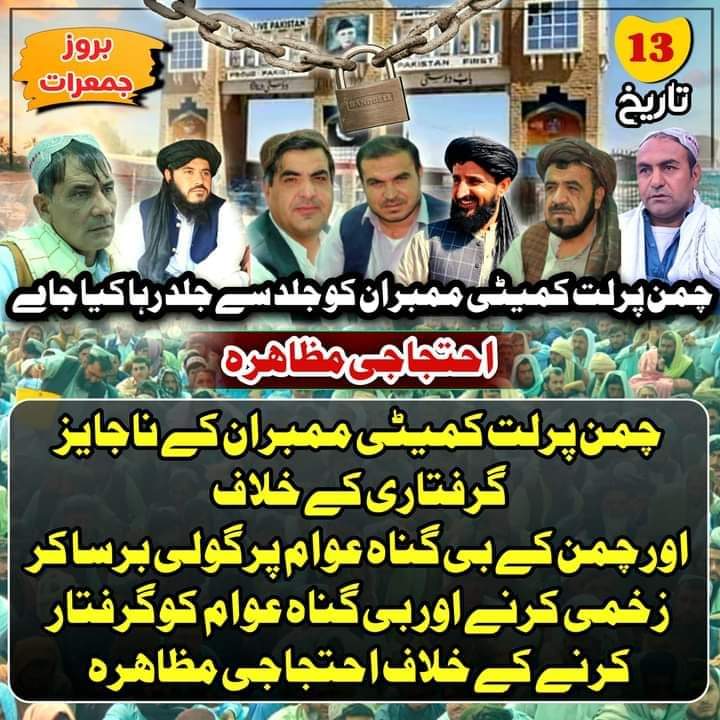
The Pashtun Tahafuz Movement (PTM) has called for a major rally in Chaman on June 13, demanding the release of protesters arrested during recent demonstrations against Pak Army’s enforcement of passport requirements at the Durand Line.

The rally, dubbed as a “historical” event by organizers, aims to amplify voices seeking the freedom of martyrs, injured individuals, and prisoners detained in the aftermath of the Chaman border protests. PTM has appealed to all compatriots, including disabled and young Pashtuns, to participate in the demonstration and raise their voices against the crackdown.

The protests erupted in response to Pakistan’s sudden decision to mandate passports for cross-border movement along the Durand Line, causing significant hardship for Pashtun Afghans and locals with cross-border connections. Local Pashtuns, supported by PTM, have been staging sit-ins for seven months, demanding a reversal of the controversial passport policy.

The situation took a violent turn on June 6 when the Pak Army’s Frontier Corps (FC) opened fire on peaceful protesters in Chaman, escalating tensions and transforming the protest against mandatory passports into a broader struggle against oppressive tactics employed by the Pak establishment.

Despite the protesters’ adherence to nonviolent methods, they were met with excessive force, shedding light on the heavy-handed approach used by Army to suppress dissent in the region.

Armed men abduct two Pak Frontier Corps personnel in Turbat

Armed men have abducted two personnel from the Frontier Corps (FC) in the Apsar area of Turbat on Sunday afternoon.

Reportedly, unidentified armed individuals intercepted and kidnapped the two FC officials, taking them away to an undisclosed location.

It is important to note that Baloch freedom organizations are known to operate in the region, although no group has claimed responsibility for this abduction as of yet.

The situation in Pak-occupied-Balochistan has long been a point of concern for human rights organizations. The Pak Army’s response to Baloch community has been heavy-handed, often resulting in human rights abuses. Pak Army is using enforced disappearances and extrajudicial killings to suppress Pak-occupied-Balochistan’s independence movement. 

Students protest over enforced disappearances of Baloch youth by Pak Army

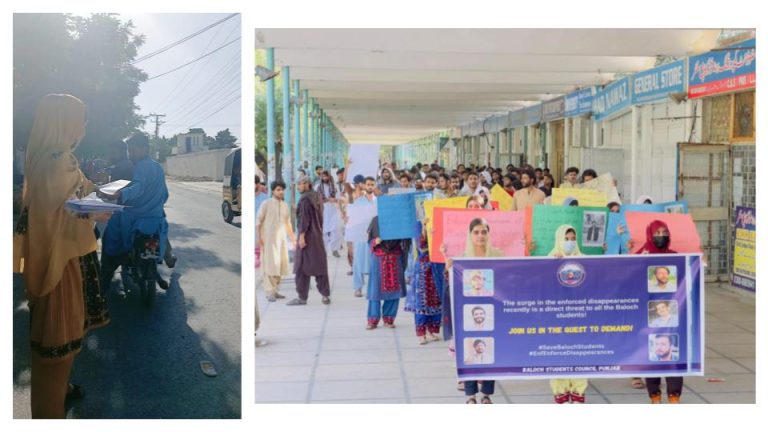
Baloch student organizations across Pakistan are mobilizing to protest the recent surge in enforced disappearances and harassment of Baloch students in various educational institutions.

In Quetta, Pak-occupied-Balochistan, a rally is being organized by the Baloch Students Council to demand the release of Farooq Baloch and Anees Baloch, who have been subjected to enforced disappearances by Pak Army. The protest is scheduled to commence at 4:30 PM on Tuesday from the premises of Balochistan University.

Meanwhile, in Lahore, the Baloch Students Council, Punjab held a protest rally today at Punjab University, raising voices against the enforced disappearances of Baloch students and the profiling and harassment they face in institutions across Punjab and Islamabad.

Adding a digital dimension to the protests, the Baloch Students Councils of Punjab and Islamabad are organizing a Twitter Space discussion titled “Recent Surge in Enforced Disappearances and Profiling/Harassment of Baloch Students.” This online event aims to shed light on the pressing issue and garner broader support.

The enforced disappearances of Baloch students and activists have been a longstanding concern in Pakistan, with human rights organizations repeatedly urging authorities to address the issue and ensure the safety and rights of all citizens.

These planned protests highlight the growing frustration and determination of the Baloch student community to raise awareness about the violations they face by the very authority that is in power. Since, Pak Army occupied Balochistan in 1948, Baloch community is living in nightmare. They are not only subjected to enforced disappearances but also frequent raids, and extra judicial killings.

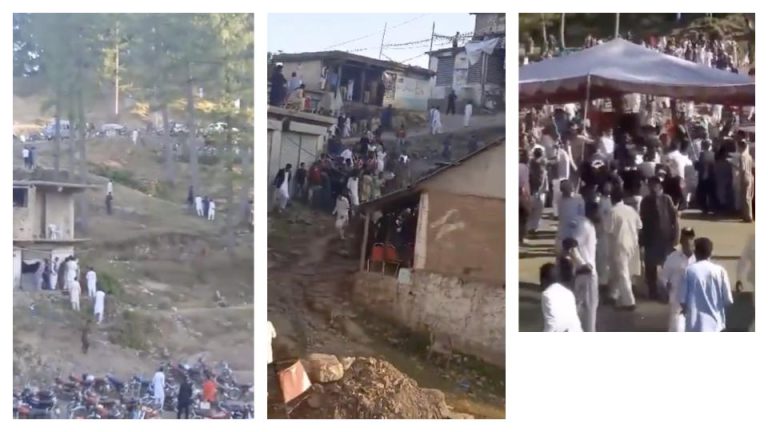
Pak Army attacks JAAC leaders in Char Biyarh

In Pakistan-occupied Jammu & Kashmir (PoJK) the Pak Army launched an attack on leaders of the Joint Awami Action Committee (JAAC) in Char Biyarh area, days after violent clashes between police and rights activists left three people dead.

The attack on JAAC leaders has drawn widespread condemnation, coming amid protests across PoJK over the killing of three Kashmiri youths – Waqar, Chaudhary Zaheer, and Saqib Fayaz – who lost their lives to bullets fired by Frontier Corps (FC) forces during recent demonstrations.

Large protests erupted in the region, with marchers demanding accountability from authorities for the violence against peaceful protesters and the release of incarcerated activists. A wheel-jam and shutter-down strike was also observed across the territory in response to the killings.

The attack on JAAC leaders, coupled with the violence abduction of poet and journalist Ahmad Farhad, has further strained PoJK populace, fueling calls for greater autonomy and an end to the human rights abuses in the region.

Tehreek-e-Labbaik Pakistan seals Ahmadiyya mosque in Karachi

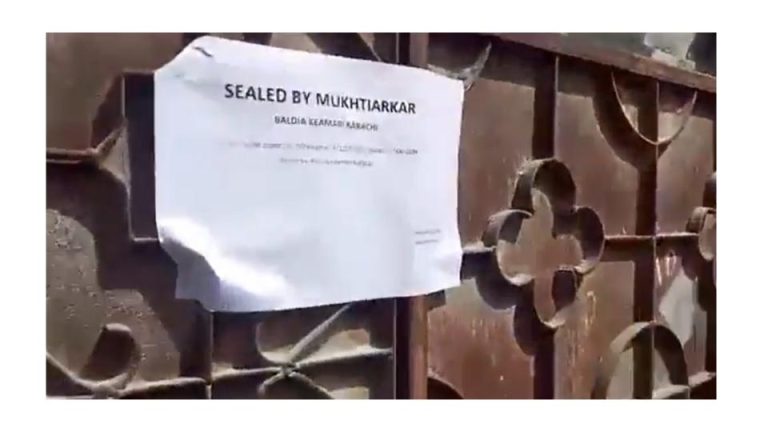
In an unfortunate incident, the Ahmadiyya community’s place of worship in Karachi was sealed at the behest of extremist group Tehreek-e-Labbaik Pakistan (TLP).

The sealing of the Ahmadiyya Jamaat’s place of worship is not an isolated incident; last year, an Ahmadi place of worship was vandalized by a mob in Karachi, with videos showing masked men using sledgehammers to damage the minarets while others shouted slogans.

The Ahmadiyya community faces systematic discrimination and persecution in the country. They were declared non-Muslim by Pakistan’s Parliament in 1974 and banned from calling themselves Muslims a decade later. They are prohibited from preaching and traveling to Saudi Arabia for pilgrimage.

Despite their estimated population of around a million, the Ahmadis, like other minorities in Pakistan, often fall victim to harassment and violence by extremist elements. With notorious Blasphemy law, persecution and strong presence of extremist elements clearly show that Pakistan is hell for minorities.

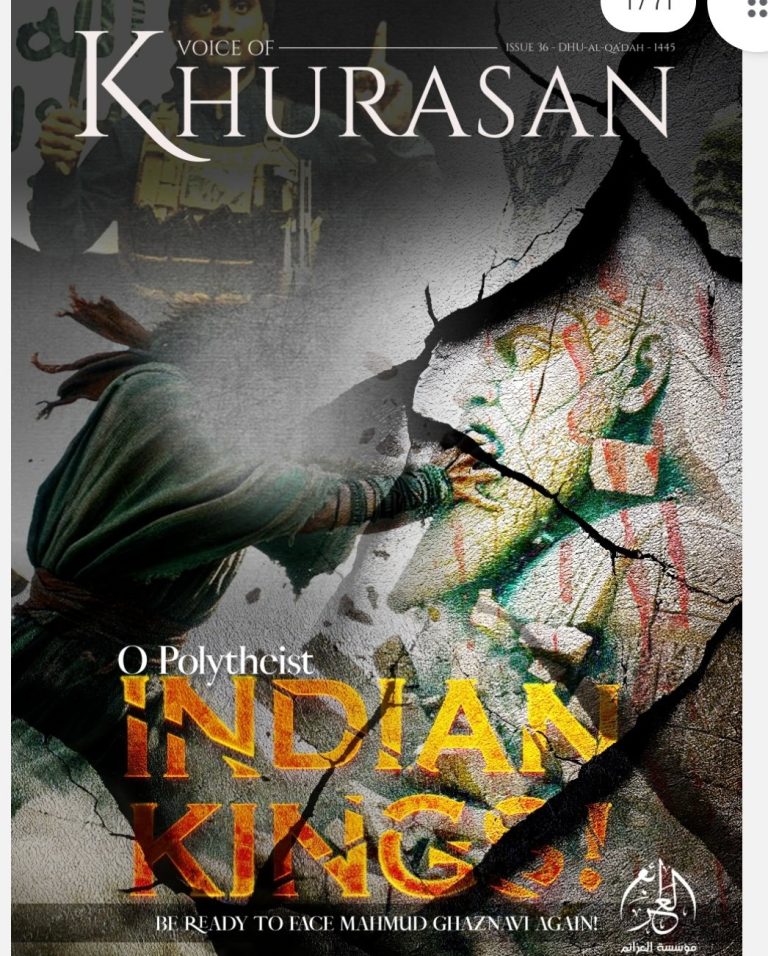
ISKP ramps up its propaganda against Taliban in new ‘Voice of Khorasan’ magazine

The Islamic State Khorasan Province (ISKP) has intensified its propaganda efforts against the Taliban regime in Afghanistan with the release of the 36th issue of its “Voice of Khorasan” magazine. The latest edition, published by ISKP’s Al Azaim media wing, features a scathing critique of the Afghan Taliban, accusing them of oppressing Muslims and questioning their relations with the international community and the Doha Agreement.

In addition to the condemnation of the Taliban, the magazine takes aim at India, criticizing the country’s system of government, the conditions of Muslims there, and Afghanistan’s relations with India. The publication covers a diverse range of topics, including religious subjects related to Eid ul Adha, calls for donations to support ISKP’s activities, and a discussion on climate change.

Notably, the magazine includes a continuation of a series on online security, providing tactics for cyber security and social media usage aimed at evading detection by authorities. This emphasis on digital strategies highlights ISKP’s recognition of the importance of leveraging online platforms for propaganda and recruitment purposes.

The release of the “Voice of Khorasan” magazine comes amid escalating tensions between ISKP and the Taliban in Afghanistan. Since the Taliban’s takeover in August 2021, ISKP has been actively involved in orchestrating attacks throughout the country, accusing the Taliban regime of being “apostate” and fueling the violent conflict between the two groups.

ISKP’s robust propaganda strategy, as exemplified by the “Voice of Khorasan” magazine, underscores the group’s efforts to delegitimize the Taliban’s ideological legitimacy and its relations with the international community.

Analysts warn that military means alone will not be sufficient to overcome the ideological challenge posed by ISKP in the Afghanistan-Pakistan region. The group’s strong emphasis on propaganda, its ability to leverage social media platforms, and its criticism of the Taliban’s engagement with the international community highlight the need for a comprehensive strategy to counter its narrative and undermine its appeal among potential recruits.

Pak backed terrorists attack pilgrims in J&K’s Reasi, 9 dead & 33 injured

In a horrific act of terror, militants ambushed a bus carrying pilgrims in Jammu and Kashmir’s Reasi district on Sunday, killing at least nine people and injuring 33 others. The attack resulted in the bus plunging into a gorge after the driver lost control due to the firing.

According to Senior Superintendent of Police (SSP) Mohita Sharma, the bus had left Shivpuri and was en route to Katra when militants opened fire, causing the tragic accident. “We received reports that militants were lying in wait, and they fired on the bus. As a result, the driver lost control, and the bus fell into a gorge,” she said.

The rescue operation has been completed, and the injured have been hospitalized. While the identities of the victims are yet to be confirmed, SSP Sharma stated that they are believed to be from Uttar Pradesh and not locals.

Speaking about the security measures in place, the SSP said, “Whenever there’s an incident of militancy, we are on high alert… The Shivpuri shrine had been secured, and in adjoining areas too, we had been conducting area domination activities.”

https://twitter.com/ArjunPMO/status/1799895121540022375?t=IfUxnwv1sWDisTtkMi5n4A&s=08

Local accounts suggest that two masked militants carried out the attack, firing indiscriminately at the bus, hitting the driver and some passengers. While some reports indicate that three passengers died of bullet injuries and the rest in the bus crash, officials stated that the cause of death can only be confirmed after post-mortem examinations.

The victims were on their way to Katra town, which serves as a base camp for pilgrims visiting the revered Mata Vaishno Devi shrine in the Trikuta Hills, after visiting the Shiv Khori shrine near Ransoo.

Union Home Minister Amit Shah has vowed that the culprits of this “dastardly attack” will face the wrath of the law, while Congress leaders Mallikarjun Kharge and Rahul Gandhi have condemned the incident, questioning the government’s claims of bringing peace and normalcy to the region.

The attack in Reasi’s Pouni area, close to the adjoining Rajouri district, is the second such incident targeting pilgrims in the district, following a similar attack in May 2022 that claimed four lives and injured 24.

The Pakistan-backed group, The Resistance Front (TRF), has claimed responsibility for the terror attack. In 2023, India designated The Resistance Front as a terrorist organization.

The group, which was founded in 2019 following the abrogation of Article 370 that granted special status to Jammu and Kashmir, has been involved in numerous terror attacks.

Reportedly, two to three terrorists were involved in the Reasi bus attack, and they are part of the same group responsible for recent attacks in Rajouri and Poonch. The terrorists ambushed the bus while hiding in dense vegetation.

The terrorists were Pakistanis and have been active in the southern Pir Panjal region for the past two years.