Home Blog Page 113

Pakistan restores National Health card, excludes Pak-Occupied Gilgit-Baltistan

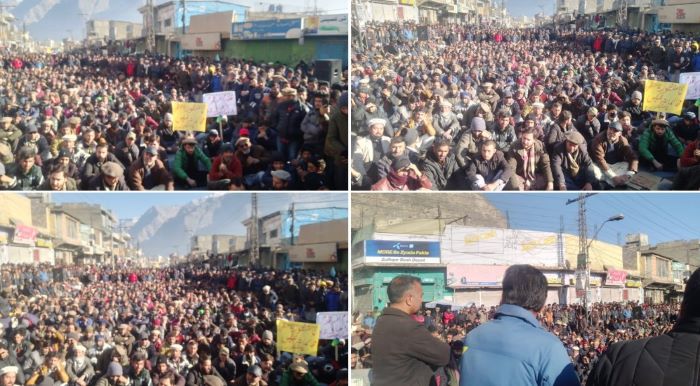
Pakistan’s discriminatory policies against the people of Pak-Occupied Gilgit Baltistan (POGB) have once again come under scrutiny, particularly regarding the issue of health card. Health cards, a prominent demand of the people of POGB, have been a focal point of protests organized under the Awami Action Committee.

The Health Card, colloquially known as the Sehat Card, is a program by the Pakistani establishment aimed at providing health treatments at government expense. However, these health cards were abolished in POGB and Pakistan-Occupied Jammu and Kashmir (POJK), leading to widespread resentment among the population. Consequently, health card restoration became one of the 15 prominent demands raised by the POGB Awami Action Committee in its Charter of Demands.

After months of protests, the puppet government in POGB partially accepted demands such as wheat subsidy restoration and abolishing the Revenue Act 2023. However, crucial demands, including the reinstatement of health card services, were disregarded.

While sehat card facilities have been reinstated throughout Pakistan, POGB remains neglected. For 75 years, Pakistan has exploited POGB and POJK without any moral obligation toward the people. Despite being used as mere territories for exploitation, the region lacks basic amenities and opportunities for socioeconomic development.The denial of health card services is particularly concerning as the region is remote and lacks essential infrastructure. Without access to health cards, the people of POGB face uncertainty and vulnerability, further exacerbating their socio-economic challenges.

It is evident that Pakistan’s agenda in POGB is focused solely on exploitation, with little regard for the welfare and well-being of the local population. By denying essential services like health cards, Pakistan seeks to perpetuate dependence and maintain control over the region, depriving its people of basic rights and dignified livelihoods.

Pakistan shuts Afghanistan border to Pashtuns; enforces ‘One Document Regime’

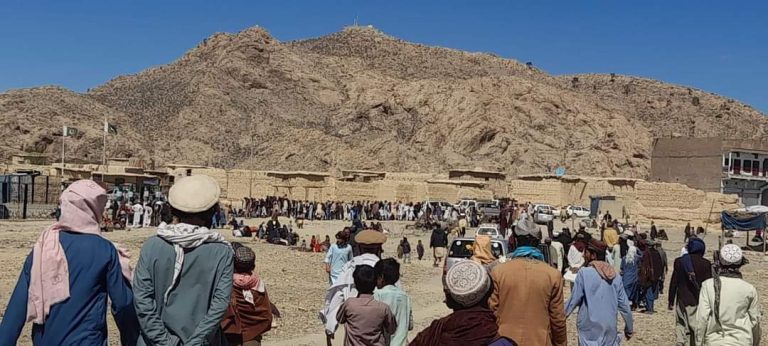
Pakistan has closed the Angoor Adda crossing on Afghanistan border in South Waziristan as part of its ‘one document regime’, eliciting widespread criticism from Pashtuns living in the region and those who frequently traverse the border for trade or familial connections.

The closure has drawn condemnation from various quarters, including the Pashtun Tahafuz Movement (PTM), which lambasted the Pakistan Army’s decision. PTM took to social media, stating, “Angoor Adda crossing in South Waziristan with Afghanistan remained closed, creating tragic problems for the locals. All these are colonial tactics to displace, alienate, implement ‘one document regime’ & block the mobility of Pashtuns on their own land.”

Previously, individuals crossing the border were issued Tazkira, a paper pass. This facilitated trade and familial ties between people on both sides of the border. However, the abrupt termination of the Tazkira provision and the imposition of the ‘one document regime’ requiring a passport for cross-border travel has sparked distress among Afghan Pashtuns residing in the border area.

The move came on October 21st last year, in the wake of strained relations with the Afghan Taliban and attacks by the Tehrik-e-Taliban Pakistan (TTP). Pakistan responded by deporting Afghan migrants and imposing stringent travel requirements. The sudden policy shift had further exacerbated tensions and disrupted the livelihoods of individuals dependent on cross-border activities across Afghanistan border.

The resentment of people culminated into months long protest at Chaman border in Pak occupied Balochistan, which was eventually dealt with violence by Pakistan Army.

The closure of the Angoor Adda is the latest development that highlights the ordeal of Pashtuns and Afghans living in Pakistan.

Dr. Allah Nazar Baloch to escalate Baloch freedom struggle

In a 20-minute audio message released on April 7, Dr. Allah Nazar Baloch, the chief of the Balochistan Liberation Front (BLF), has vowed to intensify the struggle for an independent Balochistan and claimed the movement is making steady progress towards its goal.

Addressing the Baloch nation, the leader said that the Army’s efforts to suppress the independence have failed. “Our struggle is moving towards success and victory. The enemy’s plan to reduce our population has failed,” he declared in the message released by the BLF’s media wing “Aashob”.

Dr. Baloch said that Pak Army is plundering Balochistan’s natural resources but the relentless struggle has limited its ability to do so. He urged the diaspora Baloch to contribute financially to the “freedom fighters” and extend all possible support to keep the movement resilient.

Dr. Allah Nazar Baloch

Lashing out at Pak-occupied-Balochistan’s elected representatives, he called them of being puppets controlled by the Pak Army and facilitating the “Punjabi occupiers”. He dismissed the provincial and national assemblies as rubber stamps legitimizing Islamabad’s oppressive policies.

In his statement, he said that as you have seen: They have made the cheapest deal by bringing in a large number of drug mafia, drug dealers, and hired killers. These people are war profiteers.

Dr. Baloch applauded the global recognition of the “Baloch genocide” and human rights abuses, stating it has vindicated the movement’s legitimacy. He vowed that neither China’s Belt and Road projects nor the Reko Diq gold mines can proceed without Baloch consent.

Punjabi occupiers

Dr Baloch said that just like the British colonial rule that awarded the title of Nawab to service providers to protect its interests, the Pakistan Army created by the British is also following British imperial policies by awarding Tamgha-e-Jurat, Sitara-e-Imtiaz, etc. He further said that one would be surprised that even those who take pride in being Nawabs also take pride in being awarded these medals. The Nawabs did nothing but serve the British colonial rule. They aided the British army, and in return were awarded the titles of Nawabs, lands and big properties.

Furthermore, Dr. Allah Nazar Baloch said that the Baloch community bravely rejected all the members of parliament in the so-called elections!

Balochistan

He said that a wise man said, “Freedom is not something that is served to you on a plate. Shedding sweat and blood is required for freedom.” You need to share your half bread with your brother. Whether you are in Balochistan or abroad, you need to share your half capital with your brothers.

He further said that Pakistan will never let the Baloch and Pashtuns live in peace. Because the way the Baloch and Pashtuns resisted the British aggression. And the Punjabis were subservient to them. That is why the Baloch and Pashtuns are being punished.

He said that therefore, the Baloch people should never retreat from regaining the same autonomy that Balochistan, until the last breath and the last drop of blood! We have made the world acknowledge the fact that our struggle is for freedom. Neither China nor any other country, will succeed, unless the will, desire, and consent of the Baloch is involved.

Until Last Breath

He further said that, “I want to pay tribute to all the Baloch martyrs, to every youth and elder of the nation who has played a role for this cause and is playing. We are confident that we will regain our freedom, and with your cooperation, we will get it soon”. Finally, Dr. Allah Nazar Baloch said: as the blessed Qazi Sahib says: “The struggle for freedom never gets old. If anyone says otherwise, consider it a lie.”

Karachi: Pak Army uses violence to raid houses of Baloch activists & MQM members

Tensions are escalating in the Malir area of Karachi as reports emerge of violent raids conducted by Pak security forces on the homes of Baloch political activists and members of the Muttahida Qaumi Movement (MQM) Karachi faction.

According to the spokesperson for the Baloch Yakjehti Committee, the raids and use of force against Baloch civilians are part of the Army’s ongoing policy of “Baloch Genocide”. The oppression has historically been used to suppress the Baloch people, with the brutal behavior of security forces in Karachi being a continuation of the policy of genocide. From Lyari to Kech to Koh-e-Suleman, the Baloch nation is facing “the worst form of state aggression”.

In Jinnah Pur, Malir, raids were conducted by Rangers and puppet police on the homes of MQM Karachi members, with reports of firing incidents and violence targeting women and other individuals. The siege by the forces in the area is ongoing.

The Baloch Unity Committee Karachi has condemned the raids and firing, warning of a strong response if any of their members were harmed or subjected to extrajudicial actions. They have vowed to announce a course of action soon.

Separately, the residence of Baloch activist Akram Baloch in Malir is also under attack, with dozens of Pak military personnel surrounding and continuously firing upon his house.

Earlier in Feb, the Pak Army forcibly entered a residence without any warrant in Karachi’s Lyari Saeedabad and assaulted Baloch women and children. The incident resulted in the forceful detention and enforced disappearance of four Baloch youths by the Pak Army.

Both the Baloch Yakjehti Committee and the Baloch Unity Committee have decided to intensify public resistance against Army’s oppression and violence against the Baloch community in Karachi and other regions.

This event draws attention to the escalating tensions and occurrence of human rights abuse against the Baloch community by the oppressive Pak Army. The Pak establishment forcefully occupied Balochistan on March 27, 1948, and since then the Baloch people have been fighting against the atrocities and Baloch genocide committed by the Pak Army. 

Top Ex-Taliban ideologue Muhammad Umar Jan Akhundzada shot dead in Pakistan

Sheikh Muhammad Umar Jan Akhundzada, a prominent Afghan Taliban ideologue, was shot dead by unknown assailants in a mosque in Quetta’s Nawa Kali area. He was 50 years old and the son of Mullah Bayan, originally from Zabul, Afghanistan, according to Pakistani officials. Akhundzada served as an Imam in a local mosque in Quetta.

The Afghan Interim Government (AIG) spokesman confirmed Akhundzada’s assassination and revealed that he had been a teacher at the Kandahar Jihadi Madrassa in Kandahar. Zabihullah Mujahid, the AIG spokesman, expressed condolences over Akhundzada’s death and condemned the assassination, urging authorities to apprehend the perpetrators.

Maulanas like Akhundzada have played a significant role in perpetuating terrorism under the guise of Islamic jihad. They often portray heinous acts as acts of bravery and religious crusades, deceiving individuals, particularly impressionable youth. In past few months, people like him – associated with terrorism – are being killed by unknown assailants in Pakistan. Clearly, harbouring terrorist elements has made a significant dent on Pakistan. In fact, terrorism has been one of many issues that has led to Pakistan’s current detriment. But now it seems they are getting rid of those, who are either useless or are dis-aligned with ‘Pak Terrorism’.

Akhundzada can be categorised in latter, as he was close to Afghan Taliban and living in Pakistan, at a time when bitterness between Afghan Taliban and Islamabad is at all time high.

Israel-Iran war: Israel attacks close to Iranian nuclear facilities in Isfahan

At least three explosions occurred above Isfahan, a central Iranian city hosting facilities for the country’s nuclear program, weapons factories, and a major airbase. Witnesses, including travelers at the city’s airport, reported hearing loud booms as air defense systems engaged “suspicious objects”.

“While Iranian officials provided contradictory accounts to downplay the events, US officials promptly attributed the attack to Israel. An Iranian official suggested the attack involved small drones, possibly launched domestically. Previous incidents, including a drone strike on a weapons factory in Isfahan in January 2023, have been attributed to Israel.

Israeli officials, though declining public comment, were reportedly, quoted off the record suggesting Israeli involvement, indicating the attack aimed to demonstrate Israel’s capability to strike deep within Iran.

Reports indicate Israeli military operations against Iran, though Washington did not specify their character or scale. Iranian state media reported the downing of drones over Isfahan province, displaying live shots of a calm Isfahan city post-sunrise to reassure the public.

Attack after Iranian retaliatory strike

The apparent attack follows Iran’s firing of over 300 missiles and drones at Israel in response to an Israeli strike on an Iranian diplomatic compound in Syria, killing seven Iranian officials on April 1.

Israel also struck targets in Iraq and Syria. Internal Iranian flights were canceled, passengers evacuated from Tehran’s Imam Khomeini airports, and explosions reported over Tabriz.

Meanwhile, Iranian official has told the media that there is no plan for immediate retaliation against Israel. Additionally, Vienna-based UN nuclear watchdog International Atomic Energy Association (IAEA) called for ‘extreme restraint for everybody’ adding that “nuclear facilities should never be a target in military conflicts”. IAEA has confirmed no harm to the nuclear facilities in Iran in the attack.

Tehrik-e-Taliban Pakistan (TTP) in Khyber-Pakhtunkhwa kills 7; includes 5 customs officials

Tehrik-e-Taliban Pakistan (TTP) has once again unleashed terror, this time targeting a customs officials in the Saggu area of Draban Tehsil in Dera Ismail Khan district, Khyber Pakhtunkhwa. The Federal Board of Revenue (FBR) has confirmed the deaths of five Pakistan Customs officials in the assault, including Officer Aslam Khan from Peshawar customs intelligence.

The attack also claimed the lives of two additional victims from Bannu district, including a 5-year-old child and a man who were unfortunate bystanders caught in the crossfire. A senior customs official highlighted the significance of the Saggu area, known as a hotspot for militant networks engaged in smuggling operations.

While taking the responsibility of the attack, the Tehrik-e-Taliban Pakistan (TTP) alleged that its terrorists seized weapons from the customs officials during the assault. Following the devastating incident, a large-scale search operation has been initiated in the region to apprehend the perpetrators.

Karachi suicide attack: Japanese nationals unharmed; 2 personnel dead

On Friday, a deadly suicide blast shook Karachi, Pakistan, targeting a vehicle transporting Japanese nationals. The attack resulted in at least two fatalities, while miraculously, all five foreigners in the vehicle survived.

According to Abrar Hussain Baloch, spokesperson for the police, the Japanese survivors have been relocated to a secure location under police custody. Despite the severity of the attack, there has been no immediate claim of responsibility from any group.

Karachi Police have confirmed the nature of the incident, labeling it a suicide attack. Additionally, another vehicle sustained damage in the explosion. Details emerged that while one assailant detonated himself, the other was neutralized by law enforcement forces.

Further investigations revealed that the targeted foreign nationals were employed in the export processing zone. Among the casualties, three individuals sustained injuries and were promptly transported to medical facilities. Two of the injured are reported to be in critical condition. The identified victims include security guards Noor Muhammad and Langar Khan, along with passerby Salman Rafiq.

The attack on foreign nationals have increased significantly in Pakistan. Last month, a convoy of Chinese engineers working at Dasu dam was targeted in a suicide attack in Besham, Khyber Pakhtunkhwa. 6 people, including 5 Chinese engineers were killed in the attack.

Lok Sabha elections 2024: First phase voting underway for 102 seats

The mega seven-phase electoral exercise for the 2024 Lok Sabha elections kicked off on Friday with voters across 102 parliamentary constituencies spread over 21 states and Union Territories exercising their franchise in the first phase. Voting commenced at 7 a.m. and will continue until 6 p.m.

Alongside the Lok Sabha polls, assembly elections are also being held in the north-eastern states of Arunachal Pradesh and Sikkim. While Arunachal is voting for 2 Lok Sabha seats and its 60-member assembly, Sikkim is polling for 32 assembly seats and 1 Lok Sabha seat.

The elections are witnessing a high-stakes battle between Prime Minister Narendra Modi, who is seeking his third consecutive term, and the opposition bloc INDIA – a coalition formed to challenge the ruling BJP.

Several Union ministers, including Nitin Gadkari, Kiren Rijiju, Bhupendra Yadav, and Arjun Ram Meghwal, are among the prominent candidates in the fray in this phase. Notable constituencies witnessing polling include 8 in Uttar Pradesh, 5 in Maharashtra, 3 in West Bengal, all 39 seats of Tamil Nadu and 1 in Puducherry, 5 in Assam, and 4 in Bihar.

The Election Commission has deployed over 18 lakh personnel across the 102 constituencies to ensure smooth conduct of polls. Additionally, webcasting is being done in over 50% of polling stations, while micro-observers have been deployed in all booths.

As per the latest figures released by the EC, Tripura is leading with a 34.54% voter turnout till 11 am, followed by West Bengal (33.56%), Meghalaya (33.12%), and Madhya Pradesh (30.56%) till 11 am. The lowest turnout of 16.33% has been recorded in Lakshadweep. The voter turnout in the 2019 Lok Sabha elections was over 67 per cent.

Key issues ranging from unemployment, violence against women, farmers’ grievances, paper leaks, land rights of tribals, and price rise have taken center stage across the country during this election.

The remaining phases of the Lok Sabha elections will be held on April 26, May 7, May 13, May 20, May 25, and June 1. The results, declared on June 4, will ultimately decide whether PM Modi secures another term or if the opposition bloc emerges victorious.

Arrest warrant issued against POGB’s former Chief Minister in fake degree case

A senior Civil Judge has issued an arrest warrant for Khalid Khurshid Khan, the former chief minister (CM) of Pak-occupied Gilgit-Baltistan, in a fake degree case.

The senior Civil Judge, Hidayat Ali, issued a bailable arrest order for the former POGB chief minister due to his repeated absences from court proceedings.

Khalid Khurshid, who was also the president of the Gilgit-Baltistan branch of Pakistan Tehreek-i-Insaf (PTI), is accused of obtaining a lawyer’s license from the Gilgit-Baltistan Bar Council by submitting an affidavit and a “fictitious” law degree from the University of London. He did this in order to obtain an equivalency certificate from the Higher Education Commission (HEC) in Islamabad.

A three-member bench of the POGB Chief Court had rendered a decision in July 2023 regarding a petition brought up by Shahzad Agha, a member of the GB Assembly, disqualifying Khalid Khursheed Khan in the fake degree case. The petitioner had claimed that Khursheed ought to be disqualified in accordance with Articles 62 and 63 of the constitution since his law degree was found to be forged.

While Khurshid claimed to have graduated from London with a legal degree, however this could not be confirmed. Khalid Khursheed had been in office as the Pak-occupied- Gilgit-Baltistan’s CM since December 2020 and was considered a close aide of PTI chairman Imran Khan.

This is the real face of the occupying forces. They not only fail to address the rampant lawlessness, but even participate in it. The innocent people of Pak-occupied Gilgit-Baltistan have no way to get their grievances addressed when the puppet authority in power is fraudulent itself.