Home Blog Page 112

Pak Army abducts Sindhi leaders after GM Syed’s death anniversary celebration

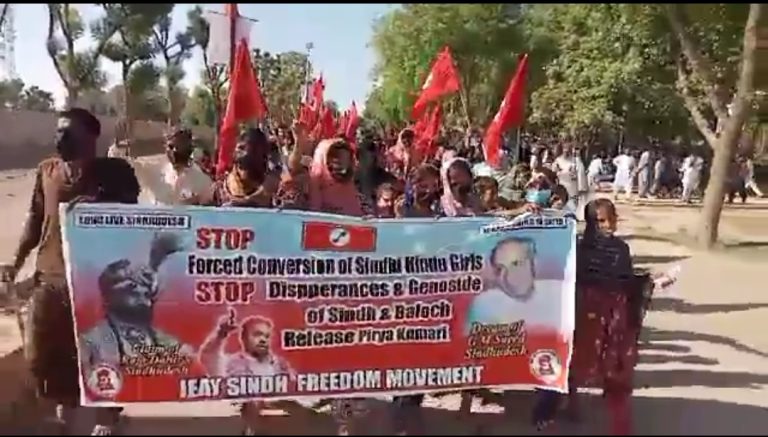
Pakistan Army, along with its agencies and Jamshoro police, has abducted JSFM leader Shoban Lasari and 15 other Sindhi nationalist workers after their rally commemorating the 29th death anniversary of Sindhi nationalist leader GM Syed in Sunn city, demanding the end of forced conversion and release of Priya Kumari.

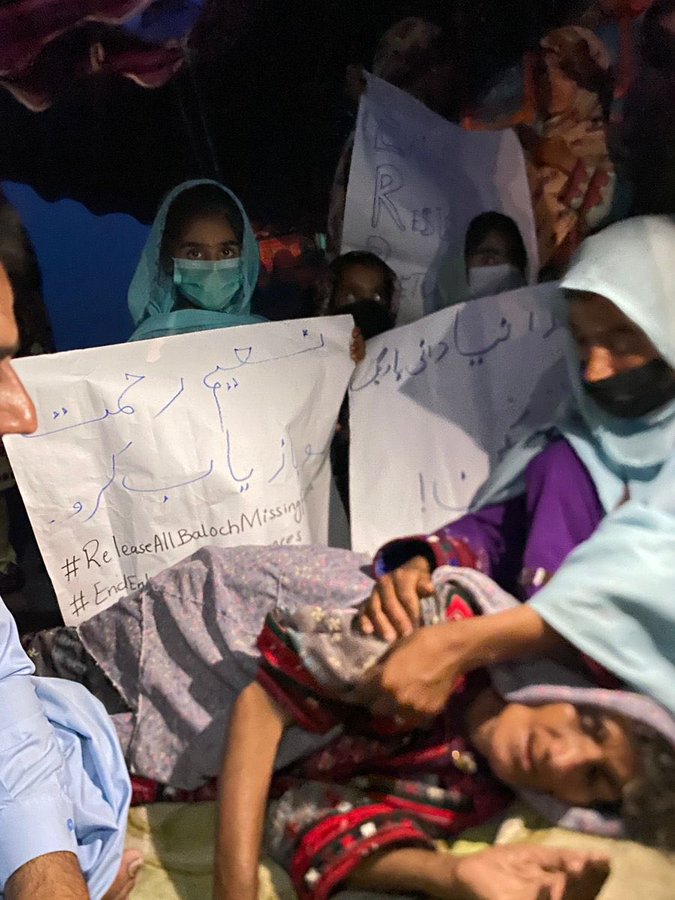
After the unnotified arrest, JSFM workers, largely comprising of women, blocked the National Highway expressing extreme distress and demanding immediate release of their fellow participants.

Notably, the rally, held at GM Syed’s grave, saw JSFM leaders and activists advocating an end to the forced conversion of Sindhi Hindu girls and denouncing the enforced disappearances and genocide of Sindhi and Baloch people. Participants voiced concerns over ongoing issues affecting their community, emphasizing the importance of preserving religious freedom and protecting ethnic minorities in Pak-occupied Sindh. Additionally, protestors demanded the release of Priya Kumari, a Hindu girl abducted nearly 3 years ago.

Hindu girls are under the constant threat of abduction, rape, coerced marriages and forced marriage in Pakistan. Instead of solving the issue, Pakistan chooses to be ignorant of it. The role of local police comes under suspicion as the local SSP Amjad Shah in a Television program claimed that she is alive and can be conceivably recovered.

Nonetheless, the JSFM rally and subsequent arrest of its leaders is a grim reminder of the continuously deteriorating law and order condition and freedom of expression in Pak occupied Sindh.

Pro-Palestine protests grip US universities; mass arrests

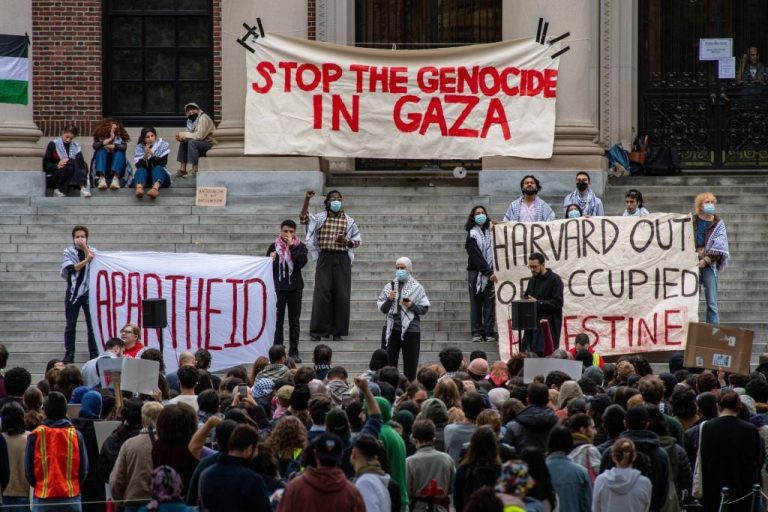
In a surge of pro-Palestine fervor, US universities on wednesday, reported disruption at four schools spanning Massachusetts, California, Texas, and New York.

At the University of Southern California (USC), Harvard University, the University of Texas at Austin (UT Austin), and Columbia University, discord unfolded amid divergent reactions to ongoing Israeli military actions in the Middle East.

Law enforcement intervened at USC, leading to the arrest of several protesters as tensions soared and USC DSP officers were called upon to restore order.

The US universities protests reflect widespread discontent with government policies and authorities amidst the ongoing Hamas-Israel conflict. Students have mobilized, turning their campuses into focal points for demanding accountability and an end to violence in Gaza. But what ignited this sudden wave of unrest?

Start of protests from Columbia University

Columbia University emerged as the epicenter of the nationwide protests, following its decision to involve the New York Police Department in dispersing pro-Palestinian demonstrators, triggering a chain reaction of intense demonstrations.

The turmoil at Columbia began with the arrest of 108 demonstrators, including Isra Hirsi, daughter of Rep. Ilhan Omar, prompting solidarity protests from institutions such as New York University, Yale University, and beyond.

The genesis of the protests can be traced back to April 17, when Columbia University President Nemat “Minouche” Shafik faced scrutiny over on-campus anti-Semitism during a congressional hearing. The subsequent police intervention escalated tensions, prompting students like Rachel, a Columbia student, to join the demonstrations, citing a growing sense of suppression and censorship.

The pro-Palestinian protests, advocating for divestment from Israeli companies and expressing solidarity with Palestinians, have resonated nationwide. Organizers view the protests as effective in urging administrations to consider divestment from Israel, despite facing pushback from conservative politicians advocating for a crackdown on demonstrators.

POGB residents burn Pak Army owned SIM cards in protest over poor service

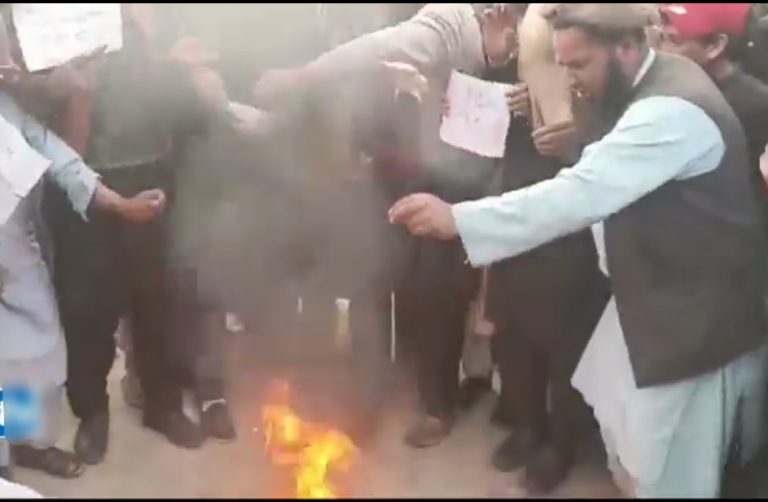
Pakistan occupied Gilgit-Baltistan once again witnessed boils over the telecom network problem. In the latest development people from Diamer district publicly set ablaze the Pak Army owned SCO SIM cards over the banned 4G services. People demanded the immediate restoration of 4G services and network. They hurled slogans saying, “Bahaal karo, bahaal karo, 4G bahaal karo”. (Reinstate 4G services).

Notably, this is not the first instance that people have expressed anger and resentment over the non-availability of network. Earlier in February 2024, about 150 youths from Darel performed similar act to protest the weak signal and hefty prices.

Special Communication Organisation (SCO) is owned by Pakistani establishment and is the sole telecom service provide in the region, leaving people at their mercy. By having a sole proprietorship in telecom sector, Pakistan uses its upper hand to monitor and disseminate the information it likes, keeping people manipulated.

Essentially, this development comes at a time when Pakistan has acknowledged that it has kept social media sites down since the arrest of Imran Khan. Although, it cited national security as the reason, the reality is obvious. Pakistan is well known for curbing the voice of dissent and fears the aware population so it keeps them under restrictions. The SCO SIM is the latest example of that.

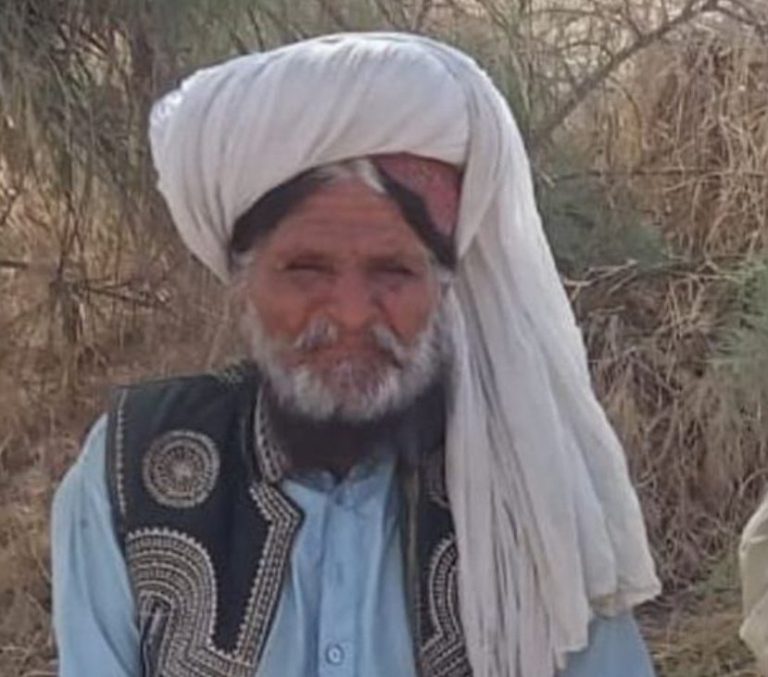
Missing Baloch man’s body found after enforced disappearance by Pak Army

In another case highlighting the grim issue of enforced disappearances in Pak-occupied-Balochistan, the body of Malik Rubya, son of Gul Muhammad Mari, was recovered from Sibi on April 11. Malik Rubya had been forcibly disappeared by Pak forces from the Machkey Check Post in Kohlu.

Reportedly, Malik Rubya was taken into custody along with another individual and shifted to an undisclosed location. While the other person was later released, Malik Rubya’s lifeless body surfaced in Sibi just days ago.

This tragic incident adds to the mounting cases of enforced disappearances in Pak-occupied-Balochistan, where thousands of individuals have gone missing over the years, with their dead bodies occasionally resurfacing under mysterious circumstances.

Pak Army and intelligence agencies are the sole complicit in the enforced disappearances of Baloch citizens. Numerous video evidence has also emerged, depicting instances of forced abductions carried out by security forces.

The recovery of Malik Rubya’s body serves as a grim reminder of the urgent need to address this issue and ensure the safety and well-being of all citizens in the region.

PTM exposes Pak Army’s illegal mining & resource exploitation in Khyber-Pakhtunkhwa

In a damning revelation, the Pashtun Tahafuz Movement (PTM) has exposed Pakistan Army’s exploitation of resources in the uphills of Khyber-Pakhtunkhwa, depriving local inhabitants of their rightful ownership.

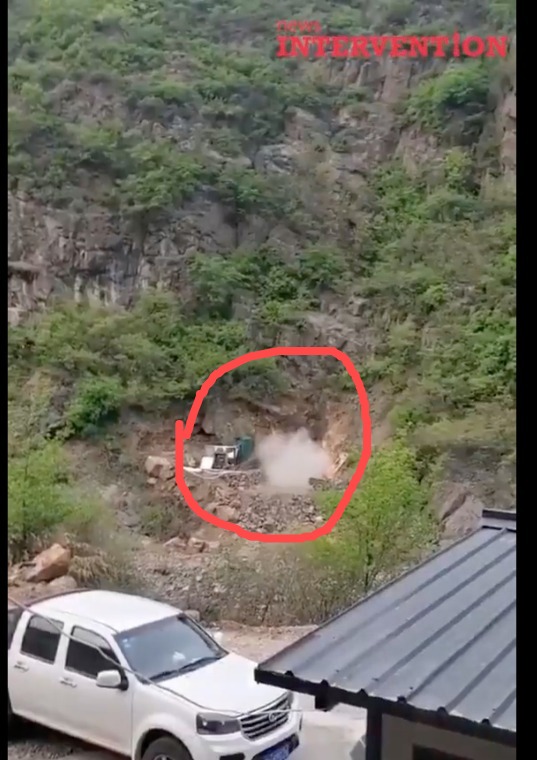
The latest tweet by PTM unveils a video from the resource-rich Tirah Maidan region, depicting mining and excavation activities being carried out under the guise of security measures.

“See how rare earth metals/gemstones are being extracted in Tirah Maidan district Khyber by ‘Security Czars’ in the name of security. While Tirah valley is a ‘no-go zone’ for locals. Almost one native is daily killed in Tirah in the name of security,” posted PTM.

Tirah Maidan remains inaccessible to the local populace, with Pakistan Army citing safety concerns due to its proximity to the Afghanistan border. However, PTM asserts that this restriction serves to conceal the Army’s exploitation rather than ensuring security.

Recent events further corroborate PTM’s claims, as Pakistan Army’s mortar shelling in Tirah Maidan claimed the lives of at least four innocent civilians, including two children. Pakistan attributed the deaths to a landmine explosion, allegedly planted to curb infiltration from Pakistan. However, PTM later exposed this manipulation and the true death toll.Pakistan Army’s tactics of deception continue to come under scrutiny, with local organizations like PTM striving to counter their narrative. As each instance of exploitation comes to light, Pakistan’s ulterior motives are laid bare for all to see.

Protests erupt as Karachi tries to sell Balochistan’s Reko Diq mine to Saudi Arabia

Residents of Nokundi, Chagai district are on strike to protest against the attempt made by Pak Army to sell the Reko Diq Gold and Copper mine. Pakistan is trying the controversial sale of a 25 percent stake in the Reko Diq copper and gold mine to Saudi Arabia for around $1 billion.

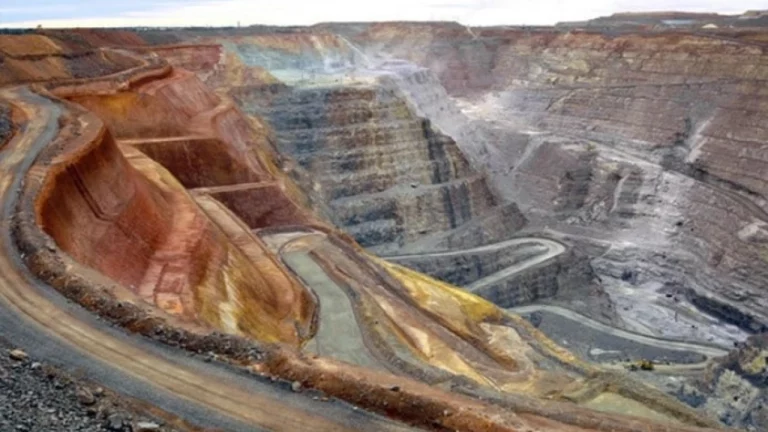
Reko Diq, located in the mineral-rich Pak-occupied-Balochistan (PoB) province, is one of the world’s largest undeveloped copper-gold projects. Current ownership is split between Canadian mining giant Barrick Gold (50%), Pakistan-owned companies (25%), and the province of PoB (25%).

Reportedly, Saudi Arabia’s Manara Minerals Investment Company has emerged as a serious contender to purchase part or all of the 25% stake held by Pakistan’s enterprises. A potential $1 billion deal is being discussed.

However, policy experts and analysts argue the Reko Diq reserves, estimated at $6 trillion, could generate $200-$300 billion annually once in full production.

This is a big mistake. As foreign players will start excavating rare metal reserves crucial for semiconductors, like cobalt and lithium at cheap price benefiting Pak Army and other countries while Balochistan will not only lose its resources but will also pay price.

Reko Diq is expected to produce 430 million pounds of copper and 280,000 ounces of gold annually by 2032 based on projected commodity prices. Of which barely any amount will go to Pak-occupied-Balochistan. 

Pakistan has forcefully occupied Balochistan since 1948, exploiting its resources while oppressing its people. To maintain its grip on the region, Army has employed various oppressive tactics such as enforced disappearances, extrajudicial killings, and death squads, killing thousands of innocent individuals and making their loved ones live in a nightmare forever.

Iraq based Kataib Hezbollah attacks US military base in Syria

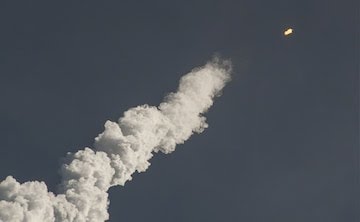
Late on Sunday night, an attack on US military bases in Syria, allegedly carried out from Iraq, has heightened tensions in the region. Five rockets were fired at an American military base situated in the Nineveh province.

The attack on US military base was reportedly aimed at deterring U.S. forces from Iraq. The rockets were launched from a small truck in the Jummar area of Syria, near the Iraqi border.

According to reports, the attack was orchestrated by the Kataib Hezbollah group, backed by Iran in Iraq, which seeks to expel American forces from the region. This incident follows recent airstrikes by Israel and Iran in Syria, further exacerbating the already volatile situation in the Middle East.

The U.S. has yet to respond to the attack, but analysts fear that any retaliation could escalate tensions between Iran and western countries, leading to further instability in Iraq and Syria.

Kashmir: Encounter with Pak-backed terrorists in Bandipora injures two Indian Army officials

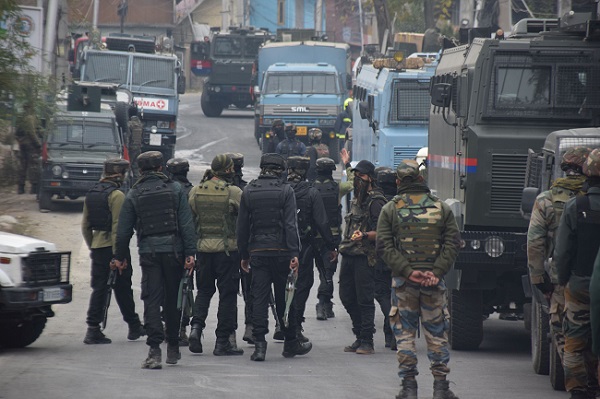
Brief exchange of fire happened between Pak-backed terrorists and Indian army in Rangi forests in Bandipora, Jammu and Kashmir . Two army soldiers got injured in the shoulder, however both are stable.

According to top Police official search operations started in rangi forests upper reaches of Bandipora after the input of terrorists presence were received. The hiding terrorists fired on searching party which led to injuries of two soldiers. Meanwhile more reinforcements have rushed to the spot and searches for hiding terrorists are intensified.

10 lakh bounty on Lashkar terrorist

According to police reports, Razaq was fatally attacked by two terrorists who stormed the compound of a Territorial Army official. Fortunately, Razaq’s brother, Mohammad Tahir Choudhary, a soldier in the Territorial Army, managed to escape unharmed from the assailants.

A police spokesperson stated, “Credible evidence has been obtained that identifies one of the assailants as a ‘foreign terrorist’ with the code name Abu Hamza.” The police, along with security forces deployed in the Rajouri-Poonch districts, are actively working to neutralize this group responsible for the heinous act of terror.

In response to the incident, authorities have announced a reward of ₹10 lakh for providing information leading to the arrest of the terrorist, Abu Hamza. The wanted terrorist, described as a 32-year-old individual wearing a Pathani suit with a brown shawl and carrying an orange bag, has been operating in the Shadra Sharief and Der ki Gali areas, engaging in various terror activities.

Poster released by Police (Photo: Web)

Later, police poster featuring the likeness of the terrorist has been released, urging the public to come forward with any relevant information. Additionally, the spokesperson emphasized, “Whoever provides any information leading to the arrest of the accused shall be rewarded ₹10 lakh, and the identity of the informant will be kept secret.”

Evidently, the security forces are on their toes as the infiltration attempts are rising in the valley.

JSFM honors martyrs in free Sindhudesh struggle against Pakistan

On 21 April, the Jeay Sindh Freedom Movement (JSFM) solemnly commemorated the National Martyrs at various press clubs across Pak occupied Sindh, including Hyderabad, Jamshoro, Kotri, Thariri Mohobat, and Tando Mohammad Khan. Leaders and members of JSFM gathered to pay tribute to the sacrifices made by martyrs in the struggle for the establishment of a Free Sindhudesh homeland and liberation from colonial Pakistan.

Chairman Sohail Abro, Vice Chairman Zubair Sindhi, Secretary General Amar Azadi, along with other leaders such as Farhan Sindhi, Hafeez Deshi, Murk Sindhu, and Hosho Sindhi, lighted candles before the pictures of the martyrs, honouring their courage and dedication to the cause of freedom. They emphasized the enduring presence of these martyrs in the annals of history as symbols of national liberation.

In a tradition observed annually in April, JSFM members in more than twenty cities in Sindh paid homage to martyrs who embraced martyrdom for the homeland. Among those remembered were Shaheed Martyr Maharaja Dahir, Shaheed Martyr Bashir Khan Qureshi, Shaheed Martyr Shafi Muhammad Karnani, Shaheed Martyr Sirai Qurban Khuwahar, Shaheed Martyr Rooplo Cholyani, Shaheed Martyr Moor Allah Tunio, Shaheed Martyr Amir Khuwahar, and Shaheed Martyr Sajjad Markhand.

During the commemorative events, JSFM members lit candles before the portraits of the martyrs, sang the national anthem, and fervently chanted national slogans, reaffirming their commitment to the ideals of freedom and justice for the people of Sindh.

Rishi Sunak’s Rwanda migrant bill overcomes challenges, gains UK Parliament’s approval

Britain’s parliament has approved Rawanda bill, a law allowing the deportation of asylum seekers to Rwanda while their applications are being processed. The legislation, spearheaded by Prime Minister Rishi Sunak, aims to tackle illegal immigration and disrupt the operations of human smugglers, but it has ignited fierce debate and drawn criticism from various quarters.

Prime Minister Sunak expressed determination to proceed with deportation flights to Rwanda following the passage of the migration legislation, hailing it as a pivotal moment in global migration policy. However, the United Nations has urged Britain to reconsider its plans, cautioning that the deportation scheme could undermine the rule of law and set a dangerous precedent worldwide.

“The passing of this landmark legislation is not just a step forward but a fundamental change in the global equation on migration,” Rishi Sunak said in a statement.

Initial setbacks

The proposal to deport asylum seekers to Rwanda has faced legal challenges and public outcry since it was initially introduced by former Prime Minister Boris Johnson in 2022. Despite the Supreme Court declaring the policy unlawful last November, Sunak is pushing forward with the new legislation in hopes of circumventing legal obstacles and fulfilling his pledge to curb illegal immigration via small boats crossing the English Channel.

Under the Rwanda plan, individuals who arrived in Britain illegally after January 1, 2022, would be subject to deportation to Rwanda. However, the scheme faced setbacks, including a blocked deportation flight in June 2022 and subsequent legal challenges citing concerns about the safety and human rights of migrants.

New treaty

To address these concerns, Prime Minister Sunak negotiated a new treaty with Rwanda, stipulating that deported individuals would only be returned to Britain, rather than risk mistreatment in other countries. Once the bill becomes law, the government plans to detain asylum seekers, a move likely to spark further legal battles from advocacy groups and unions questioning Rwanda’s suitability as a safe destination.

The deportation plan comes amid ongoing migration challenges, with thousands of migrants undertaking perilous journeys to reach Britain, fleeing conflict and poverty in regions across Africa, the Middle East, and Asia. Sunak has made tackling illegal immigration a priority, aiming to clear a backlog of asylum claims and stem the flow of migrants arriving via the English Channel.

While the new legislation represents a significant development in Britain’s immigration policy, it remains a subject of intense scrutiny and debate, with critics raising concerns about the rights and welfare of asylum seekers and the implications of outsourcing immigration control to foreign nations. As the deportation scheme moves forward, its impact on the broader landscape of migration policy and human rights will continue to be closely monitored.