Home Blog Page 119

Pakistan arrests 12 suspects in attack on Chinese nationals in Khyber-Pakhtunkhwa

Pakistan’s counter-terrorism police have conducted multiple raids resulting in the arrest of at least 12 suspects in connection with a recent suicide attack case that claimed the lives of five Chinese workers and their Pakistani driver in the Shangla area of Khyber Pakhtunkhwa province. The detainees, though not directly involved in the attack, are believed to have provided assistance to the perpetrators, according to officials.

Last week’s incident unfolded when a suicide bomber, driving an explosives-laden vehicle, targeted a convoy of Chinese engineers en route from Islamabad to their camp in Dasu, Khyber Pakhtunkhwa province. The attack highlighted the ongoing security challenges faced by Chinese nationals working on various projects and incompetence of Pakistan.

Afghan link in the attack

Authorities disclosed that some of the detained individuals had ties to Pakistani militant groups and were actively involved in transporting the explosive-laden vehicle used in the attack to Shangla district. The arrests were made based on intelligence gathered, including information extracted from a SIM card recovered from the suicide bomber.

While the Tehrik-i-Taliban Pakistan (TTP) has denied involvement in the attack, Pakistan’s investigation hints towards the involvement of TTP and the attack being orchestrated from the Afghan soil. Prime Minister Shehbaz Sharif has sought to defuse tensions by swiftly reaching out to the Chinese embassy in Islamabad and ordering a joint investigation into the matter.

In response to the attack, the Chinese embassy in Islamabad has urged Pakistan to conduct a thorough investigation, punish the perpetrators, and enhance security measures to safeguard Chinese citizens working in the country. The bodies of the deceased Chinese personnel were repatriated to Wuhan aboard a special Pakistani military plane on Monday.

Amid escalating security concerns, Beijing has announced plans to bolster security measures to protect its workers involved in CPEC projects. The attack underscores the complex security landscape in Pakistan and the challenges faced by both Pakistani and foreign nationals operating in the region.

7.2 magnitude earthquake jolts Taiwan; strongest in 25 years

A strong earthquake struck Taiwan on Wednesday, measuring 7.2 on the Richter scale. It’s the most powerful quake the island has experienced in at least 25 years. It caused the death of four people and left dozens injured. Initially, there was concern about a tsunami hitting southern Japan and the Philippines, later, that warning was lifted.

The earthquake’s epicenter was in the mountainous and thinly populated eastern county of Hualien. It led to the collapse of at least 26 buildings, mostly in Hualien, with approximately 20 individuals trapped under the rubble.

The quake occurred just offshore around 8 am local time, catching people off guard. Witnesses described it as a very strong tremor that made buildings sway dangerously.

Japan’s weather agency reported minor tsunami waves reaching parts of Okinawa, while the Philippines issued evacuation warnings for coastal areas. Taiwan also issued a tsunami warning, but, no significant damage occurred.

Aftershocks continued to rattle Taipei, with over 25 aftershocks recorded so far. The quake’s effects were also felt in China’s Fujian province and even as far as Shanghai.

Despite the severity of the quake, Taipei city reported no major damage, and its transportation systems resumed service swiftly. However, more than 87,000 households in Taiwan were left without power.

https://twitter.com/Huberton/status/1775325620395819288

Taiwan Semiconductor Manufacturing Co. (TSMC), a major semiconductor producer, evacuated some of its facilities but reported that safety systems were functioning correctly. Other major companies, including Apple supplier Foxconn, also felt the quake’s impact on their stocks.

This earthquake is the most significant to hit Taiwan since 1999, when a quake measuring 7.6 on the Richter scale caused widespread devastation, claiming thousands of lives and damaging tens of thousands of buildings.

IED attack by BLF on Pakistan Army in Mashkay

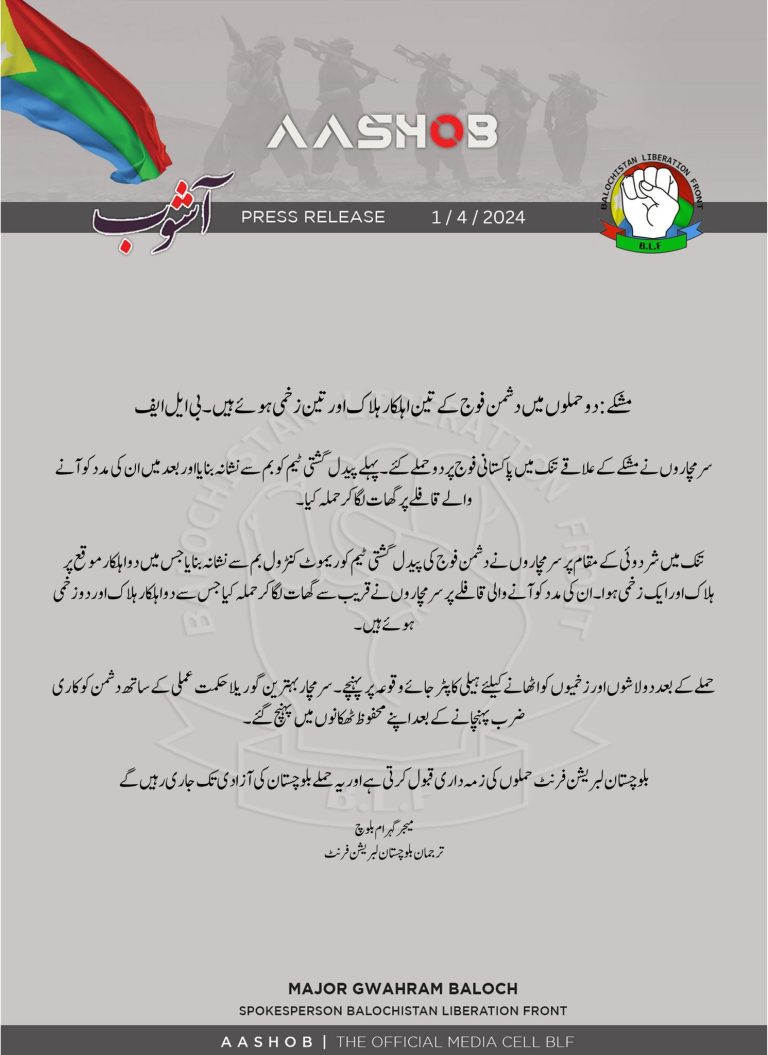
In a bold and decisive move to defend their motherland, brave fighters of the Balochistan Liberation Front (BLF) have carried out a successful operation against the oppressive Pak Army in the Tank area of Mashkay.

They said that their fighters targeted an infantry patrolling team of the Pakistan Army with an IED, before launching a subsequent ambush on the backup team in Maskay.

The freedom fighters ambushed a convoy of the occupying Army forces, inflicting significant casualties. Reportedly, three Army personnel were killed and three wounded; however, as always, the Army will never acknowledge their loss. Therefore, confirmation from their side is still pending.

Earlier, they had launched a wave of coordinated attacks on the Pak Army in Bolan, Kech, and Gwadar, and on March 24, the BLA launched a massive attack on the Pak Army and Chinese infrastructure. This operation is one in a series of courageous acts against the occupying forces.

Since the occupation of Balochistan in 1948, the Pak Army has inflicted nothing but terror and violence. Therefore, BLF is committed to the liberation of Balochistan from the shackles of oppression. They will continue to resist the Pakistan Army’s aggression, defending their homeland with every ounce of strength and determination.

Islam critic & Quran-burner Salwan Momika found dead in Norway

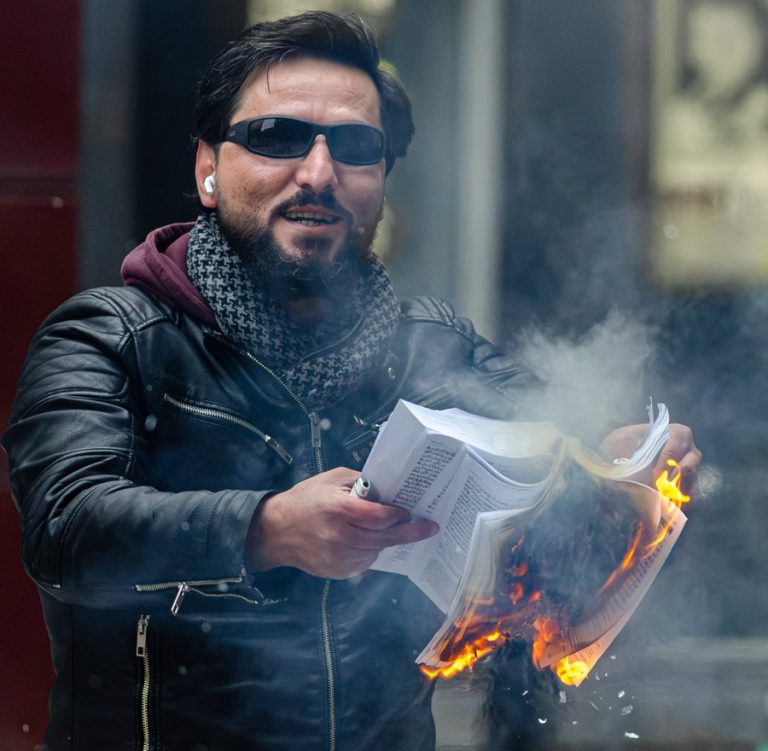
In a shocking development, Salwan Momika, a former Iraqi militia leader turned atheist critic of Islam, was reportedly discovered deceased in Norway on Tuesday. Momika, known for his fervent advocacy of “free speech” and his highly controversial act of publicly burning the Quran, had recently relocated to Norway from Sweden.

Screenshot of Radio Genoa post (Photo: X)

Describing himself as “a liberal atheist critic and thinker”, Momika gained international attention in June 2023 when he made headlines by stomping on a copy of the Quran and subsequently setting it ablaze outside Stockholm’s largest mosque. The provocative act, captured on video by a friend, sparked widespread debate and condemnation.

Momika’s migration to Norway followed his acquisition of a Swedish residency permit in 2021. His departure from Iraq in 2018 was driven by his pursuit of asylum, amidst his outspoken criticism of Islam, despite his Christian background.

Despite being a professed atheist, Momika’s confrontational stance against Islam earned him the ire of Islamic countries, particularly during his residence in Sweden. He vehemently denounced the Quran as “the most dangerous book in the world.”

Hezbollah vows to avenge Israel’s attack on Iran embassy in Damascus

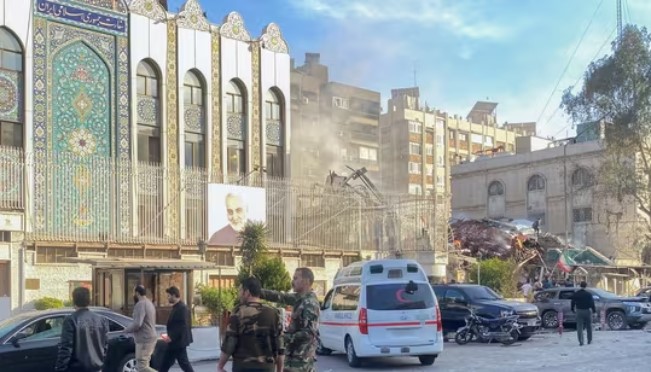
In a significant turn of events in the ongoing Middle East crisis, the consular annex of Iran embassy in Damascus was destroyed by Israeli air strikes on Monday. The attack resulted in the deaths of 11 individuals, including a high-ranking Revolutionary Guard commander, further exacerbating regional tensions.

Following the attack, the Iranian officials vowed a strong retaliation, raising concerns about escalating violence amid the ongoing Gaza war.

Among those killed were Brigadier General Mohammad Reza Zahedi and another senior officer from Iran’s Islamic Revolutionary Guard Corps named Brigadier General Mohammad Hadi Haji Rahimi, described as a coordinator for the Quds Force, along with Hossein Aman Elahi, Mehdi Jalalati, Mohsen Sedaghat, Ali Aghababaee, and Ali Salehi Roozbahani. Reports indicate that the bombing was carried out by Israeli warplanes in Damascus’s Mezzeh district, prompting widespread condemnation.

Crime will not go unanswered: Hezbollah

Meanwhile, Iran-backed actors in the region have begun to react. Hezbollah, Iran’s proxy in Lebanon has issued a stern statement pledging retaliation. They warned that Israel would face consequences for the killing of high-ranking Iranian Revolutionary Guards in the strike on the country’s consulate in Damascus, Syria, the previous day.

In a statement, Hezbollah declared, “Certainly, this crime will not go unanswered, and the enemy will face punishment and revenge.” The attack on Iranian embassy and, more importantly, the killing of Zahedi has taken Hezbollah and Israel at loggerheads mounting further escalation in the conflict as the role of the slain Zahedi was deemed crucial to Hezbollah’s operations in Lebanon. He was the in charge of arming and coordinating with Hezbollah and other pro-Iranian militias in Lebanon and Syria, for a long time and for the same reason, Israel was tracking him for a long time. Reports suggest that Israel even notified the US, minutes before the attack but didn’t sought the green light.

Widespread condemnation of Iran embassy attack

According to reports the bombing was carried out by Israeli warplanes in the Mezzeh district of Damascus. The attack started a wave of criticism and condemnation. Syria’s foreign minister Faisal Mekdad condemned the bombing saying, “We strongly condemn this atrocious terrorist attack that targeted the Iranian consulate building in Damascus and killed a number of innocents.”

Saudi Arabia has also condemned the attack, labeling it a breach of international diplomatic laws and diplomatic immunity regulations. Gulf Cooperation Council Secretary-General Jasem Mohamed Al-Budaiwi also expressed strong condemnation. Saudi Arabia’s Ministry of Foreign Affairs stated, “The ministry vehemently rejects the targeting of diplomatic facilities under any pretext, as it violates international diplomatic laws and diplomatic immunity regulations.” Similar criticism has been voiced by the United Arab Emirates, Qatar, Russia, Iran, Jordan, and Oman in response to the attack.

However, Israel’s military spokesperson Rear Adm. Daniel Hagari asserted that the targeted building was not a consulate or embassy, but rather a military structure belonging to the Quds forces, disguised as a civilian facility. He highlighted a separate incident on Monday, where a drone attack on a naval base in southern Israel was directed by Iran, resulting in no injuries.

Iran’s reaction

Iran’s ambassador to Syria, Hossein Akbari, confirmed that the strike targeted a consular building within the embassy compound, emphasizing that his residence occupied the top two floors and remained unharmed. Notably, while Israel has previously targeted Iran’s military installations in Syria, this marked the first instance of an attack on its embassy. Akbari remarked, “This is perhaps the first time that the Zionist regime allows itself to attack an official building of the Islamic Republic of Iran embassy, which had the flag of the Islamic Republic raised on top of it.” Akbari pledged retaliation for the strike “at the same magnitude and harshness”.

Furthermore, Iran’s UN mission denounced the attack as a “flagrant violation of the United Nations Charter, international law, and the foundational principle of the inviolability of diplomatic and consular premises.” It reiterated Tehran’s stance, asserting its right “to take a decisive response” in light of the situation.

US denied involvement in Iran embassy airstrike

Iran alleges that the attack was executed using F-35 warplanes. Considerably, Brig. Gen. Mohammad Reza Zahedi is the most senior Islamic Revolutionary Guard Corps officer to be killed since the 2020 U.S. assassination of Qassen Soleimani in 2020. Having clear idea about the possible escalation and ramifications, the US has swiftly denied its involvement in the attack. Reportedly, a senior US official has said that US has conveyed it directly to Iran.

Nevertheless, the attack on embassy is a strategic blow and a self incriminating act by Israel. The embassies are diplomatically immune under the international law and being a state actor such an action is a direct attack on the sovereignty and integrity of another country. The possibility of an unprecedentedly heightening escalation is at the all time high in the ongoing crisis. Most importantly, the attack has given Iran an opportunity to enter the conflict directly and soon a third world war can be anticipated.

Pakistani lawmaker under fire for disrespectful behavior towards female teachers

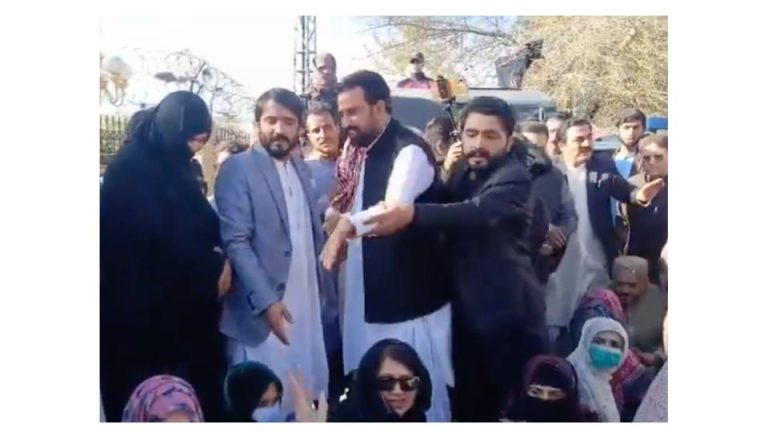
Ali Madad Jattak, a Pakistan Peoples Party (PPP) lawmaker, is facing backlash for being disrespectful towards female teachers at the University of Balochistan. The incident took place amidst a protest organized by university faculty and staff, who have been enduring a three-month delay in their salaries.

The protesters gathered outside the Balochistan Assembly seeking resolution to the salary delays on Monday. In response, the puppet assembly speaker dispatched Jattak and other officials for negotiations. However, Jattak displayed aggressive behavior and used abusive language towards protesting professor Tatara Achakzai.

Following this incident, outrage sparked on social media which prompted the puppet Chief Minister Mir Sarfaraz Bugti to extended apologies on behalf of Jattak.

Earlier, on March 13, hundreds of Balochistan University employees, including senior professors, lecturers, and female staff, protested against the non-payment of salaries for the past three months. The protesters emphasized the significant hardships faced by university staff due to prolonged salary delays amid soaring inflation.

Rising attacks on Chinese nationals by Baloch freedom fighters prompt Karachi to ban drones

The puppet administration of Karachi, Pakistan’s commercial hub, has imposed a two-month ban on the use of drones in the southern district effective from March 30 to May 29, citing “serious threats” to the Chinese diplomatic mission from freedom fighter groups. This decision comes after the high-profile attacks targeting Chinese nationals and their consulate in Karachi, including the 2018 assault on the diplomatic facility and the 2022 bombing near the Confucius Institute at Karachi University, which claimed the lives of Chinese academics.

As the Chinese interest in Pak-occupied-Balochistan is being challenged by the freedom fighters, Pakistan Army is trying its best to safeguard Chinese nationals engaged in significant projects under the China-Pakistan Economic Corridor (CPEC). The recent suicide bombing in the country’s northwest, killed five Chinese nationals and their local driver on March 26, has further heightened the Army’s concern. This led to an emergency security meeting where the Army ‘promised’ to protect all Chinese workers.

The decision to ban drones was announced through a notification issued by the commissioner of Karachi division. Officials revealed that Chinese contractors had suspended construction on two major dam projects in the country following the recent attack. These companies are demanding a new security plan before resuming their activities, which involve nearly 1,250 Chinese nationals. Additionally, a team of Chinese experts arrived in Pakistan to investigate the incident.

Pak-occupied Gilgit-Baltistan residents protest the abduction of Falak Noor & murder of Inara

Residents of Pakistan occupied Gilgit-Baltistan (POGB) residing in Karachi took to the streets in a massive protest condemning the recent abduction of Falak Noor and the tragic murder of Inara. The demonstration, which witnessed an overwhelming participation of thousands of people, echoed with slogans denouncing the establishment and puppet regime in POGB.

Organized by the Gilgit Baltistan Youth Alliance Karachi on March 31st, the protest drew support from various activists and organizations, including the likes of Shabbir Mayar. The fervent gathering underscored the growing discontent among the populace over the alarming incidents unfolding in their homeland.

Abduction of Falak Noor

The abduction of 13-year-old Falak Noor, who vanished while enroute to a nearby community center for religious education in Sultanabad, Gilgit, has sparked widespread outrage and apprehension within the POGB. Despite the registration of a First Information Report (FIR) and the provision of crucial leads regarding the kidnappers, authorities have thus far failed to trace any sign of the missing girl.

Adding to the distress, Falak Noor’s parents have accused the police of negligence, alleging that influential perpetrators enjoy impunity due to their social status. Moreover, a recent video purportedly featuring Falak Noor has surfaced, raising suspicions of coercion, as the minor girl appears to confess to a coerced marriage with a man of her choice, further fuelling concerns about her safety.

Murder of Inara

The protest also demanded swift action in the murder case of Inara, who was abducted from Danyor nearly a month ago. Despite the filing of a missing person report on March 5, it took 24 agonizing days before the lifeless body of 18-year-old Inara was discovered near a stream close to Danyor college in Gilgit.

The failure of the occupying government in addressing the rampant lawlessness in the region has compelled the people of POGB to express their grievances through protests in Pakistan, where they remain under illegal occupation. As tensions escalate and concerns mount, the call for justice and accountability reverberates louder, urging immediate action to ensure the safety and security of the region’s residents.

BLF launches attacks across Pak-occupied Balochistan on Pakistan Army & construction companies

A wave of coordinated attacks has struck various locations across Pak-occupied-Balochistan, leaving a trail of destruction and casualties. The incidents unfolded in the regions of Bolan, Kech, and Gwadar, raising concerns for brutal Pak Army in the province.

In the Bolan district’s Siraaj Abad area, the freedom fighters launched a brazen assault on a checkpoint manned by Pakistan Army, inflicting significant damage. Additional attacks targeted a residence of the Frontier Works Organisation (FWO) and a telecommunications tower in the Pinjra Pul area.

While the puppet authorities are yet to disclose the exact toll of casualties and damage, reportedly, the Army bore the brunt of the assaults. In a separate incident near Gwadar’s coastal outskirts, Pak Army encountered fierce resistance, resulting in casualties among personnel.

Major Gwahram Baloch, spokesperson for the Balochistan Liberation Front (BLF), said that their mission to target oppressive occupying force – Pakistan Army, construction companies and infrastructure, aiming to inflict both human and financial losses.

Detailing the attacks, Major Baloch mentioned assaults on security checkpoints in the Mand Baloch Abad area of Kech, resulting in the death of two Army personnel. He noted the use of sophisticated weaponry to target Army camps and checkpoints along highways, causing further casualties and damage.

Moreover, Major Baloch warned construction companies in the Pinjra Pul area to refrain from cooperating with the Army or face dire consequences.

The Pak ‘establishment’ has confirmed casualties among Army in the Gwadar attack, with fighters ambushing them en route to checkpoints. BLF’s subsequent press release claimed responsibility for killing seven Army personnel and injuring another in the Gwadar assault. Earlier, on March 24, the BLA launched a massive attack on the Pak Army and Chinese infrastructure in Gwadar Port Authority Complex.

Since the occupation of Balochistan in 1948, the Pak Army has inflicted nothing but terror and violence. Along with China, they are hell bent on wiping off the resources of the region for their own vested interest. Therefore, the BLA is opposed to China’s investments and accuses China and Pakistan Army of exploitation of the resource-rich province.

Torrential rain claim 10 lives & injure 12 in Khyber-Pakhtunkhwa; Paki establishment mum

In a tragic turn of events, Khyber-Pakhtunkhwa (KP) has been gripped by devastating rain-related incidents over the past two days, leaving a trail of destruction and loss. According to the Provincial Disaster Management Authority (PDMA), ten lives were lost, and twelve individuals sustained injuries as a result of these calamities.

PDMA spokesperson Anwar Shahzad confirmed the distressing statistics, revealing that among the deceased were eight children and two women, while the injured comprised nine children, two women and a man. The casualties occurred primarily due to various roof and house collapse incidents across multiple districts including Shangla, Bannu, Bajaur, Peshawar, Nowshera, and Mansehra.

The toll on infrastructure and property has also been significant, with reports indicating that 27 houses suffered damages as a consequence of the relentless rainfall and hailstorms. As per the PDMA’s brief report issued late on Saturday night, three houses were fully destroyed, while 24 others were partially damaged in areas spanning Mohmand, Mardan, North Waziristan, Swat, Upper Dir, among others.

Cattles perished in Khyber-Pakhtunkhwa

Reportedly, Harban Tehsil chairman Asadullah Quraishi has said that 19 cattle perished in flash flood incidents triggered by the heavy rains. The loss of livestock, including the destruction of 15 cattle pens, further exacerbated the already dire situation.

Khyber Pakhtunkhwa has been grappling with incessant rainfall since Friday, with Saturday night witnessing severe downpours coupled with hailstorms, intensifying the impact on communities. Notably, Upper Kohistan’s Harban locality bore witness to the destruction of a cattle pen, underscoring the widespread nature of the calamity and its detrimental effects on both lives and livelihoods.

Relief efforts are currently underway in the affected areas, with authorities and emergency responders striving to provide assistance and support to those impacted by the unfolding crisis. As the region navigates through this challenging period, attention remains focused on mitigating further harm and aiding affected individuals and families in their recovery efforts.

Earlier the same picture of natural disaster exacerbated by the human actions was witnessed in Pakistan occupied Balochistan. About nine people lost their lives across from Quetta to Gwadar, while hundreds were forced to displace. Strikingly, the establishment failed to take any progressive measures to help people emerge from the crisis, in fact worse infrastructure harmed them more than the rains which could have inflicted bearable consequences otherwise.