Home Blog Page 125

Srinagar breaks ground with first ever Formula-4 racing event

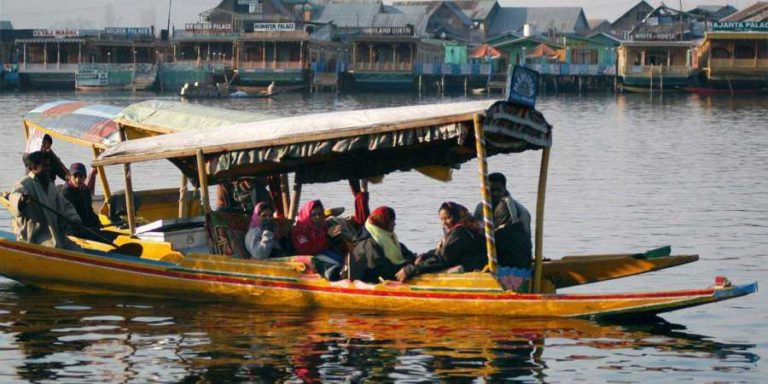
Prime Minister Narendra Modi lauded the inaugural Formula-4 car racing event held in Srinagar, Jammu and Kashmir, on Sunday, March 17, highlighting its potential to showcase the region’s scenic beauty. Organized with the aim of promoting tourism and offering diverse career opportunities to local youth, the race marked a significant collaboration between Formula-4 and the Indian Racing League, facilitated by the Tourism Department.

Spanning a 1.7 km course from Lalit Ghat to Nehru Park in the capital city, the event drew attention to India’s burgeoning motorsports scene, with Srinagar identified as a prime location for such endeavors by PM Modi.

Authorities spared no effort in ensuring the success of the historic event, undertaking extensive preparations including surface leveling, pothole repair, barricade installation, and the deployment of medical and security teams. Drone surveillance further bolstered security measures.

Beyond its role as a showcase of speed and competition, organizers emphasized the event as a symbol of resilience and unity. Notably, Kashmir has witnessed a surge in popularity within the motorsports domain in recent years, a trend expected to inspire local youth to pursue careers in Formula-4 racing.

The event also underscored the concerted efforts of the Union government and the UT administration under Lieutenant Governor Manoj Sinha to transform Jammu and Kashmir into a premier tourist destination. Amidst aspirations for a vibrant array of adventures and activities, these positive developments signify a departure from the region’s tumultuous past marked by separatism and terrorism.

Radical Islamist abducts another minor Hindu girl from her home in Bangladesh

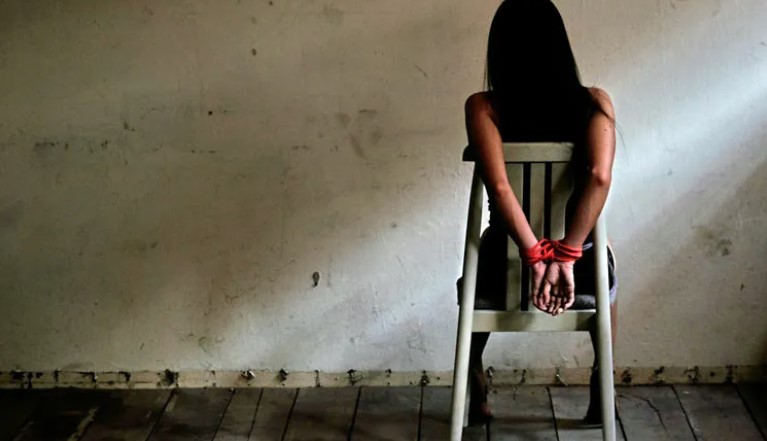
In a disturbing incident that sheds light on the precarious situation faced by Hindus in Bangladesh, a minor Hindu girl was abducted from her home by her alleged Muslim boyfriend, accompanied by dozens of radical Islamists. The incident occurred in Kotalipara, GopalGonj, and was captured on video, showcasing the harrowing ordeal faced by the girl and her family.

The abductor, accompanied by a group of Islamists, forcefully entered the girl’s home and seized her, while her family pleaded in vain for her release. The video footage of the incident has sparked concern over the safety and security of minority Hindu communities in Bangladesh.

This incident is not an isolated one, as multiple cases of hate crimes against Hindus have been reported in recent times. The abduction of a minor Hindu girl underscores a troubling trend of intolerance and hostility towards Hindus, depriving them of a sense of security and freedom. The lack of recourse for Hindu families to challenge such acts of abduction and persecution further exacerbates their vulnerability.

The wave of hatred against Hindus in certain segments of society highlights the urgent need for the government and administration to take immediate and decisive action to address this issue. Failure to do so will eventually perpetuates injustice and religious hatred in society leading to even worse persecution of Hindus.

General Elections 2024: Election Commission of India to hold polls in 7 phases

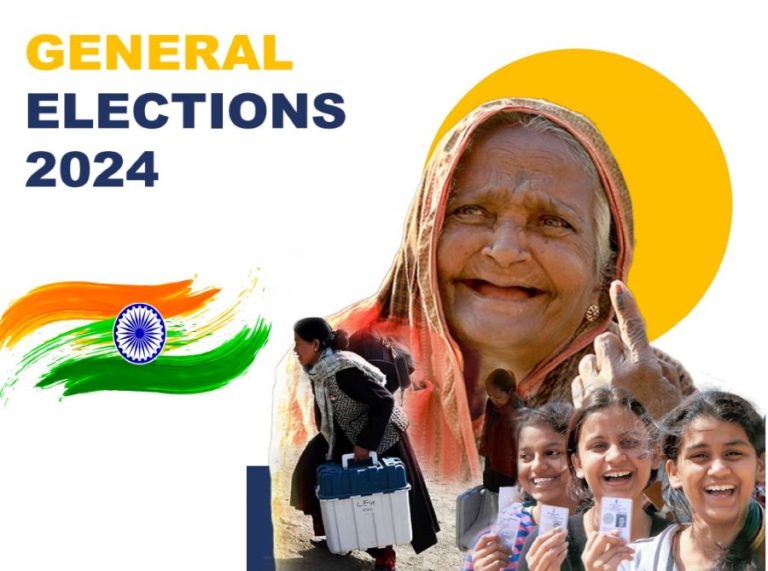
The Election Commission of India has finally announced the schedule for the 17th Lok Sabha elections. The general elections would be conducted in seven phases starting from April 13th to June 1st. The counting of the votes will be done on June 4.  The term of 16th Lok Sabha will come to an end on June 16, 2024.

Clearly the upcoming general election is a litmus test for the Narendra Modi-led-NDA government which is incumbent on the treasury bench for past 10 years. On the opposite, Indian National Congress-led INDI alliance is bidding against the BJP. The parties like TMC, AIMIM and others are making the tussle triangular.

However, the Election Commission of India has not notified the election schedule for the UT of Jammu and Kashmir which was eagerly awaited across India. Expressing dismay over it, National Conference leader Farooq Abdullah has raised questions. Notably, after the announcement, leaders of nation-wide political parties have given statements.

BJP’s national President JP Nadda has welcomed the Election Commission’s announcement and urged the people of the entire nation to come out in record numbers to vote and strengthen the foundation of the world’s largest democracy. On the other hand, TMC’s Mamata Banerjee has raised questions over the long stretch of election in 7 phases.

Details of General Elections

As per the notifications, 22 states and UTs including Arunachal Pradesh, Andhra Pradesh, Haryana, Himachal Pradesh, Goa, Delhi, Chandigarh Kerala, Gujarat, among others would go for polls in a single phase while UP, Bihar and West Bengal would see the most expansive polling in all seven phases.

The number of Parliamentary constituencies covered under each phase are as follows:-

  • Phase 1: Voting will be conducted for 102 Lok Sabha seats of 21 States/UT.
  • Phase 2: Voting will be conducted for 83 Lok Sabha seats of 13 states/UT.
  • Phase 3: Voting will be conducted for 94 Lok Sabha constituencies of 12 States/UT.
  • Phase 4: Voting will be conducted for 96 Lok Sabha constituencies of 10 States/UT.
  • Phase 5: Voting will be conducted for 49 Lok Sabha constituencies of 8 States/UT.
  • Phase 6: Voting will be conducted for 57 Lok Sabha constituencies of 7 States/UT.
  • Phase 7: Voting will be conducted for 57 Lok Sabha constituencies of 8 States/UT.

Assembly elections in 4 states

Besides general elections, the Election Commission has also announced the Assembly elections for 4 states, viz., Arunachal Pradesh, Andhra Pradesh, Sikkim and Odisha. While the Assembly elections for Arunachal Pradesh & Sikkim will be held on 19 April and that of Andhra Pradesh & Odisha on 13 May.

With about 10.5 lakhs polling stations and about 97 crore registered voters, Election Commission of India is to conduct the largest election process in the world. Approximately 1.8 crores new voters and 2.18 lakh Centenarians voters will choose their representatives. Also, the polls for 17th Lok Sabha is going to celebrate the highest Elector Gender Ratio of 948.  

India slams Pakistan for its remarks on Ram Mandir and CAA during UN meeting

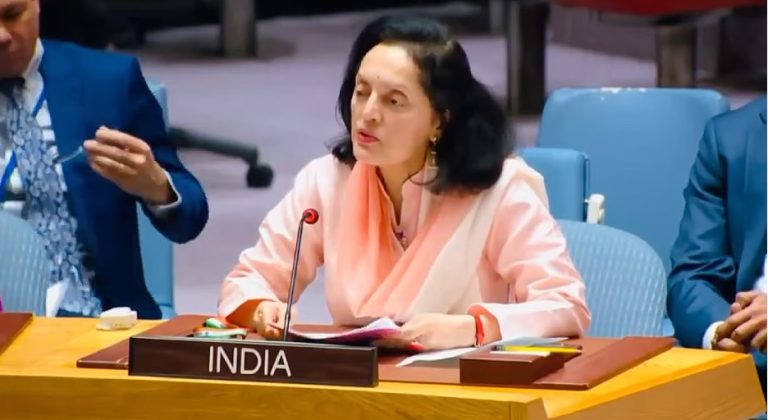
India’s Permanent Representative to the United Nations, Ambassador Ruchira Kamboj, delivered a scathing response to Pakistan’s remarks on Ram Mandir and CAA during a plenary meeting at the UN General Assembly. Responding to comments made by Pakistan’s Ambassador Munir Akram, Kamboj criticized Pakistan’s stance on issues concerning India, labeling it as “stagnant” and akin to a “broken record”.

“One final point concerns a delegation (and its remarks) that, much like a broken record, remains sadly stagnant while the world progresses,” Kamboj said.

During the meeting, Akram had made references to the consecration of the Ram Mandir and CAA implementation, which grants citizenship to the persecuted religious minorities of Pakistan, Afghanistan and Bangladesh, who fled their country and have taken refuge in India before 2014. In her response, Kamboj expressed disappointment with Pakistan’s limited and misguided perspective on matters related to India, particularly when discussing issues of global significance.

Pakistan stagnant while world progresses

Kamboj emphasized the need for wisdom, depth, and a global outlook from all UN members, highlighting what she perceived as deficiencies in Pakistan’s approach. She noted that while the world progresses, Pakistan’s stance remains unchanged and lacks the necessary depth and understanding.

She went on to say, “It is unfortunate indeed to witness this delegation’s limited and misguided perspective on matters relating to my country, the more so, when the General Assembly considers a matter that demands wisdom, depth, and a global outlook from the entire membership – perhaps not the forte of this delegation.”

The exchange occurred during the adoption of a resolution on ‘Measures to combat Islamophobia’ at the UNGA, where India, along with several other nations including Brazil, France, Germany, Italy, Ukraine, and the UK, abstained from voting. India put that there has been a considerable rise in the hate crimes against Hindus, Sikhs, Parsis and other non-Abrahamic religions and hence any such resolution should be holistic and not exclusive. The resolution, however, was adopted with 115 nations voting in favour and none against.

Islamic countries have forsaken Xinjiang’s Uyghur muslims

‘Sinicising’ Islam

Owned by the Central Committee of the Chinese Communist Party, Global Times is an English tabloid that faithfully articulates China’s nationalistic perspective on international issues.  On January 5, 2019, it reported that Chinese representatives had held a meeting with members of eight Islamic associations in China and based on mutual approval, Beijing had decided to undertake a five-year work plan to ‘sinicise’ Islam.

 No details regarding the identity of Islamic associations that had participated in this meeting were furnished and neither was any road map of the “five year work plan” shared by Global Times. The only clarification it provided was that the two sides had “agreed to guide Islam to be compatible with socialism and implement measures to sinicise the religion.” [Emphasis added]. While this statement seems to say nothing much, it certainly does convey a lot.

Defaming Islam

While Beijing has made the sweeping statement that Islam isn’t compatible with socialism, it hasn’t cared to substantiate this skewed assessment with specifics. Islam regards social responsibility as part of one’s service to God and that’s why Zakat or almsgiving is considered the third [amongst five] pillars of Islam. Zakat is obligatory and prescribes payment of fixed proportions of a Muslim’s possessions for the welfare of the entire community, and in particular for its neediest members.

This is why Beijing’s claim of Islam being incompatible with socialism lacks substance and it’s a pity that Islamic nations haven’t taken umbrage to this utterly malicious observation. In fact Beijing’s factually deficient discourse lends credence to the widely accepted view that instead of accepting that its institutionalised persecution in the Xinjiang region is to blame for widespread public resentment, Beijing is trying to accuse Muslims Uyghurs for the same.

Xinjiang’s Communist Party chief Ma Xingrui has validated this apprehension by reportedly telling reporters on the sidelines of China’s annual parliamentary sessions in Beijing last week that “three forces [a reference to ethnic separatism, religious extremism and violent terrorist forces] are still active now.” From this barefaced accusation it’s absolutely clear that Beijing continues to link separatism, extremism and terrorism in the predominantly Muslim Xinjiang region with religion.

Sinification

In simple terms, ‘sinification’ is the process of integrating cultural, ideological and ethnic norms of non-Chinese societies so that they conform to Chinese culture. With Beijing making no adjustments whatsoever in this process, minority groups have no choice but to accept additions, alterations and even termination of certain age old religious and cultural practices 

So, by declaring that “Everyone knows that Islam in Xinjiang needs to be ‘sinicised’, this is an inevitable trend,” Xingrui has left no room for any doubt that Beijing is determined to achieve ‘sinification’ of Xinjiang’s Uyghur Muslims, even if it is tantamount to riding roughshod over their religious beliefs and cultural sentiments.

Brutalising Uyghurs

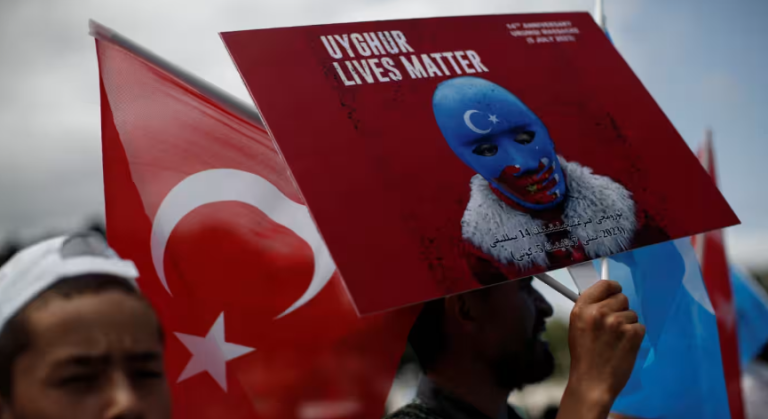
The list of atrocities being inflicted on Uyghurs is terrifying. Human Rights Watch [HRW] has confirmed that the Chinese authorities impose on Turkic Muslims a pervasive system of mass surveillance, controls on movement, arbitrary arrest and enforced disappearance, cultural and religious erasure, and family separation.”

The HRW report also mentions that “. . . UN special procedures-special rapporteurs, working groups, and other human rights experts-issued a searing indictment of China’s human rights record, including the Chinese government’s “collective repression” of religious and ethnic minorities in Xinjiang . . .”

While indoctrination and forced labour in internment camps under garb of “re-education and vocational training” is used to alter their political outlook, forcing Uyghurs to consume alcohol and pork as well as discouraging fasting during Ramadan is meant to destroy their religious beliefs. Mass sterilization and intrauterine contraceptive device implantation programs are aimed at systematically reducing the Uyghur population to an insignificant minority.

Even innocuous things like wearing veils, growing beards or even having too many children can have very serious consequences for Uyghurs.

The Ummah’s Silence

In Islam, ummah denotes the entire Muslim community worldwide being bound together by ties of religion, and this makes it incumbent on them to univocally express solidarity with and assist their brethren who are in trouble. Unfortunately, despite being physically and mentally traumatised by the Chinese authorities, the ummah doesn’t appear to be worried at all about their persecuted Uyghur brothers and sisters.

In 2017, China’s religious affairs official Maisumujiang Maimuer went as far as inciting the Chinese people against Uyghurs by his post on a Xinhua Weibo page that read, “Break their [Uyghurs] lineage, break their roots, break their connections, and break their origins. Completely shovel up the roots of “two-faced people,” dig them out, and vow to fight these two-faced people until the end.” Unfortunately, even this patently rabid anti-Uyghur tirade failed to stir the ummah’s collective conscience.

However, it would be factually incorrect to say that the persecution of Uyghurs and other Muslim communities in Xinjiang Autonomous Region was never contested by any Islamic nation. In 2019, while Pakistan’s then Prime Minister Imran Khan tried to feign ignorance regarding persecution of Uyghurs, it was heartening to note that Türkiye was more forthcoming on this issue.

Ankara outrightly condemned religious China’s ‘sinification’ policy calling it “another step towards the goal of eliminating the ethnic, religious and cultural identities of the Uighur Turks and other Muslim communities in the region,” and called on the international community and UN Secretary General to “take effective measures in order to bring to an end this human tragedy in Xinjiang.”

However, just a year later, without offering any explanation, Türkiye suddenly changed track and maintained a stoic silence on the ongoing persecution of Uyghurs and hence its show of solidarity was just a flash in the pan. And it doesn’t require rocket science to deduce that it’s Beijing’s financial clout and the commercial interests of Islamic nations that has led to the Uyghurs being abandoned for good.

Tailpiece: In 2003, an Indian politician was caught on camera while accepting illegal gratification during a ‘sting operation’ and commenting that “Paisa Khuda to nahin, par Khuda ki kasam, Khuda se kam bhi nahi.” [Money isn’t God, but God-promise; it’s no less than God]. Though undoubtedly a crude utterance that possibly borders on the sacrilegious, it nevertheless aptly explains why the ummah has completely forsaken the hapless Uyghurs of Xinjiang! 

Centre extends ban on Yasin Malik’s J&K Liberation Front and other terror outfits for five years

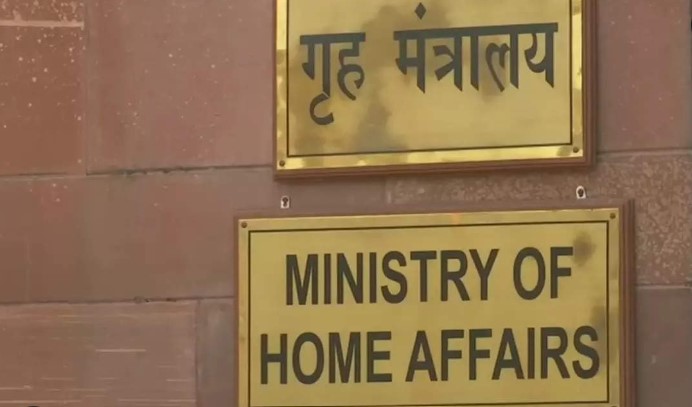
The Ministry of Home Affairs (MHA) of India has extended the ban on the Jammu and Kashmir Liberation Front (Mohd. Yasin Malik faction) and several other Kashmiri outfits, designating them as ‘unlawful associations’ for a further period of five years. The decision comes amidst concerns over activities deemed detrimental to national security and public order.

In a notification issued by the MHA, the extension of the ban on JKLF-Y follows inputs indicating its involvement in activities deemed prejudicial to the sovereignty, unity, and integrity of India. The outfit, according to the MHA, maintains connections with militant groups and actively supports extremism and militancy in the region.

The MHA’s notification highlighted that Yasin Malik’s J&K Liberation Front continues to advocate for the secession of parts of Indian territory, supporting separatist and terrorist groups with the aim of destabilizing the established government. It further emphasized the outfit’s role in propagating anti-national sentiments and inciting violence.

Union Home Minister Amit Shah commended the action taken by the ministry, underscoring the government’s resolve to combat terrorism and preserve national integrity. He warned of severe legal consequences for those challenging the security and sovereignty of the nation.

Similarly, Union Minister Jitendra Singh applauded the decision, emphasizing the inverse relationship between terrorism and development. He highlighted the positive impact of improved security conditions in Jammu and Kashmir, citing increased tourism as evidence of progress.

Alongside the ban on JKLF-Y, the MHA also designated Jammu and Kashmir Peoples Freedom League and four factions of the Jammu and Kashmir Peoples League as ‘Unlawful Associations’ for the same duration.

The extension of the ban reflects the government’s commitment to maintaining peace, stability, and territorial integrity in the region, while also sending a clear message against activities deemed detrimental to national interests.

IMF questions Pakistan’s claim of meeting $3 billion Standby Arrangement target

In a surprising turn of events, the International Monetary Fund (IMF) delegation, led by mission chief Nathan Porter, expressed dismay over Pakistan’s premature declaration of meeting all structural benchmarks and targets under the $3 billion Standby Arrangement (SBA) program. The dissatisfaction was conveyed during a meeting with Pakistani officials as the IMF team began its review process.

The Pakistan finance ministry had issued an official statement asserting the fulfillment of all benchmarks even before the IMF team had the opportunity to complete its scrutiny and analysis of the country’s economic data. This premature claim caught the IMF delegation off guard, leading to a tense atmosphere during the initial review session.

Reports indicated that the IMF team grilled Pakistani officials, who appeared unprepared to address the situation adequately. Muhammad Aurangzeb, Pakistan’s newly-appointed finance minister and former CEO of Habib Bank Ltd, acknowledged the incident, assuring that such missteps would not occur in the future.

The discussions between the IMF team and the Pakistani finance ministry focused on finalizing the second review and agreeing upon the Memorandum of Economic and Financial Policies (MEFP). The successful completion of these discussions is crucial for the disbursement of the last tranche of $1.1 billion before the IMF’s Executive Board meeting scheduled for the second week of April 2024.

Possible mini-budget

Report also suggest the possibility of implementing a mini-budget was under consideration, particularly if the Federal Board of Revenue (FBR) faces challenges in meeting tax collection targets. The IMF may recommend adjustments to tax rates, including the General Sales Tax (GST), to generate additional revenues promptly.

Furthermore, discussions cantered on meeting quarterly tax collection targets from April to June, essential for achieving the annual objective of PKR 9,415 billion. Both parties underscored the importance of devising a strategic plan within the energy sector to address the persistent issue of circular debt accumulation.

Currently, Pakistan is navigating the financial strides with the assistance of IMF through a $3 billion Standby Agreement (SBA). The cash strapped nation is facing hardship in daily administration as inflation has skyrocketed leading to resentment in public. Meanwhile, the newly formed government in Islamabad, is trying to woo people as it has reached the helm without the popular support. The pre mature announcement of meeting all structural benchmark before IMF review highlights the government’s desperation in that direction.

Maharashtra becomes first state to buy land & construct ‘Maharashtra Bhawan’ in Kashmir

Maharashtra is poised to make history by becoming the first Indian state to acquire land in the union territory of Jammu and Kashmir to build a tourist facility for its residents. The upcoming Maharashtra Bhawan, set to be constructed in central Kashmir’s Budgam district, marks a significant milestone as the valley’s inaugural state Bhawan.

According to reports, the Maharashtra Bhawan will occupy 2.5 acres of land in Ichgam, near Srinagar airport. The Jammu and Kashmir government has sanctioned the land transfer to Maharashtra for a sum of ₹8.16 crore.

The initiative gained momentum following a visit by Maharashtra Chief Minister Eknath Shinde to the union territory in June last year, where he met with Governor Manoj Sinha to discuss the project’s feasibility.

Before the revocation of Article 370, land ownership in Jammu and Kashmir was restricted to permanent residents of the state. However, post-abrogation, the government has extended land purchase permissions to outsiders, albeit through leasing arrangements of up to 99 years.

In a recent budget announcement, Maharashtra Deputy Chief Minister Ajit Pawar disclosed plans for the construction of two Maharashtra Bhawans in Srinagar and Ayodhya, aimed at enhancing tourism facilities for visitors and pilgrims. The state government has earmarked ₹77 crore for the development of these Bhawans.

This strategic move by Maharashtra aligns with the burgeoning tourism landscape in Jammu and Kashmir, which has witnessed a surge in visitor numbers, recording over 2 crore footfalls in 2023 alone. Furthermore, the central government, under the leadership of Prime Minister Narendra Modi, has prioritized the promotion of tourism in the valley to stimulate employment opportunities, bolster economic growth, and foster overall development in the union territory.

Imran Khan conspiring to jeopardise Pakistan’s economy: Pak Information & Broadcasting Minister

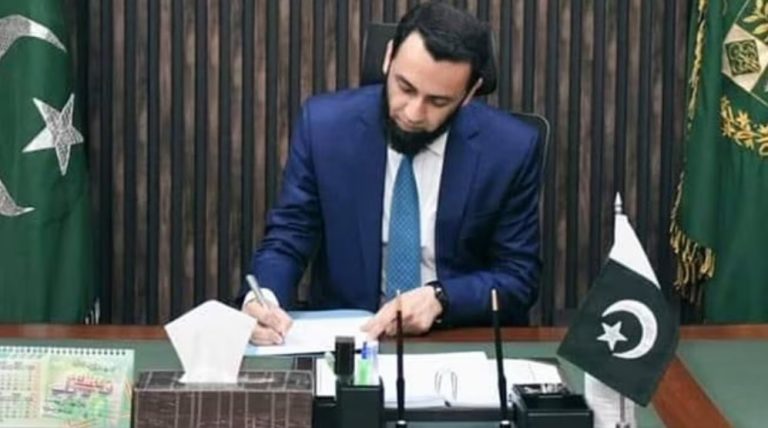
In a startling revelation, Pakistan’s new Information and Broadcasting Minister, Attaullah Tarar, accused the Pakistan Tehreek-e-Insaf (PTI) party, led by imprisoned former Prime Minister Imran Khan, of orchestrating a conspiracy to undermine Pakistan’s economy. Tarar alleged that PTI had petitioned the European Union (EU) to revoke Pakistan’s Generalised System of Preferences Plus (GSP+) status, a move that could have dire consequences for the nation’s economy.

The GSP+ status, granted to Pakistan in 2014 and extended until 2027, enables the country to export goods to the European market with reduced or eliminated tariffs, thereby fostering economic growth and development. Tarar emphasized that this privilege was crucial for Pakistan’s economic stability, and any attempt to revoke it would harm the country’s vulnerable population by exacerbating inflation and limiting job opportunities.

Tarar further claimed that PTI’s actions were part of a broader campaign aimed at discrediting the government, particularly following the February 8 elections. Imran Khan and his party have repeatedly highlighted electoral fraud in favour of the Pakistan Muslim League-Nawaz (PML-N) led by former Prime Minister Nawaz Sharif. Khan even urged the International Monetary Fund (IMF) not to extend financial assistance to Pakistan until an audit of the elections was conducted.

Imran Khan compromised well-being of the country: Tarar

Addressing reporters at a press conference, Tarar denounced PTI’s tactics as a threat to national interests, asserting that the party was prioritizing its own political agenda over the well-being of the country. He refuted claims of mistreatment of Imran Khan during his imprisonment, stating that the PTI founder had been provided with numerous privileges contrary to prison regulations, including multiple weekly meetings and additional amenities.

Responding to allegations of insufficient facilities for Khan, Tarar clarified that the decision to restrict meetings was based on security concerns near Adiala jail, where Khan is detained. He accused PTI of fabricating falsehoods to garner sympathy and manipulate public opinion.

The accusations come at a time when Pakistan is grappling with a severe financial crisis, exacerbated by political instability and allegations of corruption. The return to power of the PML-N-led alliance in the National Assembly has added to the uncertainty, prompting Pakistan to seek financial aid from international sources, including negotiations with the IMF.

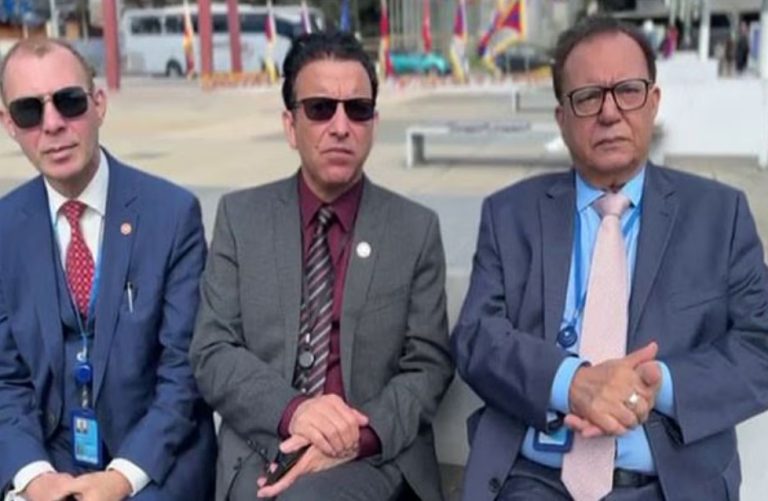
United Kashmir Peoples’ National Party raises plight of residents in POJK & POGB before UNHCR

Shaukat Ali Kashmiri, Chairman of the United Kashmir People’s National Party (UKPNP), brought attention to the plight of residents in Pakistan-occupied Jammu and Kashmir (PoJK) and Gilgit-Baltistan (POGB) during the 55th session of the United Nations Human Rights Council (UNHRC).

In a recent interview, Kashmiri shed light on the grievances faced by locals, particularly regarding the construction of the Mangla Dam. He said, “During the construction of Mangla Dam, people organised massive protests in the entire PoK. Just to settle the chaos, the Pakistani administration had promised, 300 to 400 megawatts of free electricity for the PoK.”

Despite promises made by the Pakistani establishment, including free electricity and compensation for displaced individuals, many have yet to receive adequate support. The imposition of unwarranted taxes on hydroelectricity bills has further fueled protests in PoJK.

UKPNP Chairman Kashmiri emphasized that the demands of the people extend beyond subsidies, as they now struggle to access basic necessities like wheat flour. The situation has further exacerbated amid rising costs during the month of Ramzan. Kashmiris are protesting the abrogation of subsidy and demand their reinstatement.

Talking about Pakistan occupied Gilgit Baltistan (POGB), he highlighted the adverse impact of the China-Pakistan Economic Corridor (CPEC) on POGB, asserting that local communities have not benefited from the projects, nor have they seen any increase in job opportunities.

The domination of major businesses by the Pakistan Army in POGB has further exacerbated the situation, leaving locals disenfranchised and deprived of essential resources. As protests escalate across the region, Kashmiri underscored the urgent need for international attention and intervention to address the pressing humanitarian concerns facing residents of PoJK and POGB.