Home Blog Page 128

Another protest erupts in Pakistan-occupied Gilgit-Baltistan over load shedding

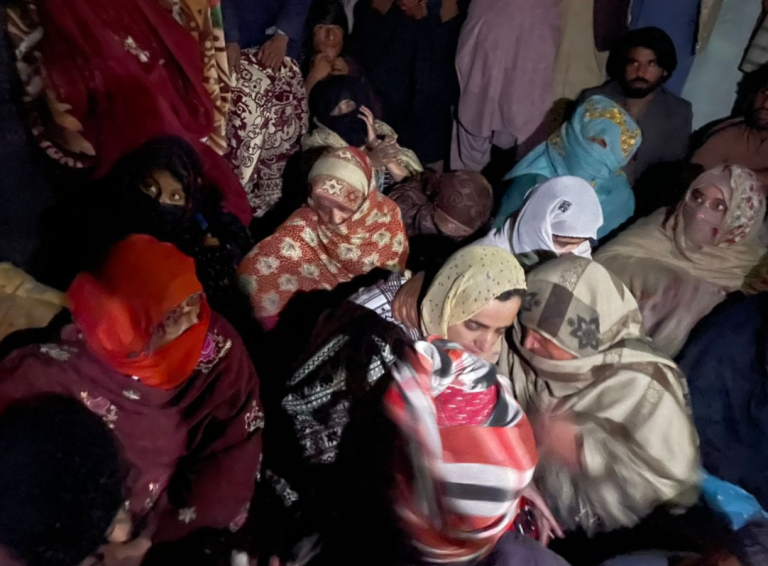
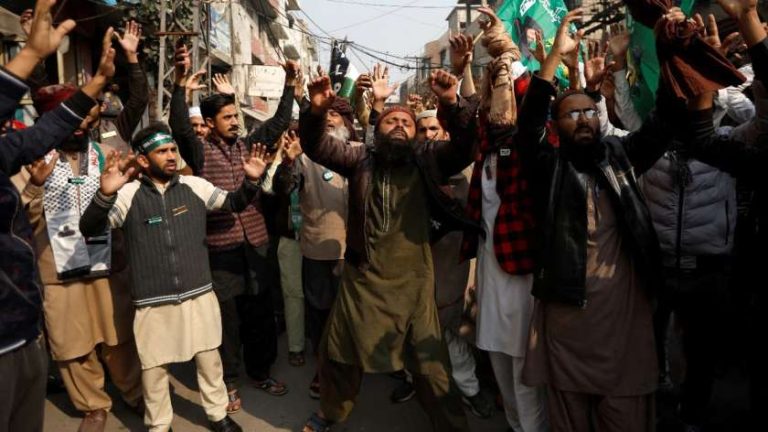
Pakistan occupied Gilgit Baltistan (POGB) once again witnesses the protest against the load shedding in the region. On March 10, some women along with other protestors hit the streets of Amphery in Gilgit and hurled slogans against the puppet government which has failed to even provide basic electric supply.

Just a couple of days ago, the puppet government announced to provide about 5-hours of power a day during Ramadan. This shows the precarious condition of electricity in POGB. Five hours of supply given on special occasions tells that on normal days the power shortage remains unimaginably low.

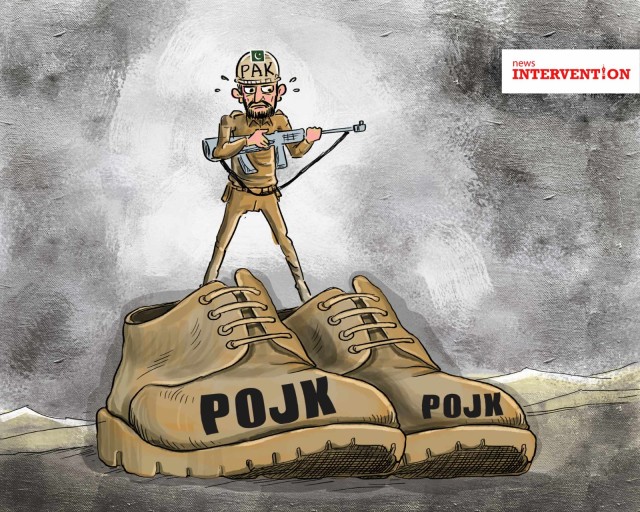
Additionally, a protest just a day before the holy month clearly indicates that people have lost faith in the Pak-imposed puppet government in POGB.  It is worth noting that POGB, like POJK, has put forward a Charter of Demand to the puppet government under which the wheat flour price crisis and Revenue Act related issues are only resolved. The issue of electricity that remains crucial for the survival of people remains unresolved and the load shedding continues.

Clearly, the electricity shortage is not a genuine problem but an Islamabad-engineered crisis. The region along with POJK has the potential to generate electricity of enormous amounts. But whatever amount of power is generated, it is transmitted to Pakistan, which sells it to them on hefty prices and abundant load shedding. Surprisingly, parts of Pakistan do not face such scarcity. Therefore, it is a doctored crisis which is proof of persecution, exploitation and colonialism.

Hindu man abduction in Sindh: Viral video captures pleas for help

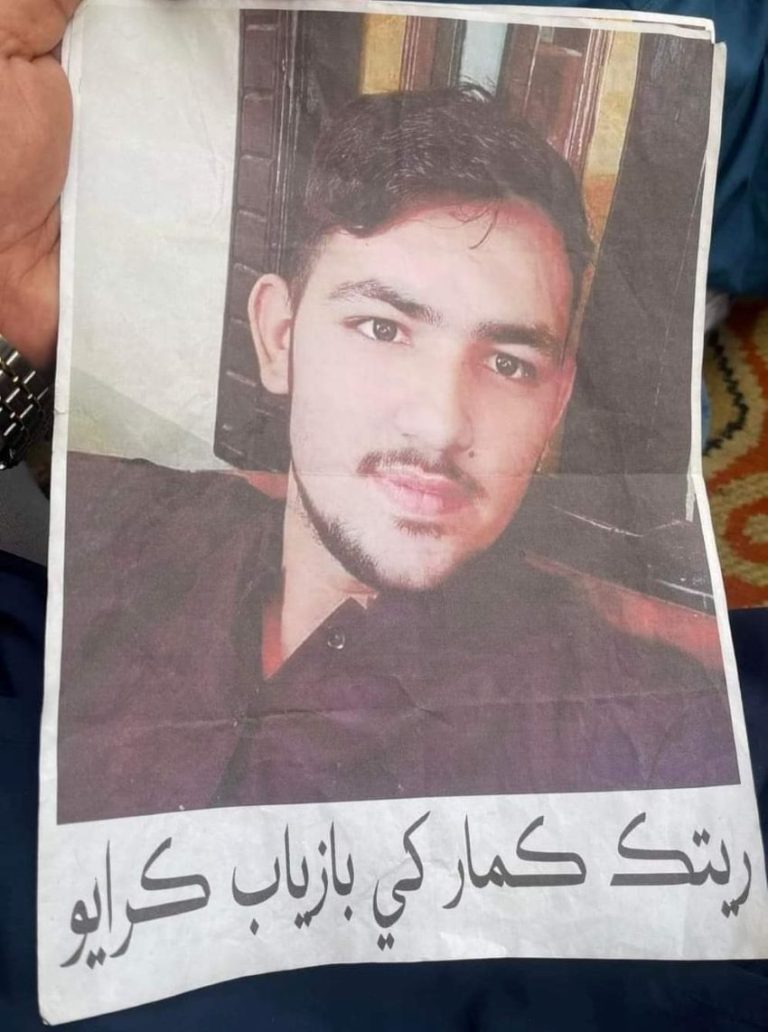
The harrowing tale of a Hindu man named Ritik Kumar, abducted one month ago while traveling from Sukkur to Mirpur Mathelo, has unfolded a disturbing pattern of targeted harassment against Hindus in Sindh. Despite informing authorities immediately, there has been a shocking lack of effort to locate Ritik or identify the perpetrators, raising concerns about the safety and security of the Hindu community in the region.

Reports suggest the involvement of local Waderas (feudal landlords) and bigoted individuals with influential backing. A viral video depicting Ritik in chains, pleading for release while being tortured, has added urgency to the matter.

https://twitter.com/SarmanBrohi/status/1766545150187028829

This incident bears unsettling similarities to a case last year when Hindu man Jagdish Kumar Mukhi was abducted from Kashmore. Later another one, named Sagar Kumar was also abducted from Kashmore. The lack of prompt action by the police led to public protests in Kashmore and Kandhkot. However, instead of addressing the concerns of the protestors, the police, along with some dacoits, attacked the demonstration, injuring many.

The recurring theme of targeted abductions of Hindus and the subsequent apathy from authorities suggest a worrying trend. The striking resemblance between Ritik Kumar’s case and the incident in Kashmore last year implies a selective abduction pattern, indicating potential involvement by influential entities within the Pakistani establishment and their puppet administration in Sindh.

Destruction of Gwadar in the name of Mega Projects: Mahrang Baloch

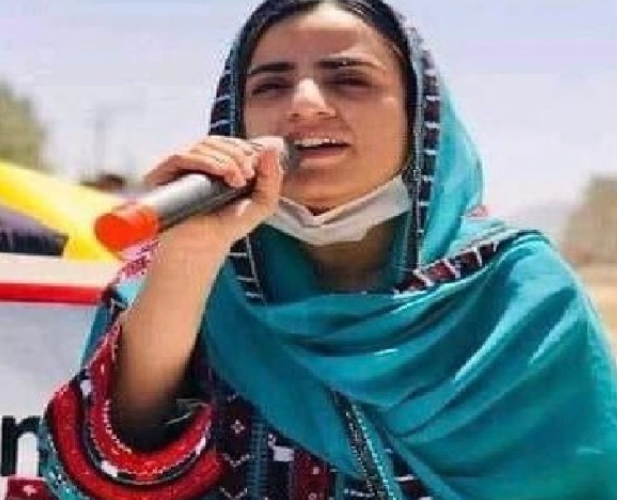
Dr Mahrang Baloch, the leader of the Baloch Unity Committee, stated in a video message that an unscrupulous megaproject has been launched in Gwadar, creating the illusion that Gwadar and its residents have made progress, which is not the case. Under the guise of these dubious projects, checkpoints have been set up in every alley in Gwadar, allowing Pak establishments, including the Coast Guard, to enter homes and evict residents. Dr Baloch emphasized that Gwadar’s ancient livelihoods, which date back a century, are being undermined, leaving thousands homeless and uncertain about their futures.

In response, the Baloch Unity Committee has decided to organize an awareness campaign in which intellectuals will participate to shed light on how Gwadar’s infrastructure has been altered, negatively impacting the lives of locals. They promised to amplify the voices of those who have gone unheard in Gwadar, and they invited all residents to attend the program at the Gwadar Stadium.

Furthermore, the Baloch Unity Committee distributed pamphlets emphasizing that the recent devastations in Gwadar are not hidden from anyone due to numerous unscrupulous megaprojects. Aside from dealing with various health issues and material losses, Gwadar is drowning in the stress of homelessness. The 2024 floods have highlighted the city’s residents’ decades-long neglect. In these trying times, the Baloch Unity Committee travelled to the affected areas, prepared detailed reports on the destruction (which were also shared with the press), launched a three-day unity campaign in Baloch areas, and appealed to people for cooperation.

At the culmination of the unity campaign, they will hold an awareness session to raise people’s awareness of the causes and effects of the floods, as well as to educate them on various technical aspects of climate change and standard operating procedures (SOPs). They are determined to dispel the myth that everything is natural, refusing to include themselves and others in the false narratives spread by artificial forces, such as flawed Pak Army policies. They encourage active participation in the session to exchange ideas on various topics such as reconstruction, self-made megaprojects, and Gwadar’s development. They invite all residents of Gwadar and the surrounding areas to attend the scheduled awareness session, become advocates for unity, and support affected families when they need it most.

The pamphlet also emphasizes that in the 21st century, despite apparent visibility, ignorance of critical factors and failure to hold relevant forces accountable is the greatest misfortune. As a result, participation in the session is critical for revealing hidden truths behind unjust policies, exposing numerous natural and artificial irregularities, and taking a positive step forward.

Pak backed Turbat authorities order BYC to close Gwadar flood victims relief camp

Recently, the Assistant Commissioner of Turbat, Haseeb Shujaat, directed the Baloch Yakjehti Committee (BYC) to close the relief camp for Gwadar’s flood victims in Turbat immediately.

The BYC established this relief camp on Fida Chowk, Shahid Fida Road, in the district of Gwadar two days ago to provide financial assistance to the rain-affected people. According to the Committee, Assistant Commissioner Haseeb Shujaat has ordered the camp’s closure, citing the lack of a NOC to establish the camp, and has warned that if the camp is not closed down immediately, the organizers will face severe consequences.

It is pertinent to note that the police attempted to dismantle the BYC’s central relief camp in Gwadar on 8th March, but due to public outrage, the district administration stole the camp’s tent on the same night.

By impeding the efforts by BYC who are working tirelessly to help the affected citizens, the Pak Army are exacerbating the sufferings of those already struggling. It is pertinent to note that Balochistan had been forcefully occupied by the Pak Army on March 27, 1948, and since then, the helpless Baloch community has faced innumerable atrocities at the hands of the Pak Army. They have endured atrocities like daily home invasions, abductions, enforced disappearances, indiscriminate killings etc.

Save Sharda committee celebrates Mahashivratri at Sharda temple Teetwal

In a heart warming display of cross-border solidarity, the Save Sharda Committee Kashmir Registered celebrated Mahashivratri at the revered Sharda Temple in Teetwal, Kashmir, on March 9, 2024. The festivities not only included traditional rituals and Puja but also featured the distribution of walnuts to the locals, a customary practice on this auspicious occasion.

The celebration at Sharda temple saw active participation from a large number of locals and committee members. The Shivratri event held special significance as it aimed to foster unity and shared cultural values among the people of the region.

In a remarkable display of camaraderie, members of the Civil Society in Pakistan-occupied Jammu and Kashmir (PoJK) joined hands in the celebration. Walnuts were offered at the Sharda Peeth in PoJK as a gesture of goodwill and continuance of long established tradition at the shaktipeeth. Additionally, they sent heartfelt blessings from the snow-clad Sharda Peeth to the Kashmiri Hindu community.

Regarding the festivities and the continued struggle, Mr. Ravinder Pandita, the Head and Founder of Save Sharda Committee Kashmir Regd., expressed his warm greetings to the entire community and civil society on both sides of the Line of Control (LoC) on the occasion of Mahashivratri. He said, “‘ I extend my warm greetings to whole community and civil society on both sides of LoC on Shivratri especially our members across LoC today.”

Interestingly, the celebration showcased the committee’s commitment to preserving cultural heritage. Apparently, Save Sharda Committee regd. has been at the helm of preserving as well as resurrecting Sharda Peeth, a revered Hindu shaktipeeth situated across LOC in Pakistan occupied Jammu and Kashmir. The committee’s civil society across LOC has played a pivotal role in performing the essential rituals and preserving the scared Hindu site, which is considered pious by every Kashmiri irrespective of their religion.

Pak Army disappears four more Baloch students in Pak-occupied-Balochistan

In a disturbing escalation of human rights violations, four additional young students have been subjected to forced disappearances in the Pak-occupied Balochistan region.

The latest incidents follow the forcible disappearance of Baloch youth Bilal Ahmed on March 4 in Khuzdar, where the oppressive actions of the Pak Army carried out massive operations against Baloch communities. This incident occurred while the Pak Army carried out massive operations against Baloch communities during a house-to-house search operation. These heartbreaking incidents have become more common. Civilian homes were broken into and individuals were tortured, abducted, killed and dumped.

These distressing developments highlight a grim reality where enforced disappearances have become increasingly common. Since the forceful occupation of Balochistan on March 27, 1948, the Pakistan Army has consistently subjected Baloch communities to violence and atrocities. The ongoing pattern of enforced disappearances by the Pakistan Army in PoB is deeply troubling and demands immediate attention and cessation.

India’s UNSC reform model: A pinnacle of democratic change

UNSC reform have long been in the talks, but conceiving such reform has not been an easy task. India is doing everything it can to make it possible. In that direction, India has recently presented a new detailed model. Participating in the Intergovernmental Negotiations on Security Council reform (IGN) on March 7, India’s Permanent Representative to the UN Ambassador Ruchira Kamboj presented a model for reforms in UNSC on behalf of the G4 countries- India, Germany, Brazil and Japan.

Clearly, the talks of UNSC reforms persisted since very long, on grounds that the current structure was formed as per the situations of 1945 and the times have changed. But after last two years, the crisis in Afghanistan that led to Taliban takeover of the country, Russia-Ukraine war, multiple coup de ‘tat in Africa and Asia and Israel-Hamas war have proved that the current architecture of Security Council is incompetent to take decisive action to establish peace.

Kamboj highlighted the same by saying, “The realities of 1945, when the Council was established, have long been superseded by the geo-political realities of the modern era and a new century; with the need for change being felt across the board.”

Proposed model for UNSC reform

The G4 model proposed by India advocates for an expansion of the United Nations Security Council’s membership from the current 15 to 25-26. The proposed changes include adding six new permanent members and four or five non-permanent members. Among the new permanent members, two are suggested from African states, two from Asia Pacific states, one from Latin American and Caribbean states, and one from Western European and Other states.

The G4 proposal from India doesn’t specify which countries would get the new permanent seats. Instead, it suggests that the UN General Assembly should decide through a fair and inclusive election, emphasizing the need to fix the current lack of representation in the Council. This, according to the model, is crucial to avoid worsening the existing imbalances in the Council’s makeup.

The concept is not unique but upholds the significance and sanctity of democratic process, which is essential for the global governance institution. Strictly speaking, the United Nation is a global governance institution with multiple arms where power does not lie with the larger world and has been subsumed in the hands of few. With due consideration, these few actors were also not democratically elected but chosen, based on their power that had already took the world to the most horrible devastations.   

So, electing members through UNGA would ensure that only the nations that are trusted by the other countries can have a seat at UNSC. Past 79 years tell that the permanent members have only sorted their national interests and sinister animosity through international platform using ‘Veto’.

Provisions for Veto

Veto has been the most consequential power of the permanent UNSC members. Regarding which, the proposed model suggests flexibility. The new permanent members would have the same responsibilities as current ones but would refrain from using the veto until a decision is made during a review. Currently, only the existing five permanent members can veto Council actions, a practice criticized for slowing down responses to global challenges. The goal of the proposal is to tackle these issues and make the Security Council more effective.

 India’s bid for permanent seat at the UNSC has been widely recognized and supported except countries like China ad Pakistan which considers India as rival. While India backs its claim by the fact that it is amongst the most populous countries, the fastest developing economy, biggest resource provider to the UN and at the forefront of global governance in the current geopolitical scenario. Except every other country China is the only permanent member which is opposing India’s seat at the table.

Interestingly, at one point China affirmed to support India’s bid but with a condition that it must give up its support for Japan’s bid for UNSC. Having said that, India’s support for Japan comes from the same G-4 grouping which has backed this proposal.

G4 and complexities around UNSC reform

As mentioned above, G4 is a group of 4 countries viz, India, Japan, Germany and Brazil. But the common denominator for this group is UNSC permanent bid. Each of these four countries support the bid of rest others.

But to their opposition is another grouping called Uniting for Consensus (UfC). The members of UfC may not be necessarily against the bid of individual G4 countries but do have antagonising relationship with one or more countries. UfC, a grouping of 12 countries includes countries like South Korea, Italy, Canada, Pakistan, Mexico, Argentina, Malta, Columbia, Costa Rica, San Marino, Spain and Turkey.

Now as per the proposed model. one each seat has been provided to LAC and Western Europe and other states. However, considering UfC and G4, only LAC has over 3 aspiring countries, hinting towards a possible friction that can arise with the proposed model.

But the provision for election through UNGA is essentially a potent way to solve the regional complexities and antagonism. Nevertheless, the model is the most democratic and seemingly acceptable proposal for reforms in UNSC up to date. And the timing is also prudent.

India making encirclement with like minded countries

Apparently, the Indian model is backed by G4, which consists of Brazil, which in turn has the presidency of G20. This becomes more important knowing that Brazil has announced that the reforms at the global governance institutions would be at the centre of its presidency. It has claimed that in November 2024, it will hold a meeting of G20 Foreign Ministers on the sidelines of UNGA in New York.

Clearly, the reforms are much needed and India along with like minded countries is fast paced to do so. If the proposed model gets worldwide approval, which France and Germany have already got and is enacted, India would be able to bypass the indifference-born-opposition to its permanent UNSC seat.    

Tehreek-e-Taliban Pakistan rebukes Pak’s allegations of foreign hand as baseless

In response to the recent statements made by the representative of Pakistan at the United Nations Security Council (UNSC), the Tehreek-e-Taliban Pakistan (TTP) has strongly denied the allegations and accused the Pak establishment of making false claims.

Pakistan’s Ambassador to the UN, Munir Akram called for a UN investigation into how the TTP acquired modern military equipment and the sources of its financial backing, sustaining an estimated 50,000 fighters. This request followed Akram’s December 2023 call for an investigation into the TTP’s access to advanced weaponry in Afghanistan, amidst attacks on electoral campaigns in Pakistan especially in Khyber Pakhtunkhwa and Pak-occupied-Balochistan.

During this period, attacks on electoral candidates, political gatherings, and security forces occurred, including a major attack in Dera Ismail Khan in December 2023 where 23 Pak Army personnel were killed, claimed by Tehreek-e-Jihad Pakistan.

Akram had said, “I am confident that this Council will join Pakistan in demanding that the Afghan Taliban terminate its relationship with the TTP and its affiliates and prevent them from having free rein to conduct cross-border attacks against Pakistan or other neighbors.”

TTP dismisses claims

In a statement from TTP spokesperson Muhammad Khurasani, the militant group dismissed these accusations as “baseless tomfoolery” and accused the UNSC of being biased. Khurasani reiterated the TTP’s position, stating that their actions were focused on promoting religious values within Pakistan and denying any foreign agenda. The group emphasized their commitment to what they called a “blessed Jihad,” asserting that their financial needs were met through the support and sacrifices of their “valiant nation.”

Regarding the acquisition of modern weaponry, the TTP spokesperson claimed that a significant portion of their weapons came from a black market within Pakistan. They alleged the involvement of military generals in this illegal trade, specifically pointing to the theft and sale of American weapons intended for Afghanistan.

The statement concluded with a challenge to the UNSC, urging an investigation into the alleged role of Pakistan Army generals in the arms black market. The TTP warned that they would not hesitate to provide further details on this matter when the time was right.

Pak court sentences Pakistani student to death for blasphemy over WhatsApp

A 22-year-old student in Pakistan has been sentenced to death for alleged blasphemy over WhatsApp messages, as per a recent ruling by a court in Punjab province. The charges stem from photos and videos containing derogatory language about Prophet Muhammad. In a separate but related case, a 17-year-old student received a life imprisonment sentence, spared from the death penalty due to his status as a minor.

Blasphemy remains a capital offense in Pakistan, though no executions have taken place till now. However, this contentious issue often results in violent reactions from impassioned mobs, sometimes even leading to lynching.

The cybercrime unit of Pakistan’s Federal Investigation Agency (FIA) in Lahore initiated action against the students following a complaint filed in 2022. The complainant alleged the receipt of offensive materials from three different mobile numbers, prompting the investigation.

Growing blasphemy cases

Lawyers representing the accused students claim that they have been framed in a false case. The father of the student facing the death penalty is set to file an appeal in the Lahore High Court.

This development raises renewed concerns about the application and misuse of blasphemy laws in Pakistan. Earlier, over 80 Christian homes and 19 churches were vandalized last year in Jaranwala, after accusations against two Christian brothers of “desecrating” the Quran. These events highlight the challenges faced by religious minorities in the country.

Similarly, in last September another Christian family of Shaukat Masih was charged under Blasphemy laws in Lahore. The case was registered after some papers were found outside his house which were alleged to be of Quran. The man later clarified about his lack of awareness for any such incident and if something happened, it must have been done by his minor kids. Evidently, the tough blasphemous rules in a deeply radicalised society is posing serious threat and challenge to the followers of other religion.

POJK: Joint Awami Action Committee calls for long march to Muzaffarabad

The Joint Awami Action Committee of Pakistan occupied Jammu and Kashmir has announced to carry out a long march in pursuit of its struggle for the rights of the region. The long march has been announced for May 11 from Bhimber to the POJK puppet assembly in Muzaffarabad.

The Joint Awami Action Committee has envisaged the long march as history maker towards public oriented law. The committee, through its call for long march has called out the puppet regime to either give rights to the people or give up the power.

Furthermore, the committee has also called upon people to come out of their homes on May 11 and join the struggle in as large numbers as possible. It is worth mentioning that since more than six months, people across POJK are protesting against the Pakistani subjugation and the absolute suspension of human rights.

Struggle around Charter of Demand

They have put forward a Charter of Demands, demanding their fulfillment. Earlier, when the Charter of Demand was released, people from across POJK and from all walks of life held a massive and unprecedented protest against high taxes, load shedding, electricity price hike, wheat flour scarcity among others.

The brutal Pakistani and local puppet regime resorted to power and coercion but the resolute of the people, remained unwavering. For over six months, Kashmiris have boycotted the electricity bills which they often use to make paper boat and float in river or take out their funeral procession as a symbolic protest.

As past protests have shown, the issue of Charter of Demand has converted the sporadic protests into a movement. These protests saw participation and unification of stakeholders like never before. In the last 76 years of occupational history of POJK, this has become the most expansive and participatory protest.

And therefore, the long march to the puppet Assembly with a demand to either give rights or give up power makes it evident that Pakistan is not only facing a rights movement but also a challenge to its occupation if it continues to sideline the matter that are of utmost importance to the people of POJK.