Home Blog Page 129

UP court sentences man to life imprisonment for forced marriage & conversion

In a significant development, a court in Bulandshahr district of Uttar Pradesh has pronounced a life sentence with a hefty fine for a person found guilty of forced religious conversion. It marks state’s first case where life sentence has been imposed upon the guilty of forced conversion.

The accused, Anis, coerced a Hindu woman into changing her religion and marrying him. The incident unfolded in March 2022 when a woman from Delhi lodged a complaint at the Gulavathi Police Station, alleging that Anis, residing in Delhi, posed as Akash approximately a year ago and subsequently married her. After the marriage, the accused compelled the victim to undergo a religious conversion, renaming her Ayesha. Following this, Anis absconded with jewellery and a sum of one and a half lakh rupees.

Upon filing the complaint, the police swiftly took action, arresting the accused and initiating legal proceedings. The court, after due deliberation, has now deemed Anis guilty, sentencing him to life imprisonment along with a fine of four lakh fifty thousand rupees.

The incident is reminiscent of Love Jihad cases where Hindu girls are being trapped in love trap and then converted or killed in the process.

Pak Army forcibly disappears another Baloch youth in Khuzdar district of POB

Recently on March 4, a Baloch youth was forcibly disappeared from the Khuzdar district of Pak-occupied Balochistan by the oppressive Pak Army. This incident occurred while the Pak Army carried out massive operations against Baloch communities during a house-to-house search operation in the Zehri town of Khuzdar of Pakistan-occupied Balochistan.

The missing youth is identified as Bilal Ahmed son of Ustad Mohammad Bakhsh Miraji. The oppressive army also attacked women and children during the house raid in the Zehri town of Khuzdar.

In a similar incident, the Pak Army in the Yakbuzi neighbourhood of Khuzdar, during which multiple homes were broken into and individuals were tortured. But there were no reported arrests from the aforementioned raid.

It’s important to note that these are not isolated incidents in Pak-occupied Balochistan and are documented daily, with an increase in cases of enforced disappearances. Since their forceful occupation on March 27, 1948, the Pak has always inflicted violence and atrocities on the Baloch communities.

BYC launches “HumSafar” campaign as relief for Gwadar flood victims

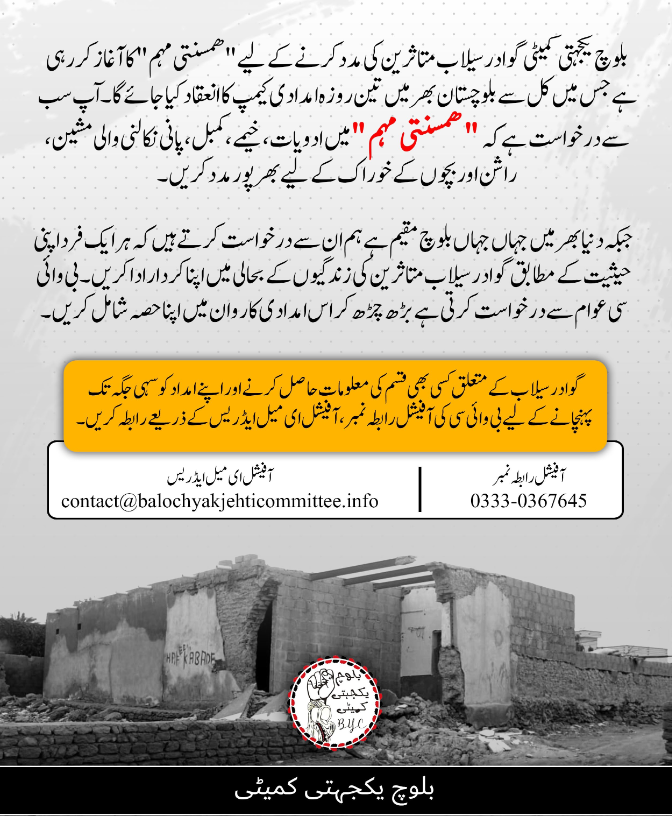
The Baloch Yakjehti Committee (BYC) has declared the launch of the “HumSafar Campaign” in response to the devastating floods in Gwadar, to give vital relief to those affected by the disaster. A three-day relief camp will be established throughout Pak-occupied Balochistan as part of the initiative, and it will start on 7 March 2024.

The campaign is urging people and institutions to generously offer their support. They have urged people to donate food, water filtration equipment, tents, blankets, medications, and supplies for the younger population to help the flood victims through this difficult time.

BYC team visits Jiwani

Recently on March 4, the BYC visited Jiwani (Gwadar) to assess the damage caused by the recent flooding in the region. The committee, while expressing solidarity with the impacted population, calls on Baloch communities around the world to actively participate in efforts to lessen the suffering of those affected by the Gwadar floods. It encourages people to make a contribution based on their ability to support the rehabilitation process.

Tensions among the impacted population have increased as a result of the brutal Pakistan Army and their Chinese ally’s projects blocking the natural water flow, which has caused the city to flood. The Pak establishment has long ignored and marginalized the Baloch community and neglected them in times of crisis. By prolonging a cycle of oppression and violence, the government’s actions have worsened the suffering of the Baloch people rather than assisting them when needed.

Pakistan abducts Pashtun activist and his brother; PTM warns of dire consequences

In a distressing turn of events, Hussain Afridi, a Pashtun activist and central member of the Khyber District Pashtun Tahafuz Movement (PTM), and his brother Siddique Afridi, were abducted by unknown gunmen at 2 p.m. on March 5.

The abduction took a sinister turn when a ransom demand of 2 crore rupees was conveyed through WhatsApp. PTM, in a swift response, has accused the Pakistani establishment of orchestrating the abduction, adding fuel to the existing tensions between the movement and the establishment.

The Khyber unit of PTM has issued a stern warning, stating that if Hussain and Siddique are not released promptly, they will initiate a protest strike. The unit plans to block all roads in Khyber as part of the demonstration, with the full endorsement of the affected family.

Enforced disappearances have long been a contentious issue in Pakistan as Pakistan Army employs this tactic to stifle dissenting voices and curb activism. PTM, a movement advocating for the rights of the Pashtun community, has consistently been at odds with the Pakistani establishment over issues ranging from inhumane leadership to terror patronization and severe persecution in the region.

The abduction of Pashtun activist Hussain and his brother Siddique Afridi adds another layer to the struggle between PTM and the establishment. Calls for the immediate release of the abducted brothers have escalated, and concerns over the safety of activists in the region are growing. The situation remains tense as the PTM Khyber unit contemplates further actions to press for the release of its members.

Breakdown in talks on Statehood & Sixth Schedule prompts ‘Ladakh Bandh’

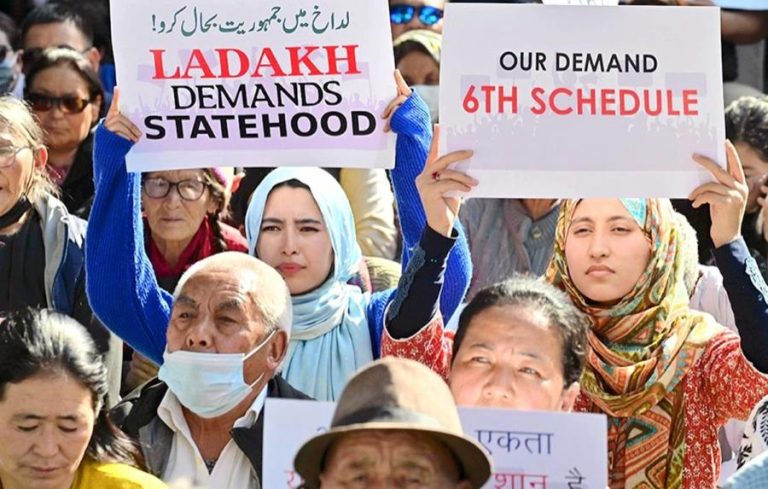
In a significant development, religious bodies in Leh have called for a Ladakh bandh in response to the breakdown of talks between the Ladakh Apex Body (LAB) and the Kargil Democratic Alliance (KDA) with the Union Ministry of Home Affairs (MHA). The deadlock emerged as LAB and KDA insisted on the full implementation of the Sixth Schedule and demanded statehood during recent Sub-Committee meetings and discussions with Home Minister Amit Shah.

The Union Ministry of Home Affairs had initially conceded to Ladakh’s demand for a Public Services Commission (PSC) and partial implementation of the Sixth Schedule through elected Hill Development Councils. However, the impasse arose as LAB and KDA insisted on direct implementation of the Sixth Schedule and statehood.

Speaking to the media, Chering Dorjey Lakruk, co-chairman of Leh Apex Body, stated that progress had been made on setting up the PSC for Ladakh, although the Ministry wanted to implement some parts of the Sixth Schedule indirectly. The deadlock primarily revolved around the demands for statehood and the full implementation of the Sixth Schedule, leading to the calls of Ladakh bandh.

MHA urges dialogue amidst call for Ladakh bandh

Despite the breakdown in talks, the Home Ministry urged continuous dialogue to provide necessary constitutional safeguards to the Union Territory of Ladakh.

Educationist and social reformer Sonam Wangchuk has announced his intention to go on a fast in protest against the failure of the talks. Additionally, a rally has been planned in Leh to express dissent.

LAB and KDA leaders, who are expected to return to Ladakh shortly, have pledged to engage with the local populace to discuss the future course of action following the unsuccessful negotiations.

Over the past two years, LAB and KDA leaders have held several rounds of meetings with the Union Home Ministry, focusing on a four-point agenda that includes statehood, Sixth Schedule implementation, the establishment of a Public Services Commission, and the allocation of two Parliamentary seats for Ladakh.

Baloch Yakjehti Committee assesses devastation in Gwadar exposing false claims by Pakistan

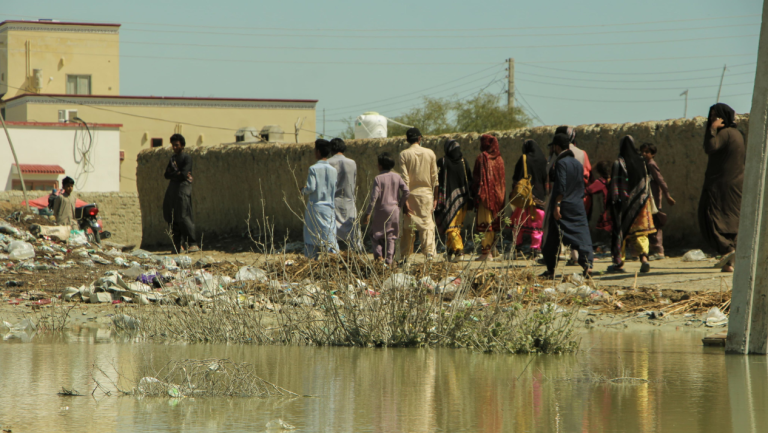
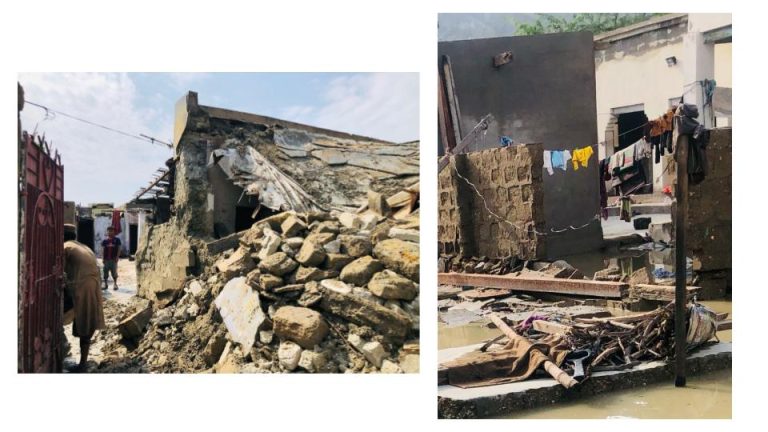
Yesterday on March 4, a team from the Baloch Yakjehti Committee (BYC) left for Jiwani (Gwadar) and the surrounding areas to evaluate the damage caused by the recent flooding in the region . Reportedly, the area has been severely damaged, leaving livelihoods, roads, and bridges in ruins.

Various localities, including Palleri, have experienced a total disruption in transportation as a result of widespread infrastructure damage. The local’s homes are in ruins and are facing a lot of challenges in getting basic necessities.
The well-known BYC leader, Dr Mahrang Baloch, called a sizable assembly in Jiwani to discuss the grave circumstances during the visit. In the absence of significant support from any authorities during difficult times, she underlined the necessity of unity among Baloch communities and the need for mutual support. She highlighted that Pakistan’s claims of developing Gwadar into a city akin to Singapore & Dubai are baseless. Infrastructural policies aimed at supporting this megaproject have resulted in floods and extensive destruction. 2: The native population of Gwadar has not experienced any tangible benefits or amenities from the megaproject. Instead, it has adversely affected their primary livelihood of fishing, leading to its destruction. These findings underscores the urgent need for academic research to accurately depict the situation in Gwadar and expose the false claims made by Pakistan.

There was a noticeable sense of destitution among the populace, with homes in Palleri, Shay Mussa, and Rahim Baksh Bazar suffering the most. Particularly affected are fishermen, who lose their boats and means of subsistence as their main source of income vanishes.
The BYC’s visit highlighted tales of exploitation and helplessness in the face of hardship, shedding light on the harsh realities that the local populace must contend with. As the neighbourhood struggles with the fallout, cooperation and teamwork become essential components in reconstructing and reinstating hope amid the debris.

The Baloch community has long been marginalized and neglected by the Pak establishment, they often fail to assist in times of crisis. Instead of offering support, the government’s actions have exacerbated the suffering of the Baloch people, perpetuating a cycle of violence and oppression.

Super Tuesday: A big day in U.S. election process

Super Tuesday marks a significant milestone in the U.S. presidential nomination process, representing a key moment in the electoral journey. Occurring on the first Tuesday of March, this year falling on March 5, it stands out as a pivotal day when voters from multiple states participate in primaries scheduled simultaneously.

Super Tuesday is crucial in the U.S. presidential primary election process, where several states hold their primary elections or caucuses on the same day. This consolidated voting day allows a diverse range of states, often representing various regions and demographics, to influence the selection of candidates.

Why Super Tuesday Matters

Roughly one-third of all delegates to the presidential nominating conventions can be won on Super Tuesday. This helps candidates secure a substantial portion of the total delegates needed to win their party’s nomination. For the Republicans, about 36% of delegates will be chosen through these primaries and caucuses.

On March 5, a total of 15 contests are scheduled for Republicans and 16 for Democrats across the country. The states and territories include Alabama, Alaska, Arkansas, California, Colorado, Maine, Massachusetts, Minnesota, North Carolina, Oklahoma, Tennessee, Texas, Utah, Vermont, Virginia, and American Samoa.

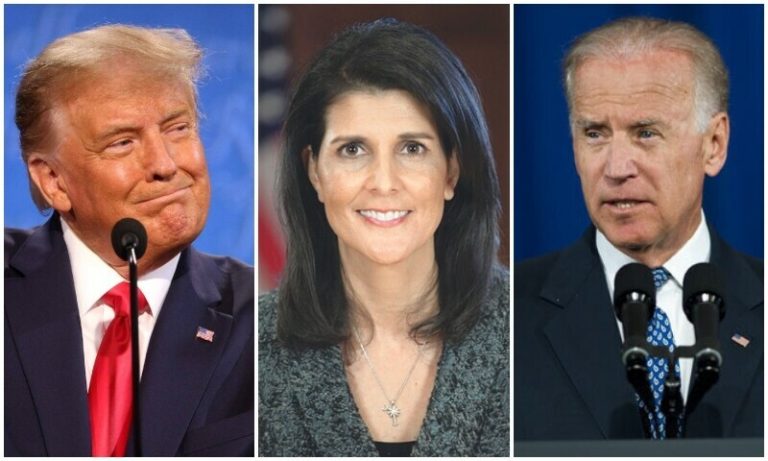
As of the lead-up to the scheduled Super Tuesday in 2024, both Biden and Trump have emerged as frontrunners within their respective parties. Despite consecutive defeats, Nikki Haley has chosen to continue her presidential race. Trump has secured 244 Republican delegates, while Biden leads the Democrats with 206 delegates.

In the 2020 primaries, Donald Trump secured victories in seven out of 11 contests on Super Tuesday, losing only Texas. For the Democrats, Joe Biden won 10 states, while Bernie Sanders won four, with delegate counts of 726 and 505, respectively.

Millions of eligible Americans are set to cast their ballots in primaries and caucuses on Super Tuesday, covering a vast geographical span from Maine to California and even the remote Pacific territory of American Samoa. The Republican side offers 874 delegates, presenting a significant opportunity for Trump to solidify his lead.

Nikki Haley’s Last Bid Against Trump

Super Tuesday holds crucial significance for Nikki Haley as she seeks to challenge Trump’s dominance within the party. Despite previous losses, Haley aims to disrupt Trump’s path to becoming the party’s flag bearer once again.

Joe Biden faces dissent within the Democratic party, with over 50% of Democrats expressing a desire for him to be replaced by Michelle Obama. Despite winning in Michigan, significant discontent was evident, with more than 100,000 Democratic primary voters choosing “uncommitted” over Biden. Super Tuesday is poised to be a decisive day, impacting the trajectory of both party nominations as candidates strive to secure their positions in the U.S. presidential race.

Protest in Germany against Pakistan Army’s atrocities in Pak-occupied Balochistan

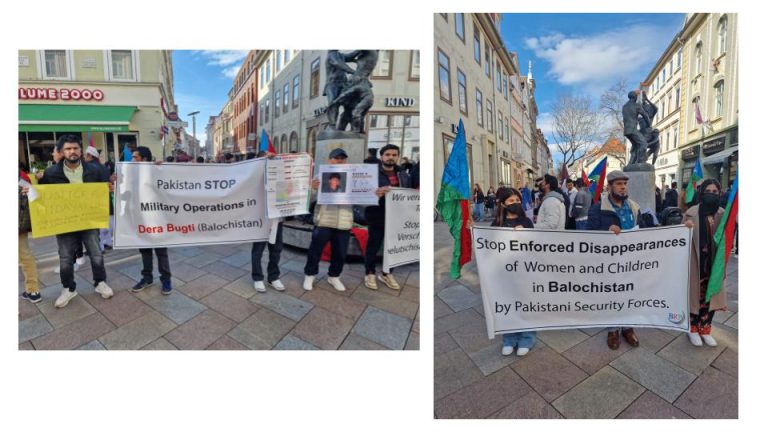
In a recent development, the Baloch Republican Party has reported a protest demonstration in the city of Gottingen, Germany, against the ongoing military operations by the Pak Army in Pak-occupied Balochistan. The demonstration aimed to draw attention to forced disappearances and fake encounters that have led to the tragic deaths of young individuals in the resource-rich troubled region.

Protesters voiced their concerns over the continuous rise in military aggression by the Pakistan Army in Pak-occupied- Balochistan. According to their accounts, a recent military operation in Bolan specifically targeted a significant number of people, subjecting them to forced disappearances. Disturbingly, reports emerged of local homes being set ablaze and their livestock being looted during these operations.

The activists further emphasized that thousands of cases of forced disappearances persist across Pak-occupied Balochistan, with Dera Bugti as one of the affected areas. In response to these atrocities, the Baloch Republican Party appealed to international human rights organizations and the global community, urging them to take a stance against Army-sponsored terrorism.

Baloch activists, through their rallies and campaigns on foreign soil, are working to bring attention to the challenges and dreams of the Baloch people, both within and outside Pakistan.

These activists are actively participating in a petition, urging international authorities to address the ongoing hardships faced by their community. They are specifically calling on the United Nations and human rights organizations to intervene and hold those responsible for the crimes in Balochistan accountable. To ensure a thorough investigation, the activists are advocating for a fact-finding mission led by the United Nations Working Group.

Balochistan, known as one of Pakistan’s most underdeveloped regions, has faced numerous atrocities committed by the Army and its intelligence agency, Inter-Services Intelligence (ISI). These actions include abductions, killings, and torture, creating an atmosphere of fear among the Baloch people. Injustice and alienation have driven Baloch individuals to voice their concerns on the international platform against the oppression they face.

Pak PM calls for Kashmir resolution; POJK residents condemn occupation

The rigged election and delayed elections in Pakistan has ultimately yielded a coalition government under Shahbaz Sharif. Clearly, the newly formed government with Shahbaz Sharif as Pak PM is against the will of the people and has been imposed on them by the autocratic Pakistan Army.

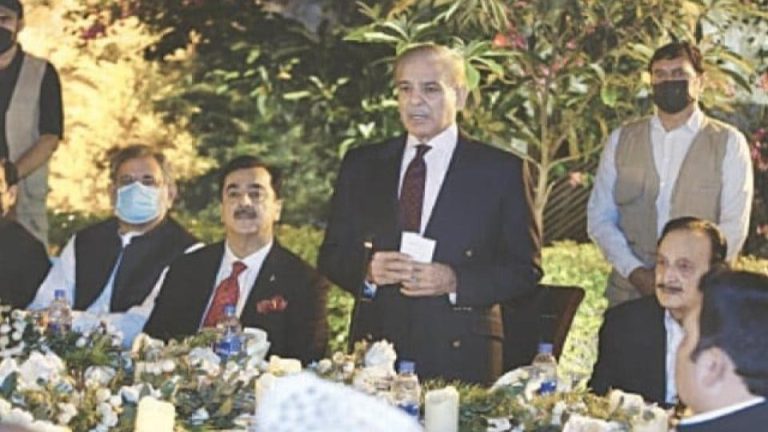
Nevertheless, after weeks of uncertainty Shahbaz Sharif took oath and made his first speech. Like every erstwhile Prime Minister, he towed the line pitched by the Pakistan Army and seemed pleasing his masters in uniform.

In his remarks he made a mention of Kashmir and asked his fellow parliamentarians to pass a resolution for the freedom of Kashmir along with Palestine. He said, “Let’s all come together…and the National Assembly should pass a resolution for the freedom of Kashmiris and Palestinians.”

In the later part of speech, he claimed that the expenditure of the same National Assembly is being met by the borrowed money. Interestingly, his latter statement shows lack of any desire for his former statement and that Kashmir’s mention in the address is just a political gimmick as, keeping aside Kashmir for some time, his country struggles even to address the most basic problem of scarcity of food.

His statement also shows that he lacks the most basic political acumen as he is talking to free an already free Jammu and Kashmir while the portion under his illegal control has been destroyed by his predecessors in past 75 years. Currently J&K and POJK have unimaginable differences when it comes to development, growth and upcoming future.

POJK: Conditions worse than a failed state

The statement on Kashmir by Pak PM does not resonate with the ground reality. While he is invoking Kashmir as something important for Pakistan, the inhabitants of POJK, are actually, themselves fed up with him and his illegitimate control. Under 75 years of colonial exploitation, POJK has become worse than any failed state.

With due consideration, it has been more than six months since people of POJK are protesting across the region, which Pakistan, obviously, is trying to hide from the world. Their demands centred around the right of wheat flour, electricity among others.

These protests are the result of resentment of the people as Pakistan exploits POJK resources to produce electricity and then sells it back to them on higher prices. So now angered people in POJK have boycotted paying electricity bills for months now. Their Charter of Demands has gone unnoticed and most expansive and unprecedented protests have ensued since then, involving women, children, men and elderly.

Despite knowing this, Pak PM has the audacity to call for Jammu and Kashmir’s freedom which has far better facilities for its population. Road and rail connectivity, world class infrastructure, robust economic push, thriving tourism and diverse start-ups are some of the important developmental aspects of Jammu and Kashmir today. Interestingly, J&K and POJK have same cliffs, riverine system with flowing estuaries, same geographical conditions, same environment, similar resources, still just because of an unjust border line the conditions are drastically different.

J&K: Integral part for India, means of exploitation for Pak

The difference is just because of the fact that India considers Jammu and Kashmir as its integral part and Pakistan considers POJK as an additional territory which is only to be exploited for its own means. While Pak PM’s statement is audacious, and senseless, it is also hilarious because to put forward any claim the most important thing that a politician must consider is the feasibility and moral obligation of his claim. While there is no feasibility of his statement, his moral obligation can only be to set free POJK from Pak’s illegal occupation so that it can have a bright future with India.

It becomes evident from the fact that just a couple of days ago, people in Pak occupied J&K’s Poonch were protesting calling out Pakistan to make it clear that whether they could fulfil their demands or not, failing which they warned to move to the markets of other side Poonch (J&K, India).

So, Pak PM has made non-sensical call on Kashmir when people of POJK are searching for every type of possibilities to get their rights back which includes indulging with the mainland J&K.

Therefore, Pakistan’s newly chosen PM, who is going to serve for his second term has shown with his statement that he has no idea of what is happening in Kashmir and has no vision for the development of POJK. He is only making political comments on Kashmir to please his masters and appease the people of Pakistan- who are habitual of getting pleased by delusional dreams- to legitimse his government which is formed out of rigged election with no popular support.

Gwadar residents protest Chief Minister’s visit over inadequate flood crisis response

Recently, during Chief Minister Jam Kamal Khan’s visit to Gwadar residents strongly protested, bringing the convoy to a standstill. The incident occurred when locals from TTSC Colony blocked Airport Road at Tahiri Plaza, citing the inadequate response to the flooding crisis in Gwadar in Pak-occupied Balochistan.

For the past six days, residents have been suffering as their homes have been submerged in 5 to 6 feet of water due to flood in the region, with no assistance from the district administration and provincial authority. The torrential rains have not only left large areas inaccessible but have also resulted in a shortage of essential supplies, exacerbating the challenges faced by the people of Gwadar.

Protesters urged immediate and robust relief efforts in the rain-affected regions, emphasizing the need for prompt rescue operations. The situation in Gwadar mirrors the plight of other areas in Pak-occupied Balochistan, where floodwaters have breached residential areas, causing significant damage and hampering the delivery of aid.

Gwadar’s Paradox

Notably, the ongoing heavy rains have not spared Gwadar, prompting residents and organizations to hold the Pakistan and Chinese projects accountable. The projects of the brutal Pak Army and their Chinese ally have obstructed the natural flow of water, leading to the inundation of the city, and heightening tensions among the affected population.

The much-hyped infrastructure projects that the Chinese promised the Army at the cost of the Baloch community have fallen short; locals grapple with basics like clean water and electricity. And the recent rains have further exposed the city’s vulnerability. The promised benefits of development seem elusive for those it aimed to uplift.

This prompts us to ask who truly benefits from Gwadar’s development. While the Army and Chinese revel in newfound prosperity, the true owners of the land struggle to meet basic needs.