Home Blog Page 131

Radical Islamists vandalise another Ahmadiyya mosque in Pakistan

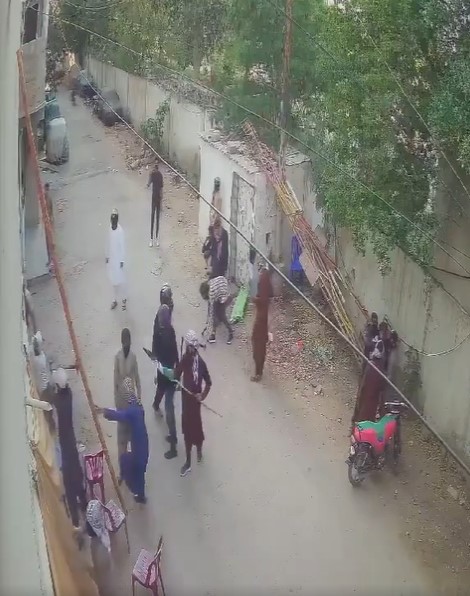
In a deeply unsettling incident, unknown assailants targeted an Ahmadiyya mosque in the Dastgir area of Karachi. The attackers reportedly chanted slogans against the Ahmadiyya community during the assault, heightening concerns about the safety and security of this religious minority in Pakistan.

The Ahmadiyyas, who played a pivotal role in the propagation of the idea of an Islamic nation named Pakistan during the partition, now find themselves marginalized in the same country they helped shape. Despite their historical contributions, the Ahmadiyya community faces widespread discrimination, with many muslims in Pakistan not recognizing them as fellow Muslims. This exclusion is further exacerbated by the existence of legislation that explicitly declares them non-Muslims.

Why Ahmadiyyas are not considered Muslims in Pakistan?

Notably, the Ahmadiyya muslim community is a sect within Islam founded by Mirza Ghulam Ahmad in the late 19th century. While it keeps faith in almost all Islamic tenets, few contradictions have become reason for their eviction from mainstream Islam.

As per Islam, Prophet Muhammad is the last prophet with Quran being the last religiously text. However, Ahmadiyyas believe Muhammad of being prophet but not the last. According to them, Mirza Ghulam Ahmad was the last prophet, often referred to by the followers as promises Mahdi or Messiah awaited by Muslims.

Apparently, every religion has followers with diverse beliefs and faiths, but the escalation of animosity is a threat to the peace and tranquility in the society.

In 1974, the Pakistani establishment officially declared Ahmadiyyas as non-Muslims, setting the stage for more restrictive measures a decade later. In 1984, a law was passed in Pakistan’s parliament that not only designated Ahmadiyyas as non-Muslims but also prohibited them from identifying themselves as Muslims. The legislation went so far as to deny them the right to construct mosques with minarets, elements considered essential to Islamic architecture.

As a result of these discriminatory measures, number of Ahmadiyya mosques have frequently become targets of attacks. The latest incident, captured on CCTV cameras, has sent shockwaves through the community, raising concerns about their very existence in Pakistan.

The violence on the worship place, leaving the Ahmadiyya community members in a state of fear and vulnerability. The assault is seen as not just an isolated incident but part of a broader pattern of persecution faced by the Ahmadiyya community in Pakistan.

Israeli troops open fire and kill over hundred starving Palestinians in Gaza

Early on Thursday morning, the Israeli troops opened fire in Gaza City on a desperate crowd that gathered around aid trucks and killed over a hundred Palestinians. This incident has left the world in shock as the plight of innocent Gaza citizens has deepened. This incident has widened the ongoing crisis as the US president, Joe Biden, warned it would complicate ceasefire talks. However, there were different accounts of how the victims died in the chaos that took place near Gaza City in the north of the strip.

The Israeli military said that the majority of the victims were either run over by trucks or died in a crash while attempting to flee, however, they denied firing into a large crowd of war-torn innocent starving people.

According to a spokesman, soldiers ‘only’ opened fire on a small group that moved away from the trucks and approached a checkpoint. Israel said some Palestinians began heading towards Israeli forces in a way that “endangered” them.

According to witnesses and survivors, starving crowds surrounding the relief trucks were hit by bullets. Mohammed Salha, the acting director of the al-Awda hospital, which treated 161 patients, said that the majority of them seemed to have been shot. Another witness told a news channel that lorries had run over the majority of the dead.

Furthermore, Gaza health officials said Israeli forces opened fire on an aid distribution point, resulting in at least 112 deaths and 280 injuries. One of the victims Ali Awad Ashqir said that after he went to get some food for his starving family, he had to wait two hours for the trucks to come.

“The occupation army opened fire with artillery shells and guns as soon as they arrived,” he claimed.

The incident led to an emergency session by the UN Security Council, where the White House demanded that the deaths be “thoroughly investigated”. However, Riyad Mansour, Palestine’s ambassador to the UN, rightfully said that Palestinians are paying the price of paralysis at the UNSC.

Humanitarian Crisis in Gaza

As a result of this attack, more than 30,000 people have died. Almost one in twenty of Gaza’s pre-war population is now a victim of attacks, with over 70,000 more people injured and thousands more unaccounted-for victims buried beneath the debris of crumbling buildings.
More than 25,000 women and children have been killed by Israel since October 7, 2023.

The survivors are plagued by widespread malnutrition, which has already claimed the lives of some children, and “pockets of starvation,” which are reportedly most common in the north. There is also a severe shortages of clean water, shelter, and medical supplies.

Poor Gazans are dying in desperation while attempting to reach food aid. This highlights the severity of shortages in the northern region surrounding Gaza City. UN observers have said that there is a blockade inside a blockade, with extra Israeli restrictions, this makes the supplies entering northern Gaza even more difficult than entering the southern region.

Kamel Abu Nahel, an injured survivor, said that after two months of consuming animal feed, he went to the aid distribution point in the middle of the night in the hopes of finding food supplies.

However, after trucks arrived and a crowd gathered, Israeli soldiers opened fire. People dispersed to save their lives, but they returned as soon as the gunfire subsided. However, the soldiers started shooting again, and Abu Nahel got hit in the leg by one of the bullets before being hit by a speeding truck.

Hoping for Peace

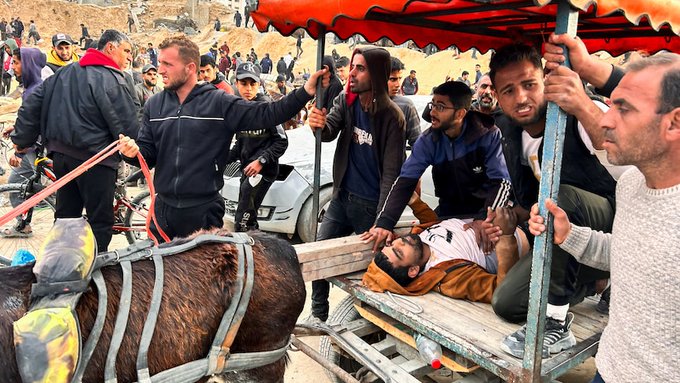
Videos circulated on social media seemed to show medical personnel walking next to a cart filled with injured people; some injured people had to be transported to hospitals on donkey carts. The hospital corridors were packed with family members and survivors.
The majority of the casualties were the result of a crush that occurred around a few trucks in the convoy after it had initially passed the Israeli military checkpoint into northern Gaza.

Subsequently, he claimed, the mobs pursuing the last truck in the convoy turned and headed back in the direction of the checkpoint, causing the soldiers to open fire in self-defence, followed by warning shots. It is not clear who had provided the food trucks.
About 300,000 people are estimated to be living in northern Gaza even after Israel ordered all civilians to evacuate several months ago. Some were unable to travel, others felt that they would rather take their chances at home, and still others feared they would not find a place to stay in the south’s packed shelters.

The life of ordinary Gazans is becoming miserable day by day, with no support and refuge from the outside.,they are trapped and in control under Israel who is raining hell. The pain of starving Gazans who were shot at and killed indiscriminately is immense. They are left at the mercy of their perpetrators, only time will tell if any Gazan will survive to see peace.

Pakistani vlogger Asad Toor on hunger strike since his arrest as vendetta by Pak establishment

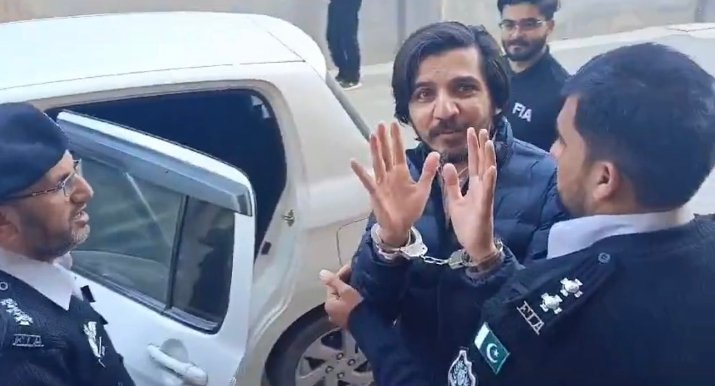
Pakistani vlogger Asad Ali Toor, currently in the custody of the Federal Investigation Agency (FIA) in connection with an inquiry into an alleged anti-judiciary campaign, has been on a hunger strike for the past 36 hours, according to his lawyer Hadi Ali Chattha. Toor was arrested on unspecified charges related to an online campaign against the judiciary.

Toor’s counsel, Hadi Ali Chattha, updated the media on Thursday about his client’s deteriorating health and revealed that Toor has not consumed any food in the last 36 hours. Toor’s mother was allowed to visit him on court orders at the FIA office, where he is being held.

“The FIA also called rescue personnel after Toor fell sick last night,” said Chattha.

Hadi Ali Chattha stated that during Toor’s custody, the FIA did not interrogate him regarding the alleged anti-judiciary campaign. Instead, Toor is repeatedly being questioned about vlogs he created concerning various individuals, including generals and other members of the military establishment which hints towards his arrest as an action out of vandetta.

Iman Mazari, another lawyer representing Toor, emphasized that the investigation so far does not pertain to contempt of judges. According to Mazari, Toor is under pressure to disclose his journalistic sources and social media credentials, but he is refusing to divulge this information.

Asad Toor in 5 day physical remand

Notably, Judicial Magistrate Islamabad Muhammad Shabbir, on February 27, granted a five-day physical remand for Toor and directed the FIA to produce him again on March 3, 2024. During the hearing, Toor, identifying himself as a journalist, declined to surrender his mobile phone. He asserted that he had received the notice on February 24 and had appeared before the FIA twice.

Toor stated that they had filed a petition with the high court against the call-up notice. On February 26, he and his legal team visited the FIA office with the high court’s order to inquire about the FIR and the allegations against him.

The FIR against Toor alleges that he conducted a malicious campaign against the judiciary on social media platforms and YouTube, fueling anti-state activities. He has been booked under the Prevention of Electronic Crimes Act 2016.

Apparently, Toor’s case is emblematic of broader concerns regarding the treatment of media personnel and activists who voice dissent against the Pakistani establishment. Many have been subjected to mistreatment and implicated in what appear to be false cases. As the case unfolds, questions about freedom of expression and press freedom in the country continue to be raised.

Paki establishment mum while Gwadar grapples with devastation caused by heavy rains

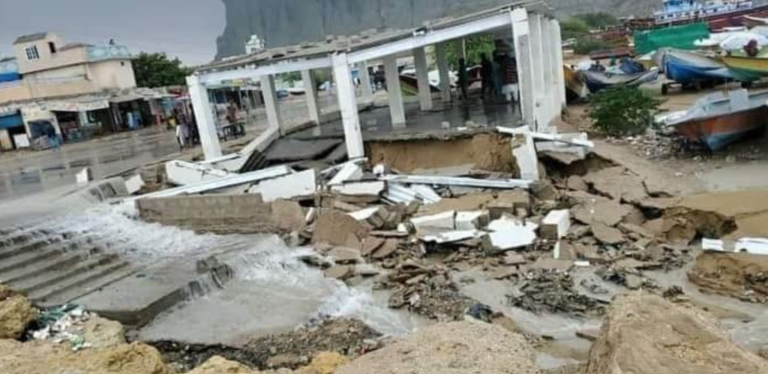
Recently, severe rains have ravaged the Gwadar district of Pak-occupied Balochistan, this has left many families displaced and their livelihoods shattered. The Pak establishment’s apathy and incompetence have worsened the plight of the locals in the disaster. People are calling for immediate action to mitigate further destruction.

The incompetency of the Pak establishment in addressing the crisis remains a striking issue. The lack of foresight and proactive measures only highlights the systematic failure on their part and intense suffering of affected communities, leaving the vulnerable Baloch community abandoned in a time of need.

J&K: Doda degree college students reject religious polarisation attempt

Just the other day, a young Pakistani girl in the city of Lahore went to an eatery wearing a modest dress embellished with the Arabic word ‘halwa’ all over in elegant calligraphy. As this word is used to denote something that’s sweet/beautiful, she wouldn’t have ever dreamt that her attire could possibly offend the religious sensitivities of anyone.

However, she ended up being surrounded by a menacing mob of men who, mistaking the Arabic word printed on her dress for verses from the Holy Quran, accused her of blasphemy and started baying for her blood.

Luckily, timely action by the local police prevented this incident from turning ugly and this saved the poor girl’s life. In videos of this incident, a mortified girl can be seen cowering as a huge mob of incensed people subject her to a verbal tirade.

The disturbing fact is that the large crowd of men offended by the Arabic calligraphy on the girl’s dress who were ready to take law into their own hands were so ignorant that they couldn’t even differentiate between Quranic Ayats [verses] and a completely unrelated single word in Arabic!

Though the poor girl who was targeted by the overzealous mob luckily emerged physically unscathed, her being made to record a public apology must have definitely left scars on her psyche and this sorry state of affairs proves that ultimately it were her hecklers who won!

However, such incidents of religious overreach aren’t limited to Pakistan alone. The advent of Pakistan sponsored terrorism in J&K during the late 80s saw a concerted effort by terrorists and the pro-Pakistan lobby to destroy the pluralistic Kashmiri culture by imposing fundamentalist ideology on the people. Cinema halls were bombed and self proclaimed ‘mujahids’ [Holy warriors] threw acid at the faces of women not wearing veil.

In his well researched book The Shadow War: The Untold Story of Jihad in Kashmir, Arif Jamal has quoted senior Hizbul Mujahideen [HM] commander Ghulam Rasool Dar while speaking about these acid attacks proudly mentioning that “We will make their faces so ugly that they will wear the veil even when they sleep.” [Emphasis added]. In 2001, Lashkar-i-Jabbar terrorist group which had very close links with senior Hurriyat leader Syed Ali Shah Geelani took responsibility for an attack on two women not wearing veils and warned that it had started a campaign to prevent “immodest dress among Kashmiri women.”

Instead of condemning these outrageous attacks, Asiya Andrabi, founder of Dukhtaran-i-Millat [Daughters of the Nation], an ultra-conservative Islamic group praised the assailants by saying, “We are indebted to these courageous men who have started a campaign for the veil in Kashmir.” While acid attacks did terrorise Kashmiri women, this highhanded and brutal approach to impose the veil on them caused such widespread resentment that it forced terrorists to discontinue such attacks. However, attempts to infuse fundamentalist ideology into Kashmiri society didn’t cease completely.

A decade ago, Kashmir Valley was once again shamed when an all girls’ three member band named Pragaash [Kashmiri word for ‘first light’ was forced to call it quits after their very first performance due to pressure from separatists and some religious preachers.

Hurriyat [G] chairman Syed Ali Geelani’s spokesperson Ayaz Akbar outrightly lambasted this band saying, “there are some values a citizen has to adopt to safeguard the ethical, moral and religious traditions. Though completely misplaced, such grave accusations of being responsible for moral and religious degeneration must have definitely terrorised the teenage girls of the band.

Kashmir’s Grand Mufti Bashiruddin Ahmad went a step further by terming music as un-Islamic and issuing a fatwa [religious decree] against the all girls’ band said, “Such trivial acts (singing and playing instruments) never develop society but are a first step to demolish its moral fabric. I am happy that the new generation has attained a pro-development and pro-religion stance but there are some girls treading on the path of destruction.”  [Emphasis added].

And herein lies the paradox!

Singing and music has been part and parcel of Kashmiri culture from time immemorial and many Kashmir women singers of yester years like Raj Begum, Naseem Akhter and Zoon Begum have done the community proud. So, by targeting Pragaash band, the separatists and some members of the clergy exposed their motivated agendas and abominable design of destroying Kashmir’s age-old pluralistic culture by unfairly drawing arts into the political and religious arena.

Thanks to the resilience exhibited by locals, attempts to polarise Kashmir Valley through radical ideology haven’t succeeded. While the situation in the Kashmir Valley has since improved a lot, unfortunately one still witness’s sporadic cases of motivated acts aimed at polarising society by arousing communal passion.

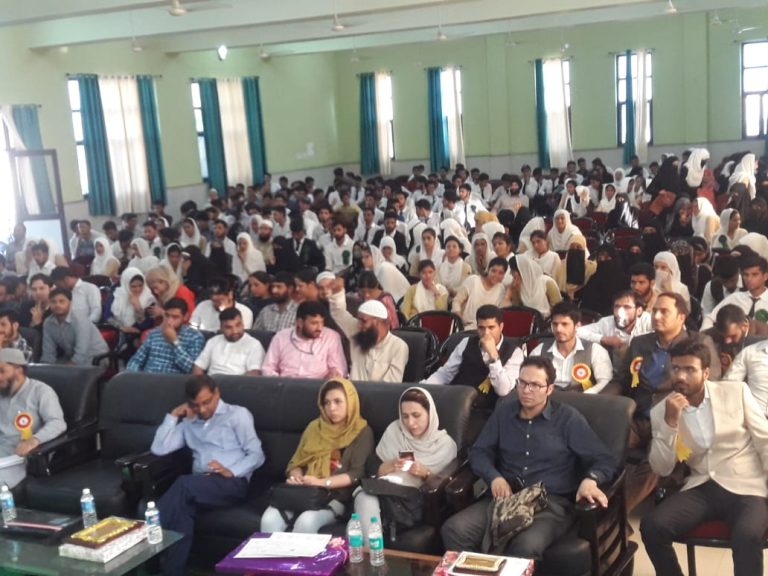
One such unfortunate incident occurred last Monday in Government Degree College in Doda district of J&K during a lecture on ‘motivation and women empowerment’ by local speakers organised by the Indian army. When one of the motivational speakers requested four boys and four girl volunteers to come on the stage for an interactive session, no burqa clad girl came forward.

To encourage girls wearing burqas to join-in, the speaker jokingly queried whether their hesitation was due to lack of confidence. His off-the-cuff remark made in the lighter vein succeeded in getting burqa clad girls to come on the stage amidst loud clapping from the audience. Moments later, a person running an obscure NGO who was present in the audience interrupted the interaction session and in a brazen attempt to give the proceedings an anti-Islam spin, by accusing the speaker of “targeting the burqa.”

However, to the interrupter’s chagrin, his plan to disrupt the programme by instigating a backlash from the audience failed miserably. As he was twisting facts and pretending to be fighting for those wearing burqas, a female in the audience shouted, “Sir, we can speak for ourselves. You don’t have to speak on our behalf.” [Emphasis added]. To add to the agent provocateur’s woes, the speaker asked the audience if they agreed with the allegation on the burqa issue being leveled by this person, the reply that came in unison was a big ‘No’, and this royal rebuff forced the embarrassed trouble maker to quietly leave the venue.

It’s unfortunate that some people with vested interests continue to incite fissiparous tendencies in Kashmir by poisoning young and impressionable minds to further their motivated agendas. We must guard against radicalisation so that Kashmir doesn’t go the Pakistan way where accusing innocent people like the girl in a dress with an innocuous Arabic inscription in Lahore for blasphemy without even caring to investigate is commonplace, thanks to self-serving politicians, religious leaders and the Pakistan Army under Gen Zia ul Haq who mainstreamed fundamentalism for their respective gains.   

The heartening part is that the youth in Kashmir is today more discerning and hence less likely to get emotionally blackmailed and fall prey to fundamentalism. And the exceptionally mature response of Doda’s young audience to the burqa ‘red herring’ thrown-in by a spoiler with dubious antecedents is rightfully worthy of a big salute!

Pakistan’s Parliament inaugurates first session amidst controversy

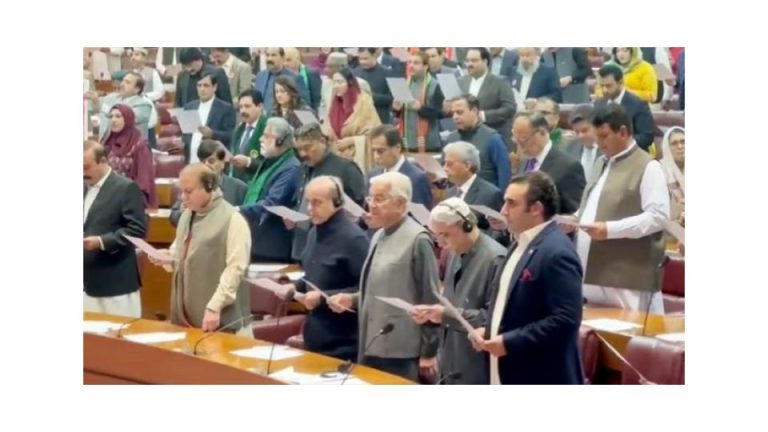
The newly-formed Pakistan’s Parliament embarked on its inaugural session on Thursday. President Dr Arif Alvi reluctantly summoned the assembly after a dispute with the caretaker government concerning the allotment of reserved seats for candidates backed by former Prime Minister Imran Khan’s party.

Heading the opening session, outgoing Speaker Raja Pervaiz Ashraf commenced proceedings after a delay of over an hour. President Alvi, following some reservations, approved the summoning of the National Assembly on February 29, exercising powers under Article 54(1) of the Constitution.

The President’s statement highlighted his expectation for the resolution of the reserved seats issue within the stipulated 21 days after the general elections, as mandated by Article 91(2). The late-night statement also criticized the tone of the summary sent by caretaker Prime Minister Anwaar-ul-Haq Kakar.

According to constitutional provisions, the National Assembly must convene within 21 days of the elections, with February 29 being the mandated date under Article 91. The first session began amid allegations of vote rigging.

In the opening session, Speaker Ashraf administered the oath to new members, adjourning the session for the next Assembly to elect the new speaker and deputy speaker. The election for the prime minister’s post is anticipated on Saturday, with former Premier Shehbaz Sharif poised to be elected as the new leader of the House.

Reserved Seats Issue

The controversy arose when independent candidates, previously affiliated with Imran Khan’s PTI, joined the Sunni Ittehad Council (SIC) to secure the party’s share of reserved seats. The PTI candidates, running as independents due to non-allotment of their electoral symbol, faced legal scrutiny over the allocation of reserved seats.

President Alvi’s earlier refusal to summon the session drew criticism from opposition parties, including the PML-N and PPP, who warned of potential legal consequences. The PTI, alleging massive election rigging, vowed to voice their concerns both inside and outside the Parliament.

Despite winning the majority of seats in the February 8 general election, PTI faces challenges from the PML-N and PPP’s power-sharing deal, potentially sidelining Imran Khan’s return to power. The unfolding political scenario promises an eventful maiden session of the National Assembly, with the PTI rejecting coalition attempts and warning of possible political instability.

J&K: Baramulla Police intensifies crackdown on notorious drug peddlers

In a significant breakthrough in the fight against drug trafficking, the Baramulla Police have intensified their crackdown across the district, leading to substantial seizures, arrests, and the attachment of properties owned by notorious drug peddlers.

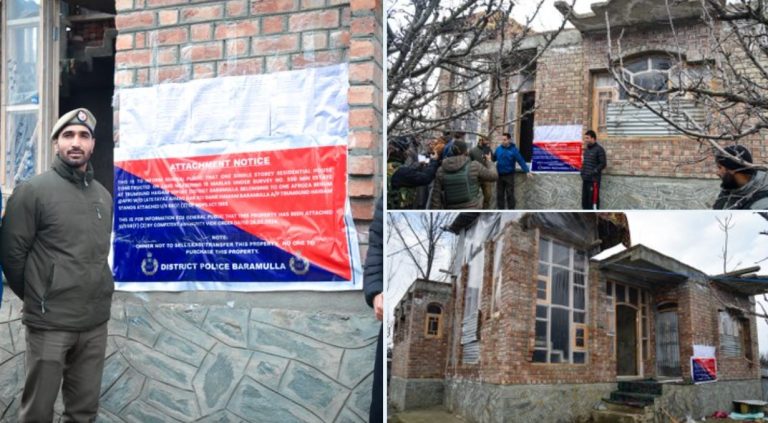
In the latest development today, Baramulla Police successfully attached a single-storied residential house valued at approximately Rs. 15.00 lakhs. The property belongs to Afroza Begum, alias Affri, wife of Fayaz Ahmad Dar, a notorious drug peddler currently residing in Ganie Hamam at Trumgund Hygam Sopore, District Baramulla. This action was taken under sections 68-E read with 68-F (1) of the NDPS Act of 1985.

This move follows the arrest of two drug peddlers in Tapper Bala Kreeri a day ago, during which 168 capsules of Spasmo Proxyvon Plus and 12 syrups of Codeine Phosphate psychotropic substances were seized, along with the impounding of a vehicle.

Earlier on February 28th, Baramulla Police apprehended two drug peddlers at Drangbal Crossing and Diver Pattan, Baramulla, recovering 230 grams of contraband Charas-like substances.

Similarly, the police also attached properties, including a single-storied residential house and a double-storied shopping complex on same day. These properties belonged to notorious drug peddlers Mohd Ayoob Shah and Ghulam Mohammad Shah Gulshah, both sons of Abdul Khaliq residing in Ladoora Rafiabad, District Baramulla.

More recent actions by Baramulla Police

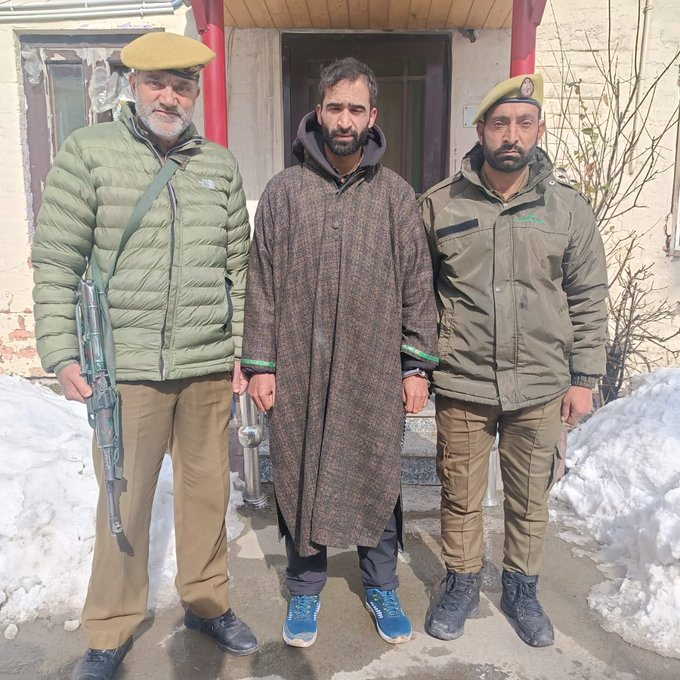
In a significant arrest on February 26th, Baramulla Police booked the notorious and wanted drug smuggler Irshad Ganie of Solinda Tangmarg under PIT NDPS Act, subsequently placing him in Central Jail Kotbilwal Jammu.

Pedller Irshad Ganie in Police custody (Photo: B’la Police)

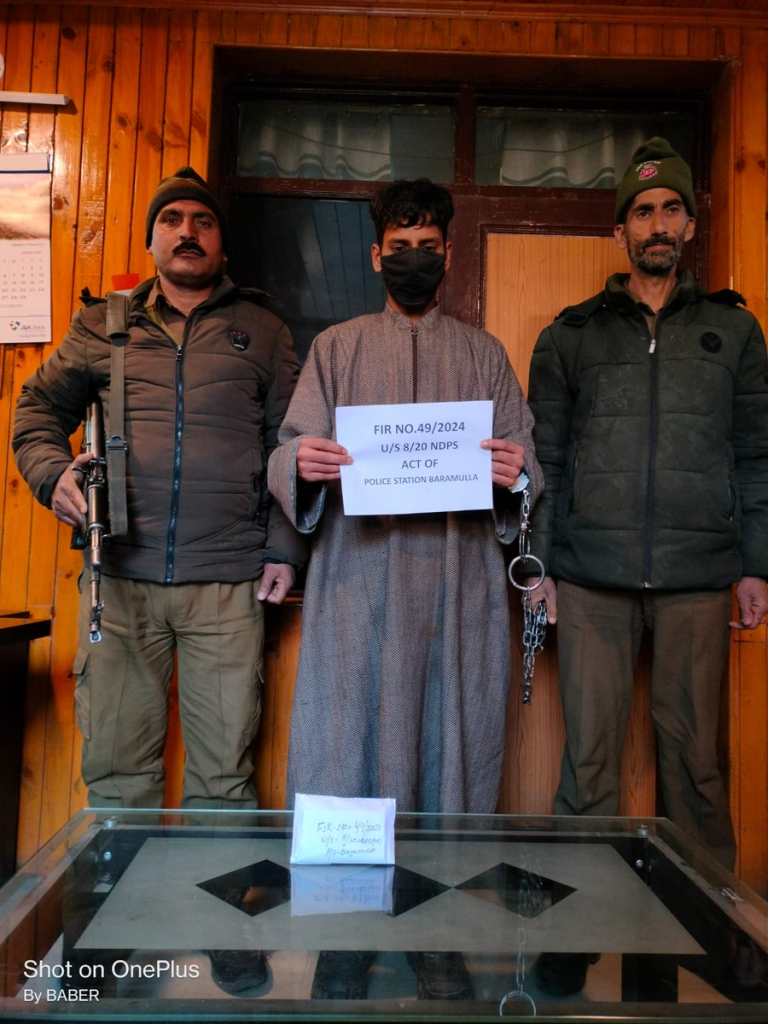
Further emphasizing their commitment to eradicating the drug menace, Baramulla Police arrested another drug peddler at Stadium Colony, Baramulla, on February 25th, recovering 250 grams of contraband Charas-like substances.

Drug peddler arrested at Stadium colony (Photo: B’la Police)

These recent actions not only demonstrate the relentless efforts of Baramulla Police in dismantling drug networks, ensuring public safety but also sends a strong message against illegal drug activities in the region. Additionally, police’s action is in line with the J&K Police and administration’s resolution to make Jammu and Kashmir free from drug menace.

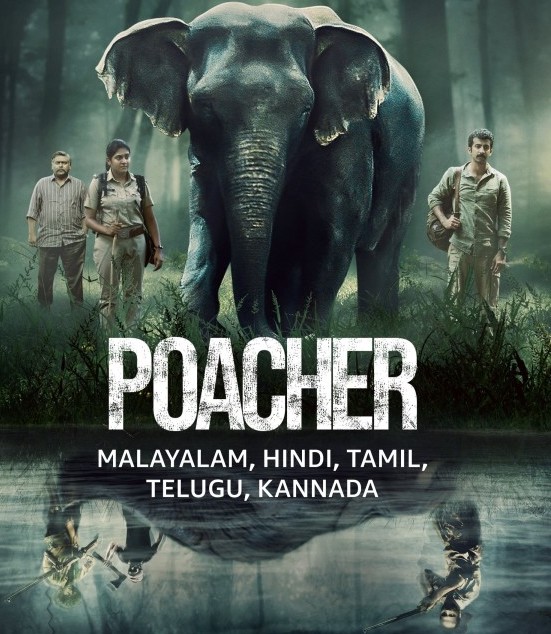
POACHER: A gripping crime thriller exploring intriguing repository on Human-Animal conflict

Released on 23rd February on Amazon Prime, ‘Poacher’ Season 1 presents a passionate exploration of wildlife conservation and protection. Inspired by true events, this meticulously researched crime thriller series has 8 episodes. It delves into the intricacies of criminal investigation, human-animal conflict, and the ivory trade.

It is created by Emmy Award-winning director Richie Mehta. The renowned filmmaker received accolades for his acclaimed project ‘Delhi Crime’ based on the harrowing 2012 Delhi gang rape case. ‘Poachers’ masterfully evokes human emotions with nature’s scenic beauty and wildlife. Further, Alia Bhatt serves as the executive producer of this series and had marketed the series with a compelling remark, Murder is Murder. The series aptly aligns with this motto, treating every life form on par with humans.

While ‘Poacher’ may not cater to mass audiences with its off-beat subject matter, Mehta’s direction ensures that it respects both the viewers’ time and the gravity of the subject matter it tackles. His skilful presentation brings forth a content-rich narrative that unfolds gradually, much like the tantalizing flavours of a slow-cooked dish.

The Storyline

The series is set in 2015 in Kerala, nearly two decades after the Indian government passed the Wildlife Protection Act 1991 prohibiting all forms of wildlife hunting. The Forest officials who believed that they had successfully contained poaching in the jungles of Malayattoor, Kerala, are caught napping. In the opening shots, we get to see a chilling incident of an elephant succumbing to the greed of poachers (humans) sending the wildlife in dismay. With symbolic representation and CGI-generated wildlife, the filmmaker has craftily presented the animal suffering at the hands of humans exhibiting predatory behaviour.

Soon, the confession of a guilt-ridden forest watcher, Aruku exposes a larger nexus of poachers, smugglers, buyers, and end users. Facing the heat for being ‘complacent’ and negligent about the massive ongoing poaching activities under their watch, the Kerala Forest Department swings into action. 

Renowned for his commanding presence, Dibyendu Bhattacharya plays the role of Field Director Neel Bannerjee. Neel takes charge of the investigation and ropes in competent Range Officer, Mala Jogi (Nimisha Sajayan). Mala has in-depth knowledge of the forest and has an impressive track record of arrests —a reason best left for viewers to discover. The investigation also involves Alan (Roshan Mathew), a computer programmer who maintains a poised presence throughout the series.

Following a predominantly linear pattern of storyline, the story resolves around these persistent forest officials and conservators, each driven by their own motivations to end the illegal ivory trade and elephant poaching plaguing the forests of Kerala. It’s a gripping tale that explores whether the investigators will succeed in solving the horrifying crimes against elephants, or will the internecine rivalries, bureaucratic and political hurdles/pressures, and the daunting risk to life take a toll on officials forcing them to budge.

The series has an ensemble star cast featuring Nimisha Sajayan (Mala Yogi), Roshan Mathew (Alan), Dibyendu Bhattacharya (Neel Banerjee) and Kani Kusruti (Dina). With stellar performances in Undekhi, Rocket Boys, Mission Raniganj, and Mirzapur among others, Dibyendu’s remarkable reputation is such that it feels criminal to divert one’s gaze; such is the impact and acting prowess he exudes on screen.

Despite the presence of a towering actor like Dibyendu, the leads have maintained their sheen and carried their characters through and through, even overcoming language barriers. The series is multi-lingual with the actors from south of India, conversing in Hindi. Several actors make an impactful performance in their limited screen time with Delhi Policewoman constable Sunita being the stand-out performer.

The filmmakers have built a nice character arc for the lead characters to give a human perspective of individuals carrying out an investigation. They aptly touch on the sacrifices of the investigators – sleep deprivation, risk to life and not being able to spend time with family members. “It’s a lifelong battle: Wildlife protection vs family”, Neel says in one of the scenes. The film has several such compelling and hard-hitting dialogues. From benign and ignorant take of poachers on killing animals to clinchers in favour of wildlife conservation and prohibiting hunting and poaching. The filmmakers have presented a rather complex investigation process in a simple but yet intriguing manner, with interest peeking at the penultimate and ultimate episodes. Additionally, ‘Poachers’ has all the ingredients to create anticipation for a second season.

The series portrays a realistic depiction of probing agencies and politicians, addressing issues such as corruption, incompetence, territorial jurisdiction disputes, and limited human resources. It avoids generalizations, providing a nuanced perspective.

Shot at real locations, the filmmaker has excellently utilised the stunning beauty of sprawling nature and CGI-generated tapestry of endangered species. The extra details provided by the platform about the wild species serve as an added bonus.

However, for those seeking instant gratification from a typical fast-paced crime thriller, it’s worth noting that this experience can be tiring and demands patience. The slow, steady build-up offers a more fulfilling and rewarding viewing experience.

The filmmaker’s deliberate use of a specific shot to commence each episode, coupled with the strategic placement of CGI-crafted animals, evokes a profound sense of empathy toward the pachyderm. The filmmakers’ approach is likely to resonate deeply with viewers making Poachers a binge-worthy detailed crime thriller series for all animal and cinema lovers, especially in the genre of wildlife conservation and protection.

Pak Army abducts another Baloch student in an ambulance in Islamabad

Islamabad, Pakistan: Recently, Imtiaz Baloch, a distinguished graduate from PMAS Arid University Rawalpindi, fell victim to a forceful abduction orchestrated by Pakistan Army on 28 Feb in Islamabad. The incident has reignited concerns about the ongoing issue of enforced disappearances targeting the Baloch community.

Details remain unclear, but reportedly, the abduction occurred around 2:50 p.m. in Hostel City, Islamabad. Imtiaz was taken away by unidentified individuals associated with the Army.

This incident underscores the persistent issue of enforced disappearances in Pak-occupied-Balochistan, a province with a long history of suppression, violence and genocide committed by the Army. Rights groups like the Voice for Baloch Missing Persons (VBMP) have documented thousands of disappearances over the past few decades, with many cases unresolved.

The abduction of Imtiaz has sparked outrage within the Baloch community and human rights organizations. They have called for his immediate and safe release, emphasizing the violation of fundamental human rights and the need for adherence to the rule of law.

India slams Pakistan at UNHRC session, says Pakistan’s human rights record truly abysmal

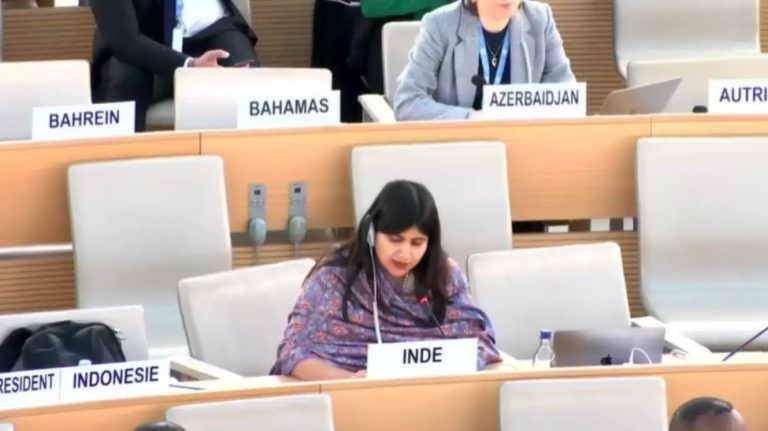
In a forceful response to Pakistan’s remarks at the 55th Regular Session of the UN Human Rights Council (UNHRC), India’s First Secretary Anupama Singh exercised the ‘Right of Reply’, denouncing Pakistan’s comments as an abuse of the Council’s platform. Singh asserted that a nation with a “truly abysmal” human rights record and institutionalized persecution of minorities has no right to comment on India.

Meanwhile, India also slammed Turkey for making unsolicited comments on the internal matters of India with a hope that it would refrain to do so in future.

Additionally, Singh expressed regret over Pakistan’s extensive references to India, terming them as “flagrantly false accusations” and the misuse of the Council’s forum. She emphasized that Jammu and Kashmir and Ladakh are integral and inalienable parts of India, and the constitutional measures taken by the Indian government are internal matters, to which Pakistan has no locus standi.

Three red flags against Pakistan

The First Secretary pointed out the irony of Pakistan’s criticism, highlighting its own dismal human rights record, citing the brutal treatment of the Christian community in Jaranwala city in August 2023. Subsequently, she underscored the contrast between India’s progress in economic and social justice and Pakistan’s support for UNSC-sanctioned terrorists.

Singh dismissed Pakistan’s comments, stating, “We cannot pay any further attention to a country that speaks while being soaked in the red of the bloodshed from the terrorism it sponsors around the world; the red of its debt-riddled national balance sheets; and the red of the shame its own people feel for their government having failed to serve their actual interests.”

The 55th Regular Session of the UN Human Rights Council, occurring from February 26 to April 5, has become a platform for India to assert its position and reject what it considers baseless accusations from Pakistan. This latest exchange is part of the ongoing diplomatic tensions between the two nations, with India reiterating the necessity of a terror-free and non-hostile environment for normal ties with Pakistan.