Home Blog Page 132

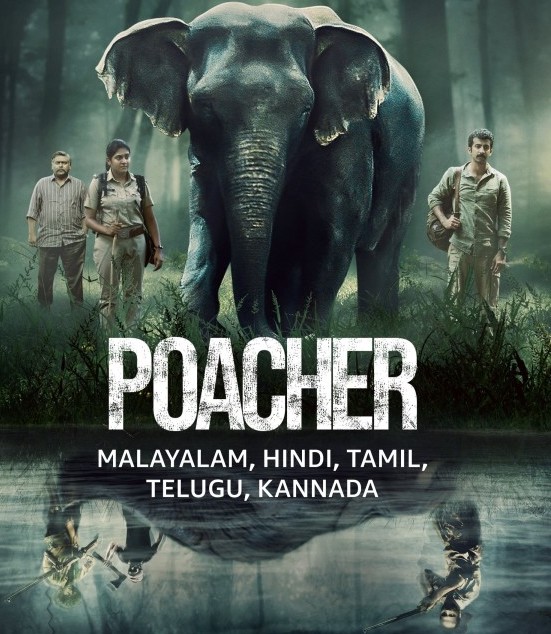
POACHER: A gripping crime thriller exploring intriguing repository on Human-Animal conflict

Released on 23rd February on Amazon Prime, ‘Poacher’ Season 1 presents a passionate exploration of wildlife conservation and protection. Inspired by true events, this meticulously researched crime thriller series has 8 episodes. It delves into the intricacies of criminal investigation, human-animal conflict, and the ivory trade.

It is created by Emmy Award-winning director Richie Mehta. The renowned filmmaker received accolades for his acclaimed project ‘Delhi Crime’ based on the harrowing 2012 Delhi gang rape case. ‘Poachers’ masterfully evokes human emotions with nature’s scenic beauty and wildlife. Further, Alia Bhatt serves as the executive producer of this series and had marketed the series with a compelling remark, Murder is Murder. The series aptly aligns with this motto, treating every life form on par with humans.

While ‘Poacher’ may not cater to mass audiences with its off-beat subject matter, Mehta’s direction ensures that it respects both the viewers’ time and the gravity of the subject matter it tackles. His skilful presentation brings forth a content-rich narrative that unfolds gradually, much like the tantalizing flavours of a slow-cooked dish.

The Storyline

The series is set in 2015 in Kerala, nearly two decades after the Indian government passed the Wildlife Protection Act 1991 prohibiting all forms of wildlife hunting. The Forest officials who believed that they had successfully contained poaching in the jungles of Malayattoor, Kerala, are caught napping. In the opening shots, we get to see a chilling incident of an elephant succumbing to the greed of poachers (humans) sending the wildlife in dismay. With symbolic representation and CGI-generated wildlife, the filmmaker has craftily presented the animal suffering at the hands of humans exhibiting predatory behaviour.

Soon, the confession of a guilt-ridden forest watcher, Aruku exposes a larger nexus of poachers, smugglers, buyers, and end users. Facing the heat for being ‘complacent’ and negligent about the massive ongoing poaching activities under their watch, the Kerala Forest Department swings into action. 

Renowned for his commanding presence, Dibyendu Bhattacharya plays the role of Field Director Neel Bannerjee. Neel takes charge of the investigation and ropes in competent Range Officer, Mala Jogi (Nimisha Sajayan). Mala has in-depth knowledge of the forest and has an impressive track record of arrests —a reason best left for viewers to discover. The investigation also involves Alan (Roshan Mathew), a computer programmer who maintains a poised presence throughout the series.

Following a predominantly linear pattern of storyline, the story resolves around these persistent forest officials and conservators, each driven by their own motivations to end the illegal ivory trade and elephant poaching plaguing the forests of Kerala. It’s a gripping tale that explores whether the investigators will succeed in solving the horrifying crimes against elephants, or will the internecine rivalries, bureaucratic and political hurdles/pressures, and the daunting risk to life take a toll on officials forcing them to budge.

The series has an ensemble star cast featuring Nimisha Sajayan (Mala Yogi), Roshan Mathew (Alan), Dibyendu Bhattacharya (Neel Banerjee) and Kani Kusruti (Dina). With stellar performances in Undekhi, Rocket Boys, Mission Raniganj, and Mirzapur among others, Dibyendu’s remarkable reputation is such that it feels criminal to divert one’s gaze; such is the impact and acting prowess he exudes on screen.

Despite the presence of a towering actor like Dibyendu, the leads have maintained their sheen and carried their characters through and through, even overcoming language barriers. The series is multi-lingual with the actors from south of India, conversing in Hindi. Several actors make an impactful performance in their limited screen time with Delhi Policewoman constable Sunita being the stand-out performer.

The filmmakers have built a nice character arc for the lead characters to give a human perspective of individuals carrying out an investigation. They aptly touch on the sacrifices of the investigators – sleep deprivation, risk to life and not being able to spend time with family members. “It’s a lifelong battle: Wildlife protection vs family”, Neel says in one of the scenes. The film has several such compelling and hard-hitting dialogues. From benign and ignorant take of poachers on killing animals to clinchers in favour of wildlife conservation and prohibiting hunting and poaching. The filmmakers have presented a rather complex investigation process in a simple but yet intriguing manner, with interest peeking at the penultimate and ultimate episodes. Additionally, ‘Poachers’ has all the ingredients to create anticipation for a second season.

The series portrays a realistic depiction of probing agencies and politicians, addressing issues such as corruption, incompetence, territorial jurisdiction disputes, and limited human resources. It avoids generalizations, providing a nuanced perspective.

Shot at real locations, the filmmaker has excellently utilised the stunning beauty of sprawling nature and CGI-generated tapestry of endangered species. The extra details provided by the platform about the wild species serve as an added bonus.

However, for those seeking instant gratification from a typical fast-paced crime thriller, it’s worth noting that this experience can be tiring and demands patience. The slow, steady build-up offers a more fulfilling and rewarding viewing experience.

The filmmaker’s deliberate use of a specific shot to commence each episode, coupled with the strategic placement of CGI-crafted animals, evokes a profound sense of empathy toward the pachyderm. The filmmakers’ approach is likely to resonate deeply with viewers making Poachers a binge-worthy detailed crime thriller series for all animal and cinema lovers, especially in the genre of wildlife conservation and protection.

Pak Army abducts another Baloch student in an ambulance in Islamabad

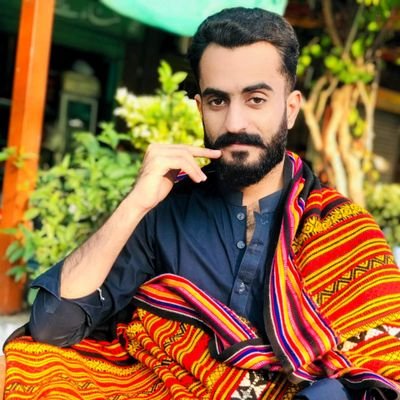
Islamabad, Pakistan: Recently, Imtiaz Baloch, a distinguished graduate from PMAS Arid University Rawalpindi, fell victim to a forceful abduction orchestrated by Pakistan Army on 28 Feb in Islamabad. The incident has reignited concerns about the ongoing issue of enforced disappearances targeting the Baloch community.

Details remain unclear, but reportedly, the abduction occurred around 2:50 p.m. in Hostel City, Islamabad. Imtiaz was taken away by unidentified individuals associated with the Army.

This incident underscores the persistent issue of enforced disappearances in Pak-occupied-Balochistan, a province with a long history of suppression, violence and genocide committed by the Army. Rights groups like the Voice for Baloch Missing Persons (VBMP) have documented thousands of disappearances over the past few decades, with many cases unresolved.

The abduction of Imtiaz has sparked outrage within the Baloch community and human rights organizations. They have called for his immediate and safe release, emphasizing the violation of fundamental human rights and the need for adherence to the rule of law.

India slams Pakistan at UNHRC session, says Pakistan’s human rights record truly abysmal

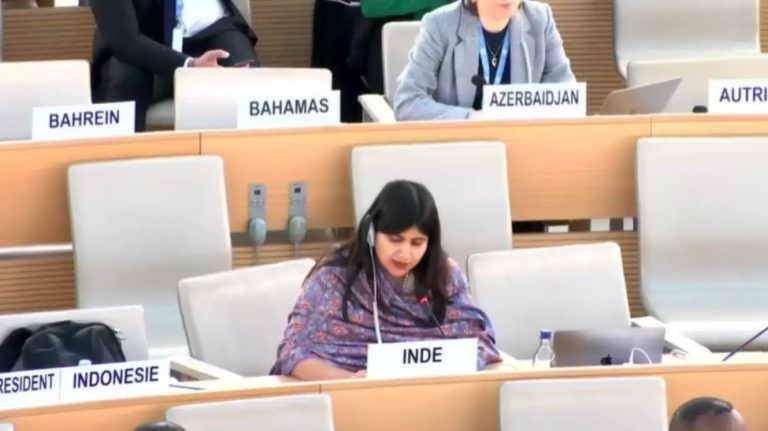
In a forceful response to Pakistan’s remarks at the 55th Regular Session of the UN Human Rights Council (UNHRC), India’s First Secretary Anupama Singh exercised the ‘Right of Reply’, denouncing Pakistan’s comments as an abuse of the Council’s platform. Singh asserted that a nation with a “truly abysmal” human rights record and institutionalized persecution of minorities has no right to comment on India.

Meanwhile, India also slammed Turkey for making unsolicited comments on the internal matters of India with a hope that it would refrain to do so in future.

Additionally, Singh expressed regret over Pakistan’s extensive references to India, terming them as “flagrantly false accusations” and the misuse of the Council’s forum. She emphasized that Jammu and Kashmir and Ladakh are integral and inalienable parts of India, and the constitutional measures taken by the Indian government are internal matters, to which Pakistan has no locus standi.

Three red flags against Pakistan

The First Secretary pointed out the irony of Pakistan’s criticism, highlighting its own dismal human rights record, citing the brutal treatment of the Christian community in Jaranwala city in August 2023. Subsequently, she underscored the contrast between India’s progress in economic and social justice and Pakistan’s support for UNSC-sanctioned terrorists.

Singh dismissed Pakistan’s comments, stating, “We cannot pay any further attention to a country that speaks while being soaked in the red of the bloodshed from the terrorism it sponsors around the world; the red of its debt-riddled national balance sheets; and the red of the shame its own people feel for their government having failed to serve their actual interests.”

The 55th Regular Session of the UN Human Rights Council, occurring from February 26 to April 5, has become a platform for India to assert its position and reject what it considers baseless accusations from Pakistan. This latest exchange is part of the ongoing diplomatic tensions between the two nations, with India reiterating the necessity of a terror-free and non-hostile environment for normal ties with Pakistan.

Unilateral Protectionism: Can carbon tax balance global trade and environmental concerns?

Currently, World Trade Organization is holding its 13th Ministerial Conference in Abu Dhabi, UAE. Speaking at a session on sustainable development and policy space for industrialization, Commerce Secretary Sunil Barthwal raised an important issue: unilateral protectionism that some countries pursue in international trade under the guise of environmental protection. Clearly, his statement signals towards the carbon tax imposed by EU. He argued that developing countries need flexibility in WTO agreements to overcome constraints in their industrialization.

At another session on “Trade and Inclusion”, he warned WTO members against mixing non-trade issues with WTO rules, as this could lead to greater trade fragmentation. He said, “Bringing issues like gender and MSMEs into the realm of WTO discussions was not practical because these issues were already being discussed in other relevant international organizations.” He also stated that the issue of inclusion can be better addressed through targeted national measures, which do not fall within the domain of international trade relations. The Commerce Secretary mentioned that some developed countries are using non-trade issues to put up barriers and provide trade-distortive subsidies. He called this approach “unilateralism” and said that it would have a negative spillover effect on the trade interests of developing countries.
He also underscored India’s progressive measures in the inclusion of women and MSMEs through Digital Public Infrastructure.

His remarks become significant as India has already raised concerns over the EU’s carbon tax, which India finds harmful to its interests. The European Union’s Carbon Border Adjustment Mechanism (CBAM), or simply “carbon tax,” came into discussions while a related legislation was under consideration.

What is Carbon tax?

After a legislation was passed in May last year, the EU announced it would impose a carbon tax on imports, coming into effect from 2026. The law regarding deforestation also complicates the situation, affecting products such as coffee, among others.

In 2005, the EU established a cap-and-trade system. Under this system, industries operating in Europe and emitting carbon compounds were required to obtain an allowance by paying for the environmental damage they caused. However, due to practical trade concerns, the EU failed to implement it as is. Instead, it had to give waivers, fearing that levying taxes could discourage industries from operating in Europe and eventually relocate to other countries with less stringent environmental constraints. Now, as the EU phases out free allowances, it is simultaneously implementing a carbon tax on imports.

The EU has devised a mechanism to apply a carbon tax that aligns with the Cap-and-Trade system. Simply put, a company operating outside Europe will have to pay the same amount for a particular volume of emissions during its manufacturing as a European producer would pay under the Cap-and-Trade system for the same volume of emissions.
Clearly, the aim is to address the limitations of operating the Cap-and-Trade system alone. The CBAM will translate into a 20-35% tax on select imports into the EU starting January 1, 2026.

India’s Stand

As a developing country, India primarily exports commodities like iron ore pellets, steel, and coffee. Many of these exports fall under the new CBAM regime, making it challenging for India. Reports suggest that the EU procures about 26.6% of India’s total exports of iron ore pellets, aluminum, and steel. In FY23, India’s exports of these goods to the EU amounted to $7.4 billion. Similarly, coffee, leather hides, and paperboard exports to the EU stand at around $1.4 billion annually.

Therefore, India has been against levying such a tax since the beginning. During the ongoing WTO Ministerial Conference, India argued that these types of subsidies effectively nullify the carefully negotiated balance of rights and obligations under specialized multilateral environmental agreements (MEAs). India pointed out that these agreements provide flexibility for developing countries to pursue their Net Zero targets and implement the principle of Common but Differentiated Responsibilities and Respective Capabilities (CBDR-RC) according to their specific circumstances. Imposing such taxes and mainstreaming them in the WTO would nullify these flexibilities and render previous steps obsolete.

Challenges

Arguments in favour of the carbon tax primarily come from developed countries. They see it optimistically, believing that industries that shift to developing countries due to relaxed environmental standards will be deterred from doing so once they know their products will be taxed. Additionally, they believe it would be easier to address the competitiveness of products from developing countries.

However, the primary justification for the tax is environmental concern. The EU argues that it will encourage countries outside the bloc to take more aggressive measures for environmental conservation. Even the free allowance in Cap-and-Trade system was also continued arguing that if industries shift to other countries, citing tax compulsion, the overall global emission would not decrease. But with due consideration it must be noted that international trade accounts for only about 20-30% of global greenhouse gas emissions. Also, the countries like US, China, Russia and even EU itself are the highest per capita emitters of greenhouse gases despite having tightened rules and norms. While US has highest emission of 14,7 tonnes, EU’s per capita emission stands at 6 tonnes. On the opposite, India’s per capita emission is merely 2 tonnes, even less than the global average of 4.7 tonnes.

Still India is going to be adversely impacted because despite its low emission, its highest emitting sectors are cement, iron, steel among others, which it aggressively exports to EU. So, the concept of carbon tax may be guided by anything but global greenhouse emission because, it could give a free ride to the countries that sell high standard products but are largest emitters.

BLA Hakkal reveals images of Majeed Brigade members involved in operation Dara-e-Bolan

Recently, Hakkal, the media arm of the Baloch Liberation Army (BLA), has published pictures of BLA-Majeed Brigade members Naveed Baloch and Farooq Sayyad. It was discovered that Farooq Sayyad, who took part in the BLA’s operation Dara e Bolan in the Mach and Bolan region of Pak-occupied Balochistan from January 29 to January 31, was responsible for setting off a VBIED at the FC headquarters’ gates.

On August 13, 2023, in the meantime, Naveed Baloch, connected to BLA’s operation Zirpahazag—designated as the third attack—was engaged in a targeted attack against Chinese nationals in Gwadar, Pak-occupied Balochistan.

The BLA launched Operation Dara-e-Bolan in the Mach and Bolan regions of POB, in their struggle for freedom and recognition in the region. The BLA’s elite units, including the Majeed Brigade, the Special Tactical Operations Squad, the Fateh Squad, and the Intelligence Wing, are actively engaged in this major armed operation.

The Baloch community, have long aspired for independence, continues to face oppressive measures by the Pak Army. This operation represents a decisive effort by the BLA to assert their rights and sovereignty amidst the tensions in the region.

BNM concludes Awareness Campaign on Pak Army’s illegal occupation of Balochistan in London

The Baloch National Movement (BNM) released a statement after the four-day awareness campaign against the Pak Army’s illegal occupation of Balochistan, in London. The statement highlighted the oppression that Pakistan has inflicted on Pak-occupied Balochistan and the innocent Baloch community.

According to the statement, Baloch political activists and supporters held a rally in London during the campaign to raise awareness of the terrible circumstances in Pak-occupied Balochistan and the injustices that its people must endure. The next phase of the campaign, which aims to further the mission of the Baloch National Movement to raise awareness and garner support for the rights of the Baloch people, will begin in Manchester and Leeds after the London campaign concludes.

It is anticipated that the campaign’s next phase in Leeds and Manchester will start shortly. The Baloch National Movement’s statement highlights the movement’s unwavering commitment to achieving justice and freedom for the Baloch people, citing the campaign’s success in London as proof of the activists’ and supporters’ unwavering resolve.

Since March 27, 1948 Pak Army illegally occupied Balochistan and inflicted atrocities daily which include frequent home invasions, disappearances, staged encounters, target killings, torture, embarrassment at checkpoints, and kidnappings for ransom.

J&K: Government extends ban on Jamaat-e-Islami for another 5 years

In a decisive move aimed at safeguarding the nation’s security and integrity, the Indian government, led by Prime Minister Narendra Modi, has extended the ban on Jamaat-e-Islami, Jammu Kashmir, for an additional five years. Union Home Minister Amit Shah announced the extension, citing the organization’s ongoing activities against the security, integrity, and sovereignty of the nation.

Taking a stern stance on national security, Home Minister Amit Shah emphasized the government’s commitment to a policy of zero tolerance against terrorism and separatism. He warned that anyone posing a threat to the security of the nation would face ruthless measures.

In a tweet, Minister Shah reiterated the government’s dedication to curbing activities that undermine the nation’s interests: “Pursuing PM @narendramodi Ji’s policy of zero tolerance against terrorism and separatism, the government has extended the ban on Jamaat-e-Islami, Jammu Kashmir for five years.”

Earlier, Jamaat-e-Islami, Jammu Kashmir, was initially declared an ‘Unlawful Association’ on February 28, 2019, and the government’s decision to extend the ban reflects ongoing concerns about the group’s activities.

The move comes in the backdrop of India’s relentless efforts to counteract internal threats and maintain national security. Notably, just a couple of weeks ago, NIA raided multiple locations across Jammu and Kashmir related to terror funding network which included the militants of Jamaat-e-Islami. Evidently, JEI was continuing its terror facilitation and financial actions and hence, MHA’s decision shows government’s vigilance and resolute to a terror free Jammu and Kashmir. The extension of the ban underscores the government’s unwavering commitment to safeguarding the nation from any elements that may compromise its security, integrity, and sovereignty.

Tibetans hold worldwide protests against the arrest of protestors agitating against Chinese dam project

After a massive crackdown on the peaceful protestors agitating against the construction of dam on Drichu River, a solidarity protest has been organised across the world. The solidarity protest called for the immediate release of over 1000 Buddhist monks and other civilians along with stopping the construction the Gangtuo hydropower station on the Drichu River. Notably, people in Dege County, part of the Garze Tibetan Autonomous Prefecture were on the streets since February 14th against the construction of a massive 13-tier hydropower complex with a planned capacity of 13,920 megawatts on Drichu river.

Ramifications of project

The controversial dam construction project has prompted widespread resistance from local residents, including monks, in this historically Tibetan region, now administered as part of China’s Sichuan province since the Chinese occupation of the region. The dam’s construction threatens to force the relocation of two villages, Upper Wonto and Shipa, inhabited by around 2,000 Tibetans. Additionally, it poses a significant threat to the existence of six historic monasteries, namely Wonto Monastery, Yena Monastery, Khardho Monastery, Rabten Monastery, Gonsar Monastery, and Tashi Monastery. These monasteries house invaluable Buddhist relics, including ancient murals dating back to the 13th century at Wonto Monastery.

Disturbing reports indicate that Chinese police attacked and injured multiple protestors on February 23. As of now, more than 1,000 Tibetans have been arrested in connection with the protests. Many are reportedly being held in a police station in Upper Wonto, with additional detainees kept in an old prison in Dege County and various other facilities throughout the county.

China’s response to the protests has, as usual, been brutal and inhumane and has escalated tensions. Concerns have also been raised about the conditions in detention centers, where the detained protestors have been kept, with reports suggesting inadequate food supply leading to some detainees passing out due to scarcity of food.

Tibetan Parliament-in-Exile condemns attack

Meanwhile, the Tibetan Parliament-in-Exile has also issued a powerful condemnation of the brutal crackdown on Tibetans who have been arrested following a peaceful protest. The Tibetan Parliament-in-Exile called for the immediate release of detainees, a halt to dam construction, and respect for the wishes of local people regarding any projects in the region.

Moreover, in Dege county, COVID-19-like restrictions have been imposed, accompanied by the deployment of large police forces in areas where Tibetans are being held. Each police unit brought in from outside Dege has been assigned to control a specific community, enforcing strict surveillance and suppression measures. Communities such as Wonto and Yena are reportedly facing restrictions, with residents prohibited from leaving their homes.

The situation raises pressing concerns about the state of human rights and press freedom in the affected areas, prompting the international community to closely monitor developments.

POB: Pak Army forcibly disappears two brothers in a span a of nine years

The Pak Army recently detained Sajid Smalani from the Mach Bolan area of Pak-occupied Balochistan and now he is missing. Sajid’s brother Nisar Ahmed, son of Muhammad Ishaq was also made to disappear by the Pak Army nine years ago in June 2015.

Such incidents are frequent and are reported daily. Ever since the Pak Army forcibly seized control of Balochistan i.e., on March 27, 1948, the Baloch community have been resisting the atrocities and Baloch genocide perpetrated by the Pak Army.

BNM Report: Lack of health centers in four districts of Pak-occupied Balochistan

Recently, in a report, the Baloch National Movement’s (BNM) Department of Social Welfare highlighted the failing state of Health in four tehsils in the Awaran district: Jahoo, Awaran, Mashkay, and Jahoo.

“Even a minor illness can become a life-threatening situation due to inadequate health facilities.” When patients need to be transferred to Karachi or other cities due to emergencies, the uneven roads present a significant risk that they will die while travelling.

Balochistan has been forcibly occupied by Pakistan since March 1948, the Pak Army is using all of its apparatus to commit mass murder and other crimes against the members of Baloch society. The Pak establishment bears sole responsibility for the rising death rate in Pak-occupied Balochistan, due to the lack of necessities.

BNM asked the UN and other international bodies to acknowledge Pakistan’s pervasive violations of human rights in Balochistan and urging immediate intervention to prevent any further crisis.