Home Blog Page 134

China plays tale of hypocrisy at the International Court of Justice

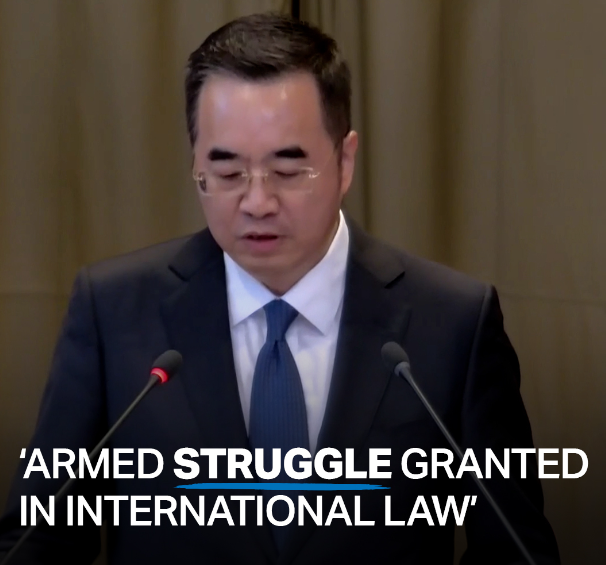
The recent representation of China at the International Court of Justice (ICJ) regarding Israel’s occupation of Palestinian territories has unveiled glaring hypocrisy in its foreign policy. While China is advocating for the justice of Palestinians, Ma Xinmin, China’s foreign ministry legal adviser underscored the grant of “armed struggle” for liberation under international law, it conveniently ignores its own grave human rights violations against the Uyghur population in Xinjiang.  

This stance of China starkly contrasts with its actions in the Xinjiang region where China is accused of committing crimes against humanity and possibly genocide against the Uyghur/Turkic populations. Reportedly, there are details of mass detentions, forced labour, torture, and cultural suppression. Uyghur communities face systematic discrimination for practising their religion and preserving their cultural identity.

While selectively applying international law and championing the right to armed struggle for Palestinians, China denies similar rights to the Uyghur/Turkic people in Xinjiang. China’s stance at the ICJ hearings demonstrates its hypocrisy and highlights the pressing need for an international law and human rights approach based on principles.

Pak establishment falsely implicates Pashtun man for voicing against police harassment

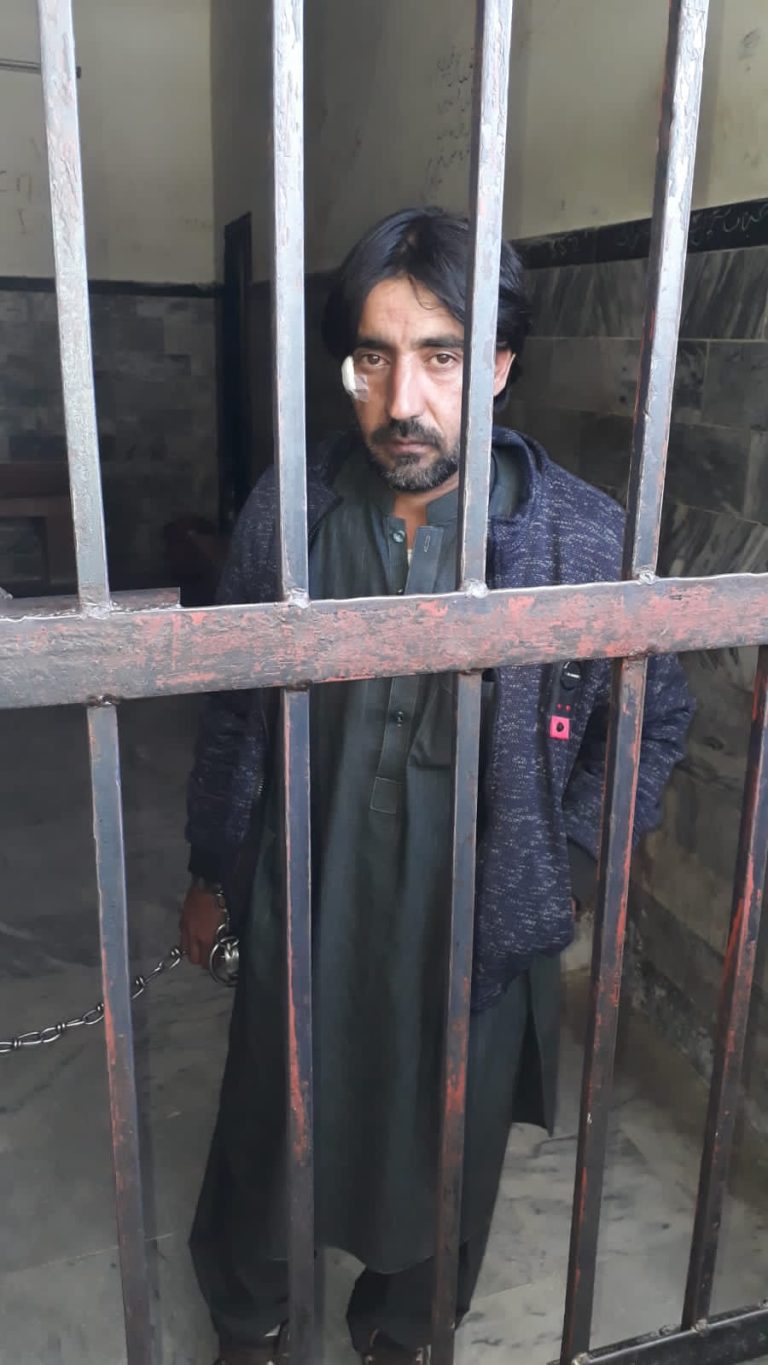
In a stunning development, Momin Khan, the Pashtun man working as property dealer in Qamber recently accused the SHO Rahimabad of harassment during a press conference at the Swat Press Club, is now facing serious charges himself. During the initial conference, Khan, accompanied by his young children, had claimed that the SHO was unnecessarily harassing him due to a land deal with Sajjad Ali. He alleged that the SHO’s actions had made his life miserable.

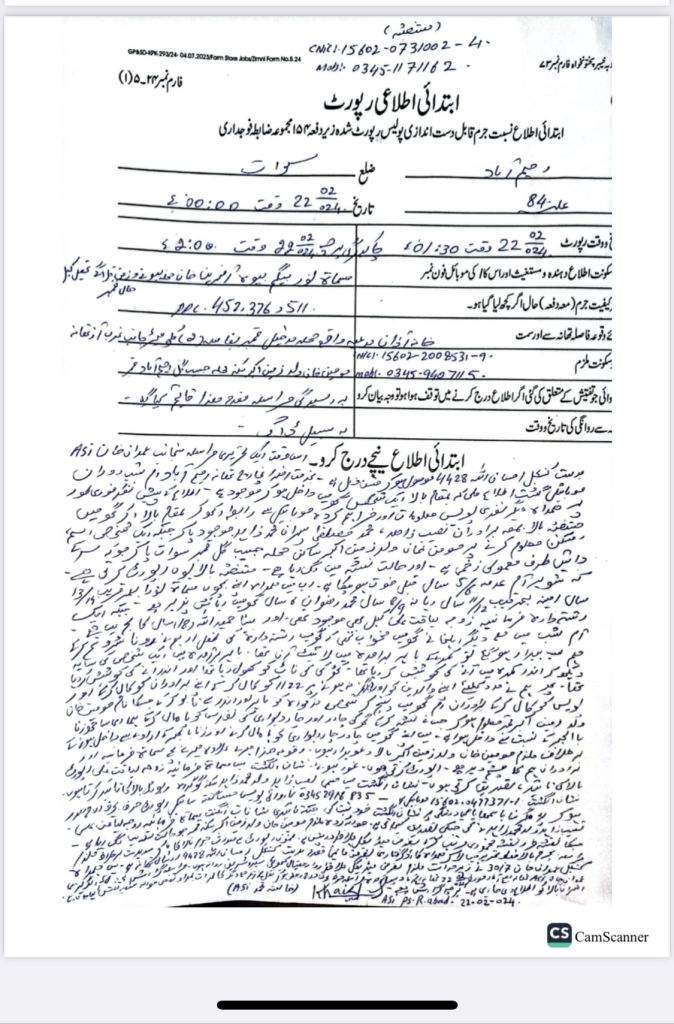
In a surprising twist, a day after his public plea for justice, Khan now finds himself at the center of a police case. The Rahimabad Police Station has registered a complaint against him, charging him with provisions of drinking alcohol, breaking into an old house, attempting rape, and other offenses. Khan was arrested and reportedly subjected to severe torture throughout the night.

Copy of FIR (Photo: X)

Press Conference that led to Khan’s arrest

During the press conference, Khan had stated, “I have sold 2500 sq. feet of land to Sajjad Ali, who himself is in Malaysia. Due to his brothers, the SHO of Rahimabad Police Station has started harassing me unnecessarily, due to which my life has become miserable.” He went on to express his frustration, threatening to take suicidal measures if the Inspector General of Police (IGP), Deputy Inspector General (DIG), and District Police Officer (DPO) did not provide him with justice.

Khan had further asserted his legitimacy as a property dealer, stating, “I am a property dealer and have a regular license. An inquiry should be held against me, and if any crime is proved, then I could be held accountable.”

The rapid and unexpected turn of events has heightened the complexity of the situation, with both Khan’s initial accusations and the subsequent charges against him raising concerns and generating public interest in the unfolding events. With due consideration, the incident also highlights the precarious condition of Pashtun community who face horrific persecution. Those who utter a word of criticism against Pakistan Army, police or establishment, they are implicated in false charges rendering them imprisoned with torture.

I am not Malala, because I am free & safe in my country India: Kashmiri journalist captivates UK Parliament

Yana Mir, a Kashmiri journalist, captivated the audience at a prestigious event held in the British Parliament building. The gathering, organized by the Jammu Kashmir Study Centre, UK (JKSC), commemorated ‘Sankalp Divas’ (Resolution Day).

During this noteworthy ceremony, Yana Mir was honored with the Diversity Ambassador Award and delivered a powerful keynote address. Notably, she distinguished herself by expressing a resolute stance, stating, “I am not a Malala Yousafzai. Because I am free and I am safe in my country India, in my home in Kashmir which is part of India. I will never have to run away from my home country…” This declaration echoed her sense of security and freedom in her homeland, a sentiment in stark contrast to Malala Yousafzai’s ordeal in Pakistan, where she faced a violent attack by Taliban terrorists for advocating girls’ education.

Kashmiri journalist Yana Mir went on to commend the efforts of the Indian Army for their role in steering youth away from violence and creating opportunities in sports and education. Her words resonated with the audience, highlighting the positive initiatives fostering growth and development in the region.

The ‘Sankalp Diwas’ event in the British Parliament witnessed participants underscoring India’s rightful claim to reclaim the Pakistan-occupied-Jammu and Kashmir (PoJK). The JKSC, host of the program, reported an impressive turnout, with over 100 dignitaries in attendance. Notable guests included members of the UK Parliament such as Bob Blackman, Theresa Villiers, Elliot Colburn, and Virendra Sharma, along with local councillors and community leaders.

Yana Mir’s impassioned speech and the overarching theme of the event reinforced the significance of unity and determination in upholding the rights and aspirations of the people of Jammu and Kashmir.

How India tackles Pakistan’s proxy war in J&K

0

There’s a general misapprehension amongst many that terrorism can be effectively eradicated solely by using the ‘fighting fire with fire’ strategy and killing or apprehending terrorists through application of military force. However, while military action is undoubtedly essential to curb terrorist activities, it can by no means eliminate this scourge by itself because terrorism has its own flourishing ecosystem.

Tackling terrorism becomes all the more challenging when it is being sponsored by a country as is the case in J&K where Pakistan Army’s spy agency Inter Services Intelligence [ISI] is complicit in training, arming, sustaining and providing safe sanctuaries to terrorist groups fighting in Kashmir. In fact, what one is witnessing in J&K isn’t terrorism in the true sense; it’s indisputably a full blown proxy war!

Pakistan has been hauled up several times in the past by both international organisations and the global community for supporting cross border terrorism in J&K. However, Islamabad’s refusal to mend its ways and the international community’s indifference has made it absolutely clear that New Delhi needs to fight this proxy war on its own, and it’s really heartening to note that India is doing so across the spectrum with full resolve.

Concerted military actions by the army as well as central and local armed police forces have succeeded in putting Pakistan sponsored terrorists on the back foot. Resultantly, while the number of terrorist initiated incidents in J&K which stood at 228 in 2018, fell to just 43 in 2023 [up to November 30], and the number of encounters between security forces and terrorists reduced from 189 to 48 during the same period.

Those engaged in anti-terrorism operations deserve full credit for displaying indomitable grit, extraordinary determination and raw courage that has defeated ISI’s designs to create mayhem in J&K. At the same time, the institution of bold measures by other government agencies against the entire terrorism ecosystem has also contributed a great deal in reducing the intensity of terrorism in this region. 

In addition to anti-terrorism operations, the security forces simultaneously also undertook a series of people oriented welfare initiatives. Project Sadbhavana is one such multifaceted programme that has not only brought about a significant improvement in quality of life of locals but also empowered them. Under this programme, Army Goodwill Schools provide quality education to children of financially weaker sections of society across J&K while skill development courses in various disciplines enhance employability of local youth.

The humane approach of security forces has also dispelled the anti-security force propaganda being spread by Pakistan and its Kashmir Valley based proxies. Conversely, thanks to the internet and social media, locals have become more aware of adverse developments in IoJK, especially denial of rights, lack of basic amenities and the Pakistan Army’s highhandedness.

Frequent anti-Pakistan protests in IoJK and the discernable apathy of Islamabad in addressing the genuine grievances of IoJK residents have exposed the reality that Pakistan has desperately been trying to conceal. On the other hand New Delhi is investing heavily in developmental activity in J&K to further tourism and adventure activities and locals have already started reaping benefits from the same. Infrastructure development and a concerted drive to attract investments will create additional employment and further improve the quality of life of Kashmiris.

The old saying about money making the mare go holds true for terrorism too. In fact, as early as 1993, ISI realised that money and not ideology would propel its so called ‘jihad’ in Kashmir. So, it  cunningly roped in the then Assistant Secretary of State for South and Central Asian Affairs Robin Raphel to create All Parties Hurriyat Conference [APHC]. This amalgam of separatist groups served as Rawalpindi’s proxy in Kashmir and besides furthering Pakistan’s Kashmir agenda, APHC became a handy ISI conduit for funneling illicit funds to sustain terrorism in J&K.

The Enforcement Directorate [ED] crackdown on APHC and other ‘hawala’ operators [people involved in illegal money transfer] paid rich dividends as it crippled the illicit money supply chain that ISI had so painstakingly evolved. Starved of cash, those organising anti government protests could no longer use money power to entice people to come out on the roads and due to this, public demonstrations and incidents of stone pelting soon became a thing of the past.

ED investigation against prominent separatist leaders also made the ordinary people realise that while they were suffering due to loss of income on account of frequent shutdowns, the separatist leaders giving these calls were themselves living a luxurious life with the money coming from across the Line of Control [LoC]. ED investigations also exposed how many APHC leaders were making huge profits through illegal means like selling seats to rich Kashmiris to study medicine in medical colleges of illegally occupied Jammu and Kashmir [IoJK].  

In a ‘sting operation’ conducted by a private TV channel in 2017, some senior APHC leaders were caught admitting on camera that money the separatist conglomerate was receiving money from Pakistan based terrorist groups and torching of educational institutions in Kashmir Valley during the 2016 summer protests was in accordance with directions received from across the LoC. A senior APHC functionary even had the gall to say that if paid, public protests could be orchestrated in Kashmir Valley.

While the ED has effectively blocked illegal money supply to the pro-Pakistan lobby, the National Investigation Agency [NIA] has done a fantastic job by cracking down on ‘middlemen’ who provide intelligence and logistics to terrorists. NIA’s concerted efforts have busted several such cells and this has severely curtailed the ability of terrorists to act with impunity as well as put the fear of God in the minds of middlemen by shredding the myth of their relative immunity against persecution.

With the locals refusing to act as Pakistan’s pawns, all that the ISI can do is to try and create mayhem in Kashmir Valley through targeted killing of innocent migrant workers and members of minority communities. However, with the security forces and law enforcement agencies maintaining a constant vigil, Pakistan sponsored terrorists are unable to achieve ISI’s objective of creating a state of anarchy in Kashmir Valley. In addition to the commendable efforts of security forces and law enforcement agencies, voluntary public assistance in exposing those involved in targeted killings is paying rich dividends.

On February 7, two migrant workers belonging to Punjab were shot dead by a terrorist in the Habba Kadal area of Srinagar. Due to the absence of witnesses and lack of any other evidence, this was a classic ‘blind’ murder, but yet J&K police was able to apprehend the assailant and recover the weapon used in this crime within a week. While J&K police definitely deserves due appreciation for cracking this extremely difficult case, it’s obvious that clues provided by the public played a major role in helping the police in homing in on the murderer. 

And with public support forthcoming, it’s abundantly clear that ISI’s nefarious designs in J&K will never succeed!

Khyber-Pakhtunkhwa: Pak Army assaults old Pashtun woman while abducting her, protests continue

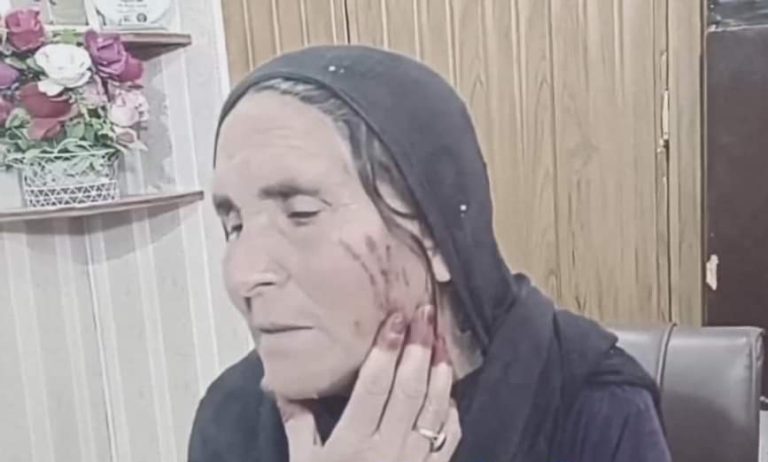
In a deeply troubling incident that has sent shockwaves through the Pashtun community in Khyber Pakhtunkhwa, a video has surfaced on social media featuring an elderly Pashtun woman. Moreover, in the aforesaid video the woman recounts a harrowing experience of assault at the hands of Pak Army affiliated abductors, who took away her son.

On February 20, personnel affiliated with Pakistan military forcibly entered the woman’s residence in Khyber district. Subsequently, acting on directives from the Pakistan Army, the abductors carried out the shoddy abduction injuring the elderly Pashtun woman who tried to save her son. The incident not only sheds light on Pakistan’s prolonged use of enforced disappearances as a means to suppress dissenting voices but also their nefariousness which could harm even old women and children . In the video, the elderly woman can be seen bleeding from a scratch, a result of her attempts to protect her son and thwart the abduction.

However, the distressing treatment of the elderly woman has, now, sparked fury among the Pashtun community, prompting them to organize a protest on February 21 at Bara Bazar in Khyber. With a clear understanding of the Pakistan Army’s involvement, protesters have gathered in large numbers, vehemently condemning Military Intelligence (MI), Counter Terrorism Department (CTD), and the local police with impassioned slogans.

This incident underscores a severe breach of law and order, revealing the exploitation of law enforcement machinery as a tool of oppression within an illegal framework. In an environment marked by lawlessness and impunity, even the vulnerable, including the elderly and children, are not spared from the heavy-handed tactics employed by the Pakistani authorities.

Pakistan border guards throw tear gas on peaceful protestors at Chaman border

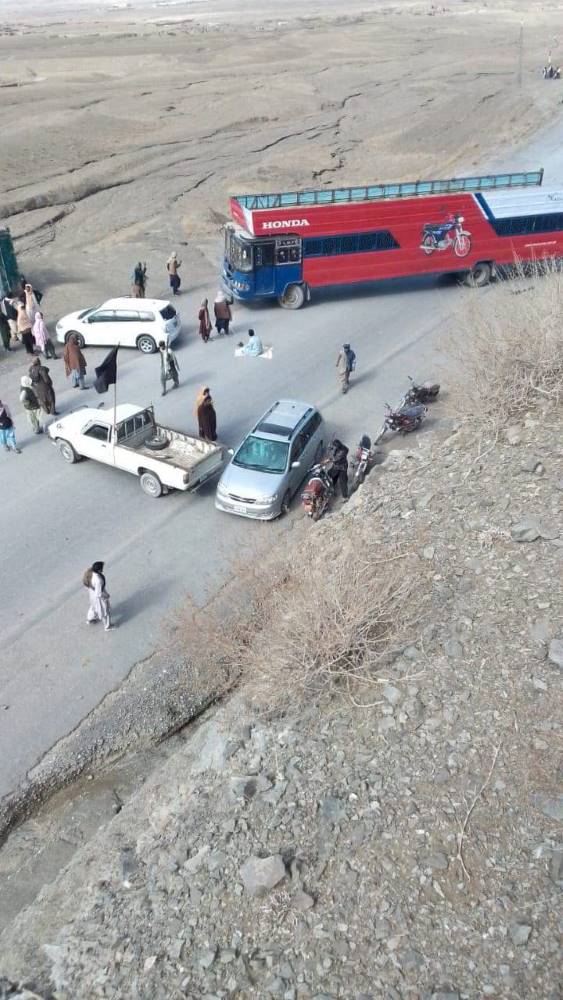
In a volatile turn of events, Pakistan border guards deployed tear gas on February 20 to disperse hundreds of protesters opposing the implementation of a new visa and passport regime at the Chaman border crossing. The demonstration, which has been ongoing since October last year, centres around Pakistan’s decision to expel illegal foreigners, mainly Afghans, and enforce stringent immigration-related restrictions, necessitating valid passports and visas for travel.

The “one document regime” replaced the long-standing practice of issuing ‘tazkira‘, a special travel permit to individuals from divided tribes residing along the 2,600 k.m. border. An operation against the protesters on February 20th heightened tensions, leading agitated demonstrators to gather at the check post, where they expressed their discontent by throwing stones leading to direct face-off between protestors and border guards. Meanwhile, the agitated protestors blocked the city entrances to the city.

Video footage widely circulated on mainstream and social media captured scenes of tear gas dispersal and numerous protesters near the border. The closure of the border for over four months has resulted in unemployment and a surge in food scarcity among the affected population.

Chaman fiasco shows Pakistan’s lack of vision

Essentially, the abrupt shift from the traditional “tazkira” approval at the border, which facilitated trade and community travel, has left many without work and disrupted daily life. Moreover, the Pakistani establishment’s decision to implement the new regulations without engaging in phased amendments or negotiations with the Chaman protestors reflects a lack of governance and public policy spirit. Instead, it seems driven solely by motives perceived to be against Afghanistan. Simply put the action is an evidence of lack of vision of Pakistan Army.

The decision’s impact on the local population, who relied heavily on cross-border trade and had familial ties on both sides, raises concerns about the establishment’s failure to address the grievances of its own people. Beyond the visa and passport requirements, Pakistan had also initiated an expulsion drive, citing increased attacks by Tehreek-e-Taliban Pakistan (TTP) and claiming the group finds refuge in Afghanistan under the Taliban regime. In this expulsion drive, Afghans have been dealt with brutality which has further agitated the Pashtun community.