Home Blog Page 141

Remembering Ghulja Massacre: 27 years since China’s persecution of Uyghurs

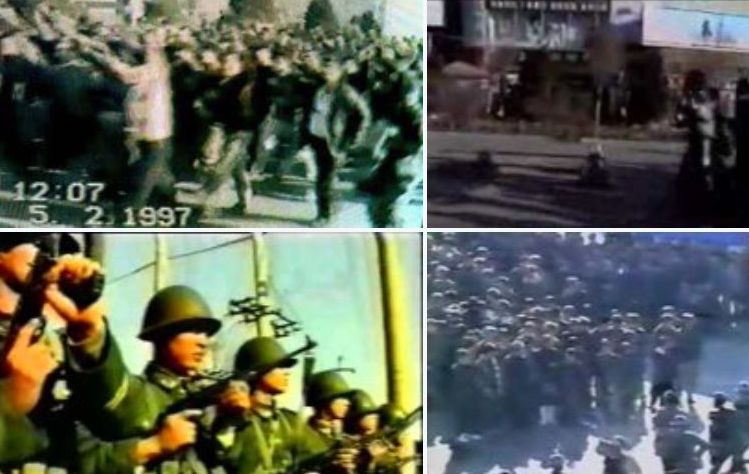
In the annals of history, February 5, 1997, etched a painful chapter in the story of the Uyghur people. On that fateful day, the streets of Ghulja resonated with the heartfelt pleas of Uyghur men, women, and children seeking equality, religious and cultural freedom, and the right to express themselves without repression. Their peaceful demonstration, however, was met with brutal force from units of the Chinese People’s Armed Police and riot police leading to Ghulja massacre.

Backdrop of the Massacre

Ghulja massacre was the culmination of the protest, a series of demonstrations in the city of Yining—known as Ghulja in Uyghur—in the Xinjiang autonomous region of China. During 1980s, the mishrep, a traditional Uyghur male gathering, which involves music, dance, and poetry, was popular. In the mid-1990s, China, which is clearly an authoritarian regime that controls every aspect of common life, began to consider the mishrep as threat as it was alien to mainland China. Accordingly, China launched, what is known as, “Strike Hard” campaign. Under this campaign in 1996, China jailed Abduhelil Abdurahman, a prominent organiser of meshrep meetings, and subsequently beat him to death by Chinese authorities in Xinjiang, while in custody. Meshrep organisers and attendees became the primary targets of “Strike Hard” campaign.  

Under this Strike Hard, a group of women were also arrested for participating in Meshrep on 3rd February 1997. While the Uyghurs were struggling to preserve their culture and tradition, the arrests prompted them to stage a protest. On February 5, the protestors started demonstrations and marched saying “God is great” and “Independence for Xinjiang.” The Chinese police launched a crackdown over the peaceful protestors.

Ghulja massacre reality that unveiled afterwards

Tragic scene unfolded as security forces opened fire into the crowd, resulting in the immediate death of as many as 30 Uyghurs, with over a hundred sustaining injuries. This tragedy marked a turning point, highlighting the daily racial discrimination faced by the Uyghur community, leading to their cultural and economic marginalization.

While the Chinese authorities tried to blame the protestors and downplay the massacre, the aftermath revealed a stark miscarriage of justice. An Amnesty International report in April 1999 uncovered that over 200 Uyghurs faced execution for their participation in the peaceful protest. Shockingly, this injustice continued as Uyghurs were imprisoned for their role in the Ghulja demonstration, while the perpetrators of the violent crackdown remained unaccountable.

The echoes of the Ghulja Massacre persisted, reflecting a cycle of repression and the desperate cry for justice and freedom.

Recurring incidents

Since then, there have been number of incidents where Uyghurs have been massacred. One such incident unfolded on July 5, 2009 in Urumchi.

Reportedly, Chinese action in Urumchi led to detainment of thousands of Uyghurs. Many were simply disappeared off the face of the earth; at least nine have been executed after unfair trials. Unfortunately, neither the Ghunja was last nor the Urumchi. In fact, Chinese persecution and systematic purge are becoming more subtle and appalling. This year marks the 27th anniversary of the Ghulja Massacre, it becomes a poignant reminder of the ongoing struggles faced by the Uyghur community in occupied region. Even more, the massacre reminds that the international community must not avert its gaze from the systematic human rights violations perpetrated against the Uyghur population.

The cry for justice and freedom that reverberated through the streets of Ghulja in 1997 remains undiminished. The Uyghur struggle is a testament to the enduring human spirit and the quest for dignity, freedom, and the right to exist without fear. This anniversary is a clarion call for global solidarity and action. As the world marks the 27th anniversary of the Ghulja Massacre, it is a moment to reaffirm our collective commitment to human rights and justice for the Uyghurs.
Ladakh demands statehood and constitutional safeguards

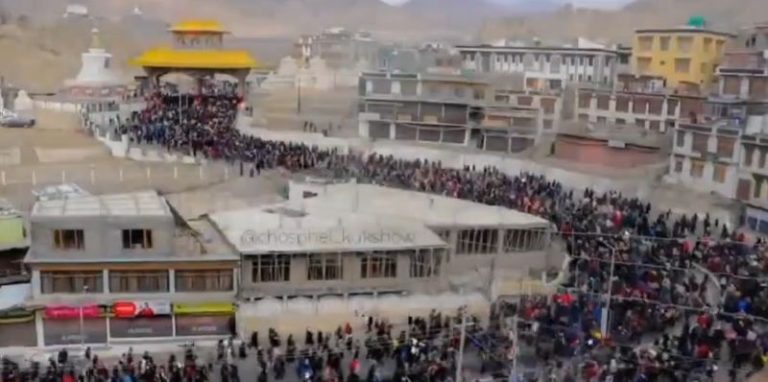
In an unprecedented display of unity and determination, residents of Ladakh have taken to the streets, enduring extreme weather conditions to voice their demands for statehood, constitutional safeguards, and separate parliamentary seats for Leh and Kargil. The protests, organized by the Leh Apex Body (LAB) and the Kargil Democratic Alliance (KDA), have gained momentum, drawing attention to the pressing concerns of the region’s residents.

Despite temperatures plummeting below freezing and heavy snowfall blanketing the region, thousands of men and women marched through the streets of Leh, the main city of Ladakh, on Saturday. Bearing placards and chanting slogans, the protestors called for immediate attention to their demands, highlighting the challenges they face as a centrally-administered Union Territory.

Key Demands

The protestors have put forward four demands, namely:

  • Implement the 6th Schedule of the Constitution.
  • Ladakh should be given the status of a full state.
  • Allot separate seats in Parliament to Leh and Kargil.
  • Form Ladakh Public Service Commission for job reservation.

Accordingly, the protestors argue that these measures are crucial to addressing the socio-economic and political aspirations of the people of Ladakh.

Concerns Over Representation

Legal advisor to LAB and KDA, Haji Ghulam Mustafa, expressed concerns over the diminishing representation of Ladakh since it became a Union Territory. He emphasized that before Article 370 was abrogated, Ladakh was part of J&K state and had representation in state legislature with 4 seats reserved in Legislative Assembly and 2 seats reserved in Legislative Council. But after the abrogation, Ladakh was made a centrally governed UT with no provision of state legislature. According to protestors, this has diminished the representation of people in the crucial governance matters and that it could only be corrected through statehood for Ladakh.

It is worth mentioning here that the two Autonomous Hill Development Council, one for Leh and one for Kargil are the only elected bodies of the people, which were provisioned in 1993 and was given effect by the Ladakh Autonomous Hill Development Council Act, 1995. Apart from these two LAHDCs, Ladakh has only one seat representation in Parliament.

Response from the Central Government

As a matter of fact, the ruling party at the centre, i.e., Bhartiya Janta Party (BJP) had, in 2020, maintained that it supports the inclusion of UT into the 6th schedule of the constitution to protect the land, jobs and environment by focusing on Ladakh’s unique linguistic and ethnic identity.

The central government has taken note of the growing unrest, forming a high-level committee, led by Union Minister Nityanand Rai, to address Ladakh’s concerns. While the government’s response indicates a willingness to engage with the issue, protestors contend that concrete steps, such as the restoration of full statehood and the implementation of the 6th Schedule provisions, are imperative for the region’s well-being. Notably, the 6th schedule of the Indian Constitution describes the establishment of autonomous district councils (ADCs) in tribal areas populated by indigenous groups. Accordingly, these ADCs aim to safeguard and maintain tribal culture. 

As per protestors, implementation of 6th schedule will pave way for the safeguarding of ethnic rights and claims of indigenous people. With due consideration, this demand is more focused on maintaining the autonomy of the local people so as to guarantee no demographic changes in Ladakh.

Pak Army forcibly abducts another Baloch student from Gwadar, Pak-occupied Balochistan

Yet another distressing incident of enforced disappearance occurred in Gwadar, Pak-occupied Balochistan where a young student named Mohsin Baloch, has been forcibly disappeared from Gwadar by the Pak Army on 2 February 2024.

The victim Mohsin Baloch, is an internally displaced person (IDP) who had to flee his hometown, Dasht Kombel, after continuous military operations that led to disappearances, killings, and the burning of his other family members’ houses.

This is another despicable act in less than a week of abduction of a Baloch student named Mehboob Baloch, who was a fifth-semester student at Lasbela University of Agriculture, was en route to his hometown Turbat, Kech for a vacation when he was abducted by the Pak Army from a passenger bus in the Gwadar district of Pak-occupied. This incident ignited the Baloch students to protest and block the Makkoran Coastal Highway road.

Additionally, ten cases of forced disappearances from Dera Bugti were reported in the last week of January itself. The victims are identified as Master Ghaus Bakhsh, GTA District President, Jamhoori Watan Party activist, Rahim Dad, Swali Bugti, Atifullah and three unidentified youths from Shahzain Pump area of Sui are reported missing

Reportedly in Paank annual report of 2023, a total of 576 cases of enforced disappearance were recorded in 2023 alone. The Pak Army has caused a heinous violation of the human rights of the Baloch community since their forceful control of Balochistan on March 27, 1948. Since then, the Baloch people have faced frequent home invasions, torture, enforced disappearances, kidnappings for ransom and target killings.

Pashtuns protest in front of White House demanding release of Manzoor Pashteen

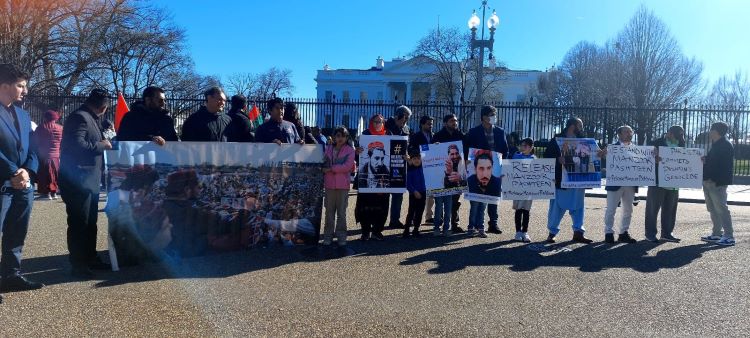
In a powerful display of solidarity, hundreds of protestors gathered in front of the White House on February 3, raising banners emblazoned with the words “Release Manzoor Pashteen.” The demonstration, organized by the Pashtun Tahafuz Movement (PTM) USA, aimed to expose the alleged atrocities committed by the Pakistani regime and draw attention to the illegal imprisonment and ill-treatment of their leader and prominent activist Manzoor Pashteen.

The protestors passionately called upon the United States government and the international community to exert pressure on the Pakistani regime for the safe release of Manzoor Pashteen. The detained activist has become a symbol for the PTM movement, advocating for the rights of the Pashtun community in Pakistan.

Meanwhile, the demonstration unfolded with fervent speeches and impassioned pleas for justice. Protestors held signs as well as chanted slogans, in a bid to inform the world about the human rights abuses that are taking place in Pakistan. The banners held high read “Release Manzoor Pashteen,” capturing the essence of their demand for the immediate and safe release of the activist.

Leaders of the PTM USA addressed the crowd, emphasizing the urgency of the situation and the need for international intervention. They urged the global community to take notice of the ongoing oppression and persecution faced by the Pashtun community in Pakistan.

As the demonstration gained momentum, protestors recounted the details of Manzoor Pashteen’s illegal imprisonment and the reported ill-treatment he has endured while in jail. The PTM USA organizers vowed to continue their efforts until justice is served and called for solidarity from the international community.

The protest at the heart of the United States capital marked a significant moment in the ongoing struggle for human rights in Pakistan, as PTM supporters and sympathizers gathered to shed light on the grave injustice.

Ireland condemns human rights violation by Pak Army in Pak-occupied Balochistan

Recently, Michael Martin, Irish Minister of Foreign Affairs expressed grave concerns in written form raised by Paul Murphy, Teachta Dála (TD) for the Dublin South-West constituency, regarding Pakistan Army’s war crimes in Pak-occupied Balochistan.

During a Human Rights debate on January 30, 2024, in the lower house, Dáil Éireann, Deputy Paul Murphy brought up the urgent matter of ongoing war crimes in Pak-occupied Balochistan in a written inquiry. He mentioned in particular the enforced disappearances since 2000 of thousands of Baloch activists, including academics, physicians, lawyers, and students. Murphy’s investigation aimed to ascertain whether Ireland would oppose Pakistan’s conduct and explore options like applying sanctions to stop these violations.

Minister Martin responded by recognizing the intricate instability in Balochistan. Speaking of recent bilateral talks in Islamabad, he underlined Ireland’s continued engagement with Pakistan, saying, “Our discussions with the Pakistan establishment have been thorough, covering a wide range of political and human rights issues.”

The Minister explained Ireland’s stance on sanctions, emphasizing that although it does not apply sanctions on its own, it actively carries out UN and EU sanctions as part of an integrated policy strategy. He pledged to keep working to bring up human rights issues with Pakistan in multilateral and bilateral fora. The Minister also voiced concern about the recent escalation of regional hostilities, which could further destabilize the area and include airstrikes in Balochistan by Pakistan and Iran.

Furthermore, the minister also highlighted how Ireland’s foreign policy is based on a broader commitment to human rights. He described Ireland’s positive participation in the UN Human Rights Council, wherein it pushed Pakistan to amend its laws on blasphemy and institute an independent inquiry into enforced disappearances. The recommendations put forth are intended to tackle discrimination and guarantee responsibility for human rights violations.

The Minister also stated that, while an Irish embassy is being opened in Islamabad later this year, the Irish embassy in Türkiye, which is accredited to Pakistan, is monitoring the situation in Pakistan closely in close consultation with the EU Delegation.

The people of Pak-occupied Balochistan are battling against the atrocities and Baloch genocide committed by the Pak Army of daily home raids, disappearances, staged encounters, target killings, torture, humiliation at checkpoints, and kidnappings for ransom they have been subjected to since the Pakistan Army forcefully occupied their region on March 27, 1948. It is highly crucial that the international community stands in solidarity with the Baloch people and takes decisive action to address their grievances and ensure justice and freedom for all.

Tributes pour in as Quetta releases martyred bodies of BLA fidayeens from Dara-e-Bolan

In a response to the ongoing demands of Pak-occupied-Balochistan residents, Quetta’s Civil Hospital has finally handed over the bodies of those lost in Operation Dara-e-Bolan, putting an end to a distressing two-day delay. The gathering of locals outside the hospital, demanding justice and the return of their loved ones, has resonated deeply.

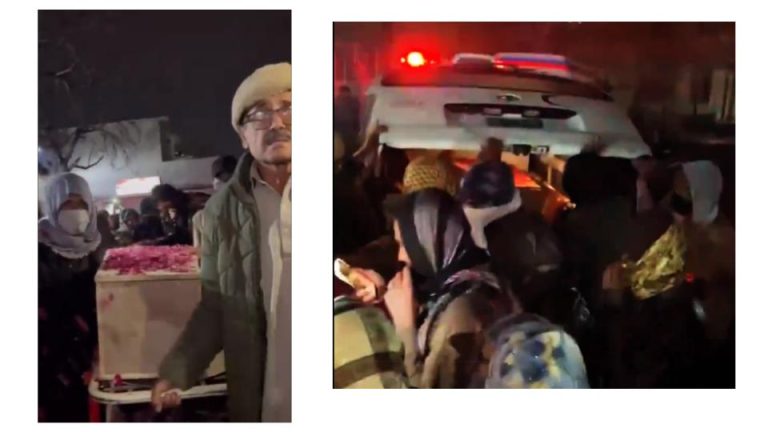
On Friday evening, the hospital administration released six out of the fourteen bodies, including Kashif Shahwani, Wadood Satakzai, and Salal Akbar. This gesture followed relentless pleas from families, particularly the family of Salal Akbar from Parom, Panjgur.

An emotional tribute unfolded outside the hospital, where people lined up and showered the coffins with flowers. Heartfelt slogans echoed in honor of the fallen BLA fighters from Operation Dara-e-Bolan.

Furthermore, the Baloch Liberation Army (BLA) has released details of its brave freedom fighters “fidayees,” who have sacrificed their lives for the Baloch cause. The statement revealed a diverse group including university graduates, an author, a poet, and a hafiz-e-Quran. These 13 individuals hailed from various regions, and the people of Quetta expressed their solidarity by showering flowers on the coffins of the BLA fighters lost during the Mach attack.

Honoring the Martyred

The BLA also provided clarity on the identities of the martyred, asserting that 12 of the 14 bodies belonged to its Majeed Brigade, who sacrificed their lives during Operation Dara-e-Bolan. The BLA emphasized that the remaining two individuals, a Levies official and a peon from Mach city, were not affiliated with their organization. However, these people sought safety during the fighting and turned themselves in to the BLA, but they were tragically killed by indiscriminate mortar fire from the Frontier Corps.

As the bodies return to their families, this sad event shows how strong the community is, wanting fairness and remembering those who gave everything. The bravery of these heroes will stay forever, pushing the Baloch community to demand responsibility and pay tribute to their memory.

The people of Pak-occupied Balochistan are staunchly battling the atrocities of daily home raids, disappearances, staged encounters, target killings, torture, humiliation at checkpoints, and kidnappings for ransom they have been subjected to since the Pakistan Army forcefully occupied their region on March 27, 1948. Their demands for justice reverberate across Pak-occupied Balochistan’s landscapes, growing louder with each passing day.

Baloch freedom fighters send a clear message to Pak Army with multiple coordinated attacks

In a resolute series of actions, Pak Army has witnessed a surge of attacks, numbering 39 since Tuesday, as nationalist forces aim to make a powerful statement. The Media Cell offices of the Pakistan People’s Party in Kalat were targeted, becoming a symbol of resistance. Election campaign offices on Western Bypass Quetta faced a calculated assault in this strategic move.

In addition, two more attacks have occurred, bringing the total tally to 41 in under 36 hours. This includes multiple grenade attacks on the residence of former Minister Rehmat Saleh in Panjgur and a failed bomb attack targeting the offices of National Assembly candidate Ijaz Sanjarani in Kharan.

A landmine blast in Dera Bugti and the targeting of a polling station in Jiwani were meticulously executed, intensifying the ongoing resistance that has persisted for over 24 hours. Pak “establishment” has also witnessed an additional 2 attacks, reaching a total of 34 within the past day. The fight extended to a Pakistan Army outpost in Keelkor and a military checkpoint at the Airport roundabout in Turbat.

These attacks are a strategic attempt to expose the deceptive nature of elections orchestrated by the Pak Army in the occupied region. The facade of elections, portrayed as a symbol of governance, are a tool for the oppressive Pakistan “establishment” to tighten its grip on Balochistan. In the midst of these operations, nationalist organizations and leaders are asking the public to reject the manufactured lies of the Army.

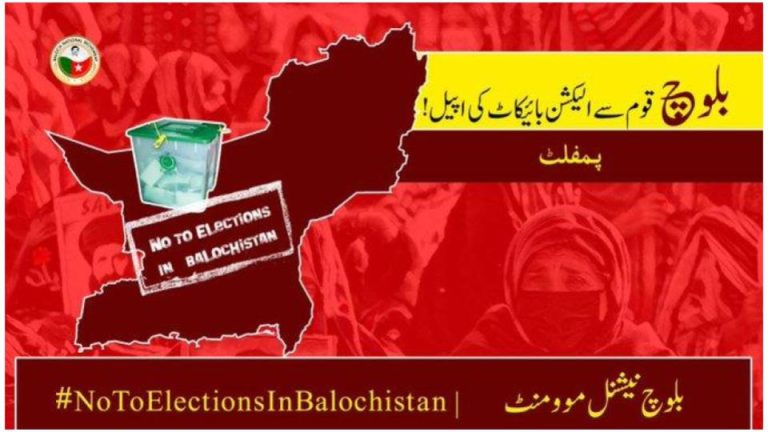
The Baloch National Movement urges the Baloch people to boycott the upcoming elections, emphasizing that voting would betray the sacrifices made by countless Baloch mothers who lost their sons to the oppressive Pak Army. They call on the populace to stand behind the forces of the Baloch liberation movement, turning the electoral resistance into a symbol of defiance.

Pro-independence Baloch leader Dr. Allah Nazar Baloch, head of the Balochistan Liberation Front, vocalizes the gravity of the situation on social media. He appeals to the Baloch not to vote, revealing the complicity of the Pakistan’s parliament in atrocities against the Baloch people. He emphasizes their failure, exemplified by the sale of Gwadar in the name of #CPEC, benefiting China 75% and Islamabad 25%.

At this critical juncture, the Balochi Raaji Aajoi Sangar (BRAS), an alliance of Baloch Liberation Front (BLF), Baloch Liberation Army (BLA), Baloch Republican Guard (BRG), and Baloch Republican Army (BRA), issues a stark warning. BRAS declares that their freedom fighters are prepared for intensive attacks on the elections scheduled for 8th Feb and urges the Baloch public to stay away from the polls.

In a resounding proclamation, BRAS claims responsibility for 63 attacks in the last four days, targeting Pakistan Army, election campaigns, Army-affilicated infrastructures, and important installations in Pak-occupied-Balochistan, Sindh, and Punjab. This calculated resistance signifies a determined effort by nationalist forces to reclaim Balochistan’s autonomy and assert their identity in the face of continued oppression.

The upcoming days are crucial, shaping a narrative of resistance against oppression. The world watches, and the echoes of this struggle reach beyond borders, highlighting the resilience of Baloch people fighting for their identity and autonomy.

Pashtuns commemorate fifth death anniversary of Prof Arman Loni amid ongoing struggle

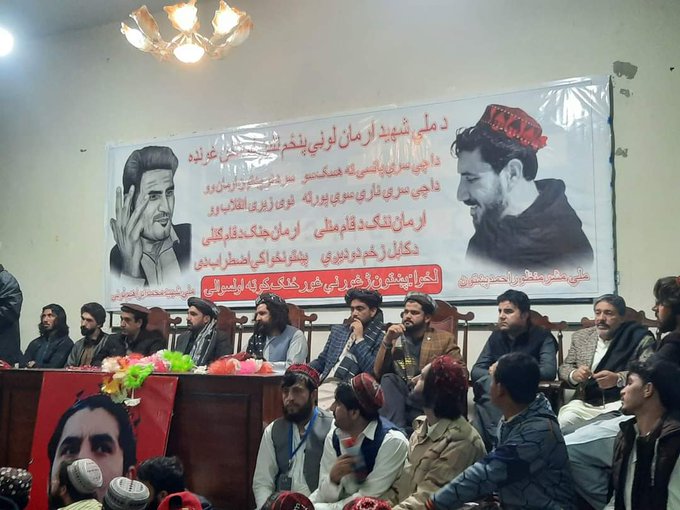
Pashtun Tahafuz Movement (PTM) convened a solemn gathering to mark the fifth death anniversary of Professor Arman Loni, who lost his life during a peaceful protest in 2019. The event was organised at the Quetta Press Club that saw participation of hundreds of Pashtuns and PTM activists, reflecting on the ongoing challenges faced by the movement.

Professor Arman Loni, an advocate for human rights and an educated figure, was tragically killed by the police during a peaceful demonstration in Loralai. The meeting highlighted the brutality of the establishment, which resulted in the loss of a prominent academic and activist who stood against extra-judicial killings.

During the commemoration, attention was drawn to the current situation where PTM Chief and several activists are incarcerated due to persecution and oppressive policies by the Pakistani establishment.

Recently released from jail, key PTM figures, Gilaman Pashteen and Id-ul-Rehman Wazir, addressed the gathering, shedding light on the crackdown on Pashtun activists, their alleged torture by Pakistani authorities, and the deteriorating conditions faced by the Pashtun community. PTM Provincial President for Balochistan, Noor Bacha, also voiced his concerns during the meeting.

Prof. Arman Loni

Professor Arman Loni was a PTM activist whose life was cut short in 2019 during a peaceful sit-in in Loralai. The protest, initiated by PTM in response to the violence in the region, aimed to highlight the plight of innocent Pashtuns caught in the crossfire between the Pakistan Army and the Tehreek-e-Taliban Pakistan (TTP).

Despite the police asserting Professor Arman Loni’s death was due to a heart attack, a postmortem report revealed a blood clot in his brain. Five years have passed since the incident, yet justice remains elusive for Arman Loni. The PTM alleges that the Pakistani establishment continues to assault peaceful protestors and Pashtun activists, illustrating a persistent and concerning pattern of behavior.

As the PTM commemorates this somber anniversary, the movement vows to persist in its advocacy for justice, human rights, and an end to the alleged persecution faced by the Pashtun community.

Relatives of forcibly disappeared Baloch by Pak Army protests, blocks main road from Turbat to Karachi

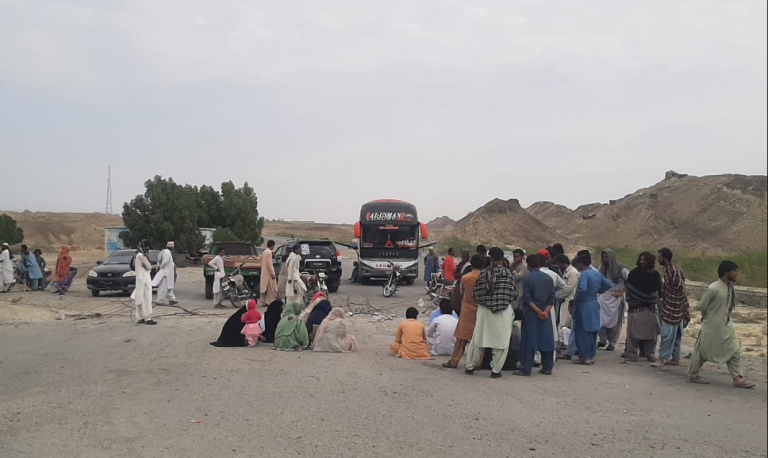
In a defiant move, families of people who were forcibly disappeared by the Pak Army blocked the main road from Turbat to Karachi at D Baloch and are demanding the release of their loved ones. Six families held a sit-in, and more joined as a show of support.

The families of the victims are urging the public to participate in their demonstration and amplify their call for justice. They call for the prompt release of the missing individuals: Abid Washdil, Adeel Iqbal, Ahmed Nazeer, Shoaib Laiquait, Jahanzaib Fazal and Zareeef Mohammad Bakhsh.

Their staunch appeal echoes across the region, highlighting the atrocities they face from the Pak Army with forced disappearances of their loved ones. As the sit-in protest gains momentum, the pressure on the Pak “establishment” and their puppet authorities increases to resolve the ongoing human rights crisis and genocide in the region.

This is not an isolated incident, recently the family of Bahadur Chakar from the Tejaban area in the Kech district also persisted for a sit-in protest against the forced disappearance of their relative by the Pak Army. In not more than three days, seven Baloch students have been detained from two districts and have been shifted to unknown locations by the brutal Pak “establishment”, only adding to the anguish of the affected families.  

The affected families’ challenges continue to occur, highlighting the critical need for attention and action. The horrifying reality of enforced disappearances in Pak-occupied Balochistan, spanning decades, continues to unfold. Since March 27, 1948, the oppressive Pak Army has been forcibly occupying Balochistan and waging a systematic war against humanity. Since then, the Baloch community have experienced numerous forced disappearances, home invasions, torture, kidnappings for ransom, and targeted killings.

Multiple armed attacks amidst election preparation in Pak-occupied Balochistan

There were multiple attacks throughout Pak-occupied Balochistan, resulting in numerous casualties and property damage from explosions and gun attacks.

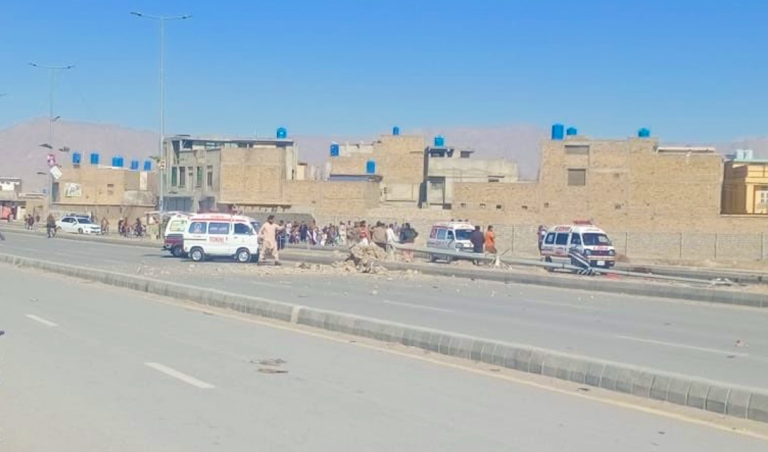
A bomb blast in the capital Quetta, resulted in the death of one person near the police post on Sabzal Road. The identity of the victim is still unknown.

Two more consecutive blasts occurred on Qambarani Road in Quetta, which targeted a Police Eagle Force vehicle and the PML-N election office. Hand grenades were used by unidentified individuals on the PML-N office, while IEDs were used on the Eagle Forces vehicle. The Eagle Forces vehicle was severely damaged, but no casualties were reported.

The Election Commission of Pakistan (ECP) has taken notice of the attacks on election candidates and has asked the Chief Secretary and Inspector General of Pak-occupied Balochistan for a report as soon as possible.

In another incident, a trawler transporting precious stones was ambushed by unidentified gunmen in the Mangochar area of Kalat on the N-25 highway that connects Karachi and Quetta. This is the second incident in the past 24 hours involving attacks on companies engaged in resource exploration on the same highway.

Additionally, a hand grenade that was thrown at the Pakistan Coast Guard’s office’s main gate failed to detonate. The grenade was neutralized by the bomb disposal team.

Sepoy Mudasir, a soldier, was hurt when an unidentified person threw a hand grenade at the Central Jail in the Mastung district. He was taken to the hospital. Furthermore, there were no injuries reported from the hand grenade that was thrown at the Deputy Commissioner (FC) office in the Panjgur neighbourhood of Chitkan.

Unidentified armed men stormed a coal mine in the Dukki district and kidnapped two miners—Haider and Masood—who were Paktia, Afghanistan, residents. In addition to expressing worry about the incident, the miners confirmed that they had received threats from the attackers to quit working at the mine site immediately.

Separately, in the Noshki district, unidentified armed men attacked a Pak Army outpost. Six more attacks targeted the positions of Pak Army in various parts of the Kech district yesterday.

One Frontier Corps (FC) soldier was reportedly hurt in Turbat city by a grenade attack on an FC post at Ghulam Nabi Chowk.

Four separate attacks were carried out by unidentified armed men on the Pak Army outposts in the districts of Kech, Ginnah, Sami Kalag, and Shepchar of Mand. Reportedly losses of life and property have been indicated to the Pak Army in these attacks, but authorities have not issued a statement yet.

Meanwhile, a Pak Army post in the Hoshap area of Kech was targeted by more than ten rockets, and the Pak Army sustained significant casualties.

Four people were injured in a cracker blast on the national highway in the Jafarabad district’s Dera Allah Yar area. They were subsequently transported to the hospital.

Over 29 attacks on the Pak Army, political candidates, and companies exploring natural resources have occurred in the last 24 hours in various districts of Balochistan, including Quetta, Khuzdar, Kech, Panjgur, Dukki, Kalat, Noshki, Mastung, and Hub Chowki. So far, no organization has taken credit for these attacks.

Since the Pak Army forcibly occupied Balochistan on March 27, 1948 tensions have persisted in the region. The Pak Army has perpetrated severe human rights violations and genocide against the Baloch people. The resource-rich region has been inflicted with the brutal “kill and dump” policy, enforced disappearances, indiscriminate shooting and extra-judicial killings. To remove the Pak Army and their violence, freedom fighters have emerged in the region. Their sole motive is to seek independence from Pakistan and protect the Baloch ethnic group from the ongoing atrocities.