Home Blog Page 152

Pak Army burns down hundreds of villages in Pak-occupied Balochistan

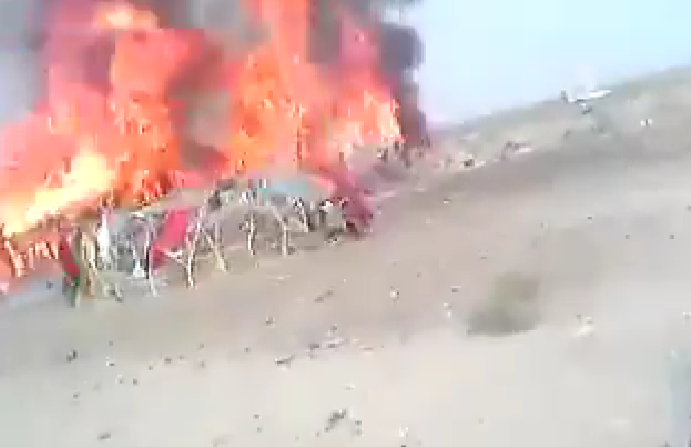
In a disturbing case, the Pak Army has burnt down hundreds of villages in Pakistan-occupied Balochistan forcing mass evacuations. This reprehensible action of the Pak Army has resulted in displacing thousands of innocent families who are now left to languish as IDPs.

This blatant disregard for basic human rights is nothing new to the Pak Army who have consistently inflicted their atrocities to the innocent Baloch people. The Baloch people have been subjected to ceaseless oppression since March 27, 1948, including daily home invasions, abductions for ransom, disappearances, simulated encounters, target killings, and torture.

The provinces of Pak-occupied Balochistan have become a focal point of exploitation, with the Pak Army orchestrating a sinister plan to plunder the region’s wealth. This crisis needs urgent global attention and efforts towards peace and justice in Balochistan.

Chaman protest against Pakistan’s mandatory passport policy along the Durand line continues

Protests in Pakistan have become a common practice because of the negligent establishment which is habitual of ignoring the causes of common people. In a series of these protests, a huge Chaman protest is ongoing for past three months, and as expected, no constructive and solution-oriented approach has been taken by Pakistani establishment. On the contrary, it has used its coercive power to make the protest go unreported. Its pitiful that a peaceful protest that is happening for so long and relates to a densely populated community has been kept alienated.

Notably, Chaman is one of the busiest and most popular border crossing routes at the Durand line, which is used by the Pashtuns to enter Afghanistan for trade and meet their relatives. Instead of facilitating them and crafting a more people-oriented policy, Pakistan abruptly suspended the long-established norms and made the passport mandatory.

Long established Tazkira provision suspended

For years traders and other people with relatives across the border have travelled to either side of the border. The presence of a community on both sides of the border makes the issue complicated. Earlier, Pakistan had employed a provision of issuing daily slips called Tazkira, as a permission to cross the border with a condition of an evening return. Along with Tazkira, Pashtun-Afghans had to show their national identity card.

But in October, Pakistan announced that this provision of Tazkira would be suspended and a new “one document regime” would be enforced from 1 November. This enraged the masses and hence on October 23, a large number of protestors with a count of more than 35, 000 started Chaman protest.

They are demanding that the erstwhile Tazkira rule should be reinstated, and that the compulsion of passport should be ended with immediate effect. However, Pakistan has completely ignored these demands.

Reason behind Pakistan’s ignorance of Chaman protest

Actually, Pakistan always thought that the Taliban regime, once comes to power, would be friendly and would allow Pakistan to change the long-contended Durand line as per its own wish. It also thought that the terrorist which are instrumental to its policies would get a refuge in Afghanistan but under its control. But things changed dramatically, the Afghan Taliban posed a solid diplomatic confrontation to Pakistan on the issue of Durand line. Similarly, TTP also came openly against the Pakistan Army unexpectedly which also became the bone of contention between the terrorist Taliban regime in Afghanistan and Pakistan. Pakistan has for long blamed Taliban for providing safe haven to the TTP.

This friction escalated to the zenith during the Chitral clashes where TTP occupied various villages in territories controlled by Pakistan. In the aforesaid conflict, Pakistan Army faced a humiliating damage at the hands of terrorists which prompted Pakistan to deploy air support. After the clashes, the frustrated Pakistan Army commanded every institution to act against Afghans, which resembled first in the forced repatriation of Afghan refuges residing in Pakistan.

In the same pursuit, Tazkira was also suspended, and passport was made mandatory. It is unfortunate that Pakistan has always employed illicit tactics as a policy and when it backfired, it forced the people to bear the consequences.  Instead of correcting its own policies and taking peaceful recourse, Pakistan has chosen to punish their own population.

So, Chaman protest is a testament to the fact that Pakistan has not only failed at policy level but also its people.

Pak Army’s despicable tactic against Baloch activist Sammi Deen Baloch

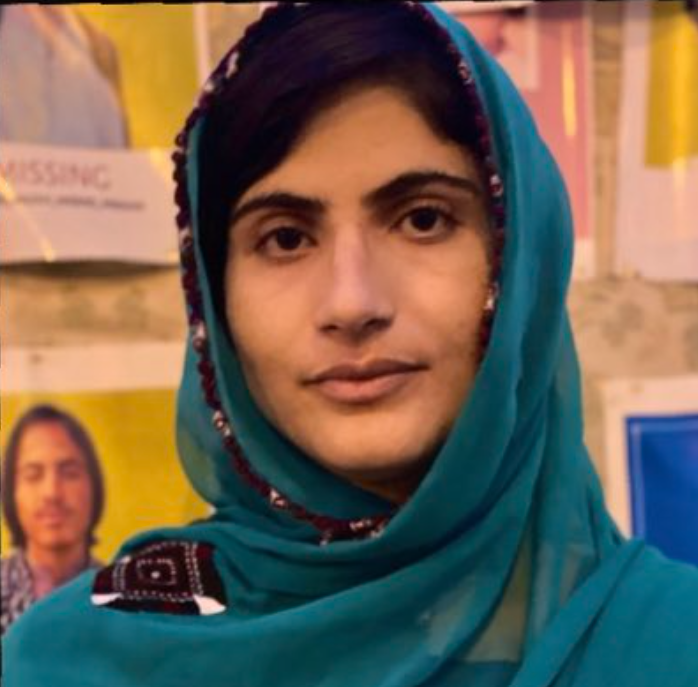
In a shameful act of desperation, the Pak establishment has sunken to new lows by resorting to deceitful photo editing to tarnish the reputation of fearless activist Sammi Deen Baloch. This is disgusting attempt of propaganda to silence female activists only serves the moral bankruptcy of the Pak Army and its puppeteers.

Sammi Baloch gave a befitting reply, stating “After my blunt response yesterday, a vulgar and dirty propaganda campaign is underway against me on various social media accounts based on my fabricated pictures. The days are gone when the privacy of a woman was used as a blackmailing and character assassination tactic to silence her and suppress her voice.

Undoubtedly, it was my personal decision to come before the media in a veil, but some people have considered this thing as my weakness as a woman. In this struggle, we have put our lives and much more at stake without caring about our lives, but congratulations to them and their patrons for their immoral actions.”

Propaganda like these will only crumble before their bravery and resilience as female activists are the strongest of all and they know how to remain steadfast in the face of their horrific tactics of torture, arrests, and threats.

This is just another attempt by the oppressive Pak Army to stifle the voices of dissent and suppress the Baloch struggle for independence. The Pakistan Army has a long history of using the CTD and police as instruments of oppression, engaging in brutal kill-and-dump policies, staging encounters, daily home raids, target killings, torture, and humiliation at checkpoints. Balochistan has been forcibly occupied by the oppressive Pak Army since March 27, 1948. During this time, the Baloch community has been subjected to daily home raids, disappearances, staged encounters, target killings, torture, humiliation at checkpoints, and kidnappings for ransom. Baloch people are being targeted and watched over by the Pak Army, and anyone who might pose a question is either killed or kidnapped. It’s time for global attention to address the grave injustice that has been caused to the Baloch community by the Pak Army.  

2023: BLF killed 241 Pak Army soldiers in 284 attacks in Pak-occupied Balochistan

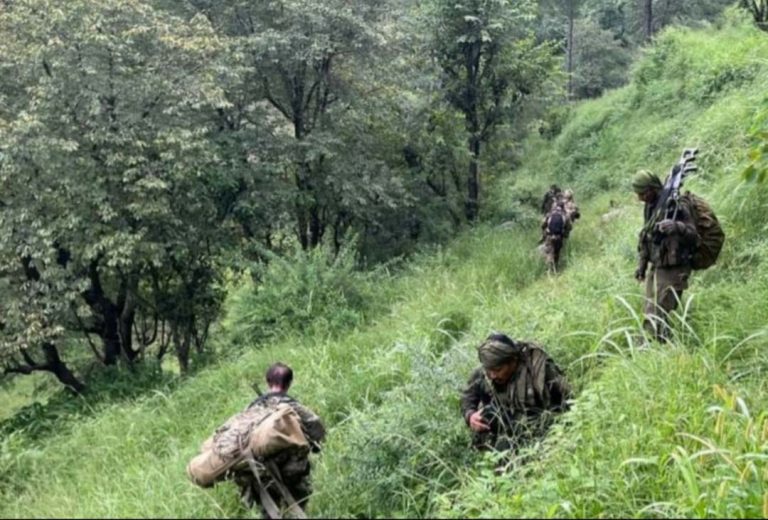
Recently, the Balochistan Liberation Front (BLF) has published its annual operational report for the year 2023. Despite the unstable situation in Balochistan, the Balochistan Liberation Front (BLF) has gained significant victories throughout the year by continuing to engage in armed operations aimed at overthrowing the Pak Army and its allies. The highly trained fighters of the BLF have defeated the enemy forces on multiple fronts as a result of the operations.

The report highlights a total of 284 attacks carried out killing more than 241 personnel and injuring more than 161. Pak Army suffered a significant material loss as a result of these attacks as more than 46 vehicles, 30 communication towers and machinery were destroyed. As a tragic reminder of the sacrifices made in the liberation struggle, 35 freedom fighters from the Baloch Liberation Front (BLF) were martyred in 2023.

The Pak Army has been occupying Balochistan since March 27, 1948, and during that time it has carried out multiple atrocities against the Baloch people, resulting in immense suffering and violations of their human rights. In addition to reports from a range of sources, there have been widespread military operations, enforced disappearances, extrajudicial killings, torture, and genocide in Balochistan. The actions of the Pak Army have caused fear and intimidation in the community and forced many Baloch families to relocate.

Because activists, citizens, and dissident voices are the targets of the ongoing military actions, tensions have increased and the fundamental liberties and rights of the Baloch people are in danger. The Baloch Liberation Front (BLF) declared its intention to continue attacking the Pak Army and its allies until the Baloch motherland is liberated.

BLA attacks Pak Army in Turbat

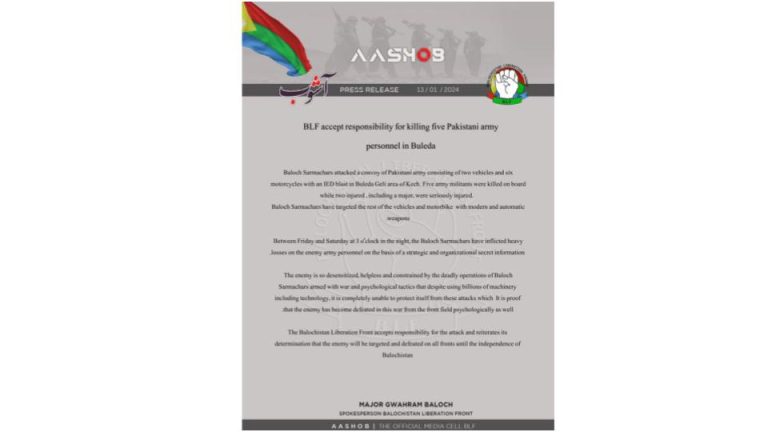
Giving a heavy blow to Pak “establishment”, the Baloch Liberation Army (BLA) attacked the Pak Army in Turbat. On the night of 10th Jan, the fighters of the BLA declared that they took ownership of the attack on the Pak Army that were present in Kech.

The brave freedom fighters launched multiple grenades at the checkpoint of Airport Chowk. The fighters targeted an occupying Army checkpoint in the city of Kech, Turbat which killed at least three Army personnel due to the explosions.

https://twitter.com/bahot_baluch/status/1745102803729867162

The Baloch Liberation Army’s spokesperson, Jeeyand Baloch, stated that these operations are a reaction to Pak Army’s continuous, violent occupation of Balochistan, and will continue till the attainment of their free homeland. Baloch people are being targeted and watched over by the Pak Army since March 1948, and anyone who might pose a question is either killed or kidnapped.

The BLA’s actions demonstrate their determination to oppose the repressive Army that has tarnished Balochistan’s history. These calculated attacks are meant to sabotage the occupying forces’ activities and discourage those who assist them. The Baloch Liberation Army is unwavering in its pursuit of a free and sovereign Balochistan as the liberation struggle heats up.

POB: Kharan protests back March Against Baloch Genocide by Pak Army

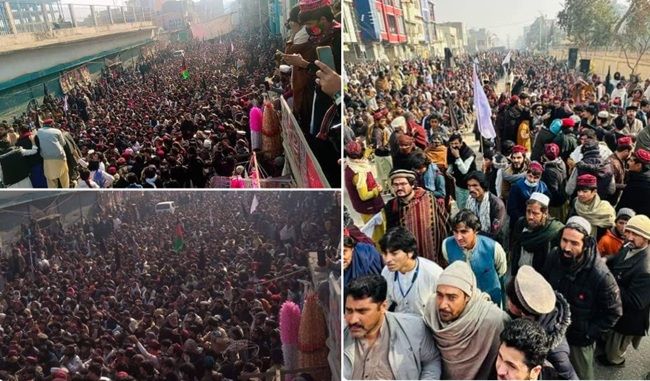
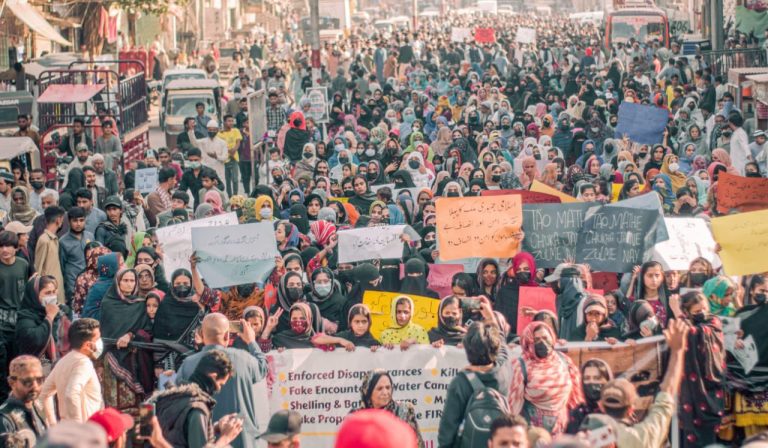
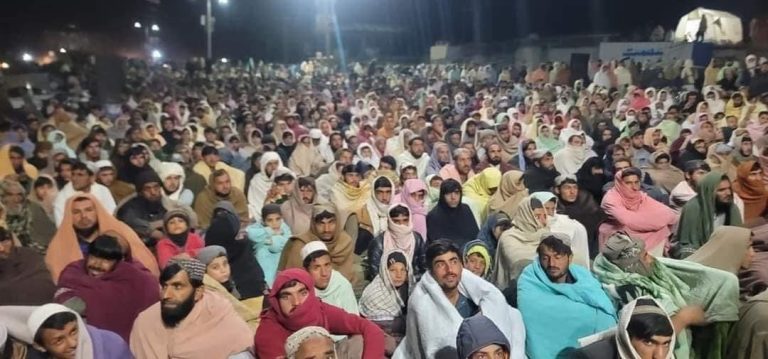
In a recent development, a massive protest took place in Kharan, Pakistan where a large crowd of people expressed their unwavering solidarity with the Baloch people in their ongoing march against the Baloch genocide. Events like this emphasizes how powerfully the Baloch people have united to voice their opposition to the injustices they endure and the need for international attention and action to address this ongoing crisis.

In addition to the protest in Kharan, protests have also been observed in Noshki on call of Baloch Yakjehti Committee. These protests mark difficult days for Pak Army. The march started in response to the Pak Army’s extrajudicial killing of Balach Mola Bakhsh, which raised questions about enforced disappearances and violations of human rights in Pakistan-occupied Balochistan.

The Baloch people have been subjected to constant oppression since March 27, 1948, including daily home raids, disappearances, staged encounters, target killings, torture, and kidnappings for ransom. The world observes the Baloch people’s brave resistance, and the cry for justice echoes outside of Balochistan. This cry won’t stop until the Pak Army’s repressive hold is released and the voices of the Baloch people are acknowledged and heard.

Pak-occupied Gilgit-Baltistan: Women protest against increase in wheat prices

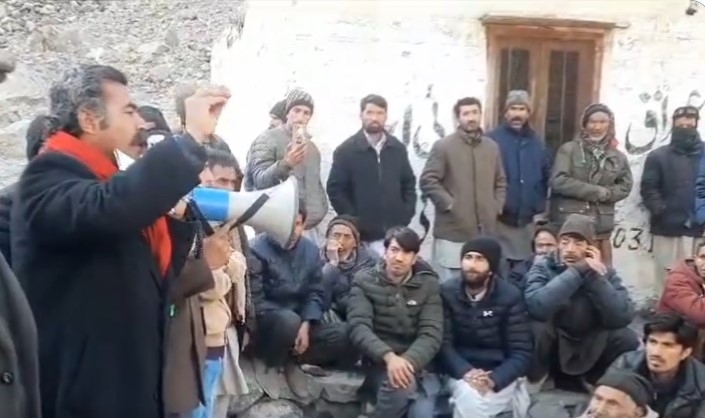
In an unprecedented event, women from Hunza a district in Pakistan occupied Gilgit Baltistan (POGB), hit out the streets in Aliabad area against the soaring prices of wheat, consequently from the removal of subsidy. The protest was held by the Women Business Association of POGB. Notably, people across POGB are already protesting at the district level. It has been 16 days, since these protests started after the occupying government issued notification on December 26th setting new price at Rs. 36 per kg.

Rapid increase in wheat prices

Earlier, in June last year, the prices of wheat increased from Rs. 12 to Rs. 20, which has now again been increased to Rs. 36 per kg. The situation is further aggravated by the newly imposed Finance Act 2023. The protestors are arguing that the prices of basic amenities in POGB is double than in entire Pakistan, which has occupied the region. According to them, subsidy is not alms but the right of people of POGB which is provided under the UN regulations since 1970s. At the front of the protests is the Awami Action Committee of POGB, which has been vocally defending the rights of people. They argue that there must be no imposition of taxes on the people of POGB. The Kashmiris in POGB have been kept alienated from their rights and their resources have been exploited by Pakistan.

Accordingly, the electricity produced out of their resources is sold to them on the prices that are equivalent to four times the production cost, which is more than what people from Pakistan pay. This discrimination and exploitation have agitated the people. And that is why in the jaw dropping winters, the daily business are stopped, and people are out on the streets protesting the absolute colonialism of Pakistan. Seeing no way out, now the women in Hunza, have also come out to the streets to join the protesting men.

No redressal from Pakistan

Awami action Committee has been warning Pakistan and its puppet government in POGB for quite some time, but their righteous voices have gone unheard so far. Instead of taking cognizance of the seriousness of the matter, Pakistan is using the coercive measure. First, it has included the members of Awami Action Committee in Schedule 4, identifying peaceful protestors as terrorists; second, they imposed Section 144 in Gilgit to thwart the protest. And above all, it is also misusing its influence over media due to which the protest has remained out of mainstream reporting. No media house is emphatically reporting the agitation which is of key importance for the lakhs of POGB population.  

So, women leaving their daily business in Hunza to hold a protest signifies that the problem faced by them is quite big and needs urgent redressal. Unfortunately, after 16 days of agitation, no constructive decision has come out.

#IStandWithBalochMarch campaign against Baloch genocide gains global solidarity

The recent social media campaign launched by the Baloch Yakjehti Committee (BYC) #IStandWithBalochMarch is gaining global momentum. People worldwide are uniting on social media and sharing their videos and posts to support the Baloch people in their march against the ongoing Baloch genocide.

The latest post by the Baloch Yakjehti Committee (BYC) presents a video compilation of people belonging to various regions, age groups and professions who are expressing their unwavering solidarity with the Baloch people march against the ongoing Baloch genocide by using the #IStandWithBalochMarch campaign. By sharing their video clips people are encouraging the participants of the Sit-In at NPC, Islamabad and resist the genocide of the Baloch nation. People have shown this to the Pak establishments that families at NPC, Islamabad are not alone in their struggle but people across the world stand with them in their cause. BYC expresses gratitude to all those who have participated in the social media campaign, as their messages of solidarity serve as a source of courage in this ongoing struggle.

The Baloch Yakjehti Committee (BYC) recently launched a global social media campaign #IStandWithBalochMarch: Uniting Voices for Justice to draw global attention and solidarity to the ongoing atrocities on the Baloch people. The campaign invites everyone to join in showing support for the Baloch March, with a special emphasis on the people of Pakistan. It has been long since the Baloch people have organised and resisted genocide through peaceful means. There is an urgent need to work together to stop false information spreading, alter damaging narratives and put an end to the Baloch Genocide, which includes extrajudicial killings and forced disappearances. By sharing their opinions via social media posts and videos the campaign seeks support from people around the world for Baloch’s long march. The campaign aims to raise awareness of the struggles, resilience, and unwavering determination of the Baloch people in their struggle for justice and human rights through these personal accounts.

The resource-rich province of Balochistan was forcibly occupied by the Pak Army on March 27, 1948. The Baloch people have since been subjected to ceaseless persecution, genocide, home invasions, abductions for ransom, simulated encounters, target killings, torture, and kidnappings. There is a sincere call for justice and fundamental human rights in the ongoing Baloch Long March. It is consistent with the belief that every community must protect the welfare and dignity of its citizens. The Baloch community is still fighting for justice, and they are appealing to the world to hear their cries. It emphasizes how urgently the world needs to pay attention to and take action in response to the prevalent human rights violations in Balochistan.

TTP wrecks havoc on Pak Army, kills 21 personnel

Pakistan is facing the wrath  of its own misdeeds when it comes to the damages inflicted by the terrorist organization Tehreek-e-Taliban Pakistan (TTP). At the western front, Pakistan is witnessing a significant rise in terrorist attacks by TTP which ranges from small standoffs and shelling on Pakistan Army to capturing villages and an attack on Airforce base in Mianwali. Point being, the intensity of attacks is constantly on the rise raising serious questions on self-proclaimed number one army.

In the latest development, Pakistan Army has suffered a huge loss of 21 personnel in multiple attacks by TTP in just couple of days. The attacks started since the night of January 9th  in Khyber Pakhtunkhwa province with the most dangerous attack in Lakki Marwat area, Bannu yesterday.

In an ambush attack on the Pakistan Army convoy at Mianwali Road in Lakki Marwat, 12 personnel died while many were left injured, as claimed by TTP. In the statement issued by TTP, its spokesman Muhammad Khurasani stated that soon after the attack 2 helicopters and 5 ambulances were rushed to the site.

Khurasani claimed that the number of casualties may be even more. According to him, TTP also engaged in a direct firing with the personnel of Pakistan Army in which two of its terrorists, named Aftab alias Maling and Ehsanullah alias Ahmed got killed.   

More TTP attacks

Talking about the attack a night before, Khurasani stated that TTP terrorists barged into a Police check post near Laki Toll Plaza at Kohat-Indus Highway in Kohat district and killed 5 police personnel. The ruthlessness of the terrorist didn’t stop there, later, they also attacked a police vehicle that approached the attacked site that resulted into the potential killing of three more police men.

TTP also looted the weaponry from the deceased police men. On the same night, TTP also attacked a police post in Mandan Torkala area of ​​Bannu district, killing 4 police personnel, including an ASI. Apart from the killings 3 police men were brutally injured. Furthermore, in the ensued gunfight, 2 terrorists were also slain.

Since past year, TTP has emerged as a consequential terrorist organization, which has ruptured the Pak Army façade of security at the wester front. The interplay of Pak Army and TTP, which had earlier, devastated the local Pashtun population in Khyber Pakhtunkhwa, has now become a havoc for the same Pak Army. The terrorists, whom they harboured and provided with the combat prowess, are now using the same against them. However, even more disappointing is the fact that Pakistan Army still employes terrorism as a key instrument in its policy for regional instability. Also, it does not refrain from employing coercive measures against its own people who raise this issue for the betterment of Pakistan. This makes it evident that Pakistan is trapped in a sphere of violence that could eventually end up ceasing its own existence.

PTM Europe reaches out to UN against Pashteen’s enforced disappearance by Pak Army

The arrest of Manzoor Ahmad Pashteen, a prominent figure and leader of the Pashtun Protection Movement (PTM), has sparked widespread concern among international observers and human rights advocates. PTM Europe has reached out to UN High Commissioner of Human Rights, Volker Turk against the enforced disappearance of their chief Manzoor Pashteen by the Pakistan Army and ISI. Pashteen’s Enforced Disappearance by ISI and Police personnel, immediately following his release on bail from Adiala Prison in Rawalpindi, Pakistan, has drawn attention to alleged human rights violations.

Despite confirmation, through a writ, from the Ministry of Interior that Pashteen was not sought by Punjab Province Police, his abduction is deemed a clear violation of constitutional rights, international law, and the UN Charter. This incident unfolds against a backdrop of previous events, including an attempted assassination on December 4, 2023, when Pakistan Army fired at Pashteen’s car near Chaman Press Club. Subsequently, he was unlawfully arrested in a joint ISI-Police operation in Chaman district of occupied Balochistan, allegedly to prevent his participation in a human rights sit-in at Turbat District, Balochistan.

Reports have emerged detailing Pashteen’s alleged mistreatment and torture while in police custody for a month, highlighting concerns about his safety after his recent disappearance for the past four days. Pashteen’s PTM, advocating for Pashtun rights, has faced persistent crackdowns in Pakistan.

Previous attacks on PTM and Pashtuns

Incidents such as the ransacking of PTM offices in Islamabad following a protest rally in August 2023 and the raid on PTM’s office in Peshawar in January 2020 have fueled tensions.

Previously, Pashteen has been a target of threats and violence, including direct fire from a Pakistan Army colonel in February 2019, raising concerns about the establishment’s handling of dissenting voices and human rights defenders.

The PTM Europe has urgently appealed to the United Nations, global civilized nations, and international human rights organizations like Amnesty International and Human Rights Watch to intervene, urging Pakistan to release Pashteen immediately and cease harassment, enforced disappearances, arbitrary detentions, and other alleged violations against PTM activists.

This application to the High Commissioner for Human Rights in Geneva signifies escalating international concerns over Pakistan’s handling of dissent and human rights issues, particularly in Pashtun territories, emphasizing the need for immediate attention to safeguard fundamental rights and protect activists like Manzoor Pashteen.