Home Blog Page 154

BLA continues armed operations against Pak Army inflicting heavy losses

Amidst the tumultuous landscape of Balochistan, the Baloch Liberation Army (BLA) emerged as a formidable force in 2023 by persistently engaging in armed operations to bring down the occupying Pak Army personnel as well as its collaborators, achieving significant victories throughout the year. The operations have resulted in the defeat of enemy forces that were routed on several fronts by the highly trained fighters of the Baloch Liberation Army.

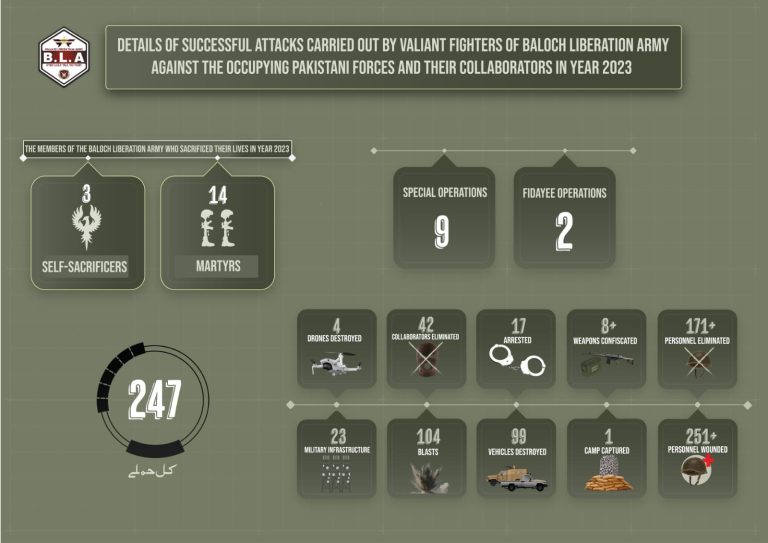
During these operations in 2023, the BLA executed 247 attacks on the enemy forces including 9 special operations and two self-sacrificing operations. These actions led to the elimination of at least 171 enemy personnel with an additional 251 injured. Furthermore, 42 collaborators, informants and agents were also neutralized during these operations.

Pak Army suffered significant material losses as a result of these operations, which also destroyed 99 cars and motorcycles. In addition, the BLA targeted attacks on four drones and twenty-three military installations.

Of the major operations, two self-sacrificing missions involving three fidayees were coordinated by the Majeed Brigade of the Baloch Liberation Army. One such operation occurred on June 24, 2023, when enemy forces suffered significant losses as Fidayee Sumaiya Qalandarani targeted a high-value military target in Turbat, Pakistan.

As part of the third phase of operation Zir Pahazag, another noteworthy operation took place on August 13, 2023. In Gwadar, BLA’s Majeed Brigade, under the leadership of fidayees Naveed Baloch alias Aslam and Maqbool Baloch alias Qayim, carried out a successful two-hour operation. Eleven Pak Army personnel and four Chinese nationals were killed in this operation, and many more were injured.

Seven operations were carried out by the BLA’s Special Tactical Operations Squad (STOS) and Fateh Squad during the year. Two personnel were arrested after the Fateh Squad raided an enemy camp near Quetta and took everything belonging to the enemy. Meanwhile, STOS targeted members of Pak Army subordinate organizations.

As a tragic reminder of the sacrifices made in the liberation struggle, 14 freedom fighters from the Baloch Liberation Army were martyred in 2023. These fighters included Martyr Mumtaz alias Mullah Behram, Martyr Ghanni Marri alias Hassan, Martyr Waleed alias Commando Bahar, and others.

Since 27 March 1948, the Pak Army has forcefully occupied the resource-rich region of Balochistan, and committed numerous atrocities against the Baloch people, causing them great suffering and violations of their human rights. There have been widespread military operations in Balochistan, as well as enforced disappearances, extrajudicial killings, torture, genocide and accounts from a variety of sources. Many Baloch families have been forced to relocate as a result of the Pak Army’s actions, which have instilled fear and intimidation in the community.

The ceaseless military actions have heightened tensions and jeopardized the basic liberties and rights of the Baloch people by specifically targeting activists, citizens, and dissident voices. Until the Baloch motherland is freed from the occupation of Pak forces, the BLA reaffirmed its determination to keep attacking these forces, as well as their collaborators.

No new year celebrations in POJK & Pak-occupied Gilgit-Baltistan; only massive protests

0

The contrast on both sides of the Line of Control [LoC] that delineates Jammu and Kashmir [J&K] and Pakistan occupied J&K [PoJK] couldn’t have been more pronounced. In J&K, a slew of development activities on war footing complimented by a humongous tourist influx were good reasons for its people to celebrate New Year. On the other hand, the beleaguered people of PoJK had nothing to cheer about and Pak-occupied Gilgit-Baltistan [POGB] residents were forced to usher 2024 with the announcement of a massive protest in all districts over spiraling wheat prices.

Anger amongst the people of POGB is justified as its puppet government installed by Islamabad has through a notification dated December 26, 2023 increased the price of wheat from Rs. 20 to Rs. 36 per k.g. with effect from January 1, 2024. While this inordinate hike is shocking, the government’s ludicrous stand that the extraordinary 80 percent hike won’t have any negative impact on the people is downright absurd. That’s why it’s not at all surprising that Tehreek-e-Islami [TeI] Gilgit Baltistan has called for public protests commencing from January 2.

ANI has mentioned that TeI leader Sheikh Mirza Ali had revealed that the government’s decision to hike wheat price was arbitrary and not arrived at through consensus after consultation with all stake holders as officially claimed. He also cited “symbolic protests” held against this move in six districts as proof of public dissent. Ali summed up the prevailing situation in POGB by saying, “There is no internet, there is no electricity and there are no facilities. I wish that this administration, rather than dropping a ‘bomb of inflation’ on us, could have tried to take control of load-shedding.”

For the impoverished people of PoJK who are being denied basic amenities by Islamabad, the wheat price hike comes on the heels of a unimaginable increase in electricity tariff that has led to widespread protests with the people collectively deciding not to pay their inflated electricity bills. Besides being attacked by the “bomb of inflation”, the people of PoJK are up in arms against continuing disempowerment through denial of their fundamental right to freedom of speech.

Discontent has been simmering in PoJK since long but the world doesn’t know much about it as Pakistani media either doesn’t report it, or does so in an extremely perfunctorily manner. An example is the massive public rights movement that has been going on in PoJK since May with widespread rallies against both the POGB and Pakistan governments.

Expressing solidarity with PoJK Awami Action Committee, students from PoJK also held protests in major Pakistani cities like Islamabad, Lahore and Karachi demanding revival of the student union, fee reduction and better hostel facilities. While these demands expose the inadequacy of educational facilities for PoJK students, their plea for creation of anti-harassment committees that include both male and female students highlights the discrimination students belonging to PoJK face within Pakistan.

Besides denying fundamental rights to the people, muzzling dissent in PoJK is also commonplace. An example is the sealing of the Central Secretariat of Gilgit Baltistan United Movement [GBUM] by the authorities in October, barely three weeks after its inauguration and arresting Shabbir Mayar who is General Secretary of Awami Action Committee and chief organiser of Gilgit Baltistan United Movement [GBUM]. Mayar rightly referred to these disturbing developments as “a blatant attempt by the state to keep non-state dissidents out of politics.” [Emphasis added]. Mayar’s arbitrary arrest has angered locals of POGB since it is obvious that it was an attempt to prevent him from speaking out against the recent targeted killing of a local teacher by assassins with backing of the establishment.

Despite growing opposition, there’s no indication that Islamabad is ready to give people of PoJK their fundamental right to freedom of speech.  To make matters worse for scribes, a new bill titled ‘Azad Kashmir [PoJK] Defamation Act 2021′ was tabled in the PoJK Legislative Assembly last month. Once it becomes a law [which it invariably will], any journalist found guilty of criticizing PoJK policies, departments and institutions in the press or social media can be imprisoned, and courts have to decide on such cases within 90 days. Such a draconian law applicable in only PoJK clearly indicates how Islamabad is marginalising the Kashmiri people.

The ongoing protests in PoJK have two interesting features. One, breaking social taboos, the women of PoJK have started assuming a greater role in the ongoing protests. Two, the students are also demanding that the control of PoJK resources should be given to its people. While large scale participation of women in protests will create additional headaches for law enforcement agencies [LEAs], this path-breaking trend will surely attract international attention on the institutionalised repression of people living in PoJK, which Islamabad can ill afford. And giving right of resources in PoJK to its people is unthinkable as it would annoy Beijing which is merrily exploiting the same!

Lastly, Islamabad which keeps accusing New Delhi of committing atrocities in J&K needs to revisit its own human rights records in PoJK. Defence of Human Rights [DHR], a respected and non-partisan Pakistani non-governmental organisation has in its 2023 report revealed that during the last year, PoJK recorded 20 enforced disappearances. Out of these, while 17 individuals abducted by Pakistan Army, its intelligence operatives and LEAs were subsequently released, two persons, though traced, continue to remain in illegal confinement, while one individual has been the victim of extra judicial execution. 

Pakistan needs to realise that just by naming PoJK “Azad” [free] Jammu and Kashmir it can’t fool the international community into believing that people here enjoy freedom. Conversely, PoJK residents are constitutionally debarred from questioning the legitimacy of PoJK’s alleged “accession” to Pakistan.Islamabad has always treated PoJK as a colony and though its people have grudgingly lived like second class citizens for more than three-quarters of a century, they are not prepared to do so any longer. 

Islamabad hence needs to wake up and smell the coffee before it’s too late!

Tailpiece: The sorry state of affairs and poor living conditions in PoJK are not hidden from the world. In 2017, residents of Simmranpur, a small nondescript village of 800 people in Kanpur district of Uttar Pradesh in India were greatly annoyed due to lack of basic amenities like electricity and water as well an indifferent village headman who refused to acknowledge these live problems.

So, the hapless villagers decided to draw attention of the authorities to both their pathetic condition and the apathy of their headman through an appropriate parallel. Accordingly, they took the collective decision of renaming their village “Pakistan occupied Kashmir,” andvowed to continue referring to it as such till the authorities improved their living conditions. The fact that this renaming incident had nothing whatsoever to do with politics says a lot.

But is Islamabad willing to listen? 

Manzoor Pashteen faces second arrest following bail release

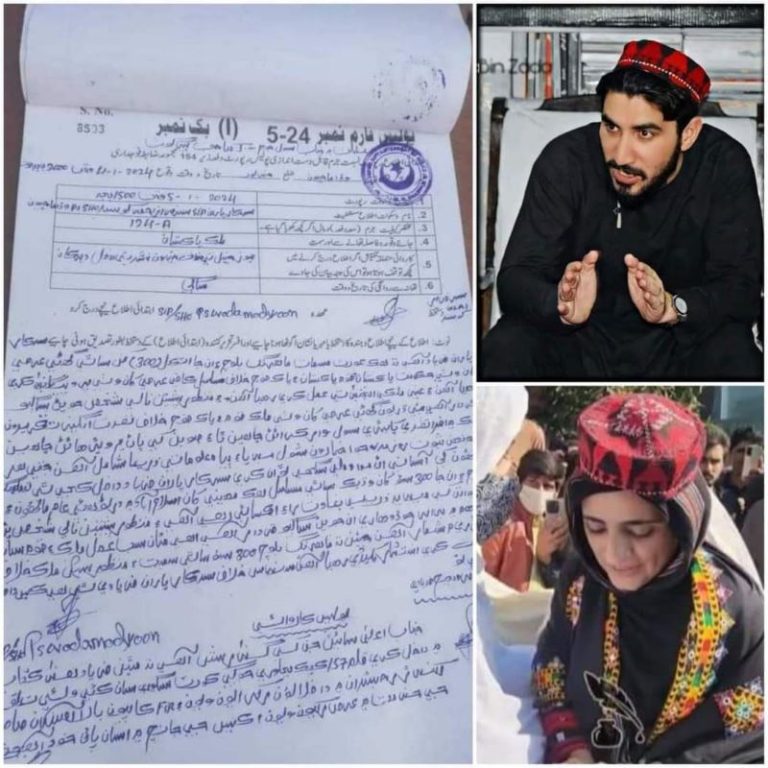
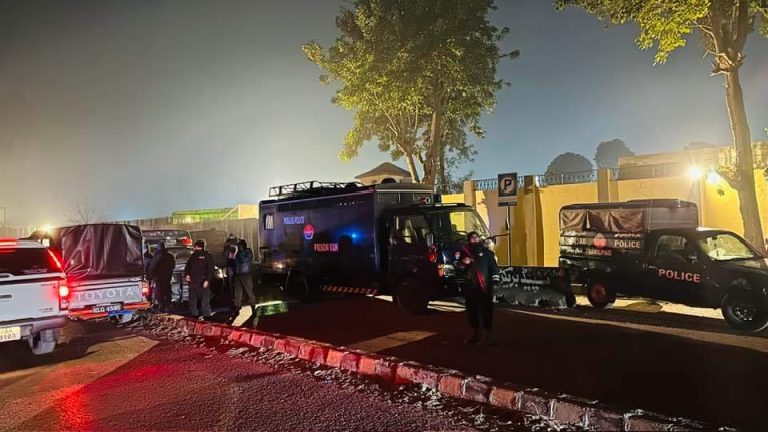
In an exemplification of absolute lawlessness, Pashtun Tahafuz Movement (PTM) leader, Manzoor Pashteen has been rearrested for the second time at the gate of Adiala prison after getting bail from the court yesterday.

Manzoor Pashteen was granted bail in two cases that were imposed against him, including a Federal Investigation Agency (FIA) case. This time Manzoor Pashteen was arrested by Punjab Police. This is the second time that he has been arrested this way out of the prison gate. Last time, when he got bail from the ATC court, he was released. As soon as he reached the gate, he was arrested by the Islamabad police in two other cases. It was these two cases in which Pashteen got bail yesterday. The consecutive arrests and that too just after the bail raises apprehensions about the extra judicial methods being employed on the direction of Pakistan Army, as Pashteen has time and again made fierce attacks on the authoritarian control of Pakistan Army. Pashteen has conspicuously exposed the policies of Pakistan Army that instigated terrorism in Khyber Pakhtunkhwa.

https://twitter.com/QasimAchakzai6/status/1742973681452868078

Pakistan Army’s foul play

As per the PTM leaders and workers, Pakistan Army is directing the police forces to continue to press charges each time he gets bail from the court. Manzoor Pashteen has risen as one of the most influential Pashtun leaders, who is exposing the charade of Pakistan Army. Driven solely by the Pashtun cause, the PTM chief fights peacefully, devoid of any political motives. Pakistan Army is tormenting the legal procedures and exploiting the legal loopholes to keep Manzoor Pashteen away from the masses failing which, it fears, its authoritarian dominance could be thrown away just like the chaff is separated from the wheat.

Notably, Pashteen was arrested on December 3 after a deadly attack on his convoy, while he was en-route to participate in Turbat protest. Later he was presented to Anti-Terrorism Court, from where he got bail on December 26 completing his judicial remand. When he was released from the jail, Islamabad police rearrested Manzoor Pashteen from the gate on the basis of fresh charges. Now, after getting bail in those cases too, he has again been arrested. As this time Punjab Police has arrested him, the same procedure will be exploited to keep him captivated. This absolute suspension of human rights is concerning as it is evident that Pakistan Army controls every institution in Pakistan.  

BLA attacks Pak Army base, kills two & injures three

In a bold act of defiance against the Pak Army’s presence in Pak-occupied Balochistan, the Baloch Liberation Army (BLA) has launched dual attacks, targeting the Pak Army base and a communication tower in Tump and Zamuran of Pak-occupied Balochistan. These deliberate actions were executed to disrupt the dominance of the occupying Army and counter their activities.

https://twitter.com/bahot_baluch/status/1742590991822094430?t=sJbO_2cQdiTdkyuSoNCKLA&s=08

Strike in Tump

On 3 January, the Baloch Liberation Army (BLA) attacked the Pak Army’s main base in Tump, Pak-occupied Balochistan using heavy weaponry and grenade launchers. The attack resulted in the killing of two Pak Army personnel and at least injuring three.

Zamuran Attack

In another operation, the freedom fighters of the Baloch Liberation Army (BLA) destroyed a communications tower that was being utilised for military purposes by the Pak Army. Since March 27, 1948, the Baloch people have faced relentless oppression through daily home raids, disappearances, staged encounters, target killings, torture, and kidnappings for ransom.

Therefore, the Baloch Liberation Army (BLA) spokesperson, Jeeyand Baloch, reaffirmed the organization’s unwavering determination to oppose occupying forces in Balochistan and underlined that they are committed to carrying out these operations until the complete withdrawal of the Pak Army from the region.

Sit-in protest near UK PM’s residence by family of Taj Muhammad; abducted by Pak Army

In a recent incident the family of forcibly disappeared Baloch Nationalist Taj Muhammad Sarparah’s wife and daughters staged a compelling sit-in protest in front of 10 Downing Street, the official residence of UK Prime Minister. To find out the truth about Taj Mohammad’s disappearance, the family organized a moving protest and called for international attention and intervention.

The abduction of a well-known Baloch businessman from Karachi, which was purportedly carried out on July 19, 2020, by the Pak Army has added a new chapter to the extensive history of the forcible disappearance of Baloch people in Pakistan. According to numerous international agencies thousands of Baloch have disappeared in Pakistan over the past few years as a result of actions carried out by the Pak Army and other deep state agencies. However, this is the first instance of an important Baloch man with ties to the nation’s executive and political classes being abducted by the Pak Army. Three years later, his family is still speaking out in support of him.

A five-day sit-in in London from January 3 to 7 was announced by Salia Marri, the niece of Baloch national leader Baba Khair Bakhsh Marri, in an attempt to draw attention to the growing chorus of protests against the purported enforced disappearances and human rights violations in Balochistan.

Disappearance of Taj Muhammad Sarparah

Mir Taj Muhammad Sarparah was a Pakistan and Dubai-based businessman who was on his way to Karachi from Dubai to catch a flight to Turkey. However, July 2020 marked the height of the COVID-19 pandemic, and his travel schedule had to be significantly adjusted. He chose to spend some time in Karachi before boarding the flight that would take him to his next destination and afterwards, take a return flight. But he never made it to the airport.

According to his wife Salia Marri, Taj and his driver, Mohammad Javed, were abducted on July 19, 2020, at 2:10 a.m. in the Baloch Colony neighbourhood while they were travelling to the Karachi airport. Even though Javed did show up months later there are no traces of Taj.

Following her husband’s kidnapping, Marri was forced to relocate from a Middle Eastern nation to France due to threats she received from the Pak Army there. She claimed that three months after her husband’s abduction, the Pak Army sent her a message through multiple “sources” confirming his custody, but they refused to tell her the reason for the abduction or the estimated time of his release.

Along with many victims, there’s been no trace of Kabir Baloch for over fifteen years now, the abduction took place on March 27, 2009, in front of the Khuzdar Sessions Court gate along with two other BNP employees, Attaullah Baloch and Mushtaq Baloch. Latif Baloch his brother revealed the widespread kidnappings and targeting of political activists during the unrest in Balochistan by claiming that the abductors were supposedly the Pak Army. The family has accused the Pak Army of causing suffering to families only because of their Baloch identity. Her attempts to obtain justice through the legal system have been met with humiliation and disappointment, despite her unwavering efforts.

The Baloch people have been subjected to ceaseless oppression since March 27, 1948, including daily home invasions, abductions for ransom, disappearances, simulated encounters, target killings, and torture. Balaach Mola Bakhsh’s extrajudicial killing set off the long march, which is unwavering in its demands for the release of those who are missing, the disarmament of the Counter Terrorism Department (CTD), and an investigation into the Army’s wrongdoings.

Pashtun leader Manzoor Pashteen gets bail in Federal Investigation Agency case

After about a month of fake charges and consequent arbitrary arrest, Manzoor Pashteen has been granted bail. The bail has been granted in two cases in which Manzoor Pashteen was framed and arrested on December 26. He was handed over to Islamabad Police following which he was sent to Adiala jail in a judicial remand on December 30.

Notably, all the cases were fabricated and imposed over PTM chief to keep him away from the masses for as much time as possible because under his active leadership, Pashtuns were determinately aligning with the Baloch cause. It must be noted that Manzoor Pashteen was arrested after a deadly attack on his convoy, while he was en route to participate in the Turbat protest against the extra-judicial killings of four Baloch youth by the so-called CTD.

After he was arrested, he was illegally detained for 3 days before he was presented to the Anti-Terrorism Court. The trail of a peaceful protestor against the establishment being undertaken by the ATC, speaks volume about the dismal state of democratic principles in Pakistan. Nevertheless, the court granted his 7-day physical remand to the Islamabad police, after the completion of which he was sent to Adiala jail.

Rearrest of Manzoor Pashteen

The precarious situation of human rights and mockery of law and order was later manifested when Manzoor Pashteen was granted bail following his judicial remand. Since, the Pakistani establishment knew that without solid grounds they can’t detain Pashteen for long, they waited for his bail. As soon as the bail was granted, Pashteen was booked under two more cases including an FIA case (Federal Investigation Agency), rendering him captivated. From here the same judicial game was played to delay his release, first he was under the custody of Islamabad police and then he was again sent to Adiala Jail.

Now, Manzoor Pashteen has been granted bail on both the cases. However, Pashteen’s illicit and deadly arrest, the make-up statement of the Deputy Commissioner and the manipulation of the judicial process that gulped more than a month, conspicuously shows the claim of autocratic and authoritarian control of Pakistan Army over every aspect of governance. Hence validating that the whether it is the life of the citizens or their rights, nothing is safe in Pakistan and that people like Manzoor Pashteen and other activists are fighting a war against the brutal regime.  

Rise in the abduction and conversion of Hindu women and girls in Sindh

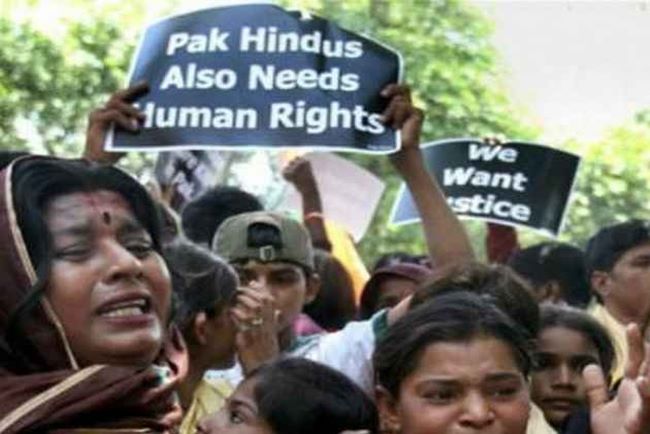
In a distressing incident in Badin, Sindh, a minor Hindu girl named Beena Kohli has been abducted, sparking grave concern among the local community. Later, the radical Islamist who abducted her, named Wahid Lagati forcibly converting her to Islam.

This incident has prompted outrage and apprehension among the Hindu community in the region, highlighting the ongoing challenges faced by minority groups in Pakistan. The abduction and purported forced conversion have ignited calls for immediate intervention and justice from both local authorities and human rights activists.

The tragic case of Beena coincides with another case of abduction and conversion involving a Hindu married woman. As per reports, Hariyan Kolhi, was abducted and forcefully converted to Islam by Pir Aga Jan Sharhandi in Nagarparkar, Sindh. Subsequently, she was married off to Bhuroo Khoso.

The incidents of atrocities over Hindu women and girls are on the rise in Pakistan and especially in Sindh. The sole motive behind such abductions and forceful conversions is to Islamise the entire minority community in Pakistan. Unfortunately, this precarious condition of Hindus is worsening because of the silence and tacit consent of every institution that is attributed to be the part of legal-political system in Islamic Republic of Pakistan.

Pak-occupied Balochistan shuts down as a protest against oppression of Pak Army

Following the controversial comments made by Pakistan’s puppet Prime Minister, the Islamabad Police has aggressively targeted demonstrators today, even obstructing their access to essential supplies. In a disturbing incident, a police officer displayed inappropriate behavior towards Sammi Baluch, a prominent figure in the protest and a victim of the atrocities committed by the Pakistan Army.

The officer falsely accused her of seeking publicity, thereby belittling the immense hardships and violence endured by the Baloch community at the hands of the Pakistan Army. The Islamabad police and administration persistently engage in harassment against individuals advocating for the victims of enforced disappearances.

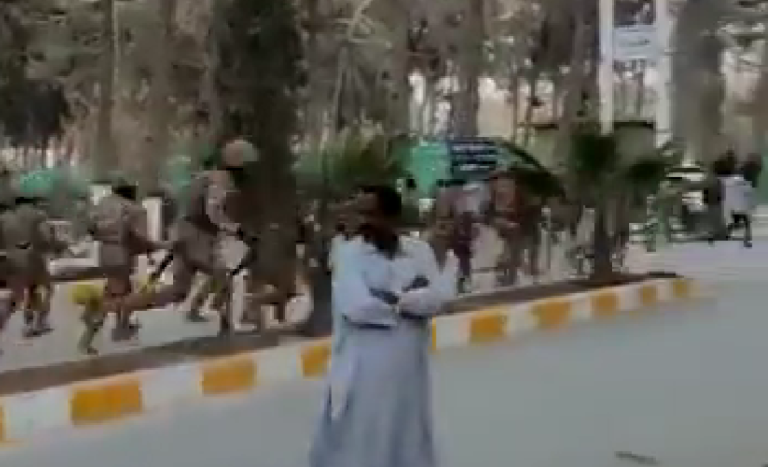
A large contingent of police personnel encircled the peaceful sit-in camp, protesting against the Baloch genocide. Their actions have reached a new low as they are now preventing essential supplies from reaching the protestors during the harsh winter in Islamabad.

Baloch Struggle Against Genocide

Even those who expressed solidarity with the cause have faced consequences. In Turbat and Kohlu districts, over 44 government employees were suspended from service on charges of supporting the Turbat sit-in and participating in the March Against Baloch Genocide. Despite the expiration of the ultimatum and the failure of the Pak “establishment” and actors to engage in successful negotiations, the Baloch Yakjehti Committee has deemed it necessary to announce a press conference.

Nevertheless, residents of Panjgur remained steadfast in expressing their support for the cause and standing with Balochistan. They proudly raised the flag of Balochistan and inscribed messages on walls in favor of the Baloch Liberation Army. The freedom fighters group that has vowed to remove the occupying Pak Army from their land. This movement represents the voice of Balochistan.

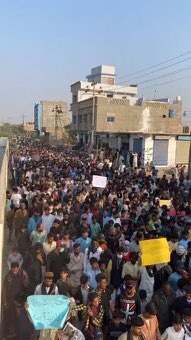
Demonstrating solidarity with the #MarchAgainstBalochGenocide, the residents of Gilgit have united by closing all markets and shops through a Shutter-Down Strike. Scenes from Kurkani depict the impact of this strike and the accompanying protest rally. Similarly, scenes from Barkhan showcase the Baloch Solidarity Committee’s contribution to the shutter-down strike.

Balochistan’s Stand Against Enforced Disappearances

Awaran that has bear the brunt of Army’s repressive “kill and dump” policy, and stands out as the most affected region, encompassing fake encounters, military operations, and enforced disappearances of Baloch individuals. Awaran also observed the shutter-down strike.

Taunsa as well expressed solidarity with Baloch Long March against Genocide through a comprehensive Shutter-Down Strike. In Gwadar, all markets and shops have been closed in response to the demand. In addition, Turbat also observed a Complete Shutter Down on the 41st day of the movement against Baloch Genocide, as called by the Baloch Yakjehti Committee.

In Noshki, the resurgence of the Shutter-Down protest, ignited by the Baloch Yakjehti Committee’s call, cannot be ignored. Despite the Pakistan Army’s relentless attempts to quash the movement through threats and violence, the unwavering determination to END BALOCH GENOCIDE prevails. Citizens are voluntarily closing their shops in solidarity with the Sit-In at NPC, Islamabad.

Since March 27, 1948, the Baloch people have faced relentless oppression through daily home raids, disappearances, staged encounters, target killings, torture, and kidnappings for ransom. The march, ignited by the extrajudicial killing of Balaach Mola Bakhsh, stands firm in its demands for the release of missing persons, the disarmament of the Counter Terrorism Department (CTD), and accountability for the Army’s transgressions.

The march presses on, a peaceful plea to the world – international media and institutions, the plea is simple: amplify their message globally. Expose the oppressive reality in Pakistan, where the Baloch people endure genocide without even being granted the fundamental right to peacefully protest against these atrocities. Let their voice resound across the globe!

TTP releases video of it’s attacks on Pakistan Army in 2023

The Tehreek-i-Taliban Pakistan (TTP) has circulated a 20-minute video chronicling its assaults on the Pakistan Army throughout 2023 in Khyber-Pakhtunkhwa. Displaying footage from numerous attacks alongside a comprehensive breakdown of each assault type and resulting damages, the video asserts a significant dent in the Pakistan Army’s capabilities.

Opening with a narration suggesting Pakistan’s misconception about the weakened state of the rebels, the video asserts a contrasting narrative, claiming that the TTP has effectively fractured the backbone of the Pakistan Army. This purported and contentious video highlights the heightened firing prowess of the terrorists. It showcases diverse ambushes and their consequential aftermath, deviating from previous releases largely featuring thermal sniper footage.

Region-wise attack by TTP

The video glorifies the resource-deprived Mujahidin’s strides against the self-proclaimed “number one army.” TTP’s claims outline a total of 881 attacks on Pakistan forces, specifying 266 attacks in Khyber Pakhtunkhwa‘s Bannu district, 10 in South Punjab, and 271 in Dera Ismail Khan. Additionally, Zhob saw 5 attacks, Balochistan 70, and Makran and Kalat experienced 1 attack each. Notably, Kohat and Peshawar were targeted 29 and 184 times, while Markand, Mardan, and POGB faced 46, 24, and 1 attack(s) respectively.

Furthermore, the video delves into monthly attack statistics, with August registering the highest tally at 146 assaults. Enumerating attack types, TTP also claims responsibility for 206 sniper attacks, 143 guerrilla attacks, 129 counter attacks, and 114 ambushes.

The release of this footage signifies an intensified effort by the TTP to showcase their perceived successes and the purported weakening of Pakistan’s military stronghold. The intensity of attacks highlight that Pakistan Army is grappling with one of the biggest challenges on the western front, the repercussions of which are felt by the innocent people of Khyber Pakhtunkhwa, as highlighted by the Pashtun activists from time-to-time. However, this precarious condition is only the result of terror instigating and harbouring policies of Pakistan Army and ISI as Pakistan which gave birth to terrorism as an instrument of destabilizing South Asia is facing the consequences of the brutal, immoral and anarchic characteristic of terrorism.

Protest against soaring wheat price & Finance Act intensifies in Pak-occupied Gilgit-Baltistan

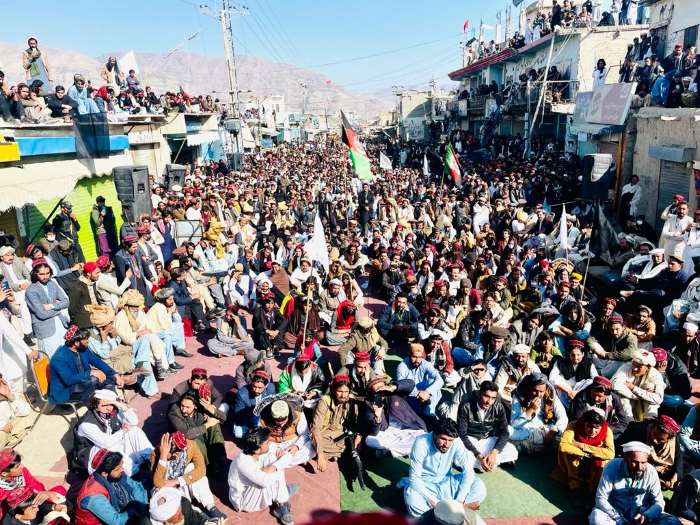
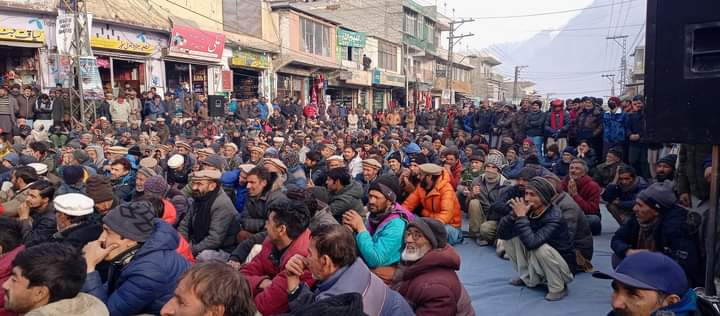
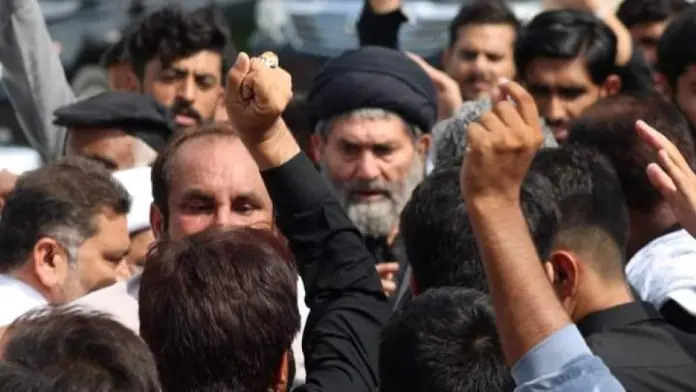
The ongoing protest movement spearheaded by the Awami Action Committee (AAC) in Pakistan occupied Gilgit-Baltistan has intensified, amplifying demands concerning wheat price hikes, Finance Act 2023, load shedding, and an array of other grievances, swiftly gaining attraction across the region. Widespread protest sit-ins in key areas including Skardu Yadgar Shahada, Gilgit Ghari Bagh, Diamar Dariel, Hunza, Ghazar, and various other locations were witnessed yesterday.

The demonstrators, rallying under the banner of the Awami Action Committee, delivered a resolute message to the occupying government, affirming that unless their public demands are met, the intensity of the protest movement will escalate continuously.

The protest at Gilgit Ghari Bagh drew participation from diverse political, social figures, and stakeholders. Chief Coordinator, Comrade Ehsan Advocate , emphasized that the Committee’s movement is dedicated to the welfare of the impoverished in Pak-occupied Gilgit-Baltistan and future generations. He urged active involvement, especially from the youth, to champion their future and ensure the movement’s success. Highlighting the disparities, he pointed out the puppet government’s misaligned priorities, focused on personal interests and corruption, rather than addressing fundamental issues such as education, employment, electricity, and healthcare.

Undeterred, Ehsan Advocate reiterated the commitment to persist until these perceived injustices are rectified, announcing daily symbolic sit-ins as part of their ongoing movement. Coordinators Fida Hussain, Sakhidullah Khan, Malik Aurangzeb, Abrar Baguru, Zaheer Qasmi, Hajit Ali, Haji Kuman, Javed Qureshi, Fida Itsar, Nizamuddin, and other leaders also voiced their concerns and objectives during the protest in Gilgit.

The fervent demonstrations underscore a growing call for socio-economic reforms, demanding immediate revocation of earlier wheat price and a more inclusive governance that prioritizes the needs and aspirations of the people of Pak- occupied Gilgit-Baltistan.