Home Blog Page 172

“Dictator Xi Jinping, Your Time is Up! Free Tibet”: Students for a Free Tibet

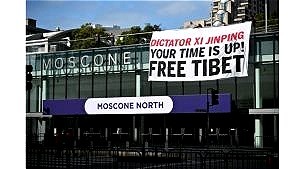
In a demonstration of support for Chinese-occupied Tibet, activists unfurled a banner condemning Chinese President Xi Jinping as a “dictator” on the roof of San Francisco’s Moscone Center just before the Asia-Pacific Economic Cooperation summit. The group responsible, Students for a Free Tibet, asserted that three of its members orchestrated the event.

The banner, boldly stating “Dictator Xi Jinping, Your Time is Up! Free Tibet”, was displayed briefly over the entrance to Moscone North around noon on (10 Nov) Friday. Witnesses, including a Moscone Center employee, reported the activists shouting “Free Tibet” for about a minute before voluntarily retracting the banner.

The action was taken to draw attention to the Chinese government’s repression of Tibetans and to demand an end to China’s occupation of Tibet.

Xi Jinping as “Dictator”

Law enforcement confirmed that no activists were detained, with an officer stating, “It was there for two minutes, as soon as we saw it, they rolled it up.” Tenzin Namgyal, a 17-year-old Tibetan-American activist involved in the protest, expressed the group’s desire for President Biden to address concerns about the Tibetan issue, citing attacks on language, religion, and culture under President Xi’s rule.

The APEC summit is set to commence on 12th Nov and features leaders such as Xi and President Biden. Activists, addressing issues like climate change, trade policy, and the Israel-Hamas conflict, plan multiple protests during the summit, anticipated to draw a significant crowd to San Francisco.

Free Tibet Advocates

Students for a Free Tibet advocate for the independence of Tibet from China, emphasizing Tibet’s historical status as an independent country. China, however, maintains that Tibet is an integral part of its territory.

Tibetans have been resisting Chinese occupation for centuries. In 1959, the Dalai Lama, Tibet’s spiritual leader, fled Tibet after the Chinese army invaded the country. Since then, Tibetans have been fighting for their independence. However, the Chinese government has brutally suppressed Tibetan dissent.

In recent years, the Chinese government has cracked down on Tibetan culture and religion. The government has also imposed restrictions on travel and communication in Tibet. The Tibetan activists’ action is a reminder that the Chinese government’s repression of Tibetans is a global issue that deserves the attention of the international community.

Thousands of Afghans go into hiding in Pakistan to avoid forced eviction from the country

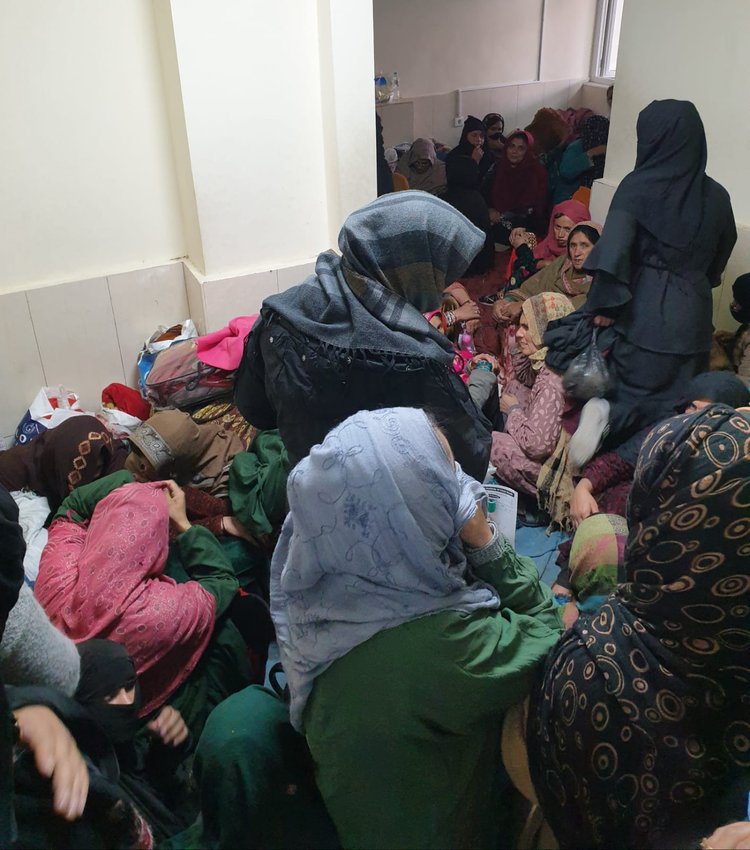
Human rights activists have said that after the government’s decision to deport undocumented people, thousands of Afghans living in Pakistan for years have gone into hiding because they are facing oppression and persecution under the Taliban administration in their native country. Afraid of facing it.

A 23-year-old Afghan woman while talking to a news agency online from an undisclosed location said, ‘Her door is locked from outside, we are confined inside, we cannot turn on the lights, even we can talk loudly. Can’t even do it’.

Others said that local supporters had locked the doors to assure neighbors that the house was empty.

The woman from Kabul said that she was afraid that if she returned to Afghanistan, she would be prosecuted by the Taliban administration because in 2019 she had left Islam and converted to Christianity and had renounced the Islamic faith. This is a serious crime under the Taliban’s strict laws.

Human rights activists believe they are among the thousands of people who have gone into hiding in Pakistan to avoid eviction as the government pressures undocumented migrants to leave the country.

The administration has initiated action to capture the Afghans living in Pakistan after the November 1st deadline to voluntarily leave the country was passed.

Sijal Shafiq, a 30-year-old human rights activist based in Karachi who has helped many vulnerable Afghans find residency before the government’s policy, is among other petitioners asking the Supreme Court to stop implementation of the government’s deportation decision. is one of the.

Pakistan deports first group of Afghan civilians from POJK back to Afghanistan

Amidst undocumented Afghan civilian repatriation, 245 Afghan civilians from Pakistan occupied Jammu and Kashmir (POJK) are poised to be deported through the Torkham border, as outlined in recent official statements. The initial convoy, comprising 24 individuals from Muzaffarabad and Kotli areas of Pakistani-occupied Jammu & Kashmir, has successfully reached Khyber-Pakhtunkhwa.

This marks the first repatriation from Jammu and Kashmir via the Torkham route. The temporary suspension of the migration of illegal immigrants from Islamabad and Pakistani-occupied Gilgit-Baltistan via Torkham has been announced by a senior official.

In addition to this, 15 undocumented Afghan prisoners, held for minor offenses, have been included in the deportation efforts, being sent back to Afghanistan. The cumulative count of foreigners repatriated from Punjab through Torkham stands at 288, with an additional 17 individuals deported just last Wednesday.

Wednesday saw a significant surge in repatriations, with a total of 4,119 illegal immigrants sent back to Afghanistan, including 1,236 men, 1,184 women, 1,650 children, and 49 prisoners.

These intensified repatriation measures align with the government’s directive, instructing 1.7 million Afghan nationals living illegally in the country to depart promptly or face legal consequences.

Thousands of Palestinians forced to leave northern Gaza as Israel warns of attack

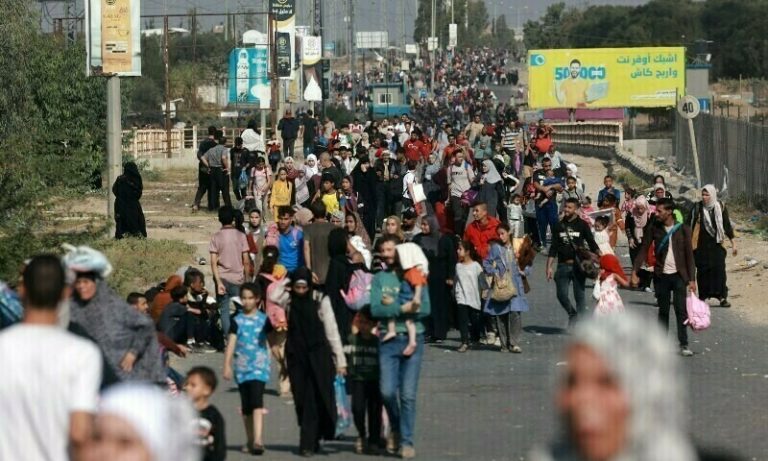
In a dramatic turn of events, a significant migration unfolded in the northern region of Gaza during a four-hour moratorium declared by Israel. The call for residents to evacuate came with a stark warning that failure to do so would put them at risk in the heavily bombed area. According to reports from foreign news agencies, this relocation occurred amidst a backdrop of escalating conflict between Israeli forces and Hamas.

Israeli forces claim to have surrounded the city of Abghaz, asserting that they have reached the center of the city. However, conflicting reports from Hamas suggest that their fighters inflicted heavy losses on Israeli soldiers.

Hamas has accused UNRWA of complicity in what they term as ‘forced relocation’. Salamah Maarouf, head of Hamas’ media bureau, squarely placed the blame on UNRWA and its officials for the destruction of lives in Gaza and the north. The UN, in turn, has labeled this mass migration as a humanitarian crisis, as a substantial number of Gaza’s 2.3 million population seek refuge in hospitals, schools, and other locations in the south.

The UN Liaison Office for Humanitarian Affairs reported a significant exodus, stating that approximately 15,000 people left the northern part on Tuesday, with 5,000 departing on Monday and 2,000 on Sunday. Israel’s evacuation orders even extended to patients in all 13 hospitals still operating in northern Gaza, as confirmed by the UN agency.

In the midst of this crisis, the health department in Gaza managed by Hamas within the confined area released grim statistics, claiming that more than 10,500 Palestinians have lost their lives in Israeli military operations, with a staggering 40 percent being children. These figures intensify the gravity of an already dire situation.

The World Organization for Health added another layer of distress, highlighting that, on average, 160 children succumb to tuberculosis daily. As the international community watches with growing concern, the fate of those caught in the crossfire hangs in the balance, prompting urgent calls for a peaceful resolution to this deeply entrenched conflict.

NDM Chief Mohsin Dawar stopped from participating in Chaman protest

In a recent statement on the social media platform X, Mohsin Dawar, the leader of the National Democratic Movement (NDM) , expressed his concerns over the obstruction of Bajaur program and his participation in Chaman protest. He revealed that not only was he denied permission to partake in his party’s program in Bajaur, but he was also stopped from joining ongoing peaceful protest in Chaman.

Mohsin Dawar said, “Local authorities in Quetta and Chaman stopped me from participating in the protest in Chaman. A few weeks ago, I was not allowed to participate in our party’s event in Bajaur.The playing field is being leveled for a few. We stand in solidarity with the Chaman sit-in.”

The leader emphasized that the playing field served only a select few and that, despite these challenges, they stand united with those participating in the peaceful protests in Chaman. Surprisingly, the denial of participation in democratic processes raises questions about the principles of fairness and inclusivity.

BNP chief condemns administration

The situation has not gone unnoticed by other political figures. Albeit Sardar Akhtar Mengal, the head of the Balochistan National Party, condemned the prevention of Mohsin Dawar’s participation in the Chaman protests. In a message on the social media platform X, Mengal criticized the current government, describing it as an undertaker government. Accordingly, he argued that the government’s actions indicate a deliberate effort to use undemocratic tactics, hindering people from participating in fair and free elections.The incidents in Bajaur and Chaman underscore the challenges faced by political leaders striving for democratic rights and participation. Considerably, Pakistan is persistently curbing the rights of people across the region and is operating with a sinister interest.

POB: Chaman protest to ease criteria for crossing Pak-Afghan border enters day 19; no resolution so far

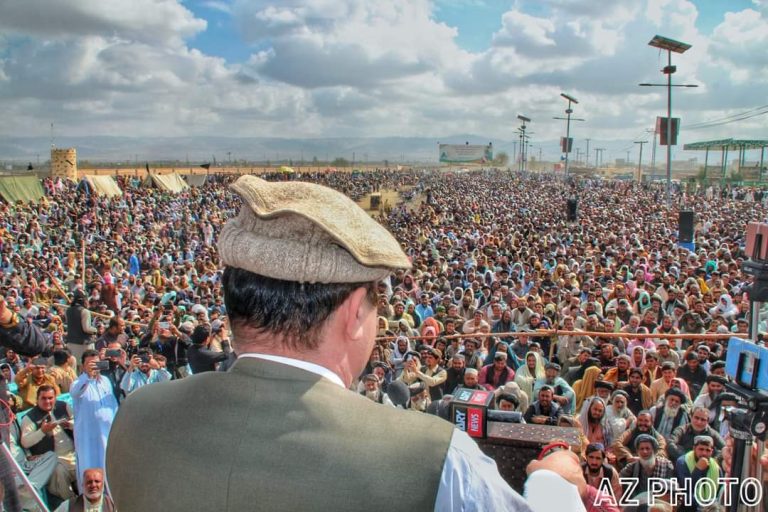
The Chaman protest against the recent imposition of passport and visa conditions at the Chaman-Spin-Boldak crossing point has marked its nineteenth day, with participants steadfast in their opposition to the new regulations. Organized by the All Pakistan Tradesmen and Laghri Alliance, representing those engaged in trade at the crossing point, the demonstration has been a response to the Pakistan government’s decision, effective since the beginning of November, to mandate visas and passports for traders crossing the border.

Despite the significant impact on approximately 35,000 people, including political workers, traders, and tribesmen, the media coverage of their demands has been notably limited. The protestors’ primary demand is the restoration of the previous eligibility criteria, which only required national identity cards along with an issuance of slip called Tazikra, for crossing the Pak-Afghan border.

Earlier, Tazkira was granted under the easement rights that guarantee free travel. Almost every Pashtun from across Durand line uses Chaman border to travel to Pakistan.

30,000 to be affected on Chaman border

For years, traders and locals have routinely crossed the border to conduct business, typically returning home at the end of the day. Chaman city alone witnesses an estimated 30,000 people crossing the Chaman-Spin-Boldak point daily, engaging in commerce at the Vish Mandi in Spin Boldak, Afghanistan, and returning to Chaman by nightfall.

Negotiations have been attempted between the protestors, local administration, and governing bodies in various rounds, but as of now, no conclusive agreement has been reached despite numerous discussions. The protestors remain resolute in their stance, emphasizing the economic repercussions and logistical challenges posed by the newly imposed passport and visa requirements.

As the Chaman protest enters its third week, concerns are growing over the potential economic fallout for the region. Accordingly, daily wage earners dependent on cross-border trade are experiencing disruptions, heightening the urgency for a resolution to be reached. The impact of this ongoing demonstration extends beyond the immediate participants, affecting the livelihoods of a substantial portion of the local population.

The All Pakistan Tradesmen and Laghri Alliance is urging the government to reconsider its decision, emphasizing the historical ease of trade and movement across the border. The protestors argue that reverting to the previous criteria, which allowed trading with only national identity cards, would not only ease the burden on the local populace but also foster continued economic activity in the region.

Counter-Terrorism Department kills three abducted individuals by Pakistan Army, POB

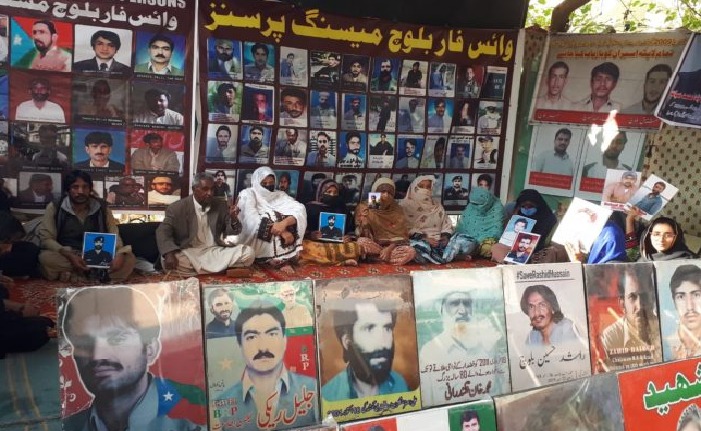
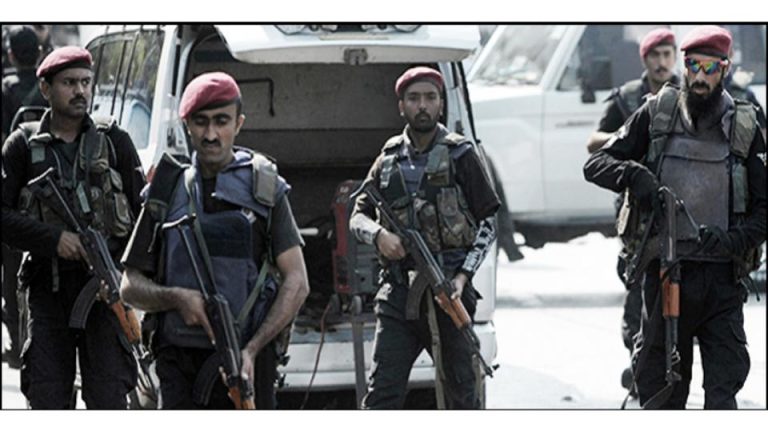
On 9 November, the Counter-Terrorism Department (CTD) in Khuzdar district of Pak-occupied-Balochistan reported that three individuals were killed in an operation. The CTD claims that the individuals were engaged in militant activities and that weapons were recovered from the scene. However, the Pakistan Army’s stated reason for these killings is a lie and a misleading attempt to cover up their brutal oppression of the innocent Baloch population.

To state the truth, Voice for Baloch Missing Persons (VBMP) and media reports have identified two of the deceased as previously reported missing persons. The VBMP said that one of the deceased, Aftab Sumalani, was forcibly disappeared on August 11 from Hazar Ganji Quetta. In addition, the media’s independent investigation confirms that another deceased, Abdullah, son of Arz Muhammad from Lutani Zehri, had also been missing after being reportedly detained by the Pakistan Army two years ago.

This is not the first time the CTD has been involved in controversial encounters in Pak-occupied Balochistan. There have been previous instances where such encounters have later appeared to be staged. Balochistan is reeling under the brutal oppression of the Pakistan Army, with innocent people disappearing every day. This horrific situation has become routine.

For far too long, Pakistan-occupied Balochistan has witnessed enforced disappearances, targeting political activists, students, and civilians by the Pak Army. They are subjected to torture, and their lifeless bodies are discarded in isolated areas. Following the illegal occupation of Balochistan in March 1948, Balochistan has been fighting the war for its existence and freedom from Pakistan.

J&K: BSF jawan martyred in firing by Pak rangers ; terrorist neutralized in separate incident

In a tragic incident along the international border in the Ramgarh sector of Samba district in Jammu and Kashmir, a Border Security Force (BSF) head constable lost his life as Pakistani Rangers unleashed unprovoked firing on Indian troops early Thursday. The deceased, identified as Lal Fam Kim from Aizawl, Mizoram, fell victim to the cross-border aggression.

The BSF confirmed the casualty, marking the end of a 12-day lull in ceasefire violations by Pakistan. The firing originated from the Ashraf Post of Pakistani Rangers, targeting BSF’s Naryanpur border outpost around 12:20 am. This incident marks a significant breach of the nearly year-long ceasefire between the two nations.

Reports suggest that the Indian forces retaliated effectively to the unprovoked firing, as tensions escalated along the international border. The last instance of firing by Pakistani Rangers occurred on October 26 in the Arnia sector, preceding this unfortunate event. The firing targeting Outposts in the district is the third ceasefire violation in 24 days by the Pakistani Rangers along the border in J&K.

One terrorist killed in separate incident

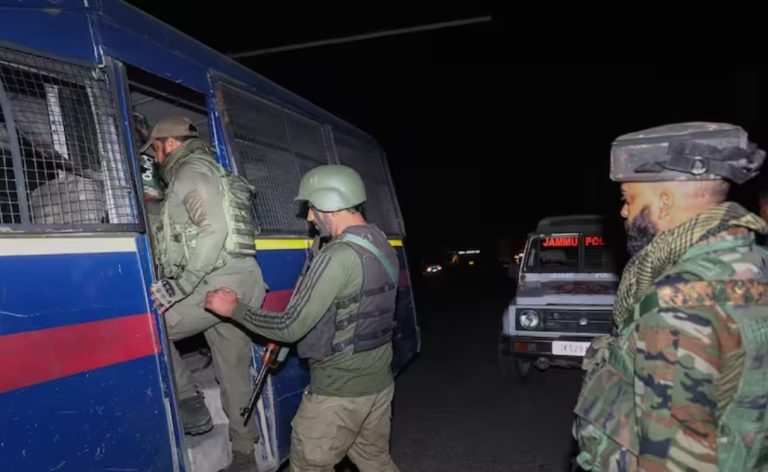
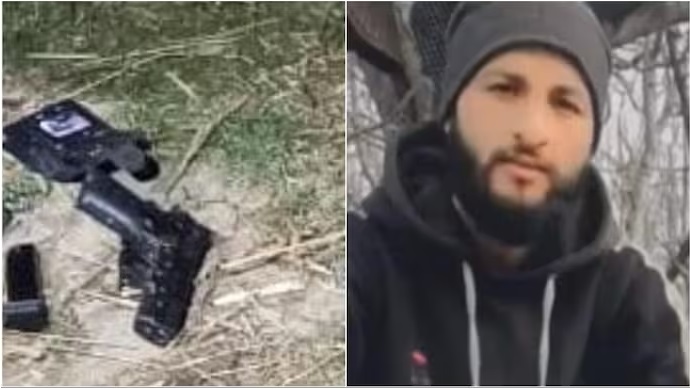
Simultaneously, in a separate incident in Jammu and Kashmir’s Shopian district, security forces engaged in a cordon and search operation in the Kathohalan area, acting on intelligence suggesting the presence of militants. The encounter that ensued resulted in the neutralization of a terrorist, identified as Myser Ahmad Dar, affiliated with the terror outfit The Resistance Front (TRF), according to Kashmir Zone Police.

Weapon confiscated from terrorist (Left), terrorist Myser Ahmad Dar (Right) (Photo: Social Media)

The security forces’ swift response and the successful operation against the militant underscore the ongoing challenges faced by the region in maintaining peace and combating terrorism. Since past few weeks the infiltration bid, ceasefire violations and targeted attacks have increased in J&K. This follows the crackdown on terror modules including the attachment of properties of the Pak-backed rogue terrorist supporters.

Pakistan condemned for deporting Pakistani Hazara community amidst Afghan civilian deportation

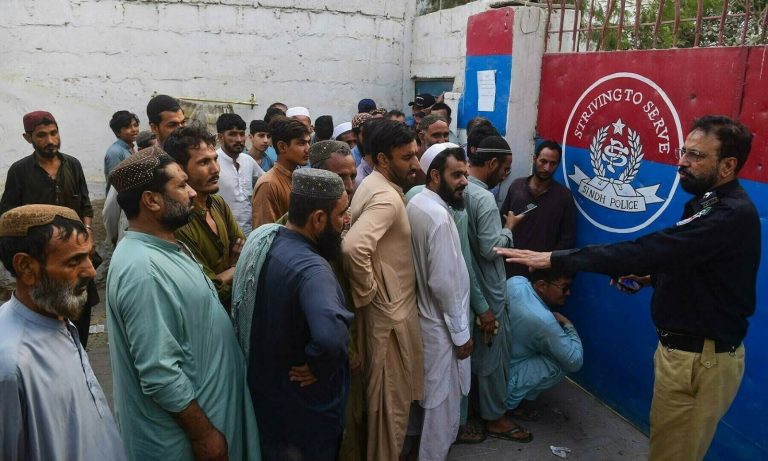
Pakistan is currently busy in deporting the undocumented Afghan civilians who took shelter in Pakistan, especially after the Taliban takeover in Afghanistan. This has caused chaos across Pakistan as almost 2,70,000 people have been deported which includes members from Hazara community living in Pakistan since decades. Thus, the expelling of this community has aroused unrest in the community. Chairman of Majlis Wahdat-e-Muslimin Pakistan, Raja Nazpur Abbas Jafari, in his condemnatory statement on X (formerly known as Twitter), has said that the attempt to expel the Pakistani Hazara community from the country in the wake of the release of Afghan migrants is a new crisis in the country. He said that the community has settled here for many generations.

He said, “To include our own citizens in the list of migrants is to give rise to ethnic, linguistic and professional prejudices.” Jafari further emphasised, “Some unknown forces are knowingly engaged in creating a crisis-like quality in the country. Those in power should take care of themselves and the Pakistani Hazara community should be protected.”

Taliban slams Pakistan’s interim PM, denies hand in increased terrorist attacks in Pakistan

Zabihullah Mujahid, the spokesperson for the Taliban, has given this statement after the recent remarks of Pakistan’s Prime Minister Anwar ul Haq Kakar, in which he said that the increase in terrorist incidents in Pakistan after some Afghan leaders’ unnecessary, irresponsible, misleading, and threatening statements is significantly meaningful. In his statement, the Taliban’s representative, Zabihullah Mujahid, stated that the Islamic Emirate does not allow anyone to use Afghanistan’s land against Pakistan unnecessarily. However, the Islamic Emirate is not responsible for the security situation within Pakistan. They should resolve their domestic issues and not blame Afghanistan for their failures.

Zabihullah Mujahid mentioned that even if there is an increase in insecurity in Pakistan, it cannot be used as evidence that many Afghans in Pakistan are victims of insecurity.He stated that in Afghanistan, weapons have been secured, nothing has been lost, smuggling of weapons has been banned, and all kinds of illegal activities have been stopped.

He further said that Afghanistan is like a brother and neighboring country with Pakistan, and the Pakistani leadership should understand the good intentions of the Islamic Emirate. There should be no interference in the internal affairs of other countries by the Islamic Emirate.

Statement of Pakistan’s Prime Minister

Pakistan’s interim Prime Minister Anwar ul Haq Kakar stated that after some Afghan leaders’ unnecessary, irresponsible, misleading, and threatening statements, there is a significant increase in terrorist incidents in Pakistan. He gave this unusually strong statement about the Taliban government in Afghanistan during a news conference in Islamabad on Wednesday. After the decision to send back Afghan refugees residing in Pakistan, some Taliban leaders, including their Prime Minister Mullah Mohammad Hassan Akhund, and Defense Minister Mullah Yaqoob, expressed strong reactions in their statements, and this statement also came to light that Pakistan may have to bear the consequences of this decision.

“In this regard, some Afghan leaders’ unnecessary, irresponsible, misleading, and threatening statements are regrettable”, he said. He further clarified that ‘Pakistan has the full legal and moral right to send illegal immigrants back to their home country. The increase in terrorist incidents in the country after some Afghan leaders’ statements is not only meaningful but also confirms Pakistan’s apprehensions.’

Increasing animosity with Taliban

Kakkar also said that ‘Afghan leaders’ statements immediately after the decision to send back refugees indicate not only unusual speed but also confirms Pakistan’s concerns. He added, ‘Afghan interim government leaders should realize that Afghanistan and Pakistan are two sovereign countries, and their mutual relations need to be officially established. The relations between the two countries should be conducted as is done between other sovereign countries around the world.’

The increasing pace of the reaction to this decision confirms that the Islamic Emirate government of Afghanistan has not accepted the decision. They should understand that the relations between the two countries should be conducted as is done between other sovereign countries around the world,’ the Prime Minister stated.’The extraordinary speed of the Afghan government’s reaction to this decision also confirms that it has not accepted this decision. If there is a counter-reaction to any government decision, it should be through official channels, and any further reaction should be officially informed to the government through the relevant channels,’ he emphasized.