Home Blog Page 173

Yet, another minor Hindu girl gets abducted and forcibly converted in Sindh

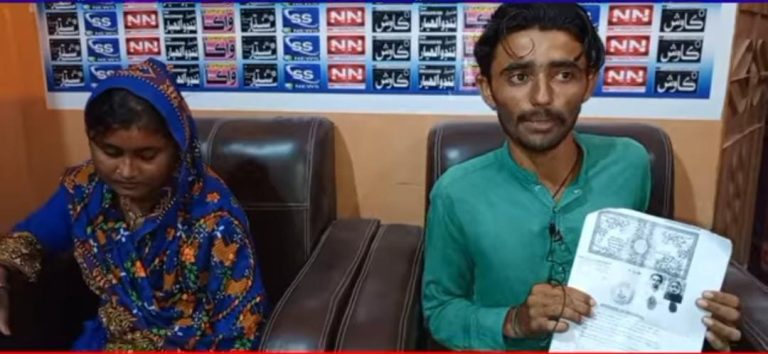
A Hindu minor girl has been abducted and forcibly converted to Islam in Sanghar,Sindh. 15-year-old Guli, daughter of Babu was abducted four days ago from Barhun by a radical Islamist named Fida Hussain Khasikheli.

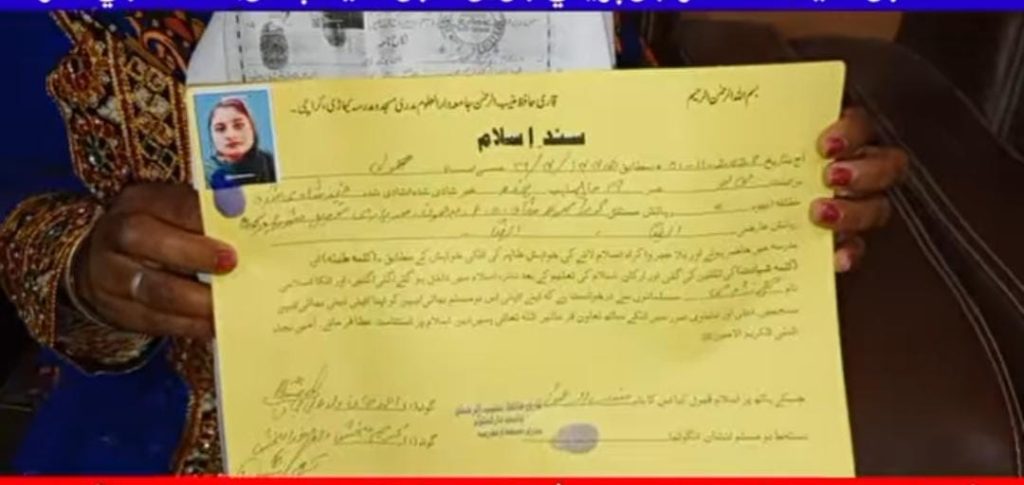
Khasikheli forcibly converted her to Islam and married her against her choice.

Conversion Certificate Of Victim Guli (Photo: News Intervention)

The case highlights the ongoing forced abduction and conversion of underage Hindu girls. Looking at the pattern, it is shocking to see that the modus operandi of these radical Islamists has always been same. They abduct the girl, convert them and marry them. In case of married women, they re-marry her to a Muslim declaring her Hindu husband as ‘haram’.

This pathetic act of cowardice and shame is carried out under the nose of the authorities of Islamic Republic of Pakistan that sees person of other religion as ‘kafir’. The radical Islamists are usually supported by the bigoted clerics who enjoy both religious as well as political dominance. The crime against Hindu girls and women is a ideological genocide that is slowly taking place.

Attack on oil company in Khyber-Pakhtunkhwa kills two Pak police, injures three

On November 7, two Pakistani police officers were killed and three others were injured in an attack on an oil and gas company in the Dera Ismail Khan district of Khyber Pakhtunkhwa province, according to local media outlet Geo News.

The attack took place in the Drazanda tehsil of Dera Ismail Khan, and one of the injured police officers is in critical condition. Police personnel were deployed to the oil company to protect it from further attacks.

Pakistan Peoples Party co-chairman Asif Ali Zardari condemned the attack and called for strict action. This was the fifth terrorist attack in Dera Ismail Khan in five days.

On 5 Nov (Sunday), a police constable was injured in an attack on the Gul Imam Police Station in the Tank area of the district. The attackers fled the scene after the police repelled the attack.

On the same day, another policeman was injured in a terrorist attack on a checkpoint in the Roori area of Dera Ismail Khan’s Kulachi tehsil. The attackers used small and heavy weapons during the attack, and managed to escape.

On Friday, at least six people were killed and more than 30 others, including two policemen, were injured in a blast targeting a police van in the Tank Adda area of Dera Ismail Khan. The vehicle was heading from Ijaz Shaheed Police Lines to Kulachi tehsil when it was attacked with a remote-controlled blast. An officer was also killed in another blast near a police and Pak Army convoy in the Takwara area of Kulachi on Friday.

This is a developing situation, and it remains to be determined who has attacked the Pakistan Army.

POJK: Pakistan Army abducts Kashmiri father and son, coerces them into terrorism

Pak-occupied Jammu & Kashmir, the part of Jammu and Kashmir under the illegal occupation of Pakistan is facing a serious problem of abduction of the Kashmiri youths. These Kashmiris are being abducted by Pakistan Army and are coerced into the terror industry. The latest victims are reported to be a father and son duo.

Yousouf and his 20-year-old son Ummer were abducted on 3rd October, more than a month ago, from Dudhnial in Neelam Valley. Since then the family is raising it’s voice and demanding their safe return. However, their calls go unheard in front of the colonial regime which occupies them and is actually the root cause of the problem.

After abduction, Pakistan Army forced them for training in terrorism and forced them to deliver arms and drugs across LOC. Those who do not oblige the orders are killed. Since they control the region, the missing complaints are not considered and the dead body is never recovered.

The entire Jammu and Kashmir is going through a transformation since past few years. This is evident by the growing trust of native people in Indian democracy and distrust in Pakistani occupation and colonialism. Fortunately, this has helped the J&K governance to curb the terror graph more quickly. Pakistan, on the other hand, has undergone a multifaceted damage to it’s terror modules and programs. Firstly, their terror nexus in the free J&K is now almost coming to an end, secondly, people in POJK are now refraining to become a terror puppet of Pakistan against it’s own people across LOC. And so, Pakistan is trying to revive it’s terror based separatism model of instigating unrest in free J&K by abducting Kashmiris and coercing them into its terror factory.

Baloch student’s Mother appeals for son’s return after 14 years of abduction by Pakistan Army

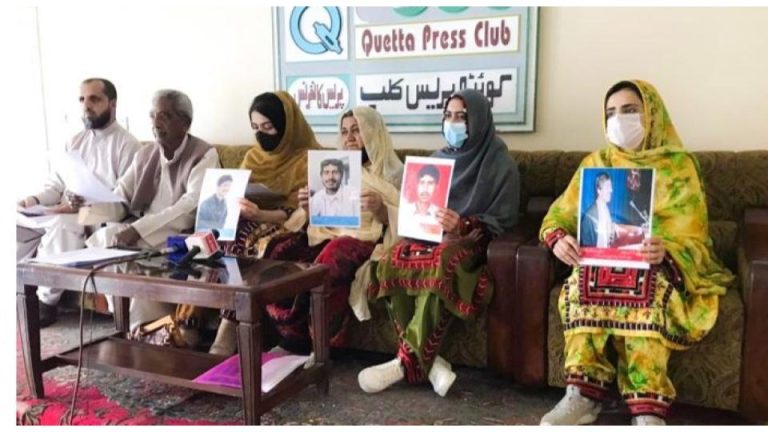
In a heart-wrenching appeal, the mother of Zakir Majid Baloch, a student activist who disappeared 14 years ago, expressed her anguish during a press conference at the Quetta Press Club. With the support of Voice for Baloch Missing Persons leaders, she spoke passionately about her enduring struggle for answers and justice.

Zakir Majid’s mother explained that for over a decade, she has been visiting the press club, clinging to the hope that someone’s heart would be moved to provide information about her son, Zakir Majid Baloch. The agony of not knowing his fate has tormented her throughout these long, painful years. However, despite her unwavering determination, there is still no word about Zakir Majid.

The Zakir Majid Baloch Story

The tragic story began on June 8, 2009, when Zakir Majid was forcibly taken from Mustung Parangabad. In response, she and her family established a protest camp in front of the press club that lasted for over two months. Their peaceful protests aimed to highlight the enforced disappearance of Zakir Majid and demanded answers and justice. However, it seems that peaceful political and democratic protests are not given the importance they deserve in Pakistan.

Zakir Majid Baloch was not just a student leader; he also served as the senior vice-chairman of the Baloch Students Organization – Azad (BSO-A). Despite their relentless 60-day protest in front of the press club, Zakir Majid was neither released nor presented in court.

The family’s determination did not waver; they even staged a hunger strike camp in Karachi to raise awareness and demand Zakir Majid’s recovery. However, the hope for his return remained unfulfilled. The family then embarked on a long march from Quetta to Islamabad via Karachi, yet, despite their fervent demonstrations, Zakir Majid’s release remains a distant dream.

Enforced Disappearance

Zakir Majid’s mother implored the Pak Army to show compassion, emphasizing that a mother’s love for her child never fades. The anguish of being separated from her son for 14 long years is something no mother should have to endure. She questioned why Pakistan continues to torment a mother by forcibly disappearing her son, and whether this level of injustice aligns with their legal system and religious values.

She urged the state to engage in dialogue and to take her plea for Zakir Majid’s recovery seriously. Fourteen years of separation have been an unbearable burden, and the pain of Zakir Majid’s enforced disappearance cannot be ignored. She appealed to all individuals in society to support their relentless struggle for justice.

The plea was also extended to international organizations, the Pak Army, and the Supreme Court of Pakistan, urging them to take action and help reunite Zakir Majid with his family, bringing an end to their enduring nightmare.

For far too long, Pakistan-occupied-Balochistan has witnessed enforced disappearances, targeting political activists, students, and civilians by the Pak Army. They are subjected to torture, and their lifeless bodies are discarded in isolated areas. Following the illegal occupation of Balochistan in March 1948, Balochistan has been fighting the war of its existence and freedom from Pakistan.

Balochistan National Party Chief exposes Pak Army’s role in Pakistan Democratic Movement’s coalition

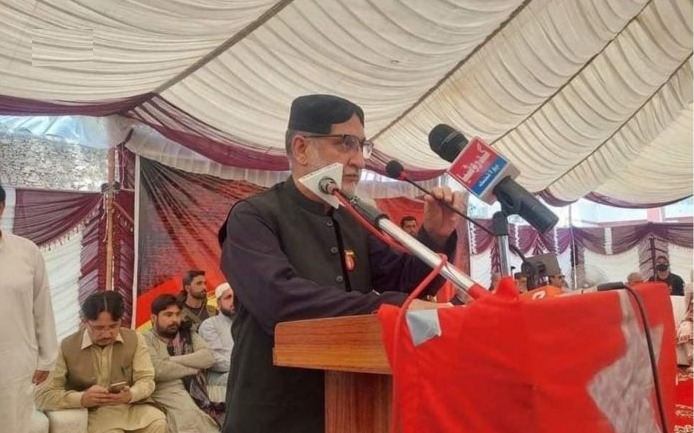
In a recent interview, Sardar Akhtar Mengal, the chief of the Balochistan National Party (BNP), lambasted the Pakistan Democratic Movement (PDM) coalition government. Mengal asserted that the PDM government was established with the assistance of the military establishment, and had it not been for differences between General Bajwa and Prime Minister Imran Khan, the coalition would never have come into existence.

Mengal’s criticism of the PDM government was notable, as he pointed out the government’s actions, including amending the National Accountability Bureau (NAB) and passing 56 bills in a single day in the assembly. He claimed that despite these moves, not a single bill from his party was passed.

Hard to align with others now

He expressed his disappointment in the major political parties, including PML-N, PPP, and PTI, stating that he would think long and hard before forming an alliance with any of these parties. Mengal highlighted how these parties sought support during elections but seemed to forget their promises once in power.

When asked about whether he felt exploited by the PDM government, Mengal commented that such exploitation was commonplace in politics, with parties using each other for their own interests.

Mengal recalled a meeting with Shehbaz Sharif, where he had emphasized the importance of not leaving Balochistan at the mercy of the establishment, a concern that Mengal believed was ignored.

He mentioned the issue of missing persons, which became a point of contention during the PDM government’s formation. When no action was taken on this issue, the Mengal group began resigning from the cabinet.

Mengal also revealed that after the resignation of two ministers, discussions were initiated. He disclosed that the military establishment played a significant role in the formation of the coalition government, with General Qamar Javed Bajwa meeting him and attempting to balance relations with both the PDM and PTI.

General Bajwa urged both sides to avoid confrontation and remain cooperative. Mengal emphasized that if it were not for the differences between General Bajwa and Imran Khan, the PDM coalition would not have come to fruition.

Regarding the upcoming elections in Pakistan, Mengal mentioned that immediately after the PDM’s formation, it was decided that elections would be held promptly after the success of the movement.

Question on Nawaz Sharif’s return

Mengal expressed his concerns about the return of PML-N leader Nawaz Sharif, questioning the timing of his return. He suggested that the circumstances of Nawaz Sharif’s return raised doubts, especially as the election approaches, and he urged Nawaz Sharif to provide an explanation to his former allies.

Mengal concluded by expressing his frustration with the government’s inability to do anything other than address its own legal cases. He doubted whether any major party would genuinely desire early elections, as it could lead to uncertainty regarding the fate of the PDM coalition and the PTI government.

In light of these developments, the political landscape in Pakistan remains complex and fluid, with key players making significant claims about the role of the military establishment in shaping the country’s political dynamics.

Clashes of Wadh and disillusionment of BNP-M Chief

It is worth mentioning that Mengal tribes led by Shafiq Mengal and Akhtar Mengal supporters fought a fierce gun battle in past four months which ended a few weeks ago. Due to the heavy shelling and use of military grade armoury like machine guns and rocket launcher, the region of Wadh saw months of ceasure. The reason for the clashes was the spying on Baloch nationals and their enforced disappearance by a Pak Army sponsored death squad headed by Shafiq Mengal.

The faction of Akhtar Mengal had then accused Shafiq of using death squad to weaken the Baloch nationalists ahead of the upcoming elections. Since Wadh is retuning to normalcy and the fighters have withdrawn from the trenches (from where they attacked each other), Akhtar Mengal’s statements show disillusionment form the Pakistan military and political parties that have for long harboured these death squads and sidelined the political rights of Baloch nationals.

Baloch students rally in Islamabad, demand action against enforced disappearances of Baloch

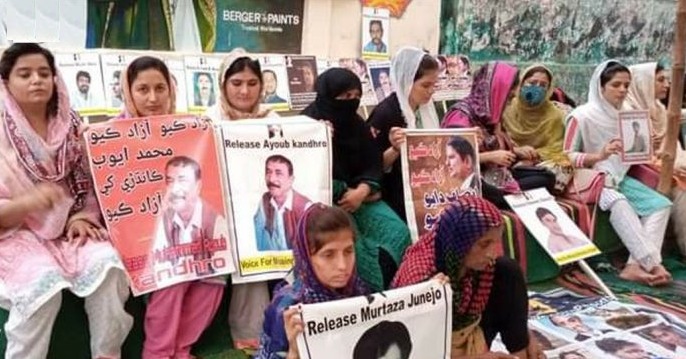
In Islamabad, Baloch students held a protest rally demanding the release of their missing loved ones and an end to the impunity for forced disappearances.

The protest was organized by the Baloch Students Council Islamabad, a student organization that advocates for the rights of Baloch people in Pakistan. The rally was held in front of the Islamabad National Press Club, a symbol of press freedom in Pakistan.

The protest was attended by students, political activists, and human rights advocates from across Pakistan. The protesters carried placards with slogans such as “Release Saheel and Fasih Baloch!” and “Stop Forced Disappearances in Balochistan!”

Addressing the protest rally, the speakers said that all stakeholders and policymakers are present in Islamabad, and yet the injustice and unrest that has been going on in Pak-occupied-Balochistan for 70 years cannot be stopped. They also said that the Baloch people are tired of being treated as second-class citizens in their own country.

Islamabad Rally

The protesters demanded that the Pakistan Army immediately release all Baloch people who have been forcibly disappeared by Pakistan security forces. They also called for an end to the impunity for forced disappearances, and for the perpetrators of these crimes to be brought to justice.

The students emphasized that in Balochistan, enforced disappearances continue to occur. Initially, political workers and ordinary citizens went missing, followed by the abduction of students. Currently, the educated class of Baloch society is also being subjected to enforced disappearances, as individuals like Suhail and Faseeh remain missing. There have been attempts to abduct Fareed Baloch, who hails from Lahore. During the protest, a heavy police presence surrounded the demonstrators.

The protesters stated that when people in Pak-occupied Sindh and Pak-occupied-Balochistan take to the streets to demand the recovery of their loved ones, they are often targeted with violence or subjected to harassment by agencies. In Islamabad, when they voice their concerns, armed forces are deployed against them. In the end, it was questioned whether there is any way to engage in dialogue with the Baloch people, or if they too have been disappeared.

There are thousands of people who have been forcibly disappeared, and Pakistan Army is solely responsible for these disappearances. Pakistan-occupied-Balochistan have a long history of human rights abuses, including torture, extrajudicial killings, and enforced disappearances.

J&K’s pro-citizen approach to fight Pakistan instigated drug menace for terror funding

The administration in Jammu and Kashmir is employing inclusive policies to make significant changes in society. The latest attempt comes over the control of drugs in J&K. In a significant move, some 40 Imams have been roped in by the administration to fight the drug menace. These Imams along with other members of the community were called in a training programme organized by Civil Society Forum Kashmir in collaboration with Crime Branch of Police and Youth Development and Rehabilitation Centre (YDRC) at Government Polytechnic College in Srinagar.

New Approach

Reportedly, Dr Muzaffar Khan, head of YDRC, who is also a clinical psychologist had said, “The initiative aims at taking this movement against drug de-addiction outside the centres into society and connect it with Imams and mothers.” The idea behind involving Imams is the significant respect they hold in society.

As per Dr. Khan, “The Imams are an important part of our society and no one among us matches their status in the community or home. There is acceptance of their word in the community. That is why all the Imams in Srinagar or in rural areas need to be empowered and trained to understand drug addiction and how it is identified. And they also need to be told what advice they would give to those mothers and parents whose homes have been affected by drug abuse.”

The terror climate which endured decades devastated the socio-economic fabric of the society. The youth of J&K had little constructive to invest their time in, and as a result, their boredom, unemployment and anxiety pushed them towards drug and intoxication.

Now that the horrible terror climate is nearing its end and bright future lies ahead, this drug menace is actually a serious concern that needs urgent treatment. The problem becomes more serious considering Pakistan as, with its filthy instability instigating tactics it would see this nothing less than an opportunity.  

J&K becoming the drug hub of India

Earlier some studies revealed that J&K surpassed Punjab in drug abuse cases. This speaks volume about the existing problem. According to the Parliamentary statement made by the Union Minister of Social Justice and Empowerment, the toll of drug addicts in J&K has crossed a staggering one million mark. The cannabis consuming population is about 1.44 lakhs while that of opioid is shockingly highest with 5.42 lakhs. About 1.68 lakh people use sedatives. About two lakh individuals use other drug addiction substances including cocaine, inhalants, and hallucinogens.

The number of women drug addicts has also increased in past years. Some reports tell that one out of every four Kashmiri is a drug addict. Additionally, one drug addict visits every 12 minutes in Valley’s biggest Drug De-addiction Centre at SMHS Hospital in Srinagar.  

Considering this, the administration and security officials remain vigilant. To fight this menace, various initiatives have been taken up so far. In October last year J&K health department started drug de-addiction facility in all the district hospitals, where a significant number of addicts visit on a daily basis.

YDRC’s Dr. Muzaffar Khan during a recent public address emphasised more people-centric approach and engagement of women to make de-addiction, successful. He also emphasised the need of preventive screening of youth. Regarding preventive screening, the J&K Police Public School (JKPPS), Bemina, in Srinagar became the first school in the Valley to implement a drug policy, which focuses on random screening of students annually.

Pak instigated menace for terror funding

But the main problem is the easy availability of the drug which is kept intact through continuous pumping in by Pakistan. Pakistan carries out constant infiltration of drugs via the Valley’s Kupwara and Baramulla districts, less-used other drugs such as brown sugar, cocaine, and marijuana are also readily available within the Valley and even in parts of Jammu. 

Highlighting it, former DGP, Dilbagh Singh had earlier said, “New methods like drones, tunnels, school- or college-going children, and housewives as conduits are now being used for smuggling. The types of drugs involved are varied, ranging from heroin, opium, and cannabis to medical opiates like cough syrup and neurotoxic tablets.”

He also highlighted that Pakistan, and its agencies are pushing drugs here to generate funds for terror activities.  As a result, Security forces have thwarted various narcotic modules and have taken significant actions in that direction. 8000 kg of drugs had been destroyed, 2000 cases registered, and around 3000 individuals arrested under the NDPS Act in the past year

The administration has also attached the properties of some drug peddlers in Jammu and Kashmir in the past. However, the efforts still fall short in front of the faster pace, this menace is growing and hence there is a need for a more citizen oriented approach to deal with the drug problem once and for all. Considering this the inclusion of Imams and women is a significant step that can yield desired results

Pakistan deports Pashtuns under the garb of Afghan repatriation efforts

Pakistan has started deporting the Afghan civilians through Durand line. This happens after months of illegal crackdown and harassment of Afghan civilians living across Pakistan specially Sindh. Amidst this repatriation of Afghan refugees, Pakistan is also reported to have been targeting Pashtuns and deporting them.

Under the garb of repatriating undocumented Afghan civilians, the Pakistan Army and its puppet establishment has continued to harass the Pashtun tribes. It is worth noting that the clashes between TTP and Pakistan Army in Chitral had led to humiliation of Pakistan as they suffered huge losses at the hands of terrorist organisation that they have breaded.

Frustrated by this, Pakistan Army launched an illegal assault over the Afghan civilians who were living in Pakistan since the Taliban takeover of the region.Pakistan gave the deadline of 31st October to all Afghan civilians for their voluntary return and after that they started captivating the Afghan civilians and putting them into detention camps.

This uncalculated and unplanned deportation which is carried out in a hurry has created problems for the Pashtuns living in Pakistan. Accordingly, the Pashtuns are deliberately picked up by the Pakistan Army and deported across durand line.

Recently a video went viral in which Pashtun family was having fierce discussion with the so-called security official, according to which a boy of Pashtun origin and national of Pakistan was forcefully deported to Afghanistan. His family was questioning over the procedures followed with no satisfying reply from the official.

Quoting this, PTM chief Manzoor Pashteen tweeted, “The people of Pakhtunkhwa are also being forcibly deported from Sindh, Punjab to Pakistan. Regarding Pashtun and Baloch, Pakistan has same Bengal formula that they want land not people.”

Balochistan: Attack on Pakistan Army soldiers, 14 killed

A deadly attack occurred in the coastal city of Gwadar in occupied Balochistan, 14 Pakistan Army personnel have been killed. The Public Relations Department of the Pakistan Army, ISPR has also confirmed the attack.

According to ISPR, the attack unfolded as Pakistan forces were ambushed while traveling in two vehicles of a QRF at Malgore Bent. The attack took place while forces were on a move from Pasni tehsil of Gwadar to Ormara. The death toll of 14 Pakistan Army personnel killed has also been confirmed by the ISPR.

Notably, no group or organization has claimed responsibility for this attack at the time of reporting. The region has witnessed previous large-scale attacks on security forces, underscoring the persistent security challenges in this volatile area.

The incident is reminiscent of similar attack from 2020 when an alliance of Baloch freedom fighters (BRAS ) carried out an attack in the same region, resulting in the death of 15 personnel and the capture of weapons.

Hezbollah launches rocket attacks on Israel

In a sudden and alarming escalation of tensions in the volatile Middle East region, the Lebanese terrorist organization Hezbollah, launched a series of rocket attacks on northern Israel. These attacks resulted in the destruction of numerous vehicles and buildings, causing widespread concern and immediate international attention.

According to reports, Hezbollah initiated these rocket attacks from the southern Lebanese border, targeting multiple locations in northern Israel. As a consequence of these attacks, a significant number of Israeli vehicles and residential buildings were engulfed in flames, leading to substantial damage and chaos in the affected areas.

The spokesperson for Hezbollah disclosed that they launched rocket attack by employing explosive drones for the first time against Israel. The drones were used to target the headquarters of an Israeli battalion and Israeli soldiers, adding a new dimension to the ongoing tensions in the region.

In response to the rocket attacks, Israeli forces swiftly retaliated by launching counteroffensive measures, including airstrikes and artillery bombardments on southern Lebanon. This immediate retaliation signified the gravity of the situation and the potential for further escalation in this long-standing conflict.