Home Blog Page 238

India’s women farmers finally make their mark thanks to better credit access, bank accounts

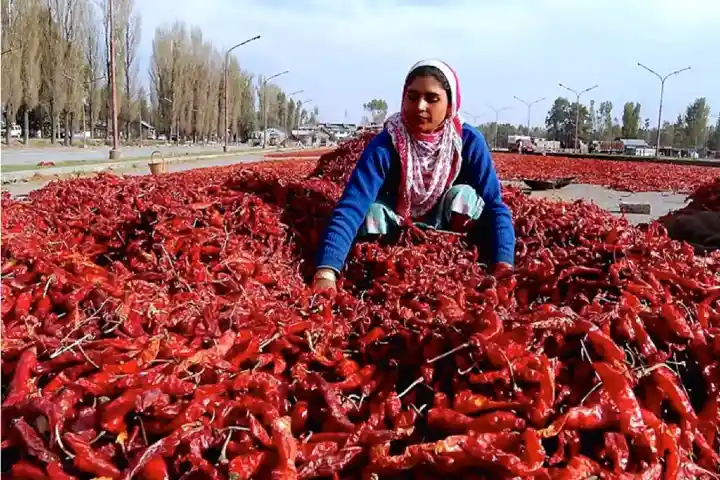
Is the increasing number of women farmers now driving rural consumer demand? While the female workforce in the all-important agriculture sector comprises 62.9 per cent, a large number of them are toying with the idea of setting up at alternate income sources with easier credit access from formal channels. More than 95 per cent of the rural households now have bank accounts, which makes it easier for them to handle their finances while tapping into the opportunity to access credit through the formal channels even as informal channel lending continues. This also makes them key stakeholders in spending decision making.

An India Today survey recently revealed that 50 per cent of the startups in Uttar Pradesh today are headed by women. “Though many of these enterprises may actually be run by men—women may have been just been the official borrowers for businesses that their spouses or fathers run—this trend of increasing number of women loanees is encouraging as eventually it opens up an opportunity for them and they gain a voice,” a woman entrepreneur in Uttarakhand’s Mukteshwar who has just started her own business of selling local produce of the region, told India Narrative.

“I run my own small business of selling local produce to tourists, my husband plays an active role in running the show. But the fact that I have got the credit and it is my bank account, I have an equal voice,” she said, adding that the socio-economic changes in the rural landscape are underway.

The rapid feminisation of Indian agriculture has actually led to growth in the number of women farmers choosing to become entrepreneurs naturally as well as strategically, Reality+, a sister publication of Exchange4Media said.

Bain & Company that prepared a report for Google on Women Entrepreneurship in India estimated that the number of women-owned enterprises would be between 13.5 and 15.7 million—accounting for 20 per cent of all Indian enterprises, providing direct employment to about 22–27 million people.

The Niti Aayog in a report said that empowering and mainstreaming rural women workforce in agriculture can bring paradigm shift towards economic growth. “It will enhance food and nutrition security and alleviate poverty and hunger. It’s a win-win strategy for achieving Sustainable Development Goals by 2030,” it said.

Meanwhile, Motiwal Oswal’s report Ecoscope noted that rural spending expanded by 5.3 per cent year-on-year (Y-o-Y) in the first nine months of the current financial year compared to 0.6 per cent in the corresponding period of the previous financial year. Though rural consumption has eased during the third quarter of the current financial year to 4.6 per cent after rising 6.5 per cent in the April to June quarter and 5.5 per cent in the July-September quarter.

(This article was first published in India Narrative)

Why Pakistan continues to struggle with friendship with India: A closer look

That Hindus and Muslims have co-existed in India for centuries is an indisputable historical fact, but Pakistan’s founder Muhammad Ali Jinnah didn’t think so. In 1940, while delivering the All India Muslim League’s presidential address in Lahore, he argued that Hindus and Muslims belong to two different civilizations which are based mainly on conflicting ideas and conceptions [Emphasis added]. He went on to add that “it is a dream that the Hindus and Muslims can ever evolve a common nationality, and this misconception of one Indian nation has troubles and will lead India to destruction. . .” [Emphasis added].

Hindus and Muslims had not only lived together, but even fought side-by-side to throw off the yoke of the British rule in 1857, and continued to do so subsequently. Yet, Jinnah saw things quite differently, and he intentionally sowed the seeds of communalism by maintaining that “Hindus and Musalmaans [Muslims] derive their inspiration from different sources of history.” He even went to the extent of fuelling communal passion by remarking that, “They have different epics, different heroes, and different episodes. Very often the hero of one is a foe of the other and, likewise, their victories and defeats overlap.” [Emphasis added].

Eight decades and three years after Jinnah propounded his questionable Hindu-Muslim incompatibility theory, by being able to “evolve a common nationality”, both these communities in India have proved him wrong. Furthermore, Hindus and Muslims living together did not “lead India to destruction” but instead, made the country an impressive success story. At the same time, Jinnah’s vision that an exclusive sovereign nation for Muslims would ensure that his community thrives in Pakistan ran into rough weather just within a few years of its creation, and the reason for the same isn’t hard to find.

By taking refuge in religion to garner support of his community members for a separate Muslim nation, Jinnah did great harm to the very country he forced the British to create as Pakistan was founded on the completely unsubstantiated notion that an inherent and irreconcilable animosity existed between Hindus and Muslims that made their cohabitation impossible.So, it was but natural that anti-India sentiments became the building block and the core determinant of patriotism in Pakistan.

While friendly relations, economic cooperation and healthy competition with India would have spurred progress, but by making it a Hindu versus Muslim issue and indoctrinating the people of Pakistan into believing that India was an existential ‘enemy’, Islamabad consciously embarked on a self-destructive course. Grossly over playing a non-existent threat of unprovoked aggression from India, Pakistan Army was able to apportion a lion’s share of the national budget and Rawalpindi’s obsession to match India militarily. This stymied infrastructure development and retarded commercial progression. 

To say that everything in Pakistan is pathetic while all is rosy in India would be incorrect. However, there’s a discernible difference. While New Delhi has its own set of problems, it possesses requisite political stability as well as the diplomatic, economic and military capability to effectively manage thorny issues, both at international level and on the domestic front.

On the other hand, Pakistan is plagued with a host of issues that continue to defy resolution-be it political instability due to an overbearing military, a host of separatist movements with armed groups challenging the state’s writ with brazen impunity, rising fundamentalism and sectarianism, excesses against religious minority communities, and most importantly, a rapidly failing economy. So, while India is well on its way to progress, it’s Jinnah’s Pakistan that seems to be staring at ‘destruction’!

Most of Pakistan’s problems are on account of its distinctive anti-India stance. In a recent article published in Dawn, Islamabad based nuclear physicist, author and activist Pervez Hoodbhoy accurately points out that From Pakistan’s birth onward, patriotism and nationalism was conflated with anti-Indianism. This became a substitute for nation-building or working towards high positive goals. Hence, loving Pakistan means hating India; liberating Kashmir is the topmost priority; nuclear weapons are our most precious national assets; and an oversized army must be provided with every resource else we shall be swallowed up by India.” [Emphasis added].

Hoodbhoy isn’t the first or sole Pakistani to have brought out the issue of how ‘anti-Indianism’ is perceived as a non-negotiable patriotic and nationalistic imperative in Pakistan. In an interview given to The Wire in 2016, Pakistani journalist, academic, political activist, and former ambassador of Pakistan to Sri Lanka and the United States, Husain Haqqani mentioned that “Pakistan’s nationalism currently is defined by militarism” and that “the army has been the dominant reality in Pakistan”.

He also mentioned how army officers “act as if they are the guardians of Pakistan’s identity,” stressing that “they have defined Pakistan’s identity in a certain way in which ‘anti-Indianism’ is more important.” During an interaction related to his book ‘India vs Pakistan-Why Can’t We Just Be Friends’, Haqqani said, “My argument as a Pakistani is why do we even want to be [militarily] equal [with India]? Why do not we want to be happier and prosperous and successful?.”

He went on to add, “What is this obsession about being ‘equal’ and trying to equalise the field with crazies like Hafiz Saeed [Lashkar-e- Taiba co-founder] because he will only create hatred, which will only bite us back.” Haqqani rightly maintains that “Pakistan always had this presumption that India has a tremendous conventional military advantage and Indian Army will be much more bigger than Pakistan’s. So, Pakistan needs irregular methods to be able to be equal.” [Emphasis added].

 Haqqani’s revelation about Pakistan Army’s proxy war in Kashmir has been corroborated by none other than Pakistan’s former President and ex-army chief Late Gen Pervez Musharraf himself. In a 2015 interview, he admitted that In the 1990s, the freedom struggle began in Kashmir. At that time, Lashkar-e-Taiba and 11 or 12 other organisations were formed. We supported them and trained them as they were fighting in Kashmir . . .”

Let’s return to the question of why can’t Pakistan befriend India? The answer is that for the highly propagandised masses in Pakistan, any attempted rapprochement with New Delhi is the ultimate perfidy. Hence even though cordial Indo-Pak relations and unfettered commercial activities between the two neighbours will definitely benefit Pakistan much more than India, no one in the seat of power and authority in Pakistan would dare to try and mend fences with India, as any such attempt would be tantamount to political hara-kiri!

So, despite the crying need for Islamabad to consider normalisation of relations with India, the harsh reality is that there can be no business as usual in the foreseeable future, at least. And despite a Pakistani armed forces delegation attending the recent SCO working group meeting in New Delhi, the hope that this development would raise the possibility of Pakistan’s defence minister attending the SCO meet later this month, may well turn out to be a case of great expectations.

Postscript: How damaging any attempt to normalise Indo-Pak relations can be for any Pakistani can be gauged from the fact that former Pakistan Prime Minister Imran Khan chose this very emotionally sensitive issue to target his arch-enemy ex-army chief Gen Qamar Javed Bajwa.

By alleging that “Gen Bajwa wanted me to develop friendly ties with India [and] he put pressure on me for this”, the wily Khan has tried to portray the retired army chief as a person willing to compromise national honour by developing friendly ties with India and hence a downright ‘traitor’.And by going on to say that “it was one of the reasons that our relationship deteriorated”, he has tried to highlight his own unmitigated Indophobic credentials and thereby project himself as a consummate Pakistani ‘patriot’!  

Holding a Rs 50 billion elections will further sink Pakistan

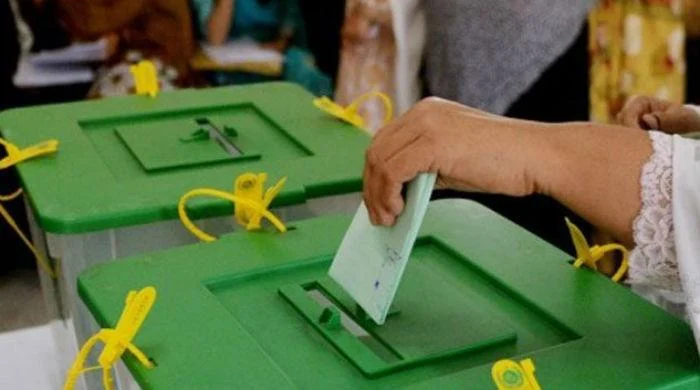
The impending general elections in Pakistan will further dent the economy. The cost of holding elections is estimated at around Rs 50 billion. In 2018, general elections in Pakistan cost a little more than Rs 21 billion while in 2013 it was Rs 4.73 billion. Among other things, the cost has expanded due to a drastic devaluation of the local currency.

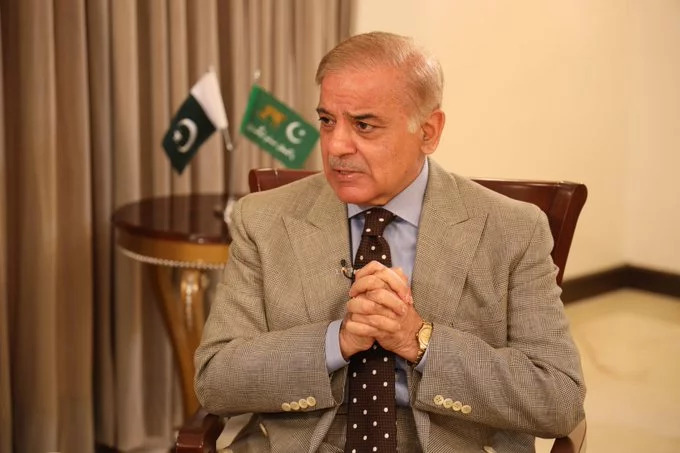
Much to the Shehhbaz Sharif government’s embarrassment, the country’s Supreme Court, earlier this month, called the country’s Election Commission’s decision to postpone the Punjab Assembly polls till October, unconstitutional. Unsurprisingly, the Supreme Court’s decision has boosted former Prime Minister and Pakistan Tehreek-e-Insaaf (PTI) top boss Imran Khan’s sentiments and prospects.

The rising political uncertainty has prompted Finance Minister Ishaq Dar, who was slated to visit Washington for the spring meetings of the International Monetary Fund (IMF) and World Bank to cancel his trip.

Holding elections—the most crucial facet of a democracy is a costly affair.

Today Dar tabled a bill in Parliament to seek approval for release of funds required to hold elections in Punjab and Khyber Pakhtunkhwa though he expressed surprise at the Supreme Court’s decision. He noted that in the past, elections in the country have been delayed after assassination of former Prime Minister Benazir Bhutto, or in the wake of floods and earthquakes.

The standoff between the Supreme Court and the ruling coalition led by PML-N has led to further uncertainty in the political landscape, directly impacting the economy.

A blog published by Brookings Institution in January said that for politics-obsessed Pakistan, the biggest question remains who will win the next general election. However, according to the blog, regardless of the outcome of the elections, “the direction of the country is unlikely to change.”

In addition to this the security situation in the South Asian nation has deteriorated too.

The worst impacted are the common citizens of the country. Even as the inflation rate in March rose to 35.4 per cent, they are now preparing for worse with prices likely to further go up.

“What makes the crises in Pakistan today extremely worrisome is the domination of the political crisis over all other challenges and the resulting distraction from finding solutions to the more important economic and security issues,” Dawn said in an article.

The question that many are now asking is this: Can Pakistan afford to hold elections?

(This article was first published in India Narrative)

‘Pashtuns will not be allowed to perish in the name of peace’, Manzoor Pashteen

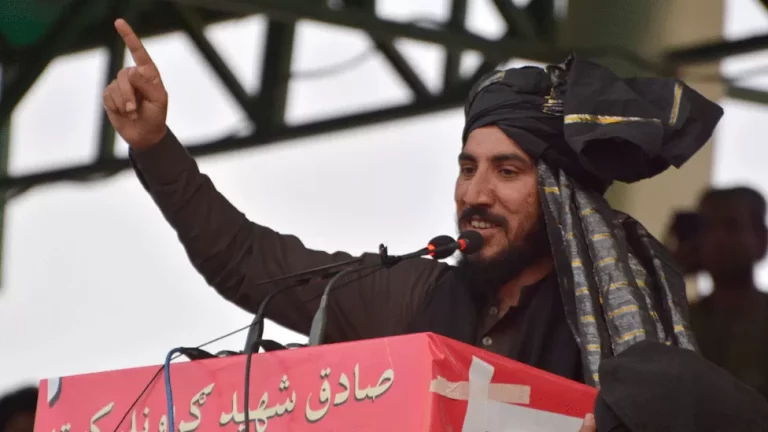
Pashtun Tahafuz Movement (PTM) leader Manzoor Pashteen has said on the social media platform Twitter that after the decision to conduct a military operation in the meeting of Prime Minister Shahbaz Sharif, a narrative is being created in the Pakistani media as if terrorism is rampant in Khyber Pakhtunkhwa (KP) and an operation is needed, whereas the reality is that terrorist organizations are created and used by the state itself to destroy Pashtuns.

He said that the government is preparing a war narrative with the blood of Pashtuns for the upcoming elections and for the military’s general business war, so that the people can be mentally prepared before the future events.

He warned that under no circumstances would they allow Pashtun land to be used again for dollar wars and political and strategic engineering.

Manzoor Pashteen said that the results of the past 20 years of military operations are that the military generals have given mansions to big commanders like Ehsanullah Ehsan and others, and facilitated their escape, while more than 200,000 homes, dozens of markets, complete villages, over 80,000 martyrs, millions of wounded and disabled Pashtuns, control over resources, thousands of missing persons, landmines, bad governance, target killing, kidnapping for ransom, and countless other disasters have been inflicted upon them.

Manzoor Pashteen said that these dramas must come to an end, the situation needs to be fixed by closing the five checkpoints and then destroying Pashtuns in the name of peace operations, looting their resources, and using the same name for oppression, discrimination, and atrocities. He demanded the release of missing persons, the clearance of landmines, and the provision of basic facilities to the affected areas.

It should be noted that a meeting of the National Security Committee of Pakistan was held recently. A ‘comprehensive operation’ against terrorism was approved in the meeting.

The 41st meeting of the National Security Committee was held at the Prime Minister’s House on Friday. Prime Minister Shehbaz Sharif chaired the meeting in which federal ministers, chairman joint chief of staff committee, service chiefs and senior officials of related institutions participated.

According to the statement issued at the end of the meeting, ‘as a result of the soft corner and reckless policy with the TTP, the terrorists were not only allowed to return without hindrance, but the dangerous terrorists of the TTP were given confidence. He was also released from prisons in the name of Sazi.

The statement said that the meeting emphasized on comprehensive national security in which the relief of the people was given the central position and informed the forum that the government was taking steps in this regard.

In the meeting, it was approved to start the all-round comprehensive operation. This comprehensive, all-round and comprehensive operation to eliminate the scourge of all forms and types of terrorism from Pakistan will also include efforts at political, diplomatic security, economic and social levels. In this regard, a high-level committee has also been formed which will make recommendations regarding its implementation and its limitations in two weeks.

According to the statement, the successful operation of Moqtadar Intelligence Agency in which they arrested the most wanted Baloch independence leader Gulzar Imam alias Shambe was greatly appreciated in the meeting.

POGB:Construction contractors halt work due to non payment of dues by Pak regime

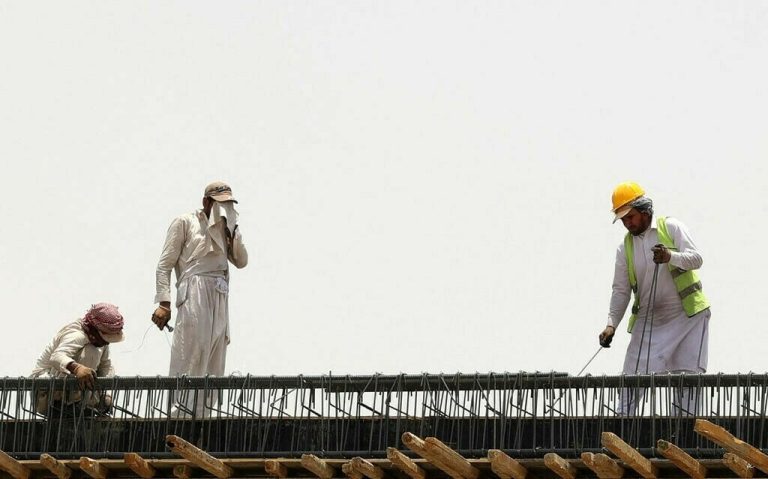
Construction contractors in Gilgit-Baltistan have halted their work as the Pakistan government who has illegally occupied the region has failed to pay them their pending dues of 13 billion rupees.

Fresh tenders for development projects have been stopped by the Chief Secretary as there is lack of funds. This has resulted in many workers from Khyber Pakhtunkhwa and Punjab (Pakistan) to flee and go somewhere else in search of jobs. The rate of joblessness has increased many folds and Gilgit- Baltistan is being gripped with unemployment and starvation adding to the already problems faced by the people under the occupier (Pakistan).

The fate of POGB remains in limbo as countries or money lending organizations refuse to lend loans to the subjugated area and there is no money in the national exchequer even though grants to the Pakistan government is in billions.

Few months ago POGB witnessed complete shutter-down wheel jam strike and the people came out in protest against land grabbing, illegal taxes, wheat subsidy cuts, and non-provision of other basic human amenities in every district in Gilgit-Baltistan following a call by the Awami Action Committee.

UKPNP Chairman, Sardar Shaukat Ali Kashmiri, in his intervention, informed the UN Human Rights Council that Article (19)-1 of the International Convention on Civil and Political Rights guarantees everyone the right to hold opinions without interference. “The people of Pakistani-administered Kashmir and Gilgit-Baltistan, however, have not had this freedom since 1947. Pakistan is systematically violating the land rights of the people of Pakistan in its peripheries,” he said.

BNM protests in Germany to commemorate 27th March as “Black Day”

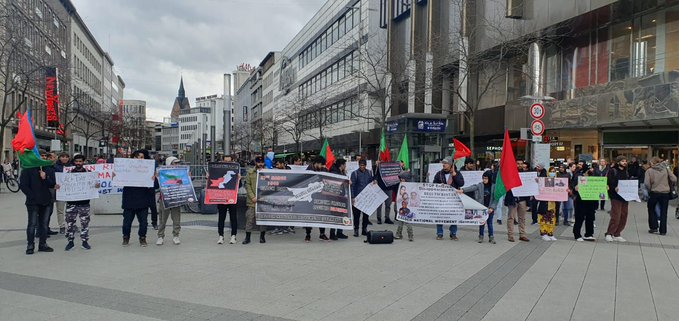
Baloch National Movement Germany Chapter celebrated March 27 as Black Day and took out a protest rally in Hanover. This rally and protest was in accordance with the day on 27 March, 1948, when the Pakistan Army attacked and forcibly annexed Balochistan to Pakistan. Since then, the people of Balochistan have been rejecting Pakistan and resisting the Pakistani occupation.

On this occasion, the participants distributed pamphlets and informed people about the historical background as well as the ongoing Pakistani atrocities in Balochistan.

Baloch National Movement Germany Chapter President Asghar Ali addressed the audience and said that ‘raising voice against slavery is our national duty. Pakistan occupied Balochistan on March 27, 1948, after which the Baloch faced untold suffering’.

He addressed the Baloch living in Germany that this protest in Germany is not only an expression of solidarity with the Baloch living in the homeland but also helps to move forward as a community. It connects and unites Balochistan and its people.He said, ‘we have to come out of the four walls of our homes and merge into the wider unity of national unity to get rid of the slavery we have been facing for the last 75 years’.

Samal Baloch, Vice President of BNM Germany Chapter, said that the Baloch nation has been subjected to extreme violence, oppression and marginalization by the Pakistani authorities for decades.He said that since the occupation of Balochistan in 1948, Pakistan has adopted the policy of subjugating the Baloch people. The Baloch are deprived of health and education and the Pakistani authorities are conducting a brutal campaign of violence against them.

He stressed that the Baloch people have the right to self-determination and independence according to the United Nations Charter. The Pakistani government should respect this, and it is the responsibility of international organizations to protect the rights of the Baloch people against Pakistani colonialism. Respect self-determination.

BNM member Shali Dad said that the people of Balochistan are traumatized by the unspeakable pain and torture inflicted on them by the Pak Army and intelligence agencies.

He said that during these 75 years of slavery, thousands of families have been ruined. Pakistani forces have forced thousands of people to disappear, which is a nightmare in Baloch society. The biggest thing is that the international and Pakistani media have turned a blind eye to the grievances of the people of Balochistan.

Ahmed Baloch, another associate of BNM, said that Baloch people celebrate March 27 as Black Day. This is the day when a civilized independent state of Balochistan was occupied by Pak Army through illegal and forced annexation. He said that 75 years of slavery has seen the blood of thousands of Baloch people, 75 years of slavery could not subjugate the Baloch nation or stop it from the dream of achieving independent Balochistan.

Kashmir gains momentum as foreign investors show increasing interest in the region

Investment entails acquisition of assets or items with the primary objective of generating income or for the purposes of wealth appreciation. However, since successful investment is dependent on a host of factors-both quantifiable and undeterminable, it’s a risky business. Furthermore, the fact that the capital invested can’t be withdrawn prematurely without incurring substantial [if not catastrophic] losses, further aggravate an investor’s worries.

The flip side is that since probability of profit accruing from an investment is directly related to the risk the proposal portends, investors aren’t put off easily, especially where profit-making prospects are promising. So, given the excellent and wide-ranging scope for investment that J&K provides, one would have expected foreign investors making a beeline to cash upon the same. However, meaningful foreign investment eluded J&K, and the reason for this anomaly isn’t too hard to find.

The violence in Kashmir isn’t just a temporary phenomenon triggered by public resentment or anger that could be assuaged through reconciliation. What Kashmir has been experiencing for more than three decades is actually a full-blown and protracted proxy war unleashed by the Pakistan Army’s spy agency Inter Services Intelligence [ISI]. Being a classic case of state sponsored terrorism, the tense situation in J&K defied any resolution and with no prospects of the situation improving, investors were [expectedly] discouraged.

Through use of its proxies like the All Parties Hurriyat Conference [APHC] to orchestrate public unrest and enforce frequent shutdowns, the Pakistan army’s intelligence wing Inter-Services Intelligence succeeded in creating an atmosphere detrimental to commercial activity in Kashmir. To make matters worse, instead of focussing on development and meaningful welfare-oriented programmes, successive governments in the erstwhile state of J&K pursued populist policies to woo their vote bank creating an unpromising environment for investment.

However, things started changing once the center started choking the separatists’ illegal supply of funds from Pakistan. The near simultaneous crackdown on terror financing in Kashmir Valley and an end to the scourge of frequent public protests and rampant incidents of stone pelting can’t be a mere coincidence. Au contraire, it’s yet another unambiguous confirmation of the fact that demonstrations  were orchestrated by making lavish payments to the participants.

With the abrogation of Article 370, decks for extending central laws and people-oriented welfare schemes to J&K were cleared and bifurcation J&K and its reconstitution as Union Territory [UT] helped the government machinery to ensure time-bound implementation of various infrastructural and developmental programmes. Positives of the decision to abrogate Article 370 have started yielding results and the people of Kashmir are a much happier lot.

Kashmiris have finally seen-through APHC’s perfidy and are no longer willing to be swayed by the diktats of this conglomerate, which under the garb of working for the bright future of Kashmiris, is only interested in furthering Pakistan’s motivated agenda. The locals have also understood that the so-called ‘armed struggle’ and emergence of terrorist groups like The Resistance Front which are targeting minority community members, are ISI proxies tasked to destroy Kashmir’s pluralistic and secular fabric and impede return of normalcy.

While this realisation has generated a strong dislike for the ongoing spate of senseless violence, the people-friendly approach of security forces and law enforcement agencies have re-instilled public confidence in these forces. Since locals earnestly yearn for peace and perceive terrorists as disruptors of peace, they are more forthcoming in providing information regarding their whereabouts to the security forces.

While the pro-Pakistan lobby would reject these fact-based inferences, the undeniable fact is that there’s a marked improvement in the overall situation in Kashmir Valley. Why else would various renowned investors from the United Arab Emirate [UAE] enter into an agreement with J&K government in 2021 for infrastructure development by commissioning several projects like industrial parks, IT towers, multi-purpose towers, a shopping mall, logistics centres, a medical college as well and a speciality hospital?

While UAE isn’t the only foreign investor in J&K, but being an OIC member, its decision to invest in J&K is of special significance as it outrightly demolishes Pakistan’s incredulous claim of India’s so called “illegal occupation” of Kashmir and institutionalised persecution of its Muslim citizens. Had there been even an iota of doubt [leave alone truth] in Pakistan’s claim, then UAE most certainly wouldn’t have invested a single Dirham in an area which was disputed or where Muslims were being persecuted!

J&K’s march towards prosperity has recommenced in real earnest and while the government and investors are doing their bit, it’s the solemn duty of every Kashmiri to stay away from disruptive activities that threaten peace and prosperity in the UT. To further their own vested interests, some Kashmiris have sold their conscience and by doing ISI’s bidding brought about great misery and devastation in J&K. Those, who for their own self-serving interests have ruined the lives of millions of Kashmiris need to be shunned and exposed.

After more than three decades of suffering ISI orchestrated terrorism in J&K, the one absolutely clear lesson is that violence cannot achieve any desired result. Pakistan’s failure to get to the UN, the international community or OIC support for its unconvincing stand on Kashmir has proved beyond any doubts that its claims have no takers. Hence, come what may, Pakistan can never ever get hold of J&K and this reality is actually a boon, because how can a country that can’t even provide basic amenities to its own people, take adequate care for the people of Kashmir?

Multinationals in Pakistan scramble as their profit margins plummet

The going is getting tougher for multinationals operating in Pakistan, fresh investments will slow down. Along with the economic woes, the deteriorating political and security situation will also be a deterrent. Profit margins of the MNCs have taken a massive hit owing to the dwindling foreign exchange reserves. 

Pakistan’s economic situation is unlikely to improve in the near to medium term, especially with general elections approaching.

Many fear that the crisis would force several firms to either shut down or slow down operations leading to further joblessness.

“The situation could even get worse leading to further rise in unemployment. But that is not the only concern. Pay packages may get thinner too or for many, salaries could even get docked,” said an analyst.

Earlier this month, automobile major Honda announced closure due to scarcity of raw materials with a strained supply chain network.

The stringent restrictions imposed by the State Bank of Pakistan – the central bank — limiting outflows of the foreign currency have left MNCs scrambling to remit dividends to shareholders outside the country. The sharp depreciation of the Pakistani rupee has also led to a massive erosion of the value of the dividends. Not just that. The frequent power outages along with scarcity of raw materials due to import restrictions to save dollars has also become a cause for concern.

Now the uncertainty over resumption of the $7 billion aid package from the International Monetary Fund could push many of these companies to rework their Pakistan strategy.

Pakistan Business Council (PBC) CEO Ehsan Malik told the Express Tribune that the delay in remittances sends a “very negative signal to the potential (foreign) investors.”

Between July to February, the total profit repatriation stood at $225 million—a massive drop of 80 per cent compared to the corresponding period of the previous financial year. Of this, Hong Kong-based MNCs repatriated $84.3 million to their headquarters, followed by Chinese firms that sent home $34.4 million, the newspaper said. For US firms the amount was $26.3 million. The amount repatriated by UK-based companies stood at $15.1 million and for UAE-based firms it was $11.5 million.

(This article was first published in India Narrative)

Forced land acquisition in Gilgit-Baltistan by Pak Army continues

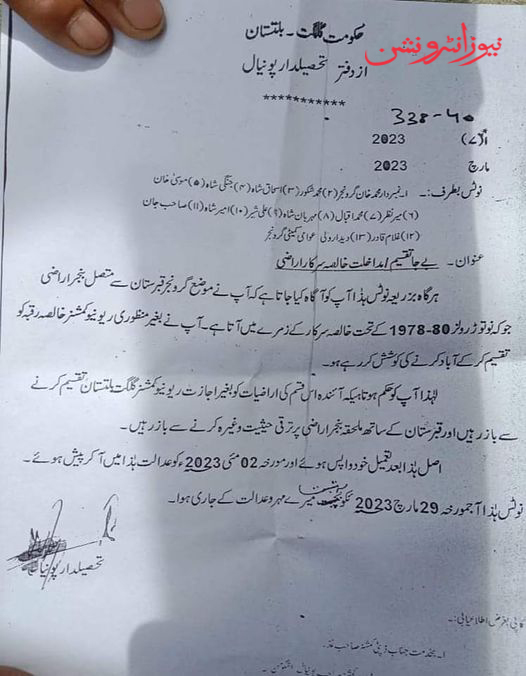
In Pakistan-occupied Gilgit-Baltistan, the land of the local people is being confiscated by the Pakistani government.The Pakistani Army has once again made an attempt to take over the lands of the local people in the Khaz area of Gurungar.The notice being circulated shows that the government wants to take over the geology owned by the people of Punyal after Gilgit city.

According to the sources, this barren land of Grunjar as well as the grazing land is owned by the people of Grunjar, the elders of Grunjar had paid taxes to acquire this land. After the payment of the tax, the land from the Lub river to the top of the mountain is owned by the local people, with no land owned by any government functionary or institution.The local people have said that they will not tolerate any interference and that Granger’s land grab is an attack on Punyal and Dastur Punyal.

The leader of Gilgit-Baltistan United Movement said that the residents of Gilgapur/Sherqala to Birgal and Haim will defend the lands of Grunjar and Punyal come what may.Over the past few months,the resource rich region of Gilgit-Baltistan has seen an increase in land occupation of the local people by the Pakistani Army or Pakistani Rangers.

‘Pak backed CTD authorities conducted media trial of Mahal Baloch’, Quetta conference

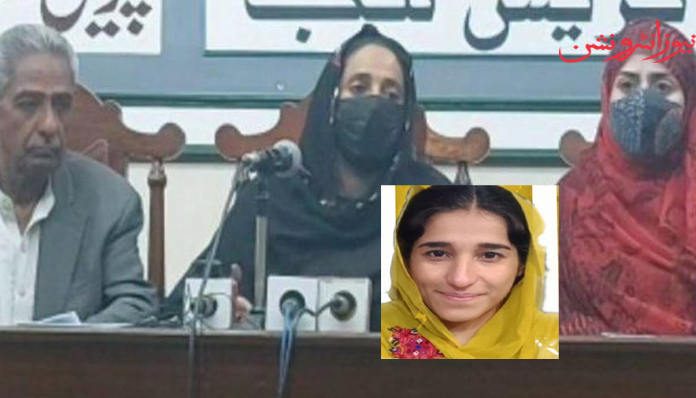
Pari Gul Baloch, along with the leader of Voice for Baloch Missing Persons, Mama Qadeer Baloch and others, said in a recent press conference held in Quetta, the capital of Balochistan, that her family has been affected by oppression of the Pak military operations and other methods for the past seven years. Their home in Gomazi was burnt down in a Pak military operation and later they were forced to move out of the area.

Nand Pari Gul Baloch, sister of Mahal Baloch said that for the past many years, they have been raising my voice against the violations of human rights in Balochistan as a social worker, which is the right given by the constitution and laws of Pakistan.She said that they had to pay a price for this as last month, her sister Mahal Baloch, along with her two young daughters, her mother were arrested from their house in Satellite Town.The next day, except Mahal, the others were left in a desert.

Pari Gul Baloch said ‘that we have already made it clear through the media that Mahal Baloch was forcibly disappeared from her home, the Counter Terrorism Department (CTD) arrested her at Ladies Park in Satellite Town’.

She further said ‘that we had postponed our protest sit-in against the kidnapping-like arrest of Mahal Baloch on the basis of trust in the law, where the authorities assured us that justice will be provided to Mahal under the law. It has been over a period of time, but in all this time, she was handed over to the police on remand for the fifth time, while her condition was worry-some at the time of court appearance’.

She said that after the remand Balochistan government and Pak backed (CTD) authorities conducted a media trial of Mahal in which she was declared guilty of violation of law and social media was also used for this.Pari Baloch further said that CTD’s inclusion of her name along with my sister Bibi Gill’s name in the said press conference is a continuation of atrocities on our family.

Addressing the journalists, she said, ‘With your cooperation, we want to convey our message to the higher authorities, judiciary, political parties, including regional and international human rights organizations to fulfil the demands of justice in the case of Mahal Baloch’s abduction. Instead of trying to stop our family from raising our voice, we are being harassed in various ways to stop raising our voice about human rights violations in Balochistan’.

Pari Gill said that Mahal Baloch, who is in custody is being tortured and forced to release a video statement, which has no legal status.

She said,’however, we are ready to fight a legal battle and our efforts will continue until Mahal’s recovery’.