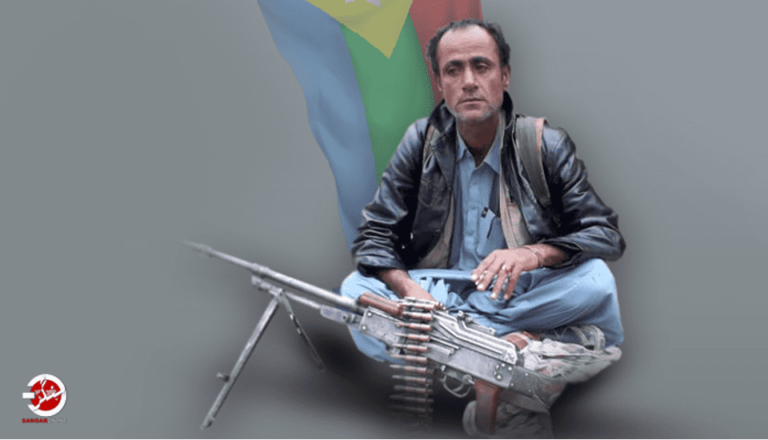
During November 2021 the Balochistan Liberation Front (BLF) carried out sixteen lethal attacks against the Pakistani forces in which more than nineteen Pakistani soldiers were killed and dozens injured. Two attacks were carried out on Pakistani military construction company, Frontier Works Organization (FWO), wherein a check post was destroyed and weapons sized. One BLF sarmachaar (freedom fighter) embraced martyrdom while defending Balochistan against occupying forces of Pakistan.
01 November 2021 BLF sarmachaars (freedom fighters) set fire to the machinery of military construction company Frontier Works Organization (FWO) in front of Murad Bakhsh Hotel, Sang Bazaar in Hoshap area of Kech district.
04 November 2021 BLF snipers attacked a Pakistan Army post in the Moch Kaur area of Tump and killed one military personnel. In another attack on this day a state informant Dosten was targeted and killed in Washbud area of Panjgur district. Meanwhile, a man Chakar (son of Abdul Wahid) resisted and tried to save the culprit from which he was injured. “We have no enmity with him but no one must try to save traitors because they are equally complicit in Pakistan’s war crimes and Baloch genocide. Dosten (son of Fazal, resident of Washbud), had been a supporter of the Pakistan Army and the local death squad in informing the insurgents and identifying their relatives,” BLF said in its media statement.
05 November 2021 A personnel of so-called Counter Terrorism Department (CTD), Imtiaz was attacked and killed by BLF sarmachaars. CTD is involved in Baloch genocide along with Pakistan Army by staging a new tactic of “Fake Encounter”. For this purpose, police are being recruited in CTD by giving greed. Many Baloch have also been recruited. “We warn all Baloch not to be a part of any Pakistani organization including CTD which is directly involved in the massacre of Baloch. Some people tried to save Imtiaz during the attack. During the scuffle Imtiaz pulled out his pistol and tried to target the Baloch freedom fighters. Imtiaz’s pistol was seized and he was killed.”
On this day BLF snipers killed a Pakistan Army personnel in Jawan Taak area Gichk, district Panjgoor.
07 November 2021 BLF sarmachaars attacked Abdaruk check post of the Pakistan Army at main road in Apsaar Turbat, Kech district. Two army personnel were killed and one was injured in the attack. In another attack BLF snipers killed a Pakistan Army personnel in Jawan Taak area Gichk, district Panjgoor. On this day BLF sarmachaars carried out another attacked at the Alangi check post of Pakistan Army with automatic heavy weapons in Mashkay, district Awaran that inflicted heavy losses to the occupying forces.
13 November 2021 Major Gwahram Baloch, spokesman for the Balochistan Liberation Front (BLF) paid tribute to Shaheed Shah Mir Baloch. He said that on 13 November in the mountains of Kolwah, the Pakistan Army tried to block the path of the sarmachars. “A clash broke out between the occupying forces and the sarmachars in which the Baloch sarmachar Shah Mir Baloch alias Shay Shapkoli was seriously injured and died on the way to the hospital.” Five enemy soldiers were killed and several others were injured in this clash.
Major Gwahram Baloch said that Shah Mir Baloch alias Shay Shapkoli, resident of Kolwah Shapkol fought valiantly against the occupying army for more than an hour. “Combat helicopters arrived on the scene to assist the Pakistan Army and Shaheed Shah Mir was wounded and managed to escape from the siege of the enemy army. He was being taken for treatment but could not survive and attained martyrdom.”
Major Gahram Baloch said that Shaheed Shay Shapkoli had been associated with the Baloch national movement since 2012 and was the second lieutenant in BLF. “Shaheed Mir Baloch was a very brave fighter. He fought against the enemy army by serving in many areas and on the fronts of Ormara, Kulanch, Balgatar, Awaran, Jhaoo and Kolwah.”
15 November 2021 BLF attacked a Pakistan Army outpost at Kalato area of Jhaoo, district Awaran with rockets and heavy weapons. The occupying army suffered casualties and financial losses.
16 November 2021 A convoy of Pakistan Army vehicles was hit by a remote-controlled bomb in Mikk area of Gichk district Panjgur. A vehicle was destroyed in the attack and all the army personnel in it, were killed and injured.
In another attack on this day at around 5:30 PM BLF sarmachars first killed a Pakistan Army personnel by sniper rifle on a check post in Ganda Dar area of Tump, then hit the check post with LMG and A1 grenade launcher, killing a number of forces at this outpost.
19 November 2021 Balochistan Liberation Front (BLF) spokesman Major Gwahram Baloch claimed responsibility for the attack on a Pakistani military construction company, saying that on Friday, 19 November, in the Apsar area of Turbat city, sarmachaars attacked the military construction company Frontier Works Organization’s (FWO) construction site and set fire to machinery and other equipment. “Here the military company is building a road that goes from the main army camp in Turbat to the military camp in Apsar. Construction under Pakistani occupation is an attempt to prolong exploitation and slavery. Baloch people should stay away from them.”
21 November 2021 Attacked a military outpost in Raghai with a sniper rifle in Baloch Abad, Raghai of district Washuk and killed a military personnel. The outpost was attacked with rockets and sophisticated weapons, killing or injuring other personnel.
23 November 2021 Five Pakistan Army personnel were killed in the attack at Tump and weapons were seized. Balochistan Liberation Front (BLF) spokesman Major Gwahram Baloch claimed responsibility for the attack on Pakistan Army in Kech district. “At around 5:40 PM on Tuesday, sarmachaars (freedom fighters) attacked a military post in Tumpe Kulaho. Five army personnel at the checkpoint were killed in the attack. Frightened by the intensity of the attack, the other three soldiers fled from a nearby river. After that, the sarmachaars entered the check post, seized all the weapons and set the check post on fire.” Later on other troops arrived from the nearby outposts with the help of armored vehicles, which were also repulsed by the sarmachaars.
28 November 2021 BLF attacked a Pakistani outpost at cinema chowk in Turbat city. One army personnel was killed in this attack.
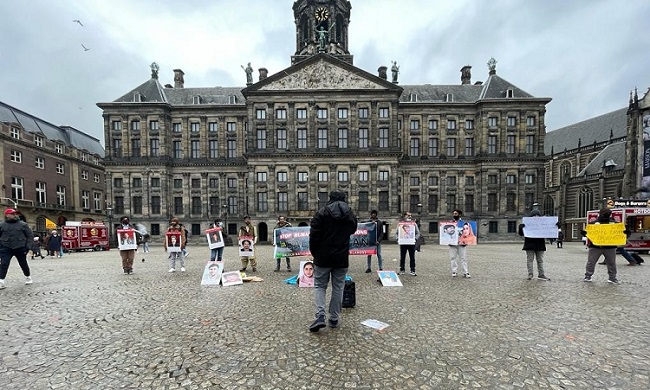
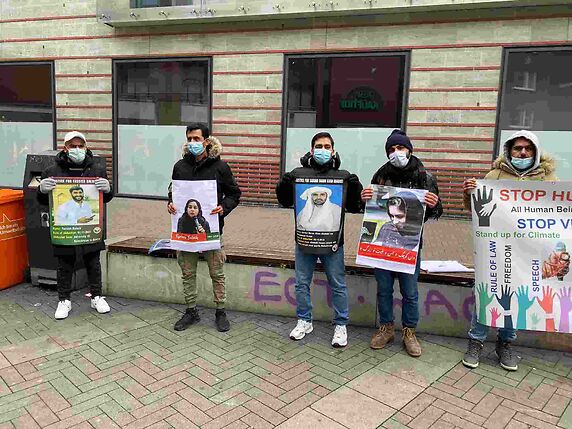
The central spokesperson of Baloch National Movement (BNM) said that on 10 December — the International Human Rights Day, demonstrations were held in Germany and Netherlands against the Baloch genocide and atrocities committed by Pakistan in Balochistan. Protesters held pictures of Baloch martyrs and ‘enforced disappeared’ persons, chanted slogans and distributed pamphlets to the locals.
Addressing the protest in Amsterdam, BNM Netherlands Zone President Keyya Baloch said that “…today we have gathered here on the occasion of International Human Rights Day to show the world that a humanitarian crisis has arisen in Balochistan. The Baloch are being deprived of their basic human rights.”
He added that “the Baloch have been demanding the right to life for the last seven decades. Today thousands of people have come to the streets in Gwadar demanding the right to live with dignity. Human Rights Day is being observed all over the world but the families of those who have been forcibly disappeared in Balochistan are still protesting. We want the international community to take notice of human rights violations in Balochistan.”
Addressing the protesters, Abdul Ghani Baloch, a senior member of BNM Netherlands, said: “We have gathered here for our rights and our struggle is also for human rights.” Munawar Baloch, Deputy General Secretary of BNM Netherlands Zone, said: “The purpose of our protest is to show the world that we Baloch are human beings of the same flesh and blood. Our only demand is that we be given the right to live.” BNM member Imran Hakeem Baloch in his address said that two days ago the bodies of two enforced missing persons were dumped in Western Balochistan.
Baloch National Movement (BNM) demonstration in Germany against Pakistan’s human right violations in Balochistan on December 10, the International Human Rights Day. (Photo: News Intervention)
BNM members Jabbar Baloch, Jasim Baloch, Badal Baloch, Amjad Baloch and BRP’s Abdul Jalil Baloch also addressed the protesters in Münster, Germany.
Jabbar Baloch said that Pakistani forces were abducting, disappearing and killing political and social activists in Balochistan. “There are torture cells in all Pakistan Army cantonments. People are kidnapped and kept there for years. Dr. Deen Mohammad and Zakir Majeed have been in the secret prisons of the Pakistan Army for 12 years, so are countless women and children. Similarly, sons of the Sindhi nation are also in torture cells. In the last two decades, human rights violations have reached their peak in Balochistan and Sindh. Thousands of people from different walks of life have been forcibly disappeared.”
Jasim Baloch said that on this international human rights day, “we appeal to the world to play its role in liberating us so that we can live like other nations of the world. We receive mutilated dead bodies daily under the occupation of Pakistan.”
Addressing the protesters, BRP’s Abdul Jalil said, “I would like to draw your attention to the atrocities being perpetrated by Pakistan. Thousands have gone missing. Due to the silence of the world, Pakistan has got immunity to commit crimes. The world powers and the world media should not ignore Balochistan because we are losing our loved ones on daily basis.”
Paying homage to Banuk Karima, Badal Baloch said that “this day reminds of the human rights that every individual is entitled to. But, we are slaves to a country that does not follow any international law. On the other hand, the world is silent on Pakistan’s terrorism. Baloch villages are being burnt down and forced to relocate. We dedicate our today’s program to Banuk Karima Baloch as she gave a new shape to the movement and included Baloch women in this movement. Banuk Karima with her blood and sacrifice has given a boost to the Baloch resistance.”
Amjid Baloch while paying homage to Banuk Karima Baloch said that she may have been physically separated from us but her sacrifice is a beacon for us and she is with us. “She has conveyed the message of national liberation in every corner of Balochistan. We have been in the throes of oppression for seventy years. The Pakistan Army does not consider us Baloch as human being. There are many human rights laws in the world but sadly they are absent in Balochistan.”
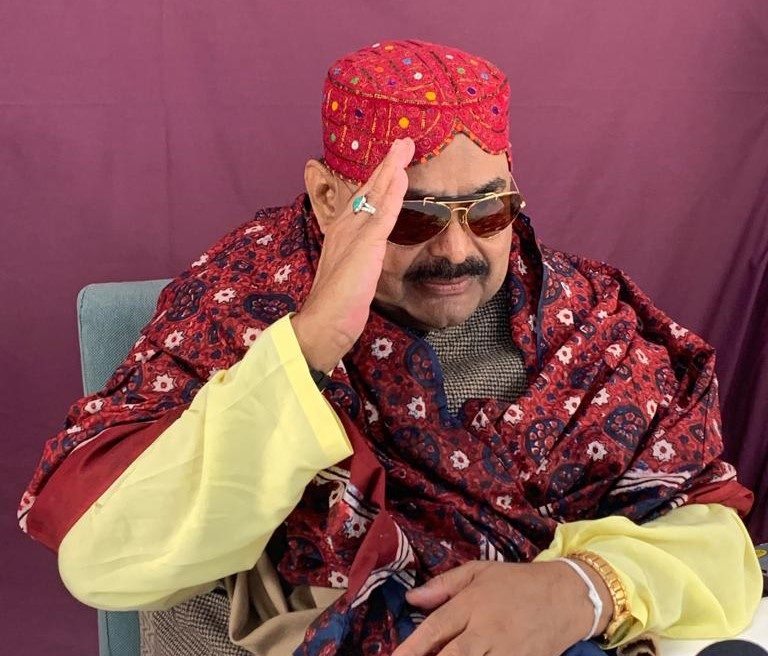
Founder of Muttahida Qaumi Movement (MQM) and Sindh’s mass leader Altaf Hussain urged Indian Prime Minister Narendra Modi, UK PM Boris Johnson and the UN Secretary General António Guterres to support the ongoing freedom movements in Sindh and Balochistan. Hussain’s voice echoed the pain of Sindhi and Baloch who suffer violent attacks on a daily basis at the hands of Pakistani security forces.
“The people of these two Pakistan-occupied territories (Sindh and Balochistan) are in a miserable state and looking towards UN, UK and the world’s largest democracy India, for help. The democratic countries must not ignore the legitimate call from the people of these two Pakistan occupied territories and must offer support for their freedom as per the charter of the UN,” urged Altaf Hussain during his address to MQM congregation in London to mark the Martyr’s Day.
Hussain termed partition of the Indian subcontinent as “biggest mistake” and said that the unfortunate turn of events was responsible for millions of deaths, rapes and families falling apart. Addressing PM Modi, the MQM founder said: “The partition of India was the fault of our forefathers, they committed a huge sin and we, the Mohajirs, are paying the cost of that enormous sin. India must open doors for Mohajirs. I promise we will reverse the mistake and repay the debt of kindness by our deeds.”
Delving deeper into history Hussain explained that the partition of India was not facilitated by the poor Mohajirs but by Muslim Nawabs, feudal lords and the rich elite who had become agents of the British. “…they divided India while those who had lived together for thousands of years became enemies of each other. In a similar manner, today’s Sindhi elite have become agents of Pakistani Punjab and the Pakistan Army, and use the Sindhi card only to keep Sindh enslaved for their vested interests. Sindh has been turned into a satellite colony of Punjab and her land and resources are being robbed by the perverts of Pakistani military.”
Altaf Hussain recalled how British Empire occupied the Indian subcontinent by adopting a policy of divide and rule that kept Hindus, Muslims, Sikhs fighting with each other. “There were freedom fighters such as Subhash Chandra Bose, Bhagat Singh who attained martyrdom during their struggle for India’s freedom. Several other Hindu and Muslim freedom fighters laid down their lives for freedom. But the British policy of “divide and rule” was to divide people of India on the basis of religion. Today, history has proved that Maulana Hussain Madani and Maulana Abul Kalam Azad and other like-minded dignitaries were correct in saying that a nation is not formed by religion but it is related to geography. There are no adherents of any one religion or creed in the geography of any country. No nation is a unit but consists of people belonging to different religions and beliefs.”
Hussain exhorted Prime Minister Narendra Modi and the people of India to help liberate Sindh in the same way Indians helped liberate East Pakistan (now Bangladesh). “We promise that we will not form a union with Pakistan but will form a union with India like the European Union.”
Altaf Hussain explained that terror-exporting devilish military of Pakistan has converted Pakistan a safe haven for terrorist organisations such as Taliban, ISIS, LeJ, etc. on the pattern of Afghanistan. “The peace of the region and the entire world is seriously at stake. If India and other democratic countries stay silent on the appeal of people of Pakistan-occupied Sindh (POS) and Pakistan-occupied Balochistan (POB) then it will be tantamount to allowing the demonic military of Pakistan to play with the lives of the millions of people all over the world.”
Pakistan has become an open threat to global peace and is tormenting the whole world through terrorism. “Just a few days ago, hundreds of policemen were killed and injured by those who were shouting slogans in favour of extremist organisation TLP (Tehreek-e-Labbaik Pakistan). But the Pakistani military hugged them and provided monetary support to their terrorist activities. Likewise, the military hugged Taliban terrorists and has provided them safe haven and jobs.”
On the other hand, this devilish Pakistan military imposed sanctions on Muslim Mohajirs and used brutal force to stop them from performing the rituals on Martyr’s Day. The manner in which the paramilitary Rangers brutally tortured MQM workers, sisters, journalists and photographers on Martyrs’ Day in Azizabad, Karachi is indescribable, added Altaf Hussain.
Addressing the Muslims of India, Altaf Hussain said that Indian Muslims must consider India as their homeland, be with the government and the people. “You must treat the Hindus with love, the Hindus of India do not hate you, if that had happened then more than 200 million Muslims would not have lived in India today.”
Addressing the Mohajirs in Pakistan, Hussain said that they should create unity and harmony among themselves and be ready to make all kinds of sacrifices for their survival and better future of future generations. “Otherwise, our next generations will be left as slaves in the occupied territories.”
It seems the Pakistanis live with the most confused state of mind in the world. Most concepts of the modern simple political science are either misinterpreted or taught to the general public in a manner so as to confuse them. For instance, let’s take the concept of ‘state’– the most common topic of political science. We understand ‘state’ differently that the rest of the world, eg. the Pakistani academia, bureaucracy, political elite and even journalists often frequently spread misconception regarding ‘state’.
Did you not hear that the ‘state’ has decided to take stern action against TLP (Tehreek-e-Labbaik Pakistan)? The ‘state’ has changed her narrative towards terrorists? The ‘state’ has entered into an agreement with TTP? Even, Nawaz Sharif, the three times Prime Minister of Pakistan makes a statement that “there is a state above the state in Pakistan”. There are questions like these and many more, where the word ‘state’ is often reciprocally interchanged with the various authorities such as police, army and intelligence agencies.
Let’s start with the basic definition of a state. A populace that lives in a specific territory, is governed by an authority (government) having internal and external sovereignty is called a state. Modern scholars also include ‘international acknowledgment’ as one of the ingredients of state. The state has three main branches/pillars for the dispensation of her work. These are executive (government), parliament and the judiciary. The executive has various subordinate institutions to manage its affairs, eg. police, intelligence services, army, local administration and so on.
So how does a state operate? The basic function of a state is to enforce the collective wisdom of the society. And how do we gauge the collective wisdom? This ‘collective wisdom’ could only be enforced by the chosen representatives of the masses. For that purpose, general elections are held after every five years. The people bestow their trust to their elected members of parliament to enforce collective wisdom by making laws as per their aspirations. These laws and policies are enforced by the government. The government acts only as a representative of the parliament likewise parliament is a representative of the people. The government needs validation of all her acts by the parliament, otherwise, it stands to disqualify.
Now let’s come back to the misconception in Pakistan.
We often come across phrases like the Pakistan government has decided to indulge in talks with TTP etc.? The prime question is to whom do we consider a government? Whether these talks are arranged/initiated by the official representatives that are ‘elected ministers’ or have been initiated by the Pakistan Army chief and DG-ISI? In Pakistan, it is an open secret that the talks/dialogues with TTP, TLP, terrorists etc. are arranged and conducted by the Pakistan Army and their security agencies.
Neither these agreements are ever presented in Pakistan’s parliament for a debate nor parliament has the power to summon the draft of such agreement. If the agreement is conducted by the Pakistan Army and ISI then how could it be called that Pakistani ‘state’ has done something? Simply because the army, police, ISI etc. are only subordinate institutions that could never be considered as a state. They are state institutions rather be a state.
Any decision taken by or any agreement conducted by these institutions has not been attained the same sanctity as taken by the government and acknowledged by the parliament. The reason behind such rationale is that the state shows her intention only through the government. Furthermore, when decisions are taken other than the government, it eventually undermines democracy. Ultimately, the state losses its respect in people’s hearts and resultantly its constituent units/ provinces dismember themselves from it. The process ends up with the annihilation of state. Bangladesh (East Pakistan) is an example.
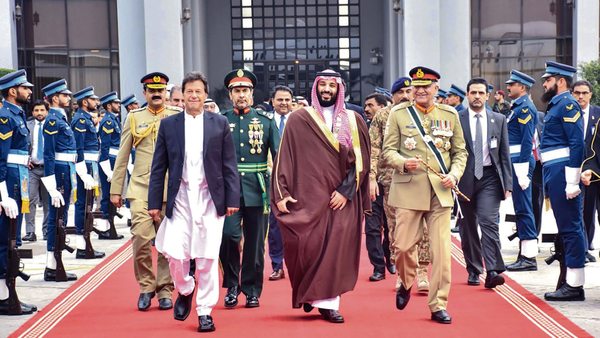
Our conduct has badly destroyed our state image to the world. Such disfigurement may cause us an irreparable loss for the rest of our future. The world, unfortunately, has mi-conceptualized her conduct towards Pakistan too. For instance, the international forums, instead of engaging in a dialogue with the state (government) of Pakistan, call upon the Pakistan Army chief for all negotiations. Look at the recent history. The meeting with the Crown Prince of Saudi Arabia, the meeting with American officials, the finalization of American withdrawal from Afghanistan and support of the army for such withdrawal, the support of the Afghan government, dealing with China over CPEC etc. Even now, the business community inside the country seeks some guarantees for economical stability from the Pakistan Army chief. The list continues and questions arise!
Whether these events have the approval of Pakistan’s parliament? Whether they are discussed and approved ? Whether the general public is bound to honour them when they didn’t get assent from the collective wisdom? What do these incidents suggest? Who represents the real state in Pakistan?
The people have respect for a state only. They may have some affiliations with various departments/institutions. They may even sacrifice their lives for these institutions but the only binding force which ties them in a relationship is the state, not an institution. Because the institution may collapse but the state sustains. In order to keep a state strengthened, sustainable and inevitable the state needs to first deconstruct and then reconstruct the concepts that would have an alignment with the world.
The misconception could be avoided by the encouragement of a grand debate across Pakistan. Modern scholars may initiate some steps for the fixation of such misconceptions. Furthermore, the government should ought to restore her authority by honouring only those steps taken by her, which are ratified by the Pakistan parliament and those that are truly represented by the ‘collective wisdom’ of the populace.
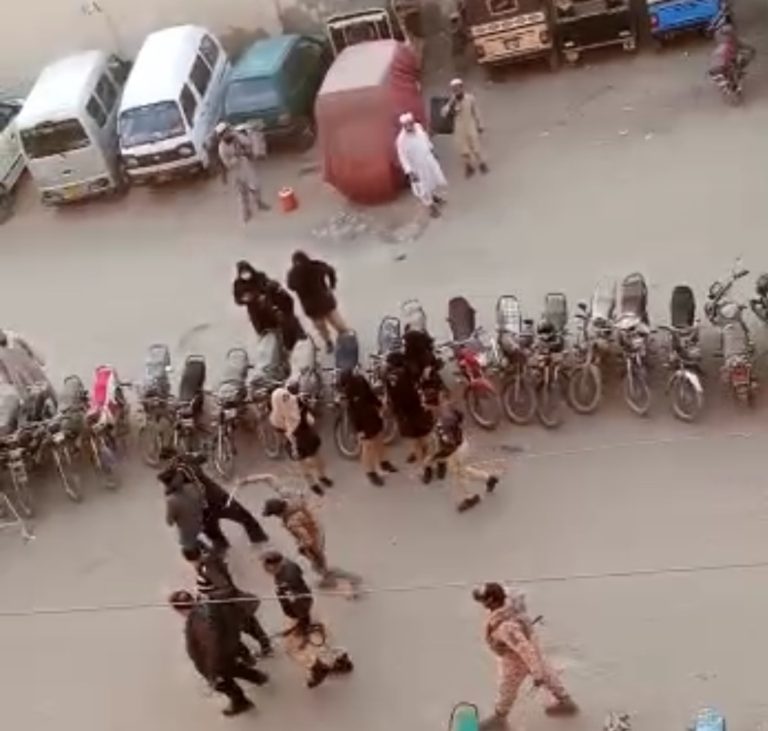
Hundreds of MQM (Muttahida Qaumi Movement) supporters, including men, women, children and the elderly, were arrested by Pakistani Rangers and other Pakistani security forces from the Azizabad ground in Karachi on December 9. Every year Mohajirs commemorate December 9 at Martyr’s day in remembrance of Sindhi and Mohajirs who were martyred at the hands of Pakistani security forces. This year also, thousands of MQM cadre, had converged at the Azizabad ground in Karachi for Quranic recitals when they were arrested and beaten up by the Pakistani security forces.
Over the last few days, the Pakistani regime had been desperately trying to stop this MQM congregation. On the night of December 4/5 a heavy contingent of Pakistani Rangers had stormed MQM founder Altaf Hussain’s compound Nine Zero and demolished the walls of Lal Qila Ground with the help of heavy machinery and also damaged the Khurshid Memorial Center at Azizabad in Karachi. It was here that the MQM had planned to commemorate the Martyr’s Day on December 9. However, the demolition drive failed to dampen the spirits of MQM cadre who nevertheless gathered in huge numbers at Azizabad, Karachi on December 9 to offer Fatiha (prayers) to Sindh’s martyrs. Such huge congregation sent shivers down the spines of Rawalpindi generals who issued prompt orders to arrest MQM cadre.
Pakistan is a rogue state where Taliban and Islamic extremists enjoy full freedom but the common people are subject to violence at the hands of Pakistani Rangers and other security forces, said Tariq Jawaid, Convener of Muttahida Qaumi Movement (MQM) in his video briefing after the arrests.
“Pakistan is not a fortress of Islam but a tyranny where Taliban and banned religious organizations of extremists enjoy freedom but MQM workers mothers, sisters, elders and children of martyrs are not permitted to recite Fatiha on the monuments of Martyrs and their graves,” explained Tariq Jawaid. He made these remarks while addressing a video briefing at the MQM International Secretariat in London on Thursday night. All members of MQM’s Central Coordination Committee were also present at this video briefing.
MQM supporters being beaten up by the Pakistani security forces in Karachi. (Photo: News Intervention)
Over the last several years MQM had been observing December 9 as the Martyrs’ Day. “On this occasion there’s Qur’an recitation and Fatiha is read in reverence of our martyrs and flowers are showered on their graves. In this regard, the Central Coordination Committee of the MQM had announced that this year too the Martyrs’ Day would be observed on Thursday, December 9 with devotion and respect. All those who wished to visit the Martyr’s memorial at Jinnah Ground at Azizabad in Karachi were requested to pay respect to the Martyrs’ graves with flowers but the Pakistani Rangers, police and government agencies launched a series of raids and arrests in Karachi and Hyderabad, a day before of Martyrs’ Day just to stop Fatiha Khawani.”
Apparently the Pakistani regime had clear instructions from Rawalpindi to stop this congregation and since Thursday morning the entire area of Azizabad was sealed off. All roads, lanes and paths leading to the Jinnah Ground in Karachi were closed with vehicles and barricades. Heavy contingents of Pakistani Rangers and police were deployed at various places. No one was allowed to approach Karachi’s Jinnah Ground.
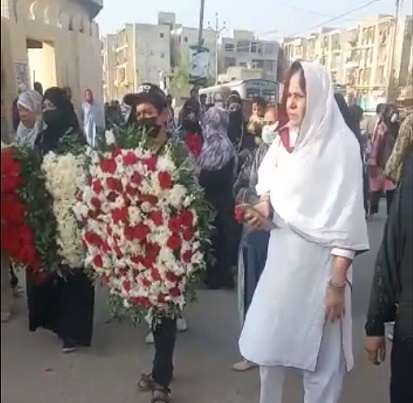
When the relatives of Martyrs, their mothers, sisters, elders and youngsters tried to peacefully approach the Martyrs’ memorial to offer flowers on the memorial of their loved ones the Pakistani Rangers and police attacked them. Pakistani forces snatched flowers and wreath from their hands, threw them on the ground and started beating women, elders and youth. They also took away their mobile phones, vehicles, their papers and all of their belongings.
Women, children and elderly on their way to offer prayers for Sindh’s Martyrs at Azizabad, Karachi on December 9. (Photo: News Intervention)
Tariq Jawaid said that the Pakistani Rangers and police personnel took away the Holy Quran from the hands of mothers and sisters and desecrated the Holy Quran. The Pakistani forces grabbed women by their hair to prevent them from going to the memorial. “Women were dragged, their scarfs pulled, and they were brutally beaten with sticks and canes. The male Pakistani Rangers then started frisking through the clothes of our mothers and sisters, lifted their veil and beat them up.”
Jawaid urged the United Nations, international human rights organisations and other democratic countries to immediately take note of these state-sponsored atrocities in Pakistan. “Oppression and barbarism should be stopped and all those innocent people who have been arrested must be released immediately.” He added that at present nothing was known about the whereabouts and well being of all these arrested persons.
Arrests, violence & murder of innocent people That's what Pakistani regime does on a daily basis. #MQM men, women, children and the elderly were arrested in #Karachi & beaten up when they were on their way to offer Fatiha (prayers) to Sindh's martyrs on Dec 9.#Sindh#Sindhudeshpic.twitter.com/fSWbPkQc0w
Watch how MQM supporters are being beaten up by the Pakistani security forces in Karachi on December 9, 2021.
“What kind of a country is Pakistan where government and army make agreements with banned jihadis and militant organizations who are involved in terrorism, bombings, suicide attacks and are brutal and savage beasts who dismember the bodies of innocent people. They make them wear garland of flowers but those who recite Fatiha in a peaceful manner for the Martyrs of Sindh are subjected to barbaric atrocities. Is it not cruelty?” asked Tariq Jawaid.
Tariq Jawaid said that MQM salutes all the mothers, sisters, elders, youth and children who came to the memorial to pay homage to their Martyrs despite all the atrocities, coercion, obstructions and arrests. He was grateful to all those who came from Hyderabad, Sukkur, Umerkot and other areas of Sindh to pay homage to the Martyrs of the movement.
The clamour over Adani-SBI tie-up is a perfect example of missing the tree for the woods
The recent tie up between the State Bank of India (SBI), India’s largest public sector bank, and Adani Capital Private Limited, a financial service arm of the Ahmedabad-based conglomerate, has drawn attention of the activists for no reason.
The arguments revolve around why SBI chose Adani despite the
bank having its own massive network and asset base.
A similar argument about the Adani group is also brewing hot and
cold in Chhattisgarh. The arguments in India’s mineral rich state are also
pushed by environmentalists who remain completely ill-informed about the
subject. Probably, Adani bashing has become a norm for a handful.
So it is time to argue the SBI-Adani case on its merits.
For the uninitiated, a host of India’s
public sector banks – not just SBI – are tying up with NBFCs. On the list is
Punjab National Bank, Bank of India, Bank of Baroda and Central Bank of India.
No one is questioning the deals they have signed, and no is questioning what
those deals mean for the masses in India.
So it is important to explain this business
of co-lending that refers to a combined effort of loans by NBFCs and the banks.
In this case the banks take the majority, it is an 80:20 ratio with the NBFC
partner.
The activists have no issues with all such
tie ups, they just have a serious issue with the Adani group. No one knows why
but such arguments surface every now and then. But it does.
For the record, SBI has signed a host of
such agreements with ECL Finance, a subsidiary of Edelweiss Financial Services,
Paisalo Digital, Save Microfinance and Vedica Credit. Other deals signed by
India’s PSU banks include U GRO Capital, and MAS Financial Services.
And it is not the case with India’s PSU
banks, private banks like Standard Chartered, IndusInd Bank and ICICI Bank have
similar tie ups in place.
What do these tie ups mean? These are
agreements which aim at co-lending to farmers for acquisition of farm
equipment, including tractors. And such loans extend to other sectors also.
Several such tie ups have happened under
the co-lending guidelines introduced by the Reserve Bank of India to cater to
the underserved. It is aimed at financial inclusion of all, as targeted by
Indira Gandhi when she nationalised commercial banks in late 1960s.
But consider the reaction of former Kerala
finance minister Thomas Isaac who criticised the SBI-Adani Capital tie-up.
Isaac tweeted: “SBI, 25000 branches and
Rs 48 lakh crores assets, teaming up with Adani Capital, 63 branches and Rs
1292 crores assets, is bizarre. It seems to be a move to appease corporates who
have not taken well (the) retreat from farm laws. Adani was making strong moves
to control agri markets.”
The reality: The Adani group invested heavily in silos for storage of food grain in a country where food grain storage is a major crisis zone.
The critics must remember that those enjoying easy access to the financial solutions in urban areas must realise the significance of co-lending models which ease the process of loans and bring easy finance to the doorsteps of the unserved. The SBI and Adani Capital – like other agreements – could become one of the proven models to deal with financial inclusion.
For the past few months, a host of PSU and private sector banks
have tied up with NBFCs to cater to different segments of unserved consumers.
This September, a host of PSU banks made a slew of announcements about their
tie ups with NBFCs under the co-lending model.
SBI is actively looking at co-lending opportunities with
multiple NBFCs and NBFC-MFIs for financing farm mechanisation, warehouse
receipt finance, farmer producer organisations and for enhancing credit flow to
double the farmers’ income.
For the record, Bank of India entered into a co-lending
arrangement with MAS Financial Services for MSME loans on its 116th Foundation
Day. In mid-September, IIFL Home Finance Ltd and Punjab National Bank (PNB)
signed an agreement for co-lending into the housing sector. In July, Bank of
Baroda had partnered with non banking
financier U GRO Capital for co-lending to the MSME sector.
The Reserve Bank of India (RBI) introduced the framework for co-lending models in September 2018 and made necessary amendments subsequently. This permitted banks to co-lend with all registered NBFCs (including HFCs) based on a prior agreement. The idea behind this initiative was to improve the flow of credit to the unserved and underserved sector of the economy. This is to ensure that the fund is made available to the ultimate beneficiary at an affordable cost and utilise the network of NBFCs to reach out to the priority sector consisting of retail, MSME and agriculture among others.
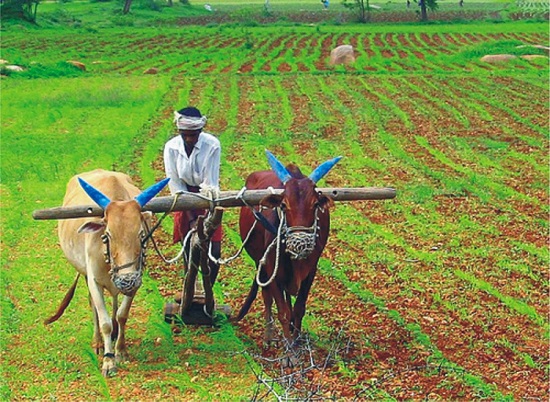
(Representative photo)
So why did the RBI introduce the framework?
India’s policy makers noted that NBFCs usually have low levels
of NPAs for these activities whereas the banks have traditionally struggled
with relatively higher NPAs historically.
What is important is that the wide network of NBFCs in India’s
far-flung areas enables them to assess the financial needs of locals and, in
turn, help the banks improve and increase their loan portfolio. Let us not
forget that NBFCs must comply with necessary banking regulations for due
diligence. They must have their KYC records in place, maintain high levels of
servicing, recovery and other record keeping standards.
Banks also have to adhere to the strict selection criteria. This is what SBI has published the following selection criteria on its website:–
Further, the non performing asset is recognised as per the RBI
guidelines as applicable to respective co-lenders. Also, the loans under this
model are under the ambit of the statutory audit as per the regulatory
requirements. It is needless to say that Adani Capital is bound to follow the
statutory requirements.
NBFCs not only provide the last mile connectivity with borrowers
but also take the lead to introduce credit underwriting models to cater to the
section underserved by PSU banks. This model works brilliantly, it provides
further penetration to the banks without deputing additional resources at the
cost of investors and depositors.
Actually, it is a win-win situation for both. Look at the reaction
from the banks.
SBI said it
is actively looking at co-lending opportunities with multiple NBFCs for
financing farm mechanisation, warehouse receipt finance, farmer-producer
organisations. The move, claimed SBI, will enhance credit flow to double the
farmers’ income.
SBI is not alone in such efforts. On its foundation day, Bank of
India Managing Director & CEO Atanu Kumar Das also stated that BOI will
leverage the reach of NBFC to build an MSME portfolio. Similarly, Bank of
Baroda executive director Vikramaditya Singh Khichi – while announcing the tie
up with U GRO Capital – stressed on forging such partnerships, saying that it
is the way forward and collaborative efforts leveraging individual entities’
expertise are of utmost importance to take co-lending to MSME segment to the
next level.
Misplaced arguments often stop growth, the only way to life.
General
Rawat, a visionary commander, who meant business and who understood that the Indian
defence structure needed to come out of the stereotype knew that his path was
strewn with thorns.
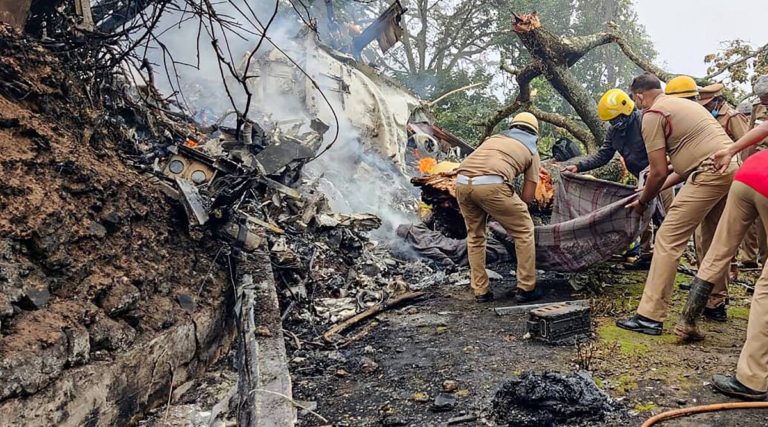
But the chopper crash raises several questions. Choppers are a very complicated machine. We have seen several choppers crash in the past in our country in which we have suffered great loss of senior as well as other VIP personnel. At least 17 chopper crashes have been recorded between November 1963 and the one under discussion on December 8, 2021. Have we learnt anything from those crashes like the least use of this deadly machine particularly for the VVIPs? Have we any mandatory guidelines on who, when and where not to travel by helicopters? Is our secrecy of the movement of VVIPs foolproof and is there any checking system etc?
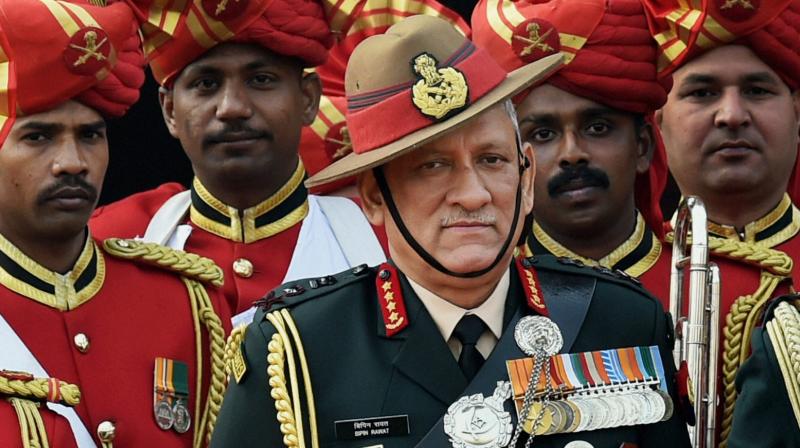
General Bipin Rawat, India’s first Chief of Defence Staff.
An inquiry has been ordered by the IAF into the crash. Reasons like machine failure, climatic conditions, competence and dependability of the pilot, and things like that are talked about loudly. But no voice has so far been heard about the whispers of sabotage. Why we should not rule out the sabotage is what we are going to elaborate on here.
It was an MI-17 V-5 chopper. Made by Kazan Helicopters, a subsidiary of Russian Helicopters, they count among the most advanced transport helicopters in the world. Normally used to carry personnel, cargo and equipment they can also be used for destroying ground targets. Its 580 km standard flying range can be extended to 1,065 km with two auxiliary fuel tanks. It has a maximum speed of 250km and 13,000 kg maximum takeoff weight and 6,000 metre max flying altitude. Among other numerous features, it has onboard weather radar and a modern autopilot that enable all-weather day-night operations over any terrain.
These features must dispel the assumptions like (a) the chopper developed any snag during the flight when it was just 7 minutes away from the landing site. (b) that some navigation error happened (c) owing to fog vision was not clear (d) fuel shortage etc.
The chopper description repudiates all these assumptions. It had a weather radar and day and night operation system. A chopper in which a VVIP of the rank of CDS travels is always and invariably checked and rechecked for technical fitness. Therefore, the above-stated assumptions are irrelevant. There was no visible attack from a palpable body nor was there any attack from the ground by any airborne missile.
An important aspect of Gen Rawat’s position as CDS was his acute sense of reacting to threat postures of our two adversaries China and Pakistan. About nineteen months ago Chinese PLA made an unpredicted move in Eastern Ladakh and PLA troops entered Galwan Valley as part of China’s expansionist policy. Gen Rawat took command of Indian forces resisting the Chinese aggression. The hand-to-hand fight in Galwan left about 20 Indian soldiers dead as against more than 40 dead of the Chinese PLA.
The strength and determination with which Gen Rawat confronted the Chinese in Ladakh was a shock to the Chinese authorities and the entire free world appreciated how India was protecting her political sovereignty and national integrity. On November 16, The Hindu wrote: “China’s military said on Thursday it had lodged “solemn representations” with India and expressed its “firm opposition” to Chief of Defence Staff General Bipin Rawat’s comments earlier this month on China being the biggest security threat to India and mutual suspicion rising between the two sides.”
Only a couple of days back Gen Rawat had flown to Ladakh to watch the landing of troops by helicopters behind the enemy’s operation line in snow-clad Ladakh at a height of nine thousand feet above the sea. It was Gen Rawat’s strategy to deploy tanks and heavy artillery in Ladakh to resist the encroachment of PLA.
Thus we find that Gen Rawat had given offence to the
Chinese aggressors and spoke of retaliating befittingly wherever China tried to
walk into our territory.
At the same time, Gen Rawat had been unsparing to the terrorists in Kashmir and their handlers across the LoC. Operation All Out was his brainchild which routed the entrenched terrorists in the valley, stifled their hawala resources, dealt a blow to the overground outfits and streamlined encounters so that there is least collateral damage. He appealed to the Kashmiri mothers not to be unkind to their boys by allowing them to join militancy.
In yet another bold adventure, Gen Rawat planned the Balakot Surgical Operation which sent a signal to Pakistan that India could retaliate effectively and devastatingly if and when she chooses to do so in case Pakistan did not stop interfering in Kashmir.
And lastly, Gen Rawat issued warnings to Pakistan from time to time to dismantle terrorist camps and stop sending terrorists of various Pakistani Theo-fascist organizations to Kashmir. Pakistan was intermittently reacting angrily to the warnings of the Indian CDS, particularly when it recalled the developments immediately following the shooting down of the Indian jet and capture of Wing Commander Abhinandan.
China and Pakistan both are capable of hatching conspiracies. They are in tango in which China is trying to keep company with Pakistan in damaging India’s interests. Liquidating potential enemies is a game in which both China and Pakistan are adept. Remember in January 2020 Taiwan’s Chief of General Staff, Gen Shen Yi-Ming was killed in an air crash near Taipei. Like Gen Rawat, he, too, was a vocal critic of China. Neither his death in an air crash nor that of Gen Rawat is that simple or non-schematic.
Gen. Shen Yi-Ming, Taiwan’s Chief of General Staff, died in a helicopter crash near Taipei in January 2020.
The entire nation and its top leadership are shocked and stunned by the tragic news of the Nilgiri air crash in which eleven defence personnel besides the Rawat couple lost their lives. Among other casualties is Brig. L S Liddar (CDS’ Defence Advisor), Lt. Col Harjinder Singh, Wing Commander PS Chauhan and Squadron Leader Kuldeep Singh. The Vice President, Prime Minister, Home Minister, Defence Minister and the opposition leaders all have condoled the death of the first soldier of India.
The US Ambassador and the British High Commissioner in India and many world leaders have expressed their deep regret over the loss of CDS General Rawat. China and Pakistan have also expressed condolence. France, the UK, Israel, Vietnam and many other countries expressed condolences too.
Leaders succinctly spoke of General Rawat’s remarkable contribution towards the modernization of the Indian defence structure. “He was known for his remarkable leadership and strategic vision and added strength to the defence capabilities and made a stellar contribution to strengthening the national security,” said Vice President Naidu. PM Modi said: “He greatly contributed to modernizing our armed forces and security apparatus. His insights and perspectives on strategic matters were exceptional. His passing away has saddened me deeply.”
General Rawat was appointed the country’s first Chief of Defence Staff (CDS) in December 2019 after three years as the army chief. On assuming duties as CDS, Gen. Rawat had himself made it clear that in his capacity as the CDS “his mandate was to push ‘jointlessness and integration’ among the Army, Navy and IAF despite stiff resistance, while also weaning the forces off their overwhelming dependence on expensive foreign weapon systems.”
The ToI of December 9 wrote: “He publicly junked the Navy’s long-standing case for a third aircraft carrier and rejected the IAF’s concerns over integrated theatre commands. During a seminar, he went so far as to dub the IAF ‘a supporting arm’ in war-fighting akin to artillery or engineers in the Army.” “Several proposals mooted during Gen Rawat’s tenure ranging from measures to slash non-operational military flab and the pension bill to “monetization” of defence land and restrictions on CSD purchases, sent shockwaves down the ranks. “Gen Rawat may have sometimes behaved like a bull in a china shop but it was urgently needed in the backdrop of the three services continuing to indulge in petty turf wars. Yes, theatre commands will have some adverse impact on the individual services but it is mandatory for the overall good’, said a military officer.”
A total go-getter, Gen Rawat did not believe in being a status-quoist. In meetings, he was blunt and never minced words. Yet he would listen to anybody with rapt attention if he found there was substance in what the speaker said. When he was appointed the first CDS, some sections of media did note that his appointment did ruffle many feathers among both serving officers as well as the vocal community.
Introduction: Humanitarian Disaster is round the Corner! Winter has come in more ways than one, for the unfortunate people of Afghanistan. It has been four months since the Taliban dramatically seized power, resulting in NO governance. The Taliban players who acted as leaders and diplomats are nowhere to be seen or heard. Other nations especially global and regional players (USA and her partners, China, Russia, Iran, Pakistan and CAR– Central Asian Republics) who were enjoying playing their ‘great game’, with tragic consequences for the people of Afghanistan, are still wondering what hit them and are counting their losses (nobody won anything including Pakistan who will find out sooner than later if not already aware). They have left behind Taliban which does not know what governance means, and a humungous humanitarian crisis due to hunger and famine, which may turn into a catastrophe with the winter creeping in, if sanctions are not lifted.
International aid in all forms; lifting of sanctions with pre-conditions, food, medicines, water, tentage and housing camps for the millions of needy, needs despatch and distribution to all segments of society immediately (here again there is a fear of favouritism for supporters of Taliban). The security situation has worsened and threatens the region, in my assessment the globe. After all, we do live in an interconnected globalised world.
There are no victors in this appalling dynamic
despite initial chest-thumping in some regional capitals. While the USA
and her allies may move on temporarily, the immediate neighbours must bear the
cross, and salvage the situation with urgency.
While experts within and outside India may keep debating, India remains the only power, that has space
to manoeuvre between the conflicting interests and games of nations in the
region and also simultaneously assuage the anxieties of the West and UN.
The Current Crisis As hopes that the Taliban might form an inclusive government were fading, but on 22 November, they added 27 new members (deputy ministers, corps commanders and heads of independent departments), but again there was a pre-dominant Pashtun majority and women were shunned. No country has formally recognised the Taliban government in Afghanistan and the country is on the verge of economic collapse. Afghanistan is also facing a threat from the Islamic State, which has ramped up attacks over the last few months. The attacks were universally condemned. The security situation is grim; at some stage the current low-key anti-Taliban resistance, which in itself constitutes of disparate groups with individual agendas (Northern Resistance, Uzbeks, IS and the Fatemiyoun Brigade composed of Afghan Shias, each wanting to establish its sphere of influence) will gather momentum and the stage will be set for a chaotic tragic civil war.
Deplorable Human Rights Situation The human rights situation in Afghanistan continues to deteriorate. There are credible reports of reprisal killings of former members of the Afghan security forces, as well as reports which indicate that the Taliban has arbitrarily detained former government officials and conducted house-to-house searches in an effort to locate people connected with the former government.
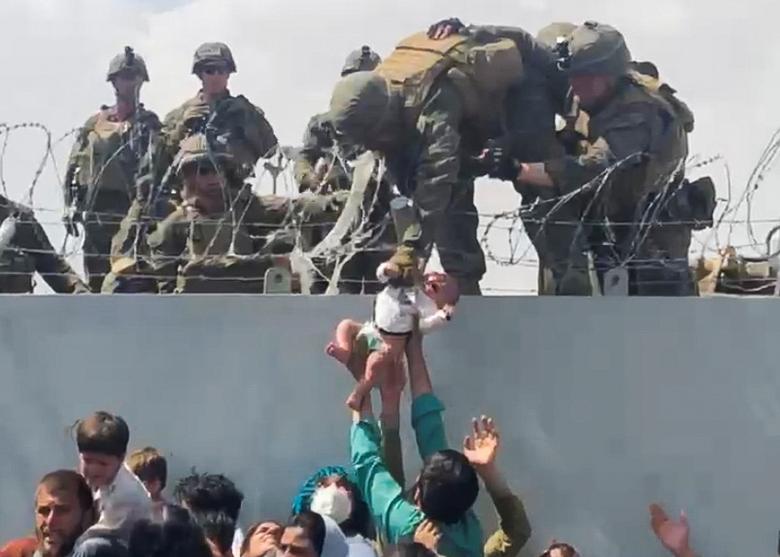
A child being handed over to the American Army after the occupation of Afghanistan by the Taliban. (Representative Photo: Reuters)
Women have been progressively excluded from the public sphere and the Taliban has limited Afghan girls’ access to education Reports of several instances of Taliban fighters using violence against protesters and journalists have emerged[i]. Numerous terrorist attacks have taken place in Afghanistan since mid-September. On 9 October, a suicide bomber struck a Shiite mosque in Kunduz, killing at least 43 people and wounding more than 140 others. Similarly on 15 October another Shiite mosque in Kandahar was attacked killing 47 people with over 70 injured.
As per the published UN Security Council November 2021 Forecast on Afghanistan[ii], it is interesting to note that China apparently sought to remove language that indicated the mosques were Shiite which was opposed by other council members led by India. An understanding was reached whereby the specific mosques were named. On 7 October, the Human Rights Council (HRC) adopted resolution 48/1, which appointed a special rapporteur to monitor the human rights situation in Afghanistan.
Fawzia Koofi, the now-exiled first woman deputy speaker of the Afghan parliament briefed the Security Council on 12 October 2021. She underlined the importance of putting in place “a pluralistic social and political structure” for peace in Afghanistan, and called on the international community to work with the Taliban only if they “map out a clear path that guarantees the fundamental rights of all segments of society, in particular women and girls”, since the Taliban’s ideology discriminates on the basis of gender[iii]. While vide Resolution 2596, adopted on 17 September 21, the UNSC has extended the United Nations Assistance Mission in Afghanistan (UNAMA) mandate until 17 March 2022, the complexities and uncertainties can be gauged by the fact that nobody is clear what its role should be.
It is ironic that many members of the Taliban cabinet are on the UNSC and US sanctions list, which constitutionally can be an impediment to render aid to Afghanistan. Both have to seriously consider reviewing the 1988 sanctions. Despite the rhetoric and threats, many in the international community have acknowledged the need to cooperate with the Taliban (while not recognizing it) in order to prevent an economic collapse and humanitarian crisis. USA enabled the Taliban via the Doha Accord but retained sanctions till main elements of the Accord are fulfilled. EU, Russia, China and many countries are willing to talk to the Taliban (Pakistan is a natural ally). Pakistan, China and Russia have functional embassies in Kabul hoping to exploit the situation to meet their objectives, and with the purpose of keeping other regional players like India out. It is difficult to imagine how the people in Afghanistan can be helped without involving the Taliban.
No Dearth of Bilateral and Multi-lateral Meetings: Crisis Deepens On 20 October, members of the Taliban attended a conference in Moscow with representatives of China, India, Iran, Kazakhstan, Kyrgyzstan, Pakistan, Russia, Tajikistan, Turkmenistan, and Uzbekistan followed by a statement, saying that practical engagement with Afghanistan needs to take account of the Taliban’s seizure of power, irrespective of whether the international community recognises “the new Afghan government”.
The statement also called on the Taliban to form an inclusive government
and proposed an international donor conference under the auspices of the UN. This was the third meeting held in the “Moscow format”, which
was established in 2017 to discuss Afghanistan. Meetings on Afghanistan are becoming common place at UN, and
within the West, with mainly rhetoric and not much movement on ground.
Unfortunately to complicate matters, there is no unity or cohesion within Taliban. Inter and intra-group fights/brawls have been continuous, highlighted by the reported brawl between Taliban’s Deputy Prime Minister, Mullah Abdul Ghani Baradar, with supporters of Khalil ur-Rahman Haqqani, the Taliban’s Minister for Refugees and a prominent figure in the Haqqani network. The fault lines within the Taliban, of divisions along ethnic lines and splitting factions that represent the northern, eastern, and southern parts of the country have accelerated.
Reticent India shows Leadership The Indian government has cautioned the global community not to rush into any formal recognition of the interim government set up by Taliban. It has also urged the world leaders to ensure that the Taliban deliver on their commitments that Afghan soil will not be used by terror groups, especially Pakistan-based organisations such as Lashkar-e-Taiba and Jaish-e-Mohammed.
A ‘Reticent India’ finally broke its own shackles and hosted the ‘Delhi Regional Security Dialogue’ on 10 November 2021, chaired by NSA Doval and attended by his counterparts from Iran, Russia, Kazakhstan, Kyrgyzstan, Turkemenistan and Tajikistan. China and Pakistan refused the invite and representative from Afghanistan was not invited. Interestingly, this is the first time that all Central Asian countries – and not just Afghanistan’s immediate land neighbours, Tajikistan, Turkmenistan and Uzbekistan, participated. This is the third such meeting with the previous two regional meetings held in Iran in September 2018 and December 2019.
India is clearly signalling that it has no
intention of giving up on its role as a key interlocutor on the issue. India is continuing with its policy of supporting
the aspirations of ordinary Afghans, the emerging of a stable polity and ‘peace
within and with its neighbours’, which has been widely welcomed globally, signifying
acceptance of India’s legitimate interests and leadership on this vital issue and
region globally.
Geo-Political-Strategic Rationale Afghanistan, geo-politically a nation at the cusp between Central and South Asia, has shifted towards South Asia, and its link between the two regions is largely predicated on the strength of India-Afghanistan ties, not on Pakistan. While the West can walk away, India will have to work with its regional partners in finding a long-term solution.
No single regional state is in a position to deal with problems such as violent extremism, radicalisation, porous borders and drug trafficking on its own. Regional coordination is needed and, for that, security agencies across borders will have to work together. It is in this context that India’s decision to take a leadership role on Afghanistan is a welcome change from its historical reticence. Further, India’s interests converge significantly with those of Russia, Iran and Central Asia. Russia is concerned about the spread of radicalism and extremism to its peripheries including CAR (Central Asian Republics). Iran wants to safeguard Shia minorities from persecution and prevent a refugee crisis. CAR countries want a stable region free of radicalism. Indian stewardship as a regional power capable of finding a common minimum ground to ensure stability, and coordinate urgent humanitarian assistance to Afghan people is being increasingly accepted. With no direct land borders and a tentative linkage through Iran (Chabahar), and unreliable link through Pakistan, India’s impact appears a mirage, but as elaborated, in another six months as Afghanistan descends further into chaos and humanitarian crisis, India will remain the only neutral balancer to find the way forward.
Pakistan Responds with an Extended Troika plus one Meeting One day after the Delhi summit, on 11 November 2021, Islamabad hosted a meeting of the extended Troika, comprising Pakistan, China, Russia, and the USA to discuss the latest situation in Afghanistan. Nothing significant emerged except to reiterate the agreements and terms of the Doha agreement and UN resolution, and exhort the regional players to play a more pro-active role to bring stability and humanitarian assistance.
Pakistan and China: The Spoilers Pakistan’s initial jubilation over a perceived “victory” in Afghanistan has waned. It is grappling with a fiasco of its own making as radicalisation sweeps through the Pakistani hinterland, forcing the political class and the military-intelligence complex to make compromises with the extremists. Ironically, calling India a “spoiler”[iv] confirms Pakistan’s desire to view Afghanistan largely as a protectorate as opposed to an independent, sovereign nation. It reflects Islamabad’s reluctance to engage New Delhi, and reinforces its policy of marginalising India. China wants early entry and primacy in Afghanistan. It is keen to fill the geo-political vacuum left by USA, expedite expansion of its BRI with a passage through CAR into Europe. It eyes the rare earths available for its economic and strategic payoffs. It also wants to safeguard its restive Xinjiang region and Uighur population from radicalisation and terrorist influence, thus providing an impetus to its ‘China Dream’ of being acknowledged as a super power.
Conclusion Afghanistan is descending back to the stone age with regional players intervening with divergent national agendas; an ungoverned nation where there is increasing intra and inter factional rivalry and fighting, resulting in a high probability of civil war with tragic humanitarian consequences. India appears to be the sole regional power with the status, capability, capacity and backing of the international community and global players to prevent a ‘descent to hell’ by working out a road map for stability and rehabilitation. It is a geo-political-strategic compulsion for India with rich rewards if achieved, but major vulnerabilities if she fails.
Disclaimer: This piece is neither meant to justify the recent killing of civilians by security forces in Nagaland, nor find fault in a particular news portal. Au contraire, the sole objective is to highlight how truth and logic are ruthlessly trampled by the malaise of sensationalism which afflicts Indian media.
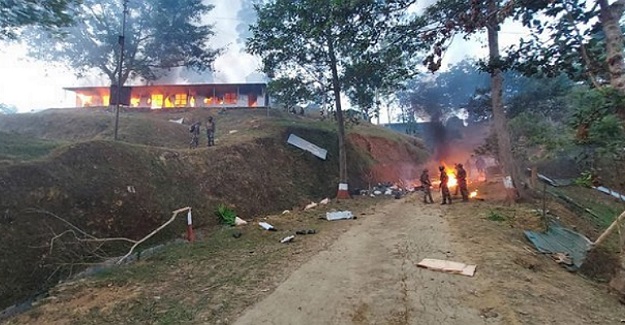
Two things about this caption. One, no place named “Mor” exists in Nagaland [it should have been ‘Mon’], and two, it states that “Angry villagers allegedly burned vehicles….” Misspelling name of the place where this incident occurred is immaterial and given the ‘breaking-news’ syndrome prevalent in media, it’s understandable that probably the hurry to publish this piece inadvertently allowed the ‘printer’s devil’ to creep in. However, the non-committal statement that the vehicles were “allegedly” burnt by “angry villagers,” is indeed perplexing as it clearly suggests that there could well be the possibility of someone else having torched the army vehicles.
Since the only other people besides villagers present at the incident site were army men, how could there be any doubt in anyone’s mind as to who set the army vehicles ablaze- unless, the Wire Staff [which has compiled this report] has reasons to suspect that those in uniform could have done so. Yet, there’s nothing wrong in being cautious while reporting, especially when one hasn’t witnessed the incident. However, in keeping with journalistic ethics, the same yardstick of implied ambiguity while reporting preliminary findings should have also been applied to other aspects related to the incident.
In journalistic parlance, ‘lede’ is the first
sentence or paragraph of a news story that immediately grabs the reader’s
attention. In this article, the lede reads, “Nagaland Police, in its
preliminary report on the civilian killings has hinted at a possible cover-up
of the gruesome action by security forces.” It goes on to say that “This
police report accessed by The Wire comes in the aftermath
of BJP’s Mon district president Nyawang Konyak’s statement to the press
that Special Forces personnel were seen removing the clothes of the unarmed
civilian victims at the scene of the December 4 Oting firing and were
trying to dress them up in “khaki” clothes.”
What’s really odd is that despite enumerating various
conflicting accounts which expose serious incongruities, those who authored
this report have acted as mere messengers and not discerning journos. Let’s
take for example, BJP’s Mon district president’s above-mentioned claim that
army men “were seen removing the clothes of the unarmed civilian victims at
the scene… and were trying to dress them up in “khaki” clothes.”
Since never in the known history of insurgency in North East have militants ever donned khaki uniforms, two questions arise- One, would army men be so naïve as to think that they could pass-off the deceased civilians as militants just by dressing them up in khakis? Two, from where on earth did the army men get hold of khaki uniforms?
However, in the very next paragraph, there’s mention of the ‘brief
report’ [purportedly prepared by Nagaland Commissioner and State Director
General of Police] mentioning that “On reaching the spot [incident site],
they found the pick-up truck and the Special Forces personnel trying to hide
the dead bodies of the six villagers by wrapping and loading them in another
pickup truck (Tata Mobile), apparently with the intention of taking the dead
bodies to their base camp.”
So, if one believes what the BJP leader has to say, then it
emerges that the army men had no intention of ‘disappearing’ the dead but instead
wanted to conceal their wrongdoing by dressing them in khakis to portray the
dead civilians as militants. However, if the district administration and police
report is true, then army men were “trying to hide the dead bodies of the
six villagers by wrapping and loading them in another pickup truck (Tata
Mobile), apparently with the intention of taking the dead bodies to their base
camp.” Could there be a more brazen contradiction of what is being touted
as eye witness accounts?
Yet, the news report states that “The details in the
state government’s preliminary report matched the statement made by the
local BJP leader”!
Furthermore, the news report quotes two unnamed “senior
state officials” disclosing that “Two of the seriously injured persons
were taken to the Assam side by the Security Forces themselves and are now
admitted in the ICU at Dibrugarh Medical College and Hospital.” Now, if the
army men really intended to either pass-off the dead civilians as militants by
dressing them up in Khakis or wiping out all trace of the killings by taking
away the bodies from the site, then would they be so inane as to take all the
trouble of saving the lives of injured civilians by rushing them to the
hospital, knowing fully well that being eye witnesses to this incident, they
would surely implicate the army men?
While the article details all civilian deaths, it inexplicably doesn’t mention the fact that one army man at the incident site was killed by a dah [Naga sword] wielding local. Here the point to ponder is that if the army men had actually “opened fire indiscriminately,” would a local armed with only a dah be able to come within striking distance and inflict a lethal blow to an army man who was armed with a sophisticated automatic rifle and supposedly firing indiscriminately?
Similarly, the news report cites “confusion about the
Konyak Union holding a mass funeral” as the trigger for a mob setting
ablaze three buildings of the Assam Rifles camp at Mon the next day. While this
may be the state government’s view, but it doesn’t sound very convincing since
the Assam Rifles weren’t involved in the previous day’s incident. Furthermore, after
the December 4 incident, the probability of the law-and-order situation going
out of hand the next day was extremely high and so, security arrangements in
Mon should have been beefed up as per the standard operating procedure [SOP].
That’s exactly why the district administration’s contention that the local police tried to pacify the crowd, but were “outnumbered” is not tenable and they must be held accountable for failing to prevent the Assam Rifles post at Mon from being attacked. In fact, the failure of the district administration and police to disperse the mob left Assam Rifles personnel with no other option but to use force in self-defence and for saving government property.
Had the district administration and law enforcing agencies
taken appropriate riot control measures to disperse the mob instead of
abdicating their professional responsibility, Assam Rifles troops would not
have had to use force themselves. Thus, the moral responsibility for death of
one protester and injuries to six others is squarely that of the district
administration and state police. Regrettably, this aspect has been covered
rather perfunctorily in The Wire report.
The news item mentions that “After almost an hour into the melee, the second round of continuous firing by the Assam Rifles resulted in the mob running for safety and protection. After the firing ceased, one protestor by the name of Leong of Chi village was confirmed to be dead on the spot and six others sustained bullet wound injuries.” This statement [attributed to the state government’s version] brings out two important aspects that most certainly deserved at least a passing reference in the news report.
Firstly, there were two rounds of firing with a gap of “almost
an hour” between the two, and this admission completely negates allegations
of “continuous firing by the Assam Rifles.” On the contrary, it clearly
indicates that despite its buildings being torched, Assam Rifles personnel at
Mon camp exercised exemplary restraint by firing warning shots that caused no
casualties whatsoever and thereafter ceased firing to give the mob a fair
chance to disperse.
Secondly, while even a single death or injury is an
irreversible human tragedy, the fact that only one person died due to gunshot
wounds while six protesters were injured clearly indicates that the Assam Rifles
personnel implicitly adhered to the cardinal principle of using ‘minimum
force’ when exercising the right to self-defence and for saving government
property. Thus, the resilience of Assam Rifles personnel of Mon camp despite grave
provocation and physical harm is indeed worthy of appreciation!
Tailpiece: While the December 4 incident is being investigated, it would do the media a lot of good to avoid the temptation of being lured by speculation or sensationalism. Most importantly, let’s not see those who died on December 4 and subsequently as someone belonging to the Naga community or the Indian Army. What’s happened is indeed a national tragedy of gargantuan proportions because all those killed and injured in this incident and its aftermath, were Indians first!
This valuable fund of experience has taught him not even to think of Kashmir acceding to Pakistan. Apart from this, Farooq knows how inimical Pakistani ruling circles as well as the army echelons have been against his father. They hold him responsible for scuttling their scheme of grabbing Kashmir through the tribal attack in October 1947. When in October 1947 the frontier invaders captured Baramulla and took the Hindus as captives, they asked them to pray for their success in capturing Srinagar and Sheikh Abdullah was wanted by the Pir of Manki Sharif either alive or his head. This should give an idea of how the Sheikh was profiled to the invaders on the eve of their Kashmir incursion on 22 October 1947.
But the theory that
the Sheikh accepted the accession of J&K to the Indian Union owing to the
compatibility of ideology is blatant falsehood manufactured tirelessly by Nehru
and his followers. Nehru was trying to convince the world that ideology, not
religion was a cementing force. The Sheikh may have also said so indirectly in
some of his speeches but never by conviction. In a letter to Pandit Kashyapa
Bandhu, a Hindu member of the Executive Council of National Conference, the
Sheikh said that he was first a Musulman and then a nationalist. This is true
of many pseudo-nationalist Muslims of
India. The Sheikh did not wait long to prove what he believed. In his interview
with the representative of The Scotsman
newspaper, the Sheikh made no bones about his intention to withdraw accession
and declare Kashmir an independent Sultanate. The Sheikh had got the cue from
none else but Nehru whose deportment reminded one of the colonialists or the
Mughals.
Farooq Abdullah is of a different class. Compatibility of ideologies is not his cup of tea. He knows better than any Muslim leader in India that the Indian Muslims have the maximum freedom and access to rights than the Muslims anywhere in the world including the Islamic states like Iran or Saudi Arabia. Farooq Abdullah is fully aware of the potential which the Indian nation has for development in all walks of life provided an era of peace is given to it. He has not been only an elected chief minister of J&K but has also a minister of cabinet rank in the union cabinet of India.
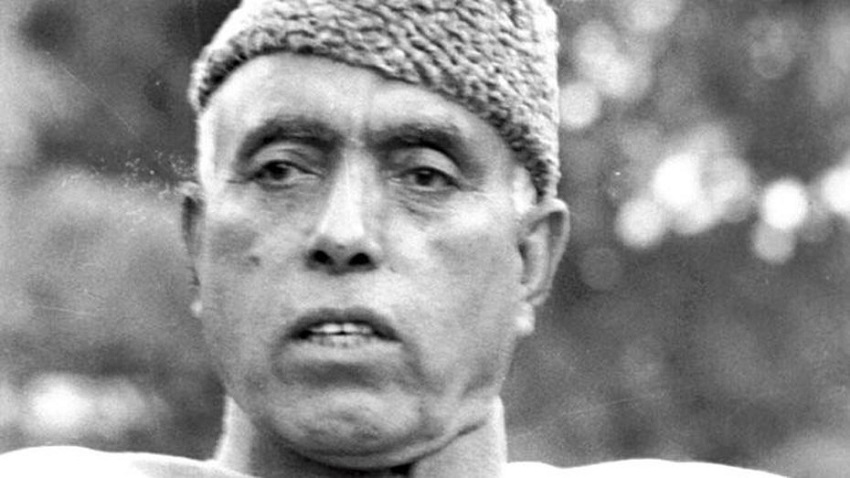
Sheikh Abdullah, founder of the political outfit National Conference that has a presence in certain pockets of the Kashmir Valley. (File Photo)
Indian Union in general
and the Congress government in particular, have shown Dr. Farooq the respect
and favour he deserved. When his father Sheikh Abdullah was put under arrest
for many years after being dismissed as the Prime Minister of J&K in 1953,
Nehru, then the Prime Minister of India, issued instructions that his family
was taken care of. Even a medical seat was reserved for Farooq in Jaipur
Medical College. The Indian government broke the protocol and the President and
Prime Minister; both arrived in Srinagar to attend the funeral of the Sheikh.
An announcement came minutes after the burial that Farooq Abdullah would be
stepping into the shoes of his late father.
Farooq had the full
freedom of running the administration of the State as per his party’s policy.
There was no interference from the Centre. But what was amiss was that Farooq
like other political leaders of the valley failed to make the masses of the
people walk behind him. Unfortunately, he chose to walk behind them. He was
besieged by colleagues and associates who neither understood nor practised the
significance of secular democracy as the cherished instrument of governance.
Under the pressure of myopic and ambivalent seniors of the party, Farooq gave
in to the rabid Jamaat-i-Islami of Kashmir which had a very strong constituency
in Southern Kashmir. Farooq ordered the appointment of more than 2,500 teachers
of the Jamaat seminaries (dargahs) as
government teachers. This was how the communal teachings and agenda of the
Jamaat were conveniently brought to the homes of Kashmiris.
Farooq, deviating from
the path set forth by his father, began finding support from the Jamaat which
had quietly become active and was pursuing its Kashmir mission. The Tableeghis
assumed puritanical posture as a mask behind which they carried forth the
Islamization agenda in Kashmir. They reached every village and town in the
valley and established their cadres with the simple agenda of spreading
orthodoxy without any hindrance.
The space was shrinking for the Hindus and Sikhs in Kashmir. When Bhindranwale-led Khalistani agitation spread out in Punjab, Farooq Abdullah began hobnobbing with the Khalistani leadership. He paid several visits to Amritsar to establish contacts with the Khalistani Sikh leaders perhaps in the hope that a day would come when the Khalistanis would also support Kashmir’s separatism. Farooq resorted to criticizing the central government for its “wrong” Kashmir policy. He crossed all limits in heaping allegations on New Delhi.
Farooq’s role during the rise of the theo-fascist movement in Kashmir in the late 1980s is a sordid story. True to the core of the theory of “method in the madness” Farooq tried to run with the rabbit and hunt with the hound. He knew the consequences of rigging 1986-87 elections and covertly facilitated the departure of Mohammad Yusuf Shah, commonly known as Sayyid Salahu’d Din, now the head of Hizbul Mujahideen, a separatist organization operating in Kashmir. Yusuf Shah was accompanied by a large group of his close associates who established contacts with ISI after arriving in Muzaffarabad. About 60 to 70 of young Kashmiri Muslims brain-washed and trained in the terrorist activities at the terrorist camps in PoK/Waziristan, under the supervision of ISI and Pakistan Army officers, clandestinely returned to Kashmir. Since an FIR had been filed against them for violating the ceasefire line, they were prosecuted under the law. But suddenly in August 1990, Farooq Abdullah, the chief minister of J&K ordered their unconditional release from the prison. They formed the core of terrorist groups who wrought havoc on the small religious minority of Kashmiri Pandits, about whom Farooq Abdullah says today that Kashmir is incomplete without the Pandits.
Terrorism erupted in Kashmir in January 1990. Farooq, then heading the coalition government with Congress, resigned and ran away to London to play golf and enjoy the easy life in Europe. Back home, the defenceless Kashmiri Pandits were left to the wolves to face genocide and finally the ethnic cleansing in Kashmir. Thousands of troops, trained and armed to the hilt remained confined within the four walls of Badami Bagh Cantonment of Srinagar. The then Home Minister, Mufti Saeed turned a blind eye to the pogrom let loose against the Pandits. In a bid to rationalize the freeing of jailed terrorist leaders, he planned a masterstroke of getting his daughter kidnapped by the terrorists and got her freed in an exchange for setting free the arrested terrorists.
When terrorism in Kashmir was partially controlled in 1996, Farooq Abdullah returned from his London resort and announced to fight the election for the assembly seat. The Congress government in New Delhi fully supported him. Again he came to power and again the old dramatics were resumed.
As a result of the abrogation of Articles 370 and 35-A, the assembly stands dissolved and J&K has been turned into Union territory. Farooq has lost his standing and freedom to be the Sultan sitting atop Gupkar hillock. He is restive and makes his survival conditional to regaining power. He forged the Gupkar Alliance nicknamed as the roguish as Gupkar Gang, but it frittered away sooner than later.
Now recalling the Kisan agitation, he exhorts Kashmiris to make sacrifices to help him reclaim the Sheikhdom of Kashmir. Kashmiris know that the Kisan Andolan is only a mask worn by the Khalistanis and the funding in billions of rupees is coming from the Sikh separatists based in Italy, Canada, UK and the US. The Kisans, while on a dharna for more than a year, have been regularly receiving their quota of hard cash, liquor of the highest brand, Hyderabadi biryani, tons of dry fruit, and all means of entertainment. This is the “sacrifice” to which Farooq is alluding and this is the sacrifice he is suggesting the Kashmiris imitate and restore Article 370 and Art 35A together with the Kashmir Sheikhdom for Farooq Abdullah.
We use cookies on our website to give you the most relevant experience by remembering your preferences and repeat visits. By clicking “Accept All”, you consent to the use of ALL the cookies. However, you may visit "Cookie Settings" to provide a controlled consent.
This website uses cookies to improve your experience while you navigate through the website. Out of these, the cookies that are categorized as necessary are stored on your browser as they are essential for the working of basic functionalities of the website. We also use third-party cookies that help us analyze and understand how you use this website. These cookies will be stored in your browser only with your consent. You also have the option to opt-out of these cookies. But opting out of some of these cookies may affect your browsing experience.
Functional cookies help to perform certain functionalities like sharing the content of the website on social media platforms, collect feedbacks, and other third-party features.
Performance cookies are used to understand and analyze the key performance indexes of the website which helps in delivering a better user experience for the visitors.
Analytical cookies are used to understand how visitors interact with the website. These cookies help provide information on metrics the number of visitors, bounce rate, traffic source, etc.
Advertisement cookies are used to provide visitors with relevant ads and marketing campaigns. These cookies track visitors across websites and collect information to provide customized ads.
Necessary cookies are absolutely essential for the website to function properly. These cookies ensure basic functionalities and security features of the website, anonymously.
Cookie
Duration
Description
cookielawinfo-checkbox-analytics
11 months
This cookie is set by GDPR Cookie Consent plugin. The cookie is used to store the user consent for the cookies in the category "Analytics".
cookielawinfo-checkbox-functional
11 months
The cookie is set by GDPR cookie consent to record the user consent for the cookies in the category "Functional".
cookielawinfo-checkbox-necessary
11 months
This cookie is set by GDPR Cookie Consent plugin. The cookies is used to store the user consent for the cookies in the category "Necessary".
cookielawinfo-checkbox-others
11 months
This cookie is set by GDPR Cookie Consent plugin. The cookie is used to store the user consent for the cookies in the category "Other.
cookielawinfo-checkbox-performance
11 months
This cookie is set by GDPR Cookie Consent plugin. The cookie is used to store the user consent for the cookies in the category "Performance".
viewed_cookie_policy
11 months
The cookie is set by the GDPR Cookie Consent plugin and is used to store whether or not user has consented to the use of cookies. It does not store any personal data.