Home Blog Page 296

‘Pak forces kill and rape during operations’

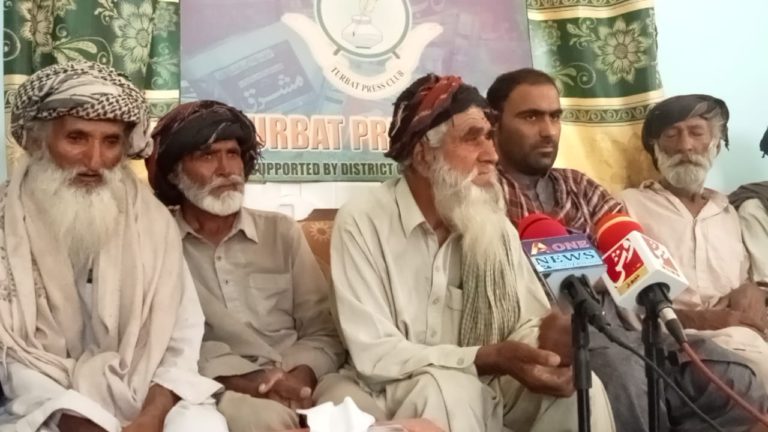
Baloch elders and women from the Keelkor area of district Panjgur talked about Pakistani raids and human rights violations at the Turbat Press Club in occupied Balochistan on Sunday. “Pakistani forces have brutally killed our innocent loved ones. They arrested Pirjan who was then subjected to severe torture. Pirjan could not survive due to severe injuries. Our houses are set on fire by these (Pakistani) forces… our cattle are routinely shot dead during military operations. In a recent operation five camels were shot dead… our lives have been ruined by these law enforcement forces,” said Rehmat Dawood, a tribal elder.

“We are told that these forces have been deployed to protect us, but they are killing us. Recently during a military operation our women were desecrated. Can this be the work of protectors?” asked Rehmat Dawood.

“Our women have been desecrated during the raids on our houses. We appeal to the higher authorities to save us from the tyranny and barbarism of these unbridled forces,” said Ghulam Nabi, another tribal elder from Keelkor. Ghulam Nabi added that they were not being allowed to cultivate their lands. “Our crops have been deliberately destroyed by the forces,” added Ghulam Nabi.

Banuk Jangul introduced a small child to the media during this presser and said, “…this is five year old Mughal, whose father Daljan was killed during the operation.”

“Who will bring justice to this orphaned child? Justice is not expected anywhere. We want to know what is our crime, what have we done to these forces,” asked Banuk Jangul. She further added that they should be given the right to live on their land.

Extrajudicial killings and disappearances of Baloch by the Pakistani security forces across occupied Balochistan is a serious issue. Over the last several years more than 35,000 Baloch have been abducted who are now “missing” and more than 10,000 innocent Baloch civilians have been killed by the Pakistani forces as part of their “kill and dump” policy.

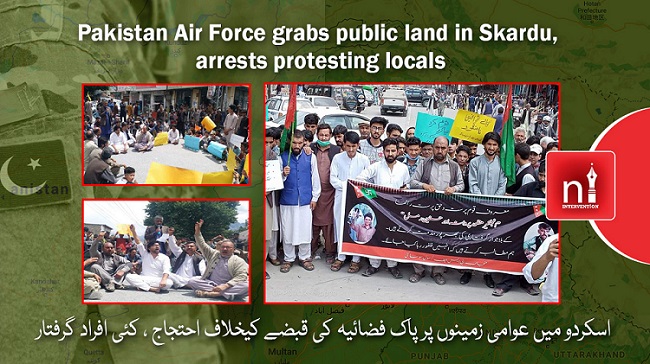
Pakistan Air Force grabs public land in Skardu, arrests protesting locals

Pakistan Air Force (PAF) has occupied public land at Skardu in Gilgit-Baltistan. Nationalist leader Manzoor Parwana was arrested along with several locals of Skardu for protesting against this illegal land grab by Pakistan Air Force.
Watch our news report to know the full story.

Click on the YouTube link to watch our news report

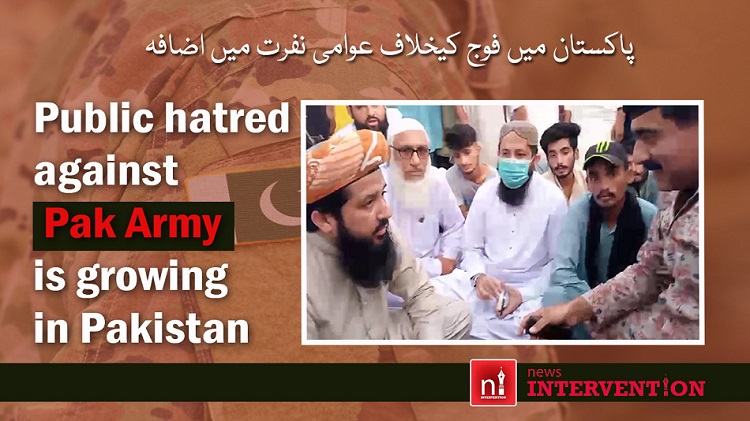
Why is the hatred against Pakistan Army growing in Pakistan?

Public opinion is fast turning against the Pakistan Army in Pakistan.
Watch this video report to know more.

Click on the YouTube link to watch our video report

Will there be a resurrection for Dr Deen Mohd Baloch?

Countless people are born in this world who leave their mark on human minds. The past struggle of these characters shape the present and, thereafter, write the future’s history. Historians adore the character of these entities in their books. In my life I have also known several people who are no longer with us physically, yet their role compels the historians to put pen to paper and describe their amazing job. There are numerous such names in the history, whose roles are not easy to describe, but such characters force an author’s pen to describe what they had said, what they did in the past for they did not hesitate to jump into the fire like the mythical Nimrod. And so their deeds has become special indeed.

Several Baloch personalities are no longer with us in this mortal world and several others continue to suffer state oppression and endure the ordeals inflicted by the occupying Pakistani forces. The memory of numerous such leaders’ sufferings in these torture cells inspires me to pick up the pen and paper to write about them. Dr Deen Mohammad Baloch is one such personality whom I met seventeen years ago in 2004 at Quetta during the Baloch National Movement (BNM) council session. I had the opportunity to meet this great leader and from that day onwards we became good friends. Dr. Deen Mohammad Baloch belongs to Mashkay and is considered one of the intellectual and ideological friends of the BNM’s revolutionary ideology. This what Martyr Ghulam Muhammad Baloch said to me about Dr. Deen Jan.

During those three days of the BNM council session, I saw Dr. Deen Mohammad Baloch as a moderate politician and a revolutionary leader in our society. He traveled to Balochistan to carry out BNM’s revolutionary programs and independence slogan to every Baloch across every village and house. Dr. Deen Mohammad Jan’s sincerity and hard work led the BNM caravan to reach Balochistan’s every corner in a short period.

Dr. Deen Jan Baloch became a member of the BNM Central Committee in the 2004 council session. At the same time through his efforts the great leader of BNM, martyr Dr. Manan Jan also joined BNM and stepped into revolutionary politics. Both Dr. Deen Mohammad Jan Baloch and Dr Mannan are doctors and belonged to Mashkay. Baloch doctors have been ideological and political free thinkers. Dr. Deen Mohammad Jan’s efforts led the Baloch Doctors Forum and several organizations to become ideological allies of the Baloch National Movement.

On December 3, 2006 when Pakistani regime abducted martyr Ghulam Mohammad Baloch and BNM workers were worried about the disappearance of their leader, it was Dr. Deen Jan who made a prolonged visit to Balochistan and Karachi with other party members to mobilize the rest of the placid workers. Very soon thereafter, the BNM was reorganized.

In 2007, I remember when we joined the hunger strike camp in Quetta and started a campaign to join the Baloch women panel members, it was Dr. Deen Mohammad Baloch who along with other friends visited our camp at Quetta. This camp had the full support of BNM and BSO Azad.

Despite being a government doctor Dr. Deen Mohammad Baloch was a revolutionary leader and an active member of the BNM. When martyr Ghulam Muhammad was released from the Pakistani torture cells after nine months and was bailed out in eight fake cases, Dr. Deen Jan stood up with martyr Ghulam Muhammad along with other friends and organized party programs at Malir, Karachi and engaged in preparations for the 2008 council session. Dr Deen Mohammad Baloch held a successful revolutionary session on 15 July 2008 where once again he was elected as a member of the Central Committee of BNM. Henceforth he joined the freedom movement with martyr Ghulam Muhammad Baloch.

On April 3, 2009 the Pakistani security forces martyred Ghulam Muhammad after his enforced disappearance, his bullet-riddled dead body was found at Murgap. Dr Deen Jan along with other friends attended the funeral prayers at my home at Mand. I was spellbound to see the comrades of martyr Ghulam Muhammad’s funeral caravan.

Unfortunately, I am writing these words today out of sadness after the loss of several friends in my life. In these tragic times many friends in the caravan went away but several others stayed until the last breath of their lives and history will remember them always. Many of these friends are undergoing physical and mental torture in the Pakistani prisons for the last ten to twelve years.

Dr. Deen Mohammad Baloch who was among those who attended the funeral prayers of martyr Ghulam Muhammad. I was honored to host him at my home on the occasion of martyr Ghulam Muhammad’s funeral. At that time I didn’t know that this honor would not be possible again during martyr Asif and Atif Jan’s funeral after they were martyred by Pakistani security forces.

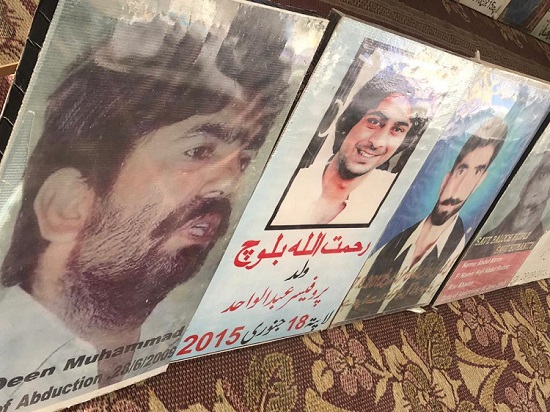
The next day Dr Deen Mohammad Baloch had said goodbye and promised to meet me again. But even Dr Deen Jan didn’t know, nor the martyrs of Murgap knew that this will be the last see off. On June 28, 2009 a friend informed through a phone call that Dr. Deen Mohammad Baloch had been abducted by state-run Pakistani intelligence agencies by breaking into his house while he was still on duty at Ornach, in Khuzdar. I am still waiting for Dr Deen Jan for the last twelve years. Dr. Deen Mohammad’s innocent daughters are also waiting for their father. Will there be a resurrection?

Click on the YouTube link to watch this video report

Punjab: Resurgent BJP is creating its own political space

The Punjab unit of the Bharatiya Janata Party (BJP) is poised to extend itself to a pan-Punjab configuration and create a vibrant political space for itself in the state. The move is historic since for many decades the Punjab unit of the party has been in a political coalition with the Shiromani Akali Dal (SAD). Recently, the SAD broke this alliance in the most immoral and opportunistic manner. BJP’s plan to fight the forthcoming state assembly elections from all constituencies was declared earlier but serious work is now underway in this direction.

The first indication came on June 15, when the party, in an impressive function at its head office in New Delhi and in the presence of senior leaders dealing with Punjab, inducted six prominent Sikhs into the party fold. These Sikh personalities inducted have been active in the political, social and academic arena and are expected to gainfully contribute towards the restructuring of the party for a statewide signature.

BJP realised that its image suffered a setback due to the misinformation and disinformation spread by its antagonists in the wake of the farm agitation. It also suffered due to the sudden breakup engineered in the most immoral manner by its long time ally, SAD that had enjoyed great power and privilege from its association with the party.

There were a spate of resignations from the party in the aftermath of the farm agitation and the breakup with SAD. Now the worst is behind the party. Those who were disloyal and opportunists have left and those remaining can be depended upon to move on the path of resurgence. The willingness of new people to join the party fold has come as a catalyst.

The reason behind the surge in joining BJP is not hard to find. Punjab is facing a huge crisis of weak almost non-existent political leadership and a resultant trust deficit that is directed towards the entire political ecosystem. The Congress in particular has been exposed as self serving and corrupt, having failed to keep its poll promises made in 2017.

More particularly, the Congress has failed to bring to book the criminals responsible for desecration of Sri Guru Granth Sahib in the Bargari sacrilege case. Congress Chief Minister Amarinder Singh had vowed to carry out investigation and punish the offenders including those who were responsible for opening fire and killing innocent people at village Behbal Kalan. His five year term is at an end and nothing has happened.

The Congress leaders are conscious of the negative political fallout of this procrastination by the CM which is seen as a result of a personal agenda. They are fearful of facing the people under the prevailing circumstances and are up in revolt against him. The Congress, thus, is enveloped in an internal tussle at a time when its entire energy should have been directed towards fighting the COVID pandemic. The prevalent situation is causing great anguish to the people of Punjab.

The people are not ready to forget or forgive the role played by the SAD in the Bargari sacrilege incident. SAD therefore is on a very weak wicket so far as acceptance is concerned. The party is now attempting to play out politics of religion with assistance from the Shiromani Gurdwara Prabandhak Committee (SGPC). The people, however, have seen through the gambit and will not fall for it.

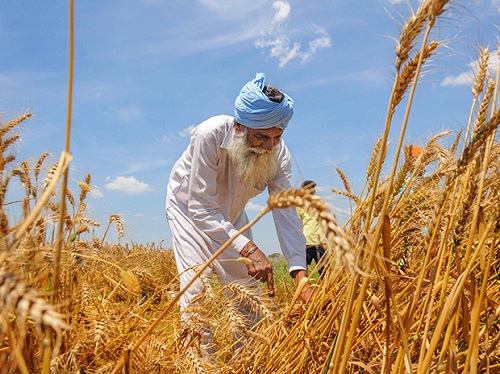
Under these circumstances the people of Punjab have started looking at BJP as an alternative to fill the leadership vacuum. The incident free acquisition of the wheat crop by the central government with immediate payment of dues has convinced many that the farm bills are not as diabolic as they have been made out to be. There is a thought process that the offer of changes made by the government should be accepted.

The emerging political environment and the decision of the BJP to contest from all state assembly seats in the 2022 polls has so flustered the other parties that they are resorting to violence to cow down the BJP workers and office bearers. There have been many instances in the recent past where violent attacks have been made on BJP leaders and cadres while they were carrying out legitimate political activity. An attempt was made to hide the political intent of the violent activity under the garb of anger from within the farming community. The truth, however, is not hidden from anybody; the violence constitutes a premeditated attempt to cow down the BJP cadre. Inability to contain the violence indicates the complicity of the ruling dispensation apart from being an abject failure in maintaining law and order. The BJP cadre, however, has not been intimidated by the attacks; it, in fact, stands enthused by them towards meeting the challenge.

There are many other aspects that go in favour of the BJP. The chief among them is the relentless hard work that the BJP cadre has put on ground to in its fight against the COVID pandemic in the state. Many individual volunteers and community groups of the party stepped out to provide ambulance services, oxygen support, free medical advice and food etc. They have, in particular, looked after the elderly and those without support.  Some BJP workers even lost their lives in this effort but the momentum continues to be maintained. The people of the state have seen all the good work done and it has touched an emotional chord. And the bond between various communities that was sought to be broken has in fact strengthened.

People are realising that the BJP with its inherent discipline and the most significant quality of keeping merit in leadership foremost instead of the dynastic policies is the best choice for Punjab. The party also comes with massive support from the centre which is required to get Punjab out of its financial mess and the breakdown in law and order. BJP is also in a position to address other critical issues like unemployment, breakdown of education, health and other facilities, endemic drug abuse, migration of youth to foreign shores etc. Most importantly it is only New Delhi that can bring the criminals of the sacrilege case to book.

Punjab is poised to rid itself of corrupt and ineffective governments that have brought things down to the prevalent disastrous levels. In the forthcoming assembly elections the people will set aside all propagandist misinformation and disinformation and use only rationale in the selection of their government. The BJP is positioned as a serious contender to take on the responsibility.

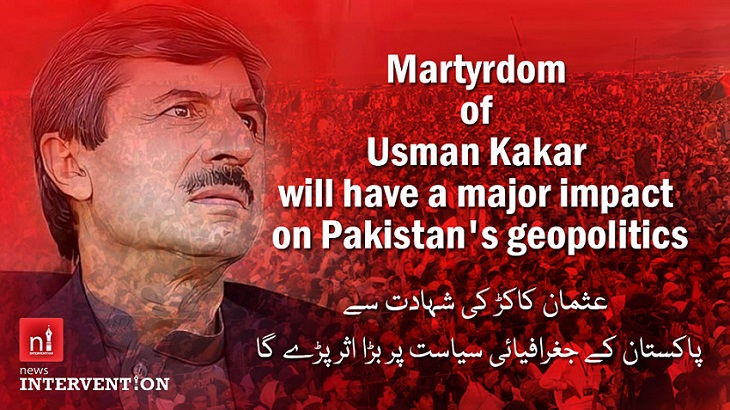
Martyrdom of Usman Kakar will have a major impact on Pakistan’s geopolitics

Pakistani regime has silenced Usman Kakar, a popular leader who was loved and respected by the Pashtuns and Baloch. The martyrdom of Lala Usman Kakar exposes the devious agenda of Rawalpindi against Pashtuns and Baloch.
Vivek Sinha, Editor-in-Chief News Intervention explains the complete picture in this video report.

Click on the YouTube link to watch this video report

Rape is a ‘weapon’ for Pakistan Army

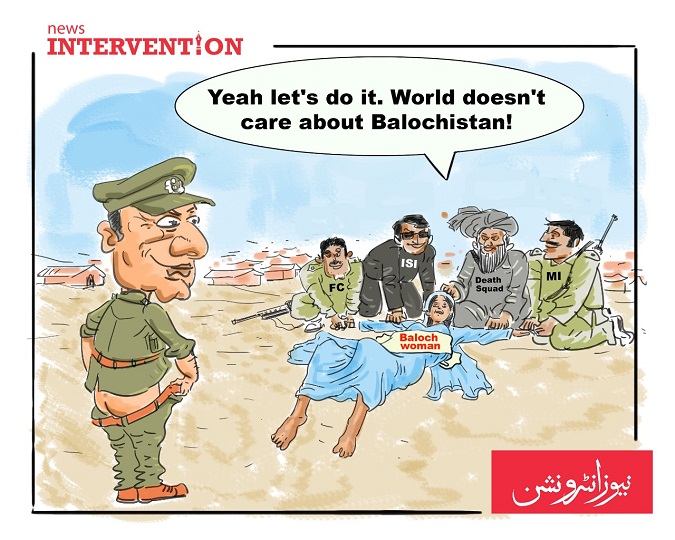
What do Pakistani men in military fatigues brandishing sophisticated guns do in Balochistan? They rape. Yes, you read it right. Rape has always been a lethal weapon of the Pakistan Army, one that it has tried and tested several times. They used it on East Pakistan (now Bangladesh) and are once again using it in Balochistan. During the last fortnight Pakistan Army regulars and their backed Death Squad members raided the Keelkor area of Panjgur district. The sole objective of this raid was to subjugate the hapless Baloch people. And what better way to achieve this objective than to rape all the women. The thinking in Rawalpindi is that a community whose women folk have been ‘violated’ would easily concede to their demands.
Vivek Sinha, Editor-in-Chief News Intervention explains.

Click on the YouTube link to watch full video report

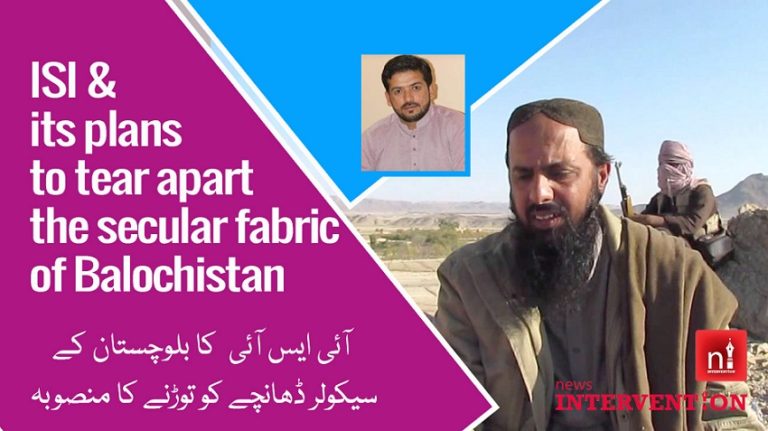
ISI and its plans to tear apart the secular fabric of Balochistan

ISI and Pakistan Army backed Death Squads have chalked out a plan to destroy Balochistan’s secular fabric. Recently, Shafiq Mengal-led Death Squad murdered a Hindu businessman Ashok Kumar at Khuzdar in occupied Balochistan. Thereafter, pamphlets are being put up in Balochistan with Taliban style diktats curtailing the rights of women and girls. Watch our Special News Report that explains this entire issue.
Video language: Hindi/Urdu

Click on the YouTube link to watch our video report.

PM Modi puts Kashmir’s political process on track

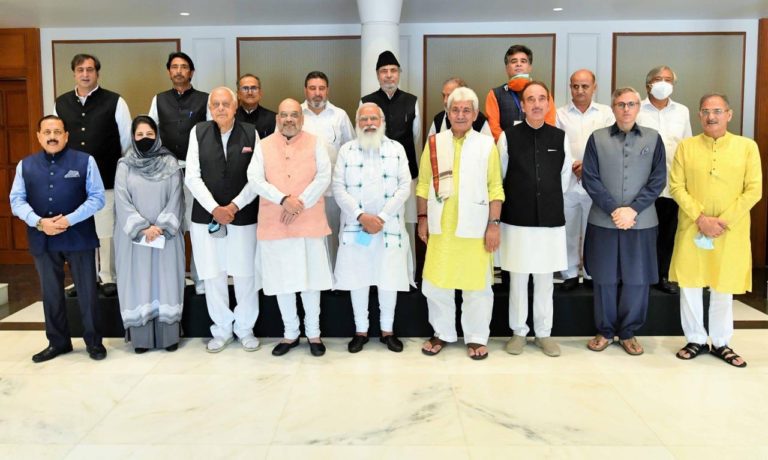
The government of India invited political leaders of Jammu and Kashmir (J&K) for a meeting in New Delhi chaired by Prime Minister Narendra Modi. New Delhi gave no agenda for the meeting and placed no time restrictions. By doing so it opened the forum for the participants to say what they wished and for as long as they wished.

The meeting was held on Thursday, 24 June, at New Delhi that was attended by fourteen prominent leaders from J&K including representatives of the Congress and the Bharatiya Janata Party (BJP). The centre had in attendance Home Minister Amit Shah, National Security Advisor Ajit Doval and Lt Governor of J&K, Manoj Sinha.

The meeting was significant due to a number of aspects. It was the first such initiative taken by the centre since the constitutional changes brought about in August 2019 that led to the abrogation of Article 370 and Article 35A of the Constitution and bifurcation of the state into two Union Territories of J&K and Ladakh. Many of the leaders who attended the meeting had been under detention for different periods post the application of the constitutional changes.

Normally the government would have followed a protocol of holding a few meetings at the lower level before scheduling a meeting with the Prime Minister, this process was cut short by calling a meeting at the highest level directly. No invite was given to any element of the separatist organisations.

It was quite apparent that the central government was very serious in engaging the legitimate stakeholders in J&K with utmost urgency and an open mind. There was an apprehension that some local parties would insist upon attending such a meeting only after restoration of Article 370 or grant of statehood to the region. That they attended the meeting without putting forth any such demands is reflective of their desire to engage with the centre with an open mind. This is quite a departure from the rigid stands that were a norm earlier, it seems that the leaders have realised that their relevance can be maintained only if they remain engaged in any process that will decide the future of the region.

The meeting lasted for three and a half hours with the prime minister sitting all through. The centre thus stood by its commitment to give a patient hearing to all the attendees. Dr. Farooq Abdullah, being the senior most, was invited to speak first but he opted out and the mantle went to Ghulam Nabi Azad. He presented five points of which the main was early grant of statehood and holding of elections in the given order of priority. The centre reiterated its commitment to hold elections as soon as the delimitation process is completed but also indicated that it preferred to hold polls before addressing the question of statehood. This aspect is bound to create political divergence and debate in the future.

On the issue of release of political persons who continue to be under detention the centre called upon Lieutenant Governor Manoj Sinha to set up a committee to review the cases and identify those to be released.

Interestingly, restoration of Article 370 did not generate the expected level of articulation even though some leaders like Mehbooba Mufti did raise the issue. Statehood and elections thus emerged as the bigger agenda.

The participants have given a positive vibration in their interaction with the media after the meeting. It was termed as a “step in the right direction” by Omar Abdullah. Sajjad Lone opined that the meeting left in its wake a “sense of optimism” and indicated a “new phase of reconciliation in J&K.” Even senior leaders like Ghulam Nabi Azad had only good things to say about the meeting which he stated was held in a very cordial atmosphere. Prime Minister Modi stuck an emotive chord by saying that he wanted to reduce both “Dil ki Doori” (distance from the heart) and “Dilli ki Doori” (distance from Delhi).

Pakistan’s role in the ongoing developments also merits consideration. A few days before the meeting Pakistan issued a “warning” that it would oppose any move by India to divide or change the demography of Kashmir. Post the successful conduct of the meeting, Pakistan’s obnoxious foreign minister Shah Mahmood Qureshi described it as a drama and a public relations exercise. It was a pathetic response which has indicated the frustration of the neighbouring country with regard to the improving situation in J&K.

Pakistan has been desperately trying to, once again, become a party in the so-called Kashmir dispute. It has a paid following within and outside India that lobbies for this aspiration by saying that a solution is not feasible without taking Pakistan on board. Pakistan has demanded restoration of the pre-August 2019 situation for resumption of talks knowing full well that India will not agree. This obtuse diplomacy leaves no window open for resumption of talks. By doing so Pakistan is annoying it’s powerful allies like the US and Saudi Arabia, but it is unconcerned. The reality is that the situation in Kashmir has gone much beyond Pakistan’s stated posture and the country has simply run out of ideas. Ignoring the country and moving on is the only option left and all stakeholders understand this.

On many earlier occasions the security forces had created in J&K an environment of peace whereby the political process could be initiated. All such opportunities were frittered away. When seen in this context the recent meeting assumes significance; while no major decision has been taken it has definitely set on course the political process. It has also been well received in international circles, especially by the Biden administration and the western world. The takeaway is serious and time bound action to complete the process of delimitation and follow it up with polls and restoration of statehood. The central government needs to ensure now that the faith reposed upon it is not betrayed.

China piqued by Indo-US collaboration on Covid vaccines

As the second wave of Covid-19 engulfed India and the deadly virus spread its fangs in the cities and towns, the government of India realized the dire consequences of lowering the guard after it had successfully braved the first wave. The people had not anticipated the ferocity of the second wave and did not realize what price they will have to pay for ignoring Covid discipline on which the entire government machinery had laid stress previously.

In retrospect the questions like shouldn’t the assembly elections in five states been postponed through a Presidential decree or shouldn’t the Kumbh Mela been drastically restricted to a few dozen religious gurus, will remain to be answered. Even some of our friendly foreign countries have also felt puzzled why India, so precocious about the first wave of the pandemic, slipped to become the country in the world with the highest numbers of Covid -19 affected persons. The loss of lives is tragic.

No sensible observer will buy the story that the government remained negligent or non-serious as some among the opposition are wont to point out. What happened was the magnitude of the affected people at a time and the huge death toll taking place on the one hand and the shortage of Covid vaccine and medical oxygen on the other hand. This brought a great strain on the availability of hospital beds with oxygen facility all over northern India as also in badly affected states of southern and western India like Maharashtra. The available supplies were far inadequate as against the demand. Consequently, the government of India could no more wait to make appeals to friendly countries in the world to come to her help in a very critical situation. 

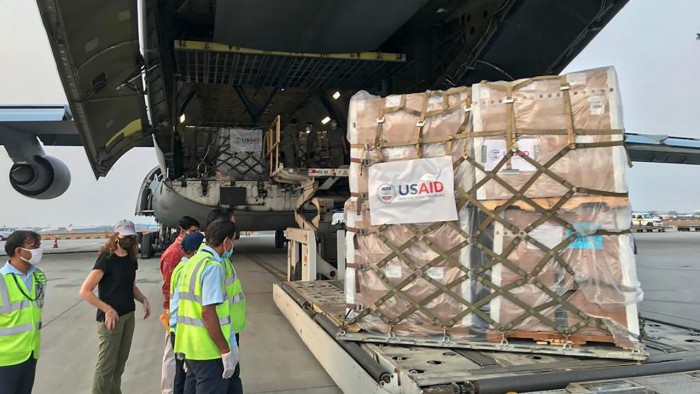
There was a palpable response from many big and small countries and they promised to send as much help as they could. Within hours of this appeal, messages poured in from many friendly countries asking for specific items need to provide immediate relief. Various ministries joined heads to systematize the receipt and distribution of consignments of medicines and equipment that had to be dispatched to different parts of the country. Gigantic teamwork followed to look to even the smallest of detail about the distribution of the items of healthcare.

PM’s appeal for aid had gone to Washington also. Most of us know that India has good friendly relations with the US and that the US is the leading member of QUAD which has various commitments to the Indo-Pacific countries in terms of healthcare and associated matters. India’s appeal received a warm and quick response from President Biden. However, it did not come and many eyebrows were raised on the much-touted Indo-US cooperation in various fields of the common good. Sections of Indian and foreign media that would waste no time in magnifying things would rejoice on bilateral relations getting sour.

A closer examination of these media sources reveals that they are only orchestrating the propaganda emanating from a bigger source to which they bear allegiance. A short survey of China’s reactions to delayed American aid shows how viciously the Chinese mind can think about India faced with a crisis that originated in China. Beijing has called the US’ late announcement of help to India a “U-Turn” explaining it diabolically as the “White House’s geopolitical gain by getting India “cheap” into the American alliance in “Indo-Pacific”, a term Beijing is not willing to accept and use.” This and other comments of China in this context, as we shall see, is to diabolically disinform the Indo-Pacific nations that the US delayed aid to India to force her to become a US ally in the Indo-Pacific at no price whatsoever.

Before we proceed, let us take hindsight. The US had earlier imposed an embargo on raw materials for India’s Covid-19. It has been overlooked by the media that the QUAD summit took place on 13 March, whereas Biden’s decision on export curbs was taken on 5 February under the Defence Production Act (DPA)— a law dating from the 1950s that grants the US President broad industrial-mobilization powers to bolster vaccine-making in the country.

It was so because the US was passing through a very critical stage of pandemic and under “America first concept” wanted to ensure that she had the requisite stockpiles for home use and would not want to be caught on the wrong foot. This technical matter was duly resolved during a long telephonic conversation between the Security Adviser to PM Modi and his counterpart at the Pentagon. President Biden might have other compulsions, geopolitical, domestic technological/industrial, et al but India reacted to it positively trying to understand and incorporate it into the overall format of the Indo-US relationship. That is how big nations conduct their relations.

A prominent Chinese media outlet was more vocal in misleading the Indo-Pacific countries by this commentary: “In addition, some experts also pointed out that the US is taking advantage of India’s humanitarian crisis – as Washington wants to use minimum resources to push India to come closer to the US…..It’s not surprising to see the US adopting such old-fashioned tactics of paying little attention to other countries’ crises first but suddenly appearing to be ‘willing’ to offer urgent help…..Promises and help come at the last-minute from the US as it would help it gain more from the partner with less offering.”

This is a typical Chinese hegemonic style of a phenomenon of bilateral relationship. What the media outlet wants to emphasize is that the US deliberately delayed aid to India to force her into its alliance, and having done that, Washington finally announced the withdrawal of the embargo. The point is that the corpus of Indo-Washington relations in the context of Indo-Pacific security strategy was not finalised during the Covid times. The Indo-Pacific Security Strategy was first mooted way back in 2003 when the small island countries in the China Sea began to feel the Chinese aggressiveness and hegemonic behaviour. China must find an issue to convert it into a dispute with any of its neighbouring countries, small or big. This is the history of China. Indo-US relations are not based on a crisis blueprint. The guiding principles of this relationship are enshrined in the constitutional provisions of the greatest and the largest democracies in the world. These democracies stipulate that natural disasters taking a heavy toll on human lives are to be handled beyond the pale of politics.

China’s embarrassment stems from a different source and not necessarily from the US’ massive shipment of vaccine to India. The Chinese analysts and officials explain “the American hypocrisy” in terms of the fact that Biden imposed curbs on the US raw material for vaccines to be made in India, though in the virtual “QUAD summit” on 13 March (the very first multilateral meeting that Biden as President held with leaders of India, Japan, and Australia), it was announced that the four countries would cooperate to deliver one billion vaccine doses in the Indo-Pacific. However, in passing, it should be known that even the US depends on India for raw material for its pharmaceutical industry.

The QUAD is a red rag to the Chinese bull. China wants absolute domination of the Indo-Pacific as the only power whose writ should run. QUAD vaccine agreement counters China’s monopoly in distributing vaccine to the regional countries. It may be noted that three Chinese vaccine makers (Sinopharm, Sinovac, and CanSino) had received by March overseas orders for more than 572 million doses, accounting for nearly 8 per cent of all doses under contract globally. In Indonesia alone, Sinovac has a deal to supply 38 per cent of the nearly 330 million doses. In fact, in Southeast Asia, the heart of Indo-Pacific, China has committed 250 million doses, estimated to be 44 per cent of the total doses it has committed worldwide. China has already donated (as per an estimate made in March) 500,000 doses to Nepal, 300,000 doses to Sri Lanka, and 300,000 doses to Myanmar.

According to Yanzhong Huang (Senior Fellow for Global Health at the Council on Foreign Relations), “If the vaccine were priced at $10 per dose with a 40 per cent net profit margin, even a 15 per cent share of the vaccine market in lower – and middle-income countries would generate total sales of $10.8 billion and a profit of $4.32 billion for the Chinese economy,” he argues. Thus, we see why China would want to take the Indian example and try to malign the QUAD. It is a huge eco-political game China is making out of the Covid vaccine.

All told, the US had successfully led the world in fighting natural calamities and minimizing their impacts in the past. In 2003, President George W. Bush started the US President’s Emergency Plan for AIDS Relief, the largest global health program focused on a single disease in history.

Indo-US collaborations in vaccine productions are good and beneficial not only for the two countries but also for the rest of the world. Prakash Nanda has rightly concluded (Eurasian Times of 6 May) that “hurdles to India in this regard will hurt everybody, given that it is the largest provider of generic medicines globally. India occupies a 20% share in global supply by volume, supplies 62% of global demand for vaccines, ranks 3rd worldwide for production by volume and 14th by value, and happens to be the only country with the largest number of US-FDA compliant pharma plants (more than 262 including APIs) outside the United States”.