Home Blog Page 298

12 yrs ago Pak regime abducted Zakir Majeed Baloch & he’s still ‘Missing’

It’s been twelve years since Baloch student leader Zakir Majeed Baloch was forcibly kidnapped and ‘disappeared’ by the Pakistani security forces. His crime? Well, Zakir Majeed Baloch was well read and had a thinking mind, which is a big crime in Pakistan-occupied Balochistan (POB). Any Baloch who talks about his rights is conveniently picked up by the Pakistani security forces or their proxies, who then joins the long list of ‘missing persons’.

Baloch student leader and former vice chairman of Baloch Student’s Organisation-Azad (BSO-Azad) Zakir Majeed Baloch was born in Khuzdar’s Gazgi village on April 22, 1983. His father’s name is Abdul Majeed Baloch. Zakir Majeed Baloch’s sister Farzana Majeed and his old mother have been struggling for his safe recovery since the last twelve years.

Zakir Majeed Baloch completed his intermediate studies at the Balochistan Residential College (BRC) Khuzdar and his bachelor’s degree in science at the Government Degree College in Khuzdar. At the time when Zakir was forcibly abducted he was a master’s student of English at the Lasbela University of Agriculture, Water and Marine Sciences (LUAWMS) at Uthal University. On 8th June 2009, the fateful day, he was traveling from Quetta to his hometown Khuzdar and while en route, he was abducted from district Mastung. Mastung is merely 47 kilometers from Quetta, the capital city of Balochistan. Zakir Majeed was abducted along with one of his friend Waheed Murad Dehwar, who was released later on. Zakir Majeed was kept in extrajudicial custody and till this day there’s no news about him.

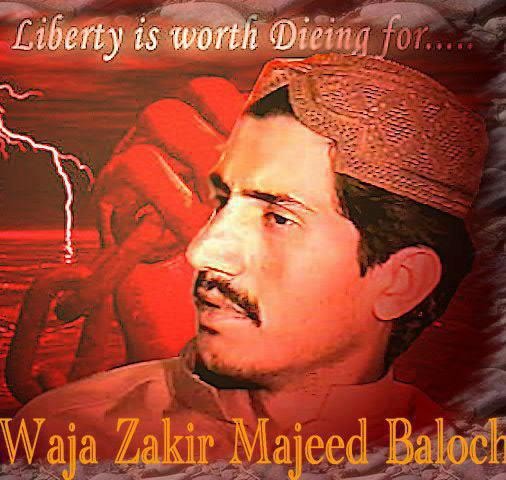
Zakir Majeed Baloch (File Photo: News Intervention)

Zakir Baloch played a vital role in the growth of political awareness among Baloch youth. He constantly spoke against Pakistani regime’s human rights violations in Balochistan. Zakir played a key role in spreading awareness amongst Baloch students about Pakistan’s “Kill-and-Dump” strategy which entailed kidnapping Baloch people, killing them in cold blood and dumping their dead bodies. Ironically, Zakir Majeed himself became a victim of this criminal policy of Pakistan.

Farzana Majeed, Zakir’s sister along with Mama Qadeer Baloch, Dr Deen Mohammad Baloch’s daughter Sammi Baloch and other victim families went on a train march from Quetta to Islamabad in 2011. The Missing Persons’ relatives had also set up a hunger strike camp in front of the Islamabad National Press Club. Twenty three people, including women and children, were part of this march.

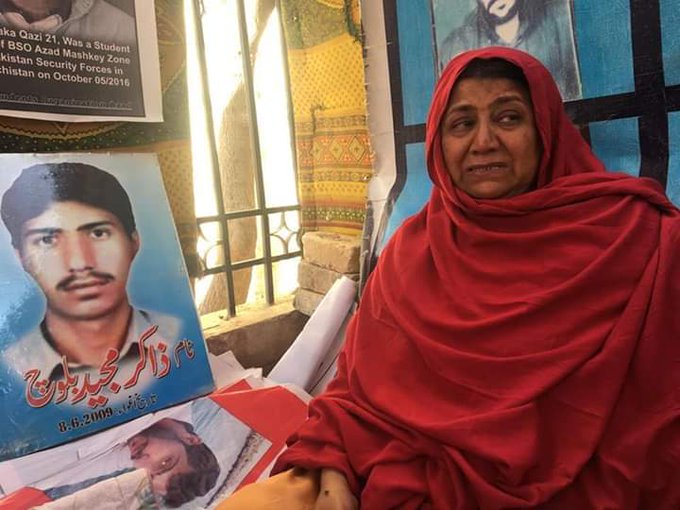
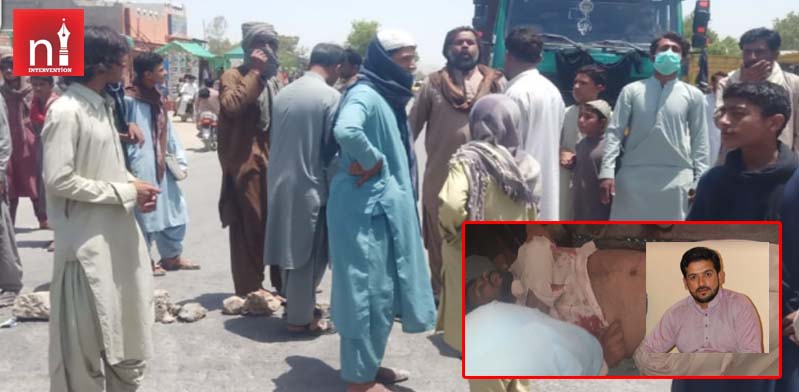
Family members of Zakir Majeed Baloch protesting with his photo. (Photo: News Intervention)

Historical Long March in Balochistan

Families members of the Baloch people who had been ‘disappeared’ by Pakistani forces went on a long march in 2013 from Quetta to Karachi and then to Islamabad, braving the biting cold of winter months. The purpose of this long march was to share their grief with those in power and explain about their innocence.

Family and friends of Baloch ‘Missing Persons’ had walked through the coldest mountains of Balochistan, crossed the roads of Sindh under hot weather and had then reached Islamabad. But it was futile to hope for empathy from the perpetrators of crime. Passionate appeals of the Baloch fell on deaf ears in Islamabad. The Baloch families returned back to Balochistan duped by false promises of the Supreme Court of Pakistan.

“My son Zakir Majeed Baloch has been missing for the last twelve years. We, together with the Voice for Baloch Missing Persons (VBMP) took the path of peaceful protest for the recovery of Zakir, but today, 12 years have passed and we have not been provided with any information regarding Zakir’s disappearance,” said Zakir Majeed’s mother, tears rolling down her eyes.

Zakir Majeed’s mother was also the former vice chairman of Baloch Student’s Organisation. She added that it is painful for a mother to endure twelve years of separation from her beloved son. “I am also one among the thousands of unfortunate mothers who has been waiting for her beloved son for 12 years. Thousands of mothers, sisters, daughters, sons, and fathers whose loved ones have been abducted and disappeared by Pakistani forces in Balochistan are grieving and petitioning for their loved ones’ return, but their cries for justice have gone unheard,” said Zakir Majid’s mother wiping the tears from her face.

Protests across Karachi over illegal land grab by Pakistan Army

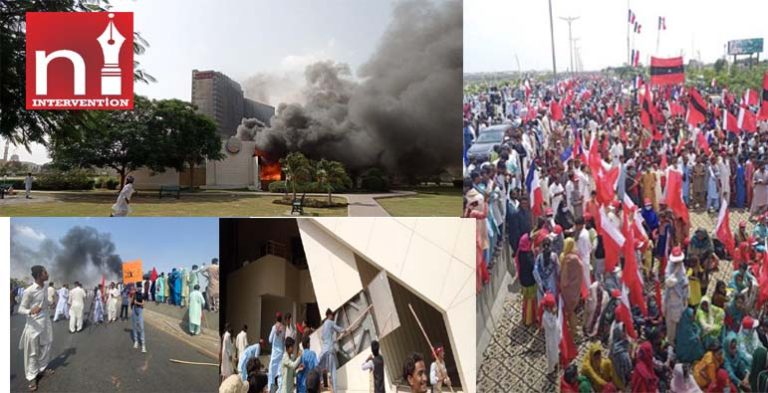
Massive protests rocked Karachi as Baloch and Sindhi came out in huge numbers to oppose the illegal land grab by Pakistan Army. Few days ago the BLF (Balochistan Liberation Front) revolutionaries had attacked the Bahria Icon Tower as a warning to Pakistani forces to desist from forcible land grabbing of Baloch and Sindhis. A day later the Sindhi organisations carried out a protest march in Karachi against this illegal land grabbing by the Pakistani forces.

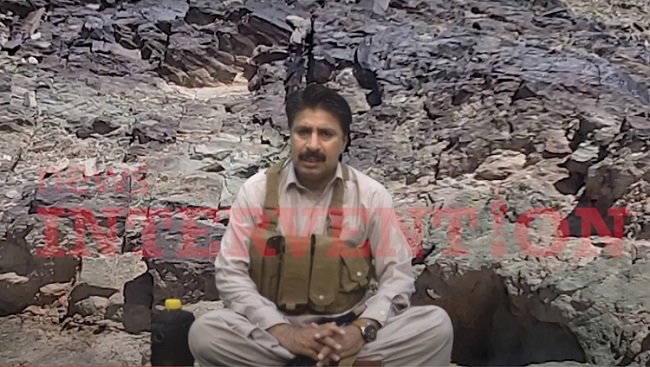
“Our sarmachaars (freedom fighters) carried out a grenade attack on Bahria Icon Tower near Clifton bin Qasim Park in Karachi. It was a symbolic attack aimed at warning the notorious Bahria Housing Society of the Pakistan Army to abandon the forcible occupation of ancestral lands of the Baloch and Sindhi people in Karachi,” said Major Gwahram Baloch in his media statement. He warned the Pakistani forces against demolishing the homes and settlements of Baloch.

The ancient villages of Kohistan, Gopa Town, Kathor, Moiida Dam and Panhwar mountains are gradually and illegally being gobbled up by the Pakistan Army under one pretext or the other. Malik Raiz, the civilian puppet of Pakistan Army with the help of government officials of Sindh is busy occupying ancestral land of Sindh. Recently, armed men along with police and rangers came with heavy machinery to destroy the historical old residences and homes of Sindhi people in Kohistan area of Sindh. Sindhis too joined ranks with their Baloch brethren and called for massive protests.

“We will never allow destruction of villages in Kohistan and exploitation of our resources. Through DHA mega City, islands’ mega projects, coastal belt projects, Pakistan Army cantonments and other Bahria mega projects Punjabi establishment’s agenda is to merge Sindh in its greater Punjab plan,” said Zafar Sahito chief organizer Jeay Sindh Freedom Movement (JSFM).

Jeay Sindh Freedom Movement (JSFM) organized the rally and protests in support of Sindh Action Committee’s protest call against Bahria town, Defense Housing Authority (DHA) and other illegal mega projects in Sindh.

Islamists in Balochistan are B-team of ISI: Dr Allah Nazar

Balochistan’s leader Dr Allah Nazar Baloch came down heavily on Islamic extremists calling the jihadis as the B-team of rogue intelligence agency ISI, who are trying to spread their tentacles in Pakistan-occupied Balochistan (POB).

Dr Allah Nazar Baloch is Balochistan’s pro-independence leader who is leading the Baloch revolutionaries fighting for independence from Pakistan. In recent times Pakistan Army and its intelligence wing ISI have suffered huge setback at the hands of Baloch sarmachaars (freedom fighters), and in order to regain their vice-like grip the Panjabi generals are now resorting to their favourite tactic of spreading Islamic extremism in order to destabilise Balochistan’s social fabric. Dr Allah Nazar Baloch was quick to read through this nefarious gambit.

“Religious extremists in Balochistan are the B-Team of ISI. They want to destroy our secular values and eliminate minorities. The pamphlet after the murder of a Hindu trader & threatening of women in Wadh Khuzdar shows the nefarious plans of ISI. Its master mind is Shafiq Mengal,” Dr Allah Nazar Baloch criticized the Islamist poster in strong words in his tweet.

https://twitter.com/DAN__Baloch/status/1401819451499163651
Dr Allah Nazar Baloch’s tweet criticizing the Islamists for their designs to disturb Balochistan’s secular fabric.

A few days ago, Hindu businessman Ashok Kumar was murdered by Shaifq Mengal’s Death Squad in Wadh tehsil of Khuzdar district for refusing to pay extortion money. Soon after the murder Baloch traders and businessmen had protested and had blocked the Quetta-Karachi highway. Within a fortnight of this cold-blooded murder ISI-backed Shafiq Mengal has started floating this pamphlet in Balochistan to spread his rein of terror.

Baloch businessmen protest at the Quetta-Karachi highway against the murder of Hindu trader Ashok Kumar by Pak Army-backed Death Squad. (Photo: News Intervention)

The poster published by an Islamic extremist group Caravan Saifullah carries Taliban-style diktats that says people should not allow women to leave their homes and openly threatens Hindu traders in Balochistan. It does not stop here. The poster also warns women not to enter their shops and stay away from them. The poster also gives death threats to those who disobey the diktat. Caravan Saifullah functions under the command of Shafiq Mengal, the head of ISI-backed Death Squad in Balochistan.

Jerusalem knits India-Israel ties since antiquity

As a young man arriving in Jerusalem, my first thought was managing the right kind of food during my stay. A vegetarian, filled with the notion that for all its attractions from the fabled Arabian nights to the stunning architecture of Palmyra, the region was a paradise only for meat eaters.

But Jerusalem surprised me. And there began by journey to experience first-hand, the strong Indian connect with Israel since antiquity. 

A Jewish co-traveller, who was in the plane with me, took me to a few shops in Jerusalem on a Friday afternoon, and solved my culinary problem. Our forays in the cobbled streets in the heart of the Holy Land revealed an interesting tradition. To my persistent query on whether I could find anything vegetarian in the city, he said: “On a Friday we Jews eat pure vegetarian food cooked in utensils in which meat has never been cooked. Friday is our holy day.” 

He added: “The idea of not eating meat on one day per week, may have come from India. After all the Old Testament says that sandalwood and gold for the construction of Jerusalem also came from India.”

The gentleman was referring to India’s vibrant trade relations with Israel since the days of King Solomon. In the long forty-year reign of the wise King, a peaceful Israel rose to unprecedented heights of prosperity. And India was very much a part of that boom. The secret of the great commercial connect was Ophir or Sopara, now known as Nala Sopara—a key port where King Solomon’s fleet of ocean-going ships docked.

The result was the import of the most exotic products, which even the Bible noted with a mention of the Ophir as a fount of wealth. 

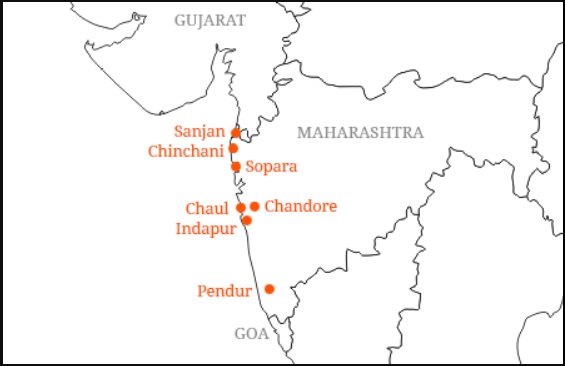
Yet, there is some controversy about Sophir’s location. But most geographers have nailed it as a seaport, 37 miles north of Mumbai. It is said to be four miles north-west of Bassein where an Asokan edict was discovered. The port also finds a mention in the Mahabharata, Bhagavata, and Periplus among others. 

The ancient port town of Sopara, in Mumbai’s north, hosted numerous traders that included the traders from Israel. Sopara is known as Nala Sopara in present times. (Map courtesy: Scroll )

King Solomon received a cargo from Ophir every three years. Legend says that he imported goods on such a lavish scale that silver in his Kingdom became as common as stones.

It is well known that trade and commerce is the mid-wife of a cultural osmosis. Unsurprisingly, the Hebrew word for peacock is tukhin which is tokal in Tamil. There were no peacocks in Jerusalem and Hebrew had no word for a peacock. Peacock is the mount of Kartikeya the General of the Gods, and symbolises divine protection of the state.

Some historians see a connection with King Solomon’s famous mines, supposedly in modern Zimbabwe, with gold mining practices in Tamil Nadu.

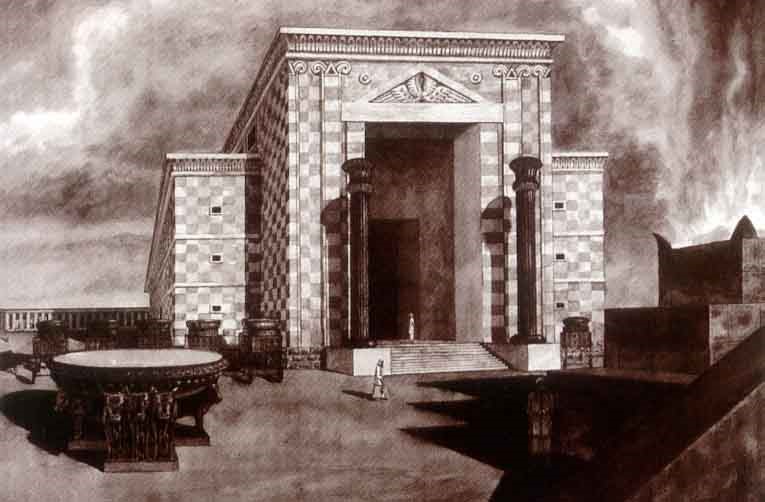
An artist’s impression of King Solomon’s Temple in Jerusalem

The Tamil connection with King Solomon’s mines has been developed in captain Leonard Munn’s book, Man in India. “Over the vast area of ancient workings in Rhodesia (former name of Zimbabwe), the method of mining and reduction of the gold quartz is identical with that of South India. Extensive areas of forest occur in the vicinity of the old Rhodesian old gold workings consisting of trees and plants not indigenous to Africa, but having their home mostly in South India.”

(this article was first published in India Narrative)

A Chinese virus’s lethal blow on MSME sector

COVID-19, the world’s most dangerous virus that has put cancer to shame and wrecked both lives and businesses, has damaged something irreparably. The MSME sector.

Worse, the pandemic halted the government’s ability to help the sector in India. In developed nations, governments have directly provided wage subsidies and credit to the stressed firms. The governments could do it because they had an advantage, they could map up the smaller firms. 

In India, most of the MSMEs are not registered. Why? No one has an answer. 

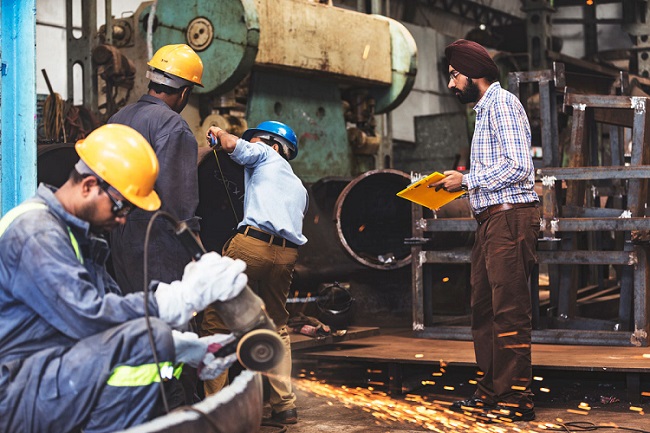
There is a precipitous surge in unemployment that continues to shake the workforce in this pandemic. A key challenge for our policymakers and executives lies in the method in which they can be brought back to work.  Moreover the impact on the value chain has had a cascading effect. They are currently facing an acute cash crunch due to operational challenges with low manpower. The risk of delinquencies also exists for financiers offering unsecured loans to MSMEs, who typically rely on the assessment of the estimated cash flows. 

(Representative photo)

If the current business climate is to continue it would take nearly two months, if not more, for businesses to see significant negative impacts, such as temporary layoffs or temporary or permanent closure. The impact of the pandemic shall also lead to MSMEs facing difficulties to pay bank loans and leasing installments and challenges in paying rent and utility bills.

So what is the alternative. Let’s evaluate some of the points: TREDS (Trade Receivable Discounting System) should be made mandatory for all MSME related transactions as it can improve the flow of working capital of the MSMEs at very competitive interest rates to and by reducing the receivable realization cycles, thereby allowing MSMEs in securing credit from a range of banks.

Also, why not unlock funds under the ESIC (Employment State Insurance Corporation) as medical insurance cover and impart training in occupation, health and safety for MSME manufacturers. 

There is also a greater need for financial incentivization. The Reserve Bank of India (RBI) needs to issue guidelines for higher provisioning revisions to banks in the absence of which liquidity injection into the system is getting delayed. The increase in the minimum threshold from Rs. 1 lakh to Rs. 1 crore to initiate corporate insolvency under the Insolvency and Bankruptcy Code (IBC) can help those MSMEs that are under financial distress.

Force Majeure is an extraordinary situation beyond human control such as calamities and is described as an ‘act of God’. A Force Majeure clause frees both parties from contractual obligations. Due to the pandemic several MSMEs have not been able to carry out their contractual obligations for which they have been held legally liable. So why not seek an amendment to Section 56 of the Indian Contract to include a state imposed lockdown under Force Majeure.

The change in definition of MSMEs is a significant change as it has brought several smaller companies within the ambit of the MSME Act. And then, digitisation of MSMEs at an accelerated pace will be a crucial element in fast tracking the revival of manufacturing MSMEs. 

Consider this one. The Emergency Credit Line Guarantee Scheme (ECLGS) has significantly helped those MSMEs that were inactive and has helped them resume their operations by clearing payments to suppliers and paying salaries to employees. And banks must lend more under this scheme to support the smaller companies.

So why not work towards a fixed waiver for raw material, electricity etc. in order to ease the burden of spending. 

In India particularly, these are distressing times for the MSMEs who gloomingly stare at an uncertain future. This is sad, and also unfortunate, ostensibly because time and again MSMEs have been hailed as the backbone of the Indian economy that contributes nearly 29 percent to the GDP.

However, such businesses will find it extremely hard to survive if booster or even for that matter even small steps on a regular basis are not taken on urgent priority to pull them out of current bleak conditions.

It is time for the government to sit up, and smell the coffee. 

Pakistan arrests PTM chief Manzoor Pashteen and other Pashtun leaders

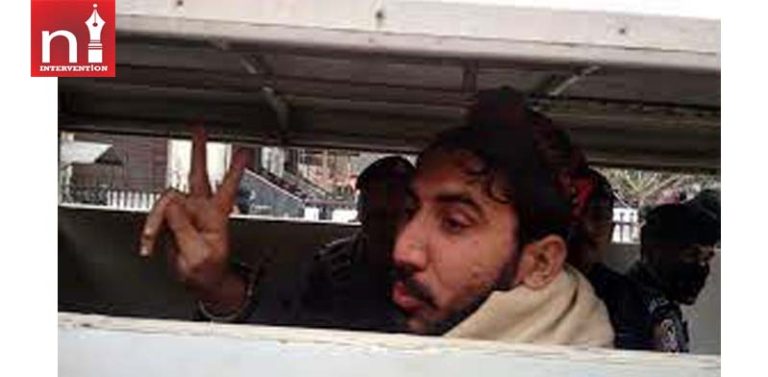
Pakistan arrested popular Pashtun leader Manzoor Pashteen along with other Pashtun leaders Bilal Pakhtun, Idrees Pashteen, and Zohaib on Friday morning. Manzoor Pashteen was on his way to Waziristan to join the Jani Khel sit-in when the Kohat police arrested him. Manzoor Pashteen is the chief of Pashtun Tahafuz Movement (PTM) and has been protesting for the basic human rights of Pashtuns across Pashtunistan.

Mohsin Dahwar, leader of PTM confirmed Manzoor’s arrest in a tweet and said: “Utterly shameful how @ManzoorPashteen has been arrested to try and stop him from joining sit in underway in Jani Khel (Bannu). Dissent is not a crime. Demanding rights is not a crime. Demand his immediate release and of all of PTM’s activists.”

Local Pashtuns across Waziristan said that PTM chief Manzoor Pashteen and other members of the PTM have been arrested by Pakistan only to prevent them from joining the ongoing sit-in in Jani Khel. “They are afraid of the Pashtuns and so they have arrested our leaders. We are not going to bow down to these Panjabi generals,” a local Pashtun said on Facebook.

Social media has been flooded with support to Manzoor Pashteen and other Pashtun leaders arrested by the Pakistanis. Social media activists have condemned the arrest of Manzoor Pashteen and demanded his immediate release.

Afsariab Khatak a senior Pashtun leader said “Arresting PTM leader Manzoor Pashteen in Kohat and stopping him from proceeding to Waziristan for joining the peaceful sit-ins of the locals is part of intensifying repression against PTM because it exposes regrouping of terrorists near Durand Line.”

Baloch student leader Dr Mahrang Baloch condemned Manzoor Pashteen’s arrest in a tweet “Condemn the arrest of @manzoorpashteen. He is just campaigning for peace, he speaks about state brutality and is one of the strong voice for the voiceless people but state doesn’t tolerate him because he exposed war crime and HR violations.”

China’s military offensive against India is part of her larger gambit

The month of May last year (2020) witnessed a belligerent face-off between India and China along the Line of Actual Control (LAC) in eastern Ladakh. While tensions had been witnessed for quite some time, it was in early May that China moved in to make India a target of its “wolf warrior-diplomacy”. The process started with press statements, harsh articles in its mouthpiece Global Times and accusations against India of unfair trade practices. Once the pressure was built, it moved on to the dispute of the Sino-Indian Border.

China moved in troops, built temporary structures and bunkers, activated airfields and used helicopters. It justified its actions as a response to “illegal constructions of defence facilities across the border into Chinese territory by India.” It kept escalating the tensions amid many meetings on ground between the military commanders of both countries and diplomatic parleys also.

Of significance in the rising tensions was the physical clash between Indian and Chinese troops at Galwan in mid-June. The Chinese troops who initiated the aggression were singularly routed with casualties crossing the 100 mark while India too suffered fatal casualties of 20 soldiers including Colonel Santosh Babu, the iconic commanding officer of 16 Bihar Regiment. The face-off gave China the first indication of India’ s determination to oppose its expansionist tendencies at all costs.

The Indian Army built on this victory with a series of bold, brave and professional military moves that put China on the back foot. Worth mentioning here is the incisive manner in which the Indian (Vikas) troops carried out an operation to hold the Kailash ranges to dominate the Chinese Moldo garrison; the Chinese were caught completely by surprise and were put on the back foot.

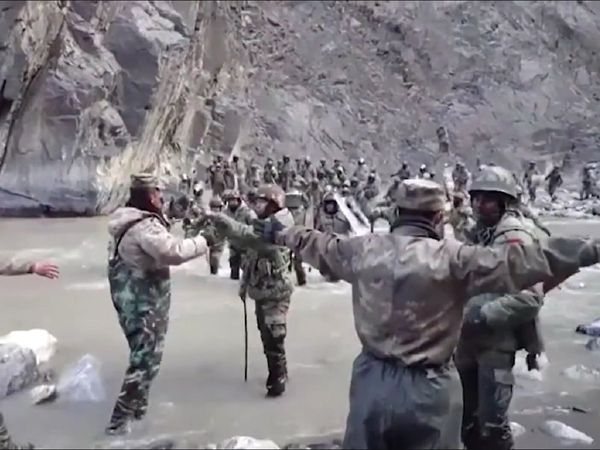
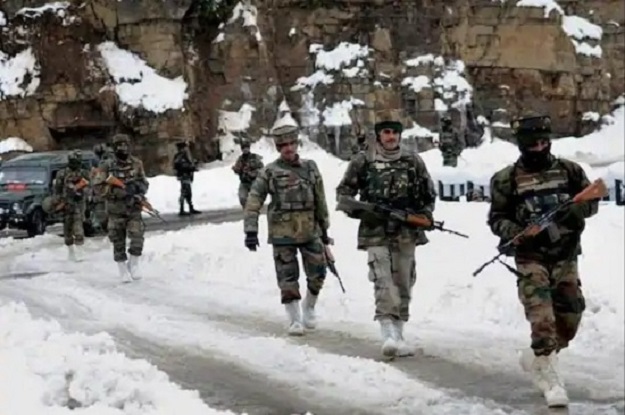
Indian troops in Ladakh. (Representative image) Photo: PTI
Indian troops in Ladakh. (Representative Photo: PTI)

On February 10, 2021 the Chinese relented and agreed to maintain status quo ante in the most contentious Pangong Tso Lake sector. A  disengagement process with withdrawal to pre-designated locations well within claim lines on both sides was put in place.

A lot of brainstorming was done by strategic analysts to understand the motive behind the Chinese move to disrupt the status quo along the LAC. Two big reasons were attributed for the same, the first was a need to build on the macho image of President Xi Jinping and the People’s Liberation Army (PLA) as strong and decisive entities to offset internal dissension in the wake of the COVID fiasco. The second was to give a message to India to stay away from the US in any strategic alignment directed against China. It is also known that India is the only country opposed to BRI and CPEC; China’s sharp power dictates that either you are with them or against them.

President Xi Jinping had presumed that with the US preoccupied in its acrimonious presidential elections and internal problems, he would get a free hand in dealing a small blow to India to shore up his dwindling image and power. What he failed to factor in was the courage and fortitude of the Indian Army personified by the likes of Colonel Santosh Babu.

As things stand  presently, the troops have yet to disengage from several disputed points on the LAC.

India has not only built upon its military strength all along the LAC but has also strengthened its relationship with the QUAD, an “informal” group comprising of US, Japan Australia and India focusing mainly on non-security issues, but one which China perceives as a strategic alliance aimed at containing its interests in the Indo-Pacific region.

The foregoing is reason enough for China to look more assertively at India in coming times and this could well explain the slowdown by China in the disengagement process. China has been using its obdurate propaganda machinery to send a message to India to desist from becoming ‘overconfident’ due to support of the US and other countries.

In recent times, China Merchants Port Holdings Company Limited bought a 99-year lease on Hambantota Port in Sri Lanka as a result of Sri Lanka falling in a debt trap created by China. Now, Sri Lanka’s parliament has passed the controversial Port City Bill, creating the country’s first Special Economic Zone (SEZ) despite widespread domestic dissent due to sovereignty issues; the main, perhaps only, beneficiary is China. The perceptible increase in the Chinese footprint in the region is a big strategic concern for India.

Over the years, China has sought to limit India’s response by entering into territorial agreements with countries neighbouring India, most prominently Pakistan. This apart has given soft power support to terrorism directed against the Indian soil and built infrastructure in occupied territories. It remains motivated and aggressive due to its financial power with a GDP that is about six times more than India. A hot LAC is, therefore, what China and the PLA want for obvious reasons.

China, however, would not want to escalate tensions along the LAC beyond a point since it involves commitment of troops that it can ill afford. It will, therefore, attempt to put pressure upon India through other means too as is obvious from its move in Sri Lanka. It will also exploit whatever vulnerabilities India shows in dealing with the COVID situation and may win over the neighbourhood with an aggressive vaccine diplomacy.

That said, the northern region of the country now marked by the Union Territories of Jammu & Kashmir and Ladakh are for India a significant strategic space and a diplomatic battleground. They cannot be ignored and hence the need to get ready for escalating tensions in the coming times.

India needs to understand that with China the chess board is out and out political in nature. What happens along the LAC is a part of the larger political game being played at a multi-dimensional level. The situation can be handled only by a strong political leadership that maintains a ‘whole of nation’ approach. While the Armed Forces ensure territorial integrity the political leadership will have to come up with answers to all challenges posed by the aggressive behaviour of the belligerent neighbour.

Kashmir must follow Saudi example and limit the use of loudspeaker in Mosques

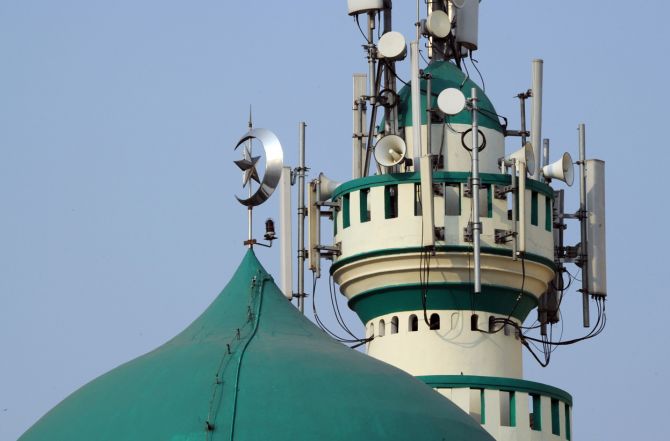
The Saudi Arabia’s Ministry of Islamic Affairs has, in a landmark directive, told Mosques to limit the use of loudspeakers for religious discourses. A circular has been issued by Abdul Latif Al Sheikh, Saudi Minister of Islamic Affairs allowing the use of loudspeakers only for Azan (call for prayer) and Iqamat (second call for prayer). Furthermore, the volume must not exceed one-third of the full volume of the loudspeakers. The circular is based on a Hadith of Prophet Mohammed (PBUH), “Lo! every one of you is calling his Lord quietly. One should not trouble the other and one should not raise the voice in recitation or in prayer over the voice of the other.”

The ministry clarified that communicating the Imam’s voice in prayer is specific to those inside the Mosque, and there is no legitimate need to convey it to those in the home, “In addition to the fact that reading the Quran on external amplifiers is disrespectful to the Quran when it is recited loudly using external loudspeakers, while no one is listening to and pondering on its verses,” said the circular. The ministry has also observed that external amplifiers and loudspeakers used for anything other than the Azan harms patients, old people and children. Regulatory measures would be taken against anyone who violates this directive.

The Kingdom of Saudi Arabia is the birth place of Prophet Mohammad (PBUH) and the birthplace of Islam, for which reason it is considered to be the “Home of Islam.” The holy cities of Mecca and Medina fall in the Kingdom. The Kingdom also plays a leadership role in the Organisation of Islamic Cooperation (OIC) which gives to it a strong voice in the Muslim world. The forward looking and enlightened decision taken by the Kingdom of Saudi Arabia to limit the use of loudspeakers must find resonance across the Islamic world.

In Kashmir the use of loudspeakers in Mosques for purposes other than religious necessity has been going on since decades. In the late 1980’s and early 1990’s, when terrorism raised its ugly head in Jammu and Kashmir, especially Kashmir, loud speakers were financed and installed in Mosques by Pakistan.

The move paid excellent dividends; on 4th January 1990, Aftab, a local Urdu newspaper from Kashmir, published a press report issued by Hizb-ul-Mujahideen asking all the Kashmiri Hindus to leave the valley immediately. This was followed by broadcast of vitriolic and threatening communal speeches and messages from Mosques. The messages said, Ralive, Tsaliv ya Galive (either convert to Islam, leave the land or die) and other words to similar effect. This psychological operation was accompanied by targeted killings of Kashmiri Pandits and Sikhs in order to trigger their exodus from the valley. The resultant exit of the Kashmir Pandit community from the Valley as a consequence of these psychological operations is well documented, over 500,000 peace-loving and helpless Hindus and Sikhs were uprooted from their homes leading to the biggest ethnic cleansing witnessed in independent India.

Having achieved this massive success in a short period of time, the terror masters across the border integrated this resource seamlessly into their policy  of weakening India with a thousand cuts. The Hurriyat and the terrorists gave their messages from the Mosques. Crowds were collected, threats issued and diktats given through this medium. Indoctrination was done through spoken material provided by Pakistan and designed to flare up anti-India sentiments.

The preaching of a radical version of Islam to replace the enlightened Sufi culture was resorted to blatantly; and it has led to the advent of the Salafi-Wahabi stream of Islam in Kashmir that was earlier unknown in the valley. Lectures from the likes of Hafiz SaeedSyed Salah-ud-DinAkbaruddin Owaisi  andZakir Naik through Mosque loudspeakers are common place. India is incessantly described as a Dar-ul-Harb (land of war) and Dar al-Kufr (land of disbelievers).

This methodology reached a crescendo in the period of massive social disruption that was witnessed from 2008 onwards. Of note here is the anti-India campaign played out on the death of the terrorist Burhan Wani in 2016. Pro-Pakistan and anti-India slogans with fervent appeals and direct incitement to the youths to join “Jihad” and fight against security forces blared from loudspeakers. This became the norm post all killings of terrorists by security forces. The process continues albeit at a limited scale, now that terrorism has been contained to a great measure in the Kashmir valley. 

It is notable here that even Pakistan, that speaks so voraciously about the rights of the Kashmir people to use loudspeakers in Mosques, has been attempting to curtail the activity within the country. The Punjab Sound System (Regulation) Ordinance 2015 allows only one speaker for Azan and Friday Arabic sermons only. Loudspeakers have been removed by the police on several occasions from hundreds of Mosques in big cities like Rawalpindi, Lahore and Islamabad.

In India, “secular” credentials are freely used to continue with the use of loudspeakers for broadcast of prayers by all religious institutions, be it Hindu temples, Gurdwaras or Mosques. However, the realisation is there about the disrespect that this  practice causes apart from the discomfort and there is a social movement to curtail the same. In a landmark judgement the Allahabad High Court held that the Muezzin could recite ‘Azan’ from minarets of the Mosques by human voice without using any amplifying device. Azan is certainly an essential and integral part of Islam but use of microphone and loud-speakers is not an essential and an integral part thereof,” said a statement of the Hon’ble Court.

In Kashmir, in particular, the matter gains significance since the use of loudspeakers in religious places poses a serious threat to peace and harmony and also to the safety, security and integrity of the people and the Nation. There is a strong case to seek motivation from the Saudi Arabia model and curtail the practice to the extent that is permissible now in the “Home of Islam”.

Israel and Hamas both won, but the Palestinians lost

Since both Israel and Hamas are busy claiming “victory” after the truce which ended eleven days of intense bombardment and rocket attacks, it seems that the only losers in this senseless violence are those who are dead- and there are plenty of them. As per credible reports, nearly 250 people [including more than 100 women and children] lost their lives in Gaza, while 12 people [including two children] were killed in Israel.

This translates to one death in every hour of the 11-day conflict, which by no means can ever justify victory celebrations by either Israel or Hamas. Au contraire, with neither of them being able to achieve their military objectives, this humongous loss of lives was nothing but a sheer waste. While this may sound uncivil, but unfortunately, this is the harsh reality!

Here it’s not intended to delve into the genesis of the Palestine issue nor debate territorial claims being made by Israelis or Palestinians. Neither is it proposed to either justify one side and condemn the other for violence that they have perpetrated on each other. The aim is only to identify those guilty of creating conditions that resulted in deaths of so many non-combatants, so as to learn lessons for the future.

To start with, since fatalities in Gaza have been inordinately far greater than those suffered by Israel, the Israeli Defence Forces [IDF] should ideally be the main villains. Yet, apportioning blame solely on the basis of statistical data of fatalities would not be an accurate determinant because while this is indeed the ‘effect’ and can’t be overlooked, the ‘cause’ thereof is equally [if not more] important.

While the barrage of rockets fired at Israel are undoubtedly the root cause’ for IDF’s brutal retaliation that many opine is patently brazen use of excessive force, it’s Hamas which precipitated this monumental crisis, which snowballed into a cycle of violence. As per media reports, in this 11-day conflagration, more than 4,300 rockets were fired by Hamas, which averages to more than 390 projectiles per day, or 16 rockets per hour. In retaliation, IDF claims to have targeted 1,000 Hamas facilities, which amounts to more than 90 strikes per day or nearly 4 strikes every hour for 11 days. So, even though the ‘strike ratio’ of 1:4 is in favour of Hamas, the comparative fatality rate is both inverse and exceedingly disproportionate.

People in Palestine have suffered 20 times more casualties than those living in Israel and though heart wrenching, such a wide disparity in fatalities was expected for many reasons. One, despite being fully aware that Israel had deployed its state-of-the-art ‘Iron Dome’ anti-missile system, which is capable of destroying several hostile rockets even if fired simultaneously at different targets, Hamas still embarked on its reckless plan of trying to intimidate Tel Aviv through a sustained rocket barrage. What is even more distressing is that despite being fully aware that any rocket attack would invite a very strong retaliation from IDF resulting in the inevitable loss of life and property, Hamas still went ahead and put people of Gaza in grave danger of becoming hapless victims of what many analysts euphemistically refer to as ‘collateral damage’.

Secondly, these rocket attacks were of unprecedented intensity and not directed at military targets but population centers in Israel, it gave Tel Aviv the much-wanted reason for initiating defensive measures in the form of targeting both rocket launch sites and Hamas bases in Gaza. Tel Aviv’s decision also found widespread approval of the international community and readers may recall that even US President Joe Biden endorsed IDF strikes in Gaza by reasoning that “Israel has a right to defend itself when you have thousands of rockets flying into your territory”. Furthermore, by intentionally attacking civilian targets in Israel, outcry against civilian casualties in Gaza didn’t find much traction within the international community and Hamas has no one but itself to blame for this sorry state of affairs!

Lastly, and most tragically, even though people of Gaza have suffered extremely heavy losses, their suffering hasn’t helped the Palestinian cause at all. Conversely, despite its best efforts to gain worldwide sympathy by flashing visuals of sites attacked and civilians killed and injured by IDF [including circulating orchestrated images of ‘dead’ and ‘injured’ Palestinians], the Hamas hasn’t been able to gain any meaningful sympathy.

So, while Pakistan’s Prime Minister Shah Mehmood Qureshi may talk big about Israelis losing “the media war, despite their connections,” and its human rights minister Shireen Mazari tweeting of how “when we [Pakistan] highlight Israelis ‘deep pockets’ & influence over western media & govts, it gets labelled ‘anti-Semitic’,” their bombast lacks credibility because by its precipitous actions, Hamas has forfeited the Palestinians’ genuine right to portray themselves as victims.

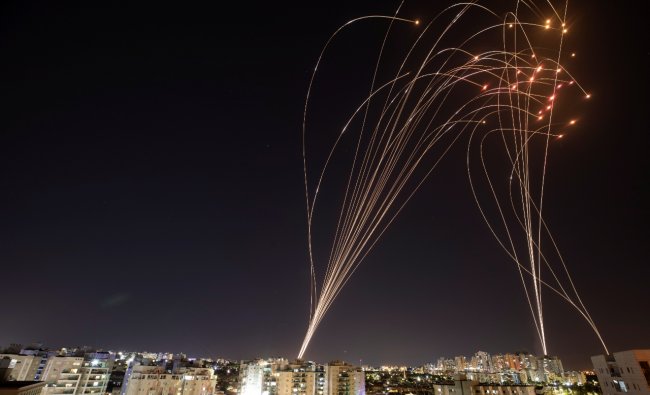
When the world watched visuals of the night sky above Israel lighting up as Israel’s Iron Dome intercepted and destroyed a devasting array rockets fired by Hamas in midair, the first thought that came to mind was the colossal damage to civilian life and property these 4,000 odd rockets could have caused had they not been neutralised by IDF. Secondly, the fact that Hamas rockets have killed three foreign nationals [one Indian woman and two Thai males] as well as injured seven workers from Thailand has angered the world and put the Palestinians’ travails into the backburner.

Moreover, by launching rockets from inhabited areas [visual proof of which has been released by IDF], and setting up their operating bases in high rise buildings is rightly being viewed as a Hamas tactic. As the densely populated areas provide an excellent protective umbrella of ‘human shields’ to protect themselves from IDF strikes. So, since Hamas itself doesn’t seem to have any concern for the safety of innocent Palestinians, expecting the international community to sympathise with Hamas is obviously a tall order. Therefore, while the people of Gaza have all the reasons to feel aggrieved for being abandoned to their fate by the global community, it’s not international apathy but the vile ways of Hamas that’s to blame.   

Yet, while Hamas may be directly responsible for the sorrow brought upon the Palestinians in Gaza, but it’s the Islamic nations which are providing munitions and money to this proscribed terrorist outfit for fighting their proxy war with Israel who are the actual ones having the blood of innocent Palestinians on their hands. Thus, while the Organisation of Islamic Conference [OIC] may publicly shed tears on the plight of Gaza residents, countries like Turkey and Pakistan are busy trying to exploit this massive human tragedy in an attempt to manipulate and climb a few notches up in the existing power and influence structure within the comity of Islamic nations.

Resultantly, while the Hamas and OIC may consider truce in Gaza as a victory, and Islamic nations reaffirm solidarity with the Palestinian cause, but in the continuing Arab-Israeli face off, it’s the people of Palestine who always were, still are, and will continue to be the real losers!   

When will the Pandits return to Kashmir Valley?

Lt. Governor Manoj Sinha cannot be singled out for his token response to the question of restoring secular profile of Kashmir Valley. Answering a press reporter about the return and restitution of the displaced community of Kashmiri Hindus (Pandits), the Lt. Governor chose to be vague and perfunctory. He has thus maintained the government’s decades-old policy of side-tracking the core of Kashmir issue. He said the process of return of the displaced Pandits will begin in a year. But lest caught on the wrong foot, he corrected himself and added that 6,000 government vacancies would be filled by recruiting the youth from the displaced population and an equal number of flats were under construction in some parts of the valley where these employees would be housed.

Thus, we find that an issue meriting political treatment is relegated to administrative dispensation. One can understand the compulsions.

However, it has to be recollected that the Prime Minister’s package was announced by Dr. Manmohan Singh, the then PM, in 2008 on the occasion of inaugurating the Akhnoor Bridge in Jammu. In 12 years barely 1400 youth of the displaced community have been inducted into government service. With this snail’s pace, it will take another fifty years for the Lt. Governor to employ 4600 youth of the displaced community.

The PM’s Package was dragged on for 12 long years and the eligible youth of the displaced community became over-aged and ineligible for employment in government service. The LG was loath either to reflect on this sordid situation or to pass even an off-the-cuff remark on the subject. He meticulously desisted from making any commitment about the migrant youth who have become over aged in course of time but for no fault of theirs.

We believe the Lt. Governor has to be a thinking machine in terms of the needs and importance of secular dispensation in Kashmir and the pre-requisites of its contours. The question is whether the panacea for the ethnic cleansing of Kashmir lies in providing 6000 Class IV or III jobs to the eligible youth of the displaced community and then leave it to its fate.

If in the eyes of responsible authorities the Pandit issue means only providing employment to their eligible youth and brushing aside all other ramifications of mass displacement and ethnic cleansing, then why not find them work for wages outside Kashmir and formally announce Kashmiris of the valley having the freedom of declaring Kashmir sharia observing theocratic region (or sub-region) in a secular Union Territory of the Bharatiya Union.  

We believe that the Lt. Governor is aware that as Home Minister Rajnath Singh had proposed to earmark a sum of Rs. 5000 crore for the rehabilitation of the displaced Pandits back in Kashmiri. Omar Abdullah, the then CM never responded to that proposal.

What inference will the Lt. Governor draw from this? Why should he not open the matter and induce the Union government to consider the proposal? 

In the Agreement of Alliance jointly signed by (late) Mufti Muhammad Saeed, the then chief minister and BJP leadership while cobbling a coalition government in 2014, it was stipulated that the displaced Hindus of the valley would be resettled in Kashmir.

Late Mufti and P.M. Modi met in Delhi and agreed to take an initiative to this purpose. They made a public joint statement in Delhi. Next day, there was a general strike against the announcement in the entire valley the like of which has never been seen.

Not only that, in the State Legislative Assembly, Kashmir Valley MLAs came to fists with the BJP members and declared that no power on earth could bring back the Pandits to the Valley. Mufti Saeed, the Chief Minister, intervening in the melee absolved himself saying he meant the Pandits would return to their homes in respective localities in towns and villages. But he did not say where their homes were and who had vandalized these and whether these existed at all?

The General Secretary of National Conference is on record to have said that the NC would not allow the return of the displaced Pandits because “we know each Pandit will bring three Israelis with him”.

This should explain to the Lt. Governor what Sheikh Abdullah meant saying in his biography Atash-e-Chinar that the Pandits are the “spies of India in Kashmir”. One may ask, is a Pandit eking out a miserable living in Kashmir a spy of Bharat or is it those who have been ruling over Kashmir for three generations albeit with the patronage of New Delhi?

The Lt. Governor may assume the thorny issue of return and rehabilitation of displaced Pandits just simplistic and conducive to political expediency of the authorities in power. But this simplification has an unfavourable dimension. It could be interpreted that the Pandits should reconcile to returning to the Wahhabized Kashmir and live as third rate dhimmis (outcasts) in the once glorious land of their ancestors. 

Who does not know that propagators of Islamic Caliphate have dragged Kashmir to the centre of their philosophy? The insurgents in Kashmir are not fighting for democracy, human rights, development, equality and the rule of law. They are fighting to dismantle it lock, stock and barrel, and replace it with Islamic Sharia (law). 

Not only the Indian state but even the Indian nation is pitted against the expansionist Islam of early times. Kashmir cause is as dear to the bigots as it has led to a split among the Muslims in which the non-Semitic Islamic world has developed political differences with the Semitic Arab world. The former attaches importance to nuclear Pakistan hoping that the day would not be far away when she will in actuality convert it into an Islamic bomb. The ground is already set for that.

What does President Erdogan’s aspiration for the revival of Ottoman grandeur mean? Of late, Turkey has been showing goodwill gesture towards Kashmiri Muslim students by making their admission easier in Turkish institutes and granting scholarships to some of them. The aim is to assure the Kashmiri Muslims and Pakistan that Turkey is with them in their Kashmir mission.

Farooq Abdullah’s call for invoking China’s support in the Islamic revivalist movement in Kashmir could not have come without the blessings from the Chinese mission in New Delhi, a source known for its largesse in winning over political dissidents of various hues in Bharat. China is using the Islamists all over the world for wrecking the existing world order and reshaping it after its planning. The world is getting gradually polarized. 

Democracy, the universally accepted just form of government, is alien to the doctrinal Islamic practice and tradition. Bharat, with the second-largest Muslim population in the world is in the forefront of the ongoing clash of civilizations.

Farooq or Mufti’s opposition to Bharat essentially stems from the concept that Muslims are not supposed to be subservient to a non-Muslim rule. This thinking was clearly stated by Sheikh Abdullah when he argued for special status for Kashmir at the time when Bharat’s constitution was in making.

Farooq cannot be faulted for invoking the help of China in “liberating Kashmir from occupational forces of India” because way back in 1950s his illustrious father had fixed a secret meeting with the then Chinese premier Chou En Lai in Algiers. This was the time when China had broken relations with India and the Sheikh was dreaming of Kashmir Sultanate. 

When Bharat agreed to Kashmir’s special status on the basis of religion and did not demand that J&K Constitution also make identical provision for the protection of the rights and identity of its religious minorities, it was obvious that Bharat was reconciled to Kashmir as a theocratic region within the secular Bharatiya Union.

It is the loss of that theocratic status which Farooq Abdullah, Mufti Mahbooba and others of their team are lamenting for and seeking restoration. The recent separatist oriented statements of Mahbooba, the President of PDP should be a lesson for the BJP which made the Himalayan blunders in Kashmir especially that of forming a coalition with it not once but twice. 

Farooq Abdullah says that he is not against the Bharat but against BJP for abrogation of Article 370 and Article 35A. But it is the Bharat that had incorporated through its representatives in the parliament the said article in the Constitution and it is the same Bharat which has through its representatives in the Parliament abrogated the said Article.

Obviously Dr. Farooq is opposing not only Bharat but also its most sanctimonious institution namely Bharat’s Parliament. 

With several terrorist organizations based in Pakistan sending their suicide bombers to fight Bharat’s defence forces in Kashmir and the state political leadership never condemning and always justifying the violence unleashed by them, the valley’s political leadership indirectly sends a message to the displaced community of Pandits that the valley is not the place they should look for.

Bharat is knee-deep in this existential conflict with the radicals. The Islamists have succeeded in making the world believe that Bharat is lost to the secularists and, therefore, they have a historic duty to fight back for its “Islamization”. Nobody can predict how long this conflict will continue and with consequences.

The people in the valley are happy if Bharatiya government is investing massively in various developmental works in Kashmir. The developmental exercise has one meaning for the Government of Bharat and another for the valley leadership.

What we would like to bring home to Bharatiya government is that the need is to bring about fundamental changes in Kashmir. Democracy and civil rights have been abused beyond limits in Kashmir. The entire administrative structure is mentally diseased and morally run aground.

Religion is turned into lethal weapon that scares people and stifles their voice. Abrogation of Article 370 and Article 35-A has roused much rabble and yielded substantially little.

Stopping the abuse of democratic dispensation, neutralizing the tyranny of majoritarianism, drastically separating religion from politics, strictly enforcing rules and regulations governing cohesive social interaction, disarming the powerful elitist class, withdrawing all such privileges as generate support for the concept of exclusiveness, etc., these are the fundamental tasks that must be taken in hand if Kashmir is to be retrieved.

Kashmir Valley has to be Bharat if the displaced community is to go back to the valley. The Pandits are not goats to be sacrificed for the sake of the type of “secularism” which Bharat is harbouring in Kashmir. The Pandits will not go to the Wahhabized and Pakistani-zed Kashmir but to Indian-ized Kashmir only.

Manoj Sinha’s appointment as the Lt. Governor of Jammu & Kashmir

When Manoj Sinha was appointed the new Lt. Governor, national print media was abuzz with the accolades that the new Governor had a huge fund of experience at his back and he would surely find a political solution to Kashmir imbroglio.

We wondered how come this person had accumulated all the knowledge about Kashmir issue, Kashmirian society and its layers after layers that he earned the accolades. Now we understand that a good deal of spadework had been done by him to publicize his profile the way he liked it.

A close watch of the words, actions and policy of the Lt. Governor clearly show that he just wants his tenure to be completed without any significant controversy and complication. This means his policy simply put is of least resistance. In doing so, he has been moving very close to the policy laid down by Congress during its long tenure of six decades.

Speaking from the platform of displaced Kashmiri Pandits, there are several questions that ask for a sensible answer. How has the abrogation of Art 370 and Art 35-A impacted the displaced population of Pandit minority? Not in any way.

The greatest beneficiary of this action of the Union government are the 1947 refugees/ migrants from PoK/ West Punjab of a sizeable number who though living in Jammu ever since were not given the citizenship of the State.

BJP pursued this agenda single mindedly from day one and saw to it that the promise was fulfilled. We are happy these unfortunate people have got the citizenship rights and their suffering is mitigated.

The BJP government and the Lt Gov never visited Jagti refugee camp and never enquired about the problems of nearly fifty thousand of its inhabitants. He never called the residual Pandit minority members in the valley to know from them their problems and solutions.

The Lt Governor never thought of politically empowering the displaced Pandits by impressing upon the Central government that it should create 4-5 electoral constituencies in exile for the displaced persons.

A valley-based Muslim youth clandestinely crosses the border and joins the terrorist training camp in PoK, receives training in arms and subversion, clandestinely sneaks back into the valley, hurls bombs on the security forces, shoots at policemen and kidnaps civilians to hold them as hostage, then runs back to PoK, marries there, produces children and continues to receive financial support of ISI or the terrorist organizations of Pakistan, and one fine morning decides to return along with Pakistani wife and half a dozen children by her adopting the Nepal route. Once back in Kashmir valley, the local government offers him asylum, withdraws all criminal charges against him, provides him with shelter and bank loan to build a house, provides him timber and tin and building material on throwaway price and then provides him with a job and looks to his needs and that of his family. In one case the Pakistani wife of a surrendered terrorist fills the form for membership of DDC and wins. 

Against this, the Pandits are not allowed to return and resettle or to be entitled to constituency in exile. Where are the constitutional rights of the displaced community? There is hardly a day when Lt Gov Sinha does not visit one or the other Muslim organization/ institution/ establishment in the Valley, enquires about their activity and offers lakhs of rupees by way of support/ encouragement or goodwill.

Did he visit a single temple in the valley to ask the stones how they were destroyed and broken into pieces? No he has no urgency. Why does not the Lt Gov take any step in the direction of finding a legal way of taking over the control of the temples and shrines of Kashmir by constituting a temple and shrines board as is the case with the Awqaf or SAD? Why is he complacent about Hindu shrines and temples? Because the Pandits are numerically insignificant and not anybody’s vote bank they receive a scurvy treatment. 

Has the Lt Gov interacted with the Pandit intellectuals and seniors to start a discussion on the return and rehabilitation of the community? What sense does it carry to raise 6 thousand flats for the Pandit employees and allot them the accommodation? When the employee retires, what will be his fate and that of his family? Does Indian secularism in Kashmir mean giving a couple of thousands of class III or class IV jobs to the displaced people and close the chapter?

We would like to put a question to the LG. “Mr. LG, do you understand what it means for a non-Muslim religious miniscule minority to live with an overwhelming Muslim majority when the government is out to appease the majority by all means possible fair or foul?” “Mr LG, do you know the fundamentals of Islamic religion, culture and polity?”

It is necessary to convey to the honourable LG that the Kashmiri Pandit community is not one that will be fouled and abused a second time. We have broken the shackles after a long slavery of seven or eight hundred years, and we will not slip back into the old phenomenon.