Home Blog Page 299

US-Taliban peace deal will push Afghanistan into Taliban’s lap

There’s good and bad news from Afghanistan. The good part is pullout of US troops from Afghanistan which commenced on 1 May is heading as planned, putting an end to its two-decade old “forever war”. The bad news is that just within 96 hours after this withdrawal commenced, Taliban carried out more than 100 attacks on Afghan security forces and government installations in 26 of the 34 provinces of Afghanistan. The most important gain that the Taliban has made thus far is seizing control of Burka district in the Baghlan province of North-Eastern Afghanistan on May 4 and Baghlan police spokesperson Ahmad Jaweed Basharat confirmed “that the enemy [Taliban] has captured the Burka district as a result of an encounter”.

While loss of Burka district is a major blow to Kabul, what is even more unnerving are the circumstances under which this district fell into Taliban hands. While Baghlan police spokesperson claimed that this was because “security and defense forces tactically, without suffering any losses, withdrew” from this area and spoke about “plans to recapture it”, Newsweek reported that this took place “after 200 government troops surrendered”. So, whether we believe Taliban or the police spokesperson, one thing is evident– Afghan security forces in Burka district didn’t put up a determined fight.

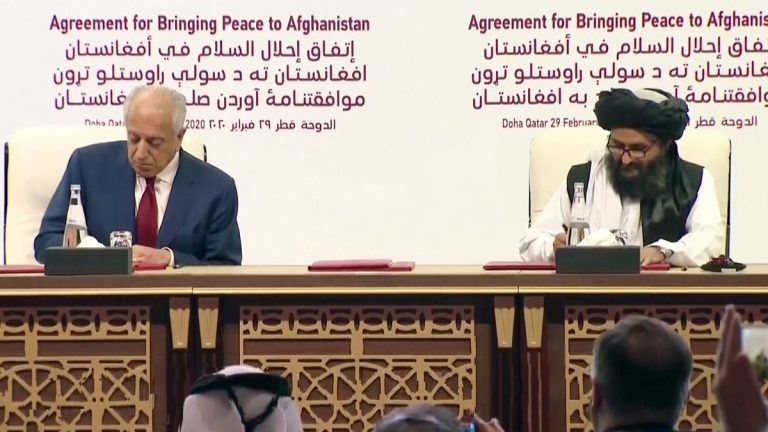
Readers may recall that while Taliban ceased attacking US troops after signing the February 29, 2021 peace treaty with Washington, it continued attacking government forces, further emboldened by lack of intervention from Washington. So, further escalation in Taliban attacks against Afghan security forces once US troops commenced their withdrawal was expected all along. It’s likely that those defending Burka district may have been vastly outnumbered and thus surrendered, but even if this was so, it still casts serious doubts on professional acumen of Afghan army leadership, which failed to discern the obvious.

Failure of Afghan army leadership to take pre-emptive measures and thwart Taliban’s designs by either increasing strength of troops in Burka district or drawing up contingency plans to counter the expected Taliban onslaught through standoff interdiction is a serious failing. The loss of Burka is undoubtedly the cumulative result of pedestrian leadership and lack of motivation within the rank and file of Afghan security forces. This doesn’t inspire much confidence regarding Afghan army’s ability to keep Taliban at bay.

Foundation for Defense of Democracies Long War Journal, a renowned US news website reporting the war on terror, has determined that in the beginning of 2021, while the Ashraf Ghani government controlled 33 per cent of Afghanistan’s districts, 19 per cent were controlled by Taliban. Therefore, while the fall of Burka district may not be a catastrophic development in terms of territorial loss, it is nevertheless disconcerting as it is an unambiguous signal that rather than relying on the democratic process and  becoming a co-player in future scheme of things through consensus, Taliban would instead use brute force to impose its exclusive writ over Afghanistan.

The Taliban’s utter disdain for the Ashraf Ghani government is evident from its statement issued on August 15 last year that “The Islamic Emirate [Taliban] does not recognize the Kabul administration as a government but views it as western imported structure working for the continuation of American occupation”.  Accordingly, it’s unlikely that Taliban would sit and talk with what it considers to be a ‘puppet’ government. Furthermore, even if ‘Quetta Shura’, [Taliban’s supreme decision-making body] takes an accommodative stance, its frontline commanders combating Afghan security forces will definitely oppose any concessions being made to Kabul as it would be tantamount to mocking sacrifices of their dead fighters as well as squandering Taliban’s far superior fighting capability.

President Biden may believe that Taliban would honour its peace deal commitments by not allowing “any of its members, other individuals or groups, including Al-Qaida, to use the soil of Afghanistan to threaten the security of the United States and its allies”. However, when Taliban hasn’t even bothered to move an inch forward as regards working on “a permanent and comprehensive ceasefire” through “intra-Afghan dialogue and negotiations,” as specifically mentioned in Part 4 of the peace agreement, to expect it to abandon its close ally, Al-Qaida, may be wishful thinking, and there are good reasons to believe so.

Despite having committed not to allow Al-Qaida use of areas under its control, this group’s number two in the Indian subcontinent Abu Muhsin al-Masri [who was also on FBI’s ‘Most Wanted Terrorists list’] was killed by Afghanistan’s National Directorate of Security in Taliban controlled Ghazni province in October last year. The very next month, Afghan security forces gunned down yet another Al-Qaida terrorist of Pakistani nationality named Mohammad Hanif in Taliban controlled Western Afghanistan. The killing of two key Al-Qaida operatives in areas under Taliban control is a clear indication that Taliban has no intention of honouring the US-Taliban peace agreement!

The way events are unfolding in Afghanistan gives one an eerie feeling because Taliban continues to maintain its fundamentalist views and is determined to enforce its own convoluted brand of ‘Sharia’ [Islamic law]. So, while withdrawal of coalition forces from Afghanistan may be a cause for great celebration for the US and its allies, but for those in Afghanistan, the post-coalition force withdrawal scenario is foreboding as it will open the floodgates of death and destruction. Consequently, while the entire countryside will burn as Taliban and government forces battle it out for control of hamlets, villages and districts, imposition of Taliban brand ‘Sharia’ would take the country back to medieval times.

Those suspected of collaborating with the US or Afghan government will be publicly executed to set an example. Violation of Taliban’s diktats will attract public flogging and even execution, while hands and legs of petty thieves would be amputated while those accused of adultery would be stoned to death. Under Taliban rule, Afghanistan won’t have any working women as they would be confined to their homes, while girls’ schools will be permanently shut down. The May 8 bomb attack in front of Sayed Al-Shuhada school in Kabul, which killed at least 85 and injured 147 [mostly school girls], reflects Taliban’s opposition to female education.

For Taliban, the bottom line is that the Ashraf Ghani government must go, not because it’s perceived as “a western imported structure” but also since it has cordial relations with New Delhi. Islamabad wants a more amiable dispensation in Kabul and Taliban is the only contender that fits the bill. Islamabad’s eagerness to see ‘Quetta Shura’ at the helm of affairs in Afghanistan is but natural. After all, despite severe international criticism and immense pressure from Washington, Islamabad still provided a safe sanctuary to Taliban leaders and their family members ever since 2001 and now the time has come for Taliban to return the favour!

Tailpiece: Though officially titled ‘Agreement for Bringing Peace to Afghanistan’, the 2020 US-Taliban has until now, failed to live up to its impressive designation, and if past and present trends are any indicators to go by, then it’s extremely unlikely that this agreement will ever achieve peace!
COVID-19 is part of the biowarfare program of China: Dr Lawrence Sellin

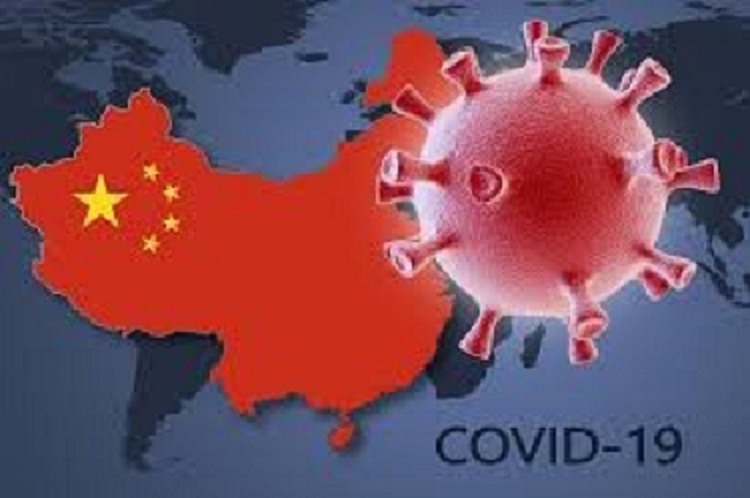
There’s abundant scientific evidence that the novel coronavirus was created in the laboratories of China by scientists of the People’s Liberation Army (PLA) and the Chinese Communist Party (CCP). Dr Lawrence Sellin, who has been investigating about the origins of this virus since onset of the pandemic, said in his interview with Vivek Sinha, Editor-in-Chief News Intervention that PLA created this coronavirus as part of its biowarfare program. Dr Sellin also said that U.S. virus research programs have been infiltrated by the PLA and CCP scientists.

Vivek Sinha: You have been investigating and researching the origins of COVID-19 for more than a year. Please tell us about the role of CCP, PLA and the US-based research institutions in the creation and the subsequent spread of this Coronavirus.

Dr Lawrence Sellin: I believe the COVID-19 virus was created in a laboratory and it was part of China’s biowarfare program. The Chinese Communist Party (CCP) has overall responsibility for that program, which is executed by the People’s Liberation Army (PLA). The biowarfare program consists of three levels. The first level is the core, secret military level. Layered on top of the core level are China’s universities and the ostensibly “civilian” research institutions and medical companies. Everyone needs to understand that, in China, there is no difference between military and civilian research. The fusion of those research and development sectors was mandated by the 2016 CCP Thirteenth Five-Year Plan. It is that middle layer, which has allowed the PLA to access international knowledge and skills, particularly from the U.S., all of which has contributed to the advancement of China’s virus research programs, including bioweapons development.

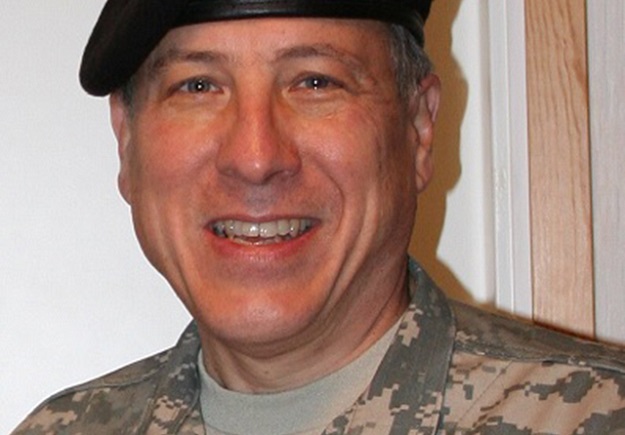
Lawrence Sellin, Retired US Army Colonel and a veteran of Afghanistan, Iraq & West Africa.
Dr. Lawrence Sellin has decades of experience in the medical and pharmaceutical research and has been investigating about the origins of coronavirus since the onset of this pandemic. Dr Sellin retired as a US Army Colonel and is a veteran of Afghanistan, Iraq and West Africa.

Vivek Sinha: What is the scientific evidence that proves that this virus was created inside a laboratory?

Dr Lawrence Sellin: One only needs to look at the structure of the COVID-19 virus to be convinced that it was made in a laboratory. It appears to be a composite virus with insertions that cannot be explained by natural evolution and sometimes defying the laws of biology and physics, like the series of four basic amino acids recently described in a new scientific publication by British professor Angus Dalgleish and Norwegian scientist Dr Birger Sorensen. For me, the “smoking gun” has always been the PRRA (proline, arginine, arginine, alanine) furin cleavage site, which does not exist in that form, in that location in any close COVID-19 bat coronavirus relative. It is a structure long known to increase transmissibility and lethality and Chinese military scientists published methods for inserting a furin cleavage site in 2013.

Vivek Sinha: Even though the world is grappling with the second wave of this pandemic, China is unusually calm and safe. How and why has China not been affected by the mutant version of Coronavirus?

Dr Lawrence Sellin: The CCP censors nearly all information regarding the effect of COVID-19 in China, which is undoubtedly affected in similar ways as other countries, but we simply do not have access to that information.

Vivek Sinha: Do you think there is a possibility that the CCP/PLA is directly involved in the creation and spread of mutant Coronavirus to different parts of the world? If yes, then what evidence can be given to the skeptics who still believe in the innocence of CCP and PLA?

Dr Lawrence Sellin: I do not have enough evidence to state that China is involved in the creation or spread of COVID-19 variants. Viruses always mutate. It is possible that the unnatural manipulation of the structure of COVID-19 led to mutations that made COVID-19 more contagious or lethal. One of the mutations of the B.1.617 variant, which is now significantly affecting India, is the P681R mutation of the artificially-inserted PRRA furin cleavage site, changing it from PRRA to RRRA. The two Rs (arginines) in the PRRA structure render its functionality in terms of transmissibility and lethality. The P (proline) is mainly structural, protruding the furin cleavage site out of the main body of the spike protein, making it more accessible to the human enzyme furin, thereby, triggering viral entry. Stated simply, three arginines (R) are more effective than two, which may be contributing to its greater infectivity.

Vivek Sinha: If the involvement of CCP and PLA is so blatantly clear shouldn’t the world rename this virus as “China Virus” something which former US President Donald Trump had said, but was dismissed as racist comment?

Dr Lawrence Sellin: I call it the CCP Virus and everyone should call it that or, perhaps more accurately the PLA virus. It should be publicly linked to the PLA’s biowarfare program.

Vivek Sinha: How did Dr Anthony Fauci, Dr Peter Daszak and Dr Kristian G Andersen (Scripps Research) help CCP/PLA in the development of a bioweapon in the form of Coronavirus? Do you think PLA scientists have infiltrated other US research institutions as well? If yes, then what should the US government do to cleanse its scientific research institutions of CCP/PLA moles?

Dr Lawrence Sellin: I contend that U.S. virus research programs are massively infiltrated by CCP and PLA scientists. What I call “scientific chain migration” began in the 1990s. CCP and PLA scientists established themselves in U.S. research centers, some even becoming U.S. citizens or permanent residents. Then they invited other CCP and PLA scientists. From that small start it has grown exponentially. Dr. Anthony Fauci of the National Institute of Allergy and Infectious Diseases has been responsible for nearly all of the coronavirus research funding, including funding CCP and PLA scientists working in the U.S. and collaborative research between people like Dr Peter Daszak and Dr Kristian G Andersen and China-based scientists either directly or indirectly connected to the PLA. It has become a deep and widespread problem because there is no national security accountability in the Fauci-funded research. One can also add research funded by the U.S. Department of Defense as an element of that problem. There needs to be a thorough investigation and a complete audit of all U.S. government funding that involves research affecting U.S. national security in which China has shown an interest, virus research being a prime example.

Dr Peter Daszak, President of the EcoHealth Alliance. Dr Daszak's funded coronavirus research at the Wuhan Institute of Virology.
Dr Peter Daszak, President of the EcoHealth Alliance. Dr Daszak’s funded coronavirus research at the Wuhan Institute of Virology.

Vivek Sinha: When, according to you, did the PLA scientists begin infiltrating the US academic institutions, especially the virus research centres?

Dr Lawrence Sellin: As I explained in a previous answer, the CCP and PLA infiltration of U.S. virus research programs began in the Clinton Administration and accelerated thereafter.

Vivek Sinha: At the start of this pandemic several reputed journals such as Nature and Lancet published articles that vehemently denied that this virus was created in the laboratory and went on to explain that this was indeed a natural virus. Even WHO had several reports that gave a clean chit to China and the virologists at Wuhan Institute of Virology. Does this mean that CCP / PLA has infiltrated all premier institutions of the world that includes WHO and reputed research publications such as Nature and Lancet?

Dr Lawrence Sellin: Not always infiltration, but the CCP certainly has sympathizers and outsized influence in the WHO and major scientific journals such as Nature and The Lancet. The scientific literature is politically contaminated to a significant extent.

Vivek Sinha: Who are the key PLA military personnel /CCP scientists, who according to your investigation, were actively involved in the creation and spread of this virus around the world?

Dr Lawrence Sellin: The individual names are too numerous to identify in this interview. The CCP leaders have overall responsibility for China’s biowarfare program, which, as I said, was executed by the PLA. It has been mainly supervised by the Academy of Military Medical Sciences in coordination with the ostensibly “civilian” entities such as the Chinese Academy of Medical Sciences and the Chinese Centers for Disease Control (CDC). Falling under them and part of the biowarfare program are military-connected universities and research centers like the Wuhan Institute of Virology.

Pak Army-backed ‘Death Squad’ murders Hindu trader in Balochistan

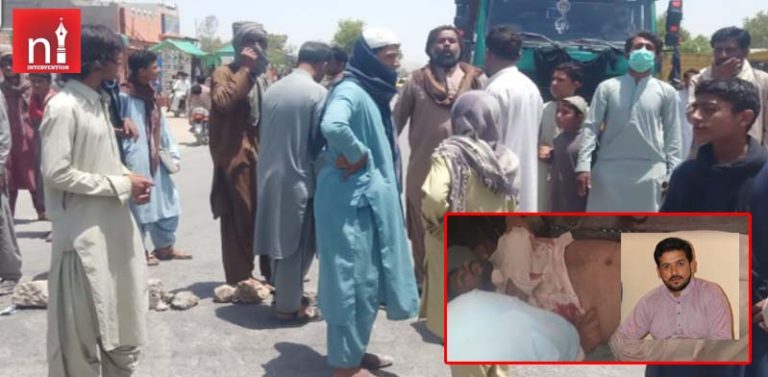
Death Squads backed by the Pakistan Army struck once again in occupied Balochistan on Monday when they killed a Hindu businessman Ashok Kumar for his refusal to pay extortion money.

“Ashok Kumar was shot dead by the Death Squad of the notorious Islamic extremist Shafiq Mengal at 10 AM today (Monday) in Wadh Tehsil of Khuzdar District of occupied Balochistan,” a Baloch from Khuzdar told local media channels. Local people protested the cold blooded murder of Ashok Kumar by Shafiq Mengal-backed Death Squad and blocked the Quetta-Karachi highway. Shafiq Mengal is Pakistan Army’s stooge who has the backing of Rawalpindi to carry out all kinds of illegal activities across occupied Balochistan.

Ashok Kumar’s dead body at the hospital. ISI has propped up several criminal gangs known as ‘Death Squad’ across occupied Balochistan. These Death Squads run drug cartels, kidnap people for ransom and are indulged in extortions, among several other nefarious activities. One such Death Squad is run by Pakistan Army’s stooge Shafiq Mengal who murdered Ashok Kumar. (Photo: News Intervention)

“Death Squad goons opened fire this morning in Wadh Bazaar for not paying extortion and injured Hindu businessman Ashok Kumar. We rushed Ashok Kumar to the hospital in a critical condition where he succumbed to his injuries,” said another Baloch to the local media channels.

Protesting traders at the Quetta-Karachi main highway demanded protection for other traders, including Hindus. They also demanded that the murderers of Ashok Kumar be arrested immediately.

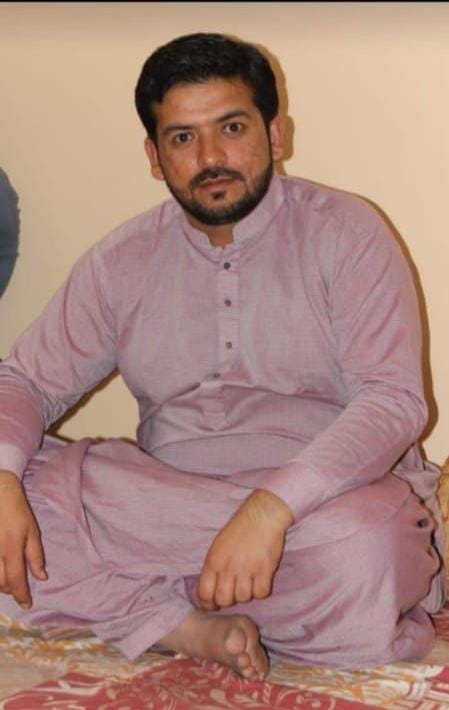
Hindu businessman Ashok Kumar who was shot dead by the Death Squad for his inability to pay extortion money. (Photo: News Intervention)

Even earlier, Pakistan Army and ISI-backed Death Squads have been involved in cases of loot, extortion and killings across occupied Balochistan. In Khuzdar district there have been several incidents of murder of traders in cases of non-payment of extortion money to the Death Squads. Several incidents of kidnapping Hindu traders and demand for ransom have taken place in Khuzdar and adjoining districts of occupied Balochistan.

Let’s debate the tobacco market rationally

Almost three and a half decades after it was created by the World Health Organisation, the World No Tobacco Day this year has discussed the possibility of reducing nicotine in cigarettes to non-addictive levels. The move, in many ways, could have a seismic impact and bring about the most fundamental change in the world tobacco industry and public health. 

Tobacco kills more than 8 million people each year.

In the US, over 140 organisations called on governments last week to phase out the sale of all cigarettes, among the signatories the Association of American Cancer Institutes and schools such as the Johns Hopkins Bloomberg School of Public Health. New Zealand is soliciting feedback on a proposal to reduce nicotine levels in cigarettes by 95 percent and eventually phase out the legal sale of cigarettes.

But reducing nicotine in cigarettes to non addictive levels is just one way of looking at the markets. But that might be just the start when it comes to tobacco regulation. Revenues in cigarettes amount to $68 billion in 2021, the market is expected to grow annually by 2.72 percent. 

“The idea is to reduce or eliminate addiction. What drives cigarette smoking is becoming addicted to smoking,” said Neal Benowitz, a tobacco addiction researcher at the University of California at San Francisco. Scientists in 2018 said lowering nicotine to minimally addictive levels would result in 5 million smokers quitting within a year and 13 million within five years.

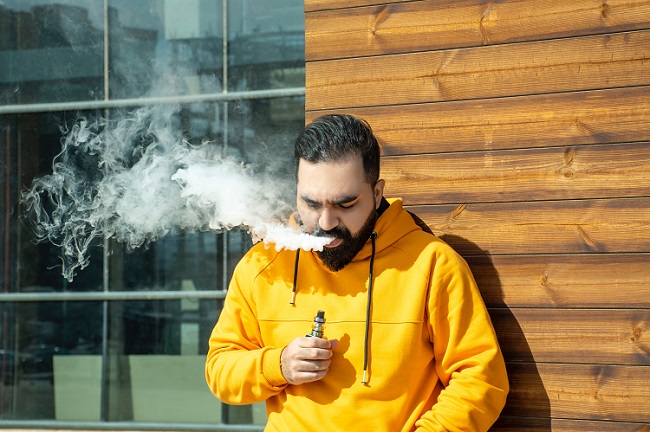
(Representative photo)

And nicotine reduction could be politically challenging and divisive. And it is here the focus and onus both comes on the World Health Organisation, speakers after speakers highlighted this issue at the recently concluded World E-Cigarette Summit at Washington, a two-day event which was attended by this correspondent from India.

There are over a billion smokers worldwide, over 80 percent of them living in the developing world. The WHO needs to push innovative, effective, and compassionate solutions to accelerate an end to this global epidemic.

First, a near-total ban would create a black market in cigarettes. For example, there could be high potential for a dangerous illicit market if the United States bans all but very low nicotine cigarettes while the rest of the world allows higher nicotine content. Worse, lower-nicotine cigarettes would not, in themselves, be any safer than regular cigarettes.

And then comes another very crucial issue. The speakers said the world needs to have a compassionate and dispassionate approach to vaping? For the record, the UK has taken a compassionate approach to vaping, including for groups for whom there is a very high smoking prevalence, such as people who experience mental health problems, misuse substances and those who experience homelessness. 

This approach is also evidence based as e-cigarettes have been shown to be beneficial at an overall population level, particularly if youth uptake is constrained. 

Prof Ann McNeil, Professor of Tobacco Addiction, Institute of Psychiatry, Psychology & Neuroscience, King’s College London dwelt on the mindset of today’s cigarette smokers. 

(Representative photo)

She told this reporter that the world tobacco marketplace has changed with the introduction of new nicotine delivery devices. While the public health community has been addressing the dramatic increase of e-cigarette use among youth, FDA recently conducted qualitative research with adult smokers to ascertain their current attitudes and beliefs about cigarettes and other tobacco products. 

“Focus group findings underscore that quitting cigarettes remains difficult. Smokers are often navigating multiple barriers to quitting, including stressors, perceived benefits of smoking, and persistent misperceptions about nicotine and addiction. Findings also revealed an increase in the belief that reducing use is an effective strategy for cessation, and there is low motivation among smokers to abstain from nicotine. An opportunity remains to further educate and address these misperceptions to support long-term cessation,” she said.

Kathleen Crosby, Director, Office of Health Communication & Education, FDA Center for Tobacco Products, said stigmatizing smoking has been at the heart of tobacco control efforts for decades, which may drive more people to quit but at the same time potentially create new difficulties for smokers, including self-isolation, creation of social groups that might become ‘hardened’ to changing smoking behaviors, and perceptions by the user and society that complete abstinence is the only option. 

“The stigma associated with a wide variety of behaviors has impeded progress toward improving population health in some cases, such as the reticence in making products and services available that could reduce the risk when an individual addicted to a substance is not able to or chooses not to become completely abstinent (eg NRT, ENDS, smokeless tobacco). 

“This presentation will explore some of the conflicting aspects of stigma in tobacco control, explore similarities and differences regarding the stigma of using different addicting substances, and consider some research, practice and policy directions,” she said.

Let’s take this discussion forward. 

Is the e-cigarette use among adolescent smokers associated with subsequent smoking? Consider this study by Ruoyan Sun, PhD, David Mendez, PhD, and Kenneth E. Warner, PhD demonstrates that when controlling for more potential covariates, the strong and positive relationship between vaping by adolescent never smokers and subsequent trial of cigarettes decreases steadily. 

(Representative photo)

Interestingly, this is the first study to control for both use of other tobacco products and other drugs (marijuana and alcohol in our case), along with commonly included variables. The study had reported reduced associations between vaping and subsequent smoking, adjusting for these covariates. The study also provides empirical evidence that raises questions about the strength of relationship between youth vaping and subsequent trials of cigarettes.

So what should be the public health objectives: Preventing nicotine use or ending smoking? 

A myriad of studies find that tobacco control policies targeting e-cigarettes can increase combustible tobacco use, presumably by reducing incentives to choose vaping over smoking. “Given evidence that vaping nicotine is likely far less harmful than smoking combustible cigarettes, these unintended consequences may translate into substantial costs for population health,” Abigail Friedman, Assistant Professor, Department of Health Policy and Management, Yale School of Public Health, said in his speech. 

Adolescent substance use, more than e-cigarettes; Assistant Prof Jennifer Pearson, Assistant Professor in Health Administration and Policy, School of Community Health Sciences, University of Nevada, US, says adolescents who are frequent users of multiple substances such as alcohol, marijuana, and cigarettes are at significantly higher risk of negative mental, physical, and substance use outcomes in adulthood, but studies often fail to focus on poly substance use, especially among younger adolescents.

So here comes the big question? Are current e-cigarette policies aligned with health equity goals? 

Prof Pearson says much of the current tobacco control agenda is focussed on preventing youth vaping. “I find that I have more questions than answers: Should our focus be on nicotine addiction or combustible use? Is youth vaping similar to youth marijuana use – an experimental phase that will pass? What is the endgame?”

Currently, the e-cigarette marketplace is only partially regulated. The FDA has received millions of applications from manufacturers who want to continue to market their e-cigarettes. The U.S. Courts have required e-cigarette manufacturers to have a marketing authorization from FDA to continue marketing their products after September 9, 2021. So, what is FDA doing to create a regulated e-cigarette marketplace by September? How will the FDA address youth initiation of e-cigarettes? For example, how will FDA determine which flavors and e-cigarette types (e.g., open e- cigarettes) will receive marketing authorization? In addition to minimizing youth initiation of e-cigarettes, how is FDA going to help adult combusted cigarette smokers have access to e-cigarettes that allow them to switch away from smoking to vaping?

Eventually, there needs to be a transition to a regulated marketplace. A paper presented at the summit offered an interesting perspective: “With the PMTA process for ENDS now fully underway, the United States is on the verge of a transformed ENDS marketplace – one in which the products lawfully on the market are there because FDA has reviewed the scientific evidence and found their availability to be appropriate for the protection of public health (APPH), and company marketing is subject to heightened oversight by FDA. The combined efforts of FDA and PMTA applicants have created increased potential for such ENDS determined to be APPH to be embraced by the evidence-based public health community as preferable alternatives to combustion cigarettes – and help make smoking history.”

Speakers said cigarette smoking is commonly viewed as a chronic, relapsing problem requiring long-term, repeated attention and multiple quit attempts. Yet the question of whether e-cigarettes may assist with cessation is often examined with a binary, single event, “all or nothing” lens. There may be advantages of using e-cigarettes within a relapse prevention/recovery of smoking abstinence framework when more adaptively used in targeted, individually tailored situations. There are potential approaches of how e-cigarettes can be used in sequential quit attempts to promote abstinence following smoking lapses; the potential role of transitions in self-identity away from being a “smoker”; and research designs to maximize more targeted and tailored approaches to help identify a role for e-cigarettes.

Pakistan Army calls itself ‘guardian’ of Islam and yet commits un-Islamic acts

Recently a piece of news surfaced on the social media about a Baloch father’s suicide, whose name was Noor Jaan. News of suicide is a daily occurrence in a weak and economically unstable country like Pakistan, especially in the Punjab province of Pakistan. Suicide, kidnapping of minor children, murder after rape, or molestation of corpses by removing bodies from graves happens on a regular basis. Something similar also occurred on May 21 with Noor Jaan at Kasur in Punjab.

But in Balochistan, and especially with a Baloch, incidents of suicide are rare. There are no suicides or social evils in this nation. However, during the last year there have been some cases where some youths committed suicide. These suicides were not due to social ills in the society.

Awaran district of Balochistan is an important city in the current struggle for Baloch independence. Awaran is important also because Dr Allah Nazar Baloch belongs to Mashkay Tehsil of this district. Of course, during the current Baloch struggle the whole of Balochistan is affected, hundreds of people have been killed by the forces, including the displacement of more than one lakh people from the Awaran district.

The suicide of Baloch father Noor Jaan in Awaran was not due to an act of scarcity, poverty, unemployment, rather due to the ‘so-called’ Islamic Pakistan Army, which calls itself as the protector of Islam. That is to say, the army of the Islamic Republic of Pakistan forced the Baloch father to take his life to escape the humiliation of the family and to prevent the Baloch national dignity from being undermined at the hands of the Pakistan Army. Yes this was not a suicide, rather a murder. Not just the murder of a father, of a family, but humanity and Islam.

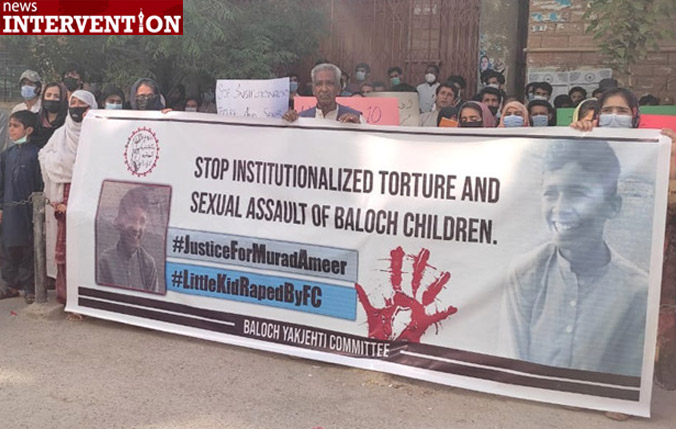
Protest rally in Quetta against the sexual assault of ten year old Murad Ameer by the Pakistan Army soldiers. (Photo: News Intervention)

But the Punjabi Islamic Army, unfamiliar with the Baloch traditions forgot that it is not the offspring of the Punjab province who would greet every occupier with a drummer as soon as he arrives and hand over his honour to the occupier. Maybe the generals of this army were not aware that Baloch prefers death for their honour and dignity. The Baloch father Noor Jaan sacrificed his life for the sake of dignity as he refused to bow down to Pakistan Army’s demand of handing over his daughter to them. And before Noor Jaan committed suicide he sent a message to the Pakistan Army, “my body is waiting for you”.

The death of an unarmed and innocent Baloch did not get even a minute’s coverage in the local and national media, TV channels and newspapers of Pakistan. The human rights organizations also remained silent on this issue due to fear and pressure, as always. The only crime of the Baloch father was that his daughter was engaged to a Baloch freedom fighter. Pakistan Army continues to repeat its history in Bangladesh by rape and sexual assault as potent weapon. But this time the battle is against a Baloch nation, a warrior nation. I don’t know what will be the destination of this journey for Balochistan, but if we look back at the pages of history, this nation never bowed down in front of anyone.

Further, if we take a closer look at the activities of Baloch social media activists, it is not impossible to assess the situation in Balochistan. The media and human rights organizations are barred from entering this province of Pakistan rendering Balochistan ‘no-go’ area.

Thanks to technology, the situation across Balochistan comes to light for the rest of the world in the form of photographs and video clips. Noor Jan’s suicide is one such example.

Several such cases of blatant atrocities have come to light. A ten-year-old boy was sexually abused by our ‘Islamic’ Pakistan Army in Kech district, Balochistan, the hometown of former Chief Minister of Balochistan Dr Malik. Last year, Hayat Baloch, a student was shot dead by the Paksitan Army in front of his mother. The mother of the young Bramsh Baloch was killed and injured, but most Pakistani politicians, including Dr Malik, a Baloch politician remained silent.

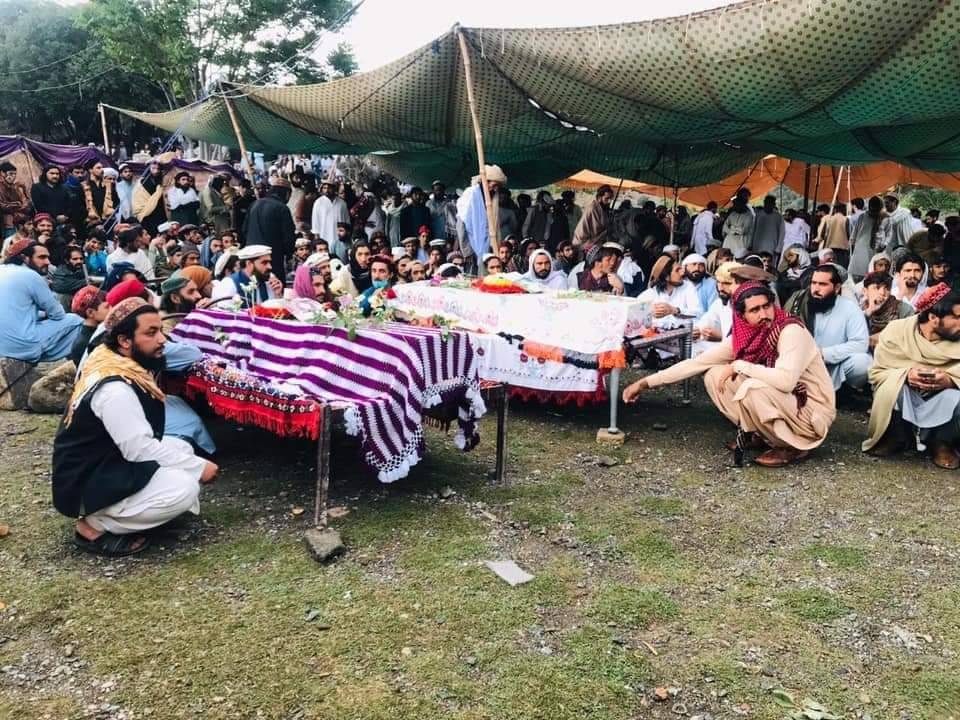
Pashtuns protest with the dead bodies of two teenage boys who were sexually assaulted and killed by Pakistan Army in Makin, South Waziristan. (Photo: News Intervention)
Pashtuns protest with the dead bodies of two teenage boys who were sexually assaulted and killed by Pakistan Army on April 25, 2021 in Makin, South Waziristan. (Photo: News Intervention)

Today, these so-called pro-federation Baloch politicians are becoming blind and dumb for the sake of their seats. If you monitor and follow the Baloch social media activists one can easily understand that these atrocities against the Baloch are a daily occurrence.

Ironically, it’s not the Israeli army but the Pakistan Army that calls itself the protector of Islam in the world. It’s a shame that those who chanted slogans of Islam and Jihad at al-Aqsa Mosque are silent on the military atrocities in Khyber-Pakhtunkhwa and Balochistan. Whether the oppressed are Baloch, Sindhi, Pashtun or Punjabi themselves, if the ‘Islamic’ Pakistan Army oppresses them, doesn’t a fatwa of jihad be issued against such an army?

Those who are active on the issue of Palestine, let them first look at what is happening in their own home. Military repression has been going on in Balochistan since 1948 and it has reached a record high in the last fifteen years. Generations of Pashtuns have been destroyed in the name of Islam. Today the political struggle of the Pashtun Tahafuz Movement (PTM) is before us in this regard. The situation is still not right and a large population in Punjab itself is being used in the name of Islam, especially the poor and the unemployed.

In our so-called state of Madina, the fatwa of jihad in favour of Palestine is issued, on the other hand, the state of Madina also considers it a sin to speak out against the atrocities against millions of Uyghur Muslims in China, which has been reported to be the biggest atrocity in the world right now.

Born from India’s womb, Pakistan interfered in the affairs of Muslims in India, carried out terrorism through jihadis in Kashmir on both sides, and yet the ‘Islamic’ Pakistan Army is permitted to burn the Holy Quran, turn mosques and schools into army camps and sexually abuse children, girls and women in Balochistan.

It is not clear which Islam do we follow. There is no such thing in the Islamic religion that you should take up arms against a non-Muslim country with whom you do not share any borders and have no connections just for the sake of so-called Jihad. But on other hand you oppress your Muslim people, burn the Holy Quran which you consider most sacred, kill your people in captivity, make them disappear for years, rape them, bomb them just because they demand their rights, or believe in freedom of expression.

Pakistan is a hypocritic and fascist country which uses Islamic card for the sake of her vested interest. Pakistan is not protector or well-wishers of Muslims but a stooge of the international powers to protect their interests in the region.

Pakistan’s nuclear weapons test at Chagi continues to violate international laws

Pakistan is an irresponsible state that’s violating Article 6 of the Declaration of Human Rights (1948) which protects the fundamental recognition of the right of individual, namely the right to live and also Article 6 of the Covenant on Civil and Political Rights which is peremptory norm of general international law (Jus Cogens) and cannot be derogated by state even during the period of emergency.

Additionally Pakistan has seriously violated Article 25 and Article 3 of The Declaration of Human Rights on account of which the basis of a safe and healthy environment. The rights were inserted and reiterated in the 1972 Stockholm Declarations at the United Nations Conference on Environment.

Pakistan has also violated the adopted resolution on Nuclear Weapons Test and and Principle 26 of the Declaration, when Pakistan tested Nuclear weapons at Ras Koh Hills at district Chagi in Balochistan on 28 May 1998. These nuclear tests were a crystal clear violation of NPT’s (Non-Proliferation of Nuclear Weapons) Articles’ obligation, which says that man and his environment must be spared the effects of nuclear weapons and all other means of mass destruction.

Dilemma with United Nations and international states community is that they have not paid attention to what is happening in the areas of Chagi and Dera Ghazi Khan in Balochistan where uranium was explored and the nuclear weapons test was carried out by Pakistan, in consequence of which environment effects directly to the health — mentally as well as physically and cancer has been spreading. It’s due to these nuclear tests that many children have been died and perpetual drought is prevailing. Rather the life of the inhabitants’ survival has become difficult because of change in physical, chemical and biological conditions of the environment.

In Balochistan, deforestation, soil, water degrading and desertification are in an alarming proportion and are seriously endangering the living condition due to nuclear weapons test in Chagi. Pakistan’s nuclear tests have violated the international environmental law, Stockholm Conference on Human Environment (1972) & its Declaration on Human Environment, and particularly Article 6 of the Covenant on Civil and Political Rights which is Jus Cogens and cannot be derogated by state even during the period of emergency.

World has failed to launch infringement proceeding against those states that are breaching the treaties and international laws.

According to the charter of United Nations Articles 1 and 55 which accepted and recognized self-determination as a peremptory norm of International Law from which there can and should be, no derogation. The right to self-determination is therefore applicable to all self-governing territories, that includes Balochistan by virtue of the charter of United Nations.

Let me shed light about what is the peremptory norm which was before known Jus Cogens and the United Nations Commission changed the title of the topic from (Jus Cogens) to peremptory norms of general international law in 2017. Peremptory norm as a norm accepted and recognized by International Community of States as a whole as a norm from which no derogation is permitted and which can be modified only by subsequent norm of general international law having the same charter.

Untold saga of Pak’s 1998 atomic blasts: Nuclear radiation ill-effects in Balochistan

The men in uniform at Rawalpindi and their acquiescent politicians in Islamabad miss no chance to harp about Pakistan’s nuclear status and how it has given them that much needed ‘edge’ in military strength. Amidst this chest thumping and blatant self-aggrandizement an important aspect is conveniently hidden that remains out of public discussion and media scrutiny even to this day, such that none of the international health or human rights organisations have even bothered to talk about it. And that’s the ill-effects of lethal nuclear radiation on Baloch people across Balochistan.

Pakistan conducted five nuclear blasts on 28 May 1998 at Chagi district in Balochistan. Immediately after the atomic blasts Pakistan said its nuclear tests were in response to India’s nuclear tests conducted a fortnight earlier on 11th May 1998. This remains the popular narrative even today, so much so that journalists and political analysts still discuss how Pakistan’s nuclear tests brought back equilibrium in the Indian subcontinent that had tilted in favour of India after May 11. But, this narrative conveniently ignores two points; one that Pakistan’s nuclear ambitions were afoot for several years that dates back to early seventies which was led by Rawalpindi’s delusion to gain an edge over India. However, it’s the second point which is much more significant, and this is the ill-effects of lethal nuclear radiation on hapless Baloch people.

Ever since Pakistan deceitfully captured Balochistan in 1948 it has been unsuccessfully trying to tame the Baloch revolutionaries but failed miserably. Islamabad that had constantly been on a look out for an opportunity to teach a lesson to the Balcoh, found one, when it decided to conduct nuclear tests in 1998.

The atomic blasts were mandatory before Pakistan could declare herself a nuclear state. However, before conducting nuclear tests all civilized nations choose uninhabited zones and take adequate checks and balances so that their citizens are not harmed. Pakistan did the opposite. In a carefully calculated move, the Rawalpindi’s Generals zeroed upon the Ras Koh mountain range in Balochistan’s district Chagi.

Thereafter Pakistan conducted five nuclear blasts in the Ras Koh mountain range in district Chagi on May 28, 1998. Due to these nuclear blasts the black mountains of Ras Koh turned white within seconds. If these nuclear blasts can change the colour of a black mountain to white, one can very well imagine how much hazardous these nuclear radiation would be for the Baloch people who lived in the vicinity of these mountains. The nuclear radiation and its ill effects continue even to this day.

Soon after the atomic tests the Pakistani politicians and Pakistan Army merrily gave bytes to media about the success of nuclear blasts and walked away in gleeful abundance knowing that the lethal nuclear radiation would silently gnaw the hapless Baloch population.

Experts opine that animals who have been exposed to nuclear radiation must be eliminated and a clear boundary be drawn such that any living form be it the plants, fish, wild animals, livestock etc. that had been exposed to nuclear radiation remain confined within the line such that none of these living being enter the human food chain. This offers a glimpse of how lethal are the effects of nuclear radiation and how high the standards of safeguards should be to contain it.

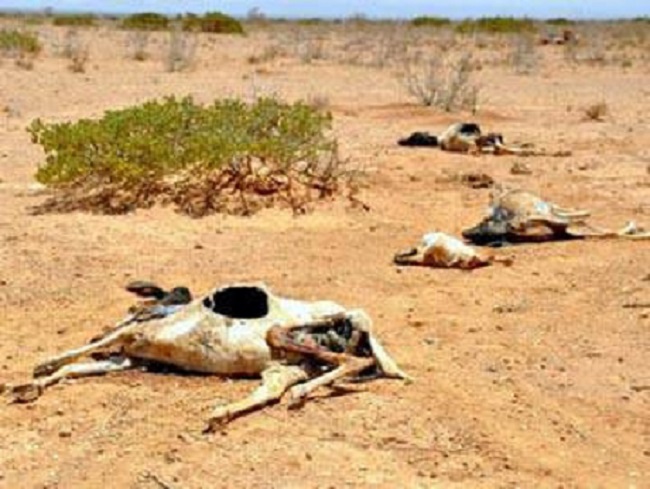
Thousands of cattle and other animals died in Balochistan due to the nuclear radiation caused by Pakistan’s May 28, 1998 nuclear blasts at Ras Koh mountains in district Chagi, Balochistan.

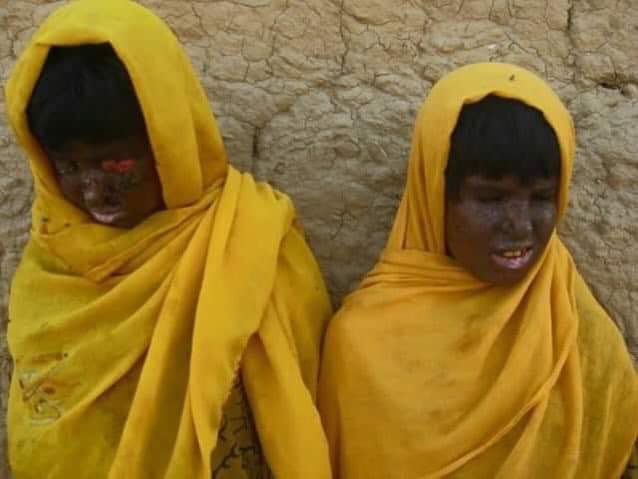
Safety guidelines against nuclear radiation further state that despite all precautions if some people do get exposed to nuclear radiation then they must remain under constant supervision of doctors for at least five to ten years for regular and periodic medical check-ups. The ill effects of nuclear radiation include cancer, tumours, respiratory diseases, birth defects, miscarriage, infertility etc. However, the motive of Pakistani generals was to deliberately spread death and disease across Balochistan and so they never gave any notice to the unsuspecting Baloch people in the vicinity of Ras Koh mountain range to move to safer locations before the nuclear blasts, nor did they make any arrangements for medical aid to mitigate the radiation’s ill-effects. On the contrary, nuclear radiation was allowed to spread across Balochistan.

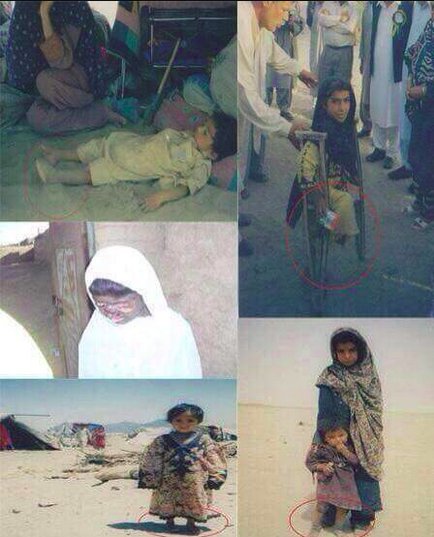
After Pakistan’s nuclear misadventure in 1998 Balochistan experienced continuous drought for seven long years; wild animals, livestock such as sheep and goats died in hordes, water bodies and its aquatic life became contaminated and above all the Baloch people developed nuclear radiation related disorders and diseases.

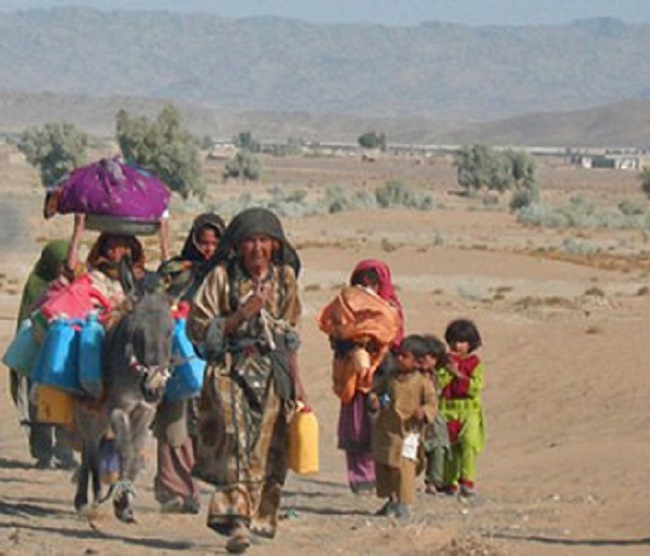
Yet another ill-effect of Pakistan’s 1998 nuclear blast has been on the source of income for Baloch people. Trade of livestock and other animals was the main livelihood of Baloch people living in these areas. All of this was destroyed and it remains in shambles. Thousands of sheep and goat died, water bodies became poisonous rendering fishing unviable. Sheep and goat were not been able to breed, such has been the lethal impact of nuclear radiation on animals, livestock and aquatic life. With the only source of income gone, the Baloch have been forced to live in abject poverty. This led to mass migration of Baloch population from Chagi and adjoining areas who were forced to live a life of refugee in different areas of Balochistan. Thousands of these displaced Baloch people still live like refugees in different cities.

Baloch people leaving their home to escape the nuclear radiation caused due to Pakistan’s atomic blast at Ras Koh mountains in district Chagi, Balochistan.

A colonizer and occupying state uses all kinds of tactics to subdue the native population and this is what Pakistan did with the Baloch people with its 1998 nuclear tests. Rawalpindi calculated that a sick population that’s fighting congenital diseases will have no time to fight back Pakistan Army and so the uniformed faujis can continue to loot the resource-rich Balochistan.

Dr Abdual Qadeer Khan, once hailed as the father of Pakistan’s nuclear bomb is now a disgraced scientist who had been clandestinely selling nuclear know-how to other nation states notably to North Korea and Iran. It’s high time the world realizes that Pakistan is a rogue nuclear power state that pays no regards to the life of people. The nuclear bomb and its technology must remain in the hands of responsible powers where it’s used only as a deterrent rather than fall into the hands of power hungry maniacs of Rawalpindi and Islamabad who miss no chance to flaunt the nuclear muscle even as their populace sleeps on empty stomach and thousands battle nuclear radiation related diseases.

Massive Pashtun jalsa at Datta Khel to protest Pakistani atrocities

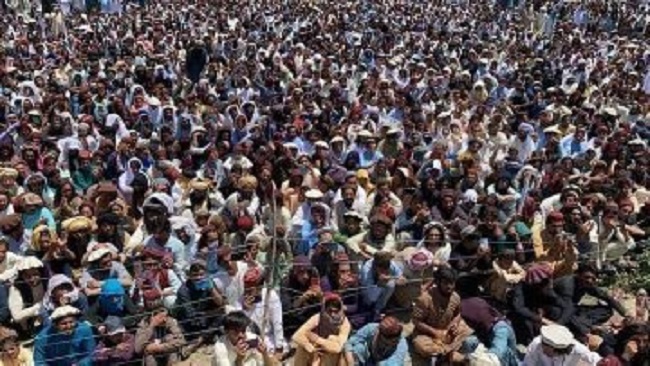
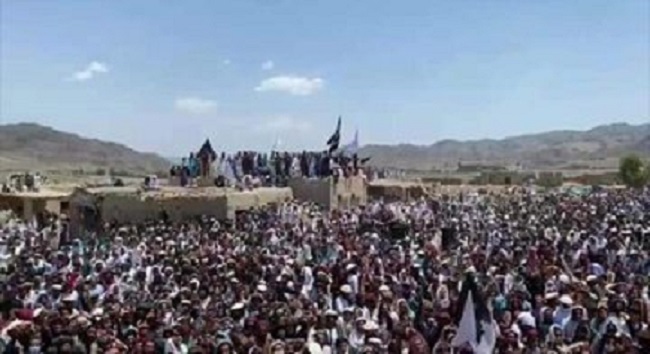
The Pashtun Tahafuz Movement (PTM) surprised Rawalpindi by holding another historic gathering (jalsa) at Datta Khel in North Waziristan on Wednesday, May 26 despite all pressures by the Pakistani regime to stop this gathering. The Datta Khel Pashtun jalsa was in the memory of the Kharqamar massacre that took place on May 26, 2019 in which fifteen Pashtuns lost their lives due to indiscriminate firing by the Pakistani forces.

Pashtun Tahafuz Movement (PTM) paid tribute to the martyrs of Khar Kamar and martyr Arif Wazir by holding a historically large rally in Datta Khel in North Waziristan despite the crackdowns, pressures, and arrests by Pakistani security forces. The Pashtun gathering called for an immediate release of Ali Wazir, Hanif Pashtin, Yusuf Ali Khan, Owais Abdal, among other Pashtun leaders who continue to languish in Pakistani prisons on frivolous charges.

It was announced at the Jalsa that there would be widespread protests if Pakistan continues to keep political leaders of PTM in prison. Pashtun leaders who addressed the Jalsa called for the return of Pashtun IDPs
(internally displaced people) from Afghanistan and said that it if this is not achieved then they Pashtuns will protest by sitting on the border. The PTM meeting called for indiscriminate action against the good and bad Taliban, as well as a complete cleansing of landmines and for a stop of target killings, including enforced disappearances, and demanded quick punishment Kharqamar target killers.

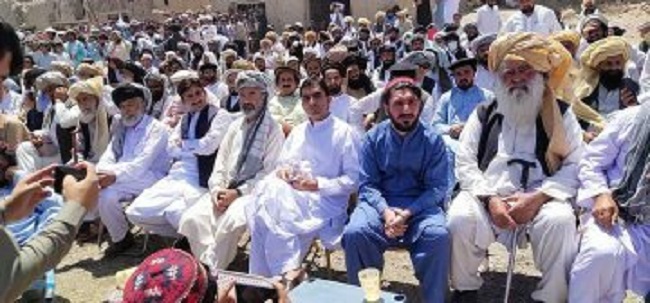
Pashtun Tahafuz Movement (PTM) leaders at the Datta Khel jalsa on May 26, 2021 (Photo: News Intervention)

“..before this, our people used to be killed by landmines, but now the state has changed its way of killing,” said Manzoor Pashteen, head of the Pashtun Tahafuz Movement (PTM). “Target killings and extrajudicial killings are continuing and our people are being targeted on daily basis. No one knows when the court’s judiciary will take actions against this state killing actions.”

Manzoor Pashteen added that a member of parliament Ali Wazir is in the lockup, but the police officer Rao Anwar who killed more than four hundred innocent people is roaming around freely. “In North Waziristan law and order is the responsibility of the state, if there are more target killings then the state will be responsible.”

Manzoor Pashteen appealed to the world to play its role in ending terrorism in Pashtunistan. He said that Pashtun Tahafuz Movement (PTM) is a peaceful movement that calls attention to set up a global commission to investigate crimes against humanity in military operations. “It is not a crime to demand peace, to protest for peace, and speak for peace,” said Manzoor Pashteen. He added that if Ali Wazir, Hanif Pashtin, Yusuf Ali, and Owais Abdal were not released soon then there will be protests for Ali Wazir in Karachi, for Hanif in Bannu, for Yusuf in Swabi, and Owais Abdal in Chaman. “We will call for a sit-in.”

In this Jalsa member of the National Assembly of Pakistan, Mohsin Dawar said that the Pashtun nation has once again proved that we are a peace-loving nation. “We will not be misled by the generals. Now the international community should know that our future is not bound with Pakistan they don’t need to talk about it, now we have enough ability to make the right decisions by ourselves.”

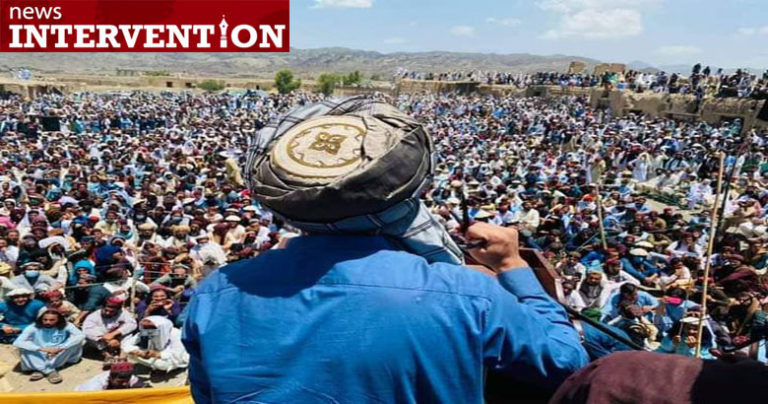
The massive Pashtun jalsa at Datta Khel, North Waziristan on May 26, 2021 (Photo: News Intervention)

Mohsin Dawar added that if the IDPs (internally displaced persons) in Afghanistan want to come back safely and the Pakistani state must allow them to come back. “If our demands are not accepted, we will be forced to sit-in at the border.” Mohsin Dawar said that recently Afghan President Ashraf Ghani expressed his views in an article that the Afghan nationals have a right to their choice. “Taliban does not believe in parliamentarian democracy and they shouldn’t interfere in Afghanistan. There is no need to learn about Islam from Taliban. The Taliban war in Afghanistan is against Afghans with the help of Pakistani generals that is aimed at destroying Afghan identity. The Taliban are proxies in the state of Pakistan,” said Mohsin Dawar.

Pashtuns across Pashtunistan have called this Jalsa by the Pashtun Tahafuz Movement (PTM) as a great success. The Pakistani state used its full might to stop this Jalsa. Yet, once again, the Pashtuns came to the streets and were united against Pakistani military atrocities.

Ironically, Pakistani media didn’t cover this massive Pashtun gathering and there was an eerie silence among Punjabi Pakistani media organisations that only report on issues cleared by Rawalpindi.

Pashtuns came out in very large numbers at Datta Khel, North Waziristan on May 26, 2021 to protest against the atrocities committed by Pakistani regime. (Photo: News Intervention)

It should be noted that two years ago Pakistani forces attacked the local population in Kharqamar in the Datta Khel area of North Waziristan and injured an old woman. Then on May 26, 2019 when the Pashtuns protested, Pakistani forces opened fire and killed fifteen people and injured more than 45 residents. In the memory of Kharqamar massacre at Datta Khel, the Pashtun Tahafuz Movement (PTM) had called for this Jalsa and once again sent a clear message to the Pakistani forces that Pashtuns would no longer remain silent against the injustices done by the Pakistani regime.

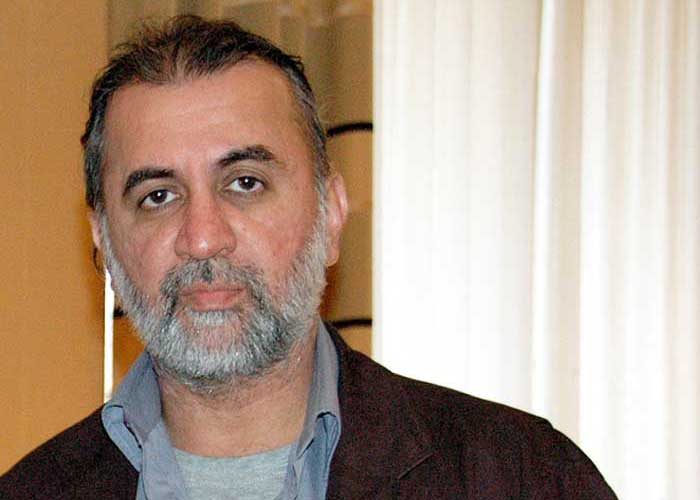
Who is gunning for Tarun Tejpal?

Opinion

No matter where you stand in the verdict acquitting Tarun Tejpal, the actions of the government of India on Thursday morning made one thing clear: the political directions in the case come from the highest quarters in the land.

What else might explain that the Solicitor General of India, Tushar Mehta, himself appeared for the State in the urgent appeal the prosecution has filed against the trial court verdict?

Bear in mind that already, the Chief Minister had, within hours of the verdict, vowed to appeal it, without the prosecution or the CM even having received or read a copy of the verdict itself. The SG, it is clear, hasn’t either, the verdict being 527 pages long. The appeals process, it must be remembered, does not exist because one party does not like the verdict. It exists in case there is grave error on the part of the judge in arriving at her conclusion, something that cannot be proclaimed before you have read the verdict in its entirety.

Yet on Thursday morning, the prosecution at the direction of the CM having filed an immediate appeal against the verdict and got an immediate listing in the High Court, the Solicitor General decided to appear to make visible to the judge, clearly, what the government wants.

Setting aside the fact that the pandemic devastation underway in the country that might require the attention of the SG to answer to the life and death appeals of millions of citizens of the country is not by a long shot over, it begs the question, what really is the interest of the Government of India in this case? 

It should be noted that the role of the SG is to advise the GOI in matters in which it is interested or to represent the Government in matters of a constitutional nature, or to represent the government when the President of India requires the advise of the Supreme Court of India on crucial matters. It should also be noted that the verdict in the Tejpal case comes after years of regular court proceedings and do not constitute a new and urgent matter demanding the immediate attention of the SG.

Mehta had already appeared against Tejpal in multiple hearings in the Supreme Court of India on every occasion the former editor’s appeals with regards to evidence or charges were heard by the Apex Court. This would have been stark enough. But today’s appearance is in a whole other league.

And given the thousands of activists, protestors, undertrials in jails all over the country unable to have their cases heard, their appeals listed, their basic safety upheld as the pandemic rages in crowded prison cells, the urgent and immediate action on this appeal reinforces what the past months have brutally shown, that the interest of the government of India is not what we might call the interest of its citizens. 

For that we need only look at the utter collapse of the vaccination drive, the brazen ongoing construction of the Central Vista, and the SG telling counsel for the Delhi Govt who was pleading for resolution of the devastating oxygen shortage in Delhi just weeks ago, “let us not be a cry baby.”

Do you know what the judgement said in Tarun Tejpal case?

Exclusive

In a scathing and devastating indictment of the Goa Police and the prosecution, the District and Sessions Court, Mapusa, Goa on Tuesday released Justice Kshama Joshi’s exhaustive 527 page judgement in the Tarun J Tejpal case that radically overturns the public narrative in the case and illustrates a copybook case of malafide and vitiated investigation.

The judge examined over 70 prosecution witnesses during the course of the trial, alongside exhaustive CCTV footage — there were over 48 hours of recordings submitted — was viewed in the case that hit national and global headlines since November 2013.

“Anomalies, discrepancies, inaccuracies, improvements, omissions, contradictions and sheer impossibilities mark the narrative of the prosecutrix, yet the IO and the prosecution have turned a blind eye to them at every stage,” the verdict states.

“It is not merely well-settled law but a fundamental principle of jurisprudence and of our justice system itself that the Right to Fair Investigation is guaranteed to Accused under Article 21 of the Constitution,” Justice Kshama Joshi writes.

The allegations in the case rest around less than 120 seconds in which the prosecutrix alleged that Tejpal forcibly restrained her in a lift in the Grand Hyatt hotel and assaulted her, and prevented the lift from opening on any of the two floors of the hotel block while she struggled against him. “According to the prosecutrix, in that encounter, she was trapped by him in an elevator that he managed to stall, whose doors refused to open and which she could not get moving,” the verdict notes.

A close examination of the CCTV footage has comprehensively proved this to be a lie. “The Defence has during cross established through the CCTV footage that the lift did in fact open twice on the ground floor during the relevant period though the prosecutrix claimed that they absolutely did not open.”

Even more startling was the disclosure in the judgement that crucial CCTV footage of the first floor of block 7 that was viewed by Goa Police was mysteriously omitted and destroyed when the evidence was submitted and made available to the Court and to the Defence.

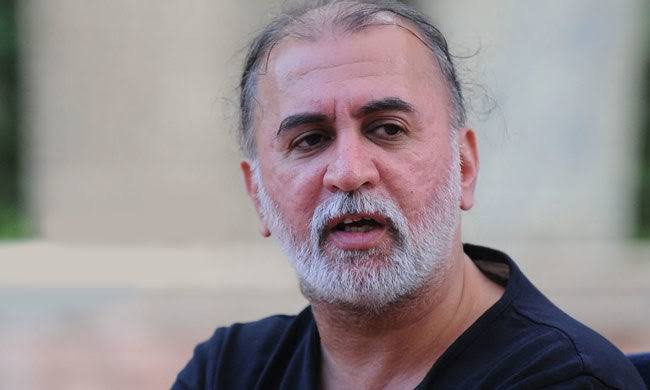
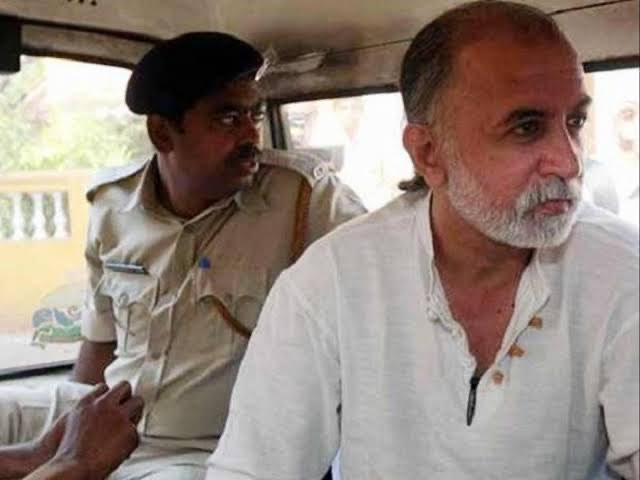
Tarun Tejpal, founder and Editor-in-Chief Tehelka in police custody after allegations of sexual assault were made by his colleague at Tehelka. Tejpal has now been acquitted of all charges.

The judgement highlights that the Defence had argued that Mr Tejpal and the prosecutrix were not in the lift during the relevant two minutes but had exited the lift on the first floor. On cross-examination it was revealed that the CCTV footage of the first floor had been seized and viewed by the Investigating Officer, then mysteriously disappeared and was never attached as evidence.

“It can be said that because the footage of the First Floor would have wholly destroyed the Prosecution’s case, P70, the IO (Investigating Officer) sought to keep out the relevant footage for the First Floor and render it unavailable,” the judgement states. “If the first floor footage was viewed on 29/11/2013, where did it disappear and there is absolutely no explanation for the same from the prosecution.” She goes on to say, “the only conclusion that can be drawn is that the Investigating Officer tampered with and destroyed the CCTV footage of the first floor guest lift of block 7 since it would conclusively corroborate the defence of the accused.”

All the CCTV footage that is on record, she goes on to highlight, also falsifies every claim of the prosecutrix, including on the alleged second day of the assault. “It is crucial to note that while in her complaint PW1 had stated that he grabbed her wrist and pulled her in, the CCTV footage showed that he had not touched her at all. But she not only accompanies him, she first follows him to the lift and then waits alongside him outside the lift…”

“It is crucial to note that the contradictions are often so glaring that the exact opposite of what the Prosecutrix is claiming actually happens on screen yet, the IO did not even question the Prosecutrix on the same,” the judgement notes.

The judgement also makes note of three messages sent by the Prosecutrix to Tejpal soon after the alleged second assault telling him where she was at that moment, even as her narrative claimed she was terrified and keeping her distance from him. “Her sending the same message thrice in the span of a very few minutes clearly establishes that the prosecutrix was not traumatised nor terrified of being located or found by the accused, and completely belies the prosecution case that immediately before the said messages, the accused had sexually assaulted the prosecutrix again.”

The judge further notes that the alleged “apology” issued by Tejpal was demanded by the prosecutrix in exact terminology and specific language with promise of closure of the complaint against him and that the law clearly recognises the extremely suspect nature of ‘confessions’ when demanded against closure of a complaint. Dealing with the so-called personal apology, an email titled ‘Personal’ that Tejpal sent to the Prosecutrix after she lodged her complaint against him, the judgement goes on to state, “a bare reading of the alleged personal apology categorically shows that his email neither implicitly nor explicitly makes any of the admissions or confessions which PW1 demanded in the apology, or with relation to any other offence with which the accused was charged and is clearly therefore not an apology but an attempt to assuage any discomfort the prosecutrix might have post-facto felt.”

Tejpal had clarified that in the five minutes preceding the alleged assault, when the Prosecutrix and he had left Block 7 and stood outside chatting — a fact that CCTV proves but that the Prosecutrix repeatedly omitted from her narrative and complaint — they had engaged in “drunken banter”. “The accused submits that the said email shows that even as the accused outright denied the prosecutrix’s version of the incident and disputed her claims of what had happened, he offered an apology only to any discomfort she might have felt about the previously mentioned ‘drunken banter’,” the judgement states.

WhatsApp and email evidence in the case also proved that the Prosecutrix suppressed evidence that would have proved that the first person she met after the alleged assault and to whom she claimed to have revealed what had happened in fact completely falsified her version of events. “Nikhil was the first person the prosecutrix met virtually minutes after the alleged incident of 7/11/2013, a fact which the prosecutrix completely hid during the investigation and in her evidence before this court, despite the crucial role a nearly contemporaneous witness plays in any investigation,” the judgement states. It goes on to call out the IO regarding the blatant omission of this witness. “It is also very important to note that despite there being a reference to Nikhil being the first person the Prosecutrix had met, in her draft complaint of 16/11/2013, a reference which she later deleted, the IO did not do any investigation by contacting Nikhil Agarwal, or even did not make attempt to question the Prosecutrix.”

The judgement also notes that on November 22, the very date on which Goa Police let it be known that there was CCTV footage in the case, Tejpal had issued a press release demanding the footage be released to the public, despite not having seen it himself. “The importance of the CCTV footage to the truth was first heralded by the accused, in Delhi, as early as 22/11/2013 itself, i.e. the very date of the registering of the FIR, vehemently demanding that the police should procure the CCTV footage and that it would reveal the truth, as admitted by the witnesses below. The media statement was made by the accused to secure the CCTV footage to reveal the truth and to establish his innocence which has been confirmed by the witnesses.”