Home Blog Page 313

On Zara Kay: #JusticeforZaraKay in Dar es-Salaam, Tanzania

Zara Kay (YouTube, Wikinews) is the Founder of Faithless Hijabi (Facebook, Instagram, Twitter, Wikipedia). Faithless Hijabi aims for the creation of shared experiences and creating a community for ex-Muslims.[1] Since the founding of the organization in October of 2018, the organization, under the helm of Kay, has advanced rapidly.

Many resources have been provided by the organization including sections of the web domain for sharing your story[2], a blog[3], a mental health program[4], advice on setting boundaries with family as an ex-Muslim[5], life after Islam[6], a support corner[7], how to support them[8], and, as of recent, #JusticeForZaraKay[9]. Why the hashtag with “Justice” in it?

My first interactions with Kay happened around the turn or the start of the organization, around Spring of 2019. These took many months to come to transcription and publication. It became an extensive four-part introduction and interview with her.

The parts were entitled “An Interview with Zara Kay on Ethnic and Religious Background, Differential Treatments of Boys and Girls, Men and Women in the Religious Culture, and Theological Justifications (Part One),” “An Interview with Zara Kay on Faithless Hijabi, Global Violence Against Women Statistics, Leaving Fundamentalism, and Building Bridges (Part Two),” “An Interview with Zara Kay on No True Scotsman, FGM, Clitoridectomy, Infibulation, Identity Crisis, and Secular Communities (Part Three),” and “An Interview with Zara Kay on Dawkins, Liberation of Women, and Women’s Free Choices (Part Four).”

All published in In-Sight: Independent Interview-Based Journal (2369-6885). Through the interview, it was clear, early, Kay was going to be a powerful and influential voice for ex-religious people, ex-Muslim people, and, in particular, women in those communities.

The quelle surprise surprise was the bringing Kay into a police station, hence “Justice.” Her last tweet before heading into the station mentioned being checked into it. There have been growing petitions for her. Including a rapid development signatory support list, the number of signatories has grown rapidly for Kay’s case[10].

Kay was detained on purported charges on December 28, 2020. She was held in the Dar es-Salaam Oysterbay Police Station for 32 hours. It is claimed by the Council of Ex-Muslims of Britain that the charges against Zara are politically motivated.

Those charges coming from the Khoja Shia Ithnasheri Jamaat. The community, allegedly, opposed the activism, apostasy, and blasphemy, of Kay. Kay has Tanzanian ethnic background while being an Australian national. She was bailed on December 29, 2020. She has had to report to the police station every weekday between December 29 and January 11 followed by spotty reporting on January 15 and 18.

Her next report to the police station, apparently arbitrary and capricious, happened on January 22, 2021, presumably. With weeks since the original detainment in Dar es-Salaam, no court date or motion towards a resolution of this illegitimate, scurrilous, and contumelious behaviour on the part of the police authorities of Tanzania is forthcoming.

The International Coalition of Ex-Muslims, started in early 2020 and suspiciously sounding like a proposal from an article entitled “An Immodest Proposal: International Coalition of Ex-Muslims (ICEM)” (from 2019, not 2020), representative (via Ex-Muslim Somali Voices), Halima Salat, stated, “Faithless Hijabi is Zara’s organization, which has since also published a long list of signatories from all walks of life including international organizations in solidarity with what she is facing.”

I asked Salat about the post and the backlash to it, by the larger community around Kay. Salat directed attention to two posts seen as critical of the president of Tanzania, which were satirical of the government’s role vis-a-vis Covid-19.

“She shared them in May 2020 while living in London. The posts had very little interaction and no particular backlash at the time. However given that a lot of Tanzanians, specifically people from her former community had issues with her social media presence, have been wanting to actively shut her down,” Salat stated, “I have personally seen direct threats to her and her family. There have been attempts to shut down her Wikipedia page, she has been asked to leave school grounds when picking up her nieces. At the break of this story in western media, there are ongoing comments about her arrest where people have actively agreed with the government’s targeting of Zara, and calling for her to be jailed on the basis of her criticism of Islam.”

Then I asked about the similarity of this particular case with other prominent cases of ex-Muslims mistreated by the wider community and the justice system, e.g., Waleed Al-Husseini in occupied Palestinian territories (Qalqilya) and Mubarak Bala in Kaduna, Northern Nigeria, even ‘Ayaz Nizami’ in Pakistan.

Salat remarked on a refreshing fact. No blasphemy penalties exist in Tanzania. However, the risks for freethinkers and ex-Muslims are ubiquitous. Salat talked about the daily reporting to the Tanzanian police at the time.

“World-wide we see freethinkers, atheists, ex-Muslims facing persecution for their conscience, expression and beliefs. Depending on the country, it can even result in the death penalty. It has become increasingly common to see people jailed for sharing their opinion, satire, comment on social media and especially if such posts are deemed blasphemous by theocratic governments,” Salat explained.

When I asked about important ways to become involved, or effective forms of activism, Sala toted common means by which vocal ex-Muslims and activists have been targeted by the public, and how the public have been utilizing existing misdemeanour charges. These become a platform to get vocal ex-Muslims and activists in trouble with the law.

Salat stated, “In countries where blasphemy laws are not as succinct and clear on paper, the societal attitudes and individuals who hold religion sacred, have especially resorted to using state actors in making such accusation as a way to silence activists, dissenters, exmuslims, freethinkers and anyone they deem does not hold religions sacred.”

The President & CEO of Atheist Republic, Susanna McIntyre, provided some information and stated:

Zara Kay’s case has demonstrated that the ex-Muslim community, and the atheist movement more broadly, can extensively and efficiently mobilize during a moment of crisis. Ours is a large movement, and prominent figures have fundamental disagreements, but all put aside their differences when officials threatened Zara’s liberties. It has been incredibly heartening to be involved in and witness this international collaboration to secure Zara’s freedom and her safe return home, and the fight is not yet over. In the process of calling upon the United Republic of Tanzania to demonstrate their commitment to their proclaimed values of democracy and the protection of civil liberties, this tense situation has inadvertently forged a model of the achievements possible through global cooperation. Atheist Republic reiterates its appeal to the Tanzanian Government to honor the principles ensconced in their nation’s constitution and drop all charges against Zara Kay.

Furthermore, one more prominent international voice is the United States Commission for International Religious Freedom (USCIRF), which provided some answers to queries about their positions. It is bipartisan, which adds to its legitimacy.

On the social media post and the backlash against Kay for the post, USCIRF Vice Chair Anurima Bhargava considered the main concern the authorities questioning Kay about her beliefs and relationship to a religious ideology, Islam. This happened during the investigation.

“Asking such questions is problematic in and of itself, and if they base any charges or action against her on the answers to these questions, they would be committing violations of her right to freedom of belief,” Bhargava stated, “We are especially concerned about this potential since advocates report that Kay had received threats from members of the Khoja Shia Ithnasheri Jamaat, a prominent Muslim group in Tanzania, for leaving Islam and her activism supporting ex-Muslims. Religious freedom includes the right to change one’s religion or to be non-religious, and Kay must not be penalized or mistreated by either state or non-state actors for exercising this right.”

Bhargava’s recommendation was to reach out to other human rights and free speech organizations to learn more about the analysis of the situation. The Council of Ex-Muslims of Britain (CEMB) remains a potent and important organization in this regard because of its and the International Coalition of Ex-Muslims (ICEM) updates regularly coming out about the situation for Kay.

“Pew Research has found that restrictions on religion overall have increased around the world in recent years. The data around violations against humanists and free thinkers specifically is inconclusive and difficult to interpret, especially since humanists are often not accounted for in religious demographic data,” Bhargava stated.

There are broader trends of the violations of the human rights of believers and non-believers in 2020. It makes things difficult. Also, with the Covid-19 years, the comparison and tracking compared to previous years becomes difficult too.

“We have seen several high profile cases of violations against humanists in 2020, including the unlawful detention of Mubarak Bala in Nigeria, whom USCIRF Commissioner Fred Davie has adopted as part of USCIRF’s Religious Prisoners of Conscience project,” Bhargava stated.

If you wish to add your name or organization to the signatory list for Kay, please send an email to info@faithlesshijabi.org or search for CEMB’s and ICEM’s ongoing updates on the case.

Footnotes

[1] “About” states:

Faithless Hijabi was established in October 2018 and since we’ve helped hundreds of women to engage with us from all over the world. As it stands, women who leave the religion of Islam are often ostracised by their families, any form of dissent has the possibility of inciting violence.

This is a space where vulnerable and endangered women garner support. Our space is one of shared experiences, experiential guidance, and strength in unity.

The reality of the world today is that there exists many nations and cultures where women are abused and threatened with honour violence and killings when questioning their faith…
…At Faithless Hijabi we aim to ensure women are safe in questioning their faith and are protected from harm when exploring the space outside Islam.

 We’ve established a community on Discord that ensures anonymity of our members and enables women to express themselves freely while ensuring all members are protected.

 We work with women from abusive backgrounds by guiding them to the relevant organisations in their country that can support them.

 We aim to be a support system and help women grow by mentoring them to achieve financial independence

 Some of our mentorship revolve around create a nurturing environment that advocates for a balanced conversation with their families and helping them understand how to create and maintain boundaries.

 As of recently, we’ve started our podcast/video series on Life After Islam and Support Corner, for more information visit our video series page.

See Faithless Hijabi (2021a).

[2] “Sharing Your Story” states:

Send your story out into the world so that we can help each other grow!
Here are a few guidelines that you can use. We’re here to listen, only share what you’re comfortable sharing.

  • How were you raised?
  • What was your upbringing like?
  • When did you first start questioning Islam?
  • What questions did you have?
  • What triggered the questioning phase?
  • How did you react after you found your answers?
  • What do you think of the Hijab?
  • Did you wear the hijab? If so, when did you start?
  • Are you still wearing it? If not, when did you remove it and why?
  • Do your family know about you leaving Islam?
  • If yes, how did they find out and how did they react?
  • If not, what does it feel like living a double life?

See Faithless Hijabi (2021b).

[3] “Blog” states:

By sharing the stories of ExMuslims from around the globe we aim to engage our audience by igniting empathy based on stories that may be of shared experience or ones that present to us a different understanding of the current landscape.

See Faithless Hijabi (2021c).

[4] “Mental Health Program” states:

In 2014 a Freedom of Information request to UK police forces revealed that over 11,000 cases of ‘honour’ crime were recorded between 2010-14. Before accessing support, victims at risk of HBV experienced abuse for 2 years longer
(5 years vs 3 years) than those not identified as at risk of HBV.


Nearly a quarter (23%) of victims at risk of HBV were not eligible for most benefits. 68% of victims at risk of HBV were at high risk of serious harm or homicide, compared to 55% of those not identified as at risk of HBV.

We aim to create a safe space for women to come together and support one another. We have multiple programs in place, such as the video series “Support corner”, our community engagement group, and our story telling podcast on YouTube.

Currently, we are fundraising for our Mental Health Program. Our mental health program has partnered with a clinic in the UK, Cherry Tree Clinic and other independent therapists depending on locations that are trained to provide specialised therapy for apostates. Sponsoring 1 session for 1 person costs as little as £20-40 pounds, and with greater funding we can refer women for longer sessions.

This program is open to both Muslim and ExMuslims

If you’re looking to join the program to receive this benefit, please email info@faithlesshijabi.com to join our waiting list.

See Faithless Hijabi (2021d).

[5] “Setting Boundaries With Your Muslim Family, As An ExMuslim” (2021e) states:

What are boundaries?

We’ve often heard the word ‘boundaries’ being thrown around nowadays, and while many may theoretically know what that means, but how many of us really understand what it means. What are boundaries?

We can think of boundaries as a line, an imaginary line, that you set around yourself which helps how you interact with others in any relationship, it guides how you would like to be treated, and communicates what you are willing to accept.

Why is it important to set boundaries?

Personal boundaries are vital in order for us to thrive and be in healthy relationships. Having them in place allows us to communicate our needs and desires clearly and succinctly without fear of repercussions. It is also used to set limits so that others don’t take advantage of us or are allowed to hurt us. It is a way for us to practice self-care and self-respect.

With unhealthy boundaries we lose self-respect as we go against our values in order to please others. We keep giving of ourselves and yet feel like when we ask for help we are ignored. Allowing others to determine what we like, where we are going, or who we are shows that we are allowing them to control us which are a signs that we have unhealthy boundaries.

See Faithless Hijabi (2021e).

[6] “Life After Islam” states, “Life After Islam is a series dedicated to speaking with ExMuslims about their experiences, their views, advice to younger ExMuslims and just engaging in insightful conversations with our growing community of ExMuslims.” See Faithless Hijabi (2021f).

[7] “Support Corner” states:

Support Corner is weekly 30 minute series of Ghada and Zara Kay discussing most commonly asked questions by ExMuslims. And occasionally interviewing subject matter experts and other ExMuslims on specific topics. We’re by no means professionals in these topics, we only speak from experience discussing what has helped us.

See Faithless Hijabi (2021g).

[8] “Support Us” states:

Your donations will be spread across helping us run Faithless Hijabi, individual cases that we work with and events that we’ll be sponsoring in the future.
Your donations will be contributed towards:

 Funding therapy sessions: mental health remains to be stigmatised in Muslim communities, for girls that face honour and religious based abuse who require professional help but can’t afford it, Faithless Hijabi works with external partners and will sponsor 6 sessions for every case referred dependant on donations.

 Funding shelters when necessary: we often find ourselves in touch
with women who have left abusive homes and are on the run. While we connect them to other supporting organisations, we often require the funding to help girls with essentials and immediate needs.

 Our admin: more on the operations side, technology used and other forms of outreach that require funding to support.

 Volunteers: our volunteers have donated hours of their weeks to help us run this, in the future and as a last priority for funding usage.

See Faithless Hijabi (2021h).

[9] “#JusticeforZaraKay” stated:

Zara Kay, an Australian citizen and founder of Faithless Hijabi, was summoned to the Dar es-Salaam Oysterbay Police Station in Tanzania on 28 December 2020 and held in police custody for 32 hours without a clear indication of charges. 
 
Zara is a well-known ex-Muslim and women’s rights activist. Whilst in police custody, Zara was asked about the work of her organisation and why she left Islam. Zara was released on bail and is now to return to the police station with her lawyer on 5 January 2021.
 
The charges against her are:
1) Social media posts deemed to be critical of the president of Tanzania (these light satirical posts were posted in May when Zara was in London, addressing the handling of Covid-19 in Tanzania)
2) Not returning her Tanzanian passport after gaining Australian
citizenship (she never returned her Tanzanian passport as she misplaced and
never used it after gaining Australian citizenship)
3) Using a SIM-card not registered in her name (this was registered in a family member’s name). Failure to register SIM-cards legislation has been used to persecute other high-profile cases.
 
We, the undersigned, call on the Tanzanian government to immediately drop all the politically-motivated charges against Zara Kay, return her passport and allow her to leave Tanzania.  The constitution of Tanzania enshrines secularism as a state principle and recognises freedom of expression and of conscience. We also call on the Australian authorities to intervene and get Zara home to safety.


(More information available here.)

See Faithless Hijabi (2021i).

[10] “#JusticeforZaraKay” states:
A C Grayling, Philosopher, UK
Aaron Yandell, USA
Abir Ahmed Raihan, Author and Ken Fiklow Prize Awardee, Canada
Adriana S.Thiago, Communications Officer, European Network of Migrant Women, Belgium
Ahmad Nasser, ExMuslim TV, UK
Ahmedur Rashid Chowdhury, Editor in Chief and Publisher, Shuddhashar, Norway
Prof. Alan Davison, University of Technology Sydney, Australia
Albert Beale, Pacifist Activist, UK
Ali A. Rizvi, Author of The Atheist Muslim and Co-host, Secular Jihadists for a Muslim Enlightenment podcast, Canada
Ali Malik, Council of Ex-Muslims of Britain Refugee and Asylum Project Manager, UK
Ali Utlu, Human Rights Activist, Germany
Aliaa Magda Elmahdy, Women’s Rights Activist, Sweden
Alice Carr, Advocate, Progressive Atheist Inc., Australi

Alliance of Former Muslims, Ireland
Amardeo Sharma, President, The Gesellschaft zur wissenschaftlichen Untersuchung von Parawissenschaften, Germany
American Atheists
Ana González, Solicitor, UK
Andrew L. Seidel, Constitutional Attorney and Author, USA
Andrew Rawlings, Former President, Progressive Atheist Inc., Australia
Angkatan Murtad, Malaysia
Anissa Helie, Professor, Algeria/USA
Anna Zobnina, Coordinator, European Network of Migrant Women, Belgium
Annie Laurie Gaylor, Co-founder, Co-President, Freedom From Religion Foundation, USA
Anthony McIntyre, The Pensive Quill, Ireland
Arash Hampay, Refugee Rights Activist, Greece
Arif Rahman, Secular Humanist Blogger, Bangladesh/UK
Armin Navabi, Founder, Atheist Republic, Canada
Arsalan Nejati, Activist, Turkey
Arzu Toker, Internationaler Bund der Konfessionslosen und Atheisten, Germany
Ashanour Rahman Khan, Ex-Muslim Blogger, Sweden
Ashkan Rosti, Activist, Ex Musulmani d’Italia
Atheism UK 
Atheist & Agnostic Alliance of Pakistan
Atheist Iranian Community
Atheist Refugee Relief
Atheisten Österreich
Atheists for Liberty
Atheists In Kenya Society
Atika Samrah, Activist, Conseil des Exmusulmans de France, France
Avinash Patil, Executive President, Maharashtra Andhshraddha Nirmulan Samiti (MANS) And Vice President, Federation of Indian Rationalist Associations (FIRA), India
Azam Khan, Ex-Muslim Blogger, Switzerland
Barry Duke, Editor, The Freethinker, UK
Beatrix Campbell, Writer, UK
Betty Ibtissame Lachgar, Founder, M.A.L.I. (Alternative Movement of Individual Liberties, Morocco), Morocco
Bread and Roses TV, UK
Cadmeus Cain, Representative, Atheist Muslims South Africa, South Africa
Carl Russ-Mohl, Filmmaker, UK
Catherine Dunphy, Author, Canada
Cemal Knudsen Yucel, Leader, Ex-Muslims Of Norway, Norway
Central Committee of Ex-Muslims in Scandinavia
Centre for Secular Space
Chris Cooper, Representative, Atheist Muslims South Africa, South Africa
Chris Street, President, Atheism UK, UK
Christa Compas, Director, Humanistisch Verbond, The Netherlands
Cinzia Sciuto, Journalist, Italy
Community Women Against Abuse
Conseil des Exmusulmans de France
Council of Ex-Muslims of Britain
Council of Ex-Muslims of New Zealand
Council of Ex-Muslims of Singapore
Council of Ex-Muslims of Sri Lanka
Craig Michael Chatfield, UK
Dagfinn Eckhoff, Leader, Norwegian Atheists, Norway
Dan Barker, Co-President, Freedom From Religion Foundation, USA
Dario Picciau, Co-President, EveryOne Group, Italy
David P. Kramer, South Africa
David Rand, President, Libres penseurs athées, Montréal, Canada

Signatories Cont.

De Balie Centre for Arts and Politics, The Netherlands
Didarul Islam, Ex-Muslim Blogger, Greece
Djemila Benhabib, Collectif Laïcité Yallah, Belgium
Dustin Krinzer, Chairman, Atheisten Österreich, Austria
E.A. Jabbar, Yukthivadi Organisation, Kerala, India
Eddie Goldman, Journalist, USA
Eldridge Alexander, Information Security Engineer & Speaker, USA
Eric Weinstein, Host of the Portal Podcast, USA
ExMuslim Somali Voices, Netherlands
Ex-Muslims of India
Ex-Muslims of Netherlands
Ex-Muslims of North Americ
a
Ex-Muslims of Norway
Ex-Muslims of Tamil Nadu, India
Ex-Muslim Support Network of Australia
Fabian van Hal, Activist, The Netherlands
Faithless Hijabi
Fariborz Pooya, Producer, Bread and Roses TV, UK
Fauzia Ilyas, Atheist & Agnostic Alliance of Pakistan, The Netherlands
Federation of Indian Rationalist Associations (FIRA), India
Federico Galanetto, Italy
FEMEN
Freedom From Religion Foundation
Freethought Lebanon
Geoff Cooper, Author, USA
George Broadhead, Secretary, Pink Triangle Trust, UK
Gita Sahgal, Spokesperson, One Law for All and Founder, Centre for Secular Space, UK
Glenys Robinson, Co-President, EveryOne Group, Italy
Gulalai Ismail, Human Rights Activist and Founder, Aware Girls (Pakistan), USA
Haafizah Bhamjee, Representative, Atheist Muslims South Africa, South Africa
Halaleh Taheri, Executive Director, Middle Eastern Women and Society organisation-MEWSo, UK
Halima Salat, Founder,, Ex-Muslim Somai Voices, The Netherlands
Harris Sultan, Author and Ex-Muslim activist, Australia
Harrison Mumia, President, Atheists In Kenya Society, Kenya
Harsh Kapoor, South Asia Citizens Web, India
Hassan Radwan, Agnostic Muslims & Friends, UK
Helen Pluckrose, Writer, UK
Hemant Mehta, Editor, Friendly Atheist, USA
Hina Hasan, Co-Founder,  Ex-Muslims of India, India 
Houzan Mahmoud, Women’s Rights Activist, Germany
Humanist Union of Greece
Ian Bellis, USA
Ibn Warraq, Author and Researcher, USA
Imal Senevirathna, Irreligious Community of Sri Lanka, Sri Lanka
Inna Shevchenko, FEMEN, France
Internationaler Bund der Konfessionslosen und Atheisten (IBKA), Germany
Istishion Blog, Bangladesh
Izzy Diab, Community Support, Faithless Hijabi, Jordan  
Jaan Dillon, Public Officer, Faithless Hijabi, Australia
Jahid Hasan, Ex-Muslim Blogger and ICORN Scholar, Norway 
Jalil Jalili, Activist, Council of Ex-Muslims of Britain, UK
Jan Bockma, Contributing Editor, Vrij Links, The Netherlands
Jane Donnelly, Human Rights Officer, Atheist Ireland, Ireland
Jason Frye, CEO, Secular Policy Institute, USA
Javed Anand, Human Rights Defender, Journalist and Convener, Indian Muslims for Secular Democracy, India
Jay B. Kohnson USA
Jean-Pierre Sakoun, Chairman of Comité Laïcité République, France
Jenny Wenhammar, FEMEN Sweden, Sweden
James Gavitt, USA
Jill Nicholls Film-maker, UK
Jimmy Bangash, Spokesperson, Council of Ex-Muslims of Britain, UK
Jimmy Snow, YouTuber USA
Johanna AGA Browne, Melbourne Australia
Jorick-Yzaak Mallette, Canada
Julie Bindel, Journalist, Author and Feminist Campaigner, UK
Kacem El Ghazzali, Secular Essayist and Activist, Switzerland
Kareem Muhssin,  Spokesperson, Alliance of Former Muslims (Ireland), Ireland
Karen Ingala Smith, Women’s Rights Campaigner, UK
Karrar Al Asfoor, Humanist Dialogue Forum, Germany
Kat Parker, Secular Rescue Case Manager, Center for Inquiry, Australia 
Katha Pollitt, Poet and Essayist, USA
Keith Porteous Wood, President, National Secular Society, UK
Kenan Malik, Writer, UK
Khadija Khan, Journalist, UK
Kifriazrin Ahmad Kapli, Malaysia
Komal Ali, Netherlands
Lawrence M. Krauss, Physicist and Author, USA
Leo Igwe Humanist Association of Nigeria, Lagos, Nigeria
Libres penseurs athées – Atheist Freethinkers, Montréal, Canada
Lisa-Marie Taylor, Feminist Activist and CEO, FiLiA, UK
Ludovic Mohamed Zahed, Director, CALEM Institute, France
Mahaarah
Maharashtra Andhshraddha Nirmulan Samiti (MANS), India
Marea Magazine
Marek Łukaszewicz, President, Kazimierz Lyszczynski Foundation, Poland
Mariam Aliyu, Founder and Executive Director, Learning Through Skills Acquisition Initiative, Nigeria
Marieke Hoogwout, Writer and Editor, Vrij Links, The Netherlands
Marieme Helie Lucas, Founder, Secularism is a Woman’s Issue, Algeria
Markus Wollina, Co-founder LAG Säkulare
Linke Berlin, Germany
Maryam Namazie, Spokesperson, Council of Ex-Muslims of Britain and One Law for All, UK
Maryam Shariatmadari, Women’s Rights Activist
Meredith Tax, Writer and Feminist Organizer, USA
Mersedeh Ghaedi, Iran Tribunal London, UK
Michael Nugent, Chairperson, Atheist Ireland, Ireland
Milad Resaeimanesh, Spokesperson, Central Committee of Ex-Muslims in Scandinavia, Sweden
Mimzy Vidz, Youtuber, Counsellor, Lifecoach UK
Mina Ahadi, Founder, Zentralrat der Ex-Muslime in Deutschland, Germany
Miriam Therese Sofin, Ex-Muslim Women’s Rights Activist and Blogger, Germany 
Mo Jones, Cartoonist Jesus & Mo, UK
Mohamed Amara, Critic of Islam, Sweden
Monica Lanfranco, Editor, MAREA magazine, Italy
Mouvement alternatif pour les libertés individuelles Morocco
Muhammad Syed, President, Ex-Muslims of North America, USA
Muslimish
Nada Perat, Center for Civil Courage, Croatia
Nadia El Fani, Filmmaker, Tunisia/France
Nahla Mahmoud, Sudanese Atheists, UK

More Signatories

Nao Behache, Founder, Asociación de Exmusulmanes/as de España, Spain
National Secular Society
Network of Women in Black Serbia/Mreža Žena u crnom u Srbiji
Nicholas Forbes, Secretary, Faithless Hijabi, Australia
Nick Fish, President, American Atheists, USA
Nidhal Gharsi, President, INARA Association, Tunisia
Nina Sankari, Editor, Atheist Review and Vice-President, Kazimierz Lyszczynski Foundation, Poland
Norwegian Atheists
Nur – E – Emroz Alam Tonoy, Ex-Muslim Journalist, Contributor – Muktomona blog, Columnist – Dhaka Tribune, South Asia Monitor and South Asia Journal, Frankfurt, Germany
Nur Nabi Dulal, Writer, Hamburger Stiftung für politisch Verfolgte and Editor, Istishon, Germany
Obaid Omer, Podcaster, UK
One Law for All
Panayote Dimitras, Spokesperson, Humanist Union of Greece, Greece
Parisa Pouyande, Human Rights Activist, The Netherlands
Peter Tatchell, Director Peter Tatchell Foundation, UK
Pragna Patel, Director, Southall Black Sisters, UK
Progressive Atheist Inc. Australia
PZ Myers, Biologist, USA
Rahila Gupta, Writer, UK
Rana Ahmad, Founder, Atheist Refugee Relief, Germany
Ratan Kumar Samadder, Author and ICORN Scholar, Norway 
Rebecca Durand, Feminist Dissent, UK
Reginald Bien-Aime, Haitian Freethinkers, Haiti
René Hartmann, Chairman, IBKA, Germany 
Richard Dawkins, Scientist, UK
Ridvan Aydemir, Creator, Apostate Prophet, USA
Rishvin Ismath, Council of Ex-Muslims of Sri Lanka, Sri Lanka
Rivka Leah Goldstein, Kent Community Secular Alliance, USA
Rob Sellars, Manchester, UK
Roberto Malini, Co-President, EveryOne Group, Italy
Robyn E. Blumner, President and CEO, Center for Inquiry and Executive Director, Richard Dawkins Foundation for Reason & Science, USA
Rohit Balakrishnan, Author and Human Rights Activist, India
Rokaya Mohamed, Program Coordinator, Faithless Hijabi, Egypt
Rumana Hashem, Founder, Community Women Against Abuse, UK
Saadiq Samad, Ex-Muslims of Tamil Nadu, India
Saba Ismail, Activist, USA
Sadaf Alvi, Women’s Rights Activist and Columnist, Pakistan Affairs, Pakistan
Saff Khalique, Activist, UK
Safwan Mason, Council of ex-Muslims of New Zealand, New Zealand
Saif Ul Malook, Advocate, Pakistan
Salil Tripathi, Journalist, USA
Sami Abdallah, Freethought Lebanon, Germany
Samint, Artist, France
Sanal Edamaruku, President, Rationalist International, Finland
Sarah Haider, Executive Director, Ex-Muslims of North America, USA
Sarah Taylor, Researcher, Australia
Savalan Sultan, Co-Founder, Ex-Muslims of Netherlands, The Netherlands
Scott Homan, Witness Underground
Secular Policy Institute
Seth Andrews, Secular Activist, Author, Podcaster, USA
Seyyid Hanif, Ex Muslim Activist, Faithless Hijabi, Canada
Shabana Rehman, Født Fri, Norway
Shaheen Hashmat, Writer and Activist, UK
Shahin Mohammadi, Atheism Campaign, Sweden
Shakila Taranum Maan, Artist/Filmmaker, UK
Shaparak Shajarizadeh, Women’s Rights Activist, Canada
Shelley Segal, Singer-Songwriter, Australia
Shirin Shams, Founder of Women’s Revolution (of Iran), Sweden
Sikivu Hutchinson, Writer and Founder, Black Skeptics Los Angeles, USA
Sohail Ahmad, Reason on Faith, Canada
Staša Zajović, Activist, Belgrade, Serbia
Stephen Evans, Chief Executive Officer, National Secular Society, UK
Stephen Knight, Podcaster, UK
Stephen Law, Philosopher, UK
Steven Lukes, Professor of Sociology, NYU, USA
Subrata Shuvo, Atheist Blogger, Sweden
Sudesh Ghoderao, National General Secretary, Federation of Indian Rationalist Associations (FIRA), India
Sunny Hundal, Journalist, UK
Susanna McIntyre, President & CEO, Atheist Republic, USA
Taslima Nasrin, Writer, India
Teresa Giménez Barbat, Writer and ex-MEP, Spain
The Secular Party of Australia
Thomas Sheedy, President, Atheists for Liberty, USA
Thomas Westbrook, Media Producer & Conference Organizer
Ufa M. Fahmee, Freethinker and Social Activist, Maldives
Usama al-Binni, Arab Atheists Network and Manaarah, USA
Veedu Vidz, Youtuber, UK
Victoria Gugenheim, Body-Artist, UK
Wissam Charafeddine, Muslimish, USA
Women in Black Belgrade, Serbia
Yasmin Rehman, Human Rights Activist, UK
Yasmine Mohammed, Founder, Free Hearts, Free Minds, Canada
Yoeri Albrecht, General Director, De Balie Amsterdam, The Netherlands
Zehra Pala, HumaSecuLa, Turkey
Zihni Özdi, Author, Former Member of Dutch Parliament, The Netherlands
Zoheb Hasmani, Tanzania 

See Faithless Hijabi (2021i).

References

Faithless Hijabi. (2021i). #JusticeforZaraKay. Retrieved from https://www.faithlesshijabi.org/justiceforzarakay/.

Faithless Hijabi. (2021a). About. Retrieved from https://www.faithlesshijabi.org/justiceforzarakay/.

Faithless Hijabi. (2021c). Blog. Retrieved from https://www.faithlesshijabi.org/blog-page/.

Faithless Hijabi. (2021f). Life After Islam. Retrieved from https://www.faithlesshijabi.org/life-after-islam/.

Faithless Hijabi. (2021d). Mental Health Program. Retrieved from https://www.faithlesshijabi.org/mental-health-program/.

Faithless Hijabi. (2021e). Setting Boundaries With Your Muslim Family, As An ExMuslim. Retrieved from https://www.faithlesshijabi.org/setting-boundaries/.

Faithless Hijabi. (2021b). Sharing Your Story. Retrieved from https://www.faithlesshijabi.org/share-your-story/.

Faithless Hijabi. (2021g). Support Corner. Retrieved from https://www.faithlesshijabi.org/support-corner/.

Faithless Hijabi. (2021h). Support Us. Retrieved from https://www.faithlesshijabi.org/support-us/.

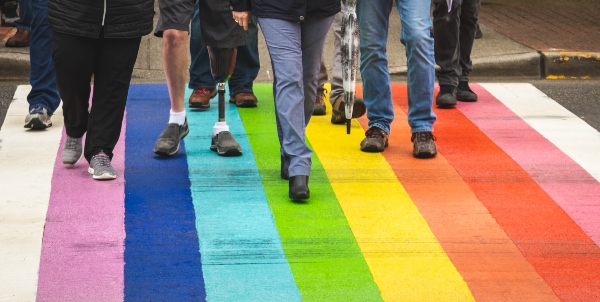
Photo by Harshil Gudka on Unsplash
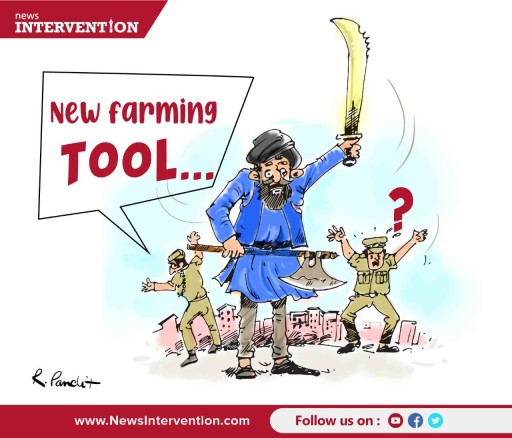
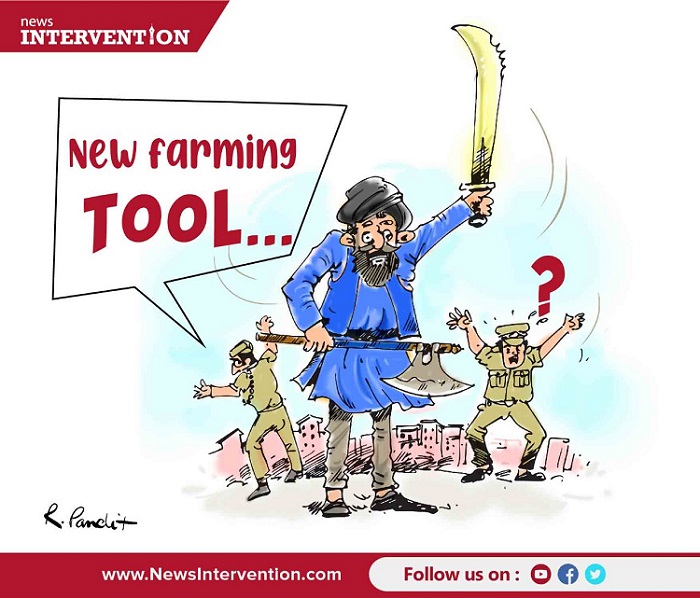
Pak-sponsored Khalistanis attack Delhi Police in the garb of farmer’s protest

0

Pak-sponsored Khalistanis attack Delhi Police in the garb of farmer’s protest

Pak-sponsored Khalistani protesters attack Delhi Police in the garb of farmer protests

0

Pak-sponsored Khalistani protesters attack Delhi Police in the garb of farmer protests

Municipal Case Study: British Columbia and Permissive Tax Exemptions

Fort Langley, British Columbia[1], Canada, is home or a next door neighbour to the largest fundamentalist Christian university in the country: Trinity Western University. A self-identified Evangelical Christian university with a well-known Community Covenant and Statement of Faith, and failed law school decisively labelled as “exclusionary” with the potential for “risk of significant harm to LGBTQ people” (quoting Case Summary of Law Society of British Columbia v. Trinity Western University, 2018 SCC 32.).

Trinity Western University v Nova Scotia Barristers’ Society, Trinity Western University v The Law Society of Upper Canada (2015), and Trinity Western University v Law Society of British Columbia (2015), led to the Supreme Court of Canada case (2017-18).

Trinity Western University lost the case 7-2. In the official documentation, one can find quotations relevant to the known interpretations external to Trinity Western University of the Community Covenant.

For example, “Case Summary of Law Society of British Columbia v. Trinity Western University, 2018 SCC 32.“ stated:

The refusal to approve the proposed law school means that members of the TWU religious community are not free to impose those religious beliefs on fellow law students, since they have an inequitable impact and can cause significant harm. The LSBC chose an interpretation of the public interest in the administration of justice which mandates access to law schools based on merit and diversity, not exclusionary religious practices. The refusal to approve TWU’s proposed law school prevents concrete, not abstract, harms to LGBTQ people and to the public in general. The LSBC’s decision ensures that equal access to the legal profession is not undermined and prevents the risk of significant harm to LGBTQ people who feel they have no choice but to attend TWU’s proposed law school. It also maintains public confidence in the legal profession, which could be undermined by the LSBC’s decision to approve a law school that forces LGBTQ people to deny who they are for three years to receive a legal education.

The “concrete” and not merely abstract harm became the focus there. All this coming from the locale of the Township of Langley. This happened for years. Some of these formulations of Christian theology and morality come to the public spotlight more than others.

Yet, surprisingly, its demographics, even by 2011 Metro Vancouver data, contained 43,680 individuals without a formal religious affiliation out of 103,145 citizens in the Township of Langley, so 42.3% as of 2011 without a formal religious affiliation.

More than 2 out of every 5 don’t adhere to any formal religious system. If the municipal data reflects national trends since 2011, then the proportion should be higher than 42.3%. Which, to me, was surprising, probably to many others, indeed, the 2018 inaugural Council session followed relatively normal procedure with a prayer by Pastor Derrick Hamre of Christian Life Assembly[1], which is a part of the Pentecostal Assemblies of Canada (PAOC).

One would gather a different sense of the demographics with prayers opening inaugural Council meetings if new to it. Obviously, if examining the prayer with reference to “Heavenly Father,” “pray,” “prayer,” “blessing,” “bless, “Christ,” and “amen,” this means, not only a prayer but, a particular religion’s prayer, a Christian prayer.

As per the Mouvement laïque québécois v. Saguenay (City), 2015, SCC 16 [2015] 2 S.C.R. 3 decision, from “2015,” was violated, after personally sending a letter of concern[2] and receiving a prompt response from a municipal representative, I have been earlier informed inaugural prayers are no longer going to take place at Council meetings in the Township of Langley; and the same with other prayers at Council meetings.

It would appear councils have been making the changes since 2015 to be in accordance with the Supreme Court of Canada. They have been slow to realize this Supreme Court of Canada decision. This means a compliance with the law. When mentioning the “Council,” this references the current Council of the Township of Langley, which is comprised of Mayor Jack Froese, Councillor Petrina Arnason, Councillor David Davis, Councillor Steve Ferguson, Councillor Margaret Kunst, Councillor Bob Long, Councillor Kim Richter, Councillor Blair Whitmarsh, and Councillor Eric Woodward.

Some of my previous coverage in the Township of Langley, British Columbia, and Canada, covered a number of the problematic contents of the municipality, the province, and the society, including homeopathy, naturopathy, astrologers, mediums, psychics, William Branham’s “The Message” theology (particularly Cloverdale Bibleway), and (most often Christian) creationism[3].

In the moment of COVID-19, these become further layered concerns because of the culture of the denial of scientific skepticism or scientific rationalism. In this sense, the idea of science as something to inform policy decision-making and political maneuvers, rather than faith, is important.

Indeed, as one may see with the news coverage throughout the United States, there’s a sense of denial of science and affirmation of the power and glory of their God to protect them. Many pastors made these open claims.

Latin America’s evangelical churches hard hit by pandemic,” by the Associated Press, reported in Bolivia “some 100 evangelical pastors have died,” in Nicaragua (according to the Nicaraguan Evangelical Alliance) “at least 44 pastors have died since March,” and so it goes; these are replicated stories elsewhere.

Pastors reject the sound medical and scientific public health recommendations, even demands of the government led by experts. They put their congregations, or “flock,” and themselves at risk. Following this, many die, sadly and unfortunately, but predictably due to theological assertions -wrongheadedness.

Similarly, when this happens in the local context, this becomes important. Riverside Calvary Chapel in Walnut Grove, British Columbia, has been making some of the news, lately, which, so happens, exists in the Township of Langley. The same Langley under the aegis of the aforementioned councillors and mayor.

The male pastoral leadership (by title of “pastor” or “elder,” youth, children, and administration left to the women[4]) comes from Elder Nathan Sawatzky, Elder Brent Muxlow, Elder Pete Jansen, Lead Pastor Brent Smith, Assistant Pastor Randy Dyck, Assistant Pastor Rob Lee, and Youth Pastor Cole Smith.

Dan Ferguson and Matthew Claxton, separately, reported on Riverside Calvary Chapel in “VIDEO: Langley church defies provincial ban on in-person services for a second time,” “Business owner under siege for reporting Langley church pleased pastor has spoken out,” “Langley church fined for holding in-person Sunday service,” “Police warned Langley church will face more fines for in-person worship: court documents,” “Updated: Langley church fined for holding in-person Sunday service,” and “Langley Township could strip tax break from churches defying COVID health orders.”

Ferguson, in “VIDEO: Langley church defies provincial ban on in-person services for a second time,” discussed how the Riverside Calvary Chapel was fined $2,300 (CAD) for the defiance of a provincial ban on public services, which was ordered by the provincial health officer.

Cpl. Holly Largy found an in-person service in-progress. This raises a number of questions. How many other quiet breaking of rules happen in the Township of Langley, the “Bible Belt,” based on religious commitments? Everyone else follows the law.

Thus, everyone collectively pays for tax exemptions of some buildings over others. Why are those harming the commonwealth with breaking public health orders receiving tax breaks where others may not get the tax breaks, exemptions, while following the same rules of everyone else?

Do these amount to particular benefits for some religious groups and not for others with the presumptive status of benefit to the general public for tax exempt status of some churches explicitly rejecting the common good via holding services in the midst of a once-in-a-century pandemic?

Largy noted the option to disperse was given to the congregants and leadership. This was declined; a fine was issued.

Lead Pastor Brent Smith stated, “We have a team of lawyers that are preparing a statement and will be representing us on these matters… We certainly are not looking for a fight, we just believe there has been many inconsistencies with what is essential and we simply desire to worship our Lord in a safe and Biblical way.”

Two other churches in Chilliwack rejected the public health officials’ orders, the Chilliwack Free Reformed Church and Free Grace Baptist Church. They claim the public health order of the provincial health officer violated their Charter rights.

Later, on December 6, 2020, the same Riverside Calvary Chapel defied the provincial health officer’s orders by holding another in-person meeting. Which, to secular members of the public, generally, does not surprise, in this country, Christianity, as believed and held by Christians, has been and continues to be a political tool.

Something upon which to flaunt their being exceptions to the rules; while, at the same time, everyone else must follow them. When they get called on it, they play the victim. This is the narrative. This is the story for centuries.

How many times has the Pope and the Roman Catholic Church had the opportunity to apologize and make amends for the Residential School System in this country? There are tons of cases like this.

Kari Simpson, the Executive Director of Culture Guard (Langley, British Columbia, Canada), spoke on the issue. Culture Guard is known for opposition to sexual orientation and gender identity resources in schools and wanting a “Canadian Judeo-Christian Flag” raised at Langley City hall.

Simpson declared, in the video, in “VIDEO: Langley church defies provincial ban on in-person services for a second time,” that the State was making this religious issue political.

Whereas, in fact, the same rules for everyone applied and then based on religious reasoning and grounds the individual members and leaders of Riverside Calvary Chapel defied the public health orders putting the public at health risk.

Which is to state, Kari Simpson is not only wrongheaded, but backwards in the reasoning. The individual church members functioning in a tax exempt building defied health orders for the benefit of the public, while taking break on public dime (including secular community members, who are plentiful), and then claimed the violators were the victims.

Imagine a thief coming to Riverside Calvary Chapel and stealing objects belonging to the church, this makes the news. Everyone’s up in arms. The police fine the thief after apprehending them and returning the stolen church goods.

The church members and leaders, e.g., Lead Pastor Brent Smith, claims this is against the law, to steal public property from the church. The thief then claims, “Why are you and the State making this political?” You see the issue.

Simpson, in essence, is explicitly claiming special rights and exceptions to rules obeyed by everyone else for Protestant Evangelical Christians at Riverside Calvary Chapel. Lead Pastor Brent Smith, and other pastoral leaders, are implicitly claiming special rights and exceptions by their actions once to the tune of $2,300 (CAD) and a second time.

That’s the point. Some don’t care to function by the same rules and regulations, and laws, as everyone else, because they view themselves as above it, which is the attitude and stance of common, petty criminals.

However, it comes under the guise of religion in the Township of Langley and, therefore, acquires a certain social immunity from common criticism as one would apply in the case of the thief.

Interestingly enough, Simpson claimed, “[Provincial health officer] Bonnie Henry is going to have to justify her position on this. I think she’s going to have real trouble.” The public justification is public health and safety, which most of the public understands, respects, and shows mutual concern and respect through following the rules here. I’ll give Simpson the benefit of the doubt; she’s lying and playing to her base rather than ignorant and lying.

Again, to Simpson, it’s quite the opposite. Simpson will “have to justify her position on this” because “I think she’s going to have real trouble” with justifying it. Why? Because she can’t justify it on the bases of the same standards as everyone else in law, in policy, in health guidelines and rules for the common good.

As implicit here, the issue is fundamentalist religious, often Christian, sentiments, in this municipality; justifications for the unjustifiable with appeals to privileged status for one’s own preferred religion and sect within the preferential religion, which, by definition, becomes unequal in status on a stand of greater stature.

Important to note, both Chilliwack pastors, James Butler (Free Grace Baptist) and John Koopman, are quoted as citing God and Christian theology as the reason for violating the public health order.

Butler stated, “The identification of what is and what is not an ‘essential service’ is certainly open for interpretation, but in short, we believe that churches are essential, and that Christians are commanded by God to attend public worship.”

Koopman said, “Our convictions compel us to worship our God in the public gathering of his people and we must act in accordance with our conscience.”

What if one were to make an appeal to a particular political ideology as a reason for statements around “The identification of what is and what is not an ‘essential service’ is certainly open for interpretation”?

You see the issues and the concerns here. In “Police warned Langley church will face more fines for in-person worship: court documents,” Ferguson stated, “According to a petition filed on Jan. 7 in the Vancouver B.C. Supreme Court registry on behalf of Riverside Calvary and several other parties in B.C., two bylaw officers and six RCMP officers arrived at the church in the 9600 block of 201st Street to issue the first ticket for $2,300 on Sunday, Nov. 29.”

As of mid-January, 19 churches in the Fraser Valley have been defying the public health order. This is the relatively common, non-majority attitude if happening sufficiently here.

Although, Pastor Smith of Riverside Calvary Chapel has done some positive contributions with not condoning some online attacks against a business owner, Dena Fyfe. Nonetheless, the main issues stay here.

The basic issue remains a culture as a threat to public health with explicit reasoning given in religious interpretations stipulated in public by pastors. It’s not a mystery; it’s, also, probably appalling to other religious people who are community leaders who adhere to guidelines, as with Cllr. Blair Whitmarsh (see below).

The single most important article reported, so far in this Riverside Calvary affair remains the one entitled “Langley Township could strip tax break from churches defying COVID health orders.”

This, in addition to “B.C. churches breaking COVID-19 rules still get government tax breaks,” describes the basic rationalist views here. As Graeme Wood reported in the article, “Riverside got an $11,997 tax break from the Township of Langley in 2019; in 2018 it got a $10,925 break.” “Riverside” meaning Riverside Calvary Chapel in Langley, British Columbia, Canada.

Only a fine of $2,300 with tax breaks as much as 5 times as much as that fine number per annum, in the most recent years. Then they break the order to attend church; two Chilliwack pastors break the order to attend churches explicitly for religious reasons; and then, 19 churches are reported – only in the Fraser Valley – to have violated the public order.

Thusly, this is a pathology within sectors of religious communities, not secular ones. Dr. Teale Phelps-Bondaroff of the British Columbia Humanist Association has been making a public call for every municipality within the province to have a public benefits test. Why?

A public benefits test for permissive tax exemptions. The argument was that if a worship place breaks the law, then the subsidies (tax exemptions) should be removed, because these are paid on the public dime and should be held to the same standards as everyone else: admission prices – so to speak.

Dr. Teale Phelps-Bondaroff stated to Graeme Wood, “[Permissive tax exemptions] exist specifically to support work that benefits the community… So, I would argue that a place of worship that is holding meetings in open defiance of COVID-19 regulations that are in place to keep people safe and prevent the spread of the pandemic is not providing a service that benefits the community – quite the opposite… Continuing to provide that place of worship with a PTE is an example of the government subsidizing this irresponsible and dangerous behaviour.”

Phelps-Bondaroff continued to dig into the Township of Langley. He noted Council interpretation is important with the local bylaws and Community Charter setting the framework. He argues these favour the places of worship over non-religious non-profit groups.

The Council of the Township of Langley reviews and passes permissive tax exemptions every year. Accordingly, tax-exempt organizations, e.g., churches, have to “fulfil some basic need, improve the life of Township residents and are compatible with or are complementary to services offered by the Township.”

This is how Woods is reporting it. Wherein, the breaking of health orders for the public good do not improve quality of life standards for members of the public.

Apparently, the permissive tax exemptions policy for the Township of Langley stipulates, “Council will only consider applications for permissive tax exemptions from charitable and not-for-profit organizations which are in good standing with their respective establishing and governing bodies… Permissive tax exemptions previously granted by Council are subject to an annual review to ensure that they continue to qualify for an exemption based on the most current available information at the time of the review.”

This is important. Furthermore, nobody from the Township of Langley Council responded to queries from the news agency for the article by Wood. Wood reported on December 21, 2020.

Now, the “Langley Township could strip tax break from churches defying COVID health orders” was January 11, 2021, so later. The councillors made public statements about this. The Township of Langley Councillor, Kim Richter placed a motion forward to “yank the permissive tax exemption status in 2022” from organizations failing to abide by the orders of the province’s health officer.

Richter made, more or less, the same argument, stating, “I think we have to put our foot down… There are lots of organizations out there that get the grant… and they abide by the rules, and they should continue to be supported by public monies.”

Hence, if an organization receiving permissive tax exemptions fails to follow public health orders, the status is removed.

Councillor David Davis approached this from a different angle, saying, “I don’t believe this motion says we’re going to censor what you’re saying, how you’re saying it… It’s just saying we can’t support a tax deduction if you are disobeying the head medical ministry.”

Councillor Blair Whitmarsh stated, “I’ve been disappointed by the action of some of the groups in our com that have chosen to disregard the orders that have come from the ministry.”

The British Columbia Humanist Association estimated $12.2 million (CAD) is given out to places of worship in 2019 via permissive tax exemptions by the Government of British Columbia.

Councillor Petrina Arnason was concerned about legal ramifications with the potential for Charter legal challenges to the motion. Richter has a lot of Council experience and had the savvy to propose sending the motion to Township of Langley staff for review of “final wording and any legal implications.”

Councillor Bob Long is the only one noted as opposing it. No word from Mayor Jack Froese, Councillor Steve Ferguson, Councillor Margaret Kunst, and Councillor Eric Woodward in the reportage.

As a conclusive note to date, the motion is expected to come back at a later Council meeting for a review and vote, so continues the saga of church and political & public life in Langley.

Footnotes

 [1] Pastor Hamre stated:

Let us pray a prayer of blessing upon the commitments made tonight.

Heavenly Father, we thank you for the sincerity of the individuals standing before us. We thank you for their integrity. We thank you for their years of experience and their willingness to serve the Township of Langley. We pray now that you would empower them with knowledge, and wisdom, and discernment. We pray that you would help them to have listening ears and hearts that are open to people and topics as they come week by week. We pray that you would give them physical stamina and endurance. We pray that you would protect them and protect their families. We pray that you would bless them as they serve one another and serve our community.

We pray these blessings in the name of Christ, amen. 

[2] Dear Hon. Mayor and Council of the Township of Langley (ToL),

I am writing regarding the practice of beginning the inaugural session of the new ToL Council with a prayer in 2018.

I am a ToL resident. I did not attend the inaugural meeting of the new ToL Council at the time. Looking at the contents of the agenda of November 5, 2018, I noticed the inaugural ToL Council session was opened by the national anthem, an oath of office, and then an invocation in item C.1 stating, “Pastor Derrick Hamre, Christian Life Assembly, to offer the invocation on behalf of all present.” Pastor Hamre is the lead pastor of the Christian Life Assembly, which is part of the Pentecostal Assemblies of Canada (PAOC) and, thus, a Christian religious representative invocation, i.e., an invocation with clear and straightforward interpretation as a prayer with reference to Christianity, in general, and Christian religious terminology, in particular, including “Heavenly Father,” “pray,” “prayer,” “blessing,” “bless, “Christ,” and “amen.” In short, with the statement in full, it is a Christian prayer. I took the liberty of transcribing Pastor Hamre’s wording in full for review:

Let us pray a prayer of blessing upon the commitments made tonight.

Heavenly Father, we thank you for the sincerity of the individuals standing before us. We thank you for their integrity. We thank you for their years of experience and their willingness to serve the Township of Langley. We pray now that you would empower them with knowledge, and wisdom, and discernment. We pray that you would help them to have listening ears and hearts that are open to people and topics as they come week by week. We pray that you would give them physical stamina and endurance. We pray that you would protect them and protect their families. We pray that you would bless them as they serve one another and serve our community.

We pray these blessings in the name of Christ, amen. 

As a freethinker, or a non-believer, and someone who believes in the separation of religion and government, I consider prayers as out of place, inappropriate, and against the fundamental principle of secularism in a government meeting. Indeed, a significant minority of the population of the ToL have no religious affiliation or a minority religious affiliation apart from Christianity in its various denominations or sects. The selection of one religion at the exclusion of others and in this case, of the majority religion, has the effect of serving as a subtle reminder to Langley citizens without a faith or of a minority faith that they are different than the majority. It sends the message: the political space of ToL Council favours one group over others. This has the effect of making some people feel unwelcome in this venue.

I wanted to bring to the attention of the Mayor and council a Supreme Court ruling addressing the question of beginning municipal council meetings with prayers. Specifically, the 2015 Supreme Court ruling in Mouvement laïque québécois v. Saguenay, found “the prayer recited by the municipal council in breach of the state’s duty of neutrality resulted in a distinction, exclusion and preference based on religion.”

This ruling elaborated, noting that “the pursuit of the ideal of a free and democratic society requires the state to encourage everyone to participate freely in public life regardless of their beliefs. A neutral public space free from coercion, pressure and judgment on the part of public authorities in matters of spirituality is intended to protect every person’s freedom and dignity, and it helps preserve and promote the multicultural nature of Canadian society. The state’s duty to protect every person’s freedom of conscience and religion means that it may not use its powers in such a way as to promote the participation of certain believers or non-believers in public life to the detriment of others…” (Mouvement laïque québécois v. Saguenay (City), 2015, SCC 16 [2015] 2 S.C.R. 3).

The ruling found that the “sponsorship of one religious tradition by the state in breach of its duty of neutrality amounts to discrimination against all other such traditions.” And that “the state may not act in such a way as to create a preferential public space that favours certain religious groups and is hostile to others.” Indeed, by extension, “… the state may not, by expressing its own religious preference, promote the participation of believers to the exclusion of non-believers or vice versa” [paragraph 75].

This ruling applies to municipal councils across Canada. As such, council sessions, inaugural or otherwise, should not include prayer. This ruling took place in 2015, before the inaugural 2018 ToL Council meeting. It is possible that the Mayor, Council, and staff were not aware of it, or its implications on the agenda and procedures of the inaugural meeting. As a result, I wanted to ask the following questions:

What process has the ToL Council historically followed in selecting people to deliver the prayer at the inaugural session of a new council?

What process was followed for the 2018 inaugural meeting?

If any, what compensation is provided to the individuals who deliver prayers at the most recent inaugural meeting?

In light of the Mouvement laïque québécois v. Saguenay decision, how will the Mayor and council be changing process and procedures for future inaugural meetings?

Thank you for your response and prompt action.

Scott Douglas Jacobsen

ToL Resident

[3] See Homeopathy – The Pathology of Pseudomedicine in Canada,” “Naturopathy – How Not to be a Doctor and Harm the Public Good,” “Making a Buck as a Mounteback – Astrologers, Mediums, and Psychics,” “The Fantastic Capacity for Believing the Incredible,” “The Message of William Marrion Branham: Responses Commentary,” “Freethought for the Small Towns: Case Study,” and “Canadians’ and Others’ Convictions to Divine Interventionism in the Matters of the Origins and Evolution.” (Hyperlinks active)

[4] Timothy 2:12 (NIV) states, “I do not permit a woman to teach or to assume authority over a man; she must be quiet.” Timothy 2:12 (KJ21) states, “But I suffer not a woman to teach, nor to usurp authority over the man, but to be in silence.” Timothy 2:12 (KJV) states, “But I suffer not a woman to teach, nor to usurp authority over the man, but to be in silence.”

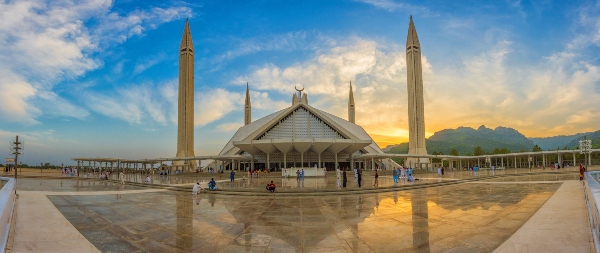
Photo by Greg Rosenke on Unsplash

Pakistan-sponsored new terror tanzeems in Kashmir

0

Pakistan has excelled in “keeping the pot boiling” so far as perpetration of terror, dissension and disruption in Kashmir is concerned. No amount of pressure, domestic or international, has lowered the determination of those in the country who are vested with this responsibility. They are unmindful of the socio-economic setbacks that their actions cause to the nation and its people. Their only aim is to ensure that Kashmir remains on tenterhooks all the time.

Pakistan has suffered many setbacks in Kashmir over the last few years. “Operation All Out” launched by the Indian Army to clean out terrorists from the valley met with astounding success. Relentless operations carried out with total support from the central government resulted in a complete decimation of the terrorist leadership operating in Kashmir and a big fall in the headcount of active terrorists. Presently, there is negligible presence of foreign terrorists and no experienced leadership to speak of. This was followed by the courageous political decision to change the status of the region in consonance with the wishes of the people. Accordingly, the state was divided into two Union Territories and the draconian Article 370 and Article 35A were abrogated.

Thus, the terrorist activity and political control that had anchored Pakistan’s nefarious Kashmir policy for decades started floundering. On top of it Pakistan is under tremendous international pressure to mend its ways or accept sanctions. In consideration of its beleaguered financial status, Pakistan is desperate to stay out of the black list of the international money laundering and terrorist activity watchdog, the Financial Action Task Force (FATF) knowing full well that getting there would mean total financial disaster. Accordingly, the country has taken many steps such as proscribing a few terrorist support organisations and arresting low level workers of terrorist organisations, while the cream remains untouched. This action too has caused a setback (though not too big) to maintaining momentum of terrorist operations in Kashmir.

However, there is no challenge too big and no pressure too strong to dissuade the terror masters of Pakistan from pursuing their evil designs. With things not working within Pakistan they have doubled efforts towards recruitment of local Kashmiris’ into the terrorist cadre.

The latest terror organisation on the block is the Lashkar-e-Mustafa (LeM). It has its base in South Kashmir that was earlier the stronghold of the Hizbul Mujahideen (HM). This could also be an attempt by the terror masters to clip the wings of the HM and particularly its chief, Syed Sallahuddin, who has not been able to give any credible results of late that could justify his existence to the Pakistani terrorist hierarchy headed by the ISI.

A young Kashmiri named Hidayatullah Malik has been designated “chief” of the LeM. Malik has created fancy facebook and other social media profiles complete with an AK-47 rifle wielding photo of himself. He has taken on a codename — Hasnain that is, by now, known to all. He further calls his outfit the “Hasnain Army.” With the standard marketing tools in place he is now busy bolstering the recruitment process for his “Army.” As per reports, he already has a dozen odd followers all from South Kashmir. The LeM “Hasnain Army” has chosen to initiate its activity with the relatively less dangerous and more paying operation of divesting a Bank cash van of Rs 60 Lakhs in Shopian sometime in November last year. Obviously the organisation has been told by its masters that apart from training and equipment it also has to organise its own finances and hence, it has adopted this strategy.

Two other terrorist organisations, The Resistance Front (TRF) and People’s Anti-Fascist Front (PAFF) surfaced in quick succession before the LeM. The idea of creating TRF was conceived and immediately implemented after the reorganisation of Jammu and Kashmir and Abrogation of Article 370 in August 2019. The organisation attempted to gain political legitimacy by issuing statements on matters like the Domicile Law which it denounced as a BJP ploy to change the demography of Kashmir. “We openly declare that any Indian who comes with an intention to settle in Kashmir will be treated as an agent of RSS and not a civilian and will be dealt with appropriately,” said a TRF statement. J&K police officials have so far termed their influence as “limited within the cyber space” though the organisation does have the murder of a few BJP workers on its hands.

The PAFF too has threatened to ‘execute’ those RSS agents who are planning to settle down in Jammu and Kashmir in the ‘guise of civilians.’ This apart it has attempted to gain legitimacy by claiming to be an off-shoot of the dreaded Jasih-e-Mohammad (JeM). It has taken responsibility for the killing of two policemen at a check post in Srinagar in August 2020. Not much has been heard from the organisation ever since.

Click on the YouTube link to watch our video report

The fact that recruitment from within the locals is taking place has been accepted by none other than Indian Army Chief, General MM Naravane, in his traditional Army Day Conference on January 15. He said that while a large number of terrorists have been neutralised in the year gone by, recruitment in the terrorist Tanzeems is still going on. Alongside that Chief also said that the initiative of the Indian Army to win hearts and minds through Operation Sadbhavna is resulting in the recruitment levels going down gradually.

The Pakistani terror masters may have achieved some success in recruiting locals, but they do not have any capability of imparting even basic training to the new “kids on the block” or equipping them with adequate weapons, ammunition and other war like stores. Under such circumstances, these poor misled boys are becoming easy targets for the security forces and have a shelf life of not more than a few months. It is necessary to isolate them from the self destructive path. While the Army does what it can, better results can be attained with a whole of government approach. As development goes on and employment increases, the recruitment will go down and the security situation will improve.

On Justice and Fairness: Ayaz Nizami & International Company

Christian is a Philosopher that comes from Belgium. What identifies him the most and above all is simplicity, for everything is better with “vanilla ice cream.” Perhaps, for this reason, his intellectual passion is criticism and irony, in the sense of trying to reveal what “hides behind the mask,” and give birth to the true. For him, ignorance and knowledge never “cross paths.” What he likes the most in his leisure time, is to go for a walk with his wife.

Dr. Christian Sorensen, Independent Metaphysician and Philosopher

Scott Douglas Jacobsen: Freethinkers, as a general term, continue to endure explicit discrimination in law and in fact, in cases, to the present day. Some of the prominent cases include the prominent Pakistani Gulalai Ismail and the Nigerian Mubarak Bala.

Ismail is the Co-Founder of Aware Girls (w/ Saba Ismail) and on the Board of Humanists International. She was known for outstanding human rights work, receiving awards and recognition, and then, shortly thereafter, charged on various ‘counts’ and having to flee Pakistan as one of the most wanted people in the country.

It came to the point of The New York Times reporting on the issues facing her, her story, in two articles entitled “Gulalai Ismail, Feminist Hunted by Pakistan’s Authorities, Escapes to U.S.” and “In Pakistan, a Feminist Hero Is Under Fire and on the Run.”

Bala is the President of the Humanist Association of Nigeria. In April of 2020, he was arrested in Kaduna for ‘blasphemy’ on social media, i.e., a single Facebook post. He was taken from Kaduna to Kano. The Penal Code of Kano is Sharia-based law. 

Indeed, this becomes a means by which to persecute him, an atheist and ex-Muslim, under Islamic law, which should not apply to someone who does not believe in the theology or the theocratic law anymore.

Zara Kay, the Founder of Faithless Hijabi, is another case as of recent. This time, with Tanzanian background, taken by police under apparent illegitimate circumstances too. Similarly, on a less reported case, ‘Ayaz Nizami,’ the Vice President of Atheist & Agnostic Alliance Pakistan, was taken and charged with blasphemy.

‘Nizami’ was arrested on March 24, 2017, based on purported blasphemy. He has been facing death penalty charges. With the arrest, illegitimate in personal opinion, because blasphemy is a religious law and not a secular law for all (so something the religious may charge against the non-religious unequally to the extent of death penalty application following from it, possibly); it repeats the situation.

In each case, a co-founder of a women’s and girls’ rights organization (Ismail), the president of a national humanist association (Bala), the founder of an ex-Muslim organization (Kay), and the vice president of an atheist and agnostic national organization (‘Nizami’). Each seems to be illegitimate, in personal opinion, and based on targeted attacks on prominent secular individuals in each nation.

There are a lot of other cases. Likewise, there are a lot of other cases with nearly zero coverage or simply null coverage – the non-consenting Houdini acts or forced disappearances. No joke about the trauma and mental health effects on those individuals disappeared – let alone reputational damage. 

According to the United States Commission on International Religious Freedom, 71 of the 195 countries in the world have blasphemy laws of some form or another. There are around 13 countries with the death penalty for open atheists, as least as of 2013. What do you make of the consistent trends in these cases?

Dr. Christian Sorensen: I think that just as there are countries, that have blasphemy laws, because in practice generally follow what for me, is a kind of pantheism without explicitly recognizing it,  since everything that’s  touched, they believe that it has a divine breath, although actually, it may be  something of secular matter, and therefore, absolutely devoid of any religious nature, they’re others as counterpart, who tend to recognize themselves, as liberal and democratic, since explicitly, this countries do not have blasphemy laws, although in general, they act  like religious pantheists, and  consequently in practice, they implicitly live, according to blasphemy laws. Therefore it could be said, that in their own way,  they make freethinkers suffer, social death sentences, without giving them any chance to escape, and consequently by exerting progressive stress,  through emotional saturation,  they end up transforming them into living dead.

Jacobsen: What would equalize the landscape in a positive way?

Sorensen: I think that one way to achieve a positive balance, would be to create facilitating conditions, that  could allow an openness to change, by basing  their search towards common denominators, that   are able to position the foundations, of what for me, would be the feeling of a sufficient basic confidence, in order to carry out from early education, and regarding the value system, the recurring of critical reviews, as an aim resource, for introducing  in a non-threatening context, the input of necessary adjustments, as temporarily relative outcomes.

Jacobsen: What might bring about some justice for these aforementioned individuals?

Sorensen: I think that the international community of human rights,  should intervene officially, which  means, that their pertinent organizations,  must imperatively demand, by applying sanctions, that these theocratic countries, fulfill the commitments acquired, in front of human rights treaties, to which they have become in some way parties, and in  its defect, because  without exception, this nations integrate said international organizations, which means, that they have to respect their involved principles and missions. Certainly what I suggest above, is just a theoretical duty,  since  the  notes of its score,  is  usually subjected, to over-justified political and economic explanations, that obviously as it’s logical to suppose, they’re firstly interfered and afterwards distorted,  for becoming utopian ideals, which poorly serve, for nominalistically safeguard their motivations for existing, and for preserving, what in my opinion, is the mere homeostasis of  mediocrity, to the extent that these organizations, use to maintain a sort of absurd and romantic duality, between what represents their  declaration of principles, as promotional discourse of  human rights, and their praxis, as  nirvanal world  of good intentions,  which in itself regarding the last, almost never forges in a concrete good will, since are incapable of reaching not even with the first aid, the desperate cry for help, due to the fact, that deep down what prevails, is the irreflexive and spontaneous  attitude,  typical of acquiescence,  that would invalidate any outcome, because in my opinion hides the being, with what I will denominate as the image of   being with.

Jacobsen: What countries seem the most egregious in this form of theocratic encroachment into political life and law, or the State?

Sorensen: I think that basically, all the countries that are linked to the ideals of pan-Arabism.

Jacobsen: Why should there be more forceful pushback against these legal and political encroachments?

Sorensen: Because these usurpations, are contrary to reason, and therefore to commonwealth. In consequence,  it is a driving force, that corrupts cultures and ends up destroying civilizations. This allows  to deduce, in concrete terms, that from a legal and political point of view, this pattern of behaviors, are morally unacceptable, according to what the universal declaration of human rights, have expressed. The aforementioned means, that  nobody without exception,  can respectively be charged, regarding  professed ideas, with condemnatory sanctions of any nature,  since the simple act  of  thinking, is an inalienable right, and as long as  does not promotes hatred or violence, and therefore  constitutes a danger to society,  never should be constricted.  In consequence, it is a political and legal duty, the fact of creating sufficient conditions, in relation to respect and tolerance,  in order that ideas can be freely manifest, regardless of  the valence that the content of these may have.

Jacobsen: How do ordinary believers stand to benefit in more equal stature in law and in politics, and in rights, between non-believers and themselves? 

Sorensen: I think that this is possible, to the extent, that tolerance prevails, as the guiding principle for coexistence in society, and in turn,  that the aforementioned, is understood simultaneously and in accordance, with the fact regarding which, the dignity of individuals transcends that of ideas, due to the matter of aseity, since the last, not only  cannot exist by themselves,  but also to be able to do so, they absolutely need of the existence of the first ones.

Jacobsen: Why are attempts at equality, often, seen as a loss of rights for they who already have the rights, or as an attack on their religious status? 

Some make religious or theological arguments about some cosmic or even metaphysical war waged since the start of time between the forces of Good and the forces of Evil, which is perceived or asserted by not-insignificant numbers of the global population. 

So, it seems an important consideration in this regard because the social media postings and commentary, and written works make this point of view reasonably clear as sincerely held by many.

Sorensen: Actually, the resistance to accepting equality in front of rights, which means that those who hold a greater number of rights, for some reason, use diverse  oppositionist and  defensive mechanisms, in order to justify their inequity,  and consequently, for not being disposed to  yield some of them, in favor of a greater comonwealth, is not  a particular phenomenon of theocratic countries and cultures, but rather it is a verifiable fact, that has always accompanied humanity. The aforementioned, indeed,   does not necessarily implies, that  this causal relationship between selfishness and human inequity,  can be established with certainty, as something due, either to innate tendencies, or  learned through socio-cultural patterns of conditioning. However, what can be affirmed necessarily, is that this causality, by going hand in hand with abuse,  leads inevitably to injustice, and if vital experience of  individuals, is  crossed instead, more through educational bases on positive   reinforcements, and on constructivists social values, ​​than by punitive consequences invested with suffering, then intrinsic human egoism, logically, can be transformed into egalitarian altruism.  I think, that if  human beings, have constantly created dichotomous theologies, based on good and evil, what in essence they have been done,  is  nothing else than projecting the internal dualism, that regards  the good self and  bad self, felt within themselves, without fully understanding, despite of what have represented the repeated failures of history, that duality as such, does not exist in any order of things, since rather what exists, and is able to be verified, through the evidence of simple experience, is the presence of polarities, which in their dynamis, they unfold continuously and not discreetly, by offering a nuanced universe,  with an infinity of predestined points,  therefore not appearing by chance in space,  and with the possibility of forming mathematical integrals, which consequently may open,  evolutionary channels of limitless realities.

Jacobsen: What countries seem to be doing the best in bringing forward equality for the non-religious and the religious in law, in politics, and in rights?

Sorensen: According to a positive antithesis, of what the theocratic states of the Muslim countries, and the theocratic Catholic state of the Vatican could represent,  which regarding the last, includes all those countries, that professing Catholicism as an official religion, and although they do not declare themselves,  theocratic countries,  they actually  behave as such, since  ultimately, they end up violating secular rights, with the same impunity, but perhaps not with the same cynicism, as Muslim countries do. I think,  that the only religious country, that has managed to maintain, a democratically balance equality,  between the rights of the secular and religious world, is the Jewish state of Israel, *because culturally speaking, in my opinion, conceives by two the discussion around ideas, but counts them, as if they were three.

Jacobsen: Thank you for the opportunity and your time, Dr. Sorensen.

Sorensen: You’re welcome, and I hope that this interview,  contributes at least as a grain of sand, to stirring up the indolent and lethargic consciences of human rights organizations, for the promptly liberation alive of Ayaz Nizami.

Photo by Syed Bilal Javaid on Unsplash

Image Credit: Christian Sorensen.

Hemu Kalani: Sindh’s revolutionary who fought against British

Hemu Kalani (Rahi Heman) was erased from the history of Pakistan because he was a Sindhi Hindu freedom fighter from Sukkur Sindh. He was one of the youngest revolutionaries to be martyred for the nation’s freedom struggle. He was also the first Sindhi revolutionary and freedom fighter during the Indian Independence Movement. At the young age of only 19 he was executed by the British.

Swaraj Sena, a student organisation which was affiliated with the All India Students Federation (AISF) was headed by him. Hemu Kalani joined Mahatma Gandhi’s Quit India movement when it was started in 1942. In those days support for the movement in Sindh was such that the British rulers had to send special troops consisting of European battalions. Hemu Kalani, Parcho Widhyarthi and friends found out that a railway train of these troops and their supplies would be passing through their local town and decided to derail it by removing the fishplates from the railway track. This despite the fact that neither Hemu nor his friends had the necessary tools and so had to use a rope as a means to loosen the fixings.

They were seen by the British troops before being able to complete the sabotage. Hemu was caught, imprisoned, and tortured in an attempt to get him to reveal the names of his co-conspirators He refused to divulge any information, following which he was put on trial and sentenced to death. The people of Sindh petitioned the Viceroy for mercy but the condition of granting mercy was that the authorities must be told about the identity of Hemu’s co-conspirators. He however refused to do so.

In fact, Hemu was ready to sacrifice his own life for the freedom struggle. On the day of his execution, he appeared extremely overjoyed, and walked to the gallows with a copy of the Bhagavad Gita in his hands, smiling and humming the whole way. Sindh will never forget him. There was only one park in Sukkur Sindh named after him “Hemu Kalani Park”. But this was later renamed to “Qasim Park” which clearly shows the enmity of Pakistan with historical Sindhi nation, that our heroes are also persecuted. Thanks to India for remembering the Sindhi heroes!

India has a postage stamp in the honour of Sindhi freedom fighter Hemu Kalani.

POK: Kashmir erupts in protest against Pakistani misrule

Kashmiris have been protesting against the food price hike in Pakistan-occupied Kashmir (POK) for the last couple of months. But the big daddies of media rarely report about POK issues. Keeping POK away from spotlight helps Pakistan Army to commit atrocities on Kashmiris in Pakistan-occupied Kashmir. On January 13 there were widespread protests and riots across POK.
Watch the video report by News Intervention to understand the full story.

Click on the YouTube link to watch video report by News Intervention

Sindh rallies against Pakistani atrocities, demands free Sindhudesh

Discontent in Sindhudesh has reached a tipping point and now they are openly protesting against the occupying forces of Pakistan. 17th January is the birth anniversary of Sindh’s tallest leader Sain GM Syed. This year on January 17, Sindhis came together to celebrate GM Syed’s 117th birth anniversary and raised slogans against the atrocities of Pakistani regime. Watch our news video report to understand the inside story.

Click on the YouTube link to watch the video report by News Intervention.

Indian Army is ready to face all security threats and challenges

“Pakistan continues to embrace terror and terrorism as an instrument of state policy, however, we are clear that we have zero tolerance for terror and we have reserved our right to respond at a time and place of our choosing. This is a clear message that we have sent across that we will not tolerate such activity.”

“Pakistan and China form a very potent threat, there is an aspect of collusion that cannot be wished away and it is very much a part of our assessment. We have to be prepared to deal with it.”

The above two significant statements were a part of a  plain speak press conference addressed by Indian Army chief, General Manoj Mukund Naravane on the occasion of Army Day, 2021.

India celebrates Army Day on January 15 every year with great fervour. It was on this day, in 1949, that the Indian Army divested itself from British control with General (later Field Marshal) K. M. Cariappa taking over as the first Commander-in-Chief of the Indian Army from Sir Francis Butcher. A number of parades, memorial lectures, equipment displays, investiture ceremonies are organised by the Indian Army on this day. An integral part of the itinerary is a press conference addressed by the Chief of Army Staff (COAS) of the Indian Army.

Click on the link to watch video released by Indian Army

This year the press conference was addressed by General Manoj Mukund Naravane. It was the second time in his tenure that he was addressing the same. In his opening remarks he lauded the “supreme sacrifice” of the brave hearts in the line of duty. He went on to convey to all ranks of the army, defence civilians, families, veer naris and veterans a very happy new year and best wishes on the occasion of the Army Day. He also conveyed best wishes to all citizens of the country on behalf of the army.

The Chief spoke extensively on issues of strategic importance concerning the immediate neighbourhood and the global environment. He also spoke of the vision to steer the army towards modernisation through “capability development and restructuring.”

The Indo-China face-off dominated the conference. The Chief mentioned the same in his opening remarks and then took on many questions on the subject. He said that on the northern front, the army is maintaining a high state of alertness in accordance with the threat perception and is presently in the winter posture, ready to meet any challenge.

While explaining the tactical aspects of the situation as it evolved along the Line of actual Control (LAC) in 2020, the Chief said that mobilisation by China was not anything new. They come for training every year and the Indian Army has all information of their movement. In the initial face off they had “first mover advantage” which Indian Army also had in August when it moved into strategically important heights despite being “eye ball to eye ball” with China. With regard to the present situation, he said that the bulk of Chinese troops who had come in for training have moved back to their permanent location in the Tibetan Plateau, but no movement has taken on either side at the “friction points.” 

The directive of the government is to stay steadfast in our positions while talks carry on at all levels. Eight round of talks of the corps commanders have taken place and the date for the ninth is awaited. The Chief expressed a hope that with dialogue and discussion the two sides will be able to reach to an amicable solution based on the principle of, “equal and mutual security in consonance with talks and understanding which resulted as an outcome of meetings by defence minister and foreign minister with their counterparts.” Having said so, the General affirmed that the army is ready for a long haul with “logistics in place, preparedness of a high order and high morale of troops.”

So far as the internal security situation in Kashmir is concerned the Chief said that while a large number of terrorists have been neutralised in the year gone by, recruitment in the terrorist Tanzeems is still going on. The initiative of the Indian Army to win hearts and minds through Operation Sadbhavna has resulted in the recruitment levels going down gradually. More traction will be attained with a whole of government approach. As development goes on and employment increases, the recruitment will go down and the security situation will improve.

The Chief expressed satisfaction at the manner in which the army met the COVID challenge by the launch of “Operation Namaste.” With pragmatic assessment, institution of required medical norms and free hand to commanders on ground the force was able to contain the situation and maintain operational preparedness to required levels to the extent of going in for rapid deployment when required. The Army also reached out to the state governments with assistance in quarantine and other aspects as required. The Chief was very appreciative of the efforts put by the medical fraternity of the army.  

Regarding aspects of capacity building and restructuring, the Chief reiterated the Tri-service commitment to move determinedly in this direction since what has transpired recently has clearly established the need for the same. The transformation will be from manpower intensive to technology intensive structures with full commitment Tri service jointness. He added that all round development would be ensured with each arm getting what it needs. The Army has signed a number of contracts in the preceding year of which 80-85 percent are with Indian companies, in an effort to indigenize on principles of “Atmannirbhar Bharat” spelled out by Prime Minister Narendra Modi.

When the Indian Army Chief speaks the entire nation and the international community listens. The General has assured the country that it is in safe hands of its Army that will ensure her sovereignty and territorial integrity. The writing on the wall is very clear. India is not ready to succumb to any pressure, be it from China, Pakistan, collusive or of any other nature. She is ready to carry on the diplomatic forays for a long period of time if need be. all military preparations for all eventualities are in place and more will be done as required.