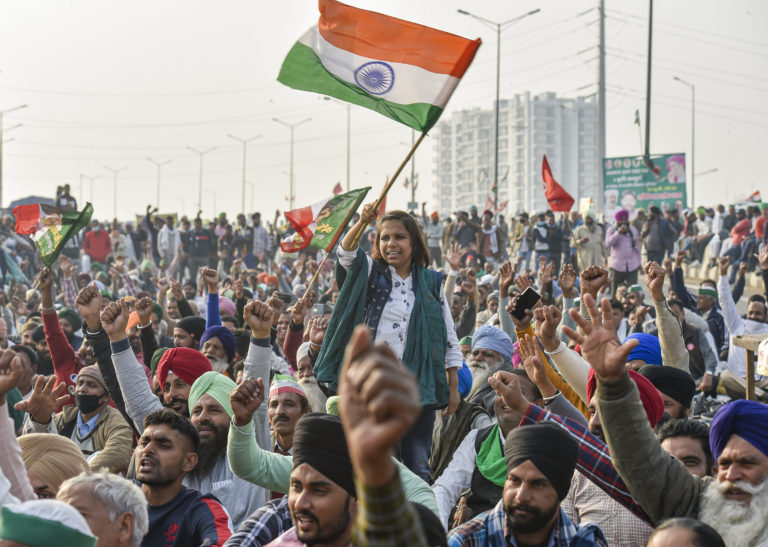
Role of a woman in a struggle is important to bring about the much needed change. Anywhere in the history of revolutions women have played a crucial role. As the saying goes “Behind every successful man there’s a woman”, she can be in the form of a mother, sister, wife, or daughter. If we take the example of Baloch freedom struggle, the Baloch freedom fighters have had the full support of their families, especially women. From a young age the mothers sing lullabies to make them brave and fight for justice against any oppression and occupiers.
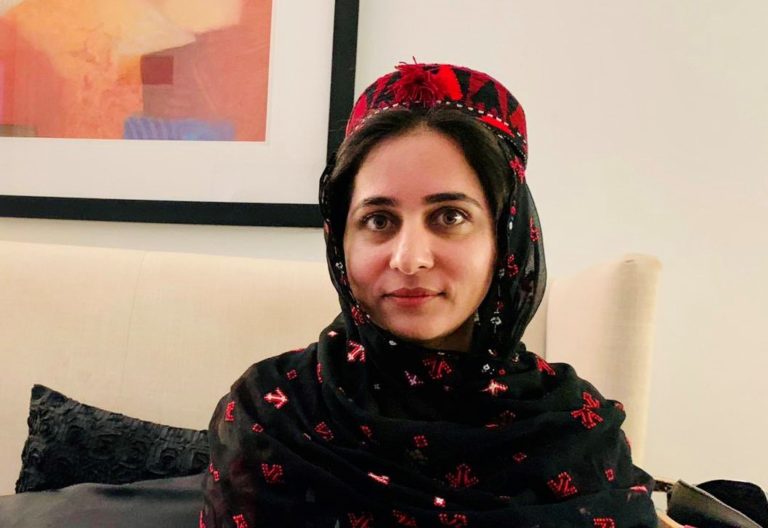
The story of inspirational and historical woman Banuk Karima Baloch starts from the day she joined BSO-Azad in 2005. It was the time when the founder of BSO-Azad Dr. Allah Nazar Baloch was abducted by Pakistani intelligence agencies along with his colleagues and younger brother. Karima Baloch started working from that day wearing a veil (niqab). But no one knew that she will become a leader and an inspirational figure for Baloch all over the world.
Karima Baloch couldn’t get the Nobel Peace Prize because she was a Baloch. If she were in an independent country she would have certainly won it. Malala won it because she had the support of the state.
I never heard Malala Yousafzai speak about the rights of women and education in Balochistan. Girls’ college in Mashkai Gajjar and schools around Balochistan were turned into an army camp and torture cell but Malala never spoke a word about it. Karima Baloch and other Baloch activists struggled for their rights not only for the Baloch nation but also for Pashtuns and other subjugated nations of the region. The people who favor no one but stand for truth deserve the Nobel Peace Prize.
Karima Baloch soon appeared all over Balochistan in rallies, press clubs and protests. She soon became an active political member of Balochistan. Because of her activities and hard work in 2006, she became a central committee member of BSO-Azad. In 2009 when Zakir Majeed was abducted she took his position of senior Vice Chairman. She became chairperson when Zahid Baloch was abducted on March 18, 2014. Karima was the first woman chairperson in the history of the Baloch Students Organization (BSO).
As a female leader, Karima Baloch’s role in BSO-Azad is greatly admirable because at that time many members of the organization were abducted and killed, especially the senior leadership. Karima filled the vacuum left by her comrades and led all protests, rallies and press conferences and guiding the younger generation of students. In 2013 when the government of Pakistan banned the Baloch Student’s Organization (BSO) Azad many more members were abducted and killed.
In 2016 she left Balochistan and went to Canada because the Pakistani authorities threatened her that she would face the same consequences as her comrades. After reaching Canada Karima took political asylum. She thought she was safe in this country and removed her veil and showed her face, but it’s a shame that Canada failed to protect her from her enemies.
After reaching Canada, Karima was named among the 100 most influential women by BBC. She started her education which she couldn’t continue in Pakistan. Along with her education she also continued her political activities. She spoke and participated in the rallies of Baloch, Sindhi, and Pashtuns against the ongoing aggression by Pakistani state. The last time I saw her, she was speaking in a webinar on YouTube on November 13. Karima was speaking about Baloch martyrs but I didn’t expect that she would leave soon and become a martyr herself.
The news about her martyrdom has left us shocked, but her martyrdom will motivate many more people, especially the women into our struggle. After Karima’s martyrdom a lot of women have come out to protest for her. The land of Balochistan has thousands of Karimas. Every home has a Karima. How many will Pakistan kill?
Market regulator Securities and Exchange Board of India (SEBI) is contemplating setting up a virtual museum of the securities market to highlight achievement and milestones. It would do well if it creates a list of failures. There are many which the market regulator saw but did nothing to stem the rot, the colocation scam at the National Stock Exchange (NSE) being one of them.
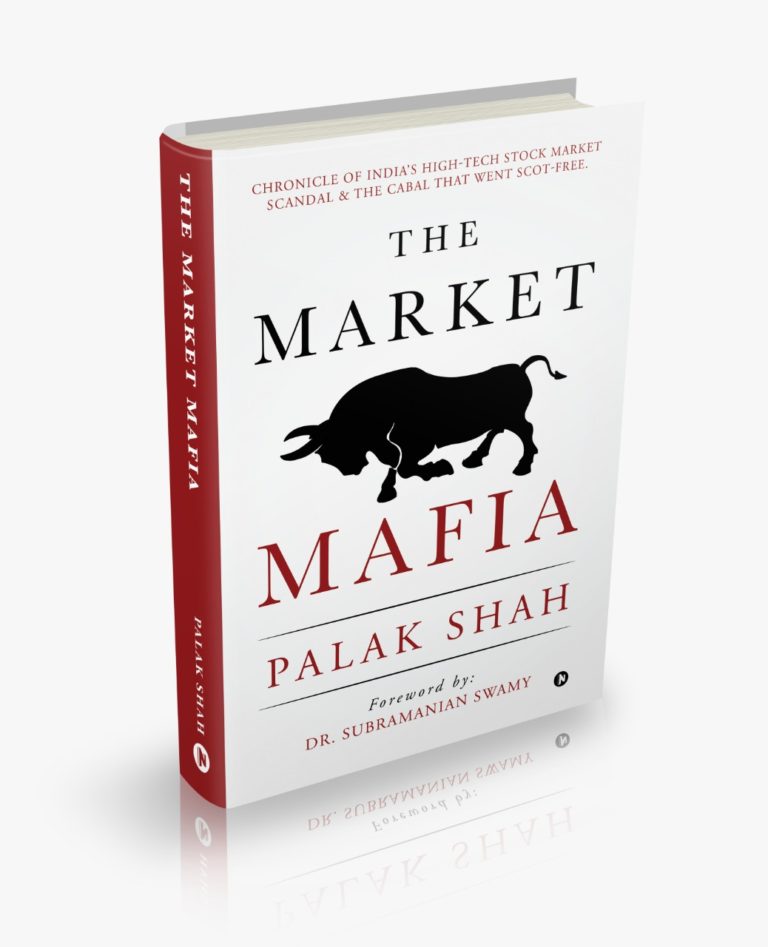
Seasoned journalist and market tracker Palak Shah’s freshly minted book, The Market Mafia offers an insider view of the workings in India’s stock exchange ecosystem. He has probed the colocation scam that took place at the NSE and how the market regulator glossed over the huge insider manipulation that was conducted by the master of orchestra, a senior minister in the previous UPA government.
The news of this colocation scandal has, in some words or more, appeared all over the media in India, and parts of Asia. But then, the NSE is not the economy, in many ways it is the graph of rich people’s feelings in India, and some NRIs abroad. So what does the colocation scam tell us, what does it imply about the way the exchanges work in India? Palak offers some excellent answers in the book that also has a foreword by Subramanian Swamy, BJP MP whose brilliance in unearthing corruption is unputdownable.
So Palak is clear that the stock exchange is inherently amoral and rarely cares about rules which should be the same for everyone. But it did not happen in NSE. It is like an exchange which, encouraged by an influential politician, former Finance Minister, P Chidambaram in this case, did not care about the health of the brokers, it did what it was told.
The NSE, as Palak explains, had a peculiar function: It may sound a bit wonky but the idea to help one set of brokers, and fool another set of brokers. It is like offering question papers to students an hour in advance of the examination while others stand outside the class.
For many, it was deeply uncomfortable to watch the NSE colocation party wherein the exchange got away with almost anything and everything, all SEBI could push through is a handful of fines that look like breadcrumbs when actually it should have been giant pieces of bread loaves. The band of brothers at NSE charged into the market by manipulating the system to their benefit, they did not care that other brokers were going to get played. Palak Shah’s investigation shows the colocation scam at the exchange was one big party where many suffered losses and the total could be way beyond – this is my calculation – ₹50,000 crore. Sadly the market regulator saw this as merely some economic faux pas. There were no self-enforcing methods installed at the NSE to clean up the inequality in the system.
What was both sad and unfortunate was the distortions were obvious and provable but remained uncorrected. SEBI remained silent, says Palak in his very authentic account of the Algo Trading Scandal, data theft at the NSE and the Multi Commodities Exchange (MCX). Chapter after chapter, he not only explains the fraud, he also cements with enough proof and data how questionable activities were institutionalised in the Indian financial markets.
Palak calls them the new age Harshad Mehta, the new age Big Bulls. Harshad Mehta worked with his band of brothers, and is a dead man now. There is a movie to his name. But this one is a deadly cabal of influential bureaucrats, executives from various stock exchanges, SEBI officials and stock brokers who carry high political patronage on their sleeves, and do not blink their eyelids before taking cash out of the purses of gullible retail investors.
The problem of Indian exchanges and Indian markets is simple: There is no awareness, there is no alertness. Those who run it will tell you this is the best on offer, and those who invest eventually land up as hapless investors.
The Market Mafia explains how and why Chandrashekhar Bhasker Bhave remained a mute spectator when the markets were undergoing changes. It was around 2008 when machines replaced man-made operations at the bourse, High-Frequency Trading (HFT) driven Algorithms (Algos) were pushing quick buy and sales of stocks. There were radical alterations in India’s high-voltage equity trading game.
“Securities and Exchange Board of India (SEBI), the ‘super-cop’ responsible for policing it, was at a nadir in following its Dharma of ensuring ‘fair market access’ to all participants when HFT-guided Algos came into play. Bhave, the then SEBI chairman, was apparently busy fighting his own battles.”
“As a sacred rule, no trader can have preferential access to a stock exchange platform. And the ethics demand that no tool, order type or service can be obtained exclusively by a few from the exchange by whatever means, even as the rest remain forbidden from it. But technology changed everything; it turned the stock markets into an ‘Animal Farm’. The elite few with their tech tools became ‘more equal’ than the rest.”
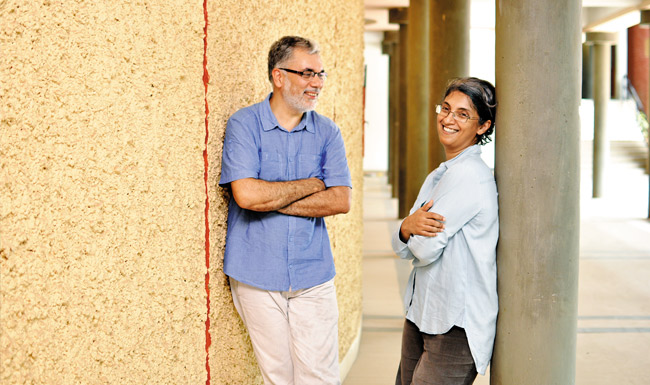
Ajay Shah and Susan Thomas, the two Mumbai-based professors who were celebrities in the realm of capital market research, had spun a flourishing family enterprise at the NSE.
“Only a few brokers who used NSE’s COLO grid knew the nuts and bolts of the technology that was driving the markets, while the outside world remained in pitch-darkness on the insides of the space-age like tech platform. But that invoked no conflict from Bhave’s point of view. He allowed the most disruptive changes including HFT driven Algos and COLO operations to seep into the stock market trading microstructure by NSE without a deeper scrutiny. He turned into a recluse when someone told him that NSE was sharing TBT data exclusively.
“Ajay Shah and Susan Thomas, the two Mumbai-based professors who were celebrities in the realm of capital market research, had spun a flourishing family enterprise at the NSE, writes Palak in his brilliantly-researched book.
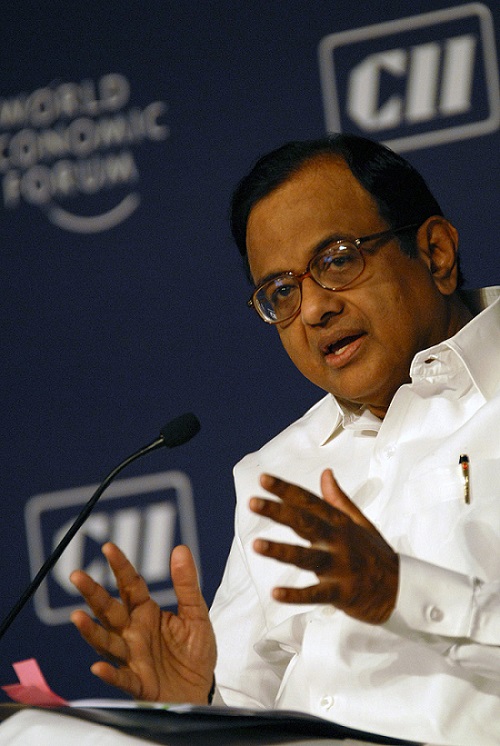
P Chidambaram, former Finance Minister of India.
Ajay and Susan were captivated by Algo trading. As PhD scholars from the University of Southern California (USC), they behaved more like modern-day Utopians, idealistic reformers in shaping the policy narrative for NSE. Both were hardened advocates of derivatives trading and wrote papers, blogs and newspaper columns churning out pompous theories to showcase its traits. NSE zealously guarded its higher volume churn in the F&O from rivals like the BSE.”
SEBI’s investigation that followed a whistleblower letter in 2015 about Algo trading scam at NSE revealed how Ajay got crucial data from the exchange for years without any formality. What and how much data did NSE share with Ajay and Susan? This is simply not traceable. SEBI too is clueless. Later, it came to light that the couple with their family enterprise had devised a lucrative business model of Algo trading software and even sold it to clients. “So how did this all happen?”
It all happened during Bhave’s second stint at SEBI, which happened only because the then Finance Minister (FM) Palaniappan Chidambaram lobbied for Bhave. Chidambaram knew the markets. “His cheeky, off the cuff statements often moved Sensex and Nifty, so much so that the two benchmark share indices of BSE and NSE had come to be known as the barometer of Chidambaram’s announcements.
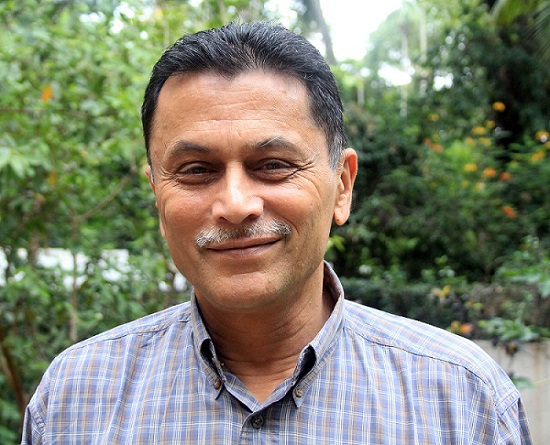
CB Bhave, former SEBI Chief.
“Before Bhave’s ouster as SEBI chief, the high-tech trading game was all set at NSE with all advanced tech tools fully in operation. Gopal’s letter was a stark picture of why SEBI under Bhave allowed NSE to do what it wanted to. As NSE, the largest promoter of NSDL, had let Bhave do what he wanted to at the depository. NSE had raised no finger at Bhave even when the SEBI probe under Damodaran highlighted the then NSDL chief’s laxity in the fake demat accounts scam.”
Palak continues in his book that reads like a James Hadley Chase thriller.
He explains why Chidambaram pushed Participatory Notes investments and how PN holding by FIIs in stocks and derivatives combined jumped to a colossal ₹3,53,484 crores (51.6 percent of FII assets under custody) by August 2007. Now remember, when Chidambaram became the Finance Minister in March 2004, P-Note holding of FIIs stood at ₹31,875 crores (20 percent of assets under custody).
Did the SEBI care? Did it act like a watchdog, a market regulator?
Writes Palak in his book: “An informal clique of current and serving bureaucrats, SEBI officials, lawyers and corporate interests orchestrated this subversion of the due process of law. They illegally interfered with independent SEBI adjudication, manipulated legal opinions, suppressed and misrepresented facts and misled the SEBI Board and Government officials about the legality of the Orders. Law, regulations and established precedent were violated.”
“Those handful people, occupying the upper echelons of NSE, were letting down the very institution where they were employed for a long time. This cabal with no regard for rules or fear of law were embodied in abuse of power with impunity.”
“It was only when Enron dragged India to the International Court of Justice (ICJ), Chidambaram relinquished his position as its legal adviser at the time when he was made the FM by Sonia Gandhi. Ironically, the Congress-led government in which Chidambaram virtually held the number 2 ranking, engaged a Pakistani-origin lawyer named Khawar Qureshi to present the Indian side at ICJ. Pakistan has the status as India’s enemy and the dimwit lawyer lost the ICJ case in months. Harish Salve was fighting the case for India at ICJ before UPA came to power. Nobody knows why the erudite legal expert was replaced by an enemy country’s inefficient lawyer.”
“Interestingly, the lawyer who argued for Chidambaram in the case was another prominent lawyer-cum-politician and BJP leader, Arun Jaitley. Both Chidambaram and Jaitley took turns at becoming India’s successive FMs, albeit from different political parties and governments. But the grapevine goes that they were brothers in arms and often came to the rescue of each other. But that is a different story.”
The big data theft at NSE was conducted by a handful of people who were backed by influential ministers in the corridors of power in the Indian Capital.
The cabal still exists. Grab a copy, and read through. You will know a lot about modern day bandits who continue to be protected by some of the top institutions in the country.
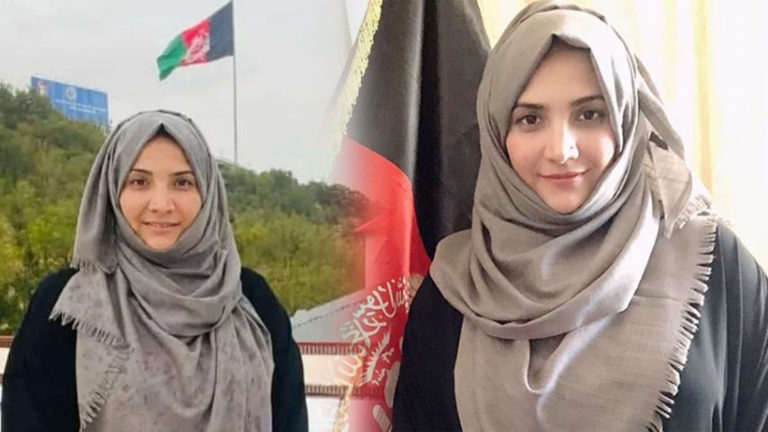
Leading Afghan women’s rights activist Freshta Kohistani was shot dead along with her brother by unidentified gunmen on a bike in the Kohistan district of Kapisa province on Thursday, officials said.
“Unknown gunmen on motorbike assassinated Freshta Kohistani in Kohistan district of Kapisa province,” interior ministry spokesperson Tariq Arian told the reporters.
Abdul Latif Murad, governor of the Kapisa province, told media that the shooting took place near the activist’s home and that her brother was also killed in the attack. Kohistani, 29, is the second activist to be killed within the span of two days. Muhammad Yousuf Rasheed, a prominent pro-democracy advocate was shot dead on in Afghan capital Kabul on Wednesday.
No group has claimed responsibility for the attack, but the Islamic State has claimed responsibility for multiple attacks in Kabul, including an attack that killed 50 people, most of them students.
The aforesaid two killings have followed a similar pattern that has emerged in the past few weeks in which prominent Afghans have been assassinated in broad daylight, most of them in Kabul.
Freshta Kohistani was an activist of international stature and had accumulated a considerable following on social media and actively organized and participated in social events calling for women’s rights in Kabul.
Days before her death, she wrote on Facebook that she had received life threats and asked for protection. “Afghanistan is not a place to live in. There is no hope for peace. Tell the tailor to take your measurement [for a funeral shroud], tomorrow it could be your turn”, she tweeted in November.
She also condemned the ongoing series of assassinations of journalists and other prominent figures.
Despite the ostensible peace talks between the Afghan government and the Taliban, journalists, prominent politicians and activists have been killed in the past few months.
On Wednesday, Muhammad Yousuf Rasheed, who led a non-governmental election monitoring organization, was ambushed and shot dead along with his driver in the capital.
A day before him, on Tuesday, five people – including two doctors working for a prison – were killed in a car bomb blast.
A leading Afghan journalist was also gunned down while on his way to a mosque in the eastern city of Ghazni.
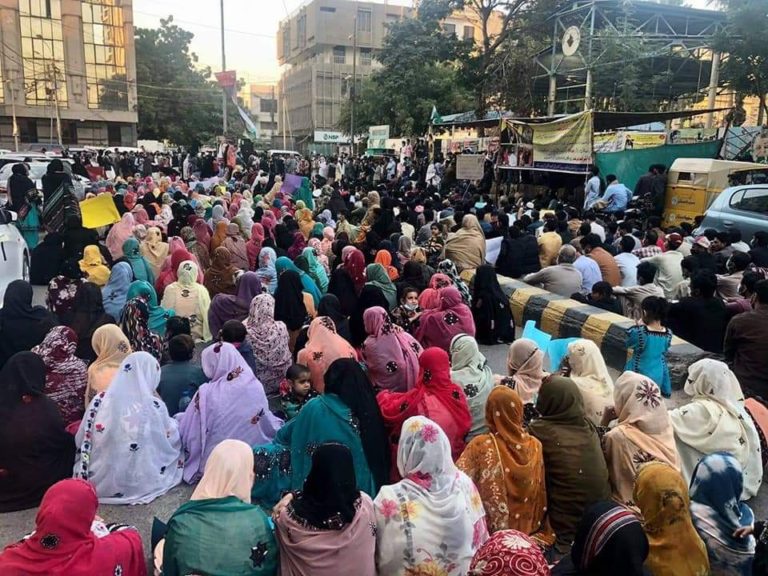
Demonstrations were held in Karachi and Lahore against the alleged murder of the rights activist Karima Baloch on Thursday.
Friday demonstrations were held in Turbat also. Scores of participants took to the streets, carrying placards and banners that bore messages of justice for the Baloch activist in English, Urdu and Balochi.
After the thousands-strong gatherings in Quetta and Hub Chowki, the Baloch Solidarity Committee organized a demonstration in Karachi. The rally was attended by hundreds of participants, majority of which were women. Sindhi and Pashtun political workers, members of human rights commissions and students were also in attendance.
Mama Qadeer Baloch, Vice-Chairman of the Voice for Baloch Missing Persons (VBMP), writer Muhammad Ali Talpur, Mehlab Baloch, daughter of the missing Dr. Deen Muhammad, Yousaf Masti Khan and various other activists addressed the gathering.
The speakers rejected the conclusion of the Toronto police department that Karima Baloch’s death was an accident or an act of suicide, and demanded that the matter must be investigated fairly and transparently.
They said that Karima Baloch is the symbol of resistance. Ideologies don’t die, she will continue to lead us. They said that she is the intellectual mother of thousands of political activists – it was her tutelage that produced youths like Ehsan, Shadad and others.
The speakers said that the Baloch nation believes that the death of the Karima Baloch was orchestrated by the Pakistani state, and demands that the Canadian government conduct a thorough investigation on the incident. Both Sajid and Karima were “killed” in a similar manner; the perpetrators employed this “suicide charade” to hide their tracks.
They said that the state targeted , Sajid Hussain and Karima Baloch in foreign countries. The Canadian government must concede its mistake and apologize to the Baloch nation, as it had failed to protect the “daughter of Balochistan.”
Students and people from various schools of thoughts also organized a demonstration against the alleged murder of Karima Baloch in Lahore. The participants carried placards and banners that bore messages like “I will come back and we will be millions”, “Murder of Karima Baloch is the continuation of Baloch genocide.”
“Shahzaib Khanzada Sb!! May I deserve your five minutes??” one placard read, calling out the Pakistani media for neglecting the incident of Karima Baloch’s death. “We will never kneel. We will prevail”, read another placard, quoting the words of the deceased activist.
The participants appealed to the Canadian government to conduct a comprehensive investigation on her death and provide justice to not just herself and her family, but the entire Baloch nation.
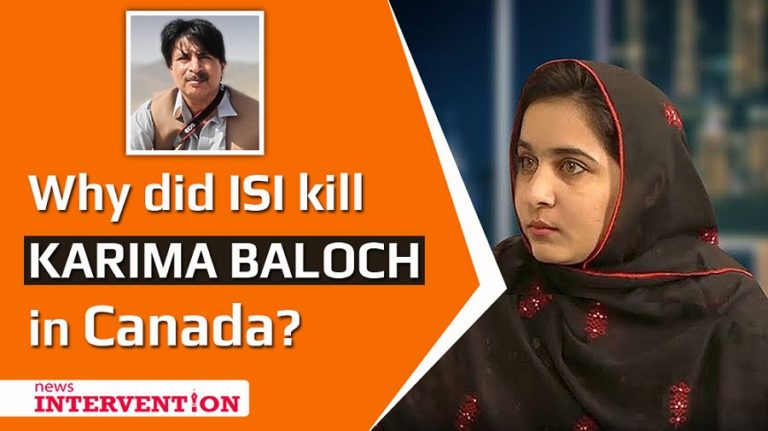
Balochistan’s daughter Karima Baloch’s dead body was found in a canal on December 21 at Toronto, Canada. Karima was a Baloch activist who regularly raised the issues of human rights violations by the Pakistan Army in Balochistan. She also exposed the barbarism and the atrocities committed by Pakistan’s intelligence agency ISI at United Nations and other international forums.
Karima Baloch was a role model for Baloch women and youth. What does her martyrdom mean for Balochistan’s independence struggle? Watch this 15-minute documentary to understand the inside story.
Click on the YouTube link to watch this short documentary
And then, like everything else in India, a prolonged courtroom battle ensued?
Well, it happened, and a tiny portion of the dust appeared settled. But there are enough chances of a huge sandstorm that could engulf the hapless, disparate unit holders.
Let us not forget that the process of winding up of six schemes is bizarre, this is the first case in history of the Indian mutual funds.
Now, here comes the decider.
In two days flat and for three consecutive days starting December 26, 2020, an estimated 300,000 unit-holders of FTMF will offer e-votes to register their consent or no consent to winding up of the schemes.
The matter did not reach this stage easily, the permission for e-voting happened only after a tough litigation which resulted in a brilliant order from the Karnataka High Court in favour of the unit holders. Then came the December 9, 2020 order from the Supreme Court which asked Securities and Exchange Board of India (SEBI), the market regulator, to appoint an independent observer who could oversee the e-voting process.
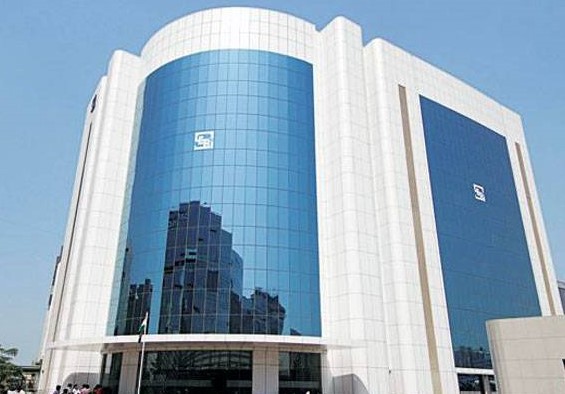
SEBI Headquarters, Mumbai.
But less than 48 hours before the start of e-voting, the market regulator has not announced the name of the observer. Worse, a slow, yet steady campaign is filtering through the social media urging the unit holders to sign away their rights without understanding what it means for them.
Can you offer blind votes? Logically, you should not.
But what FTMF is seeking is illogical. In short, it wants unit-holders to cast their votes without knowing how much would be the extent of loss, what the unit-holders could get from FTMF and when. Like the proverbial sword of Damocles, the unit-holders are left to fend for themselves like lambs in a wolf-infested jungle. There is a message wafting across the air saying voting against the winding up could mean huge losses to the unit-holders. Amidst all of this, SEBI, the market regulator, lies like a prostrate, disembowelled Gulliver. The market regulator should have ensured that FTMF’s unit-holders are provided adequate information to arrive at an informed decision and not to be frightened into action.
Did SEBI react? The answer is a big No. Even the courts noticed the regulator’s lapse.
Now, the million-dollar question remains: Who will back the hapless, disparate investors against the illogical right and the financial might of FTMF? SEBI, certainly not. Finance Ministry, certainly not. The Supreme Court, well it has acted and issued a very important order that needs some serious implementation from SEBI.
So let’s place on record what is happening. It is almost certain that FTMF has not been able to collate email IDs of all 300,000 unit-holders. No one knows why FTMF did not agree to a verifiable postal ballot than e-voting. This is not all. FTMF, claims an investor forum, once mentioned a five-year schedule for paying investors. But now, there is no mention of any schedule.
This is 21st Century India, where the Prime Minister himself has repeatedly assured the nation that corruption of any nature will not be tolerated. So who will save the unit-holders from this crisis? The answer is SEBI. But the market regulator is not answering.
SEBI’s silence is a serious matter of concern, ostensibly because the Karnataka High Court has told SEBI in its October 24, 2020 judgement that the regulator did not do enough to sustain confidence of investors and the investors would be “justified in their criticism that SEBI was a silent spectator”. A similar criticism came on December 3, 2020 from Justice Sanjeev Khanna who was critical of the market regulator not doing enough to help investors.
There are enough rumours in the market that FTMF reportedly bullied investors to support the winding up by creating the bogey of distress sale of assets. Read this one: FTMF’s letter to investors says a rejection of the winding up proposal will create havoc and redemption of units will have to be restarted. In short, FTMF has already told the unit-holders that it could be forced to make a distress sale of securities at a very deep discount.
This is not all.
SEBI has not disclosed details of the forensic audit. Let’s presume the audit has highlighted severe violations, then punishment must follow. Doesn’t it make a huge, huge difference to investors’ vote which is just two days away? There is another issue that merits instant attention from SEBI. There are reports that there could be an ill-liquidity discount of 50 percent on some schemes. Does that mean the investors could be forced to take a neat half haircut on their investment?
This is not enough. There are other issues that worry the markets. The SEBI has been reportedly asked by one Satyam Jain to act against officials who allowed FTMF to increase borrowing limits from 20 to 30 percent for two schemes, namely, Franklin India Low Duration Fund and Franklin India Short Term Income Plan, and from 20 to 40 percent in Franklin India Income Opportunities Fund and in Franklin India Credit Risk Fund. Jain has reportedly sought disgorgement and cancellation of FTMF’s registration.
The unitholders’ voting will start from 0900 hours on December 26, 2020 and go on till 1800 hours on December 28, 2020. Each unitholder will get one vote for the scheme he/she is exposed to. If the investments are jointly-held, the first unitholder will get the voting right.
This is not all. This will also be the first time when unitholders of six schemes get a chance to question trustees (in a meeting to be held on December 29) on their decision to wind-up the schemes. Unitholders can also vote during this meeting (each scheme meeting may last one to one-and-half hours), but only if they get on the video conference, which will have a cap of 2,000 attendees.
But most importantly, SEBI must announce the name of the observer for this mega exercise. It should not fail in its fiduciary responsibilities, it should not be the mute spectator.
Hammal Haidar, senior leader of BNM (Baloch National Movement) and husband of deceased Karima Baloch, has urged the Canadian authorities to leave no stone unturned in looking into the circumstances of Karima Baloch’s death. In a series of tweets, Hammal Haidar, said that: “Karima Baloch’s death needs further inquiry. My wife was an immensely courageous and spirited person. Her work as an internationally prominent activist speaks for itself.”
He added that it is their right to request the Canadian authorities to leave no stone unturned in looking into the circumstances of Karima’s death as well the threats she had been facing since moving to the country.
Earlier Sameer Mehrab, Karima’s brother, had also urged Canadian authorities to conduct a higher level investigation into his sister’s death.
Karima Baloch, a prominent leader of Balochistan, went missing on Sunday, 20th December and a day later her dead body was found from Toronto, Canada. Sameer Mehrab has urged Canadian authorities to conduct a higher level investigation into his sister’s death.
In a series of tweets, Sameer Mehrab, who also resides in Canada, has said that Karima Baloch’s death should be investigated at high levels due to her profile as an activist of international recognition. Sameer also gave reference of “well documented threats” faced by their family.
“All aspects of these threats should be fully investigated as considerable doubts still remain in our minds,” Sameer Mehrab demanded.
He assured that as responsible residents of Canada they are ready to fully cooperate with the authorities.
Karima Baloch’s dead body was found from Toronto, Canada on the 21st December. Her family and Baloch political factions claim that she has been murdered, but the officials in the Toronto police department have termed her death as “non-criminal.”
Karima Baloch was the pioneer of women activism in Balochistan. She had also raised the issue of Balochistan in United Nations session in Switzerland.
Dr. Murad Baloch, Secretary General of the Baloch National Movement (BNM) has rejected the press release issued by the Pakistan High Commission in Ottawa, regarding the “murder” of Karima Baloch. He said there is no need of Pakistan to contact the Government of Canada, it is only trying to cover up this crime because the whole world knows that thousands of Baloch, including Banuk Karima Baloch, moved to civilised countries to escape the barbarism of Pakistan where they can survive and serve their nation. He questions in the statement that how is Pakistan now engaged in correspondence with the Government of Canada to investigate the “martyrdom” of Karima Baloch?
BNM statement comes a day after the Pakistan High Commission in Ottawa, Canada released a statement saying “Following the media reports claiming the death of Pakistani national Karima Baloch in Toronto late Monday evening, the Pakistan High Commissioner has approached the Canadian authorities to find out the cause of Karima Baloch’s death and an official report in this regard is awaited.”
He said that when Karima Baloch was included in the list of 100 most influential women of the BBC for her important role in the struggle for the independence of Balochistan, the statement of Pakistani officials came to light that the BBC had included her name in negligence. Today, Pakistan’s unwarranted intervention and condolences on her martyrdom is tantamount to adding to the grief of the Baloch nation and sprinkling salt on our wounds. “At the same time, calling Karima Baloch a Pakistani national is an insult to our national struggle and martyrs. No child of the Baloch nation has renounced Balochism and accepted to be a Pakistani. Specially Banuk Karima Baloch has been the head of the organization fighting for independence and was a member of a pro-independence party. Calling Balochs Pakistani is an insult for those who are engaged in the struggle against oppression and barbarism of Pakistan.
Dr. Murad Baloch asked why the Pakistan High Commission is declaring Karima Baloch as its citizen when she was exiled just because of the Pakistani state? She continued to receive threats there (in Canada) as well, even her asylum process in Canada was intercepted. Pakistan must also remember that it has kidnapped, disappeared and martyred many of Karima Baloch’s political friends. Her uncles and cousins have also been martyred. Her home was raided several times to forcibly disappear her and mortars were fired to her house to pressurise her, the statement read.
“We also reject the current statement of the Canadian police,” he said.
According to Canadian Police’s initial report that there were “not believed to be any suspicious circumstances”.
It is pertinent to mention that Karima Baloch’s death is being seen suspicious by Baloch nationalists and rights activists and considered as assassination by Pakistani intelligence agencies. Her husband while talking to the media said “I can’t believe that it’s an act of suicide. She was a strong lady and she left home in a good mood. We can’t rule out foul play as she has been under threats.” Haider said.
Ms Baloch’s sister told the BBC Urdu service on Tuesday that her death was “not only a tragedy for the family, but also for the Baloch national movement”.
“She didn’t go abroad because she wanted to, but because… open activism in Pakistan had become impossible,” Mahganj Baloch said.
Shashi Taroor, a renowned Indian politician and former Minister of State said in a tweet: “Two Baloch activists killed in Sweden and Canada. Speaking up for freedom from Pakistani oppression comes at a very high price.”
Two Baloch activists killed in Sweden and Canada. Speaking up for freedom from Pakistani oppression comes at a very high price. https://t.co/MlJ8JHROo0
On this occasion, Shehnaz Sajid, the widow of exiled journalist, Sajid Hussain said “from the beginning, I never believed Sajid Hussain’s death is an act of suicide or accident. I have requested the Swedish Authorities to hand over me the remaining documents. What I got from Swedish police wasn’t satisfactory. I am not convinced by the investigation and have asked for more evidence from Swedish authorities. Recently, Karima Baloch found dead in the same way my husband did it proves that we cannot rule out foul play.”
Earlier this year, Sajid Hussain, who was living in Sweden on exile, went missing and was later found dead. Swedish police ruled out any “visible wrongdoing” and the cause of death was ruled to be drowning.
While mentioning the interview of Pakistan’s former dictator, General Musharraf’s, Dr Murad said, is a proof of Pakistan’s miscreants. He said Chaudhry Nisar, former Interior Minister of Pakistan, has also admitted that he and Shahbaz Sharif have been forced by General Musharraf to target people abroad and their names will not be mentioned. “The same method was used to assassinate Sajid Hussain Baloch was used to assassinate Karima Baloch. We therefore reject the Pakistani High Commission’s appeal for an inquiry from the Government of Canada and their condolences,” he added.
BNM spokesperson appealed to the United Nations to protect thousands of Baloch who have sought refuge in Europe, Canada, the United States, South Korea, Australia, Iran and Afghanistan. A large number of them are in Afghanistan and Iran. The United Nations High Commissioner for Refugees (UNHCR) should recognize the thousands of Baloch in Afghanistan and Iran as refugees and take steps to protect them. If the Baloch refugees are similarly ignored and left at the mercy of Pakistani atrocities, it will raise many questions about these institutions, Dr. Murad said.
A political logjam capable of
ushering winds of change in Pakistan is becoming visible. The opposition has
joined hands against the incumbent Imran Khan led government. The situation may
well lead to a constitutional deadlock.
The Pakistan Army, interestingly, is in the eye of the storm. The opposition is using Imran Khan to target the Army, and particularly, the Army Chief General Qamar Bajwa and his ISI head Lt. General Faiz Hameed. The ISI chief, incidentally, is a known favourite of General Bajwa. He was deeply involved in the rigging that brought Imran Khan to power. Such is his clout that he has replaced Lt. General Asim Munir who had been appointed only eight months earlier. Quite naturally any attack on General Bajwa would be incomplete without including his trusted hatchet man.
The opposition roller-coaster started with the 11-party opposition conglomerate, the Pakistan Democratic Movement (PDM), carrying out a three-month long, six-city public protest tour. During one of the rallies held in Quetta on 27 October, former Prime Minister Nawaz Sharif initiated a sharp attack directly on the Army Chief. “General Bajwa, you will have to answer for record rigging in 2018 elections, for horse-trading in Parliament, for making Imran Niazi against people’s wishes [by] tearing apart the constitution and the laws, for pushing people towards poverty and hunger”, he said. He also accused the ISI chief of “interfering in politics for several years with Impunity”.
Significantly, in this instance, the country’s
leading and respected newspaper, Dawn, specifically reported Sharif’s statement
against the two officers, which is a departure from the normal media practice
of glossing over whatever is said against the Army and its hierarchy.
Such strong, incendiary
words have never been said publicly in Pakistan and the Army is quite worried.
It is reported that General Bajwa and Lt. General Faiz Hameed have been meeting
key opposition leaders and asking them to desist from dragging the Army into
politics.
Imran Khan, the eternal
lapdog of the establishment has also been hitting out against the opposition for
targeting the Army. “The former prime minister is trying to stir up a rebellion
in the Pakistan Army by alleging [that]
it is involved in politics and calling for changing the army chief”, he said in a rally at Khyber
Pakhtunkhwa. He also slammed Maryam Sharif for accusing the Army of interfering
in politics.
Nawaz Sharif, however, has refused to be intimidated. His party, the PML-(N) hosted a massive Jalsa (rally) at the Minar-e-Pakistan, Lahore on 13 December for all constituents of the PDM. Imran Khan attempted to scuttle the rally but failed to do so. In the meeting, Nawaz Sharif once again made a frontal attack on the Army during. “Due to the massive rigging in 2018 elections, Imran Khan was installed into power so that he could be easily dictated. Time has come to get freedom from this selected set-up”, he said his speech telecast from London via video link. He further accused General Bajwa of ousting him and the Army of having become “a state above a state”. Other leaders also joined the rhetoric by saying that the various elements of the state should function within the “limits of their own jurisdiction”. The President of the PDM, Maulana Fazlur Rehman, openly urged the ‘establishment’ to stop meddling into the politics and let the leaders chosen by the people govern the country.
Imran Khan, with assistance from the compliant media, attempted to project
the Lahore rally as a “flop show”. The PDM, however, is in a high state of
morale. It has already announced its intention to march to Islamabad in February,
2012. This would be the culminating point of a huge political initiative to
bring down the Imran Khan led government along with General Bajwa and his ISI
stooge. The opposition is also aware that if they are unable to get the
resignation of Imran Khan they will be left with no option but to tender their
own which, in turn, will create a constitutional crisis.
The
overall reputation of the Pakistan army is also taking a hit because of
burgeoning cases of corruption within its ranks. The people are quite upset with
officers like Lt. General Asim Bajwa, Chairman of CPEC authority, whose assets running
into billions of dollars have been exposed by a journalist named Ahmed Noorani.
Another name doing the rounds for corruption is Lt. General Azhar Naveed Hayat
Khan. The Corps Commanders of the army are
referred to as “Crore Commanders” in view of the large wealth they accumulate
while in service and out of it.
The PDM has, notably, given
a national platform to regional parties and provincial leaders from Balochistan
and Khyber Pakhtunkhwa, who have used it to target the Pakistani army, to demand
regional autonomy and an end to repression. In Lahore, Baloch leader Akhtar
Mengal narrated implicitly the death and misery being inflicted upon his people
by the Pakistan army.
The Pakistan army will use
each and every trick in its book to suppress the “open revolt” of the civilians
against its authority. It could make a scapegoat out of Imran Khan by putting
all blame of misgovernance upon him and removing him. This however, will leave
for the Army a political vacuum that will be hard to fill. It could opt to take
power in its own hands; this too is not a good idea since public mood is quite
negative due to sustained economic hardship which will make governance
difficult. The third option is to create trouble against India and increase the
threshold of militancy and terrorism within Pakistan in order to divert
attention. This is the most promising and time tested option. Hence, India
needs to remain alert. What is quite
certain is that an unprecedented situation is emerging in Pakistan where the
fight against hegemony of the Pakistan Army has entered the decisive level. The
wave has started but its momentum can be maintained only by great resolve and
iron will.
According to CTV News, the Roman Catholic Diocese of Saskatoon has been
dealing with the sexual assault charges against one of its priests.
The Humboldt RCMP reported on “multiple incidents of a sexual nature” stated to them. 45-year-old Father Anthony Tei Atter has been charged with sexual assaults. Within the Criminal Code, he would be charged with sexual interference alleged to a person under 16 years of age.
The parishes of St. Ann, St. Anthony, and St. Gregory, are
under the responsibility of Fr. Atter. The Roman Catholic Diocese of Saskatoon
learned of the charges and released a statement.
They stated, “As soon as the diocese learned of these charges, Fr. Anthony Atter was removed from ministry… The diocese will be cooperating fully with police on this matter, and is unable to respond to questions and comments on the case at this time, while it is under investigation and/or before the courts… The Roman Catholic Diocese of Saskatoon takes the matter of sexual abuse and serious misconduct very seriously and is committed to the care and support of victims of sexual abuse.”
Based on reportage from the RCMP, the incidents occurred between September 1 and November 4 of 2020. The only incidences investigated were the ones reported to the Humboldt RCMP at the time of the recent reportage.
Fr. Atter will appear before the Provincial Court on March 22, 2021. No details have been released about the victim, so as to protect identity.
We use cookies on our website to give you the most relevant experience by remembering your preferences and repeat visits. By clicking “Accept All”, you consent to the use of ALL the cookies. However, you may visit "Cookie Settings" to provide a controlled consent.
This website uses cookies to improve your experience while you navigate through the website. Out of these, the cookies that are categorized as necessary are stored on your browser as they are essential for the working of basic functionalities of the website. We also use third-party cookies that help us analyze and understand how you use this website. These cookies will be stored in your browser only with your consent. You also have the option to opt-out of these cookies. But opting out of some of these cookies may affect your browsing experience.
Functional cookies help to perform certain functionalities like sharing the content of the website on social media platforms, collect feedbacks, and other third-party features.
Performance cookies are used to understand and analyze the key performance indexes of the website which helps in delivering a better user experience for the visitors.
Analytical cookies are used to understand how visitors interact with the website. These cookies help provide information on metrics the number of visitors, bounce rate, traffic source, etc.
Advertisement cookies are used to provide visitors with relevant ads and marketing campaigns. These cookies track visitors across websites and collect information to provide customized ads.
Necessary cookies are absolutely essential for the website to function properly. These cookies ensure basic functionalities and security features of the website, anonymously.
Cookie
Duration
Description
cookielawinfo-checkbox-analytics
11 months
This cookie is set by GDPR Cookie Consent plugin. The cookie is used to store the user consent for the cookies in the category "Analytics".
cookielawinfo-checkbox-functional
11 months
The cookie is set by GDPR cookie consent to record the user consent for the cookies in the category "Functional".
cookielawinfo-checkbox-necessary
11 months
This cookie is set by GDPR Cookie Consent plugin. The cookies is used to store the user consent for the cookies in the category "Necessary".
cookielawinfo-checkbox-others
11 months
This cookie is set by GDPR Cookie Consent plugin. The cookie is used to store the user consent for the cookies in the category "Other.
cookielawinfo-checkbox-performance
11 months
This cookie is set by GDPR Cookie Consent plugin. The cookie is used to store the user consent for the cookies in the category "Performance".
viewed_cookie_policy
11 months
The cookie is set by the GDPR Cookie Consent plugin and is used to store whether or not user has consented to the use of cookies. It does not store any personal data.