Home Blog Page 32

Pakistani Taliban kidnap Russian blogger from Khyber Pakhtunkhwa

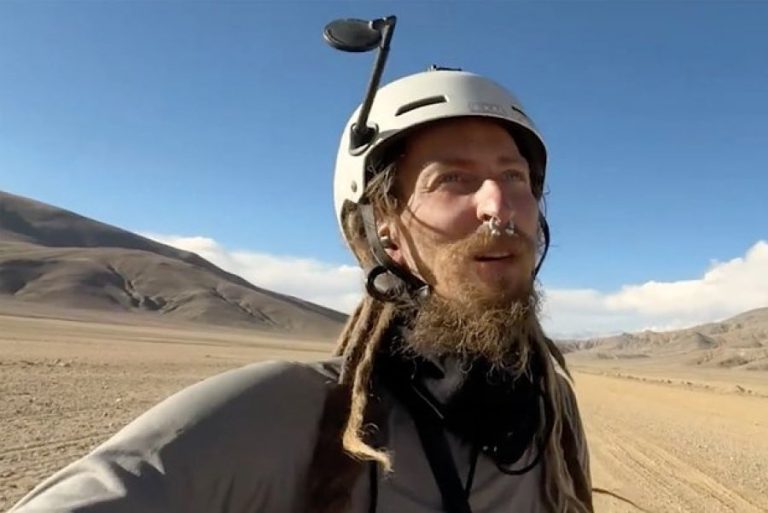
In yet another sign of the deteriorating security situation in Pakistan, the Russian Embassy in Islamabad has announced it is verifying claims that a Russian travel blogger has been abducted by the Hafiz Gul Bahadar faction of the Pakistani Taliban in Khyber Pakhtunkhwa.

The militant group released a statement on October 26, 2024, along with a photo of the captive, identifying him as a “Russian soldier” kidnapped during an operation by Ghazwatul Hind Mujahideen—an affiliate of the Bahadar faction that operates across Pakistan’s North Waziristan and Afghanistan’s Khost region. This group has worked closely with the Tehrik-e-Taliban Pakistan (TTP) since 2021, jointly carrying out attacks in Dera Ismail Khan, Khyber district, and Balochistan.

The Pakistan Army dismissed the kidnapping claim as “unsubstantiated and fake,” with local authorities in Dera Ismail Khan denying knowledge of the incident. However, sources close to the Russian Embassy confirm that the missing person could be Igor Babko, a travel blogger from St. Petersburg known online as Vasya Shchupaltse, who went silent after entering Dera Ismail Khan on October 24. Two days later, his family sounded the alarm.

The Russian Embassy, in a post on X on October 29, stated that it is still in the process of verifying the reports.

This incident reflects the worsening security landscape in Pakistan, where rogue militant groups, once nurtured by the Pakistan Army, have slipped beyond its control. The Hafiz Gul Bahadar group, originally aligned with the Paki establishment, now operates with impunity, leaving civilians and foreign nationals vulnerable to abductions and attacks. The collaboration between the Bahadar faction and the TTP further exposes the military’s failure to manage the very terror networks it once cultivated.

The Pak Army’s reliance on these in-bred militant factions has backfired spectacularly, with attacks spilling beyond tribal areas into key districts like Dera Ismail Khan, Khyber and even Balochistan. These terror outfits, now functioning autonomously, pose a direct threat not only to Pashtuns but also to foreign visitors.

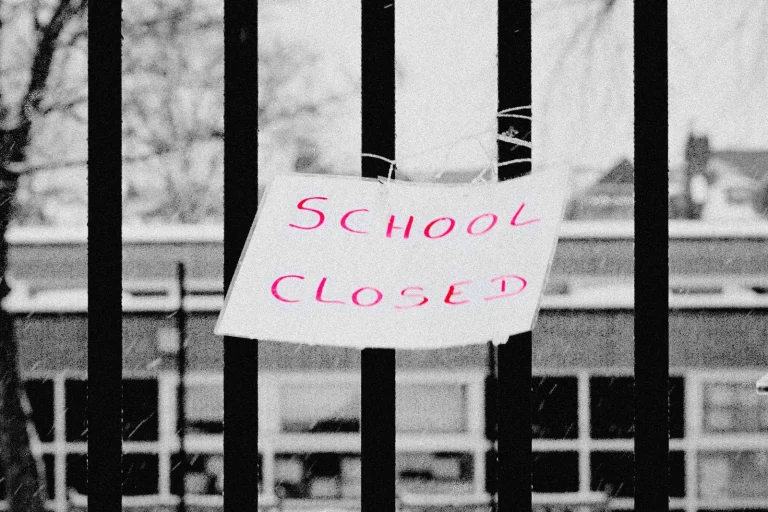
Pakistan Army shuts down schools in Pak-occupied J&K

In a shocking display of hypocrisy, Pakistan has shut down schools for Kashmiri children. The closure of the Kashmir Model Public School in Bagh highlights the oppressive tactics employed by the occupied-Pak authorities against those advocating for an independent Jammu and Kashmir. The school’s managing director, who champions the cause of self-determination, has faced the brunt of this crackdown, demonstrating the regime’s intolerance toward dissenting voices.

Despite the oppressive environment, dedicated teachers are continuing to provide education to their students under the open sky, showing an inspiring commitment to learning amid adversity. This resilience starkly contrasts with Pakistan’s deceptive promises to the people of Pakistan-occupied Jammu and Kashmir (POJK) that they would have the power to choose their own destiny. Instead, the Paki regime has encroached upon their territory, revealing that its intentions regarding Kashmir are driven more by vengeance and hostility toward India than any genuine concern for the welfare of the Kashmiri people.

After 75 years of manipulation and neglect, the residents of Kashmir are increasingly aware of this reality. The lack of political representation further underscores the absence of any authentic concern for the everyday lives of citizens. Locals in POJK have begun to refer to their authorities as mere puppets of the Islamabad regime, only serving to fill the treasury in the capital while ignoring the pressing issues faced by their own constituents.

The region is trapped in a complex web of historical grievances, administrative hurdles, socio-economic challenges and enforced disappearances that continue to hinder its development and deteriorate the quality of life for its residents. In this oppressive climate, anyone who dares to demand social rights or raise their voice against Pak Army’s atrocities is labeled a traitor and faces brutal reprisals.

This cruel approach only serves to exacerbate the suffering of the Kashmiri people and reveals the Paki establishment’s true nature: a regime that prioritizes control and retribution over the basic rights and freedoms of its citizens.

Pak regime blacklist Baloch activists to stifle voices of freedom

The Baloch Yakjehti Committee (BYC) has condemned Pakistan for its blatant use of anti-terrorism laws against political activists in Pak-occupied-Balochistan without any credible evidence, as the occupied-state is deliberately conflating peaceful activism with terrorism. In a scathing statement, the BYC criticized the Paki establishment for adopting colonial tactics to crush dissent and perpetuate racial discrimination against the Baloch and Pashtun communities.

The committee highlighted that the Pak Army has targeted hundreds of political leaders, activists, teachers, and students by adding their names to the “proscribed persons list”. Individuals on this list are denied their fundamental constitutional and international rights, such as freedom of speech, movement, association, and employment—rights guaranteed under the Universal Declaration of Human Rights (UDHR) and the International Covenant on Civil and Political Rights (ICCPR).

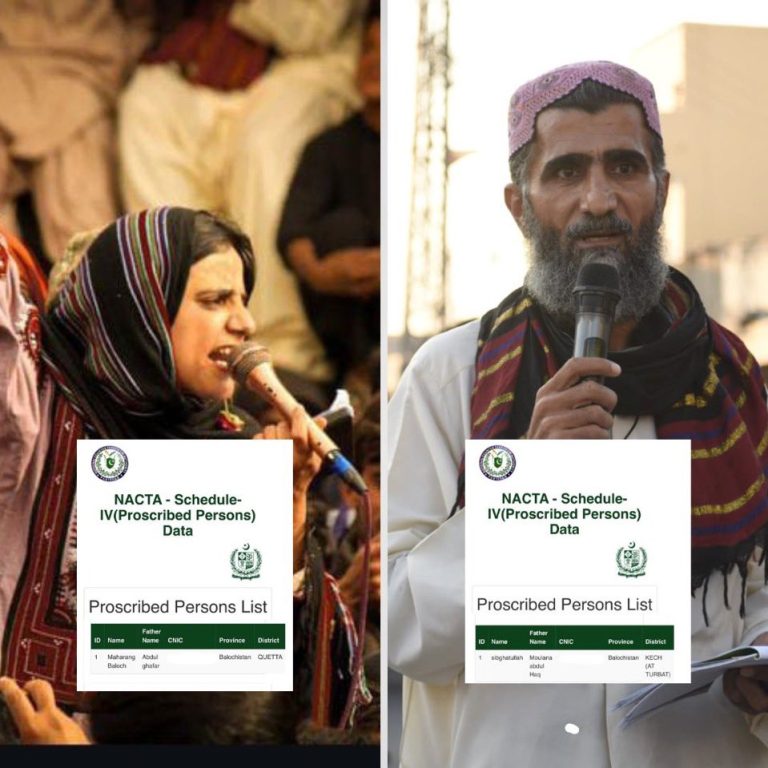
The statement underscored the addition of BYC leaders Dr. Mahrang Baloch and Sibghatullah Shah Ji Baloch to the IV Schedule, a list maintained by the National Counter-Terrorism Authority (NACTA), labelling them as “proscribed persons”. The BYC called this move a reflection of the growing paranoia over political mobilization in POB, as these activists have been at the forefront of peaceful protests against Pakistan’s atrocities, including enforced disappearances and extrajudicial killings.

Pak Military Crackdown on Baloch Activists

Dr. Mah Rang Baloch, now an internationally recognized human rights activist, has been vocal about Pakistan’s brutal policies in POB, exposing the occupied-state’s complicity in abductions and the operation of military-backed death squads. These squads, often working under the cover of law enforcement agencies, are known to carry out the infamous ‘kill-and-dump’ policy that has left a trail of mutilated bodies across the province. These extrajudicial killings are part of the Pak Army’s genocidal campaign to erase Baloch identity.

International human rights organizations, including Amnesty International and the UN Human Rights Council (UNHRC), have raised serious concerns over the misuse of anti-terror laws against political activists. They have called on Pakistan to immediately remove the names of activists from the banned list and respect their fundamental rights. However, the Paki establishment, driven by its colonial mindset and military ambitions, shows no signs of reversing its oppressive policies.

The Pakistan’s military establishment sees any form of political dissent as a threat to its authority. The Army’s unchecked powers in POB have turned the region into a battlefield, where anyone demanding rights or justice is labeled a terrorist. The Pak Army’s obsession with suppressing the Baloch movement reflects not just fear but desperation, as it faces growing internal and external pressure over its atrocities.

Despite the military’s relentless oppression, the Baloch struggle for survival continues unabated. “History shows that colonial powers may succeed temporarily, but peaceful resistance and justice eventually triumph,” the BYC asserted. They vowed that the Baloch nation’s fight for survival and dignity would persist until their basic right to existence is guaranteed.

POB:BLA attacks Pak Army convoy in Dukki, vows to continue resistance

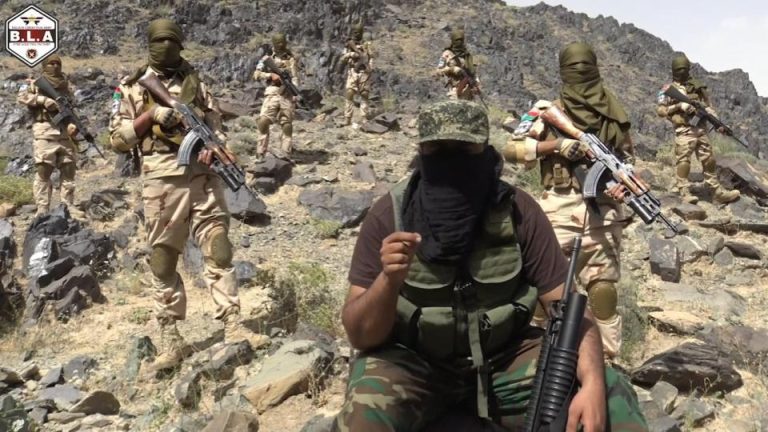
The Baloch Liberation Army (BLA) launched a targeted attack on a convoy of the occupying Pak Army in Dukki, reiterating its commitment to resisting the military’s presence in POB. In a statement to the media, BLA spokesperson Jeeyand Baloch confirmed that their fighters executed a remote-controlled IED attack, inflicting casualties on the Army.

According to the spokesperson, the attack took place at Mande Tuk in Dukki, where the BLA fighters ambushed a Pakistan military vehicle. “The explosion resulted in the deaths of two soldiers on the spot, while four others sustained injuries,” the statement read. Among the injured are Naib Subedar Akhtar, Lance Naik Muhammad Asghar, Sepoy Saqib, and Sepoy Tahzeeb.

The BLA declared that the attack was part of its broader strategy to target Pakistan military forces occupying Balochistan. “We take full responsibility for this operation. Our struggle will continue relentlessly until the complete withdrawal of the Pakistani military from our homeland,” the spokesperson emphasized.

The Baloch Liberation Army, a nationalist group fighting for independence, has launched resistance against the Pak military of committing atrocities in Balochistan, including enforced disappearances, extrajudicial killings, and resource exploitation. The attack in Dukki underscores the group’s ongoing efforts to push back against the colonial occupation.

PTM UK chapter mobilises Afghans to expose Pak Army’s oppression on Pashtuns

On October 30, the Pashtun Tahafuz Movement (PTM) UK Chapter called on all Afghans living in Britain to participate in a significant demonstration aimed at raising global awareness about the oppression and tyranny faced by Pashtuns at the hands of the Paki establishment. This rally provided a crucial opportunity to highlight the dire plight of innocent Pashtun people, who have suffered killings, resource exploitation, and the systematic enrichment of Punjab at their expense.

The realities on the ground in Pashtun areas are alarming. Communities are grappling with extensive economic challenges while also lacking basic necessities, including access to clean drinking water. The Pakistan Army has been initiating a relentless trade war in these regions, profiting from the killings of Pashtun citizens while fueling instability and fear. Support for extremist groups like the Taliban, Tehreek-e-Taliban Pakistan (TTP), and ISIS has become a strategy for the military, further exacerbating the chaos that the Pashtun people endure. The Taliban, now operating as the de facto government in Afghanistan, has also been manipulated as part of this oppressive agenda.

Pashtuns living worldwide—especially in Europe, Britain, and America—are urged to unite and raise their voices against these atrocities. It is their responsibility to bring international attention to the harmful policies of the Punjabi Pak Army and support the innocent Pashtuns who have been victims of violence and oppression for far too long.

This demonstration presents a pivotal moment to convey the message of Pakistan’s brutality to the global community. The collective call for action aims to amplify the demand for truth and justice for future generations of Pashtuns, proving that the Pashtun nation will not remain silent in the face of oppression and tyranny.

Pak Army inflicts brutality on Pashtuns during PTM protest in Khyber

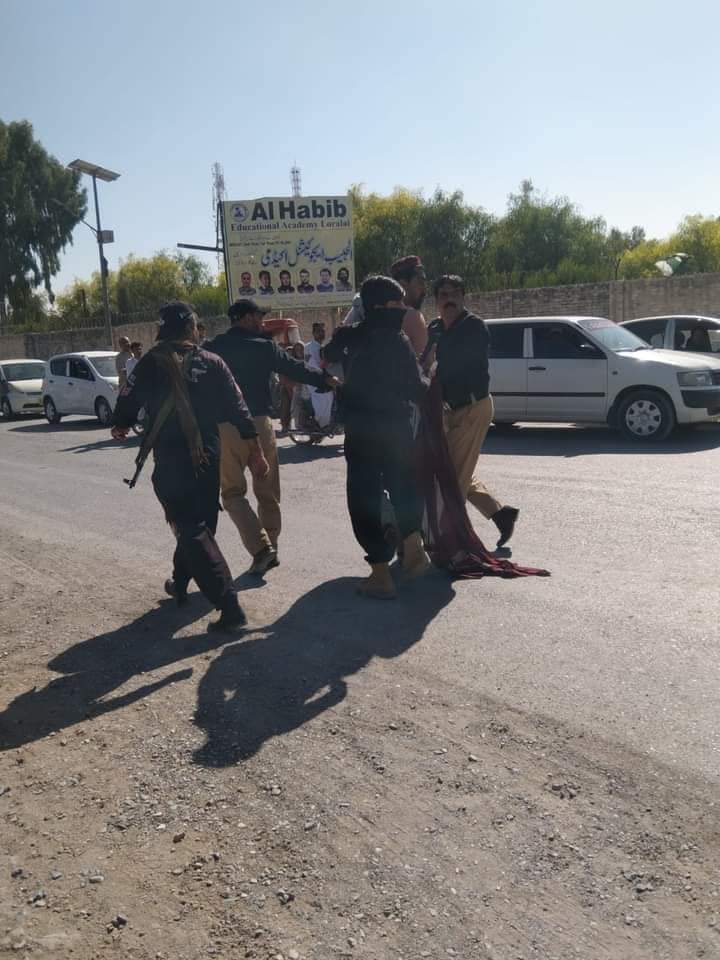
A peaceful PTM protester was violently assaulted by Pak security forces in Loralai, underscoring the systemic oppression faced by the Pashtun community in Khyber. This incident is part of a broader pattern of injustice that the Pashtun people continue to resist with growing determination and unity.

Innocent Pashtun individuals have not only lost their lives but also seen their natural resources plundered, enriching Punjab at their expense. The Pak military, well aware of the Pashtun uprising against the prevailing climate of war and terror, has refused to abandon its exploitative practices. Instead, it continues to exacerbate tensions in the region through proxy forces that further destabilize local communities.

The presence of the Punjabi Pak Army in Pashtun areas has made peace an unattainable dream. The military’s relentless policies of repression—including abductions, arbitrary arrests, enforced disappearances, and extrajudicial killings—have become alarmingly commonplace. Innocent civilians are often caught in the crossfire of the Army’s so-called security operations.

Extrajudicial killings and the forced disappearance of civilians, activists and dissenters are tactics employed by the military to silence voices demanding justice. The exploitation of Pashtun resources continues, with local wealth funneled into the pockets of those in power, leaving the community impoverished and marginalized.

POB: BLF launches attack on Pak Army posts in Turbat and Awaran

The Balochistan Liberation Front (BLF) launched two targeted attacks on Pak military forces, underscoring the group’s ongoing resistance against the brutal occupation of Balochistan. In a statement to the media, BLF spokesperson Major Gwahram Baloch revealed that the attacks were carried out in Turbat and Awaran, inflicting significant damage on the enemy forces.

On October 24 at 9 p.m., BLF fighters launched a grenade attack on Pak troops in Aapsar, Turbat, injuring two soldiers. According to Major Gwahram, the attack came as the military personnel left their posts to harass locals under the guise of conducting security checks. “This is a routine tactic by the occupying forces to violate the dignity of the Baloch people through unnecessary searches and harassment,” he said.

The BLF condemned the Pakistan Army’s behavior as part of a deliberate strategy to subjugate and intimidate the people of POB. “The Pak Army targets civilians, humiliates our people, and treats Balochistan as a colonial possession. These attacks are a response to that injustice,” Major Gwahram stated, reaffirming the group’s commitment to fighting until the complete withdrawal of the enemy forces.

BLF Strikes

In another operation on October 25, BLF fighters struck a military post in Mashkay, Awaran, at 11 a.m.. According to the BLF spokesperson, a sniper shot dead a Paki soldier standing guard outside the post. The precision of the attack reflects the BLF’s growing capability to strike at military targets with devastating effect.

The BLF criticized the Pakistan Army’s colonial mindset of relying on intimidation, arbitrary detentions and harassment to control the region. The group said that its fighters, along with its intelligence units, are actively tracking the movements of military forces and will continue to strike them wherever necessary.

“We will not tolerate the humiliation of our people. With the power of the people behind us, the BLF will ensure that the enemy faces a humiliating defeat,” the statement read. The spokesperson stressed that the group will keep targeting military personnel and installations until the Pakistan Army withdraws from Balochistan.

The Pakistan Army’s heavy-handed tactics—marked by enforced disappearances, torture, and extrajudicial killings—have fueled greater defiance among the Baloch people, making it clear that the military’s control is slipping.

Israel conducts ‘precise and targeted air strikes’ on Iran’s military bases

In a significant escalation, Israel launched extensive airstrikes on Iranian military installations, targeting key sites across multiple provinces. The White House, while confirming it had been informed throughout the operation, clarified on Saturday that the United States was not involved in the strikes, underscoring its desire to avoid direct entanglement. A senior U.S. official described the operation as “targeted and precise,” warning Iran of potential consequences if it retaliates.

The strikes, dubbed “Days of Repentance” by the Israel Defense Forces (IDF), involved dozens of aircraft, including fighter jets and refueling planes. Over several hours, waves of explosions were reported in Tehran and military bases across the provinces of Khuzestan, Ilam, and near the capital. Israel reported the attack on the Parchin military complex, located 30 km from Tehran. This site is known for the research, development, and production of missiles. Israeli officials stated that the operation aimed to disable Iran’s air defense systems and ballistic missile facilities, which have been linked to attacks against Israel, including a missile barrage earlier this month.

Iran’s military claimed that its air defense system intercepted many of the incoming attacks, reporting “limited damage” to some locations. However, state media in Iran reported loud explosions around the capital, with officials initially suspending flights across the country. Flights have now resumed, according to Iran’s Tasnim news agency.

Diplomatic Warnings and U.S. Involvement

Although U.S. officials confirmed they did not participate in the military operation, President Joe Biden had advised Israeli Prime Minister Benjamin Netanyahu on designing a response that would avoid escalation and minimize civilian harm. A senior U.S. administration official remarked that the strikes aligned with this strategy, focusing on military targets outside populated areas. “We urge Iran to halt further attacks on Israel to prevent an escalation,” said Sean Savett, spokesman for the U.S. National Security Council.

The U.S. has bolstered Israel’s defenses in preparation for any potential Iranian retaliation, recently deploying THAAD missile defense systems to the region. “We are fully prepared to defend against any counterattack”, the official stressed, signalling a readiness to respond if the conflict intensifies.

Iran’s Civil Aviation Organization announced that all flights had been temporarily canceled but have since resumed normal operations. Meanwhile, local reports denied any fires or explosions at an oil refinery near Tehran, dispelling rumors circulating after the strikes.

Baloch protesters demand an end to kidnappings by Pak Army

The Baloch Yakjehti Committee (BYC) has intensified its campaign titled “Breaking the Silence: Standing Against Enforced Disappearances”, with protests spreading across Pak-occupied-Balochistan. These demonstrations highlight growing frustration with the Pakistan Army and intelligence agencies of orchestrating the abduction and enforced disappearances of Baloch students and civilians.

In Kharan, the latest rally took place today, with demonstrators marching from Nawab Akbar Khan Bugti Stadium to the Red Zone, condemning the military’s brutal tactics. Participants, including families of the disappeared, carried photographs of their missing loved ones. The protesters chanted slogans against Army institutions, demanding an end to abductions and the immediate release of those forcibly disappeared.

The protest in Kharan is part of a broader wave of demonstrations that has seen gatherings in Karachi, Hub Chowki, Khuzdar, Turbat, and Panjgur. The BYC emphasized that despite persistent threats and violence from the occupied-state, the Baloch are determined to fight for justice. “Our peaceful struggle for survival and justice will continue, no matter the aggression from the authorities,” the BYC said, urging the public and families of the disappeared to join the protests and report details of missing persons.

Pak Army repression and death squads in action

The Pakistan Army and its intelligence networks have long been using abductions as a tool to crush dissent in POB. The military’s ‘kill-and-dump’ policy—where abducted individuals are tortured and later found dead—remains a grim reminder of the Army’s disregard for human lives. Enforced disappearances are part of a deliberate strategy to silence Baloch voices and maintain military dominance over the region, which has resisted Pakistan’s occupation since 1948.

The Paki establishment has responded to the growing dissent with violence. In Karachi, BYC protesters were assaulted by police and intelligence operatives, with several participants arrested. Similar harassment was reported during protests in Hub and Khuzdar. Yesterday in Panjgur, the police disrupted protests, while Army-sponsored death squads abducted a youth named Haseeb. Haseeb was released this morning in a severely tortured condition.

The Pakistan Army-backed death squads have operated with impunity in POB, using abductions and violence to spread fear among the population. These squads, working under military protection, have become instruments of terror, systematically targeting Baloch activists and their families. Despite the repression, the BYC vowed to continue its campaign, calling for nationwide participation to expose the injustices in POB.

Since 1947, Pak Army has not only forcefully occupied Balochistan but also has benefited from its rich resources. Pak Army has left the province at the rock bottom of the socio-economic ladder, leaving the Baloch community oppressed, alienated and exploited with kidnappings and abductions of Baloch.

Tehreek-e-Labbaik threatens to destroy Ahmadiyya mosques and graves in Rabwah after Oct 28

The radical Islamist group Tehreek-e-Labbaik Pakistan (TLP) has issued an ultimatum to the Chiniot district administration, that if Islamic symbols and rituals are not removed from Ahmadi places of worship by October 28, they will take matters into their own hands and start demolishing Ahmadiyya mosques and graves. The threat has intensified fears within the already vulnerable Ahmadiyya Muslim community, highlighting the dangerous environment they face in Pakistan.

The TLP’s statement, circulated through flyers and social media, said: “If the Islamic rituals are not removed from the worship places of the Qadianis, we will act on our own, and the authorities will be responsible for the consequences.” The message underscored the group’s justification, claiming their actions would be in defense of the “honor of the Holy Prophet (PBUH),” with supporters vowing to sacrifice their lives if necessary.

Among the targeted sites is the Ahmadiyya common graveyard and the revered Bahishti Maqbara in Rabwah, which holds profound significance for the Ahmadiyya community. The planned destruction of these gravesites is not only inhumane but also a direct violation of the human rights of Ahmadiyyas and explains how the minorities are treated within Pakistan.

The Tehreek-e-Labbaik Pakistan (TLP) campaign is being spearheaded by notorious hate preacher Muhammad Naeem Chattha Qadri, infamous for his inflammatory rhetoric and history of inciting violence. In 2022, Qadri called for attacks against pregnant Ahmadiyya mothers, amplifying the violent persecution faced by the community. Muhammad Naeem Chattha Qadri’s involvement in the upcoming rally has heightened tensions, as he has clearly announced his aim to destroy Ahmadiyya mosques, graves, and buildings in Rabwah.

The Ahmadiyyas are a sect within Islam and have long been a target of systemic persecution in Pakistan. Their systematic repression dates back to 1974, when the Pakistan Army officially declared Ahmadiyyas non-Muslims. In 1984, Rawalpindi nudged the then puppet political government in Islamabad to enact legislation barring Ahmadiyyas from identifying as Muslims or building mosques with Islamic architectural elements such as minarets. These laws have not only denied Ahmadiyyas their religious identity but have also emboldened extremist Islamist groups to harass, attack, and vandalize their places of worship with impunity.