Home Blog Page 326

Sole Ensoulment – Not “I have a soul,” But “I am a soul.”

0

I believe we have a soul and would define it as the intensity of the impression we make on others during and after our lifetime. – Matthew Scillitani

The soul, is an “idea” that has an “object” as a “thing in itself,” which is the body, and since this last is an “object-thing,” it is possible to have an idea of it, “the soul.” – Christian Sorensen

Souls exist if you call our conscious selves our souls. If by “soul” you mean a magic ingredient, not information-based, that transforms an unconscious automaton into a feeling, experiencing being, then no, I don’t think souls exist. Our consciousness, our feeling that we exist in the world, is a property of how we process information. It’s not the result of a transcendent soul that rides unfeeling matter like a little sparkly cowboy or a golden thinking cap on a flesh-and-bone Roomba. – Rick Rosner/Richard Rosner/Rick G. Rosner

Mind is an advanced personal processor, responsible for the perception, reaction and adjustment in reality. We need mind to live our reality. I suppose we all know what is the condition of a body with a non-functioning mind. Reality is an objective and independent set of conditions, events, happenings, incidents, people, principles, facts. Our mind personalizes this objective information to a subjective representation in us. Mind function is influenced by factors, such as perceptual ability, reasoning, previous knowledge and experiences, psychological status and mental state. – Evangelos Georgiou Katsioulis/Ευάγγελος Γεωργίου Κατσιούλης

The simple definition of Cogito is enough to be certain that there is a spirit (or soul if you will). Unfortunately, this conclusion only works one-way: the absence of the Cogito does not necessarily mean that there is no spirit or soul. A small child or simple person is not able to say, “I think, therefore I am,” or something equivalent, and neither can an intelligent person when sufficiently distracted or otherwise impeded (e.g., drunk or asleep). So, the best definition for a spirit or soul would be “Cogito potential”, i.e., if somebody could in the future possibly speak the Cogito if taught, grown or no longer impeded. But of course, this is fluent to decide and not determinable at all. Above that, we can neither be sure if any spirit other than our own exists at all (as solipsism is a possibility), nor if our own spirit is infinite or finite, i.e., immortal or mortal. Or, most plausible to me, a finite extension of an infinite base. – Thomas Wolf

The soul, an enigmatic portion of the person considered some extramaterial substance or essence – ahem – essential to individual personality, or the entire nature of a being in existence, even simply the mind as the “the intensity of the impression we make on others during and after our lifetime,” “an ‘idea’ that has an ‘object’ as a ‘thing in itself,’” “an advanced personal processor,” “our conscious selves,” or “a finite extension of an infinite base.” Many extant definitions aside.

In media portrayals, we see the soul, sometimes, depart from the dead husk of a body, the corpse, of some protagonist, which, typically, travels upwards to heaven, presumably. Somehow, the soul emits photons for visual perception in this imaginary portrayal.

Yet, this does represent a primitive idea, though. Something seen throughout cultures. Some essence connected to the afterlife. Some afterlife represented as a final waystation for individuals in the mortal realm in the midst of a cosmic battle between good and evil, God and Satan.

A primitive idea representing a non-spherical Earth, a flat Earth, to “travel upwards.” In that, to move up, one must harbour some cultural or religious idea of a rapture-like state in which a flat Earth remains the middle of the world separated by a higher realm, heaven, and a lower realm, hell. Since no “up there” exists, as we live in a sphere floating in space, no higher realm exists in this original sense. It’s a defeated argument from that angle.

Think of the popularizations, demons come from the floor and drag sinners down to hell, not up. Angels have wings and ascend up to heaven or into the sky. People who die, for some self-sacrificial purpose, transcend into the sky as an incorporeal, though viewable spirit.

In this imagery, the surface of the Earth represents some form of junction between the deep innards of the Earth, as hell, and the beyond-the-sky domain of God, the choir of angels, and the deceased’s souls collected for eternal communion with the divine.

Often, it’s portrayed as the individual in their best state, their best clothes, not naked, though as a transparent outline of the original person. These are common notions in the majority of the Western world who harbour some Christian or Islamic beliefs about heaven and hell.

To point this out isn’t to become a literalist or a fundamentalist, it’s to point out the fact of the matter. People in advanced industrial economies benefitting from the progression in complexity of technology and scientific comprehension of the world harbour, or hold to, fundamentalist and literalist visions of the world based on their ‘holy’ scripture.

That which comes from the messengers of God to inform the world about the revelations of the theity. In this sense, the rhetorical flourishes retort with the notion of the critics of religious fundamentalism as themselves fundamentalist, literalist, inerrantist.

It’s quite the opposite, in fact. Those individuals who reject the ideas of the religious fundamentalisms point to the issues of fundamentalism, literalism, and inerrantism, qua fundamentalism, literalism, and inerrantism.

To confuse critique with oppositional imbibing of the same ratiocinative orientation is incorrect, individuals who reject them and then point them out may harbour such sentiments in other domains. However, the opposition to the fundamentalisms provides the basis for critique.

The popular misconception of “imbibing” provides some protection against more open critiques, updates, to the view of the world. In this sense, also, theology failed. These ideas of the individual soul connect to wider theological perspectives on reality.

Those marked as justifications of the assertions of religious texts. Also, not unreasonable for the time, in this manner, the public and in petto phraseology of the times, ideological leanings, religious contexts, and political constraints to kings and priests naturally lead to particular worldviews, weltanschauung.

To now, the public statement of the beliefs becomes lesser while the private harbouring of the ideas seems greater. It shows in the survey data of the general populations of some of the advanced industrial economies and the beliefs in the paranormal, the supernatural, the unnecessary metaphysical.

In a manner of speaking, as with the passing of the magician and skeptic James “The Amazing” Randi who permitted an extensive interview with me, magical thinking becomes the norm rather than not, while the base comes in the fear of death. Fear drives disassociation.

A disconnection from the self and the world. In this sense, it builds on some of the commentary of Dr. Sam Vaknin on dissociative disorders and personality disorders. Also, it motivates a need to justify the incredible.

That which probably can’t be, seems far beyond reasonable consideration, while garnering extensive support because of the overwhelming general fear of death, mutually experienced as a social species, and, thus, interpersonally supported.

In the cases of the standard repertoire of religions, some fear of the thanatian forces undergirding existence for biological creatures in which death becomes an inevitable byproduct of life with death as a consequence of life and life as an antithesis to the stagnation of death.

This idea of the soul comes from a litany of religious traditions, transcendentalist concepts, of reality. Those perspectives proposing a transcendent source of existence. In this sense, the idea comes later. Although, the argument becomes an argument for a transcendental object or subject, or both.

The transcendental entity, or being itself, or the source of being in this transcendent existence, more or less, amounts to an assertion. The assumption of this becomes the basis for the derivations of existence therefrom, where the transcendent being exhibits a property aseity or self-existence.

The issue comes from the assumption or the assertion of the being itself and then the property of this being as self-existence. Its aseity as the base for all other things with each existent with property seity. Those which can’t exist or continue to exist, except from the generative capacities of the aseitous being.

Also, the perpetuity of derivative existences coming from the transcendent being itself. If granting of the premise, following this, everything from the material framework of reality in the natural world to the immaterial essences intertwined, weaved together, and connected to the individual beings in reality dependent on the generative capacities of the transcendent object itself for their existence.

Those essences entitled the “soul.” Originally, this probably comes in the Western tradition from Aristotle with the theory of forms and then the original or final form as the transcendent object. Modern theologians, who appear to work in a dead discipline, make the similar claim.

God exists. God has property aseity. God exists and self-exists. God is a non-contingent, non-dependent, self-existing, being, and the source of being itself, whether the ethical and the moral in The Good or the divine breathe or image represented in each human being’s soul.

The soul connects the human being to God, or, more strongly, God to the human being. The immaterial substance or essence, the core, of the human being connecting the mortal to the immortal, the mundane to the divine, the material to the immaterial, the natural to the supernatural.

With the deleterious effects of thermodynamics and ageing processes through time on, for example, a human being’s body, the soul remains intact on the premise of living a good, moral, life, reflective of the source of The Good, God Himself.

However, in the cases of morally reprehensible acts, carried out over time, without compunction or regret, without an attempt at doing or serving penance, the unrighteous will face the wrath of the divine, of God, on their bodies, their lives, and their souls, as their souls became corrupted in the thinking and acting out of ethically terrible deeds.

In this perspective of reality, with a number of assumptions, the soul simply means the divine breathe or the image of God in each contingent being. The soul as the immaterial divine essence of a human being, for instance.

The issue comes from a number of levels. For example, without an explanation for causal chains in earlier physics or physical bases for theorizing about reality, everything is contingent upon every other thing. A causal chain as an analogy becomes a decent basis for thinking, then.

At some point, the time of the universe can be run back to such an extent so as to come to some original point of time. This can lead to a problem of infinite regress or an ad infinitum to the moments before other moments or the moments making other moments contingent upon everything in them. A deterministic reality based on Laws of Nature, not principles.

Those Laws of Nature, officially, as divine decrees from He on High as the Creator of all. The solution, by definition and not by fact, becomes: “It’s God. God is self-existent. Or, something is self-existent. Therefore, it is a god. In fact, it’s my God.” Clearly, you see the issue.

Individuals merely defined without a true explanation. How is God self-existent? Why is this your God? God becomes the sand to fill all cracks in the reasoning process, which, by definition, is irrational.

In common philosophical parlance, this becomes the basis for the counter claim of this not explaining anything, and, in fact, pluralizing a singular problem because it adds another, theological, layering of trouble to the original line of questioning.

In some framings, it’s called The God of the Gaps. A god, as an ill-defined term, regardless, gets some definition, and then the definition is used to fill the gap. “God,” as a term, even as an idea, simply and purely is ill-defined, amorphous. Those gaps in scientific knowledge get filled with theological concepts, e.g., God, Intelligent Design, and the like, to purport an explanatory gap.

This God of the Gaps form of argument leaves the original scientific problem present while adding another problem with the theological ‘filler’ unexplained in some sense, too. It’s a shameful form of ignorance masquerading as deep wisdom and knowledge.

As Noam Chomsky noted years ago in the Khaleej Times, “…Intelligent Design is creationism — the literal interpretation of the Book of Genesis — in a thin guise, or simply vacuous, about as interesting as ‘I don’t understand,’ as has always been true in the sciences before understanding is reached.”

The fact of the use of the term “God” or the idea of a god doesn’t explain much. Take, real explanations, with rigour, those found more often in the sciences. They use the senses, empiricism, reason, predictions, falsifying claims, experimenting, double-blind trials, hypotheses, peer review, and mathematical modelling, even computer simulations.

Modern science has rigour. Modern theology does not because modern theology, truly, is “old theology,” because it’s based on authority, dogma, and poor philosophy – stagnation; whereas, science is based on doubt and questioning within well-defined rigorous limits to come to some reasonable theoretical foundations about reality – keeping what works and jettisoning what doesn’t.

Theology will not change, as it always has done; science will evolve, as it always has done. Theology only made adaptations to its fundamental non-answers based on the poundings and hammerings of science, generally speaking. Science provides superior explanations without the need for a god, not an explicit rejection of a god.

Yet, a god becomes unnecessary to explain that which was previously explained via a god. Some approximations about what is happening rather than what we think might be the case, based on ancient literature, a sense of hope, a belief in the hereafter, and in the benevolent providence of the Creator and Sustainer of the cosmos.

Hope isn’t an explanation. A filling in the gaps by definition doesn’t help either. A soul in common verbiage and understandings seems to have much the same orientation too. God is the universe and everything outside the universe as some aseitous being generating and maintaining creation as long as He deems fit.

Human beings exist in God as pieces of God and, therefore, represent the instantiation of the Creator and Maintainer in all moments of existence. Those images of the divine are the atemporal, metaphysical stamp of the one and only true God, properly defined, in each and every human being, commonly called a soul.

It can be corrupted; although, the soul can be brought to reparative status with God; however, the soul will continue to exist. Unless, at some limit, God ‘deletes’ or removes the soul from existence itself. This is talk, idle chit-chat, assumptions, assertions, so barely arguments.

To not explain anything and attempt to contain everything via a series of definitions, it’s the lowest formulation, the worst form of thinking, because it’s not thinking in the least, while raised in the minds of believers, and proposed by its expounders, as the highest form of thinking.

That which commonly passes for high philosophy, while truly being either doggerel or dross, and more accurately going by the rather low and disgraced, at this point, title of “Theology.” The idea of a magical substance, the soul, fits into these forms of arguments.

It’s not really dealing with that which is; it’s as if a massive failure to have an accurate reality test, psychologically speaking. It’s dealing, as its origins start in cults, religions, and New Age groups, more with that which one wants to be true.

It’s simply a hope of more life, as reflexive positivity to cover the fear or cowering from death, reified into a transcendent object, the soul, in the material subject, the flesh and bone and blood of the body, and further asserted as objective and transcendentally sourced in a non-local, inhuman generator, entitled “God.”

Even in the metaphysics of the soul, the supermaterial philosophizing about the soul, one cannot attribute the purportedly best attribute of a human being, a soul, to a human being, but only to a divine subject-object, a transcendent being.

In a manner of speaking, in more direct terms, it’s a subtle form of transcendental self-hatred leading to a morality of not facing the facts of reality, i.e., inheriting cowardice, while abhorring the beauty of the body and life, inasmuch as can be found, as debauched, disgusting, rotten, and corrupted from sin, or inherently ugly, leading to a public and interpersonal pseudonymous persona or a false self presented as the real self, as a fundamentally anti-social act writ community for anti-sociality. All bound together with fantasy (and phantasy) as the foundation stone of reality, as an ontology.

Theology and religion simply don’t work on veracious terms or on empirical ones, Q.E.D., and can harm mental wellness, as well, and so on subjective psychological terms, too. Everyone, given the pervasiveness, the ubiquity, of the belief systems and the attribution of the quality of truth to them, in most societies by most people, can attest to this, whether skeptical or not.

The non-factual claims or non-empirical claims about the Devil, angels, demons, ghosts, psychic powers, and the like. The fact is most people believe in some form of them. The reality is none of them exist, except in the minds of human beings reinforced by social customs, bolstered by theological reasoning, and driven by fear of the unknown, including death and claims of an afterlife. It is make-believe reified, where its metanarrative, by definition, in “make-believe reified” equates to psychosis.

A non-explanation masquerading as an explanation by mere ‘argument’ by definition, confusion in word games, and reflective of both an individual anguish and a terror of cessation of life exhibiting more a philosophy of ignorance, a psychology of self-loathing, an epistemology of assertions, an ontology of fantasy (and phantasy), a logic of irrationality, an ethic of cowardice, an aesthetic of ugliness, a social philosophy of antisociality, and a metaphysics of nothing claimed as a metaphysics of everything, culminating in a general philosophy or a worldview of psychosis.

Similarly, the vast majority, as a qualitative extrapolation from history, from survey data on nations now, and the orientations of most in the faiths with beliefs in reincarnation or in an afterlife, as an assertion, believe in that which does not exist, in most likelihoods, and, based on the facts of reality, simply cannot exist.

This leaves ideas of the soul down to fewer options and held by far fewer people of the global population. A body without a brain does not work. Therefore, a body needs a brain to work. Same for individual psychology.

At the same time, brains come with bodies. It’s a packaged deal. Our consciousness is embodied while a result of the processes of the central organ in the skull, the brain, operating through time.

Without the central organ, no consciousness or functional body, therefore, the cessation of the body becomes the stoppage of the brain, and vice versa. As well, the material structure produces, generates, everything about you considered as you.

There’s an inescapable empirical fact of embodied consciousness and materially-bound consciousness. More generally, this could be formulated as naturally-bound consciousness and embodied minds.

Time is necessary. Existence is necessary. A body is necessary, while the brain is central; a brain is necessary, while the body is peripheral. Some central processing unit, organ in biological terms, producing an apparent, potentially illusory, unicity of existential reality, experience.

The total processes of which remain a mystery, while its correlates appear much better known with imaging technology than at any time in the history of humanity with the increasing rounding out of the perspective of the naturally-bound and embodied nature of consciousness.

With consciousness as a technical, non-mystical, armature constructing rich, deeply layered, and interconnected networks of information processing, a sense of something real, so richly endowed in individual, subjective, experience as to feel real and seamless.

While, at bottom, given its natural construction and evolution through selective natural forces over a significant amount of time, it’s a natural universe generating a natural object. An object deemed “living.”

A natural, living object as a sub-system in a universe capable of mathematical modelling. In that, mathematics describes the universe or can provide an explanatory shorthand for existence itself.  In this, the system becomes explainable by mathematical functions and operators.

Subsequently, any natural system within the natural world becomes explainable, in principle, in mathematical functions and operators. It’s unavoidable in principle with the barriers coming into the practice.

In this, the brain becomes a mathematical function through time, a dynamic natural object, generating consciousness while endowed with some subjective experiential properties due to embedment in a body for embodied natural consciousness as merely something mathematical, algorithmic.

When speaking of reality, one must speak in the terms of empiricism, of science more generally and precisely, to come to evidenced or substantiated positions, in general, about the real world, the natural world, for which evidence exists, rather than the supernatural world, for which no evidence exists and areas of its possible existence continue to erode, decline, and fall away into nothingness.

The soul, in this sense, must be both a natural and a mathematical byproduct of the natural workings of the natural world, of evolution, and an evolved, embodied organ similar to or identical with the brain.

The soul becomes embodied, information processing as a reflection of a material framework, the brain. In fact, it comes directly from the brain, naturally not supernaturally. Traditions can proclaim atop the apogee of the mountains, “I have a soul.”

While, truly, with the facts before us, the overwhelming evidence and reasoning points to the accuracy of the title, “I am a soul.” A soul as a natural consequence of an evolved brain and body, as in the mind and some more. The “some more” as the total makeup of the human being.

An embedded consciousness in reality evolved without a particular directionality from without, meaning in a cosmic scale, while with the deep biological and geological time carving and crafting, honing, the psychology of organisms, including us, animals.

Teleology fails, cosmically, geologically, and biologically. Individually, operators make purpose, so bottom-up not top-down. Purposes for themselves. If social, then collectively as well, as in a weave of purpose. The cosmos, geology, and biology, honed without intent.

Only minutiae of the cosmosphere, geosphere, and biosphere given some minor, parochial purposes relevant to its evolved or constructed, internal, agency or operators.

Teleology only works psychologically, only partially at that. Not everyone develops proper purpose to fit this definition of purpose or design for their lives and their collectives. In short, outside of delusion, teleology is a failed hypothesis cosmically, geologically, and biologically, and marginally successful psychologically.

The brain through time as the mind, the body connected to the brain and vice versa, and the various relations with others’ minds, brains, and bodies, and the environments in which they happen to find themselves at some cross-section of time in an era of evolutionary time.

None of this requires extranatural sources, supernatural claims or origins, or a complete explanation of the proverbial ‘black box.’ So, individually, we can take some of the claims from some bright people before:

  • the intensity of the impression we make on others during and after our lifetime
  • an “idea” that has an “object” as a “thing in itself”
  • an advanced personal processor
  • our conscious selves
  • a finite extension of an infinite base

A soul as an impression on others during and after our lifetime would fit into this definition in terms of interactions and temporal impressions on others’ minds, brains, and bodies, and the environment.

A soul as an idea with an object as something in and of itself. In this sense, a seitous being, distinct entity, emergent as a property, while contained in reality. This fits snugly too, in an introspective sense.

The advanced personal processor simply meets the mind as the brain processing through time. “Our conscious selves” becomes a soul in the centralization of an agentic arena for processing of select or filtered information.

A finite extension of an infinite base may be the one tilting more into metaphysics than others. While, at the same time, it can be considered entirely naturalistically in a Descartian sense. In this manner, a “finite extension,” a cogito or cogito potential, that knows it exists and knows that it knows.

The “infinite” may not be true infinity, not by necessity, and may, in fact, represent an apparent infinity, while being an incomprehensible amount of existence to the capabilities of the finite extension, to the capacities of the cogito or the cogito potential, while, as a fact of the matter, existent as a profoundly large finite, hence “apparent infinity.”

In any case, one does not make the “soul” an extranatural occurrence, but, rather, a natural evolved happening and, indeed, an unavoidable, inevitable consequence of existence, temporality, and agency, themselves.

In that, the soul does not become an object in the sense of saying, “I have a soul,” but, instead, becomes a subject united with reality and separate in the sense of a cogito, a finite extension, a conscious self, an advanced personal processor called the mind, the seitous being as a thing in itself, and the impressions on others during and after our time in existence.

The soul as the subject in the dynamic object universe, while previously as an object with cogito potential or the capacity to differentiate in a sufficient manner to become a subject, a soul, in reality at large; where, in turn, a sole ensoulment evolves in an individual organism’s life in the manner of evolution via natural selection evolves over time.

The complete, comprehensive makeup of the individual as the soul. Once more, theology becomes a failed endeavour, useless, pitifully inadequate now. Furthermore, even sophisticated and smart individuals with a moral backbone, including Fr. Teilhard de Chardin, the noosphere becomes nothing new and not pervasive, so as to fail to acquire the title of a “sphere” and the “reason” (noo-) becomes merely an individuated trait found in some organisms, not even all organisms, within a species because of the cogito potential in most without cogito actualized in them.

Children die early. Adults get blows to the head. Diseases of the mind break individual wills and senses of reality. Thermodynamics breaks down environments important for individual and collective survival. Existence is not perfectly ordered because existence statistically exists.

By this comprehensive nature of an operator in existence as the definition of the soul, any and every damage to inter-relations with other operators, or damage to the environment relative to the order of the environment, the operator, and other non-agentic beings, or damage to the body or the brain of the operator, amount to deleterious effects upon the soul, as such, as parts and relations of the soul of the individual, itself. A naturalistic, informational, relational structure centred on the base armature known to agency, the human brain.

Therefore, theology fails. Even subtle theology, it fails too. The Fr. Teilhard de Chardin notion of a noosphere and an Omega Point fails to account more accurately with the basic reality of unguided biological evolution while without basis asserting a progression towards an endpoint, an Omega Point, interpreted through the frame of the most favourable mythology to him, Christ as the Son of God or Son of Man or God made flesh, as the coming to union with Christ of the reason-sphere, the noosphere atop the biosphere.

In this, no world soul, no global or universal soul, no magical essence, no supernaturalism, no divine breathe, no instantaneous insertion of the soul at conception, no Imago Dei (as souls come to evolve and do not become implanted/created while remain natural and informational structures), nothing but that which is; both self-evidently so, and over sufficient time, evidently so, as in given by the evidence.

In terms of conveying a meaningful statement, in the modern comprehension of the mind with updated meanings of a “soul” in the more comprehensive definition, we cannot objectify the soul, as this would objectify ourselves, saying, “I have a soul.”

Our only meaningful statement comes from ownership as subjects in the universe with bodies, brains, relations, and environments, as operators, in saying, “I am a soul.” A technical, natural existence which, statistically speaking, overwhelmingly can’t not be.

To own this, we differentiate internal to existence from objects to subjects with subjectivity in reality, where reality is “an objective and independent set of conditions, events, happenings, incidents, people, principles, facts.”

Thus, I do not have a soul. I am a soul. To others stipulating the latter, in turn, we can state, “We have souls.” In fact, the former inverted, “I have a soul,” becomes an impossible statement because the act of the statement, in some sense, implies, to be a soul itself rather than having one, as in to assert an act of independent existence, subjective existence, in reality.

Therefore, a soul exists because I exist. Souls exist because we exist, i.e., “I am a soul.”

Photo by Lê Tân on Unsplash

Covid 19: Do you know what this Clensta lotion is?

They are calling it a great product, almost like a wonder drug. Yet, pharmacists in India are just not stocking it. If it was marketed well, India’s Covid-19 caseload could have finally found an answer to combat the deadly virus.

The product is a lotion, marketed as a cosmetic product and not drug, and has been produced by scientists at the Indian Institute of Technology (IIT).  Priced moderately at Rs 280, the Clensta lotion offers 99.9 per cent virus protection with antiviral and antiseptic properties for up to 24 hours. But the billion dollar question is: How many will go online to buy it from the Amazon store?

“The lotion prevents bacterial, viral, and fungal infections without harming the environment and human health and advanced hand sanitiser is formulated with increased alcohol retention time to be an effective prevention against multiple viruses,” Dr Puneet Gupta CEO Clensta International said in an interview. “It is actually a wonder drug for a nation where the vaccine is still at a trial stage.”

Dr Puneet Gupta, CEO Clensta International.

Dr Gupta said the biggest challenge is to market the product across India where millions are slowly getting to know how to access and buy the product. “The product can be used over any exposed part of the body including face and hands. The application keeps users safe from viruses by disrupting it for almost 24 hours,” he added.

“It has to be applied near nostrils and exposed parts of the body, like arms,” said Dr Gupta.

Dr Gupta said he was not making a tall claim, the Clensta lotion has been approved by the National Health Authority (NHA) and a host of other bodies like the American FDA.

“It has no side effects and works wonderfully on the skin without any trouble. This is a tested and tried product. We have started selling all over India. The NHA is also recommending the lotion to all the ministries,” said Dr Gupta. 

Number of people who recovered from the disease has now crossed 53 lakh pushing the recovery rate to 83.70 per cent, as per a note by the Union Health ministry. But on November 17, 2020, the government released the following data: India recorded 29,164 new COVID-19 infections in the last 24 hours – less than 30,000 in a day for the first time in over four months, government Coronavirus data shows. With this, the country’s total COVID-19 case count since the January outbreak stands at 88,74,291. In the one-day period, 449 people lost their life to COVID-19, taking the overall fatalities to 1,30,519. The Indian Capital recorded 3797 on Monday and 99 deaths.

Union minister for health and family welfare, Dr Harsh Vardhan, said the lotion produced by Clensta International has been selected for the government’s Market Access Programme (MAP), focused on catalyzing access to the market. “The lotion was a winner in the Ayushman Bharat PM-JAY Grand Challenge. We have asked all ministries and state governments to encourage people to use it. We have asked the Delhi government to acquire it for their Mohalla Clinics,” Dr Vardhan said in a brief, telephonic interview. 

The minister said now that the product is listed on Amazon, many across South Asia will be able to use the product. “Till we get the vaccine to the masses, this lotion could offer great relief.”

Delhi health minister Satyendra Jain said he was aware of the Clensta lotion but said no decision has been taken by the AAP government in the Indian Capital to distribute it in the AAP Mohalla clinics. “I am aware of the product and its benefits and we are still evaluating whether we should push the lotion to the clinics,” said Jain in a brief interview.

In India, tensions between the Centre and state governments often derail programmes for the masses. State governments try not to push unique products sent by the Centre, there have been occasions when such products are re-labelled as products of the state government and then sent to the masses. 

V Ramgopal Rao, Director, IIT Delhi, which incubated Clensta said the protection lotion must reach the masses fast through online purchases and sales at medicine stores. “That is the biggest challenge for this unique product. Experts from the chemical department of IIT Delhi worked very closely to produce this lotion. This is a great shield against Covid-19.”

But then, someone must help reach it to the masses, right? And that can happen only if the Centre and various state governments intervene. 

Baba Jan, people’s leader of Gilgit-Baltistan continues to languish in Pak jail

1

Pakistan Army continues to keep Baba Jan in their custody. Baba Jan is the most popular leader of Gilgit-Baltistan who was jailed a decade ago for demanding the people’s rights.

Philosophy of Economics Crash Course 10 – Economics’ Metaphysics

0

Dr. Alexander X. Douglas‘s biography states: “I am a lecturer in philosophy in the School of Philosophical, Anthropological, and Film Studies at the University of St. Andrews. I am a historian of philosophy, interested in the philosophy of the human sciences, particularly from the early modern period. I am interested in theories of human reasoning, desire, choice, and social interaction – particularly work that questions the foundations of formal theories in logic and economics from a humanistic perspective. I am particularly interested in the thought of Benedict de Spinoza, which continues to inspire alternatives to the dominant paradigm in economics and social science. My first book, Spinoza and Dutch Cartesianism, proposed a new interpretation of Spinoza, situating him in the context of debates within the Dutch Cartesian tradition, over the status of philosophy and its relation to theology. I am completing a book manuscript, which aims to introduce and develop Spinoza’s theory of beatitude. This is the culmination of Spinoza’s theory of desire, since it describes the condition of ultimate satisfaction. Although Spinoza saw the revelation of true beatitude as the ultimate goal towards which his philosophy reached, there are few interpretative works devoted primarily to this theme. Spinoza’s theory of beatitude is, in my view, the keystone that holds together diverse parts of his philosophy – his theory of desire and the emotions, his metaphysics of time, his theory of human sociability, and his philosophy of religion. These are often studied separately; my introduction to beatitude aims at helping readers understand Spinoza’s philosophy as a unified whole. I have also published a book examining the concept of debt from the perspective of language, history, and political economy. I’m interested in the philosophy of macroeconomics, which receives considerably less attention from philosophers than microeconomics. I am a member of the Centre for Ethics, Philosophy, and Public Affairs, the Executive Committee of the Aristotelian Society, the Management Committee of the British Society for the History of Philosophy, and a Research Scholar at the Global Institute for Sustainable Policy.”

In this series, we discuss the philosophy of economics. For this session, we come back after some time with session 10 on work happening in economics departments and the productivity of societies as the metric, the desire to come to a deeper understanding of the systems of economics through heterodox economics, the anthropological approach to economics and choice, Rosenberg and Leontieff, ad hoc maneuvers in economics, the excess attachments to models of reality, and the “Metaphysics of Accounting.”

Scott Douglas Jacobsen: In reference to the “work going on in economics departments and think tanks,” as an aside, is “productive for society” the main metric in terms of the beneficial aspects of the work done by the “economics departments”?

Dr. Alexander Douglas: I guess I was interpreting ‘productive’ in a broad sense. Working in a philosophy department, I’m very much in favour of sponsoring research on purely abstract and theoretical questions. Alex Rosenberg thinks that much of modern economics is just applied mathematics. I think a lot of it is really a branch of logic, and could be taught within a philosophy or computer science department. There is no need to ask whether this sort of research is socially useful – who knows when an abstract science might become surprisingly useful? On the other hand, I think that the policy decisions on which economists are often consulted require a type of broad wisdom that economics in its current form doesn’t provide. Sometimes, I think, an answer that is too narrow is worse than no answer at all.

Jacobsen: You know the common refrain about alternative medicine and mainstream medicine with the “alternative medicine” as that which does not work and mainstream medicine as that which works, where, by definition, the experimental threshold for efficacy reached on alternative medical treatments would make them mainstream medical treatments. Does Heterodox Economics in this sense of philosophy of economics seem to fit into this framework, though in a functional sense? It utilizes distinct critical paradigms, critical methodologies, and alternative theories of intrinsic human nature to come to conclusions about the right paths regarding economics. I ask this alongside an upcoming educational series with heterodox economist Dr. Carolina Alves, based on the recommendation from you (thank you).

Douglas: I think that the track record of mainstream medicine has been successful enough for its practitioners to be at least partly entitled to that boastful quip. The case is different with economics, I think. Mainstream economists sometimes claim to have provided the science that cured certain economic diseases (e.g. inflation or depressions). Paul Krugman wrote an op-ed once in which he argued that orthodox (Neo-Keynesian) economics found a direct, effective treatment for economic depressions (increase aggregate demand), whereas the heterodox (Institutional) economists were having complicated conversations about the multifarious social, legal, and cultural factors that bring about depressions. It’s true that governments, advised by economists, seemed much better placed to handle the Great Recession of the mid-2000s than they had been during the Great Depression of the 1930s. Yet in the financial crises that caused both, all the ‘institutional’ factors seemed to be at play – a fraudulent financial system, a dysfunctional regulatory environment, a macho culture of irresponsibility and risk-taking. Institutionalists and other heterodox economists could claim to have a much better understanding of those things – they were certainly looking at them much more than the mainstream, by and large. Perhaps the medical analogy could be with holistic medicine. Mainstream economics at least presents itself as working on a model like: diagnosis, prescription, next problem. Many heterodox approaches seem less problem-oriented and want to come to a deeper understanding of the whole system. 

Jacobsen: How true is human “rationality”? How much human limitation plays into the idea of “axioms” for axiomatic assumptions or premises built into the mathematical models?

Douglas: Well economists nowadays like to experiment with putting limitations on the ‘agents’ in the mathematical models: they have incomplete or asymmetric information, they don’t examine all their choices before choosing, etc. As I’ve said before, we can mostly only infer people’s preferences from their choices. Which preferences we infer will depend on how rational people are in their choices. The theory that people are irrational in their choices is as unfalsifiable as the theory that they’re rational. Rational choice is just odd to me, but I don’t think it should be rejected entirely. I just think it’s a good hedging strategy to pursue that research alongside completely different strategies, such as the more anthropological approach I’ve favoured in previous interviews.

Jacobsen: With Rosenberg’s building on the work of Leontieff from the 1980s on the premise that the ‘best economists can do is only the predictions of the direction of a trend,’ is this something akin to a vector on a graph with a thick black marker? It’s a direction, sure, but not much else.  

Douglas: Yes, that’s right. It’s sort of: do this, and prices will go up. How much, how fast, and for how long, we don’t know – that depends on the relative strengths of many, many different factors. 

Jacobsen: Even with this 6.2% and 6.3% difference, is this the common act? A good experimental result comes out, but a “black box” is implied. This “black box” as what it supposedly states about human nature or psychology, while suggesting and not evidencing really, maybe not even really suggesting, actually. Then the after the experimental result. There’s a sort of washing it with the detergent of the orthodox economics ideas, i.e., preferences, choice, utility, etc.” It sounds as if an ad hoc maneuver. 

Douglas: Yes, I think it is ad hoc. And yes, I don’t think it’s helpful to fit every social phenomenon into that framework, although the framework – precisely because of that black box you’re talking about – can be fitted around any behaviour we like. In any case (going back to the example you mention), the fact that economics got one prediction right hardly vindicates it as the ultimate social science.

Jacobsen: To the “hamfisted” Hassett, and to the previous references to almost engineering words to human beings and to human thoughts & acts, including complexes of them seen in “skills and abilities of workers,” does this fakery of firm foundations to a global discipline lead to real-world problems rather than problem-solving? In that, the use of human-less terms leads to dehumanization in thinking, in eventual policy, in politics, and in discourse, after filtration through these orthodox economic gatekeepers made the rounds of this rigamarole. Something alluded in the grounding of “economics and finance” in a metaphysical theory” of a ‘divided world of assets and liabilities with definite values for estimation.’

Douglas: Yes, I really think so. I guess I was trying to make the point that a model of reality is not reality. If you get too attached to a model you can forget that it’s only a model. Yes we can speak of assets and liabilities, human capital stocks, goodwill assets, all the rest of it. Then, with a bit of stretching and squashing, we can maintain the truth of some iron laws of accounting (net worth = assets – liabilities). But we’re talking about real human beings and real human lives, and the laws only govern our model; they’re established by convention. It’s fine to model human interactions using something like an accounting system, for some purposes. But it’s very dangerous to think confuse the model with reality. It always worries me when the newspapers say, as if it were an objective fact, that a certain fund, or building, or person is worth X dollars or pounds or whatever. This is not because I disagree with valuing things in economic terms – sometimes that’s a perfectly reasonable thing to do. My problem is that the truth of such statements is always relative to the choice of some accounting model, and there’s an awful lot of political power exercised in the choice of such models, and it remains invisible to us if we think that there are just these objective values floating around that we can directly perceive.

Jacobsen: Following from the previous question and statement, does this “metaphysical theory” for ‘cleaning up’ the messier reality match the same critical analysis of “false precision” found in the mathematical modelling and the human-less terminology utilized by individuals such as Hassett the ‘Hamfist’?

Douglas: Yes, that’s the deeper issue I have with what I might call the Metaphysics of Accounting. Accountants themselves don’t do this, but the media, politicians, and the general public often reify accounting entities when in fact there are no portfolios, no accounts, no assets, no liabilities – there are only human beings coercing and cajoling each other in different ways, using different social and legal covenants, which are, as Hobbes said, only as real as the sword behind them. It’s really all just relations of power: accounting ‘facts’ are just a model for representing these complex relationships of power. If you take them to be objective entities in their own right, then you forget that they’re just conventions backed by the exercise of power, and power disappears entirely from your view.

Image Credit: Alexander Douglas.

Massive Pashtun turnout at PTM power show in Waziristan

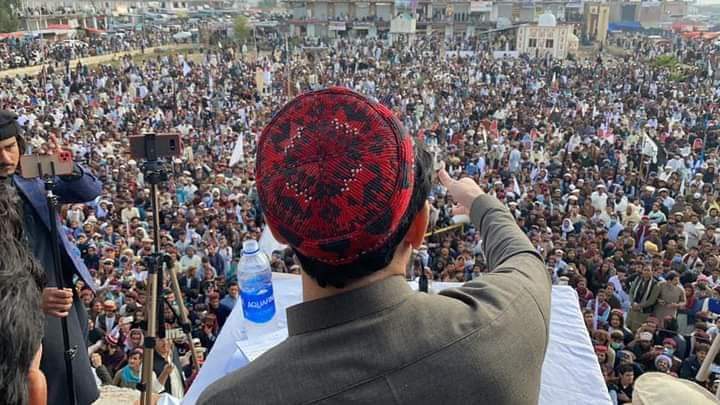
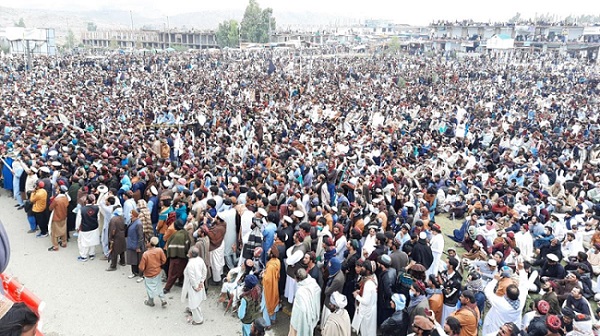
The Pashtun Tahafuz Movement (PTM) held a public gathering in Miran Shah, the capital of North Waziristan, on Sunday. The meeting was addressed by Manzoor Pashteen, PTM chief, North and South Waziristan lawmakers Ali Wazir and Mohsin Dawar including former PPP senator Farhatullah Babar, former ANP leader Afrasiab Khattak and Pakhtunkhwa Milli Awami Party senator Usman Kakar.

PTM members had reached Miran Shah in vehicles from far off distances of Pashtunistan to attend the rally, and were carrying white and black flags.

Ironically, Pakistani media continued its unofficial ban on showing the PTM (Pashtun Tahafuz Movement) rallies and press conferences in its news reports. However, photos, videos and news of the rally were widely shared across social media platforms.

“Those who say that PTM (Pashtun Tahafuz Movement) is over, if they come here today, they will see PTM everywhere,” said PTM chief Manzoor Pashteen while addressing the massive gathering.

Massive crowd at Pashtun Tahafuz Movement (PTM) rally at Miran Shah, Waziristan on Sunday. (Photo: News Intervention)

PTM leader Mohsin Dawar said in his speech that this grand rally was a public referendum in which people are demanding justice for the victims of terrorism. “Our people are not ready to be used in any future games of the state,” he said.

The participants called for an end to enforced disappearances, killings and abuses of civilians, as well as for the military to abide by the constitution.

The Pakistani military has accused the PTM of having the support of Afghanistan and India and being involved in anti-state activities.

PTM denies these allegations as “government propaganda.” The movement says that it believes in the peaceful struggle for civil rights enshrined in the Pakistani constitution. The organization’s leaders said that those who are issuing treason certificates should reconsider their anti-citizen policies.

Manzoor Pashteen has said several times about Pashtun’s movement that PTM is a civil movement and not a political party and that the Pashtun
Tahafuz Movement will continue to struggle for the rights of Pashtuns.

PTM leaders have been under attack by the Pakistani state institutions including its army and intelligence agencies. This year in May, PTM’s prominent leader Ali Wazir’s cousin Arif Wazir was shot in front of his home, who later succumbed to his injuries in Islamabad.

PTM chief Manzoor Pashteen addressing the rally at Miran Shah, Waziristan on Sunday. (Photo: News Intervention)
PTM chief Manzoor Pashteen addressing the Pashtun rally at Miran Shah, Waziristan on Sunday. (Photo: News Intervention)

Earlier, in January, PTM chief Manzoor Pashteen was arrested from Peshawar for his speech in Dera Ismail Khan during which he said that the 1973 Constitution violated basic human rights. A day later, Mohsin Dawar was arrested from outside the Islamabad Press Club alongside several other individuals while protesting Manzoor Pashteen’s detention.

Last year, Arman Looni, a core committee member of PTM was allegedly tortured to death by the Police. Mohsin Dawar has been arrested a couple of times more and has been stopped by the police to enter Balochistan.

The Pashtun Tahafuz Movement (PTM) has been demanding that a commission be set up to investigate state abuses, punish those responsible in accordance with the law, withdraw false cases, compensate the families of victims of terrorism and improve the overall situation in Pashtunistan. PTM has also demanded that a conciliation commission should be set up as well.

Terrorists’ surrender in Kashmir reflects desire for peace amongst youth

0

Nine local terrorists have surrendered in Kashmir in the current year, of which five terrorists surrendered in the month of October itself. Inspector General Police (IGP) Kashmir, Vijay Kumar, has very aptly defined this as a “welcome development.” There are many factors responsible for this situation, the main being “terrorism related fatigue” among the locals in Kashmir. There is now widespread realization that this destructive path  causes terrible pain to the families while giving no dividends.

The new reality is that the youth of Kashmir simply do not wish to join terrorism. They are intimidated into joining the terror ranks by the ISI-separatist-terrorist nexus through life threats extended to their families too. Fear has, since long, been the sole factor responsible for recruitment and support for the terrorist and separatist movement. With the security situation  improving, youth and parents feel assured that they need not get swayed by the threats, leading to a perceptible decrease in recruitment. The security forces have felt the pulse of the people and are taking intensive measures to motivate entrapped terrorists to surrender. The good results being achieved by this humane policy are now visible.

Click on this YouTube link to watch News Intervention video of a terrorist surrendering to the Indian Army in Kashmir Valley.

The panic that this development has caused to terrorists in Kashmir is quite apparent from the manner in which they are reacting. The Resistance Front (TRF), which is the latest fraud organisation created by the ISI in Kashmir, has been given the responsibility to damage control this huge setback. TRF, in turn, has made public a letter in which it has denounced the surrenders as, “orchestrated by JK Police and Indian army in collaboration.” The letter further states that the videos of the surrenders are being made viral to “demoralise Kashmiri youth and parents.” The letter culminates with the threat, “the general public should not fall prey to such propaganda and stay firm. We warn against public involvement in these dramas.” This malevolent warning exposes the actual brutal, coercive face of the TRF.

TRF (The Resistance Front) has reacted in this manner because its narrative is failing. It has been exposed as a fake organisation espousing a fake cause. The attempt made by the ISI to position it as a liberal secular, indigenous outfit carrying forward the so-called “freedom movement” has fallen flat.  What has emerged instead is the fact that the people of Jammu and Kashmir do not want terrorism to gain ascendency all over again and the authorities are also ensuring that it does not happen.

On earlier occasions, terrorist outfits like the Lashkar-e-Taiba (LeT) and the Jaish-e-Mohammad (JeM) have been reconstituted as charity establishments to overcome international censure. LeT created the Falah-e-Insaniyat foundation; JeM has a number of charity fronts like Jamat-ud-Dawa and Falah-e-Insaniyat.

TRF (The Resistance Front) was created in consonance with the aforementioned time tested policy of the Pakistani deep state to put a veil on its diabolic operations when under international pressure. In this case the pressure is emanating from the Financial Action Task Force (FATF) that is seriously contemplating putting Pakistan on its ignominious Black List. Two more factors have been responsible for creation of this new establishment. First, the bold action by India in reorganising the state of Jammu and Kashmir into two Union Territories and abrogation of Article 370 which called for a strong response from the Pakistani side to keep its demoralised cadre intact. Second, to offset the loss of terrorist cadre and Over Ground Workers (OGWs) in Kashmir due to relentless and successful operations by security forces. By creating the TRF, the Pakistani deep state sought to integrate its remnant terrorist and OGW resources under one umbrella organisation while ensuring deniability in terms of linkages with Pakistan.

The name was specially chosen to give to the organisation a secular sheen and portray it as an indigenous  movement. Many similar groups like Joint Kashmir Front, Jammu Kashmir Ghaznavi Force also came up but TRF (The Resistance Front) remained the most prominent.

The TRF has been tasked to enhance recruitment of local cadre into the fold of terrorism. It has been given adequate media support through structures located in Pakistan. It has a strong online presence in social media platforms like Telegram, Twitter, WordPress, TamTam, Discord, Hoop, Facebook, WhatsApp and Instagram etc. Its content is viewed across Kashmir through Virtual Private Networks  (VPNs) to bypass the restriction on internet accessibility. Pakistan is a master of propaganda and has created methodologies to glamourize terrorism mainly through visual content showing the Indian security forces on the back foot. Other themes include posting of provocative messages, which target security forcesmainly J&K Police, mainstream politicians, Kashmiri political bodies and civilians.

TRF (The Resistance Front) did gain some success in the initial stages of its inception. It has, over the months, taken responsibility for grenade and gunmen attacks in public places and on security forces and for killing of political leaders and workers mainly Ajay Pandit in Anantnag and Sheikh Waseem Bari in Bandipore, both workers of the BJP. TRF has also claimed responsibility for the counter infiltration operation in Kupwara in April this year in which five Pakistani infiltrators were killed and the Indian Army also lost five brave soldiers. In all of these instances its information campaigns have grossly exaggerated the success to create a larger than life persona.

The Indian security forces and civil administration have understood the concept and modus operandi of the TRF and have put in place effective countermeasures. The integrative plan of the TRF has not been allowed to gain an upper hand, most of its acclaimed commanders like Sajad Ahmed and Abu Anas have been killed. Now, its weakness has put contributing organisations like the LeT, JeM and Hizbul Mujahideen on the defensive. They have realised the folly of joining hands and losing their identity with nothing concrete having been achieved. With depleting resources, TRF stands weakened and its very relevance is under the cloud. The possibility of a turf war is quite strong. This situation has led to the spate of surrenders.

The terror nexus created by Pakistan in Kashmir has failed. Its diabolic agenda has been exposed. Its structures are falling apart notwithstanding the fancy names being given to them. Kashmir can now look towards a well deserved era of peace and prosperity.

Order Generation and Maintenance – Stuck at Home in the Universe

0

The longing of the spirit can never be stilled. – Hildegard von Bingen

A reality comprised of conscious agents more likely evolved them than not. In fact, a reality with agency, insofar as appears known, only evolves agency rather than the reverse. Charles Darwin provided the baseline principles in Evolution via Natural Selection.

When a reality exists and evolves consciousness, two premises exist as assumptions. One comes from the fact of existence. Reality exists in a sufficient manner as to garner a concretized form of realness.

At a minimum, to the conscious agents in it, the reality feels concrete, material, physical, actual, tangible, or somatic, so existentially real. Another emerges from the term “evolves.” Behind it, one needs time. A sequential progression of linked moments creating existence’s directionality.

In standard terminology, this gets called the Arrow of Time. Time moves forwards, not backwards. If living in a reverse universe, the real backwards would seem as if forwards. In either case, time exhibits directionality, hence an “Arrow.” It points one way, not both.

With modern science, empiricism, and mathematical derivations, we come to the tentative and evidenced conclusions of a world with moments as non-absolute, as statistical, as a series of moments only at the macro scale.

A macro scale world with the Arrow of Time. A large-scale existence with directionality in time while, at bottom, a series of statistically or probabilistically connected moments with implied pasts in each moment and potential futures.

The instantiation of each moment implies a history and constrains an open future. With “implied pasts in each moment and potential futures,” this means ‘once upon a times’ lead to the ‘here-and-now’ while eventuating only a select grouping of ‘there-and-thens.’

The fact of existence and the truth of time become points of reference in consideration of a reality with conscious agents. Those operators in existence with agency, consciousness. Conscious aspects of consciousness as the mentation of the operations, the system.

Consciousness, as rich, diverse, and deeply interconnected networks of natural information processing devoted to an agentic arena of processing and selection, seems to emerge, evolve, later in reality rather than in some incomprehensibly early stage of the lifecycle of reality.

Non-conscious consciousness as the filter of the natural information derived from interpreted reality through the ‘senses’ or the external nodes — e.g., tactile, olfactory, auditory, gustatory, or visual, informational structures.

Those delivered — e.g., afferent-efferent nerve pathways — to conscious consciousness for selection, choice. It appears through evolutionary selective processes rather than creative teleological operations, whether instantaneous or progressive.

Some environmental, psychological, sexual, and social, selective pressures formulate the ‘need’ for some centralization of information processing. A conscious arena to manipulate the information gathered from the environment and generated internal to the system.

Entities, agents, thinking and moving in a reality define ethics; the principles governing the thought and behaviour define the morality. In that, the fact of being in reality of an agent comprises the ethics.

In this sense, ethics becomes non-absolute too. As the complete nature and existence of the agent defines its morality, agency internal to the system becomes the generativity of the ethical constructs themselves.

Thus, with existence and time, agency and morality, the qualitative difference becomes the next consideration of the speculation. Agents with an ethic tilted more towards directives of annihilation will cease to exist, eventually and even instantaneously.

Entities with a morality tilted more towards directives of creation will continue to exist. Both based on principles of reasoning grounded in statistical or probabilistic considerations of the matters of existence, time, agency, morality, and annihilation/creation.

Once the principles of reasoning construct the Statistical Argument for Existence, the Statistical Argument for Temporality, the Statistical Argument for Agency, and the Statistical Argument for Morality, these can become the bases for the principles of existence as a generalized truism set.

A philosophy of truism as a basis for principles not laws, loose rules not divine decrees. Those which can’t not be; those distinct significations of existence as principles demarcating unique markers of reality sufficient to become a novel variant. Everything coupled together.

The apparent metaphysical matters of ethics do not come with this presentation. The ideas of morality or ethics acquire this stain due to the theological and religious, i.e., transcendentalist, poundings of the previous centuries.

Only the last couple to recent few centuries began to wash the cloth and refresh the minds, as if cool water on the face on a hot, arid day. No need for the necessary metaphysical, except in other considerations properly deemed non-theological, perhaps theosophical — as in an utter rejection of theology.

Annihilation and creation may appear tighter definitions of the more generalized terms disorder and order, respectively. The principles of the morality of “annihilation” as “disorder” and the ethics of “creation” as “order.”

Thus, “Agents with an ethic tilted more towards directives of annihilation will cease to exist, eventually and even instantaneously” translates as “agents with an ethic tilted more towards directives of disorder will cease to exist, eventually and even instantaneously.”

“Entities with a morality tilted more towards directives of creation will continue to exist” translates as “entities with a morality tilted more towards directives of order will continue to exist.”

The “agents” or “entities” as conscious operators whose being or complete manifestation in reality dispose to the disorder generating & maintaining or order generating and maintaining, whose total nature inclines more to annihilation or creation, respectively.

As with the statistical inevitability of existence, time, agency, and morality, the unavoidability of existence and time in existence attests to the order generation and maintenance of realities, probabilistically. They exist more than not; they last more than end.

The actuality of an order generation and maintenance in the domain of discourse relevant to facts grounded in existence and temporality for agency, as in the two base premises prior to the is/ought distinction, or the line drawn out, before.

Beings exist. By existing, beings equate to facts. Factual propositions exist about them. Substantive statements exist for them. Those premises about pieces of reality with evidenced content.

Beings with conscious consciousness, conscious entities, operators, or entities with property “agency.” If only one, this operator constructs value for their self and their environment. If more than one, these operators create value for their selves, their relations, and their environment.

A valuation of no value becomes a value, too. To some, their self, other selves, or the environment, don’t matter to them. To a sole inhabitant of a reality, to value itself at zero, it may self-murder/self-annihilate, this becomes an ethic, too. Ethics becomes inevitable.

Nihilism, as in no ethics whatsoever, becomes a failed stance in realities with agency. In that, with valuation, this influences actions in the world; hence, this amounts to the ethic, unavoidably. In degrees of affirmation/negation, it’s there. Thus, agency generates ethics.

The facts of reality must inform the values in reality with the facts as first matter and values as second matter, or facts as primary and values as secondary, not vice versa. Meaningful values discourse begins with factual morality, not moral facts.

The truth of order for existence, time, and (non-conscious and) conscious agents in the universe informs ethics, as agency generates ethics and facts inform morality. These agents follow the incline of the statistical tendencies of form and content of reality, or do not.

The “incline of the statistical tendencies of form and content of reality” meaning “the unavoidability of existence and time in existence attests to the order generation and maintenance of realities,” or a set of them.

An implied truth in order generation and maintenance as a baseline for existence and time, and for the fact of order generation and maintenance required for evolved agency. In turn, the values of agency, whether order disposed or disorder inclined, will require the same.

As the values come from agency, and as order generation and maintenance provide the baseline for existence and time, the values constructed by the agency’s being will exhibit the same forms of persistence as a statistical tendency and inevitability seen in existence, with time, and in agency.

The facts of reality evince persistence for existence, for temporality, for agency, for morality. The facts of order generation and maintenance for each as a probabilistic outcome of the sets of the possible and the favoured amongst the potential.

The values of operators in reality will tend to value order generation and maintenance for themselves, others, and the environment more than value disorder generation and maintenance for themselves, others, and the environment.

Therefore, the statistical tendency or statistical inevitability of morality/ethics, derived as a consequence of agency with a base of existence and time will internalize in mentation and externalize in action, towards valuation of order over disorder.

The value of order generation and maintenance by agency in reality as a reflective statistical consequent of the fact of realities manifesting as order generation and maintenance by the truth of existence, itself, existing.

Any agency valuing more disorder than order will cease to exist in time, eventually. In this, is/ought, as facts/values, exhibit a separation and a coupling with the persistence of reality and agency as then reflected in the tendency in values of agency towards order over disorder.

If islands of agency determine disorder more valuable than order, then the agency — itself, immediate others, and its environment — will cease existing in due time. Sufficient disorder ends agency. Thus, the ethics/morality of agency will become order disposed.

As stated in “Statistical Inevitability as a Cross-Sect of the Axiomatic, the Temporal, the Existential, and the Axiological”:

We come to the stream of statistical inevitabilities with statistical arguments for existence, temporality, agency, and morality.

If the set of possible universes remains larger than the set of null universes, then existence becomes statistically more probable. If existence becomes statistically more probable, then realities with more than one moment of time become statistically more probable than realities with only one moment of time.

If realities with more than one moment become statistically more probable than realities with only one moment of time, then one set will evolve conscious information processors and one set will not.

If conscious information processors evolve in one set of universes, and if morality/ethics define as “principles governing behaviour or conducting of an activity,” then evolving conscious information processors creates morality/ethics, because conscious information processors cerebrate/move or conduct activities.

If evolving conscious information processors creates morality/ethics, then ethics/morality becomes statistically inevitable in one set of universes. Thus, if the set of possible universes remains larger than the set of null universes, then ethics/morality becomes statistically inevitable in one set of universes.

The statistically probable occurrence of existence, of time, of agency, of ethics. If negated at any stage, the argument fails. If no existence, then no time, no agency, and no ethics; if existence and no time, then no agency and no ethics; if existence, time, and no agency, then no ethics; if existence, time, and agency, then ethics.

Ethics comes from agency. Agency comes from time. Time comes from existence. Existence separates from non-existence more likely than not. Is/ought remains preserved as separate ideas, but become coupled together.

Furthermore, if “ethics/morality becomes statistically inevitable in one set of universes,” then the persistence of existence, of time, of agency, will derivate a persistence in ethics/morality in reality, as ethics/morality comes from agency.

If the persistence of existence, of time, of agency, will derivate a persistence in ethics/morality in reality, then existence, time, agency, and ethics/morality exhibit order generation and maintenance.

If existence, time, agency, and ethics/morality exhibit order generation and maintenance, then the truth of reality, in existence, time, and agency, exhibits order generation and maintenance, as facts of the matter.

If the truth of reality, in existence, time, and agency, exhibits order generation and maintenance, then the values in reality reflect the truth of reality, in existence, time, and agency, exhibiting order generation and maintenance.

If values in reality reflect the truth of reality, in existence, time, and agency, exhibiting order generation and maintenance, then agency as manifest through operators in existence dispose more towards order than disorder.

If agency as manifest through operators in existence dispose more towards order than disorder, then the statistical tendency or unavoidability of ethics/morality of operators in existence disposed towards order generation and maintenance.

If the statistical tendency or unavoidability of ethics/morality of operators in existence dispose towards order generation and maintenance, then the probabilistic default of ethics/morality in existence as order generation and maintenance rather than disorder generation and maintenance.

Therefore, “if the set of possible universes remains larger than the set of null universes,” then the probabilistic default of ethics/morality in existence as order generation and maintenance rather than disorder generation and maintenance.

The inevitable, unavoidable, fact of existence, of time, of agency, of morality, of order, the real not only statistically exists and probabilistically becomes favoured to exist; its persistence becomes favoured as a property in the truth of reality and the values about reality.

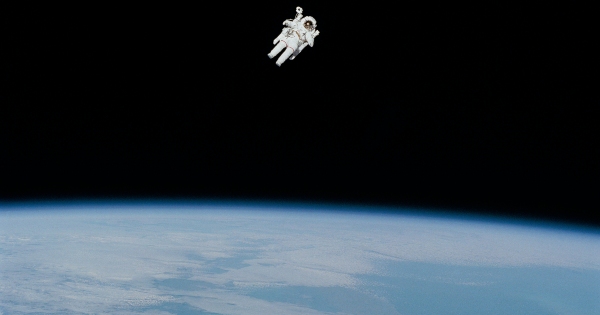
Photo by NASA on Unsplash

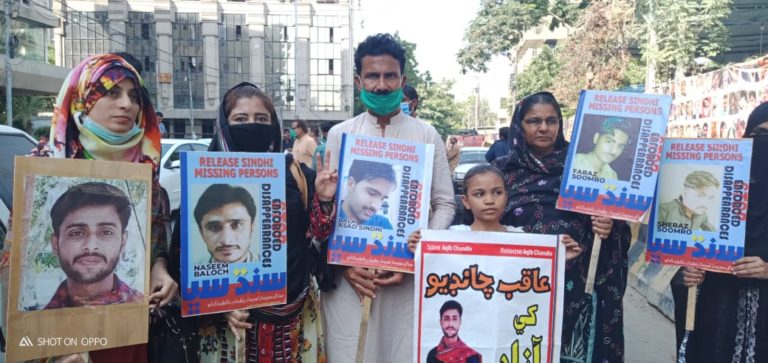
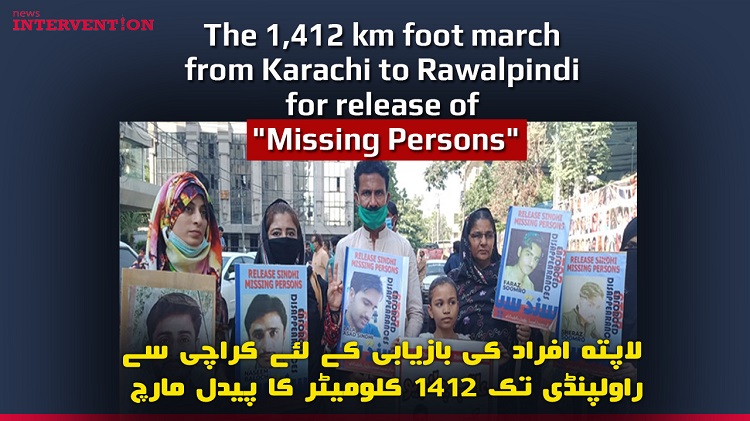
Why are women, children and elderly walking from Karachi towards GHQ Rawalpindi?

What will you do if a family member goes “missing”? Yes, you will report about the missing person and expect that the authorities find out about your “missing” family member, or at least inform about what happened to him/her. This is the normal course of action in a civilized nation. In Pakistan complaints about “missing persons” are tossed over into the dustbin and their family members continue to wait endlessly in vain, which in most cases is several years.

Over the last decade more than 40,000 Baloch and over 5,000 Sindhis have gone missing from occupied Balochistan and Sindh provinces in Pakistan. Friends and family members organized thousands of protests, filed countless litigations in the courts, approached big media groups and human rights organizations but none of these haloed institutions did anything. Absolutely nothing.

Family and friends of these missing people feel dejected and desperate. They know they have hit a dead-end. On November 10, a group of such desperate people from Karachi decided to walk on foot for 1,412 kilometers to protest in front of the GHQ (General Headquarters) Rawalpindi. GHQ is the headquarter of Pakistan Army in Rawalpindi.

But before you frown at this ‘Long March’ spare a thought for the raison d’être for such an arduous foot march.

It’s now an open secret that people in Balochistan or Sindh just do not vanish into thin air, rather they are systematically abducted by Pakistan Army, intelligence agency ISI (Inter-Services Intelligence) and other wings of the Pakistani security forces. The family members of ‘missing’ Baloch and Sindhi people have also understood that it’s only the Pakistan Army whose writ is honored across Pakistan. And since their friends and family members have been abducted by Pakistan Army or the ISI it would be best if they protest and plead with them, rather than run around the Pakistani courts.

Family members and friends of “Missing Persons” walking from Karachi to the headquarters of Pakistan Army in Rawalpindi. (Photo: News Intervention)

Long March, by no means, is an easy trip. Rawalpindi is 1,412 km from Karachi and walking through this distance braving threats of Coronavirus pandemic and the harsh weather conditions is a herculean task. There are women, children and elderly who are walking in this Long March towards GHQ Rawalpindi.

When the Sindh Sabha announced this Long March from the Karachi Press Club on November 10 barely a hundred people started this arduous journey. These courageous people do not know when will they reach Rawalpindi, or if they will reach the GHQ Rawalpindi at all. Pakistan Army and Pakistani security forces are infamous for silencing people who they dislike with clinical precision. In three days the group could barely cross Karachi and has begun receiving death threats. Targeted attacks, accidents, Coronavirus the list of threats is too long to ignore.

And these threats are not just some figment of imagination. Pakistani security forces have done similar things earlier as well. In 2014 when the Voice for Baloch Missing Persons (VBMP) started a similar march from Quetta till Islamabad then also several attempts were made to eliminate the protesters. There is a high probability that the Sindh Sabha’s Long March from Karachi till GHQ Rawalpindi could meet a similar fate.

Ironically, big daddies of media and international human rights organizations have never raised a voice against the Baloch and Sindhi “Missing Persons”. And mind you, these missing persons are no small number. More than 40,000 Baloch have gone “missing” over the last decade and over 5,000 Sindhi went missing during the last few years. Over and above these missing people, thousands of Baloch and Sindhi have been forcefully abducted and killed. Yet the haloed United Nations or self-proclaimed human rights activists or even the larger media organizations continue to maintain a deafening silence.

Women, children and elderly walking from Karachi towards Rawalpindi to press for their demand to release the “Missing Persons” who have been abducted by Pakistan Army and ISI. (Photo: News Intervention)

It’s not that the big media groups, the United Nations or international human rights organizations are not aware of the daily abductions and killings across Balochistan or Sindh. Ironically, they are fully aware. Why do they still choose to stay silent or look the other way when Pakistan Army or the ISI abduct and kill Baloch and Sindhi at their whims is anybody’s guess.

Pakistan Army is dominated by Punjabi Muslims and so the Punjab province considers Balochistan and Sindh provinces as their colonies and Baloch and Sindhi as second class citizens. Any Baloch or Sindhi who refuses to toe the line of Rawalpindi is simply abducted in broad day light. It’s these abducted people who join the list of “Missing Persons” in Pakistan. Since these abductions and enforced disappearances are carried out by the Pakistan Army and ISI so even the courts and provincial police do not dare to go against the diktats of Rawalpindi.

Click on the YouTube link to watch video report

The Long March which started on November 10 is a desperate attempt by a group of Sindhi and Baloch people who decided to walk towards the GHQ Rawalpindi. This group is led by Inam Abbasi, Faisal Ara, Atif Chandio, Hani Gul Baloch, Shazia Chandio and family members of Dr Fateh Muhammad Khoso, among several others.

Click on the YouTube link to watch video report

Rights Mean Responsibilities

0

Two conflicts common to North American sociopolitical discourse comes from the idea of rights as inherent in the nature of a human being qua a human being. If a human being, then you get rights. If a non-human animal, then you don’t get human rights.

Although, as with Peter Singer, you may get animal rights in some cases. In that, some argue for non-human animal rights. Even Leonardo da Vinci, he made direct statements about ethical treatment of animals without the necessary use of the language of rights.

However, as rights come as broad ethical principles, these become foundational. To personal sensibilities, realities with agency imply inevitable ethics. Thus, the age-old question about if ethics becomes moot.

Because the issue isn’t ethics or no ethics, moral system or none. The issue becomes, “What ethic?” It’s a profound difference based on a slight shift in emphasis. Similarly, transcendent ethics dominated before. Nihilism doesn’t work, as ethics only works without agency.

If a universe with agents, then ethics becomes an inevitability. Similarly, in instances of a first-year philosophy student with a modicum of intelligence, they may question ethics’ ontological status. However, their act of existing, being, and acting in the world instantiates it.

Colloquially, the transcendent ethics can be known as religious ethics. By and large, they’ve won the numbers game. Also, they’ve lost the legitimacy game. When we examine international ethics, systems, rules, and global order, the winner is clearly not religious ethics.

The religious ethics binding to the transcendent, as in imbuing an unseen transcendent object as the source of The Good from which every good follows by natural discourse, logical derivation. International human rights won the day.

All nations are bound to international human rights. Every nation contains a different religion, sect of a faith, and interpretation of the proper ethic therefrom. In terms of human rights, fewer seem this way.

In that, international human rights ethics are the fundamental basis for the modern nation-states bound by regions and the globe. People may self-define as religious. However, their ethics and governments are guided by international institutions.

If the governments and the institutions, nongovernmental organizations, international nongovernmental organizations, civil society organizations, and others, fail to live up to a standard, they are not judged by religious/transcendental standards.

They are judged within frameworks of international human rights. By logical implication, the hidden premise is international secular human rights. Because the basis for the rights do not rely upon a transcendent source. Some philosophical idea within the metaphysical/supernatural/extramaterial domains of discourse.

The rights inherent for others become, as well, requirements for the comprehension of others’ boundaries. Where they start, I stop; where they stop, I, or others, start. If I claim rights for myself from others, then I imply obligations of myself for others.

The right to a freedom stops at the infringement of the right of the other person. These become more generalized utility markers or signifiers in social settings than the parochial and limited transcendent ethics.

Those latter ethics claiming objective status while littered with the language of the local, the provincial, often the cruel, in fact. The former morality incorporative of more neutral, inclusive though diversified, and sophisticated language than the vagaries found in the verities of religious holy texts.

In this sense, the international secular rights become a basis for truer universality of the ethics of rights. Furthermore, these will mean a fuller sense of the obligations derivative or implied as a coupling with the “truer universality of the ethics of rights.”

Any right will require a concomitant obligation; every obligation comes with a coincident right. While the basis for universal remains statistical or approximated, never achieved in a sense of finality of the aim, the fundamental implication of rights is obligations or responsibilities.

The mature orientation on ethics imbues a sense of a consciousness-based Golden Rule behind the scenes of rights and obligations. Where the rights imply obligations, and vice versa, this is the logic of the Golden Rule.

However, implied within it, we find the necessity of a conscious agent behind it. Rocks don’t have consciousness, don’t have rights and responsibilities. Thusly, rights mean responsibilities; responsibilities mean rights.

Essentially, it couldn’t not be; it couldn’t be any other way.

Photo by Christophe Hautier on Unsplash

The 1,412 km walk from Karachi to Rawalpindi for ‘Missing Persons’

Sindhi & Baloch people are desperate for their “Missing” family members. For the last several years they have been protesting for the release of their “Missing” family members, but the Pakistanis do not listen to them. Now they have been left with no other option but to walk through 1,412 km from Karachi to Rawalpindi to plead with Pakistan Army for release of their loved ones. This Long March started on November 10 from Karachi, the capital of Sindh.

Click on the YouTube link to watch video report