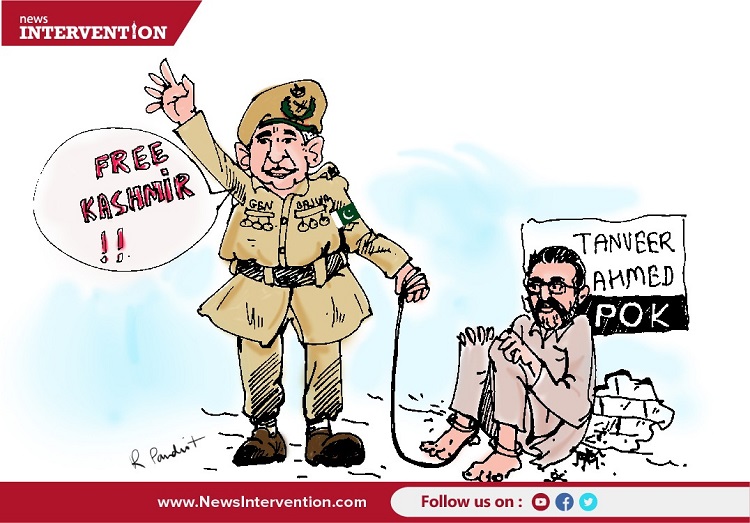
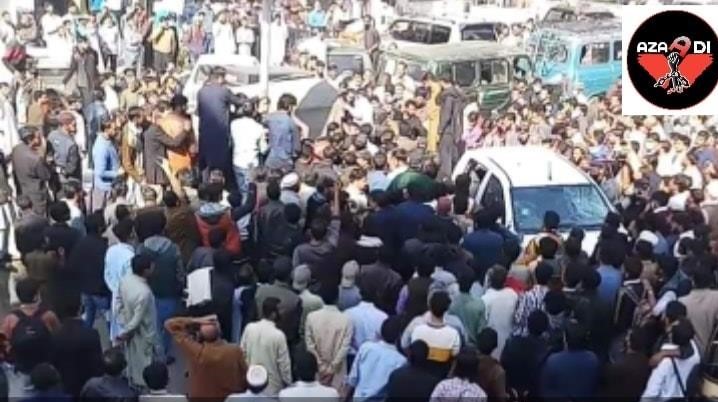
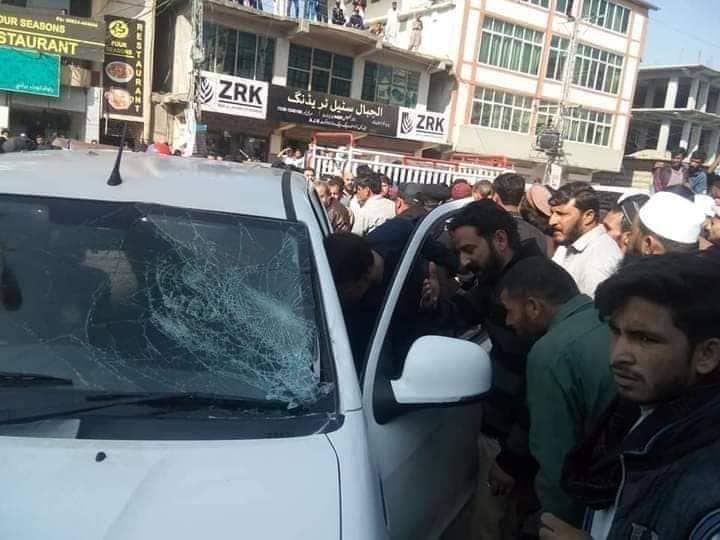
Tanveer Ahmed, senior journalist of Pakistan-occupied Kashmir (POK) was arrested on August 21 by the Pakistan government. Tanveer Ahmed continues to be tortured inside the POK jails by ISI and Pakistan Army.
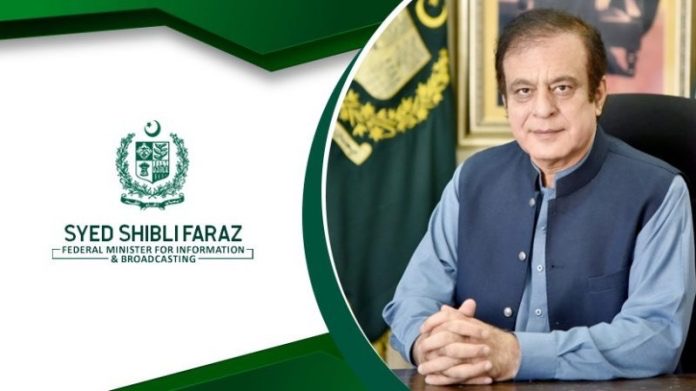
The Shibli Faraz ‘Triangle’
“PDM, India, and Israel three sides of the same triangle: Shibli Faraz”
— News Item Press News Agency [October 25, 2020]
In an age when geometry is no longer being taught in schools, Pakistan information minister Shibli Faraz’s equating India, Israel and Pakistan Democratic Movement [PDM] with three sides of a triangle is bound to fill old timers (who as kids spent hours trying to comprehend what triangles were all about), with a deep sense of nostalgia. It could also well end up creating interest of the younger generation in geometry as it would give them the option of using an impressive sounding ‘QED’ instead of the curt ‘period’ to indicate the end of a discussion. But before that, let’s first demystify the ‘Faraz Triangle’.
India, Israel and PDM being three sides of a triangle is indeed an interesting analogy. However, Faraz hasn’t indicated what exactly is the type of triangle which these three devils incarnate (hereinafter referred to as ‘evil trio’) form and this makes the task of identifying the right type of triangle, which the geometrically inclined minister has in his mind, quite difficult. So, for better comprehension, it may be necessary brush up one’s geometry by quickly recapitulating that triangles are classified on either the basis of their angles (equiangular, acute obtuse, and right), or their sides (isosceles, equilateral or scalene).
Even though he has mentioned that each of the ‘evil trio’ forms one side of the ‘Faraz Triangle’ it would still be incorrect to rule out the possibility of this triangle being based on angles. Remember, there always used to be a catch in geometry questions, and the ‘Faraz Statement’ could well have one! So, let’s start the elimination process by first examining triangles on the basis of their angles to see if any fit the bill. Such an analysis leads to some surprising revelations because each of ‘evil trio’ entity that forms one side of ‘Faraz’s triangle’ has a definite ‘obtuse’ mindset, and suffers from ‘acute’ paranoia.
However, since all the sides of the ‘Faraz Triangle’ are involved in serious wrongdoings, the ‘triangle’ that the Pakistan information minister is referring to is certainly not a ‘right’ angled triangle. In addition, since all of them have unequal levels of complicity in bringing down the house called Pakistan, neither can the ‘Faraz Triangle’ be an ‘equiangular’ triangle (in which, all angles are equal)!
So, having established that the ‘Faraz Triangle’ has some properties of acute and obtuse angled triangles, let’s try and further unravel the mystery of this enigmatic geometrical three-sided object by examining triangles on the basis of their sides.
The easiest would be to conclude that it’s an ‘equilateral triangle’ (in which all three sides are equal). But doing so would imply that each entity of the ‘evil trio’ that represents one side of the triangle is equally complicit in orchestrating anti-Pakistan activities, and this somehow doesn’t sound very convincing because in real life there are no such congruences. Moreover, by equitably apportioning blame for fomenting unrest in Pakistan on three entities dilutes the enormity of this humongous crime and takes the ‘punch’ out of the blame game. Lastly, since this deduction neither suits Islamabad nor Rawalpindi, hence its prudent to rule out this possibility!
Next, we come to the isosceles triangle, in which only two sides are equal and this could be the ‘Faraz Triangle’ with India and Israel representing the two equal sides, while the third side is the PDM. This interpretation is a bit more convincing as it implies that India and Israel are working as agent provocateurs in concert and provoking the PDM to create political instability in Pakistan. This deduction also buttresses Islamabad’s allegations of foreign hands being behind the chaos in their country.
However, the conclusion that ‘Faraz’s Triangle’ is ‘isosceles’ has one major drawback- it portrays PDM as an innocent entity which is being instigated by the India-Israel duo and needless to say, this hypothesis would not be acceptable to Prime Minister Imran Khan who seems to be determined to see his predecessor and political arch rival Nawaz Sharif decimated. Moreover, blaming India for only one half of Pakistan’s troubles goes against the military’s view that New Delhi is wholly behind each and everything that goes wrong in Pakistan!
That leaves us with the ‘scalene triangle’ in which no side is equal, and this seems to be the closest match to the ‘Faraz Triangle’ since it has an inherent element of ambiguity that can be used to great advantage. The essence lies in not disclosing as to who represents which side of the triangle as this gives both the government as well as the military establishment ample flexibility to point fingers as well as accuse whomsoever they wish to and also change the target of their attack without being accused of capriciousness!
If Indo-Pak tensions flare up, the ‘RAW corollary’ can be applied to depict New Delhi as the longest side of the scalene triangle. Whenever the PDM becomes an unbearable pain in the neck for Khan or Gen Bajwa, it’s place can be conveniently switched with that of India with the simple use of ‘Panama Postulate’ along with the ‘Mehran Bank’ and ‘Hudaibiya Paper Mills’ adjuncts for greater effect. As far as Israel is concerned, use of the ‘Zionist hypothesis’ and Imran Khan’s recently expounded deduction of Tel Aviv’s “hegemonic design and approach” can easily be used to justify making it the longest side of the scalene triangle- as and when required.
So, in the final analysis, the ‘Faraz Triangle’ can be defined as “A unique ‘Scalene Triangle’, each side of which is unequal and formed by a different yet closely-linked ‘evil’ force acting in concert to destroy Pakistan. Whereas the entity of all side remains interchangeable, the sum total of the angles formed by their acute [paranoia] and obtuse [mindset] can never be either ‘right’ or ‘equal’”
QED!
India inching closer towards wiping terrorism in Kashmir
Terrorism in Kashmir is now coming a step nearer to complete decimation due to incisive and highly successful counter-terrorist operations being conducted by security forces. The latest success came on November 1, when a terrorist killed in a gun fight in Rangreth was identified as Saifullah, commander of the terrorist organisation Hizbul Mujahedeen (HM). Saifullah had been appointed as commander only a few months back post the killing of the previous commander, Riyaz Naikoo. Naikoo had taken up the mantle after the death of Burhan Wani and defection of Zakir Musa to the Al-Qaeda in 2017. While Naikoo remained operational for about three years, Saifullah could last hardly for six months.
Media attempted to project the killing of Saifullah as a big success, however, realistically speaking Saifullah did not amount to much as he was highly constrained due to a depleted cadre and indifferent recruitment success, unlike Naikoo who was adept at indoctrination and recruitment of locals into the fold of terrorism. Saifullah’s killing was also a docile affair with his single associate preferring to surrender. Hizbul Mujahideen has not been able to appoint a new commander since it has nobody to fit the bill.
Surrender by terrorists, as in the case of the associate of Saifullah, is yet another big setback to the terrorist movement in recent times. On October 13, Special Police Officer (SPO) Altaf Hasan Bhat decamped with an AK 47 rifle. The police identified his location within two days and a cordon was laid out. While Altaf managed to escape his associate Jahangir Ahmad Bhat preferred to surrender. Within a few days, on 22 October, two other newly recruited terrorists named Abid and Mehraj belonging to the Al-Badr terrorist group also opted to surrender when their families, brought specially to the encounter site, appealed to them to do so.
The security forces led by the Indian Army have been following a policy of giving entrapped terrorists an opportunity to surrender. On many occasions, as in the aforementioned case, families are called in to make the appeal; in recent times, considerable success has been achieved in this process. The impact of the efforts to make the youth eschew the path of violence is now visible and it is a welcome development.
An analysis of aforementioned cases leads to two derivatives. First, the life span of a terrorist, even if he is a highly protected commander, is very limited. It ranges from a few days to a few months at the maximum. It is so because of effective intelligence about the movement of terrorists is being provided by the people themselves who wish to see an end to this menace.
Secondly, the new recruits into terrorism lack commitment since they are being forced into this line. Such locals who get swayed into joining terrorist groups soon realise their mistake but hesitate to leave due to fear of reprisal. In recent times these new cadres have evolved a good strategy of surrendering to security forces in the course of an encounter.
It needs to be kept in mind that once a person joins the cult of terrorism, getting back becomes very difficult indeed. The security of the person as well as that of his family comes under threat. Hence, the best option is to nip this malaise in the bud. It is here that families, elders, teachers, role models and civil society have a very important role to play. It is they who can educate and isolate the youth from the intense propaganda and well oiled indoctrination machinery of the terrorists. As things stand, the poster boys like Burhan Wani who pulled large number of youngsters are now eliminated. However, social media continues to be used by Pakistan to infiltrate vulnerable minds. It is not without reason that 4G connection is not being allowed in the region. The threat from the enemy is very real and very potent.
The security forces are doing their bit to build upon the existing thrust to reverse the process of terrorist recruitment. During a recent press interaction, Lt. General BS Raju, the General Officer Commanding of the Srinagar-based Chinar Corps is reported to have said, “It gives us no pleasure to kill young boys who have picked up arms a month ago or a bit earlier. We will be doing more work on ensuring that more surrenders take place.” No better words can be used by any soldier to express his desire to avoid unnecessary bloodshed. It is for this reason that an elaborate drill is being followed to save entrapped local terrorists.
The government is also looking towards modifying the surrender and rehabilitation policy in a manner that serves as an incentive to the misled youth and gets them back into the mainstream.
The people of Jammu and Kashmir do not want terrorism to gain ascendency all over again and the authorities need to ensure that it does not happen. The government and the forces are, therefore, going all out to save precious lives of locals who have been indoctrinated into this suicidal path and give to them an opportunity to rehabilitate themselves. Some good steps have been taken but more needs to be done. No space should be given to terrorists and divisive forces to resurrect the draconian times when terrorism was at its peak.
The time has come for the people of Kashmir to bring about a closure to the cult of evil foreign sponsored terrorism. A clear message needs to be given out that there is no element of religiosity and sacrifice visible in the murderous and perfidious acts of the terrorists. The government and the nation have spread out their hands to assist able and qualified Kashmiri youth in chalking out a career. This opportunity that needs to be leveraged instead of the despicable path of terrorism that assures nothing other than ignominious death.
Rawalakot stands against the abduction of local Kashmiri by ISI
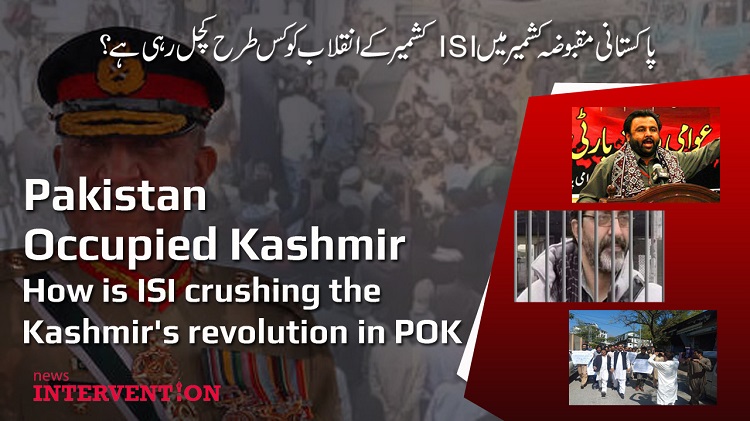
Pakistan’s intelligence agency ISI is systematically crushing the Kashmir’s revolution in “Azad Kashmir”. This “Azad Kashmir” is only on paper as there’s no “Azadi” (freedom) available to the Kashmiris. Watch this news report to understand how ISI is crushing the Kashmir’s revolution in Pakistan-occupied Kashmir (POK).
Valiant Indian soldiers saved Kashmir from Pak tribal attack in 1947
India looks upon October (the month gone by) as a very auspicious month; the festival of Dusshera falls in this month and so does the Muslim festival of Bakrid. Both festivals epitomise the victory of all that is just and righteous. This month also holds great significance so far as the military history of the nation is concerned. Netaji Subash Chandra Bose laid the foundation of Indian National Army (INA) on October 21, 1943 at Singapore. China declared an unjust war against India on October 20, 1962.
Most significantly, the Indo-Pakistan War of 1947-48, that laid the foundation of a free and resurgent India commenced on October 27, 1947 with the landing of Indian troops at Srinagar airport post the signing of the Instrument of Accession by Maharaja Hari Singh a day before on October 26, 1947 making his state a part of the Indian dominion.
The courage and resilience of the Indian troops who fought the war over two campaigning seasons is now a part of Indian military folklore. The first unit to land in Kashmir was 1 Sikh commanded by Lt Col Ranjit Rai. The Battalion Headquarters and one Company of the unit took off from Delhi at 0600 hours on October 27, 1947 and landed at Srinagar airfield at 0930 hours. They were received and briefed on the airfield itself by senior civil and state forces’ officers. The military engagement of the enemy commenced almost immediately. It was a very challenging task since the enemy was vastly superior in numbers. Lt Col Ranjit Rai died in action after having delayed the enemy enough for reinforcements to land.
On November 3, 1947 within a few days of his joining the battle, Major Somnath Sharma of 4 Kumaon created history by stalling the invading hordes in the historic Battle of Budgam. Major Somnath Sharma laid down his life in the battle under such heroic circumstances that he was awarded the first Param Vir Chakra (PVC) in independent India.
The war witnessed award of four more Param Vir Chakras and many other gallantry awards to the brave Indian soldiers who fought against terrible odds. The brave PVC recipients were Lance Naik Karam Singh, 1 Sikh, in the Battle of Tithwal, Second Lieutenant Rama Raghoba Rane, Corps of Engineers for the Battle of Jhangar and Naushera. Naik Jadunath Singh, 1 Rajput, for the defense of Naushera and Company Havildar Major Piru Singh, 6 Rajputana Rifles, for the Battle of Tithwal.
Also part of folklore is the bravery of Brigadier Rajendra Singh, Chief of Staff of the Jammu and Kashmir State Forces, who obeyed with his life the command of his Maharaja to hold the “enemy at Uri at all costs and to the last man.” Brigadier Rajendra Singh is the recipient of the first Maha Vir Chakra of independent India.
Any talk of bravery and tenacity exhibited during the war would be incomplete without mention of Brigadier Mohammad Usman. Such was his spirit of nationalism that, at the time of partition, he declined to move to Pakistan despite being given the bait of being made the Pakistan Army Chief. He was in command of 50 Parachute Brigade during the Indo-Pakistan war of 1947-48 and deployed in the Nowshera-Jhangar sector. When Jhangar fell to insurmountable odds Brigadier Usman vowed to take back the strategic location and did so within a period of three months. He died on July 3, 1948 due to Artillery fire while defending Jhangar and was awarded Maha Vir Chakra posthumously thus becoming the highest ranking Indian Army officer to have received this award. His funeral was attended by Prime Minister Jawaharlal Nehru and his cabinet colleagues. For his feats of valour he was nicknamed “Lion of Nowshera.”
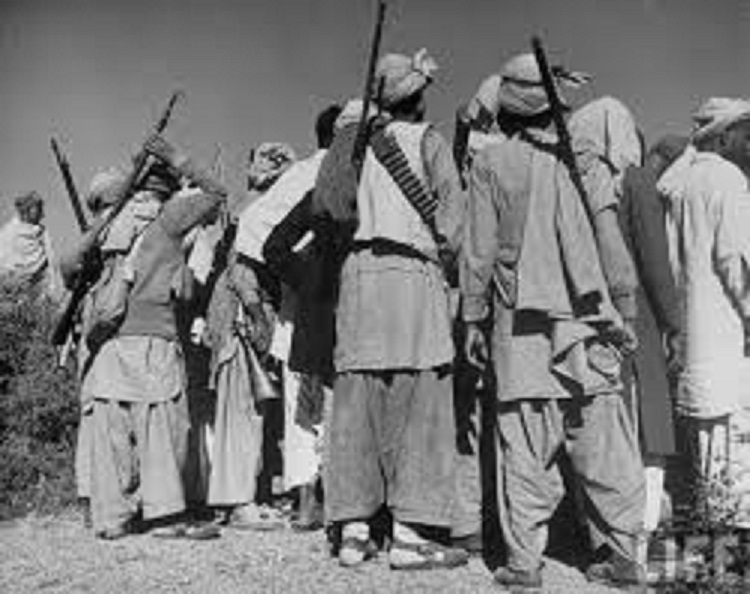
Before the Indian Army landed in Srinagar, the invading hordes had laid waste every living being that came their way. Even under such terrible conditions the human spirit prevailed. A 19 year old boy, Maqbool Sherwani, went about on a cycle spreading a message that the Indian Army was on the doors of Baramulla. This information stalled the tribal (kabailee) march to Srinagar and literally saved the city from a fate even worse than that of Baramulla. When the mercenaries realised that young Maqbool Sherwani had misled them, they shot and crucified him. The young boy, with his courage and presence of mind, etched a place for himself in history for all times.
If the Indian Army had not fought with such unprecedented courage, Srinagar would have been a huge, desolate graveyard and the history of the Kashmir Valley would have changed forever. It merits mention here that the Indian Army fought the war with full support of the local population inclusive of the Muslims, Hindus, Sikhs, Buddhists, Paharis and the many other communities who form part of the state. There was not even an inkling of separatist tendencies in that period of time. The Indian troops who fought the war had only the safety and security of the people of Jammu and Kashmir in mind. The people at that time were full of praise for the Indian forces as they are even today, except for a few anti-national elements.
Kashmir has found its destiny as a part of the largest democracy in the world with a test of fire and sacrifice of blood. The bravery of the soldiers and civilians who fought the war shoulder to shoulder can never be forgotten nor allowed to go in vain. Those who are trying to break away the region due to some evil vested interests should understand that their malevolent designs will never fructify since they disrespect the great sacrifices made by the previous generations to create a good life for their off-springs in the democratic environment of the Indian Union. It is necessary for the present generation to live up to the ideals that their forefathers fought for and ensure that the sacrifices made by them do not go in vain.
Suffering’s Fortress – Not Bad or Lost People, But Bad and Lost Theology
Life as an LGBTI individual in most societies, including Canadian culture, remains a difficult hurdle for progress and mental wellness due more to external factors imposed rather than internal variables alone based on health statistics, experiences of violence and hate crimes statistics, laws against their being, and self-reports en masse. In British Columbia, we can see “LGBTQ+” or “LGBTQIA2S+.” It’s a patois. I use the United Nations terminology of LGBTI because of the United Nations LGBTI Core Group. It sets a baseline, as does some of this commentary. Within fundamentalist religious culture, in the land of the damned, individuals who are LGBTI, in some interpretations of Christian holy scripture become this by their nature. In others, they interpret the LGBTI as a relation to homosexual and other, typically, sexual acts. Those deemed sinful acts, not sinful beings or identities. For LGBTI individuals in Canada, this fact of self-identity and natural inclination or outgrowth becomes a factor in mental health, even suicide. Communities can do better. Theologies can march inclusively.
I do not subscribe to the ideas behind the language of “moving forward” or “progress” in some sense of the universe necessarily committing a deep care to human affairs in some absolute terms. If we select a reasonable timeline and contrast the treatment of select sectors, or if the comparison of material wealth and wellness conditions between centuries ago and now, then there has been technological complexification utilized for the improvement of human life. None of this changed fundamental human nature. Thus, material conditions may improve while human prototypicalities may maintain themselves for the same centuries of apparent technological sophistication, which becomes synonymous with “progress.”
In Canada, according to Egale, 500 Canadian youth (ages 10 to 24) die by suicide each year with support from Statistics Canada. They stipulated some further facts with appropriate references in the article entitled “What You Should Know About LGBTQI2S Youth Suicide in Canada“:
- 33% of LGB youth have attempted suicide in comparison to 7% of youth in general (Saewyc 2007).
- Over half of GLB students (47% of GB males and 73% of LB females) have thought about suicide (Eisenberg & Resnick, 2006).
- In 2010, 47% of trans youth in Ontario had thought about suicide and 19% had attempted suicide in the preceding year (Scanlon, Travers, Coleman, Bauer, & Boyce, 2010).
- LGBTQ youth are 4 times more likely to attempt suicide than their heterosexual peers (Massachusetts Department of Education, 2009).
- Adolescent youth who have been rejected by their families for being LGB are over 8 times more likely to attempt suicide than their heterosexual peers (Ryan, Huebner, Diaz, & Sanchez, 2009).
- A study in Manitoba and Northwestern Ontario revealed that 28% of transgender and Two Spirit people had attempted suicide at least once (Taylor, 2006).
- Both victims and perpetrators of bullying are at a higher risk for suicide than their peers. Children who are both victims and perpetrators of bullying are at the highest risk (Kim & Leventhal, 2008; “Suicide and bullying: Issue brief,” 2011).
- While suicide is never the result of one cause, bullying can have a long-lasting effect on suicide risk and mental health. The relationship between bullying and suicide is stronger for lesbian, gay and bisexual youth than for their heterosexual peers (Kim & Leventhal, 2008):
- 68% of trans students, 55% of LB students and 42% of GB students reported being verbally harassed about their perceived gender identity or sexual orientation.
- 20% of LGBTQ students reported being physically harassed or assaulted about their perceived gender identity or sexual orientation.
- 49% of trans students, 33% of lesbian students and 40% of gay male students have experienced sexual harassment in school in the last year (Taylor et al. 2011).
A large number of LGBTI youth kill themselves in this country. They self-murder more than their peers for non-mystical, non-supernatural, non-spiritual reasons. They commit suicide due to stigma, shame, guilt, ostracism, lack of self-understanding, poor educational provisions, a condemnatory community, and/or prior mental health diagnoses. These particular youth are not the “damned.” One, the language lacks descriptive rigour. Two, the vernacular fails to take into account modern empirical and behavioural accounts of comprehensive health and wellness. They are the unrealized. Those with fewer pathways to express their real selves, to self-actualize in some meaningful sense.
When religious institutions, organizations, communities, or collectives, duly maltreat LGBTI youth, they put the lives of the youth at risk. This should be condemned. Because the individual is harmed peripherally or directly. This makes a natural claim about natural events rather than attributing some moral act to some transcendent and/or immanent identity. To attribute an identity of a moral act to a transcendent object, it does not make the act more established as ethical or not. It becomes a useless step. Religious communities can do better. Some of the more fundamentalist Christians can do better. Indeed, the Evangelical Christians can do better in providing for these LGBTI youth, including the institutions of private higher Christian learning. Those lone or few voices exist amongst the youth, the staff, the academics, and the administrative classes. Some fear making a public face with pro-LGBTI stances.
Not in all cases, in many, though, the LGBTI youth remain the aspersed, the banished, the denounced, the reprobated, even the self-hidden. To the last, unknown to others so long as to feel not known to themselves. A false self presented for communal consumption and individual self-murder: the forced into becoming the walking dead. If their God proclaims, “I am who I am,” then they whisper, “I am not who I am.” Those made in the image and likeness of their God. Those children loved infinitely. Those with a cosmic, objective plan for their little, subjective lives. Those coerced by community into rejecting a fundamental claim to reflective identity with YHWH. They cannot claim they are who they are with “I am who I am” because they must present a lie in the communion of fellow believers in public. A rejection of their union with the Most High. Some have been working against this at the premier Evangelical Christian institution of higher learning for the liberal arts in Canada, One TWU at Trinity Western University.
One TWU believes in equality for all and “LGBTQIA2S+ community members are in no way inferior, abnormal, or less than their heterosexual or cisgender counterparts.” They speak to the humanity of individuals as themselves and as the heterosexual and cisgender community as well. From their point of view, “…homophobia and transphobia are affronts to our Creator God. We stand in opposition to the stigmatisation of people who identify as Queer just as we stand in opposition to racism, sexism, and the like.” It’s an affirmation of fundamental humanity in a universalized language while taken to mean objective, as in an ‘affront to their Creator God.’ I disagree on the point of a necessary Creator God or on the claim to objectivity, while the universal nature of the moral message seems statistically true.
They consider Christian love as something deeply felt rather than something “characterized by condemnation and judgment” without regard to “how carefully worded or well intentioned the church’s statements on the LGBTQIA2S+ community may be.” They refer more to the “Community Covenant” of Trinity Western University. One TWU continues, “While we accept that we will not always see eye to eye on every issue, we refuse to engage in judgment or tearing down one another. We will always seek to express discordant views in a way that respects the humanity of others.”
The community of One TWU, as an independently run group without formal affiliation with Trinity Western University, understands institutionalized rejection based on theology because of existence on the receiving end of it. Yet, they still have the conscientiousness and love to speak in these terms, “We believe reconciliation and healing is needed to bridge the gap between the Christian church and the LGBTQIA2S+ community at large. For too long, the relationships between Christians and people who identify as Queer have been characterised by distrust, cynicism, and even hatred on both sides. Instead of accepting this as the status quo, we believe that this is a situation that can change, and we seek to be catalysts in bringing people together.”
If you have read the news, some names may emerge more often than others, including current leadership with Kieran Wear[1], Elisabeth Browning[2], Queenie Rabanes[3], and Micah Bron[4]. Then you’ve become acquainted with some of the important names of One TWU. Not all likely will be public in some manner. Only a few will do this. They wrestle with difficult, to them, internal issues of psychology, identity, and theology. In personal terms, it seems as if an easy theological issue to completely comprehend and resolve as a ‘paradox’ and more something to act on in community for base level respect as a start rather than cloaked in some obscure, “carefully worded” backhand to the face of each and every LGBTI member of community and ally of said community. These kids are not unwell because of who they are, who they love, and what they see as a relationship with their Creator God; the theology, the hermeneutics, is not well because it causes unnecessary suffering of individuals.
Matthew Wigmore[5], Bryan Sandberg[6], and David Evans-Carlson[7] are the co-founders of One TWU. Other names are Nate/Nathan Froelich[8], Kelsey Tiffin[9], and Robynne Healey[10]. Matthew Wigmore in “LGBTQ At TWU” stated:
To lay the context for those not completely familiar with TWU, there are two important documents for staff and students at Trinity Western. One is the “Statement of Faith,” which is signed by staff and faculty, that dictates what the university believes. It expresses TWU’s overarching worldview. Some may argue the Statement of Faith is an inclusive document as it allows signatories to write in some qualifications or clarifications. The other document is the “Community Covenant,” which regulates the behaviour of all members of the TWU community. While the Statement of Faith may raise some eyebrows, it’s the Community Covenant that’s at issue in the current Supreme Court case…
…TWU insiders know the Community Covenant, especially recently, is rarely enforced. Why go to such great lengths to defend it?…
…LGBTQ+ persons are disproportionately targeted by the religious freedom claims. For example, there’s been very little backlash over the ease at which couples can divorce, especially compared with half a century ago. Indeed, fundamentalist evangelicals boast about the same levels of divorce as their non-religious counterparts. Surely this poses a threat to “traditional Biblical marriage,” considering the apparently intertwined nature between religious freedom and heterosexual marriage, and the religious freedom of Christians in Canada…
…It seems that although this debate, outside of the legal context, often masquerades as a debate about religious freedom, the core issue is the treatment of, not just belief about, LGBTQ+ persons. Take the LGBTQ+ factor away from the equation and religious freedom might be doing better than we’re giving it credit for.
Wigmore knows full well, as with many others. The issue comes from theology, not religious freedom. The writing looks diplomatic more than direct. The treatment of LGBTI peoples remains the core issue because the theological interpretation, as such, condemns them either as they are, as they behave in sex, or both.
As their “Statement of Faith” states:
As the verbally inspired Word of God, the Bible is without error in the original writings, the complete revelation of His will for salvation, and the ultimate authority by which every realm of human knowledge and endeavour should be judged… In union with Adam, human beings are sinners by nature and by choice, alienated from God, and under His wrath… The true church is manifest in local churches, whose membership should be composed only of believers… With God’s Word, the Spirit’s power, and fervent prayer in Christ’s name, we are to combat the spiritual forces of evil… We believe that God commands everyone everywhere to believe the gospel by turning to Him in repentance and receiving the Lord Jesus Christ. We believe that God will raise the dead bodily and judge the world, assigning the unbeliever to condemnation and eternal conscious punishment and the believer to eternal blessedness and joy with the Lord in the new heaven and the new earth, to the praise of His glorious grace. Amen.
‘Love and believe in me, or endure eternal conscious torment” – signed, A Loving Creator God. Anyhow, the implication within community comes in judgment of ‘human beings as sinners by nature and by choice’ (answering the “theological interpretation” point above as neither ‘as they are or as they behave in sex,’ but both), where LGBTI peoples are sinners by nature, as with all other unrepentant peoples, but also behaviour if enacting intimacy with those who they love. We can state with this certainty because Trinity Western University believes “the Bible is… ultimate authority by which every realm of human knowledge and endeavour should be judged.” Thus, the LGBTI who remain unrepentant are considered under God’s wrath, by nature and action. These are some of the “spiritual forces of evil” the TWU community must “combat.” Otherwise, rather than no soup, it’s no blessedness for you. On this basis, Wigmore seems ‘more diplomatic than direct’ on this communal issue. Something many TWU students still face in silence. Sometimes, they come from fundamentalist homes in which this became the only option for postsecondary education for them. Parental influence can be overwhelming with heaven and ‘right’ theology at stake.
Wigmore knows this community because he had to know the strong positives of living within a loving Christian community bound by mutual respect and dignity towards one another as Christians, and the strong negatives and xenophobia against LGBTI peoples from the same community coming straight out of the same theology. He marks the more direct statement in the place in which less diplomatic stances are required, on the One TWU website, in “This is not about a Law School… but it kind of is.” He states:
…despite whether it’s used or not, Trinity Western continues to reserve the right to expel LGBTQ+ persons, specifically those who are in relationships…
…we have yet to receive an apology. In 2016, the Mars Hill Newspaper (see the story here: http://www.marshillonline.com/) published a story featuring the experiences of LGBTQ+ alumni. This was followed by a spotlight in the Vancouver Sun (http://vancouversun.com/news/local-news/queer-at-twu), and an even more in-depth story by Daily Xtra (read it here) Before these stories were written, we had several meetings with President Bob Kuhn and other members of the administration. This was not a calculated attack. This was the result of being methodically ignored for several years. And when our stories finally came to the surface, and into the public sphere we still did not receive an apology.
Finally, the persecution complex is perhaps the highest it has ever been. President Bob Kuhn has said this case is fighting for the freedom of all Canadians. Ironically, he states, “In Canada… We don’t protect the rights of one community by extinguishing the rights of another. This is not a time to start down that path” (read the full story here). And yet TWU continues to fight for the right to expel those who cannot subject themselves to this premise: namely, LGBTQ+ students. Considering this is what this case hinges on, we have to wonder, “is our freedom being fought for?” Moreover, if Canadian-wide freedom is being fought for by those seeking the freedom to continue withholding the power to discriminate against LGBTQ+ students, is that really a freedom we want extended Canada wide? The answer is no. But at the end of the day, the discourse not only tries to equate being discriminated against for being gay with being “discriminated” against for being homophobic, but pushes further to suggest that in fact the LGBTQ+ community is the chief discriminator, not TWU.
I met Bob Kuhn. He permitted a long interview with me. A nice man, someone who endures horrible suffering from Parkinson’s Disease. Yet, as a community at that time, and now, the issue becomes the LGBTI community rather than the freedom of religion, as per the reasons described above by Wigmore. There are many stories to be told, to unfold over time, and to be covered in the future articles, which will cover some of the other inter-related commentaries. Wigmore seems as if a relevant and important place for the co-founder status of One TWU and to the public image in the media provided via advocacy and leadership on Trinity Western University and its LGBTI community.
As an outsider to these parties, I would strongly argue for and encourage a public, recorded sit-down chat or informal conversation between LGBTI members of the Trinity Western Community, in and out of One TWU, and the relevant movers and shakers[11] in the TWU communal-scape. It would be, at a minimum, educational. Something to open dialogue and alter internal culture based on understanding to build both compassion and a theology deserving of the title “Mighty Fortress.”
[1] Kieran Wear’s biography states:
Name:
Kieran Wear
.
Pronouns:
They/Them
.
What are you studying?
English and Philosophy
.
Where are you from?
Missoula, Montana
.
Who’s your favourite author?
“Jean-Paul Sartre”
.
What are you looking forward to doing this year?
“I am excited to be leading with One because I love participating in and
sharing the narratives of our community. Hearing the stories of people’s pasts,
sharing my own, these work to reimagine a continuing narrative: together.”
[2] Elisabeth Browning’s biography states:
Name:
Elisabeth Browning
.
Pronouns:
They/Them
.
What are you studying?
Social sciences with a human services certificate
.
Where are you from?
Winsted, Connecticut. (Tiny state on the east coast known for its fall leaves!)
.
What’s your favourite drink
“Chocolate milk”
.
What are you looking forward to doing this year?
“I’m excited to make One TWU a more visible and tangible resource for students.
I want everyone who might need our support to know who we are and how to
connect with us. This is all while protecting the anonymity of our members and
making One a safe space for all involved.”
[3] Queenie Rabanes’s biography states:
Name:
Queenie Rabanes
.
Pronouns:
Her/She
.
What are you studying?
Environmental studies and Biology
.
Where are you from?
Abbotsford, BC
.
What instruments can you play?
“umm… The acoustic guitar, electric guitar, bass guitar, ukulele, piano, flute,
clarinet, tuba, trumpet, percussion, melodica, harmonica, percussion and the
euphonium.”
.
What are you looking forward to this year?
“I believe it was God that gave me a unique connection to the LGBTQ+ community.
During my time in high school and at Trinity, God brought me into friendships
with queer people in a way I’d never experienced before. These friends taught
me a lot about diversity and God’s love. I’m excited to co-lead One TWU because
I want to help create a space for our friends in the LGBTQ+ community to be
heard and to be loved.”
[4] Micah Bron’s biography states:
Name:
Micah Bron
.
Pronouns:
He/Him
.
What are you studying?
General studies and education.
.
Where are you from?
Hamilton, Ontario
.
Who’s your favourite author?
“Dietrich Bonhoeffer, cause that man is a role-model for reconciliation and
eye-opening experiences. And also liberation theology.”
.
What are you looking forward to doing this year?
“One has been a valuable home for me, and I’m super thankful for the
environment we’ve created together that allows us to be real about our *whole*
lives without shame. My hope is that this year we’ll be able to share more of
who we are with the campus community, and that we’ll be able to show just how
much One has grown (in so many different ways) over the years as a group. .”
[5] Wigmore’s Unchanged Movement profile states:
I became aware of my identity when I was 10 years old. I have the fitness magazines at the local grocery store to thank for that. Early in my life, I believed a couple things about LGBTQ+ Christians:
- They were so rare that they didn’t deserve THAT much attention
- They were mentally ill or recovering from broken relationships
- They weren’t in relationship with God
- They were choosing a “lifestyle” over what was truly important in life
Because I was a part of Exodus International for five years, I bought into the beliefs that if I prayed hard enough, built enough positive male relationships, and repaired the relationship with my Dad that I wouldn’t have these feelings anymore. Not only were those “IF’s” inadequate measures of success, but they had relatively little to do with my sexuality. I believe that God, being love, created all my intricacies in love. Meaning my sexuality is not just about who I’m attracted to; it’s a framework through which I fight for the underdog and continuously re-evaluate how my actions, consciously and subconsciously, affect others.
In terms of the clobber passages, both my envelopment in and distancing from the Evangelical church has taught me truly what the Bible is. It’s a library of letters written from and to contexts that are entirely foreign to the modern reader. The idea that ANY of the biblical writers could’ve been addressing the contemporary examples of same-sex unions and gender fluidity is so impossible that the Church’s obsession with opposing these topics serves to undermine the Church as we know it today.
Meeting other LGBTQ+ Christians (who immediately smelled more like Jesus to me than most people I had met in Bible college), working for a Christian org, and going to church were instrumental in my journey towards affirmation. Their existence and truth gave me the confidence and affirmation I needed. In terms of my last thread with Exodus, it was the behaviour of my conversion therapist (ironically). But it was also Lisa Ling’s Our America documentary series, which made the evidence against Exodus so overwhelming. I also felt like anyone who wanted to tote the idea that my sexuality was reversible was going to struggle arguing with me, considering my existence had proved the opposite.
I don’t think we’re ever meant to fully RECOVER from something like conversion therapy. It’s traumatizing, particularly because it can destroy relationships and also teaches us to undermine ourselves and our feelings. As much as I’m more confident in myself and my capacity to make decisions, I do believe that the parts of me which continue to remain morphed because of my time with conversion therapy are so for a reason. They give me empathy, a reminder of how far I’ve come, and a sort of “gay commissioning.”
I attended Trinity Western University during one of it’s most tumultuous times and started One TWU with some of my friends, an LGBTQ+ organization. It was discouraging to see LGBTQ+ rights pitted against religious freedom, but I think that served as a wake-up call for many that we can’t go on treating people like this. Seeing people come forward with courage and to tell their stories truthfully has been one of the most healing experiences in my life.
My life now is full, but also in anticipation of the good, the bad, and the ugly to come next. I guess I’m just less afraid of it now.
[6] Sandberg’s article “Dear Trinity, I’m Game and I Love You” states:
Can I express how much I love you? When I first arrived here in 2010 as a closeted 18-year-old who was deeply burdened by heavy rejection from other Christian circles, I wasn’t sure I would… but guess what? I do love you and I love you a lot. You’ve proven yourself over and over to be a loving tribe of people, full of compassion, acceptance, and graciousness, and I have been honored to count myself among you. However, as we all know, things have not been easy for Trinity as of late, with the recent story about Bethany Paquette being just one more example of the mischaracterizations many of us have had to face. Speaking as a gay Trinity student who loves this community wholeheartedly, I have a few things I absolutely need you to know moving forward as controversy continues to surround our school…
… I want you to know that as a gay Trinity student and soon-to-be alum, I love you all without hesitation. Like many other students who have passed through TWU’s open doors, I too have found a second home here, one I will doubtlessly cherish for the rest of my life. No, I don’t agree with everything everyone thinks, but is that really the heart of the matter? I would take being loved over being agreed with any day of the week, wouldn’t you? So do not allow unfair criticism and accusations to tear you down as the controversy around TWU continues into the future… God’s watching over you and he knows what you need. Much love to you all!
[7] Chrisaleen Ciro in ““Still a lot of Work to Do”: How the leaders of One TWU believe its history intersects with the future” stated, “At the time, Wigmore felt that the only “foolproof” way to go about this would be to “get a press shield.” He wanted to know that in a worst case scenario situation––if TWU took action against him––it would be on the record. He met with reporters to share his experience as a gay student at TWU. In 2014, Wigmore and fellow students, Bryan Sandberg and David Evans-Carlson (an alumnus), founded One TWU with the intention of providing a safe space for queer students on campus. Wigmore recalls intensely appreciating the solidarity and awareness of the presence of other members of the LGBTQ+ community on campus that came from that group.”
[8] Nate/Nathan Froelich in in “Nathan Froehlich: Out of Hiding” stated:
From a young age, I knew there something that made me different. I didn’t know quite what it was; a society saturated in toxic masculinity taught me to believe I would only be “enough” if I fit western culture’s ideal mould for a man. Although those who know me well enough will know that is a mould that I have never quite fit. Growing up, most of the boys around me wanted to go hunting, fishing, talk about girls, and spend their time on other stereotypically “masculine” activities. By contrast, I gravitated towards shopping, creating miniature plays and performances for my family, and admiring Chris Pine in Princess Diaries 2. I bought into a lie that told me that because I didn’t fit the ideal male characteristics shared by my male counterparts, that I was less of a boy, and I would never be enough of a man.
I remember waking up one morning and going into my family’s living room where my Dad sat reading his Bible in his usual spot. He invited me to read with him, as he so often did. Together we read Genesis 19—the story of Sodom and Gomorrah. He read aloud, “All the men from every part of the city of Sodom—both young and old—surrounded [Lot’s] house. They called to [him], ‘Where are the men who came to you tonight? Bring them out to us so that we can have sex with them.’” With the familiar sensation of shame burning through my chest, I sat confused and full of fear, wondering how I, an eleven year old boy compared to those terrible men in Sodom that God wanted to destroy…
…The language often used by Christians to describe homosexuals made it seem as though gays shared more characteristics with Shelley’s Frankenstein than they did with actual people; as if LGBT people are a purposeless and irreparably broken people beyond redemption. The church promoted a culture of love, hope, vulnerability, and authenticity, but only within comfortable lines; they held an attitude of hostility towards homosexuals that kept me silent in my pain. Sharing a negative view of homosexuals caused me to view other gay people through a distorted and loveless lens, developing a ‘hate the sin, not the sinner’ attitude that left me feeling better than the superiorly broken “worldly” homosexuals. For twenty years, I sat in church services where I heard messages of God’s goodness, His ability to heal those who are sick, pull people out of sin, and radically alter people’s lives. I’ve witnessed healings, experienced the power of God’s presence, and seen radical change in the lives of others so I pleaded with God to change me too. I prayed relentlessly, hoping for just enough faith to release me from my sexuality, but my prayers fell as empty words and I was left confused, questioning God’s silence…
…I’ve come to understand that scripture is not black and white when it comes to discussing homosexuality. As any churchgoer understands, it is important to investigate the context of the Biblical text to come to an accurate understanding of what is being taught. This same approach must be taken when it comes to discussing same-sex relationships, such as in 1 Timothy and in 1 Corinthians. Such verses, share the same Hebrew word (arsenokoitas) that was originally translated to “homosexual,” used to describe male prostitutes, is not what we define homosexuality as today (i.e two men in a loving, consensual, monogamous relationship). I believe that God blesses monogamy between a same-sex couple just as much a heterosexual couple. What I had thought for so long were scriptural tenets, were actually North American Evangelical cultural standards. When I brought myself back to the bible, and away from these standards, the answer I had been searching for became a lot more clear…
…I once told someone that one of my greatest longing is to be fully known; to no longer be in a constant state of reclusion. So, here I am, Nathan: a son, a brother, a grandson, a nephew, a friend, a lover of snowboarding and of traveling, of music and of photography. I am brave, I am kind, I am strong, I am loved, and I am gay. My identity is in Christ, being gay doesn’t change that. I am enough just as I am. I no longer live under the fear of the opinions and convictions of others, I am loved by God, and by my family. I am owning my faith; I am done living in fear, and I am out of hiding.
I would interpret “God’s silence,” in all due respect, as reflective not of a self-identity bound to the Creator God in waiting of some communion, but, rather, reflects the naturalistic account of the matter. In that, it’s not a God of deep personal care to individuated human life who penetrates the brain so as to commune with its self-born child and to convey some meaningful answer to a troubling query in some extra-natural sense. It’s silence qua silence. Silence manifested by the nature of that which is present, silence itself. No god to deliver a message because the god is not there and never left in the first place, because there was no god. A community rejecting LGBTI individuals with the expectation of ‘repentance’ and then condemnation to place the communal rejection on themselves, the individual LGBTI persons. The culture produces the hardship in this domain. Duly note, the healing and improvement in mental wellness happened outside of the walls of the institution.
[9] No proper citation at this time.
[10] Professor Healey’s biographical information on the Trinity Western University website states:
Professor of History, Co-coordinator Gender Studies Minor, Co-director, Gender Studies Institute…
Her Google Books biographical sketch states:
Robynne Rogers Healey is Professor of History and Codirector of the Gender Studies Institute at Trinity Western University. She is the author of From Quaker to Upper Canadian: Faith and Community Among Yonge Street Friends, 1801-1850, and the coeditor of Quaker Studies: An Overview; The Current State of the Field.
[11] Its current president and current vice-chancellor is Dr. Mark Husbands, and was Bob Kuhn. Its Board of Directors is comprised of Board Chair Frederick Fleming, Board Vice-Chair Matthew St. John, Board Treasurer Leighton Friesen, Board Secretary William Francis, Chair of the Staff Association Dan Burnett, Angelica Del Vasto, President of the Alumni Association Aaron Fedora, Julie Kerr, Matthew Kwok, President of the Student Association Daniela Lombardo, Ross Reimer, Aaron Rogers, Arnold E. Sikkema, Executive Director of the Evangelical Free Church of Canada William Taylor, Chair of the Faculty Association Allan Thorpe, and Priscilla Vetter.
Photo by Markus Spiske on Unsplash

Extrajudicial killings and enforced disappearances in “Azad Kashmir”
Rawalakot’s brave people deserve salutations for their heroic act. The brave people of Rawalakot foiled attempts to forcibly abduct a man in POK (Pakistan-occupied Kashmir) by the occupying state’s intelligence personnel and handed these ISI agents to the police.
It’s not the first case where the intelligence and security agencies of the occupying state tried to kidnap a citizen, but the hitherto “unknown” is now known to all. The occupying state (of Pakistan) has been historically involved in a spate of extrajudicial killings, enforced disappearances and dumping of mutilated dead bodies. These criminals are known to everyone and the people of Rawalakot can drag these culprits to the police station. The Baloch freedom fighters in Balochistan can bring them in public courts. In Khyber Pakhtunkhwa, the PTM (Pashtun Tahafuz Movement) can raise their voice against them.
Since very long we have been requesting the world to pay attention to the role of Pakistan in terrorizing people across historic nations. The world needs to know that Pakistan is an unnatural state that indulges in the oppression of oppressed nations and the massacre of people across its occupied territories. It does not take into account international laws, humanitarian norms and regulations. This occupying state has had such a terrorist role in Bangladesh, Sindh, Balochistan and Waziristan. The main reason for this lawlessness and savageness is the power to these “unknowns”. These “unknowns” routinely trample national constitution under their boots.

After the incident of Rawalakot, we have to understand that in every city of the ten districts of this so-called “Azad Kashmir”, there are brigades of the occupying army and military barracks on all entry points of each city. What is the main reason for this? Why has every city been besieged so strictly? It’s only because they need to crush and suppress all organized voices of freedom and people’s rights. These occupying powers understand that whenever people of “Azad Kashmir” organize themselves on the philosophy of a united state, it will start a people’s movement. When people begin challenging the illegal occupation of Pakistan, these predators will create conditions similar to Balochistan. As the movement becomes more organized, their oppression will intensify. It will trigger extrajudicial killings and enforced disappearances.
Today we demand an end to siege of all cities by the army. We demand the immediate abolition of military barracks and brigades. We are under siege in the name of security. What the world sees here is peace, but it is not peace, rather a peaceful siege as a result of accepting slavery over freedom. Calling slavery as slavery and demanding freedom will lead to a wave of violence and terror. Because the history of these unknown occupiers is full of oppression, violence and genocide.
These “unknown” savages gave us the body of Arif Shahid in Islamabad. Sarfraz was shot in broad daylight in Karachi and we have received the bodies of a dozen talented and promising young students from their cities. After the Rawalakot incident, some people are saying that arresting these unknown persons and handing them over to the police is backing the culprit, which is completely wrong. If any of our citizens have committed any crime, they should approach the concerned district administration. The culprit can be arrested by the local police and the courts can punish them. Those in big boots and khaki uniforms should not have the option to pick up whoever they want and make him disappear. We have been witnessing this practice in Balochistan for the last three decades.
The families of missing persons have been protesting continuously and are now helpless, but they not heard by anyone. Because this brutal army is not bound by any rule, law and constitution, such unbridled power can be bound by only one court and one power and that is the power of the people. Whether the people are Baloch, Pashtun, Sindh or Rawalakot in POK, only organized people can and will hold them accountable.
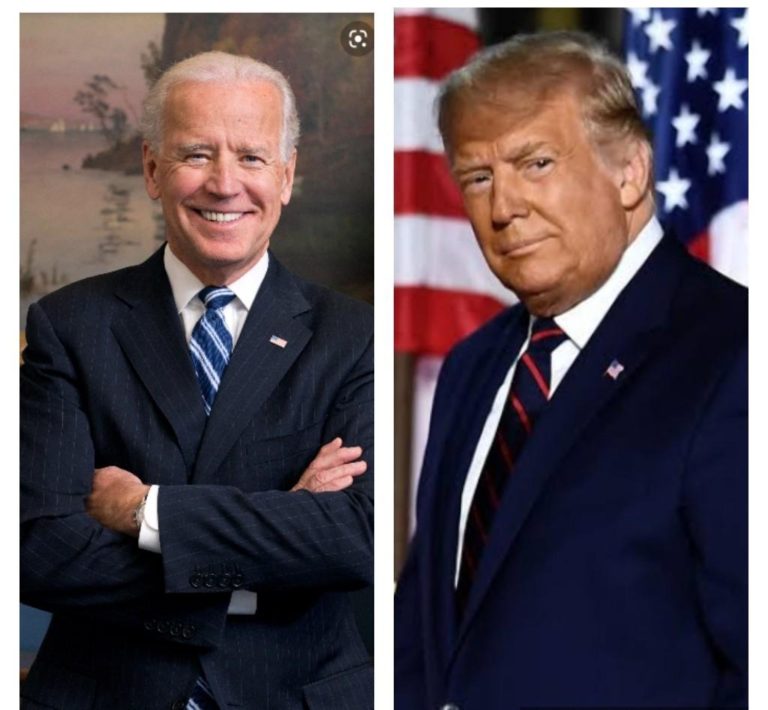
US President: Biden Or Trump? Who is better for India
Geo-Political Overview
The world is battling with COVID-19 while an increasingly belligerent China is using all domains of its comprehensive national power to break out from its self-imposed shackles and dominate international institutions, Asia and the Asia Pacific – thanks to an increasingly vulnerable, confused and directionless America. The emerging multi-polar world is in a state of disarray and engaged in strategic re-balancing. This naturally has fractured global stability and apart from the ongoing confrontations, the brinkmanship being played out between USA and its allies against China in the East and South China Seas, Taiwan Straits (with no formal/institutionalized agreements for crisis resolution), and along the India-China LAC could easily precipitate into a shooting war.
This has left the world on edge. Amidst these tumultuous times, the USA is engaged in selecting their 45th President after a very polarizing, contentious four years of President Trump, which will have significant strategic impact on India. Having said that, as we will see when analyzing the event sheet, that as a mature democratic superpower, US foreign policy has largely followed a steady pattern with India. It is India which is at a crossroad, and needs to evaluate its foreign policy and history of ‘strategic autonomy’.
General Trends
Indian Americans, the second-largest immigrant group in the United States, mostly support Democratic candidates, although support for Trump has reportedly grown in recent years. An Oct 20 YouGov poll found that 72 per cent of registered Indian American voters support Biden. By comparison, 77 per cent voted for Hillary Clinton in 2016 and 84 per cent for Barack Obama in 2012. The poll also claims that the number of Trump-supporting Indian Americans has grown to 22 per cent, from 16 per cent in 2016. The top three issues for Indian American voters are the economy, health care, immigration and racial discrimination. Foreign policy apparently does not rate high. India and Indian Indians must look at next month’s election only in terms of what matters to India.
Trump and India
For India, the Trump years have offered a mixture of spectacle and substance. President Trump did what no US leader had ever done before: Share a stage with his Indian counterpart PM Modi at rallies attended by tens of thousands of people in US and India. The events offered both a chance to curry home political points while cementing their bond as right-leaning nationalist leaders. While the rallies formed the public face of the relationship, defense planners and diplomats have worked behind the scenes to deepen security cooperation between the world’s two largest democracies. The Trump administration has largely continued the policies of its predecessors. The US views India as a useful counterweight to China, together with traditional allies in the region such as Australia and Japan[i].
Under Trump’s watch the focus has been primarily on the security arena with two issues being accorded foremost importance; weapons sales, and prodding it to serve as a counterweight to the PRC. Their bonhomie resulted in first-ever 2+2 dialogue between both the countries at defence and foreign ministry levels. Trump relationships are almost wholly transactional. The Indian government has found plenty to like about the Trump administration, including its emphasis on fighting Islamist extremism and its tough stance on Pakistan. Unlike many international and national voices, Trump has had little to say about Modi’s controversial moves over the past year, including abrogation of Article 370 and 35A, crackdown in Kashmir Valley, CAA and NPR.
In fact, Modi’s embrace of Trump has been so enthusiastic that it risks undermining the strong bipartisan consensus for better relations with India, which many interpreted as an implicit endorsement of Trump’s election campaign. Obviously, Trump wants to make significant inroads with Indian American voters, but politically and diplomatically it is important to keep it bipartisan. The only area of significant friction between Modi and Trump has been on trade practices, which Trump terms as unfair and has often tweeted vehemently against it, and his immigration policies. The two countries are almost engaged in a low-grade trade war. Trump victory cannot be to India’s disadvantage.
Biden and India
Biden has been an enthusiastic proponent of US-India ties for years, and as far back as 2006 as a Senator to an interviewer he said “My dream is that in 2020 the two closest nations in the world will be India and the United States. If that occurs, the world will be safer.” Biden once Chairman of the powerful Senate foreign relations committee, is an established friend of India, and has been instrumental in removing the sanctions on India post Pokhran-2 nuclear tests, while insisting on retaining curbs on Pakistan. As a democrat he continued to be a major force behind the US-India nuclear deal (123 Agreement). Some sections within India, seem convinced that a Biden presidency bodes ill for India. Their misgivings, it appears, stem from some adverse comments that both Biden and his running mate, Senator Kamala Harris, have made about the state of human rights in J&K, nationalist agenda (Hindu in their perception), CAA and NPR which seeks to move the country away from its secular founding ideals, quoting India’s ‘long tradition of secularism and with sustaining a multiethnic and multi-religious democracy’[ii].
Biden’s win will mean multi-faceted, potentially more favourable relationship specially in trade policies for India, predicts UBS Global Research. This should boost investors’ sentiment and push up markets after an initial hiccup. His approach will be more predictable and stable, suiting our diplomatic, political and bureaucratic culture. In all likelyhood he would involve India in US withdrawal from Afghanistan to ensure regional stability rather than implement it unilaterally. At other levels too things will get better. Biden is expected to have a technocrat/core specialists dominated administration, recognized practices will make a comeback, state-level ties will be more predictable, and India’s importance as a strategic counter to China in the Indo-Pacific will be re-affirmed. The flip side is that the benefits of change may be limited for India, as Biden may try and roll back tensions with China even if the ties will still be prickly. Washington may learn to live with China’s expanded influence in Asia which could moderate and reduce support to India against Beijings penchant for salami slicing. Pakistan, India’s implacable foe, will continue to be important to the US owing to the endgame in Afghanistan. Being moderates they may feel compelled to voice dissenting notes against PM Modi’s brand of nationalism and perceived ‘Hindutva’ card. However, geo-strategic interests, India’s size, population and markets could trump ethical considerations
The Indian American Dream — Immigration Policy.
If Trump wins the immigration regulations will be much stricter. Trump has always been vocal about his anti-immigration stand; be it border patrol, entry of skilled workers, family migration or deportation. The “Buy American, Hire American” Executive Order (EO) is a classic example of his anti-immigration rhetoric. Recent policy changes have had effects as we’ve seen a general increase in denial of visa petitions across the board and also heightened scrutiny at the consular level. In fact, his administration is proactively, through new rules and policy changes, tightening certain aspects of immigration, the H-1B program in particular. The two most recent changes, announced by the Department of Labour and Health Services (DOL and DHS), will have a devastating effect on the H-1B program.
If Biden wins, he will implement changes that support and recognise that “Immigrants bring tremendous economic, cultural, and social value to their new communities.” Biden is committed to working on immigration reform and keeping families together that could provide a pathway to citizenship for 5,00,000 residents from India. Biden has said that he will turn the clock back and eliminate the anti-immigration proclamations and executive orders issued by Trump.
Am almost Equal Party Scorecard for Republicans and Democrats: Based on Geo-Political Compulsions and Indian Responses.
It is useful to recall that it was a Republican Richard Nixon who not only supported Pakistan in the 1971 conflict, but even deployed the Seventh Fleet in the Indian Ocean Region (IOR). Republican Reagan strengthened Pakistan’s Inter-Services Intelligence (ISI) by providing support and funds through it for “militant jihad” to drive the Soviet Union out of Afghanistan. India has suffered a blowback ever since through Pakistan’s proxy war. Democrat Clinton supported India during the 1999 Kargil conflict, while Republican George Bush took the relationship to a high by signing the Civil Nuclear Cooperation Agreement. Democrat Obama was the first US President to articulate support for India’s permanent membership to the UNSC (United Nations Security Council) and made us a ‘major defence partner’.
Finally, while Republican Trump has been highly critical on trade issues, taken away GSP (Generalised System of Preferences) benefits, but has spoken highly of the relationship, and authorised niche technology releases. All Presidents have been committed to a stronger relationship with democratic India and recently signed four far reaching politico-military agreements (BECA, COMCOSA, LEMOA, ISA). What matters more, is the geopolitical context within which the bilateral relationship is placed. A Biden administration will explore common areas of work with China, on climate change and trade, but will be guided also by the deep recognition of economic and technological rivalry, and unfair Chinese practices. A Biden administration can also be expected to be more globally influential, with its declared intent to work with allies and partners, and in multilateral frameworks. Trump and Biden will present differing opportunities and challenges: on trade, climate change, and human rights; but similarities on Pakistan and China. Biden importantly has promised to work with India to combat terrorism (without naming Pakistan) and prevent China from threatening its neighbours [iii].
India-China-USA Relations: Strategic Dilemma for India
Both US and India will have an adversarial/ confrontationist relation with China for some time to come due to their own obvious geo-strategic compulsions. India faces a ‘strategic dilemma’; it can align with USA as a strategic partner; it can retain strategic autonomy and join hands on a case to case basis (this could lead to a lose-lose situation in today’s environment); or can cooperate/acquiesce with/to China with obvious adverse fallouts in the international geo-political arena.
Both China and USA in their own interest want India on their side (one within a liberal democratic mode while the other in an illiberal unequal order). Currently India is rapidly improving its strategic and military relations with USA and its allies, without aligning permanently, keeping options open. Time only can tell the road chosen, and whether it was a geo-politically prudent one.
Conclusion.
Foreign Minister Dr S Jaishankar when asked by Hindustan Times on September 6, 2020 on who will be better for India said “I actually believe that India has bipartisan, or in a sense non-partisan, support in American politics. Our footprint is very wide and so is our acceptability. Different sets of politicians who disagree on many things agree on India. And I think that is a very good place to be”. Both Trump and Biden need India to balance China and counter its rising global stature. Interestingly and happily the future relations with the USA depends on India, and how India wants to geo-politically balance the global equations or align on one side of the emerging bi-polar world.
Mature handling of foreign policy demands a certain balancing of
objective moral judgment and national interest. The absence of this judicious
mix prompts sellout allegations, as in some South American republics or Asian
client states of the US like Syngman Rhee’s South Korea or the Philippines
under Ferdinand Marcos. That is not how Indians see their national future.
[i] ‘What the US elections mean for India’ by Joana Slater, Washington Post, 29 Oct 2020
[ii] ‘Why Modi Will Prefer a Trumpian World Order, Rather Than a Biden-Harris Presidency’ by Sushil Aaron for The Wire on 02 Oct 2020
[iii] In Biden’s outreach to Indian Americans, a clear reference to Chinese aggression and Pak’ by Yashwant Raj for Hindustan Times, 25 Oct 2020; Biden also wrote in an Op-Ed in India West, a news publication focused on the Indian diaspora.
POK journalist Tanveer Ahmed starts hunger strike in jail
Dadyal/ POK: Senior journalist Tanveer Ahmed who was arrested on August 21 from POK (Pakistan-occupied Kashmir) for taking down Pakistani flag at Dadyal has begun a hunger strike against the oppressive actions of authorities who continue to deny him basic legal options available to political prisoners.
On October 29 Tanveer Ahmed’s case came up for hearing at the Supreme Court of Pakistan-occupied Kashmir (POK). However, the two-member judicial panel did not even bother to record the court proceedings. The judges of “Azad Kashmir” (POK) adjourned the court without even listing the court proceeding details of Tanveer Ahmed.
“We did not get any concrete reply from Tanveer’s lawyer. We went to the Mirpur Supreme Court (in POK) and checked the records and found that there was no record of the October 29 proceedings and no date has been fixed for the next hearing,” a Dadyal resident told News Intervention requesting anonymity.

Tanveer Ahmed’s family members and friends were later on told by the authorities that due to a strike against the decision to turn Gilgit-Baltistan into a Pakistani province there was limited staff in the courtroom and so the court proceedings could not be recorded. Tanveer Ahmed’s friends rejected this reasoning and termed them as “baseless”.
“With the help of this “limited staff” present in the courtroom, all other court proceedings on October 29 were typed and recorded. Why didn’t they record Tanveer Ahmed’s case proceedings?,” asked the Dadyal resident, his voice furious.
Later on Tanveer Ahmed’s family was verbally informed that the Supreme Court panel would hear Tanveer’s case on November 18.

Tanveer Ahmed started his fast from November 1 to protest against this mental harassment.
At the time of writing this report Tanveer Ahmed’s condition had turned critical and his friends said they fear that the ISI might try to eliminate him.
Tanveer Ahmed’s wife has requested the deputy commissioner for his medical checkup. The deputy commissioner asked for the police personnel to be deployed and also wrote to the jail superintendent to arrange for medical examination of Tanveer Ahmed at the hospital.
Tanveer Ahmed’s friends and relatives are trying hard to persuade him to end his hunger strike but he has not yet agreed. “Tanveer says that he respected and trusted the judiciary but the judiciary does not seem to respect itself. He says that if he has been imprisoned on political grounds, then he should also be given political facilities,” said the Dadyal resident.
In August this year, Tanveer Ahmed had demanded that Pakistani flag be removed from his country but after his demands were not met he himself removed the Pakistani flag from Maqbool Bhat square at Dadyal. Tanveer’s argument was that Pakistan calls this as “Azad” Kashmir so why should the flag of another nation be hoisted in a free country, he then pulled down the Pakistani flag citing international rules. Subsequently, Tanveer was arrested on August 21.
Tanveer Ahmed’s actions have irked Rawalpindi and its rogue intelligence agency ISI who now wants to silently eliminate Tanveer Ahmed.
Why Bharati Ghosh is tough to beat in Bengal?
For almost five months, a female functionary of the Bharatiya Janata Party (BJP) has criss-crossed Bengal to address rallies packed to brim, many times overflowing with thousands of ardent fans.
Every time her convoy reaches the venue, women blow conch shells and shower flower petals to welcome her, men stand in rapt attention, children run with her motorcade like crazy fans after filmstars. For them, Bharati Ghosh is indeed special. Her power-packed rallies are indeed unique. Many call her Agni Kanya, which literally translates into Fire Girl. It is the same title Bengal had given to Mamata Banerjee when she swept to power in 2011.
On paper, she is among the many vice presidents of BJP. On the ground, her popularity is sky high but strangely, she hardly figures in the media, both print and electronic. Some say it is because of bitter rivalry within the state unit of the BJP. It has not deterred Ghosh, she has kept the prestige of the party intact by raising issues of both national and local importance in meetings at Hooghly district, east Midnapore, West Midnapore, Jhargram Bardhaman, North 24 Parganas, South 24 Parganas, Kolkata, Howrah Gramin, Jalpaiguri, Siliguri and Raiganj.

Political cognoscenti in Bengal say Ghosh has huge connectivity with people in Bengal.
In her speeches she raises issues which matter the most in a weak state that shares an important international border and is low on economic growth. Ghosh talks about the per capita expenditure on healthcare by the state government. She quotes the Reserve Bank of India (RBI) and reminds everyone that Bengal spends just Rs 988 per capita on healthcare while the average spend by all states stands at Rs 1,482. In short, Bengal allocates just 67 percent of what is the average expenditure of the Indian states and Union Territories. She reminds the masses that health is wealth, the only other state that is worse than Bengal is Bihar, which had spent Rs 781 per capita on healthcare.
She reminds everyone that in Bengal economic activity is near dead and no new investment has come. She says the younger generation is forced to seek gainful employment outside the state. “This needs to change, this will change only if you want. You can bring the change. Stay with the BJP,” says Ghosh.
She reminds people of Bengal that she should protest against the unabated illegal immigration happening from next door Bangladesh.
For the masses, Ghosh is the lamp of Aladdin, many feel only she can turn things around in this intensely politicised state and its political cadre, supported by all sections of administration, police included, now survives on extortion. Ghosh says the state’s Tolabazi or Hafta culture needs to end because it yields no revenue to the exchequer.
A weak administration naturally breeds a weak economy, Ghosh reminds everyone.

A former decorated cop who worked at the United Nations and across strife-torn Africa, Jordan and Kosovo, Ghosh makes several broader points about national politics, explaining why states need to work closely with the government at the Centre. She says courage requires more than words, it requires action. She knows taking action with the full knowledge means there would probably be consequences, both personal and national. For her, true courage means a willingness to live with those consequences.
Ghosh, educated at Harvard and London School of Economics, has travelled across Bengal, a state gripped by the Covid-19 pandemic. She knows these are no ordinary times. She tells people why it is important to prioritise, communicate and support each other. She has a simple, catchy line for her Zoom conversations: Amar Poribar, BJP Poribar which translates into My Family, BJP Family.
She is the only BJP leader who has suffered tremendously at the hands of the rival Trinamool Congress.
Ghosh, who held simultaneous charge as superintendent of police of two Maoist districts of Jhargram and Paschim (West) Midnapore from 2012 to 2017 and initiated the surrender of hundreds of Maoists and restored normalcy in the region. Extremely popular in Junglemahal belt among the Adivasis & SC/ST belt, her relationship with the Bengal CM strained after Sabang bye-elections results were declared on December 24, 2017 when she, as SP was blamed for BJP’s increased vote share which rose from 2000 to 37000. Ghosh applied for VRS on December 26, 2017. The VRS was approved on January 2, 2018. She remembers when she resigned, she was on the verge of becoming a DIG, a very crucial and important rank for an IPS officer. But she did not compromise.
On 31st January 2018, she met BJP leaders in Delhi to join the party. Within 24 hours, her home was raided on February 1, 2018 by cops who did not even carry a FIR. Following the raid, Ghosh was implicated in a series of cases. Shockingly, rapists, criminals and history sheeters who were arrested and charge sheeted during her tenure as SP were invited by the state administration to come over and lodge false complainants against her in what appeared to be a deep rooted conspiracy to malign her image.
She has fought the charges meticulously in various courts.
What is surprising is that Ghosh hardly features in the BJP propaganda machinery, she is not even there in the leaflets issued by the state wing of the party. But that has not deterred Ghosh, she is a strong figure who doesn’t seem to worry much about being disliked, or tries to soften her ways to appear more feminine. She is not completely safe from sexist stereotypes and treatment. She is just a fierce leader who does not hesitate to test the limits of legality and democracy.
Her popularity is growing, she is being noticed by many.
What is extremely surprising is that a nation that is routinely dismissive of its women, diminishing and threatening them in the private sphere, is extremely comfortable with this kind of female power? Why are the crowds filling up her rallies? Many say Ghosh exudes both confidence and hope.
Bestselling author Amish Tripathi told Quartz: “India is one of the last surviving ancient pagan cultures,” Unlike other cultures, he said, Indians still carry the memories of the country’s ancient ways.
“Empowerment can only come from a woman. We once looked to Mamata Banerjee as a goddess. Now we see Bharati Ghosh as a saviour. She is rooted to this region, she knows our pains, sorrows,” Babu Paramanik, a worker at JangalMahal, said in a brief interview.
Another villager, Abhiram Sahu, said when Ghosh was in charge of Midnapur, she cared for the masses. “She was like our mother. If there was a violence free election, she would have won the Lok Sabha seat from Ghatal in 2019.” Ghosh polled 6,09,986 votes but lost to Deepak Adhikary, a filmstar who polled 7,17,959 votes, in a highly violence-marred election when paramilitary forces were repeatedly called to control the situation. She almost got killed but for her CRPF guards who fired to stave off her attackers. The incident happened in Keshpur, an assembly in the Ghatal constituency. Newspapers reported a high level of rigging by TMC in Keshpur.
For the records, political violence and deaths are high in Bengal.
“She cared for us, she was there for everything ranging from wedding to education. She was like our mother,” says Bharat Soren, a resident of Gidhni village. Samir Dhal of Jamboni says Ghosh still retains her grip in the Midnapur region, as also in other parts of the state. “She cared for us, we always remember her.” Satya Malick of Binpur village says people have high hopes from Ghosh, they know she is a rare leader who will always stand with the masses. Words that she would come to address rallies travel like jungle drums, women throng the venue in hordes.
The BJP high command, led by Prime Minister Narendra Modi and Home Minister Amit Shah, are in full control of developments in Bengal. The duo made several organisational level changes in the state BJP, putting veteran RSS leader Shiv Prakash in total control. BJP wants more ground to connect with the masses in Bengal for the 2021 assembly elections. Ghosh’s popularity with the masses could come in handy for the party in the 2021 assembly elections.
Political experts in Bengal say Ghosh is probably one of the rarest BJP leaders high on the TMC radar. The TMC also knows that only Ghosh has the potential to embarrass Bengal’s ruling party. Ghosh, a no-nonsense person, was once hailed as the daughter of Bengal CM Mamata Banerjee. Now, she is labelled as a carpetbagger by the TMC.
She was once the Insider, now she is an Outsider.
The Apex Court has restrained the Bengal government from arresting Ghosh, who has—actually—taken the battle to the trenches. Once she stopped Bengal’s big cow smuggling racket and was privy to many secrets of the state, including the death of Naxalite leader Kishenji on November 24, 2011. The state government had claimed Kishenji was killed in an encounter in Junglemahal though there were conflicting reports which said the Naxalite leader was shot dead after he had surrendered.
If Ghosh offers proof of such a killing, it could cause tremendous embarrassment to the state government. Staged encounters are not uncommon in Bengal; the state witnessed many such killings by cops during the tumultuous Naxalite movement in the 1970s.
Ghosh is now faced with what appears to be a big challenge: To take on the might of important ruling politicians in the state.
Seasoned Kolkata-based lawyer and author Arunabha Ghosh said it will be interesting to see how Ghosh fares in the forthcoming elections. “She has the willpower, she has tremendous grassroot support and she is not worried about any threats. It is clear there is a lot of political vendetta against her.
“Her flats were sealed illegally before she opened it through a court order, her salary account remains frozen without any court order and during the pandemic Covid-19 situation, CID, WB issued notices to Ghosh calling her for interrogation of old cases where she was not called for two years. On one occasion, the officer who examined her was a Covid patient.”
Ghosh has weathered it all.
In a few minutes, the former top cop will be off to one more rally to talk about the BJP and changes that the right-wing party could bring in Bengal.