Home Blog Page 34

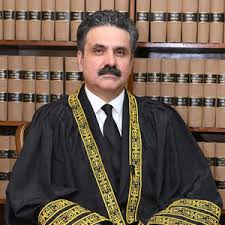
Pakistan appoints Yahya Afridi as 30th Chief Justice ; PTI boycotts selection process

Justice Yahya Afridi has been appointed as the 30th Chief Justice of Pakistan, following approval from President Asif Ali Zardari. Afridi, who has served as a Supreme Court Justice since 2018, will officially assume office on October 26, succeeding Chief Justice Qazi Faez Isa.

The appointment was finalized after a 12-member special parliamentary committee nominated Afridi under the 26th Constitutional Amendment. The decision received the backing of Prime Minister Shehbaz Sharif, and the president signed off on the recommendation.

Justice Afridi brings decades of legal experience to the role. His legal career began in 1990 when he enrolled as an advocate of the high court, followed by his registration with the Supreme Court in 2004. He previously served as Assistant Advocate General for Khyber Pakhtunkhwa and as a Federal Counsel for the Government of Pakistan.

Afridi’s judicial career advanced in 2010 when he was appointed as an Additional Judge of the Peshawar High Court. Two years later, he was confirmed as a permanent judge. Notably, Afridi made history by becoming the first judge from the Federally Administered Tribal Areas (FATA) to serve as Chief Justice of the Peshawar High Court in 2016. He held the position until his elevation to the Supreme Court on June 28, 2018.

New Era in Judiciary

The selection process for Afridi’s new role was not without political drama. The special parliamentary committee, formed on Monday by National Assembly Speaker Ayaz Sadiq, held an in-camera session at Parliament House late Tuesday. Comprising eight MNAs and four senators from various political parties, the committee worked to reach a consensus on Afridi’s nomination.

However, the session took place without the participation of Pakistan Tehreek-e-Insaf (PTI) and its ally, the Sunni Ittehad Council (SIC), both of which boycotted the meeting. They objected to the recent constitutional amendments that led to the formation of the committee.

In their absence, nine members attended the session, with eight supporting Afridi’s nomination. Jamiat Ulema-e-Islam-Fazl (JUI-F) leader Kamran Murtaza cast the only dissenting vote, favoring senior puisne judge Mansoor Ali Shah.

The composition of the special committee included representatives from key political parties. PML-N members Khawaja Asif, Ahsan Iqbal, Shaista Pervaiz Malik, and Azam Nazeer Tarar, along with PPP leaders Raja Pervez Ashraf, Naveed Qamar, and Senator Farooq H. Naek, played significant roles in the deliberations. Rana Ansar of MQM-P and PTI-affiliated members Gohar Khan and Senator Ali Zafar were also part of the panel, though the latter abstained from the proceedings.

Hezbollah’s men guard Beirut hospital bunker that hoards gold and millions in cash

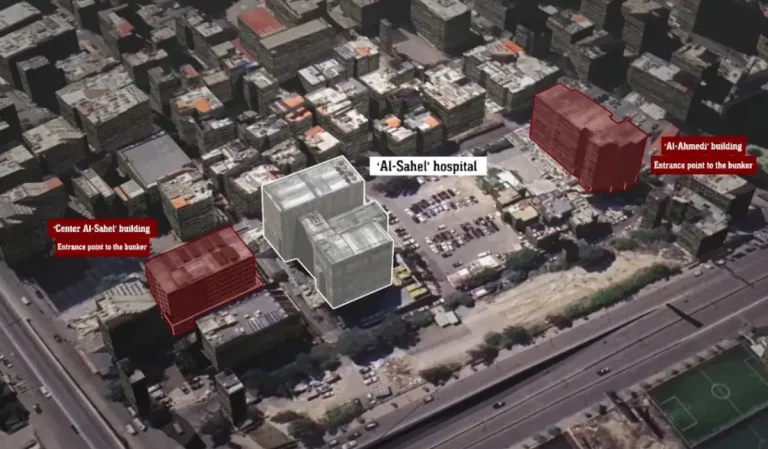
Journalists and activists who rushed to the Al-Sahel General Hospital in Lebanon’s capital Beirut on the 23rd of Oct were greeted by heavily armed Hezbollah fighters terrorists. These Hezbollah fighters terrorists blocked the door to underground bunker at the Al-Sahel Hospital, which, the Israelis alleged, held millions in cash and gold meant to finance Hezbollah’s terror activities. The Beirut hospital’s director had called upon Lebanese media and other eminent personalities to have a peek at the hospital’s bunker hoping to prove that Israelis claims were false. However, heavily armed Hezbollah’s fighters terrorists blocking access to the bunker stood testimony to Israel’s claims.

Several reporters from the LBCI (Lebanese Broadcasting Corporation International) attempted were refused entry inside the bunker of Al-Sahel General Hospital. The journalists even reached out to Hezbollah’s media representative, but their requests were denied. The situation unfolds against a backdrop of escalating tensions, as Israel recently declassified intelligence suggesting the presence of a hidden Hezbollah bunker filled with millions of dollars in cash and gold beneath the hospital.

In a televised briefing shared via X, IDF spokesperson Rear Admiral Daniel Hagari alleged that the IDF had located an underground vault containing substantial cash and gold, purportedly used to fund Hezbollah’s operations against Israel. He emphasized the strategic placement of this vault beneath a residential structure, further complicating the military landscape.

IDF spokesperson Rear Admiral Daniel Hagari explained that Israeli airstrikes targeted Hezbollah’s financial stronghold, Al-Qard Al-Hassan, on Monday. He urged Lebanese citizens to distance themselves from Hezbollah’s facilities, stating, “Our strikes will degrade Hezbollah’s ability to finance its attacks on Israelis.”

Khyber-Pakhtunkhwa: Pashtun Frontier Corps resign, defying Paki regime’s oppression

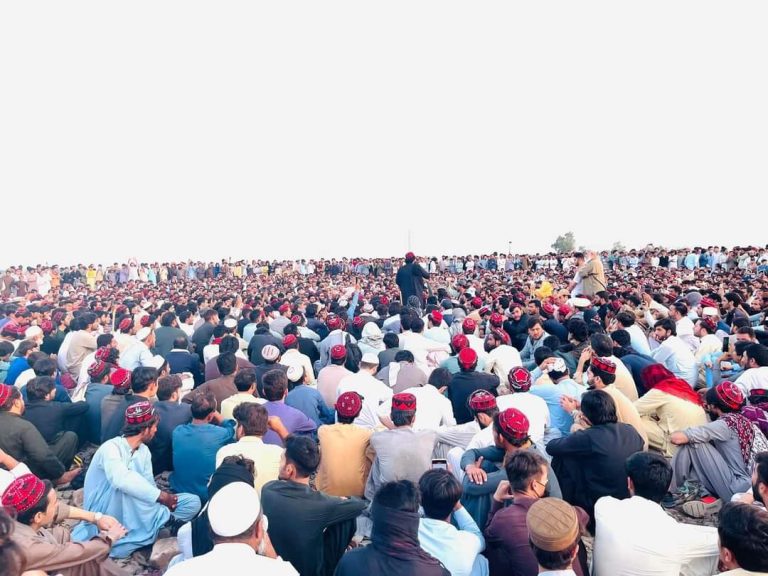
In a bold act of defiance, Pashtun Frontier Corps (FC) officials stationed in Bannu have resigned, rejecting their roles as enforcers of the Paki establishment’s oppressive policies. The resignations follow widespread protests across the Pashtun belt, where citizens have taken to the streets demanding peace, dignity, and justice. This rising wave of resistance reflects growing frustration with the Pak Army’s long-standing exploitation of the region for Punjabi Pakistan’s games.

The officials’ decision comes amidst a broader trend of resignations from police ranks, as security personnel refuse to partake in the “dollar wars” — proxy conflicts funded by foreign aid, which have turned the Pashtun homeland into a battlefield for Pakistan’s military ambitions. The Pashtun belt, long treated as a pawn by Islamabad, has faced years of military operations, arbitrary arrests, enforced disappearances, and airstrikes, under the guise of counterterrorism.

These resignations as a significant turning point, with growing fears within Islamabad that more Pashtun occupied-government employees may abandon their posts and join the struggle for peace and self-determination. “The day is not far when Pashtuns will leave government jobs en masse and stand shoulder to shoulder with their people,” said PTM Chief Manzoor Pashteen, adding that this movement could further fracture Pakistan’s already unstable control over its restive regions.

The Pakistan Army, notorious for its colonial-style governance, has used brutal tactics to suppress Pashtuns in their homeland, including silencing peaceful activists from the Pashtun Tahafuz Movement (PTM). Yet, the resistance only grows stronger. The protesters have vowed to reject military oppression and continue their struggle for peace, dignity, and a future free from war.

Salutations are pouring in for the officials and protesters who have refused to enforce the occupied-state’s oppressive policies. Their courage underscores a deepening solidarity among Pashtuns.

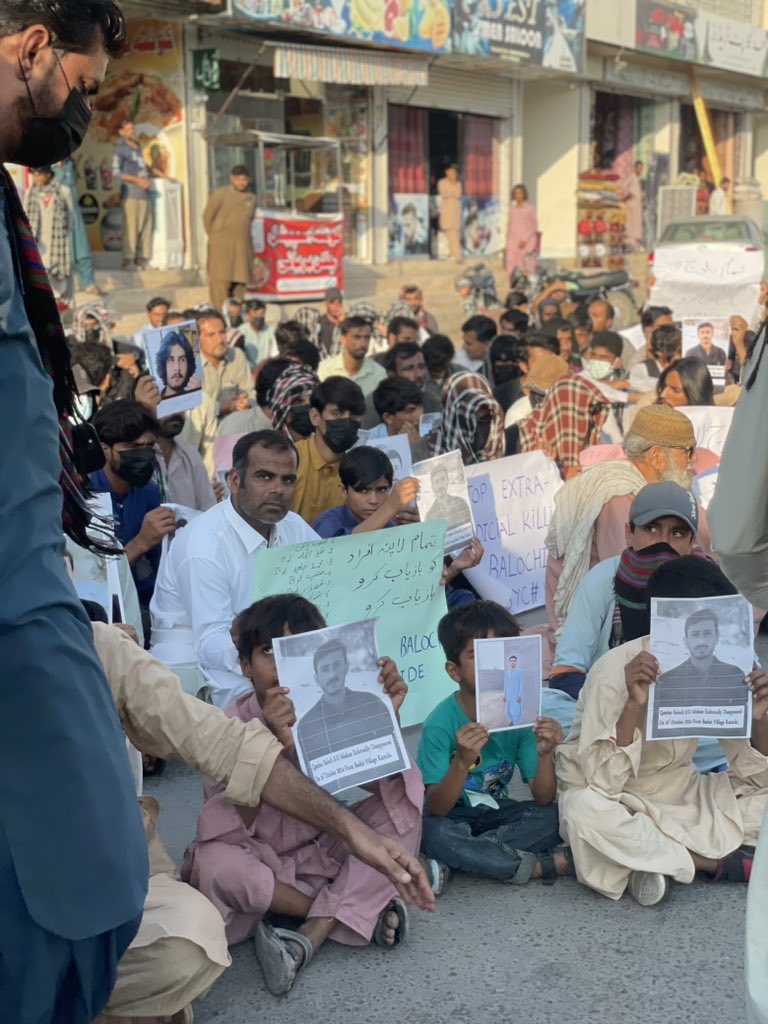
POB: Baloch protest in Khuzdar against Pak Army kidnappings

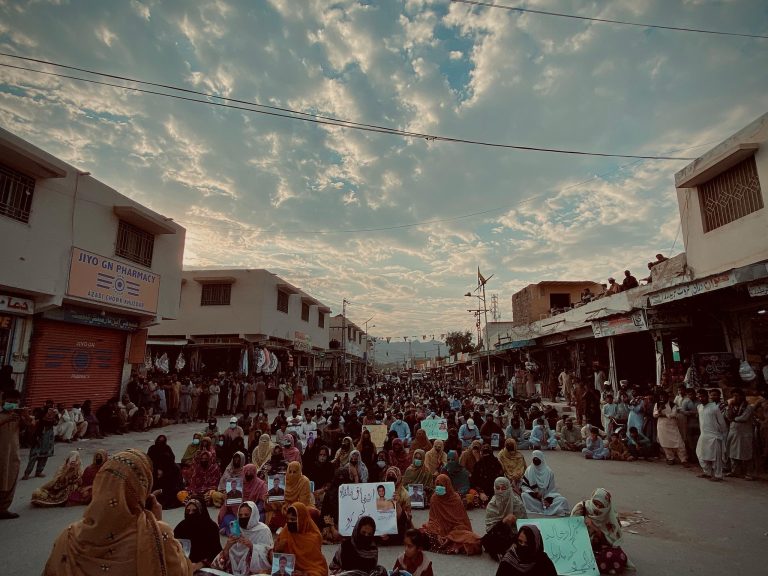
In Khuzdar, the Baloch Yakjehti Committee staged a large protest on Wednesday, condemning enforced disappearances and Pakistan Army repression in Pak-occupied-Balochistan. The demonstration, part of an ongoing campaign titled “Breaking the Silence: Standing Against Enforced Disappearances,” saw participation from the families of missing persons and locals from Nal, Wadh, Surab, and nearby areas.

The protest rally began at Shaheed Razzaq Chowk and marched to Azadi Chowk, where demonstrators staged a sit-in to demand accountability for the forced abductions of Baloch civilians, activists, and students.

Army Intimidation Fails to Stop Protesters

Pakistan’s security forces are trying to sabotage the protest by resorting to familiar oppressive tactics. Deployed hundreds of personnel try to intimidate the protestors, shut down communication networks, and arrested participants. They even used violence to break up the rally. Despite these efforts, the protesters carried on, demonstrating their resistance to the Army’s oppressive policies.

The military establishment has long used enforced disappearances as a tool to crush Baloch population in POB, where the population has resisted Pakistan’s control since its forceful annexation in 1948. Thousands of Baloch activists, students, and intellectuals have vanished over the years, with the Army-backed intelligence agencies and death squads orchestrating these abductions. Many abductees are tortured, killed, and discarded in the Army’s “kill-and-dump” policy.

The rally in Khuzdar follows similar protests in Karachi and Hub Chowki, underscoring the growing discontent with the Army’s unchecked authority in POB. The Baloch Yakjehti Committee’s campaign aims to mobilize the public against these enforced disappearances, which have devastated families across the region.

PM Modi & President Xi to hold first bilateral meeting in five years at BRICS Kazan summit

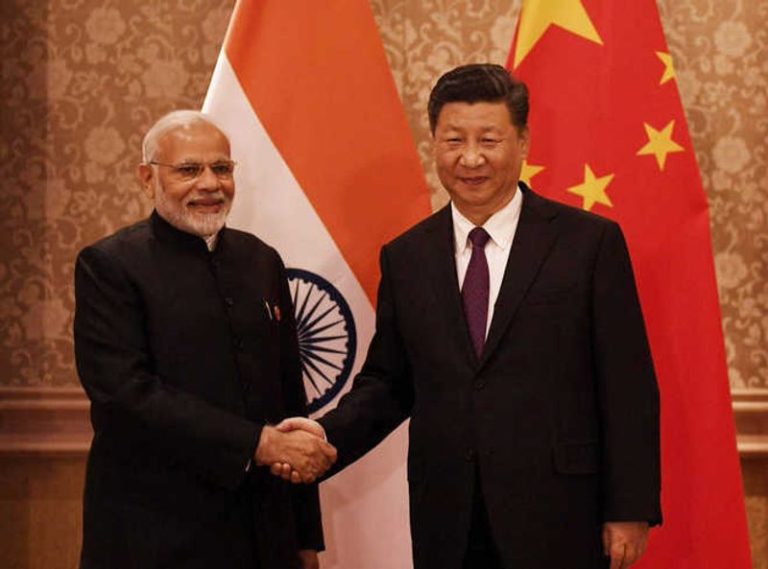
Prime Minister Narendra Modi is poised to meet with Chinese President Xi Jinping for a bilateral discussion in Kazan, Russia, on the sidelines of the BRICS Summit. This marks the first formal interaction between the two leaders in five years, reflecting recent efforts to de-escalate tensions along their shared border.

The meeting comes after India and China reached an agreement to resume regular patrolling along the Line of Actual Control (LAC) in eastern Ladakh, a region that has seen increased friction since 2020.

The last time PM Modi and Xi met was in October 2019 during the Mahabalipuram Informal Summit in Tamil Nadu, just months before the violent clashes in Galwan that resulted in a military standoff. Since then, the leaders have engaged briefly during the G20 meetings in Bali in 2022 and Johannesburg, South Africa, in 2023.

On October 21, the Ministry of External Affairs (MEA) announced that an agreement had been reached regarding patrolling arrangements along the LAC. Misri stated that this resolution was the result of extensive discussions with Chinese counterparts at both diplomatic and military levels. He highlighted the involvement of military commanders in addressing the tensions that have persisted since the Galwan clashes.

Historic Modi-Xi Meeting

China’s Foreign Ministry spokesperson Lin Jian also confirmed the resolution of the border conflict, stating, “We have reached a resolution on the relevant matter and will work with the Indian side to implement the solution. We are in close communication through diplomatic and military channels.”

The anticipated meeting between PM Modi and President Xi in Kazan is expected to be a significant moment for India-China relations. Discussions are likely to include the recent agreement on patrolling along the LAC, trade relations, and regional stability.

In previous meetings, such as the Mahabalipuram summit, PM Modi and Xi discussed international and regional issues, focusing on improving people-to-people contact and enhancing trade while maintaining peace along the extensive 3,500-kilometer India-China border. PM Modi also showcased several iconic monuments to Xi during this visit, which culminated in a lengthy one-on-one dinner discussion.

Kazan Summit

Both leaders met earlier in April 2018 during the Wuhan Informal Summit, which aimed to mend ties following the Doklam standoff in 2017. Discussions at that summit addressed the strategic long-term perspective of India-China relations. The leaders also interacted during the Bali G20 Summit, where they acknowledged the need to stabilize bilateral relations.

In 2023, PM Modi and Xi discussed unresolved issues along the LAC in Johannesburg, agreeing to direct their officials to intensify efforts for disengagement and de-escalation. Former Foreign Secretary Vinay Mohan Kwatra noted that PM Modi stressed the importance of maintaining peace along the border for normalizing ties between the two nations.

The ongoing border tensions between India and China escalated in 2020 following aggressive Chinese military actions in eastern Ladakh. Since then, the two nations have conducted numerous meetings to address the situation.

In September 2023, National Security Advisor Ajit Doval met with Chinese Foreign Minister Wang Yi in St. Petersburg, where they reviewed efforts to resolve remaining issues along the LAC, with both sides agreeing to expedite disengagement efforts.

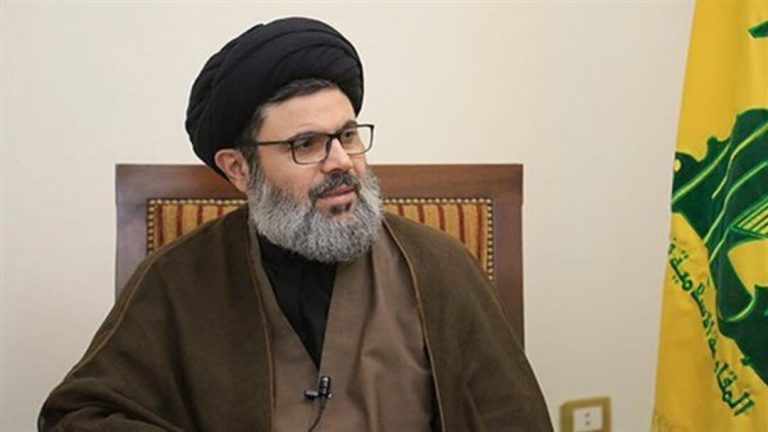
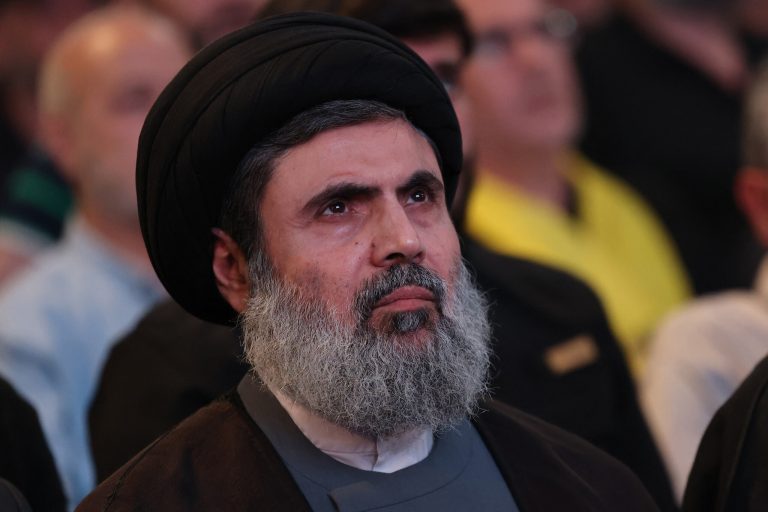
Israel eliminates Hashem Safieddine, successor to Hezbollah Chief Nasrallah

The Israel Defense Forces (IDF) on Wednesday confirmed it had eliminated Hashem Safieddine, who was poised to succeed the late Hezbollah leader Hassan Nasrallah. Nasrallah was reportedly killed last month in an Israeli attack targeting the Iran-backed militant group.

“Hashem Safieddine, Head of the Hezbollah Executive Council, and Ali Hussein Hazima, Commander of Hezbollah’s Intelligence Headquarters, were killed during a strike on Hezbollah’s main intelligence HQ in Dahieh approximately three weeks ago”, the IDF announced in a statement on X (formerly Twitter).

https://twitter.com/IDF/status/1848827621510947040?ref_src=twsrc%5Etfw%7Ctwcamp%5Etweetembed%7Ctwterm%5E1848827621510947040%7Ctwgr%5E4b2ef0dfc88c1c1c89b691184aefac89b48c23c7%7Ctwcon%5Es1_&ref_url=https%3A%2F%2Fwww.indiatvnews.com%2Fnews%2Fworld%2Fhasem-sefieddine-successor-of-hezbollah-leader-hassan-nasrallah-killed-confirms-israel-defence-force-lebanon-2024-10-23-958415

The Rise of Hashem Safieddine

Cousin of Nasrallah, Safieddine was a significant figure within Hezbollah, serving on its Jihad Council, which oversees the group’s military operations. He also held a prominent position on Hezbollah’s Executive Council, managing the organization’s financial and administrative affairs.

Safieddine’s prominence grew in recent years as he took on public roles that Nasrallah had avoided due to security risks. He frequently addressed high-profile events and funerals, becoming a visible face for the militant group during periods of heightened tensions with Israel.

The IDF said that Safieddine was also a member of Hezbollah’s Shura Council, the group’s most senior decision-making body. In Nasrallah’s absence, Safieddine occasionally stepped in as acting Secretary-General, solidifying his influence over the organization’s strategies. Israeli officials accuse him of directing numerous attacks on Israel, contributing to Hezbollah’s military campaigns against the state.

Ali Hussein Hazima, who also died in the airstrike, headed Hezbollah’s intelligence apparatus and had been involved in planning attacks targeting Israeli soldiers.

Hezbollah Silent Amid Intensified Offensive

Hezbollah has not yet issued a response to Israel’s announcement regarding Safieddine’s death. However, the loss marks a significant blow to the group, which has seen several of its senior commanders killed in recent Israeli strikes.

Israeli army chief Lieutenant General Herzi Halevi said, “We have reached Nasrallah, his replacement, and much of Hezbollah’s senior leadership. We will reach anyone who threatens the security of Israel’s civilians.”

The latest escalation comes amid Israel’s intensified military operations in Lebanon following a year of border skirmishes with Hezbollah. The militant group, known as Iran’s most heavily armed proxy in the region, has aligned itself with Palestinian factions in Gaza during recent clashes with Israel. However, Hezbollah is reeling from the elimination of key leaders in recent weeks, weakening its operational capabilities at a critical juncture.

Israel reveals Hezbollah bunker with millions in cash & gold beneath hospital in heart of Beirut

The Israel Defense Forces (IDF) revealed the discovery of a hidden Hezbollah bunker containing millions of dollars in cash and gold. The claims were made during a televised briefing on Monday, where IDF spokesperson Rear Admiral Daniel Hagari declassified intelligence regarding Hezbollah’s financial operations located beneath a hospital in Beirut.

Hagari said that the Israeli Air Force executed a series of precise strikes targeting Hezbollah’s financial stronghold, Al-Qard Al-Hassan, urging Lebanese citizens to avoid areas near Hezbollah facilities. “Our strikes will degrade Hezbollah’s ability to finance its attacks on Israelis,” he said, adding that the significant underground vault was specifically designed to support Hezbollah’s operations against Israel.

According to Hagari, the bunker, believed to be directly beneath Al-Sahel Hospital in Beirut, was intentionally constructed under a residential building, raising concerns about civilian safety. He emphasized that the IDF would refrain from targeting the hospital itself, stating, “We are not at war with the people of Lebanon. We are at war with Hezbollah.”

The IDF’s strikes late Sunday affected at least 15 branches of Al-Qard Al-Hassan across southern Lebanon and the eastern Bekaa Valley. Hagari highlighted that the organization violates international law and is sanctioned by the United States and other Western nations.

He further described Hezbollah’s financial structure, which reportedly relies on funds from the Iranian regime and contributions from the Lebanese people. Intelligence suggested that cash and gold are transferred through Syria and that Hezbollah operates factories in Lebanon and other countries to generate income.

Israel has announced intentions to conduct further strikes against Hezbollah’s infrastructure, with recent airstrikes leading to the displacement of over a million people in Lebanon. In retaliation, Hezbollah has been launching regular rocket attacks into Israel since the onset of renewed conflict following the Hamas raid in October of the previous year.

Khyber: Pak Army airstrike in Tirah valley targets & injures Pashtuns

A devastating airstrike by Pakistan Army targeted the bustling Pir Mela Bazaar in the Zakhakhel area of Tirah Valley, resulting in injuries to dozens of innocent civilians, including young children. The attack, which took place recently, raises serious concerns about the military’s aggressive tactics against Pashtuns.

The airstrike struck during peak hours, inflicted chaos and terror among the local population. Many of the injured were transported to Hayatabad Medical Complex in Peshawar for urgent medical care, with activists urging the community to come forward for blood donations to aid the victims.

This assault on civilians highlights the ongoing military operations in the Pashtun belt, where the Punjabi Pak Army has increasingly resorted to targeting public, in the name of counterinsurgency strategies. The growing confidence in the Pashtun Jirga signals that the end of Pakistan’s military-driven dollar war in the region may be near. Therefore, the Pakistan Army is using airstrikes as a blunt instrument to crack down on the Pashtuns, who have risen to protest against the Punjabi Army elites for the suppression of the Pashtun population in their own land.

J&K police eliminates new LeT-linked offshoot after massive raids across Kashmir

In a significant counter-terrorism operation on Tuesday, the Counter-Intelligence Kashmir (CIK) raided ten locations across multiple districts, including Srinagar, Ganderbal, Pulwama, Anantnag, Budgam and Kulgam. Seven suspects were detained and authorities seized 14 mobile phones, one laptop and other incriminating materials.

The operation revealed the existence of a recruitment module for the newly formed terrorist group Tehreek Labaik Ya Muslim (TLM), which officials described as an offshoot of Lashkar-e-Taiba (LeT). The module was reportedly being managed by a Pakistani handler known as “Baba Hamas,” underscoring Pakistan’s continued involvement in fueling terrorism in the Kashmir Valley through proxy groups.

Authorities stated that dismantling this network is crucial to disrupting recruitment efforts targeting vulnerable youth in the region. “Tehreek Labaik Ya Muslim was attempting to revive cross-border terrorism under the guise of a new front,” a CIK official disclosed. The Paki establishment’s hand behind the group exposes Islamabad’s strategy of using renamed proxies to maintain deniability while continuing to stoke unrest in Kashmir.

NIA Probes Fresh Terror Attack in Ganderbal

The operation comes amid heightened security concerns following Sunday’s brutal terror attack at a construction site in Ganderbal district. Terrorists ambushed workers on the Srinagar-Leh national highway, killing a local doctor and six migrant workers as they returned to camp after work. The attack has raised serious alarms about the safety of civilians, particularly non-locals working in the Valley.

The National Investigation Agency (NIA) visited the site on Monday, led by a Superintendent of Police from its regional branch. The agency is investigating whether the attack is linked to the recruitment activities of groups like TLM, signaling deeper connections to Pakistan-backed terror operations.

Jammu and Kashmir Chief Minister Omar Abdullah urged security forces to remain vigilant, emphasizing that such violent acts are intended to project instability in the region. “These killings are aimed at undermining the peace and security we have fought hard to achieve. We will not allow these cowardly acts to derail our progress,” Abdullah said, reaffirming the administration’s commitment to protecting civilians and restoring normalcy.

Pakistan’s proxy games in J&K leave civilians caught in crossfire

0

Coming within 48 hours of Omar Abdullah taking oath as Chief Minister of J&K union territory, it’s obvious that Friday’s targeted killing of a 30-year-old migrant labourer by terrorists in the Shopian district of South Kashmir wasn’t coincidental. This dastardly murder was clearly meant to buttress Pakistan’s jaundiced view that despite large voter turnout and peaceful conduct of assembly elections in J&K, normalcy still eludes this region. 

Though personal details other than name of the victim are unavailable, the fact that the victim had left his home in faraway Bihar and had come to Kashmir in search of an honest living to support his family indicates that he was indeed a very needy person. It would also be fair to assume that being an outsider preoccupied with work, he neither had the time nor inclination to delve into local politics or engage in ideological issues plaguing Kashmir. 

It’s thus evident that this unfortunate migrant worker was brutally killed, not for anything he had said or done, but only because he happened to be at the wrong place at the wrong time. Besides demonstrating the complete disregard that terrorists have for human life, killing of an innocent person also completely belies claims made by Pakistan and its local proxies that such killings by ‘mujahideen’ [Islamic warriors] have religious sanction as they are part of the ongoing ‘jihad’ [holy war] in J&K.

Since Islam preaches that “the murder of one innocent person is akin to the murder of the whole of humanity,” aren’t those involved in the killing of innocents and calling themselves ‘mujahideen’ actually apostates? Similarly, aren’t those decreeing that such heinous killings are admissible in ‘jihad’ intentionally misrepresenting Islam, and are hence guilty of blasphemy? These are some pressing issues that should concern both the clergy and civil society in Kashmir.

Murder of Civilians in J&K

The long history of violence orchestrated by Pakistan Army’s spy agency Inter Services Intelligence [ISI] in J&K has adequately exposed how low Rawalpindi can stoop in order to further its own self-serving interests. More than thirty years ago it beguiled gullible Kashmiri youth to become cannon fodder in its proxy war aimed at bleeding India through ‘a thousand cuts’ by creating the illusion that an ‘armed struggle’ would get them ‘azadi’ [freedom]. 

However, within no time, ISI’s unilaterally changed the goalpost by altering the very objective of the so-called ‘armed struggle’ from ‘azadi’ to merger with Pakistan. Separatist leaders who opposed Pakistan’s interference [like All Jammu and Kashmir Awami Action Committee chairman Mirwaiz Mohammad Farook and Jammu and Kashmir Liberation Front [JKLF] ideologue Prof Abdul Ahad Wani] were murdered, while others meekly accepted this barefaced subjugation of the Kashmiri people by Pakistan. 

JKLF, which initially spearheaded the so-called “armed struggle” in J&K espoused ‘azadi’, but this objective went against Rawalpindi’s vested interests. So, ISI created a new terrorist group called Hizbul Mujahideen [HM] to propagate Kashmir’s merger with Pakistan. The HM quickly decimated JKLF in a bloody turf war, and JKLF’s Pakistan based co-founder Amanullah Khan’s revelation that HM had killed more JKLF cadres than Indian security forces gives a fair idea of the humongous scale of bloodshed. 

On the political front, ISI orchestrated creation of All Parties Hurriyat Conference [APHC], an amalgam of separatist groups that served as its faithful minion. Consequently, the “azadi”call gave way to the “Kashmir banega Pakistan” [Kashmir will become part of Pakistan] slogan. The unfortunate part was that both APHC leaders and terrorist commanders who vociferously voiced their non-negotiable stand on the ‘right to self determination’ suddenly turned into staunch advocates of Kashmir’s merger with Pakistan. 

So, while the people of Kashmir were forced into accepting subservience to Pakistan, separatist and terrorist leaders responsible for fulfilling ISI’s demand were suitably rewarded. 

The wanton violence that erupted in the early nineties turned the paradise on earth into veritable hell soaked in the blood of innocent Kashmiri men, women and children. To prevent its bluff being called out, Rawalpindi cunningly played the religion card that saw the emergence of a new question-cum-answer slogan-“Pakistan se hamara rishta kya? La illahaillallah” [What is the relation of Kashmiris with Pakistan? There’s no other God but Allah]. 

Kashmir’s Blood Price for Peace

Islamisation of the so-called ‘Kashmir struggle’ in J&K has opened doors to religious fundamentalism. Readers would recall that in 2017, HM commander Zakir Musa had declared that “We are fighting for “Azadi baraye Islam [freedom for the sake of Islam].” Announcing that “My blood will spill for Islam and not for a secular state,” he threatened to behead APHC leaders if they continued referring to the Kashmir issue as being “political in nature” and not an “Islamic struggle.”

Musa’s leaving HM and joining Al Qaida affiliate Ansar Ghazwat-ul-Hind [AGuH] indicates the dangers of religious radicalisation. Despite having threatened to behead APHC leaders, the crowd that turned up for his funeral was as big as what one saw during the funeral of HM poster boy Burhan Wani. The extraordinary public popularity for the AGuH chief espousing Al Qaida’s skewed Quranic interpretations is indeed something that should have worried the intelligentsia and civil society in Kashmir, but there are no such indications. 

Even before one could overcome the shock of Friday’s cold blooded murder of a migrant worker in Shopian, terrorists struck once again on Sunday. Shooting indiscriminately at a group of labourers working on a tunnel project in Gund area of South Kashmir’s Ganderbaldistrict when they were returning to their camp after completing the day’s work, the terrorists killed one local doctor and six immigrant workers while seriously injured five others. 

It seems that Pakistan Army’s proxy war has either dulled sensitivities of the Kashmiri people towards unprovoked violence in J&K or forced them to become mute onlookers. The ongoing trend of civilians having no connection whatsoever with the Kashmir issue being murdered just to keep Rawalpindi in good humour by keeping the pot boiling in Kashmir, can easily spiral out of control and adversely impact the fragile peace that’s slowly returning in Kashmir. This can’t be allowed to happen. 

So, it’s time people of Kashmir demand that the killers tell them  the compelling reasons for committing such unpardonable acts of extreme brutality against innocent civilians that brazenly violate Islamic teachings? Most importantly, it’s time Kashmiris became more discerning and by displaying assertiveness, reject Pakistani interference and take control of things themselves. They need to understand that killing innocent civilians in J&K solely serves Rawalpindi’s perverse intentions, which is vitiating the peaceful environment in Kashmir and making life for locals.

This must end.