Home Blog Page 340

Baloch charismatic leader Dr. Allah Nazar tweets about Pakistan’s offer

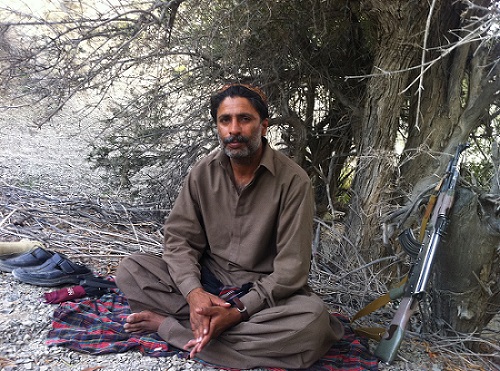
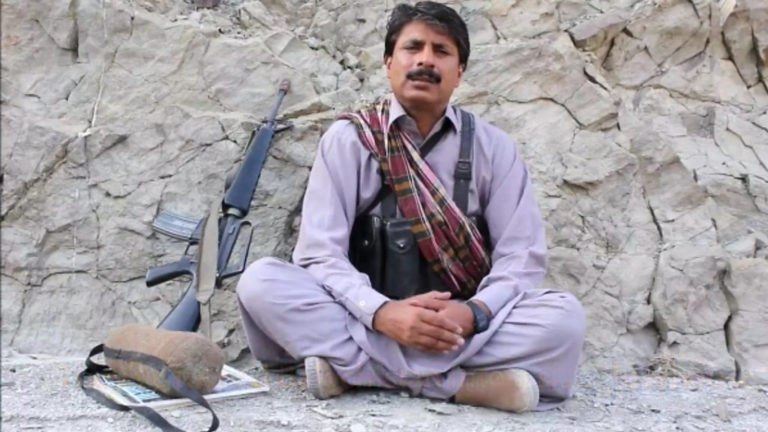
Baloch freedom fighter and Balochistan Liberation Front (BLF) leader Dr. Allah Nazar Baloch revealed in a tweet how Pakistan sugar coated its threats and made lucrative offers to dissuade him from the Balochistan’s freedom movement. Dr Allah Nazar Baloch refused all offers from Pakistan and chose to fight for Balochistan’s independence.

“They said we’ll make you a minister like Jam Yousuf or go to Europe, we’ll arrange u’r travel, otherwise our bullet will chase you u’r whole life. I chose the last option & narrowly escaped many times. I am waiting for that bullet. Or else Baloch nation will stone my coffin like…,” said Dr Allah Nazar Baloch in his tweet posted on August 21, 2020.

https://twitter.com/AllahNizarNizar/status/1296790204418789378

Dr. Allah Nazar’s tweet has an important meaning, and this tweet has gone viral on social media. A large number of Baloch youth have retweeted Dr Allah Nazar’s tweet and have commented on it praising him for his efforts in this struggle.

Dr. Allah Nazar Baloch is an important pillar of the Baloch national struggle and he was subjected to the most severe torture during his detention by Pakistan.

When Dr Allah Nazar came out and was recovered by Baloch people after months of disappearance by Pakistani forces, he was unable to walk, but he persevered like an iron man. He gave a direction to the national struggle for freedom.

Of course, his tweet points to the fact that he was in prison and was offered luxuries by the state. And his tweet also has an underlying message to those Baloch people who go to Pakistani parliament in the name of opportunism and then how the nation treats them after their death.

It must be noted that several leaders and workers involved in freedom movements are offered great privileges by Pakistan and many workers or leaders do get trapped in the lure of these luxuries and then part ways. But some activists and leaders are ideologically and consciously attached to the movements and cannot be taken away by any kind of luxury.

Dr. Allah Nazar Baloch is one such leader who fought hard after his release and carried the message of freedom to every part of occupied Balochistan. He is the charismatic leader of Balochistan’s freedom movement.

People’s safety in J&K ensured despite challenges: Dilbag Singh

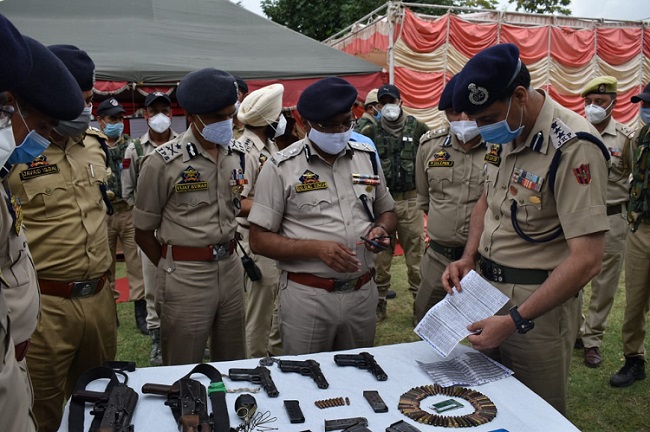
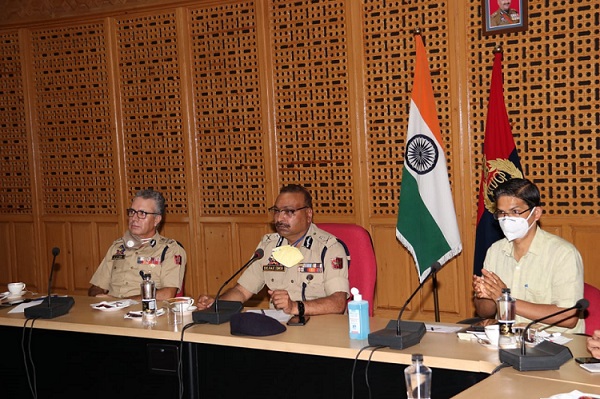
Srinagar/ August 20: Despite challenges, safety of people across the Union Territory of Jammu & Kashmir is being ensured and there have been no causality of any civilians in 2019 and 2020 in any law and order situation or at any the encounter site. This was stated by J&K Director General of Police Dilbag Singh during his visit to North Kashmir.

Accompanied by IGP Kashmir Vijay Kumar, DIG, North Kashmir Mohammad Suleman Choudhary, the DGP first visited Handwara where he interacted with the Jawans and also addressed a press conference.

Commander 7 Sectors Brig. Mahipal Singh Rathore, Dy Commander 7 Sector Col. Narinder Nath, Commanding Officer 32 RR Col. S. P Singh and SSP Handwara Dr. G.V Chakravarthy were also present. The DGP then visited Baramulla and interacted with officers, jawans and also inaugurated the dry and wet canteens in DPL, Baramulla.

Addressing the media in Handwara, the DGP said that with coordinated efforts of forces, the terror structure has been successfully targeted and added that most of the terror groups at present for the past many years are leaderless as during last seven month around 26 top commanders of different terror outfits have been eliminated. He said that many youth have been brought back and Pakistani network which is motivating the youth of J&K to pick up arms through social media and other means is also being continuously monitored.

The DGP said that despite challenges, safety of people is being ensured and added that there have been no civilian causality in 2019 and 2020 in any law and order situation or at any encounter site. He said that protecting the interests of people is our prime concern and every possible step is being taken to ensure it. He said that infiltration of terrorists from across the border has reduced because of strong security grid and number of youth joining terror groups has also declined in J&K. 

DGP Dilbag Singh said that situation in north Kashmir is improving and with the killing of Sajad Hyder and Naseer-u-Din, along with two Pakistan based terrorists Usman (Taimur khan) and Ali (Danish) who were involved in major terrorist activities, forces are expecting slowdown of terrorist activities in the area as both these terror commanders were pressuring and motivating youth in north Kashmir to join terror groups. The DGP also complemented Handwara Police for busting the narco-terror module in the district and said that the case is being further investigated by NIA. The DGP said that Srinagar city one or the another way has remained affected by terrorist activities but at present the quality of information is much better because of which successful operations have been carried out in recent past.

IGP Kashmir said that in recent past security forces were massively engaged due to COVID-19 lockdown and terrorists taking advantage of it had managed to attack security forces. He said that continued coordinated efforts of security forces despite being engaged with COVID-19 lockdown have resulted in eliminating a number of terrorists and their commanders.

Commander 7 sector Brig. Mahipal Singh Rathore on the occasion said that the security grid on borders is very strong but because of the weather conditions and other factors on borders some terrorists managed to sneak in and added that during the last three months all terrorists who managed to cross the LoC have been gunned down. He said families have an important role to play to bring back the misguided youth from terror ranks.

Interacting with jawans and officers at Handwara and Baramulla, the DGP appreciated the commitment and resolve of J&K Police and other security forces for bringing down terrorists activities in these districts. He said J&K Police’s effective response to different situations have earned appreciations and rewards for the organization adding that facing all these challenges successfully has given laudable results. He said that we have to continue with our coordinated efforts to ensure long lasting peace in J&K. The DGP said that it is because of the selfless service of the force that J&K Police has been honoured with highest number of President’s Police medals for Gallantry this year.

DGP Singh added that J&K Police along with the other security forces will continue its efforts to safeguard the interests of people and the country by achieving peace mission in Jammu and Kashmir. He reiterated that J&K Police is committed for peace and order in Jammu and Kashmir. Elements inimical to peace have to realize that public order is beyond any compromise and activities endangering peace and tranquility would be dealt sternly under the law of land, the DGP said.

The SSP Baramulla Abdul Qayoom and SP Handwra Dr. G.V Chakravarthy briefed the DGP regarding the security scenario and mechanism in place to ensure peace and order in their respective district

Pakistan Army – Defenders of Nation or Privileged Corporation?

The Pakistan State, carved out of the erstwhile British Indian empire on 14th August 1947 has, for over thirty of the seventy four years been under the direct rule of its Army (over three extended periods: 1958-71, 1977-88 and 1999 until 2008). In the years it has not directly ruled, the military has dominated governance and strategic decision making. The question to ask and seek reply to, is whether a ‘fighting force’ that has shown such propensity is a ‘professional’ Army? Are they driven by the sacred motive to defend the nation or by other factors that afford them luxury and a special status in society? Samuel Huntington has outlined an interesting theory regarding the conduct of militaries. In his view, nations where there is anti-military ideology and low military political power the prospects of military intervention are not there, and in those where a pro-military ideology, high military political power exists, the prospects of military intervention are high. No better example that the Pakistani polity as becomes clear from a quick run down through developments in Pakistan’s post-Independence history.

In 1947 the Pakistan Army was asked to establish the Civil Secretariat in Karachi, the first capital of the new-born nation. The Army vacated their barracks and renovated them to house the Secretariat and the staff coming from Delhi, an act of ‘kindness’ the Pakistan State has not yet redeemed. The military’s initial frustration with the way the civilian government was handling matters of the state first emerged in the Rawalpindi conspiracy case of 1951 in which over 50 officers and a few civilians with leftist leanings were found guilty of attempting to stage a coup.

Not much later, in 1953 there were two major developments. First, a clash between the central and provincial leadership in Punjab resulted in imposition of Martial Law in Lahore. The second, induction of the then Army Chief, Gen Ayub Khan into the Federal Cabinet. Though Gen Ayub Khan voluntarily relinquished his position in the Federal Cabinet in 1955, he remained powerful and having tasted power, took over as the Chief Martial Law Administrator (CMLA), in the first of the three military coups in 1958.

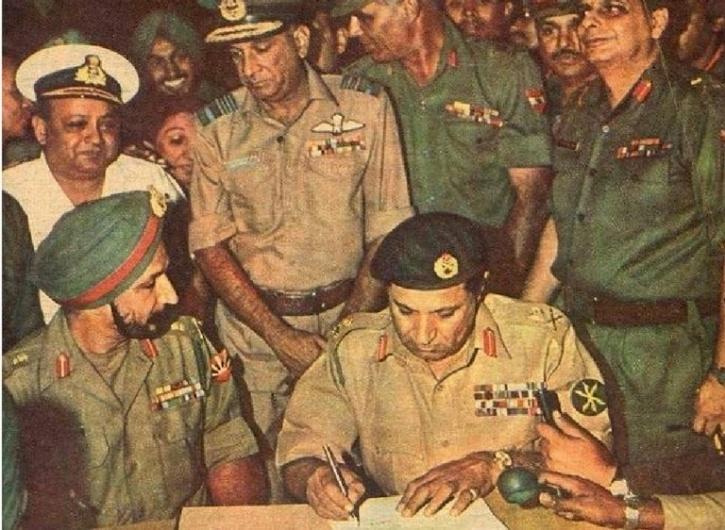
Pakistan’s Lt. Gen. Amir Abdullah Khan Niazi (right) surrenders to India after losing the 1971 Indo-Pak War. Lt Gen. Jagjit Singh Aurora (left) received command of entire Pakistan’s Armed Forces in Bangladesh.

Field Marshal Ayub himself was succeeded by Gen Yahya Khan whose disastrous tenure saw the humiliation of Pakistan Army in the Indo-Pak war of 1971 and the creation of Bangladesh. The Pakistan Army was briefly compelled to ‘step aside’ and allow the formation of an ‘elected’ civilian government headed by Zulfiqar Ali Bhutto. The military, who found Bhutto’s style brusque and overbearing, waited in patience for an opportunity to return to power which happened when Gen Zia ul Haque, appointed by Bhutto himself as Army Chief treacherously not only ousted Bhutto but had Bhutto hanged to death for his alleged ‘crimes against the state. Zia had the 1973 Constitution suspended and introduced the 8th amendment. On the face of it, this amendment was aimed at bringing about a ‘balance of power’ by empowering the President to dissolve the National Assembly, dismiss the Prime Minister and provincial governments, and order them to seek a fresh mandate but it altered the very system of governance from Parliamentary democracy to Presidential and made the Prime Minister subservient to the President. 

With Gen Zia’s mysterious death in a plane crash in 1988, power did return to elected civilians but ‘back room’ political interference by the military continued. The infamous case of the then Army Chief, General Mirza Aslam Beg, having showered money borrowed from Mehran Bank upon several politicians to help defeat the Pakistan People’s Party from returning to power points to such intervention. Civilian rule that followed saw the elected governments of Benazir Bhutto and Nawaz Sharif being overthrown and replaced. Interestingly both bureaucrats and known ‘agents’ of the military — Ishaq Khan and Farooq Leghar were Pak Army stooges another malaise of the Pakistani polity — the silent ‘league’ of the bureaucrats with the Pakistan Army. Military resumed power with a stunning vengeance when Gen Pervez Musharraf took over as Chief Martial Law Administrator in 1999 and anointed himself President in 2001.   

A semblance of civilian rule returned in 2008 and with Gen Musharraf being made to undergo a trial it appeared on the surface that it had finally come to stay. The military bounced back to ensure that Musharraf is not convicted — to preclude a dangerous precedent being set. Post-Musharraf rule, the Pakistani military changed tactics and chose to adopt a silent but commercially much more lucrative role. It continues to enjoy ‘shared decision-making’ with the elected civilian government but now controls a vast corporate empire that has interests in virtually every major sector of Pakistan’s economy.

Foremost to mention here is the China-Pakistan Economic Corridor (CPEC), touted as a ‘game changer’ with several promises and spin-offs. However, as several Pakistani economists have repeatedly emphasised, it is riddled with terms and conditions that place the Pakistan nation in a state of such heavy debt to China that in effect the CPEC makes it the latter’s ‘vassal state’ that pays the price for usurious interest rates for loans granted by China, induction of old technology, environmentally destructive technologies for power generation, the high unit costs for that power.

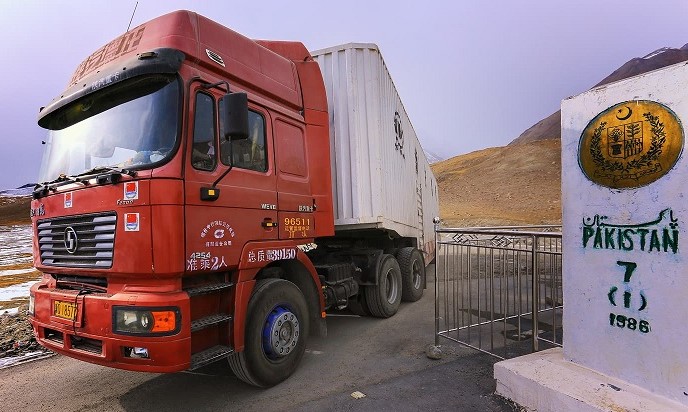
A Chinese truck enters Pakistan-occupied Kashmir (POK). (Representative photo)

Also, the Chinese companies bring their own manpower resulting in no employment generation for local youth as had been touted as a major benefit. The Diamer Basha Dam, estimated at $15 billion, is the latest edition to this list of such mega projects. And who ensures Government approval of these projects and that the security of these projects is assured? – the Pak Army, who are the sole direct ‘gainers’ from the CPEC.   

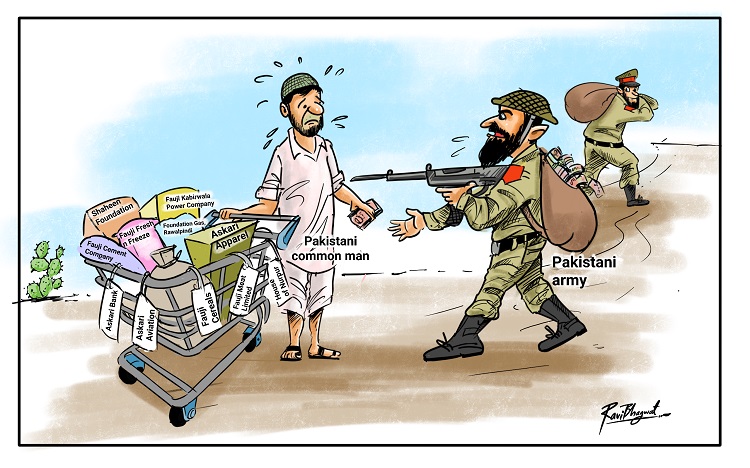
Famously known as the Pakistani MilBus, there are over 100 independent businesses operated by subsidiaries of five Foundations of the military, viz. Fauji Foundation (run by the Ministry of Defence), Army Welfare Trust (run by Pakistan Army), Shaheen Foundation (run by Pakistan Air Force), Bahria Foundation (run by Pakistan Navy), and Pakistan Ordnance Factory Board Foundation (run under the Ministry of Defence). These had been set up with the noble intention to support the families of poor soldiers and particularly the ‘Shaheed’ (martyr) families but have become large corporate conglomerates earning rich dividends. Taken together, the Foundations constitute Pakistan’s largest industrial and trading complex and the range of these business empire is from cement to cereals, general insurance to gas, fertilizers to fish farms, seeds to stud farms, apparel to aviation, meat to medical equipment.

Noteworthy is that these Organisations are registered under the Charitable Endowment Act of 1890 as charities or societies, and not as companies, though they operate as commercial enterprises. Each Foundation is administered by a Committee of Administration chaired by one of the Armed Forces Chiefs. 

It is an open secret that profits from these enterprises go towards sustaining high perks as also lining the pockets of the top brass. There is a huge network of ‘Consultants’ from amongst ex-service officers who are side beneficiaries to their bosses. Instances of direct involvement of senior military Pak leadership in various commercial deals are abundant. Air Chief Marshal Abbas Khattak (Retd.) allegedly having received kickbacks in the purchase of 40 old Mirage fighter jets is well known as is General Jahangir Karamat (Retd.) having pocketed kickbacks of more than US $20 million from a Ukrainian tank company.

More recent are the cases of General Pervez Musharraf acquiring a commercial plot worth PKR (Pakistani Rupee) 20 million at Defence Housing Authority in Lahore, as in 2016, of former Army Chief Gen Ashfaq Pervez Kayani being accused for being involved in a major land scam in a defence housing scheme to benefit a real estate company linked to his businessmen brothers. Also well-known is the fact that Lt Gen Ahmad Shuja Pasha, the former ISI Chief owning several commercial plazas in Islamabad and Rawalpindi.

The Pakistan International Airlines (PIA), is referred as “Bajwa Airlines” as it is run by the family members of the present Chief General Qamar Javed Bajwa. Its President and CEO, Former Vice Chief of Air Staff, Air Marshal Arshad Malik being a brother of the brother-in-law of Gen Bajwa.

Some actions of the Pakistani MilBus have led to problems, as in October 2019 when Askari Bank Limited, part of the MilBus, was penalised by the State Bank of Pakistan for non-compliance of regulatory requirement at a time when the country’s anti-money laundering and counter terror-financing laws were under review for compliance by the Financial Action Task Force.

The Pakistani Military’s ‘welfare’ entrepreneurship is actually a self-serving racket, whose costs is borne by the common man in Pakistan.

So much for a ‘professional’ Army – not of fighters for the nation, but of polished and sophisticated businessmen.

The large number of contracts for exploration, mining, infra and power projects being awarded to Chinese companies with the tacit support of the Pakistan Army is well known. Is this the ‘Force’ that people of Gilgit-Baltistan should lookup to as their defenders? Or as their potential ‘exploiters’? The people of Pakistan must decide.

Pakistan killed Hayat Baloch, commits genocide against Balochistan: Dr Allah Nazar

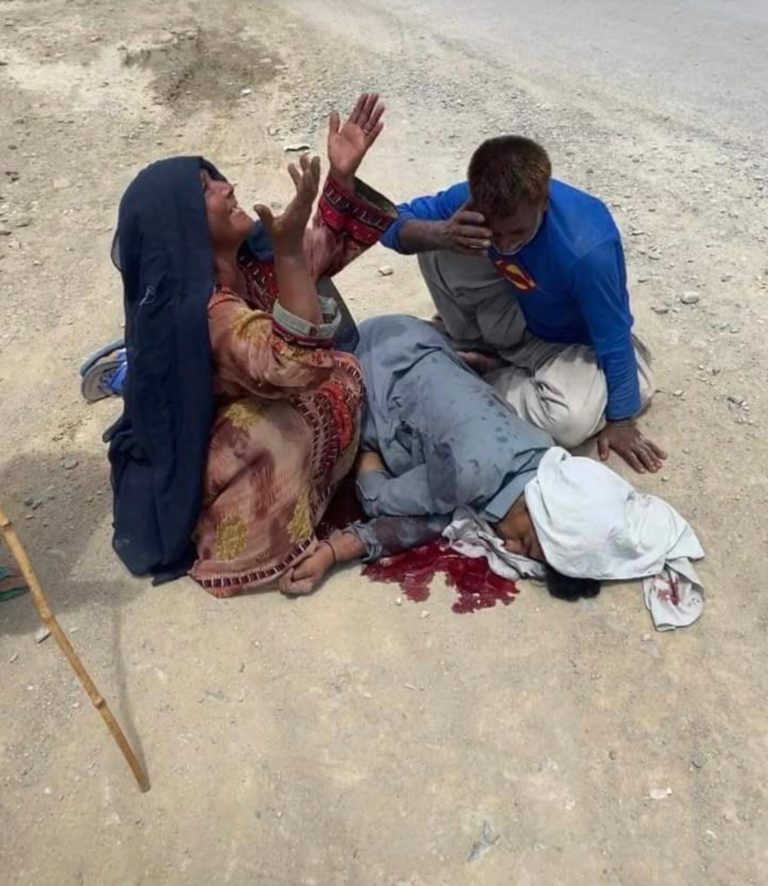
The assassination of Hayat Baloch is the continuation of targeting Baloch youth and the future of nation, said Baloch leader Dr. Allah Nazar Baloch while commenting on the tragic death of Hayat Baloch by the Pakistani security forces. The purpose of Pakistan by committing such war crimes is to continue the genocide of Baloch people as well as an attempt to psychologically demoralize the youth of Balochistan by creating uncertain situation so that they would not be able to focus on their education nor are able to play their due role in the Baloch national struggle.

“Pakistan has employed multi-pronged aggression to keep the Baloch youth at bay from getting education, which includes the colonial system of education to paralyze the mind of youth, to keep schools, colleges and universities under control of the army and to settle military camps and check posts in these educational institutions. Thousands of Baloch students are killed by the Pakistan Army and thousands of them are still enduring inhumane torture in secret detention centers run by the army,” said Dr. Allah Nazar, the pro-independence Baloch leader.

“After the horrific and gruesome murder of Hayat Baloch, the reaction of the Baloch nation was a natural phenomenon. The Baloch nation has made thousands of sacrifices to keep the spirit of national struggle alive. Pakistan has employed every tactic to destroy our identity, culture, and language. Along with the genocide across Baloch nation, our culture and language are also being endangered. For this Pakistan has imposed a ban on reading and writing of Balochi language whilst the English language centers and teachers are also being continuously targeted. All those books which are published in Lahore and Karachi are banned in Balochistan. Pakistan Army has confiscated Balochi and other books from the book shops in district Kech and other places, which is the clear indication that the state of Pakistan is trying to keep Baloch nation away from getting education and knowledge,” explained Dr Allah Nazar Baloch.

Dr Allah Nazar further elaborated: “The assassination of Hayat Baloch is the continuation of this policy which aims to target the bright stars of Balochistan. Even though we have time and again been telling our youth and appealed to them that they should stand against Pakistani atrocities but also adjust themselves to the available colonial educational system and prove it to the world that while living within the colonial system of education, it cannot carry them away from their national aspirations.”

“The state lackeys have become active in order to mitigate and cool down the extremely angry reaction created by Hayat Baloch’s shooting. Military officers and police authorities are busy in the photo sessions. These excursions are nothing but false sympathies. They only want to make the Baloch believe that it was an error of an individual and the legal proceedings have been initiated against the culprit. But I want to make this clear that the assassination of Hayat Baloch was not the crime of an individual, but the state of Pakistan is the killer of Hayat Baloch because this is not the first case of its nature. For this reason, giving blood money or punishing an individual is an insult to the injuries of the Baloch nation,” Dr Allah Nazar Baloch said without mincing words.

“Anti-Baloch federalist parties are also trying to cash out on this issue for their petty interests. For instance, Dr. Malik, an anti-Baloch element, came out of the hibernation only at a time when the Baloch nation is expressing their hatred vehemently against the state of Pakistan. The attempt from Dr. Malik to associate the assassination of Hayat Baloch and martyrdom of other Baloch shaheed and missing persons to the armed struggle is an attempt to let Pakistan go scot-free from all of its committed crimes, said Dr Allah Nazar Baloch.

Dr. Allah Nazar Baloch concluded, “Our armed struggle is in accordance with the international laws and is being waged on our own land. Until now the Baloch armed struggle has not violated any international law and abides by the Geneva Conventions. On the contrary, Pakistan is committing war crimes on a daily basis. Dr. Malik instead of blaming the Baloch nation should advise his masters that they should peacefully withdraw from the Baloch land.”

LeT terrorist involved in CRPF jawan’s killing hunted down in Handwara

Srinagar/ August 19: A prominent Lasker-e- Toiba terrorist involved in the killing of Central Reserve Police Force (CRPF) jawans in northern Kashmir was eliminated along with another terrorist during a brief shoot out in Handwara Tehsil of district Kupwara last night.

The LeT terrorist has been identified as Naseer-u-Din lone. In a tweet J&K police quoted Inspector General of Police, Kashmir Vijay Kumar saying that LeT Commander Naseer-u-din Lone, who was involved in the killing of three CRPF personnel at Sopore on 18/4/20 and 3 CRPF jawans at Handwara on 4/5/20, got killed in Handwara.

The J&K Police said another terrorist is a Pakistani national, who was also involved in the attacks on security forces and civilians. Police has also recovered an AK Assault Rifle that was taken from a CRPF jawan after killing him in Sopore area of Baramulla district.

This is the second encounter in northern Kashmir in last 24 hours. In a two day long operation three terrorists and five security forces personnel were killed in Keeri area of Baramulla district.

Balochistan seethes with anger against brutal murder of Hayat Baloch

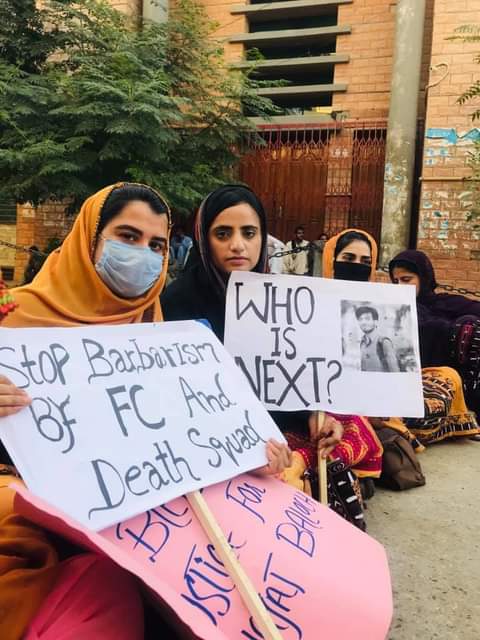
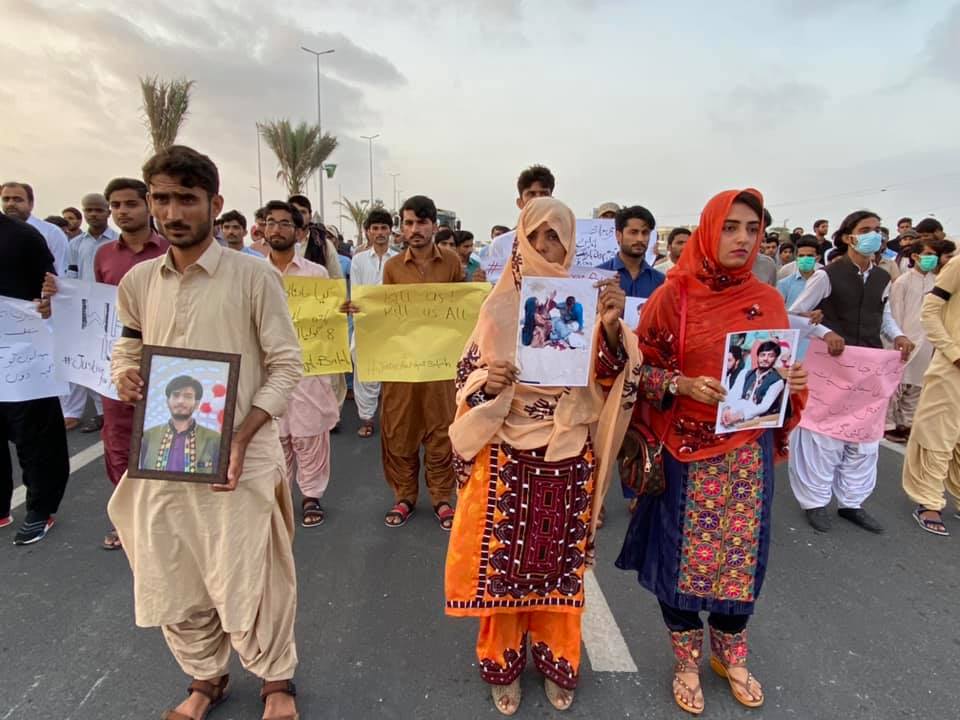
Protests were carried out across occupied Balochistan against the brutal murder of Hayat Baloch at the hands of Pakistani forces. Massive demonstrations were held in Quetta, Khuzdar, Pasni, Gwadar and Turbat cities of occupied Balochistan against the extrajudicial killing of Baloch student–Hayat Baloch.

These protests have now entered their fourth day in Balochistan as hundreds carried out rallies and protests in several cities of Balochistan to demand justice for Baloch student Hayat Baloch, who was killed by Pakistani security forces in Turbat.

Baloch women protesting with placards against the barbarism of Pakistani security forces in occupied Balochistan.

A candlelight walk was organized in Khuzdar city by the Bramsh Solidarity Committee Khuzdar against the killing of Hayat Baloch in Turbat on August 13. A large number of people including children took part in this candle walk, and the participants were holding placards with slogans against the assassination of Baloch youth.

Meanwhile, according to reports from Pasni, Civil Society Pasni also protested against the killing of Hayat Baloch by Pakistani security forces. A silent rally was carried out from Pasni Press Club to Mashaallah Junction by numerous people, while a large number of women also took part in the rally.

Rally to protest the brutal murder of Hayat Baloch in occupied Balochistan.

Addressing a protest rally in Pasni, the speakers termed the assassination of Hayat Baloch as part of ongoing Baloch genocide.

Civil society lit candles at Mashaallah Chowk and expressed solidarity with deceased’s family. Speaking on the occasion, the speakers said that a judicial inquiry should be held into the murder of Hayat Mirza Baloch and those involved in the crime should be brought to justice.

A large number of students also gathered in front of the Press Club in Balochistan’s capital city, Quetta and lit candles in the memory of Hayat Baloch.

Baloch protesters in a rally against the brutal killing of Hayat Baloch in occupied Balochistan.

On this occasion, student leaders condemned the killing of Hayat Baloch and said that the Frontier Corps (FC) officials involved in the murder should be punished immediately and the demands of justice should be met.

It is to mention that a day earlier, hundreds of people took to the roads in Quetta and staged sit-ins in front of Quetta and Karachi press clubs.

Similarly, hundreds rallied in Gwadar city of Balochistan to demand justice for the Baloch student.

The ‘Baloch Students Educational Organization’ has announced a nationwide protest on August 22 against the brutal murder of Hayat Baloch. A demonstration was held by the Baloch Solidarity Committee in Turbat, wherein a large number of people including women and children participated in the protest and demanded justice.

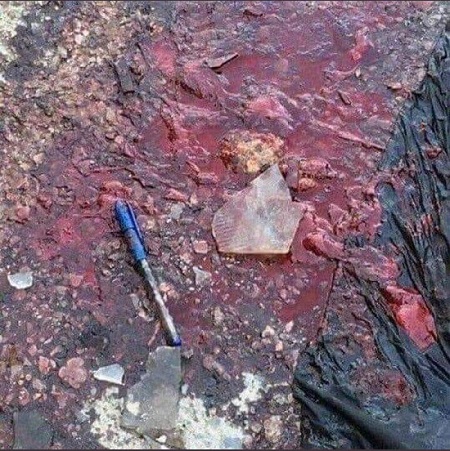
Hayat Baloch’s pen lies soaked in his blood after he was brutally murdered by the Frontier Corps of Pakistan.

Speaking on the occasion, a Baloch mother said that the state has forced us to ask for justice on the streets with our infants in this scorching heat. “If we remain silent, these bloodthirsty beasts will eat our descendants,” she added.

Rashida Saleh, a female participant in the protest said that the Frontier Corps official involved in Hayat Baloch’s murder has been taken into temporary custody to avoid public backlash. If we remain silent, our generations will have to pay the price, which will be terrible.

It must be noted that extrajudicial killings and disappearances of Baloch youth by the Pakistani security forces across occupied Balochistan is a serious issue, which has been the subject of protests for a long time. The protests have intensified since the assassination of Hayat Baloch last week.

Pak-Saudi spat and deepening fissures across the Muslim world

The new Islamic syndicate, though still at the conceptual stage, is pushed mainly by Turkey and Pakistan. Iran, the lone Shi’a Muslim State, and traditionally not friendly with the Sunnis would be an odd man in the contemplated syndicate. Malaysia, after the ignominious exit of Mahathir Mohamad, is almost on the horns of a dilemma. The idea receives cautious support from China. It is so because in the furtive Kuala Lumpur Islamic meet last year, Mahathir had put Uighur issue also on the agenda. Nevertheless, China will not withhold its blessings to the initiative for known reasons. Initiators hope Russia will be on board. Moscow will have to think twice about the impact of its cooperation with the syndicate on the Muslim majority republics of Central Asia which have already rejected Islamic radicalism. Will Moscow opt for the company of radicalized Islamists, is an interesting question. An Eurasian power, Russian Federation’s primary interests are in the European Continent.

The Kuala Lumpur unproductive move for cobbling an alternate to Saudi-dominated centrality of the Muslim ummah left nobody in doubt that the ummah showed fissures deepening along ethnic lines. The divide is the Arab Muslim states versus non-Arab Muslim states. The latter category is of people of non-Semitic stock who were converted to Islamic faith after the rapid expansion of Islam among the non-Semitic races, particularly the Aryan and the Turkic.

Turkey, Iran, Pakistan, and Malaysia all are of non-Semitic stock. A problem with almost all non-Arab Islamized societies is that they have inherited a split personality. They are unable to abandon their pre-Islamic backlog. To prove to the Arab Islamic world that they are very faithful to the new creed, these proselytized non-Semitics have been the fiercest enemies of their ancient culture and its symbols. Ethnic cleansing of Kashmir as late as 1990 is also traceable to this split-personality.

The ethnic and racial division among the Muslims has also led to the concept of good and bad Musalman, something we do not find in any other religion. Since the desk book definition of a good Musalman is not universally established, it became very easy to accuse a liberal Muslim as a non-conformist and bring about charges like blasphemy against him or her. It will be noted that following the recent Pakistan-Saudi Arab spat, Pakistan media lost no time in charging the Saudi ruler Muhammad bin Salman with anti-Islamic idiosyncrasy.

Though the idea is still in the embryonic stage, yet speculation is rife who between Pakistan and Turkey will replace Saudi Arabia as the epicenter of the Islamic world. Iran is out of the question because it is considered the odd man in Islamic fraternity. 

Some believe Pakistan has an edge over Turkey. As Pakistan is the only nuclear power among Muslim states; she is strategically better located; in collaboration with the Iranian naval force she can play important role in the Gulf region in controlling its trade channels. Pakistan has highly committed and trained radical Islamic terrorist legions and organizations nurtured at home which she will deploy as the frontline defence and offence strategy in case of a war. Additionally, Pakistan’s handler, viz. China has full control of Pakistan’s defence establishment and economy.

Turkey has already opened the bombast of the Ottoman Empire and is more than willing to fantasize with the dream of Ottoman glory. Of course, Turkey has acquired the technology of advanced military hardware production ever since she was a member of CENTO (Central Treaty Organization).

Why are the non-Arab Islamic states pursuing the ouster of Saudi Arabia as the religious leader of the ummah?

There are various perceptions. These could be summed up as follows: (a) Saudi monarchy is close to the US while the US gives little importance to the broader interests of the ummah (b) On the behest of the US, Saudi Arabia has adopted a mild and conciliatory attitude towards Israel. The recent friendship and cooperation agreement between the UAE and Israel have matured owing to the support of both Saudi and Washington. This is considered an act against the expectations of the ummah. (c) The Saudi monarchy prompts other Arab states to recognize Israel and come to reconciliation and (d) Saudi dominated OIC (Organisation of Islamic Cooperation) has become ineffective in protecting the interests of the Muslims on a global level.

A shock from which the non-Arab Islamic states like Pakistan, Turkey and Iran do not come out is that the Saudi monarch Mohammed bin Salman, having been educated in the western world, is trying to change the traditional policy of Islamic conservatism to liberalism. He has already brought about many social reforms and more are on the anvil. He pursues a policy of befriending many countries that were hitherto disregarded by previous monarchs. If he is allowed to go ahead with a drastically liberalized policy, it will have a far-reaching impact on the existing conservative social structure of their societies and undermine the strength of orthodox Islam. This is the deep contradiction within the Islamic fold which historians have been underlining for quite some time.

Pakistan’s claim that the refusal of the Saudi monarch to call OIC foreign ministers’ meet to discuss Kashmir is the real cause of deepening fissures in the ummah is far-fetched and a propaganda stunt. Pakistan wants to sell this story to the emotional Kashmiris. The reality is that in private, the Saudis ask Pakistan why the OIC should not consider the issue of Baluchistan, Pukhtoonistan, Turkish Kurds, Yezidis and the Uighurs of Xinjiang if the issue of Kashmir Muslims is to be taken up. Are not they Muslims and under suppression? The narrative came as a bolt from the blue for Pakistan. Following his ingrained instinct of belligerence, Pakistani foreign minister issued a threat to the Saudis that he would be calling a meeting of Muslim foreign ministers on his own. It indirectly meant that he (and his bandwagon travelers) had decided to create a new organization and sideline the Saudis.

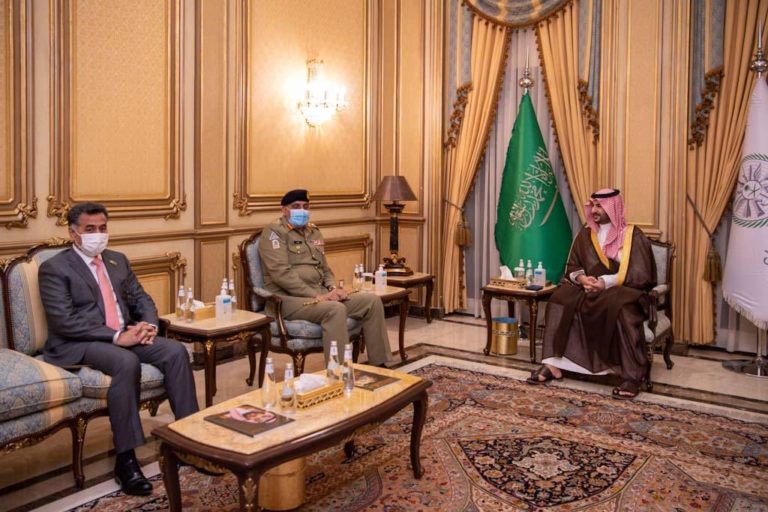
Saudi reaction was prompt and unambiguous. The lifelong benefactor of Pakistan wondered at the thanklessness of the beneficiary. Pakistan mobilized its media to denounce the behaviour of the Saudi monarch saying that he had come out in true colours. General Bajwa’s intervention has not produced any result and now out of desperation he visited Saudi kingdom not to iron out the angularities but to beg the royal favour to the continuation of twenty-five thousand Pakistani soldiers deployed as bodyguard to the Saudi monarch. But will the monarch continue to repose trust in this strong force in the light of Pakistani foreign minister’s shameless statement. Mohammed bin Salman refused to meet General Bajwa and he has now returned back.

Obviously, many actors will jump into the fray to stop the escalation of differences and repair the damage done. The Saudis appear to have indicated at least three conditions for reconciliation and the ball is in the court of Pakistan. But it is reliably learnt that the Saudis will not conduct any reconciliation talks unless Imran Khan removes his foreign minister Shah Mahmud Qureshi. This man cannot escape becoming a casualty of the row he himself initiated. Saudis are far more adept in astute diplomacy and they know that removal of Pak foreign minister is what Imran Khan would like to happen in the heart of hearts because Qureshi had raised eyebrows on Imran Khan succumbing to the threats of Saudi monarch on Kuala Lumpur episode. Ever since, some of his lobbyists had been projecting him as the one who could replace Imran Khan.

Whatever will be the future shape and structure of the ummah, it is clear that old order has changed and old trusts have been betrayed. It is for the people of Pakistan to tell their government whether it is advisable to stretch differences with the Saudi kingdom and be prepared to see lakhs of Pakistani daily wagers packing up from their work places in the Saudi and heading homewards home to be restored to a phase of hunger and poverty.

Defence and Security: Achievements of NDA-II

The Independence Day address by Prime Minister Narendra Modi from the ramparts of the Red Fort on August 15, 2020 will be given against the backdrop of some monumental events that have been witnessed in the year, plus formation of the NDA-II government in May this year. These events have a significant impact on national security in the short as well as the long term. In meeting all these challenges the prime minister has led from the front and provided leadership with firm resolve and nerves of steel.

The Modi Government took a significant decision on August 5, 2019 that has a direct strategic impact on the country. On that day, the Indian Parliament passed requisite legislation to reorganise the frontier state of Jammu and  Kashmir into two Union Territories and abrogation of Article 370 and Article 35A  of the Indian Constitution. The decision was implemented on October 31, 2019.

Many political fronts had expressed apprehensions that the change would trigger huge security challenges both within the nation and out of it. It is to the credit of the people of the state that they wholeheartedly supported the Indian government in its decision even as the Indian Army and other security forces handled the tense situation with great maturity and empathy. As a result the change has been accepted in a smooth manner and the state is now moving in a positive direction.

The challenge of foreign sponsored terrorism and cross border firing by the enemy has been well controlled by the Indian Army. In this year itself more than 140 terrorists have been killed which includes complete decimation of the terrorist leadership. Indian Army is responding to cease fire violations proactively even as an iron vigil is being maintained on the Line of Control (LOC). As a result, cross border infiltration of terrorists is at an all time low. It is expected that the region will soon be free from the menace of terrorism even though Pakistan is unlikely to stop attempts to revive the same.

The Modi government has boldly responded to the standoff with China along the Line of Actual Control (LAC) by mobilising Indian Army and front line aircraft to challenge the stubborn Chinese. Additional T-90 tanks have been inducted. Defence Minister has visited Russia for immediate supply of S-400 missile system, Sukoi 40 MK1/MIG 29 fighters and 45 light Tanks.

Indian troops boldly countered the Chinese at Patrolling Point 14 in Galwan Valley and caused them many casualties. Under pressure, the Chinese army has withdrawn from most of the areas but is still holding on at Despang plains and a few areas north of Pangong Tso Lake. The government is playing out a waiting game which, most strategic experts feel, is advantageous to India. Surely the nation will win the ground as well as the perception battle with China and compel the belligerent nation to change its strategy of pressuring India for all times to come.

China and Pakistan, have created a strengthened partnership towards jointly threatening the frontiers of India. Nepal, a traditional friend of India is also under pressure from China. Indian armed forces, therefore, have been gearing up for a two and a half front war.

Increasing the defence hardware capacity of the nation was identified as the first priority to meet this challenge. The Modi Government has addressed this aspect on  a war footing. The first batch of  five Rafale aircraft landed at Ambala Indian Air Force base on July 19, 2020. Another batch will arrive by October. The arrival of Rafale aircraft has given a much needed additional punch to the Indian armed forces. These game changers are more than a match for J-16, J-17 & J20 Chinese fighters. The fighters are already conducting sorties in the high altitude war zone against China.

The indigenous Tejas light combat aircraft received final operational clearance in February 2019. Hindustan Aeronautics has recently supplied 16 aircraft to the Indian Air Force and will be enhancing production facilities to provide 16 aircraft per year. The second Tejas squadron is under raising. The order for 123 Tejas is already in the pipeline.

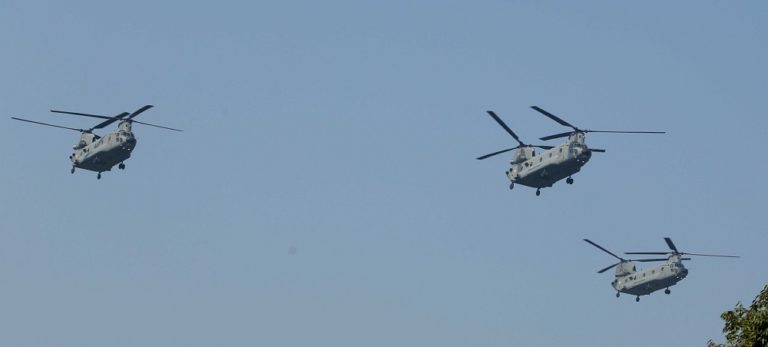
Mid-2019 witnessed the arrival of ‘Chinook’ heavy lift helicopters and ‘Apache’ combat helicopters from the USA that are operating in Ladakh presently. In the present contract Boeing has to provide 15 Chinooks to India of which six have already arrived. The first batch of four AH-64 Apache helicopters, the most modern variant of the series, were received by India by the end of July 2019. Four more Apache Helicopters came subsequently. The eight helicopters are already operational from the Pathankot Air Force Station and performing combat duty on frontiers with both China and Pakistan. Additionally, the Modi government has agreed to the Army’s long-pending demand for Apache AH-64E Guardian attack helicopters for its Strike Corps. So Apache will now operate both with the Army as well as the Air Force.

Indian artillery had not seen any induction of new equipment after the Bofors, which came more than three decades back. A welcome addition into the Indian Artillery arsenal is the US M777 ultra-light howitzers. By Mid-2019 an Artillery Regiment was equipped with these state-of-the art guns, 15 of which were imported from the US while three were produced in India by the Mahindra Group as a part of the Make in India initiative. 

On the strategic front the Modi government has launched a bold initiative to reorganise the Indian armed forces in a manner that is more suitable for meeting present day defence and security challenges faced by the Nation.  The long awaited step of appointing a Chief of Defense Staff (CDS) has been taken with General Bipin Rawat designated the first CDS in December 2019. He will act as the principal advisor to the Defence Minister and also advice the prime Minister led nuclear command authority. Work is now underway to create joint commands and other organisational modifications.

There is a lot of work in the pipeline in hardware acquisition, road development and fine tuning of higher defence organisations. India is on the fast track to building a strong and self confident posture that will meet all defence and security needs of the country.

Chutzpah on Trial: A Fool’s Gold is His Life, and Meshuggeneh Ways

Christian is a Philosopher that comes from Belgium. What identifies him the most and above all is simplicity, for everything is better with “vanilla flavour.” Perhaps, for this reason, his intellectual passion is criticism and irony, in the sense of trying to reveal what “hides behind the mask,” and give birth to the true. For him, ignorance and knowledge never “cross paths.” What he likes the most in his leisure time, is to go for a walk with his wife.

Scott Douglas Jacobsen: What is the point of IQ?

Dr. Christian Sorensen: The IQ is a measurement unit, that’s relative and intends to be an indicator of general intelligence, but is in no way representative of the last.

Jacobsen: What is the purpose of building high-IQ societies?

Sorensen: I think that partly, they have purposes that are for profit, as well as those of forming communities with people who have a strong need for social recognition, and who tend to share common interests and needs, such as the constantly validation of their IQ scores, by developing and rendering countless games, denominated high-range IQ tests, through which they claim to emulate the validity and reliability of scores that could be earned with professional IQ tests.

Jacobsen: Why do some form for profit?

Sorensen: Because the reality check is obvious, since some business lines of enterprises, are openly destined to the development of web pages which are connected with these matters, and additionally the ones who do so, recognize it as a business.

Jacobsen: Why do some feel the need for social recognition?

Sorensen: Since probably, they did not manage to consolidate in childhood, a sufficient self-confidence and personal autonomy. Therefore they developed feelings of insecurity, shame and doubt, that lead them to overvalue the expectations of others, and to express mayor affective dependence behaviours towards them, which lastly translates into a constant search for acceptance and approval from these, through such type of mechanisms as forms of crutches.

Jacobsen: What alternative tests seem like reliable and valid IQ tests? What test makers seem to make reasonable reliable and valid IQ tests?

Sorensen: The question is not about what alternative IQ tests seem reliable and valid, but rather it is which alternative IQ test seems to be valid, in order to be reliable… And the answer from my point of view in this regard, is none, due to the reason that all of them lack of sufficient technical and scientific fundamentals. The foregoing, does not means, that there are no experimental-games developers trying to do their best efforts, or that though currently they may be achieving only plausible and irrefutable results, perhaps in the future these will become scientifically valid. According to this context, I would highlight the works of James Dorsey and Jason Betts.

Jacobsen: Mensa International, Intertel, Triple Nine Society, Prometheus Society, and the Mega Society have been the most reliable high-IQ societies via Wikipedia filtration and prevention of fraudulent pseudonym warping of the record for personal benefit and individual organizational benefit. The World Intelligence Network of Evangelos Katsioulis and Manahel Thabet lists over 80 active societies on the WIN website. Thus, this is a substantial implication. What is the point of so many societies?

Sorensen: Many of the names of these societies, though they appear as actives and are listed somewhere, they no longer exist. In that sense, the cemetery of high IQ societies is large, because some of them were created, and as they did not give good outcomes, they remained on the lists as such, but currently they are paralyzed. Besides the aforementioned, another factor that influences the enormous number of these societies, has to do with the idea of ​forming communities that are suitable for different IQ score segmentations.

Jacobsen: Why do so many go to the junk heap?

Sorensen: I think that because, in some way or another, they aren’t sufficiently profitable, and therefore they are no longer a lucrative business. In this sense, it could be said, from a more generic point of view, that since the opportunity-cost equation is not any more beneficial, then it doesn’t make any sense, that they continue to exist.

Jacobsen: What is the different between in the cemetery and paralyzed in this sense?

Sorensen: The paralyzed ones, are sort of sleeping waiting societies, that expect hopefully for improved conditions, while those in the cemetery, give me more the feeling of having been obvious and resounding failures, or of being fouls of which someone is sorry about, and therefore is better to hide that dirt underground with a tombstone on top, so that the dead do not speak.

Jacobsen: What about tragic circumstances, as happened with the suicide of Nathan Haselbauer?

Sorensen: I think he feared the idea of ​​living a lonely life, and it seems to me, that what led him to suicide, was the fact of realizing that his fear, which until then was just an idea, at one point when he was subjected to extreme isolation, turned into his worst nightmare, came true and become reality.

Jacobsen: What societies seem the most reliable and valid to you?

Sorensen: Triple Nine Society, and Mensa International, though the requirements of the former, such as scores, are much more demanding.

Jacobsen: What other reasons other than being demanding?

Sorensen: The fact that they follow rigorous procedures, both within their internal operations and with respect to their members, that at the same time are provided with quality results. Additionally because they value discretion, and their organizational structure, is stable and allows a correct functioning within the Society.

Jacobsen: More high-range people exist outside of the societies than in them. Why?

Sorensen: I think that this occurs because high IQ societies, are expensive and they don’t offer proportional benefits. Besides currently are de-profiled, and therefore the fact of belonging to them has ceased to be a differential factor.

Jacobsen: What people seem to legitimately exist in the 5.4-sigma to 6.6-sigma, or 181 IQ to 199 IQ on SD 15, general intelligence range based on the large number of high-range listings available to date?

Sorensen: Sorensen 185+ SD 15 WAIS-R

Kirkpatrick 185 SD 15 Stanford-Binet

Katsioulis 180+ SD 15 WAIS-R

Jacobsen: What is the implication of the aforementioned“Why?”?

Sorensen: In my opinion, this has occurred, because high IQ societies have become too widespread, and therefore have lost their discrimination capacity in relation to really gifted people. At the same time, I believe the credibility of many of them, has been lost, since they exhibit innumerable high-range IQ pseudo-tests, that always lack scientific basis, and due to the fact that also they show exorbitant IQ scores, as a result of these fancy test-games, which strictly speaking, do not tolerate any realistic statistical analysis, not even regarding probabilities and general population parameters.

Jacobsen: What does this portend for the future of high-range testing?

Sorensen: I think it may be useful, that high-range testing, as a criterion of the comparative parameter, takes the methodology and the timing used by professional scales, as Wechsler, Stanford-Binet and Raven have done, especially regarding the first two, since at least for over seventy years, have been carrying out their normalization and standardization reviews. What I intend to demonstrate with the aforementioned, is that in relation to the high-range testing, so far there is evidence of a counter sense approaching, because what actually occurs is quite the opposite. Insofar, what is verified within the high-IQ community, is the predominant presence of dozens testing-games, that day after day, continue to appear as if it were due to spontaneous sporulation. Besides, these are developed by practically everyone, due to the reason that it seems that the membership to the high-IQ community, or the fact of earning a high IQ score, carries with it, ipso factum, the right or some kind of super powers, for developing psychometric instruments to measure general intelligence.

Jacobsen: Why should prospective members focus on mainstream societies? Why should prospective test-takers focus on the mainstream intelligence tests for serious measurements and alternative measurements for various degrees of seriousness and fun & interest (leaning far more towards fun & interest)?

Sorensen: From my point of view, the first thing to do is that prospective members and testees ask themselves about the meaning of all this tedious procession that they intend to initiate, and afterwards to take it nice and easy. I personally do not understand the compulsive need that many members of high IQ societies, have to constantly measure their IQ’s. In my opinion also is an incomprehensible mystery, the issue that the vast majority of them, take numerous high-range IQ games, but almost never give professionals IQ test, and therefore if their purpose is to be certain about their actual IQ, why don’t they take serious measurements in order to fulfill that end… Since if simplicity principle is claimed, and tautology is left aside, then this last should be the most straight and reliable path to follow. Hypothetically, I believe it is a way to blindfold and to inflate their egos with fanciful movie scores, since at least in WGD listing, which is a good sample ranking, it is possible to verify in all cases that the scores of listees with professional tests and high-range IQ games, is much lower regarding the former ones. Likewise, if the meaning of taking these games every two days, is not to have certainty of their own IQs, but only for having fun, then probably what we are talking about or facing is a sort of pathological gambling out of any range of meaning, since as occurs with every type of addictive behaviour, it is an issue that lacks completely any rational or reasonable explanation and understanding.

Image Credit: Dr. Christian Sorensen.

All 3 terrorists involved in Baramulla attack eliminated: DGP Dilbag Singh

0

Srinagar, August 17: Three terrorists who had carried out the terror attack at Kreeri in Baramulla were killed on Monday, said Dilbag Singh Director General of J&K Police. The DGP termed the counter-terror operation as one of the most successful operations against terrorists. These three terrorists were the ones who on Monday morning had fired upon a Naka party and martyred two CRPF jawans and one J&K Police officer.

Dilbag Singh explained that soon after the terrorists launched their strike at Kreeri in Baramulla district killing three security forces personnel, the forces engaged the attackers and killed the three terrorists that included top most Lashkar-e-Toiba commander Sajad Haider, who was operating on the lines of slain Hizbul terrorist commander Burhan Wani to recruit local boys into terrorism.

The DGP added that two other slain terrorists were identified as Anayatullah Mir of Pattan and another was the Lashkar commander from Pakistan Usman. 

Addressing a press conference at the Police Control Room in Srinagar, the DGP said that one of the slain militants Sajad Haider alias Raja was one of the top most wanted commanders in J&K.

“He was like Burhan Wani and had joined militancy in the 2016 winters. Like Burhan, Sajad too would lure youth into militancy. We have arrested at least 20 youth who were recruited by Sajad besides many Over Ground Workers (OGWs),” said DGP Singh.

Flanked by IGP Kashmir Vijay Kumar, DGP Dilbag Singh said that Sajad was involved in a series of “crimes and militancy related incidents that include killing of fruit merchants, security forces personnel, non-local labourers etc.”

Of late, Sajad had started working like slain Hizb terrorist commander Reyaz Naikoo and would release video messages to lure youth and to issue fresh threats to political workers and forces. “His killing is a big success for security forces,” DGP Singh said. He said Sajad had taken along one of his recruits Annayatullah Mir, who joined Lashkar in March this year, to carry out the attack.

“Mir was injured in the first retaliation by one of our Head Constable just a few meters away from the attack spot where three security forces personnel were killed,” DGP Singh said.

He said the third terrorist was identified as Usman, a Pakistani, who was also operating with Sajad in the northern belt of Kashmir. Asked about the sequence of the attack and retaliatory action by the forces, the DGP said that in the morning, terrorists attacked a joint patrolling cum naka party of police and CRPF in which two CRPF men and a SPO were martyred. Just minutes after the attack, special operations group (SoG) of police engaged the terrorists and one was hit just at the bund, a few meters away from the attack site.

He later managed to go inside the orchards. In the meantime, SoG men surrounded the orchards and after they were joined by the Indian Army and CRPF, one terrorist who was sitting on a tree, started firing. First he was killed by the security forces, the DGP said, adding that “it was after him that the injured terrorist was also killed.”

He said as forces kept searching the area, another terrorist fired and he too was engaged and later killed. “In total three militants were killed in the operation that is going on still since morning,” said DGP Dilbag Singh.