Home Blog Page 342

Spare a thought for the people of Yemen

Man has become immune to human suffering, but the ignored tragedy of the world’s worst and biggest man-made humanitarian crisis (declared by UN) unfolding in Yemen, especially for over 12 million children, would melt the most hardened callous soul. The world and India needs to act urgently to alleviate this crisis.

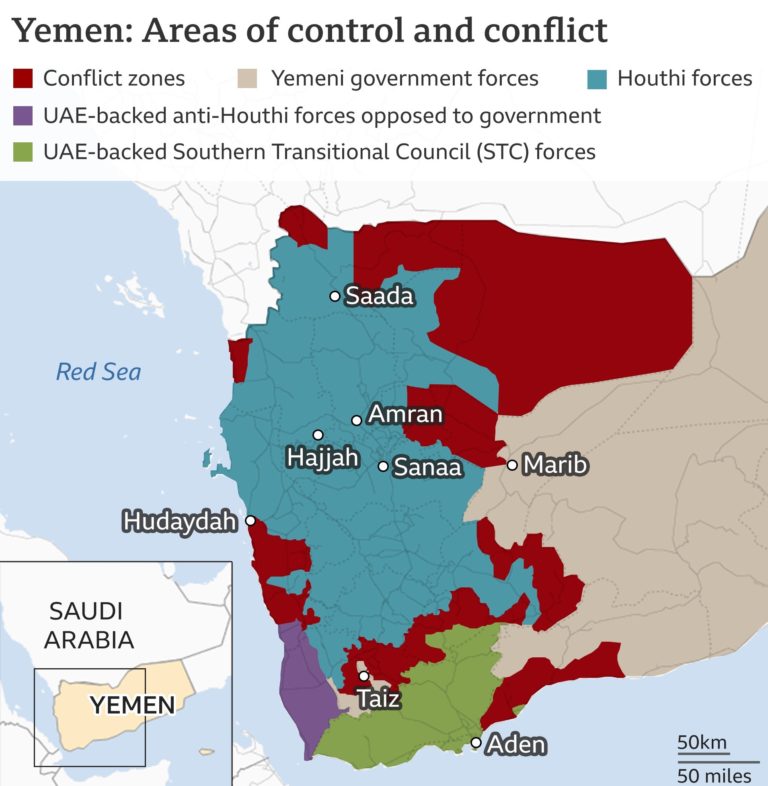
Officially the Republic of Yemen (romanized: al-Jumhūrīyah al-Yamanīyah, literally “Yemeni Republic”), is a country at the southern end of the Arabian Peninsula in Western Asia. It is the second-largest Arab sovereign state in the peninsula, occupying 527,970 sq km. The coastline stretches for about 2,000 kilometres. It is bordered by Saudi Arabia to the North, the Red Sea to the West, the Gulf of Aden and Guardafui Channel to the South, and Oman to the East. Yemen’s constitutionally stated capital is the city of Sanaa, and Aden is an old and well known port. Yemen has a population of approx 30 million as of 2019. It is considered a failed state, where external nations are playing out their rivalries, and which the world has forgotten.

UN declared World’s Worst Humanitarian Crisis

The resurgence of armed conflict in 2015, has resulted in the world’s worst humanitarian crisis (declared by the UN). According to UN and other international sources (ranging from UNHCR, UNDP, Swedish International Development Agency and Yemen Data Project to name a few), more than 24 million people face food insecurity of which 10-12 million are at risk of famine (80% of population require assistance, of which 12 million are children; 8 million children have no access to education); internally displaced total nearly 5 million. Concurrently, medics have struggled to deal with the largest cholera outbreak ever recorded, which has resulted in more than 2.2 million suspected cases and thousands of dead. Across the country every group/faction without exception including the so called government have targeted civilians to air strikes, artillery bombardment, mine warfare, abduction, torture and rape of women and children, disappearances, illegal detention, forced recruitment and creation of child fighters. These factions have ironically been supported with financial aid and weapons by USA, France, UK, Saudi Arabia and Iran who are equally guilty of violence, and are complicit to war crimes and humanitarian crisis under the UN definition. As per reports of BBC on Yemen, Norway, Finland, Netherlands and Germany (UK too is reviewing it) have suspended arms sales to Saudi-led coalition, but US, Canada, France and Australia are continuing to supply weapons and military equipment.

To top this, due to Yemen’s geographic position between the Gulf of Aden and Red Sea, it becomes the ideal transit location of African migrants seeking employment opportunities in Saudi Arabia. Human Rights Watch has documented abduction, extortion, detention, physical abuse and rape of migrants by all groups. To get an idea of scale of migration: About 2,60,000 Ethiopians an average of 10,000 per month were deported by Saudi Arabia between May 2017 and Mar 2019 (one-way traffic, while traffic has been under-reported grossly, and does not include figures from other African nations). There have been restrictions on imports, movement of aid (medicines, food, water, fuel for hospital generators etc) or assistance by all parties, but mainly by Saudi Arabia which has blocked Houthi ports worsening the humanitarian situation.

These details have also been verified by the UN Group of Eminent International and Regional Experts officially appointed by the UN, who have also specifically stated that several world powers are complicit in war crimes for providing intelligence inputs to Saudi coalition and also supplying weapons and equipment. Top UN official informed the UNSC (Security Council) on July 28, 2020 that the humanitarian crisis in Yemen has never been worse, with conflict escalating, famine on the horizon, the economy in tatters and COVID-19 out of control, as they issued a fresh call for an immediate ceasefire[ii]. They also confirmed that as of July 25 2020, the total number of confirmed COVID-19 cases in Yemen stands at 1,695, with 484 deaths (due to war like conditions and negligible inputs from Houthi controlled areas there is high probability of gross under-reporting).

Genesis of Conflict and Current Situation[iii]

The conflict has its roots in the failure of a political transition supposed to bring stability to Yemen following an Arab Spring uprising that forced its longtime authoritarian president, Ali Abdullah Saleh, to hand over power to his deputy, Abdrabbuh Mansour Hadi, in 2011. As President, Mr Hadi struggled to deal with a variety of problems, including attacks by jihadists, a separatist movement in the south, the continuing loyalty of security personnel to Saleh, as well as corruption, unemployment and food insecurity. Hadi was widely considered weak and his administration corrupt. Saleh’s allies undermined the transition, set up a mini-state and hit Sanaa with ever bloodier bombings.

The Houthis and security forces loyal to Saleh, then attempted to take control of the entire country, forcing Mr Hadi to flee abroad in March 2015. Currently, Mr Hadi’s government has established a temporary home in Aden, but it struggles to provide basic services and security and the president continues to be based in Saudi Arabia. Alarmed by the rise of a group they believed to be backed militarily by regional Shia power Iran (Houthis are Shias though of a different Sect), Saudi Arabia and eight other mostly Sunni Arab states began an air campaign aimed at defeating the Houthis, ending Iranian influence in Yemen and restoring Mr Hadi’s government. The coalition received logistical and intelligence support from the US, UK and France. The adventure was initiated by Saudi Crown Prince Mohammed bin Salman, very unlike the cautious rulers, and was supposed to last only for a few weeks. Coalition ground troops landed in the southern port city of Aden in August 2015 and helped drive the Houthis and their allies out of much of the south over the next few months. The alliance between the Houthis and Ali Abdullah Saleh also collapsed in November 2017 following deadly clashes over control of Sanaa’s biggest mosque. Houthi fighters launched an operation to take full control of the capital and Saleh was killed.

The Houthis still control Sanaa and north-western Yemen, and been able to maintain a siege of the third city of Taiz and to launch regular ballistic missile and drone attacks on Saudi Arabia. In September 2019, Saudi Arabia’s eastern oil fields of Abqaiq and Khurais were attacked by air, disrupting nearly half the kingdom’s oil production, representing around 5% of global oil output. The Houthis claimed responsibility but Saudi Arabia and the US accused Iran of carrying out the attacks. Concurrently terrorists from al-Qaeda in the Arabian Peninsula (AQAP) and the local affiliate of the rival Islamic State group (IS) have taken advantage of the chaos by seizing territory in the South and carrying out deadly attacks, notably in Aden.

Stockholm Agreement and its Status

On December 13, 2018 an agreement between the warring parties was signed in Stockholm, Sweden referred to as ‘Stockholm Agreement’. The Stockholm Agreement required all forces to redeploy their forces from Hudaydah (port which supplies the entire Southern region), establish a prisoner exchange mechanism, and to address the situation in Taiz. While hundreds of prisoners have since been released, the full redeployment of forces from Hudaydah has not yet taken place, raising fears that the Stockholm Agreement will collapse and that the battle for Hudaydah will resume.

In July 2019, the United Arab Emirates (UAE), a key ally of Saudi Arabia in the war, facing international criticism of its conduct, announced a withdrawal of its forces from Yemen. In August, fighting erupted in the south between Saudi-backed government forces and an ostensibly allied southern separatist movement supported by the UAE, the Southern Transitional Council (STC). Forces loyal to the STC, which accused Mr Hadi of mismanagement and links to Islamists, seized control of Aden and refused to allow the cabinet to return until Saudi Arabia brokered a power-sharing deal that November. The UN hoped the agreement would clear the way for a political settlement to end the civil war, but in January 2020 there was a sudden escalation in hostilities between the Houthis and coalition-led forces, with fighting on several front lines, missile strikes and air raids. In April 2020 the STC declared self-rule in Aden, breaking a peace deal signed with the internationally recognised government, saying it would govern the port city and southern provinces. Saudi Arabia announced a unilateral ceasefire the same month due to Coronavirus pandemic but the Houthis rejected it, demanding the lifting of air and sea blockades in Sanaa and Hudaydah.

Yemen-India Connection[iv]

In 1839, Aden became part of the British and was administered by the Bombay Presidency. A garrison of 2000 Indian soldiers was established in Aden and the Indian Rupee was made the official currency. In 1855, a fortnightly steamer service with Bombay was initiated by Peninsular and Orient Line. An engineer of India, was sent by the British to Aden in 1906 to lay out an effective underground drainage system and to prepare a scheme for providing drinking water. During the 1994 Civil War, India took a neutral stand. Indian doctors and nurses were perhaps the only expatriates who stayed behind and rendered humanitarian services to the people of Yemen. An estimated 100,000 people of Indian origin are concentrated in southern Yemen around Aden, Mukalla, Shihr, Lahaj, Mokha and Hodeida. Many of them have acquired Yemeni citizenship and become part of the country’s fabric. They, however, retain ties with their families in India. Following the 2015 military intervention in Yemen led by Saudi Arabia to quell the Houthis, India undertook Operation Raahat, during which the Indian Armed Forces evacuated more than 4640 citizens along with 960 foreign nationals of 41 countries. Yahya Yahya Ghobar, Consul General of Yemen in Mumbai, told The Indian Express on August 5, 2020 “We want India to open its eyes to this crisis and intervene in a way that it sees fit. We would like the Government of India to respond to this situation in the same manner that it would if someone tried to divide India,”.

Current Situation

As mentioned, Yemen’s leading separatist group the STC which is supported by UAE, has declared self-rule in the south, complicating UN efforts to end a ruinous conflict and protect the country’s shattered health sector from the spread of COVID-19. This risks renewed fighting between nominal allies in a Saudi-led coalition that has been battling the Houthi group aligned to Iran for the past five years. The United Nations[v] is racing against time to bring about a permanent ceasefire, aware that the new Coronavirus crisis could add further misery to what is already the world’s worst humanitarian crisis. But Yemen’s problems are so complex that even a decisive outcome in the conflict-within-a-conflict between the STC and the Saudi-backed government might not help end the wider war.

Why should the World and India Care

Apart from the human tragedy which should awaken even the most hard-hearted nation or citizens of the world, the conflict in Yemen can greatly exacerbate regional tensions. It is also seen as a struggle between Shia-ruled Iran and Sunni-ruled Saudi Arabia with grave global security implications. Due to potent presence of fundamentalist Islamic terrorist groups like al-Qaeda or IS affiliates, the instability will spread around Africa and the world. The world needs to focus and find ways and means to resolve the crisis permanently and provide generously to alleviate the humanitarian crisis. For this the external players (especially the bigger powers like USA, France, China, EU) need to step back, stop interference and come together, and persuade Saudi Arabia and Iran to stop any interference in Yemen’s internal affairs.

India must take it upon itself to bring focus and thus definitive diplomatic and humanitarian surge action to alleviate the human tragedy in Yemen (this will enhance India’s status and geostrategic role). With its increasing soft power status in world affairs, enhanced role in WHO, and membership of the UN Security Council, it will be very interesting to watch how events unfold and India’s response.

Conclusion

As long as it’s a playground for power-play regionally (with the added dimension of a Sunni-Shia conflict) and internationally, the conflict will simmer on in varying tempos, with tragic and humanitarian consequences for the people. That is the tragedy of a dynamic multi-polar, multi-domain ‘real politik’ world we live in. The harsh and bitter truth is that with COVID- 19 further putting Yemen in the back burner, and diminishing political and economic power of international institutions like UN (including Security Council), WHO, UNHCR, there is little hope of alleviation for the people of Yemen in the near future.


[i] Encyclopedia Britannica

[ii] ‘Yemen: Crisis reaches new low, top UN officials tell Security Council’ UN News, 28 Jul 20, https://news.un.org/en/story/2020/07/1069161

[iii] Numerous publications from World bodies, reports of NGOs and Think Tanks; Also referred to ‘Yemen Crisis: Why is there a War?’, BBC News, 19 Jun 2020. Link- https://www.bbc.com/news/world-middle-east-29319423

[iv] MEA Portal– www.mea.gov.in

[v] ‘Yemen: Crisis reaches new low’, top UN officials tell Security Council’ UN News, 28 Jul 20, https://news.un.org/en/story/2020/07/1069161
BLF & BLA launch massive attacks against Pak Army across occupied Balochistan

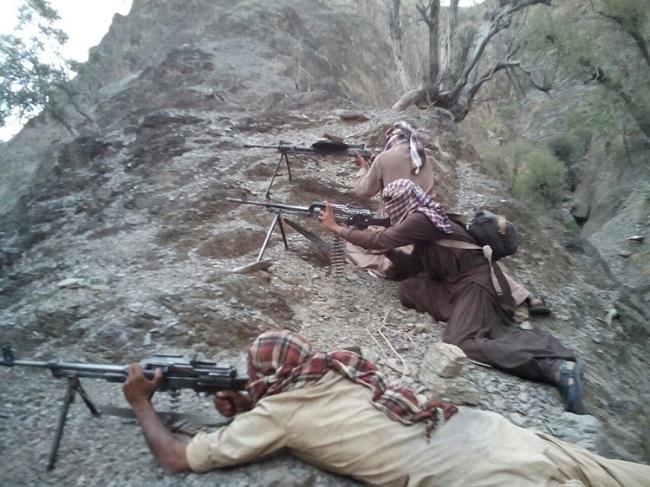
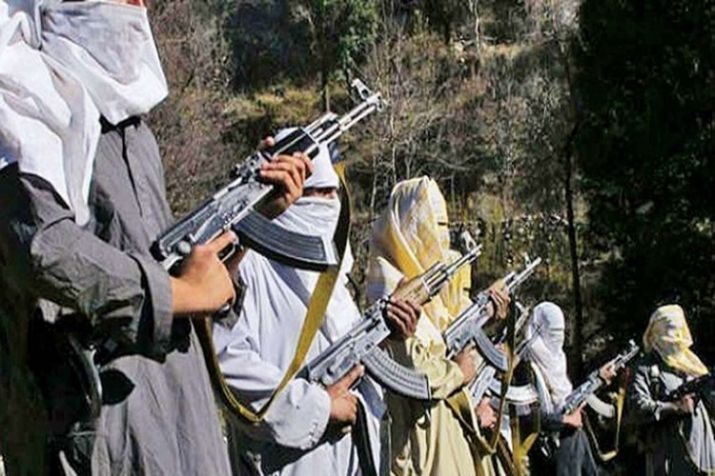
Baloch Sarmachaars (freedom fighters) launched multi-prong attacks on Pakistan Army at several locations across occupied Balochistan killing several Pakistani soldiers and injuring dozens of others.

Major Gwahram Baloch, the spokesman for Balochistan Liberation Front (BLF) claimed responsibility for attacks on the Pakistani Army in Kech, Mastung, Geeshkor, and Jhaoo on Friday. In these attacks eleven Pakistani Army personnel were killed and several others were injured, while the Sarmachaars (freedom fighters) managed to escape safely.

Just a day before, on Thursday, BLA (Baloch Liberation Army) Sarmachaars targeted convoys of Pakistan Army in IED blasts at Turbat and Noshki and then carried out a grenade attack at Mastung in occupied Balochistan. “As a result of these attacks multiple enemy soldiers (Pakistanis) were killed several others were wounded,” said Jeehand Baloch.

At 6 AM on Friday, the BLF Sarmachaars came face to face with the occupying Pakistan Army in Heekan locality of Geeshkor. In the ensuing clash that lasted for about an hour the Baloch Sarmachaars killed eleven Pakistani Army personnel and repulsed the remaining using rockets and automatic heavy weapons. BLF Sarmachaars managed to escape to safety.

Major Gwahram Baloch added that in another attack a Pak Army personnel was shot dead through a sniper rifle at a military post in Dilmurad Dumb area of ​​Jhaoo on Thursday evening. He added that BLF Sarmachaars attacked an army outpost at water supply in Kolwah, Dandar area of ​​Kech district with rockets and heavy weapons. Major Gwahram Baloch said that at 11 PM, Sarmachaars attacked the Mastung military camp with rockets and heavy weapons, inflicting heavy casualties on the Pakistani Army.

BLA spokesperson Jeehand Baloch in his press statement said that BLA Sarmachaars targeted Pakistan Army convoy in the Apsar area of Turbat in an IED attack when they were heading towards the Abdarak camp, as a result if which several enemy soldiers were killed and wounded. After this attack, the Pakistan Army personnel opened indiscriminate firing on the unarmed Baloch population in the locality. During this firefighting the Pakistani soldiers captured a young Baloch named Muhammad Hayat in front of his mother and sister and shot him dead after ruthlessly torturing him. “It has always been the modus operandi of Pakistan Army that after they are defeated by Baloch fighters; they take revenge in the form of butchering innocent Baloch citizens,” said Jeehand Baloch.

Baloch Liberation Army (BLA) and Balochistan Liberation Front (BLF) are fighting for the independence of Balochistan that has been under illegal occupation of Pakistan since March 27, 1948. Balochistan has historically been an independent nation and even during British colonial rule it had separate a treaty with the British. Balochistan attained independence from British colonial rule on August 11, 1947 but its independence was short lived as it was captured by Pakistan. Baloch revolutionaries have been fighting for their independence ever since Pakistan occupied their motherland.

11 August 1947: Balochistan’s Independence Day & Thereafter

Xi Jinping’s Mistake of the Century

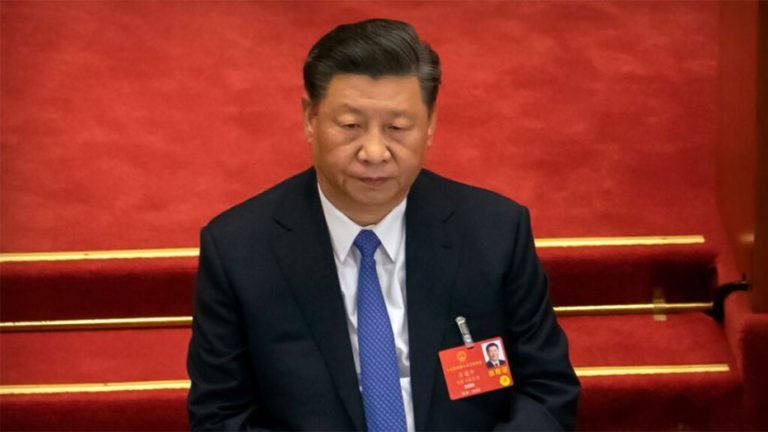
President Xi Jinping is a poor strategist. Chinese are known followers of the Art of War, an ancient Chinese military treatise written by Sun Tzu, a Chinese general and military authority in the 5th century BC. The treatise teaches all aspects of warfare and particularly how to win a War without fighting it, but today, it is clear that President Xi Jinping has not read the book properly.

Xi got the first basic wrong, “don’t take too many enemies in one go, take them one by one.”

As a result, Xi may win a few battles, but ultimately, the Chairman of the all powerful Central Military Commission is certain to lose the war; the world will not let the Middle Kingdom dominate the planet. Xi Jinping and his advisors did not take into account that China’s ‘enemies’ would react so quickly to Beijing’s aggressive expansionism.

Take India, how could the nation (and the government) ignore Chinese intrusions in Ladakh and accept a change of the status quo without taking measures to make Beijing pay a price.

Banning Chinese applications or cancelling State contracts for Chinese mining companies, Delhi has started acting. As China digs in Ladakh and prepares for the winter, retaliating actions are bound to increase and certain policies taken in the 1950s, will certainly be debated afresh, particularly the ‘One-China’ policy.

It is where President Xi and his advisors have miscalculated. India and the world can well reopen ‘unfinished’ business.

One is the Tibetan issue at the UN. On November 7, 1950 a well-drafted appeal sent from Kalimpong (as there were no postal facilities in Lhasa), pointed to the fact that “the Tibetans were racially, culturally and geographically far apart from the Chinese.” It also made a parallel with the situation in the Korean peninsula: “The attention of the world was then riveted on Korea where aggression was being resisted by an international force.

Similar happenings in Tibet were taking place with the world covering its eyes: “… [The problem is] largely the outcome of unthwarted Chinese ambitions to bring weaker nations on her periphery within her active domination,” said the Appeal, which continued: “As a people devoted to the tenets of Buddhism, Tibetans had long eschewed the art of warfare, practised peace and tolerance and for the defence of their country, relied on its geographical configuration and on non-involvement in the affairs of other nations.”

It added that the Chinese, in their natural urge for expansion, “have wholly misconstrued the significance of the ties of friendship and interdependence that existed between China and Tibet.”

Some twenty years ago, Claudia Johnston, an independent researcher in International Law at the University of Victoria, Canada, wrote a fascinating paper “Tibet: The International Mistake of the Century”.

The outcome of her research was that the Tibetan Appeal was still a pending matter in the UN …waiting to be reopened: “The UN and individual Member States, have been conducting their decisions based on the false assumption that Tibet is not a ‘State’, but ‘an internal affair’ of China. UN official records show this to be a mistake.” Tibet was then a State.

As a result, “the issue of Tibetan Statehood remains unconsidered by the United Nations. United Nations mechanisms for ‘States’ to employ peaceful solutions to ‘Disputes’ have not been utilised.”

All this was done …at the instance of India.

It is true that from the start, Delhi was pessimistic about the outcome of the UN appeal: “We doubt whether a discussion of Tibetan problem in General Assembly or in Security Council will yield any useful result,” wrote Nehru. The friendship with China was already too important to be sacrificed for the fate of a weak and peaceful neighbour like Tibet.

The Prime Minister frankly admitted that though Beijing had repeatedly expressed itself in favour of Tibetan autonomy “but of course we do NOT know what their idea of autonomy is.”

Delhi thought: “We do NOT think that legal argument will be helpful or that Assembly should attempt more than appeal to two parties to come to a peaceful settlement. Condemnation of China will NOT help Tibet; and neither Security Council nor Assembly is in any position to render physical aid to Tibet.”

As a result China was not condemned and could complete its task of entering Lhasa without hindrance; in Sun Tzu’s jargon, ‘liberating Tibet without waging war’.

In the course of the discussions at the UN in New York, most of the representatives indicated that India was the nation most concerned and that they would follow India’s lead. In a note, Nehru sadly asserted: “I think it may be taken for granted that China will take possession, in a political sense at least, of the whole of Tibet.” He further admitted that for the Tibetan people the “autonomy can obviously not be anything like the autonomy, verging on independence, which Tibet has enjoyed during the last forty years or so.” His final words were: “We cannot save Tibet, as we should have liked to do so, and our very attempts to save it might bring greater trouble to it. It would be unfair to Tibet for us to bring this trouble upon her without having the capacity to help her effectively.”

The strange argument was: If we do anything to help Tibet, it will upset the Chinese and the fate of Tibet would be worse. The case was eventually ‘put in abeyance’ at India’s demand. Let us remember that Sardar Patel was by then a dying man; nobody could stand up to Nehru.

But today, if China stubbornly continues to occupy Indian territory in Ladakh or if the Chinese Western Theatre Command generals manage to convince the new Helmsman that India should be taught more lessons, there are plenty of old issues for India to reopen. For sure, Chairman Xi has not played his cards well.

Jaish terrorists strike in Sringar, 2 cops martyred

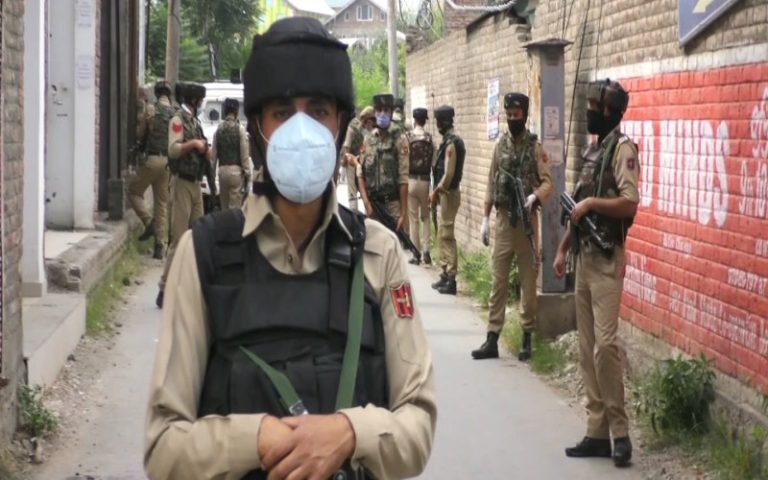
Srinagar/ August 14: A day ahead of India’s Independence Day, Jaish-e-Muhammad terrorists struck at Srinagar and martyred two policemen. The terrorists attacked a police party at Nowgam area of Srinagar on Friday morning killing two cops and leaving another one injured.

There were two terrorists who fired indiscriminately on a police party at Nowgam area of Srinagar leaving three cops critically wounded. “All three injured were shifted to SMSH (Shri Maharaja Hari Singh) Hospital, however, two of the injured succumbed on the way. The third one is being treated at the hospital whose condition is stated as critical,” J&K police said.

Kashmir zone police tweeted: “Terrorists fired indiscriminately on police party near Nowgam Bypass. Three police personnel injured. They were shifted to hospital for treatment where two attained martyrdom. Area cordoned off. Further details shall follow.”

The tweet of J&K Police informing about terrorist attack in Srinagar, Kashmir Valley.

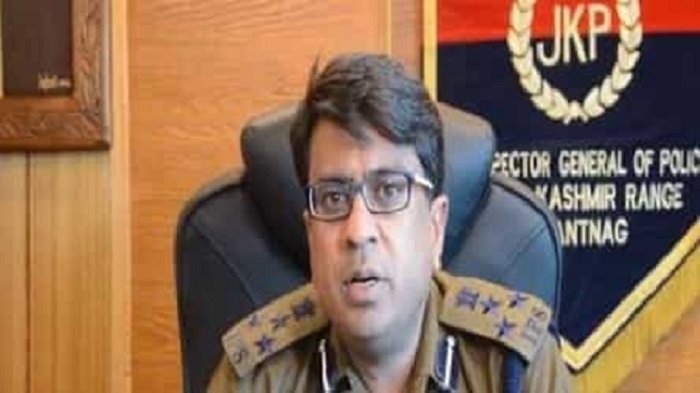
This attack comes a day before the independence day and when entire Kashmir is on a high alert especially Srinagar district. Inspector General of Police (IGP) Kashmir had yesterday stated that fool proof security arrangements are in place to thwart militant strikes and to conduct all Independence Day functions smoothly.

Meanwhile, the two slain cops have been identified as Ishfaq Ayoub and Fayaz Ahmed while injured one has been identified as Muhammad Ashraf.

Talking to reporters at the site of incident, IGP Kashmir said that Jaish-e-Muhammad outfit has carried the attack. “The militants have been identified and they will be neutralized soon,” the Kashmir police chief said.

China talks about Art 370, India must talk about Shaksgam Valley & CPEC

0

Now that China’s Foreign Ministry has crossed the red line by brazenly interfering in India’s internal affairs by terming abrogation of Article 370 “illegal and invalid,” it’s high time New Delhi reviewed its unduly magnanimous attitude in face of Beijing’s belligerence since such undue munificence has proved to be a humongous disaster. In fact, it won’t be a hyperbole to say that New Delhi’s historical over-solicitous diplomatic approach towards Beijing that is one of the major reasons for its uncouth behaviour towards India. That Beijing’s no friend of India is no secret- starting with its blocking moves to get Jaish-e-Mohammad (JEM) chief Masood Azhar declared a UN designated global terrorist by misusing the “technical hold” clause thrice since 2009. Just recently China violated four Sino-Indian border agreements (of 1993, 1996, 2005 and 2013) by trespassing into Indian territory in Ladakh.

In what clearly appears to be a pre-mediated act of extreme violence, People’s Liberation Army (PLA) troops not only attacked a small and unarmed group of Indian soldiers led by their Commanding Officer without any provocation, but even escalated the violence level by a murderous assault with spiked clubs and metal rods on unarmed Indian soldiers who came to rescue this small group. In this clash which occurred in the area of Galwan, the inordinately high Indian Army casualty figures (20 fatalities and more than 70 injuries) in itself leaves no room for doubts that the violence by PLA was pre-mediated. Not only this, Beijing even had the gall to blame India for this clash by saying “India’s border troops under the guise of darkness, trespassed into China’s territory and provoked the incident.”

But Beijing’s attempts to showcase Indian Army as ‘trespassers’ flopped miserably because it failed to answer a basic question that would have immediately struck even a person not conversant with matters military. This question is, which army in the world would be so puerile as to send unarmed soldiers to trespass into a neighbour’s territory? Furthermore, Beijing’s defence that “China’s troops had to take necessary measures to strengthen their response and their management of the border areas” too raises a question. If Indian Army had indeed trespassed into Chinese territory, then the PLA was well within its rights to use firepower to thwart this intrusion in order to safeguard the territorial integrity of their country. So, why did PLA use spiked clubs and rods instead?   

There have been instances of scuffles between Indian and Chinese forces along the Line of Actual Control (LAC) as well as incursions by PLA soldiers in the past, but while there was no loss of life in the affrays, incursions by PLA were temporary in nature. But the recent standoff and intrusions in Ladakh are unprecedented in that while the clashes ended in considerable casualties in terms of fatalities and injuries, Beijing is clearly dragging its feet to diffuse the prevailing tension by restoring status quo ante. So, it’s more than obvious that while China may not have officially reneged on the Sino-Indian border agreements, it has for all practical purposes, junked these agreements. This in turn rules out likelihood of an unconditional negotiated settlement in the near future and therefore to expect that dialogue could help in restoring status quo ante, may be a case of great expectations.

Beijing may be getting a bit too pushy these days, but it’s certainly not ham-headed when it comes to diplomacy. That’s why the illogical and laughable reasoning that “any unilateral change to the status quo is illegal and invalid,” put forth by Beijing in defence of its criticism regarding abrogation of Article 370 of Indian constitution by Government of India is intriguing. Article 370 was enacted by the Indian Parliament as a temporary provision, and so, its abrogation is purely an internal matter of India. So, even if we for a moment accept Beijing’s point of view that the Kashmir issue “is a dispute left over from history between Pakistan and India,” then how does abrogation of Article 370 “change the status quo”? When the United Nations Security Council (UNSC) didn’t entertain the plea made by Pakistan using this very logic, why is Beijing making a fool of itself by offering the same rationale is something that defies comprehension.

But now that Beijing has brought up the issue of Kashmir being ‘disputed territory’ and terming it an “objective fact established by the UN Charter, UN Security Council resolutions and bilateral agreements between Pakistan and India,” it’s time New Delhi pays it back in the same coin. In fact this is opportune moment for some hard talk with Beijing and applying this very ‘disputed territory’ analogy to put China in the dock. The first issue pertains to ceding of Shaksgam Valley situated in Pakistan-occupied Kashmir (POK) to China by Pakistan in 1963. The fact that this act is illegal is clear from Article 6 of the Sino-Pakistan Agreement signed on March 2, 1963 which states that “the two Parties (China and Pakistan) have agreed that after the settlement of the Kashmir dispute between Pakistan and India, the sovereign authority concerned will re-open negotiations with the Government of the People’s Republic of China.”

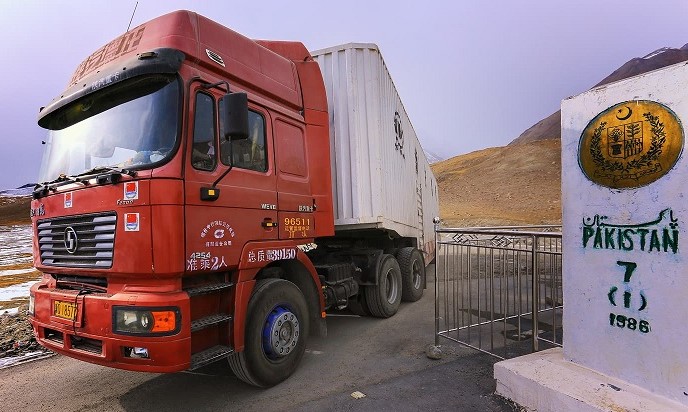
Now, if China and Pakistan both agree that J&K is ‘disputed territory’, then Chinese occupation of Shaksgam Valley is illegal since it is part of this so-called ‘disputed territory’, then Pakistan has no legal right or locus standi to cede Shaksgam Valley to China, without seeking prior approval of the UN or India (which both China and Pakistan concede is a party to this dispute). Similarly, if Beijing considers abrogation of Article 370 “illegal and invalid” since it’s an “unilateral change to status quo,” then doesn’t the same analogy apply to the construction of China Pakistan Economic Corridor (CPEC) which runs through the so-called ‘disputed territory’ of J&K? While these objections may not result in China giving up its control of Shaksgam Valley or abandoning the CPEC project, it will at least dissuade Beijing from using red herrings to defend what’s indefensible!

Saudi-Pak spat and the big churn in Muslim world

Has Kashmir issue become a catalyst to Saudi-Pak spat? That is what Pakistan wants the Kashmiris to believe. But there is more in Pak-Saudi row than what meets the eye.

The roots of rumbling in the Islamic fold are traceable in the Islamic resurgence movements that sprang during the cold war years. The Khilafat Movement of pre-World War-II era was the first sign of the rumbling in West Asia and elsewhere. Reminiscences of the glory of Ottoman Empire with the Muslims also generated their dislike for the western powers which had brought about its downfall. The phenomenon was replicated in the sub-continent with the liquidation of the Mughal Empire by the middle of the 19th century.

With Anglo-American dominance becoming pervasive during the cold war era the urge for recognition of identity began both as reaction and as a cherished theme of the masses of people in the Third World, especially in Asian and African continents. Muslims widely dispersed in the two continents showed unrest. The idea of a separate state for Muslims of the Indian sub-continent floated in early decades of the 20th century culminated soon after the end of World War-II. In the absence of a centripetal political and military power, it was evident that the mosque and seminaries (madrasas) would serve them as the power centre. It meant revival of orthodox Islam and, of course, the resultant direct or indirect confrontation with the forces of democracy and the epoch of scientific and technological enquiry and advancement.

The rise of Khomeini in Iran and of Osama bin Laden in Saudi Arabia (where from he shifted to strategically conducive geographical region as well as equally cooperative human force) was an expression of anger against the Saudi Kingdom for its sellout to the Americans. Many Arab countries in the Gulf or West Asia would not want to move far away from Saudi Arabia for the bare reason that the Islamic centrality of the Saudi Kingdom was major security against adversarial forces within or outside the region.

The inception of the Organization of Islamic Cooperation (OIC) in 1969 in which Saudi Arabia played a leading role was almost hijacked by Pakistan after it attained nuclear capability in 1998. Pakistan’s essential interest in OIC was to sell Kashmir issue to the 57-member strong group. For last two decades or more Pakistan has been moving an anti-India resolution on Kashmir in all of the summit sessions of the OIC. However, on the ground, the passing of these resolutions made negligible difference whatsoever in the bilateral relations between India and the member countries of the OIC.

PM Narendra Modi has been able to establish good relations with the Saudi kingdom as well as the UAE. There has been a phenomenal increase in bilateral trade, import of crude oil, tourism and above all work opportunities for millions of Indians in the Gulf States and the Saudi Kingdom.

Pakistan has been unhappy with it. UAE allowed Indians to build a temple on its soil which the Pakistanis considered a boost to heresy “kufr” on the Islamic land. India’s growing friendship with Israel and the defence deals between the two nations is projected by Pakistan as a challenge to the Muslim world, forgetting that Pakistan served a conduit for the supply of Israel’s arms and ammunition consignments to Iran during Iran-Iraq war. The invitation by the Saudi ruler to the then Indian External Affairs Minister, Sushma Swaraj, to address the OIC session upset Pakistan to the hilt. Islamabad thought the Saudi monarch was disregarding the fundamentals of Islamic Armageddon.

Thus Pakistan began to work with like-minded regressive Islamic states to bring about a change in the policy and functioning of the OIC. However, it had to move slowly owing essentially to Pakistan’s weakening economy, rising debts and defamation incurred by soft-peddling with the terrorist and Islamic radical organizations at home. In particular, Saudi monarch — familiar with the compulsions of modern scientific age, did not want Pakistan to join its voice with Iran or Turkey in upbraiding the US for “interference” in the affairs of regional Islamic powers.

It will be reminded that in the OIC summits many liberal Arab states would ask the members to discuss along with Kashmir the freedom struggles of Muslims elsewhere like Balochs, Pushtoons, and Uighurs. The Saudi monarch believes that India with the second largest Muslim population with democratic dispensation has a right to be included in the OIC since the welfare of Muslims world over is the objective of the organization.

Finding that it was difficult to break the solidarity among the Arab members of the OIC, Pakistan looked out of the box. Turkey, Malaysia and Iran, all of these non-Semitic Islamic States, could find a common cause of defiance against the Saudi and the UAE “hegemony” at the OIC. The medieval type orthodox Islam versus the liberal Islam argument seemed to be revived in the 21st century.

New Delhi’s J&K Reorganization Act 2019 landed Pakistan in a somewhat precarious situation. Kashmiris understood that Pakistan’s patronization of their separatism had become meaningless. Pakistan’s Kashmir bombast over the decades was blunted. Islamabad tried many options, UN, EU, British Parliament, nuclear threat, acceleration of terrorist attacks in the valley, intensifying bombing and shelling of the border to help infiltration by jihadis. Together with it, Pakistan undertook a massive propaganda campaign to the extent that Pakistan foreign ministry ceased its normal function and became its Kashmir cell.

Not able to settle the score with the US, Pakistan and the non-Semitic Islamic States now found it expedient to target Saudi Arabia. In 1979 Ayatollah Khomeini had declared that Islam disallowed monarchy and that the Saudis had no right to claim as the sole custodians of the haramayn-e-Sharief meaning the twin holy cities of Mecca and Medina. The non-Arab Islamists subtly began to move in that direction.

The Saudis condemned the last winter Kuala Lampur meet of 53 Islamic countries and even summoned Imran Khan to Riyadh to be chastised for becoming a party to anti-Semitic Islamic states and the OIC.

At the root of Saudi dislike for Turkey is that during the heyday of the Ottoman Empire Saudi Arabia had come under the suzerainty of Turks who also controlled the holy shrine of Mecca. Saudis had played a role in supporting Great Britain against the Ottoman Empire. Moreover, refusal of the EU to admit Turkey has also been taken as a snub by Turkey and thus she wants to assert via Islamic channel. As far as Mahathir of Malaysia is concerned, he is the classical running dog of hegemonic China. The case of Iran is different. Iran can be called the odd man in the non-Arab Islamic fold. Iran knows that she will never be accepted by the Muslims (to whatever fold they belong) as the leader of the Muslim world because of deep factionalism eating into the entrails of the Islamic body.

Frustrated that Saudi monarch was not prepared to call the OIC foreign ministers’ meet in which Pakistan would move a resolution against India on Kashmir, the Pakistani foreign minister has threatened that in case Saudi king did not call the foreign ministers’ meet, Pakistan would call the meet on its own. The battle lines are drawn. Saudi ordered stopping of oil supplies to Pakistan and demanded the return of the loan money to the tune of $3 billion. China has come to Pakistan’s rescue and given it one billion dollars to pay off the Saudi loan. If relations deteriorate, hundreds of thousands of Pakistani labourers working in the Saudi kingdom may be asked to go back home. Pakistan has openly taken up cudgels with Saudis and this could not be done without a subtle hint from Beijing.

The rumblings in the Islamic fold is deep and its consequences will be of far-reaching significance. This all explains that Kashmir is not the catalyst to the split between the Arab and non-Arab Islamic states. It is a war between radical and conservative Islam strongly supported and upheld by the non-Arab Muslims against the more westward-looking Arab Islamic states. The immediate question before the Saudi monarch is who should he invite to serve as the prestigious royal bodyguard as he is about to send back the Pakistani brigade. And for Pakistan, it appears that she itself is headed towards isolation among the Muslim countries. Pakistan Army higher echelons have realized the consequences of antagonizing the Saudis. The Pakistani Army chief called on the Saudi Ambassador in Islamabad and is trying to convince him that Pakistan will not be part of the split game. We have to watch what can be the impact of Pak-Turkey bonhomie that has developed recently.

India refuses to recognize medical colleges in POJKL

Srinagar/August 13: Separatist groups of J&K, better described as Pakistani stooges received a severe setback after Medical Council of India (MCI) declared that any qualification obtained from medical colleges located in Pakistan Occupied Jammu-Kashmir and Ladakh (POJKL) shall not entitle a person to practice modern medicine in India.

For the last so many years, Hurriyat leaders were seeking and getting money to recommend Kashmiri students for medical or engineering studies in Pakistan and POJKL.

National Investigating Agency (NIA) has already started a probe in this regard. 

It is an open secret that separatist leaders would charge anything between Rs 25-Rs 30 lakh to recommend names of Kashmiri students for studying in Pakistan and POJKL (Pakistan-occupied Jammu Kashmir and Ladakh).

“For more than a decade, Pakistan has reserved dozens of seats in its medical and engineering colleges for Kashmiri students, but they get admission only after a recommendation from Hurriyat leaders,” a senior government official told News Intervention.

From 1990, Hurriyat leaders have been sending Kashmiri youth to PoJKL and Pakistan for medical and engineering studies.

MCI in its notification made it clear that “This is to inform all concerned that entire territories of UT of Jammu Kashmir and Ladakh are an integral part of India. Pakistan is in illegal and forcible occupation of a part of the territory. Accordingly, any medical institution in Pakistan occupied Jammu Kashmir and Ladakh (POJKL) requires permission/recognition under IMC Act, 1956. Such permission has not been granted to any medical college in POJKL.”

“Therefore, any qualification obtained from medical colleges located within these illegally occupied areas of India” shall not entitle a person for grant of registration under the Indian Medical Council Act, 1956 to practice modern medicine in India,” added the MCI notice.

Security forces eliminate key terrorist in Pulwama

1

Srinagar/ August 12: Two days ahead of India’s Independence Day, security force on Wednesday shot dead a top terrorist in Pulwama district even as a soldier was martyred in gunfight.

Director General of Police Dilbagh Singh on Wednesday said that Hizbul-Mujahideen terrorist Azaad Lalhari of Pulwama was killed in an encounter at Kamrazipora area in south Kashmir. “Azaad Lalhari was involved in the killing of police head constable Anoop Singh on May 22, 2020 at Prichu Pulwahma where he fired at a Naka party,” DGP Dilbag Singh said.

He said six FIRs were lodged against him for militant related killings. “Earlier he was detained under PSA (public safety act) as OGW (over ground worker) and he became active again,” the DGP said, adding that charge sheet had also been filed against him in two cases earlier.

Body of Hizbul Mujahideen terrorist Azaad Lalhari after being shot dead by Indian security forces. (Photo: News Intervention)

Official sources said that the terrorists fired upon a joint team of police, army and CRPF’s 53 battalion after they launched a cordon-and-search operation at Kamrazipora area in the district.

In the initial exchange of firing, two army men were injured and were evacuated to 92 Base Hospital here where one of them succumbed to critical wounds. Meanwhile, the police said, the body a terrorist was recovered near the encounter site and was later identified to be Azaad Lalhari.

In another incident terrorists fired at a Quick Reaction Team (QRT) of the Indian Army near Trumgund Hygam crossing on Wednesday. The QRT was moving from Baramulla towards Gulmarg on the Srinagar-Baramulla National Highway near Trumgund Hygam crossing. One Army soldier has been injured and search operation is in progress.

Hila Graf Converses About “My Home is a Suitcase”

My Home is a Suitcase” is a play by Rzgar Hama about individuals who sought new lives as immigrants. It is based out of Vancouver, British Columbia, Canada. These are real stories. The next few interviews will be from some of the individual readers of their stories of beginning new lives in Canadian society. Hama is known for several plays, including “Soldierland” with some professional commentary by Dr. Marvin Westwood and Dr. George Belliveau of The University of British Columbia in “Dr. Marvin Westwood & Dr. George Belliveau on SOLDIERLAND a play Written and Directed by Rzgar Hama.” Here I speak with Hila on “My Home is a Suitcase.”

No description available.
Sky Theatre Group, “My Home is a Suitcase”

Scott Douglas Jacobsen: So, the play is “My Home is a Suitcase.” The playwright is Rzgar Hama Rashed. In another way, it is merely people telling their stories who are partial playwrights in a way because they are providing their narratives, their life stories. In terms of your involved with “My Home is a Suitcase,” Hila, what is the story with becoming involved with Rzgar, with Sky Theatre Group? Was this floating around the internet or knowing others within its social and professional orbit?   

Hila Graf: A little bit of both, my background is in theatre, directing, and teaching. I moved to Vancouver 2 years ago. I consider myself an emerging theatre artist and educator, so I was looking for opportunities to become involved with an artistic project. Especially something in a community setting, since an important part of my training was on community-based theatre. I really love working with different groups, which aren’t necessarily professional, but rather they use theatre as an instrument to tell their stories.

I met Rzgar through the research-based theatre collaborative at UBC, Then I saw a post of “My Home is a Suitcase” on LinkedIn, it was the first time I saw something on LinkedIn that was appealing to me and I got excited about this project. I reached out to Rzgar and we talked about the project. He asked if I wanted to be one of the participants to tell my story.

But because of my background in directing, I preferred to be part of the overall process and learn from Rzgar, in terms of how he works on the project from the beginning, from a director’s perspective. It has turned out to be a really beautiful learning experience for me.

Jacobsen: Now, when you’re looking at some of these stories and comparing it to some of the standard play repertoire that you’re teaching or see in some of the Downtown Vancouver area in the art scene, what are the comparisons and contrasts there? Either that are pieces around or the differences in content tone, where one produces a play with real narratives as opposed to ones that are invented and have that kind of truth infused into the parts that are imaginary.

Graf: The whole method of community theatre and devised theatre, is something that has been used around the world for many years. In Vancouver, it is still a relatively new concept. Traditional theatre usually focuses on producing plays that are based on an existing script. Then the cast and creative team come together and they work on bringing the script to from paper to stage. Even in community settings, sometimes, the choice will be, “Let’s all do Shakespeare together” for example, so the community will explore their identity or story through the lens of an existing play. It is an amazing method. But what is unique about “My Home is a Suitcase” is that it focuses on people’s true stories, so, what comes out is not filtered, the whole process is very, very personal for everyone involved. Basically, you’re asking people who don’t have a lot of writing experience in theatre context to write something based on their life experience. Often, the stories involve vulnerable experiences the participants had in their life.

And the goal of the project isn’t just artistic, it is c creating a community and empowering people as they are going through this journey of sharing their story, with the group and then with an audience.

Jacobsen: Were there any particular moments in the development of this project where individuals had to stop in the middle of telling their story because it was too hard?

Graf: I don’t remember people stopping, necessarily. But I do remember people debating which parts they should leave out of the piece, especially during the one-on-one sessions. It was three of us in the directing team, Rzgar as the director and Lennora and I as assistants, so at some point we split the group and each of us had one-on-one sessions with some of the participants. It was nice to get deep into the stories and hash out the exact part of the story the writers want to focus on. But because every person has a 20- to 40-year span of lifetime it is a challenging task when the goal is to have a 7-minute presentation, which was the goal of the first phase of the project.

When we did the one-on-one, I remember some people were deliberating whether they should include some parts of the story or not, and sometime they would decide to leave somethings out because that was too personal for them. It is a challenge, to try to be honest and share your truth and at the same time protect your privacy. It was very inspiring to witness that process.

So, the complete ownership of the story and how they want to present their story was of the participants. It is really, really important. Because in the end, they have not only written their story; they have also read it in front of an audience, which is a very courageous this to do.

Another part was how to approach the different information pieces coming into the room. People were sharing personal information, sometimes very traumatic. We had to figure out our group rules of when and how to ask questions about everyone’s stories, and when to leave it alone, so that each person will have the agency to share as much as they want. It was about making sure this was a safe space for everyone to explore and create.

Jacobsen: You are dealing with people who may not have much or any theatre experience. They are a self-selected group with putting out a call for refugees to come and tell their stories. What are the factors you’re taking into account in getting the narratives for those who may not have the theatre experience and may be the self-selected group with trauma stories in general?

Graf: That’s an interesting question. We worked with the group with the same tools we would use with professionals, but in a different way It’s the same tools that shape community theatre and professional theatre, and community theatre is a genre and an art form like many others, so it has its own style It is more authentic and intimate. It could be a little rough around the edges and that’s part of the beauty. We wouldn’t try to mask it. We would use different tools like voice work and body posture, breathing techniques, which everyone can do in order to support the cast to communicate their story in the best way possible.

We work with everybody to get comfortable in sharing their story in front of an audience. A lot of agency is given in terms of what the performers, feel comfortable with and what works for them. With this project we also want to show that anyone can perform and share their story, this is a part of being human –

we need water and food, and sleep, but also stories. We are always thirsty for stories. Even if we are not part of the professional world, as humans we understand storytelling, and we have a strong motivation to engage in storytelling – to share what we are doing and feeling and to learn about others. This goes beyond the professional performing arts community to every human.

It is inspiring to see how easy it is. It is something ingrained in each and every one of us. The only difference between the participants of My Home is a Suitcase and anyone else is that they have chosen to take the time and put their focus and energy on telling their story

I think that’s part of what is inspiring in that. These people have chosen to put that spotlight on themselves, on their history, and examine their own and life story and share it with others.

Jacobsen: What is the big takeaway from this project for you? Relative to a lot of Vancouver, these are stories about pain, dislocation, loss, and many times coming to a new place in triumph.

Graf: Some of the stories have traumatic components in them, but some of them are full of humour and full of the small intimate moments of life that we can all identify with. I think the important thing is people will be able to empathize with the people behind the stories and learn about the amazing diversity we have here in the community. The different stories of immigration are so different from one another and so unique

They are so specific and moving. The stories of resilience in the journeys people went through; the choices that they made in their lives. It is about choices in light of circumstances, which is something that I believe everyone can relate to. It is shedding some light on this part of our community, on immigrants and refugees, and making sure that all newcomers, immigrants and refugees are celebrated in the community

It is really tied to what we have been seeing in our society around the Black Lives Matter movement. Every person wants to be loved, wants to be celebrated, wants to have opportunities. I think My Home is a Suitcase piece is an excellent step in the way to make that possible.

Jacobsen: Hila, thank you so much.

Graf: Sure, thank you.

Photo by Blake Cheek on Unsplash

Image Credit: Soran Mardookhi, and Rzgar Hama/Sky Theatre Group.

India’s partition on religious lines has deprived us of our independence: Khalil Baloch

The eleventh day of August holds a special significance in the Baloch national history. It was on August 11, 1947 when Balochistan attained freedom from British colonial rule. This news was announced from the All India Radio that Balochistan is a free country. This freedom and its announcement came after a long history of struggle and sacrifices, said Khalil Baloch Chairman Baloch National Movement (BNM). From 1839 to 1947, the Baloch nation fought gory wars and sacrificed their lives against British aggression, but they never surrendered to them. That is the primary reason that Balochistan had a unique position in British India and Baloch land was autonomous in several ways.

BNM Chairman Khalil Baloch said that on 4th August 1947, Lord Mountbatten, the viceroy of India signed a treaty with Mohammad Ali Jinnah and Khan of Kalat, Meer Ahmed Yar Khan, which affirmed the freedom of Balochistan.

Later on, Mohammad Ali Jinnah and the British government backed from this agreement and started intriguing for the occupation of Balochistan. The illegal accession of Kharan and Las Bela was approved; which historically were integral parts of the state of Kalat. Kharan was under the direct control of the state of Kalat and had the position of a Special Area. In the same way, Mekkuran was also an integral part of the state of Kalat. As for the treaty made between the state of Kalat and British government it was agreed that after the withdrawal of British, these regions including the leased areas would have to be returned to the state of Kalat. But Pakistan disrespected all these treaties along with agreement between Jinnah and the Khan of Kalat and occupied Balochistan. The aggression of Pakistan and the expedience of Khan of Kalat was the prime reason for Pakistani occupation in Balochistan.

Khalil Baloch, Chairman Baloch National Movement (BNM).

Khalil Baloch added that when the issue of accession to Pakistan came under discussion in the Parliament of Balochistan, it was vehemently rejected by both chambers of the Balochistan Parliament, and they decided to fight back any aggression by the state of Pakistan. Kept aside from the armed struggle of Agha Abdul Karim Khan, the rest of the people, later on, could be seen on the floors of Pakistan. If the Baloch leadership had honestly played their due roles, then today, the situation in Balochistan would have been far different.

Historically Balochistan has never been a part of India and the British occupation could also not force Balochistan to be a part of British India, explained Khalil Baloch. However, the partition of India, a great nation, in the name of religion is the greatest mistake in history and today as a result of this partition not only India and Balochistan but also the entire region is suffering.

The western powers needed a client state to keep a check on the powers of the region. For this purpose, they started planning for the creation of Pakistan but on the historical and cultural grounds there was no logic for the creation of a state by cutting India into two halves, therefore for this, they used religion as a tool to further their cherished dreams.

After the creation of Pakistan, millions of people lost their lives in the name of religion and even today Pakistanis are proud of this bloodshed. On the contrary, during the demands being made to create a new state Pakistan let alone one sacrificing lives, no one went even behind the bars. This was simply because the decision was taken from somewhere else and Indian leadership could not timely and effectively respond against this decision. As a result, India was cut into halves. The result of this came in the shape of Pakistan being the center of terrorists, Islamic atomic weapons, the outsourcing of terrorism, and worsening situation in the region.

Chairman Khalil Baloch stated that Baloch, Sindhi, Pashtoons, and other minorities are enduring the outcome of a wrong historical decision. Pakistan is becoming dangerous for the region as well as for the entire world. The regional state and international powers should address this fault line; they should support the Baloch national struggle and take strong initiative for the freedom of Balochistan. Not only the fate of Baloch nation but also the regional peace is associated with the freedom of Balochistan. We have several times reminded that the path of peace and prosperity goes with the freedom of Balochistan.