Home Blog Page 343

11 August 1947: Balochistan’s Independence Day & Thereafter

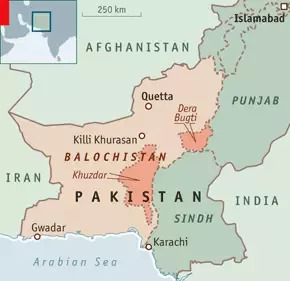
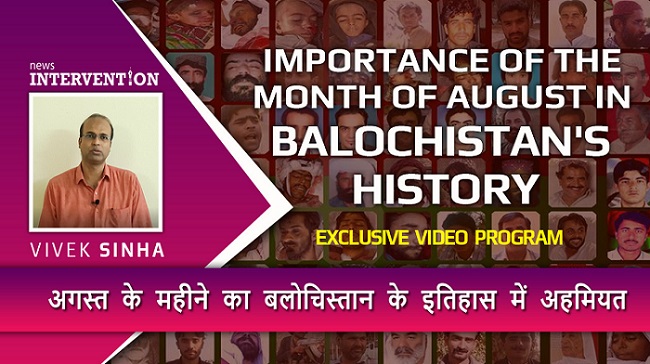
On 11th August 1947, Balochistan became independent but it’s independence was short lived. On 27th March 1948, Pakistan occupied Balochistan and continues to occupy it till today. August 11 is celebrated as Balochistan’s independence day across the world. However, the month of August is also important in Balochistan’s history due to numerous atrocities committed by Pakistan during this month. Watch the video report to understand more.

Click on the link to watch the video report

National Security: Deterrence in the Indian Context

You can distil deterrence down to two factors: capability and will—Chris Gibson.

In my article “Changing Dynamics of Deterrence in International Security and Strategic Paradigm”, which was Part-1, I explained the enduring and timeless nature of deterrence as a state policy, as also the changes in scope, dimensions and domains, where deterrence is more effective at the strategic and existential level rather than at tactical level. Some nations led by statesmen/strong leaders have always been ingenuous and creative enough to gain their objectives by operating below the red lines of adversary’s deterrent action. In this concluding Part-2, we will examine the contours and strategic compulsions of deterrence as applicable to India. Nations have their vision and aspirations and want to find their legitimate place amongst the comity of nations.

India the ancient, proud civilization too aspires for the same and we are destined by our geography, size, population, resources and history to be a great power in the world order, for which deterrence is an essential ingredient. While we understand the universal dictum of Lord Palmerston ‘in international relations, there are no permanent friends or enemies, only permanent interests’, it is also no secret that our adversaries in the near future are collusive China and Pakistan. 

China’s concept of local wars under modern high technology conditions envisions “a localized, short duration and high-intensity conflict using technologically advanced weapons for both conventional and asymmetric combat, including the much hyped ‘Three Warfare’s’ strategy of media, psychological and legal. Pakistan leaders feel that, ‘one way to prevent the early use of nuclear weapons is for a conventional capability (they feel tactical nuclear weapons are conventional) to be good enough to deny the adversary valuable strategic assets and maintain a stalemate for a reasonable time, assuming that the conventional pause would give the parties at war and the international community enough time to defuse tensions and negotiate peace’. Adequate space, thus, exists for a limited conventional war in the India-China-Pakistan (all three nuclear weapon states) context. The world’s first limited conventional conflict between two overt nuclear powers – USSR and China took place in 1969. This conflict could have led to the use of nuclear weapons, but after two weeks of clashes, the conflict petered out. The Kargil War of 1999 between India and Pakistan demonstrated the application of limited war between two nuclear power countries wherein India evicted Pakistani intrusions exercising strategic military restraint.

Deterrent Determinants

Glen Snyder an important scholar of international relations theory and security studies has explained that “power values are of three major kinds: strategic, deterrent and political. Strategic value is a function of the war-making potential; deterrent value is an attribute primarily of the act of responding to aggression, and political value is the effect of a response, and of its direct consequences on the alignment or attitudes of adversaries”. It implies that power values are extrinsic and their value lies in their contribution to intrinsic values. Deterrent Value amounts to establishing and maintaining a reputation. Extrapolating these values, the various determinants in the Indian context can be clubbed as follows:

  • Strategic Value Determinants include geography, economic strength, population, natural resources, and strategic culture.
  • Deterrent Value Determinants comprise nuclear, military and technological capability.
  • Political Value Determinants comprise foreign policy and diplomacy including international alliances/partnerships, leadership, smart power, and Indian diaspora.

Threat Assessment and Concomitant Deterrence

It is quite obvious that India’s power values comprehensive national power (CNP) is on the ascendant and all three values will accelerate post COVID-19, and based on our firm and resolute response to China’s current aggressive posturing and deployment along the LAC. Naturally, India needs to build deterrence capabilities commensurate to its stature in Asia and the world, especially against known and envisaged threats, including the low probability of facing a Two Front challenge.

Probability of China using the maritime zone in IOR (Indian Ocean Region) or even using territories of our immediate neighbours cannot be ruled out. Here too, our deterrent potency will come into play based on which our attackers and other neighbours will respond. Our strategic balancing with the rest of the world by bilateral and multi-lateral alliances/partnerships (QUAD, BRICS, SCO, USA, Russia, Australia, Japan) in multi-domain verticals (political, diplomatic, economic, trade, HADR and importantly military) will impact the adversary decision-makers’ perception and political will; the potentially long-lasting, harmful post-conflict multi-domain effects of taking on India. Allied and partner contributions to the joint fight are significant. For example, in case of an all-out war, USA, Japan and Australia could provide India peripheral security, fly additional combat and support sorties, supplement naval presence, stage forward specialized special and manoeuver forces, provide surge logistics capability including supply of critical and destructive weapon and munition systems, supplement ISR
(intelligence, surveillance and reconnaissance) inputs, to name just a few. They could however, stay short of providing ‘kinetic support’. These actions contribute significantly to deterrence, force protection and overall operational success. Even when military intervention of any of our strategic partners including USA is very tenuous at best, we must realise the unique potency of US and allies combined Global Strike capabilities: their nuclear and armed forces contribute uniquely and fundamentally to deterrence, through their ability to threaten to impose costs and deny benefits to an adversary in an exceedingly rapid and devastating manner (practice of imposing trade sanctions if adversary does not cooperate is a deterrent operation which has met with mixed success).

Reacting to recent Chinese aggression along our LAC, actions of USA to deploy two aircraft carrier groups in South China Sea, and thinning of troops from Philippines ostensibly to be employed elsewhere (India), and statement of kinetic support emanating from White House are significant. Many other countries have openly supported India like Australia, France, Germany. The above are clear manifestation of Indian deterrence capabilities using all three determinants stated above. China and Russia too possess such strike capabilities and even USA feels threatened and insecure. Knowing our main adversaries, they can and will operate with and through proxies, and attempt to achieve their strategic and operational goals below the threshold of armed conflict.

India faces the full spectrum of security threats across domains; proxy, hybrid, sub-conventional or low intensity conflict, 4G, conventional (localized to full), nuclear including the newer domains of space, cyber, water, resources (entire gamut), specially from collusive and collaborative partners China and Pakistan with some other neighbouring nations joining in. We have a rather tenuous ceasefire agreement with Pakistan from November 2003 (renewed in 2018) which in the last five years has been broken more often than not. That Pakistan is conducting a state sponsored proxy war since late 1980s is now internationally accepted. Pakistan’s strategic aim is to carry out destabilizing activities in India short of war.

Pakistan controls the violence levels in J&K and mixes it with agitational tactics and exploitative socio-political manoeuvrings. Pakistan’s acts of terrorism have spread pan-India. From a policy of strategic restraint, India is beginning to propagate and practice a more aggressive strategy to raise the cost for Pakistan’s mainstream and Pakistan Army.

Pakistan has an (some say deliberately ambiguous and irrational) undeclared nuclear policy aimed specifically at India, with the fastest growing insecure, nuclear arsenal and is developing tactical nuclear weapons (TNW) to close the conventional war space with India, as per its perception. Pakistan’s nuclear architecture is aimed at providing full spectrum of deterrence and prevent second strike capability to India. We need to ask ourselves, ‘will war stop Pakistan from continuing proxy war and make a weak Pakistan both militarily and economically a more dangerous neighbour than before the war’. The now permanent, strategic collusivity with China has brought in a whole new equation, with a much more expanded assistance in multi-domain expected from China in case of an Indo-Pak war. A worrying aspect is the increasing degree of inter-operability between China and Pakistan in soft and hard power (military and non-military) spheres which is being generated. This will be played out in any future conflict. The equations are changing. Even if China does not intervene militarily, unlike the earlier four wars China will carry out more focussed, effective but non-military MDW, and mobilise her forces (simulate/indulge in some border activities) along the LAC along with its PLAAF and PLAN, preventing our repositioning of forces (Army and Navy) from the Northern to the Western borders, diluting our offensive capacity and capability prohibitively.

We should be wary of the China-Russia strategic and security partnership mainly to counter USA and its Western allies. On top of the strategic encirclement (both continental and maritime) of India by China, Russia is also increasing strategic mating with Pakistan, and the Russia-China-Pakistan triangle is getting involved exclusively (except for Iran) with Afghanistan. While India enjoys a special relation with Russia, a faltering USA and rising China, coupled with few immediate neighbours like Nepal, Myanmar toeing Chinese line, creates a clear and present danger and serious strategic and security ramifications for India.

The Indian political and military leadership carries out regular net assessment exercises regarding potential adversaries, and constantly reviews the deterrent capabilities which needs to be put in place against potential adversaries specially against a probably two and a half front threat against a collusive China-Pakistan. For details of the relative comprehensive net assessments including military, of India and our adversaries, and a likely scenario for a Two and a Half Front War please read up on the links given in the end-notes.

In relation to Pakistan, we face a peculiar problem of whom to deter! If Pakistan suffers significant conventional losses or loss of territory, it may assess that escalating the conflict by employing weapons of mass destruction, could recapture the initiative or drive policy makers to the negotiation table to end the conflict on more favourable terms. Pakistan may also use tactical nuclear weapons if presented an appropriate target contributing to the attainment of operation or strategic objectives. This brings us to the strategic nuclear dilemma (faced by the major powers against each other like US, China and Russia) that India should not risk escalation for Pakistan to reach a perceived “use it or lose it” situation. India therefore, must conduct a very effective influence campaign against Pakistan and to the world, about the dangers of employing WMD, minimize vulnerabilities, and demonstrate the ability to continue operations if attacked.

If deterrence fails to preclude a tactical weapon of mass destruction or disruption attack, our influence operations must ensure isolation of Pakistan internationally and regionally. The option of exercising our stated nuclear policy is a constant. When it comes to non-state actors and terrorist organisations, it’s a different ball game. They differ in their susceptibility to our efforts to credibly threaten cost imposition. They have different goals/objectives, different values, and they employ different means to achieve them. Since India does not believe in using a hammer to kill a fly which is why planning and preparing for deterrence operations against specific targets (nation, non-state actors like corporates, agencies, terrorist organisations or even individuals) is important.

A terrorist organization relies on the following for its survival; organization’s leadership strata and commander; its military capability for carrying out terrorist attacks; its economic and financial support base; and the network of alliances with other organizations and states that provide support in the form of arms and financing. India must achieve deterrence by demonstrating our will to use military force to inflict damage on these assets. Our Army has identified the same, and turned pro-active, but been only partially successful in following this deterrence concept in entirety.

China is a past master and strong advocate of ‘unrestricted warfare’ in which deterrence forms a key component, and its currently engaging India in competition 24X7 to ensure that our comprehensive national power (CNP), strategic growth and space remains confined and restricted. In addition, China is increasingly discarding the rules based international system, and conventional defined norms of international behaviour and its opaque strategic thinking and decision making makes deterrence more difficult. Recently President Xi asked the PLA to prepare for war, and if China sees its rise plateauing or starting to decline, it might strike rather than wait. These proclamations should be taken very seriously by our leaders, and deterrence measures must be planned and put in place both military and non-military. While focussing on China and Pakistan we must not ignore other nations (friends or adversaries alike), and also address non-state actors on equal priority.

Nuclear Deterrence

Both China and India have been responsible, mature nuclear powers and both proclaim a no first use policy. Recently, there are a plethora of articles emerging from China (official and unofficial), questioning no first use or providing different interpretations, creating a sense of ambiguity. As an emerging nuclear power which is still striving to attain a robust second-strike capability, India needs to act expeditiously as we are dangerously behind the big three (US, China, Russia) in R&D and application of niche technologies. Our nuclear policy (no first use), massive retaliation if attacked by NBCW has stood the test of time. There is talk of urgent review which may not be bad idea for creating ambiguity, but ‘there is nothing in the present doctrine that prevents India from responding to a nuclear attack’.

Main Ingredients of India’s Military Deterrent Capability

We need to carry out a more realistic threat assessment of a probable two and a half front conflict scenario, leading to ‘theatrisation’, and fresh realignment, redeployment and repositioning of forces, with a stronger bias towards our Northern Borders. This act, will in itself send a strong military and deterrent message, may prevent any misadventure, as also strengthen our defensive and offensive response. Other pivotal military deterrents would be a credible nuclear triad with second strike capability (China has it and Pakistan claims full spectrum capability); strategic military/security alliances; capabilities of conventional ICBM/IRBM missile and rocket artillery; strategic lift; robust C5I2SRT (command, control, communications, computers, cyber, intelligence and information, surveillance, reconnaissance and targeting); BMD (ballistic missile defence); domination of Indian Ocean Region; and limited offensive multi-domain capabilities to provide credible deterrence and punitive deterrence against China and Pakistan respectively.

Conclusion

Our goal is to achieve punitive and credible deterrence capability against Pakistan and China respectively. While it will be a challenge, India has the capabilities and capacities to fight a two front war and ensuring a stalemate, which will be a strategic victory, with grave consequences to the aggressors. We have now entered the complex world of multi and cross domain competition and deterrence which needs to be developed and synergised at the apex level; PM/PMO – Cabinet Committee on Security (CCS) – NSA – Ministries – CDS – Service Chiefs and concerned agencies involved. At the military sphere, once the political directive (National Security Strategy) has been promulgated, strategic military deterrence will be planned and coordinated by the CDS and service chiefs, strategic at Services HQ, operational by Theatre Commanders. Deterrence building is happening independently and intrinsically by all domain holders but it needs to get institutionalised, specially the non-military domains. If US intervention to retain global supremacy and protect a liberal rules-based world order is not considered hegemonistic, India too needs to think, prepare, plan and execute strategy to dominate its area of influence and interest.

Even if we develop adequate multi-domain deterrence capabilities, a key ingredient is ‘Reputation’ (willingness to use deterrence arsenal including military, when nation’s sovereignty and integrity is challenged; a la Israel) to use it when national security is at stake. Admittedly our current deterrence value has not prevented nations from impinging on our security with tactical manoeuvres. I am sure we will show our steel when it comes to existential and strategic issues. This truly is a defining moment in India’s history where we face a direct threat from China and Pakistan and some neighbouring countries. This is the time to stand tall, proclaim our red lines and show credible intent, resolve and wherewithal to use our multi-domain deterrent capabilities especially military to ensure that red lines stated (LAC positions as on April 2020) if crossed will be restored by all means at our disposal. Concurrently India needs to further build deterrence capabilities and our reputation, national resolve and will to fight if necessary. In a sense ‘deterrence has become a victim of its own success’. India must rethink its deterrence strategy in changing geo-political and strategic environment including psychology of decision making. Even with diminishing returns enhanced multi-domain ‘Deterrence’ becomes the first priority for India.

“I don’t believe in War, I believe in the principle of Deterrence,” Bashar al-Assad.

Lowy Institute, Australia, Power Index; https://power.lowyinstitute.org/ ;
South Asia Monitor “India must prepare for a multi-domain war”, https://southasiamonitor.org/spotlight/india-must-prepare-multi-domain-war
South Asia Monitor, “India-China standoff: Need to be prepared for two-and-half front war (Part III of three-part series)”
https://southasiamonitor.org/spotlight/india-china-standoff-need-be-prepared-two-and-half-front-war-part-iii-three-part-series

Christian Sorensen on Measuring and Ranking the Highly Intelligent

Christian is a Philosopher that comes from Belgium. What identifies him the most and above all is simplicity, for everything is better with “vanilla flavour.” Perhaps, for this reason, his intellectual passion is criticism and irony, in the sense of trying to reveal what “hides behind the mask,” and give birth to the true. For him, ignorance and knowledge never “cross paths.” What he likes the most in his leisure time, is to go for a walk with his wife.

Scott Douglas Jacobsen: I wanted to cover some of the facts of the measurement of intelligence within the confines of the most tested and studied facets of intelligence with that which comes by the title “general intelligence” via measurement in the “intelligence quotient” or “IQ” without the psychometry or the theory, but, rather, the generally accepted facts and the notion, creation, and re-imagining of the ‘listings.’ Sociologically, why is there a fascination with ranking the who’s who of the high-IQ?

Christian Sorensen: Although it is effective that there are fewer women than men on the right extreme of the curve, I think that the fascination for high-IQ, statistically speaking, occurs much more frequently in men than in women, since it is typically related to masculine behaviours that through comparative and over-compensatory mechanisms, associated with competitiveness, seek social acceptance and recognition with a constant effort to publicly attract attention, which in turn is sustained and drifted by a sensible exhibition of what is owned, in the sense of something endowed with dimensions. Therefore it could be said, that literally what matters over anything else related to high intelligence, has to do with how large is the IQ, as a sign that symbolizes power, and which ultimately in my opinion, what intends to cover up, is the need to demonstrate sexual potency, by repressing at the same time, the homosexual feelings of attraction towards other men, and of pleasure derived for being attractive to individuals of the same gender.

Jacobsen: What are some of the serious efforts at compiling real score identities?

Sorensen: I think that the efforts, made by certain societies such as Triple Nine, Mensa and WGD, for verifying the validity of the scores, and demanding in the case of the first two, that these should be exclusively associated with professional measurement instruments.

Jacobsen: What are some considerations in listing a who’s who of the high-IQ world?

Sorensen: I think that it is necessary to verify the veracity of the documents provided, and to exclusively accept as valid, the psychometric reports issued by qualified professionals.

Jacobsen: What are the ethical issues in having such a ranking?

Sorensen: I think that depends on the world, and of what the world expects or needs from someone who has such a ranking, therefore in this context, I believe that it is the necessity that creates the ethical value, and not the latter who regulates the former, in consequence the dead one, I endorse it to someone else.

Jacobsen: There are a ton of online sources via articles including “The 40 smartest people of all time,” “30 Smartest People Alive Today,” “8 People with Higher IQs Than Einstein,” “Here Is The Highest Possible IQ And The People Who Hold The World Record,” “25 Highest IQ’s Throughout History,” “The 50 Greatest Living Geniuses,” “21 Celebrities With Surprisingly High IQs,” “World’s Most Intelligent People 2010 – Intelligent People – Highest IQ,” “Feeling accomplished yet? Here is a list of people whose IQ levels have created records time and again,” “Who has the highest recorded IQ of all time?,” “Of All Things: Which president had the highest IQ?,” “Talk About Hidden Genius: These Are The Celebrities Boasting The Highest IQs,” “24 of the smartest people who ever lived,” “Famous Historical Genius IQs,” “The Smartest and Least Brainy Presidents, by IQ Scores,” “An 11-Year-Old Just Earned the Highest IQ Score Possible,” “What Is The Highest IQ Possible You Can Achieve?,” “What is the highest IQ ever measured in a human?,” “Dr Evangelos Katsioulis has the World’s Highest IQ,” “The Time Everyone “Corrected” the World’s Smartest Woman,” “The 13 Presidents with the Highest IQ Scores,” “Who Has the Highest IQ in the World? 35 People Who Are Even Smarter Than Einstein,” “​TOP 10 PEOPLE HAVE HIGHEST IQ SCORES IN THE WORLD (P.2),” “Meet Marilyn Vos Savant, The Woman With The World’s Highest IQ,” “The World’s 50 Smartest Teenagers,” “These 26 Celebrities Have The Highest IQ In Hollywood… #17 Is Pretty Much A Genius!,” “10 People With The Highest IQ In The World,” “The Man With The Highest IQ In The World Doesn’t Think He’s Very Smart At All,” “Top 12 People with Highest IQ in the World,” “Top 10 Women with Highest IQ in the World,” “The Massive List of Genius – People With the Highest IQ,” “Highest IQ Scores in History,” “A 3-year-old boy has just become the youngest member of Mensa UK, the largest international high IQ society,” and others.  It comes down to partial and questionable listings, individual profiles, children, celebrities, and American presidents. Then it’s a smattering of probably truly more obscure materials. Outside of the straight gossip-level journalism, there are a number of listings such as GENIUS High IQ Network, Gifted High IQ Network, Hall of IQ scores, HRIQ Ranking List, Mahir Wu Ranking List, VeNuS Ranking List, World Famous IQ Scores, World Genius Directory, World Highest IQ Scores, GFIS IQ List, WIQF Listing, and Real IQ Listing. GENIUS High IQ Network only had 3 mainstream intelligence test scores listed out of 38 entries:

IQ 173 sd15 W. M. Fightmaster USA WAIS-R 4.87 www.linkedin.com/in/william-fightmaster

IQ 166 sd15 Thomas Hally Mexico WAIS-III 4.40 www.facebook.com/thomas.hally

IQ 161 sd15 Kota Akishige Japan WISC-IV 4.07 www.facebook.com/kota.akishige

Gifted High IQ Network only had 4 mainstream intelligence test scores listed out of 106 entries:

IQ 173 sd15 W. M. Fightmaster USA WAIS-R 4.87 www.linkedin.com/in/william-fightmaster

IQ 166 sd15 Thomas Hally Mexico WAIS-III 4.40 www.facebook.com/thomas.hally

IQ 161 sd15 Kota Akishige Japan WISC-IV 4.07 www.facebook.com/kota.akishige

IQ 135 sd15 Dragan Mlakic B&H RAPM II 2.34 www.facebook.com/NoNamedReal

Hall of IQ Scores only had 2 mainstream intelligence test scores listed out of ~157 entries:

Juan Carlos Delgado, Venezuela, WAIS IV, 155+

David Gerardo Espinoza Aviles, Mexico, WAIS IV, 155+

HRIQ Ranking List only had 1 mainstream intelligence test score listed out of 215 entries:

Christian Sorensen      Wechsler Adult Intelligence Scale – Revised (1981)   185/185+

Mahir Wu Ranking List had 0 mainstream intelligence tests out of 35 entries. VeNuS Ranking List on a different metric than singular score submissions from alternative and mainstream intelligence tests. World Famous IQ Scores lists tests with more than 3 test takers:

Numerus Delight
Numiracle
Vermentary
Verllectual
Vercenthon
Daster
Einplex
Elementary
FREE Fall
FREE Fall Part I
FREE Fall Part II
HI-Qlass
Lipt
LSHR
LSHR Classic
LSHR Light
NSE
Numerus
Numerus Classic
Numerus Light
Numerus Light 2
Pert
Simtollect
SPEED
Triplex
Triplex Light
WIC 2014

9I6
AGLT
Algebrica
Asterix
Asteroid
Common Sense
ETHER
EZIQ
FIQURE
GENE Verbal I
GENE Verbal II
GIFT Verbal I
GIFT Verbal II
GIFT Verbal III
GIFT Verbal IV
Gigi Pro Certified
Hieroglyphica
IO
LAW
LexiQ
L’Orange
LS 24
LS 36
Lux25
Mach
Mathema
NGT-B
NGT-F
NGT-X
NIT Abstract
NIT Numerical
NIT Spatial
NIT Verbal
NPRT
PerspectIQ
PerspectIQ Light
prNt
SATURN
Sequentia Numerica I
SLSE 48
SLSE I
SLSE II
SUN
Test For Genius
TLMT
VISION
Warp
WIQ
WIQ-II
WITT
WordIQ
World Intelligence Test

Then they list the tests with less than 3 test takers:

12345
AIR-16MC
AIT
Alchemix
Analogies #1
Alpha-Num 1
A Paranoiac’s Torture
ASIT
ASTER
BALZAC
bysl3x
Callidus
CFIT-S3
C.F.N.I.T
Comix
Concep-T
COSMIC
CUBE
E2H26
ESP
Female Intelligence Test
Flux
FRT-A
FRT-B
FSIA
GENE Numerical III
GENE Numerical IV
GENE Verbal III
GENE Verbal IV
GET Verbal
GIFT Numerical III
G Test
IQ-T
Logix
Mathodica 22
M-CSNA
MCST 32
NGT-F Short
Ninja
NIT Form I
NIT Form II
NIT Logical
NPRA 36
NUMDOT
PULSAR
Qoymans MC #4
RedBlue
Register
RIDDLES
ROTOR
S, T & H
SBM26
ScorPIonX I
ScorPIonX II
SEQS I
Spat -10
Star Cluster
TERO41
TETR-IQ
Vault
Verba 66
Verbatim
W.A.I
WIC 2016
WITTY
X Test
X&Y Test
Xpwmatrix
XV Lingua
Yjac

The World Genius Directory lists 27 mainstream intelligence test entries out of 383:

185+ Christian Sorensen, Belgium, WAIS, www.isi-s.iqsociety.org

185 Kirk Kirkpatrick, United States, Stanford-Binet, www.facebook.com/macrhino

180+ Dr Evangelos Katsioulis, Greece, WAIS, www.katsioulis.com

175 Takahiro Kitagawa, Japan, WAIS, www.facebook.com/marubake.no.shiwaza

175 Susumu Ota, Japan, WAIS, www.facebook.com/susumu.ota.5

166 Thomas Hally, Mexico, WAIS, www.booksofintelligence.com

164 Dr Manahel Thabet, Yemen, Stanford-Binet, www.smarttipsconsultants.com

164 Iakovos Koukas, Greece, WAIS, http://www.facebook.com/iakovos.koukas

[Ed. Added on September 13, 2020, based on a personal email from Wagner-Damianowitsch:
163 Stephan Wagner-Damianowitsch, Serbia, WISC, www.facebook.com/s.m.wagner.damianowitsch.]

163 Dr Jason Betts, Australia, WAIS, www.emeraldalchemy.com

161 Geoff Hammond, United States, WAIS, www.csiinternational.com

160 Rudolf Trubba, Czech Republic, RAPM, http://www.facebook.com/rudolf.trubba

160 Tom Imondi, United States, WAIS, www.facebook.com/tommcimondi

160 Carlos Simões, Portugal, RAPM, http://www.cpsimoes.net

157 Michael Sumners, United States, WAIS, www.facebook.com/michael.sumners.31

155 Julio Machado, Brazil, WAIS, www.julio.machado.info

155 Patrick O’Shea, United States, WAIS, www.thethousand.com

152 Arturo Ruiz, Mexico, RAPM, http://www.about.me/jart

151 Constantí Cabestany, Spain, WAIS III, www.rizomatismos.tumblr.com

151 Jason Robért, United States, WAIS, www.facebook.com/jason.r.robert.7

150 Jonathan Som, France, WAIS, http://www.facebook.com/jonathan.som

150 Jeffery Ford, United States, WAIS, www.facebook.com/HighOnIQ

149 Stephen Murray, Australia, WAIS, www.taotiger.com

146 Denis Walch, Austria, WAIS, www.facebook.com/Denis.Walch92

141 Jakub Oblizajek, Poland, WAIS, http://www.facebook.com/jakub.oblizajek

135 Tony Sparacino, United States, WAIS, http://www.facebook.com/tsparacino

135 Simon Rebsdorf, Denmark, RAPM, http://humanlifelab.wordpress.com

135 Dragan Mlakić, Bosnia & Hercegovina, RAPM, www.facebook.com/NoNamedReal

The World Highest IQ Scores lists some alternative tests:

ALGEBRICA

ANOTELEIA 44

Blue test

ESOTERICA

HIEROGLYPHICA

L.H.A.S.S.O. 31

Logical sequences assessment

Logima strictica 36

Logicaus strictimanus 24

Ls 60

Lshr Light

MATHODICA 22

Numerus

Numerus Classic

Numerus Light

Strict logic sequence examination I

VERBA 66

World intelligence test

XVLINGUA

Zen high range IQ test

GFIS IQ List has 0 mainstream intelligence tests out of 142 entries. WIQF Listing is defunct. Real IQ Listing uses a differential identity metric with “True IQ.” That is to demonstrate, in general, the ‘listings’ or the rankings of the highest measured IQ scores consist mostly or entirely of alternative intelligence test scores rather than mainstream intelligence test scores, i.e., reduced levels of reliability and validity, while the World Genius Directory demonstrates the highest number of mainstream intelligence tests with inclusion; even there, the vast majority of the intelligence test metrics taken for inclusion remain alternative tests. All “alternative tests” listed in some consist of lists of alternative tests and the relevant high scorers with some having less than 3 test takers per person. Thus, this provides one consistent image of the high-range testing environment in terms of the rankings or ‘listings.’ What does this state about the high-range testing environment to you?

Sorensen: I think that is a jungle with a rich multicolored flora and fauna, which although it is striking, due to the variety of exotic and chromatic species that are exhibited, is somewhat dizzying and saturating. In addition and concretely speaking, from a semantic methodological point of view, in my opinion the vast majority of the high-range testing environment scores, regardless of how spectacular they may seem, and despite that they can eventually represent the measurement of something else, they actually aren’t valid measurements of IQ.

Jacobsen: What does this state about the rankings to you?

Sorensen: That the only ranking that has objective validity, is the one above, and if it is expanded, it should be done based exclusively on the criteria that were followed to carry it out.

Jacobsen: If we take only the World Genius Directory and the Wechsler Adult Intelligence Scale, or the WAIS or the WAIS III, the listing, ranking really, becomes this:

185+ Christian Sorensen, Belgium, WAIS, www.isi-s.iqsociety.org

180+ Dr Evangelos Katsioulis, Greece, WAIS, www.katsioulis.com

175 Takahiro Kitagawa, Japan, WAIS, www.facebook.com/marubake.no.shiwaza

175 Susumu Ota, Japan, WAIS, www.facebook.com/susumu.ota.5

166 Thomas Hally, Mexico, WAIS, www.booksofintelligence.com

164 Iakovos Koukas, Greece, WAIS, http://www.facebook.com/iakovos.koukas

163 Dr Jason Betts, Australia, WAIS, www.emeraldalchemy.com

[Ed. Added on September 13, 2020, based on a personal email from Wagner-Damianowitsch:
163 Stephan Wagner-Damianowitsch, Serbia, WISC, www.facebook.com/s.m.wagner.damianowitsch.]

161 Geoff Hammond, United States, WAIS, www.csiinternational.com

160 Tom Imondi, United States, WAIS, www.facebook.com/tommcimondi

157 Michael Sumners, United States, WAIS, www.facebook.com/michael.sumners.31

155 Julio Machado, Brazil, WAIS, www.julio.machado.info

155 Patrick O’Shea, United States, WAIS, www.thethousand.com

151 Constantí Cabestany, Spain, WAIS III, www.rizomatismos.tumblr.com

151 Jason Robért, United States, WAIS, www.facebook.com/jason.r.robert.7

150 Jonathan Som, France, WAIS, http://www.facebook.com/jonathan.som

150 Jeffery Ford, United States, WAIS, www.facebook.com/HighOnIQ

149 Stephen Murray, Australia, WAIS, www.taotiger.com

146 Denis Walch, Austria, WAIS, www.facebook.com/Denis.Walch92

141 Jakub Oblizajek, Poland, WAIS, http://www.facebook.com/jakub.oblizajek

135 Tony Sparacino, United States, WAIS, http://www.facebook.com/tsparacino

(Source: World Genius Directory of Jason Betts.)

If we take only the Stanford-Binet or the SB from the World Genius Directory, we come to this two-part ranking:

185 Kirk Kirkpatrick, United States, Stanford-Binet, www.facebook.com/macrhino

164 Dr Manahel Thabet, Yemen, Stanford-Binet, www.smarttipsconsultants.com

(Source: World Genius Directory of Jason Betts.)

If we take only the Raven’s Advanced Progressive Matrices, or the RAPM, from the World Genius Directory, we get the ranking:

160 Rudolf Trubba, Czech Republic, RAPM, http://www.facebook.com/rudolf.trubba

160 Carlos Simões, Portugal, RAPM, http://www.cpsimoes.net

152 Arturo Ruiz, Mexico, RAPM, http://www.about.me/jart

135 Simon Rebsdorf, Denmark, RAPM, http://humanlifelab.wordpress.com

135 Dragan Mlakić, Bosnia & Hercegovina, RAPM, www.facebook.com/NoNamedReal

(Source: World Genius Directory of Jason Betts.)

If we combine these for the most reliable and validated mainstream intelligence tests – the WAIS, the SB, and the RAPM, we create the following revised ranking:

185+ Christian Sorensen, Belgium, WAIS, www.isi-s.iqsociety.org

185 Kirk Kirkpatrick, United States, Stanford-Binet, www.facebook.com/macrhino

180+ Dr Evangelos Katsioulis, Greece, WAIS, www.katsioulis.com

175 Takahiro Kitagawa, Japan, WAIS, www.facebook.com/marubake.no.shiwaza

175 Susumu Ota, Japan, WAIS, www.facebook.com/susumu.ota.5

166 Thomas Hally, Mexico, WAIS, www.booksofintelligence.com

164 Dr Manahel Thabet, Yemen, Stanford-Binet, www.smarttipsconsultants.com

164 Iakovos Koukas, Greece, WAIS, http://www.facebook.com/iakovos.koukas

163 Dr Jason Betts, Australia, WAIS, www.emeraldalchemy.com

[Ed. Added on September 13, 2020, based on a personal email from Wagner-Damianowitsch:
163 Stephan Wagner-Damianowitsch, Serbia, WISC, www.facebook.com/s.m.wagner.damianowitsch.]

161 Geoff Hammond, United States, WAIS, www.csiinternational.com

160 Rudolf Trubba, Czech Republic, RAPM, http://www.facebook.com/rudolf.trubba

160 Tom Imondi, United States, WAIS, www.facebook.com/tommcimondi

160 Carlos Simões, Portugal, RAPM, http://www.cpsimoes.net

157 Michael Sumners, United States, WAIS, www.facebook.com/michael.sumners.31

155 Julio Machado, Brazil, WAIS, www.julio.machado.info

155 Patrick O’Shea, United States, WAIS, www.thethousand.com

152 Arturo Ruiz, Mexico, RAPM, http://www.about.me/jart

151 Constantí Cabestany, Spain, WAIS III, www.rizomatismos.tumblr.com

151 Jason Robért, United States, WAIS, www.facebook.com/jason.r.robert.7

150 Jonathan Som, France, WAIS, http://www.facebook.com/jonathan.som

150 Jeffery Ford, United States, WAIS, www.facebook.com/HighOnIQ

149 Stephen Murray, Australia, WAIS, www.taotiger.com

146 Denis Walch, Austria, WAIS, www.facebook.com/Denis.Walch92

141 Jakub Oblizajek, Poland, WAIS, http://www.facebook.com/jakub.oblizajek

135 Tony Sparacino, United States, WAIS, http://www.facebook.com/tsparacino

135 Simon Rebsdorf, Denmark, RAPM, http://humanlifelab.wordpress.com

135 Dragan Mlakić, Bosnia & Hercegovina, RAPM, www.facebook.com/NoNamedReal

(Source: World Genius Directory of Jason Betts.)

In fact, one could separate the alternative intelligence tests from the mainstream intelligence tests. If working from all of the aforementioned rankings, while assuming reliability of the approval of the validity of the individual and the identification of the score on the mainstream intelligence test, we can incorporate a hybrid, strategically truncated, and revised high-range intelligence test score listing with greater validity than any in modern existence because of the far stronger validity and reliability and scientific bases of the mainstream intelligence tests compared to the alternative intelligence tests, i.e., a combination, in tactical parts, of the GENIUS High IQ Network ranking, Gifted High IQ Network ranking, Hall of IQ Scores, HRIQ Ranking List, Mahir Wu Ranking List, and the World Genius Directory, as follows:

185+ Christian Sorensen, Belgium, Wechsler Adult Intelligence Scale – Revised (1981), www.isi-s.iqsociety.org

185 Kirk Kirkpatrick, United States, Stanford-Binet, www.facebook.com/macrhino

180+ Dr Evangelos Katsioulis, Greece, WAIS, www.katsioulis.com

175 Takahiro Kitagawa, Japan, WAIS, www.facebook.com/marubake.no.shiwaza

175 Susumu Ota, Japan, WAIS, www.facebook.com/susumu.ota.5

173 W. M. Fightmaster, USA, WAIS-R, www.linkedin.com/in/william-fightmaster

166 Thomas Hally, Mexico, WAIS, www.booksofintelligence.com

164 Dr Manahel Thabet, Yemen, Stanford-Binet, www.smarttipsconsultants.com

164 Iakovos Koukas, Greece, WAIS, http://www.facebook.com/iakovos.koukas

163 Dr Jason Betts, Australia, WAIS, www.emeraldalchemy.com

[Ed. Added on September 13, 2020, based on a personal email from Wagner-Damianowitsch:
163 Stephan Wagner-Damianowitsch, Serbia, WISC, www.facebook.com/s.m.wagner.damianowitsch.]

161 Geoff Hammond, United States, WAIS, www.csiinternational.com

161 Kota Akishige, Japan, WISC-IV, http://www.facebook.com/kota.akishige

160 Rudolf Trubba, Czech Republic, RAPM, http://www.facebook.com/rudolf.trubba

160 Tom Imondi, United States, WAIS, www.facebook.com/tommcimondi

160 Carlos Simões, Portugal, RAPM, http://www.cpsimoes.net

157 Michael Sumners, United States, WAIS, www.facebook.com/michael.sumners.31

155+ Juan Carlos Delgado, Venezuela, WAIS IV

155+ David Gerardo Espinoza Aviles, Mexico, WAIS IV

155 Julio Machado, Brazil, WAIS, www.julio.machado.info

155 Patrick O’Shea, United States, WAIS, www.thethousand.com

152 Arturo Ruiz, Mexico, RAPM, http://www.about.me/jart

151 Constantí Cabestany, Spain, WAIS III, www.rizomatismos.tumblr.com

151 Jason Robért, United States, WAIS, www.facebook.com/jason.r.robert.7

150 Jonathan Som, France, WAIS, http://www.facebook.com/jonathan.som

150 Jeffery Ford, United States, WAIS, www.facebook.com/HighOnIQ

149 Stephen Murray, Australia, WAIS, www.taotiger.com

146 Denis Walch, Austria, WAIS, www.facebook.com/Denis.Walch92

141 Jakub Oblizajek, Poland, WAIS, http://www.facebook.com/jakub.oblizajek

135 Tony Sparacino, United States, WAIS, http://www.facebook.com/tsparacino

135 Simon Rebsdorf, Denmark, RAPM, http://humanlifelab.wordpress.com

135 Dragan Mlakić, Bosnia & Hercegovina, RAPM, www.facebook.com/NoNamedReal

Jacobsen: Does this reflect better the current robust standards of the mainstream intelligence tests more?

Sorensen: I think that it is not possible to sustain that the mainstream intelligence tests, reflect better the current robust standards, since for responding so, it would be necessary to establish a comparative relationship, which in this case is not factible, because what is intended to be compared, in one of the two variables cannot become the subject of comparison, therefore between both, there is nothing to compare. Said in other terms, the fact of alluding to alternative intelligence tests, is a counter-sense, since there aren’t enough evidence available, in order to scientifically establish, that what these instruments are trying to measure, is actually general intelligence and not something else, that their measurements are consistent and objective, and that mathematical positive correlations with professional intelligence tests may be proved. Therefore from my point of view, what is concretely conclusive, is that for nothing that has to do with general intelligence measures, high range tests are somehow any alternative.

Jacobsen: One limitation of this new list comes from the low number of individuals in such a list. Another is the need to utilize materials already in existence. A further limitation is the exclusion of honest efforts, limited though generally sincere, at the development of the high-range testing world. I could envision a two-part effort. One in the rankings of highest mainstream intelligence tests’ highest scorers for individuals who wish to become part of a rank and to further the efforts at the most accurate stipulations of the who’s who in the high-scorer world with a Highest Mainstream Intelligence Test Scores Ranking, where this could clear the air in the real misrepresentations of fact pervasive in most online articles written about this subject matter. Another in the rankings of the highest intelligence tests’ scorers on the alternative tests considered the most reliable and valid within the context of the alternative test world of the high-range with a Highest Alternative Intelligence Test Scores Ranking, where the former becomes represented in the “hybrid, strategically truncated, and revised high-range intelligence listing” above and the latter becomes implied via a combination of the aforementioned names, tests’ test-takers, and lists as well as the exclusion of the “Highest Mainstream Intelligence Test Scores Ranking” scores from the hypothetical “Highest Alternative Intelligence Test Scores Ranking” for distinct and mutually non-overlapping score sets without necessarily non-overlapping name sets. In this, we respect the difference in scientific reliability and validity of mainstream intelligence tests and alternative intelligence tests while incorporating more comprehensive and distinct efforts at the listings of both types of tests, test takers, and scores. Any thoughts on this?

Sorensen: We are not in an ethical sphere, therefore I think that to pretend to judge, whether the efforts of the test developers are honest or not, is irrelevant, since their good intentions may interest God, but in this context they matter little. I consider that these hybrid rankings, that mix test scores of different natures, are like a turkey in front of a dish of goulash, since although neither the components, nor the composition of these are clearly distinguishable, he just eats it, since is used to swallowing everything without chewing nothing when it is tasty.

Jacobsen: To further the development of the testing above 4-sigma, what would help entice individuals to submit alternative test scores and mainstream intelligence test scores to include in the future rankings with greater reliability and validity – power in accurate representation of the reality?

Sorensen: Reality.

Changing Dynamics of Deterrence in International Security and Strategic Paradigm

Deterrence is still fundamentally about influencing an adversary’s decisions. It is about a solid policy foundation. It is about credible capabilities. It is about what a nation and its allies as a whole can bring to bear in both a military and non-military sense. (Paraphrased from C. Robert Kehler’s quote)

Geo-Political Landscape

Change has always been the only constant in this dynamic world, but the rapidity of change in the global security environment accelerated ever since 9/11 and GWOT (global war on terrorism). In today’s globalised environment Thomas Friedman’s iconic book titled ‘The World is Flat’ is even more applicable to security; minor ripples anywhere in the world impacting ALL, whether it be localised conflicts, economic depression or national disasters.

Diminishing comprehensive national power (CNP) and power projection capabilities of USA starting the slide to a multi polar world; emergence of China as a peer competitor; resurgence of Russia under President Putin; state controlled narratives leading to signs of ultra-nationalism; authoritarian governments like Philippines, North Korea, Syria, Turkmenistan; emerging powers with regional aspirations like Iran, Saudi Arabia, South Africa, Nigeria, Turkey, India; rise of religious Islamic fundamentalism with a twist of occupying territory and establishing a caliphate like the ISIL; global warming and climate change indicators; transnational MNCs (multi national corporations) with their own agendas, drug cartels and international crime syndicates, and yes, an international disaster COVID-19 (man-made?) have changed the world scape.

There is a renewed political, ideological, economic and military competition due to globalisation which brought many good practices and developmental growth, but is a major driver of instability and conflict. While threat of full-scale conventional wars has gone down, correspondingly the span of conflict, its complexity, unpredictability, lethality, accuracy, reach and manifesting into many domains have emerged. The physical and nonphysical domains including the cognitive have expanded. There are no front, rear and flanks and there is no place to hide. Many new types of competition/confrontation/warfare have also emerged/emerging like hybrid, media, economic, cyber, network centric, information, electromagnetic spectrum, asymmetric, digital, waged either singularly or cross domains both in peace, no war no peace, or war. From time immemorial, and especially so in today’s troubled times, Deterrence has always been a key component of statecraft of a nation, to maintain internal and external stability and defend one’s integrity and sovereignty.

Definition of Deterrence

Let us first look at the definition of Deterrence, Compellence and Dissuasion. The etymology of the word ‘deterrence’ starts with the Latin word deterre – to frighten from or away. Oxford dictionary defines deterrence as ‘the action of discouraging an action or event through instilling doubt or fear of the consequences’, and compellence as a ‘direct action that persuades an opponent to give up something that is desired. The Complex Deterrence Theory, General Deterrence Theory (Immediate Deterrence Theory as applicable between USA and Russia during Cold War period) and a lot of papers have emerged on Deterrence in recent years.

Applied effectively, deterrence discourages an adversary from pursuing an undesirable action. It works by changing the adversary’s calculation of costs, benefits, and risks. A country can, for instance, convince its opponents that an attack is so unlikely to succeed that it is not even worth the attempt: deterrence through denial. Or a country may convince its opponents that defeating it would be so costly as to be a victory in name only: deterrence through punishment. The third is to encourage adversary’s restraint by convincing the adversary that not undertaking the action will result in an outcome acceptable to him: deterrence through incentives. In all cases, a rational adversary should decide to drop his plans.

Compellence, is active in nature and attempts to alter the status quo, while deterrence, in contrast, is passive and adjusting in nature and maintains status quo. Following the terrorist strike on Indian Parliament in December 2001, India unsuccessfully tried compellence strategy against Pakistan to give up its cross-border terrorism policy, while Pakistan successfully deterred India from waging a war.

Another term used alongside is dissuasion, which derives from the Latin words “dis+suadere, i.e. to advise or persuade against”. Dissuasion covers a wide spectrum of deterring actions other than military deterrence like economic threats and promises. Dissuasion is, therefore, more comprehensive than deterrence. The purpose of dissuasion is “to discourage others from developing capabilities and/or adopting courses of action that are hostile to a nation’s interests. Dissuasion and Deterrence are generally applied together to change the course of action of an adversary, which is how it is applied in this paper.

Deterrence Building and Management

Deterrence theoretically appears quite simplistic, but in its application, it is a vast subject guided by a number of theories, strategies, forms, types and numerous other factors. All countries are managing/ enlarging their strategic space to ensure freedom to conduct multi-domain (trade, influence, diplomacy, markets, security and stability) actions by a judicious combination of building bilateral and multilateral alliances, and increasing their comprehensive national power (CNP), which leads to increased deterrence capability. Deterrence is also enhanced through security cooperation, military integration and interoperability, security and intelligence agencies synergy. The deterrent impact of such cooperation and integration is both political and military in nature. The political impacts the adversary decision-makers’ perception and political will; the potentially long-lasting, harmful post-conflict political and economic effects of taking on a nation (India).

Allied and partner contributions to deterrence are significant. For example, they can provide host nation security, fly additional combat and support sorties, supplement naval presence, provide additional manoeuver forces, supplement ISR (intelligence, surveillance and reconnaissance) inputs, to name just a few. They could stay short of providing ‘kinetic support’ too. These actions contribute significantly to deterrence, force protection and overall operational success. Terrorism, proxy war, information and unconventional warfare (UW) are inherently difficult to attribute and subsequently to punish the originator, and, therefore, difficult to deter. Armed Forces do not possess the capabilities to carry out deterrence operations/deter in all domains specially non-military.

Deterrence requires a national strategy that integrates diplomatic, informational, military, and economic powers. We must develop strategies, plans and operations that are tailored to the perceptions, values, and interests of specific adversaries.

Deterrence strategies and actions must be developed for all phases of confrontation and conflict planning. Deterrence operations must therefore be planned and executed across all domains in concert with other elements of national and international power in order to achieve strategic objectives. A crucial aspect is that successful deterrence is knowledge-dependent and requires the ability to establish and secure communication access to adversaries in order to generate the desired decision outcomes. Human intelligence (HUMINT) naturally is essential in seeking to understand an adversary’s values, culture, decision calculus, risk propensity, and capacity for situational awareness as well as obtaining other information required for effective deterrence. Situational awareness is sine qua non for deterrence where political direction, intelligence community, diplomacy, law enforcement, military, and even economic inputs must get synergised.

Our military capabilities and potential must be visible and known to all as it’s a pivotal ingredient of deterrence. Effective deterrence combines military and non- military means. In some cases, military capabilities may not be an effective tool to deter a particular adversary’s action, making other instruments of power the primary deterrent. Additionally, support of strategic partners should be integrated to enhance deterrence credibility, but deterrence must be viable as a unilateral strategy.

Our deterrence will obviously be challenged by other affected nations. Military options/actions will always remain the final pivotal option to achieve national objectives both proactive and reactive. One very important factor which is being increasingly accepted, is the mind of the leader and people and their likely reaction to deterrence. I would like to re-emphasise here, that deterrence in security parlance covers a very wide spectrum of activities and domains, and not just kinetic employment of armed forces.

Current Ground Realities Regarding Deterrence

The cold war deterrence (mainly nuclear) is no longer effective today, leading to a lot of cynicism about the relevance and even effectiveness of deterrence specially on illiberal nations and terrorist organisations. Even given the tremendous CNP (comprehensive national power) of USA, increasingly many smaller nations from Iran, North Korea, Venezuela, Philippines, Pakistan etc. are thumbing their noses at USA with impunity. Deterrence effect finds it difficult to prevent strategic competition which falls beneath the threshold of traditional military force, allowing these adversaries to make operational gains without tripping the ‘go-to-war’ calculus of the adversary. Russia demonstrated some of these capabilities as part of its operations into Georgia, Crimea, and the Ukraine. North Korea demonstrated its advanced cyber capabilities on November 2014 when they launched a cyber attack on Sony Pictures, and China has declared its Nine-Dash-Line and built artificial islands in the South China Sea to advance its sovereignty claims on vital international waterways that are part of the busiest maritime trade routes in the world, and closer home, the proxy war being waged by Pakistan against India.

Nuclear Deterrence

During the cold war period, deterrence meant nuclear deterrence. Balance of power theory/balance of terror or mutual assured destruction (MAD) constituted conventional wisdom. The growing complexity of international nuclear order and emergence of more nuclear weapon holding states (China, India, Pakistan, North Korea, Israel) threw this theory off kilter. With the emergence of multiple domains, and preferred option of competing and confrontational options short of war, nuclear deterrence is increasingly being challenged by smaller states and even amongst nuclear states (China, Pakistan, India). Disruptive technologies like artificial intelligence (AI), surveillance capabilities, cyber domain, and hypersonic weapons have further eroded deterrence potential of big powers. It has led to creation and deployment of tactical nuclear weapons (TNWs), which some nations assume are part of conventional warfare.

Asymmetry of Stakes vs. Asymmetry of Power

Some adversaries may perceive their stake in the outcome of the crisis/conflict to be great enough to act regardless of adversary’s superiority (mainly military). The differential between stakes in the outcome can undermine the effectiveness of deterrence. Emanuel Adler reasons that the asymmetrical power relationship between or among actors in the international political arena following the Cold War has given rise to the so-called ‘deterrence trap’. A deterrence trap refers to a situation in which a major power is unable to deter the actions of a relatively weaker actor no matter whether the major power threatens the weaker actor with retaliation, or abstains from threatening and appeases the weaker actor. For example, even if America threatens to use force in order to deter Iran from nuclear development, there is a possibility Iran will turn America’s threat against it in order to fortify its position on its nuclear development plan.

Cyber deterrence is difficult to achieve, and deterrence by retaliation, in particular, has been thought of as unworkable. However, recently cyber deterrent forces are being established, including ones that identify the source of cyber-attacks and nations threaten to retaliate against such attacks. USA has stated that major cyber and space/anti-satellite attacks which will attrite its war waging capability will be considered as an ‘act of war’.

Human and Psychological Dimension

Recent studies and insights into the nature of human decision-making raise questions about the very logic of deterrence. As a theoretical concept, deterrence rests on the assumption that where risk is involved, humans act rationally, in the sense that they base their decisions on a cost-benefit calculus and act only when the expected gains outweigh the anticipated costs. Over the past 40 years, however, research in behavioural economics has cast great doubt on this assumption. Humans, it turns out, cannot be counted to always maximise their prospective gains. Even when they do, they are remarkably inept at understanding how the other side – the adversary in a conflict – calculates its own costs, benefits and risks. The reference point for leaders and nations impacts risk taking. After all political and military leaders specially in autocracies/dictatorships are the final decision makers and arbiters.

Decline of Deterrence

Adding to the complexity, the coupling and even deployment of conventional and nuclear delivery systems together (reports of both Russia and China doing so), technologies creating transparency compelling less technologically endowed countries to place their more destructive arsenal at a hair-trigger operational status or adopt the ‘use it or lose it’ concept, creating alarming implications for deterrence. The expansion of domains for confrontation from space and cyberspace to information and sea bed (energy ppls and data cables), and new capabilities and disruptive technologies are making it harder to accurately gauge the military balance of power. As already stated, advances in cognitive science are challenging the theoretical underpinnings of deterrence by upending our understanding of how humans behave in high-risk situations – such as facing the possibility of war. Taken together these developments lead to an inescapable – and disturbing trend. Security strategies built on deterrence may no longer assure peace as USA has found out to its consternation. It won’t be wrong to state that the greatest threat is not a multi-polar world, great power rivalries nor the spread of advanced weaponry, niche technology available commercially off the shelf (COTS) but the Decline of Deterrence.

Conclusion

Deterrence operations appear to be an abstract operation for most of us, but its impact, generates/prevents/initiates defensive or offensive action by the adversary. The US National Security Strategy states “The new strategic environment requires new approaches to deterrence and defense. Our deterrence strategy no longer rests primarily on the grim premise of inflicting devastating consequences on potential foes. Both offenses and defences are necessary to deter state and non-state actors, through denial of the objectives of their attacks and, if necessary, responding with overwhelming force.” One would not be wrong to surmise that today deterrence works better in strategic and existential plane rather than the operational and tactical plane. Possessing deterrence capabilities is an existential necessity for most nations in today’s unstable security environment. I end by quoting the mission statement inscribed in the National Defence Strategy of the USA, which says it all.

“The Department of Defence’s enduring mission is to provide combat-credible military forces needed to deter war and protect the security of our Nation” — National Defence Strategy of the United States of America (signed by Gen James Mattis, Secretary of State).

Civilian killed, woman among 5 others injured in Pak Army firing at Kupwara

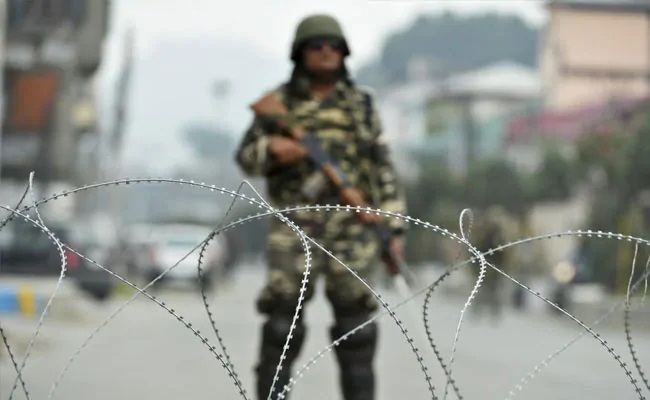
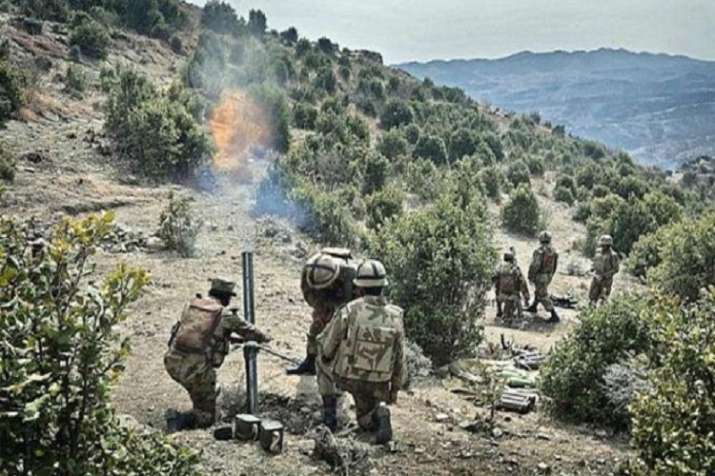
Kupwara/ August 7: A 40 year old was killed and five others injured as Pakistani troops fired mortars and resorted to automatic weapon firing at villages along the Line of Control in Tangdhar and Machhal Sectors of north Kashmir’s Kupwara district. A senior Indian Army officer said that Pakistan Army resorted to ceasefire violation along the LoC by firing small arms and mortars, resulting in injuries to six civilians at separate places. “Army gave befitting reply,” he added.

Official sources identified the injured as Mohammad Arif from Shamspora, Mohammad Yaqoob from Baghballa Kachadiyan and Syed Rafaqat from Kachadiyan, 42-year-old Hamida Begum, Zakir Khan and  Nasser Ahmad Khan, all residents of Rangward. All three injured persons were shifted to hospital.

Later Mohammad Arif (4) succumbed to injuries while condition of the woman is stated to be serious, the officials said.

Meanwhile, army officials here said that Pakistani Army also violated ceasefire along the LoC in Uri by resorting to unprovoked firing.

The Pakistani troops fired small arms and mortar shells in the Boniyar sector of the Uri sector in Baramulla district, they said.

The Army gave a befitting reply to the “unprovoked aggression and retaliated in adequate measure”, they added. However, there were no reports about injury to any person so far. 

The World Intelligence Network 3.13-4.8 Sigma Societies First Review

Third article of the 84 “active” high-IQ societies from the World Intelligence Network between sigmas 3.13 and 4.8. The presentation is cleaner or more polished than the first pass. As noted before, “Those with an interest in the more tedious stuff about various high-IQ societies may have a sliver of interest in this.” To those who may not know, or who have an interest and some knowledge while lacking information here, the President of the World Intelligence Network is Evangelos Katsioulis and the Vice President/Vice-President is Manahel Thabet. The publication for the World Intelligence Network is Phenomenon run by co-editors Lord Graham Powell/Graham Powell and Krystal Volney. The first pass covered the links provided on the listing between sigmas 1.33 and 3.07 (inclusive). Some were labelled “defunct” based on the “first pass” of the examination. The “second pass” examined more of the first pass “defunct” status societies while providing a round-up review of activity and functionality, or paralytic status of the societies. All footnote information from the respective societies’ web domains and publicly available records. The following is the first pass look, as the third article, at the 3.13 to 4.8 high-IQ societies – a reminder of this as a first pass analysis based on the links provided by the World Intelligence Network with a second pass coming in the fourth article:

At 3.13 sigma, the Ludomind Society of Albert Frank and Peter Bentley appears defunct. The SesquIQ Society appears defunct.

At 3.2 sigma, the ISI-Society of Jonathan Wai seems defunct. The Smart People Society seems defunct.

At 3.26 sigma, the Epida Society of Fernando Barbosa Neto seems functional and potentially active with President Andrew Aus, Member Officer Erdem Yilmaz, vice-membership officers Michael Baker and Phil Elauria.[1]

At 3.33 sigma, the sinApsa Society of Marin Filinic appears defunct.

At 3.66 sigma, the SPIQR Society of Marco Ripà appears functional while inactive or on an old platform.

At 3.73 sigma, the Coeus Society of Martin Tobias Lithner looks defunct. The Hall Of The Ancients (HOTA) of Brennan Martin looks defunct. The Vertex Society of Stevan M. Damjanovic appears defunct with a repurposing of the web domain to a more narrow and personal/professional purpose.

At 4 sigma, the Camp Archimedes Society of Fivos Drymiotis and Lestat seems defunct with a website disabled. The Epimetheus Society of Ronald K. Hoeflin appears functional and potentially active, though uncertain on the latter point.[2] The Ergo Society of Luis Enrique Pérez Ostoa seems defunct. The HELLIQ Society of Evangelos Katsioulis appears functional and active, though segmented from the World Intelligence Network web domain as a website.[3] Its presidents have been Marc-André Groulx, Thomas B., Stephan Wagner Damianowitsch, and Evangelos Katsioulis. Its vice-presidents have been Wayne Zhang, Evangelos Katsioulis, Djordje Rancic, D.T., Ph.D., and Thomas B. Its web officers have been Evangelos Katsioulis, Stephan Wagner Damianowitsch, and David Bergman. Its membership officers have been Evangelos Katsioulis, Bruno Alpi, and Tan Kaijie. The Prometheus Society of Ronald K. Hoeflin looks functional, active, and longstanding. Its current President is Maco Stewart. Its current Editor position is vacant. Its current Membership Officer is Maco Stewart. Its current Treasurer is Brian Schwartz. Its current Internet Officer is Karyn Huntting Peters. Its current Ombudsman(/woman/person) is Shannon Hasenfratz Gardner.[4] The Sigma IV Society of Hindemburg Melão appears to have members, though seems inactive at this time, i.e., paralytic.[5] The Tetra Society of Mislav Predavec looks active and functional with uncertainty as to the level or degree of activity. Its “functionaries” are membership officer Frandix Chun Him Chan and the founder & president Mislav Predavec.[6]

At 4.01 sigma, The Platinum Society of Hindemburg Melão seems defunct.

At 4.27 sigma, the Eximia Society of Patrick Kreander seems defunct. The UltraNet Society of Gina Losasso and Christopher Langan appears defunct.

Interestingly, there exists a large leap in the sigmas from 2.27 to 2.8. The only similarly large leap of the sigmas on the World Intelligence Network listing happens between 5.33 sigma and 6 sigma.

At 4.8 sigma, the GenerIQ Society of Mislav Predavec seems defunct. The Incognia Society of Luis Enrique Pérez Ostoa appears defunct. The Mega Society of Ronald K. Hoeflin looks active, functional, and longstanding.[7] Its officers include Administrator Emeritus: Jeff Ward, Administrator: Brian Wiksell, Editors: Richard May and Ken Shea, and Internet Officer Daniel Shea. The Omega Society of Ronald K. Hoeflin seems functional and longstanding with unknown activity level.[8] The Pi Society of Nikos Lygeros is active and functional.

[1] The stipulated members from the website as follows: President: Andrew Aus (ENG), Membership Officer: Erdem Yilmaz (TUR), Vice-Membership Officers: Michael Baker (USA) and Phil Elauria (USA), Honorary Members: Martin Tobias Lithner (SWE), Brennan Martin (NZE), Mislav Predavec (CRO), Marco Ripà (ITA), and Evangelos Katsioulis (GRE), Full Members: Fernando Barbosa Neto (BRA), Adam Kisby (USA), Paul J. Edgeworth (USA), Michael Baker (USA), Nikhil Dhamapurkar (IND), Zachary Timmons (CAN), Gerasimos Politis (GRE), Pamela Staschik-Neumann (GER), Joshua Sparks (USA), José González Molinero (SPA), Deron K. Holmes (USA), Jonatas Müller (BRA), Brendan Harris (CAN), Thiago Cruz Silva (BRA), Giulio Zambon (ITA), Leif E. Agesen (NOR), Giorgio Milani (ITA), Phil Elauria (USA), Armin Becker (GER), Marios Prodromou (CYP), Yusaku Hori (HKG), Rudolf Trubba (CZR), Edmund James Koundakjian (USA), Jon Scott Scharer (USA), Francisco Rodriguez (HON), Yoshiyuki Shimizu (JAP), Gary Song (CAN), Alexander Herkner (GER), Paul Laurent Miranda (SPA), Guillaume Chanteloup (FRA), George Stoios (GRE), Lim Surya Tjahyadi (INA), Juan Gonzalez Liebana (SPA), Erdem Yilmaz (TUR), Hever Horacio Arreola Gutierrez (MEX), Ron Winrick (USA), Torbjorn Brenna (NOR), Ken Jarlen Olsen (NOR), Aaron Ellison (USA), Hidden Member, Kyodou Lee (CHN), Gaetano Morelli (ITA), Sunder Rangarajan (IND), Bowen Wang (CHN), James Richard Lorrimore (UNK), Willian Talvane Arestides Ferreira da Silva (BRA), Yu Lin Lu (TWN), Jarl Victor Bjorgan (NOR), Vjeran Misic (B&H), Joseph Anthony Tomlinson (USA), Christine Van Ngoc Ty (FRA), Ryoji Honda (JAP), Jadesom Leonardo Haenich (BRA), Igor Dorfman (ISR), Graham Powell (ITA), Ting Fu (CHN), Solomos Nikolaos (GRE),  Beau Clemmons (FRA), Barry Beanland (DUB), John Argenti (USA), Nicolò Pezzuti (ITA), George J. Walendowski (USA), Nuno Norte de Sousa Silva (POR), Ole Mose (DEN), Martijn Tromm (NLD), and Jorge Del Fresno Viejo (SPA), Prospective Members: Aman Bagaria (IND), Constantí Cabestany (SPA), Nomar Alexander Norono Rodríguez (VEN), Andrea Toffoli (ITA), Lena Carlota Ruiz (CAN), Julia Zuber (GER), Subscribers: Nuno Jorge Mesquita Baptista (POR), and Nathália Geraldo (BRA).

[2] Its membership listing as follows: Don Stoner, Genius Society, The Mind Society, alliqtests.com, Guilherme M. S. Silva, Chris Eichenberger, Enigmadness.com, Stevan Damjanovic, Victor Lestat, Richard May, Kevin Langdon, Dallayce Bright, John C. Fila, Ph.D., Patrick J. Maitland, Thomas R. Caulfield, Jr., Terry Stickels, Adam Kisby, Dany Provost, Jyrki Leskelä, Richard M Riss, Bruno Alpi, Andreas Albihn, Jan Antusch, Kenneth E. Ferrell, Dan Hogan, Jeff Christopher Leonard, Brennan Martin, Ron Padova, Martin Tobias Lithner, and Thomas Imondi.

[3] Its members listing as follows: 01. Dr Evangelos Katsioulis, MD, MA, MSc, PhD, 02. Bart Miles, 03. Laura N. Kochen, 04. Andy Wininger, 05. Jean-Eric Pacaud, 06. Thomas A. Smith Jr., 07. L. K., 08. Thomas B., 09. Andrzej Figurski, 10. André Valentic, 11. J. W., 12. M. T., 13. Ira Gibson, 14. George Ch. Petasis, 15. Alexandre Prata Maluf R.I.P., 16. Stephan Wagner Damianowitsch, 17. Mateusz Kurcewicz, 18. Tan Kaijie, 19. Alberto Matera, 20. Marcus Voyer, 21. D. X. J., 22. Anonymous H22, 23. Jason Young, 24. Joseph Tomlinson, 25. Michael Rönnlund, 26. Muhammad Faisal Tajir (prospective member), 27. Jonas Högberg, 28. Djordje Rancic, 29. Marc-André Groulx, 30. Robert Brizel, 31. F. S., 32. Henrik Eriksson, 33. Marc Heremans, 34. David Bergman, 35. Arne Blak, 36. Steve Schuessler, 37. Thomas Hallgren, 38. Maria Casillas, 39. A. F., 40. Jan Willem Versluis, 41. D.T., Ph.D., 42. Bruno Alpi, 43. Francisco Javier Guerra Prieto, 44. Dr Jason Betts, 45. Rudolf Trubba, 46. Hever Horacio Arrreola Gutierrez, 47. Wayne Zhang, 48. Chris Harding, 49. Santanu Sengupta, 50. Brendan Harris, 51. Didier Jacquet, 52. Martin Tobias Lithner, 53. G. U. L., 54. Jean-Loup Agache, 55. Marios Prodromou, 56. Yoshiyuki Shimizu, 57. Rodrigo Erazo Hermosilla, 58. Miguel Angel Soto-Miranda, M.D., 59. Anonymous H59, 60. Dong Khac Cuong, 61. Eduardo C. da Costa, 62. Jan Antusch, 63. Eva, 64. Wang Peng, 65. Bertrand Frederic Evertz, 66. Bernhard Junker, 67. Yan Detao, 68. Anonymous 30, 69. Minjae Kwon,70. Ruediger Ebendt, 71. Afsin Saltik, 72. Liu Jiapeng, 73. Satoki Takeichi, 74. Tadayuki Konno, 75. John Argenti, 76. Jiseong Kim, 77. Xu Hanwen, 78. Kila Lau, 79. Chen Jingjing, 80. Anonymous 34, 81. Erik Hæreid, 82. Thomas W. Chittenden, PhD, DPhil, 83. Dr Manahel Thabet, PhD, 84. Zhongzhen Wu, 85. Sherwyn Sarabi, 86. Noriyuki Sakurai, 87. Jaime, 88. Erikson dos Santos, 89. Anonymous H89, 90. Sandro Zanin, 91. Dario C, 92. Jung-su Yi, 93. Anonymous H93, 94. Anonymous H94, 95. Youngjin Kim, 96. S. B., 97. William Michael Fightmaster, 98. Jinsung Kim, 99. Yi Junho, 100. JooYoung Kim, 101. Gabriele Tessaro, 102. Frederick Goertz, 103. Gabriel Garofalo, 104. Nikolaos Katevas MDs, BSc, MSc, PhDc, 105. Naoya Kitano, 106. Gaetano Morelli, 107. WenGao Ye, 108. Wittawas Ratchatajai, 109. Anonymous H109, 110. Cho Sanghyun, 111. Bae Gibeom, 112. Seung-Su Lee, 113. YoungHoon Bryan Kim (김영훈), 114. Hiroki Tsubooka, 115. Haakon Mathias Dedic, 116. Anonymous H116, 117. Anonymous H117, 118. Lu Junhong (卢俊宏), 119. Moto Kobayashi, 120. Waichiro Horiuchi, 121. Anonymous H.121, 122. Xie Yanxi, 123. Anonymous H123, 124. Masahiro Nishimura, 125. Ryo Taniguchi, 126. Koyo Yoshihara, 127. Anonymous H127, 128. Dao Thanh Chung, 129. Tetsukimi Brian Beppu, 130. Ryo Matsui, 131. Motohiro Goto, 132. Zhong Jinshuo, 133. Qin Bin, 134. Nobuo Yamashita, 135. Jeongtae Kim (김정태), 136. Robin Spivey, 137. Yoshitake Yamamoto (山本 祥武), 138. Mario Angelelli, 139. Yu Wakabayashi (若林友), 140. Sawayanagi Yosirou, 141. Yoon Dong Yeo, 142. Sam Thompson, 143. Sadateru Tokumaru, 144. Makoto Takenaka (竹中 誠), 145. Daichi Hashimoto, 146. Yuxiang Dai (戴宇翔), 147. Mikihiko Fukunaga (福永幹彦), 148. Eri, 149. Hiroki Yoshizawa, 150. Keita Nakano (中野 恵太), 151. Roger Dagostin, 152. Hua Weixiang (华为翔), 153. Edison Yin, 154. Anonymous H154, 155. Gouichi Motoyoshi, 156. Shiroyuki Hori, 157. Onishi Yozo, 158. Morita Shiga (志賀 盛太), 159. Akihito Tanaka, 160. Liu Xin (刘欣), 161. Koichi Omura (大村 光一), 162. Weiming Xie, 163. Haoran Zhang, 164. Danfei Gu (顾单飞), 165. Anonymous H165, 166. Masanao Otaka, 167. Hiroshi Araki, 168. Dr. Soumei Baba, Ph.D., 169. Hiroaki Hatano, 170. Susumu Ota, 171. Kihiro Inno (印野 希宏), 172. Yuta Yamamoto, 173. Tomohito Yamada, 174. Takahiko Kei, 175. Koichiro Kimura, 176. Kanae Matsumoto(松本 香苗), 177. Naoki Kawabe (川辺直樹), 178. Yoshihisa Kimura, 179. Tomo Hirasawa (平澤 朝), 180. Gheorghe Alin Petre, 181. Naoto Tani, 182. Tatsuya Maruyama, 183. Marina Inamoto, 184. Kyoichi Yamanaka, 185. Takamitsu Endo (遠藤貴光), 186. Yuta Miyamoto, 187. Makoto Takahashi (高橋 誠), 188. Snježana Štefanić Hoefel, 189. Tomohiko Nakamura (中村 友彦), 190. Yukino Asayama (ユキノ アサヤマ), 191. Kuniho Takahashi, 192. Weida Feng (冯威达), 193. Keishi Ishii (石井啓嗣), 194. Andrea C., 195. Anonymous H195, 196. Rickard Sagirbey, 197. Shintaro Michi (道 慎太郎), 198. Ryota Yuasa, 199. Shino Sawai, 200. Kazuma Takaishi, 201. Shinji Morihiro, 202. Ryunosuke Nakamura, 203. Flaviano Cardella, 204. Christopher Garcia, 205. Yoshihiro Maki, 206. Hiroko Tanaka (田中裕子), 207. Takumi Kitajima, 208. Yuna Fumioka (文岡佑奈), 209. Yusuke Hayashi, 210. Naofumi Ohmura (おおむら なおふみ), 211. Lunavidere Yuki Tsukimi (月見裕貴), 212. Yohei Terashima, 213. Satoshi Aoki, MD, 214. Yoshihiro Seki ( 関 佳裕 ), 215. Kento Masuno, 216. Anonymous H.216, 217. Daiki Shuto (首藤 大貴), 218. Junlong Li (李俊龙), 219. Michio Oyama, 220. Hirofumi Ohta (大田 浩史), 221. Yohei Furutono, 222. Kohnoshin Miyajima, 223. HaYoung Jeong, 224. Shouchen Wang (王首辰), 225. Entemake Aman (阿曼), 226. Takashi Egawano, 227. Hiroyuki Kataoka, 228. Ogawa Yoshiyuki, 229. Shoya Taguchi (田口 将也), 230. Anonymous H230, 231. Masaharu Kurino, 232. Hayato Kusuno, 233. Naoki Tanaka, 234. Arata Osaki (尾﨑 新), 235. Kyung Min Kim, 236. Masao Shimada (島田マサオ), 237. Masahiko Kudo (工藤 昌彦), 238. Yosuke Ito, 239. Yuta Suzuki, 240. Satoshi Sakuma, 241. Yuki Suzuki, 242. Daniel Persson, 243. Adrian Wójcik, 244. Makoto Nishi, 245. Mitsutoshi Kiyono,  246. Shohei Nagayama, 247. Ngoc Minh Nguyen, 248. Hong Jin, 249. Kotaro Narita (成田 幸太郎), 250. Kazuya Maeda (前田 一弥), 251. Takashi Imahiro, 252. Tiberiu Nicolas Sammak, 253. Anonymous H.253, 254. Cristian Birlea, 255. Noah (のあち), 256. Ryota Abe (阿部 涼太), 257. Takayuki Okazaki, MD, PhD, 258. Ayaka (朱花), 259. C. D., 260. Watcharaphol Chitvattanawong (วัชรพล ชิตวัฒนวงษ์), 261. M. S., 262. Anonymous H.262, 263. Saori.Y, 264. Ryuichi Sameshima (隆一 鮫島), 265. Yuze Chen, 266. Vikramdip SIngh Chauhan, 267. Naoki Kouda, 268. Serge Korovitsyn, 269. Tetsuhito Karasumaru, 270. Huiquan Liu (刘慧泉), 271. Mitsumasa Okamoto, 272. Dr Yatima Kagurazaka, MD (やちま), 273. Aki Okabayashi M.D., 274. Michael Lunardini, 275. Yukihiro Takahashi (Lotta), 276. Anthony Brown, 277. Shinichiro Ishii, 278. Y Hamaguchi, 279. Yusaku Matsuda, 280. Kodai Minami, 281. Stian Eiesland, 282. Nozomu Kimura, 283. Katsumi Takahashi, 284. ZhiHang Li, 285. K. Suto, 286. Suyeong Lee (이수영), 287. Kamil Tront, 288. Ivan Yovev, 289. Kohei Tsutsumi (堤 昂平), 290. Hiroki Onodera, 291. Kazusa Shobu, 292. Kevin Wang (王凯文), 293. Chan-Young Hong (홍찬영), 294. Nicola Di Bona, 295. Toshizou Horii, 296. Anonymous H.296, 297. Anonymous H.297,  298. Leszek Mazurek, 299. Takao Shiotsuki (塩月崇雄), 300. Jin Nozawa, 301. Kounosuke Oisaki (生長 幸之助), 302. Anonymous H.302, 303. Jewoong Moon, 304. Yukun Wang (王宇坤), 305. Wu Siqian, 306. Mizuki Ejiri (エジリミズキ), 307. Go Tanuma (田沼 豪), 308. Shuichi Watanabe, 309. Narise Saara, 310. Kazuma Matsudo, 311. Kota Akishige, 312. Makoto Hida, 313. Moe Uchiike, 314. Kento Yaoita, 315. Ryoji Tanaka (田中 良治), 316. Takayuki Inada (稲田 喬之), 317. Tin Chun Bun (田俊彬), 318. Zhang Wenxuan(章文暄), 319. Benoit D., 320. Satoki Sugiyama (杉山怜希), 321. Dae Galjangguun, 322. Chihiro Nishiyama (西山 千尋), 323. Kohei Kikuchi, 324. Masakaze Mizutani (水谷 優風), and 325. Håkon Rosén.

Its subscribers: 01. Torbjoern Brenna, 02. Anonymous H.S.002, 03. Iakovos Koukas, 04. Altug Alkan, 05. Dr. phil. Eick Sternhagen, 06. Anonymous H.S.006, 07. Yuval Cohen, 08. Anonymous H.S.008, 09. Hiroyuki Iwane, and 10. Eirini Skliva, MDs.

[4] Its listed past presidents, past editors, past internet officers, past treasurers, past membership officers, past ombudsmen, and appointed positions as follows:

Past Presidents

RONALD K. HOEFLIN, PHD (Founder) | May 84 – Jul 84

JEFFREY WARD | Jul 84 – Aug 87

PATRICK HILL | Aug 87 – Feb 88

DAVID WYMAN | Feb 88 – Feb 90

GRADY TOWERS | Feb 90 – Apr 90

RICHARD MAY | Apr 90 – Oct 98

FRED VAUGHAN | Oct 98 – Feb 99

FREDRIK ULLEN, PHD | Feb 99 – Apr 01

STEVE SCHUESSLER | Apr 01 – Mar 03

FRED BRITTON | Mar 03 – Oct 17 *

KARYN HUNTTING PETERS | Sep 16 – Oct 17 **

KARYN HUNTTING PETERS | Oct 17 – Mar 18 **

WALLACE RHODES | MAR 18 – NOV 19 ***

* Britton on sabbatical Sep 2016 – Oct 2017; resigned Oct 2017
** Acting while Britton on sabbatical Sep 2016 – Oct 2017
*** Resigned without completing term in Nov 2019

Past Editors

RICHARD MAY | May 84 – Jul 84

GREGORY SCOTT | Jul 84 – Apr 85

ANTON ANDERSSEN, JD | Apr 85 – Apr 89

ROBERT DICK | May 89 – Jan 90

GRADY M. TOWERS | Jan 90 – Apr 91

ROBERT DICK | Apr 91 – Jun 91

MONTY C. WALKER | Jun 91 – May 93

ROBERT DICK & DAN BARKER | May 93 – Sep 94

ROBERT DICK | Sep 94 – Aug 96

FRED VAUGHAN | Aug 96 – Jun 99

JAMES C. HARBECK | Jun 99 – Apr 01

MICHAEL CORRADO | Apr 01 – Mar 02

FRED VAUGHAN | Mar 02 | Feb 05

VACANT | Feb 05 – Oct 06

STEVAN DAMJANOVIC | Oct 06 – Sep 08 (Guest Editor) *

VACANT | Sep 08 – Jan 09

GREG DECUBELLIS | Jan 09 – May 11

VACANT | May 11 – Aug 12

DAN HOGAN | Aug 12 – Jun 14

KARYN HUNTTING PETERS | Jun 14 – Oct 17 **

ANDREW CLARK | Oct 16 – Mar 18 (Acting) ***

ANDREW CLARK | Mar 18 – Apr 19 ****

* Indicates a non-Member holding the position of Editor/Officer
** Appointed by Britton to fill vacant position
*** On becoming Acting President, Peters appointed Clark as Acting Editor
**** Resigned without completing term in Apr 2019

Past Internet Officers

FRED VAUGHAN | Nov 96 – Nov 99

FREDRIK ULLEN, PHD | Jan 99 – Mar 99

STEVE SCHUESSLER | Mar 99 – Apr 01

Past Treasurers

GREGORY SCOTT | May 84 – Aug 84

GARY R. BRYANT | Aug 84 – Jan 86

RICHARD ADAMS | Jan 86 – Nov 87

JALON LEACH | Nov 87 – Aug 96

BARRY KINGTON | Aug 96 – Oct 97

FRED BRITTON | Oct 97 – Mar 03

Past Membership Officers

ROBERT DICK, PHD | May 84 – Feb 99

GINA LOSASSO, PHD | Feb 99 – Nov 99

BILL MCGAUGH | Nov 99 – Apr 01

ALFRED SIMPSON | Apr 01 – Mar 18

Past Ombudsmen

RICHARD MAY | Aug 84 – Dec 94

HAROLD NICKEL | Dec 94 – Nov 97

GUY FOGLEMAN | Nov 97 – Dec 99

VACANT | Dec 99 – Jan 00

JOHN D. MARTINEZ | Jan 00 – Jan 01

JEFF PLEW, MD | Jan 01 – Mar 03

JOHN C. FILA, PHD | Mar 03 – Jun 14

MACO STEWART | Jun 14 – Mar 18

Appointed Positions

MACO STEWART & THOMAS BAUMER | Co-chairs, Membership Committee

[5] Its membership list as follows: Hindemburg Melão Jr., Petri Widsten, Alexandre Prata Maluf, Rauno Lindström, Peter David Bentley, Bart Lindekens, Joachim Lahav, Marc Heremans, Staffan Svensson, Will Fletcher, Marko Korkea-Aho, Kevin Yip, Kristian Heide, Patrick Allain, Muhamed Veletanlic, Albert Frank, Enrico di Bari, Richard Crago, José Antonio Francisco, Brian Daniel Appelbe, Reinhard Matuschka, Emilio López Aliaga, Donald A. Martin Jr., Gustavo Marcel Borges Monzon, Daniel Lapointe, Herbert Kimura, Tetsuji Nishikura, Mikael Andersson, Marc Fauvel, Christian Hohenstein, Anton Dilo, Dieter Wolfgang Matuschek, Darko Djurdjic, Guilherme Marques dos Santos Silva, Lloyd King, Juha Varis, Ulf Westerlund, and Marcelo Penido Ferreira da Silva.

[6] Its 80 members listed as follows: Glenn Alden (NOR), Takeshi Amagi (JPN), John Argenti (USA), Andrew Aus (UK), Gi Beom Bae (KOR), Michael Baker (USA), Cedric Bernadac (FRA), Jérôme-Olivier Billet (FRA), Li Bingming (CHN), Torbjörn Brenna (NOR), Tomasz Bucki (POL), Dario C. (ITA), Frandix Chun Him Chan (HKG), Christoffer Collin (SWE), Eduardo Correa da Costa (BRA), Eugenio Correnti (FRA), Milan Čebedžić (SRB), Jesmond Debono (MLT), Giuseppe Di Nunzio (ITA), Vincenzo D´Onofrio (ITA), Ladislav Dubravský (SVK), Rüdiger Ebendt (GER), Paul J. Edgeworth (USA), John Fahy (USA), Kenneth E. Ferrell (USA), Marin Filiniæ (CRO), Frederick Goertz (USA), James Huntley Gordon (USA), Erik Hæreid (NOR), Heo Hoon (KOR), Yusaku Hori (HKG), Leon Hostetler (USA), Ivan Ivec (CRO), Liu Jiapeng (CHN), Yi Junho (KOR), Bernhard Junker (GER), Adam Kisby (USA), Iakovos Koukas (GRE), Vasyl Kovalchuk (UKR), Domagoj Kutle (CRO), Tomas Lagerberg (SWE), Jeff Christopher Leonard (USA), Jim Lorrimore (UK), Johan T Lindén (SWE), Patrick J. Maitland (AUS), Stefan Majoran (SWE), Dalibor Marinèiæ (BIH), Paul Laurent Miranda (ESP), Jose Gonzalez Molinero (ESP), Tomohiko Nakamura (JPN), Caspar Nijhuis (NED), Gaetano Morelli (ITA), Marc Andre Nydegger (SUI), Jakub Nowak (POL), Konstantinos Ntalachanis (GRE), Shinji Okazaki (JPN), Papageorgiou Pantelis (GRE), Thalis Papakonstantinou (GRE), Chris Park (USA), Luis Enrique Pérez Ostoa (MEX), Nicoló Pezzuti (ITA), Nikola Poljak (CRO), Mislav Predavec (CRO), Marios Prodromou (GRE), Theodosis Prousalis (GRE), Denis Queno (FRA), Caner SaKar (GER), David James Smith (USA), Moon Seong Soo (KOR), Dong-Su Ryu (KOR), Franco Sent (MLT), Charles Schatz (SUI), Santanu Sengupta (IND), Jorge Antonio Sosa Huapaya (PER), Satoki Takeichi (JPN), Gabriele Tessaro (ITA), Joseph Tomlinson (USA), George Walendowski (USA), Yui Yamaguchi (JPN), and Wayne Zhang (CHN).

[7] Some of its listed members and qualifiers, and/or contributors (running back to early 2000s) to Noesis in the past several years include Werner Couwenbergh, Marcel Feenstra, YoungHoon Kim, Kevin Langdon, Richard May or “May Tzu,” Daniel Shea, Jeff Ward, Rick Rosner, Ken Shea, Mark Kantrowitz, Chris Cole, Marilyn vos Savant, Jeff Ward, John H. Sununu, (the late) Solomon W. Golomb, Brian Wiksell, Chuck Sher, David Seaborg, Kevin Kihn, Jeffrey Matucha, James Kulacz, Jadzia Bashir, Tal Brooke, Rex Hubbard, Ray Faraday Nelson, Andrew Beckwith, Sam Thompson, Ruediger Ebendt, Carl Masthay, David Minster, Miriam Berg, Darien De Lu, Howard Schwartz, Jay Wiseman, Marcel Feenstra, Ron Yannone/Ronald M. Yannone, Wallace (Dusty) Rhodes/Wallace Rhodes, Bob Griffths, Richard Badke, Cedric Stratton, Tal Brooke, Richard Ruquist, Charles Schwartz, Garth Zietsman, Michael Edward McNeil, R. Fred Vaughan, Patt Wilson McDaniel, Brian Schwartz, Chris Harding, Joseph Chieffo, Albert Clawson, Dale Adams, Tom Hutton, Rev. Dr. George Byron Koch, Ian Williams Goddard/Ian Goddard, Frank Nemec, Daniel Heyer, Robert Dick, Karyn Huntting Peters, A.W. Beckwith, Valerie Zukowski, Michael C. Price, Glenn Morrison, Glen Wooten, Edward O. Thorp, Lenore Langdon, Nicholas C. Hlobeczy, John Ostendorf, Dean Inada, and others, probably – with some as co-authors or article submitters to Noesis (working with the resources available).

[8] Its listed members as follows: Adam Kisby, Angell O. de la Sierra, Brian M. Schwartz, Brian Wiksell, Dany Provost, David Michael Fabian, David Smith, John Fahy, Kemin Tsung, Patrick J. Maitland, Richard May, a.k.a. May-Tzu, Robert S. Munday, and Ken Shea.

Photo by Morning Brew on Unsplash

World Intelligence Network Sigma 1.33-3.07 Societies “Second Pass”

This amounts to the second pass of the listed 84 “active” high-IQ societies from the World Intelligence Network between sigmas 1.33 and 3.07, as the second article. The presentation is cleaner or more polished than the first pass. As noted before, “Those with an interest in the more tedious stuff about various high-IQ societies may have a sliver of interest in this.” To those who may not know, or who have an interest and some knowledge while lacking information here, the President of the World Intelligence Network is Evangelos Katsioulis and the Vice President/Vice-President is Manahel Thabet. Their publication was WIN ONE and became Phenomenon in the last couple of issues with editors Lord Graham Powell/Graham Powell and Krystal Volney. The first pass covered the links provided on the listing. Some were labelled “defunct” based on the “first pass” of the examination. This “second pass” will look further into the potential “defunct” status merely equating to a ‘defunct’ status, as in the links failed to work on the listing while the high-IQ society appears functional and active. All footnote information from the respective societies’ web domains and publicly available records. As it stands, the first pass information shows active, functional, and/or longstanding high-IQ societies in the following manner between sigmas 1.33 and 3.07:

The Cogito Society contains 56 members while existing entirely online as a Yahoo! private group…

…The International High IQ Society of the late Nathan Haselbauer appears functional with approximately “30% of our members… from Europe, 30% from North America, 15% Asia, 10% South America, 10% Australia and 5% from Africa”…

…The Deep Brain Society of Anna Maria Santoro and Vincenzo D’Onofrio has members Gianni Golfera, Felice Vinci, Jürgen Koller, Hernan Chang, Heidi Ursula Wallon Pizarro, Nicole Schneider, Haider Hussein Ali, Vincenzo Alfano, and Christian Sorensen…

…Mensa Society of Lancelot Ware and Roland Berrill seems highly functional and active under Björn Liljeqvist with 134,000+ members – far more than any other society known to me…

…The High Potentials Society of Max Tiefenbacher seems functional with a large list of members…

…Intertel of Ralph Haines seems functional and active…

…The Top One Percent Society (TOPS) of Ronald K. Hoeflin appears longstanding and operational, potentially paralytic…

…the Colloquy Society of Julia Cachia seems functional, old, and presented relatively cleanly in spite of the age. The Poetic Genius Society (PGS) of Greg A. Grove with membership manager Maurice Champagne appears functional and alive…

…The CIVIQ Society of Evangelos Katsioulis looks functional while merged with the main World Intelligence Network web domain. Its presidents have been Androniki Dalkavouki, Marc-André Groulx, Julie T., Irene Alexandra Taboada, Thomas B., Evangelos Katsioulis. Its vice presidents have been Marc-André Groulx, Evangelos Katsioulis, Isaac Ifrach, Étienne Forsström, Julie T., and Maria Claudia Faverio. Its web officers have been Evangelos Katsioulis, Chris Chsioufis, and Mári Donkers. Its membership officers have been Evangelos Katsioulis, Marc-André Groulx, Djordje Rancic, Karin Lindgren, and Michael Dempsey…

…The Glia Society of Paul Cooijmans looks functional with several hundred claimed members. The International Society for Philosophical Enquiries (ISPE) of Christopher Harding looks functional, longstanding, and active…

… The Triple Nine Society (TNS) of Richard Canty, Ronald Hoeflin, Ronald Penner, Edgar Van Vleck, and Kevin Langdon looks functional, longstanding, and active.

The defunct societies at 1.33 to 3.07 sigma of the World Intelligence Network based on the first pass, as follows:

the UberMens Society appears defunct…

…AtlantIQ of Beatrice Rescazzi and Moreno Casalegno appears defunct on an old site…

…The OmIQamiSociety of Andrea Toffoli appears defunct…

…The VinCI Society of Lloyd King appears defunct…

…Alta Capacidad Hispana (ACH) of Vicente Lopez Pena appears defunct…

…the AtheistIQ Society of Robert Dawson seems defunct…

…The BPIQ Society of Kelly Dorsett seems defunct…

…The Encefálica Society of Luis Enrique Pérez Ostoa seems either defunct, paralytic, or reconfigured for another organization…

…The Gifted Artists Circle of Martin Tobias Lithner seems defunct…

…The IQUAL Society of Gerasimos Papaleventis seems defunct…

…the Chorium Society of Paul Freeman seems defunct with a disabled website. The Elataneos Society of Andrés Gómez Emilsson seems defunct…

…The UNIQ Society of Martin Tobias Lithner seems defunct…

…the HispanIQ International Society (HIS) of Luis Enrique Pérez Ostoa seems defunct…

…the Cerebrals Society of Xavier Jouve appears defunct…

…the EpIQ Society of Chris Chsioufis looks defunct. The ExactIQ Society of Patrick Kreander seems defunct. Neurocubo of Pedro Lσpez, Thomas Hally, Cisar Tomi, and Paul Laurent appears defunct…

…Artifex Mens Congregatio of Robert Mestre, Walter VanHuissteden, and Fivos Drymiotis looks defunct…

…the Genius Society of Hernan R. Chang looks defunct. The IQuadrivium Society of Karyn S. Huntting looks defunct. The LogIQ Society of Martin Tobias Lithner seems defunct.

The ambiguous, upcoming, or paralytic status societies at 1.33 to 3.07 sigma of the World Intelligence Network based on the first pass, as follows:

…The Society for Intellectually Gifted Individuals with Disabilities of Nathaniel David Durham/Nate Durham with assistant Lyla Durham and members appears stagnant…

…The Encefálica Society of Luis Enrique Pérez Ostoa seems either defunct, paralytic, or reconfigured for another organization…

…The Greatest Minds Society of Roberto A. Rodriguez Cruz seems newer and upcoming without formal status online. The Ingenium Society of Martin Tobias Lithner seems newer and upcoming with a statement about the website coming online soon…

…The Mysterium Society of Greg A. Grove seems functional, though old, potentially paralytic…

…The Sigma II Society of Hindemburg Melão seems paralytic…

…The Mind Society of Hernan R. Chang seems online while ambiguously functional, potentially paralytic…

…the Infinity International Society (IIS) of Jeffrey Osgood appears, at its minimum, online with Adobe Flash…

…The Sigma III Society of Hindemburg Melão looks functional online with sufficient membership while, potentially, paralytic (uncertain)…

…The Milenija Society of Ivan Ivec and Mislav Predavec may be defunct, though ambiguously.

All footnotes contained in the first pass article on the 1.33 to 3.07 sigma societies. Here, some further exploration on the defunct societies to examine if these societies suffice for “defunct” status or not. These include the UberMens Society, AtlantIQ, the OmIQamiSociety, the VinCI Society, Alta Capacidad Hispana (ACH), the AtheistIQ Society, the BPIQ Society, the Encefálica Society, the Gifted Artists Circle, the IQUAL Society, the Chorium Society, the Elataneos Society, the UNIQ Society, the HispanIQ International Society (HIS), the Cerebrals Society, the EpIQ Society, the ExactIQ Society, Neurocubo, Artifex Mens Congregatio, the Genius Society, the IQuadrivium Society, and the LogIQ Society.

On the UberMens Society, in a search, the two main resources in reference to the UberMens Society are the World Intelligence Network and the first article entitled “A Review of the World Intelligence Network Sigma 1.33-3.07 Societies.”

On AtlantIQ, it appears to have a Facebook page named after it. It does, in fact, have a functional site with several thousand web domain visits. It self-describes, “AtlantIQ Society was founded with the purpose of bringing together high IQ people (in the top 5% – minimum of 125 IQ, SD 15), who show special skills in the field of art and science, and have an interest in pursuing intellectual challenges.” It has a number of tests accepted for membership. They have LEONARDO Magazine and AtlantIQ for UNICEF, and some other internal resources. AtlantIQ can be considered first pass defunct and second pass functional.

On OmIQamiSociety, it is listed on the World Intelligence Network with a further search with the descriptor:

The omIQami is an international online no-profit “Knowledge & high IQ” society founded on May.10.2010 by Andrea Toffoli with the aim of giving informations about Japanese culture and gathering two kind of people:

* Qualified people with an high IQ (intelligence quotient) involved or interested in Japanese studies and culture.

* Japanese people with an high IQ (intelligence quotient) and connoisseur of their culture.

The society name is a word play making use of the Japanese word Omikami (great God), generally used to qualify the Shintoist Goddess Amaterasu (patron of Yamato clan), and the acronym IQ (intelligence quotient).

Unfortunately, the website appears the same and the defunct status seems consistent across searches for it. OmIQamiSociety can be considered first pass and second pass defunct.

On the VinCI Society, it appears to have a number of links containing its name while the links appear to indicate, upon further investigation, a defunct status. Thus, the VinCI Society seems first pass defunct and second pass defunct.

On Alta Capacidad Hispana (ACH), it appears to have a second statement or webpage within the web domain of the World Intelligence Network. However, upon further review of the page and its further links, the Alta Capacidad Hispana is defunct. Therefore, the Alta Capacidad Hispana seems first pass and second pass defunct.

On the AtheistIQ Society, upon further examination of the links and descriptors available on websites, it seems defunct. Hence, the AtheistIQ Society is first pass and second pass defunct.

On the BPIQ Society, it exists on an individuated webpage on the World Intelligence Network web domain. It states:

The name of the society is derived from “BiPolar IQ”, and the logo is a partial ambigram of the four letters BPIQ.

BPIQ was founded on July 21st 2005 and there are currently 22 active members.

To become a member of the society, you must have a serious psychological condition, plus be able to provide proof of an IQ at the required level, either via a supervised test, or via one of the approved on-line tests. This society is also open to high IQers who have family members with psychological complications, or family members that are involved in the field of psychology.

BPIQ was designed to support people with a high IQ who have BiPolar, Schizophrenic and other major psychological conditions. We discuss art, writing, music, ideas and aide one another. We are here to educate, relate and provide unimpeded feedback. It is a somewhat private group because we do not list our members’ names. There is no fee for membership.

However, the listing appears to indicate a dead status with deceased links. Thus, the BPIQ Society seems first pass and second pass defunct.

On the Encefálica Society, it comes to one main link leftover on the World Intelligence Network website with the statement, “Spanish speaking international High IQ society founded by Louis Enrique Pérez Ostoa in 2006.” On first pass and second pass, Encefálica Society appears defunct.

On the Gifted Artists Circle, with further research, it appears on first pass and second pass defunct without doubt.

On the IQUAL Society, on first pass and second pass, it appears defunct.

On the Chorium Society, it has a webpage on the World Intelligence Network web domain separated for it. The page describes:

Chorium was founded to promote intellectual engagement among musicians. Members come from all fields of work and study to contribute to an egalitarian atmosphere of meaningful debate on musical ideas.

Membership Requirements:

Standard I.Q. Test on website
Musical I.Q. Test on website
Membership of any other high I.Q. society at 99 percentile and above.
Evidence of musical ability and/or affiliation to any music school/conservatoire

Unfortunately, with the links and other searches, on first pass and second pass, the IQUAL Society seems defunct.

On the Elataneos Society, on the first pass and second pass, it appears defunct.

On the UNIQ Society, it has one page available on the World Intelligence Network web domain. It states:

Uniq Society was founded in 2009 and went online on 1/1/10. Uniq is looking for the truly creative genius, the composer, the scientist, the writer. UNIQ society was founded with the aim of bringing intelligent individuals together to express creativity, share ideas and to be able to discuss openly various topics without any restrictions. Uniq Society has its own magazine, Charta Ingeniosus, which is created by the members. The magazine is also for the members of Ingenium HIQS and Logiq Society.

To become a member of Uniq, you must provide evidence of an IQ at or above the 99th percentile, this corresponds to an IQ of 135 (SD=15) / 137 (SD=16), Sigma 2.31. Uniq accepts standardized and high-range IQ tests.

On other considerations apart from this descriptor, the UNIQ Society appears defunct on the first pass and the second pass.

On the HispanIQ International Society (HIS), it has some listing information on the web, e.g., the AtlantIQ Society provides a listing of its own considerations of defunct societies. The World Intelligence Network statement, as follows, “Spanish speaking international High IQ society founded by Louis Enrique Pérez Ostoa in 2007.” On first pass and second pass, the HispanIQ International Society appears defunct.

On the Cerebrals Society, in its day, it looked like a highly active and functional society. Now, it appears defunct on the first pass and the second pass.

On the EpIQ Society, it appears on the first pass defunct. However, there does appear a functional website. Its website states, “Welcome to the ePiq IQ society whose main goal is to bring together intelligent people from all around the globe. It is widely known that there are many web based IQ societies on the internet and that many of them require money for membership. Becoming a member in our society is free. We accept anyone who has a score at or above the 99.8th percentile on one or more of our accepted tests.” The World Intelligence Network provides another statement on its individuated web page within the web domain for the World Intelligence Network. It states, “ePiq Society was founded in 2003 and is an IQ society which has, as its main purpose, the idea of bringing together intelligent people from all around the globe.” On the second pass, the EpIQ Society appears non-defunct or functional and active.

On the ExactIQ Society, as with the others, the links express a defunct status, while the individual pages of the World Intelligence Network provide another descriptor. These apparent contradictory statuses need correction within the World Intelligence Network. Its statement:

The exactiq society is for people who share a passion for spatial puzzles and IQ tests; exactiq does not put so much emphasis on percentiles or normings, but a basic understanding of spatial logic is needed in order to join. Its main purpose is to gather people who enjoy spatial IQ tests, so that they can become acquainted with other people’s tests, and challenge their buddies via new, up-and-coming puzzles.

The exactiq society values creativity and design, as well as strict, but abstract, logic. In exactiq you will get to know many spatial puzzle designers who will give you a helping hand if you decide to create some puzzles of your own. If you like friendly competition and spending a good time with spatial logic, exactiq is for you.

Qualifying tests can be those spatial tests which have had at least 50 submissions. Currently we accept:
Logima Strictica 36 (1st raw score: 14 and 2nd raw score:16)
Logicaus Strictimanus 24 (1st raw score: 5 and 2nd raw score:7)
Simplex (1st balanced score: 5 and 2nd balanced score: 6)

Unfortunately, as with the mass of the others, in the midst of the war with time, it appears defunct on both the first pass and the second pass.

On Neurocubo, it acquires some references in websites without much status otherwise. The first pass and second pass seem to indicate defunct status of Neurocubo.

On Artifex Mens Congregatio, it is listed on an individuated page on the World Intelligence Network. It states:

The Artifex Mens Congregatio (Artistic Minds Society) was founded in 2006 by Robert Mestre, Walter VanHuissteden and Fivos Drymiotis in an effort to create a forum bringing together in friendship and community artistic individuals from all over the globe. We would like to attract members interested in philosophy, science, poetry, art and puzzle design. There is no fee to join the society. To become a member you must have a score at or above the 99.87 % (IQ 145 SD 15, 148 SD 16 or 172 SD 24), on at least one of our accepted tests.

Artifex Mens Congregatio appears defunct or stagnant on the first pass and the second pass, as a website exists merely listing the logo and site statistics.

On the Genius Society, no clear listing appears present. Thus, the first pass and second pass seem to note a defunct status.

On the IQuadrivium Society, the World Intelligence Network contains an individual web page with the following description:

IQuadrivium is a high-IQ society, similar in a way to Mensa. However, where Mensa’s entry level requirement is a score on a standardized intelligence test at or above the 98th percentile (1 in 50) of the general population, ours is a score at or above the 99.9th percentile (1 in 1,000).

The IQuadrivium Society was founded in February, 1994 by Karyn S. Huntting. At the time, she was the youngest person in history to found a High IQ Society, as well as the world’s only female High IQ Society founder.

The first official member of the IQuadrivium Society was Dr. Ronald K. Hoeflin, author, philosopher, and founder of the Prometheus and Mega Societies.

It appears to have paralytic Twitter account, Facebook page, and Facebook group. It may have moved to social media presence only, where this would mean active. Whereas, if not, it would be defunct. However, given a number of members stated on the Facebook group and some online presence, the first pass is defunct and the second pass is either defunct or paralytic with a smaller possibility of activity.

On the LogIQ Society, the World Intelligence Network individual web page states:

LOGIQ society was founded in January 2010. LOGIQ Society is a high IQ society open to individuals with an IQ score at or above the 99.9th percentile (IQ 146 sd15, IQ 149 sd16) on a standardized or high-range test. The main goal of the Logiq Society is to bring together highly intelligent people to discuss various topics and to take part in tests, puzzles, art and poetry. Logiq Society has a variety of tests that can be taken for free inside the society.

Logiq Society members can also contribute to the society magazine Charta Ingeniosus by sending in articles, artwork etc. All the content is created by the Ingenium HIQS, Uniq and Logiq Society members.

Outside of this, no references appear clear. The LogIQ Society appears first pass and second pass defunct.

With this, the societies with an apparent online presence and some marginal to highly active functionality are the following societies based on a first pass and second pass evaluation of the World Intelligence Network 1.33 to 3.07 sigma societies:

  • The Cogito Society[1]
  • The International High IQ Society[2]
  • The Deep Brain Society[3]
  • Mensa Society[4]
  • The High Potentials Society[5]
  • Intertel[6]
  • The Top One Percent Society (TOPS)[7]
  • The Colloquy Society[8]
  • The CIVIQ Society[9]
  • The Glia Society[10]
  • International Society for Philosophical Enquiry (ISPE)[11]
  • The Triple Nine Society (TNS)[12]
  • The AtlantIQ Society[13]
  • The EpIQ Society[14]
  • The IQuadrivium Society[15]

15 societies from sigma 1.33 to 3.07 based on the World Intelligence Network listing appear active. Other considerations can change the degree and the listing here. However, these 15 appear active or worth some exploration as an individual effort of prospective society searchers, where this “individual effort” can be considered the third pass. The original number, to be clear, from the 1.33 to 3.07 sigma societies was 45 societies, i.e., 15 out of 45 made the cut/30 out of 45 did not make it. In other words, the tendency in the high-IQ communities in this preliminary analysis is a significant trend towards the creation of graveyards. This is a self-made reckoning of the high-IQ societies ranging from 1.33 to 3.07 sigma. This may or may not replicate at the higher sigmas.

The other societies noted at the outset with ambiguous status may come online as newer societies or may resurrect from apparent paralytic status:

  1. The Society for Intellectually Gifted Individuals with Disabilities of Nathaniel David Durham/Nate Durham with assistant Lyla Durham.
  2. The Encefálica Society of Luis Enrique Pérez Ostoa.
  3. The Greatest Minds Society of Roberto A. Rodriguez Cruz.
  4. The Mysterium Society of Greg A. Grove.
  5. The Sigma II Society of Hindemburg Melão.
  6. The Mind Society of Hernan R. Chang.
  7. the Infinity International Society (IIS) of Jeffrey Osgood.
  8. The Sigma III Society of Hindemburg Melão.
  9. The Milenija Society of Ivan Ivec and Mislav Predavec.

Thus, we can consider first pass defunct and second pass defunct 21 societies of 45 between sigmas 1.33 and 3.07 of the World Intelligence Network with 9 of 45 in an apparent paralytic state, while 15 have a range of functionality, activity, i.e., non-defunct status based on first pass and second pass review. Even with those 15, some may, in fact, have an online listing while being truly defunct if a more robust and comprehensive third pass analysis went forth. The next articles will review sigmas 3.17 to 4.08 of the World Intelligence Network listing of “84” active high-IQ societies.

[1] 57 members stated without public listing.

[2] Unknown membership numbers and listing.

[3] Membership listing of Anna Maria Santoro (Executive Editor, and Vice President and Founder) and Vincenzo D’Onofrio (President and Founder) has members Gianni Golfera (Honorary Member), Felice Vinci (Honorary Member), Jürgen Koller, Hernan Chang, Heidi Ursula Wallon Pizarro, Nicole Schneider, Haider Hussein Ali, Vincenzo Alfano, and Christian Sorensen. A scientific board of Dr. Rocco Santarelli, M.D. psychiatrist and psychotherapist, and Dr. Mirella Tenaglia psychologist and psychotherapist. Listed in memory of: Carlo D’Onofrio, Andrea Golfera, and Piergiorgio Data.

[4] More than 134,000 members. Krs Escobar, Elissa Rudolph, Bibiána Balanyi have been president; and Björn Liljeqvist is president.

[5] The website members as stated 06/2016: Dr. Max Tiefenbacher, Stephanie Erhard, Vicente Lopez Pena, Nate Durham, Kevin James Daley, Paul F. Kisak, Michael Rönnlund, Walid Sowaidan, Jesmond Debono, Simon Beugekian, Kris Natarajan, Louise Des Bois, Gerasomos Politis, Maria Claudia Faverio, Dr. Evangelos Katsioulis, MsMariel, Joao Rodrigo Coimbra, Sergio Silva, Javi Corres, Leonardo Gomes, Stefan Lindberg, Mateusz Kurcewicz, Kelly Dorsett, Alberto Matera, Michael D. Wolok, David Udbjorg, Mateusz Matysiak, Frank Albert, Baran Yönter, James Joseph Butters, Hubert Wee, Jan Antusch, Melanie Egetenmeier, David Giltinan, Mari Donkers, Jukka Mannonen, Herbert Kimura, Jan Erik Gausdal, Prof. Dr. Hans-Gert Bernstein, Brennan Martin, Christopher Westall, Mike Hess, Nileon Dimalaluan, Jr., Guner Rodop, Danny Milgram, Shane Scott, M.D., Robert Brizel, Paul Burman, Armin Becker, Randall Closson, Dylan Taylor, Kaj Forsell, Patrick Maitland, Athanasios Nikolakopoulos, Stefano Radovanovich, J., B., John D. Harrison, Dr. Greg A. Grove, Jan Snauwaert, Laurent Dubois, Daniel Schuler, Ryan Sloan, John M. Johnson, Jeff Prokop, Michael J. Humenny, Eduardo Fonseca, Thomas Riepe, Dr. Christian Hohenstein, Dr. Nishaut Sadana, Christoph Freiharr von Gersdorff, Dr. Michael Hensley, Henrik Raaberg, Karin Lindberg, Tommy Smith, Tetsuji Nishikura, Christopher J. Freeman, Shade H. Sanford, Bart Lindekens, Putong Ariel R./Ariel R. Putong, Larry J. McCollum, Sr., Egert Anslan, Norman Cruise, Marc Carter, Masaki Yaegashi, Jeremy Whitley, Romain Simoni, Zenaida Lima Barreiro, Isaak Ifrach, Dr. Eick Sternhagen, Pawel Bulacik, Bruno Alpi, Keith Harmer, Gilad Skyte, Avraam C. Gounaris, Namit Gaur, William T. Clark, Millicent Curtis, Michael Fassbender, Victor Hingsberg, Larson Walton, Lucas Thung, Julie Ferguson, Kenneth Myers, Andrew Zukoski, David Offenwanger, Brian R. Johnson, Miguel Castro, Mick Dempsey, Bruno Alessi, Thomas Naether, Kirk R. Butt, William Handyside, Michael Abrams, Reinhard Matuschka, Stefan Majoran, Stefan Baumer, Christos Spiromitros, Edin Andelic, Wen Bin Jaw, Chris Ksioufis, Russell Kirkland, Dan Heibult, Alan Rich, S B, Jens Nittel, Masaaki Yamauchi, David Holler, Xavier Estrada, Andreas Wold, Geoffrey Wayne Roach, Etienne Forsström, Christopher J.F. Galiardo, Monte C. Washburn, Dieter Wolfgang Matuschek, Jackson Itikawa, Ashish Vaswani, Frederic Lion, John Gwinn, Jean Philipp Paquin, Matthew Campbell, Glenn Talbot, Allan Christensen, Mike Gilkinson, Dr. Ralph Halder, Warren Tang, Christos Apostolidis, Clemens Gut, Christopher Michael Mejo, Raul Godoy Mayoral, B.R., Adam William Kisby/Adam Kisby, Mattias Törnquist, Irene Alexandra Taboada Estrada, Vincenzo Iozzo, James Parkhurst, Robert Mestre, Achim de Vivie, Robert Blais, Pamela Staschik Neumann, Brendon Thomas, Sharon Wong, Paul Tighe, Felipe C. Abala, Shaun Patrick Sullivan, ‘johnnyvirtual,’ Anders Hellström, Robert B. Dale, Jason Boyens, Andres Gomez Emilsson, Alex Camperlino (Magnus), Robbi Mounce, Issa Ali Atoum, Alexandra Patricio, Quinn Malory, Mike Ridpath, Alexis Petit, Frederick Goertz, Kim Nygren, David H. Wilson, Raymond Plischke, Ioannis Chondrobilas, Walter van Huissteden, Fivos Drymiotis, Stergios Chatzikyriakidis, Elizabeth Anne Scott, Susan Nigro Gelsomino, Etta Dunn, Kathrine E. Linebaugh, Mads Holm Andersen, Zakariya Belal, Clyde H. Hedgcoth, Serge (?), Gautham Sekar, Edward S. Nacua, Wes Curry, John Payawal, Romi Khanna, Charlotte Jensen, Gregor Brand, Albert Lee, James Dorsey, Liu Rijing, Konstantinos Dalachanis, Ivan Suarez Gomez, Afsin Saltik, Admund Tay, Gustavo Bellon, Javier Riu Santos, Shailendu Shroff, Jeffery Lincoln, Gautam Balaram, Didier Desse, Cesar Lobo Perez, Jesse Buckley, Luke Harbaugh, Thomas Ossel, Martin Jacobsen, Christian Kissling, Felix Melber, Oscar Östlin, Andreas Albihn, Andre R., David Lubkin, Andrew Frye, Matias Exequiel Perez Artuso, Owen Cosby, Michael Tokayer, Andreas Edwin Juarso, Richard Welch, George Walendowski, Christos Arvanitis, Angelica Partida, Norm Chesler, Osama Basta, Christian Sohl, Damiano Belluci, Daniel Solis, Mauro Antonielli, Amanda Rogers, Bram van Kaathoven, Hermann Michael Scherder, Peter S. Kim, Julia Zuber, Miguel Angel Gonzalez Rodrigo, Sebastian Grijalva, Igor Jeremic, Lisa Meesomboon, Patrick Münzinger, Christopher James Garcia, Paul Laurent Miranda, Luis Enrique Perez Ostoa, Anthony Lawson, Joshua Jurgen Weber, Shinji Okazaki, Cedric Johnson, Henning Droege, Ming Zhang, Hans Göran Anas, Okay Karakas, Rolland Vilar, Davide Piffer, Wing Chi Chan, Marios Prodromou, Joseph Gama, Caroline Walter, Mohd Faeiz Pauzi, John McGilvra, John Martinez, Marin Filinic, Robert Andersson, Allan Markovic, Henrik Hjort, Gonzalo Sanchez Pia, Ernie Marasigan, Jason Munn, Gerry Marasigan, Burak Yulug, Peter Lisowski, Sunder Rangarajan, Justin M. Cruz, Jose Gutierrez Saez, Dennis Roldan A. Castillo, James Marshall, Ricardo Borges, Tayo Sandono, Adil Suhail Rehman Butt, Leif E. Agesen, Nomar Norono, Dave Hacht, Sage Kuhens, Stefano Zanero, Justin William Ziljstra, Mus Murium, Jacek Lewkowicz, Mus Murium, Jacek Lewkowicz, Christoffer Collin, Gonzalo Pena Fernandez, German Gonzalez, Perry Choi, Dany Provost, Antonio Rada, Anastasios Chatziargiriou, Yusaku Hori, Alexis Petit, David Hunter, Mateusz, Zukowski, David Barsky, Jesse Wilkens, John Kaspo, Mae Ann de Leon, Ahsan Zaheer Shaikh, Alexandre Costa, Stephen Maule, Asais Ashfaq, Tapio Kortesaari, Eduardo Rangel, Flor Argenti, Pedro Oliveira, Whayne Zhang, Sanzio Ambrosini, Joseph Anthony Tomlinson, Alex Brown, Dr. Amit Mahesh Shelat, Thuy-Vi Ton That, Torbjörn Brenna, Jose Raul Alava, Luca Banic, Alan Lee, Jose Gonzalez Molinero, Adam Farmer, Patrick J. McShea, Viorel, Silvana Paredes, Carlos Oliver Alvarez Gonzalez, Marcelo Eyer Fernandes, Sunil Maitla Josh Mills, Tom States, Varun Rawat, Ken Olsen, Flo Pressi, Subir Bakshi, Nancy Vanstone, Jay Aubrey Jackson, Sebastian Stolze, Tiago Santos, Ignacio Barraza, Juho Kärenlampi, Leon M. Hostetler, Victor Odtuhan, [Omitted by request], Eugenio Correnti, Virginia Marasigan, Jorden Rex Olson, Lulu Sukhabut, Necie Gamo, Jarl Victor Björgan, Santanu Sengupta, Daniel Eriksson, David Horvat, Bill Kruse, Tony Lee Magee, Philip Heffington, Fernando Sanchez Serrano, Kripanshu Pant, Harris Senin, ‘royfancoolguy,’ Jan Flour, Suman Gaurab Das, Panagioitis Bertes, Erikos Liberatos, Ali Ouattou, Yoshiyuki Shimizu, Dr. Jürgen Koller, Paul E. Thompson, Eileen Reitmaier, Nuno Baptista, Robert Birnbaum, Alberto Bedmar Montano, Juha Starck, Vincente Fernandez Sanchez, Joseph M. Ferraro, Andrei Zaharescu, Karl Manthey, Jennifer Solomon, Graham Powell, Fernando Barbosa Neto, Devon Surian, Simon Mezgec, Caleb van Duinen, Paul Freeman, Shantanu Gadkari, Baransel, Saginda, Olaf Bühler, Kirsten M. Cruz, Jhonata Ramos, Dawn Towensend, Lauri Katainen, Karl G. Reitmaier, Adams Rosales, Birgit Scholz, Nicolas Bodereau, Murat Hancer, Marco Ripa, Guohua Gao, Mario Marella, Bo Ostergaard Nielsen, Beatrice Rescazzi, Deron K. Holmes, Phil Elauria, Gerasimos Papaleventis, Christel Grieten, Srika Darisetty, Michael Baker, Vedran Glisic, Paz Marasigan, Nikhil Dhamapurkar, Richard Szary, Marty Karpinski, Moreno Casalegno, Paul Davies, Pascale E. Qureshi, Harry Blazer, Kamil Hendzel, Tobias Martin Lithner, Jose Antonio Polo Hernandez Michael Thrasher, Chenwenjin AlenEinstjin, Zachary Edward Timmons, Duc Hong LE, Michelle Anne Bullas Unit Soygenis, Rudolf Trubba, Andrea Toffoli, Yvonne Brown, Gustavo Fabbroni, Jipa Vlad, Alex Beyer, Etienne Laurin, Cameron Hopkins-Harrington, Gary Song, Giorgio Milani, AMANDA Cudnohosky, Alexander Herkner, Roberto Rodriguez, Landon T. Bennett, Barry Beanland, Stephen Getzinger, Lim Surya Tjahyadi, Juri Tovar, Joseph Andrews, Cary Sheremet, Aman Bagaria, Beau Clemens, Omar l. Hamade, Morie Janine Hutchens, Akshay Goel, Gwyneth Wesley Rolph, Dr. Tahawar Ali Khan, Kathryn McLean, Goran Ahlander, Darb, Yao Xu, James Lorrimore, Jakub Oblizajek, Willian Talvane da Silva, Joao Aleixo, Tom Högström, Gordon Little, Khy Donovan Logan, Akshay Quadir, Gaetano Morelli, Kimmo Kostamo, Lu Yu Lin, P.R., Tilman Danker, Harold Ford, Osrox Fabella, Silvio Di Fabio, Rafal Sycinski, Gudrun Röpke, Jeremy Buras, Jefferson Lee Humphrey, Anthony Daniel Pisano, Jorge R. Martinez, Bulmaro Jimenez, Frank Aiello, Rüdiger Ebendt, Slava Lanush, Dr. Claus-Dieter Volko, Nicolo Pezzuti, David Testerini, and Bisson.

[6] More than 1,300 members.

[7] The listed members’ links include the following: The Mind Society, OATHS, Albert Frank, Bill Bultas, Donna Blasor-Bernhardt, Frank M. Lopez, Susan L. Nigro, Ludomind Society, Genius Society, Don Stoner, Omega Society, Epimetheus Society, Chris Eichenberger, Divine Madness, Morgan Hansen, Sage Kuhens, Marzena A. Broel-Plater, Brennan Martin, and Martin T. Lithner.

[8] Its member webpages as follows: Julia (JCC), Andrea (ALP), Kevin, TimeLord (KB), William: African-American resource pages (WRJ), Eric: Tales of the Mine Country (EM), Laura (LDL), Kevin‘s Domain (TM), Ulf‘s Artwork … Read about the Greatest Geniuses of history, Ed‘s Radio Resume (ES), Frank presents the Pragmatism of C. S. Peirce (FPP), Video Mike (ME), Bill: Website Kafejo (WPP), Alex (TsC), Derrick (DPG), Juan (JRG), Frank (FT), Mick (MoR), Carl (CRS), David (DGH), T.M. Lukas Hughes (TLH), Kate (KJ), Dan (DLT), Jeff (J2K), Ken (KCB), Yuri‘s photo (YuM), Olivier (OCG), James (JLL), Wyman (JWB), Christopher (SeeWy), Dana (DM), and Steve (KSH).

[9] Its founder is Dr. Evangelos Katsioulis. Its subscribers as follows: Anonymous C.S.001, Ashraya Ananthanarayanan, and Tor Arne Jørgensen. Its current members sit at 367. Officers have been present. Its presidents have been Androniki Dalkavouki, Marc-André Groulx, Julie T., Irene Alexandra Taboada, Thomas B., and Evangelos Katsioulis. Its vice presidents have been Marc-André Groulx, Evangelos Katsioulis, Isaac Ifrach, Étienne Forsström, Julie T., and Maria Claudia Faverio. Its web officers have been Evangelos Katsioulis, Chris Chsioufis, and Mári Donkers. Its membership officers have been Evangelos Katsioulis, Marc-André Groulx, Djordje Rancic, Karin Lindgren, and Michael Dempsey.

[10] Founded by Paul Cooijmans, it hosts several hundred members at a reasonable cognitive rarity.

[11] Its website states:

ISPE Board of Trustees
 

  • Daniel J. Schultz, Ph.D., Chair of the Trustees, Diplomate  and Philosopher of the Society
  • William L. Hoon, D.M.D. (Pennsylvania), Diplomate
  • Pierre A. Rioux, MD (Minnesota), Diplomate
  • Robert J. Skinner, D.Min., MSOM, CIW, CWP (Tennessee), Diplomate


ISPE Founder (1974)

  • Christopher Harding (Australia), Diplomate and Philosopher of the Society


Elected Officers and Key Appointed Volunteer Officers
 

President
Stephen Levin, Esquire (Pennsylvania)

Vice President
Roger Brown (Georgia)

Treasurer
Scott Harrigan (New York)

Auditor
Mark van Vuuren (South Africa)

Comptroller
(vacant)

Advancement Officer
Dr. Robert Campbell (Kingdom of the Netherlands)
Harstenhoekweg 184
2587 RS Den Haag
NETHERLANDS

Director of Admissions
Roger Brown (Georgia)
1020 Rockingham St
Alpharetta GA 30022 
USA

Telicom (the official Journal of ISPE)
Kathy Kendrick (South Dakota), Telicom Editor-in-Chief  
editor@thousanders.com

Kate Jones, Telicom  Sr. Proofreader (Maryland)
Harish Vallury, Telicom Proofreader (New York)


Immediate Past President
Dr. Patrick M. O’Shea

Psychometrician
Vernon Neppe, MD, Ph.D, FRSSAf (Washington)

Global Strategic Initiatives and Planning Committee
Roger Brown, Chair (Georgia)
Thomas W. Chittenden (Massachusetts)
Lalaine Durand (California)
Shannon D. Hasenfratz Gardner (Kentucky)
David J. Levin (Pennsylvania)
Goran Pettersson (Sweden)
Erryca Robicheaux (Louisiana)
Joerg Steinhaus (Germany)
Stephen Levin, ex officio (Pennsylvania)

Chief Statistical Sciences Advisor
Thomas W. Chittenden, PhD., DPhil, PStat (Massachusetts)

Committee on Ethics 
Thomas W. Chittenden, PhD., DPhil, PStat (Massachusetts)
Simon Olling Rebsdorf (Denmark)
Dr. Patrick M. O’Shea (Minnesota)
Kathy Kendrick (South Dakota), ex officio
Bill Smith, Deputy General Counsel (South Carolina), ex officio

Recruiting Officer
Cindy Smith (Georgia)

Database Manager
Changes to any member’s database entry is accessed by each member online at www.thethousand.com. 

Elections Officer
Vernon Neppe, MD, Ph.D, FRSSAf  (Washington)

Educational Consultant
Dr. Greg A. Grove (Oregon)

Historian/Back Issues of Telicom
Patrick M. O’Shea, D.M.A. (Minnesota)

Special Projects Officer
Darrell L. McLaughlin, PMP (Illinois)

General Counsel
Stephen Levin, Esquire (Pennsylvania)
Bill Smith, Esquire, Deputy General Counsel (South Carolina)

Public Relations and Media Representative
Erryca Robicheaux (Louisiana)

New Member Welcome Program Manager
Dr. Norman Pillsbury (Florida)
736 Westminster Drive
Orange Park, FL 32073

Social Network Administrator
Simon Olling Rebsdorf (Denmark)

IT Team
Brendan Bardy (Michigan)
Michele Lovaas (Michigan)
Julia Vaughn (Michigan)

Webmaster
Stephan Wagner Damianowitsch (Serbia)

Mentors of the Society
Aaron D. Gitler, Ph.D. (California, Stanford University)
Alexandra York (Pennsylvania)

[12] It has 2,000, potentially more, members with the current Regent/Chairman as Thorsten Heitzmann, Ombudsman David Auernheimer, Member-at-Large Tess Stanhaus, Member-at-Large Tom Chantler, Member-at-Large Werner Konik, and Member-at-Large Ina Bendis.

[13] Their listed members as follows: President (Beatrice Rescazzi), Vice President (Graham Powell), and members and honorary members including Moreno Casalegno (Co-Founder), Maria C. Faverio, Paul Freeman, Greg. A. Grove, Gaetano Morelli, Stan Riha, Vincenzo D’Onofrio, Giulio Zambon, Fernando Barbosa Neto, Alan J. Lee, Robert Birnbaum, Jacqueline Slade, Richard Stock, Greg Collins, Torbjørn Brenna, Noriyuki Sakurai, Zachary Timmons, Phil Elauria, Andrea Toffoli, Marios Prodromou, Duc Hong Le, Gianmarco Bartellone, [Omitted by request], Michael Thrasher, José Gonzàles Molinero, Mick Pletcher, Richard Szary, José Serrano, Pamela Staschik-Neumann, Nuno Baptista, Adam Kisby, Andrea Gelmetti, Faisal Alfagham فيصل الفغم, Gustavo Fabbroni, Shaun Sullivan, Gerasimos Politis, Gavan Cushnan, Pietro Bonfigli, Djordje Rancic, Jon Scott Scharer, Roberto A. Rodriguez, Jesse Wilkins, Rajiv Kutty, Nomar Alexander Noroño Rodríguez, Scott Poh, Miroslaw Zajdel, Stephen Getzinger, Nancy Vanstone, Guillaume Chanteloup, Karin Lindgren, Gary Song, Lim Surya Tjahyadi, Paul Laurent, Eric Anthony Trowbridge, Niels Christoffers, Michelle Anne Bullas, Jeffrey Lee Graham, Tahawar Ali Khan, Yuri Tovar, Jason Oliver, Jarl Victor Bjørgan, Bradley Hutchinson, Donald M. Fell, Gwyneth Wesley Rolph, Vicente Lopez Pena, Rudolf Trubba, Barry Beanland, Morie Janine Hutchens, Keegan Ray McLoughlin, Hever Horacio Arreola Gutierrez, Michael Backer, Jr, Aman Bagaria, Selim Şumlu. David Gordon Little, Victor Hingsberg, Anthony Lawson, Beau D. Clemmons, R. K., Alberto Bedmar Montaño, Paul Stuart Nachbar, Jim Lorrimore, Jakub Oblizajek, Gabriel Sambarino, Tony Lee Magee, Dorian Forget, Tom Högström, Elizabeth Anne Scott, Michael Donoho, Ernest Williamson III, Nicole Mathisen, Katarina Vestin, Christine Van Ngoc Ty, Jason Betts, Yu-Lin Lu, Nikolaos Solomos, Gracia Cornet, Richard Painter, Wyman Brantley, Yao Xu, Kevin James Daley, Stephen Maule, Birgit Scholz, Leif E. Ågesen, Mohammed Al Sahaf, Martin Murphy, Samuel Mack-Poole, Vuk Mircetic, Peter Radi, Marcin Kulik, Harold Ford, Thomas G. Hadley, Miguel Soto, Göran Åhlander, Evangelos Katsioulis, Anja Jaenicke, Roy Morris, Slava Lanush, Frank J. Ajello, Nicolò Pezzuti, James Dorsey, Massimo Caliaro, Michael Tedja, John Argenti, Therese Waneck, Bo Østergaard Nielsen, Sudarshan Murthy, Daniel Roca, Glikerios Soteriou, Kristina Thygesen, Miguel Jorge Castro Pinho, Tim G. Griffith, Claus Volko, Diego Iuliano, Elcon Fleur, Evan Tan, Dalibor Marinčić, Konstantinos Ntalachanis, Candy Chilton, ​Diego Fortunati, WeiJie Wang, Alessia Iancarelli, Cristian Vaccarella, Iakovos Koukas, Filippo De Donatis, Richard Ball, Zhida Iiu, R. Kent Ouimette, Marina Belli, Karim Serraj, Kim Sung-jin, Juman Lee, CHIANG LI CHING, Zhibin Zhang 张志彬, Andre Gangvik, Nikos Papadopoulos Παπαδόπουλος Νίκος, Jo Christopher M. Resquites, Ricky Chaggar, Félix Veilleux-Juillet, Michael Franklin, Michela Fadini, Fabrizio Fadini, ​Fabrizio Bertini, Cosimo Palma, ​Nobuo Yamashita 山下 伸男, Cristian Combusti, Mostafa Moradi, Xiao-ming CAI 蔡晓明, Fabio Castagna, Robert Hodosi, Francisco Morais dos Santos, Cynthia L. Miller, Hongzhe Zhang 张鸿哲, Serena Ramos, Nguyen Tran Hoai Thuong Nguyễn Trần Hoài Thương​, ​Giuseppe Corrente, ​Sergey Dundanov, Andrea Casolari, Anthony Brown, Veronica Palladino, ​Yohei Furutono, Francesco Carlomagno, Emanuele Gianmaria Possevini, Joseph Leslie Jennings, Robin Lucas, Rosario Alessio Ronca, ​Oliver Dammel, Javier Rio Santos, Sebastiao Borges Machado Junior, Agasi Pietro, Taddeucci Nicholas, Andre Massaro, Mika Korkeamäki, Tor Arne Jørgensen, Dario Casola, Federico Statiglio, Vincent Li 李宗泽, Jewoong Moon 문제웅, Annelie Oliver, Nitish Joshi, Christian Sorensen​, Simon Olling Rebsdorf, ​Marzio Mezzanotte, Paolino Francesco Santaniello, Edwin P. Christmann, and ​Nicos Gerasimou.

[14] Not all members are listed publicly. Its listed Founder: Chris Chsioufis, President: Vice President: Stanislav Riha, Test Officer: Djordje Rancic, Test Officer: Michael Chew, Membership Officer: Gavan Cushnahan, Membership Officer: Torbjørn Brenna, Honorary members: Baran Yonter D’Arcy Desabrais Evangelos G. Katsioulis Luis E. Pérez Ostoa Paul Freeman Grand Dr. (Prof.) Niranjan C. Bhat, and then the listed 18 hidden members in addition to the following members: Achim de Vivie, Deron K. Holmes,  Jorge Antonio Sosa Huapaya, Michael Paul Burman, Sean Silverman Akram Janzi, Dieter Matuschek,  José Antonio Polo Hernández, Miguel Angel Soto Miranda, Sebastian Grijalva Alan O’Donnell,  Djordje Rancic,  Jose Gonzalez Molinero, Miguel de Sa Sotomaior, Sebastian Stolz, Ales Milosavljevic, Douglas Thorpe,  José María Pinto Canto, Muhamed Veletanlic,  Serge Miserez, Alex Brown, Douglas O,  Joseph Gama, Namit Gaur,  Sharon Wong, Alexander Herkner, Dr. Jason D. Baron, MD,  Josh Sparks, Nikolai von Boetticher, Shaun Sullivan, Alexander Melnick, Drew Sanner,  Juan A. Pinera, Nikhil Dhamapurkar, Shawn Clinton, Alexandre Costa, DROSSOS DROSSOS,  Juan Gonzalez Liebana, Nileon Dimalaluan, Jr., Shi-hyung Lee, Alexandros Katranidis, Duc Hong LE,  Jürgen Koller, Noriyuki Sakurai, Shinji Okazaki, Anders Berglund, Dylan Taylor,  Karin Lindgren,  Ola Obrant, Silvio Di Fabio, Anders Orback, Eddy D. Maillot,  Karl Wilhelmson, Olav Nilsen, Sindre Aarsaether, Andrea Abramucci, Eduardo Costa,  Katie Cesaro, Oliver Kant, Song In-Chang, Andrea Toffoli, Einar Zettergren,  Kenneth Heaton,  Owen Cosby, Stan Riha, Andreas Sjostrand, Eleftherios Spiromitros,  Kerstin Palo, Pamela Staschik-Neumann, Stefan Langemalm, Andrew Aus Elizabeth Anne Scott  Kim Vaughan Pantelis Papageorgiou Stefan Majoran, Andrew E. Reineberg, Emiel Verlinden,  Iakovos Koukas, Patrick Maitland,  Stefano Casali, Angel Dure, Eric Anthony Trowbridge,  Lauren Bylsma, Paul Edgeworth, Sunder Rangarajan, Antonio Rada, Eric Stillwachs,  Leif E. Ågesen, Paul Laurent, Takeshi Amagi, Antonis Polykratis, Ernesto Marasigan,  Hideharu Kobayashi, Leo Borek, Pedro Lopez, Tapio Kortesaari, Armin Becker, Espen Andersen , Hugo Gutierrez, Leon Goldberg, Pedro Motta Carneiro,  Terry Strong, Bernhard Junker,  Espen Bernton, Ilias Iliadis, Lion Frederic,  Pedro Pablo Andreu, Theodosis Prousalis, Bo Østergaard Nielsen, Etienne Forsstrom,  Ioannis Chondrobilas, Lorenzo Buschi, Peter Briscoe, Thomas B., Bo Ramqvist, Eugenio Correnti, Isaac Ifrach,  Luis Miguel López Martínez, Peter Fredholm, Thomas Faulkner, Bo Xu, Fernando José Kirschbaum, Ivan Ivec, Luke Harbaugh, Peter Heymans, Thomas G. Hadley, Bourret Thierry,  Fernando Barbosa Neto, Ivo Rubic, Maciej Tomczak , Peter Rossotti, Thomas H McFadden, Jr., Bram van Kaathoven, Francisco Rodriguez, Jackson Itikawa,  Magnus Carlson,  Petros Rafailidis,  Thorsten Wuest, Brent Seeley, Fivos Drymiotis, Jacqueline Slade,  Magnus Johansson, Pirvu Steluta, Tim Ginstfeldt, Brian Thomson, Fredrik Fagersten, James Boland, Magnus Segersten, Queno Denis,  Tobias Lindberg, Bruno Alessi,  Frederik Floether, James David Dunn, Manfred Zuber, Rachel Velazquez, Tomasz Bucki, Bruno Alpi,  Gautham Sekar,  James Keating, Marc Roman Remulla, Reinhard Matuschka, Tommy Upshaw, Bryan Morwood,  Gavan Cushnahan, Jan Markborg, Marc-Andre Groulx, Richard Ambler,  Tommy Smith, Burak Yulug, Georg Werner Kohlmeyer, Jan Snauwaert, Marcin Dukaczewski, Richard E. Cadle,  Toni Espinosa Largo, Carey Lah, Gerasimos Politis, Jari Hyvönen, Marcus Gemeinder, Richard Sharp, Torbjørn Brenna, Caspar Nijhuis, Gerry Gore,  Jari-Matti Lintala, Marco Ripà, Robert Andersson, Tuukka Paikkari, Cesar Tome-Lopez, Gi Beom Bae, Jason Munn, Mari Donkers, Robert Blias, Van Ngoc Ty Christine, Christian Crona, Gianmarco Bartellone, Jason Parker, Maria Claudia Faverio, Robert Brizel, Victor Hingsberg, Christine Van Ngocty, Giulio Zambon, Jean Loup Agache,  Marin Filinic, Robert Roy, Vincent Darras, Christoffer Collin, Gonzalo Pena Fernandez, Jeff Leonard, Marios Prodromou, Rodrigo Garcia Kosinski, Vincenzo Iozzo, Christoph Gersdorff, Gosta Mellberg,  Jeffery Lee Humphrey, Masaaki Yamauchi, Roger Kircher, Wayne Zhang, Christos Apostolidis, Greg Holland, Jens Frid, Martin Brooks, Rolland Vilar, Will Weatherly, Claudiu Saftoiu, Guillem Mata Valligny,  Jesmond Debono,  Martin Stromberg, Romain Simoni,  Willem Bosma, Costas Skordilis,  Gustav Knutsson, Jo Christopher M. Resquites, Merlin Carl,  Ronald Boonstra, William Handyside, Dan Robert Milstone,  Gwyneth Wesley Rolph, Joe Bolognese, Michael Baker, Jr., Ronnie Bjorklund, William Munsil, Daniel Krizek, Hakan Johansson, John Argenti, Michael Bois, Rudolf Trubba, Yoshiyuki Shimizu, Daniel Schuler,  Han Kyung Lee, John M. Boyer, Michael Chew, Russell Schap, Y-U-R-I, Danny Mertens, Hans Anas, John Michael Hailey, Michael D Mehlman, Ryan Sloan,  Yusaku Hori, David Burns, Harry Hollum, John Thomas McGuire, Michael Dempsey,  Ryon F. Adams, Zenaida lima Barreiro, David Quint, Henrik Hjort, Jonas Haas, Michael Ernst, Sandra Schlick, Zheng Cai, David Wellendorf,  Henry Patterson , Jonatas Muller, Michael Fagre, Sang jun Choi, Dennis Kovich, Heo Hoon, Jonathon Griffin, Michael Fassbender, and Sanzio Ambrosini.

[15] Its Facebook group affirms 226 members.

1st Anniversary of J&K Reorganization Act 2019 & Historical Backdrop of Art 370

India is celebrating first anniversary of the revocation of Article 370 of the Constitution on August 5, which had proved hurtful not only to the people of Jammu and Kashmir but to the entire nation as well. Its revocation together with the reorganization of the state into two union territories was a historic event long awaited by the people who put great value to the territorial integrity and national sovereignty of the country.

For a long time, endless debates were conducted by the erudite in the civil society and political punditry not really on the jurisprudence of granting a measure of autonomy to a federating unit but essentially on the blatant misuse of the concession ultimately resulting in the disadvantage of society.

Our left-oriented political leadership had borrowed the idea of Article 370 from the Constitution of the Central Asian Republic of Uzbekistan drawn after the success of the Bolshevik revolution of 1917. Without being conversant with the history, society, culture and the life style of the Uzbek people and the real contours of the Bolshevik revolution, the Indian Left thrust Naya Kashmir manifesto as the roadmap for National Conference. It was almost a carbon copy of the Uzbek constitution.

With tremendous capacity of self – delusion, the Indian Left and its Kashmir chapter began to believe that the new era was going to dawn upon Kashmir under a popular administration. Looking in retrospect, one wonders on the poverty of their perception. They little understand that while the Bolshevik movement emanated from the factories and farms in Uzbekistan, the anti-Dogra rule movement in Kashmir emanated from the mosques and the Islamic seminaries (madrasahs) While the mosques in Uzbekistan were turned into coffee houses in which debates on the pros and cons of the revolution and the advent of modernism were rampant, the mosques in Kashmir became the nurseries for the spread of the pestilence of communalism and regionalism.

Nehru had placed one Dr. Ashraf from Rajasthan as in-charge of the Muslim minority cell in the Congress. A dedicated socialist, Anand Bhavan became Ashraf’s work place where he also looked after the personal library of Nehru. Kashmir was conspicuously under the observation of Nehru who told Dr Ashraf to look for Kashmiri students in Allahabad University who could be trained in progressive ideology for performing a useful role in the politics of Jammu and Kashmir. Dr. Ashraf patronized two promising Kashmiri students at the Allahabad University at that time. One was Niranjannath Raina, who later on became Professor and Head of the Department of Physics in Kashmir University, and the other was Dwarkanath Kachroo, who later on became the personal secretary of Nehru. He died in an air crash over the South Kashmir Mountains in early 1949.

After completing his studies at Allahabad, Dr. Raina joined the National Conference (NC) and became the central figure for introducing leftist ideology to the National Conference so much so that he succeeded in creating a strong Leftist wing in the NC led by G.M. Sadiq, who later on rose to become the Chief Minister of J&K. This writer happened to be a junior colleague of Dr Raina at the University of Kashmir. In a private meeting he disclosed to me that at Allahabad, Dr Ashraf wanted him to be Nehru’s personal secretary but he declined the offer. I asked Dr Raina the reason for missing a great opportunity. I will never forget his answer because it revealed to me the quintessential truth about Nehru. Dr Raina said he did not accept to be Nehru’s private secretary because “he (Nehru) is a half-baked socialist.” In fairness to late Dr Raina, the complicated issues facing us in India today including Kashmir are to a large extent the legacy of a “half-baked socialist ideology.”

After assuming unaccountable power as the “Prime Minister of J&K” in November 1947, the Sheikh hastily implemented the land reforms, the first item on the reform list of Naya Kashmir Manifesto. Having done that the Sheikh put the entire manifesto in cold store. Another significant thing which he did was to sideline the Left, which he had deftly exploited during the peak days of his anti-Dogra rule movement.

Sheikh Abdullah, founder of the political outfit National Conference that has a presence in certain pockets of the Kashmir Valley. (File Photo)

In May 1946, the Sheikh was imprisoned because he was leading the Quit Kashmir movement against the regime. Nehru decided to plead his case in the court of law at Srinagar. First, let us briefly analyze the wisdom of Nehru’s decision. How could he compare Quit Kashmir of Sheikh Abdullah with the Quit India movement of Gandhi when the latter was directed against an alien, a non-Indian colonial power and the former was neither a colonial power nor an alien? In the Conference of Indian Princely States in London, Maharaja Hari Singh had publicly stated that he was first a patriotic Indian and second a subject of the British Empire. The Maharaja had earnestly pleaded with Lord Mountbatten, the Governor General and Sardar Patel the Home Minister to dissuade Nehru from coming to Kashmir as that would impede his efforts of resolving the Kashmir tangle and freeing Sheikh Abdullah from the jail. Even Mountbatten had entreated Nehru to cancel his Kashmir visit. Nehru did not listen. He never came out of the psychosis of vendetta. The British put Nehru behind bars for a total of about 17 years during the freedom struggle. At the end of the day, Nehru strongly pleaded to make the very British symbol of royalty as the first Governor General of India. On the other hand, Nehru was detained under orders of the Maharaja for just one hour at Kohala, and in revenge he removed the Maharaja and handed over the State of Jammu and Kashmir to a Kashmiri leader who would thunder in public rallies and religious congregations that Muslim of the state were not going to accept the authority of a Hindu Maharaja.

The Constitution of free India was in the making in 1949. Sheikh Abdullah along with his law minister Afzal Baig encamped at 5 Prithvi Raj Road New Delhi for more than a month to force the Constituent Assembly to provide special status for J&K in the Indian Constitution. G. Parthasarthy, Nehru’s Kashmir points-man and emissary, was running between the Janpath and Prithviraj Road, twice and sometimes thrice a day, to conduct negotiations with the Kashmir’s Prime Minister Sheikh Abdullah. No Cabinet member, no parliamentarian and not event the Law Minister was prepared to accept any clause in the constitution that stipulated special status for J&K. The Law Minister, whom the Sheikh met, listened patiently to him for a long time and then told him,” Sheikh Sahib, I am not going to create another Pakistan on Indian soil.” That was also what the Home Minster had told him. And even Prime Minister Nehru was not fully convinced that the Sheikh was making a prudent demand. As Parthasarthy told the Sheikh that Nehru, too, had reservations, the Sheikh burst into rage and told him, “Go and tell your PM that in case of not accepting our terms we withdraw accession of the State to the Indian Union.” This was a blatant example of blackmailing the Constituent Assembly and the Indian leadership. Where was the commonality of ideology of which Nehru had made a fetish?

After returning from the Commonwealth Conference in London, Nehru used his influence and power to get the special status for J&K accepted by the Parliament and thus Article 370 came into existence.

Dr Shyama Prasad Mukherjee, then MP vehemently opposed the bill. He did not accept “do pradhan, do vidhan aur do nishan”. Dr Ram Manohar Lohia, MP said it was tantamount to dividing India for the second time, and Maulana Hasrat Mohani, a staunch secular Urdu poet from Mohana stood up from his seat in the Constituent Assembly with his bag slinging from his shoulder, went up to Nehru, placed his bag before him on the table and said,” Yeh lijiye apna secularism aur ham chale is aiwan se” (take this symbol of your secularism and I leave the house). Hasrat Mohani never returned to the Constituent Assembly.

Why it was essential to revoke of Art 370?

At the end of the day, the Sheikh, catapulted to power, began functioning in much more arbitrary manner. Maharaja Hari Singh wrote to the Sardar Patel how the populist leader was misusing his powers and authority and was functioning along communal and parochial lines. All this correspondence is to be found in V.P Menon’s biography of the Sardar Patel.

Sheikh Abdullah decided to call a Constituent Assembly to frame the draft of the state constitution. Out of 75 assembly seats, 74 were grabbed by National Conference (NC) and one seat went to an independent candidate in Jammu who was later on coerced into joining NC. Thus a Constituent Assembly of 75 members without a single member in opposition sat and debated and drafted the Constitution of Jammu and Kashmir, a region entirely diverse in geographical, religious, cultural, linguistic and ethnic terms. No logic will admit that justice could have been done to the peoples of the State.

The Indian Parliament had no powers to question many controversial clauses of the newly framed J&K Constitution. For example, the J&K Constitution did not recognize any group in the State as a minority group that needed special care and protection. But at the same time the Constitution hailed the Indian Constitution recognizing Muslims of India as the largest religious minority in the country and prioritized for offering it various favours and privileges. To further strengthen the communal complexion of the J&K Constitution, the State Assembly passed the reservation legislation for safeguarding political, economic and social interests of specific communities as backward classes. The Hindus and Sikhs were excluded from that category. When the Kashmiri Pandits pleaded their case at the UN Human Rights Commission to define their status, the Working Group on Minorities added one more definition to the existing definitions of Minority. It was like this: “A group could be a minority on regional basis but a majority on national basis and such groups are to be defined “Reverse Minority” as Kashmiri Pandits.

Proposing political governance for a State comprising three regions completely diverse from one another in all respects has been at the root of most of the problems in J&K. Since democracy means the game of numbers, it gives fair chance to the ruling majority party to bulldoze the interests of smaller groups especially when these are not constitutionally recognized minorities. Kashmir region with 45 seats had an edge over Jammu with 37 seats and this remained lasting friction between the two regions. The long-standing complaint of Jammu of Gerrymandering of electoral constituencies was never redressed.

Special status given to J&K in the Indian Constitution was stretched much beyond the expected limits. The State had enjoyed the right of having its own constitution. While the State constitution did not recognize any religious, ethnic, linguistic or cultural minority in J&K it, at the same time, was very favourably disposed towards the Indian Constitution considering Muslims of India as the largest national minority besides other three of them. In this way, the Muslims of Kashmir enjoyed the privilege of majority status in the State and minority status on national level. J&K Minorities held Article 370 responsible for their deprivation.

The Constitution (Application to Jammu and Kashmir) Order, 2019

Article 370 was very harsh rather inhuman towards two categories of people, (a) the J&K residents of the PoK who were forced to flee their homes owing to the tribal invasion of 1947, and (b) those Hindu and Sikh residents of the adjoining region of Punjab who, in seeking a shelter to save their lives strayed into the Jammu area and were forced by circumstances to stay on. The State subject law was very rigidly enforced for category (a) above, so much so that many of them were unable to produce a proof of having migrated from PoK. They were discriminated against and denied all rights and privileges. Their children were denied admission in schools and professional institutions, scholarship and jobs. Their long suffering and violation of their human rights was a dark spot for the State administration. Majoritarian tyranny in the Assembly became the source of oppressing them.

In contrast, the PDP government admitted in the Assembly that a few thousand Rohingya Muslims were given shelter in Jammu. This was an understatement. No fewer than 89 thousand Rohingya Muslims from Myanmar were provided all facilities of settlement in the districts of Jammu and Samba like ration cards, Aadhaar cards, electric and water connection and many more facilities to make them almost at par with the permanent residents of the State. One may ask who violated the spirit of the State Subject law and the Article 370. It is the State government, the State Legislative Assembly with a majority of members from the valley. Moreover, nobody asks the questions why these Rohingya Muslims were settled in Jammu region and in Hindu dominated areas and on the critical LoC from where Pakistani infiltrates make repealed attempts of infiltration. This shows how blatantly the majority dominated government and the assembly were functioning in brazen communal manner.

In newly framed legislation, the State Assembly had passed a resolution depriving a state subject female marrying a spouse who is a non-state subject from statehood. Their offspring were denied right to state citizenship and could not raise any property in the State. This was tantamount to gender discrimination against which a world-wide campaign has been launched by the UN Human Rights Council.

The State government generally soft paddled with the centrally sponsored development plans and packages. Firstly it showed no serious interest in implementing those plans usually financed by the centre to the extent of 80%, and then if it did implement any of those, it never submitted a utilization certificate which is mandatory. The things had come to such a pass that many central ministries had to stop release of further installments of payment for the centrally sponsored packages owing to non-submission of utilization certificates.

The state government created many hurdles in the way of promoting industries in the State if industrialists from outside wanted to undertake an enterprise. Land would not be granted on lease, bank loans would not be extended, they were told not to induct manpower from outside the state despite the fact that skilled labour was scanty and non available in the State. Some of the centrally supported industrial units were turned into dens of disgusting politics where production was not a priority.

It was observed that the State legislative assembly did not show much interest in extending to the state many important laws passed by the Indian parliament and aimed at improving the rights and privileges of the people of the State. For example, the State government raised superficial questions in regards to the Right of Children to Free and Compulsory Education Act or Right to Education Act of the Parliament. Similarly, the State government has not been zealous about the Right to Information Act and did not provide institutional support it needed in the State.

Thus, we see that the State of J&K was deliberately putting off most of the developmental efforts of the Government of India aimed at boosting the development of the State and increasing the living standard of her people.

On August 4, 2019 a day ahead of the tabling of Reorganization Bill in the Parliament by the Home Minister, all political mainstream and other parties or groups in the valley met at the residence of Farooq Abdullah at Gupkar Road and passed a unanimous resolution now called Gupkar Declaration. It said that if the Government of India revoked Article 370 and tampered with the special status of J&K, it will be considered that India is at war with the people of Jammu and Kashmir. This was nothing short of sedition as it indirectly meant that the people of Kashmir (Jammu is not mentioned) would launch a war against the Government of India. The question is this: Has not Kashmir separatists and secessionists, under the support from outside as well as inside elements, launched an armed insurgency against India way back in 1989? Have not the sponsored insurgents in Kashmir brought about the ethnic cleansing of Kashmir Valley? Are not they fighting Indian security forces for last three decades day in and day out? What else is declaring war against India? Naturally, India is fighting the insurgency as well as moving forward with developmental programmes in J&K.

Article 370 and special status for the State both were against the larger interests of the people of the State. They have heaved a sigh of relief because for last seven decades they had seen only corruption, nepotism, blackmail and unemployment under the dynastic rule. Revocation of Article 370, transformation of the state into two union territories, and initiation of delimitation of constituencies and other reformative programmes have opened a new chapter in the modern history of Jammu and Kashmir. Only those whose vested interests have been struck down are vociferously demanding restoration of statehood and the assembly. They are simply horrified to see power slipping out of their hands just because they misused it. The people of the State welcomed the State Reorganization Act of 2019 which is evident from the fact that not a single demonstration was brought out by the people on such a sensitive issue. J&K, as Union territory is set for great development and prosperity in years to come.

One year of Art 370 abrogation. What lies ahead?

1

It’s been one year since India abrogated Article 370 and Article 35A of the Indian constitution as well as bifurcated the state of Jammu and Kashmir (J&K) into two union territories- Jammu and Kashmir and Ladakh. While Article 370 gave special status of J&K in terms of autonomy and its ability to formulate laws for the state’s “permanent residents,” Article 35A empowered the J&K state legislature to define “permanent residents” of the state and provide special rights and privileges to those permanent residents. For example, those who were not “permanent residents” of J&K could not buy property in the state.

Since Kashmir Valley had experienced violent and prolonged public agitations in 2010 and 2016, which were marked by bloody clashes between mobs of stone pelting mobs and law enforcing agencies, one had expected that the center’s decision to abrogate Article 370 and 35 A would have a major backlash in the form of widespread protests. However, it goes to the credit of the Indian government that it took appropriate precautionary measures to ensure that the public wasn’t instigated into protesting by taking law into their own hands. Thus, even though the center imposed strict prohibitory orders on movement and placed curbs on internet and social media, these tough measures ensured that unnecessary violence and bloodshed was averted.

Mainstream political parties always exploited the gullible people of J&K by using Article 370 as a tool to garner support for winning elections. But most Kashmiris were not aware of the fact that this article had been amended many times by successive J&K governments in the form of land grants bill and enhancing IAS, IPS quota, and the 2008 land row was one of its consequences.

There was nothing favourable left for the people of J&K and mainstream political parties in J&K remained confined to press statements and thus they have lost credibility amongst the masses. Time is a great teacher but it seems that some people just refuse to learn, like the National Conference (NC) President Omar Abdullah who declared that unless statehood is restored, he would not be part of elections in J&K. But after facing the heat from different political parties and from within the National Conference itself, he had to backtrack on his statement.

Government of India scrapped Article 370 so that the ‘one nation-one constitution’ rule becomes applicable in entire India and this initiative created the necessary conditions to usher in a new paradigm of good governance, development and socio-economic justice in Jammu and Kashmir. Not many would have imagined the immense benefits of this positive decision and Prime Minister Narendra Modi dedicating 330 MW capacity Kishanganga hydroelectric power project located in Bandipora to the people of J&K is just one example.

The Hurriyat leadership which had built an image to project themselves as “true representatives” of the people of Kashmir was also exposed after abrogation of Article 370. Since New Delhi had already come down heavily on separatists with the NIA probing their illegal money dealings the separatists had already lost its credibility amongst Kashmiris and involvement of Hurriyat stalwart Syed Ali Shah Geelani and his family members made him all the more vulnerable. So, whereas his sudden resignation from the Hurriyat did not arouse any public reaction, many saw his accusations of misdeeds committed by other leaders as an attempt to hide his own wrongdoings.

Geelani’s political career spanning over 60 years is also questionable since he managed lucrative jobs for many of his relations, acquaintances. It is largely believed that he had, in 2016, made major compromises to get one of his grandsons appointed as manager in the government-owned SKICC. And probably it’s the suspicion of him having entered into some secret deal with New Delhi that has prompted the government of Pakistan to award Nishan-e-Pakistan, the country’s highest civil award to Geelani, so that he doesn’t join hands with New Delhi.

The new domicile law replaced almost a century-old ‘state subject law’ which barred non-permanent residents from owning land and immovable property in the erstwhile state. Under the law, the Permanent Residency Certificates (PRCs) have been defined as those who have resided for a period of 15 years in the erstwhile state of J&K, those have studied for a period of seven years and appeared in Class 10th /12th examination in educational institutes located in J&K. This automatically makes over five lakh West Pakistan Refugees and Gorkha descendants eligible for a government job in J&K and land-owning rights among other major additions of constitutional equality.

The Modi government’s decision to scrap Article 370 had given rise to new hope to people of J&K. But experts say that it would take more than mere abrogation of Article 370 to reduce disaffection amongst the people of the state and fully integrate Kashmir with India. Concrete steps to ensure economic well-being through better employment and income opportunities and economic growth as well as their right to live with respect and dignity holds the key. Kashmir’s young men are languishing. Youth unemployment in the Valley stands at roughly 41%, which is almost twice the national average and amongst the unemployed youth in the valley’s 10 districts, 60% are aged 15-24 years.

Some say that the recent faceoff between China and India in eastern area of Ladakh in which more 20 India army men including Col rank officer was killed, is due to the abrogation of Article 370. However, related events have proved that Beijing’s belligerence is due to very different reasons and part of its attempt to enhance its international clout. But since Beijing is solely guided by commercial interests, its deep involvement in CPEC and eye on rich mineral deposits in the Balochistan region of Pakistan may make it flex muscles in future too and this must be taken into account by New Delhi.

The Kashmir valley has been bearing the brunt of radicalization for quite some time now. It is nothing short of a ticking time bomb and if not addressed in time, it has the potential to destroy the future generation of Kashmir. Whereas it would be wrong to say that every Kashmiri is radicalised, but at the same time it would be a blunder to say that radicalization does exist here. So, we can’t turn a blind eye towards it and it is high time the New Delhi address this issue; else radicalization will only increase and bleed Kashmir.

The government of India must explore every opportunity for the development of the region and should fulfill promises made by the authorities by ensuring that measures announced are visible on ground so that the people of Kashmir are convinced that New Delhi is concerned about them and is working to make life in J&K better, and the government has to walk the additional mile to foster strong bonds with Kashmiri people and propagate the spirit of Kashmiriyat. The Modi government must identify and eradicate the root cause of violence as well as provide a healing touch to the people of Kashmir.

Abrogation of Art 370: A year later, Pakistan continues to feel the pain

The developments of August 5, 2019 have left a deep scar on the psyche of Pakistan. This was the day when the special provisions granted to J&K in the Indian constitution– Article 370 and Article 35(A) – were revoked. The state was bifurcated into two union territories of Jammu and Kashmir and Ladakh. Subsequently, the Indian Meteorological Department (IMD) started referring to the meteorological sub-division of Jammu and Kashmir as Jammu & Kashmir, Ladakh, Gilgit-Baltistan and Muzaffarabad. This was a subtle signal to Pakistan that the entire erstwhile princely state of J&K was legally a part of India.

After August 5, 2019, Pakistan took a slew of measures including downgrading diplomatic relations as well as severing trade ties till it realised how dependent it was on pharmaceuticals from India. Pakistan at that time also announced a review of other bilateral arrangements with India. But till date no further steps have been taken. Some of the proposals being discussed in the media, notably by retired generals and diplomats, include declaring Gilgit-Baltistan as Pakistan’s fifth province and rescinding the Shimla Agreement.

Pakistan’s narrative during the last year has been three-fold: One that India’s action of ‘annexing’ Jammu & Kashmir was a violation of the UN charter. Second, it had triggered a new border conflict in Ladakh that could jeopardize regional stability. Here, Pakistan is trying to project that China saw the abrogation of Article 370, and the formation of the new union territory of Ladakh as signs of newfound Indian aggressiveness and which was being bolstered by international efforts to prop up India as a counterweight to China. There is also the hope in Pakistan that China will now redouble its efforts to support Pakistan in contesting Indian aggression in the Kashmir valley. Third, the Modi government has made claims on Gilgit-Baltistan and so-called ‘Azad Jammu and Kashmir (AJK)’ and India could well launch a military offensive in these areas. A linked strand is that India could launch a false-flag operation.

Pakistan’s strategy is focussed on the diplomatic front. It feels that Kashmir has been internationalized and thus the bilateral route is not worth pursuing. So the emphasis is on asking the international community and organisations like the UN to denounce India’s actions in Kashmir and to take urgent actions to reign in Indian ‘fascist ambitions’ and ‘Hindutva agenda’ so as not to jeopardise peace in the region.

Specifically, it has focused on the following:

  1. Kashmiris have been facing restrictions on civil liberties due to an extended lockdown and a communications blackout and are being subjected to human rights abuses. The Coronavirus has now condemned them to a ‘double lockdown’.
  2. People from anywhere in India are now allowed to buy property and permanently settle in Kashmir thus altering the state’s demography from majority Muslim to majority Hindu.
  3. India has introduced new ‘domicile rules’ to engineer a demographic change in Kashmir. It rejected the grant of domicile certificates to 25,000 Indian nationals since May 18, as it signalled the beginning of demographic changes in the Muslim-majority state.

However, Pakistan’s strategy to internationalise the Kashmir issue has met with limited success.

Several developments have hurt Pakistan’s cause. First, its credibility hit a new low when it was revealed that it spent Rs 30 lakh on a trip to Pakistan and POK for the chair of the UK All-Party Parliamentary Group on Kashmir (APPGK) Labour MP Debbie Abrahams, who was barred entry to India in February 2020 owing to an invalid visa. The group received a “benefit in kind” of between £31,501 (Rs 29.7 lakh) and £33,000 (Rs 31.2 lakh) on February 18, 2020 from the Pakistan government for a “visit to Pakistan and POK” between February 18 and 22. During the visit she also met Imran Khan.

Second, while Pakistan has been calling for the rights of the Kashmiris, its hypocrisy has been exposed by the proposed 14th Amendment to the constitution of AJK that actually diminishes the rights of this so-called ‘Azad’ (Free)’ area. Thus, the Kashmir Council, headed by the PM of Pakistan has been given powers to legislate on critical subjects whereas earlier it only had advisory powers. Moreover, under a new Article 35, ‘A bill passed by the Council shall not require the assent of the President (of AJK) and shall, upon its authentication by the Chairman of the Council (i.e. PM of Pakistan) become law’. In effect, this totally negates and voids the legislative functions of the AJK Assembly.

Third, the resignation of Syed Ali Shah Gilani from the All Parties Hurriyat Conference was a blow. Pakistan has tried to recover lost ground by conferring an award on him.

As a result of these developments, Pakistan is getting increasingly frustrated. It is acutely aware that it is running out of time. From January 1, 2021 India will assume its seat as a non-permanent member of the UNSC and then it will be difficult to get an anti-India resolution. Pakistan is also aware that there is a new generation of Kashmiris that is aspirational and does not want to go down the stone-pelting route anymore.

In the past Pakistan has sent dossiers and parliamentarians around the world to highlight the human rights situation in J&K. Imran Khan tried unsuccessfully to fire the imagination of the world through his much-hyped address to the UNGA in September 2019. Pakistan is well aware that despite all the efforts of Imran Khan to instigate a “blood bath” in Kashmir leading to ‘genocide’, nothing even remotely like that happened during the past year. On the contrary, various development schemes have been launched by India which have been well appreciated by the people.

Thus, for the August 5 anniversary that is being observed in Pakistan as ‘youm-e-estehsal’ (Day of Exploitation), the ISI has come out with a detailed programme. The elements include a visit by Imran Khan to POK where he will address the legislative assembly. Prior to this, foreign journalists and members of the UN Military Observer Group in India and Pakistan (UNMOGIP) would be taken to POK. Islamabad has also asked Kuala Lumpur, Ankara and Beijing to issue statements on the occasion. It will be contacting international human rights groups, the OIC, organising events and rallies at missions abroad and drafting a memorandum to be handed over to the UNMOGIP. All this will be accompanied with a domestic media blitz that would comprise of ‘packages’ that includes: criticism of the Indian government by Kashmiri ‘leaders’, international organisations, international media and Indian political leaders as also video clips. In addition the Kashmir highway would be renamed Srinagar highway.

However, how serious Pakistan is about August 5, and Kashmir was evident by the fact that, as reported in the media, as late as July 24 the federal government was still contemplating a proposal to form a bipartisan political committee to devise a unanimous strategy to observe the first anniversary of India’s actions on August 5. The opposition was, however, skeptical seeing in the move an attempt to ‘torpedo’ the fast-developing alliance between the major opposition parties. A scribe summed it up well when he wrote: ‘There is no stir or any activity in Azad Kashmir, except political statements…. We failed because we had recruited a barber (the reference is to Shah Mehmood Qureshi whose video of blessing constituents by cutting locks of hair) to plead in the court and hired a lawyer to shampoo and shave in the barber’s saloon. We have entered into a political cul de sac and ahead is a political wilderness.’

Overall, Pakistan has painted itself into a corner by harping on Kashmir being its jugular vein. August 5 should actually be a time for Pakistan to reflect on what has happened in Kashmir.

What Pakistan does not realise or if it realises, does not accept that it has little credibility in claiming to be the votary of Kashmir. It carries with it the baggage of its failed attempts to forcibly grab Kashmir starting with its invasion of the princely state of J&K in October 1947, Operation Gibraltar in 1965 and the Kargil intrusions of 1999. The example of how the then East Pakistanis were butchered by the Pakistan army in 1971 is still fresh. Since 1989-90 it has fuelled terrorism in the state that has led to the death of thousands of Kashmir youth and sounded the death knell of Kashmir’s composite culture- Kashmiriyat. Today’s Kashmiri generation has seen the vision for prosperity provided by the Indian government in the post Article 370 phase. They are not likely to fall prey to Pakistan’s machinations again.

This article was first published by Vivekananda International Foundation (VIF)