Home Blog Page 345

Judiciary takes the wind out of Pakistan Navy’s sails

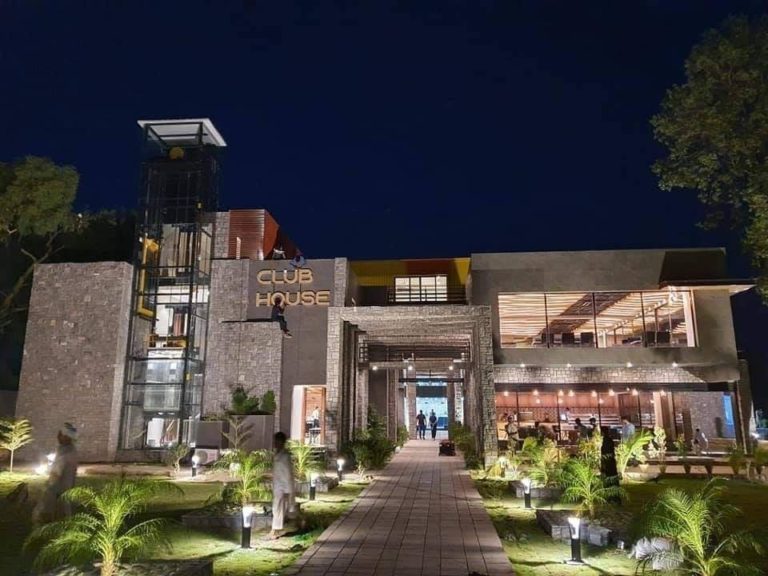
It’s not very often that the judiciary pulls up the armed forces in Pakistan, and so, the navy must have got a rude shock on Thursday, when Islamabad High Court Chief Justice Athar Minallah directed secretary of the Cabinet Division to ensure that the Sailing Club of Pakistan Navy at Rawal Lake should be sealed off by the Capital Development Authority (CDA). From the judgement order it’s apparent that the Judge is irked by the fact that CDA Member (Planning) Dr Shahid Mehmood who represented his department “not only stated that the land was not allotted” to Pakistan Navy but even “candidly conceded that no approval was obtained from the competent authority” for construction of this ‘leisure facility’ as required under the CDA Ordinance, 1960.

Lamenting the “abysmal state of implementation and enforcement of enacted laws, which inevitably leads to violation of fundamental rights,” the Judge, in an embarrassing  reference to the repeated highhandedness exhibited by the armed forces of Pakistan, directed that this issue should be placed before the cabinet in its next meeting “because the enforced laws are not being implemented and that enforcement has been confined to common citizens.” Justice Minallah has also accused the navy of brazenly flouting laws governing construction in an “environmentally sensitive” area and regretted that all this was done for the sake of an “illegal building, which is purportedly being used as a club and that too for commercial purposes.” (Emphasis added).
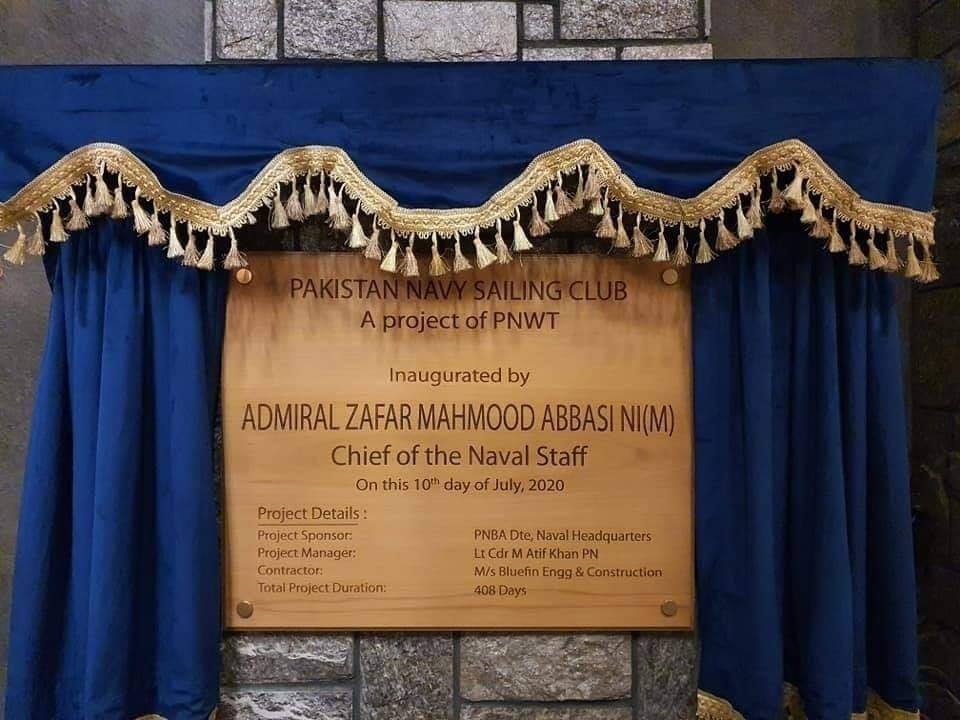
Inauguration stone of the Pakistan Navy Sailing Club, Rawal Lake, Islamabad.

It’s the widely prevalent cult of lavish self-conferred privileges within Pakistan’s armed forces that makes its top brass believe that being the ‘defenders of the nation’ puts them above the law, and Justice Minallah took pains to mention to the naval officer present that “We appreciate your sacrifices and respect you, especially because of your martyrs.” But he also made it amply clear that “nobody is above the law, not even this court” and he didn’t end here. In a stinging reference to the army’s record of rampant human rights abuses and utter lawlessness in Khyber Pakhtunkhwa and Balochistan, he sent out a clear message to Rawalpindi that “These aren’t the tribal areas but the country’s capital.”

The Judge not only asked navy officials present in court for the authority under which the navy was running a “commercial enterprise,” but also observed that the CDA was trying to soft-pedal the issue by terming the construction as “unapproved,” while in the eyes of the law it was “illegal.” He lashed out saying that “It seems like the CDA member is afraid to say that the illegal club belongs to the Pakistan Navy” and even told him to “Go and raze down the illegal construction,” asking him, “Why there are different standards for the poor and the rich?” (Emphasis added).

The court order went on to note that “It has been consistently observed that it has become a norm for the Capital Development Authority and other agencies to promptly take action against those who are common citizens and who do not have the means to influence, while the privileged and elites are being treated differently. This is unacceptable for a democratic polity governed under a Constitution which guarantees fundamental rights,” and so the navy may take serious exception to such a strong indictment since it’s a relatively smaller ‘land-grab’ player in the Pakistani armed forces fraternity. But with the Pakistan Army having a whopping 12% of Pakistan’s land holding, this menace has reached such alarming proportions that the navy has no choice but to bear the consequences of Rawalpindi’s unbridled immoderation on this issue. 

Ever since Ms. Ayesha Siddiqa published details of Pakistan Army’s commercial empire in her well researched book ‘Military Inc: Inside Pakistan’s Military Economy’ in 2007, institutions and people started talking about the army’s commercial ventures more openly. In his book ‘Crossed Swords’, Shuja Nawaz narrates how in 2007, “the country saw the jarring banners carried by lawyers who were protesting the removal of a chief justice by the military ruler: Ae watan ke sajeele Genrailo; saaray ruqbey tumhare liye hain (O’ handsome Generals of the nation, all the plots are just for you).” In July 2016, Pakistan’s Defence Minister informed the Senate that the army was running nearly 50 “projects, units and housing colonies” functioning in the country under the administrative control of Fauji Foundation, Shaheen Foun­dation, Bahria Foundation, Army Welfare Trust (AWT) and Defence Housing Authorities (DHAs).”

One month later, in article (‘Lust for Land’) published in leading Pakistani English Daily ‘Dawn’, on August 27, 2016 former civil servant and noted Pakistani columnist Irfan Husain stated, “The military has long been expanding its footprint across Pakistan’s cities through its multiplying defence societies. Land is acquired at nominal rates from provincial governments, and developed with money taken as advance payments for residential and commercial plots from officers. Allotment letters are then sold to civilians at several multiples of the price they paid.(Emphasis added).

In another comprehensive and unbiased account (‘Qayyumabad’s long battle against DHA,’ Dawn, 22 August 2016), Fahim Zaman and Naziha Syed Ali reveal that “Through the years, the residents of Qayyumabad have consistently maintained that DHA has unlawfully grabbed 53.22 acres that are part of their locality, including 30.32 acres earmarked as amenity areas to serve their needs. However, their negligible political and financial clout puts them at a huge disadvantage in trying to establish their claim. They are, after all, up against DHA, the country’s most powerful land authority that provides real estate windfalls to the men in uniform while catering to the residential and commercial aspirations of the super-rich.” (Emphasis added).

That Pakistan Army’s insatiable lust for real estate has crossed bearable limits is evident from an observation made by Supreme Court Judge Justice Gulzar Ahmed last year that, “Defence Housing Authority (DHA) of Karachi have encroached so far into the sea. If they had their way, they would build a city on the sea. The owners of DHA would encroach on the entire sea all the way to America and then plant their flags there. The owners of DHA are wondering how they can make inroads into India! (Emphasis added).

Under these circumstances, even the most ardent fan of Pakistan armed forces will tend to agree with columnist Irfan Husain’s view that “As long as this unseemly acquisition of land by the military continues, it might be seen as a colonising force!”
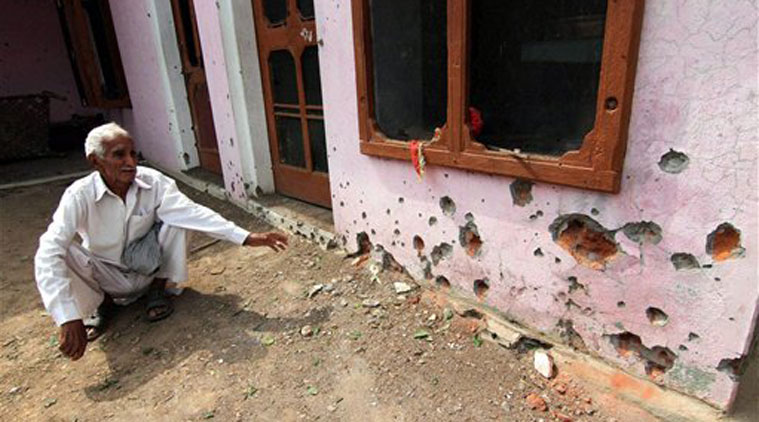
Pakistan desperate to push terrorists inside India, kills army porter in LOC firing

Srinagar, July 29: An Army porter was killed after Pakistan Army shelled forwarded posts of the Indian Army along Line of Control (LoC) in Uri sector of Baramulla district on Wednesday afternoon. Pakistan has been resorting to ceasefire violations with an aim to push terrorists inside India. However, Indian Army is retaliating firmly and not giving any chance to the terrorists to sneak in.

Army said that a porter, working with 11 Mahar Unit of the Indian Army was killed by sniper fire from across the LoC near Lachipora post of Uri sector. The slain porter has been identified as 26-year-old Altaf Hussain Jundal and a resident of Gohlan village of Uri.

Meanwhile, Pakistan Army continued its ceasefire violation along the Line of Control (LoC) in Gugaldhar and Matchil sectors of border district Kupwara.

A senior official said that Pakistan resorted to ceasefire violation by targeting Indian positions without any provocation in Machil and Gulgaldhar sectors of Kupwara district in the Kashmir division on Tuesday afternoon. “Pakistan Army fired with mortars and other weapons, in violation of ceasefire agreement between the two countries,” he said.

“Pakistan is making efforts to send more Jaish-e-Mohammad and Lashkar-e-Taiba cadres into Kashmir. For that, they are trying to use the International Border sector in Jammu or the LoC,” a senior Army officer told News Intervention. “Efforts are also being made in northern parts of Kashmir to push more terrorists into this side under the garb of ceasefire violations. The Indian Army is foiling these efforts there,” he added.

There has been a spurt in Pakistani shelling along the border in Jammu and Kashmir this year. The officer said that security grid at the border as well as in the hinterland were working in tandem to defeat the efforts against peace in the union territory.

Rafale pilots get a warm welcome at the Ambala air base

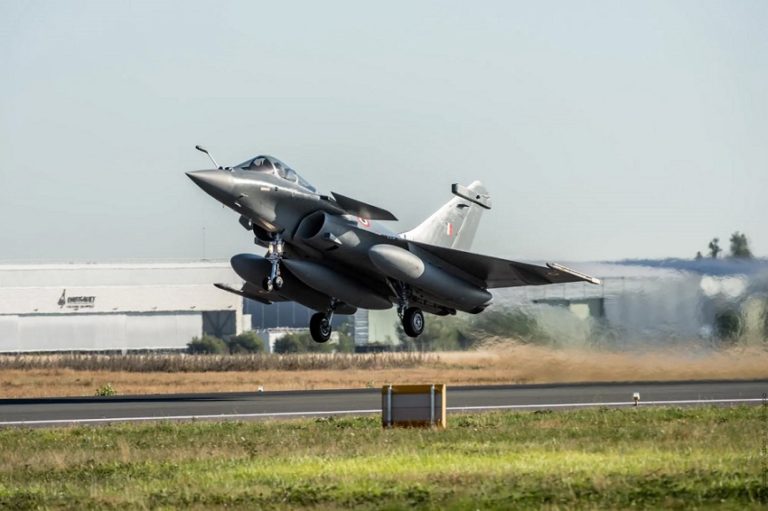
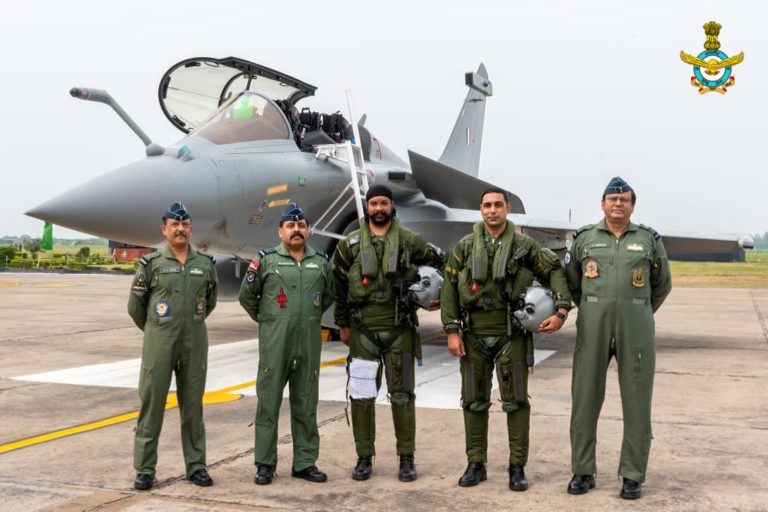
Srinagar, July 29: The first five Indian Air Force (IAF) Rafale fighter jets landed at the Air Force Station, Ambala on Wednesday afternoon. These fighter jets went airborne from Dassault Aviation Facility, Merignac, France on the morning of July 27 and reached India this afternoon with a planned stopover enroute at Al Dhafra airbase in the UAE.

An Indian Defence ministry spokesman said the ferry was planned in two stages and was undertaken by IAF pilots. The fighter jets, he said, covered a distance of nearly 8,500 km from France to India. First stage of the flight covered a distance of 5,800 km in seven and a half hours. 

Rafale fighter jet lands at the Ambala air base on Wednesday (Photo: IAF)

French Air Force (FAF) Tanker provided dedicated Air-to-Air Refueling support during the flight. The second stage of the flight covering over 2,700 km was carried out with Air-to-Air Refueling by IAF Tanker.

“IAF deeply appreciates the proactive support provided by the French government and industry in France to ensure timely delivery. The tanker support extended by French Air Force during the ferry was crucial in ensuring that the long haul flight was accomplished successfully and in a time bound manner,” said the Defence ministry spokesperson.

The Rafale fighter jets, he said, will be a part of 17 Squadron, the “Golden Arrows”, which was resurrected on September 10, 2019. The Squadron was originally raised at Air Force Station, Ambala on October 1, 1951. The 17 Squadron has many firsts to its credit; in 1955 it was equipped with first jet fighter, the legendary De Havilland Vampire. In August 1957, the Squadron became the first to convert on to a swept wing fighter, the Hawker Hunter.

A formal induction ceremony of Rafale aircraft in 17 Squadron is scheduled to be held in the second half of August 2020. Details of the ceremony will be intimated in due course, the spokesperson added.

Rafale has given timely boost to IAF capabilities: Rajnath Singh

Srinagar, July 29: As the first batch of five Medium Multi-Role Combat Aircraft (MMRCA) Rafale fighter jets landed at Ambala air base on Wednesday, Defence minister Rajnath Singh in a series of tweets welcomed Rafale by saying, “The Birds have entered the Indian airspace… Happy Landing in Ambala!”

Defence Minister Rajnath Singh’s tweet welcoming Rafale fighter jets

Rajnath Singh congratulated Indian Air Force (IAF) on professionally executed ferry and said, “I am sure that 17 Squadron, the Golden Arrows, will continue to live upto their motto of ‘Udayam Ajasram’. I am extremely happy that IAF’s combat capability has got a timely boost.”

“The touch down of Rafale combat aircraft in India marks the beginning of a new era in our Military History. These multirole aircraft will revolutionise the capabilities of the IAF,” he added in another tweet.

The 5 Rafale fighter jets (centre) being escorted by the Sukhoi Su-30 jets (left and right flanks) en route to Ambala Air Base.

Highlighting the capabilities of the aircraft, Rajnath Singh remarked that “This aircraft has very good flying performance and its weapons, radar and other sensors and electronic warfare capabilities are amongst the best in the world. Its arrival in India will make the IAF much stronger to deter any threat that may be posed on our country.”

Defence Minister thanked Prime Minister Shri Narendra Modi for his right decision. “The Rafale jets were purchased only because PM Shri Narendra Modi took the right decision to get these aircraft through an Inter-Governmental Agreement with France, after the long pending procurement case for them could not progress.”

PM Narendra Modi’s tweet about the video of Rafale’s first touchdown on the Indian soil at Ambala Airbase.

He thanked the French Government, Dassault Aviation and other French companies for ensuring the timely delivery of the aircraft and its weapons, despite the severe restrictions posed by COVID pandemic.

Rajnath Singh added, “The Rafale jets were purchased when they fully met the operational requirements of the IAF. The baseless allegations against this procurement have already been answered and settled.” He added, “If it is anyone who should be worried about or critical about this new capability of the Indian Air Force, it should be those who want to threaten our territorial integrity.”

‘Golden Arrows’ reach home! tweeted the Indian Air Force

Rajnath Singh shared pictures and videos of the aircraft entering Indian air space.

Earlier, Captain of the Indian Naval Ship (INS) Kolkata welcomed Rafale Arrow Leader in the Indian Ocean by saying, “May you touch the sky with glory.” The five Rafale aircraft were escorted by two SU30 MKIs as they entered the Indian airspace.

PoK is a spurious state run by Pakistani proxy

Political theorists have not been able to define the legal and political status of a region illegally occupied by Pakistan and named “Azad Jammu and Kashmir”. Realizing its strategic importance in the context of CPEC (China-Pakistan Economic Corridor), BRI (Belt and Road Initiative) and China’s expansionist designs eastward, Beijing insisted upon Pakistan to define the region’s legal and juridical status.

A large number of people in both parts of occupied J&K (Pakistan-occupied Jammu Kashmir–POK and Gilgit-Baltistan) have instinctively resented Pakistan’s hegemony and many of its decisions that subtly but surely take away the rights of the indigenous people to make them subservient to the diktat of Islamabad rulers.

The recent rejection by the cabinet of PoK of the 14th amendment to the Clause 4 of the PoK Constitution of 1974 has been necessitated by predictable public resentment of arbitrary and undemocratic clauses of the amendment bill than out of any technical or legal exigency.

The roots of the amendment bill tabled by the Islamabad government lie in Amendment 13 to the PoK Constitution. By that amendment Administrative control of PoK Department of Inland Revenue, AG Office and Directorate General of Audit were transferred from the Council to the PoK government. The Council secretariat was left with no source of income, which, according to sources, had greatly upset the beneficiaries of the previous system. Though Pakistan government’s press release in the context of 14th amendment did not specify draft proposals from Islamabad, leading Pakistani newspaper Dawn reported that “elements in the federal government were “hell-bent” upon the revival of the Council’s fiscal and administrative powers through the proposed 14th amendment.”

The subtle ways of running the fake state of PoK by proxy will be gauged from the structure and powers conferred by Islamabad regime on the “AJK Council” created under the provisos of the Interim Constitution of 1974 for AJK by Z.A. Bhutto. The usual nomenclature of “Upper House” or “Legislative Council” has been replaced with just “Council”  because it is a strange entity, an amalgam of elected, nominated, official, non-official, in-service and off-service people structured in a way that the majority vote (if at all a vote is asked for) and ultimate decision rests with the domain of Islamabad regime.

What is the entity called Council? The Constitution says:
(1) There shall be an Azad Jammu and Kashmir Council consisting of (a) The Prime Minister of Pakistan; (b) The President; (c) Five Members to be nominated by the Prime Minister of Pakistan from time to time from amongst Federal Minister and members of Parliament; (d) The Prime Minister of Azad Jammu and Kashmir or a person nominated by him; and (e) Six members to be elected by the Assembly from amongst state subjects following the system of proportional representation using the single transferable vote.
(2) The Prime Minister of Pakistan shall be the Chairman of the Council.
(3) The President shall be the vice-Chairman of the Council.
(4) The Federal Minister of State for Kashmir Affairs and Northern Affairs shall be an ex-officio member of the Council.

Commenting on the role of the Council, the Dawn of July 17 wrote, “Headed by the prime minister of the time as chairman, the council was created under AJK’s Interim Constitution Act, 1974 “to serve as a bridge” between the governments in Islamabad and Muzaffarabad. However, it was alleged that this institution had assumed the role of a parallel government for AJK.” In other words, it means the Council did not enjoy the legitimacy of a public sponsored entity and was only a structure superimposed by the Sultans of Islamabad.

Thus by the 13th amendment, the Council had become dysfunctional, and functionaries enjoying pecuniary benefits were “dead set” to revive it. The 14th amendment proposed by Imran Khan government was meant to deal a frontal blow to the political and civil rights of the masses of people in PoJK.

A close look at the Act for the Interim Constitution of 1974 for PoJK reveals some glaring contradictions and blatant historical inaccuracies. For example, in the prologue to the Act it says, “WHEREAS the future status of the State of Jammu and Kashmir is yet to be determined by the freely expressed will of the people of the State through the democratic method of free and fair plebiscite under the auspices of the United Nations as envisaged in the UNCIP Resolutions adopted from time to time ….”  Now, the maiden stipulation of the UNCIP Resolution of 1948 is that Pakistan withdraws its fighting men and others from Kashmir to let Srinagar function as the legitimate administrative authority and thus pave the way for holding of a fair plebiscite.” When Pakistan has not fulfilled the most essential pre-requisite for creating conducive atmosphere, how can it jump on to plebiscite as the solution of Kashmir dispute?

Secondly, how can Pakistan ask for a plebiscite when it has ceded more than five thousand square kilometres of J&K state (original) to China? Thus the very preamble of the PoJK Constitution is misleading and flawed. Furthermore, defining Azad J&K, the Constitution qualifies it as this, “Azad J&K is the land liberated by the people.” If the land in question was liberated by the people, why was Pakistan Army there and what was it doing? And when a ceasefire was announced at the stroke of midnight on December 31, 1948 why did Pakistan Army sign it and not the people (through a representative) who Pakistan says “liberated the land?” Has this ceasefire agreement any validity from what Pakistan terms “liberated by the people?”

“In the proposed amendment to Article 4 of the Interim Constitution of 1974, the draft puts a rider to the freedom of association for the people of the region by stressing that such freedom would strictly be subjected to any reasonable restrictions imposed by law in the interest of sovereignty and integrity of Pakistan and morality of public order,’’ the sources said.

Even more outrageous is the clause imposed by Pakistan on the right of residents of PoK to form a political party, or even be a member of one. The person desirous of forming a political party in PoK for benefit of people of the region could face restrictions based on some vague perceived threats.

“No person or political party in ‘AJK’ (PoK) will be permitted to propagate against or take part in activities prejudicial or detrimental to the ideology of Pakistan Government,” the 14th Amendment stated.

The amendment barred the Legislative Assembly of PoK from deciding upon aspects critical to very territory that it is supposed to represent. The Pakistani State, and more specifically the military establishment, would be the only entity authorized to decide upon these aspects.

There is widespread resentment among the people of PoK against the proposed amendment because they find it a reckless step towards depriving the people of PoK of their rights and liberties. Zulfiqar Ahmed Raja, the chairman of Jammu & Kashmir Peoples National Alliance (JKPNA) put it, “the primary motive of the 14th Amendment was to withdraw the already very limited powers given by Pakistan to the ‘Azad’ J&K government, and to remove the word “State” from the 1974 Interim Constitution.” Is it a prelude to the assimilation of PoK into Pakistan State?

Zulfiqar Ahmed Raja, Chairman of Jammu & Kashmir Peoples National Alliance (JKPNA) has opposed the 14th Amendment to the POK Constitution brought in by Pakistan.
Zulfiqar Ahmed Raja, Chairman of Jammu & Kashmir Peoples National Alliance (JKPNA) has opposed the 14th Amendment to POK Constitution, brought in by Pakistan.

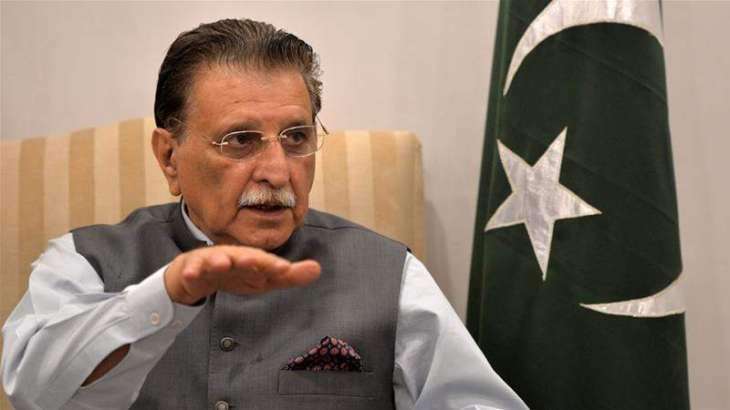
The Cabinet of PoJK has rejected the 14th amendment. Political analysts are keenly watching what turn the situation will take and how long will the government of Raja Farooq Haider Khan survive? The strong reason for Imran Khan government to push the bill is the growing opposition to his army-controlled civilian government for curbing civil and political rights of the people on instructions from the army.

India’s Ministry of External Affairs has cautioned Pakistan that the government of India strongly upholds its right to take back the part of the original state of Jammu and Kashmir illegally occupied by Pakistan and China.

These developments should be an eye-opener for the separatists and secessionists of Kashmir Valley. They should make a comparison of the political and administrative structure give to the erstwhile State of Jammu and Kashmir in the Constitution of India. Had they made a fair and disinterred comparison, they would not have committed the blunders they did and, quite naturally, face the consequences. They should understand that in bringing the 14th amendment; Imran Khan closed his eyes to the religious affinity with the people of PoJK (which he trumpets about Kashmir Valley and Indian Muslims) and focused on how to deprive the people of their rights and freedoms only to let the domination of Pakistani rulers perpetuate. This is a moment of deep introspection for the separatist and secessionists of the Kashmir Valley. They have come to the crossroad where they have to decide which way will lead them to prosperity, freedom and dignity.

A Review of the World Intelligence Network Sigma 1.33-3.07 Societies

The following looks at the listing of the 84 “active” high-IQ societies listed by the World Intelligence Network. Those with an interest in the more tedious stuff about various high-IQ societies may have a sliver of interest in this. So, it’s a “for what it’s worth” deal. The President of the World Intelligence Network is Evangelos Katsioulis and the Vice President/Vice-President is Manahel Thabet. Their publication was WIN ONE and became Phenomenon in the last couple of issues with editors Lord Graham Powell/Graham Powell and Krystal Volney. I will run through sigmas 1.33 to 4.8 in the listing in four articles, as some of the others were presented before at the proposed higher sigmas in a conversation with Christian Sorensen. Any stipulation of “defunct” comes from a search via the listings or open advertisements from the World Intelligence Network. That is to say, these amount to first passes on them. Please see the subsequent complementing articles for the second passes with the dominant search engine “[Society Name]” search, or a Google internet engine search. The first article will cover the first pass – this article – of 1.33 to 3.07 sigma with the second article covering the second pass of 1.33 to 3.07, and then the third and fourth articles covering the first and second passes of 3.07 to 4.8 sigma. All footnote information from the respective societies’ web domains and publicly available records.

Let’s begin:

At 1.33 sigma, UberMens Society appears defunct.

At 1.66 sigma, AtlantIQ of Beatrice Rescazzi and Moreno Casalegno appears defunct on an old site.[1],[2] The Cogito Society contains 56 members while existing entirely online as a Yahoo! private group.  The International High IQ Society of the late Nathan Haselbauer appears functional with approximately “30% of our members… from Europe, 30% from North America, 15% Asia, 10% South America, 10% Australia and 5% from Africa.” Haselbauer committed suicide. The OmIQamiSociety of Andrea Toffoli appears defunct. The Society for Intellectually Gifted Individuals with Disabilities of Nathaniel David Durham/Nate Durham with assistant Lyla Durham and members appears stagnant.[3] The VinCI Society of Lloyd King appears defunct.

At 1.87 sigma, Alta Capacidad Hispana (ACH) of Vicente Lopez Pena appears defunct [4]. The Deep Brain Society of Anna Maria Santoro and Vincenzo D’Onofrio has members Gianni Golfera, Felice Vinci, Jürgen Koller, Hernan Chang, Heidi Ursula Wallon Pizarro, Nicole Schneider, Haider Hussein Ali, Vincenzo Alfano, and Christian Sorensen.

At 2 sigma, the AtheistIQ Society of Robert Dawson seems defunct. The BPIQ Society of Kelly Dorsett seems defunct. The Encefálica Society of Luis Enrique Pérez Ostoa seems either defunct, paralytic, or reconfigured for another organization. The Gifted Artists Circle of Martin Tobias Lithner seems defunct. The Greatest Minds Society of Roberto A. Rodriguez Cruz seems newer and upcoming without formal status online. The High Potentials Society of Max Tiefenbacher seems functional with a large list of members.[5] The Ingenium Society of Martin Tobias Lithner seems newer and upcoming with a statement about the website coming online soon. The IQUAL Society of Gerasimos Papaleventis seems defunct. Mensa Society of Lancelot Ware and Roland Berrill seems highly functional and active under Björn Liljeqvist with 134,000+ members – far more than any other society known to me. The Mysterium Society of Greg A. Grove seems functional, though old, potentially paralytic. The Sigma II Society of Hindemburg Melão seems paralytic.

At 2.33 sigma, the Chorium Society of Paul Freeman seems defunct with a disabled website. The Elataneos Society of Andrés Gómez Emilsson seems defunct. Intertel of Ralph Haines seems functional and active. The Mind Society of Hernan R. Chang seems online while ambiguously functional, potentially paralytic.[6] The Top One Percent Society (TOPS) of Ronald K. Hoeflin appears longstanding and operational, potentially paralytic.[7] The UNIQ Society of Martin Tobias Lithner seems defunct.

At 2.6 sigma, the Colloquy Society of Julia Cachia seems functional, old, and presented relatively cleanly in spite of the age.[8] The Poetic Genius Society (PGS) of Greg A. Grove with membership manager Maurice Champagne appears functional and alive.[9]

At 2.66 sigma, the HispanIQ International Society (HIS) of Luis Enrique Pérez Ostoa seems defunct. At 2.66 sigma, the Infinity International Society (IIS) of Jeffrey Osgood appears, at its minimum, online with Adobe Flash.

At 2.73 sigma, the Cerebrals Society of Xavier Jouve appears defunct.

At 2.87 sigma, the EpIQ Society of Chris Chsioufis looks defunct. The ExactIQ Society of Patrick Kreander seems defunct. Neurocubo of Pedro Lσpez, Thomas Hally, Cisar Tomi, and Paul Laurent appears defunct.

At 3 sigma, Artifex Mens Congregatio of Robert Mestre, Walter VanHuissteden, and Fivos Drymiotis looks defunct. The CIVIQ Society of Evangelos Katsioulis looks functional while merged with the main World Intelligence Network web domain.[10] Its presidents have been Androniki Dalkavouki, Marc-André Groulx, Julie T., Irene Alexandra Taboada, Thomas B., Evangelos Katsioulis. Its vice presidents have been Marc-André Groulx, Evangelos Katsioulis, Isaac Ifrach, Étienne Forsström, Julie T., and Maria Claudia Faverio. Its web officers has been Evangelos Katsioulis, Chris Chsioufis, and Mári Donkers. Its membership officers has been Evangelos Katsioulis, Marc-André Groulx, Djordje Rancic, Karin Lindgren, and Michael Dempsey. the Sigma III Society of Hindemburg Melão looks functional online with sufficient membership while, potentially, paralytic (uncertain).[11]

At 3.07 sigma, the Genius Society of Hernan R. Chang looks defunct. The Glia Society of Paul Cooijmans looks functional with several hundred claimed members. The International Society for Philosophical Enquiries (ISPE) of Christopher Harding looks functional, longstanding, and active. The IQuadrivium Society of Karyn S. Huntting looks defunct. The LogIQ Society of Martin Tobias Lithner seems defunct. The Milenija Society of Ivan Ivec and Mislav Predavec may be defunct, though ambiguously. The One in A Thousand (OATH) of Ronald K. Hoeflin seems functional, potentially inactive.[12] The Triple Nine Society (TNS) of Richard Canty, Ronald Hoeflin, Ronald Penner, Edgar Van Vleck, and Kevin Langdon looks functional, longstanding, and active.

[1] Interestingly, the AtlantIQ group lists dead societies as follows:

  • Alta Capacidad Hispana
  • Elateneo/s
  • BPIQ Society
  • Epida Society
  • Colloquy
  • ExactIQ
  • Tenth Society
  • Bright Minds Society
  • Greatest Minds Society
  • Vinci Society
  • Sigma
  • Sigma III
  • Sigma Society V
  • Hellenicus
  • UberIQ
  • IIS
  • OATHS
  • Ludomind
  • Pi Society
  • Platinum Society
  • Cerebrals
  • High Potentials Society
  • Mysterium Society
  • GLIA
  • Ingenium Society
  • LogIQ
  • Iquadrivium Society
  • Pars Society
  • UnIQ
  • HispanIQ International Society
  • Encefalica
  • OMIQAMI
  • Artistic Minds
  • MIQRO
  • GOTHIQ
  • EVANGELIQ Society
  • Episteme Club
  • PolitIQal Society
  • Secret High IQ Society
  • Chorium Society
  • Nano Society
  • IQual Society
  • PolymathIQ
  • Incognia
  • UltimaIQ
  • Neurocubo
  • Order of Imhotep
  • SophIQa
  • EliteIQ
  • Neutrino high IQ Society
  • Atheistiq Society
  • Noetiqus Society
  • Evolutioniq Society
  • EPL Society
  • The Athenian Society
  • Supernova Society
  • Intellectually Gifted with Disabilities
  • Orison-B High IQ Society
  • Icon High IQ Society
  • Thinkiq
  • Hypatian Society
  • Chaos IQ Society

*Or in an apparent coma for more than 5 years.

[2] Their listed members as follows:

President and Vice President

Beatrice Rescazzi, Graham Powell

HONORARY MEMBERS & MEMBERS

Moreno Casalegno (Co-Founder)
Maria C. Faverio
Paul Freeman
Greg. A. Grove
Gaetano Morelli
Stan Riha
Vincenzo D’Onofrio 
Giulio Zambon
Fernando Barbosa Neto
Alan J. Lee
Robert Birnbaum
Jacqueline Slade
Richard Stock
Greg Collins
Torbjørn Brenna
Noriyuki Sakurai
Zachary Timmons
Phil Elauria
Andrea Toffoli
Marios Prodromou
Duc Hong Le
Gianmarco Bartellone
[Omitted by request]
Michael Thrasher
José Gonzàles Molinero
Mick Pletcher
Richard Szary
José Serrano
Pamela Staschik-Neumann
Nuno Baptista
Adam Kisby
Andrea Gelmetti
Faisal Alfagham فيصل الفغم
Gustavo Fabbroni
Shaun Sullivan
Gerasimos Politis
Gavan Cushnan
Pietro Bonfigli
Djordje Rancic
Jon Scott Scharer
Roberto A. Rodriguez
Jesse Wilkins
Rajiv Kutty
Nomar Alexander Noroño Rodríguez
Scott Poh
Miroslaw Zajdel
Stephen Getzinger
Nancy Vanstone
Guillaume Chanteloup
Karin Lindgren
Gary Song
Lim Surya Tjahyadi
Paul Laurent
Eric Anthony Trowbridge
Niels Christoffers
Michelle Anne Bullas
Jeffrey Lee Graham
Tahawar Ali Khan
Yuri Tovar
Jason Oliver
Jarl Victor Bjørgan
Bradley Hutchinson
Donald M. Fell
Gwyneth Wesley Rolph
Vicente Lopez Pena
Rudolf Trubba    
Barry Beanland
Morie Janine Hutchens
Keegan Ray McLoughlin
Hever Horacio Arreola Gutierrez
Michael Backer, Jr
Aman Bagaria  
Selim Şumlu
David Gordon Little
Victor Hingsberg
Anthony Lawson
Beau D. Clemmons
R. K.
Alberto Bedmar Montaño
Paul Stuart Nachbar
Jim Lorrimore
Jakub Oblizajek
Gabriel Sambarino
Tony Lee Magee
Dorian Forget
Tom Högström
Elizabeth Anne Scott
Michael Donoho
Ernest Williamson III
Nicole Mathisen
Katarina Vestin
Christine Van Ngoc Ty
Jason Betts
Yu-Lin Lu
Nikolaos Solomos
Gracia Cornet
Richard Painter
Wyman Brantley
Yao Xu
Kevin James Daley
Stephen Maule
Birgit Scholz
Leif E. Ågesen
Mohammed Al Sahaf
Martin Murphy
Samuel Mack-Poole
Vuk Mircetic
Peter Radi
Marcin Kulik
Harold Ford
Thomas G. Hadley
Miguel Soto
Göran Åhlander
Evangelos Katsioulis
Anja Jaenicke
Roy Morris
Slava Lanush
Frank J. Ajello
Nicolò Pezzuti
James Dorsey
Massimo Caliaro
Michael Tedja
John Argenti
Therese Waneck
Bo Østergaard Nielsen
Sudarshan Murthy
Daniel Roca
Glikerios Soteriou
Kristina Thygesen
Miguel Jorge Castro Pinho
Tim G. Griffith
Claus Volko
Diego Iuliano
Elcon Fleur
Evan Tan
Dalibor Marinčić
Konstantinos Ntalachanis
Candy Chilton
​Diego Fortunati
WeiJie Wang
Alessia Iancarelli
Cristian Vaccarella
Iakovos Koukas
Filippo De Donatis
Richard Ball
Zhida Iiu
R. Kent Ouimette
Marina Belli
Karim Serraj
Kim Sung-jin
Juman Lee
CHIANG LI CHING
Zhibin Zhang 张志彬
Andre Gangvik
Nikos Papadopoulos Παπαδόπουλος Νίκος
Jo Christopher M. Resquites
Ricky Chaggar
Félix Veilleux-Juillet
Michael Franklin
Michela Fadini
Fabrizio Fadini
​Fabrizio Bertini
Cosimo Palma
​Nobuo Yamashita 山下 伸男
Cristian Combusti
Mostafa Moradi
Xiao-ming CAI 蔡晓明
Fabio Castagna
Robert Hodosi
Francisco Morais dos Santos
Cynthia L. Miller
Hongzhe Zhang 张鸿哲
Serena Ramos
Nguyen Tran Hoai Thuong Nguyễn Trần Hoài Thương​
​Giuseppe Corrente
​Sergey Dundanov
Andrea Casolari
Anthony Brown
Veronica Palladino
​Yohei Furutono
Francesco Carlomagno
Emanuele Gianmaria Possevini
Joseph Leslie Jennings
Robin Lucas
Rosario Alessio Ronca
​Oliver Dammel
Javier Rio Santos
Sebastiao Borges Machado Junior
Agasi Pietro
Taddeucci Nicholas
Andre Massaro
Mika Korkeamäki
Tor Arne Jørgensen
Dario Casola
Federico Statiglio
Vincent Li 李宗泽
Jewoong Moon 문제웅
Annelie Oliver
Nitish Joshi
Christian Sorensen​
Simon Olling Rebsdorf
​Marzio Mezzanotte
Paolino Francesco Santaniello
Edwin P. Christmann
​Nicos Gerasimou

[3] Greg A. Grove, Shaughna Murphy, Annie Durham, Stanislav Hatala, John Russeell Sweeney, Millivent Y. Curtis, Maria Claudia Faveri, John Daniel Harrison, Robert Moore, Bruno Sampaio Alessi, Brian R. Johnson, Mary Britton, Masaki Yamauchi, Jeffery A. Mansfield, Peter Tyliszczak, Angela Johnson, Chris Mejo, Robert Dawson, Colin Aye, Bryan Sholtis, Cleo Love, Anders G. Hellstrom, Tracey Ward, Robbi Mounce, David Coldwell, Thomas Ossei, Issa Atoum, Clayton Michal Soucie, Katherine Linebaugh Elizabeth, Michael Rogers, Shaun Sullivan, Thomas J. Hally, Elizabeth Anne Scott, and Paul Nachbar.

[4] The members list included:

1.Vicente Lopez Pena(fundador y miembro)
2.John D. Harrison
3.Tomas Hally
4.Paulo Cancio
5.Hernan Chang
6.Juan Manuel Garcia
7.Angelica Partida
8.Michael F. Hensley
9.Javier Rio Santos
10.Pedro Lopez
11.Mark Taylor
12.Kevin Daley
13.Ujiwal Dey
14.Robert Mestre
15.Eduardo Gonzalez Ramirez
16.Miguel A. Gonzalez Rodrigo
17.Mauro Antonielli
18.Sergio Duarte da Silva
19.Angel Leonardo Dure
20.Antonio Rada
21.Luis Enrique Perez Ostoa
22.Masaaki Yamauchi
23.Maria Perez
24.Jose Benito Novoa
25.Arturo
26.Arnold richenberger
27.Juan G. Navarro
28.Dario Maurizzio
29.Shinji Okazaki
30.Jose Gutierrez Saez de Castillo
31.Konstantinos Ntalachanis
32.Roxana de Leon
33.Efren
34.Maria Claudia Faveiro
35.Marios Prodromou
36.Gonzalo Sánchez Pla
37.Yollug
38.Ryu Dong-Su
39.Alvaro Herrero
40.Min Kyung-Suk
41.Patricio A. Fort
42.A-Reum Park
43.Tayo Sandono
44.Afsin Saltik
45.David
46.Lia Rodbau
47.Álvaro Peral
48.Irene
49.Nomar A. Norono R.

[5] The website members as stated 06/2016:

Tiefenbacher, Dr. Max
Erhard, Stephanie
Pena, Vicente Lopez
Durham, Nate
Daley, Kevin James
Kisak, Paul F.
Rönnlund, Michael
Sowaidan, Walid
Debono, Jesmond
Beugekian, Simon
Natarajan, Kris
Des Bois, Louise
Politis, Gerasomos
Faverio, Maria Claudia
Katsioulis, Dr. Evangelos
MsMariel
Coimbra, Joao Rodrigo
Silva, Sergio
Corres, Javi
Gomes, Leonardo
Lindberg, Stefan
Kurcewicz, Mateusz
Dorsett, Kelly
Matera, Alberto
Wolok, Michael D.
Udbjorg, David
Matysiak, Mateusz
Albert, Frank
Yönter, Baran
Butters, James Joseph
Wee, Hubert
Antusch, Jan
Egetenmeier, Melanie
Giltinan, David
Donkers, Mari
Mannonen, Jukka
Kimura, Herbert
Gausdal, Jan Erik
Bernstein, Prof. Dr. Hans-Gert
Martin, Brennan
Westall, Christopher
Hess, Mike
Dimalaluan, Nileon Jr.
Rodop, Guner
Milgram, Danny
Scott, Shane M.D.
Brizel, Robert
Burman, Paul
Becker, Armin
Closson, Randall
Taylor, Dylan
Forsell, Kaj
Maitland, Patrick
Nikolakopoulos, Athanasios
Radovanovich, Stefan
J., B.
Harrison, John D.
Grove, Dr. Greg A.
Snauwaert, Jan
Dubois, Laurent
Schuler, Daniel
Sloan, Ryan
Johnson, John M.
Prokop, Jeff
Humenny, Michael J.
Fonseca, Eduardo
Riepe, Thomas
Hohenstein, Dr. Christian
Sadana, Dr. Nishant
Gersdorff, Christoph Freiherr von
Hensley, Dr. Michael
Raaberg, Henrik
Lindgren, Karin
Smith, Tommy
Nishikura, Tetsuji
Freeman, Christopher J.
Sanford, Shade H.
Lindekens, Bart
Putong Ariel R
McCollum, Larry J. Sr.
Anslan, Egert
Cruise, Norman
Carter, Marc
Yaegashi, Masaki
Whitley, Jeremy
Simoni, Romain
Barreiro, Zenaida Lima
Ifrach, Isaak
Sternhagen, Dr. Eick
Bulacik, Pawel
Alpi, Bruno
Harmer, Keith
Skyte, Gilad
Gounaris, Avraam C.
Gaur, Namit
Clark, William T.
Curtis, Millicent
Fassbender, Michael
Hingsberg, Victor
Walton, Larson
Thung, Lucas
Ferguson, Julie
Myers, Kenneth
Zukoski, Andrew
Offenwanger, David
Johnson, Brian R.
Castro, Miguel
Dempsey, Mick
Alessi, Bruno
Naether, Thomas
Butt, Kirk R.
Handyside, William
Abrams, Michael
Matuschka, Reinhard
Majoran, Stefan
Baumer, Stefan
Spiromitros, Christos
Andelic, Edin
Jaw, Wen Bin
Ksioufis, Chris
Kirkland, Russell
Heibult, Dan
Rich, Alan
S, B
Nittel, Jens
Yamauchi, Masaaki
Holler, David
Estrada, Xavier
Wolf, Andreas
Roach, Geoffrey Wayne
Forsström, Etienne
Galiardo, Christopher J. F.
Washburn, Monte C.
Matuschek, Dieter Wolfgang
Itikawa, Jackson
Vaswani, Ashish
Lion, Frederic
Gwinn, John
Paquin, Jean Philipp
Campbell, Mathew
Talbot, Glenn
Christensen, Allan
Gilkinson, Mike
Halder, Dr. Ralph
Tang, Warren
Apostolidis, Christos
Gut, Clemens
Mejo, Christopher Michael
Mayoral, Raul Godoy
B.R.
Kisby, Adam William
Törnquist, Mattias
Estrada, Irene Alexandra Taboada
Iozzo, Vincenzo
Parkhurst, James
Mestre, Robert
de Vivie, Achim
Blais, Robert
Staschik Neumann, Pamela
Thomas, Brendon
Wong, Sharon
Tighe, Paul
Abala, Felipe C.
Sullivan, Shaun Patrick
johnnyvirtual
Hellström, Anders
Dale, Robert B.
Boyens, Jason
Emilsson, Andres Gomez
Camperlino (Magnus), Alex
Mounce, Robbi
Atoum, Issa Ali
Patricio, Alexandra
Malory, Quinn
Ridpath, Mike
Petit, Alexis
Goertz, Frederick
Nygren, Kim
Wilson, David H.
Plischke, Raymond
Chondrobilas, Ioannis
van Huissteden, Walter
Drymiotis, Fivos
Chatzikyriakidis, Stergios
Scott, Elizabeth Anne
Gelsomino, Susan Nigro
Dunn, Etta
Linebaugh, Katherine E.
Andersen, Mads Holm
Belal, Zakariya
Hedgcoth, Clyde H.
?, Serge
Sekar, Gautham
Nacua, Edward S.
Curry, Wes
Payawal, John
Khanna, Romi
Jensen, Charlotte
Brand, Gregor
Lee, Albert
Dorsey, James
Rijing, Liu
Dalachanis, Konstantinos
Gomez, Ivan Suarez
Saltik, Afsin
Tay, Admund
Bellon, Gustavo
Santos, Javier Riu
Shroff, Shailendu
Lincoln, Jeffery
Balaram, Gautam
Desse, Didier
Perez, Cesar Lobo
Buckley, Jesse
Harbaugh, Luke
Ossel, Thomas
Jacobsen, Martin
Kissling, Christian
Melber, Felix
Östlin, Oscar
Albihn, Andreas
R., Andre
Lubkin, David
Frye, Andrew
Perez Artuso, Matias Exequiel
Cosby, Owen
Tokayer, Michael
Juarso, Andreas Edwin
Welch, Richard
Walendowski, George
Arvanitis, Christos
Partida, Angelica
Chesler, Norm
Basta, Osama
Sohl, Christian
Belluci, Damiano
Solis, Daniel
Antonielli, Mauro
Rogers, Amanda
van Kaathoven, Bram
Scherder, Hermann Michael
Kim, Peter S.
Zuber, Julia
Rodrigo, Miguel Angel Gonzalez
Grijalva, Sebastian
Jeremic, Igor
Meesomboon, Lisa
Münzinger, Patrick
Garcia, Christopher James
Miranda, Paul Laurent
Perez Ostoa, Luis Enrique
Lawson, Anthony
Weber, Joshua Jurgen
Okazaki, Shinji
Johnson, Cedric
Droege, Henning
Zhang, Ming
Anas, Hans Göran
Karakas, Okay
Vilar, Rolland
Piffer, Davide
Chan, Wing Chi
Prodromou, Marios
Gama, Joseph
Walter, Caroline
Pauzi, Mohd Faeiz
McGilvra, John
Martinez, John
Filinic, Marin
Andersson, Robert
Markovic, Allan
Hjort, Henrik
Pia, Gonzalo Sanchez
Marasigan, Ernie
Munn, Jason
Marasigan, Gerry
Yulug, Burak
Lisowski, Peter
Rangarajan, Sunder
Cruz, Justin M.
Saez, Jose Gutierrez
Castillo, Dennis Roldan A.
Marshall, James
Borges, Ricardo
Sandono, Tayo
Butt, Adil Suhail Rehman
Agesen, Leif E.
Norono, Nomar
Hacht, Dave
Kuhens, Sage
Zanero, Stefano
Zijlstra, Justin William
Murium, Mus
Lewkowicz, Jacek
Collin, Christoffer
Fernandez, Gonzalo Pena
Gonzalez, German
Choi, Perry
Provost, Dany
Rada, Antonio
Chatziargiriou, Anastasios
Hori, Yusaku
Petit, Alexis
Hunter, David
Zukowski, Mateusz
Barsky, David
Wilkens, Jesse
Kaspo, John
de Leon, Mae Ann
Shaikh, Ahsan Zaheer
Costa, Alexandre
Maule, Stephen
Ashfaq, Asais
Kortesaari, Tapio
Rangel, Eduardo
Argenti, Flor
Oliveira, Pedro
Zhang, Whayne
Ambrosini, Sanzio
Tomlinson, Joseph Anthony
Brown, Alex
Shelat, Dr. Amit Mahesh
Ton That, Thuy-Vi
Brenna, Torbjörn
Intriago, Jose Raul Alava
Banic, Luca
Lee, Alan
Molinero, Jose Gonzalez
Farmer, Adam
McShea, Patrick J.
Viorel
Paredes, Silvana
Gonzalez, Carlos Oliver Alvarez
Fernandes, Marcelo Eyer
Maitla, Sunil
Mills, Josh
States, Tom
Rawat, Varun
Olsen, Ken
Pressi, Flo
Bakshi, Subir
Vanstone, Nancy
Jackson, Jay Aubrey
Stolze, Sebastian
Santos, Tiago
Barraza, Ignacio
Kärenlampi, Juho
Hostetler, Leon N.
Odtuhan, Victor
[Omitted by request]
Correnti, Eugenio
Marasigan, Virginia
Olson, Jorgen Rex
Sukhabut, Lulu
Gamo, Necie
Björgan, Jarl Victor
Sengupta, Santanu
Eriksson, Daniel
Horvat, David
Kruse, Bill
Magee, Tony Lee
Heffington, Philip
Serrano, Fernando Sanchez
Pant, Kripanshu
Senin, Harris
royfancoolguy
Flour, Jan
Das, Suman Gaurab
Bertes, Panagioitis
Liberatos, Erikos
Ouattou, Ali
Shimizu, Yoshiyuki
Koller, Dr. Jürgen
Thompson, Paul E.
Reitmaier, Eileen
Baptista, Nuno
Birnbaum, Robert
Montano, Alberto Bedmar
Starck, Juha
Sanchez, Vincente Fernandez
Ferraro, Joseph M.
Zaharescu, Andrei
Manthey, Karl
Solomon, Jennifer
Powell, Graham
Neto, Fernando Barbosa
Surian, Devon
Mezgec, Simon
van Duinen, Caleb
Freeman, Paul
Gadkari, Shantanu
Saginda, Baransel
Bühler, Olaf
Cruz, Kirsten M.
Ramos, Jhonata
Towensend, Dawn
Katainen, Lauri
Reitmaier, Karl G.
Rosales, Adams
Scholz, Birgit
Bodereau, Nicolas
Hancer, Murat
Ripa, Marco
Gao, Guohua
Marella, Mario
Ostergaard Nielsen, Bo
Rescazzi, Beatrice
Holmes, Deron K.
Elauria, Phil
Papaleventis, Gerasimos
Grieten, Christel
Darisetty, Srika
Baker, Michael
Glisic, Vedran
Marasigan, Paz
Dhamapurkar, Nikhil
Szary, Richard
Karpinski, Marty
Casalegno, Moreno
Davies, Paul
Qureshi, Pascale E.
Blazer, Harry
Hendzel, Kamil
Lithner, Tobias Martin
Polo Hernandez, Jose Antonio
Thrasher, Michael
AlenEinstjin, Chenwenjin
Timmons, Zachary Edward
LE, Duc Hong
Michelle Anne Bullas
Soygenis, Umit
Trubba, Rudolf
Toffoli, Andrea
Brown, Yvonne
Fabbroni, Gustavo
Vlad, Jipa
Beyer, Alex
Laurin, Etienne
Hopkins-Harrington, Cameron
Song, Gary
Milani, Giorgio
Cudnohosky, Amanda
Herkner, Alexander
Rodriguez, Roberto
Bennett, Landon T.
Beanland, Barry
Getzinger, Stephen
Tjahyadi, Lim Surya
Tovar, Juri
Andrews, Joseph
Sheremet, Cary
Bagaria, Aman
Clemmons, Beau
Hamade, Omar L.
Hutchens, Morie Janine
Goel, Akshay
Rolph, Gwyneth Wesley
Khan, Dr. Tahawar Ali
McLean, Kathryn
Ahlander, Goran
Darb
Xu, Yao
Lorrimore, James
Oblizajek, Jakub
Talvane da Silva, Willian
Aleixo, Joao
Högström, Tom
Little, Gordon
Logan, Khy Donovan
Quadir, Akshay
Morelli, Gaetano
Kostamo, Kimmo
Yu Lin, Lu
P. R.
Danker, Tilman
Ford, Harold
Fabella, Osrox
Di Fabio, Silvio
Sycinski, Rafal
Röpke, Gudrun
Buras, Jeremy
Humphrey, Jefferson Lee
Pisano, Anthony Daniel
Martinez, Jorge R.
Jimenez, Bulmaro
Aiello, Frank
Ebendt, Rüdiger
Lanush, Slava
Volko, Dr. Claus-Dieter
Pezzuti, Nicolo
Testerini, David
Bissonnette, Brett
Tedja, Michael
Reaves, Andrea
Sellen, Tonny
Murthy, Sudarshan
Lissner, Jonah
Torinus, Gregor
Ball, Richard
Wang, HongYan
Mwansa, Alex Bwalya
David, Anand
Kostrzewa, Dr. Frank
de Donatis, Filippo
Ouimette, Kent
Großmann, Klemens

[6] The members at present:

Clark Jarrett

Renaissance Society of Scholars

Susan L. Nigro

WD3P

Divine Madness

The Geek Community

Chris Eichenberger

Sergio Silva

Martin M. Jacobsen, Ph.D.

Marios Prodromou

Morgan Hansen

Luis Enrique Pérez Ostoa

Pantelis Papageorgiou

Sage Kuhens

Robert Alan Riley

Katie Cesaro

Danny W. Corwin

Allan Derum

James Dorsey

Angel Duré

Thomas Hally

Luke Harbaugh

Charlotte D. Jensen

Okay Karakas

Pika Kofol

Ernie T.  Marasigan

Chris Nielsen

Dwight Payne

Sunder Rangarajan

Don Robinson

Robert Rose-Coutre

Tayo Sandono

Drew Sanner

Mark Taylor

Godfrey Turnbull

Reuben Villanueva

Nomar A. Noroño R.

Leif E. Agesen

Brett Bissonnette

Tapio Kortesaari

Brennan Martin

Evangelos Katsioulis

[7] The listed members’ links include the following:

The Mind Society

OATHS

Albert Frank

Bill Bultas

Donna Blasor-Bernhardt

Frank M. Lopez

Susan L. Nigro

Ludomind Society

Genius Society

Don Stoner

Omega Society

Epimetheus Society

Chris Eichenberger

Divine Madness

Morgan Hansen

Sage Kuhens

Marzena A. Broel-Plater 

Brennan Martin

Martin T. Lithner

[8] Its member webpages as follows:

Julia   (JCC)

Andrea   (ALP)

Kevin, TimeLord   (KB)

William: African-American resource pages   (WRJ)

Eric: Tales of the Mine Country   (EM)

Laura   (LDL)

Kevin‘s Domain   (TM)

Ulf‘s Artwork … Read about the Greatest Geniuses of history.

Ed‘s Radio Resume  (ES)

Frank presents the Pragmatism of C. S. Peirce   (FPP)

Video Mike   (ME)

Bill: Website Kafejo   (WPP)

Alex   (TsC)

Derrick   (DPG)

Juan   (JRG)

Frank   (FT)

Mick   (MoR)

Carl   (CRS)

David   (DGH)

T.M. Lukas Hughes   (TLH)

Kate   (KJ)

Dan   (DLT)

Jeff   (J2K)

Ken   (KCB)

Yuri‘s photo   (YuM)

Olivier   (OCG)

James   (JLL)

Wyman   (JWB)

Christopher   (SeeWy)

Dana   (DM)

Steve   (KSH)

[9] Its member listing states:

Abbey Ebesu
Adam William Kisby
Albert Frank
Alex Burke
Alexander Herkner
Aline Richard Nagasawa
Allen Blocker
Andrew Ridge
Angela Hamilton
Anja Jaenicke
Ann Franklin
Anoohya Panidapu
Apoorva Panidapu
April Mae Berza
A.R. LaBaere
Barry Howard
Beatrice Rescazzi
Beau Clemmons
Brennan Martin
Brian R. Johnson
Brian Wengler
Bruce Wright
Bryan Sholtis
C.L Frost
Carole Fragoza
Chaim Horovits
Cheri Ramberg
Chew Kwee Tat
Chris Chsioufis
Chris Eichenberger
Christian Sohl
Christopher–Andrew Dzialo
Chukwuma Mbaeyi
Craig Harvey
Daniel Johnson
Daniel Phillips
Daniele Pinna
Darryl Goode
David Ellis
David Luedtke
David Udbjørg
Dawn Prince-Hughes
Derick Au
Don Ridgway
Don Rodrigues
Dr. Greg Grove
Dr. Hirsch Silverman
Dr. Jay Albrecht
Dr. John Dwyer
Dr. John L. Turner
Dr. Joseph Shaara
Dr. Martin M. Jacobsen
Dr. Maurice Champagne
Dr. Simon Olling Rebsdorf
Dusk Wilson-Weaver
Dylan Taylor
Eddie H. Meade
Edward Glomski
Edward K. Rydwelski, Jr., CFA
Elaine May Smith
Elizabeth Sagey
Elliot Siemon
Enigma Valdez
Erik Richardson
Etta Dunn
Evangelos Katsioulis
Fang Yuan
Fernando Sánchez Serrano
Fivos Drymiotis
Gary Tillery
George Kohlmeyer
George Petasis
George S.L. Bause, M.D
Gerald Bosacker
Gerald Creel
Gilad Skyte
Gina Page
Grant Fisher
Greg Roberts
Haakon Rian Ueland
Heather Ceana
Heidi-Maria Steinback Sørensen
Hernan R. Chang, M.D.
Ina Bendis
Ira Gibson
Irene Alexandra
Irene Theocharis
Isabel Saad
Issa Ali Atoum
J. Burke Bascom
J. David Mason, M.Eng.
Jack Orwant
Jacquelyn Naquin
James A Nichols
James DiVietri
James Harris
James Lemaman
James Rutherford
Jamie Gorsso
Javier Rio Santos
Javier Rios Santos
Jean-Marie Mathues
Jeff Leonard
Jeffery Alan Ford
Jeffery R. Simons
Jenifer Ann Zito
Jennifer Bochenek
Jesmond Debono
Jessica Spence
Jo Christopher Resquites, Engr.
Joel Gehrke
Joel Willis
Johan Kennebjörk
John Kormes
John Mossbacher
John Schiano
John Sweeney
Jonathan Berman
Jonathan Marin
Jonathan Shelly Baskin
Jorge González López
Jörgen Lornudd
José Manuel Aznar Baigorri
Joseph Byrne
Joseph Fitzgerald
Joshua Furnell
Julian Moore
Julie Ferguson
Julie Tai
Justin Stuart
Jyrki Leskelä
Kamil Hendzel
Karin Henderson
Karin Lindgren
Karl Lykken
Katherine Wetz
Kathleen Cesaro
Katrin McMullen
Keith Robertson
Kenneth Heaton II
Kevin Bullock
Kevin Greco
Kevin Skehan
Kimberly Halliday
Krysta Sutterfield
Laurence David Sumner
Lawrence Kent, Ph.D.
Lee Price
Limor Ostrowski
Lisa Carlin
Luca Poli
Lucas Thung
Manuel Cavazos
March Alpine
Marco Ripà
Maria C. Faverio
Mark Fusco
Mark Norman
Marko Ripá
Martha Mozingo
Martin Boutte
Martin Tobias Litner
Marybeth Mitcham
Mateusz Kurcewicz
Matthew Rees
Mayank Makhija
Melinda Frye
Merlin Carl
Meta Marie Griffin
Michael Zerger
Miguel Jorge Castro Pinho
Miguel Sánchez
Mike August
Monte C. Washburn
Muhamed Veletanlic
Neeraj Shaw
Neeshee Pandit
Neil Z. Miller
Ngoc Nguyen
Nipun Kumar
Nisheeth Srivastava
Noriyuki Sakurai
Oliver Alvarez
Patricia Ferguson
Patrick J McShea |||
Patrick Joseph O’Connor
Paul Kisak
Paul Maxim
Paul Nachbar
Paul Payton
Paul Roe
Peter Donald Rodgers
Peter Ingestad
Peter Michalak
Peter Roy
Philip Bateman
Philip Heffington
Philip Huffington
Pierre-Alex.
Rachel Raleigh
Rebecca Hall
Richard Barrett
Richard M. Riss
Rikin Shah
RoAnna Mitchell
Robbi Mounce
Robert A. Riley
Robert Dawson
Robert John Mestre
Robert Thompson
Roberta Mendelson
Robin Hammer
Russell Wright
Ryan Jackson
Ryan Sloan
Ryan T. Mullen
Ryan Vaughn
S.L. MacNiven
Sahil Moza
Santanu Sengupta
Sean Clark
Shankar Ananth
Shannon Smith
Scary Quinn
Sriram Balasubramanian
Stefan Lindberg
Stephen Allan Murray
Stephen Buhner
Stevan Damjanovic
Suraj Shinde
Surendra Bansal
Susan Chen
Susan Nigro Gelsomino
Therese Waneck
Thom Hadley
Thomas B.
Thomas Hally
Dr. Tine Wilde
Tommy Smith
Tommy Upshaw
Torbjoern Brenna
Trent Cross
Tricia Ferguson
Trivik Bhavnani
Tuuli Jokivartio
Tyler Jackson
Uros Petrovic
Wallace W. Rhodes, Ph.D.,P.E.
Wayne Guy Butterfield
Wei Liu
Will Weatherly
William Clark
Xinyao Liu
Yechiel Mann
Zack Timmons
Zakariya Belal

[10] Its subscribers as follows:

Anonymous C.S.001

Ashraya Ananthanarayanan

Tor Arne Jørgensen

[11] Its membership listing states the following:

 001 Hindemburg Melão Jr.
 002 Petri Widsten
 003 Alexandre Prata Maluf
 004 Peter David Bentley
 005 Rauno Lindström
 006 Bart Lindekens
 007 Joachim Lahav
 008 Marc Heremans
 009 Staffan Svensson
 010 Will Fletcher
 011 Marko Korkea-Aho
 012 Kevin Yip
 013 Kristian Heide
 014 Patrick Allain
 015 Muhamed Veletanlic
 016 Albert Frank
 017 Enrico di Bari
 018 Richard Crago
 019 José Antonio Francisco
 020 Brian Daniel Appelbe
 021 Reinhard Matuschka
 022 Emilio López Aliaga
 023 Donald A. Martin Jr.
 024 Gustavo Marcel Borges Monzon
 025 Daniel Lapointe
 026 Herbert Kimura
 027 Tetsuji Nishikura
 028 Mikael Andersson 
 029 Marc Fauvel
 030 Christian Hohenstein
 031 Anton Nadilo
 032 Dieter Wolfgang Matuschek
 033 Michael F. Hensley
 034 Dylan Taylor
 035 William T. Clark
 036 Esko Härkönen
 037 Matthew James Reginald Wright
 038 Evangelos Georgios Katsioulis
 039 David Udbjorg
 040 Tuija Kervinen
 041 Rafael Zakowicz
 042 Geoff Rabeau
 043 Francisco Javier Corres Achaga
 044 Darko Djurdjic
 045 Guilherme Marques dos Santos Silva
 046 Lloyd King
 047 Juha Varis
 048 Ulf Westerlund
 049 Marcelo Penido Ferreira da Silva

[12] Members’ links listed as follows:

The Mind Society

TOPS

Bill Bultas

Donna Blasor-Bernhardt

Frank M. Lopez

Wyman Brantley

Ludomind Society

Genius Society

Introspective High IQ Society

Don Stoner

Chris Eichenberger

Omega Society

Epimetheus Society

Camp Archimedes

Jennifer Dziura

Divine Madness

Greg Holland

Sage Kuhens

Jeff Christopher Leonard

Brennan Martin

Robert Rose-Coutré

Photo by Maxime VALCARCE on Unsplash

NIA charge sheets 6 Jaish men in the Nagrota infiltration-transportation case

Srinagar/ July 27: The National Investigation Agency (NIA) on Monday filed charge sheet against six JeM (Jaish-e-Mohammad) terrorists in the Nagrota infiltration-transportation case. The charge sheet has been filed under section 120B, 121, 121A, 122 and 307 of the IPC and Sections 16, 18, 19, 20, 38 and 39 of the Unlawful Activities (Prevention) Act, Sections 7, 25, 27 of the Arms Act, Sections 3, 4, 5 of Explosive Substances Act and Section 6(1A) of the Indian Wireless Telegraphy Act before the NIA Special Court, Jammu.

The six accused persons are: 1. Sameer Ahmed Dar 2) Asif Ahmed Malik 3) 4) Suhaib Manzoor 5) Zahoor Ahmed Khan and 6) Suheel Javid alias Suhail Lone. This case is the result of FIR No. 0045/2020 registered at Police Station Nagrota, Jammu on January 31, 2020 wherein a truck carrying three freshly infiltrated Pakistani terrorists was stopped for checking by the naka duty staff at Ban Toll Plaza, Nagrota, Jammu on Pathankot-Sringar Highway at 5:00 AM. While the driver Sameer Ahmad Dar and his two associates viz. Asif Ahmad Malik and Sartaj Mantoo escaped taking advantage of the pre-dawn darkness, the heavily-armed Pakistani terrorists hiding inside the cargo cabin of the truck started firing at the police party grievously injuring one security personnel. In the ensuing search operation launched by the security forces in Ban forest area, the three Pakistani terrorists were killed while the driver and his two associates were arrested.

NIA took up the investigation of the case on February 10, 2020 and arrested three more terror associates of this Infiltration-Transportation module. Searches were conducted at several places in Kashmir valley and incriminating material including documents and digital devices were seized.

Investigation revealed that apart from their unsuccessful attempt in January 2020, this module had received a group of three Pakistani terrorists in December 2019 after they infiltrated into India from the International Border in Samba sector and ferried them to South Kashmir.

This module was in touch with Pakistan-based Jaish-e-Mohammad (JeM) handlers and launchpad commanders who used to send the location of freshly infiltrated terrorists and also share the code-words for receiving them to driver Sameer Ahmad Dar on secure messaging apps.

The other three arrested who are accused Suhaib Manzoor, Zahoor Ahmad Khan and Suhail Javed alias Suhail Lone were the Over-Ground Workers (OGWs) of JeM and provided safe shelter, logistics and communication back-up for the infiltration and transit of the Pakistani terrorists. These OGW’s also purchased ‘phirans’ for the infiltrated terrorists to make them look like Kashmiris and to help them hide their weapons.

The arms and ammunition consisting of 2 AK-47 rifles, 1 AK-56, 2 AK-74’s 1 M4 carbine, 2 Glock pistols, 3 Chinese pistols, 35 grenades, 12 kg high-grade explosive, 3 satellite phones, 6 wireless devices, 6 remote controls, 9 detonators and batteries brought by the Pakistani terrorists have been seized. So also the trucks and car used for their movement.  Further Investigation in the case is under way.

Talk with Nathaniel Mccassey on Leaving the Jehovah’s Witnesses

By Scott Douglas Jacobsen (w/ Jeff McBrine)

‘Nathaniel Mccassey’ is a former member of the Jehovah’s Witnesses. Here he discusses some facets of life in and out of the community, the faith.

*Due credit to Jeff McBrine for the push and organizational skills here.*

*Interview conducted July 22, 2020.*

Scott Douglas Jacobsen: In terms of entering into the Jehovah’s Witnesses at a later period or birth into the Jehovah’s Witnesses communities, what are the early parts of the personal story in the Jehovah’s Witnesses for you? 

Nathaniel Mccassey: I was born into the religion, my mother fell into depression when she was pregnant with me after my father left. The Witnesses targeted her vulnerability and made her feel welcome in her time of distress, so naturally as one does when you seek the support you join that support group. Being raised by a single mum was difficult not only for her, but for me, I didn’t have that father figure in my life.

I wasn’t the easiest child in the world. From the ages of about 6-13, I truly believed that what I was being taught about Jehovah was true. I was bullied in school because of it and not understanding why nobody believed me. I asked my mother for advice and the only answer she would give me is from their bible.

It was at that moment that I realized something wasn’t right and when I began to question it; I was overcome with fear of being destroyed at Armageddon for simply thinking, “Maybe there is something wrong with this religion.” That’s when I jumped headfirst further into the religion to essentially cleanse my thoughts of there being something wrong about the religion.

Jacobsen: Within community, hierarchs or leaders exist who have more authority than others. Members of the community respect them or fear them, or both, and can report grievances or concerns to them. Can you relate any experiences in which personal life was brought to the congregation or members, even hierarchs/leaders, within the Jehovah’s Witnesses in which you felt demeaned or as if personal privacy was violated? 

Mccassey: The elders of the congregation have oversight of what goes on within that particular congregation, much like a committee they have one elder who is the head elder of that congregation and the others are essentially his advisers who get to weigh in on matters that are brought forward to them. Above them, you have the travelling overseers, who go from congregation to congregation who then report to the Governing Body.

There was actually an incident I caused in school that led to my suspension for three days, the biggest regret of my life actually, I was trying to fit in with other students by saying I had sexual intercourse with another student and filmed it when I actually didn’t. Not knowing that kind of behaviour is actually not only damaging to the victim but also sexual harassment, because we were never allowed to attend sexual education, I told people I had sex with her and filmed it.

Although this never actually took place the damage I did to her and the possible life long damage I caused went unpunished within the congregation. The school did more to punish me by getting the police involved, making me apologize to her and her family and suspending me for three days than what the elders would have done if it occurred in the congregation, the elders sat me down and quoted verses from the bible and basically slapped me on the wrist and sent me on my way, so anything brought to their attention is dealt by slapping the perpetrator on the wrist and sending them on their way. It’s disgusting how they handle serious situations.

Jacobsen: As a social species, social links matter deeply to us. What were some of the communal or social positives while in the Jehovah’s Witnesses? Those good things that came with the community of faith. 

Mccassey: Making friends within the congregation with other children, when the assembly hall was renovated that was probably the most enjoyable as a child, I got to do physical work not just aimlessly walking every day witnessing to people who didn’t want to hear it. That was probably the only good thing that came out of it were the friends at the time.

Jacobsen: Many individuals have been expulsed, kicked out, from the Jehovah’s Witnesses for a variety of reasons. Others have been scared or pressured/coerced into staying in it. Were social ostracism and threat of expulsion real threats for others or yourself when questioned on matters of a highly private nature if refusing to respond to the questioning? 

Mccassey: I didn’t experience any of this.

Jacobsen: In terms of individual and community behaviour towards you, what Jehovah’s Witnesses policies seem fair and humane within ordinary legal and sociocultural contexts? Please provide examples as you feel comfortable. 

Mccassey: From memory, I don’t really think there were any, the only real thing I can think of is not beating people for sinning that’s about it, to be honest.

Jacobsen: In terms of individual and community behaviour towards you, what Jehovah’s Witnesses policies seem unfair and inhumane within ordinary legal and sociocultural contexts? Please provide examples as you feel comfortable.

Mccassey: I mean when I look it, announcing to the entire congregation someone is disfellowshipped isn’t law-breaking but it isn’t humane. That’s possibly one of the worst experiences someone could go through. I remember one woman who was disfellowshipped; from memory, I think she cheated on her husband.

I remember the announcement going out that she was disfellowshipped and the whole congregation just looked in her direction. Later at meetings, she would sit in this separate room behind a glass window. I recall going up to her because she looked so sad and depressed and asking her if everything was okay. She just said, “I’m fine. You shouldn’t be talking to me, though. I don’t want you to get into trouble.”

So, disfellowshipping someone isn’t against the law like most things they do, but it isn’t humane. Another policy with their handling on sexual abuse. That’s number one. It is the worst management I could possibly think of. You are making the victim confront the abuser and allowing them to go unpunished? I can’t imagine that happening to me. That would probably make me want to end my life if that ever happened to me.

So, I can’t imagine how some people have managed to cope with experiencing that. Some haven’t even seen any abuse cases reach the elders because of the disgusting and ridiculous two witness rule. I look at the two witness rule. I think they may as well just put a sign out front saying, “Pedophiles welcome.” It makes me so angry they willfully allow this to happen in their religion.

Jacobsen: If any examples, have you ever been coerced by the community or the leadership of the Jehovah’s Witnesses to relinquish individual civil rights and human rights for the sake of the Jehovah’s Witnesses? 

Mccassey: Personally? No.

Jacobsen: Many people, as per the “social species” example before, can suffer from mental anguish or even mental illness (if prolonged stressors) as a result of coercion from the community, expulsion from the community, even banishment from family, friends, and community all-at-once. Sometimes, this can lead to the extremes of suicidal ideation, even suicide attempts (often as a cry for help). If I may ask, what were some mental health issues and unhealthy, towards the self, behaviours as a result of the process of leaving the Jehovah’s Witnesses, i.e., as a result of the loss of community, threats of shunning, removal of friends and family, and other forms of coercive attempts at control?

Mccassey: Have you got a few hours to read this? Yes, being cast out was a pretty horrific experience for me. By 15, I said to my mother I’m not going to the meetings. Of course, she had to make some snide comment to my niece whenever she stayed over about me not going, I tried.

I really tried to believe the religion. At the point where I was confused about my sexuality and questioning what was going on in my head about me having an attraction to men, I tried so hard to banish those thoughts from my head and dive deep into the religion.

I approached one of the elders and said I wanted to become an unbaptized publisher, which requires you to go out and actively preach door to door, but his response was, “Jehovah will tell us when you’re ready to become an unbaptized publisher.” For those who don’t know the difference, as a baptized publisher, you need to fulfill a certain amount of hours in a week or month of witnessing.

An unbaptized publisher is basically the qualifying round before you get baptized. I think that was the moment when I realized that the religion… sorry… cult was a sham. I knew then that I needed out and I was going to lose everything I had. My plan was to get a job and wait until I was 18 to get my own house and then just make a break for it, but, unfortunately, my mother found out I was gay and kicked me to the curb.

After leaving, I still wanted to be friends with my old friends in the faith, but, of course, I was an outcast. I was an “apostate.” The feeling was cold. I ended up being homeless at one stage and contemplating suicide, but I could never return to the faith for being who I am. I don’t think the witnesses were causing my depression, but they played a part in it. Other factors were the main causes of it, but they definitely played a role in it. When you leave the cult, especially if your family are still witnesses, no words can describe the feeling of having this cloud over your head constantly thinking you’re going to be destroyed at Armageddon because “you left Jehovah.”

When I left, for years after, it was cemented in my brain; I was going to die because I left the organization. Any major breaking news that happened was like, “Shit what they said this is the end” When the 2008 crisis hit the world that was the height of my anxiety about Armageddon happening.

I can’t imagine how someone feels who recently left the organization and is experiencing the same emotion of fear I did, especially with the current pandemic that is gripping the world. After some time, that fear subsided, but there were occasions that it jumped me and was like, “YOU’RE GONNA DIE AT ARMAGEDDON!”

But I can now say those fears are gone for good. Science played a huge role in detoxing myself from what I was raised to believe and really helped erase that fear from my head. Science is my bible now because it tries to prove itself wrong; religion always tries to prove itself right. That’s the big difference in the two. Unfortunately, I still live with depression in part due to the organization, but I’m much better than I was.

I have medication that allows me to have a productive and positive outlook. No, it’s not ideal. I’d rather not have to take anti-depressants, but I’m better with them than without them. Detoxing takes a long time and it is an uphill battle, it is by no means an easy climb, but when you get to the top a weight just comes off your shoulders. You do feel happier. You have a purpose in life. That’s to live it like a normal everyday person not being dictated on what to think, what to say, what to do. It’s freedom.

Jacobsen: Thank you for the time and opportunity to tell your story here today.

Jeff McBrine: Thank you Scott for those questions. I’d like to add one too….
Do you feel Jehovah’s Witnesses that stop believing are forced to suffer a way of life that they find unacceptable or can’t find any true enjoyment in because they fear leaving the religion and then having all of their social structure taken away? Basically, do you feel any are trapped in the religion and are suffering psychological damage or violations of their personal freedom and rights? Do you know anyone that fits this description? Explain if you want.
 

Mccassey: Oh absolutely, without any doubt, there are people that are trapped. I’ve had some friends that I met in the religion who also left but later returned because the Witnesses stripped them of their social structure, when you’re cast out; that’s it. You’re finished in their eyes.

I remember being taught in the religion that Satan was a serpent in the garden of Eden. I didn’t realize it until later that the religion is actually the serpent. I’m reminded of the cobra-headed sceptre owned by Jafar in the Disney movie Aladdin how it hypnotizes the Sultan whenever Jafar wants his own way. The religion is that cobra-headed sceptre in my eyes and everyone in it is in a hypnotic state they can’t break.

So, when someone does break free the religion and everyone in it is turned against them not leaving the person much of a choice but to return, there’s no support structure. If you’ve never had a job, then you have no financial assistance with getting yourself on your feet and, in some cases, people do have employment, but it is run by the family. So, it is a constant cycle designed to keep you in; if you leave, that’s it. You’re on your own.

McBrine: Thanks everyone. We appreciate you taking the time to do this.

Photo by Alex Woods on Unsplash

Goodbye to the Good and the Bad, Jehovah’s Witnesses, Featuring Tyler

By Scott Douglas Jacobsen (w/ Jeff McBrine)

Tyler is a former member of the Jehovah’s Witnesses. Here he discusses some facets of life in and out of the community, the faith.

*Due credit to Jeff McBrine for the push and organizational skills here.*

*Interview conducted July 22, 2020.*

Scott Douglas Jacobsen: In terms of entering into the Jehovah’s Witnesses at a later period or birth into the Jehovah’s Witnesses communities, what are the early parts of the personal story in the Jehovah’s Witnesses for you?

Tyler: I was born-in in 1982.  My parents converted in the early 1970s, getting baptized in 1974.  I have two older brothers (one in, one disfellowshipped) and one younger sister (disfellowshipped).

Jacobsen: Within community, hierarchs or leaders exist who have more authority than others. Members of the community respect them or fear them, or both, and can report grievances or concerns to them. Can you relate any experiences in which personal life was brought to the congregation or members, even hierarchs/leaders, within the Jehovah’s Witnesses in which you felt demeaned or as if personal privacy was violated?

Tyler: My oldest brother schemed with two elders (father and son) to get “revenge” against myself and several others, for things that they deemed sinful or disrespectful.  He wrote approximately 10 pages of complaints, that I was forced to go through with four elders.  The four main topics discussed ranged from “speaking disrespectfully” of an elder (I exposed the father stealing from the congregation), to sharing inappropriate things on social media (the three other elders laughed at their “examples”), to being accused of trying to force myself on my sister-in-law (18 months after the “fact”?), to the sexual activities of myself and my wife.

Jacobsen: As a social species, social links matter deeply to us. What were some of the communal or social positives while in the Jehovah’s Witnesses? Those good things that came with the community of faith.

Tyler: It’s hard to deny the sense of community that comes with being a believing JW.  However, once you no longer believe, you learn that this community is conditional.  Up to that point, it’s a nice feeling to be able to approach a witness anywhere in the world, and find a “friend.”

Jacobsen: Many individuals have been expulsed, kicked out, from the Jehovah’s Witnesses for a variety of reasons. Others have been scared or pressured/coerced into staying in it. Were social ostracism and threat of expulsion real threats for others or yourself when questioned on matters of a highly private nature if refusing to respond to the questioning?

Tyler: I have been avoiding speaking to the congregation elders for about 9 months, because there is a judicial committee waiting for me.  Now that I no longer believe, I also have to fear disfellowshipping simply for that.

Jacobsen: In terms of individual and community behaviour towards you, what Jehovah’s Witnesses policies seem fair and humane within ordinary legal and sociocultural contexts? Please provide examples as you feel comfortable.

Tyler: I actually struggle to find any policies exclusive to the religion that are beneficial to the community, or individuals. (Please see the next response.)

Jacobsen: In terms of individual and community behaviour towards you, what Jehovah’s Witnesses policies seem unfair and inhumane within ordinary legal and sociocultural contexts? Please provide examples as you feel comfortable.

Tyler: The only policies they employ are based on unsubstantiated claims to authority.  And even seemingly benign practices, like their policies on preaching put undue stress on followers.  Meeting attendance puts children at an unfair advantage, because they are not able to perform to the full potential at school, nor encouraged to learn critical thinking skills.  Elderly ones are left pinching pennies, after sacrificing their time and money for decades, because they are unable to save, due to constant propaganda to donate financially.  My father went to work in Puerto Rico for two months on his own dime, and the kingdom halls they rebuilt have since been sold by the organization, after collecting the free laboir, materials, and often insurance checks.

Jacobsen: If any examples, have you ever been coerced by the community or the leadership of the Jehovah’s Witnesses to relinquish individual civil rights and human rights for the sake of the Jehovah’s Witnesses?

Tyler: I can’t think of any examples of this in my life.

Jacobsen: Many people, as per the “social species” example before, can suffer from mental anguish or even mental illness (if prolonged stressors) as a result of coercion from the community, expulsion from the community, even banishment from family, friends, and community all-at-once. Sometimes, this can lead to the extremes of suicidal ideation, even suicide attempts (often as a cry for help). If I may ask, what were some mental health issues and unhealthy, towards the self, behaviours as a result of the process of leaving the Jehovah’s Witnesses, i.e., as a result of the loss of community, threats of shunning, removal of friends and family, and other forms of coercive attempts at control?

Tyler: Each type of example provided has been used against me.  In addition, I’ve been told that I’m a failure and a loser, and that I don’t love my children.  These control methods have led to serious mental health problems, suicidal ideation/planning, anxiety and depression.  I have since started seeing a therapist, which I would recommend for any former witnesses.

Jacobsen: Thank you for the time and opportunity to tell your story here today.   

Jeff McBrine: Thank you Scott for those questions. I’d like to add one too…

Do you feel Jehovah’s Witnesses that stop believing are forced to suffer a way of life that they find unacceptable or can’t find any true enjoyment in because they fear leaving the religion and then having all of their social structure taken away? Basically, do you feel any are trapped in the religion and are suffering psychological damage or violations of their personal freedom and rights? Do you know anyone that fits this description? Explain if you want.

Tyler: Up to this point in time, I would say I fit that description, as well as countless others.  While I haven’t attended any meetings since last year, and would consider myself POMO, I still receive constant pressure from my wife to get me to return.  This constant pressure has trapped me within my own home, in a sense.  Additionally, my sister told our mother that she didn’t believe when she was 15 or 16, and was forced to go to meetings until she moved out the day she turned 18.

Photo by eberhard grossgasteiger on Unsplash

Pakistan has initiated narco-terrorism in Kashmir Valley

Srinagar, July 27: Pakistan has been abetting terrorism in Kashmir for the last several decades, and now the neighbouring country is resorting to narco-terrorism by pushing drugs the through the Line of Control (LoC) inside Kashmir Valley. Three terrorists have been arrested for possession of 10 kg brown sugar, a narcotic drug in the Kupwara district. These terrorists were also carrying a cache of arms and ammunition.

The recoveries include an AK-56 rifle, four AK magazines, 76 rounds of AK ammunition, two pistols, 90 pistol rounds and 20 grenades. J&K Police said that during checking at Sadhana Pass top in district Kupwara, north Kashmir security forces recovered drugs, arms and ammunition from two vehicles.

Click on this link to watch out video report on Kupwara arrest

Sources in police told News Intervention that Pakistan had roped in overground workers (OGWs) of terrorist organisations in border areas and was using them as peddlers to lure youths, especially teenagers to consume drugs.

A senior police officer said that these OGWs (overground workers) in tandem with the handlers in Pakistan make use of information technology as well as social media to communicate with each other and get the drug consignment on the LoC before sending it to other parts of valley.

The trade, police said has been going on the LoC for quite some time. “For the past few months, we have initiated a war against drugs in valley,” a senior police officer said adding that drugs have become a big menace in the valley and they are spreading fast.

“Several youth have become consumers and their parents aren’t even aware of this,” said the senior police officer. He further added that LoC is the major route through which drugs are brought inside the valley.

Earlier in June, Jammu and Kashmir Police busted a huge narcotics-terror module sponsored by Pakistan and arrested three Lashkar-e-Toiba (LeT) terrorist associates in Handwara town of the Kupwara district. During this raid the police had recovered 21 kg heroin and Rs 1.34 crore Indian currency, the total cache was worth over Rs 200 crore, from the possession of Lashkar terrorists.

The case is being now investigated by National Investigation Agency (NIA). The NIA said that investigations have revealed the accused persons were smuggling drugs and psychotropic substances in huge quantities through the LoC and the proceeds of sale were used to finance the activities of terrorist organisation Lashkar-e-Toiba (LeT) operating in the Kashmir Valley.