Home Blog Page 348

People’s movement in POK gaining momentum

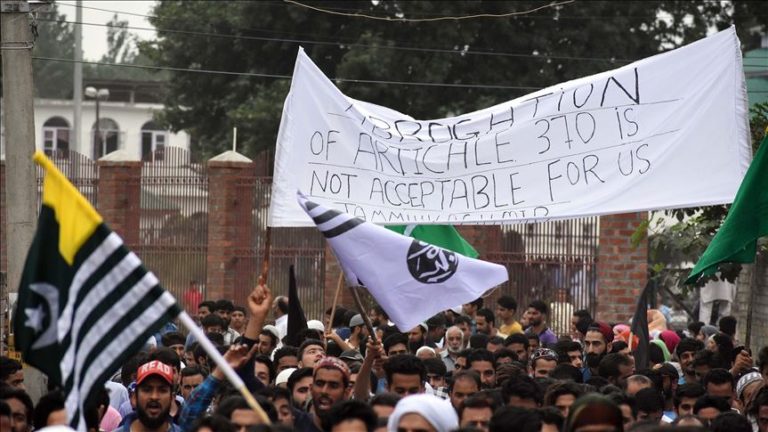
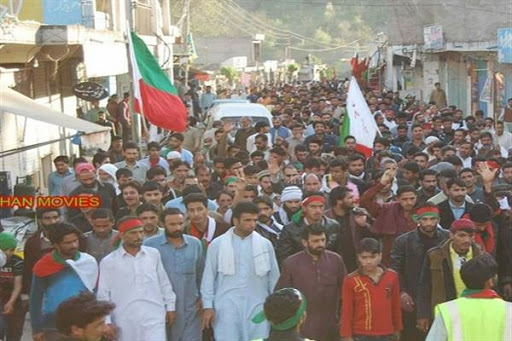
The struggle for freedom and revolution is difficult and one must be patient. The results of freedom struggle do not come overnight, but the constant struggle for the rights becomes the basis for organizing the people. Discipline must be maintained while maintaining the continuity of the freedom struggle, and mistakes made during the struggle must be identified and rectified. When there are mistakes during an action then these mistakes and shortcomings must be rectified. Repeating these mistakes is very harmful. At the end of the second phase of “Leave Jammu and Kashmir Movement,” the workers and leadership of the People’s National Alliance (PNA) have collectively shown resilience.

On their return to Muzaffarabad, the PNA have managed to garner the sympathy of a large section of the public. At the same time, the PNA workers have returned with a new revolutionary spirit, determined to go to the masses for the third phase of their movement with greater intensity.

At the end of the second phase of the movement, the contradictions between the occupying forces and subjugated masses had deepened to such an extent that some new questions had arisen among the lower and conscious strata of the masses, especially the youth, along with debates and very weak dialogues. They had also begun to take a strong position over time.

Some of these questions and debates are common. For instance: If the governments of Muzaffarabad and Gilgit are empowered to form an assembly that will present the issue of Jammu and Kashmir to the world, can we really take any practical steps to restore the unity of the state of Jammu and Kashmir? Are we ready for it?

Is the question of independence of Srinagar connected with the question of independence of Muzaffarabad?

If there is real enmity between the upper classes of Pakistan and India, then why doesn’t Pakistan cancel all the agreements with India over the issue of Jammu and Kashmir? What is the freedom in the presence of Act 74, Karachi Agreement and the Lent Officers?

Many more such questions are under discussion after October 22. These are the questions that need to be discussed with the people in the language of the people. We will continue our struggle while adhering to the philosophy of giving awareness to the people and taking awareness from the people. We will increase, because what we learn from the analysis of society, the majority of the people learn from the day-to-day process, and during any movement, the people learn very quickly and move forward.

We have returned to Muzaffarabad with the determination and spirit that we will work tirelessly and continuously to organize the people on the right basis. Today the situation is such that right and wrong, good and bad, friend and foe are more than in the past. The difference between freedom and slavery has become easier to understand.

Let’s move forward while strengthening the belief in the victory of the organized people. Victory awaits the people.

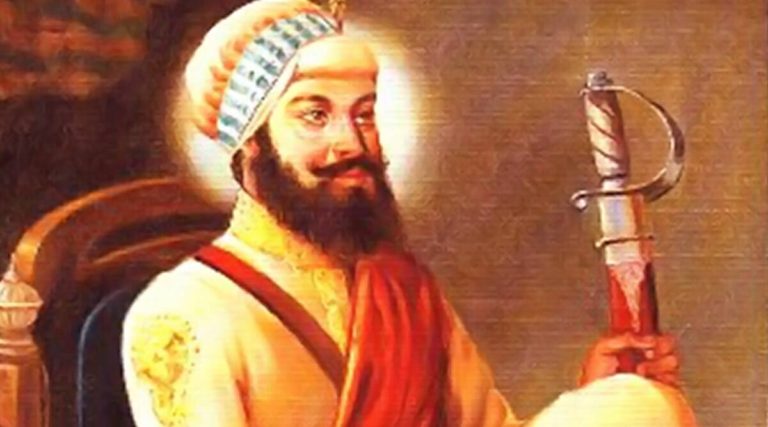
Akal Takth and the concept of Miri and Piri created by Guru Hargobind Ji

Much before his martyrdom, Guru Arjan Dev Ji was well aware of the need for the Sikh community to develop a body of dedicated warriors who would become guardians of the oppressed, fight for justice and righteousness and protect their nation and people against repressive powers. It was with this thought in mind that he decided to train his son, Hargobind, who was very young at that point in time, in martial arts.

The responsibility for the same was given to Bhai Budda. Bhai Budda should not be confused with the saintly old Baba Buddha Ji who possessed no such skill. He was a Sikh skilled in soldierly qualities and proficient in the use of arms.

Guru Arjan Dev Ji also impressed upon his son the need to build a viable force for self defence within the rapidly expanding community. He probably took these steps due to a divine realisation that he would not be in a position to carry forward the evolution of the community beyond the massive task of compiling the holy Granth and they would fall on the young shoulders of Hargobind.

When the summons came from the Mughal Court for Guru Arjan Dev Ji, he knew that he would not come back. Before leaving, he declared on May 25, 1606, that young Hargobind, would be the next master of the Sikhs.

On June 11, 1606 then only 11 years old, Hargobind became the sixth master of the Sikhs, and came to be known as Guru Hargobind Ji. Some chronicles put his initiation date as June 24, 1606.

Guru Hargobind Ji, though very young, completely understood what his holy father required of him. During the initiation ceremony itself, he requested Baba Budha Ji to adorn him with a sword rather than the Seli (silk cap) of Guru Nanak Dev Ji as was the tradition. It is said that Baba Budha Ji, who knew nothing about swords, put the sword on the wrong side; Guru Hargobind Ji then requested him to put another sword on the other side and thus started the tradition of him wearing two swords. This created the concept of Miri and Piri, implying that henceforth both religious and temporal power would remain vested upon the Guru.

The first step taken by Guru Hargobind Ji was construction of a seat of Temporal Power of the Sikhs. It came up on June 15, 1606 on a high ground opposite the Hari Mandir in the form of a 9 to 11 foot tall platform called the “Akal Bunga.” On this throne like structure sat Guru Hargobind Ji along with Bhai Gurdas and Baba Buddha Ji and held court. He received petitions and dispensed justice. The temporal nature of the Akal Bunga balanced the spiritual nature of the Hari Mandir, thus cementing the concept of Miri and Piri. The building is now a five storey structure with a marble inlay and gold leafed dome and is called the Akal Takht. It is the most important of the five Takhts of the Khalsa community.

Having created the seat of Temporal Power, the young Guru and his dedicated advisors set about strengthening the defences of the holy city of Amritsar. The city was walled and a small fortress named “Lohgarh” was constructed on the outskirts. The Guru initiated his own flag and war drums that were beaten twice a day.

Then began the arming and martial training of the Sikhs; the Guru himself was adept in the use of arms and was an avid hunter. Martial Vaars (ballads of heroism) were composed and sung in the Court on a daily basis. The heroic deeds of Sikhs were commemorated. With time the Guru had, under his command, seven hundred horses and a considerable Infantry.

Thus, within a few years of becoming the sixth master of the Sikhs, Guru Hargobind Ji was well poised to fructify the dream of his holy father of reconstitution of the Sikhs as a separate nation. The seed was sown even though the tree took almost two centuries to grow to its full potential. It is important to note here that to further the concept of nationhood, the Guru adopted all trappings of royalty, but deep within, and in his own words, he remained a simple ascetic and servant of the Sikhs.

After Pakistan, Iran brings home the Chinese Dragon

Some Indian and Iranian antiquarians might nostalgically speak about the commonality of their ethnocultural origin but in practical dealings, these long-forgotten and outdated pleasantries hardly play any meaningful role. Yes, for a very short duration of the Pan-Iranian movement spearheaded by the founder of Pahlavi ruling house, Reza Shah Pahlavi, Iranian academics and pragmatic scholars did conduct valuable researches in the phenomenon. However, Indians seem to have given only lip service to it. 

A partial freeze in India-Iran relations set in as early as 1979, when, in the aftermath of the ouster of monarchy, Teheran passed into the hands of orthodox ecclesiastical fraternity. The Ayatollahs, reminiscent of the Zoroastrian mobid (clerical) hierarchical structure— no doubt a significant social entity— had, hitherto, remained apolitical, or at the best, played a minimal advisory role if and when domestic exigency so demanded. The difference is that following the Islamic revolution, the Iranian clergy cleverly sidelined the Iranian Left, the real vanguard of the revolutionary movement, and directly grabbed political power. It ruthlessly attuned the entire Iranian polity to its time-hardened pro-Islamic stereotype. Keeping clear of religious tag, Indian political arrangement only sullenly watched the history of the region shaping quite differently.

With the introduction of the rule of the Iranian Islamic Republic in 1979, Indo-Iranian trajectory of relations shifted from benign intimacy to disgusting caution. India strictly followed the international norm of non-interference in the internal affairs of a state. Under the guidance of Imam Khomeini, the hero of the Islamic revolution, the Ayatollahs set forth an effective mechanism for a quick shift from Pan-Iran-ism to Pan-Islamism. A large number of Pan-Iranian fans, staunch nationalists and upholders of Iran’s civilizational permanence left their native land and sought refuge in western countries, especially the US, to escape persecution. The long drawn conflict between reason and dogma reappeared in its new avatar.

Obviously, in ideological terms, Islamic Republic of Iran was bound to enter a phase of deep skepticism and hostility towards the Arab world in general and Saudi Arab monarchy in particular, an institution Iran stubbornly refused to recognize as the epicentre of Islamism on the globe.

Iran is a nation that does not easily untie the accumulated baggage of loathing against its adversary. The Ayatollah’s antagonism against the US is that (a) it supported monarchical rule in Iran and suppressed populist movements especially of the Jibh-e-Milli in the 1950s (b) it offers solid support to the State of Israel against Palestinians (c) it protects and manipulates monarchy in Saudi Arabia and through it controls the vast oil reserves and the strategic routes in the Gulf.

Iran’s animosity against the State of Israel is rather amusing and without any cogent reasons like (a) Iran wants to shame the Arab states for their conciliatory attitude towards a people who have been castigated in the Islamic scriptures. Iran wants to send the message that it, a non-Semitic nation, is more Islamic than the Semitic Muslims (b) Israel is no less than canker eating into the vitals of Islamic body in the Middle East, and (c) Israel is a modern military power with the potential of exerting large scale influence on the history of the region, something that minimizes the stature of Iran.

Iran is at loggerheads with the Saudis for these reasons: (a) Arabs have been the historical dominators of Iran (b) there is a great ethnolinguistic and cultural divide between Iran and the Arabs and Saudi is considered the leader of the Arab world (c) Ayatollah Khomeini had declared that monarchy was disallowed in Islam and hence Saudi monarchy is void of legitimacy. (d) The Saudi ruling house cannot and is not the custodian of the twin holy shrines, the Mecca and Medina. Iran does not recognize it as the custodian.

It will be recollected that when anti-Saudi monarchy sentiment was at its height, nearly four hundred Iranian Hajj pilgrims were killed in the riots that erupted within the precincts of the sanctum sanctorum of the Mecca. Calling herself more Islamic than the Arabs, Iran wants to be recognized as the leader of the Islamic world. That seems wishful thinking because Muslims, despite the slogan of Islamic fraternity, are sensitive to factionalism. 

Obsessed with these political-cum-regional paradigms, Iran, under the Ayatollahs thought of going nuclear to cow down Israel and also obtain an edge over the entire Arab world, particularly the Saudi. The take of Saudi Arabia and Israel from Iran’s nuke ambition was that they could be vulnerable to Iran’s nuclear-rattle, and, therefore, ganged up with the US to subvert Iran’s nuclear undertaking. Washington had earlier done it in Iraq, though after the destruction of that country no tangible proof of late Saddam Hussein coming anywhere close to making the dirty bomb was found. Destruction of Iraq and not Iran or Pakistan will be discussed for long by historians as one of the controversial decisions of US military strategy planners.

When Washington rushed to impose sanctions on Iran on the nuclear count, it showed that the US was not fully prepared to talk to the Iranian side without doing the exercise of sabre-rattling. Iran is a very tough country to negotiate with and the Americans have very little experience of dealing with a nation of split personality like Iran.

What do we mean by split personality? By and large, most countries including ours, engaged in business with Iran have little knowledge of a historical reality. The non-Semitic Muslims anywhere in the world, especially in the Asian continent, all have a split personality. They have never been able to come out of the delusion whether Islam brought them something more useful and viable in comparison to the cultural ethos to which their elders had tenaciously remained glued millennium after millennium. This is true not only of Iran but also for Pakistan, Afghanistan, Tajikistan, and India including the Kashmiri and even the Central Asian (Turkistan) and Eurasian Muslims.

It is only among the non-Semitic Muslim societies that the debate about true Musulman and pseudo-Musulman has been raging with unabated intensity over the centuries. In the eyes of the Arab Muslims all non-Semitic Muslims are more or less spurious Muslims. This is the reason why the non-Semitic Muslims have invariably resorted to the destruction of all cultural symbols of pre-Islamic times in their lands. The revolts surfacing in Muslim countries in our times in the shape of protests, violence or militancy is, in fact, the reflex of that split personality and a struggle for finding out how the gap can be bridged over? A glaring example is of nearly two crore mohajirs of Pakistan desirous of returning to their parent land – India.

Chabahar Port and India

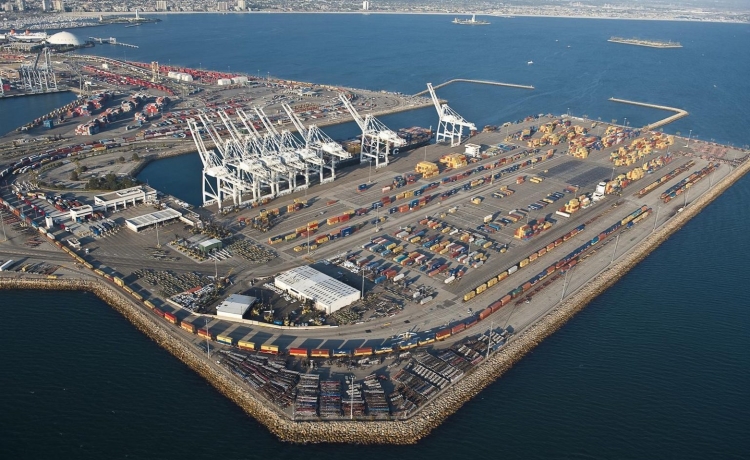
Apparently, American pressure and India’s compulsions thereof could assume the potential of forcing India to slow down the progress of work at Chabahar in the Straits of Hormoz. Whether Iran’s pre-planned deal with China discussed during President Xi’s visit to Tehran in 2016 had whetted the appetite of Iran of obtaining hefty financial packages from China or not remains a moot point.  Whatever transpired between them, Iran, nonetheless, thought it is more in her interests to enter into partnership with India on Chabahar and other two projects. Iran is well aware of the implications of wriggling out of any one of the three deals made with India. Moreover, Iran with her big oil reserves, and a nation with a strong ego is not to be compared with Pakistan that will put all eggs in China’s basket as in the case of Gwadar.

If India undersize her stakes in Chabahar, she may face hurdles in completing the Chabahar-Zahedan rail link of 680 km and also the Farzad-B gas exploration and exploitation project which was originally discovered by the Indian gas giant ONGC. However, India cannot escape the blame of soft peddling with the projects in terms of finances and technological infrastructure. I was part of PM Narendra Modi’s team during his official visit to Tehran in 2017 and the Iranian side repeatedly desired that India keeps the time frame for the completion of the projects. They were skeptical, nevertheless.

India should seriously consider that it was with great persuasions that the US allowed a waiver on Chabahar. As such, India should have made the hay while the sun was shining. India should expedite the import of necessary machinery and equipment from European countries by impressing upon them that India had to work under a waiver which might be withdrawn at any time given the unpredictability of the ruling apparatus of the two hostile countries. India should never give Iran a cause for concern because Teheran cannot wait indefinitely as she has to recover fast from economic crunch imposed by the sanctions.

It is for the American policy planers to debate whether it will be in the interests of Washington to push Iran into the lap of China? As per reports, Iran has been offered to bite the $400 billion dollar carrot package by China for developing the Chabahar port with the option of connecting it with Gwadar. This will bring solace to Pakistan because it changes the security strategy scenario in the region to India’s disadvantage. Iran had been raising a hue and cry over the US naval ships making their presence felt in and around the Gulf. But how much comfortable Iran will feel with Chinese naval force making its presence massively felt in the strategic Gulf region if India is out? The past century of Iran’s history is actually the history of her struggle for protecting the Gulf water channel from external influence and penetration. No regime in Teheran will afford to make the Gulf a bone of contention between mighty navies of the superpowers and thus endanger the security not only of the littoral states but also its own as well by undoing the balance of power.

It is time that India revisits the narrative and makes some pragmatic changes in her policy of handling her Iranian projects and the Gulf, without losing sight of peculiar traits of Iranian character. Even if New Delhi has some unknown assurances from Washington, these should not be allowed to influence adversely the essential contours of her foreign policy particularly towards an important neighbour like Iran. It is no strong logic to presume that Chabahar will have very limited intake capacity because no major trade transactions to the CARs (Central Asian Republics) will take place through Chabahar–Sirakhs-Turkmenistan corridor. With Indian presence in Chabahar, not only Afghanistan, Iran and the littoral states will feel more secure but the vast region called Central Asia will also find access to the warm waters of the Indian Ocean and the most crucial world’s naval route of trade and transportation. If India abandons Chabahar it will be a big setback to the cordial Indo-Afghan relations as well.

India should galvanize into action her topmost diplomatic expertise to re-activate the deals with Iran and simultaneously prevail upon the European Union to work towards softening of American sanctions on Iran so that India-Iran link up is not disrupted and the dragon is kept at an arm’s length. This will go in the interests of the stakeholders. The US should be dissuaded from performing an act that amounts to making India suffer for the sins of others. The world’s strongest democracy has to be strongly disposed towards the interests of the world’s largest democracy. Moreover, the US has to understand that saner voices in Iran will not remain stifled for all times to come. Matured diplomacy does not mean wielding the whip all the time.

Terrorists kill former ikhwan turned policeman in Kulgam, South Kashmir

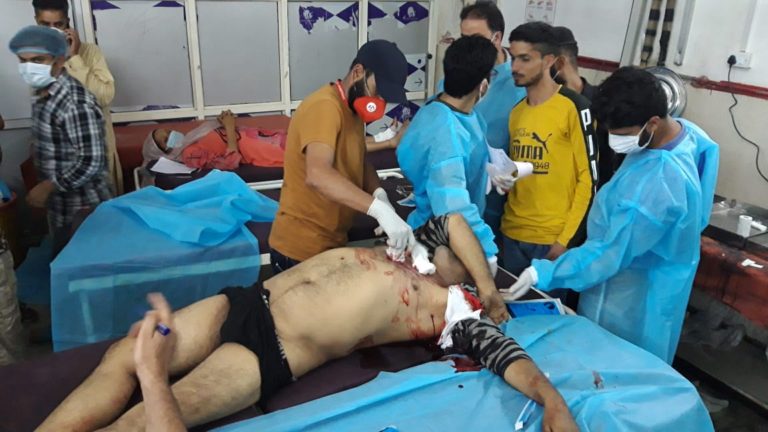
Srinagar, July 22: Terrorists on Wednesday evening shot dead a former counter-insurgent turned policemen Abdul Rashid Dar at Kulgam, South Kashmir. Seven years ago, terrorists had killed Abdul Rashid’s son and now they shot dead the counter-insurgent turned policemen. Security forces have launched a hunt to track down the attackers.

Gurenderpal Singh, Senior Superintendent of Police (SSP), Kulgam in a statement said that at 2120 hours (9:20 PM IST) a report was received about sound of 3-4 shots being fired in Furrah area of Police Post Mirbazar jurisdiction.

SSP said that immediately after this information Police parties rushed to the spot from where it was learnt that a person named Abdul Rashid Dar (son of Ghulam Hasan Dar) who was a resident of Furrah had been shot by unknown persons.

SSP, said that Dar was taken to Janglat Mandi Hospital but could not make it and is now no more. “Area has been cordoned and search has been launched to nab the assailants,” a senior Police officer added.

However, police sources said that Dar was an ikhwan (counter-insurgent) who was later on recruited in Police. Ikhwanis had been on the forefront in dealing with terrorism in Kashmir in mid 90’s. As a counter-insurgent Abdul Rashid Dar had worked at the then Sidora based ikhwan camp. 

Medical superintendent GMC Anantnag Dr Majid Mahrib said that Abdul Rashid Dar was declared brought dead to health facility.

Kashmir lockdown till 27 July to control Corona spread

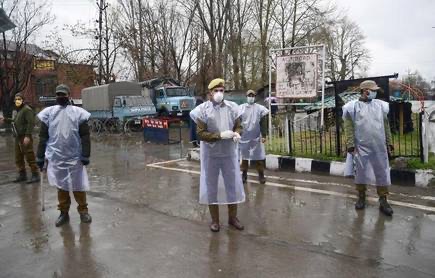
Srinagar, July 22: As the COVID-19 cases and deaths surge in Kashmir Valley since the lockdown was eased, the Jammu and Kashmir government on Wednesday announced strict lockdown till July 27.

“From today onwards till July 27, strict lockdown will remain in place to prevent the further spread of COVID-19 pandemic in valley,” Director of Information and Public Relations said in tweet on Wednesday morning. “Further decision about continuation or announcing relaxation will be taken depending upon the situation.”

It needs to be mentioned that since Unlock-2, COVID positive cases have shown a huge spurt and so far over 15,000 people have tested positive and 260 people have died due to this pandemic.

Several doctors and civil society members had urged the government to re-impose the lockdown to prevent the mass spread of the Coronavirus (Wuhan Virus). Leading medicos and doctors have already stated that the deadly virus was already in the community and it was time to take precautions that include wearing of masks and maintaining social distancing.

There have been reports that shops and other business establishments across valley remained closed on Tuesday while the public transport was off the roads. Barricades have been put up and vehicular movement, except for essential services, was restricted in Srinagar. Restrictions on public movement and activities were imposed in 88 areas notified as COVID-19 red zones in Srinagar after a sharp spike in positive cases in the last couple of weeks.

In old Srinagar and other parts of the city, barbed wires were laid to stop the movement of traffic. The red and contaminated zones also remained sealed.

The authorities have enhanced a fine up to ₹1,000 for not wearing masks, whereas the violation of social distancing guidelines in red zones will incur a fine of ₹10,000.

Restrictions also remained imposed in Pulwama, Anantnag, Ganderbal, Baramulla and Kupwara, officials said.

The Union Territory administration had first announced a lockdown across Jammu and Kashmir on March 22 as part of its efforts to curb the spread of COVID-19. Restrictions were imposed in many parts of the Kashmir Valley, including in the city, on March 19 after the union territory saw its first positive case from Srinagar.

The lockdown was then gradually eased in June and the markets in the city re-opened after about three months in the second week of June.

BNM condemns Pak’s attack on Hammal Baloch home & abduction of OST Welfare members

Central Spokesman of the Baloch National Movement (BNM) has condemned the attack on house of Hammal Baloch, president of Baloch National Movement Germany Zone. In his statement, he also condemned the abduction of the chairman and other members of the OST Welfare Organization.

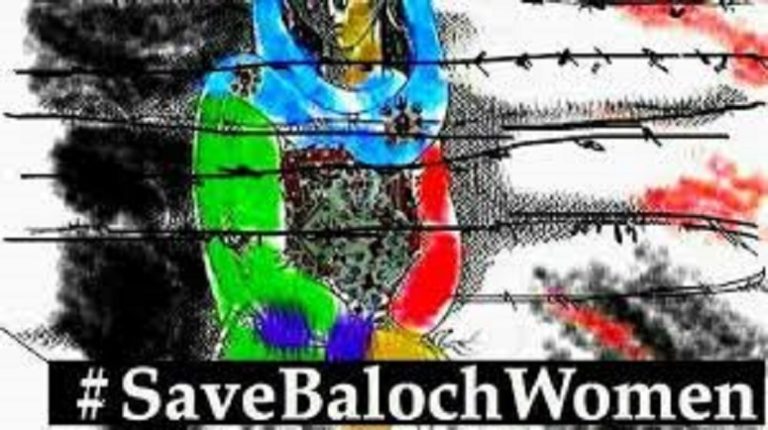
He said that Pakistan’s atrocities are increasing with every passing day. The vicious circle of collective punishment have been expanded to the families of Baloch in exile and are targeting the social activists who had rescued themselves from the barbarism of Pakistan and took refuge in Europe and other parts of the world. These exiled Baloch have been raising their voice against state’s atrocities. Now their families have become the victim of state terrorism, as well as the members of welfare organisation who are supporting the poor and needy people. Even they are not spared from state terrorism.

The BNM Central Spokesman added that the Pakistan Army has full control over Balochistan. “The policy of collective punishment has been growing with the tenure of every new so-called democratic government. During the Musharraf regime people were abducted and tortured; during People Party’s government the policy of “Kill and Dump” was introduced, whereas, when Nawaz Sharif came into power, fake encounters, mass graves and the policy of collective punishment were added. Now, the champions of Ideal City State (Reyasath-e-Madina) are harassing the families of Baloch in exile and abducting social activists. It has created a humanitarian crisis in Balochistan.”

Central Spokesman said that at night the security forces of Pakistan and members of their “Death Squad” attacked the houses of Hammal Baloch, and Shaheed Dawood Baloch who are leaders of Baloch National Movement (BNM) in Panjgur. The members of “Death Squad” indiscriminately fired on the house of Hammal Baloch, harassed his family members and tortured them mentally. The purpose of such pernicious tactics is to silence those voices that have been continuously speaking against state atrocities in Balochistan so that they should sideline themselves or withdraw from the struggle for a Free Balochistan.

In the same way, the Pakistani state forces have grabbed the properties and personal businesses as well as abducted the relatives of political workers to bring political activists under intense pressure who are now living in exile. But Baloch political activists have associated with national struggle consciously and they would never surrender their cause under pressure due to such shameful tactics.

The BNM Spokesman explained that the chairman of the OST Welfare Organization, Mohammad Jan Dasthi was abducted from Karachi. Previously, the general secretary of OST , Abdul Qayyum aka Wafa Baloch was abducted on July 9. “It is the fundamental duty of the state to provide the basic rights to its citizens, but Pakistan is such a state where in place of providing facilities in Balochistan, the state is destroying the lives of the people with brutalities and exploitation.”

The people of a rich land such as Balochistan are dying in starvation. Amidst such an affair of the state, OST had become a ray of hope for the hapless people such that OST supported the needy people by raising funds. Now the Pakistani state has launched an attack against such welfare trusts.

BNM Central Spokesman said, “OST supported the poor patients in cancer; even today several patients are undergoing treatment in hospitals and the OST Organization is bearing their expenses. The attack on OST is tantamount to an attack on these helpless poor and needy people. Action against non-political organizations and welfare trusts is an act of aggression against the Baloch nation.”

Kohala Hydro Power Project is open plunder of POK resources: Habib-ur-Rehman

Former Jammu and Kashmir People’s National Party (JKPNP) spokesman Habib-ur-Rehman denounced the proposed Kohala Hydro Power Project at Kohala in Pakistan-occupied Kashmir (POK) and said that this hydroelectric project is an attempt by China and Pakistan to seize the resources from this part of Kashmir and end its present status.

“There is a plan to disarm Azad Jammu and Kashmir (Pakistan-occupied Jammu Kashmir) by seizing the resources of this part of the state as well as to seize it completely and end its present status,” said Habib-ur-Rehman.

He explained that the construction of Mangla Dam in the 1960s, then the Neelum Jhelum Power Project (NJPP) and now the Kohala Hydro Power Project have not involved public opinion and the so-called government of Azad Jammu and Kashmir (POK) had no role in it. “It is the process by which the resources of this part of the state are being plundered. Apparently it is being announced that it will provide employment to the people while in fact the people are being deprived of their resources. Large water dams in the world are considered harmful to the environment, not only humans but also birds will be badly affected, people will face immense difficulties,” said Habib-ur-Rehman.

Habib-ur-Rehman further added that this dam is primarily owned by the people of Azad Jammu and Kashmir (Pakistan-occupied Kashmir) and according to the state laws, no person, company or corporation which does not fall under the category of State Subject Roll can invest in Jammu and Kashmir.

Talking about the AJK (POK) government, Habib-ur-Rehman said that the government and the members of the assembly were taking concessions to give a thumbs up to all such agreements with the so-called Azad Jammu and Kashmir government. The Pakistani rulers, Azad Jammu and Kashmir’s Prime Minister are witnesses the loot of resources. “Surprisingly, they are becoming witnesses to the alienation of their land.”

The former spokesperson of JKPNP reminded that the ruling class of Pakistan has ruined the Baloch people by plundering the resources of Balochistan. The looting of Sindh’s resources continues, and so there is an urgent need to learn a lesson from history. Instead of the AJK (POK) government having complete control over the resources of the so-called “Azad Jammu and Kashmir”, the AJK (POK) government is wasting their time in flattery and welcome. “They are giving their lands to others for small posts.”

Habib-ur-Rehman warned that as several mega projects are being implemented, Azad Jammu and Kashmir (Pakistan-occupied Kashmir) is being economically paralyzed. “The Pakistani state will seize all the resources through these projects and the people will be deprived of their lands and resources and will fall prey to extreme poverty and helplessness. The people will further fall victim to the worst individual and collective slavery.” The construction of Mangla Dam and Neelam Jhelum Power Project (NJPP) have not changed the lives of the people. The so-called “Azad Kashmir” is as dark as it was before these projects, said the former spokesperson.

Habib-ur-Rehman explained that once this hydroelectric project is complete, it will take the form of military barracks. “The AJK (POK) government will not interfere in their management, production and revenue. All such projects should be handed over to the AJK (POK) government immediately. Pakistan’s involvement is an occupier’s role which is not acceptable in any way.” He appealed to all the political parties to take a stand against this new strategy of occupation.

India’s resolve to defend its sovereignty stands firm: Rajnath Singh

Srinagar, July 22: Defence Minister Rajnath Singh on Wednesday said that India’s resolve to defend its sovereignty stands firm due to the faith which nation’s people have in the capability of its armed forces. Rajnath Singh made these comments while inaugurating Air Force Commanders’ Conference (AFCC). Earlier the Chief  of the Air Staff, Air Chief Marshal RKS Bhadauria welcomed the Raksha Mantri (Defence Minister) and other senior officials from the Ministry of Defence.

A statement issued by Northern Command of the Indian Army said that Rajnath Singh in his address to the Air Force Commanders appreciated the proactive response by the IAF in bolstering its operational capabilities over the past few months. He stated that the professional manner in which IAF conducted the air strikes in Balakot last year, as well as the rapid deployment of IAF assets at forward locations in response to the prevailing situation in Eastern Ladakh has sent a strong message to the adversaries. “He (Defence Minister) alluded to the ongoing efforts for de-escalation on LAC and urged the IAF to stand ready to handle any eventuality,” the statement said.

Rajnath Singh also praised the stellar contribution of IAF in supporting the nation’s response to COVID-19 pandemic and the role played during several HADR (Humanitarian Assistance Disaster Relief) missions. He highlighted the need to achieve self-reliance in defence production and noted that the theme chosen for this AFCC – ‘IAF in the Next Decade’ – was very apt for enhancing efforts towards indigenisation in the days to come. He lauded the progress made towards enhancing synergy and integration within the three services since the appointment of CDS (Chief of Defence Staff) and creation of DMA (Department of Military Affairs).

The Defence Minister concluded by acknowledging IAF’s role in adapting to changes in technology and adopting emerging capabilities in nano technology, artificial intelligence, cyber and space domains. He assured the commanders that all requirements of the armed forces, whether financial or otherwise, would be fulfilled.

CAS (Chief of the Air Staff) in his address to the Commanders stated that the IAF was well prepared to counter short term as well as strategic threats and the units were evenly poised to counter any aggressive action by the adversary. He noted that the response by all commands in ensuring deployment and readiness of forces was prompt and laudable. He emphasized on the need to focus on the ability to handle situations at a short notice for ensuring a robust response.

During the three day conference, commanders will review the current operational scenario and deployments before deliberating on building the IAF capabilities in the next decade to tackle all emerging threats.

How Pakistan Army suppressed Pashtun killings at Kharqamar, Waziristan

If Pakistan Army is to be believed, then something unimaginable and unpardonable happened in the Boya area of North Waziristan on May 26 last year. On this fateful day, four unprecedented things happened– One, a mob of Pashtun Tahafuz Movement (PTM) activists (in ISPR’s words) “assaulted” the army’s Kharqamar checkpost in broad daylight. Two, it was a brazen attempt by locals (again in ISPR’s words) to “exert pressure for the release of suspected terrorists’ facilitator” who had been arrested a day earlier from Doga Macha Madakhel village after an encounter between Pakistan Army and suspected terrorists, during which one soldier was injured (more about him later). Three, the mob was led by two serving legislators, Ali Wazir and Mohsin Javed Dawar who are Members of National Assembly (MNA), and Lastly, (as per the ISPR), the mob resorted to “direct firing on the post.”

Those who know Pakistan Army would have expected that with so many ‘firsts’ the army retaliation would have been massive. But ISPR stated that “Troops at the check post exercised maximum restraint in the face of provocation and direct firing on the post. Due to firing of the group, five Army soldiers got injured. In exchange of fire, three individuals who attacked the post lost their lives and 10 got injured.” Taking a very serious view of this incident, the Pakistan Army subsequently lodged an FIR with the Bannu Range Counter-Terrorism Department Police Station against multiple PTM workers (including MNA’s Mohsin Dawar and Ali Wazir) under different sections of the Pakistan Penal Code, Maintenance of Public Order Ordinance and even the Anti-Terrorism Act. While a section of the media went along with the Pak army’s version of this incident, yet blatant misinformation of factual details in the ISPR’s narrative completely ruined their cooked-up story.

The Pak Army’s media wing’s claim that “In exchange of fire, three individuals who attacked the post lost their lives and 10 got injured,” immediately fell flat because there was physical evidence to prove that at least 13 protesters were killed and about 25 to 40 injured due to the firing by army soldiers (MNA’s Mohsin Dawar has put the figures as 15 killed and 40 injured). While ISPR remained unfazed, at least the leading Pakistani English daily Dawn showed some spine by carrying a note below its report titled ‘Govt moves to withdraw Karqamar case against PTM leaders, others’, (updated on 10 July 2020), that reads “Correction: The story earlier erroneously stated that three people were killed in the clash on May 26. It has been amended to reflect the total death toll, which was 13. The error is regretted.)

Such large casualty figures, in turn, completely negates the ISPR’s claim that “the checkpost exercised maximum restraint in the face of provocation and direct firing on the post.” Furthermore, with Pakistan Army not permitting a fact-finding team of Human Rights Commission of Pakistan (HRCP) investigating this incident to visit the Kharqamar checkpost, it became more than evident that as far as this massive shootout was concerned, the Pakistan Army certainly had a lot to hide! If the Pak army didn’t want to suppress facts, then why did it impose an eight-day long curfew in Doga Macha Mada Khel village after the Kharqamar shooting?

No wonder the entire opposition walked out of the National Assembly to protest against the killing of civilians and the government came under intense pressure as Mohsin Dawar’s version that “They (army soldiers) beat up a woman and picked up some other people yesterday (May 25)” and that “We were going to protest that incident when they opened fire on us,” appears more believable. Perhaps that’s why Vice President of Pakistan Muslim League (Nawaz) Maryam Nawaz unambiguously condemned Pakistan Army’s characteristic strong-arm tactics while dealing with civilians by saying, “Have we not already paid tremendously for crushing protests and suppressing voices?”

Even though it is merely a social movement for safeguarding human rights of the Pashtun community, the Pak army had made no secrets about its unqualified hatred for PTM. Readers may recall that during an interaction with the media less than a month before this incident, Maj Gen Asif Ghafoor, (who was the then DGISPR) had publicly warned the PTM leadership that “Their time is up.”

So, the indiscriminate shooting of Pashtuns by Pak soldiers who were manning the Kharqamar checkpost though unfortunate, isn’t something that was completely unexpected. Though the PTM’s demands are justified, possibly its demand for an immediate end to the practices of extrajudicial killings, enforced disappearances and unlawful detentions is the main source of the Pakistan Army’s discomfiture!

During the “time is up” media interaction, Maj Gen Ghafoor also made some rather serious charges against PTM by saying, “On the PTM website, they have got a number that states the amount of funds they have collected from Pashtuns around the world. But tell us how much money did you get from the NDS (National Directorate of Security of Afghanistan) to run your campaign? How much money did RAW (Research and Analysis Wing of India) give you for the first dharna in Islamabad? Though DGISPR didn’t furnish any proof to support his allegations, but the fact that it applied the Anti-Terrorism Act on PTM activists in the Kharqamar checkpost incident indicates that Rawalpindi was convinced of PTM being an anti-national organisation with links to Pakistan’s arch-enemies- India and Afghanistan!

However, it’s now emerged that the government had quietly filed an application in the Bannu anti-terrorism court on March 16 seeking withdrawal of the Kharqamar checkpost case. As per Dawn, this application reads that “The state as per instructions of the provincial government with reference to the prevailing situation, intends to withdraw prosecution of the subject case.” Whereas this move has been seen as a confidence building measure to resolve the existing deadlock between the government and PTM, but the truth is more pedestrian. It was just to escape international criticism and public censure for the indiscriminate firing that killed, maimed and injured nearly 50 unarmed protesters, which the ISPR spun the wobbly yarn in defence of the army, of the checkpost coming under fire from protesters forcing soldiers to fire back, about five soldiers being injured due to firing by PTM activists, and one of the soldier even succumbing to his injuries!

The reality is that even though the Pakistan Army made such hue and cry about the Kharqamar checkpost incident, it knew all along that it’s falsehood wouldn’t be able to stand scrutiny of law. In fact, since Rawalpindi had already achieved its aim of diverting international and domestic attention from this despicable carnage of its soldiers by making PTM the scapegoat, to continue pursuing this case in courts made no sense and also ran the risk of exposing the truth. As it is, the Pakistan Army has disregarded Amnesty International’s directions that this incident “should be fully investigated to determine if there was any use of excessive force and if any resulting killing was unlawful.” So, it would not want this incident to be resurrected through the courts and revive the controversy surrounding this shooting.

Human Rights Commission of Pakistan (HRCP), which was not permitted to investigate this incident by the Pak army has also condemned this attack and demanded inquiry by a parliamentary commission, a request that has (expectedly) gone unheeded. It has also lambasted curbs enforced by the Pakistan Army in former FATA, but not wanting to annoy the powerful military, HRCP has cleverly thrown the ball in Islamabad’s court by noting that “the state must ensure that the media and civil society have independent access to the former FATA.” Taking a snipe at ISPR’s attempts to keep the media ‘on leash’, HRCP has also stated that “the country’s mainstream media must also understand its responsibility to report on this region fairly.” Therefore, by ‘directing’ Islamabad to withdraw this case despite it accusing PTM for having links with RAW and NDS, Rawalpindi, has unwittingly spilled the beans!

One may ask that with withdrawal of the Kharqamar case, what about justice for Sepoy Gul Khan, who as per DGISPR purportedly died due to gunshot wounds sustained in the firing by PTM protesters? What about final closure for his widow and children? But there’s nothing to worry about on this account because taking back the Kharqamar case will in no way deny justice to Sepoy Khan or his family- simply because he didn’t sustain gunshot injuries on the day PTM activists “assaulted” the checkpost.

Remember the encounter of May 24, 2019, that took place between Pakistan Army soldiers and unidentified gunmen at Doga Macha Madakhel village during which one soldier was injured? Well, Late Sepoy Gul Khan was this person and has cunningly been projected as a victim of PTM inspired mob violence just to cover-up the Pakistan Army’s grossly excessive use of force. Whereas, such unethical manoeuvres are not expected from a professional army, but with the DGISPR publicly announcing Rawalpindi’s depraved policy of “all is well in love and war”, for the Pakistan Army to indulge in factual skullduggery is no big deal!

Terror hideout busted in Rajouri, 1 Pika Rifle & ammunition recovered

Srinagar, July 22: Leaving no stone unturned to stop the revival of militancy in Pir Panchal region of Jammu division, Jammu and Kashmir Police and the security forces have launched massive operations to bust all the hideouts of militants. On Wednesday, JK Police and security forces busted a militant hideout in Thanamandi area of Rajouri district. War like stores that included a Pika Gun were recovered during the searches.

Chandan Kohli, Senior Superintendent of Police (SSP) Rajouri, said that an information was received by the police regarding suspected presence of a militant hideout in Manyal area of Thanamandi after which teams of the Rajouri police, Special Operation Group and 38 Rashtriya Rifles launched a Cordon and Search Operation late Tuesday. “The entire area was kept under cordon and in the wee hours of Wednesday, searches were launched during which a militant hideout established under a portion of dense bushes was busted,” said the SSP.

Kohli added that 1 Pike Rifle, 1 Chinese Pistol, 1 Local Pistol, 1 AK-47 Magazine, 2 Pistol Magazines, 168 Pika rounds, 47 AK rounds, 4 pistol rounds, 2 UBGL grenades, 1 Binocular, 8 Ammunition belts, 1 Antenna and 1 Tape recorder have been recovered from the hideout.

Two days ago, on Monday the police had busted a terror funding module of Pakistan-based terrorist organisation Lashkar-e-Toiba (LeT) tasked to activate its cadres in the Jammu region.

“We have arrested one person and his contacts are being traced,” officials at the Zonal Police Headquarters in Jammu said. They added that the operation to track down Hawala mole was carried out after police received information that LeT has activated a module of its members for carrying out terrorist activities in the Union Territory, particularly in the Jammu region, and in furtherance to this, a delivery of funds was to take place in Jammu.

A senior police officer at zonal police headquarters said that there have been reports that terrorists infiltrate through the Jammu region. “We have eliminated some of them in last three months,” said a senior police officer “We are leaving no stone unturned to stop any revival of terrorism in the Jammu division.”