Home Blog Page 35

BLA attacks Pak Army convoy in Kech, inflicts heavy casualties

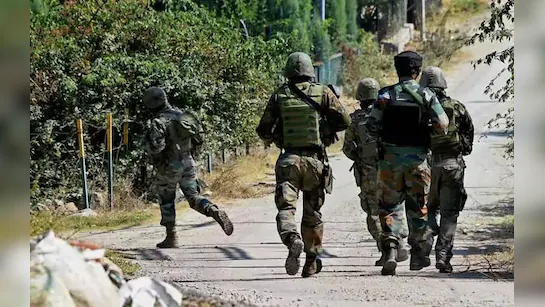
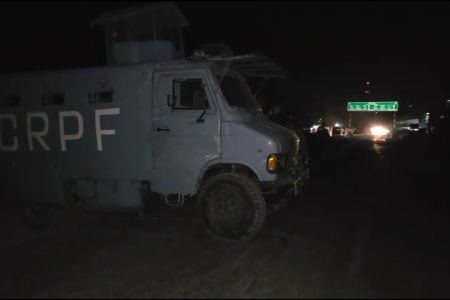
The Baloch Liberation Army (BLA) has launched an attack on a convoy of the Pakistan Army in the Kech area of Tajaban, resulting in significant casualties. According to Jeeyand Baloch, the spokesperson for the BLA, their fighters successfully ambushed the convoy on Thursday while it was traversing the CPEC route in the Kurki area.

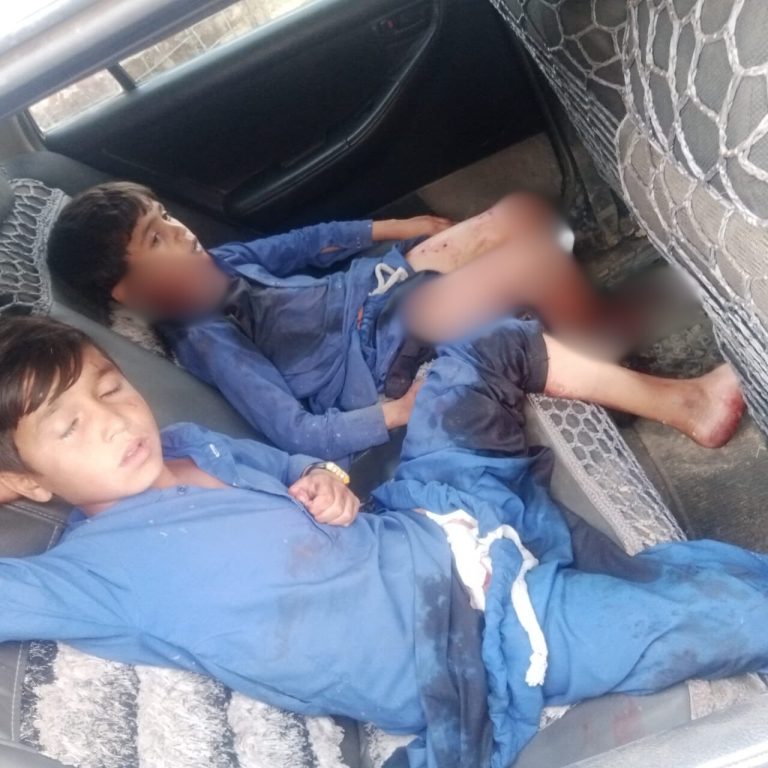
The BLA’s fighters utilized heavy and automatic weapons during the assault, targeting the Pakistan military vehicles directly. The attack led to at least one soldier being killed and four others injured. This incident underscores the ongoing conflict between Baloch nationalist movements and the Pak military, which has long inflicted oppressive tactics in the region.

The spokesperson reiterated the BLA’s commitment to continue their operations until the complete withdrawal of the Pak Army from POB. “Our fighters have dealt a significant blow to the enemy forces, and we will not cease our efforts until our land is free from occupation,” Jeeyand Baloch said. The group has vowed to continue its struggle until the Baloch community is liberated from an oppressive Pak Army occupation.

Pak terrorists attack and kill one doctor & six workers in J&K’s Ganderbal

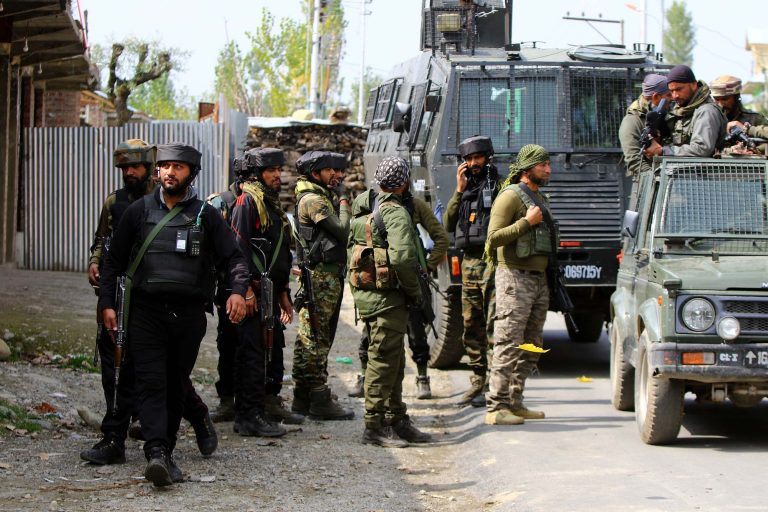
The Resistance Front (TRF), an offshoot of the Pakistan-based militant group Lashkar-e-Taiba led a deadly attack in Ganderbal district, Jammu and Kashmir, which resulted in the deaths of a doctor and six migrant workers on Sunday. The attack marks a significant shift in the group’s strategy, as it targeted both locals and non-locals for the first time.

Sheikh Sajjad Gul, the chief of TRF, is reportedly the mastermind behind the assault. Under his direction, the group’s local module executed the attack, which specifically aimed at Kashmiris and non-Kashmiris alike. Over the past year and a half, TRF has been active in Kashmir, previously focusing on targeting Kashmiri Pandits and Sikhs, but has now expanded its violence to include migrant workers.

The group had conducted reconnaissance of the attack site—a construction area in the Sonamarg region of Ganderbal—for over a month, with two to three terrorists executing the planned targeted killings.

In response to the incident, a four-member team from the National Investigation Agency (NIA) is scheduled to visit the attack site on Monday afternoon. The Union Home Ministry indicated that the NIA may take over the investigation into the Ganderbal attack.

Initial reports indicate that the deceased doctor, identified as Dr. Shahnawaz, and the migrant workers were part of a construction team working on the Z-Morh tunnel project, which connects Gaganeer to Sonamarg. The attack occurred as the laborers and staff were returning to their camp late in the evening. Additionally, five individuals sustained injuries during the attack, further underscoring the gravity of the incident.

European countries push for strict migration policy overhaul to speed up deportations

A coalition of 17 European countries is calling for a significant overhaul of migration policy, aiming to expedite the return of asylum seekers whose applications have been rejected. The group has emphasized the need for a “paradigm shift” that holds accountable those who fail to leave the continent after being issued return orders.

The countries assert that “people without the right to stay must be held accountable”, proposing that a new legal framework should clearly outline the obligations and responsibilities of individuals facing deportation. They said that “non-cooperation must have consequences and be sanctioned.” The document advocates for empowering governments to carry out deportations while fully respecting fundamental rights.

The initiative is spearheaded by Austria and the Netherlands, with support from Croatia, the Czech Republic, Denmark, Finland, France, Germany, Greece, Italy, Luxembourg, Malta, Slovakia, and Sweden. Additionally, non-EU Schengen Area members Norway, Switzerland, and Liechtenstein have also endorsed the proposal.

The group urges the European Commission to treat the issue with urgency and develop a “state-of-the-art framework” that addresses current challenges and developments in migration policy, building on discussions from a working party meeting held in June.

During that meeting, officials identified several strategies to improve the bloc’s low rate of effective deportations, which remains stubbornly around 30%. Proposed measures included leveraging trade and visa policies to encourage countries of origin to accept the return of their nationals after asylum applications are denied. This lack of cooperation has been identified as a significant barrier to increasing the return rate.

New Paradigm in Migration Policy

The June discussions also suggested implementing a “common European return decision” to address the inconsistency in member states recognizing return orders issued by others. However, these specific proposals were not included in the new non-paper, which primarily serves as a call to action for the European Commission and showcases broad political support from various regions and political spectrums across Europe.

This joint appeal coincides with an upcoming meeting of interior ministers in Luxembourg, marking the first such gathering since Germany reinstated controls at all land borders, Hungary threatened to leverage irregular migrants against Belgium, and the Netherlands sought an opt-out clause from EU asylum regulations. Migration is also expected to be a key topic at the EU leaders’ summit next week.

The rapid developments in migration policy have raised serious concerns about the future viability of the Schengen Area and the effectiveness of the New Pact on Migration and Asylum, a legislative overhaul finalized in May. While the New Pact aims to bridge gaps between asylum and return procedures, member states are advocating for separate legislation specifically focused on deportations.

Efforts to reform the 2008 Return Directive have stalled in the European Parliament since 2019, prompting the 17-country coalition to call for a completely new legislative framework. European Commission President Ursula von der Leyen has pledged to introduce a “new common approach on returns,” aimed at streamlining and expediting the deportation process while ensuring that returns are dignified and decisions are mutually recognized across Europe.

Israel attacks Hezbollah’s terror funding pipeline in Beirut

Israel launched a series of airstrikes late Sunday and early Monday, targeting multiple branches of Al-Qard Al-Hassan, an organization financing Hezbollah’s operations. The strikes, which mark an escalation in Israel’s ongoing offensive, were aimed at weakening the Iran-backed group’s financial networks and crippling its ability to continue funding terror activities.

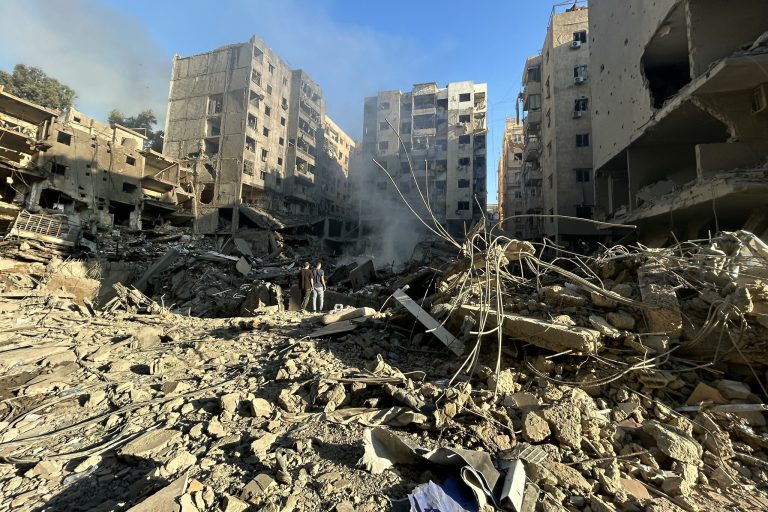
According to Lebanese state media, at least 11 airstrikes hit Beirut’s southern suburbs— Hezbollah strongholds—while more attacks were reported in southern Lebanon and the northeastern Beqaa Valley. Explosions echoed across Beirut, sending civilians scrambling for shelter. Some of the strikes were carried out near Beirut’s international airport, adjacent to the Dahiyeh suburb, where Hezbollah is headquartered.

Israel pounded buildings in airstrike on Beirut, Lebanon

The Israeli Defense Forces (IDF) confirmed that the strikes targeted branches of Al-Qard Al-Hassan, an unlicensed financial institution operating as a key source of cash for Hezbollah. Rear Admiral Daniel Hagari, an IDF spokesperson, announced that the operation aims to dismantle Hezbollah’s funding infrastructure. He warned civilians to avoid any facilities associated with the organization.

“We will strike more sites overnight and in the coming days. Our goal is to reveal how Iran finances Hezbollah’s terror activities using civilian institutions as cover,” Hagari said.

Lebanon Under Fire

Hundreds of Beirut residents fled as thick plumes of smoke rose from blast sites. Witnesses reported one building in the Chiyah neighborhood reduced to rubble, though no casualties were reported as most residents had evacuated before the explosions.

The strikes come amid rising tensions, as Hezbollah continues to launch rockets into northern Israel. On Sunday alone, around 200 rockets were fired at Israel, triggering air defense systems and causing property damage in the port city of Haifa and other areas. The IDF responded with airstrikes, targeting Hezbollah positions across Lebanon, including command centers and weapons depots.

Israel also intercepted two drones, one over Syria and another over its northern territory, launched by Iran-backed militias in Iraq.

Intensified Air Raids

The ongoing conflict, which began with Hezbollah’s attacks in support of Gaza-based Hamas on October 8, has taken a toll on Lebanon. According to Lebanese health ministry figures, at least 1,470 people have been killed, most of them believed to be Hezbollah operatives. Hezbollah itself has confirmed the deaths of 516 fighters, with additional casualties among allied militias and civilians.

Israel’s broader offensive, launched in September, aims to degrade Hezbollah’s military capabilities and secure northern Israeli communities after nearly a year of cross-border skirmishes. So far, 29 Israeli civilians and 43 soldiers have lost their lives in the conflict.

The situation along the Lebanon-Israel border remains volatile, with the United Nations peacekeeping force (UNIFIL) reporting multiple incidents involving Israeli troops. UNIFIL accused Israel of destroying a UN observation tower, a charge the IDF has denied.

Pashtuns protest backing Khyber Jirga against Punjabi Paki regime’s atrocities

In a powerful show of resistance, the people of Mohmand district held a peaceful protest at Mia Mandi Bazaar in Halimzai Tehsil, reaffirming their unwavering solidarity with the Pashtun Tahafuz Movement (PTM) and the Khyber National Jirga.

The protest, part of a growing wave of resistance across Pashtun regions, called attention to the systematic oppression faced by Pashtuns under the Punjabi Pakistani regime . Participants reminded the world of the gruesome toll on the community: 1,700 Pashtun religious scholars have been killed, and 200 mosques bombed. “No Pashtun has been spared from oppression”, declared protestors.

The Paki establishment’s crackdown against PTM has intensified in recent months. Thousands of activists have been blacklisted under Schedule IV, and hundreds remain behind bars. The protestors decried these harsh measures but vowed to continue their struggle for justice. “Despite the occupied-state’s heavy-handed oppression, our movement will not falter. We will achieve our rightful demands through justice and perseverance,” they said.

Similar protests have surged across South Waziristan and other districts, where calls for peace and unity have echoed louder than ever. The growing confidence in the Pashtun Jirga reflects a shift in public sentiment, signaling that the end of Pakistan’s military-driven dollar war in the region may be near.

This movement, born out of decades of suffering, reflects the Pashtun community’s deep-rooted anger against Punjabi Pakistani regime. For years, the Army has pursued a policy of divide and rule, crushing Pashtuns, and waging wars that enrich powerful Punjabi institutions at the expense of local populations. Yet, the protests today show that the Pashtun spirit remains unbroken.

Drone strike targets Netanyahu’s residence after Yahya Sinwar’s killing

A drone targeted Israeli Prime Minister Benjamin Netanyahu’s private residence in Caesarea on Saturday, the Israeli government confirmed, though no casualties were reported. Neither Netanyahu nor his wife was home during the incident, according to his spokesperson. This latest escalation comes as Israel’s conflict with Hamas and Hezbollah intensifies, with fresh violence from Lebanon and Gaza.

Earlier in the day, air-raid sirens sounded across northern Israel, warning of incoming fire from Lebanon. Along with the drone attack, Israel’s military reported 55 projectiles were fired into northern Israel in two separate barrages. Some were intercepted by the Iron Dome defense system, and there were no immediate casualties.

In a parallel threat last month, Yemen’s Houthi rebels launched a ballistic missile targeting Ben Gurion Airport while Netanyahu’s plane was landing. Israeli defenses successfully intercepted the missile, averting disaster.

Meanwhile, Israel continues to pound Gaza with airstrikes, killing more than 50 people, including children, within the last 24 hours, according to local health officials. Hospital staff reported the upper floors of the Indonesian Hospital in Beit Lahiya were hit, sparking chaos among patients and medical staff. At Al-Awda Hospital in Jabaliya, another strike caused injuries to several medical workers.

In central Gaza, multiple airstrikes killed civilians, including two children, when a home was struck in Zawayda. Another strike in the Maghazi refugee camp wiped out 11 members of the same family, according to the al-Aqsa Martyrs Hospital.

Hezbollah Escalates as War Deepens

In Lebanon, Hezbollah ramped up its offensive, firing drones and missiles toward northern Israel. Following the death of its leader Hassan Nasrallah in a recent Israeli airstrike, Hezbollah vowed to escalate its operations. On Saturday, the Israeli military reported the killing of Nasser Rashid, Hezbollah’s deputy commander, in the town of Bint Jbeil.

Lebanon’s health ministry said an Israeli airstrike struck a vehicle on a highway north of Beirut, killing two people. The identities of those in the vehicle remain unclear.

Iran backs Hamas as Hostage Crisis Continues

Amid the escalating violence, Iran’s Supreme Leader Ayatollah Ali Khamenei pledged continued support for Hamas following the killing of its leader, Yahya Sinwar. “Hamas is alive and will stay alive,” Khamenei said on Friday, reaffirming Tehran’s backing for the group despite Israel’s military offensive.

Sinwar, the architect of Hamas’ deadly October 7, 2023 raid that killed 1,200 Israelis and abducted 250 others, was killed this week in what Israeli forces described as a chance encounter on the battlefield. However, Hamas vowed to continue holding its hostages until Israel agrees to a cease-fire and withdraws its forces from Gaza.

Despite Sinwar’s death, Netanyahu signaled no intention of ending the war. “Our war has not yet ended”, he declared in a televised address Thursday night. Families of the remaining hostages, however, are urging the Israeli government to seize the moment for negotiations to secure the return of their loved ones.

BLA releases video messages of fidayeens in Karachi attack on China

The Baloch Liberation Army (BLA) has released video messages of its fidayeens involved in recent operations, including the high-profile attack in Karachi which targeted Chinese nationals. The media wing of BLA, Hakkal, shared these videos showcasing members of the Majeed Brigade, the organization’s elite force, undergoing military drills, performing weapon training and preparing for missions across Gwadar, Karachi and other strategic locations.

The video features three fidayeens delivering their final messages in Brahui, Balochi and English, reinforcing their determination to fight against the colonial occupation of Pak-occupied-Balochistan by Pakistan and the exploitation of the region by China. The fighters vowed to continue the resistance until liberation is achieved, urging fellow Baloch to join the struggle.

Shah Fahad’s Call to Arms: “Sacrifice is the Only Path to Freedom”

In his emotional message, Shah Fahad, a member of the Majeed Brigade, addresses the Baloch nation, expressing how love for the homeland and the ongoing atrocities against the Baloch people have brought him to this path. “The struggle for national survival leaves us with no option but to resist through fidayeen attacks,” he said, emphasizing the moral duty of every Baloch to rise against oppression. Fahad warns that Pakistan and China, as occupiers, will not yield unless confronted with force.

He appeals to Baloch youth, urging them to abandon fear and face the enemy with courage: “Death comes to all, whether you live passively or fight. So why not embrace bravery and strike a blow so powerful that no one dares to oppress us again?” Fahad’s words highlight a deep frustration with the silence surrounding the plight of Baloch women, children and families, many of whom have been subjected to enforced disappearances by the Paki establishment.

“We fight not just for our freedom but to preserve our identity, our language, and our culture,” he said, adding that without active resistance, the Baloch may be erased from history. “I will sacrifice myself tomorrow, but my hope is that other young Baloch will take up this rifle and carry the fight forward.”

Sohail Baloch: “75 Years of Slavery Must End”

Fighter Sohail Baloch recounts the suffering inflicted upon the Baloch people by Pakistan over the past 75 years. “We have been forced to make the mountains our home, enduring every hardship for our nation and our land,” he says. Sohail recalls how generations of Baloch fighters, including members of the Majeed Brigade, have given their lives in the hope of liberating their homeland.

Sohail draws a parallel with the 1971 Bangladesh Liberation War, referencing Pakistan’s attempt to crush Bengali rebels, which backfired and led to the surrender of 90,000 Pakistan troops. “The enemy thinks they can break us, but we have learned from history. Just like the Bengalis, we too will fight until the occupiers are driven out.”

He appeals to the Baloch people to join the Majeed Brigade and resist the exploitation of their land. He warns that if they remain silent, strategic assets like Gwadar, Saindak and Reko Diq will be lost to foreign interests. “This struggle is our only hope for survival and dignity. We must confront those who seek to erase our identity and plunder our resources.”

Farid Baloch Warns China: “Withdraw, or Face Relentless Attacks”

Moreover, Farid Baloch focuses on China’s role in exploiting Pak-occupied-Balochistan’s resources through projects like the China-Pakistan Economic Corridor (CPEC). “We have no quarrel with the Chinese people, but their occupied-government’s involvement in our land is unacceptable,” he says, reminding China of its own history of resistance against foreign occupation during World War II.

Farid said that China is supporting Pakistan’s “genocide” in POB by aiding the exploitation of the region’s resources. He warns that if China does not withdraw from POB then BLA will continue to target its projects and personnel with increasing intensity. “We will not back down. Every fidayeen attack is a message that our struggle will persist until the last soldier of the occupying force leaves our land.”

Farid denounces China’s support for what he calls the “unnatural Pakistan state” and the “uncivilized Punjabi establishment” that oppresses the Baloch people. “China must choose—either stop aiding Pakistan’s colonial ambitions or face severe consequences,” he declares, making it clear that the BLA will continue its fight until POB is free.

An Unyielding Struggle for Freedom

The video messages serve as a stark reminder of the Baloch people’s decades-long resistance against Pakistan Army’s control and foreign exploitation. The fighters’ words reflect deep-seated grievances about the loss of Baloch autonomy, enforced disappearances, and resource exploitation. Their determination to fight until the end underscores the growing frustration with the Paki establishment and international actors involved in POB.

The BLA are the warriors fighting to preserve their identity and reclaim their homeland. Their appeals to the youth, the references to historical struggles, and their condemnation of external powers signal that the conflict in POB is far from over.

Balochistan was an independent country until Pakistan Army forcefully occupied it in 1948 and have used the resource rich region to serve their own interests.

Khyber-Pakhtunkhwa: Pashtuns to hold mass protests against Pak Army’s oppression

The Pashtun Qaumi Jirga has announced peaceful protests across all districts of Khyber-Pakhtunkhwa on 20 October, aiming to reclaim peace in Pashtun lands from the oppressive policies of Paki establishment. Manzoor Pashteen, leader of the Pashtun Tahafuz Movement (PTM), has urged Pashtuns to unite and confront the Punjabi Pak Army’s destabilizing tactics, which is fuelling unrest for profit and political gain.

“The real cause of war in Pashtun areas lies with the policies of GHQ (General Headquarters),” said Pashteen. “Generals bring war to our lands in exchange for dollars, turning Pashtun soil into battlegrounds to serve their interests.” He said that without unity, peace would remain a distant dream, as the Army continues its terror campaigns to maintain control.

The movement, rallying under the banner of the Pashtun Qaumi Jirga, declared that the time had come to resist both military interventions and Punjabi Pak Army backed-armed factions that have ravaged Pashtun regions for decades.

PTM to Mobilize Pashtun

The protests on October 20, branded as “Pashtun Peace Day”, will call for an end to forced occupations, exploitation of natural resources, and Pak Army’s chokehold in the region. Participants will also demand the safe return of refugees to their homes, justice for those killed by the military’s operations, and the release of political prisoners and missing persons. Local concerns such as electricity prices and border issues along the Durand Line are also on the agenda.

The protest’s epicenter will be in Wana Bazaar, Lower South Waziristan, with similar rallies scheduled across the entire Pashtun belt. The Pashtun Qaumi Jirga has vowed to enforce its resolutions to bring sustainable peace and ensure that resources are no longer exploited by outsiders.

Pashteen’s message reflects a growing frustration among Pashtuns with the Pakistan Army’s draconian policies. The military’s involvement in enforced disappearances, illegal detentions and violent crackdowns has drawn fierce criticism as communities remain trapped under its oppressive rule. The so-called “war on terror” has been used as a cover to suppress dissent and maintain the Army’s dominance, all while diverting international aid and resources into their coffers.

Pak Army kidnaps nine more Baloch from Nushki

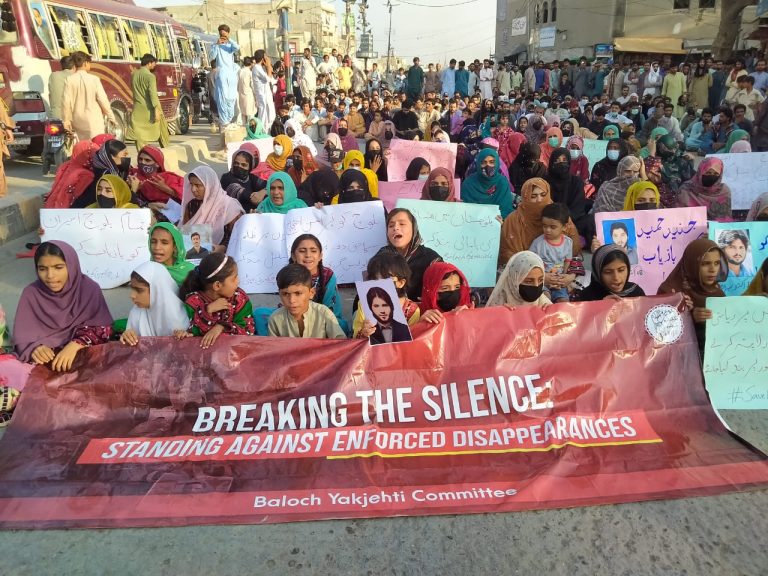
Pakistan Army has kidnapped nine individuals from Nushki district, transferring them to an undisclosed location. This latest incident is part of an alarming trend of enforced disappearances in Pak-occupied-Balochistan that reflects the Pakistan Army’s ongoing brutality.

The arrests occurred during military raids in Taariz and Badal Kariz areas on 7 and 8 October. The victims have been identified as Master Fareed Ahmed, Abdul Malik, Mumtaz Baloch, Iqbal Baloch, Habib Baloch, Sharif Jan, Shah Saleem, Zahoor Jan, and Asfand Baloch. Their detainment underscores the Pakistan Army’s relentless campaign against dissenting voices in POB.

The timing of these abduction is particularly alarming, as enforced disappearances in POB have surged in recent weeks. Earlier this month, 39 individuals were reported missing, with only five having returned home, while the fate of 34 remains unknown. This pattern of arbitrary detentions and enforced disappearances devastates families and communities.

Moreover, in Dera Bugti approximately 25 more individuals have fallen victim to enforced disappearances as a result of similar military operations. This ongoing crisis demands urgent attention, as the Pakistan Army continues to silence and suppress Baloch community.

Protests across POJK over rape of female student ; Pak backed authority fails to act

A wave of student protests has gripped Pak-occupied-Jammu and Kashmir following reports of sexual harassment and the rape of a female student, spotlighting the disturbing state of safety in educational institutions. However, the Pakistan Army-backed authorities have responded with brute force.

The unrest was sparked by reports that a student in a private college in Lahore was sexually assaulted, leading to public outrage. Instead of showing empathy, Punjab Chief Minister Maryam Nawaz dismissed the incident as “fabricated news” and accused opposition groups of spreading “fake reports.” This blatant dismissal of serious allegations, without a transparent inquiry, reflects the deep-seated apathy within the establishment towards the safety of women and students.

The Progressive Students Collective (PSC) has emerged as the leading voice in the protests. Speaking at a rally, Haris Azad condemned the occupied-state’s negligence: “Incidents of harassment in educational institutions are intolerable. This culture of impunity must end”. Students in Muzaffarabad and other cities, angered by the occupied-government’s inaction, have joined the movement, amplifying their demand for justice. They have issued a deadline of October 24 for the government of Pak-occupied- Jammu and Kashmir (POJK) to act.

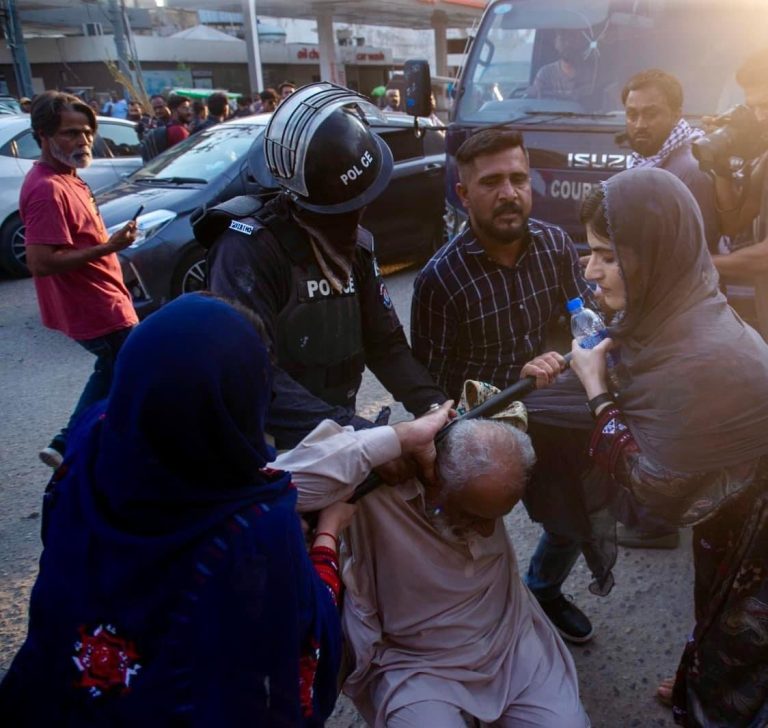
However, the Pak occupied-state’s response has been heavy-handed. In Rawalpindi, at least 250 protesters were arrested as police used tear gas to disperse demonstrations. Senior Superintendent of Police Hafiz Kamran Asghar declared that “violent protesters” had been detained to maintain law and order, warning that legal action would be taken against anyone defying the occupied- authority. Over 28 students were injured in clashes with college security and police forces in Lahore earlier this week.

The military-authority has resorted to draconian measures to suppress the protests. Section 144 has been imposed across Punjab, banning public gatherings, and all educational institutions have been shut down. Instead of addressing the root cause of these protests—the lack of accountability in harassment cases—the Paki machinery is focused on silencing the victims and those demanding justice.