Home Blog Page 353

India must prepare and prosecute a Multi-Domain War

China’s confrontation with India is not all about the boundary issue, but a POLITICAL act to offset its present challenges, and demonstrate China’s rising comprehensive national power. The Communist Party of China (CPC) leadership that increasingly relies on nationalism for its legitimacy will not find it easy to make the compromises necessary for a boundary settlement. India’s armed forces are more than capable of handling whatever the Chinese PLA (People’s Liberation Army) throws at us in the traditional ground, sea and sky domains (envisaged maximum threat) in East Ladakh.

We have planned, prepared, trained and have the combat experience, professionalism, will and resolve to ensure that the Chinese strategy of hegemonistic creeping will be defeated by causing much more attrition than China is ready to accept. China’s geopolitical, strategic and national loss will far outweigh any gains that the country makes, if at all, during the conflict. The Communist Party of China’s offensive manoeuvres will come with grave consequences of setting the world and hopefully China’s own people against it, and could start the beginning of the end of the CPC.

If China chooses to continue its belligerent actions, I would not to be wrong to predict that the Communist Party of China (CPC) will be fighting an existential battle. For this our nation and the armed forces will have to credibly demonstrate our intent, will, resolve and act to ensure that the PLA returns to the status quo ante before this crisis started, and this being NON NEGOTIABLE. Let us be clear, this is a defining moment in the history of India and our actions could well dictate our standing in the world, and this is the time, when against a stronger adversary we have to stand firm and unyielding, stand tall without brinkmanship, expect some pain but tell China by our actions that this time the red lines have been crossed. WE MUST BE PREPARED TO GO ALONE, however, assistance except in the physical/kinetic domain, from other nations could well be forthcoming, such as diplomatic, material, information and intelligence, and moral support, which will weigh heavily on President Xi Xinping, CCP and his military commanders.

Escalation would lead to a Multi-Domain War

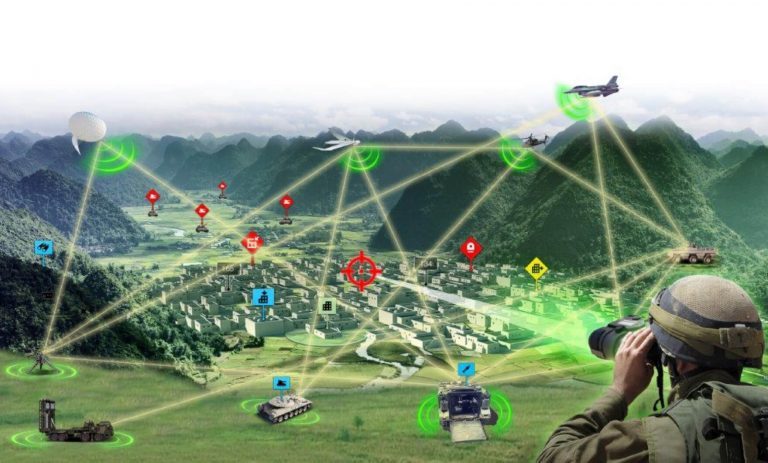
In case China expands the present localised crisis to other sectors, and the escalatory ladder of conflict is exercised which will naturally be reciprocated, then India must be prepared to fight a Multi-Domain War (MDW). A Multi-Domain War calls for a change of thought process, ‘a transformation and not just modernisation’. Simply put, MDW envisions the military and non-military; everything from political to diplomatic, fighters to destroyers, space shuttle to submarine, cyber to satellites, tanks to attack helicopters, electromagnetic to electronic, media to information influence operations, economists to MNCs, para-military forces to think tanks, intelligence agencies to ISRO, munition factory worker to hacks— working together intrinsically as ONE, to overwhelm the enemy with attacks from all domains: Land, Sea (including sub surface), Air, Space, Cyberspace, Network, Big Data, Information including Media and Social Media, electronic and even legal. The span of operations addressed simultaneously is from the political, national, strategic and operational to the tactical domain.

Visualization of Multi-Domain War

Here’s an illustration of how China will wage Multi-Domain War during the confrontation stage mainly using non-kinetic/cognitive domains.

1.Conduct information influence operations including psychological operations on our polity, public and Armed Forces (fake news, rumours- vast scope) to spread the bogie of the invincible Chinese dragon and fracture the social structure and political will of the country.
2. Wide ranging economic operations to further weaken our economy; for instance, during the COVID crisis hold onto pharmaceutical and other critical products like ventilators and products (the base chemicals)
3. Sudden and broad based cyber-attacks from the strategic to the border troops (tactical) to include our national media, logistics chains, air and rail communication systems.
4. Degradation of our active C5ISTAR (Command, Control, Communication, Computer, Cyber, Intelligence, Surveillance, Target Acquisition and Reconnaissance) systems.
5. Attack our electro-magnetic spectrum and even satellite systems with an attempt to blind us.
6. Network and data-centric operations which paralyse our data bases, intelligence, financial and logistic networks.
All or some of these actions before, during and post-conflict (mobilization and reinforcements including strategic lift would be hampered) to just name a few effects.

The above scenario may appear like Sci-Fi, but numerous countries like USA and her allies are now preparing to wage such a war and they visualise that China, their peer/ competitor/adversary (USA has officially named China as her adversary) has the capacity and capability for Multi-Domain War. In fact USA has officially stated that actions like cyber and space attacks will be constituted as an ‘act of war’. Probability of Pakistan jumping into the fray must be factored in as it could very well be part of the strategic plan. Similarly using land and maritime routes through other immediate neighbouring states cannot be ruled out.

China is waging such a war, and trying to impose its will with increasing tempo, focus and lethality just prior to the conflict to try and achieve political and military aims, without fighting. We have one of the most battle-hardened troops in the world, but the intangible effect of psychological operations and internal political and social dynamics, isolation, lack of situational awareness, operating in a degraded environment coupled with a 360-degree conflict with no front, rear and flanks will certainly impact them; we need to create better capabilities and capacities to counter and negate China’s design of conflict at the national and military level. However, just as a stalemate for India is considered a defeat if we launch pro-active operations against Pakistan, China too will aim to achieve its political and military objectives swiftly. This is where as I already stated that our political will, resolve of the people and professionalism of our Armed Forces must prevail.

While we hope that the current impasse will be resolved using all elements of DIME (Diplomatic, Informational, Military and Economic), we must concurrently start preparing for future confrontations and conflicts (two and a half front war) to wage an MDW (Multi-Domain War). War is a national effort involving all dimensions of comprehensive national power, and it is imperative that we build capability and capacity to fight and win the future confrontation/war.

India’s armed forces will remain the ultimate weapon to impose the will of a state. Capacity building across multiple domains takes commitment, time, dedication, finances, synergy, integrity and will. I wish to paraphrase Robert Palazzo from his book ‘On The Ethics of Future War’ where he wrote ‘In a world in which the effective division between the domains of war is increasingly blurred, there is less utility or need to maintain sharp distinctions between the levels of war and the organs of government. War must be undertaken as a holistic, unitary undertaking by the government, the military, and the people’. The good news is that we know how our adversaries could wage an MDW (Multi-Domain War), but we need to urgently create better structures, create synergies and train at the national, strategic and armed forces level.

Before concluding, one can’t resist observing that the conventional soldier, his section and platoon, squadron of armour or artillery battery, a fighter squadron or naval frigate will always continue to remain the final arbiter in conflict, and we must empower the ‘Soldier and Armed Forces ’ to fight a multi domain war. We have no choice but to be ready for a Multi-Domain war. Adopting and implementing the MDW concept will improve our deterrence capability and prevent wars.
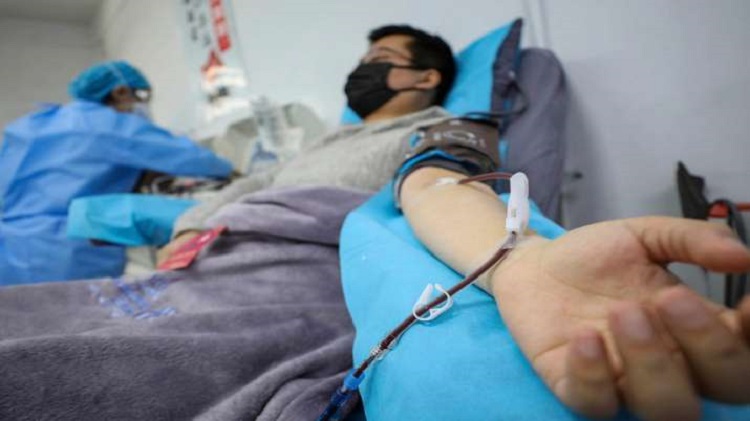

Haiku peek inside the heart of Covid-19 patients

Haiku is a traditional Japanese poem which consists of three short lines that do not rhyme. Dr Shahnaz has penned down a collection of Haiku poems that relates intimately with all that goes on inside the mind of a COVID-19 patient. The mind of a patient infected with novel Coronavirus is clouded with the thought of death, the fear of losing dearest ones, yet the very nature of this disease precludes the patient from sharing these emotions. Since the certainty of death occupies the imagination of the patient, he or she wishes to share few precious thoughts, convey few emotions and pass on the legacies to the survivors.
Read on these Haiku poems and you will feel the depth of emotions inside a COVID-19 patient.

Will you tell them
That I was brave
That I did not cry
That I died well

Please
Place these flowers
In my hand
I will greet God

They told me I was ill
Very ill
Does it mean
I have to die
I could choose to live, also
Allow me

I forgot to take you in my arms one last time
You see
We had so much in mind
And I thought I will be back
Soon

Tell them I loved them all
I don’t have time with me anymore
To waste
One last breath
Maybe

I hear you in my mind
I see you so clear
If you were here
I would have lived

My swan song
And you are not even there to hear it
The walls will echo

Do you remember
You have to
Now that you will be alone
How I loved you, once

If you were here
You could then feel
How my heart is pounding
And they say
Just Breathe

I have no thoughts
I have no words
Silent as the night sky
Tomorrow they will take me away

When I am no more
Sit by my grave some time
Carry jasmine flowers
What else would I need

CFI, Espinoza v. Montana Department of Revenue – Injustice to the Secular

The Center for Inquiry is a leading skeptic and secular humanist organization in the world based out of the United States. One of the troubling court cases coming out of America, recently, was the Espinoza v. Montana Department of Revenue case in which American taxpayers, generally, would foot the bill for forms of religious indoctrination, whether religious or secular Americans – clear asymmetry in the application of funding and a violation of a longstanding principle of separation of church and state in the United States of America.

This was a Supreme Court decision that forces American taxpayers to pay this. There is a gutting of protections provided by both the American Constitution and the No Aid Provisions of 3/4ers of state constitutions forbidding the taxpayer monies to use for any religious purpose.

Nick Little, Vice President and Legal Director of the Center for Inquiry, stated, “This Court has been opening a hole up in Thomas Jefferson’s Wall of Separation between church and state… Now they’ve built a two-lane highway through that hole, inviting churches to raid the public treasury and drive gleefully away with taxpayer money.”

Starting, at least, in 2015, Montana began a tax credit voucher program for taxpayers to get credit if they gave monies to Student Scholarship Organizations. These funded scholarships for private school students.

Most of the private schools in Montana are religious. This is the same across the country. In other words, the funding is for religion. Via Article X, Section 6 of the Montana Constitution, though, there are explicit bans for the use of taxpayer dollars for “religious education.”

“… the Montana Department of Revenue adopted Rule 1, stating that the vouchers could not be used to pay for religious education provided by religious schools. Parents at religious schools sued,” CFI reported.

Based on a 2018 Montana Supreme Court decision, the support for the religious schools violated the Montana Constitution. Thusly, the program was “struck down; thereby “preventing the vouches being used at any private school, religious or not,” now, “the program no longer exists.” However, “the Supreme Court nonetheless agreed to review the ruling.”

Robyn Blumner, CFI’s President and CEO, stated, “Let’s be clear about what just happened: The Supreme Court has decided that atheist taxpayers are now required to fund religious schools… Members of non-Christian faiths are now required to fund Christian education. The religious right has gotten exactly what it wanted from Trump’s justices: the erasure of a fundamental principle of American law, that no person shall be forced to participate in religious expression by subsidizing religious education.” 

Little continued to state the theocratic path this potentially sets forth for the United States in which this exists in contradistinction to the orientation of the Founders or the Framers of the United States Constitution, where religious activities, including education, shall not be supported by the public purse. Nonetheless, with the Espinoza v. Montana Department of Revenue case, there can be funding not only by choice but by compulsion.

Previously, in November of 2019, in an amicus brief by CFI supporting the Montana Department of Revenue the organization (CFI) support the constitutional separation of religion and government.  in upholding Montana’s constitutional separation of church and state.

CFI concluded, “CFI is also a proud member of the National Coalition for Public Education, which vocally opposes all forms of private school voucher legislation in the U.S. Congress. In June 2020, CFI joined a diverse coalition urging congressional leadership to strike language in COVID-19 relief legislation that Education Secretary Betsy DeVos had used to divert emergency education funds to a private voucher scheme.”

With files from the Center for Inquiry.

Photo by Element5 Digital on Unsplash

USCIRF – Jehovah’s Witness Rights Should be Respected

Dennis Christensen is a Jehovah’s Witnesses prisoner of conscience imprisoned in Russia. As per some recent reportage on the violation of the rights of the Jehovah’s Witnesses, the human rights to freedom of religion of Jehovah’s Witnesses are being violated.

Christensen was granted parole on June 23 while USCIRF, or The United States Commission on International Religious Freedom (Washington, D.C.) expressed concern for the health and wellbeing of him. Prosecutor Aleksei Shatunov appealed the decision. Christian remains in prison and will stay there until the next hearing. This could take several weeks.

He – Christensen – is eligible for release in early 2021 based on pre-trial detention time served. However, his health has deteriorated while in custody, which is the reason for the reportage and the concern coming from the USCIRF. He had contracted pneumonia while his scheduled time to remain in prison is until May 25, 2022.

USCIRF Chair Gayle Manchin stated, “USCIRF urges the Russian government to show clemency. The ongoing imprisonment of Dennis Christensen is truly unconscionable. This man has already forfeited his freedom for exercising his peaceful religious beliefs; it would be an atrocity for him to forfeit his life. Russia must free Mr. Christensen immediately.”

The Jehovah’s Witnesses reported 24 are under house arrest, 24 are in pretrial detention, and 10 are imprisoned in Russia. The USCIRF in its annual report stipulated that Russia is a country of particular concern based on violations of religious freedom.

With files from The United States Commission on International Religious Freedom.

Photo by Alexander Smagin on Unsplash

NCSE – Climate Change and Political Partisanship in the U.S.

Based on a new poll on climate change and political views, the National Center for Science Education or the NCSE reported on the Yale Program on Climate Change Communication new data on the registered American voters’ attitudes and beliefs towards climate change and political views. Political views can imply particular identifications on scientific lines.

This has been substantially true in the United States where some political views can be seen as catastrophically bad for the informed policymaking of the public. When political views impede scientific education, are bound to scientific illiteracy, or belie a scientifically informed public, we come to the issue of an appropriately informed public.

A scientifically informed public in a majoritarian or democratic state is catastrophic for policymaking and voting of the public. In terms of thinking global warming is happening, 75% responded in the affirmed with only 11% in the negative. This is good news.

NCSE, among those answering in the affirmative, stated, “98% of liberal Democrats, 92% of moderate/conservative Democrats, and 69% of liberal/moderate Republicans. Fewer conservative Republicans (47%) think that global warming is happening.”

In short, this is a politically divisive issue. On this particular issue, the rights are far less scientifically informed than the leftists, i.e., this aspect of reality leans liberal or is biased towards the liberal in a manner of speaking.

Surprisingly in contrast to the colloquial notions about American citizenry, there are some interesting aspects to some parts of the data. Not in terms of if global warming is happening, but how or by which means global warming is occurring, 61% of the respondents consider global warming is “Caused mostly by human activities” while 29% believe it is “Caused mostly by natural changes in the environment.” 5% ventured both of the aforementioned as the causes and only 4% selecting neither. These are encouraging numbers. It is not the citizenry; it is the leadership not applying this will of the people to the development of scientifically appropriate and fully-informed policies.

“Opinion was politically divided, with a large majority of Democrats but a minority of Republicans accepting human responsibility,” the NCSE stated, “The data were ‘based on a nationally representative survey of 1,029 American adults, aged 18 and older, 911 of whom are registered to vote. The survey was conducted April 7-17, 2020. All questionnaires were self-administered by respondents in a web-based environment.’”

With files from the National Center for Science Education.

Photo by Zbynek Burival on Unsplash

USCIRF – Pastor Ramón Rigal Released; Roberto Jesus Quinones Haces Needs to be Released

Pastor Ramón Rigal was released in Cuba based on reportage from The United States Commission on International Religious Freedom (USCIRF). On April 16, 2019, Rigal and his wife, Ayda Expósito, were detained. The reason: homeschooling their children over the Cuban schools’ atheism and socialism promotion, apparently.

The proposed crimes were doing things in opposition to the normal development of a minor. Now, Expósito was released in April of 2020. James Carr, USCIRF Commissioner, stated, “While we welcome the release of Pastor Rigal and are thrilled that he is reunited with his family, this was not the first time that Pastor Rigal and his wife were arrested in relation to their religious beliefs… The Cuban government must immediately cease harassing this couple and allow all Cuban parents, including the Rigals, to raise their children pursuant to their own faith.”

While the pastor and wife, Expósito and Rigal, case can be considered safer than not, journalist Roberto Jesus Quinones Haces is still in jail. He wanted to cover the trial of the couple and, subsequently, went to prison. The reason was the coverage and Expósito and Rigal. The crime: “disobedience” – can’t make this stuff up.

There has been harassment of other independent journalists in Cuba by the authorities based on attempts to report on religious freedom, e.g., Yoe Suárez, and this came with threats of criminal charges and fines under Decree Law 370. It limits internet online freedom of expression and privacy.

 USCIRF Vice Chair Anurima Bhargava said, “USCIRF once again calls for the immediate release of  Jesus Quinones Haces and the end to harassment of independent journalists who report on religious freedom.”

With files from The United States Commission on International Religious Freedom.

Photo by Juan Luis Ozaez on Unsplash

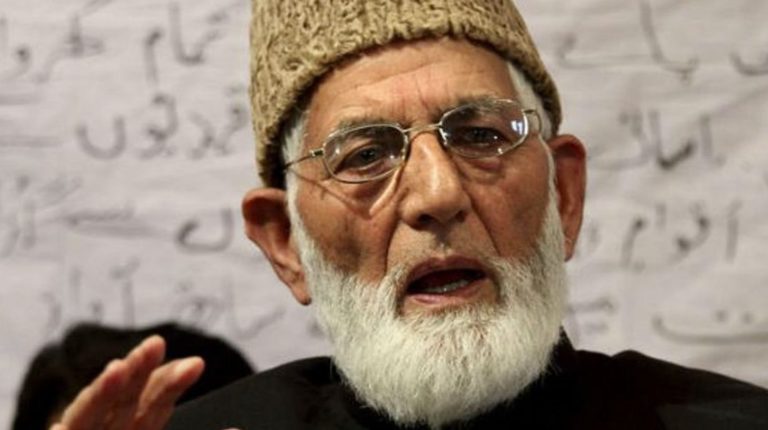
Syed Ali Geelani: Dogmatic, obdurate and self serving till the very end

Syed Ali Shah Geelani, the 90-year old Kashmiri separatist leader aligned with the All Party Hurriyat Conference (Hurriyat), has suddenly resigned from the separatist conglomerate. An irrelevant person leaving an irrelevant organisation does not merit any discussion or comment. Nevertheless, since he maintains pretensions of being a leader of the Kashmiris there is a case to pen down a tail piece.

More than two decades back, on April 24, 1998, Geelani wrested control of the Hurriyat from Mirwaiz Umar Farooq and went on to become the architect of the darkest, most turbulent period in the history of Kashmir. Under Mirwaiz, the conglomerate was not averse to a negotiated settlement of the Kashmir issue, with Pakistan as a party to the talks, and was in constant touch with the Indian government. In the late 1990s, Pakistan’s Inter-Services Intelligence (ISI) became quite disenchanted by the lackluster performance of Hurriyat. Its constant internal squabbling was not taking the separatist movement anywhere despite a colossal expenditure by the ISI. The conglomerate lost credibility post success of the 1998 Lok Sabha elections.

It was under these circumstances that the elevation of Syed Ali Shah Geelani as Chairman of Hurriyat and the unceremonious ouster of Mirwaiz came by. Geelani emerged as a pro-Pakistan, hard line kingpin of separatism in Kashmir. The complete radicalisation of the Hurriyat, its subservience to Pakistan and to the terrorist cadre is the legacy of Geelani. He brought with him the self defeating agenda of Jammu and Kashmir joining Pakistan and blatantly used the platform provided by the Hurriyat to propagate the same.

The constituents of the Hurriyat realised the danger of continuing with Geelani among their fold and attempted to sideline him. However, their internal contradictions, yet again, became their curse and a split within the conglomerate in 2003 put Geelani, once again, on the driving seat, after the unceremonious removal of then chairman Mohammad Abbas Ansari and suspension of the seven-member executive committee.

He remained, throughout, a pointsman for the ISI with no compunction in exploiting the Kashmir youth by pushing them towards the self destructive path of terrorism. His remainder energy was spent in keeping Kashmir in a state of perpetual shut down through muscle flexing through his army of goons. By so doing he ruined the economy of the region and caused terrible misery to those who live on daily wage.

In pursuance of his evil agenda, Geelani also became a very rich man. At the face of it, he maintained collection of Zakat (religious contribution) as his source of funds. In actuality, it is reported that he got vast funds through Hawala transactions from Pakistan, the annual amount running in crores of Indian rupees. He has been badly hit by demonetisation and the National Investigation Agency (NIA) probe into his organisation’s illicit and criminal funding of terror and disruptive activities in the Kashmir Valley. The resultant choking of funds and arrest of the many conduits has caused complete disarray in his brand of politics. Known for screaming anti-India diatribe the loudest he suddenly became most accommodating and has, in recent times, been at pains to emphasise that he was never against talks with New Delhi. This change of heart was motivated less by ideology and more by the fact that his son-in-law, Altaf Fantoosh, and many other functionaries of his party have been arrested under the ongoing NIA investigation.

Now, in his resignation letter he maintains that other members of the conglomerate have not responded to his concerns about the “independent functioning” of the Hurriyat branch in so-called Azad Kashmir (Pakistan Occupied Kashmir). In actuality, it is apparent that the Hurriyat has been undercutting Geelani and he has not liked it. “Today, you have not only violated all the rules and regulations and resorted to indiscipline, but rebelled against the leadership (his leadership) openly and brazenly,” he says in the letter while also referring to “financial irregularities, nepotism, infighting, and a smear campaign to malign him.”

His second grouse is about the inability of Hurriyat representatives to get together a movement against the bifurcation of the state into two Union Territories and abrogation of Article 370 on August 5, 2019. He feels that Hurriyat has failed to counter New Delhi’s efforts while he was unable to act due to detention. He, of course, realises that Hurriyat was in no position to do anything but, with the letter and resignation, he is absolving himself and his loyalists from all responsibility.

Geelani is at pains to clarify that the resignation is not a consequence of his failing health, “Neither the power of my heart and mind has ceased nor has there been any weakness in my spirit of freedom,” he says in the letter while apportioning all blame on the Hurriyat.

Thus has come to an end the times of a dogmatic, obdurate, self-serving and double faced leader who had no compunction in using facilities provided by the India while castigating it openly. He is looked after, free of cost, in the best government hospitals like AIIMS. His children have received the best possible education in India and are pursuing lucrative professions in Pakistan, Saudi Arabia etc. far from the miseries of Kashmir. His “selfless sacrifice” has definitely been good for his family.

Geelani’s resignation will pave the way for a new Hurriyat leadership to be put in place. With his radical colleague, Masrat Alam, being in jail, Geelani has named his loyalist, Rawalpindi-based Syed Abdullah Geelani as his successor in Pakistan. He has, therefore, cleared the way for the ISI to continue  with its control over his organisation.

The Hurriyat has been steadily losing its clout and relevance since people have seen through its self serving and disruptive policies; they have understood that it is standing in the way of their desire for peace and prosperity. To this end, Geelani or anybody else from Hurriyat being there or not is quite immaterial. Out of respect for his colleagues, he could have quit gracefully while citing ill health, but no, even to the end he has remained egoistic and reactionary. Now, as he quits, Geelani needs to reflect on the role that he played in the death of thousands of young Kashmiri boys by propagating the wrong and fallacious theory of independence.

Foundation Beyond Belief – Kasese School Fundraiser Success

The Foundation Beyond Belief for the Kasese Humanist School (KHS) reported on the closing of the fundraiser for the Kasese Humanist School in Uganda. Its purpose was to help the community recover from the floods that had come through its community. With some permission from the authorities in Kasese, the KHS used funds to support the families in need affected by the disaster.

In June, KHS had rationed food to 35 families in Kahendoro, 45 families in Muhokya, and 40 families in Rukoki. 110 families were helped given the numbers reported by the Foundation Beyond Belief. The exchange rate is pretty terrible for a Ugandan shilling to an American dollar with 1 dollar in American currency coming to 3,728 Ugandan shillings. However, KHS has made each shilling count.

The purchases included “large quantities of matoke (a banana used for cooking), cassava flour, bar soap, cooking oil, salt, masks, and packets of biscuits. They also dispensed 150 free masks to all the parents who came for the relief items.”

The KHS Director, Bwambale Robert, has been doing outreach work to the relevant officials at the governments of Kahendoro and Muhokya. The purpose is to give food to a contingent of orphans. Robert has been a humanist at the forefront of activism in Kasese.

He has been providing monetary assistance to the educators who are struggling with the floods and COVID-19 coming into Uganda.

KHS’s Director Bwambale Robert has also been reaching out with government officials to the Muhokya and Kahendero areas of Kasese to give food to a large population of orphans, and has been providing financial support to teachers facing financial hardship due to the floods and COVID-19.

Members and contributors to the flood fundraiser were able to raise $6,000 to help individuals in need in Kasese.

With files from the Foundation Beyond Belief.

Photo by Roman Nguyen on Unsplash

USCIRF – Nations Pledge Finances for Sudanese Democratic Transition

The United States Commission on International Religious Freedom or the USCIRF commended the $356.2 million commitment to Sudan for “development aid and democratic transition programs.”

It was a pledged announced on June 25, 2020 at the Berlin Donor Conference. The purpose of the convening at the conference was to ensure the economic situation in Sudan does not harm its democratic aims.

“We are encouraged by the United States’ decision to provide such robust financial support to a government that is committed to reforming its political system and ensuring all Sudanese people are free to practice their faiths,” a Vice Chair of the USCIRF, Tony Perkins, said, “USCIRF urges the U.S. government to allocate a portion of this funding to programs that support comprehensive curricular improvements, legal and constitutional reform, and other transitional justice measures.”

With such a pledge, one can note the increase in the development assistance compared to Sudan from 2019 based on reportage by the USCIRF about the USAID administrator, as the source, John Barsa.

From a visit to Washington, D.C., in December of 2019, Abdalla Hamdok, Prime Minister of Sudan, emphasized the international support as completely important for the ‘advancement of civil liberties and political freedoms.

The USCIRF Vice Chair, Anurima Bhargava, explained the importance of international partnership alongside the support of the United States for a democratic transition. The funds are expected to “institutional, legal, and educational reforms to enhance religious freedom, and the processes necessary to ensure proper implementation of these (and earlier) reforms in every region of the country.”

Both vice chairs travelled to Sudan in February, 2020, to see the conditions for religious freedom in Sudan. Even with the significant progress of the Sudanese government, there was still work needing doing to appropriately attend to the religious freedom abuses of the former regime.

The USCIRF concluded, “USCIRF recommended in its 2020 Annual Report that the Department of State maintain Sudan on its Special Watch List (SWL). This was the first time since 2000 that USCIRF had not recommended Sudan for designation as a ‘country of particular concern’ for systematic, ongoing, and egregious violations of religious freedom.”

With files from the USCIRF.

Photo by Moutaman Kamal on Unsplash

India’s oil demand nears normalcy as economy gathers momentum

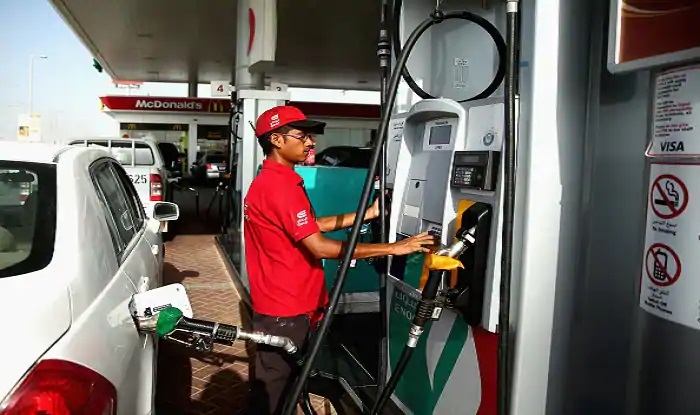
Consumption of petroleum products across India reached 88% of the pre-Covid-19 levels as economic activities gathered steam with the easing of lockdown, the ministry of petroleum said in its official statement.

“With the gradual lifting of lockdowns and beginning of unlocking of the economy in a phased manner allowing resumption of industrial activity and movement of people, total petroleum products consumption has reached to 88% in June’20 (11.8 million metric tonne) compared to June’19 (13.4 million metric tonne), indicating the increase in production activity across all segment of economic spectrum,” the petroleum ministry said in a statement.

In April the sale of petroleum products had fallen to its lowest since 2007 as the nation was locked down to contain the COVID-19 pandemic. India is the world’s third largest oil consuming nation. Demand revived in May as business activities resumed and in June it touched 88% of the earlier consumption. The consumption of petrol in June 2020 touched 85% of last year’s level (2 million metric tonne vs. 2.4 million metric tonne) and diesel consumption reached 82% in June 2020 (5.5 million metric tonne vs. 6.7 million metric tonne) when compared with the same period a year ago. Demand for the LPG fuel continues to rise with a robust growth of 16.6% in June 2020 as compared to June 2019.

“The timely arrival of monsoons and a pick up in agricultural activities during kharif season helped to mark acceleration in diesel consumption that gained 96% on April 2020 level volume (5.5 million metric tonne in June 2020 from 2.8 million metric tonne in April 2020),” said the petroleum ministry statement.

With resumption of domestic flights at 33% capacity and repatriation international flights under the Vande Bharat Mission for international passengers, ATF (aviation turbine fuel) consumption jumped four times in June 2020 when compared with April 2020. ATF sales was 52 thousand metric tonnes in Apr 2020 vs. 201 thousand metric tonnes in Jun 2020)

“Similarly, with restart of major road construction projects, Bitumen consumption has registered a solid growth of 32% in June 2020 compared to June 2019,” said the petroleum ministry.

“Overall the consumption of all petroleum products has significantly increased from April 2020 levels of 49% (6.6 million metric tonne in April 2020 vs. 13.4 million metric tonne in April 2019) to 88% level in June 2020 (11.8 million metric tonne in June 2020 vs. 13.4 million metric tonne in June 2019), as this comes in the backdrop of Indian economy gradually getting momentum with the ease of lockdown restrictions and revival of economic activities that are slowly getting back on track,” explained the petroleum ministry in its statement.