Home Blog Page 354

USCIRF – Pastor Ramón Rigal Released; Roberto Jesus Quinones Haces Needs to be Released

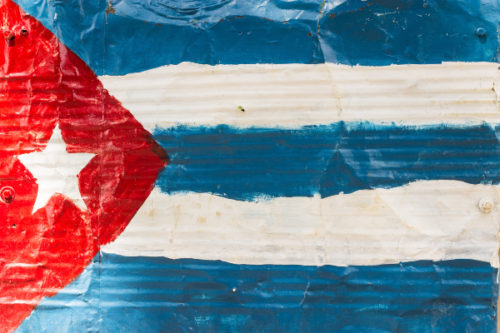
Pastor Ramón Rigal was released in Cuba based on reportage from The United States Commission on International Religious Freedom (USCIRF). On April 16, 2019, Rigal and his wife, Ayda Expósito, were detained. The reason: homeschooling their children over the Cuban schools’ atheism and socialism promotion, apparently.

The proposed crimes were doing things in opposition to the normal development of a minor. Now, Expósito was released in April of 2020. James Carr, USCIRF Commissioner, stated, “While we welcome the release of Pastor Rigal and are thrilled that he is reunited with his family, this was not the first time that Pastor Rigal and his wife were arrested in relation to their religious beliefs… The Cuban government must immediately cease harassing this couple and allow all Cuban parents, including the Rigals, to raise their children pursuant to their own faith.”

While the pastor and wife, Expósito and Rigal, case can be considered safer than not, journalist Roberto Jesus Quinones Haces is still in jail. He wanted to cover the trial of the couple and, subsequently, went to prison. The reason was the coverage and Expósito and Rigal. The crime: “disobedience” – can’t make this stuff up.

There has been harassment of other independent journalists in Cuba by the authorities based on attempts to report on religious freedom, e.g., Yoe Suárez, and this came with threats of criminal charges and fines under Decree Law 370. It limits internet online freedom of expression and privacy.

 USCIRF Vice Chair Anurima Bhargava said, “USCIRF once again calls for the immediate release of  Jesus Quinones Haces and the end to harassment of independent journalists who report on religious freedom.”

With files from The United States Commission on International Religious Freedom.

Photo by Juan Luis Ozaez on Unsplash

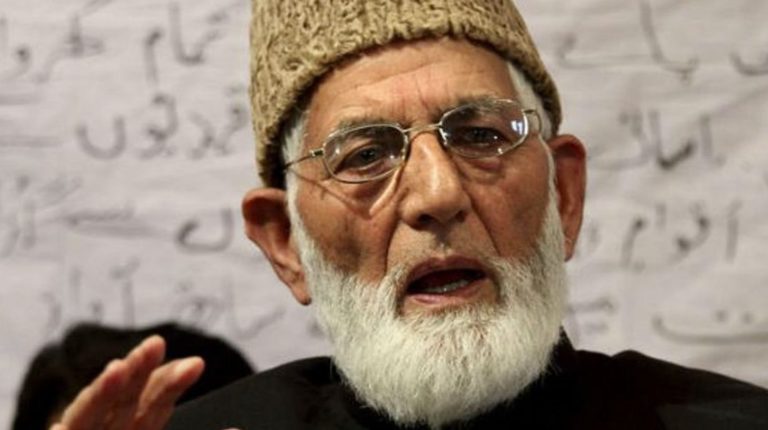
Syed Ali Geelani: Dogmatic, obdurate and self serving till the very end

Syed Ali Shah Geelani, the 90-year old Kashmiri separatist leader aligned with the All Party Hurriyat Conference (Hurriyat), has suddenly resigned from the separatist conglomerate. An irrelevant person leaving an irrelevant organisation does not merit any discussion or comment. Nevertheless, since he maintains pretensions of being a leader of the Kashmiris there is a case to pen down a tail piece.

More than two decades back, on April 24, 1998, Geelani wrested control of the Hurriyat from Mirwaiz Umar Farooq and went on to become the architect of the darkest, most turbulent period in the history of Kashmir. Under Mirwaiz, the conglomerate was not averse to a negotiated settlement of the Kashmir issue, with Pakistan as a party to the talks, and was in constant touch with the Indian government. In the late 1990s, Pakistan’s Inter-Services Intelligence (ISI) became quite disenchanted by the lackluster performance of Hurriyat. Its constant internal squabbling was not taking the separatist movement anywhere despite a colossal expenditure by the ISI. The conglomerate lost credibility post success of the 1998 Lok Sabha elections.

It was under these circumstances that the elevation of Syed Ali Shah Geelani as Chairman of Hurriyat and the unceremonious ouster of Mirwaiz came by. Geelani emerged as a pro-Pakistan, hard line kingpin of separatism in Kashmir. The complete radicalisation of the Hurriyat, its subservience to Pakistan and to the terrorist cadre is the legacy of Geelani. He brought with him the self defeating agenda of Jammu and Kashmir joining Pakistan and blatantly used the platform provided by the Hurriyat to propagate the same.

The constituents of the Hurriyat realised the danger of continuing with Geelani among their fold and attempted to sideline him. However, their internal contradictions, yet again, became their curse and a split within the conglomerate in 2003 put Geelani, once again, on the driving seat, after the unceremonious removal of then chairman Mohammad Abbas Ansari and suspension of the seven-member executive committee.

He remained, throughout, a pointsman for the ISI with no compunction in exploiting the Kashmir youth by pushing them towards the self destructive path of terrorism. His remainder energy was spent in keeping Kashmir in a state of perpetual shut down through muscle flexing through his army of goons. By so doing he ruined the economy of the region and caused terrible misery to those who live on daily wage.

In pursuance of his evil agenda, Geelani also became a very rich man. At the face of it, he maintained collection of Zakat (religious contribution) as his source of funds. In actuality, it is reported that he got vast funds through Hawala transactions from Pakistan, the annual amount running in crores of Indian rupees. He has been badly hit by demonetisation and the National Investigation Agency (NIA) probe into his organisation’s illicit and criminal funding of terror and disruptive activities in the Kashmir Valley. The resultant choking of funds and arrest of the many conduits has caused complete disarray in his brand of politics. Known for screaming anti-India diatribe the loudest he suddenly became most accommodating and has, in recent times, been at pains to emphasise that he was never against talks with New Delhi. This change of heart was motivated less by ideology and more by the fact that his son-in-law, Altaf Fantoosh, and many other functionaries of his party have been arrested under the ongoing NIA investigation.

Now, in his resignation letter he maintains that other members of the conglomerate have not responded to his concerns about the “independent functioning” of the Hurriyat branch in so-called Azad Kashmir (Pakistan Occupied Kashmir). In actuality, it is apparent that the Hurriyat has been undercutting Geelani and he has not liked it. “Today, you have not only violated all the rules and regulations and resorted to indiscipline, but rebelled against the leadership (his leadership) openly and brazenly,” he says in the letter while also referring to “financial irregularities, nepotism, infighting, and a smear campaign to malign him.”

His second grouse is about the inability of Hurriyat representatives to get together a movement against the bifurcation of the state into two Union Territories and abrogation of Article 370 on August 5, 2019. He feels that Hurriyat has failed to counter New Delhi’s efforts while he was unable to act due to detention. He, of course, realises that Hurriyat was in no position to do anything but, with the letter and resignation, he is absolving himself and his loyalists from all responsibility.

Geelani is at pains to clarify that the resignation is not a consequence of his failing health, “Neither the power of my heart and mind has ceased nor has there been any weakness in my spirit of freedom,” he says in the letter while apportioning all blame on the Hurriyat.

Thus has come to an end the times of a dogmatic, obdurate, self-serving and double faced leader who had no compunction in using facilities provided by the India while castigating it openly. He is looked after, free of cost, in the best government hospitals like AIIMS. His children have received the best possible education in India and are pursuing lucrative professions in Pakistan, Saudi Arabia etc. far from the miseries of Kashmir. His “selfless sacrifice” has definitely been good for his family.

Geelani’s resignation will pave the way for a new Hurriyat leadership to be put in place. With his radical colleague, Masrat Alam, being in jail, Geelani has named his loyalist, Rawalpindi-based Syed Abdullah Geelani as his successor in Pakistan. He has, therefore, cleared the way for the ISI to continue  with its control over his organisation.

The Hurriyat has been steadily losing its clout and relevance since people have seen through its self serving and disruptive policies; they have understood that it is standing in the way of their desire for peace and prosperity. To this end, Geelani or anybody else from Hurriyat being there or not is quite immaterial. Out of respect for his colleagues, he could have quit gracefully while citing ill health, but no, even to the end he has remained egoistic and reactionary. Now, as he quits, Geelani needs to reflect on the role that he played in the death of thousands of young Kashmiri boys by propagating the wrong and fallacious theory of independence.

Foundation Beyond Belief – Kasese School Fundraiser Success

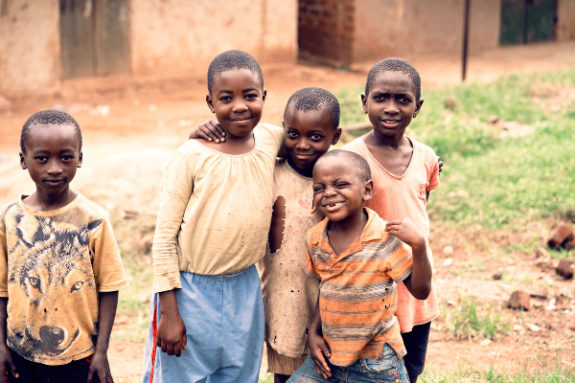
The Foundation Beyond Belief for the Kasese Humanist School (KHS) reported on the closing of the fundraiser for the Kasese Humanist School in Uganda. Its purpose was to help the community recover from the floods that had come through its community. With some permission from the authorities in Kasese, the KHS used funds to support the families in need affected by the disaster.

In June, KHS had rationed food to 35 families in Kahendoro, 45 families in Muhokya, and 40 families in Rukoki. 110 families were helped given the numbers reported by the Foundation Beyond Belief. The exchange rate is pretty terrible for a Ugandan shilling to an American dollar with 1 dollar in American currency coming to 3,728 Ugandan shillings. However, KHS has made each shilling count.

The purchases included “large quantities of matoke (a banana used for cooking), cassava flour, bar soap, cooking oil, salt, masks, and packets of biscuits. They also dispensed 150 free masks to all the parents who came for the relief items.”

The KHS Director, Bwambale Robert, has been doing outreach work to the relevant officials at the governments of Kahendoro and Muhokya. The purpose is to give food to a contingent of orphans. Robert has been a humanist at the forefront of activism in Kasese.

He has been providing monetary assistance to the educators who are struggling with the floods and COVID-19 coming into Uganda.

KHS’s Director Bwambale Robert has also been reaching out with government officials to the Muhokya and Kahendero areas of Kasese to give food to a large population of orphans, and has been providing financial support to teachers facing financial hardship due to the floods and COVID-19.

Members and contributors to the flood fundraiser were able to raise $6,000 to help individuals in need in Kasese.

With files from the Foundation Beyond Belief.

Photo by Roman Nguyen on Unsplash

USCIRF – Nations Pledge Finances for Sudanese Democratic Transition

The United States Commission on International Religious Freedom or the USCIRF commended the $356.2 million commitment to Sudan for “development aid and democratic transition programs.”

It was a pledged announced on June 25, 2020 at the Berlin Donor Conference. The purpose of the convening at the conference was to ensure the economic situation in Sudan does not harm its democratic aims.

“We are encouraged by the United States’ decision to provide such robust financial support to a government that is committed to reforming its political system and ensuring all Sudanese people are free to practice their faiths,” a Vice Chair of the USCIRF, Tony Perkins, said, “USCIRF urges the U.S. government to allocate a portion of this funding to programs that support comprehensive curricular improvements, legal and constitutional reform, and other transitional justice measures.”

With such a pledge, one can note the increase in the development assistance compared to Sudan from 2019 based on reportage by the USCIRF about the USAID administrator, as the source, John Barsa.

From a visit to Washington, D.C., in December of 2019, Abdalla Hamdok, Prime Minister of Sudan, emphasized the international support as completely important for the ‘advancement of civil liberties and political freedoms.

The USCIRF Vice Chair, Anurima Bhargava, explained the importance of international partnership alongside the support of the United States for a democratic transition. The funds are expected to “institutional, legal, and educational reforms to enhance religious freedom, and the processes necessary to ensure proper implementation of these (and earlier) reforms in every region of the country.”

Both vice chairs travelled to Sudan in February, 2020, to see the conditions for religious freedom in Sudan. Even with the significant progress of the Sudanese government, there was still work needing doing to appropriately attend to the religious freedom abuses of the former regime.

The USCIRF concluded, “USCIRF recommended in its 2020 Annual Report that the Department of State maintain Sudan on its Special Watch List (SWL). This was the first time since 2000 that USCIRF had not recommended Sudan for designation as a ‘country of particular concern’ for systematic, ongoing, and egregious violations of religious freedom.”

With files from the USCIRF.

Photo by Moutaman Kamal on Unsplash

India’s oil demand nears normalcy as economy gathers momentum

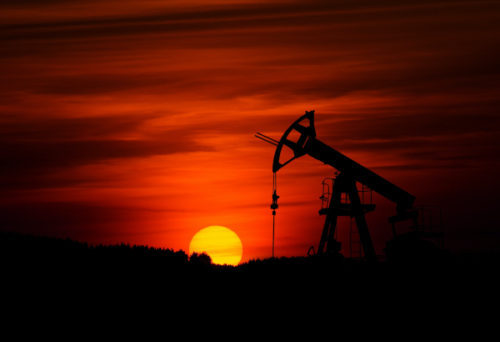
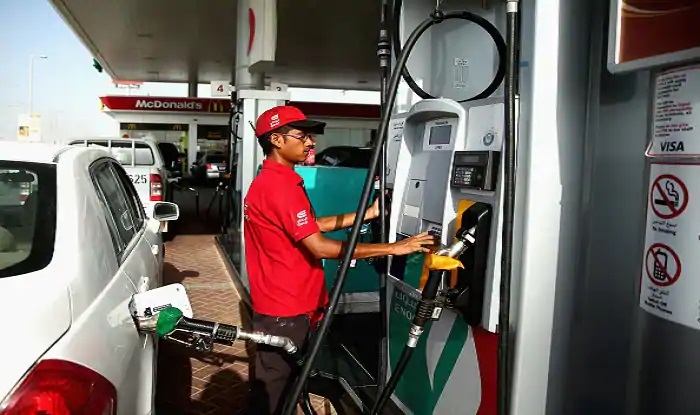
Consumption of petroleum products across India reached 88% of the pre-Covid-19 levels as economic activities gathered steam with the easing of lockdown, the ministry of petroleum said in its official statement.

“With the gradual lifting of lockdowns and beginning of unlocking of the economy in a phased manner allowing resumption of industrial activity and movement of people, total petroleum products consumption has reached to 88% in June’20 (11.8 million metric tonne) compared to June’19 (13.4 million metric tonne), indicating the increase in production activity across all segment of economic spectrum,” the petroleum ministry said in a statement.

In April the sale of petroleum products had fallen to its lowest since 2007 as the nation was locked down to contain the COVID-19 pandemic. India is the world’s third largest oil consuming nation. Demand revived in May as business activities resumed and in June it touched 88% of the earlier consumption. The consumption of petrol in June 2020 touched 85% of last year’s level (2 million metric tonne vs. 2.4 million metric tonne) and diesel consumption reached 82% in June 2020 (5.5 million metric tonne vs. 6.7 million metric tonne) when compared with the same period a year ago. Demand for the LPG fuel continues to rise with a robust growth of 16.6% in June 2020 as compared to June 2019.

“The timely arrival of monsoons and a pick up in agricultural activities during kharif season helped to mark acceleration in diesel consumption that gained 96% on April 2020 level volume (5.5 million metric tonne in June 2020 from 2.8 million metric tonne in April 2020),” said the petroleum ministry statement.

With resumption of domestic flights at 33% capacity and repatriation international flights under the Vande Bharat Mission for international passengers, ATF (aviation turbine fuel) consumption jumped four times in June 2020 when compared with April 2020. ATF sales was 52 thousand metric tonnes in Apr 2020 vs. 201 thousand metric tonnes in Jun 2020)

“Similarly, with restart of major road construction projects, Bitumen consumption has registered a solid growth of 32% in June 2020 compared to June 2019,” said the petroleum ministry.

“Overall the consumption of all petroleum products has significantly increased from April 2020 levels of 49% (6.6 million metric tonne in April 2020 vs. 13.4 million metric tonne in April 2019) to 88% level in June 2020 (11.8 million metric tonne in June 2020 vs. 13.4 million metric tonne in June 2019), as this comes in the backdrop of Indian economy gradually getting momentum with the ease of lockdown restrictions and revival of economic activities that are slowly getting back on track,” explained the petroleum ministry in its statement.

Two states, unused iron ore, a growing human crisis

Everyone in India has an answer as to why two Indian states are losing opportunities from rising global prices of iron ore. But no one is offering any solutions to what was India’s biggest human crisis before Covid-19 turned the world upside down.

The two states are Goa and Karnataka. One known for its pristine beaches, the other for its booming IT business. Both also produce ore, sorry they used to once. Not anymore. And now, they have somewhat similar problems revolving around the ban imposed by the Supreme Court and other regulatory bodies on iron ore mining. In Karnataka, mining was banned in 2011, in Goa the ban came in 2018.

Since then, the demand for resumption of mining has been growing in the two states. In a recent meeting with state chief minister Pramod Sawant, Goa governor Satya Pal Malik suggested resumption of mining at the earliest and asked Sawant to fast track the proposal before the central government for resumption of mining leases by way of legislative cure in the form of amendment to the mining laws, so as to get extension for leases upto 2037.

As many as 88 mining leases have been quashed by the Supreme Court, mining closed since February, 2018. If mining resumes, Goa will earn a whopping Rs 3500 crore.

Frustrated at the state of affairs in the Goa mining sector, representatives of 40 village Panchayats recently petitioned the state government and the Centre to take action against those not in favour of mining. In their petition, they argued that Goa’s loss is someone’s gain. 

The biggest beneficiary of the Goa shutdown has been two Australian mining companies which have taken over the Goan orders and sending their low-grade iron ore to China. New Delhi’s loss is Beijing’s gain. 

The Supreme Court move followed after Retired Justice Shah Commission said that illegal mining was spread over 550 hectares in Goa and caused a whopping loss of Rs 35,000 crores. Now, after many court cases, the actual loss is yet to be computed and the disputed area is not 550 hectares but just 5 hectares.

What is interesting is the country’s apex court dismissed the Shah Commission findings and asked the state government to assess the losses. But there were an estimated 1,000 non governmental organisations (NGOs) which said they wanted a six member committee supervised by the country’s apex court. The committee was formed and it said the issue of alleged illegal mining should be handled by the state government. The NGOs threw a spanner, saying they do not want the report, and the ban must stay.

What is disturbing is that arguments no longer revolve around environmental damage but mining acts and tweaking of the same as demanded by the miners and opposed by the NGOs, led by Goa Foundation. Equally important is the way the NGOs have lost their cases repeatedly, only to file similar appeals in other courts. “Liabilities are increasing by the day, soon there could be a social unrest,” says Ambar Timblo, president, Goa Mineral Ore Exporters Association (GMOEA).

GMEOA wants urgent resumption of mining, judicious implementation of projects under funds collected and avoid the dump sale of iron ore which is actually impracticable because of market requirement of better quality ores. New Delhi (read the Centre) has not responded.

In Goa, an estimated 300,000 miners are without salaries ever since February 2018. In addition, another 100,000 involved in ancillary business have lost their jobs. Mining was the largest employment generator in Goa. Many argue mining has been banned not because of environmental or health concerns but because of the interpretation of the laws: Extension of leases has been disallowed without an alternative solution in mind.

Iron ore mine (Representative Photo)

Putti Gaonkar, a leader among the miners, says someone must find a way out of this mess. “We just do not know what to do,” says Gaonkar, president of the Goa Rajya Kamgar Mahasang, a state level federation of 21 trade unions.

The state government is also in a mess. It has to rely on Sovereign Bond sale to meet its salary commitments to its employees. Shutting down of mining operations has caused a 40% slide in individual incomes, claim recent studies.

Before the first ban in 2012, mining contributed 25% to the state economy while effectively occupying only around 5% area in the state. After the ban, the contribution is less than 1%. Since mining was 100% export oriented, forex losses are significant, currently standing at a whopping $10 billion. Supportive infrastructure has also suffered. As per current estimates, more than 12,000 trucks and 150 barges and ancillary units are at a standstill.

This is not all. There is a deathly silence on why Karnataka is losing a huge opportunity from rising global prices of iron ore?

Consider this. Global prices of iron ore have reached a seven month high due to strong demands from Chinese steel mills and top exporters like Brazil and Australia are unable to push supplies. But one of India’s largest iron ore producing states is badly stuck.

Karnataka, which once produced one third of India’s total production of 231 million tonnes, has lost the race to states like Odhisha which took the biggest chunk of India’s iron ore production at 130.04 million tonnes, more than half of India’s total iron ore production. Chhattisgarh produced 35.72 million tonnes while Karnataka was at 29.87 million tonnes.

Unlike other states, Karnataka’s problem is unique because it could not produce more because of a Supreme Court order, nor could it contribute to exports because of restrictions. As a result, the state remains totally cut off from the world markets.

The country’s apex court has imposed restrictions on the state government to export ore from three iron ore rich districts. What is surprising is that on one hand, steel manufacturers are allowed to import iron ore despite ample supply of domestic resources. As a result, the miners are forced to sell only to the domestic steel manufacturers as per their terms of trade.

This is just one part of the problem.

The other issue revolves around steel players who, at any point of time, may discontinue purchase from domestic miners and resort to import. The miners say this is traditionally done to build pressure on the miners to reduce price even at a time when prices of iron ore are soaring in global markets. 

Imagine the plight of the miners in Karnataka who are further compelled when PSUs like NMDC, the largest iron ore miner in India operating under the Ministry of Steel, reduce its prices by Rs 900 within a month’s time. It slashed prices by Rs 500 per tonne in April 2020. A similar price reduction was done in May 2020 as NMDC again reduced prices by Rs 400 a tonne. 

Now see the crisis.

Due to the steep reduction in prices by NMDC, other Karnataka miners were also forced to sell the iron ore at reduced prices because exports to the global market is no longer an option. This not only affects the average sale price captured in IBM index but also devalues the domestic ore. At the same time, steel plants continue to gain from artificially low prices of iron ore and rising prices of steel. Very few know the entire process of lowering prices also causes loss to the state exchequer which earns 30% in taxes and levies from the ore’s sale value.

The issue is not triggering breaking headlines because the nation (read government) is busy saving the economy which has been battered beyond repair because of the lockdown triggered by COVID-19. Prime Minister Narendra Modi has urged India to become Atmanirbhar which translates into self-reliant and imports. Even as industry experts work overtime to boost exports, Karnataka lies like a prostrate, disemboweled Gulliver. If the state was allowed to export iron ore, Karnataka would have been able to enhance its revenue.

Industry sources say Karnataka has a surplus of 12 million tonnes of iron ore. At the same time, steel mills imported a record 6.1 million tonne of ore during 2019. This is not a small amount, this is a little over 50% of India’s total iron ore exports of 11 million tonnes. And see the net result, the unused stock resulted in a Rs 500 crore loss of royalty and tax revenues to the state exchequer.

Flip the pages and see what could have actually happened if the Supreme Court and other regulatory bodies had allowed iron ore exports. Karnataka miners would have derived the right price for their material and domestic prices hovered around the export parity. The value of the domestic consumption of state would have increased and the surplus iron ore would have been exported, adding around Rs. 3000 Crore to the state exchequer. 

But it is not happening. Worse, the lower sale value also includes the lower premium earning on auctioned mines due to suppressed prices. The losses are putting pressure on the ecosystem and infrastructure the miners built. The big question now is: Will the surplus material be ever sold? Worse, would it not create more  bottlenecks for further production of mines?

So what exactly is happening in Karnataka? The state imposed export restriction, Supreme Court-imposed E-auctions and production level cap of iron ore in the state coupled with artificially suppressed prices has deprived miners from their right of free trade. In these e-auctions, in absence of any traders (as per rules), a state of monopoly has emerged where the only integrated steel plant has the advantage and to large extent artificially suppress the price. 

Isn’t it gross unfair? Let us remember that the Supreme Court ban in July 2010 was imposed in the state due the conditions prevalent during 2011-12. But now, the state government should now take charge of the sector and push it on par with other states where there is no such restriction and the trade is market driven, transparent and growth based.

In the mining industry, miners generally sign time bound contracts with end users or traders at bilaterally negotiated prices. Since the market is competitive, both from domestic sources and imports, hence there is no room for miners to overcharge the steel mills. There is another advantage, these contracts also provide certainty to both – the producers and end users. It also helps plan up the investment. But it has not happened, the Karnataka’s steel industry continues to reap windfall benefits because of the ban on sale of state’s iron ore outside Karnataka and the mining companies remain pushed to a corner. 

And this is happening when there has been serious disruption of Iron Ore exports, especially from some of the world’s top major suppliers. 

There is a strong demand for steel mills across the world (including China) and the demand for raw material has gone up, global iron ore prices touching seven months high. Futures for iron-ore with 62% iron content jumped 10% to nearly $107 per tonne (highest in China’s Dalian Commodity Exchange since October 2019). In the wake of weak domestic demand India too had exported a total of 23 MT of ore & pellets from Dec 19 to May 20. Major iron ore rich states like Odisha contributed to the rise in export of iron ore from India even at a time during April 2020 when there was a huge dip in export from other sectors owing to the lockdown.

A study by Care ratings noted that outbound iron ore shipments rose 17.5% during April 2020. Unlike other states in India, Karnataka could not contribute to the iron ore export as it is totally cut off from the world markets due to restrictions in exports of iron ore prevalent in the state.

Is someone listening in New Delhi? Probably not.

China has no claim on Tibet and East Turkestan, what to talk of Ladakh

The history of South Asia and China was dominated by the British broadly from the 17th century to mid-20th century. Today, almost seven decades after the exit of the British, India and China remain unable to reconcile to their new destinies and move ahead. Border demarcation done at the time of the British rule has become an issue and is dominating the political spectrum. After almost seven decades and even after fighting a full-fledged war, it has not seen settlement. To find a way forward  it is necessary to go briefly into the history.

Ladakh was conquered by General Zorawar Singh and amalgamated into the Sikh Empire in 1834. After the first Anglo-Sikh War, 1845-46, the British took Kashmir Valley, Ladakh and Gilgit-Baltistan as war indemnity from the Sikhs and, in accordance with the Treaty of Amritsar, sold the territories to Gulab Singh, the Dogra Rajah (King) of Jammu for a sum of Rupees 7.5 million. Thus was created the state of Jammu and Kashmir with the title of Maharaja bestowed upon Gulab Singh by the British. The royal Namgyal family of Ladakh was given Stok as Jagir, which it retains nominally to date. 

Jammu and Kashmir remained a princely state all through the British rule. The Dogras administered Ladakh as a Wazarat (principality) with an independent Governor on three Tehsils (Districts) of Leh, Skardu and Kargil. Ladakh was given two seats in a Legislative Assembly called Praja Sabha that was established in 1934 by Maharaja Hari Singh of Jammu and Kashmir in an attempt to usher democratic tenets into the monarchy.

Once India became independent, Maharaja Hari Singh signed the Instrument of Accession on October 26, 1947 effective October 27, 1947, making Jammu and Kashmir an integral part of India. Hence, there remains no doubt about Ladakh being a part of India.

China too has a diverse and interesting trajectory of evolution. In the 19th century (after 1932) the British had already started getting seriously involved in Chinese politics. As a consequence of the Opium Wars a fair degree of control over Chinese affairs came in the hands of the British. In 1912, the Qing dynasty declined in the face of challenges from abroad and internal revolts. And the British hold strengthened.

Around that time, the demarcation line between Tibet and the North-East region of India was created and named as the “McMohan Line.” It was ratified in 1914 by the Simla Convention between the British and Tibetan representatives.

With the decline of the monarchy, China embarked on to a tryst of becoming a Republic. The journey of transition was long and arduous, marked by a long struggle of power mainly between the Kuomintang (KMT) also referred to the Chinese Nationalist Party and the Communist Party of China that came into existence in 1921. After thousands being killed in debilitating civil wars ultimately, on October 1, 1949 mainly due to Soviet support, the communists gained control of mainland China in what is generally referred to as the Chinese Communist Revolution. Mao Zedong, became the founding father of the People’s Republic of China (PRC). Communist China moved swiftly to gain control over many neighbouring areas of which East Turkmenistan, Tibet and South Mongolia are the most prominent.

Significantly, India has borders only with the occupied territories of East Turkestan and Tibet and not with the mainland China. Also, the McMohan Line was not contested all through the period of political turmoil in China and Tibet, nor was it contested at the time when the British left India.

Two factors emerge from the foregoing. First, Ladakh was a part of India about 87 years before the PRC came into existence and 115 years before it gained power in China. Second, the government of China at the time when the British were leaving the sub-continent did not object to the McMohan Line. PRC was quite powerful even then, it could have raised an issue but it did not.

The first prime minister of India, Jawaharlal Nehru, having accepted the suzerainty of China over Tibet refused to be party to negotiations based on a perceived boundary dispute between the two countries. He insisted that the boundary stood resolved along the McMohan Line. In this he had the complete support of the Indian Parliament.

China, rejected and continues to reject the Simla Accord contending that Tibet was not a sovereign state and therefore did not have the power to conclude treaties. Chinese maps show some 65,000 sq km of territory south of the line as part of the Tibet Autonomous Region (TAR) and calls it South Tibet.

China, however, had tacitly accepted the Line of Actual Control (LAC) as it exists between East Turkestan and India. In a letter to Nehru dated October 24, 1959 Zhou Enlai proposed that India and China withdraw their forces 20 kilometers from the LAC. Even after the Indo-China War of 1962, Chinese unilaterally withdrew to the earlier demarcation of the LAC, except for Aksai Chin.

History is replete with instances of great Empires breaking due to over extension through forcible subjugation. The latest example is the breakup of the USSR. Communist China has forcibly occupied Tibet, East Turkestan, South Mongolia and other territories. There are voices being raised against this forcible occupation and against incidents of gross human rights violation of the people of these areas by the repressive Chinese regime.

Being unable to control what it has, one wonders as to why China is nibbling into Ladakh and Arunachal Pradesh where it has no jurisdiction or justification of claim whatsoever. For the sake of a few kilometers of territory that does not even belong to it, the country is jeopardising goodwill and billions worth of trade with India. It is unwilling to understand that the huge potential of Ladakh and Arunachal Pradesh can be best leveraged by both countries through friendly relations. In fact, East Turkestan and Tibet will contribute more to the prosperity of mainland China if they are freed from the existing shackles and blatant suppression.  Significantly, India and China are harbingers of the prosperous future of the region being super powers. They should understand their responsibility.

India needs to rework its posture on its borders on the basis of historical facts. If at all, borders can be discussed only with Tibet and East Turkestan as and when they gain independence. There is nothing to be discussed with the PRC (People’s Republic of China) and the McMohan Line remains the irrefutable border. Any attempt by China to change the same should be termed as aggression against the sovereignty of India and dealt with accordingly. Diplomatic and military attempts need to be made to get back Indian territories under forcible occupation of China.

Christian Sorensen: WAIS Unmeasurable Intelligence, William James Sidis

Christian is a Philosopher that comes from Belgium. What identifies him the most and above all is simplicity, for everything is better with “vanilla flavour.” Perhaps, for this reason, his intellectual passion is criticism and irony, in the sense of trying to reveal what “hides behind the mask,” and give birth to the true. For him, ignorance and knowledge never “cross paths.” What he likes the most in his leisure time, is to go for a walk with his wife.

Scott Douglas Jacobsen: How did the 185+ (S.D. 15) get calculated for the IQ score for you, as most will assume only reliable scores on mainstream IQ tests sitting between 40 and 160 (S.D. 15)?

Christian Sorensen: It was calculated “in the same way,” and with the same test: “WAIS-R,” as it was calculated the IQ score of “Evangelos Katsioulis,” when he earned “180+ (S.D. 15).” With the only difference, that I earned “at least” five points higher than him. Therefore, on account “of pears and apples,” of justice, and according to “one of the two” most reliable tests, for measurements of general intelligence in the world, the one who should be at “the first place,” on the list of World Genius Directory, “is me and not him.”

Since the question is on the mat, and for responding to “eventual ripping of clothes.” I want to take advantage, and to be clear, that I do not need to justify my IQ with any “silly games,” within the “almost infinite” that are in circulation, as if they were “candy businesses,” pretending to be high range IQ test, nor with the mainstream test that measures general intelligence. First of all, because I find them “silly, pedantic, absurd and misleading,” since at least the former ones, sell “false intelligence,” for making people believe, that they have an “IQ that is not real” or that does not belong to them, so ultimately they only serve to “inflate their ego,” as if they were “aero-static balloon.” And additionally, due to the fact, that my numerous interviews with you Scott, show actually and clearly, as a “fact of evidence,” who is who, since besides not being Wikipedia’s responses, they don’t have any support of bibliography. “Who ever likes it or bothers,” they have been elaborated, arisen and flowed naturally from my own “black box,” which lastly, is an issue that has brought me more displeasure than anything else… In synthesis, and to conclude, the point and “obvious fact” here, is that my general intelligence, is well above 185 (S.D.15), and “period.”

At the same time, I take the opportunity, to communicate that this is the last time I respond to something of this nature, since I feel that has “neither feet nor head,” and to which I have been forced to respond dizzily, throughout my life.

Jacobsen: Speaking of intellectual competitions, but in the realm of history rather than the present, what do you think of the case of Bill Sidis, in general terms?

Sorensen: Apart from the fact, that Sidis fulfills, what I will denominate as the “golden rule of three,” I think that regarding its capacities, is clearly represented “the universality” of these, which ultimately should be expected in relation to us, the unmeasurable geniuses, in other words, the fact that these abilities are “multifocally prodigious.”

Jacobsen: Of all of the people who have been mentioned with a sense of awe to some, semi-mystery to others, tragedy and pity to others, worship to still others, wonder and curiosity to yet another group, etc., what emotions or thoughts come to mind about the overarching narrative of the life of Sidis for you?

Sorensen: That of a man “committed to noble causes,” who was able to make his extraordinary capacities, available to the “most disadvantaged” and “for peace.”

Jacobsen: Any particular points of interest in his life for you, personally?

Sorensen: Sidis’s “atheism and communism.”

Jacobsen: Any points of appreciation and/or general commentary on the historical work on the Americas, on the intelligence level claims, on his ethical principles, or on his cosmology?

Sorensen: I agree with Sidis’s “cosmological” point of view, in relation to that the universe is “infinite and eternal,” and also with its application of “the first thermodynamics” law, which means that energy within the universe, is “neither created nor destroyed.” I personally would add, to its “cosmology,” and regarding “universe energy,” that this energy “does transform” as such.

Jacobsen: Any thoughts on Dr. Boris Sidis’s ideas about upbringing and making an experiment, more or less, of young Billy?

Sorensen: Sidis’s father, implicitly sought to experiment with his son, since he put into practice his knowledge of “abnormal psychology,” and also combined three elements, “affection, knowledge and precocity,” respectively, within the upbringing, which in his time and also currently, arouses “much controversy,” especially regarding the third of them.

Jacobsen: Why do so many in the gifted community look to the Sidis story?

Sorensen: I suppose that because Sidis, is seen as a sort “of oracle,” that arouses “ambivalent feelings” of admiration, in the sense of pretending to identify with him, as well of envy.

Jacobsen: Any lessons that can be drawn from this Sidis narrative?

Sorensen: The capacity of Sidis’s mind, despite its enormous “amplitude and variability,” to “be structured” in an orderly way, and without getting confused. In other words, its ability to mentally organize everything, by “napoleonically placing” each thing in its correct box, without mixing these last between each other.

Jacobsen: Who seems comparable in history to him?

Sorensen: From the point of view of its universalism and extraordinary capacity, “Leonardo Da Vinci.”

Jacobsen: Personally, what parts of the story seem, more or less, factual and extraordinary to you?

Sorensen: Sidis’s extraordinary “earliness,” “humanism,” and regardless of the fact that there is no documented evidence of its intelligence evaluations, the presence of objective facts, that give proof of his unmeasurable genius.

Jacobsen: If he lived longer than 46, what do you think he would have done with his gifts and talents?

Sorensen: I think Sidis would have formed, a “philanthropic intellectual society.”

Jacobsen: If he lived longer than 46, what do you think he would have done with his personal and professional life outside of general uses of gifts and talents?

Sorensen: Probably would have continued to live with his parents or sister, and would have been professionally associated with a university for academic and research purposes.

Jacobsen: Thank you for the opportunity and your time, Christian.

Sorensen: Thank you for the opportunity, Scott.

Image Credit: Christian Sorensen.

Dharmendra Pradhan tears apart Sonia Gandhi’s politics on petrol-diesel prices

Petroleum Minister Dharmendra Pradhan lashed out at Congress President Sonia Gandhi for raking up the issue of petroleum prices during times of COVID-19 pandemic when the government has been making efforts to help poor and needy with direct cash transfers. Minister Pradhan, without mincing any words, said that the Narendra Modi-led government directly transfers money into the accounts of poor through DBT (Direct Benefit Transfer) rather than depositing it into the accounts of “son-in-law” and Rajiv Gandhi Foundation.

“During the last three months government has directly transferred ₹65,454 crore into the bank accounts of 42 crore poor people through DBT (Direct Benefit Transfer). This cash transfer has been done directly into the bank accounts of poor people without any intermediaries. Modi ji’s scheme means distribution to poor, there’s no concept of filling the treasuries,” explained Dharmendra Pradhan.

Dharmendra Pradhan, Minister of Petroleum & Natural Gas castigating Congress President Sonia Gandhi for her comments on fuel prices in times of Coronavirus pandemic.

Dharmendra Pradhan castigated Sonia Gandhi that her idea of DBT (Direct Benefit Transfer) may be to have transfers done into her son-in-law’s accounts and to the Rajiv Gandhi Foundation. “Modi ji’s DBT idea is to transfer into the back accounts of poor,” said Dharmendra Pradhan.  

Sonia Gandhi has attacked the Narendra Modi-led government for raising fuel prices twenty two times since the lockdown, wherein the Congress President accused government of “extorting” people, and sought an immediate rollback of the hikes. Sonia Gandhi raked up the issue of fuel price in times of Coronavirus pandemic without knowing how the pandemic has affected economic demand and thrown up unforeseen challenges before the Modi government. Dharmendra Pradhan explained in clear terms that the tax money from petrol and diesel is being spent in providing health cover, employment and economic security to the people whose livelihood have been adversely affected due to prolonged lockdown after the outbreak of COVID-19 pandemic.

Sonia Gandhi must know that after a nationwide lockdown was announced on March 24, 2020 to contain the spread of pandemic a budget of ₹1,70,000 crore was sanctioned under the Pradhan Mantri Garib Kalyan Yojana that entailed direct cash transfers into the bank accounts of poor people and farmers. The free ration being provided under this scheme has now been extended by PM Modi till November-end. For three months poor families were also given LPG cylinders for free. In a democracy it’s the right of opposition to criticize government’s actions but playing politics on government schemes meant for the poor only means that Congress President Sonia Gandhi does not want benefits from welfare schemes to reach the poor people, rather she wants to cash upon the pandemic for political mileage.

Dharmendra Pradhan explained that entire global economy is under severe strain due to the pandemic and it has also posed demand issues for petroleum products. The common consumer has not been much affected by recent price hike in petroleum products as their demand had gone down by 70% in April and May before it revived in June after the lockdown was eased. “When a family faces a crisis, then members arrange financial resources to deal with it and the recent hike in oil products should be seen in a similar manner.” 

Dr Allah Nazar praises Baloch freedom fighters for Karachi stock exchange attack

Baloch youth are sacrificing themselves to crush the colonial arrogance of the occupying enemy and not for fame and glory, said Dr Allah Nazar Baloch the prominent pro-independence leader of occupied Balochistan, as he paid tributes to the Baloch freedom fighters martyred in Karachi.

Dr Allah Nazar Baloch while paying his tributes to the freedom fighters martyred in Karachi said that the attack on Karachi Stock Exchange was a warning to Pakistan and China to quit Balochistan. “The Baloch nation has decided to take extreme steps to expel them from Balochistan. The great sacrifices of martyr Salman Hamal, Taslim Baloch, Shehzad Baloch and Siraj Kongar who hail from different parts of Balochistan will always be remembered not only by the Baloch nation in golden words but will also be remembered by all the oppressed nations who fight for their freedom in any part of the world.”

He said that China is a modern day imperialist and an aggressive power. China has made a long term hegemonic plan to use Gwadar as a launching pad by turning Balochistan into an undeclared colony to dominate the world. “Pakistan has cheaply mortgaged Baloch lands to China. China’s presence in Balochistan has become a threat not only to the Baloch national survival but it poses a danger to the entire world. We believe that the world is still unaware of China’s intentions and that the Baloch are the only ones fighting the modern imperialist monster. The attack on the base of Chinese moneylenders in Karachi after the attack on the Chinese base in Gwadar is a continuation of the attacks on its strategic assets. The Baloch will continue it, no matter what the cost,” Dr Allah Nazar explained with a firm determination.

Dr Allah Nazar Baloch, Chief of Balochistan Liberation Front (BLF) and revered leader of Balochistan's Freedom Struggle against Pakistan.
Dr Allah Nazar Baloch, Chief of Balochistan Liberation Front (BLF) and revered leader of Balochistan’s Freedom Struggle against Pakistan.

Dr Allah Nazar Baloch further added that for some Balochistan may be a part of Pakistan but for us, Balochistan is our motherland. “We will not hesitate to sacrifice our lives for its sanctity, national identity and freedom. Pakistan not only occupies our land but has also leased our land to China under the guise of projects like CPEC. Agreements with China on Balochistan are concealed from the Baloch nation and they are so dangerous that Pakistan is not even able to present those agreements in front of its own parliament and senate. The fate of Balochistan is being negotiated with Chinese imperialists through the military generals in the GHQ, Rawalpindi. Nevertheless, if anyone insists on calling it development and economic projects for Balochistan, we consider them as partners in crime with the enemy.”

Dr Allah Nazar Baloch explained that the basis of violence comes from occupation and all the roots of violence are implicit in the occupation of Balochistan. “We learn the lessons of revolutionary war from the thoughts of personalities like Che Guevara and Ho Chi Minh and the Baloch national traditions. Today, few so-called intellectuals are critical of our revolutionary war, and according to them our attacks justify Pakistani violence. They do not see the tears of Hasiba and Seema whose innocent relatives continue to be forcibly disappeared for years. During which attacks were their loved ones caught red-handed by the state army and thrown in secret detentions? Why don’t they notice the fact that Pakistan and China have made a practical decision to wipe out the Baloch nation from Balochistan?” He added: “Pakistan’s barbarism and violence have been going on for seventy years now. Pakistan’s atrocities and barbarism, the tears of Baloch daughters on the streets are increasing the intensity of our war. These tears are to be avenged on Pakistan and its allies. I am well aware that Pakistan will increase Baloch genocide by using such attacks, but it will not be able to wipe us out.”

Dr Allah Nazar Baloch reiterated that the Baloch nation is fighting a revolutionary war. “The young who are treasures of their mothers do not go on an attack just for fame or due to madness but to convey the message of their oppression to the world and to break the pride of the enemy. They certainly hope that the Baloch nation will not let their sacrifice to go in vain. The attack on the moneylender’s base in Karachi is a link to this. The caravan shall continue. We must remember that we are numerically, militarily and technologically weaker against the enemy. Guerrilla warfare, among other factors, is an important weapon for the weak. This is the legacy of revolutionaries all over the world and the Baloch youth will contribute to this legacy.”