Home Blog Page 356

What To Do In Orlando With Kids

Kids can sure be a handful; however, with enough to keep them busy, you should have little to worry. One of the best places to entertain your kids is Orlando in central Florida. Home to some of the most famous theme parks and amusement centers, the city is a significant destination for travelers looking to have fun with their kids. If you are planning a trip to Orlando, bringing your kids along could be like taking them to Santa early. Below are some fun things you can do in Orlando with kids. 

Things To Do With Teens In Orlando

1.Gatorland
The 110-acre home to crocodiles and alligators is one of the best adventures to give your teens in Orlando. Besides the alligators, the off-road experience, sudden turns, off-road car excursion, and funny tour guides are guaranteed a full star rating by your teens.

2. Kennedy Space Center
More than having fun, the Kennedy Space Center represents the Country’s commitment to outer space exploration. It provides an opportunity for your teens to learn while on the trip and have something to take back from your visit.

3. Seaworld
Seaworld provides up-close sea life fascination for your teens. Swarming with wildlife exhibits, Seaworld brings your teens closer to the animals they love and balances it with thrill rides on epic rollercoasters. You can extend the visit by heading to the Discovery Cove adjacent to the Seaworld.

4. Universal Orlando resort
Universal Studios and Island of adventure are two of the destinations for teenagers seeking thrill and immersion into TV. There is also the Marvel Superhero Island for their favorite superhero.

5. Shopping
Let your teenagers feel chic by taking them shopping. The Mall at Millenia, for example, has more than 145 shops. Enough to keep your fashionista busy throughout the day.

Best Playgrounds In Orlando 

1.The Walt Disney
The four parts of the Walt Disney World seem a bit larger than life itself. The World houses the Disney World water parks, Hollywood Studios, Toy story land, the new starwars land, and Pandora, the World of Avatar.

2. Legoland
Legoland is another massive amusement park that features character greetings, attractions, and lego-theme rides. The Lego Ninjago World, where your kids can try to destroy ghosts and skeletons.

3. Camp Jurassic
Hidden pathways, rope bridges, raised walkways, interactive dinosaur footprints, slides, and canopies in the Jurassic camp promises loads of fun for your kids.

4. The Boneyard
The Boneyard is another playground that your kids will love so much; it will be hard to get them to leave. Fossils and Bones in the structure and walls, climbing frames, and slides are few of the sights in the Boneyard.

Can I sneak my 3-year old into Disney world?

There is little need to attempt to sneak in your 3-year old into Disney World. The ground itself is a big as San Francisco with more than 20 resorts, two water parks, four golf courses, and four theme parks. Instead, you should get him a ticket. All you have to do is go to Disney World and purchase an entry ticket for yourself and your 3-year old. You can have free entry if your kid is below three, however, for a three-year-old, you need a ticket. Besides, trying to sneak in a 3-year old could attract a lifetime ban from ever coming back to Disney World. 

Can an International Traveler Sneak Into Orlando? 

Attempting to sneak into the United States is a criminal offense. If you are from a visa waiver country (VWC), you can apply via ESTA online application for access to Orlando. This is an application open to nationalities of countries that are covered under VWC. Although the final decision to allow you into the Country is determined at the point of entry, the ESTA authorizes you to board a ship or aircraft to the USA. First, you need to fill an application, confirm your data, make a payment, and receive your ESTA authorization via email. If you intend to travel to Orlando as a tourist with your kids, the visit must be less than 90 days with the ESTA. Between filling application and the final approval, you should check status of ESTA for an immediate status update.

Things to Do Around Orlando Airport?

1.Disney’s EarPort
The Earport is an excellent place to check what you might have forgotten to purchase during your visit to Orlando.

2. Kennedy Space Center Shop
A tour of the Kennedy Space Center shop about 55 minutes from the airport is the right place for last-minute shopping in Orlando. Plus, there is also an educative bus tour of the site.

3. The Club at MCO
The club is an excellent place to relax and wait before boarding your flight. There is a small playroom for kids, excellent food, and a bar with unlimited drinks for the adults.

The city of Orlando, Florida, has a lot to offer international travelers and their kids. A little fun during your visit won’t hurt.

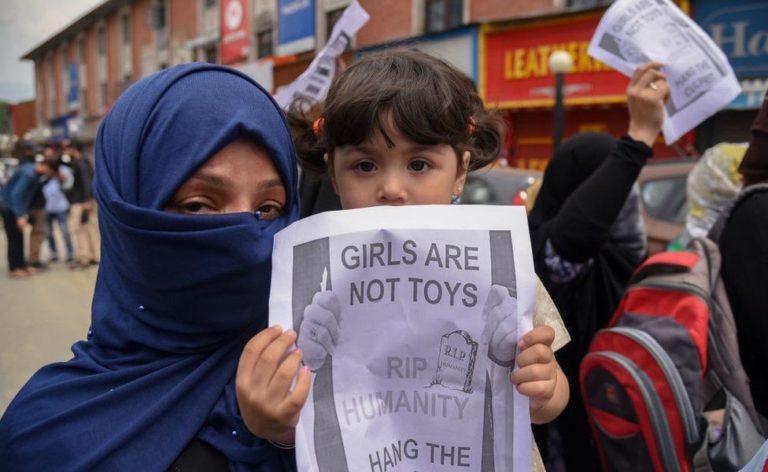
Militants sexually assault Kashmiri women in the name of Jihad

The self-described Islamic State (IS) uses violation of women as a tool to govern, hold territory and fund its operation. Women are captured by this militant group and auctioned off or promised to upcoming recruits. In some rare cases they are rescued by a heroic group of lawyers and activists, but by and large, this system of sex slavery is a gruesome reality for thousands of young women. This malaise has spread across regions that were in control of the Islamic State (IS). The exploitation of Yazidi women by IS that has now comes to world’s notice has emerged as an ultimate example of barbarism.

ISIS or the IS has implemented a deeply rooted system of sex slavery involving the women of Yazidi religious minority that continues even today. Many of these unfortunate and hapless women who were captured while trying to flee Sinjar Mountain last August were shipped off on a fleet of buses to a set of holding pens in the city of Mosul and other areas within Iraq. It was in these enclosures where many of the captured Yazidi women heard the word “Sabaya” for the first time. Sabaya refers to a “Theology of Rape” created by Islamic State (IS) on the premise that Islamic faith gives a right to devout Muslims to rape women practicing a religion other than Islam. According to Sabaya it is condoned and encouraged.

Slain Lashkar-e-Taiba member Abu Dujana was just one of the many militants in Jammu & Kashmir who did not hesitate from taking take a break from the violence to indulge in amorous affairs and force himself on innocent Kashmiris.

The objects of affection or lust are not always women, there are several recorded incidents where these militants were found in a relationship with men. One such incident was recorded in Tral where the militants belonged to the Hizbul Mujahedeen. Another militant from Anantnag, Aadil Ahmed Reshi, killed on January 15, this year, was involved with a married woman from Srinagar. The lovers pleaded earnestly not to reveal their true identities for fear of a social backlash.

Many Kashmiri girls have been victims of the sexual lust of these militants. These hapless girls had been forcibly kidnapped from their homes and sexually assaulted for several days and months before being set free. Several others who had resisted were killed mercilessly, some others died because of the violent nature of sexual assaults.

Lately, Shopian district of Jammu and Kashmir has emerged as the hotbed of Islamic militants. In the past two weeks, about 22 militants, including six top “commanders”, have been neutralised in nine different operations in the region. Jammu and Kashmir Director General of Police Dilbag Singh claimed that a total of 88 militants had been killed since January in 36 different operations.

In a shocking revelation, cartons of condom, Viagra, contraceptive pills and porn videos were recovered from a hideout in Shopian. It exposes the fact that the militants active in Jammu and Kashmir who profess to be waging Jihad (holy war) in the name of Islam, have been, all along, involved in sexual exploitation of innocent Kashmiri women. The recovery of materials such as sexual potency enhancing drugs, contraceptive pills to avoid complications later on, pornographic material and condoms from the hideouts draws a sharp similarity between the rampant sexual abuse of women in Jammu and Kashmir with that of subjugation of women as sex slaves by the ISIS in Syria. It reveals that the militants were not averse to creation of their own version of Sabaya in Kashmir thus bringing to light yet another element in their brutality and depravity under the guise of a holy war for the ‘liberation’ of the Union Territory.

“I was forcibly abducted and married after the Jaish militants barged in my house and thrashed my family members. I was already married to Tanveer Ahmad. He too was beaten and forced to divorce me. When I refused to go with the militant, he forcibly abducted me,” said a young woman, crying inconsolably. This woman was kidnapped from her house by the Jais-e-Muhammad militants and subjected to repeated gang rapes by Jaish militants. Her testimony reveals the nature of sexual exploitation by Jasih-e-Muhammad militants.

The woman’s father and family had no option but to concur with the pervasive sexual depravity perpetrated by the militants in Jammu and Kashmir. “We had married off our daughter to Tanveer but then Dawood (Jaish militant) forcibly abducted our daughter after mercilessly thrashing us. We ran pillar to post to free her but he threatened us with a gun. What could we do then? We were helpless, he took away our daughter,” said the woman’s father.

This is not Jihad by any means. There is no theological sanction for it. It is the product of a depraved lust and goes against all tenets of humanity. With militancy in Kashmir on its last breath, families are now gathering courage to report such incidents and also assist the security forces in neutralising such militants, who have brought shame to their families.

We Kashmiris pray that these sordid matters soon become a thing of the past and everyone gets an opportunity to apply balm to their wounds while starting life afresh.

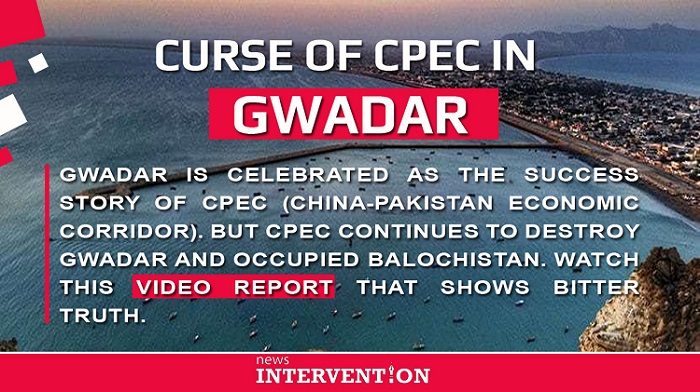
CPEC– Project for Development OR Destruction of Gwadar ?

The CPEC — China-Pakistan Economic Corridor, has been branded as a game changer for Gwadar. CPEC is also talked about as a “project” that will transform Balochistan’s Gwadar sea port into a developed coastal metropolis like the Dubai or Singapore. But is this true? Click on the YouTube link below to watch the detailed news report on Gwadar.

Click on the YouTube link to watch this comprehensive news report about Gwadar

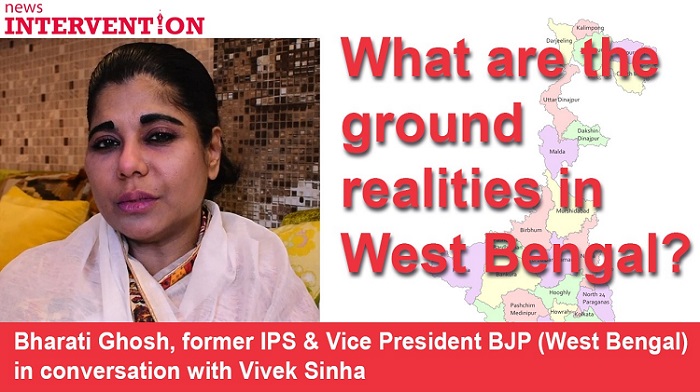
Bharati Ghosh, Vice President BJP (West Bengal) talks about ground realities in Bengal

What are the ground realities in West Bengal? West Bengal is passing through a turbulent phase. COVID-19, Amphan, electoral deaths, rise in “cut money” biz etc etc…..and this list goes on and on. Bharati Ghosh, former IPS & Vice President BJP (West Bengal) talks about the ground realities of Bengal with Vivek Sinha, Editor-in-Chief News Intervention.

Click on this link to watch full interview on News Intervention’s YouTube channel

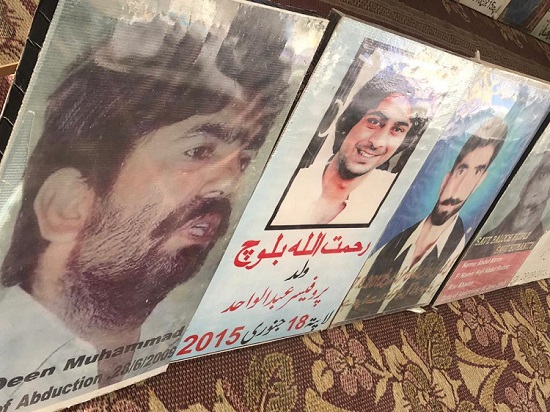
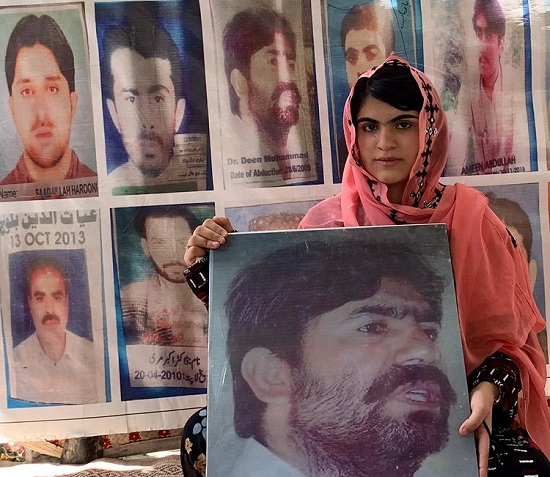
Dr Deen Mohammad abducted 11 yrs ago by Pakistan is still ‘Missing’

Sammi Baloch is sad, very sad. Eleven years ago her father, Dr Deen Mohammad, was abducted by the Pakistani security forces and he remains “missing” even today. “I made every possible effort for the safe recovery of my father but couldn’t attain justice, as he is still missing. We have grown up in this VBMP (Voice for Baloch Missing Persons) hunger strike camp, but justice couldn’t be obtained,” said Sammi Baloch, daughter of missing Dr Deen Mohammad.

Mehlab Deen Mohammad, Sammi’s sister also accompanied her in the VBMP camp. Dr Deen Mohammad was taken into custody on 28th June, 2009 from the Khuzdar district of Balochistan and transferred to an unknown location, after which he continues to be “missing”.

“Only my family can understand the pain that we have been going through after the enforced disappearance of my father. We have knocked all the doors for justice, but I have to say with regret that 11 years have passed but we are still to get justice. Once again I am sitting in this (VBMP) camp. I appeal to Human Rights Organizations to play their role for providing me justice,” Sammi Baloch added.

Sammi Baloch demanded that she too be treated as a citizen of this country and provided justice.

Daughters of Dr Deen Mohammad Baloch, Sammi Baloch and Mehlab Baloch have continued to protest in front of Quetta and Karachi Press Club for years. The sisters have raised their voice on different forums for Dr Deen Mohammad’s recovery. They also took part in the long “March of Voice for Missing Persons” from Quetta to Karachi and to Islamabad.

Dr Deen Mohammad was affiliated with the political party BNM (Baloch National Movement). He was a Central Committee member of the party when he went missing. According to his family and BNM, the Pakistani forces and intelligence agencies abducted him while he was on duty.

On the 11th anniversary of Dr Deen’s disappearance BNM announced that a global protest programme would be organized for him and to acquaint the issue to the world an online campaign on social media will be launched on June 27 with a hashtag #SaveDrDeenMohdBaloch.

It is pertinent to mention that such abductions have been carried out innumerable times in Balochistan. Leaders, activists and vocal members of various student organizations have been allegedly detained by the security forces and kept incommunicado.

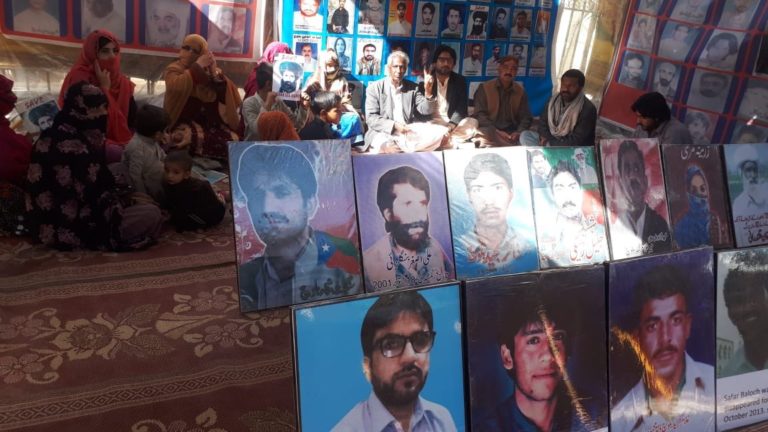
VBMP (Voice for Baloch Missing Persons) has been protesting nonstop for almost 4000 days. As per VBMP, as many as 45,000 Baloch men, women and children have been disappeared, who are languishing in torture cells.

VBMP also says that at least 5,000 missing persons have been killed and dumped by the Pakistani security forces over the last decade.

Do you know what UNICEF is telling us?

An estimated 300,000 plus children could die in India in a few months time unless state governments push health officials to work overtime. The COVID-19 pandemic could even reduce advancements made by India in the health sector, UNICEF said quoting a top study by Johns Hopkins Bloomberg School of Public Health.

The study, already printed in the widely circulated Lancet Global Health Journal, should serve as a wake up call to the Indian health sector officials, Dr Yasmin Ali Haque, UNICEF Representative in India, said in an interview this afternoon.

“This is a crisis unfolding across South Asia and governments must take urgent action to prevent millions of families from slipping back into poverty,” Dr Haque said in the interview conducted through Zoom.

Unknown to many, the secondary impacts of the COVID-19 crisis are aggravating the challenges of getting affordable and nutritious food, mainly due to reductions in routine health service coverage levels, disruption in live saving immunization activities and an increase in child wasting.

Dr Yasmin Ali Haque, UNICEF Representative in India

Dr Haque, a trained surgeon, said millions of vulnerable children in South Asia are losing out on their development and learning opportunities, and their right to survive and thrive. “They need to be protected. Hunger is always more dangerous than Coronavirus in poorer nations. The most vulnerable families must have access to healthcare, schooling for children, affordable nutrition and other essential services.”

In India, around 20 million children under five years of age are suffering from wasting, over 40 million children are chronically malnourished, and more than half of Indian women aged 15-49 years are anaemic.

Now India has made a steady progress in newborn mortality reduction in the last five years before COVID-19, reducing the National Mortality Rate from 26 in 2014 to 23 in 2017, saving about 75,000 newborn lives each year. But now, there is a danger of losing some of these gains made due to the impact of COVID -19 on health systems in a region that contains a quarter of the world’s population.

And then, there are other issues.

Last week, Indian news channels reported a student’s suicide for not having a smartphone and, in turn, missing out on virtual classrooms. The suicide highlighted a dangerous trend in a country where an estimated 56% of India’s children has no access to smartphones, essential tools for online learning during the Coronavirus-induced lockdown.

Experts say the digital divide in the country may turn online classes into an operational nightmare in India, where only 24% households have access to the internet. School closures have impacted 247 million children enrolled in elementary and secondary education and 28 million children who were attending pre-school education in anganwadi centres. There are concerns that some disadvantaged students may join India’s 6 million children who were already out of school before COVID-19 struck. 

Let’s have a realistic look at the situation at the ground level in India. 

Since March 2020, massive loss of jobs and income have made it harder than ever for poorer families. An estimated 118 million lost jobs in India’s big cities and went back to the hinterland, the reverse migration causing both stress and tension to various state governments. 

“And then, health inequalities and socio-economic disparities have uncovered unique challenges. The spread of misinformation driven by fear, stigma, discrimination and blame have heightened the complexities. Stigmatization against health-care workers, of specific groups, communities, and migrant workers posed a challenge to much-needed social cohesion at the time of the crisis,” said Dr Haque, whose organisation, UNICEF, supported the Ministry of Health and Family Welfare in a national public advocacy campaign and promoted positive and anti-discriminatory behaviour to address stigma.  

At the heart of this crisis are children who are at a heightened risk of exploitation, violence and abuse. This is not only happening in India. For example, school closures during the Ebola outbreak in West Africa from 2014 to 2016 resulted in spikes in child labor, neglect, sexual abuse and teenage pregnancies.

“The side-effects of the pandemic across South Asia, including the lockdown and other measures, have been damaging for children in numerous ways,” said Jean Gough, UNICEF Regional Director for South Asia. “But the longer-term impact of the economic crisis on children will be on a different scale entirely. Without urgent action now, COVID-19 could destroy the hopes and futures of an entire generation.”

Dr Haque says UNICEF is trying hard to explain to people in the hinterland that their children are highly likely to become malnourished without the proper care, which means the family is a priority for health services. Travelling across India, UNICEF officials, along with government officials, explain the importance of eating well and why kids must continue to receive extra food rations so that the children do not fall through the cracks.

The UNICEF study, which reads like a mirror to life, shows how India’s phone helplines are reporting a surge in calls from children suffering violence and abuse during confinement at home. Some children are struggling with depression, even resulting in attempts at suicide. 

The report highlights the need for resumption of life-saving vaccination campaigns against measles, polio and other diseases. The study also says why schools should reopen as soon as possible provided adequate hand washing and other physical distancing precautions are in place. UNICEF projections show that over the coming six months as many as 120 million more children could be pushed into poverty and food insecurity, joining some 240 million children already classified as poor.

The UNICEF bottomline – as always – reads like a Pied Piper wishlist: Governments should immediately direct more resources towards social protection schemes, including emergency universal child benefits and school feeding programmes. Will it happen in India?

“We can only ask people to turn philanthropic and donate for such causes. There are a large number of private companies coming in for such causes. Every month, there are thousands who walk across the UNICEF office and donate. We sincerely hope more will join us,” added Dr Haque.

Pakistan arrests lady doctors, students sitting on a peaceful protest in Quetta

Pakistani Police arrested several lady doctors and other protesting students protesting on Wednesday in Quetta, occupied Balochistan. The arrested women included doctor Mahrang Baloch, Jeehand Baloch and other students of the Baloch Student Organisation (BSO).

The doctors and students were protesting against the decision of Higher Education Commission (HEC) to commence online classes despite the fact that internet facilities are not available in occupied Balochistan. The protest in Quetta was called by the Baloch Students Alliance, that claimed that the sole of the peaceful protest was to grab the attention of concerned authorities towards genuine issues of students. Without internet the students across occupied Balochistan will miss out all their classes and will then not be able to learn their subjects or clear their exams. Pakistani security forces have suspended internet access at several regions in occupied Balochistan citing security concerns. This internet suspension has been in place for several years in occupied Balochistan.

Soon after her arrest, Mahrang Baloch said that they were protesting against the unilateral decision to conduct online classes. She said that the “barbaric state doesn’t change its behaviour towards oppressed nations.”

Students across Balochistan have been protesting since the last few weeks due to non-availability of internet facilities and the decision of Higher Education Commission (HEC) to conduct online classes.

Earlier, the protesting students had said: “The HEC’s decision for beginning online classes is one sided and prejudiced, which completely ignores the ground realities. The HEC’s decision makes it clear that the students of Balochistan are not the part of this education system, which is an attempt to keep away the Baloch students from education.”

Baloch nationalist organisations say that denying internet accessibility in occupied Balochistan is an attempt by the Pakistani state to prevent news going out to the outside world about Pakistan Army’s blatant human rights violations across occupied Balochistan.

With Christian Sorensen, The Responsibility of Intellectuals

Christian is a Philosopher that comes from Belgium. What identifies him the most and above all is simplicity, for everything is better with “vanilla flavour.” Perhaps, for this reason, his intellectual passion is criticism and irony, in the sense of trying to reveal what “hides behind the mask,” and give birth to the true. For him, ignorance and knowledge never “cross paths.” What he likes the most in his leisure time, is to go for a walk with his wife.

Scott Douglas Jacobsen: What is the responsibility of intellectuals?

Christian Sorensen: “None.” That question presupposess that “intellectuals” should have a “greater responsibility degree” or a “particular type” of it in relation to “non-intellectuals,” which in turn implies to believe that “intelligence’s degree” would determine “act’s moral assessment” and therefore the fact of accepting “intellectual’s superiority,” since if “moral non-imputability” and therefore its “responsibility absence or decrease” are determined by “diminished intelligence,” then the aforementioned, is equivalent to express that this “determination,” is given by “reason’s absence,” and in consequence this last would imply to “be almost a beast” or straightly said “to be a beast.”

Jacobsen: How do public intellectuals fail and succeed at this?

Sorensen: “Public intellectuals,” fail insofar as they “self-argue” with “dead superiority,” utilizing for “discriminatory purposes,” contributions that somehow generally are “self-centered,” and by losing any kind of sight regarding “equality sense,” in relation to what should be an “expected awareness” of “fundamental rights.” As a counterpart if “intelligentsia,” provides them with a “differential factor,” which in itself is neither “better nor worse,” but that nevertheless, if it is assumed as a “social duty role” that should visualize a “synergistic achievement” towards what for me is an “enthalpic social integration,” and then if the last becomes a tangible outcome, it can “be inferred,” that “public intellectuals” as such, have been successful in “their task.”

Jacobsen: What public intellectuals and intellectuals impress you?

Sorensen: Stephen Hawking, Albert Camus, and Luc Montagnier.

Jacobsen: Why do they impress you?

Sorensen: “S. Hawking” for not having contributed with anything, “A. Camus” because he learned all morality playing soccer, and “L. Montagnier” for considering that the COVID-19 virus has genetic traces of HIV virus.

Jacobsen: How does a better life decrease god belief?

Sorensen: Because when there “is a need,” god “is resorted,” since “it feels” that it “is not possible” to be satisfied naturally, and due to the fact that “for asking,” god first has “to be believed,” due to the reason that it “is not possible” to ask something of someone, who “does not exist,” and because god “is not going” to grant something to anyone who “does not believes,” nor “venerates” and “does not makes” any merit, so when “a better life” arrives, needs “are fewer” and therefore as it is necessary “to ask for less,” and to “not deserve,” then “god’s belief” doesn’t make much sense anymore.

Jacobsen: Will Africa extricate itself from its bondage of superstition and colonial history? If so, how? If not, why not?

Sorensen: It depends because “Africa” has always found itself in a “systemic vicious circle” that I will denominate as “helplessness-misery’s positive feedback” between “misery and colonialism” on the one hand, and “superstition” on the other, where the first two  have “historically determined” the latter, at the same time that while the formers “further intensify,” then the last one on its part, gets “even stronger.” Therefore it would be possible “to get out” of “this circularity,” as long as this Continent manages to go from “being a closed” to “being an open system,” necessarily through the intervention of what for me an “external non-iatrogenic” agent, that allows to modify “independent variables” and in consequence its “deterministic chains,” in order to finally “make permeable” the access to “dependent variables,” by in this case “replacing it,” with what I will name as a “non-entropic ecosystemic” outcome within “Africa.”

Jacobsen: What makes a virtuous person? What makes a non-virtuous person?

Sorensen: A “virtuous person,” is one who is able to maintain the “right homeostatic balance between two extremes,” while a “non-virtuous” one is the one who actually “does not have good and evil notions” sufficiently well “introjected,” and besides is unable to recognize any “dynamic dimension and balance” between “two polarities.”

Jacobsen: What are the trends active in less developed parts of the world, e.g., Africa, that public intellectuals should focus more on?

Sorensen: If I could summarize it in one sentence, I would say that it is the fact of recognizing, that places such as “Africa,” are “the backyard” and “the garbage dump” of the rest of the world.

Jacobsen: Will Africa decrease in its overwhelming religiosity over time if so?

Sorensen: I am sure of this, since that “overwhelming religiosity” is somehow closely linked to a “need and meaning,” that I will denominate as “over-compensatory sense,” which in turn fulfills “a function” as “defence mechanism” because if this is simply “removed,” they will remain “completely defenceless,” in other words analogously speaking, is what occurs with “phobic dynamic,” since if “phobic object” is abruptly withdrawn, that is to say if this is done with what produces an “irrational fear,” then a huge “anguish and anxiety” wave will be triggered until “surpassing” completely them.

Jacobsen: What are the virtues in behaviour and thought required for African societies? How will good governance assist in guiding and inculcating such virtues?

Sorensen: If I could summarize in one word what are “the virtues” in behaviours and thoughts that “African societies” require, I would say…”Resilience.” Before “governments” assist societies, by guiding and inculcating “these virtues” on them, it is first of all necessary, to “reach good” ones, and due to this purpose,  “democracy” values must ​​be put in advance, which in turn leads to require within these societies “quality and accessible education” as “pre-position” for everyone, that in consequence lastly “will promote” this sort of “virtues,” since if both “citizens and the political class” are pushed to, in my opinion towards what should be an “intersection central point,” then an “encounter” between them might be reached, and therefore by the fact “of sharing” a “meaningful universe,” development is going to be driven “in behalf” of “desirables virtues.”

Jacobsen: Thank you for the opportunity and your time, Christian, as usual.

Sorensen: Thanks to you.

Image Credit: Christian Sorensen.

Interview with Sam Vaknin and Christian Sorensen on Narcissism

Sam Vaknin is Visiting Professor of Psychology, Southern Federal University, Rostov-on-Don, Russia and Professor of Finance and Psychology in SIAS-CIAPS (Centre for International Advanced and Professional Studies), as well as a writer and the author of Malignant Self Love: Narcissism Revisited. Christian Sorensen is an independent philosopher from Belgium. Both have scored profoundly high on the most reliable general intelligence tests, i.e., mainstream tests. In both cases, they have devoted themselves to wide-ranging and deep foci of study throughout life. Vaknin on narcissism and Narcissistic Personality Disorder. Sorensen on philosophy, metaphysics, and ethics. Here they talk about the central focus for Vaknin, narcissism.

Scott Douglas Jacobsen: Within the DSM-V, of those criteria for formal diagnosis of an individual with Narcissistic Personality Disorder (NPD), what ones seem the most reliable, valid, and powerful as predictors of NPD to each of you?

Sam Vaknin: The DSM V is a vast improvement over the DSM IV-TR in that it includes an alternate model with criteria which are dimensional, not categorical; dynamic, not static; and descriptive rather than taxonomic (concerned with lists of symptoms).

The DSM V re-defines personality disorders thus:

“The essential features of a personality disorder are impairments in personality (self and interpersonal) functioning and the presence of pathological personality traits.”

According to the Alternative DSM V Model for Personality Disorders (p.767), the following criteria must be met to diagnose Narcissistic Personality Disorder (in parentheses my comments):

Moderate or greater impairment in personality functioning in either identity, or self-direction (should be: in both.)

Identity

The narcissist keeps referring to others excessively in order to regulate his self-esteem (really, sense of self-worth) and for “self-definition” (to define his identity.) His self-appraisal is exaggerated, whether it is inflated, deflated, or fluctuating between these two poles and his emotional regulation reflects these vacillations.

(Finally, the DSM V accepted what I have been saying for decades: that narcissists can have an “inferiority complex” and feel worthless and bad; that they go through cycles of ups and downs in their self-evaluation; and that this cycling influences their mood and affect).

Self-direction

The narcissist sets goals in order to gain approval from others (narcissistic supply; the DSM V ignores the fact that the narcissist finds disapproval equally rewarding as long as it places him firmly in the limelight.) The narcissist lacks self-awareness as far as his motivation goes (and as far as everything else besides.)

The narcissist’s personal standards and benchmarks are either too high (which supports his grandiosity), or too low (buttresses his sense of entitlement, which is incommensurate with his real-life performance.)

Impairments in interpersonal functioning in either empathy or intimacy (should be: in both.)

Empathy

The narcissist finds it difficult to identify with the emotions and needs of others, but is very attuned to their reactions when they are relevant to himself (cold empathy.) Consequently, he overestimates the effect he has on others or underestimates it (the classic narcissist never underestimates the effect he has on others – but the inverted narcissist does.)

Intimacy

The narcissist’s relationships are self-serving and, therefore shallow and superficial. They are centred around and geared at the regulation of his self-esteem (obtaining narcissistic supply for the regulation of his labile sense of self-worth.)

The narcissist is not “genuinely” interested in his intimate partner’s experiences (implying that he does fake such interest convincingly.) The narcissist emphasizes his need for personal gain (by using the word “need”, the DSM V acknowledges the compulsive and addictive nature of narcissistic supply). These twin fixtures of the narcissist’s relationships render them one-sided: no mutuality or reciprocity (no intimacy).

Pathological personality traits

Antagonism characterized by grandiosity and attention-seeking

Grandiosity

The aforementioned feeling of entitlement. The DSM V adds that it can be either overt or covert (which corresponds to my taxonomy of classic and inverted narcissist.)

Grandiosity is characterized by self-centredness; a firmly-held conviction of superiority (arrogance or haughtiness); and condescending or patronizing attitudes.

Attention-seeking

The narcissist puts inordinate effort, time, and resources into attracting others (sources of narcissistic supply) and placing himself at the focus and centre of attention. He seeks admiration (the DSM V gets it completely wrong here: the narcissist does prefer to be admired and adulated, but, failing that, any kind of attention would do, even if it is negative.)

The diagnostic criteria end with disclaimers and differential diagnoses, which reflect years of accumulated research and newly-gained knowledge:

The above enumerated impairments should be “stable across time and consistent across situations … not better understood as normative for the individual’s developmental stage or socio-cultural environment … are not solely due to the direct physiological effects of a substance (e.g., a drug of abuse, medication) or a general medical condition (e.g., severe head trauma).”

Christian Sorensen: I will do so briefly, and in relation to Sam’s expansive responses, its expertise on Narcissistic Personality Disorder, its labor for helping people who are victims of individuals with this disorder, or individuals who suffer from it, and regarding to part of the responses provided by me on this interview. For doing so, I am going to based my explanation on psychodynamically and psychoanalytically oriented psychiatry, and on Otto Kernberg’s contributions that respectively from a historical and etymological point of view, have developed the concepts of personality disorder, and narcissistic and narcissistic malignant personality disorders. 

If Sam, has a confirmed diagnosis of Narcissistic Personality Disorder, and this type of disorder is in turn associated with primitive defense mechanisms, and a low personality structure… Then from a clinical and logical perspective, and following a formal reasoning, he would not be able not even ethically, to offer any kind of guidance or therapeutic aid, nor could he claims to possess an expertise in relation to this topic. This last, since its theorizations, excepting those that may be bibliographically referred to other authors, are strictly and synthetically speaking invalids.

The predominant defense mechanism of this type of personality disorders is projective identification, which from a clinical sight, needs to be detected and analyzed, through countertransference by the therapist and therapeutic assistant, in order to offer an effective aid in this context, and in other words to avoid any counterproductive or harmful outcomes. At the same time, to achieve this objective, the person who offers or pretends to offer such help, needs imperatively to possess advanced defense mechanisms, and therefore, a high structure of personality. With respect to Sam’s supposed expertise to refer theoretically on such a subject, it is essential to have a sufficient capacity of insight, in order to be able to actually arrive at meaningful conceptual deductions, and to original contributions, which in consequence could be considered as logically valid, nevertheless individuals diagnosed with Narcissistic Personality Disorder, due to their secondary narcissism, lack such skill, and for that reason can hardly be denominated as, or invested with any theoretical authority to speak on this matter.

On to the main question, it is the feelings of greatness and superiority, lack of empathy and exploitation of interpersonal relationships.

Jacobsen: There’s a whole mythology built into the idea of narcissism, NPD, etc. One idea is the story of Narcissus. What are some of the mythologies in history and in folk psychology related to or building towards the idea of a more formal psychological diagnosis of NPD or the observation, at least, of someone appearing on the narcissism spectrum?

Sorensen: From the historical point of view, there are some less recent examples such as Hitler, although there was a cocktail of other pathologies within him, and historically current could be Donald Trump, Kim Jong Un and Nicolas Maduro.  From a popular perspective, in my opinion, it is very well represented in movies like “The Silence of the Lambs”.

JacobsenIn correspondence, Christian, you noted three fundamental axes of identity self-concept, defense mechanisms, and type of object relationship. Christian, can you elaborate on these three axes, please? Sam, can you reflect on these proposed axes from within the professional literature and as a leading expert on NPD?

Vaknin: Pathological narcissism is a reaction to prolonged abuse and trauma in early childhood or early adolescence. The source of the abuse or trauma is immaterial – the perpetrators could be parents, teachers, other adults, or peers. Pampering, smothering, spoiling, and “engulfing” the child are also forms of abuse.

Pathological narcissism has been conceptualized successively as an infantile defense mechanism and a disturbance in object relations. Later, it metamorphosed into a personality disorder. I regard it as a post-traumatic condition coupled with arrested development (puer aeternus, Peter pan). Inevitably, such early childhood traumas render attachment in later adult life very dysfunctional, of course. It also gives rise to cognitive deficits such as grandiosity and to the overuse of defense mechanisms such as fantasy. But these are secondary features and not universal.

Sorensen: It is important to point out that these three axes, are given from a perspective of what means psychic structure. In relation to the self-concept, it refers to a phenomenon that I will denominate as diffusion of identity, that’s caused by difficulties in maintaining an objectal constancy. Regarding defense mechanisms, it is relevant since there is a preponderant presence of what is called projective identification. Concerning object relation, alludes to the fact that bonding relationships that should be significant are not really, because they lack of deep and stable feelings, are viewed for utilitarian and profitable purposes, and are constantly loaded with feelings of idealization and devaluation.

JacobsenChristian, also, you remarked on psychiatry and the phenomenological approach, existentialism, and vitalism. So, Christian, what are the reasons for these intersections with respect to a philosophical approach to analyzing narcissism? Sam, how does philosophy play a fundamental role, or simply a role if at all, in orienting and defining the diagnosis of NPD or simply narcissism with psychology?

Vaknin: It doesn’t. The members of the DSM Committee have no training in philosophy. Psychology pretends counterfactually to be an exact science, at least as much as medicine is. Philosophers are not welcome. Freud was a neurologist and tried to create a physics of the mind (“analysis”). The tradition of experimental psychology now dominates and lab coats are everywhere. There is a very strong strand of anti-intellectualism and anti-philosophy in psychology.

Sorensen: Due to the fact that existentialist philosophical point of view, contributes to psychiatry by introducing the ability to achieve a descriptive observation of phenomenon, while the vitalism allows that psychiatry reaches a deeper understanding, in the sense of going beyond a purely biological approach in regards to the problematics of mental disorders or illnesses.

JacobsenSome still view mental disorders as some otherworldly phenomenon, as in something spiritual grounded in sin or a disorder of the soul. Why do these supernaturalistic propositions and (non-)explanations continue to persist over time?

Vaknin: Because people are ignorant and feeble-minded, befuddled and fearful, disoriented and at the mercy of psychopathic con artist masquerading as religious leaders, public intellectuals, gurus, mystics, and life coaches with the definitive answers to all their questions immersed in the syrups of love and universal harmony, whatever this nonsense may mean.

Sorensen: Since for some reason, the notion of evil and inclination towards it, is at the base of everything, and therefore the necessary consequence of fear, guilt and punishment.

Jacobsen: Gentlemen, thanks so much for your time.

Sorensen: You are very welcome.

Photo by Shai Pal on Unsplash

You Can Tell Them I Said It: Don’t Start None, Won’t Be None

One of the dumbest possible ways to conduct oneself as a group in a society, or as the leadership or a collective within a culture, is to start problems or act insensibly where no problems exist or sense would reason otherwise; within the context of the young life and times of Mubarak, this has happened precisely two major times against him. One time in 2014 with even the idiotic grandstanding psychopathy of Abubakar Shekau making open statements against Bala. This is an individual so far beyond the horror of the contexts described and the inequitable difficulties delineated around the world, by Dr. Sikivu Hutchinson, Bridgett Crutchfield/Bria Crutchfield, Mandisa Thomas, Liz Ross, Candace Gorham, Deanna Adams, Cecilia Pagan, Ingrid Mitchell, Lilandra Ra, Marquita Tucker, Mashariki Lawson-Cook, Rajani Gudlavaletti, Sonjiah Davis, and Sadia Hameed, and a number of other exceptional secular women deserving far more media coverage, interviews, references to professional work, and republication of materials (in part or whole) making their individual marks. Many who have supported him in international efforts.

Here’s Abubakar Shekau’s rap sheet: Through Boko Haram, he has displaced more than 2,000,000 people, killed 1,000s, while hundreds have been raped under the ideological banner of fundamentalist, militant Islam of Shekau, or Abu Mohammed Abubakar bin Mohammad al-Sheikawi. This excludes the massive decline from the Nigerian economy based on the transfer of resources to combat the militant group, the lives destroyed in the process through joining, being raped, killed, or displaced, or as dross in the midst of war, mayhem, and hiring for fighting religious fundamentalist lunatics (an extremely foolish or eccentric person).

The second time for Bala was in 2020. He and I were communicating on April 27, and were supposed to conducted several interviews on April 28, as we were talking on April 28. Then the communication went dead on the morning of the 28th. Obviously, he had been apprehended at that time. I went through the relevant documentation. It was clear. They had concocted a crock reason and then to make a lesson and a show of Bala gathered him and dragged him to Kaduna. Why? Probably, it is to appease religious fundamentalists in various parts of northern Nigeria with some emphasis on Kano.

We still don’t know the whereabouts of Bala; we still do not understand the formal process for the reasoning; we do not see the reason for apprehension by two non-uniformed police officers, dragging away to jail in under 24 hours, jailed in Kaduna, and then presumably jailed in Kano to an unknown location without a formal ability to see a lawyer. This was between April 28 and 29 for the ‘apprehension’ and jailing followed by the transfer to Kano. Bala could be dead or alive. Because, the Nigerian authorities and to some extent the media have been silent on these issues. Even when not silent, they’ve been conspicuously silent on the truth on these matters.

In that, they’ve simply lied. It makes one wonder. Why lie? On the religious proclaimed ethics, it is a sin to lie. On the journalism side, it is unethical to lie. In both contexts, it is a quotidian of untruth, falsity, every time Bala is not provided freedom or a fair, secular trial. Why not give him a fair trial? Why not let the public know the truth about his whereabouts and case? Why keep silent on this most important of issues of the life of a modern pillar of Humanism in Africa? If they wanted a fight (the one we didn’t want), they’ve got it; and, we’re not going to give up.

It has been 55 days since the illegitimate and unconstitutional (in Nigeria) apprehension of Bala. 55 days of a human rights violation for a prominent and known person in Nigeria and made notorious in 2014 because of atheist status, former Muslim, and humanist status. Why is this injustice being permitted in the hallowed halls of the police authorities, the coverage of the Nigerian media, and the legal and human rights mechanisms of Nigeria? Because he is prominent and rejects the common superstitions, denies the veracity of the storybooks in most Nigerian homes, and, the most recognizable social crime, being open about the lack of belief in them, even cutting and direct with the language. That’s why? It’s the reason for the charges against him by S.S. Umar & Co. It was the reason for the Change.Org campaign looking for 25,000 signatures. It was the reason for apprehension to make an example of him. And it could be the difference that makes or breaks the story of him here, because he believed, differently.

I ask Nigerian the faithful. If this is the context in which Nigerians live and remain willing to be silent and complicit on this matter, then the identical charge and actions could be made against Muslims in Kaduna, Kano, Katsina, Osun, Ilorin and Sokoto or Christians in Abuja, Benin City, Calabar, Ibadan, Jos, Kaduna, Lagos, Onitsha, Owerri. If not for the sake of another human being endowed with the same human rights as everyone else, then why not for the sake of others throughout Nigeria who believe differently than you, or even the same as you? Bala’s case could become a long-term and large-scale precedent because of his prominence as a non-believer. What if this became the case for every single prominent believer who said something offensive to another believer from a different religion? What would happen to these individuals?

That’s the context in which Bala found himself. It is the environs in which the international humanist community finds itself in regards to the life or death, freedom or imprisonment, situation for Bala. It’s unfair, ungrounded, and a total violation of the Nigerian constitution and of the international human rights of Bala. We have support from ordinary, moderate believers of all stripes – just read social media – and from the international freethought collectives, including the national and local ones in Nigeria. Even in believers’ homes, there will be dissenters, just ask any parent. The fundamental issue is the freedom for Bala, as in the justice for Bala, and some recompense for him, too, because of the travails endured for almost two months of illegitimate, illegal actions and blatant human rights violations in the face of the pressure of religious fundamentalists in spite of the protestations of non-believers around the world and ordinary believers all over Nigeria.

Free Mubarak Bala.

Image Credit: Mubarak Bala.