Home Blog Page 357

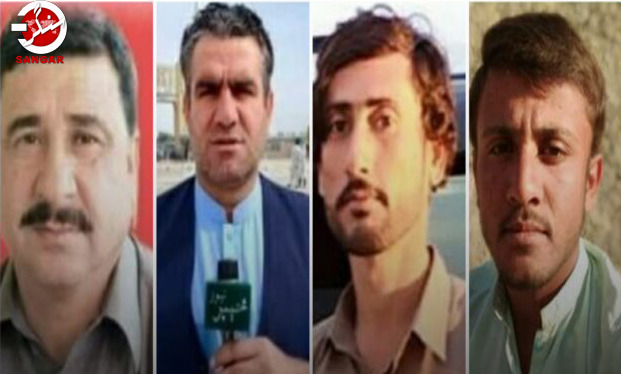
2 Journalists among 4 people abducted by Pakistan in occupied Balochistan

Pakistani forces picked up four people from occupied Balochistan and these people are now “missing” since Sunday. These four “missing persons” people are from Qillah Abdulla and Kharan districts of occupied Balochistan.

According to local sources, Pakistani forces raided a house in Lijje area of ​​Kharan district and arrested two youths and then transferred them to an undisclosed location. The “missing persons” include Din Mohammad (son of Kashmir Mohammad Hasani) and Liaqat (son of Wadera Mohammad Karim Sasoli).

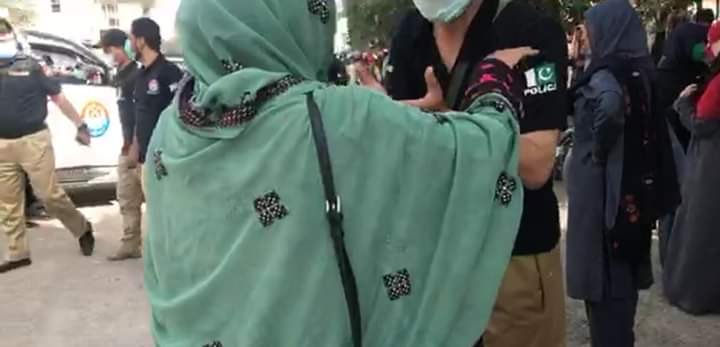
In yet another case of forceful abduction by the Pakistani forces, two journalists affiliated with private media outlets were abducted from Chaman, a border town in occupied Balochistan’s Qillah Abdullah district.

As per the local sources, these abducted journalists are affiliated with news channels broadcasting in Pashto and Urdu.

Saeed Ali Achakzai, former president of Chaman Press Club and senior reporter of Samaa News and Abdul Mateen Achakzai of Khyber News have been “missing” since last Sunday evening.

Journalists’ organizations have condemned their abduction and demanded immediate and unconditional release of both these journalists.

Pakistan is one of the most dangerous countries for fair and transparent journalism. In the 2019 Reporters sans frontières (alias Reporters Without Borders) press freedom index, Pakistan was ranked at 142 out of 180 countries.

15 points about India China battle at Galwan Valley

The June 15 battle between India and China at Galwan Valley in Ladakh is unprecedented in several ways. It was on this day that People’s Liberation Army (PLA) of China shed its facade of professionalism and came out as thugs. PLA soldiers brought in barbed wires, iron rods, nail-studded clubs and sticks to badger the Indian soldiers. They had expected the Indian soldiers to run away and use visual footage of the ensuing spectacle for its psychological propaganda. Alas, much like the low-quality Chinese products this Chinese script too had a very short shelf-life. And what happened on June 15 was a completely different story.

The soldiers of Indian Army fought like lions, the frigid mountainous ridges around Galwan Valley echoed with roars of “Jai Bajrang Bali” — the battle cry of Bihar Regiment which was hunting down Chinese soldiers. But while the Indian soldiers fought valiantly for almost eight hours, a bunch of journalists, defense experts and some veterans ganged up and unleashed their fangs. Their concerted efforts to twist the developments at Galwan Valley has created confusion all around the country. In fact, this cabal is part of China’s propaganda machinery who have waged a psychological war against India.

However, after several interviews with former Indian Army Commanders, discussion with experts in geostrategy and off-the-record briefings, I can say in most certain terms that India continues to be strong against China. Here are the main points that we need to understand about India China battle at #GalwanValley.

1.Indian Army soldiers of the Bihar Regiment fought bravely and embraced martyrdom only after slaughtering the Chinese soldiers who had dared to transgress at the Galwan Valley.

2. In this fierce battle 20 Indian soldiers were martyred but they fought like lions till the end. Chinese side suffered heavy casualties. More than 30 Chinese soldiers were killed in this battle. Intelligence intercepts of Chinese social media platforms say casualties on the Chinese side is much-much higher. But I am putting this figure at 30 because China has accepted this number.

3. China had expected to see the back of Indian soldiers at Galwan Valley on June 15. Dragon had hoped to use this as propaganda material against India and present Xi Jinping as China’s powerful leader. Instead, soldiers of the Bihar Regiment stood their ground and fought valiantly.

4. Soldiers of the Bihar Regiment were not unarmed. Responding to Chinese treachery on the night of June 15 they fought like lions, broke the neck of several Chinese soldiers, scooped their eyes out and smashed their heads with stones. All this while roaring the Battle Cry of Bihar Regiment.

5. Battle Cry of Bihar Regiment is “Jai Bajrang Bali”.

6. Indian soldiers fought bravely at a place where it’s difficult to stand still even for 30 minutes. And yet the Indian soldiers stood their ground and hunted down the Chinese soldiers.

7. While chasing the retreating Chinese soldiers eight Indian soldiers were cordoned off by hundreds of Chinese soldiers who were then returned back to India in exchange of several Chinese soldiers in the custody of Indian Army. India also returned back the dead bodies of Chinese soldiers.

8. Indian Army convoys have now been deployed along the LAC in Ladakh. India is sending more troops along the LAC in Galwan Valley, PangongTso Lake and other places. India’s fighter aircraft are on high alert. We need to trust our armed forces. They are in combat positions. They have not gone to the LAC for a picnic!

9. Geostrategy and combat readiness must be secret. Every military strategy and military movement cannot and must not be discussed in public.

10. Pressurizing the Indian government to reveal finer details of our military strategy will only help China. Writing detailed accounts of our troop deployment will only help China.

11. China’s PLA (People’s Liberation Army) is no match to Indian Army. Please bury the ghosts of 1962. Barely 5 years after 1962, Indian Army slaughtered around 900 Chinese soldiers at the Nathu La and Cho La battle in Sikkim.

12. In the coming days China will step up its efforts to spread rumours about Indian Army, Indian Air Force and Indian Navy. This is dragon’s psychological war. Please don’t fall for it.

13. China knows it cannot wage a direct fight with India but it will indulge in psychological warfare. Sadly, several Indian journalists, experts and communists will side with China in this psychological war. In 1962 they sided with China, and they will do so again.

14. At this time we need to trust our armed forces. Remember this is not a political battle to win elections, rather this is India versus China.

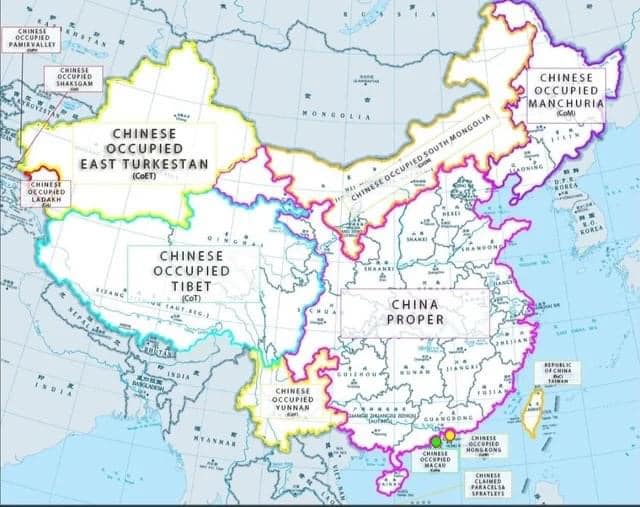
15. Tibet, Taiwan, Hong Kong, Xinjiang (Uighurs), CPEC, Gilgit-Baltistan, etc. China has several weak points (look at the map) India will pick up a spot to strike. There will be no knee jerk reaction but a well calibrated Indian Response.

The Zuck Treatment: Religious Versus Secular Responses to C-19

Secularism seems rife with popularizers, dilettantes, ‘keyboard warriors,’ and scientists. However, regarding formal researchers into the world of secularism and the divides and two-storey buildings of seculars  and the religious, Dr. Phil Zuckerman is a rare individual who takes part in some extensive research into the worldviews and worlds of the “seculars,” the “Nones,” or those without a formal religious affiliation, which can be amorphous – gooey and vague – definitions of the non-religious. When he examined some of the results of the research, something noted within the research was the degrees to which, during a pandemic, faith-based belief systems and, thus, responses utterly failed to deliver on the divine promises. In fact, they worsened the circumstances.

“Back in mid-March, nearly 40 percent of congregants who attended services at a small church in rural Arkansas came down with COVID-19, and a few subsequently died. In April,” Zuckerman stated, “at least 70 people who attended a church in Sacramento caught the virus, and a pastor in Virginia who piously defied social distancing orders within his flock died from COVID-19.”

Amazing – God did not help the most dependent upon his succour. (Many turn out as suckers.) The most devoted, most devout, most dedicated, and the most likely to demise based on a formal belief in the saving grace of God Almighty and the power of prayer. Zuckerman went from Idaho Falls to Frankfurt to Cameroon to South Korea to Cameroon to Israel speaking on the devastation of religion and its ill-equipped worldviews in response to a once-in-a-century pandemic, especially in an era of high-tide science relative to prior history and the tools – and knowledge of in general terms – of the reasons for the disease and death: a virus; not demonic possession, for example.

“While most religious people, communities, and congregations have taken COVID-19 seriously and have followed recommended social distancing practices, many of those pushing hardest to denounce or limit social distancing are strongly religious,” Zuckerman explained, “The fact is, this pandemic has brought into stark relief the underlying differences between a staunchly secular worldview and a fundamentally religious worldview.”

A god who helps those who help themselves is a god who either does not exist or cares not to help those most giving in worship to this god, i.e., the god is either a sadist or an insensate. Your pick. In this, the naturally naturalists, or those who adhere to Naturalism – as in natural events following from prior natural events (on the macro scale), deny the supernatural and the ideas of the religious. The religions claim and the religious believe in a supernatural, otherworldly, order to the constituent portions of life, the universe, and everything.

If a pandemic happens, then the, almost, natural follow-through from a naturalist perspective is to look for functional, scientific procedures and empirically-informed policies to mobilizer actions against the proliferation of a, for instance, virus. In a supernaturalist framework, one can pray for help; angels may assist one; and, God may intervene in the affairs of the believer for the protection, for example, one’s flock and oneself, though this didn’t happen in rural Arkansas.

Zuckerman said, “The results of these different orientations can, sometimes, literally be matters of life and death. We see this in terms of the current COVID-19 pandemic. For example, the strongly secular are more likely to accept the findings and dictates of science while the strongly religious are more likely to ignore or distrust such empiricism, favoring instead faith”

He referenced by Brett Pelham, where, as per an obvious prediction from the data on religion & faith-based thinking versus secularism & scientific-based thinking, the highly religious parts of the United States were “markedly less likely to look up scientific advice regarding best-practices for staying safe…” Religious people aren’t stupid; religion enforces or motivates a worldview of ignorance, motivated not-knowing. The correlation held with education, so the mediating factor is religion.

“According to a recent report, those states that are providing the best support systems to protect their at-risk populations from COVID-19 tend to be the more secular states with lower rates of church attendance and faith in God—states such as Vermont, Massachusetts, Colorado, and Maine—while those states with the worst support systems are nearly all states with highly religious cultures, such as Tennessee, Mississippi, and South Carolina,” Zuckerman said.

And yes, religious exemptions for social distancing furthered the poor outcomes of public health too. It held internationally too. Those more “secular populations and secular leaders” were more likely to “on average” perform better in terms of public health of their respective populations. This is not to deny the positive benefits of community and mental wellness coming from religion in the guise of community involvement and a feeling of solidarity and love with those around oneself. However, why do we need supernaturalism for this?

“To be sure, being religiously-involved has been correlated with many health benefits, especially in societies lacking a well-functioning welfare state that provides free and excellent health care to all citizens,” Zuckerman said, “For example, here in the U.S., people who attend church regularly tend to live longer and report lower stress levels. But what we see today is that the strongly religious appear to not be faring as well as the strongly secular in the face of this global pandemic.”

So, the real culprit is religion in general with hyper-religiosity, specifically; the issue is the extremes of religious belief leading to a denial of the obvious aspects of reality and hoping for some magical cure.  

Photo by Katarzyna Urbanek on Unsplash

Environmentalists join hands to save Amazon of the East

One can say, environmentally conscious people live in Assam and hence public outcries against hydroelectric projects or mining approvals in forest lands are natural to invite media attentions. The recent public mobilization against the rampant open-cast coal mining in rainforests was natural to happen, but its tame end indicates that the uprising was not properly focused.

The uproar at the time of nationwide Covid-19 lockdown was started in the social media and soon it expanded to the mainstream media outlets. With an aim to safeguard a forest reserve, large numbers of environmental enthusiasts, celebrities, social activists, media personalities, etc of the country came out to oppose the lease for extracting coal by the central government in New Delhi.

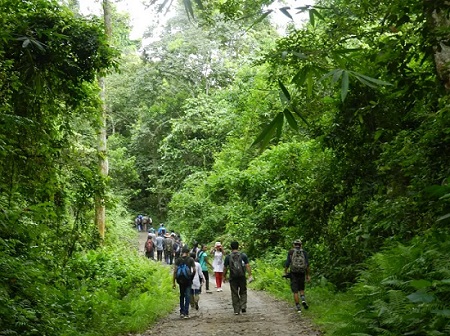
An initial apprehension was that the new lease for coal mining would destroy Dehing Patkai Wildlife Sanctuary under the designated Dehing Patkai Elephant Reserve lying under the Eastern Himalayas and the Indo-Burma global biodiversity hotspot, which is known as Amazon of the East. Most of the agitators found it difficult to understand why the mining was ‘approved inside a sanctuary’, which is legally protected under India’s Wildlife Protection Act 1972.

But soon an active conservation group named Nature’s Beckon came out with strong statements that the movement was not based on facts as Dehing Patkai sanctuary was totally safe and there was no mining proposal inside the rainforest. Soumyadeep Datta, who leads the influential group, clarified that the Saleki Proposed Reserve Forest, where conditional mining was approved by the Centre is far away from Dehing Patkai sanctuary. Later the State government in Dispur also authenticated the fact.

Datta, who is an Ashoka fellow, released a video statement asserting that some elements were misleading the people with wrong information about the mining of underground coal inside the sanctuary. He pointed out that those motivated elements played words while cunningly shifting its focus from Dehing Patkai wildlife sanctuary to Dehing Patkai elephant reserve. They kept on hiding the vital information that coal mining was legal under any elephant reserve as it is not protected under the wildlife protection laws.

Earlier, a good number of campaigners raised their voice to preserve the sanctuary through their posts on Instagram, Facebook, Twitter, etc with slogans like ‘I am Dehing Patkai’, ‘Save Dehing Patkai from Coal Mafia’, ‘Save Amazon of the East’, etc. They tried to convince the people that the sanctuary was in danger because of the proposed mining as it would make a negative impact on biodiversity, water and land resources. Not only the rainforest along with its wildlife, they argued, the mining would create troubles for various ethnic communities living around there for centuries.

Members belonged to the All Assam Students’ Union, Krishak Mukti Sangram Samity along with other civilian outfits, opposition political leaders, defenders of nature and non-government organization activists that launched the online campaign arguing that it was difficult to organize immediate visible rallies because of the countrywide shutdown. Even the banned armed outfit named United Liberation Front of Assam (Independent) also came out with the threatening statement to attack anyone who would come for mining there.

A group of 300 conscious citizens of Northeast India also wrote to the central environment and forest ministry expressing concerns over the approval of coal mining at 98.59 hectare of land inside Saleki reserve forest under Dehing Patkai elephant reserve. They claimed that the mining in Dehing Patkai forest region would severely affect ethnic groups like Tai Phake, Khamyang, Khampti, Singpho, Nocte, Ahom, Koibarta, Moran and Motok, Tea-tribes, Burmese and Nepali speaking people, among others in their livelihood and existences.

The history of open-cast coal mining in Saleki locality is a century old story, where the government run Coal India Limited (CIL) continues extracting coal for national needs. The coal authority maintained its operations in northeastern region through North Eastern Coalfields, which came into existence in 1975 with its headquarter at Margherita of eastern Assam. The current lease of CIL expired in 2003 and it applied for the renewal of the lease.

However, CIL was unable to get the clearance till 2012 even though it simultaneously carried out mining in the area for all these years. Lately, the state government under its forest regulation Act 1891 imposed a penalty of Rs 43.25 crore on CIL for the unauthorised mining inside the elephant reserve between 2003 and 2019. The CIL applied for the lease in 2013 and again in 2019 to mine at Tikok colliery, which was forwarded by the Assam government to the Centre.

Reacting to public outcries, the Assam’s Environment and Forest Minister Parimal Suklabaidya, who visited the location following the direction of Assam Chief Minister Sarbananda Sonowal, clarified that the concerned mining field is not a part of Dehing Patkai sanctuary. He also stated that the mining was not approved in Tikok colliery since October last year and the authority seized around 5,000 metric tonne coal from that location by the end of 2019.

National Board for Wildlife under the union environment & forest ministry gave a provisional clearance to extract coal in its last meeting held on April 7, 2020 under the chairmanship of Union Environment, Forest and Climate Change Minister Prakash Javadekar through the video conference arrangements as the pandemic lockdown continued.

However, the meeting put many conditions to the coal authority under the Forest Conservation Act 1980. Coal India Ltd. (CIL) and the Assam’s forest department have to fulfill 28 conditions and the compliance report would be placed before the union government for Stage-II clearance. Only after the clearance, coal mining operations could start. Presently a conditional clearance was granted to the coal authority, added the minister.

Meanwhile, some advocates and environment enthusiasts knocked the door of Gauhati High Court for its intervention against the clearance. The court issued notices to the union and state governments and the CIL along with other stakeholders for their responses. Lately the coal authority had temporarily suspended all mining operations in Margherita locality since June 3.

Even though there was no place called Dehing Patkai, rather it was derived from Dehing/ Dihing (a river flows through it) and Patkai (the hill which supports the forest), the state government declared a patch of rainforest with 111.19 square km area as Dehing Patkai Wildlife Sanctuary on June 13, 2004. Seventeen other forest reserves of Assam also got the status simultaneously.

The sanctuary on the south bank of mighty Brahmaputra river today houses a large number of Asiatic elephants with over 290 species of bird, 50 species of butterfly, 45 species of mammals, 25 species of reptiles, 70 species of fish, thousands of other inspect species, 60 varieties of orchid, etc. Thousands of species of trees like Hollang, Mekai, Dhuna, Udiyam, Nahar, Samkothal, Bheer, Hollock, Elephant-apple, Fig, etc keep the forest cool and humid. Various species of wild cats (including tiger, leopard, clouded leopard, leopard cat, golden cat, jungle cat and marbled cat), non-human primates (including rhesus macaque, Assamese macaque, slow loris, capped langur, pigtailed macaque, stumptailed macaque, hoolock gibbon), are also seen with Chinese pangolin, flying fox, wild boar, sambar, barking deer, gaur, serow, malayan giant squirrels, porcupine, etc.

Rare bird species like lesser adjutant stork, white winged wood duck, white backed vulture, slender billed vulture, white cheeked hill partridge, khaleej pheasant, grey peacock pheasant, rufus necked hornbill, wreathed hornbill, great pied hornbill, beautiful nuthatch, black browed leaf wabler, green imperial pigeon, purple wood pigeon, etc with king cobra, rock python, Asian leaf turtle, monitor lizard, etc are found there.

It was Nature’s Beckon that launched a massive campaign in 1994 to protect 500 sq km of contiguous pristine forest cover comprising Joypur reserve forest, upper Dehing/Dihing reserve forest and Dirak reserve forest in eastern Assam’s districts namely Dibrugarh and Tinsukia adjoining Deomali elephant reserve of neighbouring Arunachal Pradesh. The group also organized an international rainforest festival at Joypur in presence of concerned representatives from 12 different countries.

But the Tarun Gogoi-led Congress government ignored the movement, which was morally supported by a large number of wildlife conservationists, wildlife biologists, intelligentsia around the world, and announced only 111.19 sq km area as a sanctuary leaving the rest that was declared as Dehing Patkai elephant reserve keeping space for mining coal-oil, queries, sand-land cutting, logging etc. “We believe it was because of the influence of coal and timber lobbies, the government did not include the entire area under the sanctuary. Amazingly, the then State forest minister Pradyut Bardoloi, now a Parliamentarian, has released video footage trying to establish rampant coal mining inside the Dehing Patkai forest reserve,” said Datta adding that propagandists in the last few weeks cried that the coal mining was approved by both the governments in Dispur and New Delhi.

Claiming that rumours about coal mining inside Dehing Patkai sanctuary is a part of huge conspiracy, Datta also opined that if CIL could be defunct, not only its 20,000 workers would face difficulties, but also the coal mafia (illegal miners) would take advantages out of the situation. The member of Centre’s project elephant committee Datta revealed that the coal has a significant demand for nearly 300 tea-plantations, thousands of brick factories and market places.

Appreciating everyone who expressed concern over mining inside the sanctuary, the nature conservation group reiterates its old demand to declare the entire 500 sq km area of contiguous rainforests be preserved under the wildlife protection laws. The conservation group, which published several books like ‘Rainforests of Assam’, ‘Dihing Patkai Abhyaranya’, ‘Namchangor Antespur’ with thousands of awareness brochures, urged the present government to expand the area of Dehing Patkai sanctuary judiciously covering the adjacent rainforests.

Various other organizations like Patriotic People’s Front Assam, Indigenous Council Assam, Brihattar Asomiya Mohila Mancha, Sanmilita Sangbadik Mancha, etc also come forward endorsing the conservation movement of Nature’s Beckon and urged the Sarbananda Sonowal-led BJP government to declare the entire Dehing Patkai forest reserve as a protected area under the concerned laws of the country as early as possible.

Pakistan wants to eradicate the idea of Baloch resistance with brutalities: Dr Murad Baloch

Dr Murad Baloch, Secretary General of the Baloch National Movement has strongly condemned the assassination of Bibi Kulsoom Baloch in Dazin. In a press statement, Dr Murad Baloch said that the state of Pakistan wants to eradicate the idea of resistance from Baloch nation by hurting the honour and dignity of Baloch nation through a series of humiliating incidents and torturous murders.

“After raiding Kulsoom Baloch’s house in Dazin, the members of state-backed death squad stabbed her in front of her little girls with knives when she screamed for help,” said Dr Murad Baloch. After the martyrdom of Baloch daughter Bibi Kulsoom Baloch, her jewels were taken off and the house was looted. Such shameful and tragic incidents in Baloch society are the ominous face of Pakistani occupation which Baloch people will not forget for centuries. Those involved in such heinous incidents have nothing to do with Baloch people and are barbarians who are far from humanity, said Dr Murad Baloch.

“The Punjabi state has adopted a strategy to counter the Baloch national struggle by systematic killings, enforced disappearances, demolishing entire villages and by plundering of Baloch resources at the hands of its army and intelligence agencies, yet Pakistani state has failed to counter the struggle. Following the failure of the state in this, the state has formed Death Squads of criminals and given free hand to them to dishonour the Baloch national dignity, play with their lives and loot their property so that the national feeling and resistance in the society can be eradicated,” he added.

“But history has shown that oppression, violence and barbarism deepen the national feeling of slavery rather than reduce it, and it is this sensibility that gives strength and energy to the national movement,” added Dr Murad Baloch.

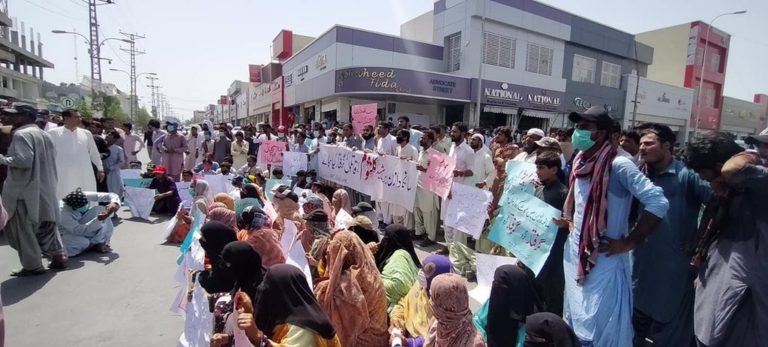
Dr Murad said that the incident of Shaheed (martyr) Malik Naz and the little girl Bramsh shocked all sections of the Baloch nation and a series of historic protests began. The foremost demand of the protestors is the elimination of these Death Squads from Balochistan. While the ongoing series of protests, another Baloch daughter was killed at the hands of Death Squads. It was a clear message to Baloch people from Pakistani state, that, peaceful protests and slogans of Baloch people will intensify Pakistan’s barbaric actions rather than put an end to it. But it’s the misconception of the Pakistani state that they can hide their war crimes under the umbrella of Death Squads. Disgrace has become the destiny of Pakistan, explained Dr Murad Baloch.

Dr Murad Baloch also said that, “…we have to realize the fact that to crush the Baloch national movement, Pakistan is distorting our social values through multidimensional strategies and tactics to maintain its occupation and colonial rule. Death Squads are the most valuable means to reduce the burden of direct accusations of Baloch genocide and war crimes of Pakistan at the international forums, but the Baloch nation has exposed Pakistan’s tactics to the world through its struggle.”

Today, the voice of the Baloch is being heard all over the world that the state of Pakistan is using the Death Squads as a tool in Baloch genocide and they are the state’s associates and equal partners in war crimes.

Freemasonry, Mozart, Love, and Romance with Christian Sorensen

Christian is a Philosopher that comes from Belgium. What identifies him the most and above all is simplicity, for everything is better with “vanilla flavour.” Perhaps, for this reason, his intellectual passion is criticism and irony, in the sense of trying to reveal what “hides behind the mask,” and give birth to the true. For him, ignorance and knowledge never “cross paths.” What he likes the most in his leisure time, is to go for a walk with his wife.

Scott Douglas Jacobsen: Mozart or Johannes Chrysostomus Wolfgangus Theophilus Mozart was a prolific composer of music. You love him, or the performances of the music. You mentioned Die Zauberflöte or “The Magic Flute.” Any further commentary on it?

Christian Sorenson: In my opinion, it is a musical composition loaded with “esoteric symbolism,” about which much can be speculated, but can hardly be deciphered.

Jacobsen: Now, there was some Freemasonic influence on the music. Is there any freemasonry background for you? I cannot shake the hand to be sure with the peculiar handshakes.

Sorenson: Depends on who asks…

Jacobsen: Are there any particularly trashy Mozart pieces? He couldn’t have made everything perfect with the music.

Sorenson: I estimate Mozart “did nothing perfect,” and in that sense it is necessary to distinguish between “mediocrity and perfection,” since “not being mediocre,” does not means unconditionally “something less perfect.” In relation to “Requiem,” which is its last composition, and to “Allegro Molto,” I feel there’s “something lacking.” Regarding the former, the reason was evident since it was left unfinished due to his death, but in relation to the last one, in my opinion there’s “a talent lack,” because both, the “musical notes wealth,” and “musical harmony,” are not evident as well as in the rest of the body of its musical work.

Jacobsen: Love and romance go hand-in-hand with music. We’re an auditory species for many emotions. Mozart, in fact, had trouble finding himself a partner, even Constanze was clumsily courted. As Seinfeld would say, “What’s the deal?” Why did he suck at this? It is one of those baffling aspects of highly intelligent people, even geniuses. There can be an attainment of the height of creative productions and the devilish failures in amour. It is as if the gods made a Faustian bargain with most of the great geniuses of ye olde worlde order. I could list a long scroll of names who admit to utter failures in romance while being amongst the most highly intelligent.

Sorenson: Indeed, “love and romanticism” go hand in hand with music, since these “are emotions,” and this last can “ignite and feed” them. Nevertheless, I believe that “romanticism and love” usually “don’t go hand in hand,” as occurred to Mozart and generally happens to geniuses, due to the fact that many times, though they are people “in love with love,” they instead “approach awkwardly” towards “the beloved” one, perhaps because they lack emotional and social skills, and therefore “fail in their attempt.” From my point of view, “romanticism is risky” in reason that “exacerbates love desire,” and this last brings as consequence the “evidence sign” of “love object non-existence.” If I could summarize it in one simple sentence, I would say that “to find love you better not talk about it.”

Jacobsen: Mozart’s music, it is almost a synesthetic experience. Why?

Sorenson: Because Mozart was a genius, and as geniuses we are able “to experience synesthetic experience,” and to produce in others that kind “of experiences,” since “our perceptions” are not always “fixed,” regarding to “perceptual organs” and to “supposed sensible objects” related to these.

Jacobsen: If we take music, live classical music, as a form of art, let’s say of Mozart, it’s a mix of three things. One of them is sound in minute ways in the manipulation of waves in air. Another is the visual presentation of the community of experts who play instruments – almost miraculous a primate species has been adapted to this purpose for the species enjoyment qua species enjoyment. A last is the, if close enough to the stage, the second acoustic resonance; the powerful resonance from the reverberations of the instruments on one’s body – truly remarkable. It is visual. It is auditory, primary and secondary forms. It is triggering for emotions. Emotions triggering certain memories, as keys unlocking feelings for emoting’s sake or for bringing forth, calling forward, buried moments of awareness. What are some other elements of the musical experience? How do the live performance and the recorded experience differ from one another?

Sorenson: The difference between both kinds of music, is similar to what occurs “when sucking a candy with or without its paper,” due to the way of approaching to it, and though it’s the same object, it leads to sensations that rather “oppose each other.” By listening to live music, what is lived is an “experience of real experience,” while doing it with recorded one, what arrives is the “experience of an inexistent experience.” In consequence, strictly speaking within the last “nothing is there” and our conscience is aware of it, meanwhile the former unlike this, possesses the “unpredictable and unexpected,” through which “uncertainty” of outcome is faced, in order to “increase emotionality” and to “trigger a pleasure chain,” associated with the “sensible experience” of “feeling nothingness.”

Jacobsen: For the unmeasurably gifted, such as yourself, what is the importance of intense emotionality to balance out the intense cognitive life?

Sorenson: “Emotional intensity” is an “intrinsic constitutive condition,” of being an “unmeasurable genius,” linked to the fact of possessing a very low “stimulus threshold” that leads in turn to be “hyperreactive” and “emotionally susceptible.” Therefore, this last “is necessary” as part of our life, but it “is not enough,” in itself for allowing us to achieve an adequate personal balance. Indeed, the latter will depend on the consequence fundamentally on the “quality and connotation” that “intensity within emotion” and “nature of emotions” adopt in order to achieve a “harmonic” and “stable balance.” Anyhow, we “are not balanced” precisely because everything “is balanced.”

Jacobsen: Thank you for the opportunity and your time, Christian.

Sorenson: Thanks to you, and I hope I have “silenced the noise of the stones carried by the river.”

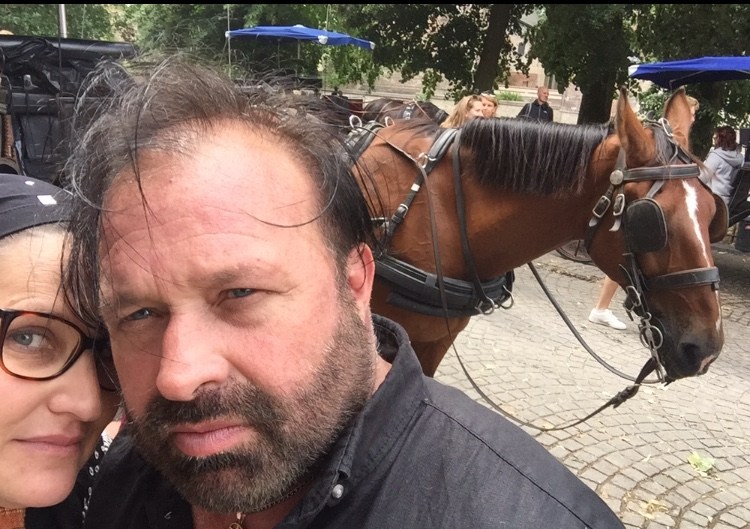
Image Credit: Christian Sorenson.

Muscular India gives free hand to its army to tackle China

It would be a grave misjudgement to believe that China has walked over India in a physical showdown in Galwan Valley in eastern Ladakh on Monday. If nothing, ask the Chinese who made moves in lockstep over the last few weeks to test India’s nerves and found a nation mature in diplomacy and dare in equal measure.

India has used velvet gloves against a petulant Nepal which thumbed its nose on borders but didn’t elicit a raging anger from New Delhi that would’ve played into the hands of its puppeteer, China. India knows, as does Nepal, that the latter can’t survive without India’s open borders. Simply put, the land-locked nation would run out of essential supplies. A manufactured border dispute has no future but for headlines and talk shows.

China meanwhile had crossed the Line of Actual Control (LAC) at four different points in Ladakh, agreed for de-escalation but then stayed put when the two armies were to pull themselves back by a few kilometres. India would have none of an enemy’s forward-post left standing inside the Galwan Valley which belongs to India. It didn’t back down from a physical combat either since arms and ammunition are avoided by the two neighbours in sensitive stretches of border running into thousands of kilometres.

Now has come the news that Indian Army has been empowered to act as per the ground situation without looking for directions from New Delhi. In other words, the Indian Army has been freed from political constraints. It’s an unambiguous message to Beijing that they are now in the wilds. That your superior nuclear stockpiles, defence spending or armaments wouldn’t be of much aid if it’s bare knuckle fight. So, if it’s to fists, stones and clubs now, may the best man win. There is no referee.

Indian Express has quoted an army source thus: “Army has been given emergency powers for deployment there as per needs and new situations without looking towards Delhi…We have to demonstrate our strength on the ground…there is no need to show aggression, only our strength.”

This would put China in a spot. Either they shove the conventions and turn it into an armed combat. Or they pull themselves back as they did in Doklam in 2017. Or they escalate which wouldn’t go unnoticed to a concerned world. It’s a massive show of intent from Modi’s India which is largely consistent in its zero-tolerance approach on nation’s sovereignty and integrity.

It’s not like South China Sea where the Middle Kingdom has usurped islands, sea tolls, reefs and banks overriding neighbours protests. China could not only carry through the bluff but were assured of its efficacy by the mumbled response of the affected. India seems determined to call out the bully. It’s not the semi-autonomous Hong Kong, a cowering Taiwan or a Vietnamese fishing boat you could sink to the floor of the South China Sea.

China clearly is upset at India’s assertions in recent months. India has signed a pact with Australia in the middle of the pandemic which would give teeth to QUAD (Quadrilateral Security Dialogue) between four democracies of Indo-Pacific: the United States, Japan, Australia and India itself. It has openly given a call to multinationals to shift their operations to India, a blow to China where it hurts the most. It has decided to screen the foreign investments beyond the FDI regulations. It now heads World Health Organization (WHO) which is to take call if China was complicit in hiding the truth on Coronavirus pandemic. It hasn’t helped the matter that Taiwan, which Beijing is paranoid about, could have “observer” status at WHO on pandemic deliberations. Then we have an expanded G-7 group of nations where India is to be included but no invitation has gone out to China.

India has an uncontested control of Galwan Valley, between Ladakh and Chinese-occupied Aksai Chin, since 1962. It suffers from poor infrastructure in a hilly terrain unlike China which makes use of the flat Tibetan plateau to carry its road and highway network unhindered. India in contrast has to cross several mountains to access the LAC. It’s only natural that India wants to secure its borders. China would either have to give up the encroachments or face consequences, no less economic. There is a groundswell of consensus to boycott Chinese goods. The little matter of Huawei-5G also hangs in the balance.

There is little doubt that China faces uncommon heat across continents. Pushback against its over-arching reach has already begun in Africa and Southeast Asia. Unemployment is unprecedented. Economic woes are spiralling. The world is a hostile theatre after China’s machinations on pandemic which has set the world back by a generation in economic terms. Its present misadventure in Ladakh is an undisguised diversionary tactics.

There is little doubt Indo-China relations would freeze in near future. It would bring Pakistan in closer ambit of China. India, on its part, would have the United States in its drawing room. Distrust between the two main powers of Asia would now run deep. Russia is a common friend which could find its loyalty divided.

‘Tibetans have lost their motherland, they need some friends’

During my 48-year long love affair with Tibet, many Tibetan and other friends have asked me the same question, “What made you fall in love with Tibet?” Their question is quite valid because as journalists we regularly come across so many issues. We go deep into one, write about it and then move ahead to something else. As we move on, most of us forget most of these issues with passage of time. Moreover, in a country like India where every journalist and photographer has a huge variety of social, political and developmental issues worth specializing and writing about, how a journalist like me could continue with Tibet while many of my colleagues sincerely believed that it was a ‘dead’ or a non-issue?

When I look back and revisit my first encounter as a journalist with Tibetan refugee community and their leader HH the Dalai Lama in 1972, I discover that the reason of this love affair was my father and my mother. Meeting first time with the energetic refugee youths like Lodi Gyari, Jamyang Norbu, Tenzin Geyche, Lhasang Tsering, Tendzin Choegyal, and Sonam Topgyal, the fire in their belly for Tibet was very much same as I’ve been noticing since my childhood days in my father for his lost homeland in Kashmir.

My parents too were refugees from that region of Kashmir which was occupied by Pakistan only three months after the Indian Partition. When I met a middle aged Tibetan lady Tsering Kiya in McLeod Ganj Chowk, her enthusiasm about narrating her home place back in Tibet was as infectious as my mother telling me about her home in Mirpur, her school and life in the town. May be this Tibetan encounter was a case of self identification. And I was hooked.

Refugee

My father became refugee three times in his life time. He was just two years old in 1931 when followers of young Sheikh Abdullah, a fanatic leader of Muslim Conference led a dreadful communal massacre as part of his anti-Maharaja movement in J&K. All property of my grandfather who was a prosperous businessman, an accomplished Hakim (Amchi), a famous story-teller and a popular preacher of Quran (despite being a Hindu), was looted and burnt. He was forced to leave his ancestral village of Panjan and migrated to Mirpur.

The family became refugee and lost its entire belongings second time in 1947 when they were forced to leave Mirpur overnight in the wake of attack by Pakistan Army and tribesmen. The surviving members of his family were among those 18 thousand out of 42 thousand Hindus and Sikhs of Mirpur who survived the violence. The family settled temporarily in Jammu city but was soon pushed out by the state government of Sheikh Abdullah to neighboring Punjab on the ground that it did not want to handle too many refugees. That was his third and final exile from his homeland. Following a long exploration in Punjab, Uttar Pradesh and Himachal Pradesh the family split in many parts and my father finally settled in a refugee slum of Delhi. I was born in this slum near Old Subzi Mandi.

Faceless, Hopeless Refugees

But as the luck would have it, a large majority of refugees from POK (Pakistan-occupied Kashmir) who migrated to other parts of India were deprived of their identity and status as ‘citizens of J&K’. While all State governments of J&K had refused to accept these POK refugees as ‘State Subjects’ of J&K for over 72 years now, the New Delhi government had her own reasons to deprive this community even the status of a ‘refugee’. For over seven decades the central government was shy of accepting these children of POK as refugees for the fear that this formal labeling will weaken her claims over POK in any future legal fight with Pakistan. This approach of he Centre, unlike victims of Indian partition from Pakistani Punjab, Multan, Sindh and East Pakistan who were compensated for the properties they had lost in Pakistan, automatically deprived my father, his parents and the entire POK refugee community of being compensated for the properties they had left behind in their homeland. Till the last days of his life when he passed away last year in June, my father had written innumerable petitions, participated in demonstrations and lead delegations to win justice and formal identity as the children of J&K. But to no avail.

He lived all his life with his pain of being denied even the right to call himself a legitimate son of his own motherland. Leave aside having any legal right to send his children to settle permanently in J&K as proud ‘citizens’ of their ancestral homeland, he could not even win a chance to send any of his children for higher education in an Engineering college of the State which were reserved exclusively for ‘State Subjects’ of J&K and are actually funded by the tax money he and other Indians were paying.

The last hope

In his last few months, my father had lost his eye sight. His only interest in sitting near the TV or radio was to hear some news about his homeland Jammu & Kashmir. He had big hopes from the Narendra Modi government in its first five years. But had started losing heart gradually. In his last days the only words he could speak after big efforts was his only one question, “Modi Kuj Karega?” (Will Modi do something?). All of us knew what ‘something’ he was looking forward to. This ‘something’ did happen but only on Aug 5, 2019 which came 50 days after he had already breathed his last. On May 24, this year when my mother heard Modi government’s announcement about the new domicile citizenship laws for J&K her quick reaction was, “He was waiting all his life to hear this news. Had he (my father) been alive today, he would have died of his happiness shock.”

My father lived for 90 years and struggled for 72 years to win the Kashmiri identity for himself, his children and over a million other faceless Kashmiris like us who left their homes in Mirpur, Muzaffrabad, Bhimbhar, Kotly, Dev Batala, Kainy, Ali Beg and thousands of small villages like Panjan. Most of the co-refugees of my father’s generation are already dead without seeing the dawn of May 24, 2020 or hearing the news that their home State of J&K has finally recognized them as her own children. Me and my children’s generations who have never had a firsthand feel of what it feels like being a citizen of our own motherland J&K, can now hope to win back our original identity. But the dream of my father’s generation to bring back our original ancestral homeland in POK is still far away. Still, many among us are now more hopeful that this term of Modi or the next one might bring back the lost POK back to its mother J&K one day.

There were many occasions when after reading my newspaper articles on Tibet, watching me in a TV debate on Tibet or hearing about my speaking in a seminar about Tibet, he would quietly hold my hand and ask me, “You are working so much for the Tibetans who are from another country. Why don’t you fight with the same spirit for your own people?” I could feel his pain but I had no such answer which could reassure him about his painful situation. On some occasions I could just muster some courage to tell him, “Don’t you think we are still very lucky that despite losing our homeland we are living in our own motherland as free citizens? But poor Tibetans have lost their homeland and motherland both. They are too few to fight it out with China. Don’t you think they need some friends like me?” On a couple of occasions, he just smiled and said, “It’s a smart answer. But you are also right.” I don’t know whether his answer was out of his understanding of the Tibetan situation or his own hopelessness about his own fight.

Today as I remember my father on his first anniversary I don’t have an honest answer to the question which has shaken my conscience during all these years of my love affair with Tibet, “DID I LOVE TIBET TO CHEAT MY FATHER?”

Right Now, Mubarak Bala: Let Him Go, or Have a Fair Trial (Right Now)

Mubarak Bala is one of the most articulate and intelligent humanists in the world today. Not heard of much in the mainstream of some of the secular discourses for several reasons, as Dr. Sikivu Hutchinson has been noting for years, Humanism remains Euro-centric, as in Caucasian and Western culture; nothing wrong with either the ethnic groupings or the culture, but the over-emphasis can exclude other voices deserving a platform, due respect and dignity, and a presentation of a different side of problems, experiences, and, thus, manifestations of Humanism in order to make Humanism true to the universalist visions and aims of Humanism and humanists. Here’s the catch if you’re not aware: Bala is in jail.

Or so we think, he could be dead. We really don’t know. And that’s another reason for considering this a crime and a human right injustice (violation). As the innovator and freethinking leader of Nigeria, Dr. Leo Igwe, has noted repeatedly, there is a long-term trend of persecution of atheists and humanists throughout Nigerian society with one of the biggest manifestations in the northern parts of Nigeria, especially places like Kano because of the strong adherence to fundamentalist versions of Islam. Igwe and Bala are brilliant people. They’re extremely well-known and articulate, in life and word, humanists. There’s no doubt some fundamentalist believers are relishing this persecution of Bala. Many humanists, around the world mind you, are not enjoying this one bit.

As this is part of an ongoing series of opinion pieces, as with Igwe and several others, we won’t stop until there is justice for Bala. We’ve won the media war on a number of fronts. Don’t doubt international humanists’ resolve in this matter, the religious fundamentalist have messed up on all fronts in handling this case; if they want even a semblance of ass-covering, then one way in which to do this would be the release or fair trial in a secular court of Bala. Even in those cases, there would be failure on their parts. There’s only damage control left for this fundamental mistake on the part religious fundamentalists to try to subvert proper law and order, and international human rights, and the rights due to the President of the Humanist Association of Nigeria as stipulated in the Nigerian constitution.

We didn’t want this campaign; we didn’t want this fight. It was thrust on the community based on the bigotry, fear, prejudice, and superiority complex inherent in some religious minds, usually fundamentalist, about the non-religious. For this post, I want to focus the penal code of Kano in brief. Because this was part of the longer article the day of the arrest of Bala, unjustly. S.S. Umar & Co. were the ones filing the complaint to the police from Kano about a Facebook post by Bala in Kaduna. Bala was dragged out of his own place of residence by two out of uniform cops and then placed in jail. This entire situation is unfair and should be openly condemned from the outset. I know moderate and ordinary Christians in southern Nigeria and moderate and ordinary Muslims in northern Nigeria know the justice due to Bala because of the outrageous acts being demanded in order to appease religious fundamentalists in northern Nigeria.

We have international humanist support. We have ordinary religious believers’ support. It is only a small minority of religious fundamentalist believers who have proclaimed themselves the arbiters of the faith for all Muslims, which, in and of itself, should be seen as, and probably is perceived as, a blasphemous act or behaviour within the conceptualization of the ordinary Muslims and Christians in northern Nigeria and southern Nigeria, respectively. Nigeria, technically, has a secular constitution; as a fundamental tenet of Humanism, in some regards, is a separation between religion and state, or faith and governance.

The Penal Code of Kano State has a subtext of being a Sharia law-based legal code in which religion becomes imposed on the entirety of the population of Kano while within a larger context of Nigeria’s secular or humanistic constitution. How is this not wrong? How is this not unfair and unjust, and illegal in some manner? Because it has a larger secular law for all and then a secondary religious law precisely for the religious only; a religious or faith-based law that many want to impose on Mubarak Bala in which a humanist, an atheist, and a former Muslim would be subject to the death penalty because of the religious zealots who a) cannot handle open criticism, b) cannot handle an open and extremely intelligent and articulate humanist, c) cannot handle a prominent leader within the humanist communities, and d) cannot handle a individual who uses freedom of expression guaranteed within the constitutional setup of Nigeria. This is, fundamentally, unjust and shall be challenged by humanists, whether Humanists International, or the Humanist Association of Nigeria, or individual activists like Dr. Sikivu Hutchison, Mandisa Thomas, and others.

There are towering figures like the aforementioned and Professor Anthony Pinn who have provided an in-depth and rich intellectual analysis and contextualization for comprehension of the issues facing us as humanists. It is useful here. And to all humanists young and old, how ever much they may make you feel unwelcome and as if you’re not deserving of and granted the same human rights as them, these are your societies and your global community and, therefore, your identical rights too.

As per the complaint from S.S. Umar & Co., they stated, Bala “publically [insulted] Prophet Muhammad (PBUH) on his Facebook page contrary to Section 210 of the Penal Code of Kano State ad Section 26(1)(c) of the Cybercrimes (Prohibitions, Prevention, Etc.) Act of 2015.”

Cybercrimes (Prohibitions, Prevention, Etc.) Act of 2015 Section 26(1)(c) states:

26. (1) Any person who with intent –

(c) insults publicly through a computer system or network–

(i) persons for the reason that they belong to a group distinguished by race, colour, descent or national or ethnic origin, as well as religion, if used as a pretext for any of these factors; or

(ii) a group of persons which is distinguished by any of these characteristics;

What does this complaint mean? It implies a dead man, a man six feet under (or purportedly in heaven), has been insulted. How can someone know this? By principle of parsimony, a more pragmatic interpretation is a select group of Muslims claiming to speak for all Muslims feel insulted over a Facebook post and, thus, declare this an insult to a dead man – leaving aside the idea of a religion being insulted.

I have seen on social media numerous death threats against Bala because he is an atheist (or a humanist and a former Muslim). In this, the real crime radar should be utilized to focus more rightly on real individuals making more than insulting claims and, in fact, declarations of public intent to murder against an individual because of a set of beliefs and a particular rejection of a systematized religious series of beliefs. Who is this justice system kidding? Bala should be released without question or given a fair trial in a secular court; otherwise, the logical implication, by the penal code and the cybercrimes bill would imply a far more grievous and larger set of open charges, by their own stipulations, of the need to jail and potentially charge numerous individuals proclaiming open harm against a living individual, Mubarak Bala.

Free Mubarak Bala.

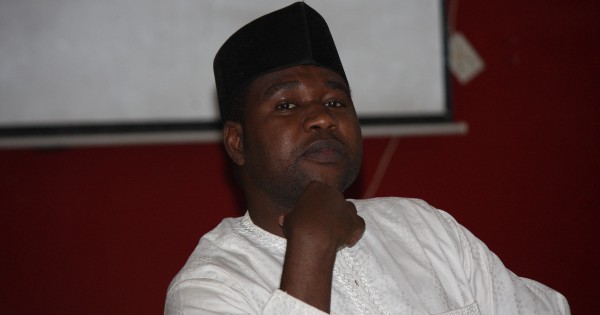
Image Credit: Mubarak Bala.

India China face-off in Galwan turns violent, efforts on to diffuse tensions

India and China were involved in a violent face-off at the Galwan Valley on June 15/16 night while the two sides were in the process of de-escalation. In the ensuing scuffle three Indian soldiers that included a Colonel and two other soldiers were martyred. At least 4 Chinese soldiers were also killed in this violent scuffle while several others have been injured.

Confirming the casualties suffered by the soldiers of PLA (People’s Liberation Army) Hu Xijin, Editor-in-Chief of Global Times, said “Chinese side also suffered casualties in the Galwan Valley physical clash…” Global Times toes the official line of Beijing and works as a mouthpiece of the Chinese government.

Commander level talks are still on between India and China as they make efforts to diffuse the situation. PM Narendra Modi, NSA Ajit Doval, Defence Minister rajnath Singh, External Affairs Minister Dr S Jaiashankar and Army Chief MM Naravane held detailed discussions about the current stand off with China.

This is the first time since 1967 that military personnel of both India and China have been martyred in a border skirmish.