Home Blog Page 355

CFI – Cash Prize Increase to Show Magical Powers

Center for Inquiry has been a consistent and powerful bulwark against pseudoscience and supernatural powers claims in the history of the United States in particular and some other parts of the world in general. Many in the humanist, generally, and the secular humanist, particularly, community owe them a great debt and, in fact, are a part of the organizations in its orbit if not directly with it.

One extended grouping of the Center for Inquiry is the Center for Inquiry Investigations Group. An interesting cash prize proposal building off the legacy of the James Randi Educational Foundation. The prize comes to an astonishing $250,000. I believe in USD. The prize money, previously, was $100,000. So, certainly, this ups the ante on the entire endeavour.

It is a financial backing to a challenge to prove occult, paranormal, and supernatural abilities or powers. Based on the reportage of the Center for Inquiry Investigations Group, akin to the findings of the James Randi Educational Foundation, zero challengers have succeeded in passing the challenge of the group. Yet, we find an astonishing number continuing to proclaim superpowers, special powers, supernatural powers, and the like. Others have never been properly tested in a modern scientific setting to provide sufficient proof of the concept. No empirical evidence on this level.

James Underdown, the Executive Director and the Founder of the Center for Inquiry West (Los Angeles) stated, “We’ve been waiting for twenty years now for someone to come along and blow our minds, and while many have tried, no one has proven they can actually do what they say they can do… Maybe all the real superpowered folks were just waiting for us to raise the stakes. Hopefully a quarter million bucks will do it.”

Granted, it is a lot of money. It can raise some questions a to why so few takers/testers to earn such money. In addition to the quarter of a million dollars for an individual who can provide evidence of the paranormal or supernatural claims, there is, as well, a $5,000 prize money for the individual who can make the referral of an individual who can show the magical powers. (I believe “magical” is the appropriate colloquial term here.)

With files from Center for Inquiry.

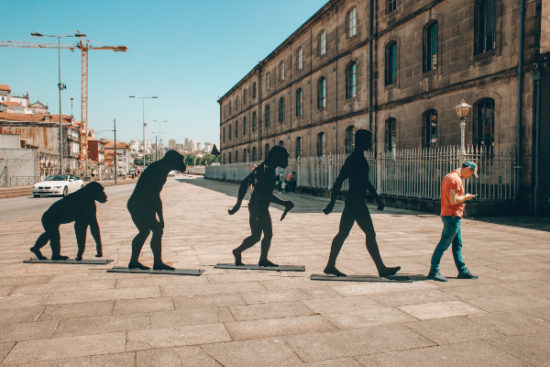
Photo by chuttersnap on Unsplash

NCSE – Improvements on Evolution Via Natural Selection Education

Evolution via natural selection remains the singular foundation for the biological sciences and, presumably, the medical sciences by extension. Without an appropriate education in these matters and full comprehension and complete acceptance of its implications, a pupil or an aspiring biology or medical sciences student will be left worse off than educational peers.

With an NCSE/Penn State national survey, they have been looking into the “pedagogically appropriate treatment of evolution in state science standards,” according to the National Center for Science Education’s (NCSE) Glenn Branch, deputy director.

With the want of improvement in the standards of education across the United States of America, as we speak, three states are beginning to revise the state science standards: Texas, Pennsylvania, and South Carolina.

Branch stated, “More than half a million students take a biology course in the public schools of Pennsylvania, South Carolina, and Texas every year, to say nothing of the millions of students across the country whose textbooks might be affected by the content of the Texas standards.”

In “Teaching evolution in U.S. public schools: A continuing challenge,” by Eric Plutzer, Glenn Branch, and Ann Reid, one can find further details on the particular survey in question.  With the low rates of adherence to the foundations of the life sciences, the United States will continue to punch below its weight and remain a powerful while less than possible nation in terms of Science, Technology, Engineering, and Mathematics.

With files from the National Center for Science Education.

Photo by Eugene Zhyvchik on Unsplash

NCSE: New Jersey Revising Educational Standards

Some more positive work coming out of the National Center for Science Education or the NCSE with its Deputy Director, Glenn Branch, pointing out the situation in New Jersey.

With some of the issues in a poverty of critical thinking, at times, within the United States, some good events are more than welcome. The state board of education of New Jersey adopted the revisions of some education standards for the entire state.

These will be incorporating climate change in “a systematic and coordinated way.” Branch explained how every teacher within the public school system of New Jersey would be “encouraged” to discuss climate change in a proper context, educational environment.

Branch said, “…New Jersey’s climate is already changing… and it is to the state’s credit that its education standards are changing in response. But it will be necessary for the state to ensure that these latter changes have their intended effect by funding education appropriately: meeting the greenhouse effect with the greenback dollar.”

These kinds of educational advances can help work on the unfortunate scientific illiteracy in the United States as a leading scientific nation, as with other nations harbour large swathes of scientific illiteracy.

Whether consequential knowledge such as evolution via natural selection for biological sciences and medical sciences, or climate change for actionables on an urgent problem, or not, scientific illiteracy is an ongoing issue and state-by-state changes to educational curricula as a service to the next generations is greatly appreciated.

With files from the National Center for Science Education.

Photo by Saketh Garuda on Unsplash

Conscripted Chinese soldiers no match to battle-ready Indian military

Almost one third of the People’s Liberation Army (PLA) is made up of conscripted soldiers who are forced to serve in the military for two years and then retired. PLA’s conscripted soldiers hardly undergo the rigorous military training.

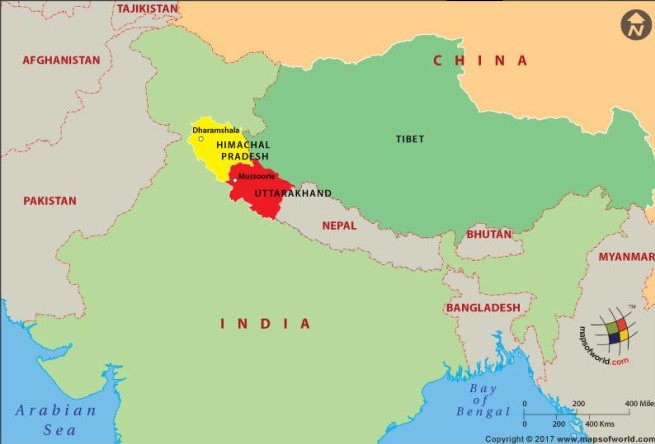
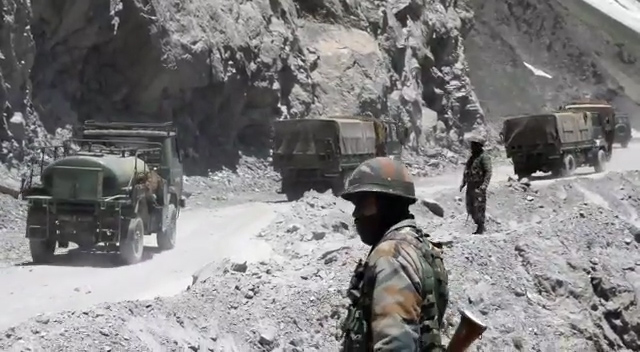
Ladakh continues to make headlines. Galwan Valley remains tense. And India continues to remain on high alert as it fortifies combat positions along the Line of Actual Control (LAC) to preempt any further Chinese misadventure. As far as territorial controls are concerned, there has been absolutely no change in the LAC positions despite both India and China building up their troop strengths. The two armies are in combat positions yet no shots are being fired. But China has begun its psychological warfare.

A large section of fifth columnists ensconced at plum positions across India are working overtime to create a fear psychosis about China’s military build up across the LAC. These fifth columnists make ample use of Photoshop images to prove that China has eaten up a few kilometres of Indian Territory in the Galwan Valley. This is far from truth. The fact remains that on June 15 the PLA (People’s Liberation Army) launched an unprovoked attack on Indian soldiers in an anticipation to see their backs, instead, the Indian soldiers hunted down the Chinese. In that fierce battle, more than 35 PLA soldiers were slaughtered by Indian soldiers thereby severely denting the image about PLA’s invincibility. China has since got into a damage control mode, and what better way than to wage psychological war against India.

Interestingly, Galwan Valley remains out of bound for all civilians including the journalists. India has been reiterating time and again that there has been no change in areas under its control. Curiously, this fifth columnist ‘coterie’ has been working overtime to dole out Photoshop satellite images of PLA tents, bunkers and camps at the LAC in order to prove that Chinese men have encroached inside Indian Territory, while the Indian Army continues to sleep. This modus operandi intends to create a fear psychosis in the minds of Indians while covering up for the shortcomings of China’s PLA (People’s Liberation Army).

This psychological warfare is critical for China as it covers up the chinks in their armour. Almost 30% ‘soldiers’ in the People’s Liberation Army (PLA) comprises of conscripted manpower, who are forced to serve in the military for two years and then retired. This effectively means that the PLA is continuously walking through a revolving door and around one third of the Chinese military is always on its exit route. The manpower serving PLA under compulsion merely adds to the headcount as they hardly undergo the rigours of military training and yet they are posted in combat positions. China’s conscripted herd is hardly a match to battle hardened and professional Indian Army. Moreover these conscripted youth brought up in cushy environment have never had any experience of real war. Almost for their entire term within PLA these conscripted soldiers wield guns in front of civilian populations. There’s a sea of difference when uniformed men wield guns at civilians and when faced with battle hardened soldiers. This differential turned the scales against PLA on June 15 during the battle at Galwan Valley, when Indian soldiers despite being severely outnumbered hunted down the Chinese, broke bones and smashed their skulls.

PLA’s remaining two third soldiers who have donned the battle fatigues know that they are mere cogs in the gambit of Communist Party of China who can be sacrificed at the whims of ‘high command’. A soldier’s passion to sacrifice himself for the nation is clearly missing in People’s Liberation Army where the uniformed men are only headcounts who are used as cannon fodder for communist party’s agenda of grabbing land and expanding its borders. In comparison, Indian military is largely rustic where able bodied men from across the nation willingly join ranks, undergo tough training and are brimming with nationalism. The People’s Liberation Army, in contrast, serves more as the private army of China’s Communist Party rather than for China as a nation.

Feeling of nationalism can be a major differentiator between warring armies when soldiers have to choose between life and death within a fraction of second. Even during the June 15 battle, every Indian soldier knew that if they die in their line of duty they will be remembered as heroes, their martyrdom celebrated, bodies will receive state honours and their family members will be honoured by the Indian society. And India did honour the twenty soldiers martyred on June 15, who were cremated with full state honours.

Sepoy Chandan Kumar being cremated with full military honours at his village Gyanpura in Bhojpur, Bihar. Sepoy Chandan Kumar was martyred during the June 15 battle with PLA at Galwan Valley

Nothing of this sort has happened in China. The Communist Party of China has not even officially acknowledged the names of PLA soldiers killed on June 15. The ‘Dragon’ is too embarrassed to publicly acknowledge that despite being armed with barbed wires, knuckles and nail-studded batons they were hunted down by Indians. Weibo, China’s equivalent of Twitter, is still abuzz with angry comments from the family members of slain PLA soldiers who had expected some official honour and a recognition that their kin had sacrificed their lives for the country. But then this was not forthcoming, simply because in the worldview of communist China, a human life holds no value. And here lies the difference of approach between the Indian Army and People’s Liberation Army.

China’s Economic woes

Ever since the outbreak of COVID-19 pandemic, China’s economic troubles have been worsening. China’s macro-economic numbers reveal the abyss that it has fallen into.

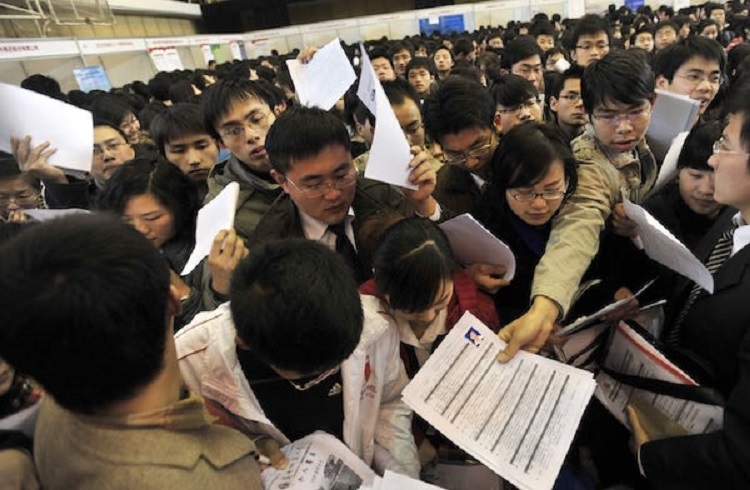
China counts 900 million people as its active workforce, of which close to 80 million are unemployed today. China also needs to create 11 million newer jobs every year to gainfully engage the fresh workforce. Around 40% Chinese population– almost 600 million people– earn an average of 1000 yuan (Rs 10,600) per month, which is subsistence level income. China’s per capita income has declined by 4% in January-March quarter of 2020 when compared with same period a year ago.

China’s three growth engines also point towards underlying problems within its economy. Consider this: Consumer spending in China has plunged by 19%, exports are down 13%, and fixed asset investments have dipped by 16%. And it doesn’t end here. Roughly 200 million jobs in China come from businesses connected to foreign trade. As China gets into trade brawl with the US and big corporations shift their production bases out of China, most of these jobs could just vanish. All of this is making Chinese population restless and angry, very angry.

Unemployed youth with their job applications in China. (Representative photo)

President Xi Jinping is aware of these troubles and communist party mandarins have sniffed the groundswell of public resentment. However, rather than take constructive steps to steer China’s economy towards course correction they have resorted to censor dissenting news and redirect anger on the ground towards aggressive nationalism. This is what explains China’s breach of trust with Hong Kong, its bravado with Taiwan, the ongoing Ladakh standoff with India and the latest tussle with Japan over Senkaku Islands in the Pacific.

Ironically, China is not succeeding on any of these fronts. And in order to stay afloat China has initiated “wolf warrior” diplomacy through its foreign office that has unleashed sharp attacks on anybody and everybody who doesn’t toe China’s line. It’s sad that a section of Indian media and self-proclaimed ‘experts’ have become enablers for China’s “wolf warrior” diplomacy.

Photoshop satellite pictures of PLA tents, bunkers and Chinese military presence in Galwan Valley and other parts of LAC is leaked to this section of pliable cabal and then a well concerted attack ensues. The sole purpose of this exercise is to mould the narrative in China’s favour and create a fear psychosis within India about Chinese invincibility.

Revealing details of India’s troop deployment will only help China

In combat zones the lines of conflict are often blurred. Indian population needs to rest assured that martyrdom of twenty Indian soldiers and their fierce fight back wherein they slaughtered at least 35-40 PLA soldiers has not been in vain. There is no fresh Chinese transgression post the Galwan clash on June 15.

Indian Army battalions and tanks continue to be deployed along the LAC in Ladakh. India’s troop mobilisation is taking place in accordance with threat perceptions along the LAC. India’s fighter aircraft are on high alert. We need to trust our armed forces. They are in combat positions. They have not gone to the LAC for a picnic!

Geostrategy and combat readiness must be secret. Every military strategy and military movement cannot and must not be discussed in public. Pressurizing the Indian government to reveal finer details of our military strategy will only help China. Writing detailed accounts of our troop deployment will only help China. Indian needs to bury the ghosts of 1962. Barely five years after 1962, Indian Army slaughtered around 900 Chinese soldiers at the Nathu La and Cho La battle in Sikkim and chased away the intruding PLA to its base. China knows it cannot wage a direct fight with India but it will indulge in psychological warfare.

In the coming days China will step up its efforts to spread rumours about Indian Army, Indian Air Force and the Indian Navy. This is dragon’s psychological war. Sadly, all those fifth columnists, self-proclaimed ‘defense experts’ and communists will side with China in this psychological war. In 1962 they sided with China, and they will do so again.

Franklin Templeton draws flak abroad, nudge at home

Fined heavily by three global regulators in Canada, Hong Kong, Korea for more than a year for serious regulatory violations, Franklin Templeton is sitting pretty over a Rs 28,000 crore alleged scam in India. So far, it has faced a simple nudge from the Securities and Exchange Board of India (SEBI). The market regulator, according to reports reaching the Indian Capital, has fined Franklin Templeton Rs 10 lakh and extended the time limit for forensic audit by auditor Chokshi & Chokshi.

The move has, expectedly, rattled the country’s financial markets.

The FT group is facing several serious litigations and strong proceedings for illegally winding up six schemes in India. As many as 40,000 investors have got an estimated Rs 28,000 crore stuck because of the group’s decision to wind up the schemes that experts claim violate regulatory guidelines.

Reports circulated by Washington says the FT group has — for long — indulged in regulatory breaches and shoddy practices for which global regulators fined it heavily. The matter has been reported to the United States Securities and Exchange Commission (SEC), since Franklin Templeton is headquartered in Washington DC. As such, the US SEC has also reprimanded Franklin Templeton several times in the past.

As per the US SEC Report of 2019, three global regulators, the Financial Supervisory Service (FSS), Korea, the Securities and Futures Commission, Hong Kong, and the Ontario Securities Commission, Canada, have severely castigated and fined the Franklin Templeton group for serious regulatory violations over the past decade.

But in India, the group has escaped unscatched.

As per the earlier timeline, Choksi & Choksi, a chartered accountant and forensic audit firm was to complete the investigation by the first week of July. Now, the same report will be submitted by the first week of August, 2020. 

People whose investments are stuck with FT feel a low fine by SEBI and delay in forensic audit by the auditor could send “strong and wrong signals” to those whose cash is stuck with those schemes FT wants to dilute.

At stake is a whopping Rs 28,000 crore of 40,000 investors. 

FT had initiated an e-voting process to seek unitholders’ nod to wind up the schemes. Initially, the e-voting process was scheduled to be held between June 9 and 11, 2020. However, the process was delayed after certain investors approached various high courts (HCs) against the fund house.

The petitioners said voting should not be allowed until the audit report is made public so that investors can make an informed choice. A SEBI council had argued before the Gujarat HC that the forensic audit report was for internal information of the regulator and cannot be a ground to delay the voting. The court had still granted a stay on the voting process till the forensic audit report was made available in public domain.

On June 20, 2020 the Supreme Court directed that all matters related to winding up of FT MF schemes be heard in the Karnataka High Court. Franklin Templeton had prayed before the apex court to vacate Gujarat HC’s stay on e–voting. The SC, however, didn’t intervene in Gujarat HC’s stay order on the e-voting process.

NSS: Greek Mandatory Declaration of Religion is Human Rights Violation

A mandatory declaration of religion is being challenged by the National Secular Society as a breach of human rights.

In Greece, there is a claimed requirement for parents having to declare religion on the child’s birth certificate. This has been challenged by the National Secular Society (NSS) at the European Court of Human Rights.

NSS reported, “In Papanikolaou v Greece, the ECHR is considering whether the obligation violates article nine of the European Convention on Human Rights, which protects the right to freedom of religion and belief.”

Based on the submission to the ECHR, it has been argued by the NSS the obligation goes against Article 8 and Article 9 of the European Convention on Human Rights. They deal with the right to respect for private and family life and the freedom of thought, conscience and religion, and state:

ARTICLE 8

Right to respect for private and family life

1. Everyone has the right to respect for his private and family life, his home and his correspondence.

2. There shall be no interference by a public authority with the exercise of this right except such as is in accordance with the law and is necessary in a democratic society in the interests of national security, public safety or the economic well-being of the country, for the prevention of disorder or crime, for the protection of health or morals, or for the protection of the rights and freedoms of others.

ARTICLE 9

Freedom of thought, conscience and religion

1. Everyone has the right to freedom of thought, conscience and religion; this right includes freedom to change his religion or belief and freedom, either alone or in community with others and in public or private, to manifest his religion or belief, in worship, teaching, practice and observance.

2. Freedom to manifest one’s religion or beliefs shall be subject only to such limitations as are prescribed by law and are necessary in a democratic society in the interests of public safety, for the protection of public order, health or morals, or for the protection of the rights and freedoms of others.

The NSS submission complained the obligation stands as contrary to the convention and unnecessarily divulges sensitive personal data in violation of the rights of the child and of the rights of the parent.

The complaint continued to remark on the nature of treating members of a particular faith as somehow a bloc or a “cohesive group”; whereas, the reality with every belief or social attitudinal group remains statistical and distributed more than anything. People differ.

With the freedom of religion or belief, as per the European Convention on Human Rights and the complaint from the NSS, it is an individual right, not a group right and, therefore, cannot be treated as a singular right of a group.

“The [NSS] argued that the requirement goes against both the plain words of the relevant articles of the ECHR and relevant case law. In previous cases the ECHR has ruled that requiring individuals to reveal their personal beliefs violates article nine,” the NSS reported, “It has also established that disclosure of information about personal religious and philosophical convictions may engage article eight, as such convictions concern some of the most intimate aspects of private life.”

Panayote Dimitras of the Greek Helsinki Monitor “greatly appreciated” the efforts of intervention of the NSS at the ECHR. The issues raised by the NSS will be ‘adding crucial arguments’ to the points raised by the Greek Helsinki Monitor too.

NSS chief executive Stephen Evans stated:

We’ve intervened in this case to uphold the principle that nobody should be required to reveal their personal beliefs, which can often be a very sensitive issue, without very good reason.

There’s no good reason why the Greek state should need to know the religion of a newborn child’s parents, so the court should ensure it upholds the right to freedom of belief and the right to privacy.

With files from the National Secular Society.

Photo by Ricky Turner on Unsplash

India cannot resolve every dispute by dialogues, it’s time for defensive-offence

Chinese intrusion in Eastern Ladakh is a pre-meditated plan with close relevance to the ominous situation developing in South Asia. China’s threatening postures and dubious moves are a threat to peace in the region. China’s ambition is to dominate the Asian Continent militarily and economically. Nibbling at the borders of her neighbours is China’s history. India is facing this menace along 7,000 km Himalayan border with China just because of Nehru putting an end to the strategic buffer of Tibet.

Pressure from the international community is growing in China for an investigation into the leakage and global spread of Coronavirus. World leaders have begun to concede that President Trump did not guffaw against the WHO. The US is not alone in demanding a balance of trade with China. Japan, Australia and India are equally serious. But the withdrawal of production units from China has to be undertaken under technical advice.

Indo-Pacific region is again in focus. Sporadic movement of Chinese naval ships in the Indian Ocean and the South China Sea and Beijing’s recent warnings to Australia against supporting an inquiry into the origins and spread out of the pandemic, demand that the Far Eastern strategy of the American policy planners and also of the major democracies of the world might necessitate upgrading of respective strategies.

China understands that stable democracies will ultimately insist on and work towards just and equitable economic order. Intermittent show of Chinese warships in the Chinese Sea, Bay of Bengal and the Indian Ocean and the sinking of a Vietnamese vessel is a loud message.

China seems to have slowed down the pace of its Belt and Road narrative. It will impact the overall strategy of China regarding the Gilgit-Baltistan region where Beijing wants to have a strong military base in Skardu. Islamabad is reported to have agreed to facilitate it. Kargil is not too far away from Skardu and the road link did exist during the days of the Maharajas of J&K. 

Knowledgeable sources reported that China has been eyeing a foothold in the Wakhan corridor also close to the Afghan mainland. At the same time, Beijing has been impressing upon Pakistan to formalize the legal status of Gilgit-Baltistan region because the area is disputed. That is what made Pakistan Supreme Court recommend annexation of the region to the Pakistan mainland. The Supreme Court took no cognizance of the anti-Pakistan struggle undertaken by the nationalist elements in Gilgit and Baltistan.

After India scrapped the special status of Jammu and Kashmir State on August 5, 2019 owing to increase in sedition activities of separatists in Kashmir and their blatant camaraderie with Pakistani agencies, Pakistan embarked on a virulent anti-Hindu and anti-India propaganda on a large scale. It tried to influence even the UN subsidiaries like the UNHRC. The Chairman of UNHRC Session 42 and the Chairman of the UNHRC both issued statements criticizing India. They did not say a word about the vast terrorist network spread out by such Pakistan-based terrorist groups as have been designated by the UN itself and are active in Kashmir. India rejected the report as biased and based on false reports. It is to be noted that the US has already withdrawn from the membership of the UN Human Rights Council alleging that it has been politicized and has lost its sanctity.

With Pakistan ganging up with some of the non-Semitic Islamic states like Turkey, Malaysia and Iran, the group began criticizing liberal and pragmatic Arab states friendly towards India for not making OIC (Organisation of Islamic Cooperation) an effective tool to take some strong anti-India position on Kashmir. They are struggling to remove Saudi Arabia from its pivotal position among the Islamic countries and bring in a new structure that would work against democracy and liberalism in Islam.

In the background of these developments in which China and Pakistan have been working in tandem, India demanded Pakistan to vacate its illegal occupation of Gilgit-Baltistan areas. Indian media gave a big hype to India’s intention of retrieving the part of the original State of Jammu and Kashmir illegally occupied by Pakistan since 1947.

Pakistani media played up the threat and the opposition parties in Pakistan questioned the rationality of Pakistan Army and intelligence agencies abetting insurgency in Kashmir but negligent about the impending threat of India planning to recover the lost territory in PoK and Gilgit-Baltistan. Rawalpindi felt rattled and the Prime Minister Imran Khan, to save his skin, went about crying wolf. “We will give India a befitting reply if she makes any adventure of attacking Pakistan” became the refrain of Imran Khan’s lifeless vitriolic. China and Pakistan both had a reason to feel frustrated on being informed by respective intelligence sources that Indian military brass was working on some plan.

Raising and legitimizing the jihadist legions as the frontline of its defence strategy against India, relentlessly facilitating infiltration into Kashmir of armed jihadists, massively brainwashing ordinary Kashmiris and propagating through electronic media, barrages of anti-India hatred among them on the religious count and the Kashmir separatists and ambivalent Kashmiri Muslim leadership not missing any opportunity of subversion, and the tailpiece of Gupkar Memorandum, forced the NDA government to meet the situation according to its merits. The roots of the State Reorganization Act of 2019 have to be searched in this emerging scenario.

China thrice vetoed Security Council’s attempt of designating Masood Azhar, the Chief of the Pakistani terrorist organization Jaish-e-Muhammad. China was lending outright support to Pakistani terrorists carrying out subversion in Kashmir.

For India, the time has come to act and liberate the part of the original State of Jammu and Kashmir from the illegal occupation of Pakistan since 1947. Pakistan had turned down the Security Council’s two important resolutions on J&K which left India free to follow a course of its choice. Hence is born the idea of exploiting the strategic importance of Gilgit and Baltistan in the new scheme of Inner Asian strategy.

Alarmed by India’s plan of retaking the territory illegally occupied by  Pakistan and also nearly 5,000 sq km of Shaksgam region in Chilas ceded by Pakistan to China, the two adversaries jointly planned the double-pronged strategy of PLA making an incursion into the Eastern Ladakh and Pakistani Rangers intensifying firing and shelling on Indian posts along the LoC including civilian habitats. As the situation in Ladakh became grim, Pakistan called a crucial meeting of her Corps Commanders presided over by the army chief and attended, among others, by the three services chiefs and the ISI chief. Dawn of 17th June reported, “Services chiefs on Tuesday expressed satisfaction over the preparedness of the Inter-Services Intelligence (ISI) to counter India’s sinister designs after receiving a rarely combined briefing on occupied Kashmir and other regional issues at the headquarters of the premier intelligence agency.” PM Imran Khan twice visited the ISI headquarters for intelligence briefings on the security threats. The paper disclosed that the Pakistani foreign minister was scheduled to visit Beijing in a couple of days obviously to brief the Chinese about the ground situation. Tension along the LoC in J&K has escalated with Pakistani Rangers opening more fronts for pounding Indian posts.

Now we find that Ladakh standoff has implications far beyond the shadow of the Himalayas. We need to change the discourse of resolving issues with two arch-rivals through only dialogue. It is not a bilateral issue that India is confronted with. What is in the throes of danger is not just the Indian nation but the very concept of democracy, freedom and human dignity. Therefore, for India, it is of utmost importance to depart from the traditional policy of running after an elusive peace. Our security narrative must change and we must accept the eternal truth that power flows through the barrel of the gun.

Imran Khan’s ‘reverse swing’ on Osama bin Laden’s death reveals his love for terrorists

Since an occasional slip of the tongue is unavoidable, inadvertent mistakes don’t usually stir up a controversy as long the mistake is corrected immediately. But rather than clearing the air, when such amendments create more confusion, then to perceive it as a ‘Freudian Slip’ is but natural. Readers would be aware that this term denotes a verbal or memory mistake believed to be linked to the unconscious mind that supposedly reveals the real secret thoughts and feelings held by people. This is exactly what happened when Pakistan Prime Minister Imran Khan, after initially saying that al-Qaeda founder Osama bin Laden had been “killed” by US troops but then immediately corrected himself by saying that the World Trade Center attack mastermind had been “martyred.”

Though a humungous faux pas, the same could still have been overlooked had it been made during an, interview, media event or an informal address (like his remark of Germany and Japan being neighbours and having fought against each other during the World War-II). Yet to declare Osama bin Laden a martyr on the floor of the National Assembly makes it all the more embarrassing for Pakistan, and that too at a time when it’s desperately trying to convince terror financing watchdog Financial Action Task Force (FATF) that it has no appetite for terrorists or terrorism. But this isn’t the first time Imran Khan has betrayed Pakistan’s eternal love for terrorist groups. While speaking at the US Institute of Peace in Washington during last July, didn’t he himself admit that “when you talk about militant groups, we still have about 30,000 to 40,000 armed people who have been trained and fought in some part of Afghanistan or Kashmir”?

Khan waxes eloquent on his government’s ‘zero tolerance’ for terrorism and keeps blaming previous governments, which (according to him), “did not have the political will,” to tackle terrorism due to which Pakistan is plagued with the current crisis and stands placed in the FATF ‘grey-list’ for financing terrorism. But would Mr Khan please elucidate that when (again according to him) his government and the army are “on the same page,” why haven’t the “30,000 to 40,000 “militants” who are moving freely on Pakistani soil not been disarmed as yet? Don’t these “armed people” pose a threat to the people of Pakistan? Or is Rawalpindi absolutely certain that unlike former US Secretary of State Hillary Clinton’s prognosis, the “snakes” that Pakistan is keeping in its backyard will only bite Pakistan’s neighbours? Lastly, if Pakistan is really serious about tackling terrorism, then how come it has the third highest number of people (146) on the UNSC proscribed list?

The fact that the al-Qaeda founder considered Pakistan as the safest place on earth where he could live incognito along with his large two dozen strong member family and attendants; and opt to stay in an Abbottabad compound barely a stone’s throw from Pakistan Military Academy clearly indicates that Osama bin Laden was being hosted by Pakistan’s deep state. Furthermore, Washington’s decision not to either inform Islamabad or Rawalpindi about the plan to takeout Osama bin Laden or incorporate Pakistan Army in the conduct of ‘Operation Geronimo’ leaves no doubt that Pentagon was absolutely certain about Rawalpindi’s complicity in providing a safe sanctuary to the al-Qaeda chief. Surprisingly, this was the issue that Khan raked up during his speech in the National Assembly and one must admire his gall for portraying the Americans as the ‘bad guys’.

For Khan, it wasn’t Osama bin Laden being found holed up safely in Pakistan that “embarrassed” Pakistan, it was only when “the Americans came and killed Osama bin Laden at Abbottabad… martyred him, the whole world started abusing us after that.” In cricket, ‘reverse swing’ is the art of so delivering a ball that it turns in towards the batsman, rather than moving away from him, thereby limiting the batsman’s shot-making ability due to lack of momentum and the former cricketer turned PM’s ‘reverse swing’ delivery came moments later when he claimed that “70,000 Pakistanis died because of US’s war on terror.” This is the second Freudian slip which confirms that Imran Khan has no doubt whatsoever that ‘Uncle Sam’ is the real villain and that Osama bin Laden wasn’t killed but “martyred” by Americans. It’s this mindset that earned him the ‘Taliban Khan’ moniker. Readers would recall that before he became Prime Minister, Imran Khan’s great fascination with terrorist groups was well known. He was the one who in 2013, described the US ‘droning’ of dreaded Tehreek-e-Taliban Pakistan (TTP) commander Wali-ur-Rehman as “totally unacceptable” because Khan considered him to be a person who was “pro-peace.”

A few months later, Khan even went to the extent of mooting the idea of
Tehreek-e-Taliban Pakistan (TTP) being permitted to open an office in Pakistan and in a shocking statement said that “If the government is serious about pursuing the dialogue process with the TTP, it should allow them to have their own office like the one opened by the Afghan Taliban in Qatar.” Imran Khan was again quite upset after TTP leader Hakimullah Mehsud was killed in a US drone strike in November 2013, as he perceived this as “a deliberate targeting of the peace process.” That the Tehreek-e-Taliban Pakistan chose him to represent them in mediation talks with the government in February 2014 proves that Imran Khan was held in very high esteem by the TTP and considered to be a genuine well-wisher of this terrorist organisation.

Even though he refused to represent Tehreek-e-Taliban Pakistan, such implicit faith being reposed on the PTI chief by TTP justified him being nicknamed ‘Taliban Khan’. But with former TTP spokesperson Ehsanullah Ehsan who purportedly ‘surrendered’ to Pakistan Army in 2017 revealing in a ‘confessional’ video that spy agencies of India (RAW) and Afghanistan (NDS) “supported (TTP), extending financial assistance and they also gave targets, and for each attack (TTP) charged a price,” Khan’s infatuation with TTP is more of a blackeye than an adulatory sobriquet. But having become Prime Minister thanks to the army’s blessings, Khan knows that as long as he remains in Rawalpindi’s good books by toeing its line, he’s got nothing to fear because the army will ensure every irritant and threat to ‘Taliban’ Khan is removed-like former TTP spokesperson Ehsan, who alongwith his family, has now mysteriously disappeared from the military’s custody!

So next time when the Pakistani delegation presents its case before the FATF, representatives of member countries should carefully consider that with Prime Minister Imran Khan bowling a ‘reverse swing’ by hailing Osama bin Laden’s death as ‘martyrdom’, can Islamabad’s assurances on wiping out terrorism from its soil still be taken on its face value?

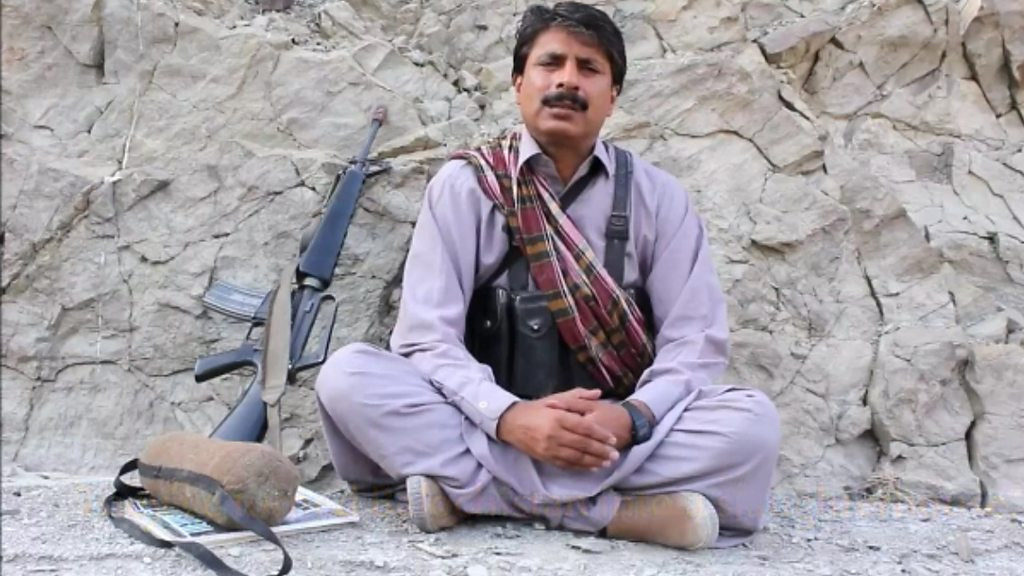
I still hope my Baba will be released one day: Mehlab-Deen Baloch

I want to escape from all of what I have around me, from my home, from friends and from my birth place and also I want to escape from this world. I want to escape from my home because I cannot bear the pain my family is experiencing on a daily basis. I cannot see my Mom’s sorrowful eyes nor do I have enough courage to tolerate the heart wrenching feelings of my elder sister Sammi. It is heart breaking when I see my elder brother as he is also helpless in doing something for our consolation.

I want to escape Balochistan because I do not have a heart to see people who are desperately waiting for their loved ones. Children of Balochistan, instead of living their childhood peacefully and playing with toys, are chanting slogans for the release of their disappeared family members. Almost every child of Balochistan is a “Sammi” waiting for her “Deen Mohammad”. Every mother is a “Khadija” waiting for “Zakir Majeed”. Every sister is “Seema Baloch” waiting for “Shabeer”.

I want to escape the land which has been bathing with the blood of innocents. Killers of humanity have complete immunity here, they can kill the mother of four year old Bramsh before her eyes and they can freely stab to death Kulsooms. No one is here to stop this brutality nor anyone pays heed to the “missing” persons’ grievances. The families are roaming from one city to another city to register their protest, but their never-ending struggle do not seem to bear any fruit.

Mehlab-Deen Baloch: My Baba will come

I have spent my entire childhood in these worries. At that time when friends of my age were playing with their toys, I was at protest sites and knocking every door of justice for the safe recovery of my Baba. Eleven (11) long years have passed, but still I and my family are in a distressful situation. The situation in which we are spending our lives has been our fate since June 28, 2009 when we heard the devastating news of abduction of my Father, Dr Deen Mohammad. I recall those days when we had a happy family with my father among us. My father was a medical officer in district Khuzdar. He used to come to Mashkai, our home town, after every four months. I vividly remember how I could not wait even for 4-5 hours from the moment my father informed us that he was coming to Mashkai. Baba always used to bring toys for me. We used to lovingly protest with our father that we cannot wait for four (4) long months. At that time we were living at Nali Mashkai. Nali is a beautiful place surrounded by date palms. River Mashkai also flows across the village. On the southern side of the village there is a Pakistan Army camp. Whenever Baba came home, security personnel asked him where he was and why he always goes out of Mashkai. This happened despite the Army personnel knowing the fact that Baba was a medical doctor and his duty was in Khuzdar, the security personnel always used to torture us and my father by asking irrelevant questions.

When Baba was with us, all our relatives used to be so nice to us. They came to our home to visit us and always asked us if we need any favor from them. But ever since Baba has gone “missing”, all their artificial love has also faded down.

But the person who was and continues to raise us through all these difficulties is my mother. My mother has given us the reason to live. She motivated us to search and struggle for my Father. She put all her efforts to educate us. She gave us courage to go out and struggle for “Missing” Baloch people.

My mother also spent her childhood in difficult conditions like all the Baloch people of that time did. She used to go a long way to bring water for household use. She wanted to study in schools but there were no schools available for girls at that time. Because of not having schools, my mother did not study in schools. But after marrying my father, Dr Deen Mohammed, my mother had learnt so much from him. It was my father’s company that made my mother strong enough, and even after his abduction my mother has fought all difficulties alone. When my father was abducted, my mother has been all for us. I cannot even imagine how my mother faced difficulties for us. In front of us she pretended to be brave, but we know that there is a limit of patience. Perhaps sorrow can be hidden for one or two days, but it is not possible to hide it for 11 long years. Now we are passive toward one another’s feeling, because we are out of words, there are no words for our consolation. Distress of my father’s disappearance is unbearable, but we are still living with it. I still hope my father will come out one day, this hope is the reason I am still alive. All courts and Human Rights groups have disappointed me. But I will never give up the hope of getting justice.

International Day in Support of the Victims of Torture in Balochistan

There are thousands of innocent Baloch including women, girls, lawyers, doctors, students, teachers, human rights activists and ordinary persons who are in illegal custody in the concentration and internment camps of the Pakistani security forces. Torture, ‘enforced disappearances‘ and extra-legal executions in Balochistan is the order of the day. We have raised the vital issue of torture before the Committee against Torture and the committee reprimanded the representatives of Pakistan and warned them that to eradicate the imprescriptible crimes, practice of torture and this impunity must to put an end.

It’s imperative to point out here that Pakistan ratified the Convention against Torture and other Cruel, Inhuman, or Degrading or Punishment on June 23, 2010. After an inordinate delay Pakistan submitted its report before the Committee against Torture. According to established mechanism of United Nations Council the Committee against Torture has provided opportunity to the International NGOs to submit their shadow or additional reports in the progress report of Pakistan. We, therefore, availed the opportunity as the others NGOs, and then we prepared a comprehensive additional report wherein we exposed Pakistan with correct facts and figures and cogent reasons, therefore our additional report was approved and we were invited to come to Geneva and shed light verbally on it on April 18, 2017. We did the needful with perfect preparation and the Committee was further convinced by our argument and the other NGOs and particularly Reema Omar, the legal advisor of South Asia of International Commission of Jurists, endorsed our version.

Chairman of the Committee rebuked the representative of Pakistan saying that the paramilitary forces of Pakistan with all kinds of impunity are involved in widespread and systematic ‘enforced disappearances’ of the innocent people which is a serious issue. But unfortunately this abominable and unconscionable practice is extremely prevalent and continues unabated. Rather than submit the report and have a discussion on it, the security forces of Pakistan are not bothered to take cognizance of the recommendations of the Committee and are exacerbating and increasing tortures on one hand, and the Committee against Torture is not monitoring the conscience shocking situation of Pakistan, in particular Balochistan.

Pakistani security forces are committing these elements of unimaginable atrocities across Balochistan. Torture, enforced disappearances, summary and custodial executions are inherent to government by terror. They are part and parcel of Pakistan government’s security strategy, which are their effective instruments and are being widely used political tools to control the population, especially the Baloch nation that is struggling for its right for self-determination in toto according to the Articles 1 and 55 of the United Nation Charter.

Unfortunately human rights organizations without applying the peremptory norms of general law (Jus Cogens) particularly Article 4 (2 and 3) of the International Covenant on Civil and Political Right and they endorse the national security and national interests blindly, which encouraged the deep state as such Pakistan’s State agencies are justified or can be condoned, the condemnation and impunity the security forces of Pakistan are enjoying, in fact destroying the fabric of democratic institutions.

Whereas Article 2 of the Convention Against Torture clearly says that no exceptional circumstances whatsoever, even if these be of a state of war or a threat of war, internal political instability or any other public emergency, may be invoked as justification of cases of torture. Article 2(3) of the Convention further warns that an order from a superior officer or a Public Authority may not be invoked as a justification for for torture.

Regrettably the security forces of Pakistan are seriously violating the great Covenant Article 4(2&3) and Article 2 and 2(3) of the CAT, but the United Nations and its sister organizations, in particular the Committee against Torture are silent.

Keeping in view the aforesaid prevailing conscience shocking situation of Pakistan and especially Balochistan, June 26 is the Day Against Torture. I being a human rights lawyer appeal to International States Community , UNO, Committee against Torture and International Human Rights organizations to initiate appropriate measures to put an end to the impunity of Torture, enforced disappearances, summary and custodial executions in Pakistan at the hands of security forces and law enforcement agencies, on humanitarian grounds.