Home Blog Page 36

POB: BLF eliminates three Pak Army soldiers in an ambush in Kolwah

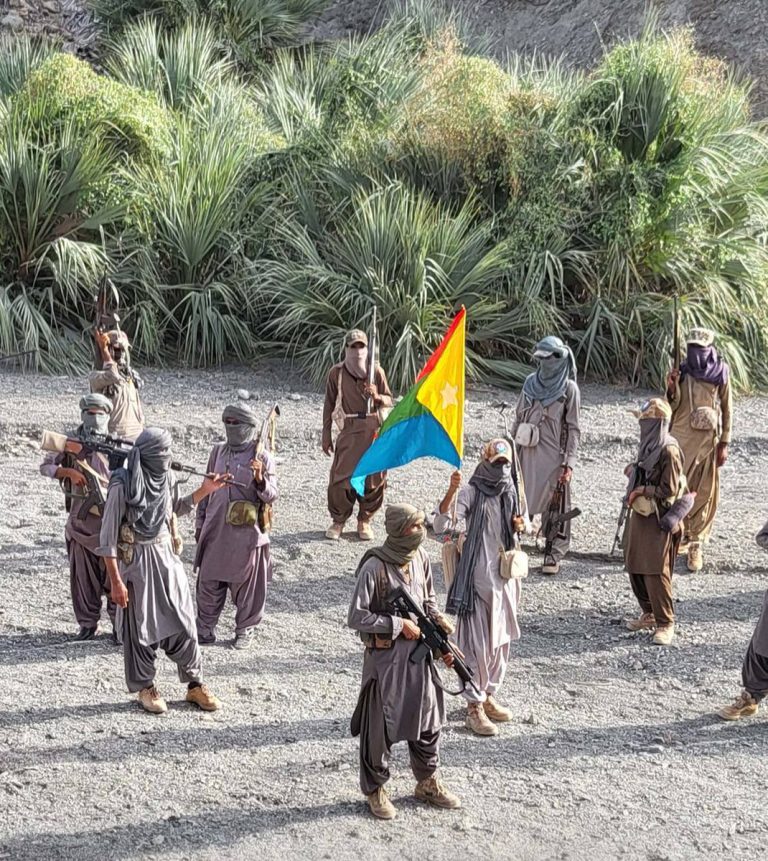
The Balochistan Liberation Front (BLF) launched an ambush on October 17, targeting Pakistan Army stationed in the Kolwah area of Shah Batal, Pak-occupied Balochistan. According to Major Gwahram Baloch, the spokesperson for the BLF, the attack utilized heavy and advanced weaponry, resulting in the deaths of three Pak soldiers and leaving two others wounded.

The attack reportedly took place as Pakistan military personnel were guarding vehicles delivering rations to their camp. The firefight lasted approximately twenty minutes, demonstrating the BLF’s tactical planning and execution.

Major Baloch said that the successful operation was based on prior intelligence gathered by the BLF, allowing the fighters to strategically position themselves along the expected route of the military convoy. This level of preparedness underscores the military’s failure to ensure the safety and security of its personnel, revealing significant lapses in their operational readiness.

Following the ambush, in a desperate bid for reprisal, the Pakistan soldiers unleashed heavy fire on nearby civilian areas, injuring a child named Roshan, son of Faqeer. This reckless act not only demonstrates the military’s disregard for civilian safety but also highlights aggression and indiscriminate violence perpetrated by the Pakistan Army in POB.

The BLF spokesperson said that their operations are grounded in public support and intelligence from local communities, reinforcing the notion that the Baloch populace stands against military oppression. The spokesperson said, “The Balochistan Liberation Front conducts effective operations based on public support and intelligence information, and today’s action was entirely based on such intelligence.” Major Gwahram Baloch reaffirmed that the BLF will continue its operations until the Baloch people are free from Pak Army’s oppressive colonial rule.

Kashmiri youth disappears in Islamabad amid ongoing Pak Army abductions of POJK residents

A 16-year-old Kashmiri student, Haseeb Javed, has gone missing from a madrasa in Islamabad, raising further alarm over the abduction of residents from Pakistan-occupied Jammu and Kashmir (PoJK) by the Pakistan Army. Haseeb hails from Naban Phalwari village in the Haveli Kahota district, and his disappearance adds to a troubling pattern of forced abductions by the Pakistan Army.

This is not an isolated incident. In 2024 alone, more than 20 Kashmiris, including well-known individuals like Raja Mudassir, have been reportedly abducted by the Pak Army. Such actions have sparked widespread protests in the region, as the people of PoJK grow increasingly disillusioned with Islamabad’s oppressive policies.

The abductions highlight the Pakistan Army’s complete disregard for the fundamental rights of PoJK residents, reinforcing the notion that they are treated as second-class citizens under the military’s control. The abduction of students, in particular, underscores the predatory tactics employed by the occupied-state to stifle dissent and maintain a stranglehold over these regions.

While the military presents itself as the guardian of the nation to the world, its actions in PoJK reveal a colonial mindset that has long been a source of resentment in the occupied regions. The targeting of Kashmiri youth—individuals like Haseeb, whose only fault is pursuing education—reflects the Army’s fear of educated voices that could challenge the Army’s narrative and demand accountability.

Protests are growing, and resentment against the military’s unchecked power is spreading beyond PoJK. These abductions could backfire, further weakening Islamabad’s grip on a region already grappling with demands for autonomy and justice.

POJK Awami Action Committee demands accountability from Pak Army for denying basic amenities

The Jammu and Kashmir People’s Action Committee has criticized the occupied-Army state of Pak-occupied- Jammu and Kashmir (POJK) and Islamabad for their failure to address critical issues concerning electricity tariffs and wheat shortages. Despite negotiations earlier this year, the promises made to address these issues remain unfulfilled, leaving residents frustrated and further fueling discontent in Pakistan-occupied Jammu and Kashmir (PoJK).

In May 2024, after a series of long marches and protests in Rawalakot, representatives of the occupied-government and the POJK Chief Secretary promised key reforms to alleviate the hardships faced by the region’s residents. However, eight months on, the committee reports that only two demands have been partially implemented, with no tangible relief provided on other crucial matters.

The agreed-upon memorandum from the Water & Energy Resources Department promised lower electricity tariffs and the installment-based payment of arrears. It stipulated that the tariff for the first 300 units would be Rs. 10 per unit, and Rs. 15 per unit for higher consumption. However, the committee has revealed that these tariffs are not being honored, and old rates are still being imposed. This breach of agreement reflects the systemic neglect and exploitation that PoJK residents have come to expect under Pakistan’s military-administration.

Exploitation of PoJK

The military and Islamabad have historically prioritized extraction of resources over addressing the region’s basic needs. The residents of PoJK, already facing unemployment and infrastructure decay, are now forced to pay exorbitant electricity bills while essential food supplies like wheat remain scarce.

The committee has highlighted the alarming reduction in wheat allocation. Although officials announced a fixed price of Rs. 1,000 for 20 kg of wheat and Rs. 2,000 for 40 kg, inflated prices are being charged, and allocations have been slashed. The scarcity of essential items has made survival increasingly difficult, with residents accusing the food department of corruption and mismanagement.

Protests Intensify

Amid growing resentment, the Awami Action Committee has demanded immediate resolution of these issues. They are calling for:

  1. An end to arbitrary electricity tariffs and a halt to harassment of citizens through inflated bills.
  2. Restoration of wheat allocations and measures to curb corruption in the food distribution system, including implementing a biometric tracking system for transparency.
  3. Action against corrupt officials responsible for overcharging and smuggling essential supplies.
  4. Reduction in privileges for government elites and the introduction of austerity measures, such as limiting officials to one vehicle and reducing the size of the cabinet to seven ministers.

The committee has warned that failure to meet these demands will result in intensified protests on Oct 22, as residents of PoJK are no longer willing to tolerate the exploitation by Islamabad and the Pakistan Army.

Pak Army’s Neglect Fuels Discontent

The crisis in PoJK exemplifies how the Pakistan Army’s priorities lie in resource extraction and suppressing dissent, rather than addressing the needs of the people. The military, which has significant influence over both the region’s administration and its resources, continues to ignore calls for reform. Instead, the Army’s focus has been on maintaining control over PoJK through force.

The failure to address electricity and food crises is part of a broader pattern of neglect that has persisted for decades, exposing the hypocrisy of Islamabad’s claims to care for Kashmiris. The exploitation of PoJK’s people mirrors the military’s colonial mindset, where local grievances are silenced, and resources are diverted for the benefit of Pakistan’s ruling Punjabi elite.

POB: Protesters block Dalbandin traffic as Pak Army closes Charban Gate, threatening local livelihood

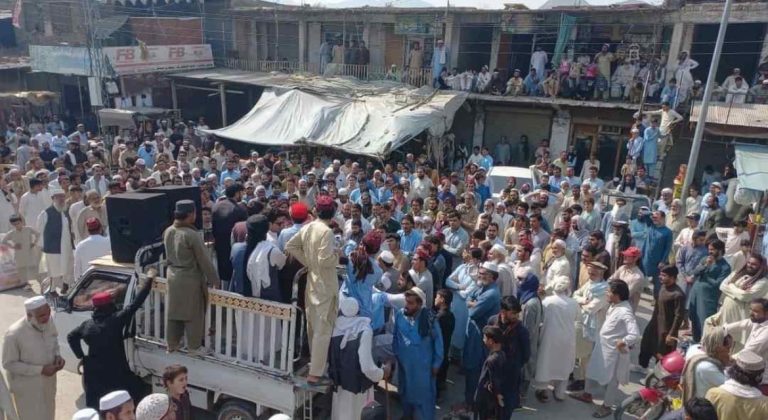
In a significant protest against the prolonged closure of the Charban Gate at the Dalbandin Pak-Afghan border point, local residents expressed their desperation as they blocked traffic on the main road near Dalbandin. The demonstration resulted in dozens of vehicles being stranded, highlighting the dire consequences of the border’s closure.

Protesters said that the Charban Gate has been shut for several months, leading to a complete cessation of border trade that many local families rely on for their livelihoods. This closure has forced residents into a state of dependency on alms, as their primary means of income has been cut off.

The situation reflects a broader neglect by the Pak authorities, particularly the Pak military, which has prioritized its own agenda over the well-being of local communities. The protesters condemned the Pakistan Army’s lack of action, emphasizing that their inaction has exacerbated the economic struggles faced by those living in border areas.

As frustration mounts, the protesters have issued a stern ultimatum to higher authorities and the Inspector General of Frontier Corps (IG FC), demanding the immediate reopening of the border and the resumption of trade. They warned that if their demands are not met, they will escalate their protests, underscoring the urgency of their situation.

Israel executes Hamas leader Yahya Sinwar in targeted operation in Rafah

Yahya Sinwar, the mastermind behind the October 7, 2023 attack that ignited the ongoing Gaza war, was killed on Thursday in an Israeli military operation in Rafah, located in southern Gaza.

The announcement came from Israeli Foreign Minister Israel Katz, confirming Sinwar’s death after hours of speculation. The Israeli military initially reported that it was investigating whether Sinwar was among the militants killed during the operation. Dental images and DNA analysis were used to identify his body.

“Mass murderer Yahya Sinwar, responsible for the massacre and atrocities of October 7, was killed today by IDF soldiers,” Katz said in a press release.

Following the operation, Israel’s security cabinet members were briefed on the assassination, and U.S. military officials were also informed. Israel shared photographic evidence believed to show Sinwar’s body to American counterparts.

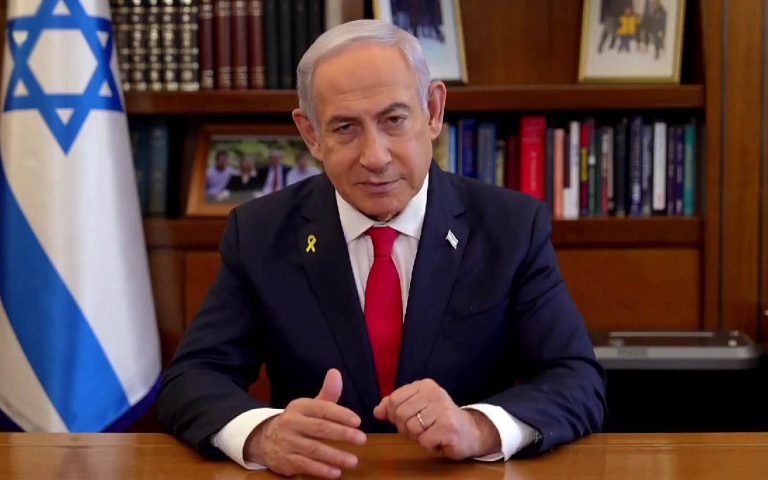
Sinwar’s death is considered a significant victory for Israel, particularly for Prime Minister Benjamin Netanyahu, amid Israel’s ongoing campaign of targeted killings against high-profile figures within Hamas and other militant groups. This campaign has seen the elimination of several leaders in recent months, weakening the leadership infrastructure of Israel’s adversaries.

Sinwar had risen to prominence after the assassination of Ismail Haniyeh in Tehran in August. His whereabouts had remained a mystery since the October 7 attack, with speculation suggesting he was hiding within Gaza’s intricate network of tunnels.

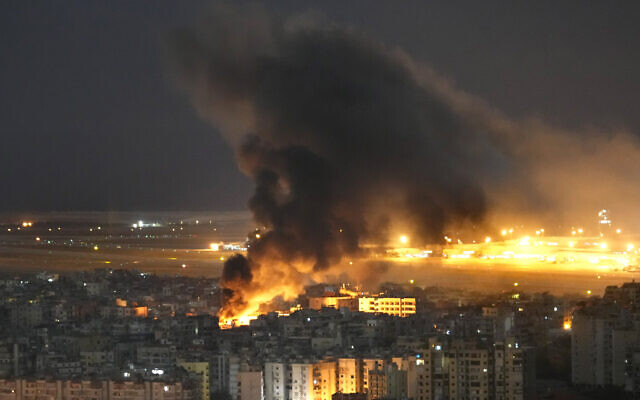
The killing of Sinwar follows a series of strategic strikes by Israel. Hasan Nasrallah, leader of Hezbollah, was killed recently, along with key figures in the group’s military wing. Additionally, Hamas military commander Mohammed Deif was targeted in July, and his deputy, Marwan Issa, was eliminated in March. In January, a drone strike on southern Beirut killed Saleh al-Arouri, a top Hamas figure and founder of the Qassam Brigades.

The conflict began after Hamas launched a surprise attack on Israel on October 7, resulting in the deaths of approximately 1,200 people and the capture of over 250 hostages. Israel’s retaliatory campaign has devastated Gaza, claiming over 42,000 lives and displacing much of the population. Large parts of Gaza lie in ruins, with humanitarian conditions deteriorating rapidly.

Manzoor Pashteen declares Khyber Jirga as start of Pashtun resistance

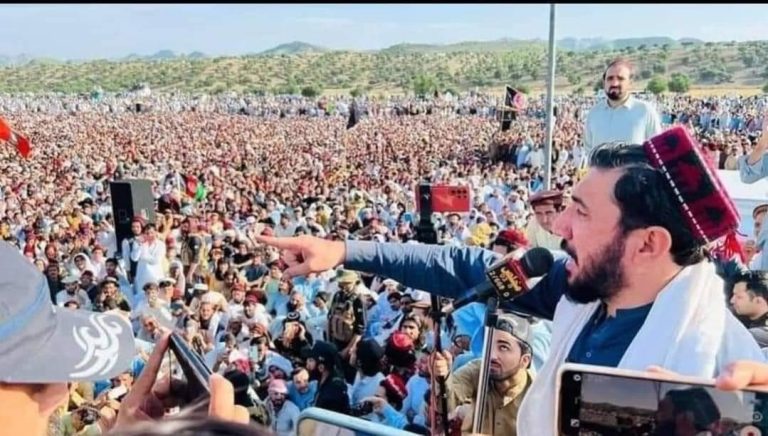
In a powerful address, Manzoor Pashteen, a prominent leader of the Pashtun Tahafuz Movement (PTM), reflected on the events of October 11, when a peaceful assembly known as the Khyber Jirga was violently disrupted. Pashteen said that this gathering was not an end but rather a new beginning for the Pashtun struggle for justice and peace.

“We were gathering for peace under the banner of the Pashtun National Court, but the oppressors responded with overwhelming force to thwart our efforts,” Pashteen said, highlighting the Punjabi Pak Army’s brutal response to a peaceful assembly aimed at advocating for Pashtun rights. The violence erupted when Pak Army forces clashed with peaceful participants, resulting in the tragic deaths of at least four Pashtuns and leaving many others injured. Additionally, hundreds were arbitrarily detained, illustrating the severe crackdown on dissent by the Punjabi Army elites.

Pashteen’s remarks underscore the ongoing plight of the Pashtun community, which has faced systemic oppression for decades. “This is how the Pakistan Army deals with those who seek peace,” he said. “The Army generals are allergic to peace, fearing the unity and strength of a people who have long been marginalized.”

The Khyber Jirga was intended as a platform for dialogue and reconciliation, yet the heavy-handed tactics employed by the Army forces served as a stark reminder of the challenges faced by those advocating for peace and justice in Pakistan.

Mahrang Baloch calls Pakistan’s judges puppets of the Army at Karachi Lawyers’ Convention

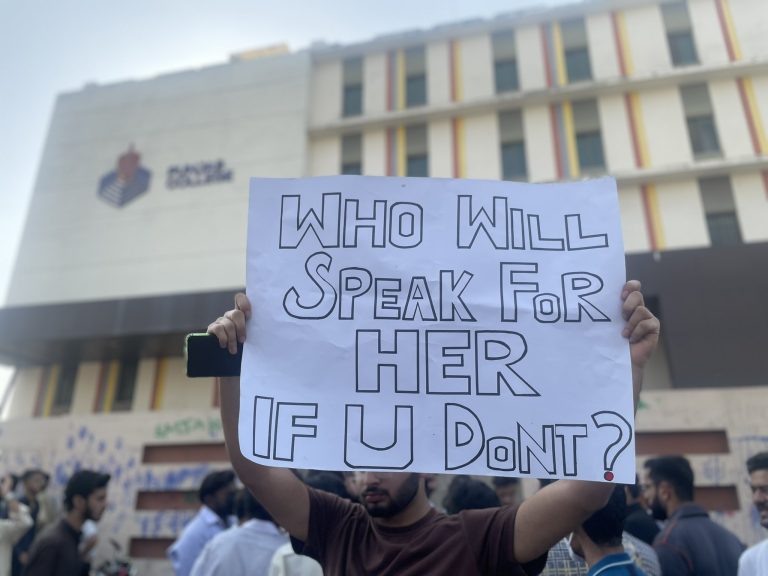
In a recent event organized by the Karachi Bar Association, prominent activists Dr. Mahrang Baloch and Sammi Deen Baloch voiced strong criticism against judges in Pakistan, as they have become mere spokespersons for the Pak Army instead of upholding justice for the citizens of the country.

During the program, officials disrupted proceedings by cutting off electricity in the hall, prompting lawyers to chant slogans in support of the two activists. Following the disruption, Mahrang Baloch and Sammi Deen were invited to address the audience, where they highlighted the growing discontent among Baloch mothers who have lost their children to Pak Army violence.

Mahrang Baloch said, “Judges sitting in these courts, who were supposed to provide justice to the citizens, have become spokespersons for the military.” She said that the blatant aggression and brutality of the Pak Army in Pak-occupied-Balochistan, emphasizing that no amount of funding can obscure the bloodshed that has plagued the region.

https://twitter.com/AsadAToor/status/1846470889241555322

She lamented the situation of grieving mothers, saying, “Today, the Baloch mothers, whose children have been murdered by Army institutions and discarded as mutilated corpses, do not ask for justice or punishment for their children’s killers. They only seek confirmation on whether the remains belong to their child.”

Mahrang described the current state of the judicial system as a tragedy, asserting that judges should reflect on their diminished credibility, noting that even the mothers of victims are no longer asking them for justice. Instead, she warned that “Baloch mothers will seek their own justice.”

Dr. Mahrang Baloch emphasized that Baloch women are engaged in a struggle in POB that is poised to evolve into a significant movement in the future. She reiterated that for over fifteen years, mothers of Baloch, Sindhi, Pashtun, and other ordinary citizens have been pleading before judges for the return of their missing sons, yet their cries remain unheard.

This critique of the judiciary comes amidst growing concerns over human rights violations and the lack of accountability for violence in Pakistan, particularly in POB, where the military’s influence has been deeply entrenched.

Doctors in POGB to protest if Pak authorities ignore service regularization demands

Doctors in Pakistan-occupied Gilgit-Baltistan have announced they will begin protests in 15 days if their demands for service regularization and promotions are not met. They said that the occupied-Pakistan authorities are ignoring their grievances, further deepening the frustration within the region’s already marginalized healthcare sector.

The doctors complain about stagnant career paths and the denial of promotions, and the neglect faced by the region under Pakistan’s control. Despite playing a critical role in healthcare delivery, medical professionals in the area are treated unfairly, and local authorities have made little effort to address these issues.

The crisis in healthcare reflects the broader challenges faced by POGB, a region that remains one of the most underdeveloped under Pak Army control. Residents lack access to proper roads, healthcare, education, and other essential services, with corruption and mismanagement compounding their difficulties. The continuing neglect threatens the future of the region, which already suffers from limited economic opportunities and persistent poverty.

The roots of POGB’s plight date back to 1949, when Pakistan forcefully incorporated the region into the Kashmir issue without the consent of its people. From the start, locals were considered incapable of self-governance and subjected to the oppressive Frontier Crimes Regulation (FCR), a colonial-era law that denied basic civil rights.

It wasn’t until the early 1970s, under the government of Zulfiqar Ali Bhutto, that the FCR was abolished. However, even after this reform, the region has remained in a state of chronic underdevelopment and political marginalization. Despite being promised greater autonomy, residents still struggle with socio-economic challenges, exacerbated by the Paki establishment’s disregard for their needs.

Punjab (Pak) police murders Sindhi student Saajan Malookani in fake encounter

Saajan Malookani, a Sindhi law student forcibly disappeared 14 months ago by Pakistan Army, has been killed in a staged encounter by Punjab Police.

According to the Jeay Sindh Students Federation (JSSF), Malookani was abducted by Pak security forces on September 1, 2023, while returning home from the Old Campus of Sindh University, Hyderabad (Pak). Despite multiple protests, legal petitions and appeals to human rights organizations, authorities failed to provide any information on his whereabouts. On October 6, 2024, Punjab Police declared him killed in a “police encounter” in Rahim Yar Khan’s riverine area, falsely labelling him a dacoit.

Malookani’s killing has reignited accusations of Army-backed repression in Sindh, with the Pak Army’s involvement in enforced disappearances coming under renewed criticism. The military operates with impunity, orchestrating the abduction of activists and students as part of a campaign to suppress Sindhi nationalist movements.

The Pak Army’s “death squads” operate through proxy law enforcement agencies, using police encounters as a convenient cover to eliminate those they want, no reason asked.

Extrajudicial Killings and Crackdown on Minorities

Despite protests across Sindh and a constitutional petition filed by Malookani’s mother in the Sindh High Court, Pak authorities failed to secure his release. The Forum for Missing Persons of Sindh repeatedly warned that Malookani would be executed under the guise of a police operation, just as other had been.

Malookani was targeted alongside two other missing activists, Shaukat Malookani and Naeem Malookani, who remain unaccounted for. The Counter-Terrorism Department (CTD) in Hyderabad is also abricating charges against the three men, setting the stage for their arrests and staged killings.

The Pak military’s pattern of enforced disappearances and extrajudicial killings reflects a systematic strategy to stifle ethnic and nationalist movements in Sindh. The military has created a culture of oppression, with security forces operating beyond the reach of law or accountability. Malookani’s killing is a stark reminder of the ruthlessness of the Paki establishment, where the Army’s colonial mindset drives efforts to eliminate any form of dissent.

BLA attacks Pak Army convoy in Kalat, executes nine

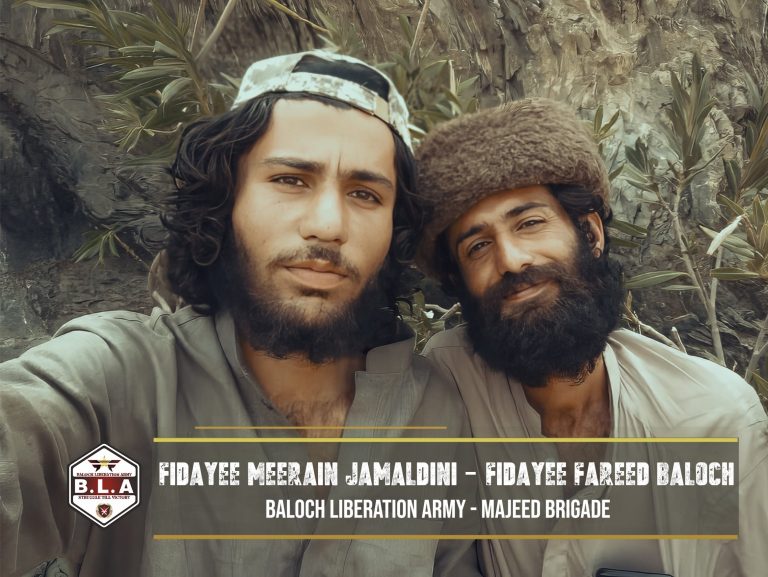
Fighters from the Baloch Liberation Army (BLA) ambushed a convoy of the occupying Pakistan Army in Kalat, reportedly eliminating nine personnel and injuring at least five others.

The attack occurred in the Dasht Mehmood area, where BLA fighters used a remote-controlled improvised explosive device (IED) to target a pickup vehicle from the convoy. All five personnel in the vehicle were killed instantly. Following the initial blast, BLA fighters unleashed a hail of gunfire on other vehicles in the convoy, resulting in four additional deaths and multiple injuries.

This ambush marks another chapter in the ongoing conflict between the Baloch nationalist movement and the Pak military, for its heavy-handed tactics and disregard for Baloch rights. The military’s operations in the region are often marked by brutality and oppression, leading to increased resistance from pro-independence groups like the BLA.

“The continuous disregard for Baloch lives and resources has pushed our people to resist,” said Jeeyand Baloch, a spokesperson for the BLA. He emphasized that such operations will continue until the Baloch people are granted their rights. The BLA’s declaration of responsibility highlights the group’s determination to escalate attacks against the “occupying” forces of the Pakistan military.

The Pakistan Army’s ongoing operations in Pak-occupied-Balochistan have drawn widespread condemnation, not only for their violent methods but also for exacerbating the suffering of civilians in the region. The conflict has led to countless enforced disappearances, extrajudicial killings, and a complete disregard for the socio-economic conditions of Baloch communities.