Home Blog Page 364

Humanist Canada Essay Contest is Live

Humanist Canada[1] is hosting an essay contest through its Humanist Canada Essay Contest Committee in collaboration with the Association humaniste du Québec is working to provide a voice for high school level humanist students or pupils with humanistic tendencies. The essay contest was rebooted in 2019 as a joint adventure too. The theme for 2020, as a consensus decision of the Humanist Canada Essay Contest Committee, is “Religion and Humanism in Education” in a Canadian context.

As with 2019, the prize money will be $8,000 (CAD), which, in essence, funds two competitions under one contest with an English competition and a French competition. The first place prize will be $1,000 for students with the most outstanding submissions. Within the theme, there are no predefined topics for the students. However, the content would preferably be in alignment with the values of Humanism and the humanist community throughout Canada.

As the Vice-President of Humanist Canada said, “We are once again pleased to be able to host this forum for young writers interested in humanist themes. This forum promotes a defence of science and reason from those who would attack it.”

Humanism, if you do not know, is a non-theistic view of life and the world. Its means of understanding the world are critical thinking, logical reasoning, and science. It affirms the worth and dignity of every individual human being while striving for the ethical principles of compassion, fairness, and truth. These guide a worldview aiming for the maintenance of the good in the world and working to make things even better in material and human terms. Some of the topics students may want to entertain are abortion, discrimination based on sexual orientation, concerns over the environment, freedom of thought and expression, medically assisted dying, and poverty.

As a Board Member of Humanist Canada representing British Columbia and as the Chair of the Humanist Canada Essay Contest Committee, this is a rare opportunity for the presentation of the best and brightest young freethought minds the country’s high schools have to offer, in a formal academic-based competition with written essays. Any inculcation of values comes from the passing of them and providing a space for the next generations to evaluate, present, and live them. The Humanist Canada Essay Contest is one opportunity for young freethinkers to shine, as I noted in the press release entitled “Student Essay Contest, Hosted By Humanist Canada, Call for Submissions.” The full information for the essay contest can be found here: https://www.humanistcanada.ca/programs/essay-contest/.

About Humanist Canada

Humanist Canada (HC) promotes education and awareness of humanism. We are a resource for secular groups and causes across Canada. We support the advancement of scientific, academic, medical, and human rights efforts.


[1] Humanist Canada is connected directly or indirectly to a number of humanist and freethought organizations including: British Columbia Humanist Association, Humanist Association of Ottawa, Humanist Association of Toronto, Toronto Oasis, Grey Bruce Humanists, Ontario Humanist Society, Central Ontario Humanist Association, Association humaniste du Québec, Humanists, Atheists and Agnostics of Manitoba, Comox Valley Humanists, Toronto Oasis, Grey Bruce Humanists, Ontario Humanist Society, Halton-Peel Humanist Community, Thunder Bay Humanists, Humanist International, American Humanist Association, Humanists UK, Humanist Society of Scotland, Humanist Association of Ireland, Humanist Association of Germany, and European Humanist Federation, Secular Humanists in Calgary, Victoria Secular Humanist Association, Humanist Association of London, Society of Free Thinkers (Kitchener-Waterloo/Cambridge/Guelph), Dying with Dignity, Secular Connexion Séculière, Centre for Inquiry, Canadian Secular Alliance, Humanist International, American Humanist Association, Humanists UK, Humanist Society of Scotland, Humanist Association of Ireland, Humanist Association of Germany, and European Humanist Federation.

Photo by Anderson W Rangel on Unsplash
Christian Asia Bibi’s brother-in-law killed in Pakistan

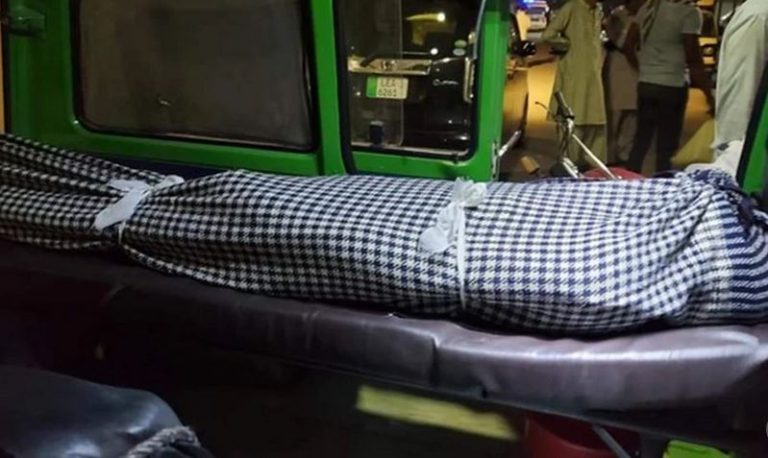
Younus, the brother-in-law of Asia Bibi, a Christian woman convicted of blasphemy by a Pakistani court, was killed in Sheikhupura city of Punjab province in Pakistan on Monday. Younus was also a Christian. Minorities in Pakistan are treated like dirt.

According to the FIR, Younus had gone to his farms on May 24 and did not return home at night. His dead body with a slit throat was traced to the farm the next morning.

Local sources in Pakistan said that since Younus hailed from the minority Christian community he was bound to be killed. This is not the first time that somebody associated with Asia Bibi has been murdered in cold blood.

In 2011, Salman Taseer, the influential governor of Punjab was assassinated after he made headlines by appealing for the pardon of Asia Bibi, who had been sentenced to death for allegedly insulting Prophet Muhammad. A month after Taseer was killed, Religious Minorities Minister Shahbaz Bhatti, a Christian who spoke out against the laws, was shot dead in Islamabad underlining the threat faced by critics of the law.

Asia Bibi is now living in exile after the Supreme Court of Pakistan acquitted her based on insufficient evidence presented before it in October 2018. Recounting the severe inhuman conditions of eight years spent on death row for false blasphemy charges and about the pain of exile, Asia Bibi recently broke her silence to give her first personal insight into an ordeal that caused international outrage.

French journalist Anne-Isabelle Tollet, who has co-written a book about her, was once based in the country where she led a support campaign for her. “You already know my story through the media,” she said in the book. “But you are far from understanding my daily life in prison or my new life,” she said. “I became a prisoner of fanaticism,” she said. In prison, “tears were the only companions in the cell.”

Asia Bibi described the horrendous conditions in squalid jails in Pakistan where she was kept chained and jeered at by other detainees. Pakistan’s blasphemy laws carry a potential death sentence for anyone who insults Islam. This dubious blasphemy laws have been used to persecute minority faiths and unfairly target minorities.

Pakistan’s Prime Minister Imran Khan Niazi defended the country’s strict blasphemy laws during his election campaigns. The status quo is still in place. No government in Pakistan is ready to make changes to the blasphemy law due to fears of a backlash from radical Wahhabi Islamists.

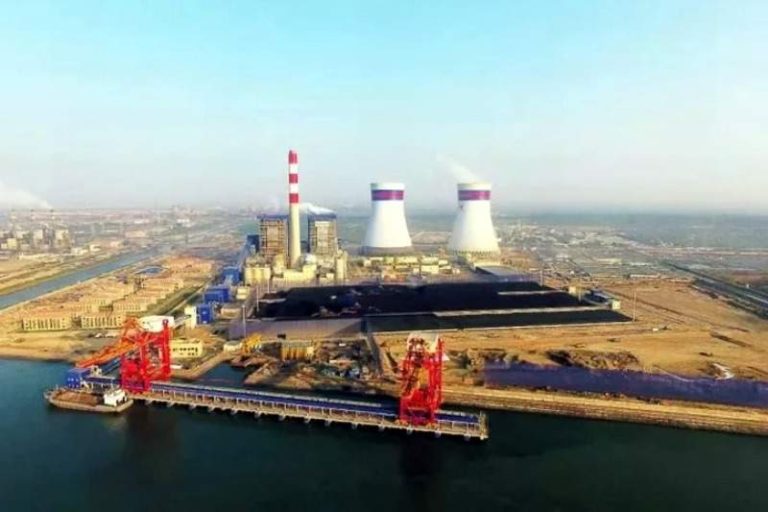
CPEC power projects are robbing Pakistan on a daily basis

Islamabad has been bandying the China-Pakistan Economic Corridor (CPEC) as the ultimate panacea that will solve all financial woes of Pakistan. And since it dubs CPEC as a “game changer for the region,” it doesn’t take very kindly, any contrarian views on this issue. Islamabad’s extreme sensitivity to any comments describing the unfavourable terms and conditions of CPEC project as a ‘sell-off’ is understandable as no nation would like to be told that it is being taken for a royal ride by another country that’s not only an “all weather friend,” but also the sole neighbour out of four with whom Islamabad has no problems. But Islamabad’s decision to keep the contract details of this project under wraps to avoid criticism has only ended up attracting more attention.

The general consensus about CPEC is that Pakistan has chewed off more than it can swallow and since Beijing has a history of being a ruthless enforcer, it would not make any allowances when it comes to extracting its pound of flesh. Within a year of the CPEC agreement being signed, World Bank in its Global Economic Prospects 2016 report had warned that “Sovereign guarantees associated with CPEC could pose substantial fiscal risks over the medium term.” In the same year, International Monetary Fund (IMF) had also warned that once Chinese investors commence repatriating profits, “Pakistan will need to manage increasing CPEC-related outflows,” as this “could add up to a significant level given the magnitude of the FDI.”

IMF also stressed on “a need to ensure transparency and accountability in project management and monitoring,” with its mission chief for Pakistan, Harold Finger adding that “We believe it’s important that information on contracts should be provided transparently as soon as it emerges so that we can factor it in.” Even the Asian Development Bank Country Director Xiaohong Yang (who is incidentally a Chinese national) warned Islamabad that Main Line 1 project (upgradation of railway from Peshawar to Karachi and construction of Havelian Dry Port) estimated at a whopping $8.2 billion “is a very expensive mega project and the government needs to explore all possible ways to make sure that the project is financially sustainable.”

It seems that Islamabad did take some notice of this advice because in October 2018, Railways Minister Sheikh Rasheed announced that after re-negotiations, the cost of this project had been brought down to $6.2 billion because “Pakistan is a poor country that cannot afford huge burden of the loans,” and that he wished to further reduce it to $4 billion. How did Rasheed manage to bring down the loan estimate by more than 24% remains unknown, but it would be naïve to expect that this was due to his “Pakistan is a poor country” plea. Such a substantial reduction could only have been possible if the scope of the project was reduced, its technical specifications lowered or the profit margin slashed significantly.

Since there has been no formal announcement regarding any downgrading the scope of CPEC or lowering its specifications, the only conclusion is that Beijing trimmed its profit margin on the request of Islamabad. Whereas one way of looking at the $2 billion cost reduction is in line with Pakistan’s oft expressed “all weather friendship” relations with China and so China, for its part, has turned itself into the biblical ‘Good Samaritan’ and waived off this amount. But if this is the case, then a very disturbing question arises- should a rich “all weather friend” exploit the financial vulnerability of his poor counterpart by fleecing him through abnormally inflated profit margins? Something is certainly fishy as far as CPEC financing is concerned!

The CPEC isn’t even complete, yet skeletons have already started tumbling out of Beijing’s closet. As per ‘Profit Pakistan Today’, which broke this story, a high-powered nine-member committee from different organisations (including one from Pakistan Army’s spy agency ISI) was constituted by Prime Minister Imran Khan to examine the unusually heavy losses that were occurring in the power sector. In its 278-page long report titled ‘Committee for Power Sector Audit, Circular Debt Reservation, and Future Roadmap’, this committee is believed to have discovered that the exchequer had lost a staggering amount of about 100 billion Pakistani rupees. The losses were attributed to “violation of the Standard Operating Procedures (SOPs) that include the cost of the installation of Independent Power Producers (IPPs), government agreements, alleged embezzlement in fuel consumption, power tariff, guaranteed profit in dollars, and certain conditions of power purchase.” The culprits: Chinese private power producers.

Though the report has (for obvious reasons) carefully avoided any mention of CPEC , its ‘fingerprints’ are all over because corruption at such a massive scale in CPEC related projects isn’t possible without some institutional connivance, more so in China’s case were corruption can make you end up staring at the gun muzzles of an execution squad! Some of the committee’s findings that vindicate the international financial institutions and organisations’ concerns regarding the unacceptably high levels of opaqueness in CPEC contracts are as follows:

  • Though National Electric Power Regulatory Authority (NEPRA) has set a 15% upper limit on annual profits, Independent Power Producers (IPPs) have been earning as much as 50 to 70%. How?
  • “IPP (Independent Power Producers) owners showed the extra cost to get extra tariff at the time of the contract, with NEPRA (National Electric Power Regulatory Authority) failing to check the veracity of the cost. The cost of the power plant prepared by the companies was also accepted by the authorities.” Why?
  • As per the committee report, IPPs have illogically pocketed 350 billion Pakistani rupees since 1994 by altering actual costs by Rs 2 to Rs 15 billion and one “owner of a coal power plant offered a cost which was Rs 30 billion more than the actual cost in order to obtain higher power tariff.” Where’s the checks and balances?
  • The committee’s report reveals that IPPs even earned “unjust” profits in fuel consumption because NEPRA never ascertained the efficiency of fuel consumption- how negligent! To make problems worse, the owners had also resisted signing the agreement for regular audit. How arrogant!
  • The government and power consumers are forced to pay billions of rupees annually even if the power plants are closed or produce low electricity due to a cut in power demand. While the government is bound to pay billions of Pakistani rupees to power plants under the head capacity payments, it will have to pay a capacity payment of 1500 billion Pakistani rupees by 2025 according to the agreement. In addition, NEPRA has also grossly violated the four to five years period for the guaranteed profit clause to a whopping 25 years. No wonder the committee reports notes that “These lop-sided agreements caused unbearable loss to the exchequer. The prevalent practice also led to a hike in power tariffs.” How irresponsible!

A country that’s literally surviving on dole doesn’t have the luxury to be penny wise and pound foolish. Similarly, it can’t consider sobriquets like “all weather friends” used by Beijing and its own poetic reciprocation of “sweeter than honey” to quantify this friendship as an open and indefinite ticket for free lunches. The power sector scam unearthed is just the tip of the iceberg and it won’t be long before a deluge of skeletons come tumbling out of the CPEC cupboard. So, while Islamabad may rubbish international concerns regarding the inevitable consequences of reckless CPEC spending by blaming a ‘jealous’ India or a ‘spurned’ Washington of spreading misinformation, not losing touch with reality would do Islamabad some good.

Tailpiece: In 2017, the Sri Lankan government had to hand over Hambantota port to China on a 99 years lease after failing to repay billions of dollars in loans. The very next year, Zambia lost control over Kenneth Kaunda International Airport due to debt repayment failure. Last year, China started to tighten its grip over Kenyan government and is eyeing to take over Mombasa port due to unpaid loans. Yet, having been very fond of fairy tales and a staunch believer in the ‘lived happily ever after’ endings as a child, the ‘all weather’ and ‘sweeter than honey’ friendship stuff gives a feeling of déjà vu and so, may this association (the only one of its type) flourish by leap and bounds, but more importantly, also survive when the fateful day of clearing dues finally arrives. Amen!

Inside story of stone pelting during terrorist encounters in Kashmir

It’s very easy for activists and intelligentsia who safely sit in the confines of their homes to decry temporary suspension of mobile and internet services in Jammu and Kashmir where an encounter is on between terrorists and the security forces. For such ‘concerned’ champions of human rights, these actions is tantamount to “restrictions” on the right to freedom of expression and some of them get so paranoid that they start drawing parallels of India with Nazi Germany or fascist Italy of yesteryear. While everyone is entitled to have his or her own views as well as express the same, but for our extremely discerning activists to outrightly reject any counter argument without assigning any reasons is indeed both intriguing and unfortunate. 

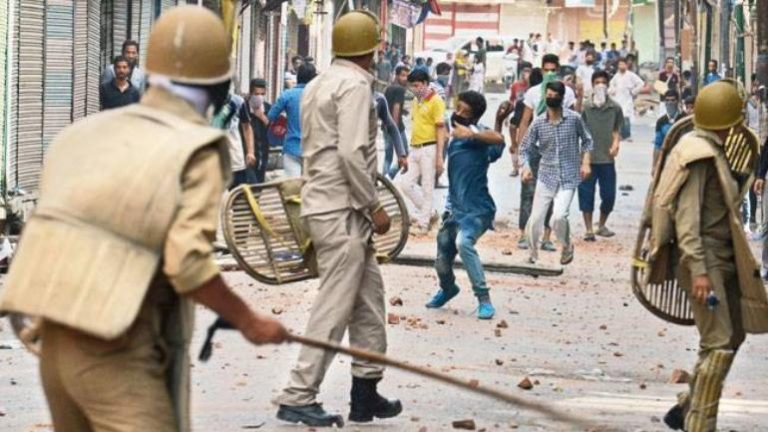
Nawakadal in Down Town area of the old city of Srinagar is a popular locality for terrorists to hide for many reasons. Firstly, being a very congested locality, it’s easy to shake off ‘spies’ trailing them by simply slipping in and out of the myriad bylanes. Secondly, since the houses in many localities are ‘hugging’ each other, at times it becomes humanly impossible to effectively ‘seal-off’ a house in which terrorists have taken refuge. Thirdly, the proximity of houses with each other makes it easy for trapped terrorists to escape by jumping from house to house and through the numerous passageways. Lastly, the labyrinth of alleys makes it easy for crowds to reach the encounter site from all directions and disrupt the activities of security forces by diverting their attention through violent acts like stone pelting and setting their vehicles ablaze.

It’s perhaps the dense population and closely built homes that raise concerns of collateral damage to life and property, due to which operations by security forces against terrorists in the old city area of Srinagar have been comparatively less as compared to other areas. The last time an operation was carried out here was more than six months ago when four Lashkar-e-Toiba terrorists were killed. Probably its comparative safety was the very reason why Hizbul Mujahideen’s (HM) self-styled ‘district commander’ Junaid Sehrai and his associate Tariq Sheikh decided to take refuge in this locality that also provided the best of facilities. How exactly did intelligence agencies get inputs that this duo was hiding in Nawakadal area is not known, but there are many rumours and one is that this was an ‘inside job’.

But the undeniable fact is that on 19 May 2020, someone did provide intelligence agencies with such compelling evidence about his whereabouts that security forces decided to launch an operation in the crammed Nawakadal area of Srinagar. The security forces proved their mettle because despite the numerous advantages provided by this congested locality, Junaid and his compatriot were unable to make good their escape. After the duo were trapped, security forces managed to intercept a mobile call made by Junaid’s aide Tariq to an ‘Over Ground Worker’ (OGW) named Shahid and its contents are quite illuminating as it reveals the reality of stone pelting mobs congregating at encounter sites.

In this audio, a heavily panting Tariq Sheikh can be heard talking to Shahid in Kashmiri and the transliteration of the monologue is as follows:

Roman Urdu:
Aslam o Aliekum Shahid sahib, Tariq Sheikh bol reha hoon. Hum Nawakadal mein fhus gaye hain. Wahin se bande bejna jo pathrao karein; joh pechhli wali road se pathrao karein aur humey bahar nikale. Meray sath Junaid hai -Sehrai ka beta. Jaldi karo. Yeh akhri ghadi hai, jaldi karo – humey bachao!

English:

Peace be on you Shahid sir, Tariq Sheikh speaking. We are trapped in Nawakadal. Send guys from there who should pelt stones; stone pelting should be done from the road behind and we should be extricated. I have Junaid with me (who is) the son of (Ashraf) Serhai. This is the last moment (chance), so be quick and save us!

This mobile call from Tariq Sheikh shatters two myths that have been woven by those with vested interests in an attempt to glorify the ‘last stand’ of terrorists. Firstly, it dispels the belief that once they are trapped, terrorists don’t try to escape but instead fight valiantly to embrace ‘martyrdom’. Secondly, that crowds don’t converge automatically onto the encounter site after hearing gunshots and start pelting stones at security personnel on their own in order to express their anguish. The truth is that trapped terrorists use every trick in the book to escape the security force dragnets but to be fair to them there’s nothing wrong in seeking self-preservation. However, putting unarmed crowds to grave risk by using them as ‘human shields’ in order to escape the dragnet is a despicable act but unfortunately this is exactly what trapped terrorists do; as is clearly evident from Tariq’s mobile call.

Terrorist sympathisers, the separatist camp as well as many activists argue that crowds voluntarily congregate at the site of encounters and this reflects the public outrage against security forces. But this isn’t true, because gathering crowds is done through subtle intimidation. The separatists and terrorists have established a wide network of OGWs in each ‘mohalla’ (segment) of every village in Kashmir. They assist terrorists by organising their logistical support and like the hated commissars of erstwhile Soviet Union they keep a close watch on the activities and ‘loyalties’ of the people. When terrorists are trapped in a village, the concerned OGWs give a call for all men to reach the encounter site immediately and the large turnout is not because the people are anxious, but only because the OGWs keep a mental note of absentees.

Names of those who disregard the call to congregate at encounter site are promptly passed on to the terrorists who in turn pay the absentees a nocturnal ‘visit’ and mete out punishments that could range from a severe beating to being shot in the leg or much worse, being executed. So, rather than facing the muzzle of a terrorist’s gun for being absent, locals choose the comparatively easier and psychologically less traumatising option of joining a crowd as the numbers give people a sense of security.

Stone pelting at encounter sites pays rich dividends since it exploits the security forces’ hesitation to take firm action against mobs and the resultant high prospects of protesters’ not being harmed makes the OGWs task much easier. However, there are occasions when mobs come so dangerously close to soldiers engaged in the ongoing gunfight with trapped terrorists that they imperil safety of troops and in such cases, use of force becomes inevitable.

But even in this eventuality, the OGWs ‘win’ since the security forces’ action against a violent and menacing mob is still billed as use of ‘disproportionate’ force against ‘unarmed’ people and our hallowed activists echo the same sentiment despite the fact that stones pelted by crowds in Kashmir have taken many a life, be it that of the locals, security force personnel and even a young tourist!

Another often heard complaint of parents is that even though their child had not been part of the protesting crowd but had either gone on an errand, was working or playing in the area or simply returning home after meeting a friend or attending tuition ended up being shot or injured when the police fired on a protesting mob. In such cases, the parents aren’t telling lies but what they don’t know is that even though their ward may not have been part of the mob, but the moment his (or her) path crossed that of the mob, that person had no option but to join and become part of the crowd.

One such tragic incident occurred in 2018, when an MBA returnee from Indonesia named Abid Hussain was killed when police fired on an unruly mob that had gone out of control. Abid had left his home in Karimabad village of South Kashmir’s Pulwama to fetch milk for his 3-month-old daughter born to him from his Indonesian wife when he was forced to join a crowd and ended up being shot! The OGWs and activists had a field day making this tragic incident look like a ‘targeted’ killing, not realising that no one would buy their story because when even the locals in the crowd didn’t know who this person was, how could the security forces have singled him out?

So, the next time you see a crowd at an encounter site, don’t get carried away by romantic notions of people voluntarily coming out and exposing themselves to danger out of pure love and affection for trapped terrorists. Because if this was really the case, then why did United Jihad Council chief Syed Salahuddin himself recently admit that 80 ‘mujahideens’ had been gunned down by security forces during this year alone. An inordinately high monthly attrition rate of 16 terrorists (or one terrorist being killed on every alternate day continuously for five months) doesn’t reflect a very high degree of public adoration for these so called “freedom fighter” mujahideens.

Eid-ul-Fitr: Kashmir shows the way with restrained yet spirited celebrations

Eid-ul-fitr has a special significance as a befitting celebration and thanksgiving to mark the culmination of the holy month of Ramadan. Ramadan is a month-long fast observed by Muslims across the world. The activity is regarded as one of the five pillars of Islam. The holy fast or Roza is observed from sunrise to sunset. During this month, Muslims are decreed by Allah to adhere to acts of “Deen” (religion) rather than worldly matters. Ramadan is not only about fasting; it is also about being humble, modest and above all, free of all animosities; it is about discipline, self control, self reflection and reformation. After Ramadan, Eid is celebrated on the first day of Shawwal, the 10th month of the Islamic lunar calendar.

This year, in Jammu and Kashmir, Eid-ul-Fitr is being celebrated on May 24. The restrictions and precautions imposed due to the spread of Coronavirus have not dampened the spirit of the people. The inability to meet has been replaced by passing of messages in social media and communication on mobile with video calls etc. By all means, the brotherhood and love which marks the Eid celebrations is visible in ample measure. When markets were opened in a phased manner, several people stepped out of their houses to buy food items but were seen abiding by the social distancing norm as a precautionary measure to halt the spread of the virus.

While the Jammu region has, till now, witnessed limited impact of the Corona pandemic, its rapid spread in Kashmir has been a cause of worry. Kashmiri people have dealt with the crisis with exemplary resilience and patience; they have responded to a call by the government to maintain precautions with great discipline and have followed all directions in letter and spirit. Officials and doctors have been working tirelessly to overcome the challenge, even during Ramadan. Volunteers, mostly students, are at the forefront of relief measures, distributing food to the needy during Ramadan.

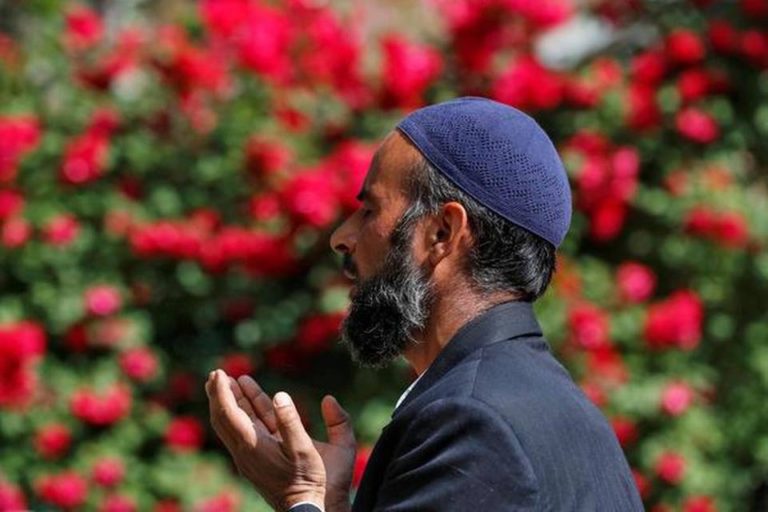
Under normal circumstances in Jammu and Kashmir, thousands of people attend congregational Eid prayers in Eidgahs, Masjids on a daily basis. The biggest gathering of devotees is at Jamia Masjid in Srinagar and at the Hazratbal Shrine. This year, people have voluntarily chosen restraint. They are praying mostly at home; smaller congregations at Mosques are conducted as per a preset schedule with strict observance to all precautions.

Kashmir’s Grand Mufti Nasir-ul-Islam, while felicitating the people of Jammu and Kashmir on the auspicious occasion of Jumat-ul-Vida (last Friday of Ramadan) and Laitul-Qadr the night of blessings, extolled them to offer prayers in their homes. “On the eve of Shab-e-Qadr, people must offer night long prayers and prayers for repentance at their respective homes. Same should be followed on Jumat-ul-Vida—instead of two Fardh Rakahs, people should offer Zuhr prayers as has been the practice in the fasting month due to the pandemic,” he said. He added that people should refrain from unnecessary spending and instead celebrate Eid in a very austere manner. The practical directive from the highest religious authority had its impact and the celebration, though conducted, were of a nature that did not cause any increase in the virus spread.

The end result of the patience shown is that the deadly virus, that started spreading very fast in Kashmir has been contained in a manner that could set an example for the rest of the country and the world. Broadly speaking there have been about 1300 cases reported in Kashmir of which almost half have already recovered. A little more than 21 people have died due to Coronavirus infection in the Union Territory. While the unfortunate deaths are deeply mourned, it is necessary to admit that the numbers have remained very less as compared to the national and international average. It is so mainly due to the efforts put in by the administration, the medical fraternity and the people. Timely quarantine contained the spread; those who did get infected received excellent medical treatment.

In adherence to the sacred values, what the Muslims of Jammu and Kashmir could not do in the form of celebrations, they did in the form of charity. We want to give the most to charity and focus on prayers that will resist us from wrongdoings. We all are hoping and praying for the best,” said Farooq Ahmed, chairman for an Islamic seminary in Baramulla. People are lavishly contributing to charitable trusts and even at the individual level helping all to celebrate Eid in a joyous manner.

Jammu and Kashmir Lieutenant Governor Girish Chandra Murmu, while felicitating the people of the Union Territory on the auspicious occasion of ‘Eid-ul-Fitr has said, “The festival is one of many examples of India’s multi-dimensional culture. May this festival promote and maintain inter-religious understanding and co-existence and instill the spirit of brotherhood, harmony, and amity among the people of all faiths.”

Lt. Gen. YK Joshi, Army Commander, Northern Command has also extended warm greetings on this auspicious occasion to the “Awaam of Jammu and Kashmir and Ladakh.” Similar greetings to the people have also emanated from the Srinagar-based Chinar Corps.

There is a prayer on all lips that this auspicious occasion becomes the harbinger of peace, progress, prosperity and happiness and strengthens the bonds of communal harmony, brotherhood and amity, which are the hallmarks of the glorious pluralistic traditions of Jammu and Kashmir.

The spirit behind the observance of Eid-ul-Fitr, is to express our thanks to Almighty Allah for giving us courage to observe fast in the month of Ramadan and rededicate ourselves to truthfulness, sincerity, self-control, and patience showing complete obedience to Allah. On the auspicious occasion of Eid-ul-Fitr, our fervent prayer to the Almighty is to come to the aid of the humanity and completely eradicate the menace of COVID-19.

BLF’s second attack this week, kills 6 Pak soldiers in Parom

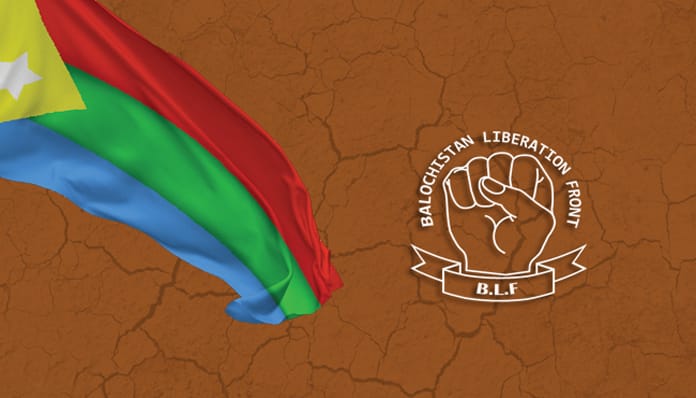
The Balochistan Liberation Front (BLF) continued its attacks on Pakistani forces in occupied Balochistan on Saturday and killed six army personnel in Parom. This is the second major attack by BLF this week that comes close on the heels of Kech attack in which another six Pakistani soldiers were killed.

Balochistan Liberation Front (BLF) spokesman Major Gwahram Baloch said in a statement that the Baloch freedom fighters (Sarmachaars) attacked a Pakistan Army camp in Kalah Kaur area of ​​Parom in Panjgur district with automatic heavy weapons. “At the same time, the checkpost was also targeted. Six army personnel of the occupying Pakistani forces were killed and three others were injured in the attack,” Major Gwahram Baloch said in his statement.

BLF’s counter-attack are in retaliation to the massive military operations being run by Pakistani forces in occupied Balochistan. It has been more than two months now, but Pakistani security forces and their “death squads” continue to wreak havoc across occupied Balochistan. Pakistani forces and their “death squad” members have unleashed a rein of terror on the hapless Baloch people where they continue to rape women and kill the men. Pakistani forces have been using helicopter gunships and artillery guns to target unarmed Baloch people including women and children.

Ironically, none of the human rights organisations or the UN agencies have said a word of condemnation against Pakistan. World’s silence to the atrocities on innocent Baloch people has only emboldened Rawalpindi and Islamabad to continue their policy of crushing Baloch people through brute force.

BLF spokeperson Major Gwahram Baloch said their attacks will continue until the independence of Balochistan.

Death squad member rapes 12-year boy at Awaran, occupied Balochistan

A death squad member backed by the Pakistan Army sexually assaulted a twelve year old boy on Wednesday in district Awaran of occupied Balochistan. The rapist was Eid Muhammad alias Pero (son of Karim Dad) who abducted the twelve year old Azhar Ali at gun point and carried him off on his motorbike. Eid Muhammad then raped Azhar Ali, threw him off in an unconscious state and fled.

Azhar Ali (son of Asghar Ali) is a resident of Alangi area in ​​Mashkey Valley, district Awaran of occupied Balochistan.

Local sources in Balochistan told News Intervention that Eid Muhammad alias Peru belongs to Pakistan-backed armed group popularly known as “death squad”, the members of which are involved in various violent crimes. Referring to Wednesday’s incident the local sources said that Azhar Ali was on his way home after his tuition classes when Eid Muhammad kidnapped and raped him.

The family members of Azhar Ali approached local police station to report about the incident but were turned away. After much persuasion the local police reluctantly filed an FIR against Eid Muhammad.

However, the next day Pakistan Army soldiers visited the police station at Mashkey Valley in Awaran and ordered the policemen to withdraw the FIR against rapist Eid Muhammad. “The (Pakistan) Army personnel told the policemen that Eid Muhammad is working under their supervision and that the FIR needs to withdrawn,” a local Baloch national told News Intervention.

It should be noted that it is not the first incident in Mashkey Valley, and such incidents have been happening with a regular frequency in these areas for a long time. Pakistan is utilizing these death squad personnel for such heinous acts in Balochistan. Rape, molestation and violent sexual assaults on women, girls have been very common. In recent times, violent sexual assaults on young boys have also increased. However, due to strict media censorship by Pakistan across occupied Balochistan and lack of communication access these heinous crimes are rarely reported by the mainstream media.

A fresh charter for new breed of political leaders in Jammu and Kashmir

The political structure of Kashmir changed dramatically in mid-2019 (August, 5) due to abrogation of Article 370 and bifurcation of the state into two Union Territories. The local leaders predicted a massive backlash from the people, especially so in Kashmir. There was however, no hostile response. This situation has given credence to a thought process that the people were quite relieved on being rid of their corrupt and unworthy leadership. Prime Minister Narendra Modi had predicted, “end of dynastic rule in Jammu and Kashmir,” as one of the main benefits that would accrue from the change; the prediction has a truthful ring to it. 

That the region is looking for new leadership, or at least a new model of leadership, is now very apparent. If the existing leadership stands for elections on the basis of old postures, the end result could be less voter turnouts ​and a hung verdict; both scenarios will be detrimental for the region. 

Certain trends point towards an evolutionary process for a new leadership having taken roots. Its emergence from the grass roots through the Panchayat elections is being viewed as a possibility. However, a state level leadership from this avenue will take a long time and careful nurturing to evolve and that luxury is not available in the short term. 

A few second rung leaders have made a bid to fill the gap. Shah Feasal, an Indian Administrative Service (IAS) officer hailing from Kashmir left service and launched a political party named Jammu and Kashmir Peoples Movement (JKPM) in March 2019. The party, however, could not take off. Feasal, in desperation, took a posture of soft-separatism, probably to garner funds, and lost out on political goodwill and capital. 

Altaf Bhukhari, earlier a senior member of the Peoples Democratic Party (PDP), floated the Jammu and Kashmir Apni Party (JKAP) that has the tacit support of New Delhi. It has, however, turned out to be an amalgamation of the old, senior political leadership of Kashmir and is, therefore, “old wine in new bottle.” Mir Junaid, a young politician is also jostling for space with his fledgling political outfit Jammu and Kashmir Workers Party (JKWP). He claims that of the 2774 candidates fielded by him in Panchayat polls, 2368 won. He also claims a similar huge success in the Block elections. Junaid is pressing for better monetary compensation for the Panchayat Office bearers as also facilities like internet connection in Panchayat offices etc. 

The Jammu region has remained bereft of any new face or any initiative to set up new leaders. This is a cause for concern, since lack of proper representation is a bane for democracy. 

As the process evolves it becomes imperative to identify the charter that would best suit a new leadership in J&K. The first and foremost requirement is a holistic and coordinated security policy, a sector where successive governments in the past have been found wanting,​ and have always relied upon ​forces without supporting them. Such a system can no longer work since the threat from Pakistan is not diminishing commensurate to the losses that its supported terrorist cadre is suffering. In their latest doctrine as postulated by the Green Book 2020, Pakistan speaks of taking the war into ‘non-kinetic domain’ characterized by misinformation based psychological operations. The new leadership will need to stop bemoaning and reviling the presence of security forces and instead elicit their support in ushering of progress and prosperity. 

The new political leadership will also need to take a firm stand on “vehicles of radicalization”​ like Mosques, Madrasas and fundamentalist groups/outfits that have been spewing venom in the name of “Jihad” f​or a long time. ​In addition, there are several pseudo think-tanks and NGOs that are actively involved in trying to influence the minds of individuals and society. These will need to be identified and contained. So​me forward movement has been made in this direction but the logical conclusion will come only with a very strong political will.

Politically speaking, all notions of self-rule, self-determination, special status etc. will need to be replaced by the existing reality of the region being similar to other union territories/states in the country. If it wishes to survive, the new leadership will have to remain responsive to the total rejection by the people of the separatism or the soft-separatism being pursued by the previous leadership.

The new leadership will need to look at Jammu and Kashmir as a whole by emphatically shedding the age old inhibition that has kept the region divided into two sides of the Pir Panjal mountain range. The political structure would need to have representation in all parts of the region in a  clean break from the Kashmir-centric trend that has been in place so far. Most of the draconian laws that supported such a dispensation have been repealed under the new system. What remains is a leadership intervention for cementing the new spirit. The new leadership will need to respect democratic tenets of discussion, debate and joint decision making which is the very essence of democracy.

In the conduct of public duty the new leadership should hold the highest moral standards at the personal level and generate the capacity to implement the same. Endemic corruption and nepotism will have to be replaced with efficient and transparent functioning of the administrative machinery through a responsive bureaucracy.

All the young boys and girls who have been denied access to education and a secure social environment due to the debilitating circumstances of terrorism and turmoil; all the infrastructural development that has suffered in the last two decades and is crying for attention; all that needs to be done to bring about a feeling of security and rule of law in the psyche of the people should now become the benchmark of the new leadership.

The foregoing definitely constitutes a formidable charter for any emerging leadership to follow, but then, it is also a norm in all enlightened democracies and as such well within the realm of feasibility. The first step would be to acknowledge that mistakes have been committed in the past and there is a reason to bring about change. A lot also depends upon the people who need to ensure that they do not fall into a trap as before. They should select the new leadership with due thought and probity and remain ever vigilant to ensure that it delivers.

BLF strikes again, kills 6 Pak Army personnel in Kech

The Balochistan Liberation Front (BLF) launched a massive offensive on Thursday against Pakistani forces in district Kech, occupied Balochistan and killed six army personnel. BLF’s counter-attacks are in response to massive military operation by the Pakistani forces across occupied Balochistan during which they have been using helicopter gunships and artillery guns to target unarmed Baloch people including women and children. Pakistan’s unprovoked attacks have been going on for more than a month across occupied Balochsitan.

Major Gwahram Baloch, spokesman of the Balochistan Liberation Front (BLF) claimed responsibility for the Thursday’s attack on Pakistani military convoy in Kech district. He said that the Baloch freedom fighters attacked a convoy of three Pakistan Army vehicles in Dandar area of Kech district at 11 AM Thursday. “A vehicle came under heavy attack, killing six Pakistani Army personnel and injuring two others,” Major Gwahram Baloch said in his statement.

Major Gwahram Baloch said that such attacks on the occupying forces of Pakistan would continue till the independence of occupied Balochistan.

LGBTI – International Day Against Homophobia, Transphobia and Biphobia

Homosexuality is a normal sexual orientation among numerous species in the animal kingdom, including in primates with homo sapiens or human beings as one of them. In proportion to the natural and normal, and healthy, sexual orientation of males of the species to other males or females to other females as minority sexual orientations or innate and organically-developed psychophysiological arousals to the same sex, human societies developed the capacity for hatred, prejudice, bigotry, and straight-forward bias against this minority sexual orientation, whether for males or females in the species.

Some of which garner divine mandate. Leviticus 18:22 speaks to a man not sleeping with another man as a woman because it amounts to an abomination in the Hebrew scriptures or the Torah. Reform Judaism and Reconstructionist Judaism take accepting terms on homosexuality, as they, more or less, provide a wider liberalism for people in the community with minority sexual orientations. Within the large number of Christian sects, there can be outright condemnation or disapproval on a number of levels. At the same time, we can see the acceptance of homosexuality. It depends on the grouping.

Mormons consider it morally wrong. The Catholics see it as a violation of the marital sacrament, where this calls upon homosexuals under the doctrine of Catholicism to live a chaste life – to remain virgins or to cease homosexual sexual activity henceforth. All major sects’ teachings of Islam condemn homosexuality as unnatural. Bahá’í limits sexual relations between a man and a woman in marriage, but, more liberally, does not impose its moral standards on those outside of the faith. Buddhism, Hinduism, Jainism, and Sikhism have more mixed views on homosexuality as a sexual orientation and homosexual acts, i.e., a range of liberal to conservative orientations on the matter. Zoroastrianism points to the male homosexual act as something demonic. For Confucianism or Taoism, there’s little or no single position on it. In short, this is the wisdom of the ages. As the brilliant Professor Francesca Stavrakopoulou has noted, many of the contexts, for example, of the Bible represent the tales and stories of men, written by males, who have daddy issues. As a consequence, others suffer.

This ‘wisdom’ has led, by the nature of exclusion and condemnation of individual members of a social species, to untold suffering, humiliation, abuse, ostracism, and relegation to secondary status in societies. More recent incarnations of viewpoints include Satanism, Humanism, Unitarian Universalism, Ethical Culture, and Wicca, with more acceptance of members of the LGBTI communities. We can ignore the cult-bigotry of the Unification Church. The Yogyakarta Principles from November 2006 with supplements from 2017 have been an important advancement for the development of rights and acceptance for LGBTI members of the global community. The United Nations has an LGBTI Core Group now. All for the betterment of the lives of the sexual and gender minorities around the world.

A few days ago was the International Day Against Homophobia, Transphobia and Biphobia. A day garnering international attention, providing insight to the rights and lives of others, and giving a spotlight of individual sub-populations in the world known to endure disproportionate violence against them. If you were homosexual, or if I was a lesbian, what would you, or I, like to see in the international and local scene? One might be awareness. Another might be concrete action in order to reduce the amount of violence against you (or others like you), or me. When we think of abuse, it can mean many things, but it can mean the outcomes of the violence too. In that, those who experience violence or trauma in some manner. They tend to suffer from mental illness more than the baseline.

LGBTI individuals face discrimination and abuse. Mental illness follows from this. The International Day Against Homophobia, Transphobia and Biphobia commemorates this population as well as providing an awareness platform. 70 countries in the world criminalize same-sex relationships with 6 incorporating the death penalty into it. Brunei enacted an Islamic law making the stoning of LGBTI citizens to death legal. Kenya upheld another law criminalizing same-sex relations while Gabon passed one and Indonesia and Uganda are considering the identical matters now. In Hungary under Orban, there are explicit attempts to end the legal recognition of transgender people.

On the pseudoscience flames being fanned, we have the therapy entitled “Conversion Therapy” or a theological or pseudoscientific doctrine to change an individual LGBTI member’s sexual orientation or gender identity, as far as I know from LGBTI to straight or heterosexual. It has failed in most cases and, therefore, shows something closer to the null effect, which makes the therapy non-scientific. Conversion Therapy is practiced in China, Colombia, and the United States, as the major areas. Rights, as grounded in universalistic ethics, deserve universal application. Taiwan became a bright spot as a place legalizing same-sex marriage while Northern Ireland followed suit to do the same.

As with most contexts for rights in times of crisis, authoritarian regimes, self-appointed fundamentalist religious hierarchs, and hate-based groups utilize the chaos to ram through various forms of bigotry and policy intended to not raise people, build them up in a healthy manner, but, rather, to put the pedestal on them, to crush them by law, by social mores, by communal norms, and divine mandate. And it pains me to see it. More could be done, and isn’t, lives could flourish more and aren’t, and bigots, racists, and inconsiderate personalities grasp for power in a time of their dying gasps, of the death of the “Dinosaur Age,” as Robert Anton Wilson, called it.

Within intimate settings, Covid-19 can create a context in which extant domestic violence (DV) situations become more pronounced than before with homelessness and DV as a natural fallout of it, not to mention ordinary healthcare needs of LGBTI peoples that may require more special attention than others of the population not in categories (and, hence, not with these issues). Humanists around the world came together and approved the Reykjavik Declaration on the Family and Human Rights. It is a declaration inclusively incorporating the rights and respect for LGBTI people and all gender identities with an inclusive definition of family.

The fight for equal rights isn’t a day or decade battle. It is a continual process of the development of a vision as to what comprises a just and equitable global society comprised of individual regions, and regional alliances or international organizations including League of Arab States, Organisation of Islamic Cooperation, Gulf Cooperation Council, OPEC, NATIO, ASEAN, PLO, UN, Commonwealth of Independent States, Commonwealth of Nations, Arab Maghreb Union, OECD, WTO, Arctic Council, ANZUS, FAO, SAARC, and the European Union, or the G20, MERCOSUR, Interpol, IMF, and the Colombo Plan. All bound to notions of solidarity, how ever limited at times, with more distinct representations in the individual Member States in the UN. It’s all the same species fighting for plots of land, of resources, of the time of minds, and control over others paths in life at times. Days of commemoration and recognition represent the larger vision, in part a scientific vision, and in many ways a world still in discovery, in ever-continuous transition, based much on human choices. When it comes to the equality and dignity of others, what choice will you make?

*With some sources and information by Humanists International.*

Photo by Harry Quan on Unsplash