Home Blog Page 373

Patiala Attack: Few mavericks ruining centuries old reputation of Nihangs’ selfless service

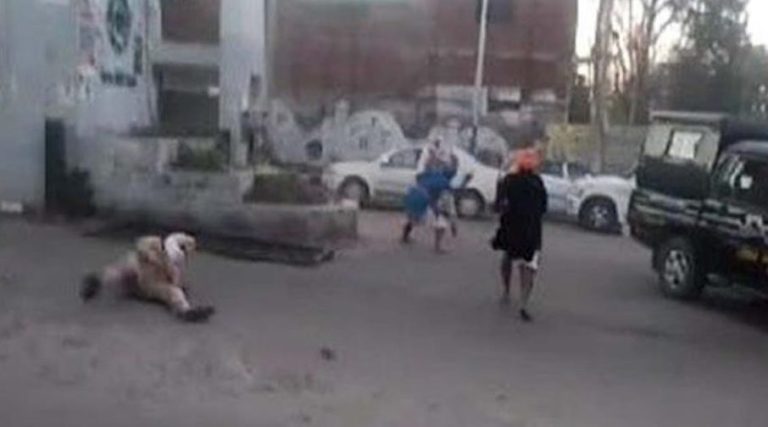
The horrific incident in Patiala, wherein, a group of Nihang Sikhs violently attacked police personnel deployed to ensure lockdown has caused widespread disgust in Punjab and across India. All the more unfortunate is the fact that this sword attack occurred a day before the auspicious occasion of “Baisakhi”– the Sikh new year and the day when Guru Gobind Singh Ji created the Khalsa at Anandpur Sahib in 1699.

On Sunday, the five Nihangs had come from Gurdwara Khichdi Sahib, located at village Balbera around 25 km from Patiala city, to the sabzi mandi (vegetable market) in Patiala in an SUV car. Probably they wanted to make purchases for a “Guru Ka Langar” to be organised the next day to celebrate Baisakhi.

Though further details of the incident are still coming in, but what can be surmised from various reports is that there was an altercation between these Nihangs on one side and the Punjab Police and Mandi officials on the other. What’s apparent is that the Nihangs tried to break through barriers and when accosted came out with swords and other weapons to attack the police. They cut off the hand of Harjeet Singh, Assistant Sub-Inspector (ASI) of police, and caused injury to a number of other policemen before running away.

The matter did not end here. Police located these culprits in Gurdwara Khichdi Sahib and went there to arrest them, only to be resisted by the entire group including their head, Balwinder Singh. They barricaded the Gurdwara and threatened to blast it with LPG cylinders. There was a standoff for several hours with police sending in appeals for a peaceful surrender. The sarpanch (local body head) of the village tried to negotiate with the group but to no avail. The police also reached out to Nihang leaders including Baba Balbir Singh, head of the Buddha Dal Nihang faction, but still the group did not surrender.

Finally, the police moved in with its Special Operations Group (SOG) under command of Inspector General of Police (Patiala Range) Jatinder Singh Aulakh. Special attention was paid towards observance of Maryada (respect) of the Gurdwara premises. There was an exchange of fire in which one of the Nihangs suffered a gunshot wound, and he was provided with adequate medical attention. Ultimately, all eleven members of the group, including one woman, were arrested and have been charged under relevant acts of law.
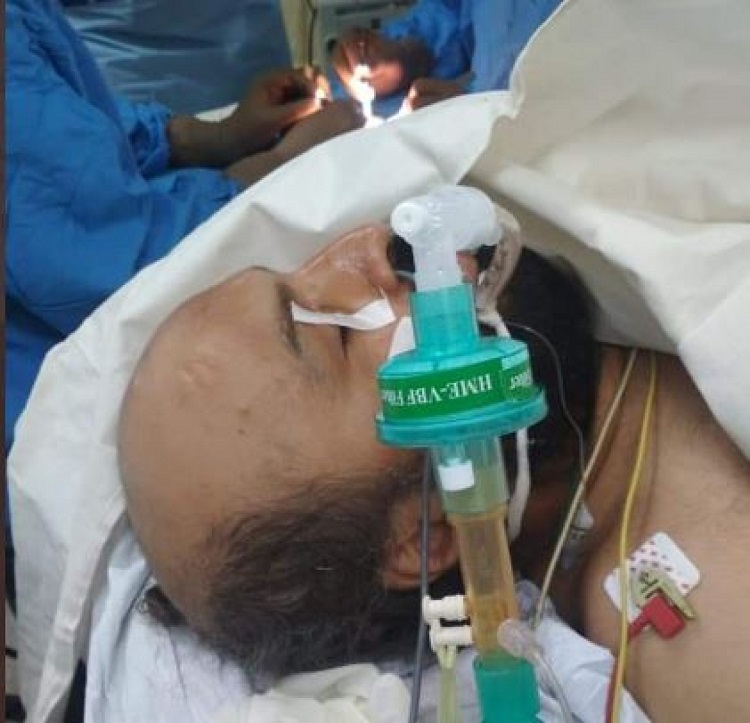
ASI Harjeet Singh in the hospital. Doctors performed a seven hour surgery to stitch the severed hand of this brave policeman.

The only positive in this  sordid incident is the courage and presence of mind of ASI Harjeet Singh. He showed great resilience and foresight in insisting that his chopped off hand was taken to the hospital along with him. After initial medical aid in Rajindra Hospital, Patiala, ASI Harjeet Singh was rushed to PGIMER (Post Graduate Institute of Medical Education & Research), Chandigarh where a team of doctors performed the surgery. The very complex plastic surgery, that lasted for more than seven hours, has been declared to be successful. The doctors are quite confident that Harjeet Singh will regain use of his hand.

(Capt.) Amarinder Singh, Punjab’s Chief Minister has instructed the police to deal with anyone breaking the law in “strictest possible manner”. All political parties have, very rightly, condemned this barbaric act. What is of particular concern here is that the incident is being treated as a normal act of violence and a lot is being left unsaid and unaddressed. For instance, how could the SUV car travel all the way from Patiala to Gurdwara Khichdi Sahib, a distance of around 25 kms, without being accosted by other blockades en route?

Nihangs: A perspective

There are two major branches of the Nihangs– Buddha Dal and the Tarna Dal. Chief patron of the Buddha Dal group, Jathedar Baba Balbir Singh Ji, has condemned the attack in very strong terms and also said that the Nihangs involved do not belong to his Dal. The Tarna Dal also has not taken ownership of the group. So the question arises as to whether this was an independent group running a major Gurdwara for personal gains? Were they actual Nihangs or mere pretenders? The group not being a part of the overall Nihang structure opens the matter for further investigation into the activities being conducted in the name of this very noble community.

Nobility of the Nihangs emanate from the fact that they were given a special responsibility of protecting the Khalsa community by Guru Gobind Singh Ji personally. They were also the favourites of Maharaja Ranjit Singh with the Nihang Chief, Akali Phoola Singh, rated as one among his best Generals. Once, Akali Phoola Singh, in his capacity as Jathedar of Akal Takth ordered fifty lashes to be administered to Maharaja Ranjit Singh for a misdemeanor on his part. Maharaja acquiesced and prepared for the whipping that was suspended to a single lash. Such is the power, authority and moral standing of the Nihang community.

Even today Nihang organisations are running schools and hospitals across Punjab, especially in and around Patiala, and are involved in many socially relevant activities. The defining characteristic of Nihangs is standing for all that is truthful and righteous while dedicating their lives to the cause of and protection of the Sikh religion.

It is quite obvious that a Nihang who has been nurtured with the highest tradition of the sect would never attack an unarmed, innocent man, let alone a Sikh/Khalsa whom he has sworn to protect.

In this instance, notwithstanding provocation if at all there was any, the group resorted to a shameful act alien to their noble tradition. This matter, as such, needs to be seen by the Nihang community with utmost seriousness.

The Nihang organisations need to get to the bottom of this matter since such maverick elements, who function under no authority, can ruin the noble reputation of the sect built over centuries of selfless service. Those who are in the community for personal gains and those who consider themselves to be above law need to be identified and removed.

For the government, this should come as a wake up call for cleansing religious places of all communities from the clutches of evil elements who are there for personal gains. More importantly, religious places should not be allowed to become dens for storage of weapons, drugs and other such substances. As ASI Harjeet Singh recovers with prayers from the entire nation, those responsible need to get working to ensure that such evil is nipped in the bud.
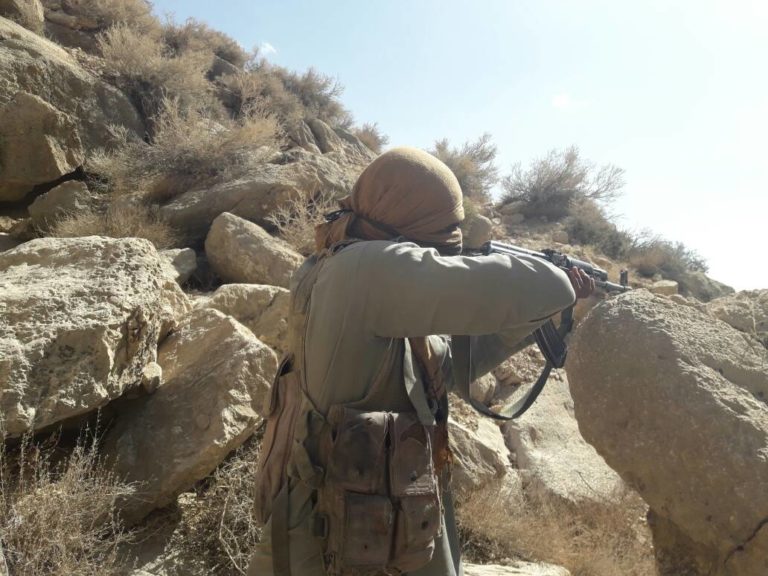
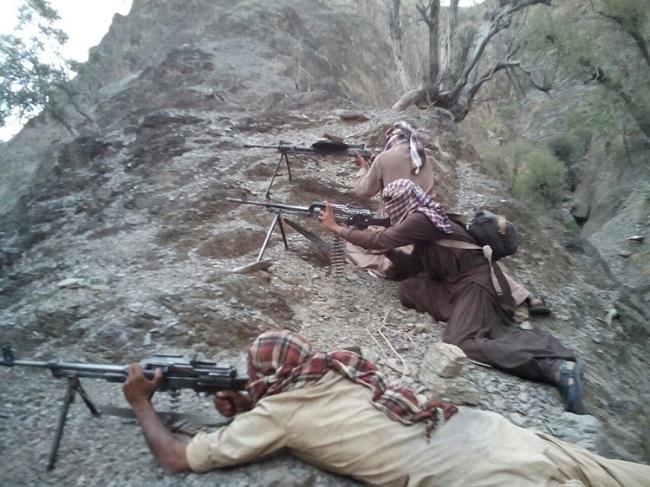
In 3 months, BLF freedom fighters carried 26 attacks on Pakistani forces at Balochistan

Balochistan Liberation Front (BLF) releases the first quarterly report about its attacks against Pakistani forces during January-February-March 2020

The core reason for the establishment of Balochistan Liberation Front (BLF) is to reinstate the separate Baloch identity and regain motherland Balochistan’s sovereignty from the occupier Pakistan. BLF is striving for a free Balochistan since its inception.

Since its inception, BLF along with the armed struggle, began to create political and ideological awareness about Baloch nation and has endeavored to bring together Baloch people from all walks of life to join the armed struggle, so that the masses can consciously, politically and ideologically get involved in the resistance. Because the struggle for independence is impossible without the participation of masses.

On the fundamental principle of freedom of occupied Balochistan, BLF is educating the Baloch people to be aware both ideologically and politically. Ideologically motivated BLF fighters, along with the armed resistance are expanding their struggle with political awareness across Balochistan.

Baloch nation is steadily destroying the Pakistan Army and responding in a befitting manner to their parliamentarian tools, death squads and religious extremists that includes countering the occupying state’s propaganda machinery and their fake narrative.

Organization’s fundamental principle is to ensure vetting and educating BLF fighters enough so that the weapon in their hands must remain a weapon in the hands of a revolutionary and their steps may never waver from defending Balochistan–their motherland.

Balochistan Liberation Front (BLF) freedom fighters in action against the occupying Pakistani forces.

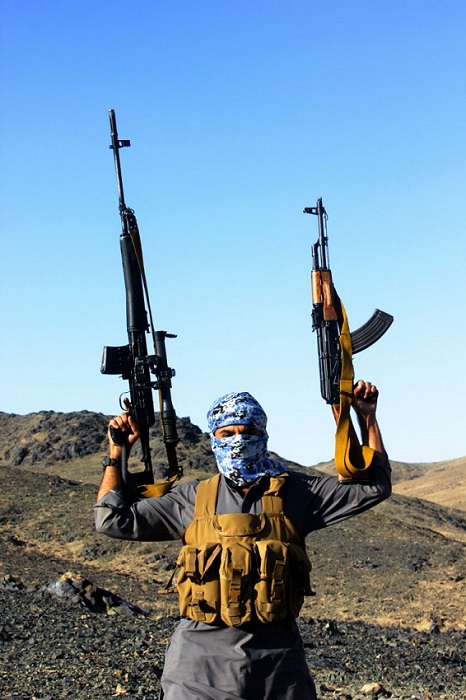
Today across the length and breadth of occupied Balochistan, BLF’s brave fighters are present on the ground with their revolutionary weapons in defense of their country against Pakistan’s regular army and other security forces.

Yes fighting on several fronts simultaneously against the Pakistan Army, federalists, local agents, informers, death squads, drug dealers and religious extremists is difficult. But at every given moment, BLF fighters are sacrificing their lives and vigorously leading the Baloch national struggle on the principles of the organization and towards their ultimate goal of attaining freedom for Balochistan.

Balochistan Liberation Front (BLF) is the embodiment of its martyrs and Baloch nation’s countless unaccounted sacrifices, and if God wills, this struggle with the organization’s principles and values will reach its destination.

The journey is certainly long and difficult, but the destination of this revolutionary war is to attain an independent Balochistan upon which Baloch survival and national identity depends.

During the first three months of 2020, BLF carried out 26 attacks on the Pakistani forces. More than 51 soldiers of Pakistani security forces were killed and more than 33 were injured. Two motorcycles, 1 armored vehicle and 2 other military vehicles were destroyed. BLF revolutionaries attacked the camp of Pakistani military backed death squads and blew up and destroyed two mobile network towers. They killed two and injured 4 members of Frontier Works Organization. The Frontier Works Organization (FWO) is Pakistan Army’s construction company.

Details about BLF attacks on Pakistani security forces in January

January 4, 2020 – BLF Snipers attacked Pakistani military checkpost in Darsezi area of Mazan Band, Dasht in District Kech, Balochistan and killed one Pakistan military personnel.

January 9, 2020 — BLF attacked Pakistan military backed Death Squads camp with hand grenades in Singanisar area of Turbat, District Kech, Balochistan and inflicted heavy causalities.

January 11, 2020 — BLF revolutionaries attacked Pakistan military checkpost with heavy and automatic weapons in Teertej area of Kolwah in District Awaran, Balochistan. Two rockets landed inside the camp due to which the Pakistan military faced heavy causalities.

Details about BLF attacks on Pakistani security forces in February

February 7, 2020 – BLF attacked Pakistan military checkpost with hand grenades in Main Bazar Turbat area of District Kech, Balochistan. One Pakistani military personnel killed and three were injured.

February 12, 2020 – BLF attacked Pakistan military checkpost with rocket launchers and automatic weapons in Labach Dansar area in District Awaran, Balochistan. Three Pakistan military personnel were killed and two were injured in this attack.

On this day, there was also an attack on Pakistan military’s checkpost with rocket launchers and automatic weapons in the Kaur-e-Datt area of District Awaran, Balochistan. Two military personnel were killed and two were injured in this attack.

There was also an attack on Pakistan military backed death squad camp with rocket launchers and heavy weapons in the Labach Dansar area of District Awaran in which the BLF revolutionaries inflicted  heavy causalities on the Pakistani security forces.

BLF Freedom Fighters are confident of freeing Balochistan from illegal Pakistani occupation

February 13, 2020 – BLF freedom fighters attacked Pakistan military checkpost with rocket launchers and automatic weapons in the Kuch area of Pirandar, District Awaran of Balochistan and inflicted heavy losses to the occupying Pakistani forces.

On this day, BLF blew up a mobile network tower in the Gazzi area of Pirandar, District Awaran Balochistan. This mobile network tower was used by the military for communication purposes.

February 16, 2020 – BLF revolutionaries attacked Pakistan’s military checkpost with automatic weapons in Madag-e-Kalat area of District Kech, Balochistan. Two Pakistani military personnel were killed and two were injured in this attack.

On this day there was another attack on Pakistan military’s Miani Kalat checkpost with rocket launchers and automatic weapons in Wadi Mashkay area of District Awaran, Balochistan. Two military personnel were killed and three were injured in this attack.

February 19, 2020 – Skirmish between Balochistan Liberation Front freedom fighters and Pakistan military in Madag-e-Kaur, Kech, in which BLF fighters managed to escape and then surrounded the Pakistani military from other side to attack on them. 3 Pakistani military personnel were killed and two were injured in this attack.

Details about BLF attacks on Pakistani security forces in March

March 1, 2020 – BLF snipers attacked Pakistani military checkpost in Maleshband area of Wadi Mashkay, District Awaran and killed one Pakistan military personnel.

March 2, 2020 –  BLF freedom fighters ambushed Pakistan military patrolling team with automatic weapons in Katrenz area of Mand, District Kech, in which 3 military personnel were killed and one was injured.

March 3, 2020 –  A Pakistan military convoy which consisted of 2 motorcycles and an armored vehicle with automatic weapons and rocket launchers was ambushed in the Jahani Aap area of Bulaida, District Kech, Balochistan. Six military personnel were killed and 4 were injured in this attack. Both the motorcycles and Pakistan military’s armored vehicle were partially damaged. During this attack a few more Pakistan military vehicles of the rescue team arrived which were also attacked leaving four Pak military personnel dead.

There was also an attack on the Pakistan military checkpost with heavy weapons in Katrenz area of Mand, District Kech, Balochistan. Two Pakistan military personnel were killed.

March 4, 2020 – BLF freedom fighters blew up Ufone mobile network tower in the Bundiki area of Wadi Mashkay, District Awaran Balochistan. This mobile network tower was only for the use of military and for communication by its death squads.

March 5, 2020 –  Ambushed Pakistan military convoy consisting of 3 military vehicles with automatic weapons and rocket launchers in Makki Kaur area of Wadi Mashkay, District Awaran, Balochistan. One of the military vehicles was totally destroyed due to which all six Pakistani military personnel sitting in the vehicle were killed.

March 14, 2020 – Skirmish between Balochistan Liberation Front (BLF) freedom fighters and Pakistan military in Meerabad area of Tump, District Kech, Balochistan in which all the BLF fighters managed to escape and inflict heavy causalities to the occupying forces of Pakistan.

March 17, 2020 –  BLF freedom fighters attacked Pakistan military camp with heavy weapons and rocket launchers in Ladh area of Bazdad, District Awaran and inflicted heavy causalities to the occupying forces.

March 19, 2020 – Skirmish between Balochistan Liberation Front (BLF) and Pakistan military in Gazzi Kaur area of Jahoo, District Awaran, Balochistan. In this BLF fighters managed to escape and then set a trap in the mountains of Jahoo. The Pakistani military fell into that trap as BLF fighters attacked and killed ten Pakistani military personnel and injured more than a dozen.

March 21, 2020 – BLF snipers attacked Pakistani military checkpost in Apsaar area of Mand, District Kech, Balochistan and killed one Pakistan military personnel.

On this day, there was another attack on Pakistan Army’s construction company Frontier Works Organization (FWO) with automatic weapons and rocket launchers between Shand and Rideeg area of Mand, District Kech, Balochistan. Two FWO workers were killed and several others injured.

March 24, 2020 – BLF snipers attacked Pakistani military checkpost in Chokkaap area of Mand, District Kech, Balochistan and killed one Pakistan military personnel.

March 26, 2020 –  BLF ambushed Pakistan’s military convoy with automatic weapons in Dazeeg Kaur area of Gomazi, District Kech, Balochistan. Two military personnel were killed and four were injured in this attack.

March 30, 2020 – BLF snipers attacked Pakistani military checkpost in Raghai area of District Washuk, Balochistan and killed one Pakistan military personnel.

Despite Covid-19 pandemic, Pakistan continues its proxy war in Kashmir

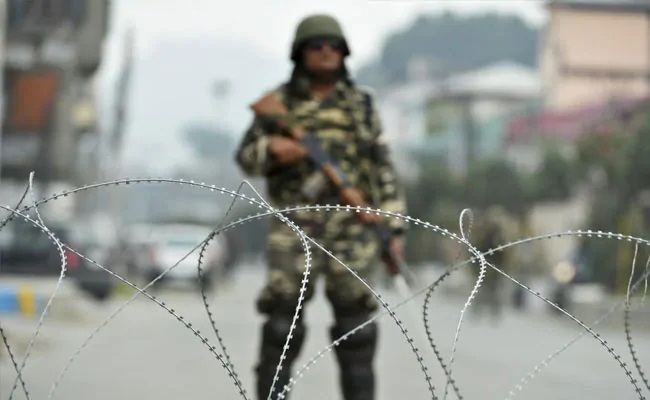
Incidents of encounters between security forces and terrorists attempting to infiltrate across the Line of Control (LoC) in J&K are common. Though the police leaves no stone unturned to establish the identity of deceased terrorists by checking records, soliciting assistance of locals and even releasing their photographs for public scrutiny. Yet, if the identity of the deceased cannot be established, the dead are buried as per Islamic customs. In case some claimants do emerge subsequently, the body is exhumed and handed over to the family members. But this is done only after a DNA test confirms relationship of the claimant with the deceased and though not common, such incidents do occur periodically.

On May 25, 2018 five unidentified terrorists were killed in Tangdhar sector near the Line of Control (LoC) in the Bhadwan area of North Kashmir’s Kupwara district. However, after their photos were circulated on social media, relatives of two of the deceased approached the district administration claiming relationship to the slain terrorists. They were identified as Shiraz Ahmad belonging to Lajoora village in Pulwama district who had joined terrorist ranks in 2017, while the other was Mudasir Ahmad of Parigam village in Kulgam district who had disappeared in 2016. Once the identities of the deceased terrorists were confirmed through DNA tests, their bodies were exhumed and handed over to their family members.

A month later, on June 29, 2018 a terrorist was killed in a gunfight with the army in Kachama forest of North Kashmir’s Kupwara district and since his identity could not be established, he was buried as an unidentified terrorist. However, some days later, one Ghulam Ahmad Bhat, resident of Nasti Mohalla, Old Barzulla, Srinagar, submitted an application to District Magistrate Kupwara intimating that after seeing the photograph of this unidentified terrorist on social media and later at the local police station, he realised that it was his son named Mudasir Ahmad Bhat. It later emerged that even though Mudasir had gone missing since 2016, since his family members never filed a missing report, the police weren’t aware of Mudasir having joined militancy. After DNA tests confirmed his father’s claim, the body of Mudasir was exhumed and handed over to him.

The reason for citing these two incidents is only to highlight the harsh reality that terrorist groups often disown their dead in order to conceal the exact magnitude of their losses, even if it results in the deceased being buried unsung and as an unknown entity, far away from their native place.  Resultantly, the unfortunate family members of such deceased terrorists are only able to establish the identity of their kith and kin after they have seen their photos that have been released by police and the time lag between release of photos and identification by family members may vary from a few days to even weeks or months.

However, the sequence of events starting from the encounter, followed by photos of unidentified terrorists being released, relatives identifying their kin from the same and thereafter approaching the authorities to claim the dead bodies, that has remained unchanged ever since terrorism erupted in Kashmir three decades ago, now seems to be a new trend!

On April 5, the Indian Army gunned down five terrorists near the LoC in Keran sector of North Kashmir’s Kupwara district. However, even while identification process of the deceased was still in progress and their photos hadn’t been released, people claiming to be related to three of them (two families from Shopian and one from Kulgam) had already reached Kupwara to claim their bodies. Such a development is both unprecedented and interesting, because it’s inconceivable as to how, without even seeing photographs of the deceased, family members of three slain terrorists are so sure of their identity that they have even reached Kupwara all the way from South Kashmir!

The most logical explanation is that due to the fear of being castigated by the international community for continuing its proxy war in Kashmir through cross-border terrorism even during times of Covid-19 pandemic, Pakistan Army has instructed terrorist groups not to issue their standard statements declaring the deceased as ‘martyrs’ and lauding their ‘valour’. But since three out of the five slain terrorists are Kashmiris, the terrorist group to which they belonged didn’t want to risk incurring public wrath by concealing their identity. So, instead of making a public announcement, they decided to quietly convey this news to family members of the deceased through their over-ground workers (OGWs).

But Islamabad is literally getting away with murder only because New Delhi’s counter-offensive on Pakistan’s proxy war is woefully pathetic. Compare the consistency of Islamabad’s Kashmir rhetoric, with New Delhi’s knee-jerk response to Pakistan Army’s brazen patronage of proscribed terrorist groups. Be it the South Asian Speakers’ Summit on ‘Achieving the Sustainable Goals’ in Maldives, UNICEF’s South Asian Parliamentarian Conference on Children Right’s Convention in Colombo, Sri Lanka or even the recent SAARC head of states video conference on Covid-19, Kashmir was the common denominator everywhere, despite being totally out of context.

In contrast, despite Pakistan being encumbered by a surfeit of vulnerabilities, New Delhi’s diplomatic riposte is inexplicably so feeble and irresolute that the lesser we talk about it, the better it is!

Inside story of why Pakistan wants custody of IS(K) chief from Afghanistan

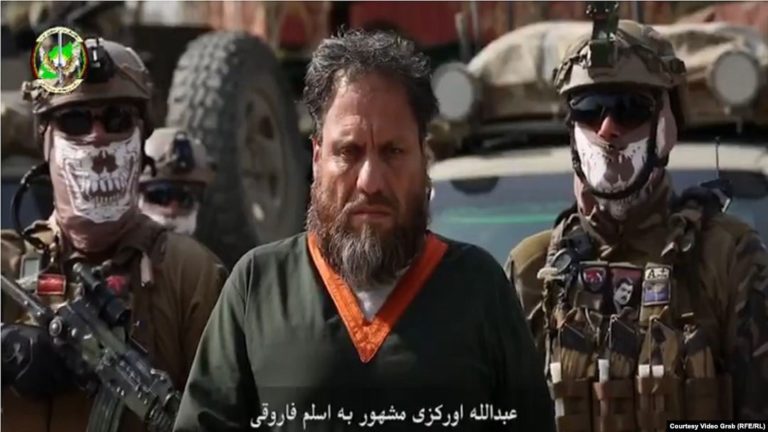
The arrest of Islamic State Khorasan’s (IS-K) chief Abdullah Orakzai alias Aslam Farooqi is no mean achievement. Au contraire, it’s an accomplishment par excellence because, to put it in cricketing parlance, it’s a hat trick of ‘firsts’– one, this is the first time when an IS-K chief has been captured alive. Two, it’s the first time that any IS leader has been apprehended along with more than one and a half dozen of his fighters, and three, the IS-K chief was virtually ‘uncapturable’ as he seldom left the safe havens provided by the Pakistan Army spy agency ISI (Inter-Services Intelligence).

Those who consider mention of the IS-K chief being provided safe haven by ISI as an attempt to malign the Pakistan Army may like to log on to Canada.ca, which is the official website of the Government of Canada which states, “Farooqi was an advocate of appeasement with Pakistan, in exchange for being granted a safe haven by the Pakistani authorities. Since then, Farooqi has spent most of his time inside Pakistan, as have most of the other senior figures in the organisation. According to IS-K sources, Pakistani intelligence (ISI) have even started providing some financial support to the organisation.”

While confirming Farooqi’s arrest, National Directorate of Security (NDS) spokesperson Haris Jebran, declined to provide any further information as to from ‘where’ and under what circumstances was the IS-K chief and his fighters captured. Whereas, Jebran may be having good reasons for withholding this information, yet two issues raise suspicions– one, why the secrecy about the location from where IS-K chief was apprehended and how? Two, why is Pakistan so desperate to get his custody? Could there be a possible connection between Kabul’s silence and Islamabad’s desperation? 

One may cite ‘security reasons’ to defend Kabul’s reluctance in disclosing details of how Farooki and his band of 19 fighters were apprehended. Similarly, Islamabad’s frantic bid to get hold of him may be for bringing the IS-K chief to justice for the crimes his group committed in Pakistan. But then, IS-K has committed far more heinous crimes in Afghanistan than in Pakistan. Under such circumstances, instead of insisting on his immediate custody, Islamabad could have used a positive diplomatic approach by requesting Kabul that once it has tried and sentenced the IS-K chief, he could be handed over to Pakistan for facing trial for his crimes there. Islamabad could make an offer that Farooqi would have to undergo the maximum of the two sentences that had been awarded to him.

Returning to the apprehensions that arise out of Kabul’s silence and Islamabad’s cacophony. Let’s first take Kabul’s refusal to disclose the location and circumstances of the IS-K chief’s arrest. Could it be that circumstances of Farooqi’s capture were akin to that of Kulbhushan Jadhav? Was the IS-K chief ‘picked up’ from Pakistani soil in a covert trans-border operation? Or could it be that Farooqi was lured into leaving his safe haven on Pakistani soil and he unwittingly walked into a trap set by an intelligence agency, the identity of which Kabul doesn’t want to compromise? Lastly, did some intelligence agency strike a deal with a tribal warlord in Pakistan to betray the IS-K chief and hand him and 19 of his fighters to the NDS?

Since the IS-K chief and his fighters would be well aware of their fate in the eventuality of them being apprehended by the Afghan security forces, it is inconceivable that they would meekly surrender themselves and suffer unspeakable brutalities before being put to death. Furthermore, fighting unto death would make them martyrs with an assured place in ‘jannat’ (paradise). But in case they had been disarmed by deceit, then they had no other option but to give themselves up to their captors without a fight. So, even though the NDS spokesperson hasn’t disclosed any details, the possibility of the IS-K chief and his fighters being victims of the ‘mind game’ inspired by the Jadhav abduction episode that was played by some intelligence agency cannot be ruled out!

As far as Islamabad is concerned, its main worry is that since Farooqui could start singing like a canary, getting his custody is the only way to avoid embarrassment. It knows that should Farooqi make the IS-K’s link with Pakistan Army public, then it would not only expose Rawalpindi’s role in orchestrating attacks against the Hindu, Sikh and Shia minorities in Afghanistan but also reveal the Pakistan Army,  IS-K, Haqqani network and Muqami Tehreek-e-Taliban (MTT) nexus responsible for attacking the US-led NATO forces in Afghanistan. Pakistan may be impervious to international criticism, but when it dawns on the international community that they are being led up the garden path, many countries may rethink on giving aid to Pakistan and redefining relations.

Lastly, someone needs to tell Islamabad that when Pakistan Army could not even stop former Tehreek-e-Taliban (TTP) and Jamaat-ur-Ahrar (JuA) spokesperson Ehsanullah Ehsan who was involved in 2014 Army School Peshawar massacre, from escaping along with his entire family, then with what face is it demanding that the IS-K chief be handed over to it?

Tailpiece: After the March 25 Kabul Gurdwara attack that left 25 worshipers dead, Pakistan Foreign Office (FO) spokesperson Aisha Farooqui had said, “Seeking to implicate Pakistan in this terrorist attack is part of the desperate attempts India is making to divert attention from its own unacceptable actions and state-terrorism in India-occupied Jammu & Kashmir.”

But since the IS-K has already accepted responsibility for this attack and its chief is in the custody of NDS in Kabul, Aisha Farooqui better start working on its next rebuttal because this time Pakistan’s ploy of “diverting attention” won’t do as the facts would be coming straight from the horse’s mouth!

Pakistan’s inept response to the Coronavirus crisis

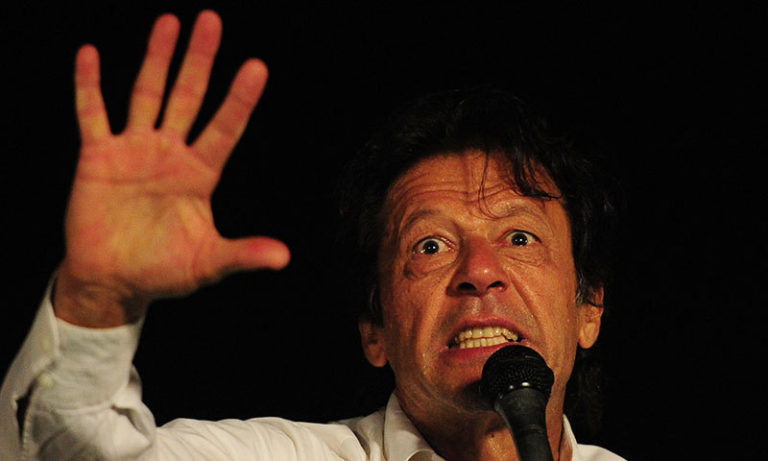
The Coronavirus is turning out to be a test of leadership in the global arena. And the worst example of leadership is emerging from Pakistan. Prime Minister Imran Khan, never known for his administrative skills, has shown  unprecedented ineptness in dealing with the calamity.

The biggest disaster for the country was allowing Pakistanis who had gone for pilgrimage to Iran to enter the country from the border city of Taftan in Balochistan without proper test and quarantine processes. The pilgrims were packed together in unhygienic tents without medical facilities. Officials of Sindh have identified these pilgrims as the main reason behind spread of Coronavirus in the province. Undoubtedly, the impact on Balochistan would be disastrous, but then, no news ever comes out from the impoverished, suppressed and beleaguered province, hence, there is no way of finding out.

In what can be termed as the most blatant form of supplication, Pakistan’s President Arif Alvi visited China when the virus was at its peak. The stated reason was to gain knowledge about dealing with the pandemic but actually the country wanted to please its benefactor with a show of solidarity. He brought back no substantial methodology to fight the calamity in his own country.

After creating this huge problem, Imran Khan has stayed in a denial mode. He ruled out against a total lockdown on the premise that a poor country like Pakistan cannot afford such a situation. “Pakistan’s [economic] situation is not the same as that of the United States or Europe. There is poverty in our country, with 25% of the people living in extreme poverty,” he said while emphasizing that a lockdown would result in people dying of hunger.

He stuck to his stand even when provinces like Sindh that had been enveloped by the pandemic begged for a strict lockdown. As a result large congregations carried on with impunity. The Tablighi Jamaat held a congregation of more than 100,000 people on March 11, at Raiwind Markaz in the Allama Iqbal township of Lahore despite protests from the administration. Imran Khan also refused to discuss the situation with the opposition leaders; during the lone meeting of a specially notified committee of parliamentary leaders to discuss the Coronavirus crisis and shape shared responses. Prime minister Khan was vague and distracted. He parroted his views and then left without listening to the leaders present; it was an exercise in futility.

It is no wonder that the Pakistan Army, in a quiet and sure footed manner took over the administrative reins of the nation. On March 19,  Major General Babar Iftikhar, head of the ISPR (Inter-Services Public Relations) went public on to announce that, “The Armed Forces had begun assisting civil authorities with hospital beds and building quarantine facilities.” This, in other words, meant that the Pakistan Army was in charge. Three days later, the Sindh chief minister imposed an absolute lockdown in the province and formally requested army’s assistance to impose the same. Country wide lockdown was ordered on March 22 with Army personnel imposing the same with a heavy hand. The lockdown continues to be in place.

While the Pakistan Army has been able to put in place a system to contain the situation, it has its own set of problems. There is a rapid spread of the Coronavirus among its own rank and file. Secondly, the Pakistan Army is unable to contain the fast deteriorating economic situation that Imran Khan had predicted with reasonable accuracy.

Pakistan Army never allows any weakness within its system to become public. It has, therefore, established its quarantine and isolation centres away from the hub of its flagship province–Punjab, The centres, therefore, have come up in the remote, underdeveloped areas of the country. Reports speak of isolation and quarantine facilities in Pakistan-Occupied Kashmir (POK) areas of Muzaffarabad, Domel, Bagh, Aliabad and Rawalkot and many areas of Gilgit-Baltistan. In Balochistan, the centres have come up in Pandharpur, Chhamb, Deva and Jhanda among others.

By doing so the Pakistan Army may have saved the primary areas of Pakistan’s Punjab and also moved its sensitive operations out of the media glare, but it has put at terrible risk the very poor, illiterate and impoverished people of occupied territories in Kashmir and Balochistan. Once the infection spreads among them, which is inevitable, there will be no means to contain and control it. Hence, the Pakistan Army has opened the doors for a catastrophe of unimaginable proportions.

The poor daily wagers in Pakistan are at their wits end.  Not only are they struggling to ward off the disease but they also have to stave off hunger since the promised financial and material assistance is nowhere to be seen. The larger businesses in Pakistan like the manufacturers and exporters were functioning under a prolonged period of economic depression, this crisis has literally broken their backs and they are teetering on the verge of bankruptcy.

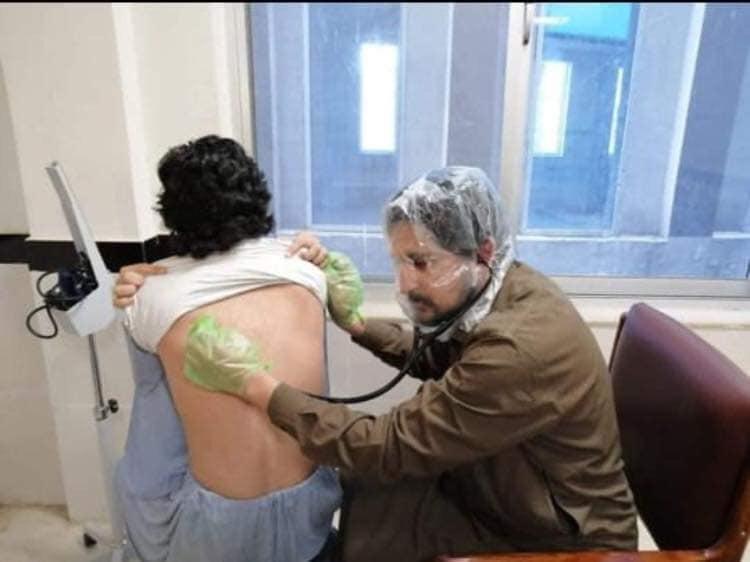
Doctors treating Coronavirus patients have, on a number of occasions, boycotted their duties due to failure of the government to provide to them Personal Protective Equipment (PPE) and other facilities to take on this huge challenge.

Since the parliament of the country is in forced recess, fiscal re-prioritisation, revenue disbursements, social transfers to the immediately vulnerable are in suspension mode thus adding to the feeling of insecurity and despair. The Pakistan Army has temporarily bailed out Imran Khan’s government which, in any case is in dire straits. The specter of total collapse in Pakistan, however, continues to loom large. The country does not have requisite testing kits and probably not enough money to procure them, hence, the actual situation is not known, a near total media blackout is making matters worse.

India, despite being one among the most populous countries in the world, has minimal and manageable impact of the virus. It is so because of a proactive and coordinated response by the government  and cooperative participation by the people. It would be in Pakistan’s interest to shed its dependence on China and look towards India for support.

J&K: Indian Army’s civilian outreach to fight Coronavirus emulates national spirit

Jammu & Kashmir and Ladakh are facing their own set of challenges while combating the COVID-19 (Corona/Chinese Virus). While there was worry about Ladakh earlier, now Kashmir is emerging as the cause of concern. Ladakh, of course,  is not completely out of the danger zone, one infection case has come up in district Kargil on April 2, around 13 days after the last case was identified. The process of Quarantine and isolation will have to continue over there.

Jammu and Kashmir has recorded more than 60 active cases with nearly 50 reported in Kashmir alone. The high number in Kashmir is due to many people having been out of the state when the virus broke out. Sadly, a large number among them did not go into self isolation and also hid their travel history; as a result now 17,041 people are under active surveillance. It is to the credit of the state administration that it has in place a very effective contact tracing system that is controlling the spread to a great degree.

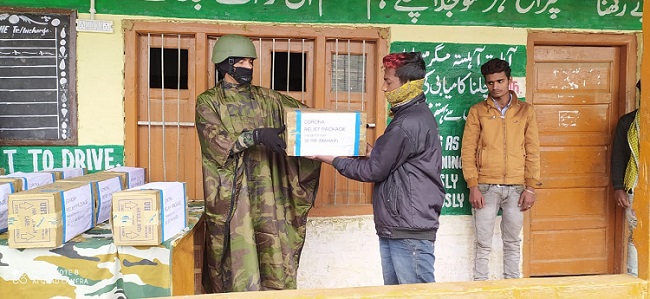
The Indian Army is keeping alive it tryst with people of Jammu and Kashmir and Ladakh by coming forward unilaterally to assist in every manner possible. Indian Army formations in the two Union Territories are providing all infrastructure and facilities that the administration requires to boost its resources. Representatives of the Indian Army are regularly attending multi-agency meetings to remain conversant with the response mechanism. Sustenance assistance in terms of rations, basic medicines, water, transportation, airlift etc is being provided seamlessly, without involvement of red tape, requisitions etc.

Army doctors are carrying out regular interaction with civilian medical authorities to work out modalities for management of the COVID-19 and non-COVID-19 patients. Plans for segregation of hospitals are being worked out jointly.  The army is in a quiet sure footed manner, preparing to meet the possibility of a quarantine surge with creation of facilities in anticipation. It is being termed as the crisis expansion protocol. The Indian Army has also created modified protective kits thorough its famed innovation resourcefulness.

Indian Army’s biggest contribution is in creating awareness on measure to be adopted to avoid infection. It has in place a number of Hash Tags, like #StayHomeStaySafe; #OpNamaste #CoronaMuktAwam among others with which it passes simple, pithy and easily understandable messages. Great effort is being put in to adapt the advisories with multi-media sources ranging from videos and  audios in social media (WhatsApp, Twitter Facebook et al) to brochures, pamphlets, banners and leaflets etc. Public Address systems, local Cable TV systems and Hailers are being used to spread the message, especially so, among own troops and families.

A good method of convincing the people to adhere to the norms is emphasizing that these form part of the “Best Practices” evolved by the Indian Army for itself. Videos on these best practices are being shown in various forums. Senior army medical officers in uniform are recording videos explaining the basics of the Coronavirus and steps required to be taken to avoid infection.

The campaign has an added advantage of being initiated by the Indian Army, an institution on which the people, especially in Kashmir, repose a high degree of trust and confidence. It is being taken very seriously by the people. In view of it scale, reach and trust factor, the campaign is turning out to be very successful.

Indian Army has also identified such people of the labour and daily wagers class who need support and made for them provision of ration, water soap, sanitizers, masks and all other items required to pass through these difficult times. Among these are migrant labour from other states who are in dire need of assistance. The assistance is being given after application of all social distancing norms prescribed by the medical authorities.

While the most needy are being given special attention, others in need are not being ignored; helpline numbers have been prominently displayed and given to all government offices and community leaders, any call for assistance is promptly responded to. After taking all precautions, Army Khariat (well being) Patrols are being sent to civilian areas for checking out that all is well.

The need to preserve water, whose use it gaining epic proportions due to frequent hand washing, is another core area that the army is focusing on. Within the service, methodologies have been laid out to offset the extra and essential use by preserving from the non-essentials. A concerted attempt is being made to sensitize the people in this regard.

Indian Aarmy is also running many education initiatives from the Goodwill Schools to Super-30 and similar porgrammes. In order to ensure that education does not suffer, an attempt is being made to provide access to the students to digital learning applications. In a novel initiative, the Srinagar-based Chinar Corps has collaborated with @extramarks & @iDreams for ensuring unimpeded academic pursuits for the students of Kashmir.

The army is alive to the fact that the Coronavirus spread within would have serious repercussions. It is for this reason that assistance is being provided to the civil administration only after taking all prescribed medical precautions. Internally, the army has evolved extensive procedures for safety of all ranks and families. These are being assiduously followed in unit lines, offices, formation headquarters and all other essential institutions. Institutions like canteens and shopping centres, without which normal life is possible, have been shut down altogether.

The world is at the receiving end of the biggest challenge of the century as posed by the COVID-19. Ultimately, human spirit will prevail and things will  get back to normal. When that happens, it is the manner in which people helped each other that will be remembered. India is putting up a valiant fight, which has resulted in the lowest numbers of deaths in this highly populous country. The spirit being exhibited in Jammu and Kashmir and Ladakh by the people and the Indian Army soldiers is praiseworthy emulates the spirit of India.

Coronavirus spread in POK poses direct threat to Kashmir

Coronavirus is a global pandemic, and COVID-19–the disease caused due to this novel virus, causes respiratory problems. There is no prescribed treatment or vaccine for this disease. This virus originated from China and spread to 180 countries across world; it has been declared a “Pandemic” by the World Health Organisation (WHO). The severity of this pandemic can be gauged from the fact that as on date, nearly 1,699,631 people have tested positive while 102,734 have succumbed due to this fatal disease. Most affected countries are Spain, Italy, China, Iran and the United States of America where death toll is very high.

India also faces the wrath of this novel Coronavirus which till now has claimed 249 lives, and the number of people testing positive is surging with every passing day. The newly created Union territories of Jammu and Kashmir as well as Ladakh too have recorded more than 106 positive cases and recorded two fatalities.

Pakistan is also in the throes of Coronavirus infection which is spreading at a very fast pace over there. China is Pakistan’s “all weather friend” and has strong diplomatic and business relations with it. CPEC (China-Pakistan Economic Corridor) is the big joint venture between the two in which thousands of Chinese employees are working inside Pakistan. These Chinese technicians and labourers make frequent trips to their country for meeting their families or for some job-related work. Since China has been one of the most severely hit countries by this novel Coronavirus, it’s but natural that the massive workforce working on CPEC projects would have brought along this virus while returning from mainland China. Since Pakistan did not go in for a ‘lockdown’ option like India, there is just no possibility that locals in Pakistan-occupied Kashmir (POK) and Gilgit-Baltistan (GB) could have saved themselves from contracting the Coronavirus.

Pakistan Army has set up quarantine camps in POK and Gilgit-Baltistan but it has done so only after Coronavirus pandemic has spread all over. To make matters worse, Pakistan Army have shifted positive cases of Coronavirus infection to POK due to which this pandemic is likely to go out of control. The locals have expressed their unhappiness by coming out on the streets and protesting. In any case, since the idea of shifting positive Coronavirus cases into POK is that of the Pakistan Army and not the Imran Khan government, no amount of objection will make the army reverse its decision!

There are very reliable reports that Pakistan Army has already starting moving positive cases of Coronavirus into POK and due to a large number of patients and limited facilities, the overall situation there is not very good. This becomes a matter of very serious concern for the people of Kashmir because the Coronavirus will also infect militants staying in launch pads situated inside the POK and when they infiltrate across the LoC and enter Kashmir, they will bring this virus into the valley with them.

Thus, while on the one hand Imran Khan is expressing concern about Coronavirus spreading in Kashmir and even asking UN and global community to intervene, the Pakistan Army is hell-bent on sending Coronavirus infected militants into Kashmir and further aggravating the problems here!

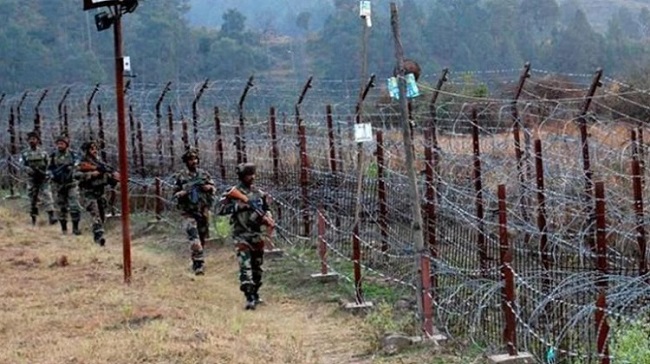
The fear of Coronavirus infection reaching us from across the LoC isn’t hypothetical, it’s real. Just days ago, the Indian Army thwarted an infiltration bid by killing five militants on the LoC in the Kupwara sector of Kashmir. Such men are likely to be active carriers of the virus that remains dormant in healthy people but is prevalent all the same.

What makes infection being spread by militants even more worrisome is that in order to avoid being identified by security forces, militants will not go to hospitals for check-ups and if they get infected, they cannot be kept in isolation and under medical supervision. Thus, even if one militant gets Coronavirus, he will not only infect his comrades but also the people he comes in contact with and this transmission of the virus will continue till he is alive.

US will soon begin the process to withdraw its troops from Afghanistan and the pulling out of soldiers will have direct implications in the Kashmir Valley since militants will feel emboldened to cross over on to the eastern border. This is worrisome for both for government of India as well as for the people of Kashmir.

Luckily, the Indian army is seized with this problem and has enhanced vigil along the LoC so that infiltrators are not able to infiltrate and enter Kashmir, but the danger persists. The Indian Army has also launched a multi-pronged campaign to reach out to people in remote, rural and urban areas of Jammu and Kashmir and educate and assist them in the fight against Coronavirus. As part of the campaign titled “Jointly we will put an end to Corona,” distribution of pamphlets, masks, sanitizers and also ration is being done besides installation of hand wash facilities. Indian Army’s gesture was very well received and appreciated by the local populace.

The world is at receiving end due to this biggest challenge of the century as posed due to COVID-19. Ultimately, human spirit will prevail and things will get back to normal. When that happens, it is the manner in which people helped each other that will be remembered. India is putting up a valiant fight, which has resulted in the lowest number of deaths in this highly populous country. This spirit being exhibited in Jammu and Kashmir and Ladakh by the people that emulates the spirit of India. Under these testing circumstances a well conceived political outreach and empowerment of the civil society aided and abetted by New Delhi is necessary.

An Open Letter to Prime Minister Imran Khan on Covid-19 & Kashmir

Dear Imran Khan sahib,
I must admit that while your recent statement “My worry is poverty and hunger,” made during The Associated Press interview really impressed me, the humility and grace with which you accepted the reality of Pakistan being a “very vulnerable” country in terms of economy, won over my heart. But it was the enthusiasm with which you voluntarily donned the mantle of an ambassador representing countries with fragile economies and asking the world community to “think of some sort of a debt write-off” due to Covid-19 pandemic, made me a big fan of yours. I recall with great awe, how after New Delhi abrogated Article 370 of the Indian constitution, you announced that you would henceforth serve as “Kashmir ka safir” (ambassador of Kashmir).

What’s really remarkable is your penchant for taking up cudgels for those whom you think have been forsaken by the cruel world of today in which we live!

No nation would have ever riled against another country’s decision to amend its own constitution, but you have done so and even when no one stood by Pakistan on this issue, rather than being embarrassed and losing heart, you as Kashmir’s ‘safir’ boldly declared that “whether the world is with the Kashmiris or not, we are standing with them.” Your much publicized attempt to get UNSC to compel India to restore status quo ante on Article 370 may have failed miserably, but yet it didn’t dampen your indomitable spirit; you had to abandon your plans to approach the International Court of Justice against revocation of Article 370 once your attorney told you that he saw no merit in the case, but you swallowed your pride and stood your ground.

But the most impressive thing is that despite your humungous responsibilities as Prime Minister Pakistan, you still take your self-assumed role of Kashmir’s ambassador very-very seriously!

I say so because while the burgeoning Covid-19 crisis in Pakistan and the resultant fallout and chaos doesn’t seem to be unduly worrying or giving you sleepless nights, recurring nightmares about an imaginary and imminent apocalypse in Kashmir is surely nagging you, day in and day out! What’s really touching is that even though your 800 odd students stuck in Wuhan, (which was the epicentre of Covid-19 pandemic) kept making frantic appeals for been brought back home, their cries and demeaning statements like ‘learn from India, shame on you’ didn’t upset you, but the lockdown in Kashmir surely did!

Similarly, you didn’t become hyper when people of Balochistan kept on complaining about lack of medical facilities to screen people for Covid-19 and the abysmal living conditions in the Taftan quarantine camp, which was even highlighted by the international media.

But while your detractors may criticize you for your tardy domestic responses on Covid-19 related issues, even your biggest critic cannot accuse you of abandoning the people of Kashmir as your Foreign Office didn’t for even a moment stop its “Pakistan urges India to lift the blockade in the region (J&K)” and asking the international community to press New Delhi into “lifting of communication restrictions and allowing unfettered access to medical and other essential supplies.”

Even when it came to the SAARC heads of state putting their minds together and working out modalities for a coordinated response to the Covid-19 pandemic, you showed your solidarity for the people of Kashmir by wangling out and nominating Health Minister Zafar Mirza to represent you. But while you may have absented yourself, you still ensured that Kashmir is somehow brought into the discussion. However, I must admit that I was a bit disappointed by the unimaginative way in which it was raised because what you thought would prove to be a ‘show stopper’ turned instead into a ‘non-issue’!

While Pakistan may be the only member state that hasn’t contributed to SAARC Covid-19 Emergency Fund, but that’s acceptable since it is (by your admission) a “very vulnerable” country. So, rather than feeling shy, Pakistan must use this fact to extract a very generous amount from this fund and no one would mind as yours is the only country within SAARC group of nations that falls in the “very vulnerable” category.

At the same time, while the old ‘extraordinary times call for extraordinary measures’ adage justifies begging for funds and assistance from all and sundry, but accepting even a single Rupee from India would not only be ‘haraam’ (forbidden) but also an affront to the people of Kashmir. So, as an afterthought, you may reconsider taking monetary assistance from the SAARC Covid-19 Emergency Fund as the bulk of it ($10 million or 53%, to be precise) comes from the land of ‘kafirs’ (non-believers)!

I end with my deep appreciation of your innate ability of not letting domestic problems overshadow your commitment to the people of Kashmir, even if it is unsolicited and hasn’t yielded any positive results whatsoever.

With highest regards,

Your Ardent “Fan”,
Nilesh Kunwar

COVID-19: Right to Privacy vs. Right to Speedy Treatment

Year 2020 will be remembered as the monumental year for everyone across the world. A seamless connection among countries in the globe stimulated the rapid spread of a contagious Coronavirus and the disease caused by it– officially termed as COVID-19, halting almost every global citizen’s daily life.

I am one of them, trying to do my best to be voluntarily quarantined and maintain a social distance in public spaces. South Korea, where I live, had the second highest number of patients after China in February. Strangely, despite this mysterious virus’ import the public did not fear or panic about this catastrophe. Instead, people in South Korea put their trust in the healthcare authorities, experts and in the government’s measures.

For sure, it’s still too early to hail the South Korean government’s effort to stop the spread of Coronavirus. Still, the country’s strategies have been highly applauded by the Western countries such as the US, Canada and France, and also by the WHO. There are so many news reports that came out within last two weeks from the US which were positive and talked about how well South Korea paved its way to prevent the wildfire of a nationwide contagion. Positive tones are still dominant in the international media’s coverage that talk about South Korea as a model country for Coronavirus prevention strategy. Yet, there are voices that talk about ignored individual rights. For example, most European countries are careful in terms of revealing a confirmed case’s private information that can be tracked.

Many pundits have maintained, via a wide range of channels, that this year’s Coronavirus disaster will affect many aspects of society in the afterward. Amongst them, I would like to stress the disruption of fundamental human rights as protective concepts in democratic countries. The South Korean model is summarized in three terms, “trace, test and treat.” I would also like to discuss three types of contested human rights in the crisis times of COVID-19. Even a BBC report discussed about these issues.

Tracing: Public Interest Defense vs. Privacy Protection

The concerns about violation of one’s privacy were raised in both domestic and abroad quarters. Domestically the National Human Rights Commission of Korea argued that the detailed information about a patients’ location could undermine their rights of privacy protection. To illustrate, the initial stage of spreading in early March, the third confirmed case’s tracking information were widely reported through the mainstream media, and the patient had to be in suffering from the unchecked rumors about his private life. Germany, for instance, has recently discussed the Singaporean style Coronavirus tracking application. It should heat the discussion that there are so many European citizens who are feeling very uncomfortable about invading their privacy, and actually, it violated the related EU’s privacy law. However, as the spread of the Coronavirus is uncontrollable, public interest defense is treated more importantly than individual privacy, which is very unusual in liberal democratic countries like most of the West and North European countries. Some experts warn that authoritarian control could be abused, and actually, Russia and the Philippines’ draconian and charismatic leaders executed their stringent measures invading human rights.

Testing and Treatment: Universal Health Care vs. Privatized Health Care   

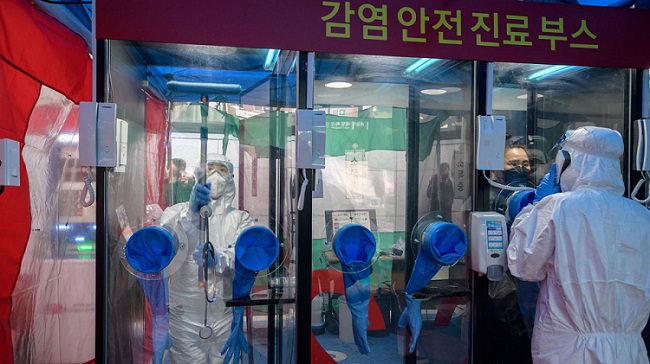
One of the highly regarded South Korea’s strategies against COVID-19 outbreak is its fast, early, and universal test and treatment. At the beginning of spread, the administrative control tower, Korea Center for Disease Control and Prevention (KCDC), rapidly outsourced development of the diagnostic kit to private companies and came up with creative and effective testing centers like drive-through or walk-through centers to enact these measures. However, I would like to emphasize the other side rather than the speed or effectiveness. As the New York Times questioned that if the Korean model is transferable to other countries. Korean officials attribute their success to the unique nationalized universal health care system covering most of the test cost and treatment. From my observation as one of the international citizen suffering due to this Coronavirus turmoil in Korea, I strongly agree with the officials’ sayings. In essence, universal health care plays a pivotal role in leading the relative success in this battle. A profitable business in medicine and health science is often seized by private companies like in the famous US model. Some previous governments also tried to follow the US model because of the financial burden to the government budgets. But, the South Korean public were already aware of the benefits of a universal healthcare system so, thankfully, it could not proceed further.

Similar to the above mentioned contest in rights – privacy and public interest, the right to choose better quality treatment through privatization of healthcare system would be a reasonable argument, but this crisis has once again demonstrated that the right to get treated equally without any barriers as a citizen is much more critical than the privatized treatments.

Some people say that globally everyone shares the same feeling of grief from this unprecedented and even surreal situation. I believe every one person on earth should be secured from the invisible attack of viruses or whatsoever. Many country leaders declare that this time is like the wartime. Yes, we are fighting together against the same enemy, and it has been providing us with costly lessons about what to be the number one priority to all humanity.

Instead of fighting Coronavirus, Pakistan is arresting doctors in Balochistan: BNM

Pakistan is the only country in the world that is arresting and persecuting doctors for demanding PPEs (Personal Protective Equipment). Enforced disappearances, killing of innocent Baloch people in state custody, ground and aerial bombardment and military operations by the Pakistan Army on a daily basis has already put Balochistan in a crisis like situation, which is not very different from Coronavirus. But this pandemic has further compounded the hardships of people across Balochistan.

The central spokesperson of Baloch National Movement has condemned the arrest and use of force against the doctors in Quetta, Balochistan. “We have been experiencing brute colonial behavior and enmity of Pakistan against Baloch nation and we have said from day one that Pakistan would use the Coronavirus pandemic against Balochistan,” the spokesperson said.

The BNM spokesperson added that the arrest of doctors, who were asking for their due demands, confirms their concerns. “When we campaigned that Pakistan would use the Coronavirus as a biological weapon against the Baloch nation, we received harsh criticism that it’s a natural calamity and our criticism (of Pakistan) was not justified. The reality is that this is not political propaganda, rather it is a matter of our national identity.”

Pakistan is letting no stone unturned to harm Balochistan and add to the miseries of Baloch nation. “The earlier experiences of earthquake and floods are already known to us where the Pakistani state used these natural calamities to further its exploitation. The countries that took Coronavirus pandemic lightly, delayed in providing facilities or there was a lapse in their governance which caused problems for citizens, then the heads of those states asked for forgiveness from their ciizens. But Pakistan is not only willfully spreading the Coronavirus in Balochistan but also treating the medical staff with brutality and has crossed all limits of barbarities,” the spokesperson added.

The civilized world is not only standing like an iron wall against the Coronavirus but also paying respect to doctors and healthcare professionals. In contrast, Pakistan is using brute force against doctors in Balochistan.

The spokesperson further added that Balochistan depicts the milieu of medieval age, but in these times of Coronavirus outbreak establishment of tent villages as quarantine center, severe lack of medical equipment, test kits and Personal Protective Equipment (PPE) exposes the false claims of parliamentarian parties who have surrendered their will before Pakistan. Though enforced disappearances in Balochistan, illegal killings in state custody, ground and aerial bombardment and military operations on a daily basis, Pakistan has already put Balochistan under severe distress. But this pandemic has added to the miseries of Baloch nation.

The doctors of Balochistan are not demanding any luxury or extra allowance; rather their demands are rational and are asking for medical facilities and PPE. For this, Baloch doctors are being beaten and arrested. Pakistan is the only country in the world that is arresting and persecuting doctors for demanding protective kits. Pakistan has only made loud noises about social distancing but in reality it has locked up dozens of doctors in a small and congested cell. “Whereas Punjab (the godfather of Pakistan), due to rising fear of Coronavirus pandemic has released hundreds of prisoners,” the BNM spokesperson said.

The entire world knows that Personal Protective Equipment (PPE) is the first and foremost requirement in the fight against Coronavirus outbreak. And the Balochistan doctors came out to protest when 13 doctors have already been infected with the Coronavirus. “Denying Balochistan doctors the basic PPE requirements is a devious strategy of Pakistan such that it wants that Baloch doctors go on a strike and people infected with Coronavirus remain unattended. In this way, the Pakistani state can prove itself innocent and keep increasing its brutal genocide on Balochistan by use of this new tactic,” explained the spokesperson.

Doctors and other medical staff are the front soldiers in this fight against Coronavirus pandemic. In such a state their protection should be on top priority. The promises from puppet governments of Pakistan are only to gain the goodwill of their masters and to deceive the poor people of Balochistan. This is the prime proof of slavery in Balochistan. Such treatment to the Baloch nation in this time of pandemic is continuation of Pakistan’s same policy of illegal occupation over Balochistan for the last seven decades. These measures from Pakistan, make it clear that Pakistan is bent upon using each opportunity to prolong the genocide in Baloch nation. Coronavirus is a biological weapon for Pakistan its using it against the Baloch nation and the Pakistani state machinery has put all human values aside and is engaging in barbarity in Balochistan.