Home Blog Page 374

J&K: Indian Army’s civilian outreach to fight Coronavirus emulates national spirit

Jammu & Kashmir and Ladakh are facing their own set of challenges while combating the COVID-19 (Corona/Chinese Virus). While there was worry about Ladakh earlier, now Kashmir is emerging as the cause of concern. Ladakh, of course,  is not completely out of the danger zone, one infection case has come up in district Kargil on April 2, around 13 days after the last case was identified. The process of Quarantine and isolation will have to continue over there.

Jammu and Kashmir has recorded more than 60 active cases with nearly 50 reported in Kashmir alone. The high number in Kashmir is due to many people having been out of the state when the virus broke out. Sadly, a large number among them did not go into self isolation and also hid their travel history; as a result now 17,041 people are under active surveillance. It is to the credit of the state administration that it has in place a very effective contact tracing system that is controlling the spread to a great degree.

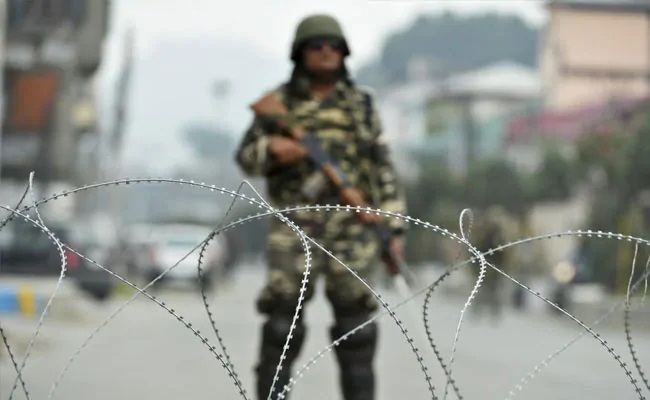
The Indian Army is keeping alive it tryst with people of Jammu and Kashmir and Ladakh by coming forward unilaterally to assist in every manner possible. Indian Army formations in the two Union Territories are providing all infrastructure and facilities that the administration requires to boost its resources. Representatives of the Indian Army are regularly attending multi-agency meetings to remain conversant with the response mechanism. Sustenance assistance in terms of rations, basic medicines, water, transportation, airlift etc is being provided seamlessly, without involvement of red tape, requisitions etc.

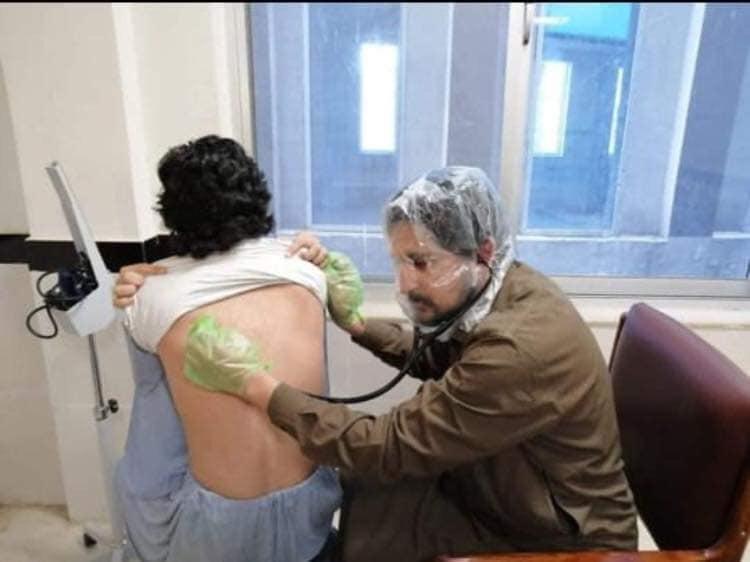
Army doctors are carrying out regular interaction with civilian medical authorities to work out modalities for management of the COVID-19 and non-COVID-19 patients. Plans for segregation of hospitals are being worked out jointly.  The army is in a quiet sure footed manner, preparing to meet the possibility of a quarantine surge with creation of facilities in anticipation. It is being termed as the crisis expansion protocol. The Indian Army has also created modified protective kits thorough its famed innovation resourcefulness.

Indian Army’s biggest contribution is in creating awareness on measure to be adopted to avoid infection. It has in place a number of Hash Tags, like #StayHomeStaySafe; #OpNamaste #CoronaMuktAwam among others with which it passes simple, pithy and easily understandable messages. Great effort is being put in to adapt the advisories with multi-media sources ranging from videos and  audios in social media (WhatsApp, Twitter Facebook et al) to brochures, pamphlets, banners and leaflets etc. Public Address systems, local Cable TV systems and Hailers are being used to spread the message, especially so, among own troops and families.

A good method of convincing the people to adhere to the norms is emphasizing that these form part of the “Best Practices” evolved by the Indian Army for itself. Videos on these best practices are being shown in various forums. Senior army medical officers in uniform are recording videos explaining the basics of the Coronavirus and steps required to be taken to avoid infection.

The campaign has an added advantage of being initiated by the Indian Army, an institution on which the people, especially in Kashmir, repose a high degree of trust and confidence. It is being taken very seriously by the people. In view of it scale, reach and trust factor, the campaign is turning out to be very successful.

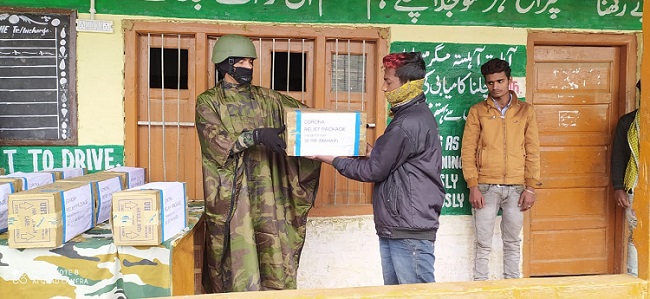
Indian Army has also identified such people of the labour and daily wagers class who need support and made for them provision of ration, water soap, sanitizers, masks and all other items required to pass through these difficult times. Among these are migrant labour from other states who are in dire need of assistance. The assistance is being given after application of all social distancing norms prescribed by the medical authorities.

While the most needy are being given special attention, others in need are not being ignored; helpline numbers have been prominently displayed and given to all government offices and community leaders, any call for assistance is promptly responded to. After taking all precautions, Army Khariat (well being) Patrols are being sent to civilian areas for checking out that all is well.

The need to preserve water, whose use it gaining epic proportions due to frequent hand washing, is another core area that the army is focusing on. Within the service, methodologies have been laid out to offset the extra and essential use by preserving from the non-essentials. A concerted attempt is being made to sensitize the people in this regard.

Indian Aarmy is also running many education initiatives from the Goodwill Schools to Super-30 and similar porgrammes. In order to ensure that education does not suffer, an attempt is being made to provide access to the students to digital learning applications. In a novel initiative, the Srinagar-based Chinar Corps has collaborated with @extramarks & @iDreams for ensuring unimpeded academic pursuits for the students of Kashmir.

The army is alive to the fact that the Coronavirus spread within would have serious repercussions. It is for this reason that assistance is being provided to the civil administration only after taking all prescribed medical precautions. Internally, the army has evolved extensive procedures for safety of all ranks and families. These are being assiduously followed in unit lines, offices, formation headquarters and all other essential institutions. Institutions like canteens and shopping centres, without which normal life is possible, have been shut down altogether.

The world is at the receiving end of the biggest challenge of the century as posed by the COVID-19. Ultimately, human spirit will prevail and things will  get back to normal. When that happens, it is the manner in which people helped each other that will be remembered. India is putting up a valiant fight, which has resulted in the lowest numbers of deaths in this highly populous country. The spirit being exhibited in Jammu and Kashmir and Ladakh by the people and the Indian Army soldiers is praiseworthy emulates the spirit of India.

Coronavirus spread in POK poses direct threat to Kashmir

Coronavirus is a global pandemic, and COVID-19–the disease caused due to this novel virus, causes respiratory problems. There is no prescribed treatment or vaccine for this disease. This virus originated from China and spread to 180 countries across world; it has been declared a “Pandemic” by the World Health Organisation (WHO). The severity of this pandemic can be gauged from the fact that as on date, nearly 1,699,631 people have tested positive while 102,734 have succumbed due to this fatal disease. Most affected countries are Spain, Italy, China, Iran and the United States of America where death toll is very high.

India also faces the wrath of this novel Coronavirus which till now has claimed 249 lives, and the number of people testing positive is surging with every passing day. The newly created Union territories of Jammu and Kashmir as well as Ladakh too have recorded more than 106 positive cases and recorded two fatalities.

Pakistan is also in the throes of Coronavirus infection which is spreading at a very fast pace over there. China is Pakistan’s “all weather friend” and has strong diplomatic and business relations with it. CPEC (China-Pakistan Economic Corridor) is the big joint venture between the two in which thousands of Chinese employees are working inside Pakistan. These Chinese technicians and labourers make frequent trips to their country for meeting their families or for some job-related work. Since China has been one of the most severely hit countries by this novel Coronavirus, it’s but natural that the massive workforce working on CPEC projects would have brought along this virus while returning from mainland China. Since Pakistan did not go in for a ‘lockdown’ option like India, there is just no possibility that locals in Pakistan-occupied Kashmir (POK) and Gilgit-Baltistan (GB) could have saved themselves from contracting the Coronavirus.

Pakistan Army has set up quarantine camps in POK and Gilgit-Baltistan but it has done so only after Coronavirus pandemic has spread all over. To make matters worse, Pakistan Army have shifted positive cases of Coronavirus infection to POK due to which this pandemic is likely to go out of control. The locals have expressed their unhappiness by coming out on the streets and protesting. In any case, since the idea of shifting positive Coronavirus cases into POK is that of the Pakistan Army and not the Imran Khan government, no amount of objection will make the army reverse its decision!

There are very reliable reports that Pakistan Army has already starting moving positive cases of Coronavirus into POK and due to a large number of patients and limited facilities, the overall situation there is not very good. This becomes a matter of very serious concern for the people of Kashmir because the Coronavirus will also infect militants staying in launch pads situated inside the POK and when they infiltrate across the LoC and enter Kashmir, they will bring this virus into the valley with them.

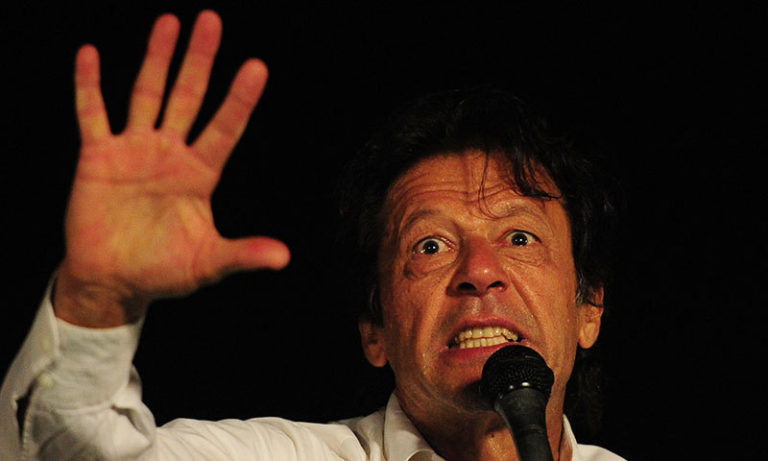
Thus, while on the one hand Imran Khan is expressing concern about Coronavirus spreading in Kashmir and even asking UN and global community to intervene, the Pakistan Army is hell-bent on sending Coronavirus infected militants into Kashmir and further aggravating the problems here!

The fear of Coronavirus infection reaching us from across the LoC isn’t hypothetical, it’s real. Just days ago, the Indian Army thwarted an infiltration bid by killing five militants on the LoC in the Kupwara sector of Kashmir. Such men are likely to be active carriers of the virus that remains dormant in healthy people but is prevalent all the same.

What makes infection being spread by militants even more worrisome is that in order to avoid being identified by security forces, militants will not go to hospitals for check-ups and if they get infected, they cannot be kept in isolation and under medical supervision. Thus, even if one militant gets Coronavirus, he will not only infect his comrades but also the people he comes in contact with and this transmission of the virus will continue till he is alive.

US will soon begin the process to withdraw its troops from Afghanistan and the pulling out of soldiers will have direct implications in the Kashmir Valley since militants will feel emboldened to cross over on to the eastern border. This is worrisome for both for government of India as well as for the people of Kashmir.

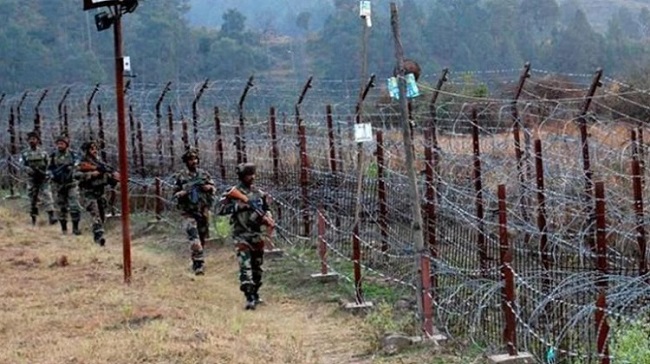
Luckily, the Indian army is seized with this problem and has enhanced vigil along the LoC so that infiltrators are not able to infiltrate and enter Kashmir, but the danger persists. The Indian Army has also launched a multi-pronged campaign to reach out to people in remote, rural and urban areas of Jammu and Kashmir and educate and assist them in the fight against Coronavirus. As part of the campaign titled “Jointly we will put an end to Corona,” distribution of pamphlets, masks, sanitizers and also ration is being done besides installation of hand wash facilities. Indian Army’s gesture was very well received and appreciated by the local populace.

The world is at receiving end due to this biggest challenge of the century as posed due to COVID-19. Ultimately, human spirit will prevail and things will get back to normal. When that happens, it is the manner in which people helped each other that will be remembered. India is putting up a valiant fight, which has resulted in the lowest number of deaths in this highly populous country. This spirit being exhibited in Jammu and Kashmir and Ladakh by the people that emulates the spirit of India. Under these testing circumstances a well conceived political outreach and empowerment of the civil society aided and abetted by New Delhi is necessary.

An Open Letter to Prime Minister Imran Khan on Covid-19 & Kashmir

Dear Imran Khan sahib,
I must admit that while your recent statement “My worry is poverty and hunger,” made during The Associated Press interview really impressed me, the humility and grace with which you accepted the reality of Pakistan being a “very vulnerable” country in terms of economy, won over my heart. But it was the enthusiasm with which you voluntarily donned the mantle of an ambassador representing countries with fragile economies and asking the world community to “think of some sort of a debt write-off” due to Covid-19 pandemic, made me a big fan of yours. I recall with great awe, how after New Delhi abrogated Article 370 of the Indian constitution, you announced that you would henceforth serve as “Kashmir ka safir” (ambassador of Kashmir).

What’s really remarkable is your penchant for taking up cudgels for those whom you think have been forsaken by the cruel world of today in which we live!

No nation would have ever riled against another country’s decision to amend its own constitution, but you have done so and even when no one stood by Pakistan on this issue, rather than being embarrassed and losing heart, you as Kashmir’s ‘safir’ boldly declared that “whether the world is with the Kashmiris or not, we are standing with them.” Your much publicized attempt to get UNSC to compel India to restore status quo ante on Article 370 may have failed miserably, but yet it didn’t dampen your indomitable spirit; you had to abandon your plans to approach the International Court of Justice against revocation of Article 370 once your attorney told you that he saw no merit in the case, but you swallowed your pride and stood your ground.

But the most impressive thing is that despite your humungous responsibilities as Prime Minister Pakistan, you still take your self-assumed role of Kashmir’s ambassador very-very seriously!

I say so because while the burgeoning Covid-19 crisis in Pakistan and the resultant fallout and chaos doesn’t seem to be unduly worrying or giving you sleepless nights, recurring nightmares about an imaginary and imminent apocalypse in Kashmir is surely nagging you, day in and day out! What’s really touching is that even though your 800 odd students stuck in Wuhan, (which was the epicentre of Covid-19 pandemic) kept making frantic appeals for been brought back home, their cries and demeaning statements like ‘learn from India, shame on you’ didn’t upset you, but the lockdown in Kashmir surely did!

Similarly, you didn’t become hyper when people of Balochistan kept on complaining about lack of medical facilities to screen people for Covid-19 and the abysmal living conditions in the Taftan quarantine camp, which was even highlighted by the international media.

But while your detractors may criticize you for your tardy domestic responses on Covid-19 related issues, even your biggest critic cannot accuse you of abandoning the people of Kashmir as your Foreign Office didn’t for even a moment stop its “Pakistan urges India to lift the blockade in the region (J&K)” and asking the international community to press New Delhi into “lifting of communication restrictions and allowing unfettered access to medical and other essential supplies.”

Even when it came to the SAARC heads of state putting their minds together and working out modalities for a coordinated response to the Covid-19 pandemic, you showed your solidarity for the people of Kashmir by wangling out and nominating Health Minister Zafar Mirza to represent you. But while you may have absented yourself, you still ensured that Kashmir is somehow brought into the discussion. However, I must admit that I was a bit disappointed by the unimaginative way in which it was raised because what you thought would prove to be a ‘show stopper’ turned instead into a ‘non-issue’!

While Pakistan may be the only member state that hasn’t contributed to SAARC Covid-19 Emergency Fund, but that’s acceptable since it is (by your admission) a “very vulnerable” country. So, rather than feeling shy, Pakistan must use this fact to extract a very generous amount from this fund and no one would mind as yours is the only country within SAARC group of nations that falls in the “very vulnerable” category.

At the same time, while the old ‘extraordinary times call for extraordinary measures’ adage justifies begging for funds and assistance from all and sundry, but accepting even a single Rupee from India would not only be ‘haraam’ (forbidden) but also an affront to the people of Kashmir. So, as an afterthought, you may reconsider taking monetary assistance from the SAARC Covid-19 Emergency Fund as the bulk of it ($10 million or 53%, to be precise) comes from the land of ‘kafirs’ (non-believers)!

I end with my deep appreciation of your innate ability of not letting domestic problems overshadow your commitment to the people of Kashmir, even if it is unsolicited and hasn’t yielded any positive results whatsoever.

With highest regards,

Your Ardent “Fan”,
Nilesh Kunwar

COVID-19: Right to Privacy vs. Right to Speedy Treatment

Year 2020 will be remembered as the monumental year for everyone across the world. A seamless connection among countries in the globe stimulated the rapid spread of a contagious Coronavirus and the disease caused by it– officially termed as COVID-19, halting almost every global citizen’s daily life.

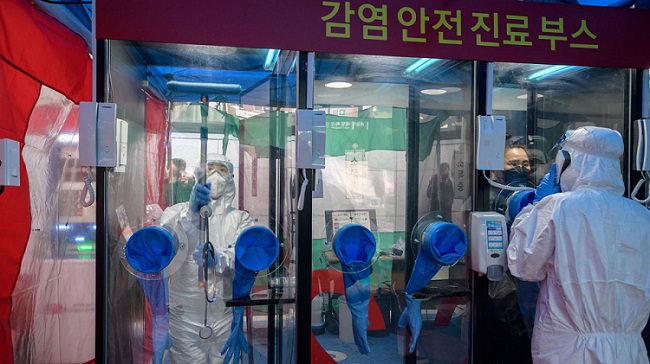
I am one of them, trying to do my best to be voluntarily quarantined and maintain a social distance in public spaces. South Korea, where I live, had the second highest number of patients after China in February. Strangely, despite this mysterious virus’ import the public did not fear or panic about this catastrophe. Instead, people in South Korea put their trust in the healthcare authorities, experts and in the government’s measures.

For sure, it’s still too early to hail the South Korean government’s effort to stop the spread of Coronavirus. Still, the country’s strategies have been highly applauded by the Western countries such as the US, Canada and France, and also by the WHO. There are so many news reports that came out within last two weeks from the US which were positive and talked about how well South Korea paved its way to prevent the wildfire of a nationwide contagion. Positive tones are still dominant in the international media’s coverage that talk about South Korea as a model country for Coronavirus prevention strategy. Yet, there are voices that talk about ignored individual rights. For example, most European countries are careful in terms of revealing a confirmed case’s private information that can be tracked.

Many pundits have maintained, via a wide range of channels, that this year’s Coronavirus disaster will affect many aspects of society in the afterward. Amongst them, I would like to stress the disruption of fundamental human rights as protective concepts in democratic countries. The South Korean model is summarized in three terms, “trace, test and treat.” I would also like to discuss three types of contested human rights in the crisis times of COVID-19. Even a BBC report discussed about these issues.

Tracing: Public Interest Defense vs. Privacy Protection

The concerns about violation of one’s privacy were raised in both domestic and abroad quarters. Domestically the National Human Rights Commission of Korea argued that the detailed information about a patients’ location could undermine their rights of privacy protection. To illustrate, the initial stage of spreading in early March, the third confirmed case’s tracking information were widely reported through the mainstream media, and the patient had to be in suffering from the unchecked rumors about his private life. Germany, for instance, has recently discussed the Singaporean style Coronavirus tracking application. It should heat the discussion that there are so many European citizens who are feeling very uncomfortable about invading their privacy, and actually, it violated the related EU’s privacy law. However, as the spread of the Coronavirus is uncontrollable, public interest defense is treated more importantly than individual privacy, which is very unusual in liberal democratic countries like most of the West and North European countries. Some experts warn that authoritarian control could be abused, and actually, Russia and the Philippines’ draconian and charismatic leaders executed their stringent measures invading human rights.

Testing and Treatment: Universal Health Care vs. Privatized Health Care   

One of the highly regarded South Korea’s strategies against COVID-19 outbreak is its fast, early, and universal test and treatment. At the beginning of spread, the administrative control tower, Korea Center for Disease Control and Prevention (KCDC), rapidly outsourced development of the diagnostic kit to private companies and came up with creative and effective testing centers like drive-through or walk-through centers to enact these measures. However, I would like to emphasize the other side rather than the speed or effectiveness. As the New York Times questioned that if the Korean model is transferable to other countries. Korean officials attribute their success to the unique nationalized universal health care system covering most of the test cost and treatment. From my observation as one of the international citizen suffering due to this Coronavirus turmoil in Korea, I strongly agree with the officials’ sayings. In essence, universal health care plays a pivotal role in leading the relative success in this battle. A profitable business in medicine and health science is often seized by private companies like in the famous US model. Some previous governments also tried to follow the US model because of the financial burden to the government budgets. But, the South Korean public were already aware of the benefits of a universal healthcare system so, thankfully, it could not proceed further.

Similar to the above mentioned contest in rights – privacy and public interest, the right to choose better quality treatment through privatization of healthcare system would be a reasonable argument, but this crisis has once again demonstrated that the right to get treated equally without any barriers as a citizen is much more critical than the privatized treatments.

Some people say that globally everyone shares the same feeling of grief from this unprecedented and even surreal situation. I believe every one person on earth should be secured from the invisible attack of viruses or whatsoever. Many country leaders declare that this time is like the wartime. Yes, we are fighting together against the same enemy, and it has been providing us with costly lessons about what to be the number one priority to all humanity.

Instead of fighting Coronavirus, Pakistan is arresting doctors in Balochistan: BNM

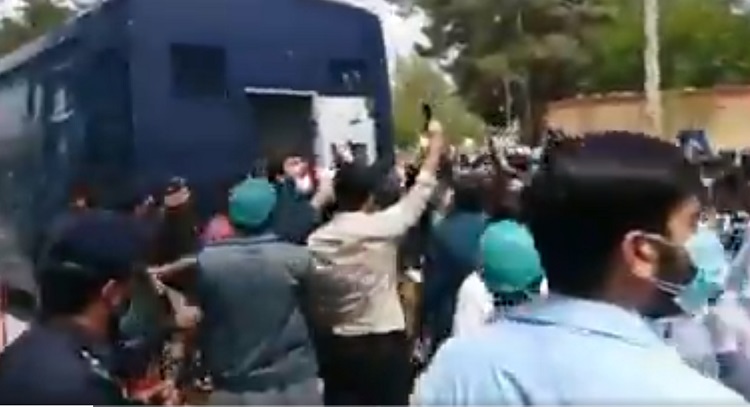
Pakistan is the only country in the world that is arresting and persecuting doctors for demanding PPEs (Personal Protective Equipment). Enforced disappearances, killing of innocent Baloch people in state custody, ground and aerial bombardment and military operations by the Pakistan Army on a daily basis has already put Balochistan in a crisis like situation, which is not very different from Coronavirus. But this pandemic has further compounded the hardships of people across Balochistan.

The central spokesperson of Baloch National Movement has condemned the arrest and use of force against the doctors in Quetta, Balochistan. “We have been experiencing brute colonial behavior and enmity of Pakistan against Baloch nation and we have said from day one that Pakistan would use the Coronavirus pandemic against Balochistan,” the spokesperson said.

The BNM spokesperson added that the arrest of doctors, who were asking for their due demands, confirms their concerns. “When we campaigned that Pakistan would use the Coronavirus as a biological weapon against the Baloch nation, we received harsh criticism that it’s a natural calamity and our criticism (of Pakistan) was not justified. The reality is that this is not political propaganda, rather it is a matter of our national identity.”

Pakistan is letting no stone unturned to harm Balochistan and add to the miseries of Baloch nation. “The earlier experiences of earthquake and floods are already known to us where the Pakistani state used these natural calamities to further its exploitation. The countries that took Coronavirus pandemic lightly, delayed in providing facilities or there was a lapse in their governance which caused problems for citizens, then the heads of those states asked for forgiveness from their ciizens. But Pakistan is not only willfully spreading the Coronavirus in Balochistan but also treating the medical staff with brutality and has crossed all limits of barbarities,” the spokesperson added.

The civilized world is not only standing like an iron wall against the Coronavirus but also paying respect to doctors and healthcare professionals. In contrast, Pakistan is using brute force against doctors in Balochistan.

The spokesperson further added that Balochistan depicts the milieu of medieval age, but in these times of Coronavirus outbreak establishment of tent villages as quarantine center, severe lack of medical equipment, test kits and Personal Protective Equipment (PPE) exposes the false claims of parliamentarian parties who have surrendered their will before Pakistan. Though enforced disappearances in Balochistan, illegal killings in state custody, ground and aerial bombardment and military operations on a daily basis, Pakistan has already put Balochistan under severe distress. But this pandemic has added to the miseries of Baloch nation.

The doctors of Balochistan are not demanding any luxury or extra allowance; rather their demands are rational and are asking for medical facilities and PPE. For this, Baloch doctors are being beaten and arrested. Pakistan is the only country in the world that is arresting and persecuting doctors for demanding protective kits. Pakistan has only made loud noises about social distancing but in reality it has locked up dozens of doctors in a small and congested cell. “Whereas Punjab (the godfather of Pakistan), due to rising fear of Coronavirus pandemic has released hundreds of prisoners,” the BNM spokesperson said.

The entire world knows that Personal Protective Equipment (PPE) is the first and foremost requirement in the fight against Coronavirus outbreak. And the Balochistan doctors came out to protest when 13 doctors have already been infected with the Coronavirus. “Denying Balochistan doctors the basic PPE requirements is a devious strategy of Pakistan such that it wants that Baloch doctors go on a strike and people infected with Coronavirus remain unattended. In this way, the Pakistani state can prove itself innocent and keep increasing its brutal genocide on Balochistan by use of this new tactic,” explained the spokesperson.

Doctors and other medical staff are the front soldiers in this fight against Coronavirus pandemic. In such a state their protection should be on top priority. The promises from puppet governments of Pakistan are only to gain the goodwill of their masters and to deceive the poor people of Balochistan. This is the prime proof of slavery in Balochistan. Such treatment to the Baloch nation in this time of pandemic is continuation of Pakistan’s same policy of illegal occupation over Balochistan for the last seven decades. These measures from Pakistan, make it clear that Pakistan is bent upon using each opportunity to prolong the genocide in Baloch nation. Coronavirus is a biological weapon for Pakistan its using it against the Baloch nation and the Pakistani state machinery has put all human values aside and is engaging in barbarity in Balochistan.

Tablighi Jamaat’s journey from Da’wa to Coronavirus

“The Tablighi Jamaat had in 2010 over 80 million followers spread out over more than 150 countries. The exact numbers are difficult to track because the Jamaat doesn’t follow a centralized system,” wrote the Pew Research Center’s Religion and Public Life Project in Washington.

Da’wa meaning invitation to faith and jihad meaning struggle for enforcing faith are central to Islamic teachings. Da’wa is Islamic mission sanctioned by the Holy Prophet in his lifetime.  Muslims made it a part of their political theory by relating da’wa to jihad. The concept of da’wa got integrated into their political agendas. Taken in general, the intertwining of da’wa and politics, then, has been a feature throughout Muslim history. Iranian theocratic regime, for example, has a separate Ministry of al Da’wa wal Ershad.

Background

In 1926, the Deoband alumni, Maulana Muhammad Ilyas Khan Kandhalwi, descending from a proselytized Mewati Rajput Hindu family pioneered a “non-political and entirely a social-religious” movement for spreading true faith by strictly adhering to the Islamic principles, traditions and rituals laid down by the Prophet Muhammad, and following his lifestyle.

Its goal is to create the “golden age” of Islam (Khilafat) through invitation (tabligh) to nominal Muslims to return to the six pillars of Islam, as espoused by Prophet Muhammad, wrote Lamia Karim of Berkley Centre of George Town University in May 2014.

Caricature of the member of Tablighi Jamaat

Focusing on return to primary Sunni Islam, particularly in matters of rituals, attires, and personal behaviour, Tablighi Jamaat urges concentration on six pillars — kalima (belief in the oneness of Allah), salah (daily prayers), ilm and zikr (remembrance of Allah and fellowship), ikraam-e-Muslim (to treat fellow Muslims with respect), tas’hih-i-niyyat (to reform and devote one’s life to Islamic ideals), and da’wa (to preach the message of Allah).

The “secularists” and the urban liberals are disposed to theorize that the movement began as an effort to counter the activities of Hindu revivalists in India who, at the time, were allegedly attempting to convert Muslims back to Hinduism.

“Worried that existing Islamic educational institutions were not capable of fending off the Hindu challenge, Ilyas envisioned a movement that would send missionaries to villages to instill Muslims with core Islamic values,” said the Pew report. This could be a reference to the Arya Samaj movement (founded in 1875) of Hindu India initiated by Swami Dayanand Saraswati. A comparative but dispassionate study will show that Arya Samaj had embarked on a total reformation of Hinduism from deeply embedded ritualistic and idolatrous practices to pure Vedic traditions. It was reformation and neither propagation nor proliferation. On the other hand, the Tablighi movement is a large scale initiative for spreading Islamic faith and fourteen-centuries-old Islamic ways of life in letter and in spirit, albeit without taking apparent recourse to politics or proselytizing venture.

What prompted the Tablighi Jamaat movement?

It appears the founder of Tablighi Jamaat movement was prompted by two factors to undertake the initiative. One was that after receiving education at Deoband, he came to understand that his community people, Mewatis, being originally Hindu Rajputs, had still retained traces of their original faith (Hinduism). It offended him.

The second was that the fears of Muslim disunity were aroused by decline of Ottoman Empire — the pre-eminent Islamic power of whose Sultan, the Caliph, was seen by pan-Islamists as the leader of worldwide Muslim community. The caliphate was endangered first by Italian attacks (1911) followed by the Balkan war (1912–13), and later by the empire’s-defeat and decline in World War-I (1914–18).

In India, Ali brothers supported by the Congress stalwart Maulana Abul Kalam Azad, vigorously campaigned for the Ottoman Caliphate. It found great moral support when Gandhi leading the Non-Cooperation Movement against the British Raj pledged his own and of Congress’ support to the retrograde concept called Khilafat movement. In 1920 this movement suffered moral defeat by the ḥijrat (exodus) of about 18,000 Indian Muslim peasants to Kabul as they felt that India was an apostate land. It was also tarnished by the Muslim Malabar rebellion in South India in 1921. Gandhi’s suspension of his movement and his arrest in March 1922 further weakened the Khilafat movement. After driving away the Greeks from Asia Minor in 1922, Mustafa Kamal deposed the Turkish Sultan Mehmed-VI in the same year. The movement finally collapsed when Kamal Atatürk abolished the Caliphate altogether in 1924.

This shows that the Tablighi Jamaat movement symbolized reaction to crumbling Muslim centrality in the early years of the 20th century and an expression of its solicitation for the revival of moral Islam. It sprang from the gloom that had engulfed the Islamic world with emaciated Ottoman Caliphate and Gandhi and Congress trying to pilot a sinking ship. This also explains what the cliché like rituals, customs, lifestyle dress code etc. in the Tablighi concept means.

Apolitical Strategy

It is true that during its formative stages the Tablighi Jamaat insisted on remaining apolitical, obviously with an implicit purpose. The organization has been insisting on its global reach and not restricted to India. Muslims are found in at least 153 countries of the world. If the Tablighi Jamaat remained glued to any particular political ideology, it would have become difficult for it to open its fangs in the vast world and become the largest missionary movement in the annals of history. In particular, the liberal western societies would have been mistrustful of its intentions. The Tablighi Jamaat thus achieved unprecedented popularity across the globe and numerous important personalities in Pakistan like Lt. Gen. Javed Nasir, former chief of ISI and Pakistan Army General Mahmud Ahmed are among its members.

Tablighis are heavily criticized by militant Deobandi Islamists, such as the Taliban, Kashmiri militant groups, anti-Shiite sectarian militant groups and Jamiat-e- Ulema-i-Islam (JUI) for their apolitical stance. They are often criticized by orthodox religious authorities (ulema), such as Sunni Wahhabi ulema in Saudi Arabia, who have issued a fatwa prohibiting the Tablighis from preaching in the country or distributing Tablighi literature. The Wahhabi ulema have issued rulings declaring Tablighis to be deviants and forbidding participation in the Tablighi activities. 

Links to terrorist organizations?

Does Tablighi Jamaat have links with terrorist organizations or not, is an absorbing discussion. While pro-Tablighis swear by its apolitical standing, various western official and non-official agencies take it a fertile ground for providing fresh recruits to militant organizations for sabotaging democratic and secular ideologies.

Notwithstanding its claim to puritanical and apolitical Islamic movements, Tablighi Jamaat is largely reported to serve as a fertile ground for the growth of Islamic religious extremists. Emphatic hints of Tablighi Jamaat providing terrorist recruits to Al Qaeda and other Islamic militant groups are available in sections of media. Susan Sachs published a detailed piece The Truth is worth it in the New York Times of July 14, 2003, bringing about Tablighi Jamaat-Al Qaeda link. Paul Lewis authored an incisive piece titled Inside the Islamic Group accused by M15 and FBI in The Guardian of 19 August 2006 starting with the assertion, “The organization – influenced by a branch of Saudi Arabian Islam known as Wahhabism – has already been linked to two of the July 7 suicide bombers who attended a Tablighi mosque at the organization’s headquarters in Dewsbury, West Yorkshire. The jailed shoe bomber Richard Reid is also known to have attended Tablighi meeting.”

Spanish police conducted a series of raids on apartment buildings, a mosque and a prayer hall in Barcelona on Jan 19, seizing bomb-making materials and arresting 14 men who allegedly were planning to attack targets in the city. Spanish Interior Minister Alfredo Perez Rubalcaba said the detainees were Islamists belonging to a “well-organized group that had gone a step beyond radicalization.” A Muslim leader in Barcelona was quoted in some media reports as saying that the 14 suspects — 12 Pakistanis, an Indian and a Bangladeshi — were members of a “Pakistani-based group called Tablighi Jamaat.”

“After the collapse of Soviet Union in 1991, the movement made inroads into Central Asia. As of 2007, it was estimated that 10,000 Tablighi Jamaat members could be found in Kyrgyzstan that was largely driven by Pakistani members initially,” wrote Roter Igor on Eurasianet on 23 June 2007. In an FBI report, it was said that the terrorist plots and attacks on civilians that members of Tablighi Jamaat have been connected with include the Portland Seven, the Lackawanna Six, the 2006 trans-Atlantic aircraft plot, the 7/7 London bombings, the 2007 London car bombs, and 2007 Glasgow International Airport attack and 2007 Glasgow International Airport attack. According to French Tablighi expert Marc Gaborieau, its philosophy and transnational goals include the “planned conquest of the World.”

Tablighi Jamaat in Pakistan

Former Pakistan Prime Minister Nawaz Sharif’s father, a prominent Tablighi member and financier, helped Tablighi members take prominent political positions. In 1998, Muhammad Rafique Tarar, a Tablighi sympathiser, was made Pakistan’s President. In 1990, Lt. Gen. Javed Nasir assumed the powerful director-generalship of the ISI. In 1995, after Benazir Bhutto returned to the premiership, the Pakistani Army thwarted a coup attempt by several dozen high-ranking military officers and civilians, some of whom were members of the Tablighi Jamaat and some of whom also held membership in Harakatu’l Mujahedeen, which has been reported by the US State Department as a terrorist organization.

Tablighi Jamaat members in Pakistan

In January 2016, in what was “probably the first time that any restriction has been placed on Tablighi Jamaat” in Pakistan, the government (Punjab) banned preaching on university campuses and banned Tablighi Jamaat (and other non-students) from preaching and staying in campus hostels. Curiously, some university campuses in India have become hotbeds for the propagation of extremist Islam and related jihadist ideology.

Tablighi Jamaat and their role in Coronavirus pandemic

Coronavirus pandemic 2019-20 suddenly brought Tablighi Jamaat into the global limelight. At its 27 February to 1 March 2020 convention at the Sri Petaling Mosque in Kuala Lumpur, Malaysia, more than 600 persons contracted COVID-19 to become the largest-known centre of transmission of the Coronavirus in Southeast Asia. By 17 March 2020, most of the COVID-19 cases in Brunei, Singapore, Thailand and Cambodia traced their cases back to this Kuala Lampur convention.

Despite the outbreak of the virus, Tablighi Jamaat organized a second international mass gathering on 18 March in Gowa Regency. Though the Raiwind gathering near Lahore was called off, yet 150,000 returning Tablighis carried the virus with them including two cases in the Gaza Strip.

Tablighi Jamaat members being taken away to the quarantine centres.
Tablighi Markaz at Nizamuddin West in New Delhi is the epicentre for spread of COVID-19 across India. (Photo: PTI)

At the Tablighi Jamaat Markaz (Headquarter) Nizamuddin West locality in Delhi, weekly Tablighi congregations (ijtima) were held till March 21. Misusing their tourist visa facility, the foreign participants engaged themselves in missionary activities and did not take the stipulated 14-day home quarantine for travelers from abroad. At least 24 of them had tested positive for the virus among the 300 who showed symptoms by 31 March 2020. Preachers from Indonesia are believed to be the first carriers of the virus. Many had returned to their states carrying the virus with them and some provided refuge to foreign speakers without the knowledge of local governments resulting in local transmission as in Tamil Nadu, Telangana, Karnataka, Jammu & Kashmir and Assam. After evacuation from the markaz, of the scores of participants, 167 were quarantined in a railway facility in south-east Delhi. There were further complications after the staff at the quarantine facility reported that the Tabligh Jamaat followers misbehaved with the medical staff and spat at the doctors looking after them. Tablighi Jamaat gathering emerged as one of India’s major Coronavirus hotspots after 389 people linked to Tablighi Jamaat tested positive by 2 April 2020.

In the meanwhile, Delhi government ordered an FIR against Maulana Sa’ad head of Nizamuddin faction of the Tablighi Jamaat and others by Delhi Police Crime Branch under Section 3 (the penalty for offence) of the Epidemic Diseases Act of 1897 and Sections 269 (Negligent Act likely to spread infection of disease), 270 (Malignant Act likely to spread infection of disease), 271 (disobedience to quarantine rule) and 120b (punishment of criminal conspiracy) of the IPC. Since the country is observing lockdown as a precautionary measure to defeat the COVID -19, judicial processes of the FIRs filed by police may take a long time to process.

UNHCR abandons refugees registered as journalists and human rights activists in Nepal

Journalists, human rights activists and political activists are receiving stepmotherly treatment at the hands of United Nations High Commissioner for Refugees (UNHCR) Nepal during these unprecedented challenging times, when there’s worldwide lockdown due to the Coronavirus pandemic.

These human rights activists, journalists and political activists are duly registered with the UNHCR Nepal as urban refugees, and yet they have to face grave difficulties due to the lockdown to fight Coronavirus pandemic. This group of 20-22 urban refugees is finding it extremely difficult to sustain themselves and their family members since they have no means to buy food, they have no work permit and receive no monetary support from UNHCR Nepal to tide over these times of crisis.

It’s not that UNHCR Nepal is facing a paucity of funds, rather, UNHCR Nepal is making all efforts to help those refugees who have registered themselves with it as religiously persecuted refugees in Nepal. Around 600 religiously persecuted refugees have been registered with the UNHCR Nepal who have come in from Pakistan, Myanmar, Bangladesh and Sri Lanka. Sources told News Intervention that of the 600 ‘religiously persecuted’ refugees registered in UNHCR Nepal, around 370 are Pakistani Ahmadiyya Muslims, eleven are from Myanmar, four from Bangladesh and eighteen are from Sri Lanka. There are several Christian refugees as well in this group.

“A large number of refugees who have sought refuge in Nepal under religiously persecuted category came in due to economic hardship in their country of origin. They now own businesses and are economically well off,” a UN executive, speaking strictly on conditions of anonymity, told News Intervention.

The UNHCR Nepal did not respond to an email sent by News Intervention on this issue.

“We do not receive any financial support from UNHCR, nor food or shelter. Under normal circumstances we could manage it somehow but after this enforced lockdown to fight Coronavirus pandemic we simply do not know how long are we going to survive,” a human rights activist registered as a refugee with UNHCR said. Other human rights activist also told News Intervention that they do not understand why UNHCR gives a stepmotherly treatment to them when religious refugees receive a handsome monthly allowance, easy loans to start their own business and skill development courses.

Human rights activists, journalists and the political activists, who are now registered urban refugees, wish to have security, shelter and work permit so that they can sustain themselves and their family in Nepal. Yet even these basic requirements are not being fulfilled by the UNHCR Nepal.

In fact, the mandate of UNHCR is to ensure physical and legal protection of all urban refugees registered under it such that basic human rights of each refugee is protected while in Nepal. The UNHCR must also provide free access to basic healthcare and most importantly give a monthly subsistence allowance to all refugees.

It’s rather strange that UNHCR Nepal has been quite selective in doling out mandatory life saving assistance to the registered urban refugees. In the past, it offered undue favour upon several refugees registered under ‘religiously persecuted’ category by helping and expediting their resettlement to the developed Western nations.

“The manner in which some religiously persecuted refugees ‘resettled’ in the West must have raised suspicions and they (UNHCR) have now put a notice within their office premises that no refugee should pay any unaccounted cash to UNHCR Nepal executives to expedite their resettlement applications,” a political activist told News Intervention on conditions of anonymity.

Jihad of ‘Convenience’ in Kashmir

Those who have picked up the gun and are fighting government forces in Kashmir claim they are ‘Mujahideens’ (holy warriors) who are engaged in ‘jihad’ (holy war). But even though Islamabad tried to garner international support for this violent enterprise, it did so by portraying the same as “freedom struggle” and not as ‘jihad’ that is permitted in Islam. This is indeed very surprising because while Pakistan maintains that being an Islamic republic, its concern for ‘ummah’ (Muslim fraternity) in J&K, (and more recently even in other parts of India) is a mandatory religious duty, it still refuses to accept that the violence being perpetuated in J&K by its sponsored militants is ‘jihad’!

Even the 56-nation strong Organisation of Islamic Cooperation (OIC) hasn’t accepted what’s going on in J&K as ‘jihad’, and this raises the obvious question, “Why?” The answer isn’t very difficult to find. It’s because the so called ‘jihad’ in J&K violates the cardinal tenets of Islam. For example, in the Holy Quran it’s stated that “Whosoever kills an innocent person … it shall be as if he has killed all mankind.” Yet, the so called ‘Mujahideens’ in Kashmir have been doing just the opposite and in the last two weeks alone, four innocent and unarmed civilians have been shot dead by these self-anointed ‘Mujahideens’.

Some may argue that since it hasn’t been conclusively proved that ‘Mujahideen’ were behind these four killings, it would be wrong to blame them for these cold-blooded murders. Whereas it’s correct that the killers haven’t been identified, but then, who else could be behind these gruesome incidents? The ‘Mujahideens’ always shift blame on government forces and their favourite reasoning is that this is a ‘conspiracy’ against Kashmiris and the ‘freedom struggle’. But little do these dimwits realise that since such killings contradict the state’s claim that its writ runs in J&K, only a cretin could ever think of such a self-defeating ‘conspiracy’ that undermines authority of the government. Furthermore, why would government forces, which are leaving no stone unturned to win hearts and minds of the locals, be willing to axe their own feet by targeting them?

Au contraire, since summary ‘execution’ on mere suspicion of being a ‘mukhbir’ (informer) spreads terror amongst the locals and one doesn’t have to be a rocket scientist to discern who benefits from such acts!

However, for the sake of discussion, let’s still give the so called ‘Mujahideens’ benefit of doubt in the above-mentioned cases. But then comes the next question: How do they account for videos containing ‘confessions’ of young boys (and in one case, even a young woman) of their being ‘mukhbirs’, followed by their brutal execution type murders? Isn’t the circulation of such videos intended to terrorize locals against cooperating with the security forces? Or, do the so called ‘Mujahideens’ want the world to believe that security forces are such a bunch of morons who for the sake of trying to give the ‘freedom struggle’ a bad name and maligning ‘Mujahideens’ are willing to forego the crucial requirement of securing public confidence!

Those waging what they claim is ‘jihad’ in Kashmir defend murdering ‘informers’ by applying the skewed logic of ‘all’s fair in love and war’. But even if we for a moment accept this indefensible point of view, what do they have to say to justify their murdering religious and political personalities who had no links with the government or security forces?

Readers may recall that in 2011, senior Hurriyat leader Prof. Abdul Ghani Bhatt revealed that “(Abdul Ghani) Lone sahib, Mirwaiz Farooq and Prof. (Abdul Ahad) Wani were not killed by the army or the police. They were targeted by our own people.” This revelation once again raises question “Why?” After all, none of them were ‘mukhbirs’ working for the security forces nor serving as ‘agents’ of the government. In fact, they were all firm advocates fighting for the right to self determination.

So, did the so called ‘Mujahideen’ ever realise that by killing three innocent men, they had killed all mankind thrice?

But this isn’t all. After the cold-blooded murder of Jamiat-e-Ahli- Hadees (JAH), Maulvi Showkat Ahmad Shah, the Lashkar-e-Taiba (LeT) admitted that “Earlier we thought the Indian Army or its agencies killed Maulvi (Showkat Ahmad Shah) to defame the movement and create misgivings. We had not even imagined that the murderer would turn out to be our own men.” The LeT’s admission was not out of righteousness but due to compulsion.

Readers may recall that after the assassination of Maulvi Showkat, Hurriyat (M) Chairman Mirwaiz Umar Farook had announced that “The Hizbul-Mujahideen (HM) is conducting its own probe. The Lashkar-e-Taiba (LeT) had a function in Islamabad and they said that they would look into it. We too are not letting anybody off the hook. We are looking from New Delhi to Islamabad to Srinagar. Everybody is a suspect for us.”

So, LeT’s admission was just a face-saving effort and this group whose name in English translates to “army of the pure,” ironically has the blood of an innocent Maulvi on its hands and is also guilty of murdering all mankind!

The Holy Quran also stipulates that “If you hear of a plague in a land, then do not go into it. If it happens in land where you are, then do not go out of it,” and in his latest audio message released on April 1, Hizbul-Mujahideen operational commander Riyaz Naikoo has also referred to this edict. But the April 2 encounter that took place between security forces and a group of infiltrating militants in the Kupwara forests near the Line of Control (LoC) has proved that the Pakistan’s ISI (Inter-Services Intelligence) is blatantly violating Islamic teachings by continuing to push militants into Kashmir despite it being in the grip of a plague that we are referring to as Coronavirus.

Similarly, while Naikoo has talked a lot about isolation and social distancing, his own cadres are openly violating these instructions. In an encounter that took place in Hardmanguri area of Khur Batpora in Kulgam district on Saturday, four Hizbul-Mujahideen militants had taken refuge in a small house. By taking refuge in a small house, the militants (if infected) put its occupants at grave risk of contracting Covid-19. Alternatively, if anyone in the house was infected, then the militants could have contracted this virus and had they survived, there were bright chances of this virus being passed on by them to occupants of the next house where they would seek refuge.

But, Naikoo has not clarified whether his cadres are playing their role in preventing spread of this disease by avoiding contact with people and instead of taking shelter in houses, keeping away from villages and confining themselves to hideouts created away from inhabited areas.

Islamabad is claiming that Pakistan-occupied Kashmir (PoK) and Gilgit-Baltistan GB) have only 12 and 193 Covid-19 cases respectively. However, reliable sources have confirmed that these figures, especially those pertaining to PoK have been grossly understated and the reason for this is obvious. Facing severe public criticism for its decision to set up quarantine camps in PoK for accommodating suspect Covid-19 cases being brought in from other parts of the country, Islamabad is intentionally playing down the severity of this pandemic to give locals a ‘feel good’ sense.

With PoK becoming Pakistan’s national Covid-19 quarantine hub that will receive patients from all over the country, it is but natural that this pandemic will assume humongous proportions here, and in case ISI infiltrates terrorists from PoK into Kashmir, then incidents of this pandemic will undoubtedly skyrocket in Kashmir. Let’s not forget that those infiltrating into Kashmir will neither have the inclination, nor the luxury of ensuring isolation or social distancing. Since terrorists will continue using houses to hide-in and keep shifting frequently to avoid compromising their whereabouts, they will automatically become an extremely potent source for spreading the lethal Coronavirus.

But since Hizbul Mujahideen is only a proxy of the ISI and has no say, Riyaz Naikoo has cleverly avoided mention of this in his audio message on Coronavirus!

Lastly, these self-styled ‘Mujahids’ need to realise that this type of a sham in the name of ‘jihad’ that’s only insulting the religion is bound to fail since it goes against the very tenets of Islam! 

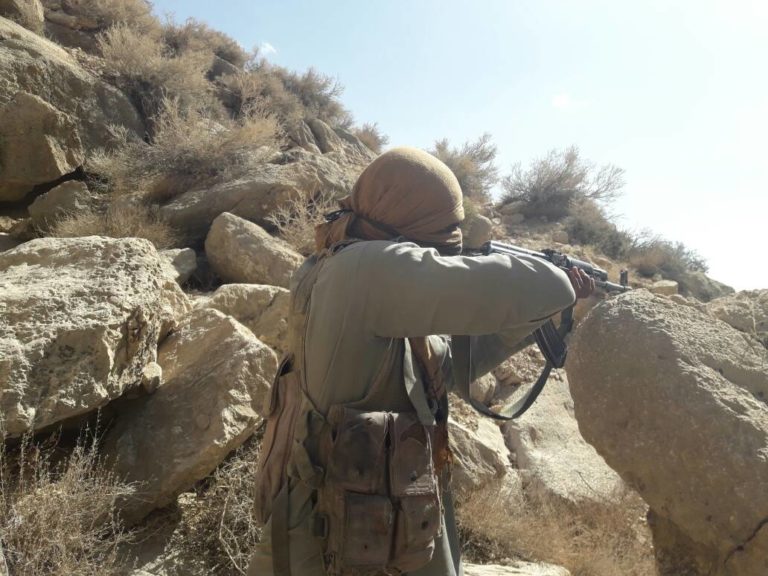
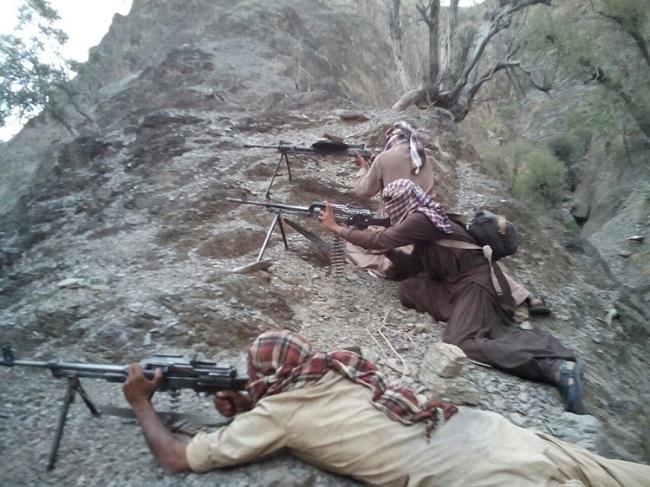
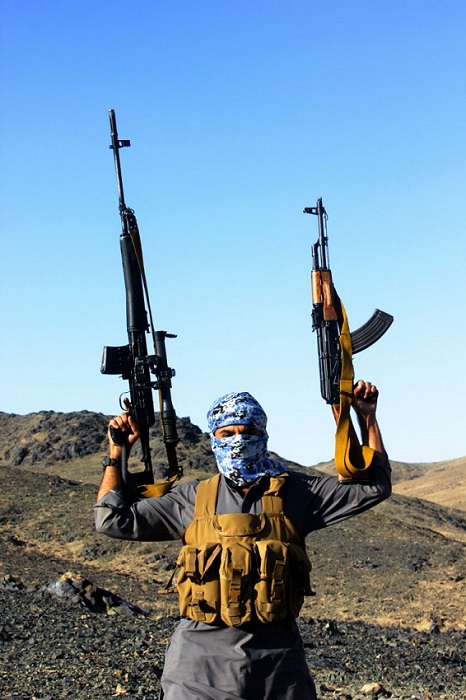
BLF freedom fighters attack Pakistani trucks loaded with looted Chromite

Balochistan Liberation Front (BLF) freedom fighters attacked Pakistani trucks on Friday, April 3rd that were loaded with Chromite looted from occupied Balochistan.

BLF spokesman Major Gwahram Baloch claimed responsibility for the attack on chromite-carrying trucks between Lesbela and Khuzdar districts in Balochistan.

Major Gwahram Baloch in his media statement said that the freedom fighters (Sarmachaars) of Balochistan targeted two trucks near Jani Kor (stream) at Wal-e-Patt area on Bela RCD Road around 6.30 PM on Friday evening. “These trucks were loaded with chromite of Balochistan. Both trucks were hit and burned,” Major Gwahram Baloch said.

Major Gwahram Baloch added that the plundering of resources of their motherland Balochistan is not acceptable to the Baloch people at any cost. “We make it clear that if the transport community were involved in the plunder, they will be responsible for their lives and property. Occupying Pakistani troops, Pakistani allies and facilitators exploiting the resources are on our target,” BLF spokesman said.

Kabul Gurdwara Attack: Foreign powers spreading vicious lies to create Sikh-Hindu rift

There are a large number of multi-media resources functioning across the world with a singular agenda of creating a rift between the Hindu and Sikh communities by resorting to despicable propaganda based on blatant lies and misinformation. One such organisation is 5K Broadcasting, a United Kingdom (UK) based so called “Media House” that has its office at 29 Saxon Grove, Leeds, LS175DY. In actuality, it is a one man entity run by one Swaran Bir Singh. An analysis of the content of its website makes it clear that the agenda of Swaran Bir Singh is to target the Indian leadership, including Prime Minister Narendra Modi, in a manner that creates ill will and mistrust within the Sikh community towards the socio-political ideology of the majority party of Indian government. He spouts venom and resorts to yellow journalism in the most obnoxious manner.

The terrorist attack on a Gurdwara at Kabul on 25th March, left 27 Sikhs, including women and children dead and many wounded. In an intolerable twist to this monumental tragedy, Swaran Bir Singh has released a video on Facebook titled: “ISIS or RAW — Who killed Afghan Sikhs,” from the platform of 5K Broadcasting in which he is making bizarre allegations of this attack having been carried out by the terrorist organisation Islamic State-Khorashan (IS-K) at the behest of Indian Intelligence Agency, Research & Analysis Wing (RAW). Singh further says that RAW acted on orders from the Rashtriya Syayamsevak Sangh (RSS).

This absolutely weird logic put forward by Swaran Singh runs as follows. “ISIS is funded by RAW; hence, ISIS attacks on Sikhs is supported by RAW; RAW is supported by the Indian government and the government is supported by RSS, hence, RSS is behind the attack on Sikhs in the Kabul Gurdwara.” Swaran Singh offers no proof for this absurd logic. He has no documentary or any other form of evidence to substantiate his claim. 

Anti-India propaganda on similar lines is also being done by Gopal Singh Chawla, a Pakistani Sikh who has links with Khalistani organisations and was earlier the President of Pakistan Gurdwara Prabandhak Committee. Chawla chose a news report about one of the terrorists involved in the Gurdwara attack being from Kerala as the primary tool for his vicious propaganda.

Abu Khalid Al-Hindi was identified by terrorist organisation ISIS as the one who carried out Kabul Gurdwara attack on March 25.

After the Kabul Gurudwara attack on March 26, the ISIS posted in its propaganda magazine Al Naba, the photograph of a terrorist whom they call “Abu Khalid Al-Hindi.” He has been identified as a radicalised Muslim youth  from Kerala whose actual name is Muhammad Muhsin. He left the country to join ISIS and was believed to have been killed in a Drone attack in Afghanistan last year.

In a You Tube video titled “Who is Master Mind Suicide Attack of Gurdwara Sahib Kabul?” uploaded on the Shahid Shabbar Official, Chawla has described this terrorist as the master mind of the attack and further espoused a disgusting theory that the person was trained as a terrorist in Kerala by the Indian government and then sent to Afghanistan to target Sikhs. He also openly alleged the RSS of being the perpetrator of this attack. He went on to emphasize that that Sikhs are the biggest well wishers of Muslims who reciprocate the sentiment in equal measure.

It is not difficult to identify a well laid out propaganda campaign behind the two similar messages emanating around the same time from two different parts of the world. While the first objective was to drive a wedge in the relationship between Sikhs and Hindus, the second was to move away focus from the fact that planning and execution of terror attack on Kabul Gurdwara was being traced back to Pakistan.

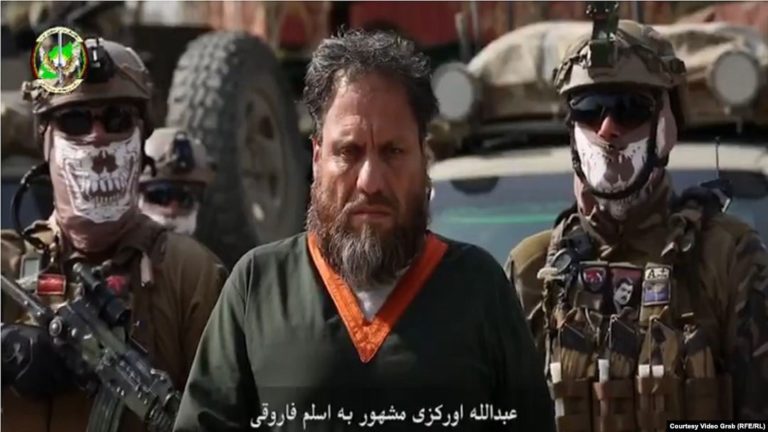
Statements by the government of Afghanistan suggest the hand of Pakistan- based Haqqani Network and also Pakistan-based terrorist organisation Lashkar-e-Toiba (LeT) in the attack. The leader of IS-K in Afghanistan is 43-year-old Mawlawi Aslam Farooqi, a Pakistani Pashtun who was initially recruited into the LeT in 2004. He was sent to Afghanistan in 2007 and ultimately transferred permanently to the ISIS. Hundreds of others from Pakistan terrorist organisations like the Lashkar-e-Jhangvi and Tehreek-e-Taliban Pakistan were also been similarly delegated to the ISIS. Farooqi became the head of IS-K  due to his roots in the LeT and the influence of Pakistan’s ISI on the ISIS.

It is quite apparent that Pakistan maintains links with all terrorist organisations operating in the Islamic world and provides to them trained manpower, shelter and strategic advice. When seen in this context the choice of a terror attack on a Sikh Gurdwara or a Hindu Temple in Afghanistan to further personal interests becomes understandable.

It is notable here that Hindus give as much reverence to teachings of Guru Nanak Dev Ji, to all Gurus of the Sikh religion and also to the Holy Guru Granth Sahib as they give to their own Holy scriptures and religious practices. The RSS, in particular, derives ideological inspirations from teachings of the Sikh Gurus and the Holy Granth. RSS has held countless seminars, talks and discussions on the teachings of Guru Nanak Dev Ji all through the celebrations of the 550th Birth Anniversary of the Guru; it has also published many books, brochures and other forms of literature that have been widely circulated among its worldwide cadre.

It is also notable that opening of the Kartarpur Corridor, a revered place of pilgrimage for Sikhs, was taken to conclusion by the BJP-led government whose leader Prime Minister Narendra Modi has his ideological base in the RSS. That Prime Minister Modi has particular respect for Sikh community is well known; he has one Sikh lady in his cabinet and another Sikh as Minister of State with an important independent portfolio in his government. This constitutes more than adequate representation of the community in Modi’s government. Recently he cleared the names of 312 Sikh foreign nationals that previous governments had blacklisted for anti-India activities.

The Citizenship (Amendment) Act, 2019, (CAA) recently enacted by the government of India is designed to ease citizenship process for the minority communities of Hindus, Sikhs, Christians, Buddhists and Jains residing in Afghanistan, Pakistan and Bangladesh where they are being subject to extreme persecution on religious lines. The persecuted Sikh community of Afghanistan and Pakistan are likely to derive maximum benefit from this legislation and they will be able to stay in India as proud citizens of the country. Surprisingly, several other political parties that wish to position themselves as the well wishers of Sikhs are opposing this legislation tooth and nail.

Among those killed in the Kabul Gurdwara attack on 25th March was an Indian Sikh national, Tian Singh. There were two more Sikhs, Shankar Singh and Jiwan Singh, who were killed in the carnage but only the deceased Tian Singh is being identified as a citizen of India. It seems that the other two are among the many hapless persons who have migrated to India but are still awaiting citizenship. The widow of Sardar Tian Singh had requested for the mortal remains of her husband to be brought back to India.

It is to the credit of New Delhi that it managed to have the bodies of these three Sikhs transported to India within a week. Their cremation was done by their families in India. The cremation of Tian Singh was attended by Hardip Puri, Union Housing and Urban Affairs Minister. “These unfortunate deaths and the impunity of these attacks are a grim reminder of the persecution which religious minorities face in some countries in our neighbourhood…… the world needs to act now. The perpetrators of this heinous attack have to be brought to justice,” said Puri in a tweet after the cremation.

A few statements issued by some fringe elements will not cause any kind of a dent in the very strong and deep relations that all communities maintain in India, especially the Sikhs and the Hindus. While there is no reason to be overly concerned it is necessary to  remain vigilant and take timely action to stop spread of vile, untruthful false and evil propaganda that is designed to sow seeds of distrust between Sikhs and Hindus. The allegation of RAW being the controller of a terrorist organisations like the ISIS cannot be allowed to go uncontested by the government of India. The matter should be raised at appropriate international levels.