Home Blog Page 387

Coronavirus alert: High level meeting at PMO

On the instructions of Prime Minister Shri Narendra Modi, Principal Secretary to the Prime Minister Dr. P. K. Mishra chaired a high level meeting on the Coronavirus outbreak in China.

During the meeting, the officials apprised the Principal Secretary on the recent developments, preparedness and response measures associated with the spread of Coronavirus.

Ministry of Health and Family Welfare briefed the Principal Secretary on hospital preparedness, laboratary preparedness, measures taken for the Capacity Building of the Rapid Response teams and the extensive surveillance activities undertaken by the Ministry.

Principal Secretary also reviewed the preventive measures taken by other Ministries like the Ministry of Civil Aviation.

The officials assured the Principal Secretary that the situation is being closely monitored by the Ministry of Health and Family Welfare, in close coordination with various other Union ministries as well as State governments and Union Territories.

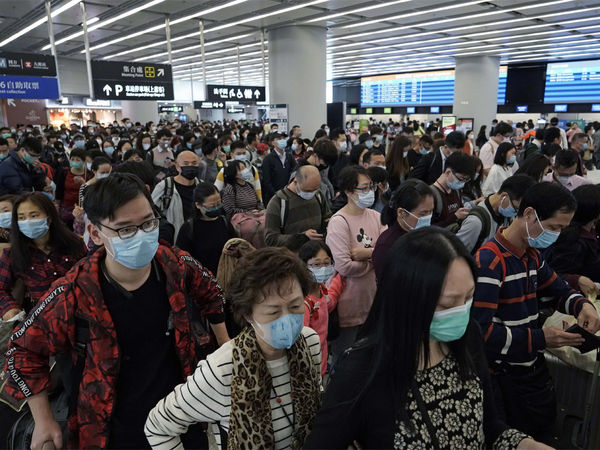
So far, 20,000 people from 115 flights at 7 international airports have been screened. National Institute of Virology labs all over the country are fully equipped to test the virus. All State and District health authorities have been alerted and are in the loop.

Cabinet Secretary Rajiv Gauba, Secretary Home Affairs Ajay Kumar Bhalla, Secretary External Affairs Vijay Gokhale, Secretary Defence Ajay Kumar, Secretary Health and Family Welfare Preeti Sudan, Secretary Civil Aviation Pradeep Singh Kharola and several other top officials attended the meeting.

Padma Awards 2020 Announced

On the eve of 71st Republic Day of India, Padma awards were announced today. The Padma Vibhushan for this year has been awarded to a total of seven prominent personalities, while 16 have been given the Padma Bhushan, and 118 have been given the Padma Shri. This year the President has approved conferment of 141 Padma Awards including 4 duo cases (in a duo case, the award is counted as one). Thirty four of the awardees are women and the list also includes 18 persons from the category of Foreigners/NRI/PIO/OCI and 12 posthumous awardees.

Eminent personalities, including former union ministers Arun Jaitley, Sushma Swaraj and George Fernandes, Olympian boxer Mary Kom, former Mauritius Prime Minister Anerood Jugnauth have been honoured with the Padma Vibhushan on the Republic Day this year.

Former Defence Minister Manohar Parrikar, industrialists Anand Mahindra and Venu Shrinivasan, Olympian badminton player P V Sindhu, former Nagaland Chief Minister S.C. Jamir and Jammu and Kashmir politician Muzaffar Hussain Baig have been awarded with the Padma Bhushan.

Producer Ekta Kapoor, director Karan Johar, actor Kangna Ranaut and singer Adnan Sami will receive the Padma Shri.

Congratulating the Padma awardees, Prime Minister Narendra Modi tweeted, “Congratulations to all those who have been conferred the Padma Awards.” The Prime Minister said the awardees include “extraordinary individuals who have made exceptional contributions to our society, nation and humanity”.

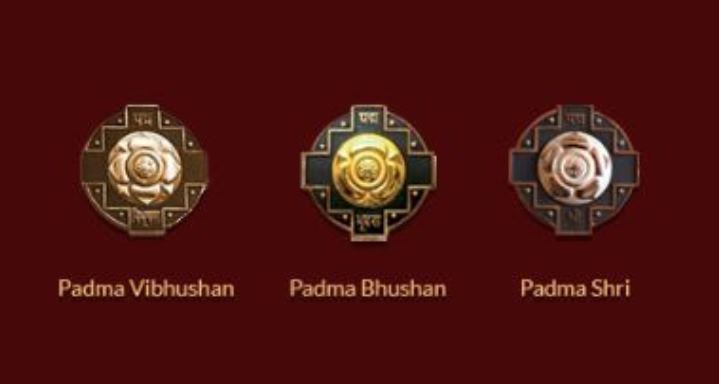
Padma Awards – one of the highest civilian Awards of the country, are conferred in three categories, namely, Padma Vibhushan, Padma Bhushan and Padma Shri. The Awards are given in various disciplines/ fields of activities, viz.- art, social work, public affairs, science and engineering, trade and industry, medicine, literature and education, sports, civil service, etc. ‘Padma Vibhushan’ is awarded for exceptional and distinguished service; ‘Padma Bhushan’ for distinguished service of high order and ‘Padma Shri’ for distinguished service in any field. The awards are announced on the occasion of Republic Day every year.

These awards are conferred by the President of India at ceremonial functions which are held at Rashtrapati Bhawan usually around March/ April every year.

Full List of Winners:

Baloch freedom fighters must step up their efforts to free Balochistan

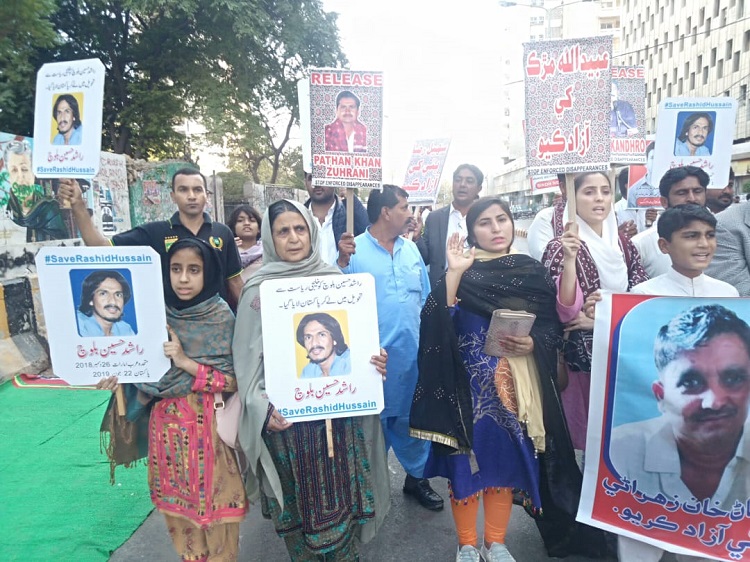
Pakistan’s state brutalities in Balochistan continued unabated in 2019, like in the previous years. Last year Islamabad’s barbarism across occupied Balochistan reached newer heights. This state-sponsored barbarism included unprovoked military operations, killing of Baloch dissidents, forced disappearances during operations, torturing of people, looting, burning houses and forced evacuations of inhabitants from their ancestral villages in Balochistan.

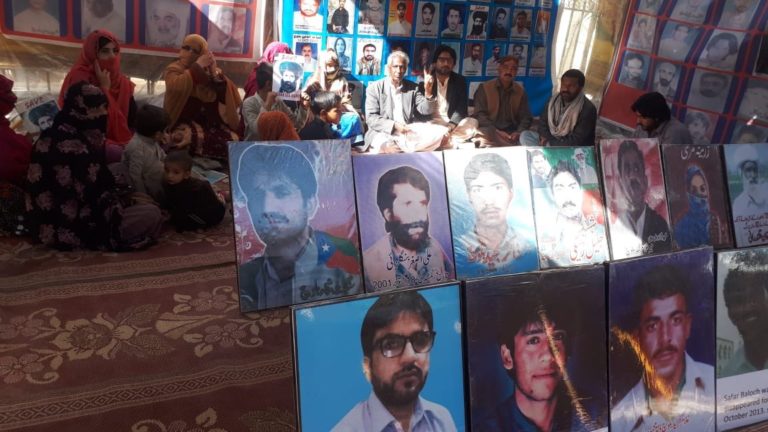
In 2019, the occupying state of Pakistan intensified its tactic of forcibly disappearing Baloch women and children.

Dwindling CPEC

However, even as Pakistan Army’s tyranny and atrocities were carried on in Balochistan, the Baloch militant organizations also stepped up their armed activities that resulted in loss of life and resources to the Pakistani armed forces. The attack on Gwadar port by Baloch militant organisations received international attention. The Baloch Liberation Army took responsibility for this attack on the Gwadar Continental Hotel that went on for nearly 26 hours. In this attack four Baloch freedom fighters were martyred whereas several armed personnel of Pakistan and other foreign investors were killed.

Apart from the militant Baloch armed organizations that are fighting for Balochistan’s independence from Pakistan, there are several other Baloch independence political parties and human rights organizations who continue to protest peacefully at the national and international platforms. They strive to show gross human rights violation across Balochistan by Pakistan. They also reach out at various international platforms in order to highlight the issues of Balochistan.

The year 2019 also saw the situation of exploitative China-Pakistan Economic Corridor (CPEC) dwindle. The hustle-bustle in CPEC construction activities and Chinese movements in Balochistan have significantly reduced giving an impression that the project might be delayed or fail altogether. The corridor’s apparent failure and China’s disinterest has provoked the occupying Pakistani forces to further increase their atrocities and restrictions on the Baloch people. This seems to be a desperate approach to satisfy Chinese security requirements that has devastated the whole Balochistan and fulled pent-up anger and dissatisfaction against Pakistan.

This year also saw some so called “Baloch nationalists”, who were in the Pakistani Parliament and were part of their projects, change track and adopt different kinds of approaches to save their respective positions. The National Party (NP) who had previously played a key role in implementing this strategic CPEC, started opposing the economic corridor through its newspaper statements. The party started raising slogans against the state to restore their trust within the Baloch nation. However, I see this change in their approach as a blackmailing tactic against the establishment to restore their position in Pakistan’s parliament. Also, even as the BNP remained stuck with a slogan of ‘six points’, they also remained partners to the Imran Khan government in Islamabad.

Forced Disappearances in Balochistan

Four Baloch women were forcefully disappeared from Awaran by Pakistani state agencies in 2019. Widespread anger and protests helped in getting them released. BNP declared this as their success, while the BNP leaders also expressed their wish for greater provincial autonomy and the inclusion of historical Baloch land in Balochistan which currently is part of Pakistan’s Punjab province.

So, on the one hand Baloch pro-independence organizations and parties have stepped up their efforts and struggle for freedom, on the other hand Pakistan has increased its oppressive polices across Balochistan. This situation has exposed the role and integrity of parliamentary ‘nationalists’.

Pakistan’s problems

The success of Balochistan freedom fighters has seriously weakened Pakistan’s apparatus in Balochistan. This can also be seen in the internal developments of Pakistan’s establishment. This year, one of the biggest party of Pakistan, Ulema-e-Islam opposed the government by their protests and then many party leaders joined them. Besides these political parties, Pakistani courts and military organization’s atmosphere remained overheated over the extension of the post of their army chief Gen. Qamar Javed Bajwa and then over the decision to execute former General and President Pervez Musharaf.

International economic organizations and FATF (Financial Action Task Force) have listed Pakistan in the grey list of countries for its support towards terrorism. This is bound to create economic difficulties for Pakistan that has been totally reliant on IMF and Saudi Arabia to keep its economy afloat.

The condition of minorities in Pakistan is also deteriorating by the day. Protests for the release of thousands of dubiously disappeared persons continue. Pakistan Army continues to dump the mutilated bodies of political workers in different parts of the country. In this situation, all the nations that are currently under illegal occupation by Pakistan have to come together on a single platform to gain freedom.

International scenario

Due to violent protests the regimes of Iran and Iraq in 2019 have been changing their track from one side to the other,  using their military powers to trample protests. The presidential elections in Afghanistan were successfully conducted and Ashraf Ghani once again got the hot seat. Afghanistan has been in the limelight because of their ongoing talks with the Americans and Taliban.

The cold war like scenario between South Asian neighbours Pakistan and India have continued and there were several instances in 2019 when it looked like the two countries will go for an all-out war. The trade war between US and China can push this region into further complexities.
The situation in Occupied Balochistan has deteriorated rapidly. Hence 2019 has shown a bloody picture like in the previous years.

Pakistan’s “Kill and Dump Policy”

The occupying state of Pakistan carried out 626 military operations against the Baloch nation in 2019. In these operations, 785 people have been forcefully kidnapped and have now disappeared which includes a large number of women and children. Also during this year, 302 dead bodies were found, of these 80 had been killed by Pakistani forces and while the exact motives of 144 killings were not found, 78 dead bodies went unrecognized. The burning and demolition of houses across Balochistan and looting them has also continued. More than 1,416 houses were looted, 200 houses burnt, 321 persons were released from the torture cells of state forces and 42 new check posts were built in Occupied Balochistan as Pakistan continues with its barbaric policy in Balochistan.

Furthermore, no motives were found for the deaths of these missing people. Because of state barbarism, thousands of Baloch families were compelled to migrate to Iran, Afghanistan and in the internal areas of Balochistan and Sindh and southern Punjab in Pakistan.

If we compare the devastation in Balochistan, it is in no means lesser than to those other regions that have been declared as war zones by the United Nations and other superpowers. Balochistan’s situation is much worse but the international community does not bother to focus on Balochistan, thus giving the occupying state of Pakistan an exemption to increase its policy of barbarism in Balochistan. So Baloch organisations and political parties fighting for freedom have to struggle really hard in order to show Pakistan’s real image to the world.

Missing Persons of Balochistan

The Voice for Baloch Missing Persons (VBMP) has been struggling for the last 10 years. They have been trying to show and uncover the state barbarities in front of the world. In the year 2019, organisation fighting for Balochistan freedom were busy with human rights issues and they struggled to draw the attention of the world towards the Baloch nation.

Yet, it can be said that Balochistan is not raising a coherent and forceful voice at international platforms. The Baloch freedom fighters and Baloch political parties who are struggling for Balochistan’s independence need to come on a single platform and speak in a forceful voice so that the world can get a clear understanding about the Balochistan issue. This will double the hopes of Baloch nation for freedom from Pakistan.

Baloch leadership has to also think about national interests of Balochistan and then catch the world’s attention towards them. This will counter-balance and negate those Baloch parliamentarians who only want to further their political ambitions at the expense of Baloch national struggle for independence. Whether it is the National Party (NP) or Balochistan National Party it will not be able to further enslave aspirations for an independent Baloch nation or cover up the Baloch genocide. All those who are fighting for Balochistan independence need to understand the present geo-politics where occupying forces of Pakistan have been weakened economically and politically. There is a massive social unrest across Pakistan, tussle among superpowers such as China, US and Russia, and situation is tense in South Asia, Afghanistan, Iran and the Middle East. In the wake of these developments, the strategy for Balochistan’s freedom struggle needs to be right and efforts streamlined. If the Baloch make a concerted effort, Balochistan will soon be a free nation. 

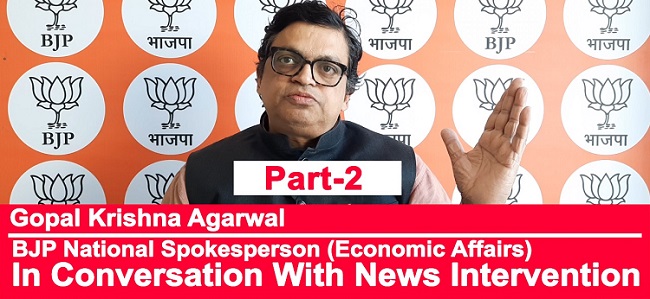
Interview: Gopal Krishna Agarwal, National Spokesperson BJP (Economic Affairs)

Part-1 of the Interview with Gopal Krishna Agarwal, National Spokesperson BJP (Economic Affairs). Gopal Krishna Agarwal explains what corrective steps are being planned to put the Indian economy on the high growth path. Click on the link below to watch Part-1 of this interview on the YouTube Channel of News Intervention.

BJP-JJP government in Haryana: Early cracks visible in the alliance?

0

Just after the revolt of JJP MLA Ram Kumar Gautam, another MLA supporting the BJP government Balraj Kundu has also sounded a bugle within three months of the formation of BJP-JJP alliance government. Is it too early to say that the alliance is treading a rough path or the opposition party leaders are deliberately stretching a small issue to make some quick points?

Sometimes bad luck of one turns into a favourable opportunity for the other. BJP not getting a full majority in October 2019 Haryana Assembly elections provided new political wings to the Jannayak Janta Party (JJP) in the murky political scenario of the state. The over confident state BJP had declared its target of 75 plus seats out of 90 in Haryana Vidhan Sabha, but failed to read the ground report. When election results were declared, it came crashing to the ground with just 40 seats out of total 90. The main opposition party congress got 31 seats, the newly formed JJP 10 seats, whereas the independents and others succeeded in getting 9 seats. With clever political maneuvering BJP’s Manohar Lal Khattar once again got the King’s crown and JJP in lieu of its kingmaker’s role got the Deputy CM post for its field supremo Dushyant Chautala.

With the initial euphoria now over and time has come to fulfil the poll promises, the alliance seems to be entering into a rough patch and the going might get tough for both the alliance parties. Generally, during the elections tall promises are made to woo the voters, and most of them never gets implemented on the ground. To win the political fight in Haryana, JJP made 160 promises in its manifesto during the elections. Due to paucity of funds and other restrictions many of these promises can’t be implemented. JJP knew this beforehand, but it promised them just to attract the voters. Perhaps, they never thought of getting the power share so soon. Now their own promises have put BJP-JJP alliance in a dilemma. Both partners have made nearly 400 promises, out of which 70 are common and are being considered for their Common Minimum Programme (CMP).

JJP’s some major promises included, increase in the monthly old age pension from the existing Rs 2,000 to 5,100, lowering down of eligibility age for the old age pension from present 60 years to 55 for women and 58 for males, to reserve 75% of jobs for the local youth which constitute a sizeable chunk of nearly 1.83 crore voters of the state, to give a monthly assistance of Rs 11,000 per month to unemployed youth, students from rural areas to be given extra ten marks when they appear in competitive examinations in the state, for farmers, a bonus of 10% or Rs 100 to  be given over MSP, minimum wages to be fixed at Rs 16,000 and waiving off the loans taken by farmers from the cooperative banks.

Interestingly, 823811 farmers in Haryana are yet to repay the loans amounting Rs.3748 crore as on 31 December, 2019 to the cooperative banks in the state even after the recovery. Haryana Cooperation Minister, Banwari Lal, while  announcing the last date of ‘One Time Settlement Scheme’ till January 31, 2020 for the loanee members and farmers, who have an account with cooperative banks to facilitate the members and farmers to take advantage of the scheme, told  that the total amount of short term loan of Harco Bank is about Rs 3091 crore and there are about 6,99,804 beneficiaries, out of which Rs 1136.36 crore has been recovered from 2,51,481 beneficiaries till 31 December 2019.  He also added that the total loan amount of District Central Co-operative Banks is about Rs 608 crores and there are about 31749 beneficiaries, out of which an amount of Rs 150.74 crores has been recovered from about 6925 beneficiaries till 31 December 2019. He further informed that the Land Mortgage Bank has a total of 92258 indebted beneficiaries and a total loan amount of Rs.1577.75 crores, out of which an amount of Rs.242.18 crores has been recovered from 9151 indebted beneficiaries till January 2, 2020.

Haryana Power and Jail minister Ranjit Singh divulged while addressing media persons during the first bijli panchayat in Hisar on Jan 05, 2020, “The total pending amount is Rs. 2,900 crore, of which Rs. 95 crore is of farmers using tubewells. We are meeting the panchayat members of villages that are on the defaulters’ list and will ask them how they will pay the amount.”

It is pertinent to mention here that the farmers had stopped the repayment of loans and electricity bills believing on the waiver promises of different political parties. During this assembly election, JJP and Congress both had made farmers’ loans and electricity bills as election issues. During the assembly election campaign, Congress leader and former chief minister of Haryana, Bhupender Singh Hooda had alleged that due to wrong policies of BJP government Haryana  had  become a debt ridden state. In a tweet on October 15,2019, Hooda alleged, “BJP government had emptied the state treasury and burdened the state with a loan of Rs. 164076 Crore during BJP’s five year tenure from 2014 to 2019, whereas during   the 48 years regime from 1966 to 2014 the state availed of a debt of Rs.76263 Crore.”

To start with, the alliance declared implementation of its first promise of enhancement of old age and widow pension from present Rs. 2000 per month to Rs. 2250 by giving an increase of just Rs. 250 per month. Recently, Chief minister Manohar Lal Khattar on January 3, announced an increase in all monthly social security pensions, including the old age pension, from Rs. 2,000 to Rs. 2,250.

However, BJP’s power partner, JJP had promised an ambitious increase in the monthly old age pension from the existing Rs 2,000 to Rs. 5100, whereas the BJP itself had promised  to increase the old age pension to Rs. 3,000 per month during the assembly election campaign. If we consider this increase of Rs. 250 per month as a routine yearly increase on the lines of previous yearly increase of Rs. 200 per year by BJP led government, then the question arises about JJP’s promise. what the JJP did? Did JJP succeed in getting an increase of Rs. 50 only as its share?

Commenting on the increase, Congress leader Deepender Singh Hooda reacted on January,03, “The BJP-JJP alliance government has given a lollypop to the public by just enhancing old age pension from Rs. 2000 to Rs. 2250 against a promise of Rs. 5100. The public will never forgive the alliance government for this betrayal. Is this the common minimum programme?”

Another Congress leader Randeep Singh Surjewala took a dig at the BJP-JJP coalition government in Haryana and said their common minimum programme had become “common mess of parties”. “Neither any farm debt was waived, nor old age pension of Rs 5,100 was given. Though JJP did got 11 departments and the BJP managed to retain the power, but what 2.50 crore population of Haryana got,” Surjewala asked.

Indian National Lok Dal (INLD) leader Abhay Singh Chautala termed the pension increase as ‘a drop in the ocean’ and questioned JJP leaders, without naming them, “Where are those, who were claiming to extend Rs. 5100 per month pension to the old age citizens?”

However, JJP is still appreciating the step. Speaking to the media in Bhiwani on January 4, JJP supremo and Deputy CM Dushyant Chautala said, “The Old age pension got an increase of just Rs. 700 in 10 years rule of the congress in the state, whereas the BJP-JJP alliance government has given an enhancement of Rs. 250 in just 67 days.” He claimed that during these 67 days, the BJP-JJP alliance government has fulfilled four promises of JJP manifesto and three from BJP manifesto under the common minimum programme.  

However, political analysts calculate that getting the tall promises implemented as part of the common minimum programme will not be a cake walk for JJP. Moreover, political expediency will never allow the BJP to fulfill the manifesto promises made by JJP. BJP clearly knows if JJP succeeds in getting its agenda implemented, it will be nothing less than digging its own grave in the state. A slight enhancement in the old age pension, against a high pitch promise of Rs. 5100 of JJP, is an indication of downsizing the JJP.

While at Rohtak on January 6, INLD supremo and former Chief Minister of Haryana, Om Prakash Chautala predicting the possibility of mid-term polls for the state said that BJP-JJP alliance government will fall on its own very soon. Exhorting the workers, Chautala said, “I urge you all to get ready for mid-term polls for Haryana assembly, because many MLAs of the ruling alliance are not happy and they will topple the government any time.”

Supporting the INLD supremo’s prediction, Leader of Opposition in Haryana assembly and former CM Bhupender Hooda said, on the same day, “If Chautala had stated so, he must have made this observation after having a proper analysis of the situation. No possibility can be ruled out in politics.”

This might be too early to predict the political discourse in the state, but one can smell the brewing problem in the alliance.