Home Blog Page 390

2019: A Kashmiri looks in the rear view mirror

Looking back, one can safely say that the year gone by was a mixed bag for Jammu and Kashmir in both political and security domains. It goes without saying that though momentous changes took place the going was not totally smooth, but then, such cannot be expected from the region that has remained on the international radars for several decades.

On February 14, 2019 more than 40 Central Reserve Police Force (CRPF) personnel were killed in one of the deadliest attacks in Kashmir’s Pulwama district when a local Jaish-e-Mohammad (JeM) suicide bomber rammed a vehicle carrying explosives into their bus. The attack left the nation in shock even as the gruesome act was condemned worldwide.

In retaliation, the Indian Air Force (IAF) hit a terrorists’ training camp deep inside Pakistan at Balakot. On February 26, 2019 New Delhi announced that in a pre-dawn action, Mirage 2000 fighter jets of the IAF destroyed a JeM camp on the other side of the Line of Control (LoC) at Balakot, a town in Mansehra District of the Khyber Pakhtunkhwa province of Pakistan.

In a face-off with Pakistan Air Force (PAF) the next day, IAF fighter pilot Wing Commander Abhinandan Varthaman shot down an F-16 fighter jet of PAF but while doing so his aircraft was also hit by a missile forcing him to eject and parachute into the territory under Pakistani control. Varthaman was taken into custody but released after just 60 hours, which was a big diplomatic victory for India.

During the same time, in a case of mistaken identity, an IAF helicopter was accidentally shot down by IAF air defence systems causing the death of six IAF personnel and one civilian near a village in central Kashmir district of Budgam.

The parliamentary election to constitute the 17th Lok Sabha in India were held over seven phases from 11 April to 19 May 2019. The result declared on 23 May, 2019 witnessed a landslide victory for the Narendra Modi-led National Democratic Alliance (NDA). In J&K, the National Conference, a Kashmir based regional party won all three seats in Kashmir while BJP took remainder three seats in Jammu and Ladakh.

On August 5, 2019 the Union Parliament predominantly voted for reorganisation of the state of Jammu and Kashmir and dilution of Article 370. This was followed by the Jammu & Kashmir Reorganisation Act being passed by Parliament to split the state into two Union Territories — Jammu & Kashmir and Ladakh. As a precautionary measure against any violent reaction to this move, internet services were suspended and prohibitory orders were put into force. There were huge deployment of security forces that were carried out to maintain law and order with more companies of CRPF being sent in.

Protests and stone pelting incidents against this move were reported from some areas in the valley. Despite authorities lifting curfew in over a fortnight, the shutdown against the scrapping of Article 370 lasted for over 120 days in many areas.

On September 27, 2019 Pakistan Prime Minister Imran Khan raised Kashmir issue at UNGA but his appeal for intervention did not find any takers and his attempt to internationalise the Kashmir issue fell flat and New Delhi scored a diplomatic win yet again.

The digital blackout in Kashmir has completed 150 days with no sign of restoration of the services in near future. As a result, scores of people risk losing their jobs as IT-related firms are on the verge of shutting down due to lack of internet availability.

Three former chief ministers (Farooq Abdullah, Omar Abdullah and Mehbooba Mufti), and several mainstream political leaders were taken into preventive custody. Farooq Abdullah, a sitting Member of Parliament and three-time chief minister, was later booked under Public Safety Act (PSA) a law originally introduced in 1978 by Mr Farooq’s father Sheikh Mohammad Abdullah to deal with timber smugglers and extended to cover militants, stone pelters and separatist leaders.

On October 31, 2019 the reorganisation of erstwhile J&K was formally completed with Girish Chander Murmu being sworn in as the first Lieutenant Governor of the Union Territory of Jammu and Kashmir and former bureaucrat Radha Krishna Mathur as the first Lieutenant Governor of strategically-located Laddakh.

As 2019 came to an end, New Delhi scrapped two holidays that were only applicable in erstwhile J&K. The first is the ‘martyrs’ day’ observed on July 13 in remembrance of Kashmiris who were victims of police firing during Dogra rule in 1931. The second is December 5, which is the birth anniversary of former J&K Prime Minister Sheikh Muhammad Abdullah. Removing these dates from the list of holidays has triggered a political storm in the restive Kashmir Valley.

Kashmir’s economy is the worst sufferer due to the events in 2019. The shutdown has caused a loss to the tune of Rs 17,878 crore in four months of restrictions. Tourism sector is in shambles while artisans and weavers are jobless. With estimated losses of around Rs 2,520 crore, the manufacturing sector is in tatters.

Despite the ups and downs, a lot has to be achieved in 2020 and one gets a feeling that these developments could help in ushering an environment of normalcy and development in Jammu and Kashmir. Yet, even though the pace has been set, more sustained efforts are required in 2020 to ensure that the sentiments of positivity trickle down to the masses!
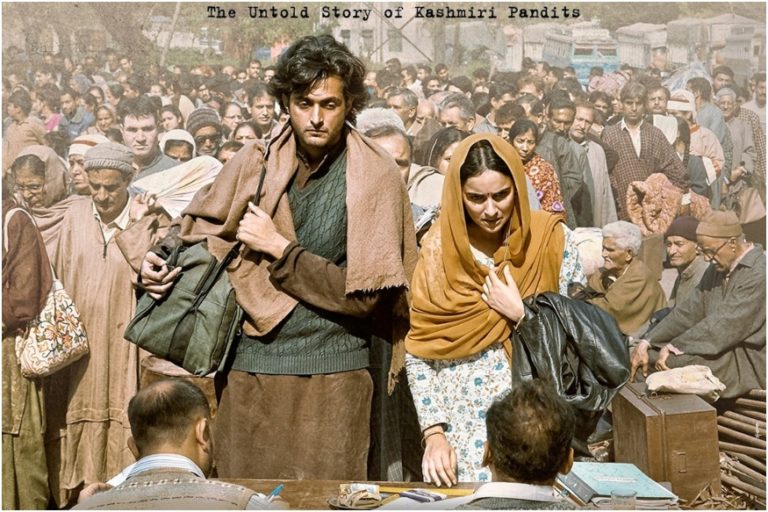
Vidhu Vinod Chopra’s ‘Shikara’ to share untold story of Kashmiri Pandits

Based on the mass exodus of Kashmiri Pandits from the valley, the trailer of Vidhu Vinod Chopra’s much-awaited upcoming film “Shikara: The Untold Story of Kashmiri Pandits” has been released. The film tells the story of around 4,00,000 Kashmiri Pandits who had to fled the Valley in 1990.

Talking about Shikara, the filmmaker said, “This is a story about a Kashmiri Pandit couple, some 30 years ago. Their story starts in 1987 when everything was fine. From 1989 till today, it has been that couple’s story. It is the story of their 30 years’ journey and the story of India as well. It took me a lot of time and effort to make this film, and it is the story of all those people who have been refugees in their own country over the last three decades.”

At the trailer launch of his upcoming film Shikara: The Untold Story of Kashmiri Pandits, filmmaker Vidhu Vinod Chopra said he condemns all kinds of violence — the one that is taking place today, and the one that happened in Kashmir 30 years ago. Chopra was referring to the horrific Kashmiri Pandit exodus from Kashmir that happened on January 19, 1990, which is the subject of his new film.

The film introduces two new faces: Sadia and Aadil Khan. The trailer launch on Tuesday, also saw a rare appearance by AR Rahman, who has scored the music of the film, along with the cast.

The trailer starts with a scene showing a young couple, Shanti Dhar and Shiv Kumar Dhar, sitting inside their home when they see a house burning from their window. It is then showed how Kashmiri Pandits were forced to leave the Valley.

Shikara is set to hit screens on February 7. The film has been largely shot in Kashmir. The film is being promoted as a story of a love that remains unextinguished through 30 years of exile.

In 1990, more than 4,00,000 Kashmiri Pandits were forced to leave their homes in the Valley.

Recently, the makers of the film released a motion poster of the film and wrote, “Tees saal baad, humari kahani kahi jayegi… Here is a timeless love story in the worst of times. (sic)”

Four Nirbhaya Rapists to be Hanged on Jan 22

Seven years after Nirbhaya died, a Delhi court has issued a death warrant against four convicts. The order was pronounced by Additional Sessions Judge Satish Kumar Arora. The four convicts sentenced to death in the Nirbhaya case will hang at 7 am on January 22.

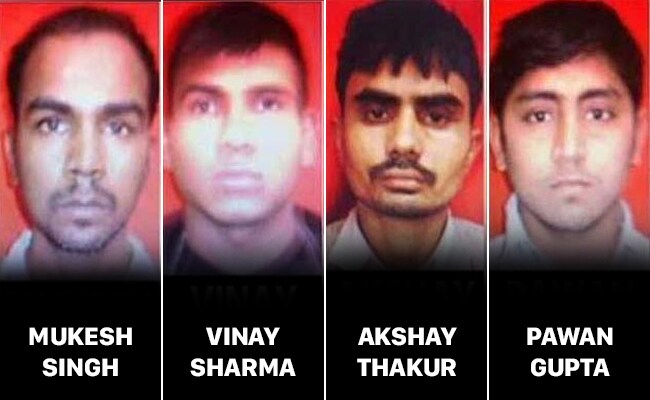
Akshay Thakur Singh, Mukesh, Pawan Gupta and Vinay Sharma were found guilty in the 2012 gang-rape, torture and killing of a young paramedic student in Delhi. Last month, the Supreme Court dismissed the last review petition in the case, filed by Akshay Singh. Nirbhaya’s parents then asked a lower court to issue a death warrant but the judge had deferred a decision until today.

Besides the four convicts, two more were accused in the rape and murder. Ram Singh, the fifth accused, committed suicide and a juvenile was released after three years in a reform home.

The 23-year-old paramedic student was gang-raped and tortured with an iron rod on a moving bus in south Delhi on December 16, 2012, before being dumped on a road, naked and bleeding. She died on December 29 amid street protests across the country.

The convicts are currently in Delhi’s Tihar jail. AP Singh, lawyer for the convicts, has said that they will file a curative petition in the Supreme Court.

What’s next in Middle East after Soleimani’s killing?

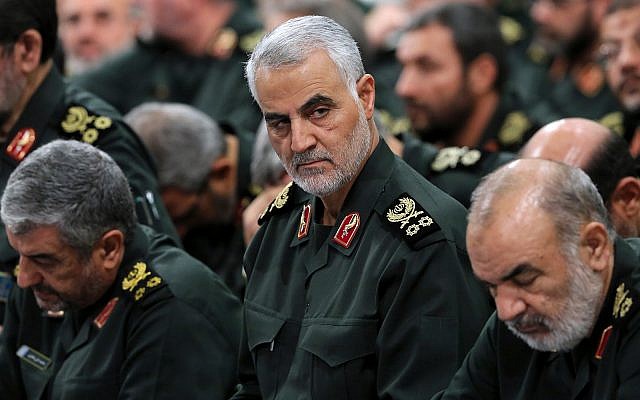
Not many in India are aware of Major General Qassem Soleimani, the commander of the Quds Force of the Islamic Revolutionary Guard Corps (IRGC) of Iran — the man who was killed by a surgical drone airstrike near Baghdad airport on the morning of January 3. The killing began the New Year and decade with a trigger that may have far-reaching consequences. But first, Soleimani needs a brief introduction.

“His brilliance, effectiveness, and commitment to his country have been revered by his allies and denounced by his critics in equal measure,” wrote US General Stanley McChrystal in 2018. “Soleimani is arguably the most powerful and unconstrained actor in the Middle East today. A ghostly puppet master, a practical strategist.” It was Soleimani who put the Quds Force among the top few forces of the world that have the rare capability to combine intelligence with special forces strike capability and possess a fiercely strategic ideological orientation. The IRGC, with Quds Force at its core, is an organisation which oversees and executes Iran’s regional interests, maintains linkages with other friendly forces and also works through a system of local proxies. Its effectiveness over time has created linkages with the Hezbollah in Lebanon, Hamas in Palestine, Houthis in Yemen, militias in Iraq, Bashar al Assad’s forces in Syria and, very importantly, with the Russians in the Middle East. Iran’s Middle East strategy was developed through this capability and it gives out the message that it cannot be meddled with.

The US can use a sledgehammer to defeat and destroy Iran and its forces but after the Iraq and Afghanistan experiences, it is aware that victory in such wars does not necessarily belong to the stronger side.

Soleimani had been in the US’s crosshairs right from the time the US declared the Quds Force a terror organisation. His operational effectiveness had the US worried but it is learnt that even when opportunities to target him arose in the past, former President Barack Obama desisted from following up with an authorisation simply because the next steps in escalation gave no positive options. That is the issue now as well. While no one in the US laments Soleimani’s death, no one is happy with it either since it was not part of a strategy with a focused aim. Is that being fair to President Donald Trump, who is obviously revelling in this achievement?

A short chain of events in Iraq, set off in the last few days of 2019, led to the assassination. US military facilities in Kirkuk (Iraq) were attacked on December 27 by a Shia militia, killing a US contractor. The US responded on December 29, killing 25 militants — Iraq’s leadership was extremely upset. This sparked a retaliatory attack on the US base in Taji before a mob attacked the US Embassy compound in Baghdad on December 31. This is a flagship US embassy in the Middle East, spread over 100 acres, and the breach of its security unnerved the US — that is actually all the more reason that any attack on the Quds Force Commander should have been outside Iraq. The US cannot afford to yield space in Iraq to an Iran-driven popular people’s movement — very much a possibility as a consequence of Soleimani’s killing.

The question everyone seems to be asking is related to the feasibility of an all-out war. There is no doubt that the domestic political environment of the US is in flux and Trump would risk anything for a fillip to his chances of re-election. However, the US is war weary and if Trump thinks that an all-out war will help his re-election chances, he would be mistaken. A limited set of military actions from time to time — those that exploit US technological superiority — will draw more favourable support. Of course, a lot is contingent upon the nature of Iran’s retribution for the death of the man who was often called a “living martyr”.

Iran’s leadership is aware of its limitations and would wish to stay short of a tipping point, which the US could use to commence an all-out war. For its own larger cause and image, the US would be least concerned about the worldwide economic ramifications of it subsequent actions. Energy price rise, risk to shipping and the economic collapse of the Gulf economies will probably be of less concern than it did in 1990 because the US is no longer dependent on the Middle East for energy. It will, of course, have to be mindful of the worldwide economic impact.

The other question for strategic minds is the nature of a future proxy war in the Middle East. Early reactions from US-based thinkers appear to conclude that a war between the US and Iran will now be direct and beyond proxies. This may not be entirely correct. Weaker nations, such as Iran in this case, choose to fight through proxies who are not exactly unorganised and undisciplined elements. If the US chooses to confront them directly without using its own proxies, it runs the risk of an Afghanistan or an Iraq type of commitment. For Iran’s proxies, borders remain just lines on maps; they can be crossed at will despite modern surveillance systems. In flat organisations, such as those the proxies are part of, there is minimum control and direction. That is where Iran too runs the risk of overplaying its strategy without presence of a strong and experienced commander like Soleimani, which could lead to a more direct confrontation. An irregular entity such as the Islamic State (IS) lacked air power, armed drones and missiles and yet displayed its conventional war fighting capability. All this will be available if irregular proxies receive a higher level of state support.

Finally, a look at the effect on Indian interests. Energy prices, a diaspora of eight million and $40 billion in remittances form the core of India’s concerns. Energy prices are already on the rise, without even an inkling of the Iranian response. The diaspora presence is mainly in the Gulf countries, which have thus far been largely out of the theatre of proxy war, except for Saudi Arabia. However, this situation is not permanent. It is contingent on the intensity of escalation of the war by proxies and could extend beyond the current sub regions of the conflict, engulfing the UAE, Kuwait, Qatar and Bahrain. That would be apocalyptic for Indian interests.

This article was first published by The Indian Express and has been reproduced in News Intervention with the Author’s permission for purpose of education and research.

Australian bushfire crisis: PM Morrison cancels his first visit to India

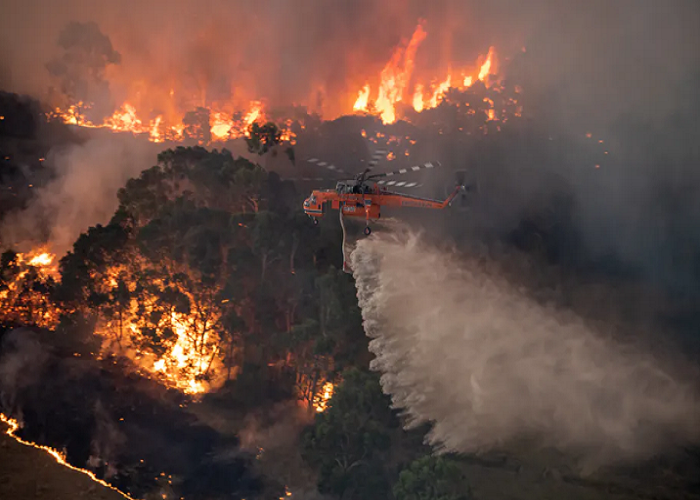
In a delayed response to the bushfires that have caused irreparable ecological and immense economic loss in Australia, Prime Minister Scott Morrison on Sunday established a National Bushfire Recovery Agency to co-ordinate recovery efforts ranging from rebuilding infrastructure to providing mental health support even as authorities struggled to tackle the raging bushfire crisis which has so far claimed the lives of 24 people. The agency, headed by former federal police chief Andrew Colvin, will help bushfire affected communities recover, media reports said.

Prime Minister Morrison has also cancelled his planned first visit to India from January 13 due to the catastrophic bushfire crisis.

Morrison has been facing widespread criticism in Australia for his handling of the crisis, particularly, for taking a family vacation in Hawaii at the start of the wildfire crisis, with many people complaining about the lack of readiness in utilisation of resources. Last week, he was heckled when he visited a township in New South Wales where houses have been destroyed and one of them belonged to one of the three volunteer firefighters who have died in the crisis.

Australia is experiencing a devastating fire season that is expected to grow worse as the summer months continue. Record high temperatures and drought exacerbated by climate change have ignited blazes that have destroyed more than 1,000 homes and nine million acres and killed 18 people. An estimated half billion mammals, birds and reptiles have been killed since the bushfires started in September, according to ecologists from the University of Sydney. The actual number is likely much higher.

Australian authorities continued to struggle with the ongoing bushfire crisis across several states including Victoria, South Australia and Queensland, the PM announced that an additional $2 billion over two years will be made available to support bushfire recovery efforts and rebuild the towns decimated by the crisis.

 Scott Morrison has called up 3,000 military reserve troops to combat the bushfires, the first time that reservists were called up in such a large number “in the living memory”. In a press conference in the Parliament house on Saturday, he said, “I want to start by extending my sincere condolences and sympathies once again to all of those Australians and families who’ve lost loved ones during the course of these devastating bushfires. Twenty-three confirmed deaths to date and we are facing another extremely difficult next 24 hours.”

Fresh warnings have been issued to hundreds of people sheltering in New South Wales’ coastal town of Eden with authorities urging them to vacate the area immediately.

Nankana Sahib incident reveals how Sikhs are tortured in Pakistan

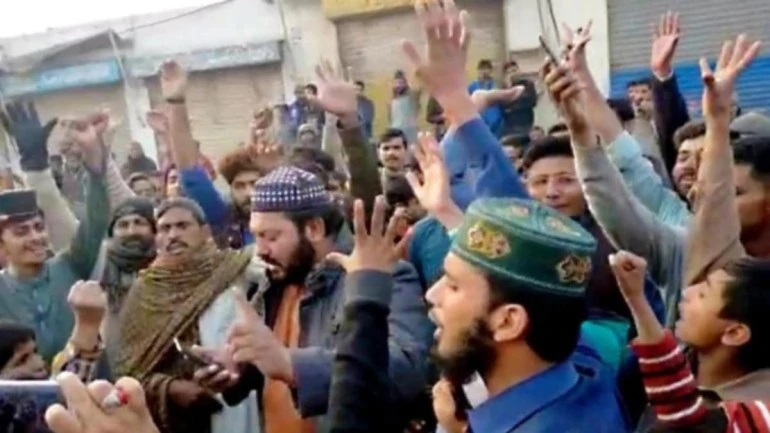
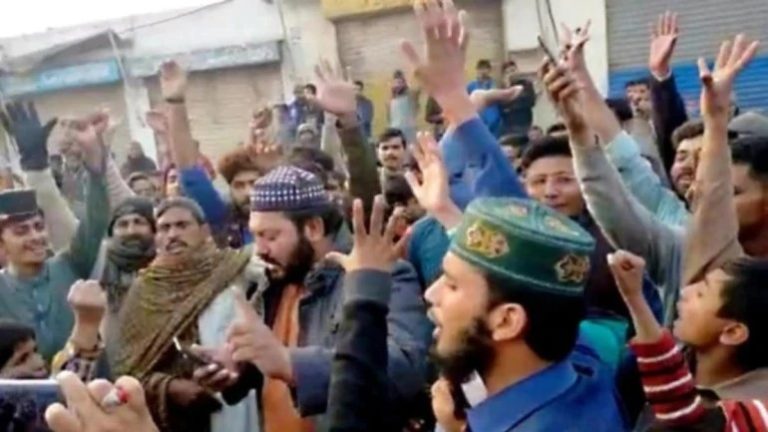
The incident of mob violence at Gurdwara Nankana Sahib in Pakistan on Friday, January 3rd has raised deep concern worldwide, especially amidst the Sikh community. Reports suggest that post the afternoon Friday prayers, a mob comprising of hundreds of Muslims laid siege on Gurdwara Nankana Sahib. The holy premises were pelted with stones and Sikhs offering prayers in the Gurdwara were threatened. The homes of other Sikhs residing in Nankana Sahib were also attacked with stones and they were told to vacate the city.

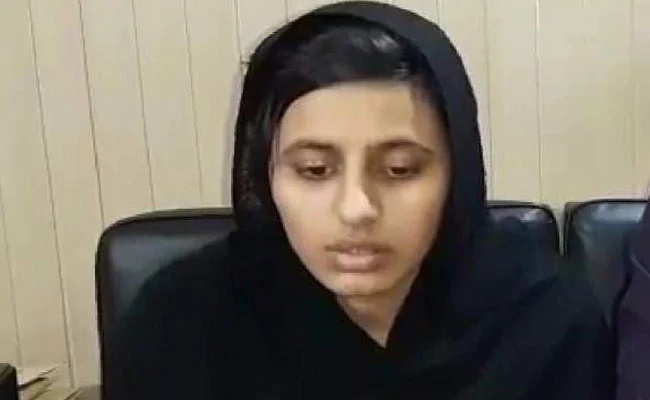
This incident has its roots in an earlier case of forcible abduction, conversion and marriage of a Sikh girl to a Muslim boy that took place in Nankana Sahib in September 2019. It was reported that one Mohammad Hasan abducted Jagjit Kaur, the daughter of a local Sikh Granthi (Religious teacher) at gun point and married her. At that point in time the negotiations between India and Pakistan for opening of the Kartarpur Corridor were at a sensitive stage and the abduction came as a big embarrassment for the Imran Khan-led Pakistan government.

The matter was taken up at the highest level with the Governor of Punjab (Pakistan) getting involved. Jagjit Kaur stated that she had converted and married by her own will. Punjab Governor Chaudhry Sarwar, however, gave instructions for shifting of the girl from the house of her so called ‘husband’ to Darul Aman in Lahore. Eight people suspected for the kidnapping of Jagjit Kaur were also taken into police custody. Later, a video recording of the Governor stating that the marriage would be considered void and the girl would be sent back to the house of her parents became public. The girl, however, has still not returned to her parents and the matter continues to be under judicial scrutiny.

In this latest incidence of violence at Nankana Sahib, the brother of Mohammad Hasan is seen prominently in the video footage. He is seen leading the crowd and making provocative statements. He is seen alleging that authorities are forcing the girl to go back to her parents while she is very content with her conversion to Islam and her marriage to Mohammad Hasan. He is openly threatening to drive away all Sikhs from Nankana Sahib and rename the city and the Gurdwara as “Ghulam-e-Mustafa.”

The large mob of radical Muslims shouting slogans at the Gurudwara Nankana Sahib in Pakistan on January 03, 2020.

India, very rightly, has strongly condemned the “wanton acts of destruction and desecration of the holy place,” and called upon the government of Pakistan to take immediate steps to ensure safety, security, and welfare of the members of Sikhs. Pakistan has responded by alleging that, “….attempts to paint this incident as a communal issue are patently motivated” and that “all insinuations particularly the claims of acts of ‘desecration and destruction’ are not only false but also mischievous.”

Pakistan’s Foreign Office has issue a statement saying that the incident has not occurred at all and what actually happened was a scuffle between two Muslim groups. Further, reputed English dailies of Pakistan like the Express Tribune and Dawn have not even mentioned the incident at all; there is a media blackout in place. This blatant denial of the very serious incident by the Pakistan government is a matter of grave concern.

The Sikhs are quite distressed by the incident. “Appeal to @ImranKhanPTI to immediately intervene that the devotees stranded in Gurdwara Nankana Sahib are rescued and the historic Gurdwara is saved from the angry mob surrounding it,” said Punjab Chief Minister, Captain Amarinder Singh, in a tweet. Various other Sikh leaders, institutions and prominent personalities also expressed concern.

The aforementioned pressure by India and the Sikhs had the desired effect. Within no time videos of Pakistani attempts to restore the situation went viral on social media. The brother of Mohammad Hasan made a video in which he apologised for his behaviour; leaders of all faith establishments and local officials and politicians too came on screen to assure the Sikh community that they were integral to the society of Nankana Sahib and Pakistan.

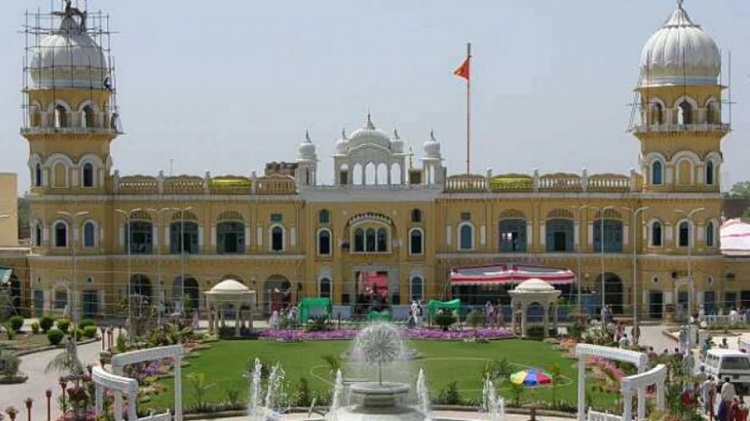
Nankana Sahib Gurdwara in Pakistan. The mob of radical Muslims pelted stones at the revered Gurdwara on January 3rd and demanded that the Gurdwara be razed down and a mosque be erected at this site.

Apparently, the Pakistani establishment is very worried about the repercussions of the incident, especially on their efforts to woo the Sikh community, and it wishes to put the matter under wraps. The fact, however, remains that the family of Mohammad Hasan, through this violent and obnoxious protest, is attempting to pressurise the authorities into putting an end to the judicial proceedings against Mohammad Hasan.

If the family had a problem against the administration, it should have organised a street protest or laid siege on the government installations. That it chose to show its strength at the Holy Gurdwara is a clear message that an inability on the part of the administration to bring early closure to the case would result in danger for the Sikh community. In other words, to remain safe in Nankana Sahib, the Sikhs would have to accept the conversion of Jagjit Kaur and her marriage to Mohammad Hasan.

It becomes quite apparent from the proceedings that this family has the political power and wherewithal to gather a violent mob at will. It stands to logic, therefore, that the abduction of Jagjit Kaur was done on the strength of this political power. The incident also points towards a bigger conspiracy of creating circumstance wherein the exodus of Sikhs from Nankana Sahib could be engineered. Jagjit Kaur is a mere pawn in this higher game plan.

The deep acrimony against minorities in Pakistan has once again become visible. Any and every minority voice being raised for justice is considered to be an affront to the Sunni majority and mob violence is used to suppress the same. The reality of Pakistan lies in the mob violence and the statements made therein and not in the placating voices and half-hearted cover ups.

It is time for the world in general and India in particular to take note of the blatant suppression of minority communities in Pakistan with use of brute force. There is a need to get the government of Pakistan out of its denial mode and compel it to take concrete action to ensure protection of all communities.

Nankana Sahib Incident and Pakistan’s ‘Yarn-Spinners’

We have heard eyewitness accounts about it with our own ears. We saw videos of how an irate mob of more than a hundred people laid siege to Gurdwara Nankana Sahib in Pakistan on Friday (Jan 3rd, 2020) with our own eyes; we shuddered as open threats of evicting all Sikhs from Nankana Sahib were made, we winced when we heard pledges to rename this place as Ghulam-e-Mustafa and erect a Mosque at this site after destroying the Gurdwara. But Pakistan’s Foreign Office (FO) has a completely different story to tell and if it is to be believed, then all that occurred was a “scuffle in the city of Nankana Sahib today, between two Muslim groups” and that the “altercation happened on a minor incident at a tea-stall.”

Coming close on the heels of Prime Minister Imran Khan’s “…We will show Modi’s India how to treat minorities” jibe, the Pak Foreign Office’s attempt to water-down the Nankana Sahib incident is understandable. But after hearing its version, one is reminded of George Washington’s famous advice that “It is better to offer no excuse than a bad one.” I’m sure that Pakistan’s Foreign Office has no dearth of talent and that’s why it’s all the more surprising that its mandarins seem to be incapable of even spinning a convincing yarn. How could the Foreign Office ever believe that people will disregard what they have seen and heard for themselves and instead, believe its version that two quarrelling groups somehow found a common meeting ground and ended up uniting to jointly direct their hatred at a Gurdwara– and that too in the very place where founder of Sikhism, Guru Nanak was born?

Gurdwara Nankana Sahib in Pakistan. On January 3, 2020 a large mob of radical Muslims pelted stones at the Gurdwara, raised slogans and demanded that the revered Gurdwara be razed down and a mosque be erected at this site.

If the Foreign Office thinks that merely saying “The opening of the Kartarpur Sahib Corridor is a manifestation of Pakistan’s special care extended to the minorities” will completely dispel the fear which Nankana Sahib incident has instilled within the Sikh community, then it’s sadly mistaken. Nor will its allegation that “attempts to paint this incident as a communal issue are patently motivated,” in anyway help to mitigate the pain inflicted worldwide on the peaceful Sikh community. But the most unfortunate thing in the Foreign Office’s statement is the mention that “Most importantly, the Gurdwara remains untouched and undamaged,” as it obfuscates the whole incident and this is very dangerous as it will surely embolden fundamentalists.

Regrettably, despite the plethora of audio-visual evidence available in public domain, Pakistan’s media has also gone overboard in downplaying this incident. For example, Dawn newspaper’s version is that four customers taking tea at a stall outside Gurdwara Janam Asthan started a conversation regarding a youth named Muhammad Ehsaan who had allegedly married a Sikh girl after forcing her to convert. This enraged the tea stall owner who coincidently happened to be Ehsaan’s uncle and this led to an altercation in which a “small group gathered to raise slogans.” According to the Dawn news report, it was a minor incident and a spontaneous act triggered by heightened emotions that luckily ended on a happy note– thanks to “a team of Nankana Sahib Police that had to intervene briskly to control the situation.”

But there’s enough circumstantial evidence to prove that the Nankana Sahib incident wasn’t precipitous — it was definitely pre-planned. Some pointers:

  • The sheer numbers of slogan shouting protesters that can be seen in the video recordings of this incident belies the Dawn newspaper’s claim that it was “small group (that had) gathered to raise slogans.”
  • From the determined way in which the mammoth crowd can be seen converging onto Gurdwara Nankana Sahib, it’s clear that the mob had been instigated beforehand and that this holy site had been predesignated as the ‘target’.
  • With eviction warnings being issued to Sikhs, the desire to rename Nankana Sahib as ‘Ghulam-e-Mustafa’ being expressed and threatening the demolition of this Gurdwara in order to make place for a Mosque, can we still say that this incident isn’t communal in nature?
  • Doesn’t the conspicuous absence of any law enforcement personnel at one of the most revered religious shrines of a minority community (even after it was besieged by an unusually large congregation of angry protesters belonging to the majority community) seem suspicious?

In its 2019 Pakistan Chapter Report, United States Commission on International Religious Freedom (USCIRF) observed that “During the year, extremist groups and societal actors continued to discriminate against and attack religious minorities, including Hindus, Christians, Sikhs, Ahmadiyas, and Shia Muslims.” The USCIRF went on to indict Islamabad by stating “…the government of Pakistan failed to adequately protect these groups, and it perpetrated systematic, ongoing, egregious religious freedom violations; this occurred despite some optimism about the potential for reform under the new government of Prime Minister Imran Khan.” Based on Islamabad’s perceptible failure to protect the religious rights of its minorities, the US Department of State has re-designated Pakistan as one of the nine “Countries of Particular Concern (CPC).”

Pakistan’s Foreign Office spokeswoman Aisha Farooqui tried to deflect this ignominious designation by terming it as “selective targeting of countries” and even waxed eloquent on how “Pakistan is a multi-religious and pluralistic country where people of all faiths enjoy religious freedom under constitutional protections.” Imran Khan has been also been blaming external forces for all the ills afflicting Pakistan and even in this case, his Foreign Office has tried to do the same by mentioning how “patently motivated” attempts were being made to “paint this incident as a communal issue.” But one doesn’t have to be a rocket scientist to conclude that the Nankana Sahib incident is undoubtedly and downrightly communal in nature that shows just how widespread and vicious the malaise of fundamentalist ideology is in Pakistan.

Now that Islamabad has officially concluded that the Nankana Sahib incident wasn’t communal in nature, it’s evident that the culprits won’t be either booked or punished for hurting the religious sentiments and intimidating the minority Sikh community in Pakistan. Therefore, in this case, while the Government of Pakistan may not be guilty of having “perpetrated systematic, ongoing, egregious religious freedom violations,” but by letting the perpetrators off the hook, it has conclusively proved that the US State Department certainly wasn’t “selective” when it designated Pakistan as a ‘Country of Particular Concern’!

Postscript– Since the Nankana Sahib incident openly scoffs Imran Khan’s idea of the ‘Naya (new) Pakistan’ he has promised his people, perhaps his being more assertive and calling spade a spade instead of brushing communal acts under the carpet will do both him and Pakistan some good!

Pakistan Army’s DG-ISPR & Christmas Goof Up

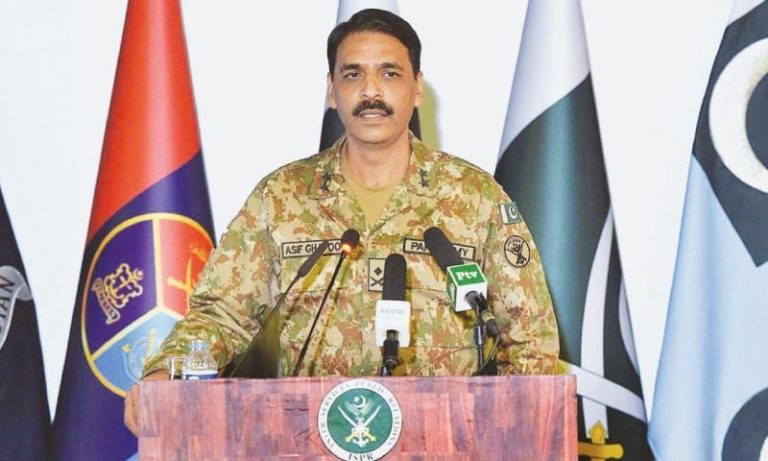
Though mandated to deal with military matters, Pakistan Army’s media wing Inter Services Public Relations (ISPR) is notorious for its proclivity to transgress into the realm of politics and diplomacy, leading to severe embarrassment. Therefore, Director Gen (DG) ISPR Maj Gen Asif Ghafoor’s puerile tweet conveying Christmas wishes to “Christians in Pakistan, across the globe and especially to the ones in the states of Odisha and alike under the Hindutva obsessed environment” comes as no big surprise– although its timing certainly does!

Isn’t it ironical (and equally amusing) that the DGISPR’s sarcastic tweet comes just on the heels of Pakistan being re-designated as a ‘Country of Particular Concern’ (CPC) by the US State Department for being guilty of “particularly severe violations of religious freedom,” implying official tolerance towards “systematic, ongoing, egregious violations of religious freedom”? Or could it be that this knee jerk reaction is mere manifestation of the frustration arising out of Pakistan’s continued inclusion in the CPC list? Whatever may be the reason, but if Maj Gen Ghafoor had thought that his tweet would find favour with the Christian community and arouse anti-government sentiments amongst them, then he was terribly mistaken.

Christians the world over (including India) have not quite appreciated the idea of their faith being used as ‘ammunition’ by Pakistan for its ongoing war of words with India. Furthermore, the DGISPR’s tweet rekindles bitter memories of how Christians are repeatedly being targeted in Pakistan and the case of Asia Bibi, who was terrorised and wrongly confined for eight long years on trumped up charges of blasphemy automatically comes to mind. Indian MP Dr. Sasmit Patra, (who himself is a Christian) hit back at Maj Gen Ghafoor with a strongly worded tweet that read, “Please hear a young Christian MP (Dr. Sasmit Patra himself) from Odisha (since you referred to Odisha), slamming Pakistan’s anti-minority barbarism before 170 countries this year at 141 Inter-Parliamentary Union (IPU), Belgrade.”

Patra also tagged video footage of his 141 IPU speech in which he can be heard saying that “It is shameful and derogatory, condemnable the kind of action Pakistan has been taking over the years. The minorities in Pakistan are fleeing Pakistan because Pakistan is perpetrating crimes on them. Can Pakistan confirm that it is home to 130 UN-designated terrorists and 25 terrorist entities listed in UN? Is this the agenda of Pakistan?” India’s Minister of Petroleum & Natural Gas and Minister of Steel, Dharmendra Pradhan from Odisha too hit back at DGISPR by tweeting “So says a man sitting at the epicentre of genocide against religious and ideological minorities.”

But in a way Maj Gen Ghafoor’s uncharitable Christmas tweet has done India good because it has fully exposed Pakistan’s grievous intent of vitiating the secular environment here. Minorities need to understand that the great concern that Pakistan is displaying is solely to instigate them to indulge in violence and this, as we all know, they have done earlier in Punjab and J&K. Whereas the people of Punjab saw through the Pakistan Army’s game-plan and rejected terrorism before it was too late, the people of Kashmir haven’t been as lucky since they have amongst their ranks, those, who being recipients of Islamabad’s largesse are using the deadly combination of religion and strong-arm tactics to ensure that normalcy doesn’t return to the Kashmir Valley.

DGISPR’s tweet has also brought back focus on the way Pakistan is treating its minorities and one is reminded of how he had sounded more like a novice politician rather than a mature military officer when in an obvious mention to Pashtun Tahafuz Movement (PTM) he had said, “Their time is up” The PTM is neither a terrorist or fundamentalist organisation. On the contrary, it’s a Khyber Pakhtunkhwa (KP) and Balochistan-based social movement for Pashtun human rights that was originally created by students for pressing the authorities to remove landmines laid by Pakistan Army in the former Federally Administered Tribal Areas (FATA). Shaken by continuing incidents of rampant extrajudicial executions and enforced disappearances, PTM added the demand for a truth and reconciliation commission on extrajudicial killings and presenting missing persons before courts.

The very mention of enforced disappearances and extrajudicial killings in Khyber Pakhtunkhwa–Balochistan regions upsets the Pakistan Army and this is but natural because of its humungous magnitude. Infact, during the same press conference in which he warned PTM that “their time was up,” the DGISPR himself conceded that “The list (of missing persons) has shortened to 2,500 cases today and the (missing persons) commission is working day and night to resolve those cases.” Whereas for Maj Gen Ghafoor it may be a matter of great pride that the list of missing persons had been “shortened to 2,500,” but this monstrous figure would certainly shock any God-fearing mortal.

The Pakistan Army is in full control of the Khyber Pakhtunkhwa– Balochistan regions and therefore such large number of persons missing isn’t possible without the army being either involved or at least aware of these disappearances! Though Rawalpindi has always denied it, but Maj Gen Ghafoor’s own statements made with reference to the PTM belie Rawalpindi’s claim. Examples:

  • DGISPR said that the army chief ordered him to engage with PTM and that “I was given one order by the army chief: ‘Do not use a harsh hand with them.’ The question that arises here is that if the Pakistan Army goes by the book and respects human rights, then where was the need for its army chief to specifically caution a senior officer holding the rank of a Maj Gen not to use “a harsh hand” against social activists?
  • Maj Gen Ghafoor further said that “People will not face any sort of problem and neither will any unlawful path be adopted.” He also emphasised that “Everything will be done lawfully.” Now, if the Pakistan Army has been doing things lawfully all along, then where was the reason for DGISPR to reassure the people that “Everything will be done lawfully”?
  • While speaking about the PTM leadership, what did the DGISPR mean when he said: “You have enjoyed all the liberty that you wanted to,” especially when correlated with the “Their time is up” threat!

Tailpiece- By originating a tweet on Christmas that has reminded the world of the skeletons stuffed in Pakistan’s own cupboard, Maj Gen Ghafoor has once again completely ‘goofed’ it up. Let’s now wait and see what’s he’s going to entertain us in this New Year 2020!

.

Ajoy Chakrabarty, His Wonderful World

There is an interesting story about Ajoy Chakrabarty, the genius and probably India’s finest classical singer. During the recording of show for Zee Telefilms, he exhorted his daughter, Kaushiki, to sing an old one, Saat Bhai Champa, even as he explained the notes to musicians on the stage. And then, after a pause, Chakrabarty looked into the camera and said it was high time people need to close the chasm that existed in India between Classical and Western music. Everyone should sing whatever they love, said Chakrabarty. “Many ask me why do you sing songs of Kishore Kumar, please do not do it. It hurts our feelings. I told them they should all stop this Panditji, Panditji business. Let people sing whatever they want, and if they can sing both classicals and Western songs well, applaud them and do not criticise.” Chakrabarty reminded me of the 1980 Telegu language movie, Sankarabharanam, where the protagonist JV Smayajulu said a similar thing to a gang of boisterous rappers, silencing them after he performed a song with perfection. And when it came to the turn of the youngsters to do a Classical one, they collapsed within seconds. This was no power show, Sankara helped the rappers understand the genesis of music and told them not to slice music into various compartments.

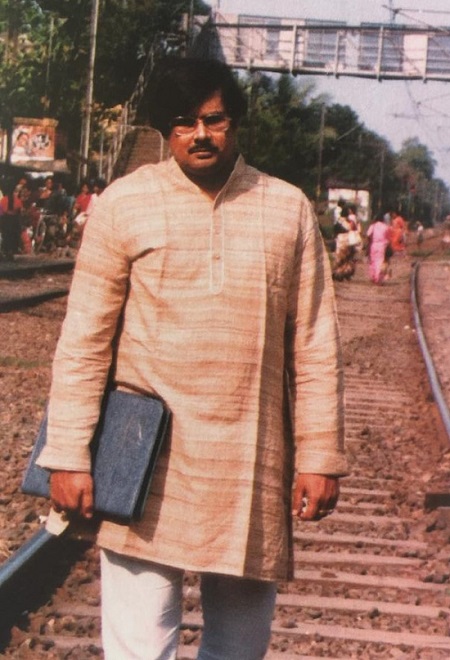
Ajoy Chakrabarty, the genius and probably India’s finest classical singer.

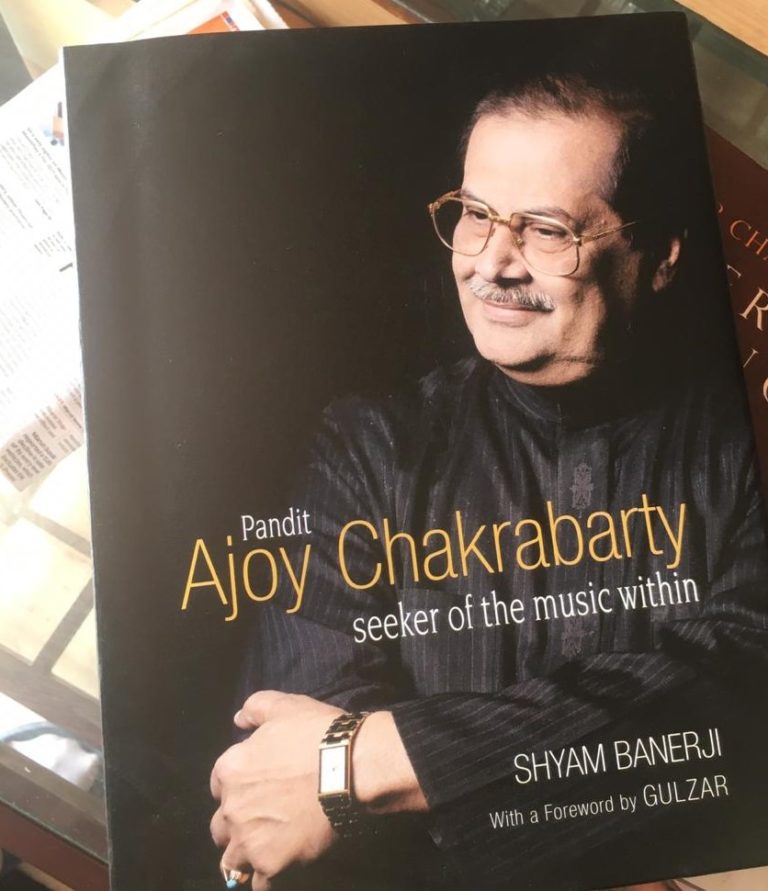
Chakrabarty is a root man, seeped into music, Shyam Banerji’s wonderfully scripted book, Pandit Ajoy  Chakrabarty: Seeker of the music within – a product of Niyogi Books — explains the man and his music, and his life and struggles. I loved the chapter — all have a signage of the word Ga on top — where Banerji talks about Chakrabarty’s early days when his father, Ajit Chakrabarty, bought a dismantled weaving loom from Mymensingh (now in Bangladesh) and wanted to earn some extra cash by weaving Sujani, a quilt made from recycled sarees. Read these lovely lines: “The click-clack of the loom was a rhythm that I soon got used to. What I loved most was my father calling me and asking me to sit on his lap while he wove the cloth. Matching the beat of the loom, he made me practise the sargam.” Ajoy Chakrabarty looked at the colours and heard the sound of the loom for hours, it was absolutely enchanting for him.

Ajoy Chakrabarty’s daughter Kaushiki Chakrabarty is also a classical singer.

The rickety loom was his gateway to life, Ajoy Chakrabarty remembered his music forever. 

Many moons later, sarangi maestro Pandit Hanuman Prasadji Maharaj, told Chakrabarty that he (Hanuman Prasad) was happy at Chakrabarty’s usage of laya in his songs. Chakrabarty’s father was probably standing close. He instantly quipped: “Well, it pays to listen to a heavy dose of chautal, teevra and dhamaar at a very young age (he was referring to the kirtan sessions). Singing kirtans — Bengali Holy songs devoted to Lord Krishna — did not help Ajit Chakrabarty earn enough cash but grounded him in musical brilliance, his son Ajoy happily walked on the pavement of gold.

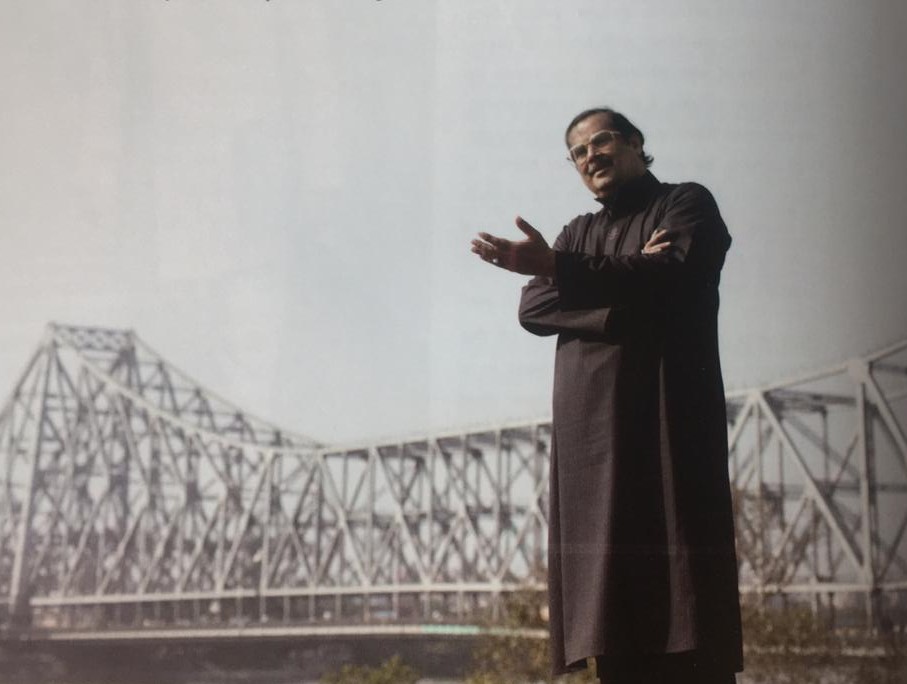
Biographies of legends can always be boring if its too, too laudatory without much insights, almost like the tomes written on cricketers and film stars. They rarely tell you the right stories, do not say why the batsman failed for three successive seasons and why as many as seven movies one after another did not work for an actor India knows as a superstar. But this one is different, it scores because it has both pain and gain. It has some of the most fascinating insights about the man who once stood close to the mighty Ganges in Kolkata like a character from the 1951 Jean Renoir film, The River, to shoot a commercial exhorting non resident Bengalis to return to Kolkata and boost the economy of the state. The Ganges, Ajoy Chakrabarty and his music was the highlight of the film. The book, time and again, explains why the protagonist has earned both name and fame, how hard, hard, hard he honed his skills to emerge as the Big Boss of Indian Classical Music. And how the Ganges remained an integral part of his life because he lived close to the river, almost like his gurus who could make out by the rustle of his slippers that Ajoy had come for his music lessons. I read how his father took an expensive loan from an Afghan trader — once Bengal had loads of them offering both dry fruits and cash — to buy a tanpoora for Ajoy. The instrument cost ₹90 in those days and Ajit Chakrabarty eventually ended up paying a whopping ₹300. Sounds lovely in these days of unpaid loans and non performing assets (NPAs) of the nationalised banks (isn’t it a whopping ₹8 lakh crores?). In those days, how many could have paid
₹220 extra for an instrument costing just ₹80. This was not just for music, this was also for life, this was also for the future of a rising star, Ajoy Chakraborty.

Ajoy Chakrabarty, during his younger days.

Ajoy Chakravarty wanted to do things in style. He wanted blessings from the Gods, was very, very keen to meet up Ustad Bade Ghulam Ali Khan. Chakrabarty loved Khan’s music. Chakrabarty waited for an opportunity to meet the legend. But getting across to Khan was very, very difficult. Eventually, on a balmy morning in 1966, Chakrabarty met Khan in the corridors of the imposing All India Radio building in Kolkata. Chakrabarty touched Khan’s feet and the latter remarked instantly: “Jeetey raho beta.” Chakrabarty, then a teenager, was floored by the humility of the legend. Khan died on April 26, 1968, around the time when the UK pop charts buzzed with What a Beautiful World. Chakrabarty was crestfallen. He told the author: “I had come to regard Ustad Bade Ghulam Ali Khan Saheb as my ideal. I had heard so many tales of his generosity, his personality and his devotion to music. I wanted to be like him. His passing away was a heavy blow that weighed me down for days. There was a sense of gloom.”

Banerjee, the author, explains how Ajoy Chakrabarty was encouraged by his father to rise and sing again, not to be depressed because of the death of Ustad Bade Ghulam Ali Khan. It seemed to me — the author does not write this one in the book — the rise of Chakrabarty was like that of the proverbial Arjuna from depression in the battle of Mahabharata, the words of Lord Krishna ringing in his ears, words that eventually formed the Holy Gita. For Chakrabarty there was no battle, no armies, no bows and no Godspeed fired arrows. Chakrabarty had to emerge from gloom. Eventually he rose, Chakrabarty recharged his batteries with that single memory of meeting his God in the corridors of AIR. He was back again, and there was no looking back.

Ganges remained an integral part of Ajoy Chakrabarty’s life.

Wonderfully written, the book is like a bangle studded with precious diamonds. I loved the one where the author explains how he — sitting in front of a radio — took notes from Tagore songs. The idea was to write down the lyrics and notations of each word of the songs and the transition of each note in a span of 15 minutes — obviously it was an AIR programme —  and then emerge stronger. Chakrabarty remembered lines from his favourite Sukumar Ray poem, Ei Dekho Pencil, Notebook Ei Haathey (which translates into Look Here Is My Pencil, And Notebook In My Hand). And then, after training hard, Chakrabarty impressed his Guru Jnan Prakash Ghosh, who often asked his students to repeat what he taught. On that day when Chakrabarty outsmarted everyone, he had learnt by heart as many as 17 compositions. It was like scoring a hat trick in front of the coach, and also the club owner.

In a world of styles and brands, Chakrabarty does not need special hairdos, nor he needs a Merc or a designer kurta to make a statement, he rarely talks about his performances. He is an unusual musician who is at ease at the various musical conferences, and also at the lobby of a five star hotel jam-packed to receive Shah Rukh Khan. Once he used to sing like Munawar Ali Khan, only to be rebuffed by his father. And then he developed his own style. A style of singing the world loved, loved and continues to love. His inspiration comes from an extraordinary insight into the structure of ragas. He once told a reporter that he sees his place at the feet of Saraswati, the Indian goddess of learning who rides a swan and is worshipped at the start of the new year. I have a feeling Chakrabarty prides himself being Paramahansa, the swan who drinks milk by separating it from water. The title in Bengal, till date, is reserved for the sage Ramakrishna who was born Gadadhar Chattopadhyay.

What a lovely read, and imagine the book is unjustifiably priced at Rs 1500. If I was a publisher, I would have priced it three times the current price. Those interested in music make some right investments, and not seek all answers from Alexa or Google. They must buy the right kind of books to enrich knowledge. All music schools must pick up copies of this one and make it mandatory purchase for its students. Will they do it? If they do, the publisher will earn some decent cash.

Obama’s favourite music of 2019 line-up includes Indian singer Prateek Kuhad’s song “cold/mess”

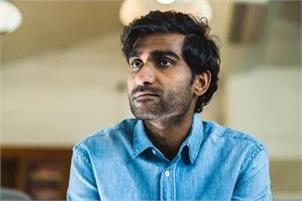
Indian singer Prateek Kuhad’s song “cold/mess” has made it to former US President Barack Obama’s favourite music of 2019 line-up.

The list, shared by Obama on Twitter on Monday, has 35 songs which includes “Hello Sunshine” by rock legend Bruce Springsteen, “Show Me Love” of Alicia Keys featuring Miguel and “Go” by the band Black Eyed Peas.

“From hip-hop to country to The Boss, here are my songs of the year. If you’re looking for something to keep you company on a long drive or help you turn up a workout, I hope there’s a track or two in here that does the trick,” the ex POTUS captioned the list.

Featuring actors Zoya Hussain and Jim Sarbh, Kuhad’s “cold/mess” featured on number 22 and the Delhi-based singer said he was honoured by the gesture.

“This just happened and I don’t think I’ll sleep tonight. Totally flipping out. I have no idea how ‘cold/mess’ even reached him but thank you @barackobama, thank you universe. I didn’t think 2019 could’ve gotten better, but damn was I wrong. What an honour,” Kuhad replied on Obama’s tweet.

Sarbh also gave a shout-out to the singer on Twitter.

Previously, Obama shared his favourite movies and TV shows of 2019, and the list includes Phoebe Waller-Bridge’s “Fleabag” season two, limited series “Unbelievable”, Martin Scorsese’s “The Irishman” and Korean filmmaker Bong Joon-ho’s genre-defying class drama “Parasite”.