Home Blog Page 392

Philosophical and Historical Foundations of American Secularism 15 – Scientific Skepticism and the Emergence of Modern Secularism

0

Dr. Herb Silverman is the Founder of the Secular Coalition for America, the Founder of the Secular Humanists of the Lowcountry, and the Founder of the Atheist/Humanist Alliance student group at the College of Charleston. He authored Complex variables (1975), Candidate Without a Prayer: An Autobiography of a Jewish Atheist in the Bible Belt (2012) and An Atheist Stranger in a Strange Religious Land: Selected Writings from the Bible Belt (2017). He co-authored The Fundamentals of Extremism: The Christian Right in America (2003) with Kimberley Blaker and Edward S. Buckner, Complex Variables with Applications (2007) with Saminathan Ponnusamy, and Short Reflections on Secularism (2019).

Here we talk about scientific skepticism and modern secularism.

Scott Douglas Jacobsen: Some of the pillars of American freethought have been individuals including H.L. Mencken, Carl Sagan, Paul Kurtz, or Martin Gardner, or in the everyday world of needed problem-solving in Parade Magazine with Marilyn (Mach) Vos Savant. 

Whether in the acerbic and sardonic writings of Mencken or in the ordinary American household language of Vos Savant, the wide-ranging philosophizing by Gardner or Kurtz, or the popularization of advanced scientific concepts to a lay audience in the case of Sagan, a delivery of wide-ranging scientific skepticism as a retort to the wide-spread irrationalism in American life. 

How have some of the larger figures of American scientific skepticism been helpful in providing another area of critical thinking for the public against common supernaturalisms? How have those, in turn, helped the cause of furtherance of secularism in the United States?

Dr. Herb Silverman: You mention famous American freethought individuals, some of whom might be acerbic, sardonic, read by ordinary Americans, philosophers, popularizers of science, or debunkers of irrationalism. I think all such people are useful to a freethought movement because they often represent different constituencies. I’m a “big tent” atheist who welcomes all to come out of their atheist closets to help normalize freethought in America.

I’ll describe my personal journey to atheism with four examples.

As a youngster, I was influenced by the movie The Wizard of Oz, where the gatekeeper told Dorothy that nobody had ever seen the great Wizard. Dorothy replied, “Then how do you know he exists?” The curtain is later pulled back to reveal that the “Wizard” is an elderly man operating machinery and speaking into a microphone. So the Wizard didn’t exist, and Dorothy was on her own. That sounded to me a lot like what I was beginning to think of God.

I was also influenced by the Bible. I “knew” as a trusting child that the Bible was God’s word. But after many of my biblical questions went unanswered, I became an example of what Isaac Asimov observed, “Properly read, the Bible is the most potent force for atheism ever conceived.”

At age 16, in 1958, I hadn’t told anyone that I no longer believed in God, thinking I might be the only one in this country with that opinion. Then I discovered Bertrand Russell’s Why I Am Not a Christian in the public library. I felt better about myself after learning that Russell was more than just not a Christian. He was as many “nots” as I was, and brave enough to say so. Russell transformed the lives of many in my generation. For the first time we heard articulate arguments that confirmed and gave voice to our own skepticism and doubts. Even some true believers were led on a thoughtful journey toward altered religious states. Learning that Russell was a logician and mathematician at least partially inspired me to become a mathematician.

When I read George Orwell’s 1984, I thought the character “Big Brother” appeared to be an omnipotent, omniscient, eternal, authoritarian figure who demanded absolute obedience. I didn’t know at the time that Orwell was an atheist. Here’s what Orwell said about Big Brother: “In 1984, the concept of Big Brother is a parody of God. You never see him, but the fact of him is drilled into people’s minds so that they become robots, almost. Plus, if you speak bad against Big Brother, it’s a Thoughtcrime.”

You also asked why there might now be more critical thinkers in America, helping to further the cause of secularism in the United States.

In “The Last Taboo: Why America Needs Atheism,” published in the New Republic in 1996, Wendy Kaminer wrote, “Atheists generate about as much sympathy as pedophiles. But, while pedophilia may at least be characterized as a disease, atheism is a choice, a willful rejection of beliefs to which vast majorities of people cling.” I have one slight disagreement: Atheism is not a “choice.” For me, the only choice is whether to be open about my atheism or pretend to believe in a deity for which there is not a scintilla of evidence.

The situation in the United States has improved significantly since Kaminer’s piece appeared twenty-three years ago. Much has been written about atheism, including best-selling books by Richard Dawkins, Christopher Hitchens, Sam Harris, Daniel Dennett, Susan Jacoby, and others. A number of popular blogs now promote atheism and secularism. In the Internet age, people hear about many worldviews, not just the one in which they were raised. Every new national survey shows a rapid increase of atheists, agnostics, and those who claim no religious affiliation (called “nones”). Many “nones” broke from conservative religion because it is anti-LGBTQ, anti-women’s rights, and anti-science. Pedophilia has also discouraged people from maintaining their church affiliation. 

Fivethirtyeight, which takes its name from the number of electors in the U.S. electoral college, is a website that focuses on opinion poll analysis. A recent piece, “Millennials Are Leaving Religion and Not Coming Back,” pointed out that 40 percent of millennials are religiously unaffiliated. And there’s mounting evidence that today’s younger generations may be leaving religion for good. Changing views about the relationship between morality and religion also appear to have convinced many young parents that religious institutions are simply irrelevant or unnecessary for their children. A majority (57 percent) of millennials agree that religious people are generally less tolerant of others, compared to only 37 percent of Baby Boomers.

The Christian conservative movement warns about a rising tide of secularism, but the strong association between religion and the Republican Party may be fueling this divide. And as more members of the Democratic Party become secular, the rift between secular liberals and religious conservatives will be exacerbated. I’m hoping we will return to the day when Republicans identify as economic conservatives who want less government interference, rather than identify with the Christian religion as so many now do. I would still be a Democrat, but at least I’d understand that the Republican Party had a legitimate point-of-view.

When it comes to voting, 60 percent of Americans say they prefer a candidate who believes in God and only 6% say they prefer a candidate who doesn’t.  However, this preference for candidates who believe in God nearly disappears when policy positions are included in the question. The percent who say they would vote for a well-qualified atheist has steadily risen from 18 percent in 1958 to 58 percent in 2015. The Congressional Freethought Caucus, formed in 2018 with 4 members, is a forum for secular members of Congress who promote evidence-based public policy. It now has 12 open members, with more likely to join. There are also more than 50 state legislators who identify with the atheist and humanist community.

While our community is growing rapidly, we are still severely underrepresented in politics. We need to encourage more members of our freethought community to run for public office, and also encourage elected officials to acknowledge their nonbelief. Here are some of our important issues: protecting a strict separation of religion and government, addressing climate change, advancing human rights and civil liberties (including disparities in incarceration rates, easy access to register to vote, women’s rights), health and safety (vaccines, death with dignity), and promoting religious freedom abroad (opposing blasphemy and apostasy laws). We need our atheist and humanist community to become more visible and welcomed by participants in the electoral arena. I hope for a day when every political party at every governmental level will embrace our constituency.

Jacobsen: Thank you for the opportunity and your time, Dr. Silverman.

Photo by Luke Stackpoole on Unsplash

Canada: Minor Economic Shrinkage in October, 2019

0

As reported by the CBC News, the economic of Canada reduced by a tenth of one percent in October of 2019.

The economic condition for Canadians remains quite strong with the 10th largest economy in the world, according to Business Insider. Not only this, its oil reserves may exceed the Middle East. (However, this may become less relevant into the future with the rather rapid and predicted transition into renewable energy sources in the 2020s, 2030s, and further into the future.

With a shrinkage of the real Gross Domestic Product of GDP of the Canadian economy, based on reportage by Statistics Canada, this will be the first decline in the last 8 months of either economic stabilization, as in July, or growth, as see in, for example, May, June, August, and September with growth percentages of 0.3%, 0.2%, 0.1%, and 0.1%.

The economy, how ever slight, appears to show a several month slowing of the growth rate of the economy. The projection was a 0.0% growth rate of the Canadian economy in October in September. This did not play out.

With the manufacturing sector in Canada down for the 4th time in 5 months, this impacted the growth of the Canadian economy.

As reported, “The United Auto Workers (UAW) strike in the U.S. caused Canada to scale back production contributing to the decline. Retail trade declined 1.1 per cent—it’s largest decline in three years, while wholesale trade declined one per cent.”

However, oil production increased by 0.1% and real estate by 0.7%. So, we had a rapid growth in real estate, minor growth in oil production, and an overall decrease in the economy where a prediction was for a halted economy for October.

Photo by Markus Spiske on Unsplash

State Election Lessons: When will the BJP Learn?

0

One more election loss for the Bharatiya Janata Party (BJP) in Jharkhand after Maharashtra, Rajasthan, Madhya Pradesh, Chhattisgarh and barely scraping through in Haryana.

It seems that losing elections at the states has become a habit that the BJP is not being able to reverse. State leaders keep satisfying themselves by saying that they are the “largest party” in the state. Justifying performance with an increased or similar vote share is relevant only if you are the victor, otherwise it seems like “sour grapes”.

BJP state leaders must remember the old adage that “no one remembers who came second”.

Nothing is more brutal or painful than coming second in politics.

It will do well for the BJP leadership at the state level, while going through their chintan baithaks” to analyse the reasons for consistently not making it past the winning post in the last several elections despite a resounding victory in the 2019 Lok Sabha elections.

Let us look at some of the reasons the BJP has been losing the plot in so many state elections.

Lok Sabha Elections are different from State Assembly Elections

The message that is coming through loud and clear after the various state elections is that the Indian voter has now become far more discerning than the politicians thought they were. The voters are now willing to recognise that they want a leader who addresses national issues at the Centre. However, they want a different leader who addresses their local issues, who can help resolve their daily challenges. State chief ministers cannot keep talking about national security issues, Pakistan, India’s international reputation or India’s large foreign exchange reserves.

The chief ministers have to perform. Too much reliance is being placed on Prime Minister Narendra Modi and the Home Minister Amit Shah. Yes, they are leaders of the BJP, and their presence definitely boosts the party’s prospects, but their charisma can do very little with the voters if the state leadership is not performing. This is evident from several sitting chief ministers of the BJP losing the elections.

At the end of the day we are back to who addresses the basic needs of the people which are simply – Roti, Kapda aur Makaan. It is a pity that these 3 basic requirements have still not been met across the entire country after 72 years post-independence. This commitment is to be delivered to the people no matter what it costs, irrespective of which party that maybe in power in a state.

Is Corruption Back in the States?

Voters have trusted Prime Minister Narendra Modi with his famous comment “na khaunga na khane dunga”. The voters trust him and know that he is absolutely clean. This is why they have reposed their trust with an unprecedented second term with a larger mandate.

While BJP government at the centre is seen to be cleanest in the country after a very long time, the same story is clearly not being heard in the several states where the BJP has lost power in the last few elections. There are talks of corruption at states and the general comment is that the BJP government in the state is no different from earlier Congress or regional governments led by other parties.

If corruption is back, then the election results should not be a surprise.

Anti-Incumbency

Anti-incumbency is always one of the reasons why parties lose elections. But when the loss is wiping out the significant games that the party has seen at the national level then the reason for this loss goes beyond anti-incumbency.

It would be interesting to analyse the performance of all the sitting MLAs who have lost the elections. Have all these local leaders delivered on the promises they made to their constituencies in the previous elections? Have they remained in touch with their voters? Or did they, like most politicians, starting pontificating and blaming from their ivory towers once they were elected?

Only when their elected representatives are not performing will any voter take the decision to vote for someone else. This is the harsh reality and must be accepted by all.

Opposition Coming Together

Opposition parties are coming together and though their ideologies are completely different, most of them are willing to bury the hatchet, forget their diverse ideologies and come together on a single platform of defeating the BJP at all costs. They have realised that a united opposition could create the wedge they have been looking for to prise open the ranks of the BJP.

To all these parties, delivering on the promises made in the diverse manifestos of these parties is not relevant at this stage. These parties know that their differences will certainly become an issue in the next few years. However, they would have achieved their short-term objective of slowing the BJP juggernaut.

What will this do to the governance in states that are now being run by coalition governments is yet to be seen. But that is another subject altogether.

Infighting in the BJP

Infighting in the BJP is clearly increasing.

It is a pity that state leaders, instead of working together are busy destroying their opponents. If this is happening at the top, then it is certainly percolating down the ranks.

Are these differences cropping up because the BJP has, indiscriminately admitted various opposition leaders who simply wanted to “jump ship” and join the rising star of the BJP? It would be interesting to see what happens when most of these leaders who had crossed over now look for opportunities to go back. Once they are back in their original party, they will become a thorn in the side of the BJP.

Or is it because, like the Congress and other opposition parties, BJP leaders have also become prima donnas? Are these BJP leaders also forgetting that they too are mere mortals who can be defeated if they don’t perform?

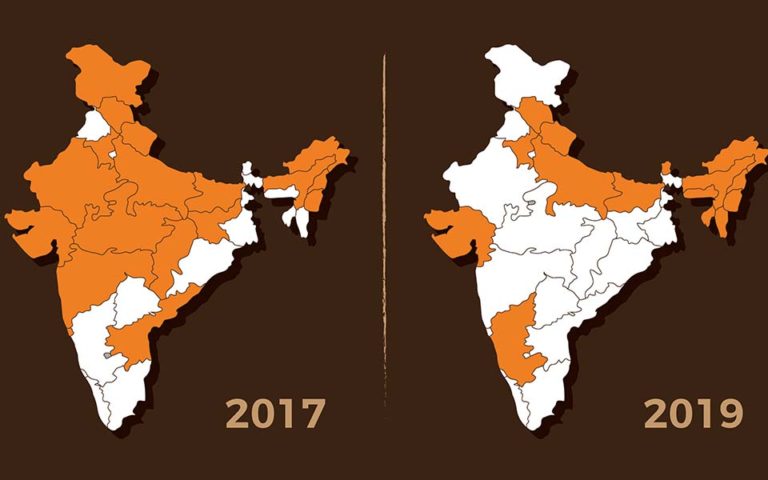
Clearly, the voter is turning away from the BJP not because they have changed loyalties to other parties who they had rejected in the past. They are doing this because they are disappointed with the BJP leadership at the state. Unless this changes, the saffron colour from the map of India will keep reducing.

Can the BJP reinvent itself in the states, as it has done at the centre, fast enough for the forthcoming elections in Delhi, Bihar and West Bengal?

Will the voter see BJP as the party with a difference, with very different standards of ethics or will they see the party as just another party that can be tossed aside if they are not performing.

Only time will tell.

Green mobility startup eBikeGo eyes 1 million users by 2020

With the government giving a major push to promote green mobility options in the country, it’s an opportune time for Electric Vehicles (EVs) startups to take the big leap forward. Niti Aayog has proposed to push for full conversion to electric vehicles (EVs) for internal combustion engine three-wheeler by 2023, and two-wheeler (engines with or below 150 cc capacity) by 2025. This indicates that the government will definitely go the extra mile to boost Electric Vehicles (EVs) with adequate policy measures and incentives.

For first-time entrepreneur, Irfan Khan, co-founder and CEO of electric bike rental and e-mobility startup eBikeGo, it’s the perfect time to spread their wings. “During the last two years, eBikeGo has grown from 640 users in 2017 to 18,000 users in 2019 and we are eyeing to have a million users by 2020, and also reduce 5 to 6% of the carbon monoxide in some cities by 2022,” Irfan Khan told News Intervention.

The startup recently raised $300,000 as part of a major funding round led by Startup Buddy. The round also saw participation from other investors like singer Sukhbir Singh, Rajesh Sawhney (co-Founder of Innerchef), Rohit Chanana (Founder, Sarcha Advisory), Siddartha Ahluwalia (Founder of 100x Entrepreneur), Boudhik Ventures, Milind Garud, Arun Gholap, Shantanu Vinekar and other senior corporate executives.

At the time when eBikeGo had started its initial operations, there were no big competitors in the EV segment. However, the scenario has changed now. Nonetheless, they still feel that they have a first mover advantage and want to capture 0.1% of the 3 crore two wheeler market in the delivery ecosystem. “Making the change from fossil fuel to electric vehicles require a lot of adapting in terms of registration, insurance etc. We at eBikeGo thought we will help to bridge the gap by providing e-bikes on rent therefore making adaptation to electric vehicles easier and we have had a tremendous response. Since we are first in the market and have a lucrative rental model and innovative mobility solution, we don’t have a competitor as such,” Irfan shared. The startup which was initially launched in Amritsar in 2017, has now expanded to Delhi, Amritsar, Jaipur, Jalandhar, and Agra in 2019 and is planning to expand to 8 cities by the end of 2020.


Since we are first in the market and have a lucrative rental model and innovative mobility solution, we don’t have a competitor as such,” Dr. Irfan Khan, co-founder and CEO, eBikeGo

eBikeGo is providing their bike services to prominent delivery companies including Zomato, Delhivery, Big Basket and several others. By 2020 they hope to increase tie-ups with 69 companies deploying 30,000 EVs in the market. Irfan feels it’s a win-win situation for delivery companies as well as those looking for employment in this sector. “eBikeGo is creating numerous job opportunities for people wanting to work in the delivery business but couldn’t due to lack of a bike or not being able to afford bikes due to high fuel prices. eBikeGo provides delivery boys an eco-friendly and low-cost solution to speed up deliveries in the area. Our bikes provide ‘smiles for miles’ that are extremely economical at 20p/ km. They have the best in class loading capacity of 150 kg and best in class speed of 55 km/hr, so one can explore more with eBikeGo’s bikes which can run upto 100 km per charge,” Irfan added. As part of its rental services eBikeGo is providing end-to-end solutions like service, maintenance and roadside assistance along with inbuilt technology which makes the delivery person’s ride hassle free.

For companies, it could mean a significant improvement in the quality of the candidates hired. “During the selection procedure companies give preference to boys who own a two-wheeler. Other criteria like educational qualifications, soft-skills are not taken care of. As now, we are entering into direct deals with the companies for bike rentals, they can hire better candidates even if they don’t own two-wheelers,” Irfan shared, while elaborating on the plans to expand its network in different cities to provide a sustainable solution for the customers and business partners using electric two-wheeler.

Hemant Soren to return as Jharkhand CM as JMM-Congress defeats BJP

Jharkhand Assembly election results came out as another setback for BJP after loosing elections in Rajasthan, Madhya Pradesh and Chhattisgarh to the Congress last year, while Maharashtra slipped out of its hands this November. In Jharkhand the coalition led by the Jharkhand Mukti Morcha (JMM) and also comprising the Congress and Rashtriya Janata Dal (RJD) cleared the majority mark of 41 in the 81-member assembly of the tribal-dominated state.

The BJP has attributed its loss in the Jharkhand assembly polls to “local issues”, and said “internal strife” also appeared to have a significant impact in the state, Party spokesperson G V L Narasimha Rao said the lack of an alliance against a united opposition also had a role. “Inability of local leadership to convince the electorate for repeat of the mandate and internal strife within the party also appeared to have a significant fall out. A detailed analysis will be done,” he said.

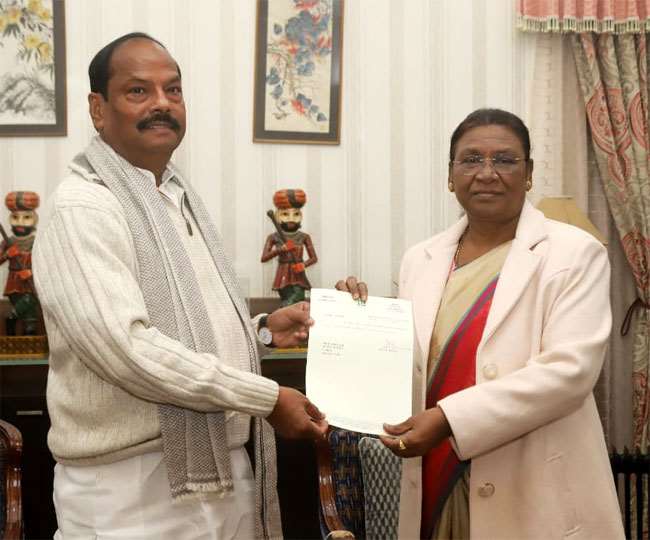
Chief Minister Raghubar Das conceded defeat in the Jharkhand assembly elections on Monday as he lost not just the chief minister’s chair but also his MLA seat. He later tendered his resignation from the post to Governor Draupadi Murmu, at Raj Bhavan in Ranchi.

Prime Minister Narendra Modi congratulated Hemant Soren and JMM-led alliance for the victory. “Congratulations to HemantSoren Ji and the JMM-led alliance for the victory in the Jharkhand polls. Best wishes to them in serving the state,” tweeted Prime Minister Modi. I thank the people of Jharkhand for having given BJP the opportunity to serve the state for many years. I also applaud the hardworking Party Karyakartas for their efforts. We will continue serving the state and raising people-centric issues in the times to come,” he tweeted.

Hemant Soren thanked Narendra Modi after the Prime Minister congratulated him and JMM-led alliance for their victory in the Jharkhand assembly elections. “Thank you Prime Minister Narendra Modiji for your wishes. Your coordination is very valuable to the poor population of Jharkhand,” Soren said in a tweet.

BJP president Amit Shah has said his party respects the mandate of Jharkhand voters. In a tweet, Shah also expressed his gratitude to the people of Jharkhand for giving the BJP a chance to govern the state for five years and asserted that his party remains committed to its development. He also lauded BJP workers for their “untiring” efforts in the assembly polls.

Punjab calls for seamless implementation of CAA

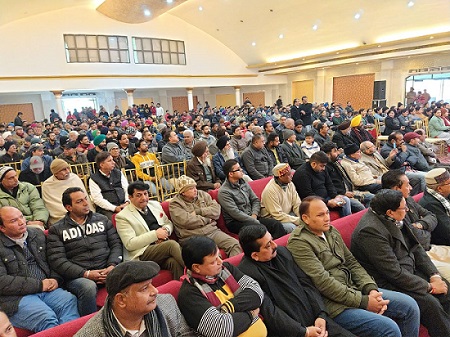
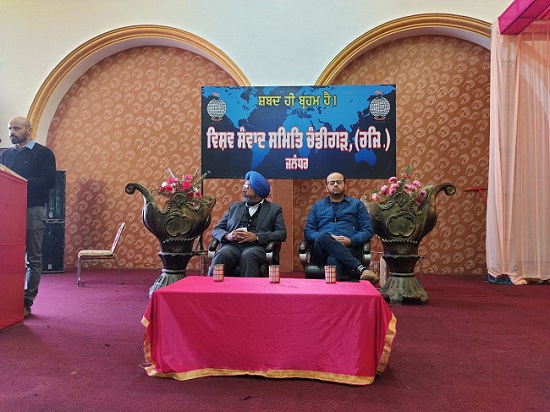
Col. (Retd.) Jaibans Singh expressed great concern about the violent agitations in the aftermath of the Citizenship Amendment Act (CAA) passed through a constitutional procedure by the Parliament of the country. Col. Jaibans Singh was speaking at a seminar on the Citizens Amendment Act, 2019 that was organised by the Vishwa Samwad Smiti at Jalandhar on Monday.

Col. (Retd.) Jaibans Singh said that while protest was the legitimate right of the people of the country the high level of violence that accompanied the protest has the signature of the same being engineered by professional elements at the behest of anti-national forces. He said that the unrest was being contained by police and security forces with great restraint and maturity which was a very positive development.

He expressed confidence that the government would seriously consider the sentiments expressed by the moderate protesters and ensure that the same are implemented on merit. He added that the concept of giving citizenship to minorities persecuted in Islamic countries was accepted by all political parties, leaders and people of the country right from the time of partition of the country. Many from Mahatma Gandhi to Pandit Jawaharlal Nehru and on to Dr. Manmohan Singh had spoken clearly in favour of the initiative.

The courageous action by the present government to apply this sentiment on ground needs the highest praise and admiration. Certain forces were creating “disinformation through misinformation.” The same needs to be identified and exposed.

Col. (Retd.) Jaibans Singh (sitting left, in blue turban) at the seminar on Constitutional Amendment Act 2019 at Jalandhar on Monday.

He further elaborated that the amendment was time bound and restricted to benefit a certain segment of unfortunate persecuted people who had sought refuge in the country up to 31st. December 2014. Singh emphatically stated that the CAA was, in no way, associated with the process of preparing a National Register of Citizens (NRC) and disinformation in this regard needs to be seriously contested. It is unnecessarily causing a state of insecurity and distrust where none should exist.

CAA will, in no way, affect the liberal policy already legislated to giving refuge to those in need refuge already legislated, so, those looking for citizenship under existing laws have nothing to worry about

While speaking about the atrocities being heaped on minorities in Afghanistan, Bangladesh and especially Pakistan, the speaker said that not only India but the entire world should take cognisance of the same since it entails the worst form of human rights violation. It is for the reason that the number of people in minority community in these nations has reduced to an almost negligible level. There is every reason for the world to join India in the tryst to ameliorate the suffering of the unfortunate people.

Col. Jaibans Singh culminated his talk with the assertion that CAA is here to stay being a righteous and justified legislation, in tune with the highest tenet of humanity that is the benchmark of Bharat. He applauded the support given to the legislation by Punjab despite certain statements to the contrary by the Chief Minister. He exhorted all nationalist forces to stand together and remove all apprehensions that are being spread by false rumours.

He called for special facility in seamless application of the Amendment especially so since those affected continue to be abysmally poor and illiterate in many cases, they would not know how to proceed with the documentation etc and would, as such, require assistance. 

Col. (Retd.) Jaibans Singh is a writer, columnist author and commentator. He maintains a keen interest in issues of national importance in the social geo-political and geo-strategic domain. He runs an active blog Defenceinfo.com and is the Director at the Centre for Socio-Cultural Studies, Punjab.

Jharkhand reminds BJP to prop up its high integrity politicians

0

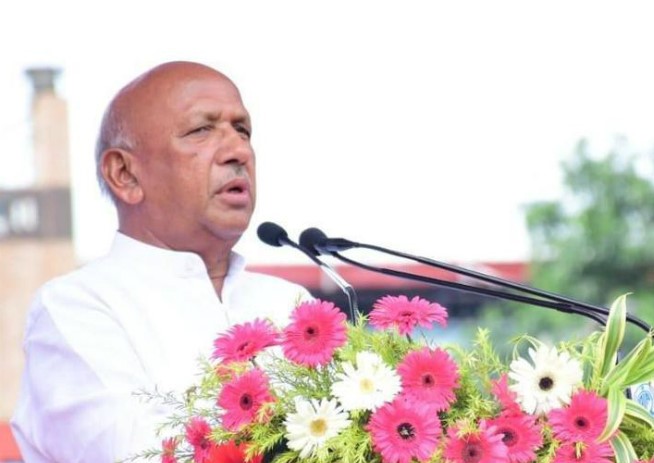
This is loss of BJP and so a win for opponents by default. Yes, the Bharatiya Janata Party (BJP) has lost the 2019 assembly elections in Jharkhand. The key reason why Narendra Modi rose to power in 2014, can once again be seen at play in Jharkhand. And, wise people in BJP should not feel surprised.

Seeds of this public decision lies in the womb of Anna Hazare andolan (movement). It’s time to recall that great day and then attempt to understand the apparent contradictions between greater second victory of Modi in May 2019, followed by three state election losses within a short time. And the three state election losses before May 2019, in late 2018.

We need to assess public decisions more precisely, rather than use meaningless terms like anti-incumbency etc. In any election there is bound to be some winner that does not necessarily mean public likes them. What needs to be understood after election results is, whether the winner won public confidence, or the loser lost public confidence. These are two different reasons in any elections, more pertinent now in the internet era, where public has greater clarity on finer points through endless information flow. Falsehoods cannot remain buried for too long anymore by any politician in power, from any political party. If corrupt from a party still win, it’s because the one in power became corrupt too, and has lost public confidence.

BJP lost Jharkhand assembly elections to the public, BJP’s opponents did not win. Responsibility squarely lies with the BJP. Ironically, it’s the people of Jharkhand who will ultimately be the biggest losers, as they will now have to bear the corrupt ones they had rejected last time.

In order to find the reason, let’s look back to the day of Anna Andolan (movement). This movement awakened the nation’s spirit from within to shed off dishonesty from governance. Experiencing deep rooted corruption in daily lives, witnessing political class blatantly misusing power for personal and family benefits nation was absolutely fed up. It was in this background that nation lost hopes from Congress and other family driven parties and latched on to new faces who gave them hope. This was the reason Arvind Kejariwal won people’s heart in Delhi at that time, and Narendra Modi of the nation as whole! Modi has proven himself so convincingly that nation gave him a bigger mandate for a second time, in May 2019.

Yet the problem remains with BJP as a political party. Why are they not able to find clean and courageous leaders like Narendra Modi in every state, in every district, in every town and village? This is the real question. After all, Modi cannot be everywhere and Modi cannot live forever. Is there a deliberate effort by the not-so-clean politicians in BJP to prevent old or fresh blood with conviction for absolute integrity in personal and public life?

To be fair to the BJP, they did try a new face in Maharashtra and the state gave a strong second mandate to them. It was a different matter that their partner cheated on them. Actually, it was clear to all ground level BJP workers that had BJP chosen to fight alone, without Shiv Sena, public would have given them a definite majority. How the BJP leadership lacked to grasp this changing reality in Maharashtra is beyond the comprehension of common man.

So, the reason for BJP’s loss in state elections is that the not-so-clean politicians are not being replaced by a new breed of high integrity individuals. Jharkhand elections is just another reminder. Why else public elected Saryu Roy as an independent candidate by defeating the sitting Chief Minister of Jharkhand Raghubar Das?

If BJP is unable to see this simple truth and fails to undertake complete overhaul from within, the nation would find itself in a deeper ditch which will be the second gravest tragedy after losing faith in corrupt Congress.

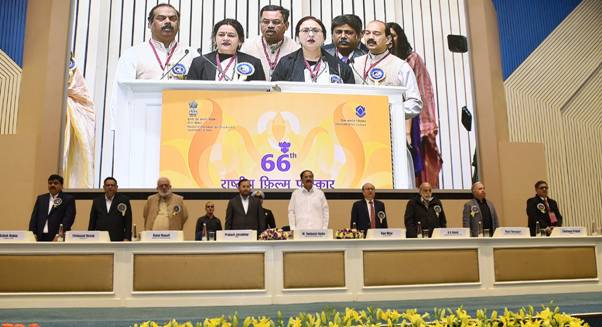
66th National Film Awards presented by Vice President M Venkaiah Naidu

The Vice President of India, M Venkaiah Naidu today conferred National Film Awards for the year 2018 in various categories at its 66th edition, held at New Delhi. Union Minister for Information & Broadcasting (I&B), Prakash Javadekar; Secretary, Ministry of I&B, Ravi Mittal; Chairperson, Feature Film Category, Rahul Rawail; Chairperson, Non-Feature Film Category, AS Kanal; Chairperson, Best Writing on Cinema, Utpal Borpujari and other dignitaries were also present on the occasion.

Some of the prominent winners in various categories for this year National Film Awards includes Gujarati film Hellaroin in the Best Feature Film category. Badhaai Ho bagged the award for Best popular film providing wholesome entertainment, Hindi movie Padmanwas awarded Best Film on social Issues, Aditya Dhar won Best Director Award for Uri: The Surgical Strike, Ayushman Khurana and Vicky Kaushal jointly won Best Actor Award for their performances in Andhadhun and Uri: The Surgical Strike, while Keerthy Suresh bagged Best Actress trophy for her performance in Telugu movie Mahanati. Marathi movie Naal got the Indira Gandhi Award for Best Debut Film of a Director while another Marathi movie Paani won the award for Best Film on Environment Conservation/ Preservation. Nargis Dutt Award for Best Feature Film on National Integration was given to Kannada film Ondalla Eradalla and Uttarakhand was awarded the Most Film Friendly State.

Amitabh Bachchan, could not attend today’s function due to ill-health will be presented with the prestigious 50th Dadasaheb Phalke Award, Indian cinema’s biggest honour in his 50th year in the Indian film industry, later.

Speaking on the occasion, the Vice President spoke on how Violence has no place in democracy and that Film makers must make conscious effort to ensure that dialogues, depiction of characters and costumes reflect India’s culture, customs, practices and traditions. He further added that Cinema should also help in strengthening family systems and promoting democratic values.

The Vice President while complementing the film industry expressed how cinemas must be used for social change, “I call upon the film fraternity to curb the depiction of violence, vulgarity and obscenity in view of the huge impact films make on the masses, particularly youngsters. Art speaks a universal language and helps shape social norms”.

Talking about Indian films popularity globally and how cinemas has no geographical or religious boundaries because it speaks a universal language and touches the raw emotions, the Vice President said “Indian films carry an important message to audiences across the world. They convey a glimpse of ‘Indianness’ or ‘Bharatheeyatha’ to the outside world. We need to be effective ambassadors in the world of cultural diplomacy”.

Highlighting that Indian cinemas have gained global popularity and that there is great demand for it, Union Minister for Information &Broadcasting, Prakash Javadekar stated, “Our theatre and our films is our asset, it is our soft power and we must harness to take advantage of this. To ease the process of film shooting permissions and clearances, we have prepared a single window system at Films Division. We are also in the process of implementing this regionally”.

Congratulating the Award winners, Javadekar dwelt upon the magical world of cinema and the talent that goes behind creating it, “Film is such an art that as Vishwakarma creates a world, the filmmaker also creates a new world and we immerse ourselves in that world”, stated the Minister.

Environment & wildlife film festival for school children organized in Himachal

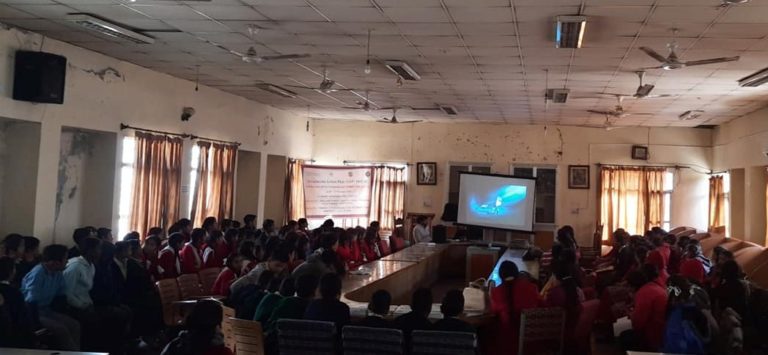
To promote informed action by students towards environmental conservation, a two-day environment and wildlife film festival for school children was held in Himachal Pradesh. The film festival was jointly organized by Himachal Pradesh Council for Science Technology and Environment (HIMCOSTE) and CMSR Foundation. More than 30 short films and documentaries were screened during the festival.

On the first day, screenings were organized at Vallabh Government College in Mandi. More than 500 school students from various schools in and around Mandi participated in the screenings. Issues of everyday concern like minimizing wastage of water, waste segregation, discarding the use of polythene etc. were discussed in the open forum after the screenings.  Divisional Forest Officer (DFO), Mandi, Surendra Kashyap was the Chief Guest on the occasion. In his address he said though climate change is a natural process, the rapidity with which climate is changing now, will be detrimental for the planet. With increasing temperature, sea-level will rise due to which several coastal areas will get submerged.

On the second day of the film festival, screenings were organized at Mahavir Public School in Sundernagar. More than 400 students and teachers from various eco-clubs participated in the screenings in two shows. During the open forum students shared their understanding on a wide range of contemporary environmental issues related to conservation of bees, afforestation, use of biodegradable material, judicious use of water, waste segregation and safe disposal. Principal of the school Anuradha Jain, in her concluding remarks exhorted students to utilize this information for positive action towards environment in their surroundings.    

CMSR Foundation Director Narender Yadav, who was also the resource person for the two-day programme interacted with students and also explained various environmental concepts in an easily comprehensible way. From Himachal Pradesh Council for Science Technology and Environment (HIMCOSTE) Akshita Sharma and Shweta Thakur participated in the programme. The film festival was second in the series of three film festivals planned in Himachal Pradesh by HIMCOSTE. The festival will conclude in Dharamshala next month.

Political opportunists are milking CAA and fooling Muslims

3

The mindless violence over Citizenship Amendment Act (CAA) is a classic example of how a humane initiative can be made to appear monstrous and evil by skillful use of mischievous propaganda, lies and sinister planning. 95% of the protesters have not read this Act, yet they have declared Jihad. Remaining 5% who see themselves as conscience keepers of the nation have joined the chorus blinded by their hatred for PM Narendra Modi.

In simple words, CAA merely legitimizes the stay of 15 lakh odd Hindu, Sikh, Parsi, Christian, Buddhist and Jain immigrants, who escaped from Pakistan, Bangladesh and Afghanistan due to their continuous religious persecution and are staying in India as refugees. It is a one-time dispensation and its cut-off date for eligibility is December 31, 2014. The Act excludes illegal Muslim immigrants because they did not come to India due to religious persecution but in search of better economic opportunities. The protesters call CAA divisive and insist that it is going to break India on religious basis. Perhaps they would have liked over 1 crore 65 lakh illegal Muslim immigrants to be bracketed as religiously persecuted in their Islamic countries and given citizenship under this Act so that India remains united. You could not have a more bizarre situation where illiteracy of a law becomes a reason to burn the nation.

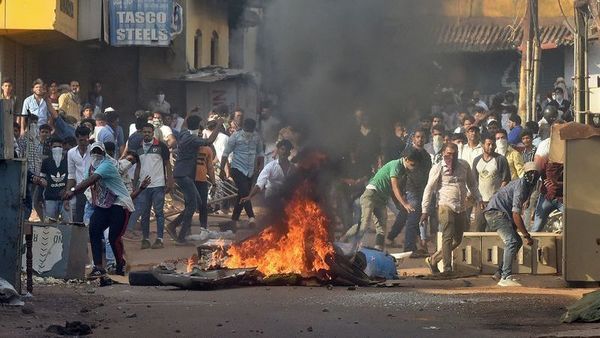
CAA protesters hurl stones on police in Mangaluru, Karnataka. (Photo: Reuters)

Kapil Sibal, the legal honcho of Congress, cannot figure out how the government will know whether Hindu immigrants were persecuted and Muslims were not. His problem is he has not witnessed the pogrom that Hindus have gone through in Bangladesh and Pakistan at regular intervals. Sikhs, Christians and Buddhists have not been far behind in suffering the same fate. Wish Sibal had listened to the horrifying account of two Christian families whom I met recently in the US. They had adopted Muslim names to survive for nearly thirty years but once Jesus tumbled out of their cupboard, life became a living hell for them. Subsequently, they escaped to the US via Mexico and are now US citizens.

Mindless Opposition to CAA      

Opposition to the CAA in North East States is understandable to some extent. People of the region have been victims of indiscriminate influx of illegal immigrants — both Muslim and Hindus — who have adversely impacted their demography, language, culture, property rights and electoral arithmetic. They would naturally be apprehensive that another addition of 12 to 15 lakh Hindu refugees to their population would further corrode their political, social and cultural cohesiveness and eat into their economic resources.

Actually, this is more an imaginary fear than reality. Most of these refugees are abysmally poor, illiterate and are living in horrible conditions. They need help to merely survive without any uncertainty of their status. The violence unleashed by AASU (All Assam Students’ Union) etc. to get their voices heard is therefore unjustified. Look at what they have finally achieved. Four lives have been lost, hundreds of protesters are nursing injuries, public and private property worth crores of rupees lie destroyed and life has come to a standstill in many areas thereby disrupting supplies of essential commodities. Their leaders should have discussed their unease with the Prime Minister and Home Minister who would have surely found ways either to absorb the small numbers of CAA beneficiaries in the rest of the country or settle them in the North East, subject to acceptable local restrictions. They should have also realized that these beneficiaries were being offered citizenship of India and not for the states of the North East.

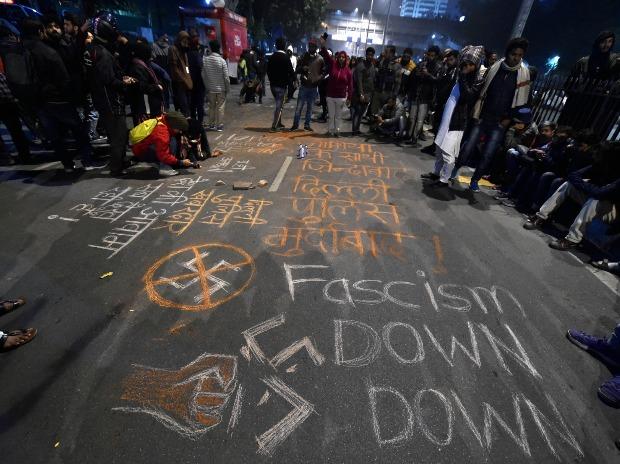
Graffiti against the Citizenship Amendment Act (CAA) on Delhi roads. (Photo: PTI)

However, the violent reaction in rest of the country is sheer madness. It has been obvious from day one that the Congress and its allies, TMC, SP, BSP and Leftists would not let the exclusion of illegal Muslims migrants from the CAA go unexploited. It was an issue ideally suited to inflame passions of Muslims to reap rich electoral dividends in future elections. Since they could not openly ask for giving citizenship to 1 crore and 65 lakh illegal Muslims in India, an ingenious campaign was set in motion to invite fire from Muslim organizations, Muslim students and clerics, saying that with CAA becoming a reality, NRC (National Register of Citizens of India) will follow next. Their statements cleverly camouflaged CAA and made it sound as NRC. After this, it became easier to enlist support of gullible Muslims who were told that 21 crore Muslims of the country will soon be asked to prove genuineness of their claim that they are Indian citizens and most of their claims will be rejected, leaving them with no choice but to live in India either as illegals or face forcible deportation to alien lands.

Vicious Campaign

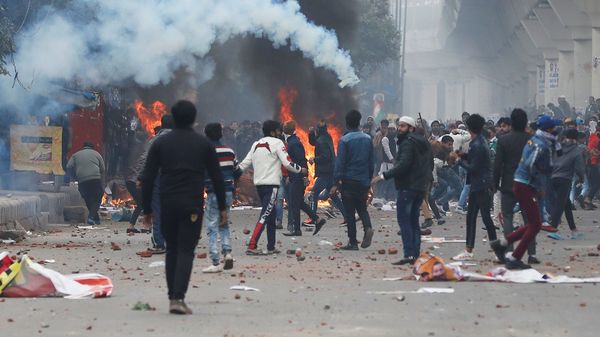
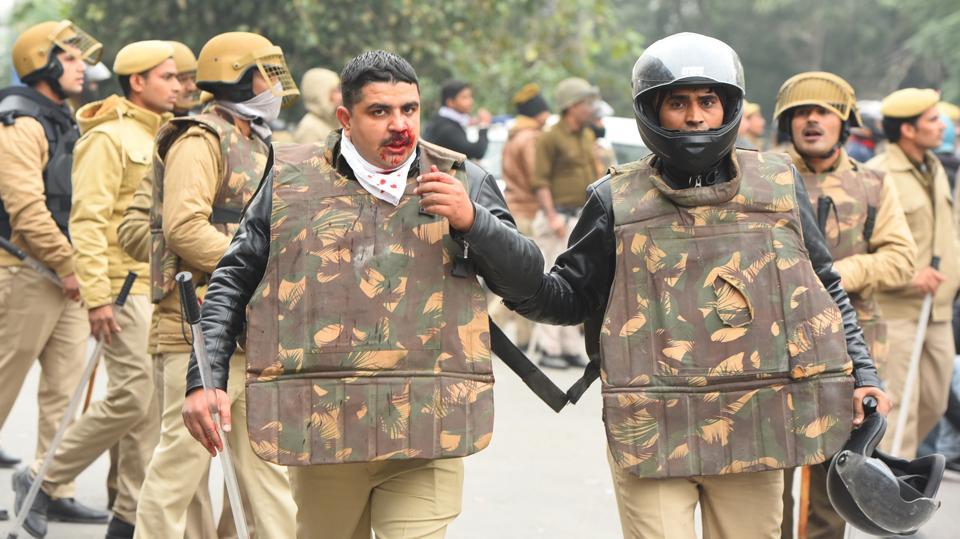
This sinister propaganda was an instant hit. Muslims, duly propped up by their cheer leaders among Hindus, have hit the roads in huge numbers. What happened subsequently is a shame for any civilized society. Protesters littered streets with stones and fire balls, burnt vehicles, destroyed government and private properties, attacked policemen and paralyzed life. In a clever twist to the plot, the police action in Jamia Millia Islamia and Aligarh Muslim Universities were touted as an assault on students’ community, provoking students even of the IITs and IIMs to come out of their classes to protest in solidarity for their comrade in arms. No one had the appetite to know the circumstances in which Police entered the campus and the action they took. No one was willing to restrain themselves from spouting incendiary reactions till the inquiry was over. Maharashtra Chief Minister on probation Uddhav Thackeray’s statement that police action in Jamia Millia Islamia was similar to the massacre of Indians in Jallianwala Bagh, Amritsar was just sickening.   

An injured policeman being taken away after he was hit by stones thrown by CAA protesters in Delhi. (Photo: HT)

The Jamia students cannot absolve themselves of the charge that they were not responsible for riots and arson in their campuses and outside. The politicians and activists also cannot say that they were marching peacefully but trouble makers suddenly turned violent catching them by surprise. It is a common knowledge that agitations are invariably hijacked by miscreants. If they could not control the criminals, they had no business protesting. Instead, they should have expressed dissent in writing or approached the courts for relief.

In the mayhem unleashed by protesters, no one seems to have a heart for the persecuted Hindus, Christians, Sikhs and Parsis, Jains and Buddhists. No one has heard a single voice from Muslims, pseudo-Hindu elites and non-BJP political parties supporting the citizenship rights of the motely group of religiously persecuted non-Muslims. Forget about the voice. Amarinder Singh, a Sikh Chief Minister of Punjab, won’t accept persecuted Sikhs in his state. Mamata Banerjee, Hindu Chief Minister of West Bengal, would allow implementation of CAA only on her dead body. Pinarayi Vijayan, a Christian Chief Minister of Kerala, has refused to take the persecuted Christians back in his state. Others who would not accept these hapless non-Muslim refugees are Hindu Chief Ministers Kamal Nath of MP, Bhupesh Baghel of Chhattisgarh and Ashok Gehlot of Rajasthan because their party leadership doesn’t want to forego its share of Muslim votes. This is not a season for sanity but grandstanding and false bravado.

Their defiance is indeed comical. How can these chief ministers refuse entry of CAA beneficiaries if they come looking for jobs, education etc. in their states? As citizens of India they can go anywhere to earn a living. What is their fear from these poor, neglected and abandoned lot? Unlike Rohingyas and Bangladeshi illegal migrants, they have never been involved in any crime or terror activities. And finally, how much difference will they make with their approximately 6 lakh effective votes to BJP’s electoral prospects? Hardly any.

Role of Police

The police have been the worst sufferers. They have actually nothing to do with CAA, NRC, votes or politics. Their job is only to ensure our safety. Why can’t politicians, students and Left-Liberals sort their problems out among themselves? Perhaps they cannot. So, the easiest way out for them is to flex muscles and suck the police in. As usual, police have been denounced as demons and barbaric for handling rioters and stone pelting students and insensitive for dealing with the likes of Ramchandra Guha. Jamia Milia Vice Chancellor says that police entered the university campus without permission. Is Jamia Milia outside the country where police cannot go in the hot pursuit of arsonists? Similar complaints are often heard from politicians, students, faculty members and university and college heads. There may be an informal understanding but there is no law that prevents police from entering campuses to deal with gherao of faculty members and vice-chancellors, destruction of university properties and seditious activities.

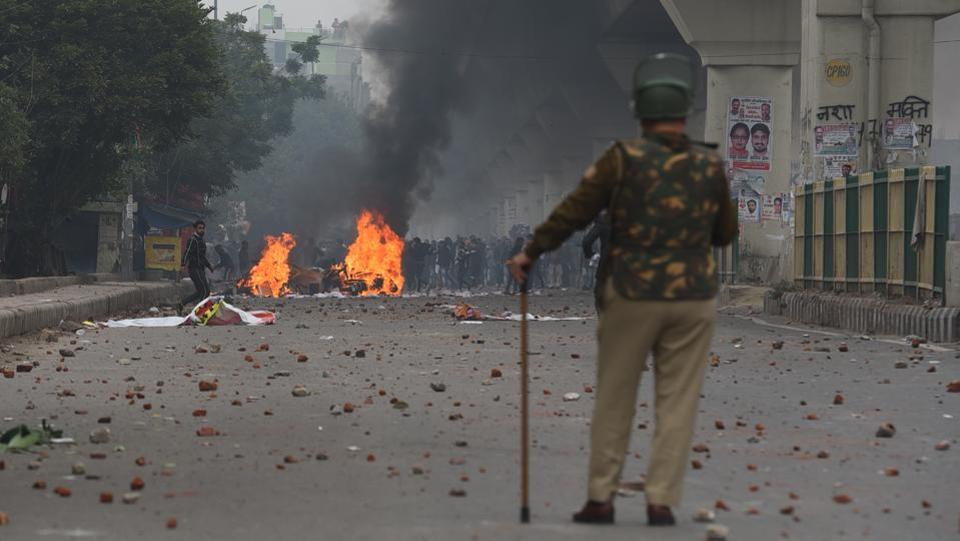
A lone policeman stands undeterred against the rioters and arsonists in Delhi. The protests were against the new citizenship act. (Photo: HT)

Salman Khurshid of Congress wanted Delhi Police to engage students in dialogues and persuade them to return to their classes. He should know that it the responsibility of teachers and leaders like him to drill sense in students. The police cannot give any assurances on CAA. A retired DG (Director General) of UP Police was fuming the other day on a television channel that police mishandled the situation because it had no advance intelligence and made no preventive arrests. He should have known that in a rapidly evolving agitation, advance intelligence is a rarity. The event catches you by surprise, leaving you with no room for planning and preventive arrests. You have to deal with it as it surfaces promptly, and often harshly. Actually, the police seem to have been extraordinarily circumspect in handling the rioters in Gujarat, UP, Karnataka and Delhi, in particular. The outcome was there for everyone to see. The law was in the rioters’ hand and police were throughout at the receiving end. It is time the police leadership understands that a determined mob of criminals cannot be controlled by persuasion and lathi charge. There is no need to hold fire when rioters rule the streets.

CAA is there to stay. Hopefully, the Supreme Court will not derail the effort of the incumbent NDA government to give a permanent home to those who suffered continuous religious persecution and have nowhere to go. However, there is an imminent need to educate people what CAA is all about, how NRC is different from CAA, whether NRC for the country is coming at all and if so, in which form. The criteria for the eligibility to Indian citizenship under the NRC must also be widely publicized to help Muslims, in particular, understand their folly and see through the game of unscrupulous politicians.