Home Blog Page 397

Short fiction on Bahurupias “Kayantar” to be screened at Woodpecker International Film Festival

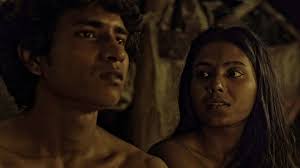
The filmmaker duo Rajdeep Paul and Sarmistha Maiti’s short fiction film, “Kayantar” has already won several accolades globally and will be now screened this week in New Delhi as part of 7th Woodpecker International Film Festival (WIFF).

The story is centered around a family of Bahurupias, indigenous street performers. Aasia belongs to a clan of Bahurupias – who dress up as Hindu deities. She wants to adopt her father Ali’s art of metamorphosing into Kali, the black Goddess of Time, Power and Liberation, but being a woman she is not allowed to take up the conventionally male profession. Instead, the now decrepit Ali, forces the traditional family profession onto his son Aslam who detests it fearing ridicule, persecution and for its waning popularity. Despite poverty and hardship the small family lives freely in the fringes of the village society in the lap of nature influenced by the religious syncretism of the Baul-Fakir mystics, tolerated by both Hindus and Muslims. But a sudden surge of change transforms their lives forever.

Set in the backdrop of the lush green tapestry of rural Bengal while narrating a story rooted in its milieu, the film reflects themes of universal concern. It takes an insightful look into the age-old evils of gender binaries, religious fundamentalism and communal disharmony plaguing human society even today and is an earnest cinematic appeal to look beyond such myopic glasses of discrimination and celebrate humanity simply as human beings.

Produced by Anjan Bose, the world premiere of Kayantar was held at 10th Chicago South Asian Film Festival 2019 followed by the 14th Tasveer South Asian Film Festival 2019 in Seattle, USA and 4th Mustard Seed Film Festival, Philadelphia, USA. The Indian Premiere was held in the 25th Kolkata International Film Festival 2019, followed by New York South Asian Film Festival 2019. It will be screened in 7th Woodpecker International Film Festival, New Delhi on 1st December and will be showcased in the 17th Kalpanirjhar International Short Fiction Film Festival 2019 in Kolkata on 5th December. It has also been selected at the 19th Imagineindia International Film Festival, Madrid, Spain in May, 2020.

This year’s Woodpecker International Film Festival (WIFF) has “67 films to Know Your World” as its central theme and the festival once again brings hard-hitting contemporary issues on the big screen. It will be organised from Nov 29-Dec 1, 2019 at Siri Fort Auditorium. According to Rao Narender Yadav, Founder Director of the festival, “Woodpecker International Film Festival (WIFF believes in showcasing the ‘real world’ on the big screen. This year also, we have got diverse stories from different parts of the world, on issues that are of critical importance to everyone. Be it violence against women by ISIS, condition of Rohingya women, rise of Artificial Intelligence, exciting new discoveries from the natural world or issues related to LGBT community, through WIFF we want to bring them in the public domain.” Woodpecker International Film Festival (WIFF) was launched in 2013 and is chaired by veteran actor Avijit Dutt.

Directors of ‘Kayantar’, Rajdeep Paul and Sarmistha Maiti will be present during the screening of their film on December 1 in New Delhi.

Great interest for Russian films among Indian people: Maria Lameshev

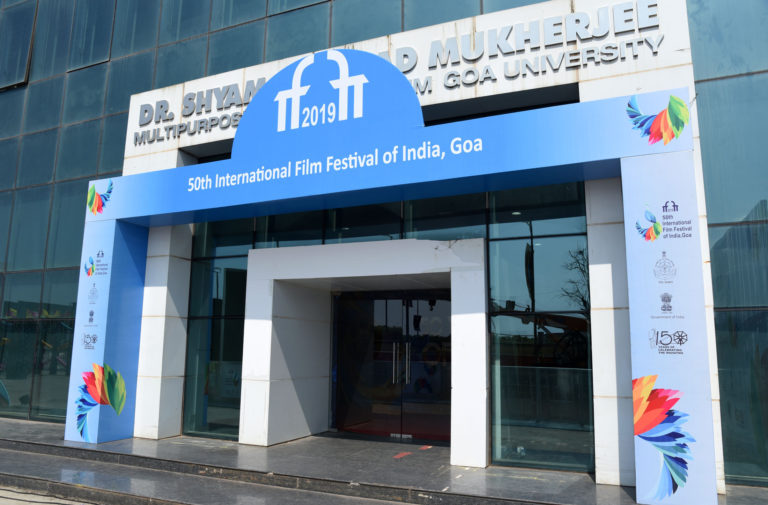
Joint production of films and cultural exchange through films will bring the spirit of India and Russia together, said Russian Ambassador to India Nikolay Kudashev. A joint agreement was signed at Vladivostok in Russia during September 2019 for expanding cultural exchanges between the two countries. It is time to take advantage of the agreement by working together and reaching our common aims, he said. Nikolay Kudashev was addressing a media conference at the 50th  International Film Festival of India in Panaji, Goa.

Replying to questions, Kudashev said that it is true that contemporary Russian literature is not adequately represented in India. “The government has got plans to bridge this gap by publishing ten of best Russian books in Hindi and ten of the best Indian books in Russian. Efforts are also on for more exchanges and co-operation in the field of education too,” he said. Niklolay Kudashev added Russia is committed to the promotion of the bi-lateral ties between two countries

The Ambassador thanked the Indian government and government of Goa for choosing Russia as a partner country in the 50th edition of IFFI.

On the reach and popularity of Indian films in Russia, Kudashev said that there is an Indian channel in Russia which brings Bollywood films to viewers in the country on a daily basis.

Head of Russian delegation in IFFI and Editor in Chief of Kinoreporter Maria Lameshev said that there is a great interest for Russian films among Indian people. “Diverse films from Russia which got international awards and acclaim have been brought to India for showcasing in IFFI. Films like ‘Abigail’ portrays the fantasy of youngsters”, she said.

Maria Lemesheva added that according to the co-production agreement, 40 percent of budget of the film would be given back by the Ministry of culture. She extended her support in facilitating meetings for possible co-productions for future.

Lead actress of ‘Beanpole’ which is one of the eight films being screened in the Country Focus  Section and the recipient of many international awards Viktoria Miroshnichenko  said that ‘Beanpole’ depicts a difficult time in the history of Russia. Actor in the Russian film ‘Abigail’  Peter Zekavica, said he grew up watching Ramayana on television as a child and recalled how it helped him to get in touch with the spiritual side of India. He also thanked the festival for bringing him upclose with some of his Indian heroes at the opening ceremony.

Attending her third IFFI, actor Anfisa Chernickh said that she loved Indian cinema and even though none of her films were showcased at the festival, she was here to support her delegation.

Actor in the Russian film ‘Abigail’ Glbe Bochkov also participated in the media conference. The actors also expressed their interest in acting in Indian movies in the future.

Eight Russian films- Abigail, Acid, Andrei Tarkovsky: A Cinema Prayer, Beanpole, Great poetry , Once in trubchevsk , Why don’t you just die!, The Hero  were screened in the Country Focus section of IFFI this year.

Dharmendra Pradhan meets Russian representatives from Far East Russia

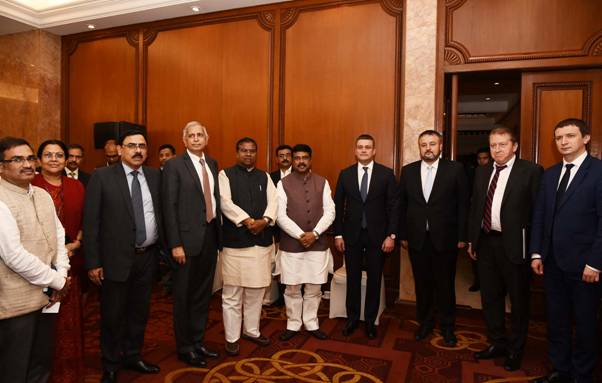
Union Minister of Petroleum & Natural Gas and Steel Dharmendra Pradhan has called for greater sourcing of coking coal from Far East Russia, and development of logistics infrastructure, during a meeting with Leonid Petukov, CEO, Far East Russia Investment and Export Agency in New Delhi. Russian delegation included Russian Ambassador Nikolay Kudashev, Trade Representative of Russian Federation in India, YaroslavTarasyuk, other senior officials from Far East Russia Investment and Export Agency. Minister of State for steel Faggan Singh Kulaste, Secretary (Steel) Binoy Kumar along with senior representatives of Steel, Coal, and External Affairs were also present along with industry leaders from Indian steel, coal, port sectors.

Discussions centred around further developing economic linkages with Far East Russia, particularly through sourcing of metallurgical or coking coal, development of infrastructure of Far East Russia ports and connectivity of these ports with Russian mining locations, and improvements in evacuation infrastructure.

Pradhan also reviewed the progress made in strengthening ties pursuant to the visit of Prime Minister Narendra Modi to Far East Russia. He further said that pursuant to his visit to Moscow and Vladivostok during the last three months, in which he had met Deputy Prime Minister of Russia, Yuri Trutnev and subsequent meetings of representatives of Russian and Indian steel companies, the latter have started testing samples of coking coal from the Far East Russia in their plants.

The Minister stated that offtake of coal from Far East Russia can grow as the coking coal from Far East Russia becomes more attractive from the point of view of price, ease of availability, connectivity to the ports and sea transport. He hoped that the improvements by Russian side in developing inland as well as port logistics and rail connectivity in Far East would go a long way in developing economic linkages with India. He also suggested Far East Russia Investment and Export Agency to indicate specific concessions that can be made to Indian importers of coking coal and to offer port facilities at preferential terms for Indian companies.

Pradhan thanked the representatives from Far East Russia Investment and Export Agency for visiting India and expressed confidence that the coming months will see significant increase in import of coking coal for Indian steel industry from Far East Russia.

India currently imports more than 50 MTPA coking coal. In view of huge opportunity offered by the Far East Russia to attract Indian investments, the Government of India earlier extended a USD 1 Billion line of credit to Russia. This line of credit can be used for furthering economic linkages with Far East Russia, including development of evacuation infrastructure and logistics in the Far East Russia.

China’s vulnerabilities demand that it adopts conciliatory approach towards India

The Chinese have always been proud of their diplomatic acumen. The country formulates and maintains a foreign policy that can be sustained for a hundred years. Central to it is self interest, especially so, on the economic context. Sadly, the country has gravitated towards Pakistan despite having more to gain from India and has adopted an approach towards Kashmir that supports the Pakistani position. This approach has emerged as a diplomatic setback for it.

Diplomatic circles in India were quite surprised and disappointed when China termed bifurcation of Jammu and Kashmir into two union territories as “unlawful and void.” India was left with no choice but to counter this abrasive statement. “We expect other countries to respect India’s sovereignty and territorial integrity. China continues to be in occupation of a large tract of area in the Union Territories of Jammu and Kashmir and Ladakh,” said a statement from the Indian Ministry of External Affairs (MEA).

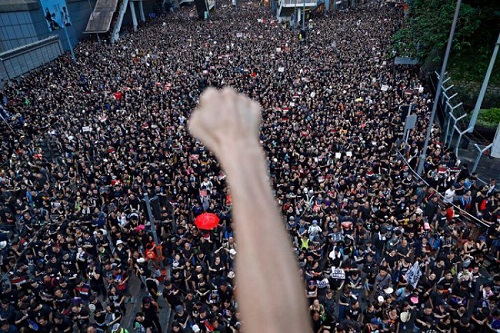
It is time for China to realise that it is in a very vulnerable position so far as internal dissension is concerned. The growing violence and destruction in Hong Kong is fast leading to a situation of widespread collapse of the administration. China has attempted to make amends by rescinding the original “Extradition Bill” which is the biggest bone of contention, but the protests refuse to subside.  The momentum, in fact, is witnessing an upswing with each passing day. Deaths due to violence are being reported even as the protestors are picking up bows and arrows and the more dangerous petrol bombs in retaliation.

China is facing an uphill task in containment of the protests mainly due to a deep distrust between the people of Hong Kong and the mainland. Mainland Chinese are losing patience with their Hong Kong cousins. They want their government to demonstrate its strength by dealing with the situation with a heavy hand. A popular social media site in China called the “Weibo” shows mainlanders following the line, “If you do not want to be Chinese, then don’t live on Chinese territory.” This, along with international pressure in favour of Hong Kong, is causing a contradiction and is blocking formulation of an optimal strategy to deal with the situation.

Hong Kong is important for China due to its status as an international financial hub. It acts as a conduit in furtherance of the Chinese reliance on international trade. Sadly for China, western sympathy is towards the protestors who are being seen as a courageous set of people standing steadfast against a repressive regime. Tiananmen Square never really leaves the western psyche.

Hong Kong is not the only internal dissension that China is facing. Xinjiang is now more in the international eye than ever before. Recently the New York Times has published secret speeches by President Xi Jinping urging, “Muslims infected with the virus of extremism to undergo a period of painful, interventionary treatment.” The forcible confinement of the Muslims, mostly from the Uighur minority and their internment in what is termed as “Re-education Camps” is well-known as a means to brainwash then into submission. China, it seems, is unwilling to relent from its objective to completely divest the Muslims minorities of the country of their religious identity. The Chinese authorities are quick to brush aside these reports a “fabrications.” However, the sadistic and oppressive attitude towards the minority communities is not lost to anybody.

It is also well known that the Chinese economy is faltering. There has been a downslide in growth for more than a decade now and there seems to be no signs of a turnover. A weak China cannot stand up to its global power status. Under such circumstances most nations resort to internal repression and external aggression and these attributes are visible in the China of today.

China is not in a position to stand against India, morally, politically or diplomatically, especially on issues like Kashmir where India enjoys support from all the big powers that count in the international sphere. It seems that China has also read the writing on the wall and is quite ready to amend its posture on Kashmir towards a more amenable position.

The Chinese posture toned down a bit before the informal summit meeting between Prime Minister Narendra Modi and Chinese President Xi Jinping. It is notable that the summit triggered enough panic in Pakistan to send the Pakistani Prime Minister Imran Khan and his powerful Pakistani Army Chief, General Qamar Javed Bajwa, rushing to Beijing to ensure that their position would not be compromised.

China did change its earlier hard stand and adopted a position akin to what it had advocated before the bifurcation saying that “the Kashmir issue should be resolved between New Delhi and Islamabad.” Significantly, any reference to the dispute being sorted out according to UN Security Council resolutions was assiduously omitted. This constitutes a serious change in policy for China. Apparently, the Pakistani leadership could not convince China to hold on to its strong posture; China once again demonstrated that it holds its national interest above anything else.

It is in the interest of the neighbouring Asian giants– India and China, to adopt a path of conciliation and assist each other in dealing with the issues that are detrimental to their national interest. The sooner the Chinese understand that Pakistan is in no position to be of any help, the better it would be for them. To this extent, the aforementioned thaw in relationship is a step in the right direction but it does fall short of what is expected.

A complete acceptance of the internal and constitutional changes brought about in Kashmir by New Delhi and a fast track movement to resolve the border disputes would come as good progress in mending ties. India, on its part, needs to show sensitivity to the vulnerabilities that China is facing at present. A weak China is more of a problem for India, so, there has to be an effort to ensure that such a situation does not come by.

Pashtuns have never been Pakistanis: Dr Abdullah Haiwad

Dr Abdullah Haiwad is the President of Afghanistan Governors’ Assembly — an association of 66 former and present Governors of Afghanistan. In a chat with Vivek Sinha, Dr Abdullah explains that Pashtuns are rebelling after enduring several years of Pakistani atrocities. He says that if Pashtuns receive some support they will be more successful in their movement. Excerpts:

Vivek Sinha: How would you describe the Taliban whose writ runs over large parts of Afghanistan? 

Dr Abdullah Haiwad: Taliban are a group created by the ISI to control Afghanistan under a strict Sharia law during the mid-1990s to facilitate the pipe line which was supposed to be laid by UNOCAL from Turkmenistan through Afghanistan into Pakistan. After invasion of the US and its allies, Pakistan was worried about Taliban’s faith, therefore, Pakistan once again helped Taliban stand on its feet and the results are that almost 60% of rural Afghanistan is governed by them.

VS: A large number of people across the world believe that Taliban represents a purer form of Islam and whatever they are doing in Afghanistan is as per Islamic sanctions. Your comments. 

Dr Abdullah Haiwad: There is no pure form or impure form of Islam. Taliban are a subsidiary of the ISI and Pakistan military terror groups similar to Jaish-e- Mohammed etc.…and for them creating chaos and terror among people is their prime objective.

VS: What is the role of Pakistan military and ISI in destabilising Afghanistan? 

Dr Abdullah Haiwad: Ever since its creation, Pakistan’s intervention in Afghanistan is clear and visible. ISI and their military who are the governing body since Pakistan’s creation, have their main objective of keeping a weak Afghanistan on its northern side in order to be able to destabilise India on its southern side.

A better example of this is that before the Russian invasion, groups of criminal Afghans who ran away from prosecution went to Pakistan and Pakistanis were training them to return and fight president Daud Khan’s regime.

VS: The PTM (Pashtun Tahafuz Movement) is gathering momentum in Pakistan. How will this impact the local politics and stability of Afghanistan? 

Dr Abdullah Haiwad: Pashtun Tahafuz Movement is a newly formed self-motivated youth movement which is the result of Pakistani atrocities on Pashtuns for many decades. The killing, mutilating and dehumanising of Pashtuns has given birth to this movement. Although Afghan governments hasn’t done much to help or enhance their motivation to foresee a great Afghanistan dream, but people across Durand Line are determined to stand for their rights and the hatred of military run government towards Pashtuns is driving them one step closer to us.

VS: Do you see Pashtuns turning against the Pakistan Army and its government? If yes, then what impact will this have on the Durand Line?

Dr Abdullah Haiwad: We are witnessing Pashtuns standing against Pakistani regime and they are actively seeking assistance but since no assistance is being provided by the Afghan government, their newly formed freedom seeking organisation is moving slowly. If help gets to them, they will fight like Baloch and because of many synergies among Pashtuns on both side, their success against Pakistan will prove to be more successful.

VS: It’s almost two decades since the 9/11. What has changed in Afghanistan since then? 

Dr Abdullah Haiwad: It is a difficult question, because there are hundred things both positive and negative that has changed. For example, we were one nation when Afghanistan was invaded but now we have been divided by Tajiks and Pashtuns etc, this drift is the direct result of 9/11 or the American invasion. Some basic or time bound infrastructure have been built. But I hope these are sustained and serviced to be used for long time. Morally we lost more than what we gained financially… war lords etc. gained out of this invasion whereas the majority of Afghans still suffer.

VS: How will the US pull out from Afghanistan (if and when it happens) affect the political structure of Afghanistan?

Dr Abdullah Haiwad: United States of America did not come to Afghanistan to pull out this soon, they have built a base which may remain for 50 or more years. This invasion is a long term and this will not benefit Afghans, the only adverse affect of this invasion is their involvement in our political system (a visible sign is the recent intervention in our elections).

VS: Recently in a prisoner swap agreement two Taliban leaders and one with links to the Haqqani network were released. Your comments. How could have this situation (of prisoner swap) been handled differently?

Dr Abdullah Haiwad: These three Taliban each of them is the equivalent of Hafiz Saeed. Our courts passed death sentence for all the three, somehow, our government was all of a sudden very generous to release these notorious killers. The impact (of their release) will be disastrous. There was no need for the exchange. Our government is a legitimate government or so they say, how come they bend before a terrorist organisation handled by ISI, who are killing Afghans for almost two and a half decade and then handing them back the most dangerous terrorists?

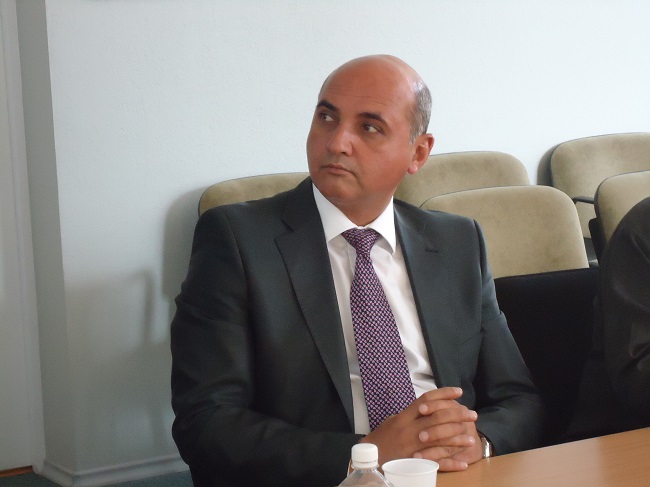
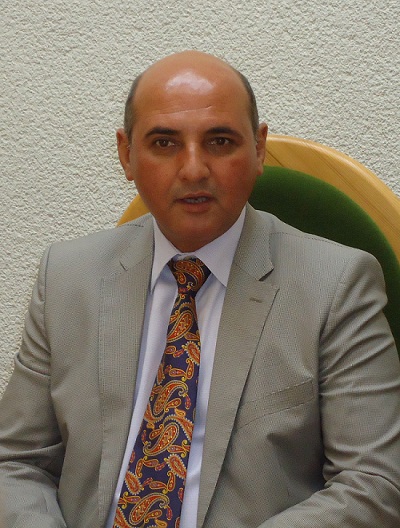
Dr Abdullah Haiwad, President of Afghanistan Governors Assembly.

VS: Different regions of Pakistan are up in arms against the atrocities of Rawalpindi and Islamabad. For instance, the Balochs are demanding freedom, Sindhis want to break free, Pashtuns have started their movement and Pakistan-occupied Kashmir (along with Gilgit-Baltistan) wants freedom. Why do you think these different freedom struggles are happening across Pakistan? What could be the future of these movements? 

Dr Abdullah Haiwad: Pakistan is not a country. It was made on the basis of religion. When people living in one country do not share any values other than their religion, this is bound to happen. By the way, you forgot about the Muhajeer Qaumi Movement (MQM) in this list. But, as for the Balochs, they gained independence even before India and Pakistan. Pakistanis’ are occupying their land (Balochistan) unlawfully and they have every right to fight for their freedom.

Also, if you check the ID of Pashtuns’ it says–Nationality: Afghan, they never have been Pakistanis. Their struggle goes back to Bacha Khan.

The struggle of Sindhis and Baltistanis started way back and now there is armed struggle all over Pakistan. By killing and imprisoning masses they (Pakistanis) can never suppress peoples’ urge for independence. 

VS: What does an Afghan feel about India? What role can Indians in general and New Delhi in particular play to bring peace and stability in Afghanistan?

Dr Abdullah Haiwad: Afghans always take Indians as their friends and have cultural and social ties, sometimes economical as well.

Over the past 20 years or so, India has been involved in infrastructure building, humanitarian assistance and also in training and capacity building of Afghan forces and military aid like hardware etc. Salma Bandh (Afghan-India Friendship Dam–AIFD), a Hydroelectric power station is a good example of Indian assistance.

In my view, it is now important for India to play a more deliberate role in Afghan peace process because Afghan peace is related to India’s peace. We have a common enemy. Afghanistan cannot be left in the mercy of devil.

VS: What can be done to increase the cultural exchange between India and Afghanistan? 

Dr Abdullah Haiwad: There are various aspects where India has an upper hand and they can approach and make things better for Afghans. The cultural exchange is a mutual effort and both countries should try to make this effort.

Also, it’s not only the Afghans on this side of the Durand Line who yearn for a closer relationship (with India), but our Afghan brothers across the Durand Line living in Pashtunistan who are also keen on building a better relationship with India, unfortunately no one seems to approach them.

We have friends who travel across the Durand Line and Afghans living in Peshawar are eager to build cultural relations with India, not for political purposes but because there are deep routes (between the two nations) that needs to be nurtured.

We can bridge gaps between Afghanistan and India and if someone from India approaches us, we will be happy to guide them and assist them make the relationship even better between the two nations.

26/11 Mumbai Terror Attack: ISI Erasing Evidence of Pak’s Involvement

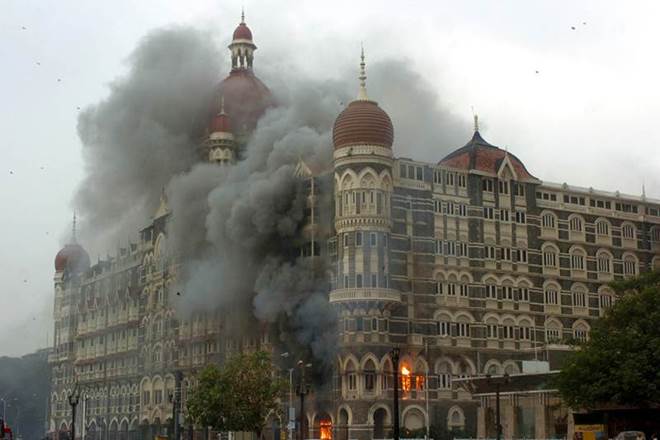
As the tenth anniversary of the horrendous Mumbai massacre that snuffed out 166 lives and left countless injured approaches, we will (just like we have been doing for the last nine years), express solidarity with the unfortunate victims by holding prayers and memorial services for their souls and denounce terrorism in the strongest of words. We will also wax eloquent on the indomitable ‘Mumbai spirit’ that helped the physically and mentally scarred Mumbaikars to quickly overcome their trauma and quickly move on as if nothing happened. But all this doesn’t hide the fact that we’ve failed the 26/11 victims because even after a decade the masterminds of this carnage haven’t been brought to book!

Though Islamabad has put the Mumbai terror attack accused on trial, this case has been dragging and the way things are going, it’d extremely unlikely that anyone will end up being convicted. Reason? Pakistan claims India has failed to provide evidence that could establish beyond all doubts the involvement of the accused in these attacks. But even though New Delhi has consistently maintained that it had provided irrefutable evidence, yet Islamabad doesn’t agree. Yousaf Raza Gilani, the then Prime Minister of Pakistan didn’t agree. In fact he told the Parliament that what India had provided was “some information” on Mumbai attacks, emphasising, “I say ‘information’ because these are not evidence.”

Since Islamabad insists it doesn’t have irrefutable evidence to proceed against the 26/11 accused, so let’s go over certain available details which are available in public domain that are not (to borrow Gilani’s words) “some information” but concrete evidence.

Even after it was conclusively proved by Geo TV through its report from ‘ground zero’ that Ajmal Kasab was a Pakistani national, Islamabad still refused to accept the same, prompting Nawaz Sharif whose party was giving outside support to the Zardari government to question as to why was Kasab’s house and village cordoned off by security agencies. Sharif rightly opined that rather than undertake the impossible task of hiding the truth, “…the people and media should be allowed to meet Iman’s (Kasab’s) parents so that the truth could come out in the open,” adding, “We need some kind of introspection.” But Islamabad didn’t budge and a month and a half later, when National Security Adviser Mehmood Ali Durrani told an Indian news channel that Kasab was a Pakistani national, he was summarily sacked by Gilani!

If the Pakistani establishment and deep state had nothing to do with the Mumbai carnage at all, then where was the requirement for Islamabad to be so paranoid as to go out of its way to conceal the fact that Kasab was a Pakistani national?

Even if we for a moment accept that what New Delhi gave Islamabad was merely “some information,” what about the irrefutable evidence that Pakistan’s Federal Investigation Agency (FIA) had collected? Why hasn’t the same been used as evidence? So instead of complaining about lack of evidence against the Mumbai attack masterminds and blaming India for the same, Islamabad would do well to open the FIA file on the Mumbai attacks prepared when Tariq Khosa was its Director General (DG).

That the FIA had done a thoroughly professional investigation in the 26/11 case would probably have never come to light if the 2014 APS Peshawar carnage hadn’t taken place. Shaken by this massacre of innocent school children by terrorists, the conscious stricken former DG FIA penned down an article that was published in Dawn (‘Mumbai Attack Trial’, August 3, 2015) in which he mentioned that “Pakistan has to deal with the Mumbai mayhem, planned and launched from its soil. This requires facing the truth and admitting mistakes. The entire state security apparatus must ensure that the perpetrators and masterminds of the ghastly terror attacks are brought to justice. The case has lingered on for far too long.” In his article, Khosa has confirmed that the FIA investigation had conclusively ascertained the following:

  • First, Ajmal Kasab was a Pakistani national, whose place of residence and initial schooling as well as his joining a banned militant organisation was established by the investigators.
  • Second, the Lashkar-e-Taiba (LeT) terrorists were imparted training near Thatta, Sindh and launched by sea from there. The training camp was identified and secured by the investigators. The casings of the explosive devices used in Mumbai were recovered from this training camp and duly matched.
  • Third, the fishing trawler used by the terrorists for hijacking an Indian trawler in which they sailed to Mumbai, was brought back to harbour, then painted and concealed. It was recovered by the investigators and connected to the accused.
  • Fourth, the engine of the dinghy abandoned by the terrorists near Mumbai harbour contained a patent number through which the investigators traced its import from Japan to Lahore and then to a Karachi sports shop from where an LeT-linked militant purchased it along with the dinghy. The money trail was followed and linked to the accused who was arrested.
  • Fifth, the operations room in Karachi, from where the operation was directed, was also identified and secured by the investigators. The communications through Voice over Internet Protocol were unearthed.
  • Sixth, the alleged commander and his deputies were identified and arrested.
  • Seventh, a couple of foreign-based financiers and facilitators were arrested and brought to face trial.

Besides this incriminating FIA’s report, there are many other sources that provide details that can nail the accused.

Pakistan’s former ambassador to the US, Husain Haqqani writes in his book (‘India vs Pakistan: Why Can’t We Just Be Friends?’) that while talking about the Mumbai attacks, Lt Gen Ahmad Shuja Pasha, who was the ISI chief then, had confided that “Log hamaray theh, operation hamara nahin tha” (those involved in the operation (Mumbai attacks) were our men, but the operation wasn’t ours). Islamabad may dismiss this claim on the grounds that being an accused in ‘memo-gate’ scandal, Haqqani has an anti-Pakistan bias, but then he isn’t the only one to have made this claim!

In his book (‘Playing to the Edge’), former CIA Director Michael Hayden, also writes that “His (Lt Gen Pasha’s) investigation had revealed that some former ISI members were involved (in Mumbai attacks) with Lashkar-e-Taiba. Pasha admitted that these unspecified retirees may have engaged in some broad training of the attackers, but he was characteristically vague about any detailed direction the attackers had gotten during the attack via cell phone from Pakistan.”

Similarly, investigative journalist Bob Woodward, in his book ‘Obama’s Wars’ has also quoted Lt Gen Pasha telling the CIA chief that “There may have been people associated with my organization who were associated with this (Mumbai attacks). That’s different from authority, direction and control.” Woodward too has stated that “…the CIA later received reliable intelligence that the ISI was directly involved in the training for Mumbai (attacks).”

So, even if Haqqani’s account is prejudiced, but surely neither Hayden nor Woodward have any reasons to risk their well-established credibility by making false accusations!

In 2017, while speaking at the 19th Asian Security Conference being held at the Institute for Defence and Studies and Analyses (IDSA) in New Delhi, former Pakistan NSA Mahmood Ali Durrani told the audience that “26/11 Mumbai attack carried out by a terror group based in Pakistan is classic trans-border terrorist event.” A year later, Nawaz Sharif also admitted that Pakistan was involved in the Mumbai attacks when he told Dawn newspaper that “militant organisations are active. Call them non-state actors, (but) should we allow them to cross the border and kill 150 people in Mumbai?”

Therefore, if Islamabad is still complaining that all it has is “some information,” it’s only because though available in abundance, clinching evidence against those who were terrorist commanders, who masterminded the 26/11 carnage and who provided training, armament and logistic support to the attackers has conveniently been “disappeared” by the ISI!

Postscript

It’s quite unlikely that Rawalpindi will ever allow the state to persecute its proxies who executed the ISI planned Mumbai attacks. But if Nawaz Sharif can express his anguish by asking Islamabad “Why can’t we complete the (Mumbai attacks) trial?” and terming this inordinate delay as something “absolutely unacceptable,” then rather than only holding prayers and memorial services, can’t we also focus more on demanding justice for 26/11 victims? 

What does Kashmir want from the new political setup? Development.

0

On August 5th, the government of India bifurcated Jammu and Kashmir in two union territories and scrapped the 72 year old Article 370, which gave special status to this erstwhile princely state of undivided India. The BJP-led NDA (National Democratic Alliance) government had consistently maintained that instead of providing exclusive privileges to the people of J&K, Article 370 was discriminatory and a major hurdle in the development of state and was one of the reasons for militancy in the state that has claimed thousands of precious lives in Jammu and Kashmir over the last three decades.

Over the last 72 years since partition, political discourse in the state of J&K witnessed many upheavals. It may come as a surprise to many but since its inception in 1949, Article 370 had been amended nearly 50 times and this led to dilution of its provisions due to which many felt that there was no need for New Delhi to revoke Article 370. In fact, while addressing a press conference recently, Congress spokesperson Pawan Kheda proudly announced that “Not once or twice, but the Congress party diluted Article 370 as many as 12 times, but without letting any controversy break out.”

Everyone knows that Congress had tinkered with Article 370 and while National Conference (NC) had allowed this to happen, the Peoples’ Democratic Party (PDP) allied with BJP even after knowing fully well that this party strongly advocated abrogation of Article 370. Thus, the NC, Congress and PDP should be last ones to complain about its revocation as having been in some way involved in the dilution process of Article 370. In fact, none of them have the moral right to speak against it.

We all know how political parties in Kashmir always used the Article 370 abrogation issue to attract voters and many leaders have misused its provisions to create financial empires. Thus, abrogation of Article 370 will not only deprive mainstream political parties of an emotional issue to exploit, but also usher in more transparency and increase accountability, thereby reducing financial mismanagement.

During the preceding years, many attempts were made to create a ‘Third Political Front’ and many believe that even New Delhi was keen that this effort should materialise. Some 12 years back Er. Rashid ventured into Kashmir politics and launched Awami Ithad Party (AIP) using the same slogan of autonomy at the behest of his mentors to replace the existing political establishment. And though he did get elected, but his party failed to make any dent in local politics and Rashid ended up facing humiliation on every front.

Separatist-turned-mainstream-politician Sajjad Lone who thanks his father’s legacy for being the founder of People’s Conference (PC) political outfit also tried luck in Kashmir politics with the patronage of BJP at centre. But despite having a strong follower base and immense popularity in the Handwara belt of Kashmir thanks to his father Late Abdul Gani Lone (who was killed by unknown gunmen in the year 2002), he still could not make his mark in the political arena. BJP’s attempt to ‘launch’ Lone in Kashmir politics proved to be a big failure.

However, in the year 2002, government of India tried yet another experiment in the state of Jammu and Kashmir by promoting Mufti Mohmmad Sayeed who had floated his own political party and named it as PDP (Peoples Democratic Party). An astute and matured politician who had earlier severed ties with New Delhi as a union minister, Mufti was highly valued by the central government and he proved them right by winning 16 seats in State Legislative Assembly in his first political debut in Jammu and Kashmir.

It is also pertinent to mention that National Conference (NC) won highest number of Legislative Assembly seats (27), but their party leader Omar Abdullah could not make it to Assembly as he lost his seat to PDP’s stalwart Late Qazi Afzal. As the father-son duo did not want to put some other NC leader on the throne, the NC forfeited its claim to form the government paving the way for Mufti Mohmmad Sayeed to form government in Jammu and Kashmir. Thus, even though PDP was a comparatively much newer entrant in Kashmir’s political arena, the party with help from government of India became a political force that could stand up against formidable NC and Congress in regional politics.

But after the demise of Mufti Mohmmad Sayeed, Mehbooba Mufti was unable keep the PDP flock together and the party started cracking. Seeing PDP implode, some of its leaders started parleys with the Indian government in an endeavour to form an alternate government in the state. However, due to stubbornness of Mehbooba Mufti, nothing came out of this.

When it seemed that there was no one to fill the political void in Kashmir, 2009 IAS topper Shah Feasel suddenly announced his decision to quit his government job and enter state politics by launching Jammu and Kashmir People’s Movement (JKPM). Despite being lured by both mainstream political parties and the separatists, Feasal refused to join either of them and instead promised to give Kashmir politics a new direction by honestly fighting for the rights of the people.

He was joined by firebrand JNU student leader Shehla Rashid and two times MLA Mir Javid Mustafa. It seemed that Kashmir had finally found an alternative to dynasty politics. Unfortunately, Feasal and his associates vanished from the scene just as suddenly as they had appeared!

Now, with Jammu and Kashmir being bifurcated into two union territories of Jammu & Kashmir and Ladakh, it’s the political parties here that have lost the scope of openly looting state’s wealth and indulging in corrupt practices like nepotism and favouritism even though unemployment is high and the benefits aren’t reaching the ordinary Kashmiris. That is why the majority of political people in J&K are of the opinion that statehood must not be restored as it gives them a free hand to those at the helm of affairs to fill their own coffers and look after the interests of their own kith and kin and play favourites.

It is thus incumbent upon government of India to rise to the occasion and ensure that the common man in Kashmir gets his rightful due. While New Delhi has rolled out many initiatives to ensure social justice by providing skill training and generating employment opportunities, the acid test is ensuring that these schemes and policies for the well being of people do not go awry. Both the central and state administration needs to remember that acceptance of Article 370 abrogation at the grass roots level depends entirely on the success of its schemes to improve the lot of the common man in Kashmir. And should these fail to achieve their objectives, the people of Kashmir are bound to get a feeling that New Delhi is pursuing the same policies as were adopted by political parties in power in J&K before Article 370 was abrogated!

Fauzia Ilyas on the Atheist & Agnostic Alliance Pakistan

0

By Scott Douglas Jacobsen

*Original publication in Canadian Atheist.*

Fauzia Ilyas is the Founder and President of the Atheist & Agnostic Alliance Pakistan. This is an extremely dangerous country for freethinkers, especially women of the freethought community with the explicit title of atheist or agnostic, as known to most readers here. When we look at the contexts for women’s rights or for freedom of thought, Pakistan remains one of the worst. Fauzia deserves praise in the light of the difficult circumstances and the bravery to utilize a public platform while pronouncing public rights to freedom of belief and, in particular, to not believe, often, forced or coerced beliefs, whether by family, community, or state.

Here, we talk about her life, views, and work through the Atheist & Agnostic Alliance Pakistan.

Scott Douglas Jacobsen: How did the Atheist & Agnostic Alliance Pakistan form?

Fauzia Ilyas: Actually it is directly interlinked with my thoughts, ideas and questions which I used to raise about religion. While trying to search for answers to those questions, and analyze their credibility and authenticity, I realized that there was no proper platform where people like me could go and have a discussion over religion, especially about Islam. It brought me to the conclusion that it’s very crucial to have a platform where we all can express our thoughts and share it with other like-minded people. Therefore, in 2012, Atheist and Agnostic Alliance Pakistan was established by me and my partner.

Jacobsen: What were the risks in founding it?

Ilyas: Just imagine for a while, a country with 97% Muslim population, a country which came into existence by so-called Islamic values. A country where you are being welcomed if you convert to Islam; however, if you leave that religion, or even if you raise any doubt or an ordinary question over Islam, you would be in hell(-ish) difficulties. So it was the same case with AAAP. When this organization was established, there was a lot of criticism, threats to life, and compromised security. We’re approached by law enforcement authorities. The blasphemy cases were initiated against me and my partner. It left us with the only option to leave Pakistan, so we left and now we’re in The Netherlands. 

Jacobsen: What have been the major developments and successes of AAAP?

Ilyas: I think the major development is the establishment of AAAP itself, which was the very first organization of Pakistan, working for ex-Muslims and Atheists. People now know that ex-Muslims exist in Pakistan too. Secondly, it’s getting quite familiar within the social platforms that one can raise a question over the authenticity of the religion and its so-called values. But please count and consider the criticism and threats equally here :), but it is even more.

Lastly, people can talk to like-minded people and express their thoughts freely over religion. This organization can be considered as an effective tool to normalize the concept relates to questioning religion. And it’s definitely not wrong.

Jacobsen: Who is ‘Ayaz Nizami’? 

Ilyas: Ayaz Nizami was Vice President of AAAP.​ H​e is a blogger​ who​ translated materials critical of Islam in English to Urdu for publishing.​ ​Nizami founded the website realisticapproach.org, a website in Urdu about irreligon.

Jacobsen: What happened to him? Why? 

Ilyas: He was arrested in 2017 by the Federal Investigation Agency of Pakistan because of his views and thoughts over Islam. He used to talk about equality, freedom, and fundamental rights, which is not wrong; but in a state like Pakistan, it’s a crime.

Jacobsen: How does his case reflect others like those of the Ismail family and other secular and human rights activists in Pakistan?

Ilyas: This is definitely about the fundamental rights, freedom of speech, freedom of expression, and freedom of religion. To accuse its own citizens and suppressing their rights, what message Pakistan is conveying to the whole world? These are shameful acts and I definitely condemn it. It’s a negative obligation of the state to not interfere in rights and let people freely exercise their rights; and on the other hand, it is also a positive obligation of the state to do something in order to protect its citizen. But, unfortunately, the state of Pakistan, itself is lacking in fulfilling its obligations.

Jacobsen: How can people support ‘Ayaz’? 

Ilyas: First of all, people should know that it’s not wrong to raise questions over religion. They should understand that human lives are more precious than any religion. They should raise their voices in favour of those who’re in prison and taken just because of their expressions towards Islam. There’s a long list of these people. Not only Ayaz Nizami but also Junaid Hafeez and many others. So people should realize if they won’t stand up for their own rights, no one would ever realize it that how important those rights are.

Jacobsen: What forms of pressure on governments work?

Ilyas: The realization of fundamental rights is very important and Pakistan should understand the importance of those rights. So I think we should never give up to raise our voices, we should keep it raising until it’s heard. I am also trying to raise this issue on every possible platform where I consider it could be heard. I think it’s not a problem of Pakistan only. There are many other Islamic states whose laws are enacted in a way that they are used as a tool to suppress human rights. So I think there should be international involvement too. United Nations and European countries should also realize the need to talk over this issue and definitely introduce a practical mechanism under which it can be assured that people wouldn’t be accused just because of their thoughts. And finally, blasphemy laws must be ended. 

Jacobsen: How has the international community taken part in these efforts for Pakistani human rights activists?

Ilyas: Well, the recent development was made in the case of Asia Bibi, a Christian woman who was also accused in the blasphemy law. If we analyze the ground reality it was all about international pressure. But that’s not the only case. I mean it’s not enough. The international community should also realize that Asia Bibi is not the only case that needed attention. In fact, many people are suffering in prison, waiting for their trials. They also need protection, especially the protection of their fundamental rights.

Jacobsen: Any recommended activists’ cases who also need support and coverage?

Ilyas: As I mentioned earlier there’s a long list of those who had been killed by Islamists and violent mobs. Mishaal Khan is such a prominent name, the Christian couple was also set on fire. That’s also a prominent case. In these cases, justice should prevail. Furthermore, Junaid Hafeez, Ayaz Nizami, and many more should be released as soon as possible. 

Jacobsen: Thank you for the opportunity and your time, Fauzia.

Ilyas: Thanks to you too!!

Photo by Samraiz Nawaz on Unsplash

Youth Empowerment in J&K: Well begun, now it’s time to speed up

0

Immediately after the Parliament legislated for bifurcation of the state of Jammu and Kashmir into two Union Territories and also toned down such provisions of Article 370 and Article 35A that were inhibiting the freedom of many segments of the citizenry, the government of India imposed certain restrictions on the movement and communication within the state. New Delhi has done so since certain anti-national forces operating in the state at the behest of foreign powers attempt to create a sense of insecurity among the people, build up passions and disrupt peace in the state. It was thus deemed necessary to preempt these evil designs of the enemy by imposing restrictions.

Though these restrictions have been removed in a phased manner they have hit the economy of the state quite badly. While the entire state has borne the brunt of this economic setback, it is the youth who have been affected the most. Already reeling under chronic unemployment, they have been idle and without hope during this time.

Now that the situation is becoming normal, there is a perceptible movement towards economic uplift of the state, especially for the youth. Admissions under the Prime Minister’s Special Scholarship Scheme (PMSSS) were to be completed by August 15th. In view of the prevailing conditions, the administration approached the Supreme Court to extend the deadline by one month to September 15th. The Supreme Court passed the required order and as a result, 4,418 students took admission under the scheme this year as compared to 2,543 in 2018. “J&K scholarship scheme of Govt got major success this year with a 74% increase in J&K students taking admissions in reputed institutions outside J&K. Thanks to streamlining of processes by AICTE,” said R Subrahmanyam, Secretary, Ministry of Human Resource Development in a tweet.

In the last week of August, the then Governor of the state, Satya Pal Malik, said that 50,000 jobs will be created for the youth of J&K. The Armed Forces were identified as the best avenue for job creation.

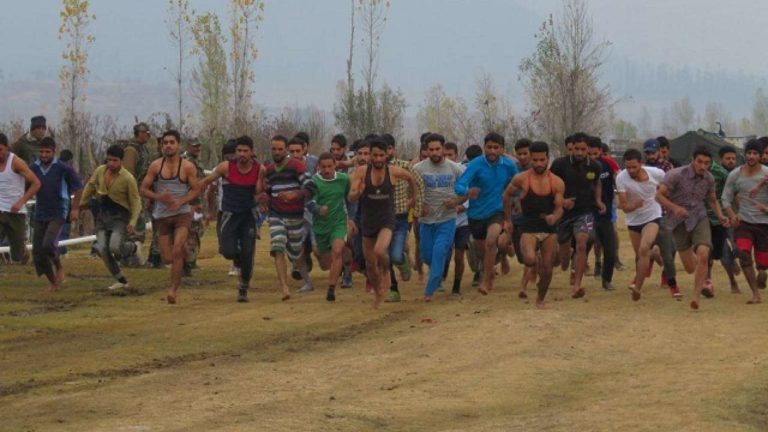
The first Army recruitment rally, post the political changes, was held in September2019, for youth belonging to the Chenab Valley and Pir Panjal region. A record 29,000 youth participated in the rally and all available vacancies were filled in no time. Another recruitment drive conducted over four days in mid-October at the Srinagar-based Jammu and Kashmir Light Infantry (JAKLI) centre witnessed participation of thousands of candidates from Anantnag, Kulgam and Pulwama of Kashmir. The vacancies were for Infantry Battalions of the Territorial Army (Home and Hearth) which operate within the state itself and have given invaluable service in containing the foreign sponsored terrorism. Such massive turnout reflects the desire of youth of J&K to join mainstream and serve the nation. The Jammu & Kashmir Police Department, in October 2019, invited on-line applications for the recruitment of both male and female candidates for 2,700 Constable Posts.

In mid-2018 a survey conducted by the Centre for Monitoring Indian Economy (CMIE) in collaboration with the Bombay Stock Exchange (BSE) found that Jammu and Kashmir had the highest unemployment rate of 12.13%. As per another Economic Survey Report of J&K, the unemployment rate in the state was pegged at 24.6%. However, in the age-group of 18 to 29 years it was said to be 13.2%. The number of the unemployed youth registered with various District Employment and Counselling Centres of the J&K state was 85,944 youths (around 42,219 from Kashmir and 45,821 from Jammu) as of March 2018.

Earlier state governments, with support of the centre, set up various schemes for boosting employment. The J&K Entrepreneurship Development Institute (EDI), whose building in Kashmir has been attacked by terrorists on a number of occasions, is funded by the state employment department to assist youth in setting up business ventures. The institution runs a Seed Capital Fund Scheme which facilitates setting up of entrepreneur projects by providing non-refundable seed money to take them forward. Another initiative, the Youth Start-up of Loan Scheme gives soft loans at six percent simple interest for setting enterprises. Self Help Groups (SHG) are also being promoted to assist engineers with the grant of contracts in the work / development departments.  Career counseling officers have been appointed for providing counseling/guidance to the educated unemployed youth. Job awareness fairs are conducted regularly across the state.

Since the last three decades, the Indian Army, under its flagship welfare programme– Operation Sadbhavna, is making efforts to bring the state into the mainstream of the country’s growth trajectory. Army Goodwill Schools were instrumental is meeting the pressing educational requirements at a time when government education infrastructure collapsed under the terrorist threat. In an effort to involve the youth in gainful and constructive activity, the army has established a number of Youth Employment Guidance Nodes (YEGN) that provide information regarding employment opportunities. Vocational training centres have also been set up to train to the local population in a trade of their choice. In these centres, the teachers employed hail from amongst the local population, making them more acceptable to the people in addition to creating more employment. The ‘Kashmir Super 30’ project launched in 2014 by the Army and modelled after the well-known ‘Super 30’ programme of Bihar has elicited excellent results year after year.

All measures to enhance employment that have been in place since the beginning of this millennium have, sadly, proved to be insufficient in dealing with the economic downslide in the state. There is an urgent need to bring in new initiatives and put in more effort to bridge the employment gap. Tourism, IT, handicraft, apple trade and other economic activities need to be given a boost. Employment of youth outside the state in various corporate organisations and other institutions will need special attention. If the youth of Kashmir find a means to live a life of dignity the problems being faced there will be resolved to a great extent. A lot has been done but much more is required.

Kashmir must reject divisiveness, eradicate violence & concentrate on development

The merciless killing of six innocent labourers by terrorists in the Kulgam District of Kashmir on October 29th is yet another example of the ruthless policy being followed by these criminal elements at the behest of their evil handlers in Pakistan. The poor men were dragged out of their residence and killed in the most inhumane manner. Such an abhorrent act is totally unacceptable by any religious or civilisation tenets of humanity.   

These killings are in tune with an old policy followed by the terrorist masters across the border such that they engineer violence and resort to selective killing in Kashmir Valley, whenever there’s some event of significance in the valley. In this instant, there were two important events scheduled back to back. The first was a visit to Kashmir by a group of 23 European lawmakers to assess the situation on ground and the second was the reorganised governing dispensation of two Union Territories being made effective on the midnight of October 31st. The situation was most apt for a terrible terrorist strike which is exactly what was attempted.

If the terrorists had more facility and power they would have struck at a much larger scale, as they did in village Chittisingpura at Kashmir in March 2000, killing 35 innocent Sikhs just because President of the United States, Bill Clinton, was visiting India. The very unfortunate but truncated nature of the present strike points towards the limited capability of the terrorists, which is something to be satisfied about, from the security point of view.  

In Kashmir, five murderous attacks of this nature in the last two weeks or so have led to the killing of twelve innocent outsiders. Apart from the unfortunate six victims of the October 29th terrorist attack, four truck drivers, a trader from Punjab, and a migrant labourer from Rajasthan have been killed in similar attacks earlier during the month of October. Apart from these successful attacks there would be innumerable unsuccessful ones foiled by the very vigilant security forces.

These killings are being guided by a well conceived and deep rooted policy to offset the legitimate actions taken by the government of India to set right certain wrongs that have been perpetrated in Jammu and Kashmir since the country’s independence. Since theses wrongs favoured the intention of evil forces to wrest Jammu and Kashmir from Indian control, the setting it right came as a rude shock to them and left them unbalanced, leading to this immoral reaction.

These elements have launched a series of initiatives to wrest the initiative from India. Pakistan attempted a huge diplomatic misinformation campaign to denounce India but it fell flat since all countries (except a few) termed the change in constitutional status of the state as an internal matter of the Indian nation. The evil forces then attempted to ignite an internal revolt with the use of its propaganda tools, but failed miserably yet again, with no incident of violence in the entire state, including the most sensitive Kashmir Valley.

This killing of innocents is the most desperate measure on the part of these forces to show that Kashmir Valley is on the boil. A second more sinister intention is to create an environment of fear so as to dissuade businessmen from investing in the region. Investment is unlikely to come by in a tenuous environment of security. A muted investment climate is likely to bring about anxiety and dissatisfaction among the people who are eagerly waiting for an improved economic situation as an offshoot of the changed political dispensation. For the enemy, killing of poor labourers is a good way to ensure that investment does not flow in due to security concerns.

The evil designs and machinations are, by no means, lowering the resolve of the government to go ahead with the plan. On October 31st, the announced changeover to two Union Territories has been implemented and the Lieutenant Governors in both Union Territories have been sworn in. The group from the European Union also reiterated that the change in constitutional status was an internal matter of India while also expressing fear about a rise in terrorist violence. On both counts Pakistan stands chastised.  

Kashmiris realise that they are being exploited by wicked foreign elements whose only intention is to colonise them and exploit the rich natural resources of the land. They have, most valiantly, fought the scourge of terrorism for many decades and have emerged victorious. They understand that the mindless death of even one innocent citizen of the country, whether he is from the state or any other part of the country is unacceptable. The terrorist challenge today is a pale shadow of what it was about two and a half decades back and can be easily eradicated if the will holds strong. The terrorists cannot survive without local support which is being provided by a miniscule segment of the society mostly for economic gains. The people can identify such anti-national and anti-people segment and neutralise it through social pressure as well as security action. Once support is not forthcoming terrorism will naturally peter out.

It is important to look at the larger picture of the 21st century where economic uplift takes priority over all else. If Kashmir does not open out to India and onwards to the world, it will be left out of the development loop and will regress by many centuries. The effort of the nation, through its elected government, is to ensure that nothing of this sort happens. All energy is channelled towards bringing the region at par with the rest of the country. The idea, in fact, is to see that the region surges ahead on the basis of abundant economic possibilities that are available there. The people should leverage this commitment of the nation to their advantage by rejecting the divisive voices, eradicating the violent terrorist forces and concentrating on the course of development.