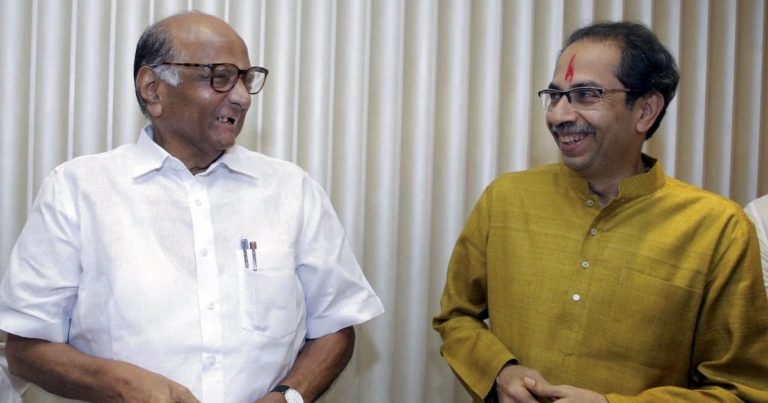
Politics must change in the country before Indian entrepreneurs can prove their mettle. New way of politics, for new India is need of the hour.
Country is not the fiefdom of a handful of individuals or their families. Filling vacuum in political leadership is the primary need of the hour in India. Irrespective of which profession or work one is engaged in, doing one’s work with full honesty, is indeed a “Service to the Nation”. In order to improve the political scenario in the country, it should be possible for any interested person who desires to enter public life through politics, to be able to seek lateral entry with ease into any party of his/her choice.
For this to happen, selection of candidates for any election by any party, should happen through involvement of local population too, rather be turned into an “internal issue” (read opaque decisions) of the political party. This way, politics will naturally improve through involvement of talented people, who choose to sacrifice private life, for greater public roles. And nation’s wealth grows for all, not looted by a select few.
Amongst the current lot, BJP is the most appropriate party, to take up this “pioneering initiative”, because “nationalism” is the very foundation of it’s ideology, not only of individuals or their families. I sincerely hope that BJP turns the tide of politics upside down: From “electoral machinations” to “rise of genuine leaders at all levels”.
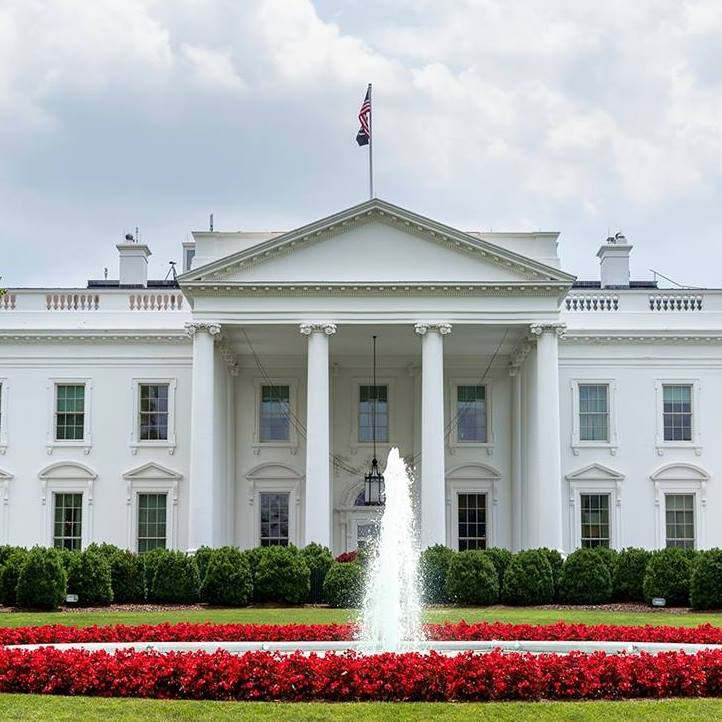
The United States of America (USA) released its annual “Country Reports on Terrorism” for the year 2018 on 22 November 2019. The report assesses all major nations of the world in terms of their fight against terrorism with special emphasis on compliance with international norms for countering terrorism. For each country there is an overview followed by listing of the number of terrorist incidents that have taken place, legislation, law enforcement and border security, countering the financing of terrorism, countering violent extremism and international and regional cooperation among others. The reports are not based as much on statics as on assessments.
In its foreword, the report identifies Iran as the “world’s worst state sponsor of
terrorism.” Beyond this, one complete paragraph of the foreword is dedicated to
Pakistan. The report openly admits that India continued to
experience terrorist attacks from Pakistan-based organisations. “Pakistan-based
Lashkar-e-Tayyiba – which was responsible for the 2008 Mumbai attacks – and
Jaish-e-Mohammad (JeM) maintained the capability and intent to attack Indian
and Afghan targets,” it says. It specifically mentions the terrorist attack on
the Sunjwan Military Camp in the Indian state of Jammu and Kashmir in February,
2018. The foreword also indicts Pakistan for not doing enough to contain the
Taliban and the Haqqani network that “Continued to launch lethal attacks
throughout Afghanistan, including against the US military personnel.” With
regard to the internal dimensions, the foreword indicts the inability of the
state to contain the Tehrik-e-Taliban Pakistan (TTTP) that has continued to
carry out attacks within Pakistan.
Main chapter of the
report dedicated to Pakistan begins with a very serious indictment of
Pakistan’s role in Afghanistan. It constitutes an elaboration of what is
written in the foreword. “Although the
Pakistani government voiced support for political reconciliation between the
Afghan government and the Afghan Taliban, it did not restrict the Afghan
Taliban and the Haqqani Network (HQN) from operating in Pakistan-based safe
havens and threatening US and Afghan forces in Afghanistan,” the report states.
The report has further
identified close relationships between the Pakistani state and terror groups in
Pakistan that are aligned against India. “The government (of Pakistan) failed
to significantly limit Lashkar e-Tayyiba (LeT) and Jaish-e-Mohammad (JeM) from
raising money, recruiting, and training in Pakistan, and allowed candidates overtly affiliated
with LeT front organizations to contest the July general elections,” says the
report.
The report further
lists out the trouble that Pakistan has been facing because of the many terror
groups active there and the sensitive internal security situation in provinces such
as Balochistan and Sindh. “Terrorists used a range of tactics to attack individuals,
schools, markets, government institutions, and places of worship, including
IEDs, VBIEDs, suicide bombings, targeted assassinations, and rocket-propelled
grenades,” it states.
The report quite openly blames the government of
Pakistan for its inability to contain this proliferation of terror. The reason
attributed is the “inconsistency” of the state apparatus (read Pakistan Army)
to eliminate safe havens in the country, “Authorities did not take
sufficient action to stop certain terrorist groups and individuals from openly
operating in the country.” On the issue of terror financing also, the report
comes down heavily on Pakistan, and in a rather blunt statement it says that
Pakistan criminalises terrorist financing through the Anti-terrorism Act, but
implementation remains uneven. The inability of the government of Pakistan to
register and monitor all madrassas that are engaged in imparting fundamentalist
Islamic education to children has also been mentioned in the report.
In
the India segment the report identifies India as a victim of Pakistan-sponsored
terrorism. “The parts of India most
seriously impacted by terrorism in 2018 included the state of Jammu and
Kashmir, the northeast Indian states, and parts of central India in which
Maoist terrorists remain active,” it states. The report is very appreciative of
the successful efforts put in by India to detect, disrupt, and degrade
terrorist organizations’ operations within its border. “Indian leadership
expressed resolve to prevent terrorist attacks domestically and to bring to
justice the perpetrators of terrorism, in cooperation with the United States
and other like-minded countries,” the report says.
Several initiatives taken by India and the US in
counter-terrorism cooperation such as the Joint Working Group, 2+2 (top U.S.
and Indian diplomatic & military officials), and the Ministerial Dialogue
for increased information sharing, found special mention in this report.
Pakistan’s severe indictment in the “US Country Reports on Terrorism”, when seen along with their precarious position with the Financial Action Task Force(FATF), puts the country in a very precarious position. It is notable here that FATF, which is a global terror financing watchdog, has consistently put Pakistan in its grey list since the country failed to deliver on 22 out of 27 targets related to terror financing.
Pakistan is continuing with a blinkered approach, not
realising that what it could get away with earlier, is now no longer feasible. Pakistan
simply has to stop justifying its inimical interference in Kashmir by terming
it as an internal problem of India. The world is no longer convinced by its line
of thought. It also has to clean out the mess within its borders by coming down
heavily on fundamentalist Islamic forces that are playing havoc in the
country’s neighbourhood, especially in India and Afghanistan. It
has also failed to meet global requirements on curbing terror funding. Finally, the country has to address the open revolts
in its provinces such as Balochistan where untold atrocities are being
perpetrated on innocent civilians by the government forces.
The “US Country Reports on Terrorism” leaves no doubt about the international appreciation
for Indian efforts to fight the menace of terrorism and the concern that the
international community feels with regards to the critical situation in
Pakistan. Sadly, Pakistan is refusing to accept its own shortcomings
and is hell bent upon putting the entire blame on India, which is totally
unacceptable.
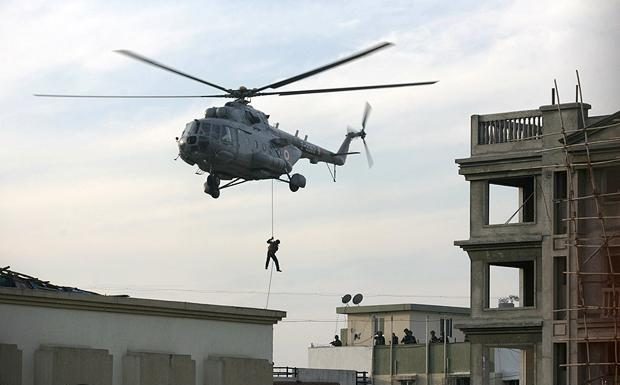
As India remembered the horrors of deadly terrorist attacks on November 26, 2008 that left more than 160 people dead and 300 injured, there is one area which, the country’s newsrooms, have conveniently chosen to ignore. Yes, the role of the media and the basic principles of reporting!
It was officially documented that the terrorists could easily access television broadcasts and other news feeds, which helped them. Not just that, we also know that a few lives could have been saved if the media had exercised restrain in dissemination of information.
The manner in which unfolding of 26/11 terror attacks and the response of our security forces was covered by media should be a lesson for all journalists to understand how not to report events during times of crises or emergency. While the media and public at large have the right to know in a democratic set up, it also comes with a great amount of responsibility, which we need to uphold.
Many of us know how the reportage of 26/11 made things extremely difficult for the National Security Guards (NSG) commandos.
In our journalism classes we were taught how to exercise restraint in reporting despite having critical pieces of information – if that helped in saving lives or maintaining peace. It seems somewhere down the line, the rule books have been re-written and these principles have been given a quiet burial by the media houses.
A few years after the unfortunate 26/11 Mumbai terror attacks, Bangladesh Prime Minister Sheikh Hasina slammed the media for its reportage in the middle of the terrorist attack at the Holey Artisan Bakery in Dhaka. In fact without mincing words she even said how the coverage helped the terrorists.
While providing 24×7 coverage on the Mumbai terror attacks, many of us in our urge to “break” news and increase our viewership, ignored the basic principles of journalism. Yes, challenges are rising for news organisations—whether print through their online presence or the television channels going in for 24×7 coverage. But equally important is to fiercely uphold the principles of journalism, especially when we seek full freedom.
Freedom of press is critical, especially at a time when we have been unanimous in raising the pitch for maintaining transparency in dissemination and sharing of information.
Bottom line —We, in the media industry, need to act responsibly too. Newsrooms must ensure that.
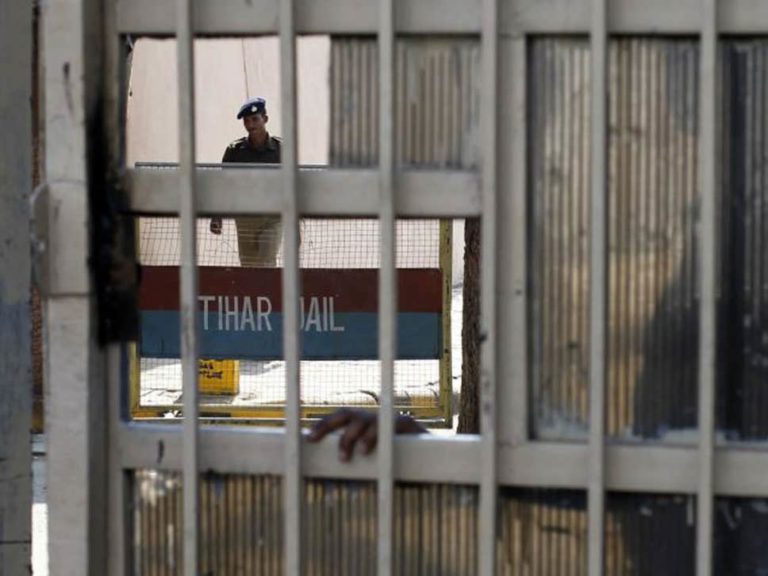
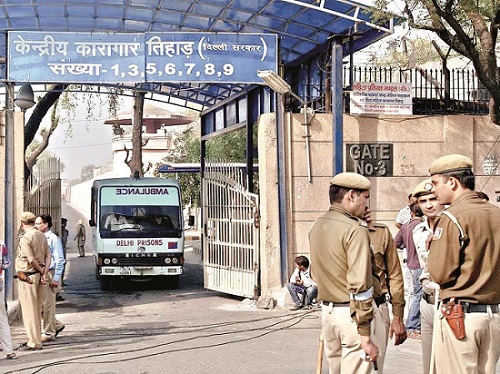
There are 17,000 inmates in Tihar Jail, many
say its actual space is for just 6,000 inmates. I still haven’t figured out why
it is called the Maximum Security Prison. I once covered the trial of alleged assassins of PM
Indira Gandhi, Tihar Jail – South Asia’s largest prison – then looked like a
correctional facility with barbed-wire fences, guard stations and cells
scattered across 400 acres of land.
Tihar figured in the headlines every now and then, it still does. But there was no classy documentation, no brilliant lines about life and death behind those huge, concrete walls. I had no idea whether the warden would share –like in the US — his handset number to every prisoner on release. I knew very little about Tihar.
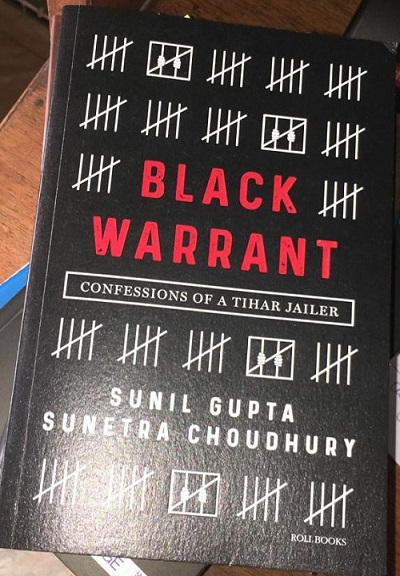
Roli Books latest, Black Warrant, offers a virtual walk the talk from inside Tihar, narrated by its former jailor Sunil Gupta and chronicled brilliantly by seasoned journalist Sunetra Choudhury, currently political editor of Hindustan Times newspaper. There is so much information that it becomes difficult to dissect it for an effective analysis. Black Warrant grows on you, its like travelling in a lift to the Eiffel Tower, the best view is reserved only when you reach the top. I found the best chapters towards the end: It had Manu Sharma, Subrata Roy and Jaswinder Singh Jassa, the King Cobra of Tihar. It was gripping.
Choudhury, who had an immaculate style when
she anchored shows for NDTV, has managed to get almost anything and everything
out of Gupta, and the two blended well to get both the news and the juice out
of that prison. It’s not very easy because very few jailor open up as Gupta
did, in one case he explains in detail about his dust up with Roy of the Sahara
Group, considered among the top influencers in India. Gupta complained to Delhi
CM Arvind Kejriwal who sought proof and – I have a feeling – the matter rested
there without any more fireworks.
Gupta makes it clear that he wanted to push
in a host of changes in Tihar and did not like the way some of the high profile
prisoners like Charles Shobraj were throwing their weight around. And he knew
he had to cut through many, many red tapes to achieve the near impossible. It’s
clear from the book that Tihar blew hot, blew cold every now and then. It was
not exactly a cold, harsh American prison, nor it was a Norwegian prison home
that has the world’s best correctional systems in place. That Gupta liked
prisoners who worked overtime to improve systems of Tihar is clear because he
mentions how Manu Sharma, who killed Jessica Lall, worked overtime and helped
Tihar earn some decent cash through new models of business. But hold it, Gupta
also says he did not like the way Manu Sharma conducted himself inside the
prison, often ordering food from expensive hotel outside Tihar and running a private
durbar inside the prison.
Chowdhury and Gupta talk in detail about the Nirbhaya case and the way the accused were housed in Tihar, and the way they conducted themselves and the way they were treated by others, it was a fascinating read. So was the chapter on the assassins of Indira Gandhi. Black Warrant brilliantly chronicles life inside Tihar, tucked in a crowded West Delhi neighbourhood synonymous with huge crowds, backfiring trucks and belching lorries. The book also tells you moments of death when prisoners are taken to the gallows. Afzal Guru, a top political convict, sang a Bollywood song, assassins of Indira Gandhi shouted religious slogans, some just collapsed. Death is not just a five letter word, it means everything to those in the condemned cells. The condemned cells are a little far away from the ones which housed inmates convicted of lesser violent crimes. The condemned cells are eerily quiet — death is plastered all over the walls and there are no huge sounds of slamming metal doors or shouting inmates.
Tihar Jail, New Delhi
The book details the life and times of Shobraj, the notorious bikini killer now lodged in a prison in Kathmandu. And the incident leading to the rape and murder of Geeta and Sanjay Chopra by Billa and Ranga. The Chopra story had – for all practical purposes – dropped from my storyboard but Shobraj was a fascinating read. I tried tracking him a year or two ago in Nepal and even managed a brief conversation with him through a handset owned by his mother-in-law. I was amazed to hear that the serial killer – who once proudly claimed he could smuggle even an elephant in Nepal – was now a pale self of his flashy life. Even if he completes his sentence in Nepal, the Thai cops will be seeking his custody.
The book — actually — gets inside the minds of prisoners and explains how they miss the openness of light, the effect of fresh air coming through. The writers make a genuine effort to explain the strange, love-hate relationships between officers and inmates. Gupta worked hard in Tihar. For him it was not an ordinary job, he had to understand the life of the inmates within the walls, and what he could do to shape their lives once released. Choudhury, as a seasoned historian of crime and punishment inside Indian prisons, chronicled the events perfectly. The jugalbandi is a brilliant read, I would recommend it to be used as a standard tool in all journalism schools in India.
The filmmaker duo Rajdeep Paul
and Sarmistha Maiti’s short fiction film, “Kayantar” has already won
several accolades globally and will be now screened this week in New Delhi as
part of 7th Woodpecker International Film Festival (WIFF).
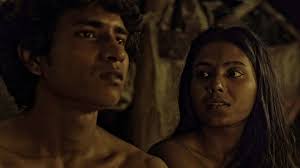
The story is centered around a
family of Bahurupias, indigenous street performers. Aasia belongs to a clan of
Bahurupias – who dress up as Hindu deities. She wants to adopt her father Ali’s
art of metamorphosing into Kali, the black Goddess of Time, Power and Liberation,
but being a woman she is not allowed to take up the conventionally male
profession. Instead, the now decrepit Ali, forces the traditional family
profession onto his son Aslam who detests it fearing ridicule, persecution and
for its waning popularity. Despite poverty and hardship the small family lives
freely in the fringes of the village society in the lap of nature influenced by
the religious syncretism of the Baul-Fakir mystics, tolerated by both Hindus
and Muslims. But a sudden surge of change transforms their lives forever.
Set in the backdrop of the lush
green tapestry of rural Bengal while narrating a story rooted in its milieu,
the film reflects themes of universal concern. It takes an insightful look into
the age-old evils of gender binaries, religious fundamentalism and communal
disharmony plaguing human society even today and is an earnest cinematic appeal
to look beyond such myopic glasses of discrimination and celebrate humanity
simply as human beings.
Produced by Anjan Bose, the world
premiere of Kayantar was held at 10th Chicago South Asian Film Festival 2019
followed by the 14th Tasveer South Asian Film Festival 2019 in Seattle, USA and
4th Mustard Seed Film Festival, Philadelphia, USA. The Indian Premiere was held
in the 25th Kolkata International Film Festival 2019, followed by New York
South Asian Film Festival 2019. It will be screened in 7th Woodpecker
International Film Festival, New Delhi on 1st December and will be showcased in
the 17th Kalpanirjhar International Short Fiction Film Festival 2019 in Kolkata
on 5th December. It has also been selected at the 19th Imagineindia
International Film Festival, Madrid, Spain in May, 2020.
This year’s Woodpecker International
Film Festival (WIFF) has “67 films to Know Your World” as its central theme and
the festival once again brings hard-hitting contemporary issues on the big
screen. It will be organised from Nov 29-Dec 1, 2019 at Siri Fort Auditorium. According
to Rao Narender Yadav, Founder Director of the festival, “Woodpecker
International Film Festival (WIFF believes in showcasing the ‘real world’ on
the big screen. This year also, we have got diverse stories from different
parts of the world, on issues that are of critical importance to everyone. Be
it violence against women by ISIS, condition of Rohingya women, rise of
Artificial Intelligence, exciting new discoveries from the natural world or
issues related to LGBT community, through WIFF we want to bring them in the
public domain.” Woodpecker International Film Festival (WIFF) was launched in
2013 and is chaired by veteran actor Avijit Dutt.
Directors of ‘Kayantar’, Rajdeep
Paul and Sarmistha Maiti will be present during the screening of their film on
December 1 in New Delhi.
Joint production of films and
cultural exchange through films will bring the spirit of India and Russia
together, said Russian Ambassador to India Nikolay Kudashev. A joint agreement
was signed at Vladivostok in Russia during September 2019 for expanding
cultural exchanges between the two countries. It is time to take advantage of
the agreement by working together and reaching our common aims, he said. Nikolay
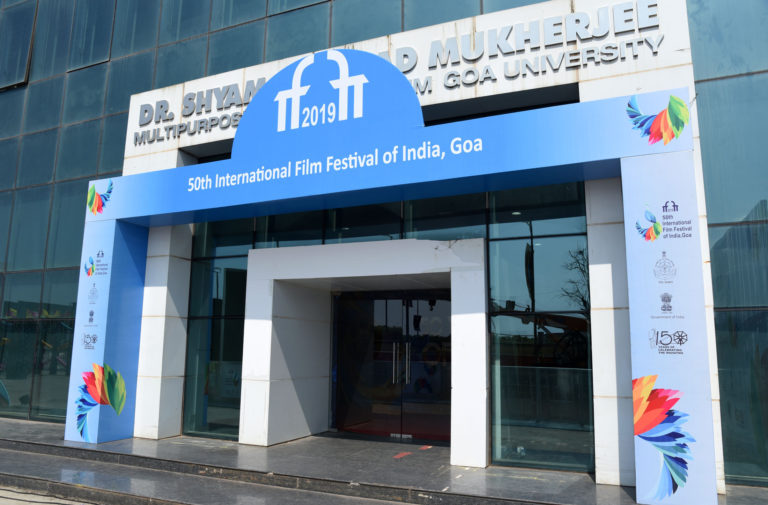
Kudashev was addressing a media conference at the 50th International Film Festival of India in
Panaji, Goa.
Replying to questions, Kudashev
said that it is true that contemporary Russian literature is not adequately
represented in India. “The government has got plans to bridge this gap by
publishing ten of best Russian books in Hindi and ten of the best Indian books
in Russian. Efforts are also on for more exchanges and co-operation in the
field of education too,” he said. Niklolay Kudashev added Russia is committed
to the promotion of the bi-lateral ties between two countries
The Ambassador thanked the Indian
government and government of Goa for choosing Russia as a partner country in
the 50th edition of IFFI.
On the reach and popularity of
Indian films in Russia, Kudashev said that there is an Indian channel in Russia
which brings Bollywood films to viewers in the country on a daily basis.
Head of Russian delegation in
IFFI and Editor in Chief of Kinoreporter Maria Lameshev said that there is a
great interest for Russian films among Indian people. “Diverse films from
Russia which got international awards and acclaim have been brought to India
for showcasing in IFFI. Films like ‘Abigail’ portrays the fantasy of
youngsters”, she said.
Maria Lemesheva added that
according to the co-production agreement, 40 percent of budget of the film
would be given back by the Ministry of culture. She extended her support in
facilitating meetings for possible co-productions for future.
Lead actress of ‘Beanpole’ which
is one of the eight films being screened in the Country Focus Section and the recipient of many
international awards Viktoria Miroshnichenko
said that ‘Beanpole’ depicts a difficult time in the history of Russia.
Actor in the Russian film ‘Abigail’
Peter Zekavica, said he grew up watching Ramayana on television as a
child and recalled how it helped him to get in touch with the spiritual side of
India. He also thanked the festival for bringing him upclose with some of his
Indian heroes at the opening ceremony.
Attending her third IFFI, actor
Anfisa Chernickh said that she loved Indian cinema and even though none of her
films were showcased at the festival, she was here to support her delegation.
Actor in the Russian film
‘Abigail’ Glbe Bochkov also participated in the media conference. The actors
also expressed their interest in acting in Indian movies in the future.
Eight Russian films- Abigail,
Acid, Andrei Tarkovsky: A Cinema Prayer, Beanpole, Great poetry , Once in
trubchevsk , Why don’t you just die!, The Hero
were screened in the Country Focus section of IFFI this year.
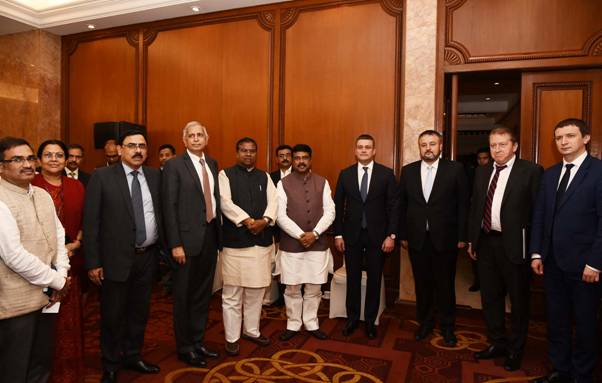
Union Minister of Petroleum &
Natural Gas and Steel Dharmendra Pradhan has called for greater sourcing of
coking coal from Far East Russia, and development of logistics infrastructure,
during a meeting with Leonid Petukov, CEO, Far East Russia Investment and
Export Agency in New Delhi. Russian delegation included Russian Ambassador Nikolay
Kudashev, Trade Representative of Russian Federation in India, YaroslavTarasyuk,
other senior officials from Far East Russia Investment and Export Agency.
Minister of State for steel Faggan Singh Kulaste, Secretary (Steel) Binoy Kumar
along with senior representatives of Steel, Coal, and External Affairs were
also present along with industry leaders from Indian steel, coal, port sectors.
Discussions centred around
further developing economic linkages with Far East Russia, particularly through
sourcing of metallurgical or coking coal, development of infrastructure of Far
East Russia ports and connectivity of these ports with Russian mining
locations, and improvements in evacuation infrastructure.
Pradhan also reviewed the
progress made in strengthening ties pursuant to the visit of Prime Minister Narendra
Modi to Far East Russia. He further said that pursuant to his visit to Moscow
and Vladivostok during the last three months, in which he had met Deputy Prime
Minister of Russia, Yuri Trutnev and subsequent meetings of representatives of
Russian and Indian steel companies, the latter have started testing samples of
coking coal from the Far East Russia in their plants.
The Minister stated that offtake
of coal from Far East Russia can grow as the coking coal from Far East Russia
becomes more attractive from the point of view of price, ease of availability,
connectivity to the ports and sea transport. He hoped that the improvements by
Russian side in developing inland as well as port logistics and rail
connectivity in Far East would go a long way in developing economic linkages
with India. He also suggested Far East Russia Investment and Export Agency to
indicate specific concessions that can be made to Indian importers of coking
coal and to offer port facilities at preferential terms for Indian companies.
Pradhan thanked the
representatives from Far East Russia Investment and Export Agency for visiting
India and expressed confidence that the coming months will see significant increase
in import of coking coal for Indian steel industry from Far East Russia.
India currently imports more than
50 MTPA coking coal. In view of huge opportunity offered by the Far East Russia
to attract Indian investments, the Government of India earlier extended a USD 1
Billion line of credit to Russia. This line of credit can be used for
furthering economic linkages with Far East Russia, including development of
evacuation infrastructure and logistics in the Far East Russia.
The Chinese have always been proud of their diplomatic
acumen. The country formulates and maintains a foreign policy that can be
sustained for a hundred years. Central to it is self interest, especially so,
on the economic context. Sadly, the country has gravitated towards Pakistan
despite having more to gain from India and has adopted an approach towards
Kashmir that supports the Pakistani position. This approach has emerged as a
diplomatic setback for it.
Diplomatic circles in India were quite surprised and
disappointed when China termed bifurcation of Jammu and Kashmir into two union territories
as “unlawful and void.” India was left with no choice but to counter this abrasive
statement. “We
expect other countries to respect India’s sovereignty and territorial
integrity. China continues to be in occupation of a large tract of area in the
Union Territories of Jammu and Kashmir and Ladakh,” said a statement from
the Indian Ministry of External Affairs (MEA).
It is time for China to realise that it is in a very
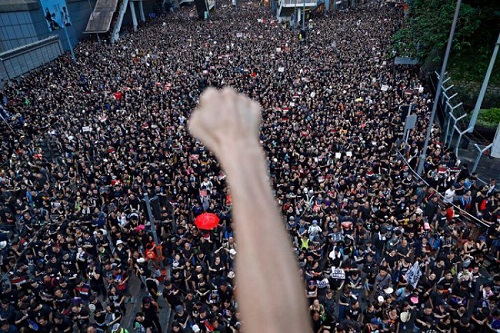
vulnerable position so far as internal dissension is concerned. The growing
violence and destruction in Hong Kong is fast leading to a situation of widespread
collapse of the administration. China has attempted to make amends by
rescinding the original “Extradition Bill” which is the biggest bone of
contention, but the protests refuse to subside.
The momentum, in fact, is witnessing an upswing with each passing day.
Deaths due to violence are being reported even as the protestors are picking up
bows and arrows and the more dangerous petrol bombs in retaliation.
China is facing an uphill task in containment of the protests mainly due to a deep distrust between the people of Hong Kong and the mainland. Mainland Chinese are losing patience with their Hong Kong cousins. They want their government to demonstrate its strength by dealing with the situation with a heavy hand. A popular social media site in China called the “Weibo” shows mainlanders following the line, “If you do not want to be Chinese, then don’t live on Chinese territory.” This, along with international pressure in favour of Hong Kong, is causing a contradiction and is blocking formulation of an optimal strategy to deal with the situation.
Hong Kong is not the only internal dissension that China
is facing. Xinjiang is now more in the international eye than ever before.
Recently the New York Times has published secret speeches by President Xi Jinping urging, “Muslims
infected with the virus of extremism to undergo a period of painful,
interventionary treatment.” The forcible confinement of the Muslims, mostly
from the Uighur minority and their internment in what is termed as
“Re-education Camps” is well-known as a means to brainwash then into submission.
China, it seems, is unwilling to relent from its objective to completely divest
the Muslims minorities of the country of their religious identity. The Chinese
authorities are quick to brush aside these reports a “fabrications.” However, the
sadistic and oppressive attitude towards the minority communities is not lost
to anybody.
It is also well known that the Chinese economy is
faltering. There has been a downslide in growth for more than a decade now and
there seems to be no signs of a turnover. A weak China cannot stand up to its
global power status. Under such circumstances most nations resort to internal
repression and external aggression and these attributes are visible in the
China of today.
China is not in a position to stand against India,
morally, politically or diplomatically, especially on issues like Kashmir where
India enjoys support from all the big powers that count in the international
sphere. It seems
that China has also read the writing on the wall and is quite ready to amend
its posture on Kashmir towards a more amenable position.
The Chinese posture toned down a bit before the informal
summit meeting between Prime Minister Narendra Modi and Chinese President Xi
Jinping. It is notable that the summit triggered enough panic in Pakistan to
send the Pakistani Prime Minister Imran Khan and his powerful Pakistani Army
Chief, General Qamar Javed Bajwa, rushing to Beijing to ensure that their
position would not be compromised.
China did change its earlier hard stand and adopted a
position akin to what it had advocated before the bifurcation saying that “the Kashmir issue should be
resolved between New Delhi and Islamabad.” Significantly, any reference to the
dispute being sorted out according to UN Security Council resolutions was
assiduously omitted. This constitutes a serious change in policy for China.
Apparently, the Pakistani leadership could not convince China to hold on to its
strong posture; China once again demonstrated that it holds its national
interest above anything else.
It is in the interest of the neighbouring Asian giants–
India and China, to adopt a path of conciliation and assist each other in
dealing with the issues that are detrimental to their national interest. The
sooner the Chinese understand that Pakistan is in no position to be of any help,
the better it would be for them. To this extent, the aforementioned thaw in
relationship is a step in the right direction but it does fall short of what is
expected.
A complete acceptance of the internal and constitutional
changes brought about in Kashmir by New Delhi and a fast track movement to
resolve the border disputes would come as good progress in mending ties. India,
on its part, needs to show sensitivity to the vulnerabilities that China is facing
at present. A weak China is more of a problem for India, so, there has to be an
effort to ensure that such a situation does not come by.
Dr Abdullah Haiwad is the President of Afghanistan Governors’ Assembly — an association of 66 former and present Governors of Afghanistan. In a chat with Vivek Sinha, Dr Abdullah explains that Pashtuns are rebelling after enduring several years of Pakistani atrocities. He says that if Pashtuns receive some support they will be more successful in their movement. Excerpts:
Vivek Sinha: How would you describe the Taliban whose writ runs over large parts of Afghanistan?
Dr Abdullah Haiwad: Taliban are a group created by the ISI to control Afghanistan under a strict Sharia law during the mid-1990s to facilitate the pipe line which was supposed to be laid by UNOCAL from Turkmenistan through Afghanistan into Pakistan. After invasion of the US and its allies, Pakistan was worried about Taliban’s faith, therefore, Pakistan once again helped Taliban stand on its feet and the results are that almost 60% of rural Afghanistan is governed by them.
VS: A large number
of people across the world believe that Taliban represents a purer form of
Islam and whatever they are doing in Afghanistan is as per Islamic sanctions.
Your comments.
Dr Abdullah Haiwad: There is no pure form or impure form of Islam. Taliban are a subsidiary of the ISI and Pakistan military terror groups similar to Jaish-e- Mohammed etc.…and for them creating chaos and terror among people is their prime objective.
VS: What
is the role of Pakistan military and ISI in destabilising Afghanistan?
Dr Abdullah Haiwad: Ever since its creation, Pakistan’s intervention in Afghanistan is clear and visible. ISI and their military who are the governing body since Pakistan’s creation, have their main objective of keeping a weak Afghanistan on its northern side in order to be able to destabilise India on its southern side.
A better example of this is that before the Russian invasion, groups of criminal Afghans who ran away from prosecution went to Pakistan and Pakistanis were training them to return and fight president Daud Khan’s regime.
VS: The PTM (Pashtun
Tahafuz Movement) is gathering momentum in Pakistan. How will this impact
the local politics and stability of Afghanistan?
Dr Abdullah Haiwad: Pashtun Tahafuz Movement is a newly formed self-motivated youth movement which is the result of Pakistani atrocities on Pashtuns for many decades. The killing, mutilating and dehumanising of Pashtuns has given birth to this movement. Although Afghan governments hasn’t done much to help or enhance their motivation to foresee a great Afghanistan dream, but people across Durand Line are determined to stand for their rights and the hatred of military run government towards Pashtuns is driving them one step closer to us.
VS: Do you see
Pashtuns turning against the Pakistan Army and its government? If yes,
then what impact will this have on the Durand Line?
Dr Abdullah Haiwad: We are witnessing Pashtuns standing against Pakistani regime and they are actively seeking assistance but since no assistance is being provided by the Afghan government, their newly formed freedom seeking organisation is moving slowly. If help gets to them, they will fight like Baloch and because of many synergies among Pashtuns on both side, their success against Pakistan will prove to be more successful.
VS: It’s
almost two decades since the 9/11. What has changed in Afghanistan since
then?
Dr Abdullah Haiwad: It is a difficult question, because there are hundred things both positive and negative that has changed. For example, we were one nation when Afghanistan was invaded but now we have been divided by Tajiks and Pashtuns etc, this drift is the direct result of 9/11 or the American invasion. Some basic or time bound infrastructure have been built. But I hope these are sustained and serviced to be used for long time. Morally we lost more than what we gained financially… war lords etc. gained out of this invasion whereas the majority of Afghans still suffer.
VS: How will the US pull
out from Afghanistan (if and when it happens) affect the political structure of
Afghanistan?
Dr Abdullah Haiwad: United States of America did not come to Afghanistan to pull out this soon, they have built a base which may remain for 50 or more years. This invasion is a long term and this will not benefit Afghans, the only adverse affect of this invasion is their involvement in our political system (a visible sign is the recent intervention in our elections).
VS: Recently in a prisoner swap agreement two Taliban leaders and one with links to the Haqqani network were released. Your comments. How could have this situation (of prisoner swap) been handled differently?
Dr Abdullah Haiwad: These three Taliban each of them is the equivalent of Hafiz Saeed. Our courts passed death sentence for all the three, somehow, our government was all of a sudden very generous to release these notorious killers. The impact (of their release) will be disastrous. There was no need for the exchange. Our government is a legitimate government or so they say, how come they bend before a terrorist organisation handled by ISI, who are killing Afghans for almost two and a half decade and then handing them back the most dangerous terrorists?
Dr Abdullah Haiwad, President of Afghanistan Governors Assembly.
VS: Different
regions of Pakistan are up in arms against the atrocities of Rawalpindi and
Islamabad. For instance, the Balochs are demanding freedom, Sindhis want to
break free, Pashtuns have started their movement and Pakistan-occupied Kashmir
(along with Gilgit-Baltistan) wants freedom. Why do you think these different
freedom struggles are happening across Pakistan? What could be the future of
these movements?
Dr Abdullah Haiwad: Pakistan is not a country. It was made on the basis of religion. When people living in one country do not share any values other than their religion, this is bound to happen. By the way, you forgot about the Muhajeer Qaumi Movement (MQM) in this list. But, as for the Balochs, they gained independence even before India and Pakistan. Pakistanis’ are occupying their land (Balochistan) unlawfully and they have every right to fight for their freedom.
Also, if you check the ID of Pashtuns’
it says–Nationality: Afghan, they never have been Pakistanis. Their struggle
goes back to Bacha Khan.
The struggle of Sindhis and
Baltistanis started way back and now there is armed struggle all over Pakistan.
By killing and imprisoning masses they (Pakistanis) can never suppress peoples’
urge for independence.
VS: What does an
Afghan feel about India? What role can Indians in general and New Delhi in
particular play to bring peace and stability in Afghanistan?
Dr Abdullah Haiwad: Afghans always take Indians as their friends and have cultural and social ties, sometimes economical as well.
In my view, it is now important for India to play a more deliberate role in Afghan peace process because Afghan peace is related to India’s peace. We have a common enemy. Afghanistan cannot be left in the mercy of devil.
VS: What can be done
to increase the cultural exchange between India and Afghanistan?
Dr
Abdullah Haiwad: There are various aspects where India
has an upper hand and they can approach and make things better for Afghans. The
cultural exchange is a mutual effort and both countries should try to make this
effort.
Also, it’s not only the Afghans on this side of the Durand Line who yearn for a closer relationship (with India), but our Afghan brothers across the Durand Line living in Pashtunistan who are also keen on building a better relationship with India, unfortunately no one seems to approach them.
We have friends who travel
across the Durand Line and Afghans living in Peshawar are eager to build cultural
relations with India, not for political purposes but because there are deep
routes (between the two nations) that needs to be nurtured.
We can bridge gaps between
Afghanistan and India and if someone from India approaches us, we will be
happy to guide them and assist them make the relationship even better between
the two nations.
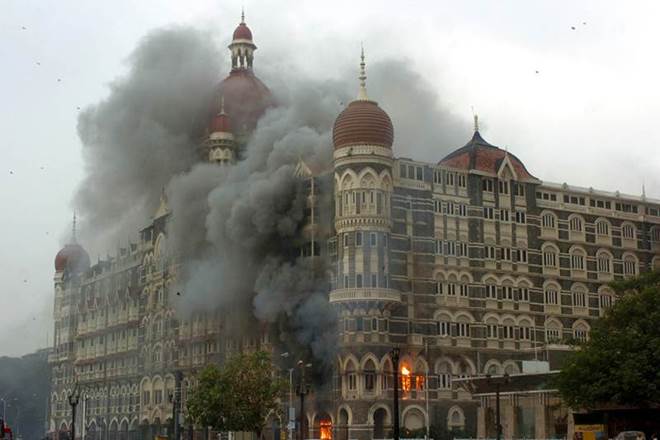
As the tenth anniversary of the horrendous Mumbai
massacre that snuffed out 166 lives and left countless injured approaches, we
will (just like we have been doing for the last nine years), express solidarity
with the unfortunate victims by holding prayers and memorial services for their
souls and denounce terrorism in the strongest of words. We will also wax
eloquent on the indomitable ‘Mumbai spirit’ that helped the physically and
mentally scarred Mumbaikars to quickly overcome their trauma and quickly move
on as if nothing happened. But all this doesn’t hide the fact that we’ve failed
the 26/11 victims because even after a decade the masterminds of this carnage
haven’t been brought to book!
Though Islamabad has put the Mumbai
terror attack accused on trial, this case has been dragging and the way things
are going, it’d extremely unlikely that anyone will end up being convicted.
Reason? Pakistan claims India has failed to provide evidence that could
establish beyond all doubts the involvement of the accused in these attacks. But
even though New Delhi has consistently maintained that it had provided
irrefutable evidence, yet Islamabad doesn’t agree. Yousaf Raza Gilani, the then
Prime Minister of Pakistan didn’t agree. In fact he told the Parliament that what
India had provided was “some information” on Mumbai attacks, emphasising,
“I say ‘information’ because these are not evidence.”
Since Islamabad insists it
doesn’t have irrefutable evidence to proceed against the 26/11 accused, so let’s
go over certain available details which are available in public domain that are
not (to borrow Gilani’s words) “some information” but concrete evidence.
Even after it was conclusively
proved by Geo TV through its report from ‘ground zero’ that Ajmal Kasab was a
Pakistani national, Islamabad still refused to accept the same, prompting Nawaz
Sharif whose party was giving outside support to the Zardari government to
question as to why was Kasab’s house and village cordoned off by security
agencies. Sharif rightly opined that rather than undertake the impossible task
of hiding the truth, “…the people and media should be allowed to meet Iman’s (Kasab’s)
parents so that the truth could come out in the open,” adding, “We
need some kind of introspection.” But Islamabad didn’t budge and a month
and a half later, when National Security Adviser Mehmood Ali Durrani told an
Indian news channel that Kasab was a Pakistani national, he was summarily
sacked by Gilani!
If the Pakistani establishment and
deep state had nothing to do with the Mumbai carnage at all, then where was the
requirement for Islamabad to be so paranoid as to go out of its way to conceal
the fact that Kasab was a Pakistani national?
Even if we for a moment accept
that what New Delhi gave Islamabad was merely “some information,” what about
the irrefutable evidence that Pakistan’s Federal Investigation Agency (FIA) had
collected? Why hasn’t the same been used as evidence? So instead of complaining
about lack of evidence against the Mumbai attack masterminds and blaming India
for the same, Islamabad would do well to open the FIA file on the Mumbai
attacks prepared when Tariq Khosa was its Director General (DG).
First,
Ajmal Kasab was a Pakistani national, whose place of residence and initial
schooling as well as his joining a banned militant organisation was established
by the investigators.
Second,
the Lashkar-e-Taiba (LeT) terrorists were imparted training near Thatta, Sindh
and launched by sea from there. The training camp was identified and secured by
the investigators. The casings of the explosive devices used in Mumbai were
recovered from this training camp and duly matched.
Third,
the fishing trawler used by the terrorists for hijacking an Indian trawler in
which they sailed to Mumbai, was brought back to harbour, then painted and
concealed. It was recovered by the investigators and connected to the
accused.
Fourth,
the engine of the dinghy abandoned by the terrorists near Mumbai harbour
contained a patent number through which the investigators traced its import
from Japan to Lahore and then to a Karachi sports shop from where an LeT-linked
militant purchased it along with the dinghy. The money trail was followed
and linked to the accused who was arrested.
Fifth,
the operations room in Karachi, from where the operation was directed, was also
identified and secured by the investigators. The communications through
Voice over Internet Protocol were unearthed.
Sixth,
the alleged commander and his deputies were identified and arrested.
Seventh,
a couple of foreign-based financiers and facilitators were arrested and
brought to face trial.
Besides this incriminating
FIA’s report, there are many other sources that provide details that can nail
the accused.
Pakistan’s former ambassador to
the US, Husain Haqqani writes in his book (‘India vs Pakistan: Why Can’t We
Just Be Friends?’) that while talking about the Mumbai attacks, Lt Gen Ahmad
Shuja Pasha, who was the ISI chief then, had confided that “Log hamaray theh,
operation hamara nahin tha” (those involved in the operation (Mumbai
attacks) were our men, but the operation wasn’t ours). Islamabad may dismiss
this claim on the grounds that being an accused in ‘memo-gate’ scandal, Haqqani
has an anti-Pakistan bias, but then he isn’t the only one to have made this
claim!
In his book (‘Playing to the Edge’), former CIA Director Michael Hayden, also writes that “His (Lt Gen Pasha’s) investigation had revealed that some former ISI members were involved (in Mumbai attacks) with Lashkar-e-Taiba. Pasha admitted that these unspecified retirees may have engaged in some broad training of the attackers, but he was characteristically vague about any detailed direction the attackers had gotten during the attack via cell phone from Pakistan.”
Similarly, investigative journalist Bob Woodward, in his book ‘Obama’s Wars’ has also quoted Lt Gen Pasha telling the CIA chief that “There may have been people associated with my organization who were associated with this (Mumbai attacks). That’s different from authority, direction and control.” Woodward too has stated that “…the CIA later received reliable intelligence that the ISI was directly involved in the training for Mumbai (attacks).”
So, even if Haqqani’s account
is prejudiced, but surely neither Hayden nor Woodward have any reasons to risk
their well-established credibility by making false accusations!
In 2017, while speaking at the
19th Asian Security Conference being held at the Institute for Defence and
Studies and Analyses (IDSA) in New Delhi, former Pakistan NSA Mahmood Ali
Durrani told the audience that “26/11 Mumbai attack carried out by a
terror group based in Pakistan is classic trans-border terrorist event.” A year
later, Nawaz Sharif also admitted that Pakistan was involved in the Mumbai
attacks when he told Dawn newspaper that “militant organisations are
active. Call them non-state actors, (but) should we allow them to cross the
border and kill 150 people in Mumbai?”
Therefore, if Islamabad is still
complaining that all it has is “some information,” it’s only because though
available in abundance, clinching evidence against those who were terrorist
commanders, who masterminded the 26/11 carnage and who provided training,
armament and logistic support to the attackers has conveniently been
“disappeared” by the ISI!
Postscript
It’s quite unlikely that Rawalpindi will ever allow the state to persecute its proxies who executed the ISI planned Mumbai attacks. But if Nawaz Sharif can express his anguish by asking Islamabad “Why can’t we complete the (Mumbai attacks) trial?” and terming this inordinate delay as something “absolutely unacceptable,” then rather than only holding prayers and memorial services, can’t we also focus more on demanding justice for 26/11 victims?
We use cookies on our website to give you the most relevant experience by remembering your preferences and repeat visits. By clicking “Accept All”, you consent to the use of ALL the cookies. However, you may visit "Cookie Settings" to provide a controlled consent.
This website uses cookies to improve your experience while you navigate through the website. Out of these, the cookies that are categorized as necessary are stored on your browser as they are essential for the working of basic functionalities of the website. We also use third-party cookies that help us analyze and understand how you use this website. These cookies will be stored in your browser only with your consent. You also have the option to opt-out of these cookies. But opting out of some of these cookies may affect your browsing experience.
Functional cookies help to perform certain functionalities like sharing the content of the website on social media platforms, collect feedbacks, and other third-party features.
Performance cookies are used to understand and analyze the key performance indexes of the website which helps in delivering a better user experience for the visitors.
Analytical cookies are used to understand how visitors interact with the website. These cookies help provide information on metrics the number of visitors, bounce rate, traffic source, etc.
Advertisement cookies are used to provide visitors with relevant ads and marketing campaigns. These cookies track visitors across websites and collect information to provide customized ads.
Necessary cookies are absolutely essential for the website to function properly. These cookies ensure basic functionalities and security features of the website, anonymously.
Cookie
Duration
Description
cookielawinfo-checkbox-analytics
11 months
This cookie is set by GDPR Cookie Consent plugin. The cookie is used to store the user consent for the cookies in the category "Analytics".
cookielawinfo-checkbox-functional
11 months
The cookie is set by GDPR cookie consent to record the user consent for the cookies in the category "Functional".
cookielawinfo-checkbox-necessary
11 months
This cookie is set by GDPR Cookie Consent plugin. The cookies is used to store the user consent for the cookies in the category "Necessary".
cookielawinfo-checkbox-others
11 months
This cookie is set by GDPR Cookie Consent plugin. The cookie is used to store the user consent for the cookies in the category "Other.
cookielawinfo-checkbox-performance
11 months
This cookie is set by GDPR Cookie Consent plugin. The cookie is used to store the user consent for the cookies in the category "Performance".
viewed_cookie_policy
11 months
The cookie is set by the GDPR Cookie Consent plugin and is used to store whether or not user has consented to the use of cookies. It does not store any personal data.